New York / City relocation guide

Moving to Plattsburgh

Plattsburgh is a Lake Champlain city with a municipal electric department, a real snow parking ban and a college inside the city. This guide helps you compare areas, plan the everyday basics and prepare the practical steps of arriving.

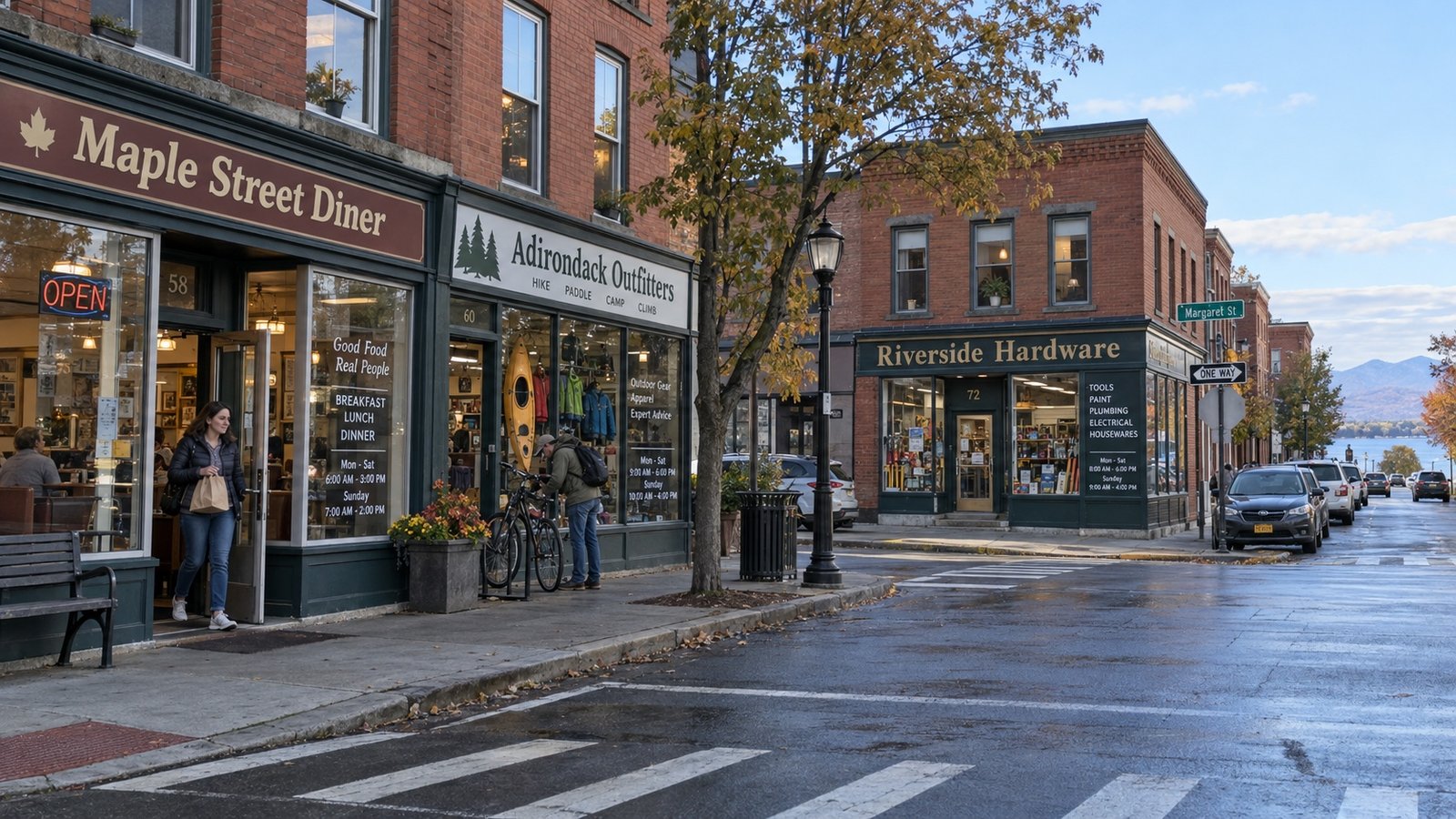
A small-city commercial corner with older brick buildings and distant pedestrians.
Try the everyday errands around a new address, not only the journey to work.

01 /

Start with the decision in front of you

Plattsburgh asks three different questions of a newcomer, and this guide is organized around them. If you are still choosing where to live, start with the orientation and the neighborhood comparison, then read the housing section — Plattsburgh leans rental, mostly in older buildings, and the differences that matter are stairs, heat, parking and what the rent includes. If you are moving with children, go to the schools section for the registration mechanics. If the address is already decided, the second half of the guide walks through the practical setup — utilities, waste, the curb for the moving truck, building access and the arrival sequence.

One caution before any comparison: the City of Plattsburgh is ringed by the Town of Plattsburgh — a separate municipality — and "Plattsburgh" postal addresses reach well beyond the city. Confirm the municipality before comparing procedures.

02 /

Understand Plattsburgh before comparing addresses

Plattsburgh is the Clinton County seat, on Lake Champlain's western shore where I-87 runs toward the Canadian border. The city holds four National Register historic districts, a downtown on the Saranac River, and the former Air Force base whose 1995 closure reshaped the city's population — the city's comprehensive plan treats that as the defining planning fact.

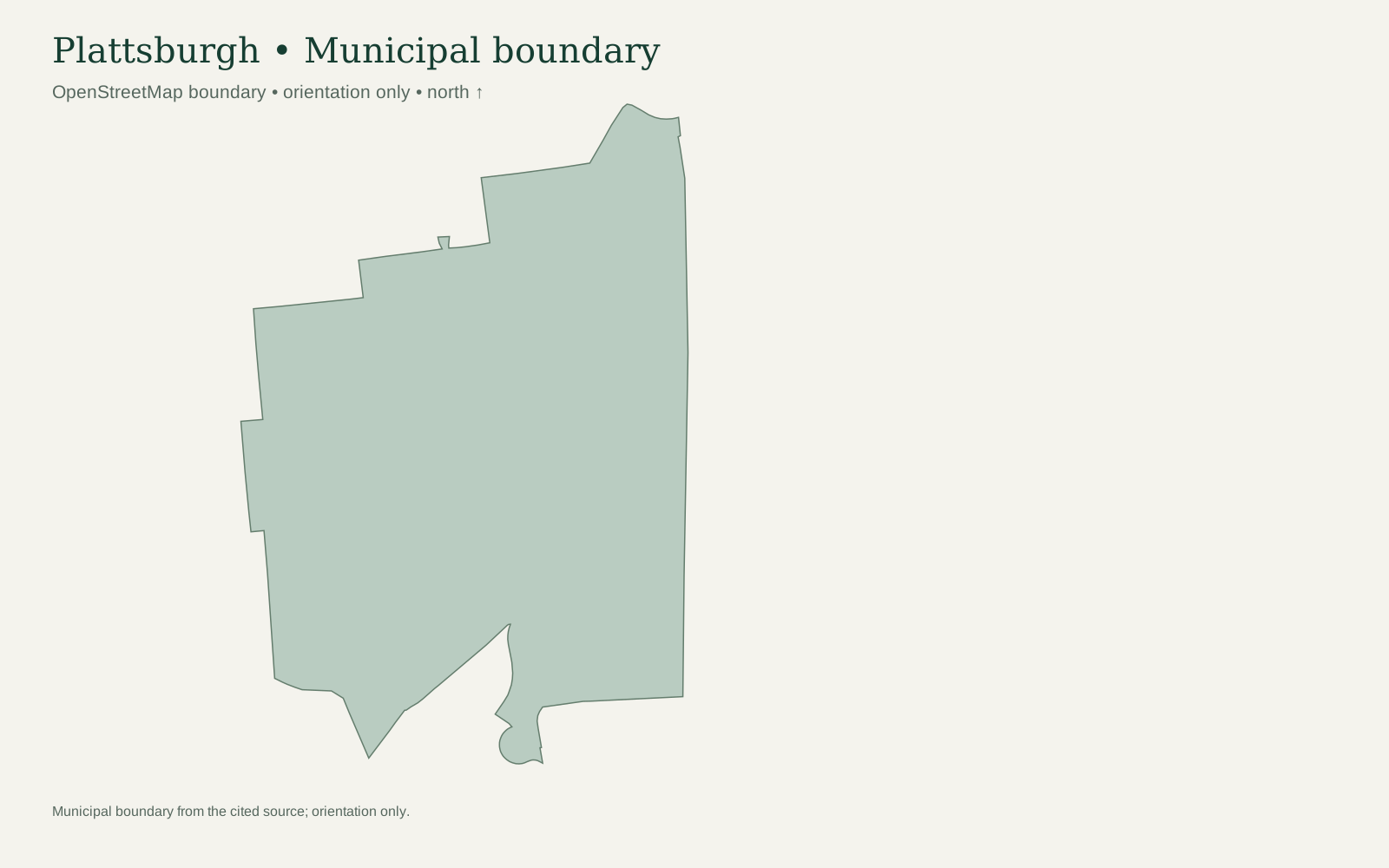
For a mover, the practical facts: SUNY Plattsburgh sits inside the city and sets part of the rental rhythm; the airport and the ferry terminals marketed as "Plattsburgh" are outside the city; and the city runs its own electric utility — a rarity that changes who you call. The map below shows the municipal boundary; confirm whether a "Plattsburgh" address is actually in the city before comparing procedures.

Plattsburgh orientation map with numbered area key
Use the numbered key to locate the areas discussed below. Open full-size map.

03 /

Find the area that fits your routine

Plattsburgh's documented areas include four National Register districts; the six modules below combine them with the city's planning geography, chosen to contrast housing types and access patterns. They are starting points for inspection, not rankings — building conditions vary house by house.

Downtown & Court Street

The city's commercial core on the Saranac River; the Court Street Historic District (National Register) preserves the older commercial blocks.

Court Street Historic District record (NPS) ↗
Housing & setting
Apartments and lofts over and behind the commercial blocks; expect managed entries and stairs rather than private driveways.
Daily travel
The walkable core; CCPT routes converge here, and the Amtrak station is close.
Before choosing
Confirm the entry arrangement and where a truck can stand on the older blocks; in winter, remember the parking ban can cancel a street plan.
Brinkerhoff Street

The Brinkerhoff Street Historic District (National Register) preserves a residential streetscape of the city's growth-era houses near downtown.

Brinkerhoff Street Historic District record (NPS) ↗
Housing & setting
Older houses and small multi-family buildings; porches, stairs and shared entries are the default.
Daily travel
Walkable to downtown; buses on the bordering avenues.
Before choosing
Older construction varies house by house; check windows, heat and stairways as carefully as the rooms.

The Point

The Point Historic District (National Register) covers the city's older residential fabric near the lake.

The Point Historic District record (NPS) ↗
Housing & setting
Older houses on compact blocks; lake-effect weather is a real maintenance question here.
Daily travel
Close to downtown and the lakefront; test the walk you would actually live.
Before choosing
Check porch condition and where the truck stands on the narrower streets; agree driveway use ahead of the day.

The Oval & the old base

The United States Oval Historic District (National Register) preserves the former Plattsburgh Air Force Base's historic heart; the base's 1995 closure reshaped the city's population, and the area has been redeveloping since.

United States Oval Historic District record (NPS) ↗
Housing & setting
Base-era housing and newer infill; different construction from the in-town stock.
Daily travel
Car-oriented; check whether a CCPT route actually serves your address.
Before choosing
Confirm which rules apply — some areas carry base-era arrangements; verify driveway and garage dimensions.

The west end

Residential streets west of downtown, a mix of older doubles and singles from the city's growth decades.

Plattsburgh housing data (Census Reporter) ↗
Housing & setting
Two-to-four-unit buildings and detached houses; about 27% of the city's homes sit in small multi-family buildings (ACS 2024 5-year).
Daily travel
Bus corridors on the main avenues; downtown is close.
Before choosing
Measure the staircase and agree driveway use; learn the tote routine and the 7 a.m. setout early.

The SUNY area

The blocks around SUNY Plattsburgh — the city's comprehensive plan treats the university as the city's partner — move on an academic rhythm.

Comprehensive plan (City of Plattsburgh) ↗
Housing & setting
Student-oriented rentals among older houses; leases often follow the academic year.
Daily travel
Walkable to downtown; the campus anchors the area's daily life.
Before choosing
Ask whether the lease runs on the academic year, and book August dates early.

04 /

Compare the whole home, not just the advertised payment

Plattsburgh is a renter-majority city: 62.1% of households rent their home (ACS 2024 5-year, via Census Reporter). The median gross rent is $1,030 a month and the median owner-occupied value $195,900 — medians describe the whole city at once, not the apartment in front of you; use them only to sanity-check a budget.

The stock explains the market. About 32% of units are detached single-family houses and about 27% sit in two-to-four-unit buildings; about 26% were built before 1940 — an older core with newer edges. For a mover this means the differences that matter are physical: which floor, stairs or a driveway, how heat is supplied, and who clears the sidewalk after snow.

When comparing two homes, compare what the payment includes — heat, hot water, parking, snow clearing — the lease's move-in and move-out rules, and the condition of the access route: porch boards, stair rails, door widths. Near the campus, ask whether the lease follows the academic year.

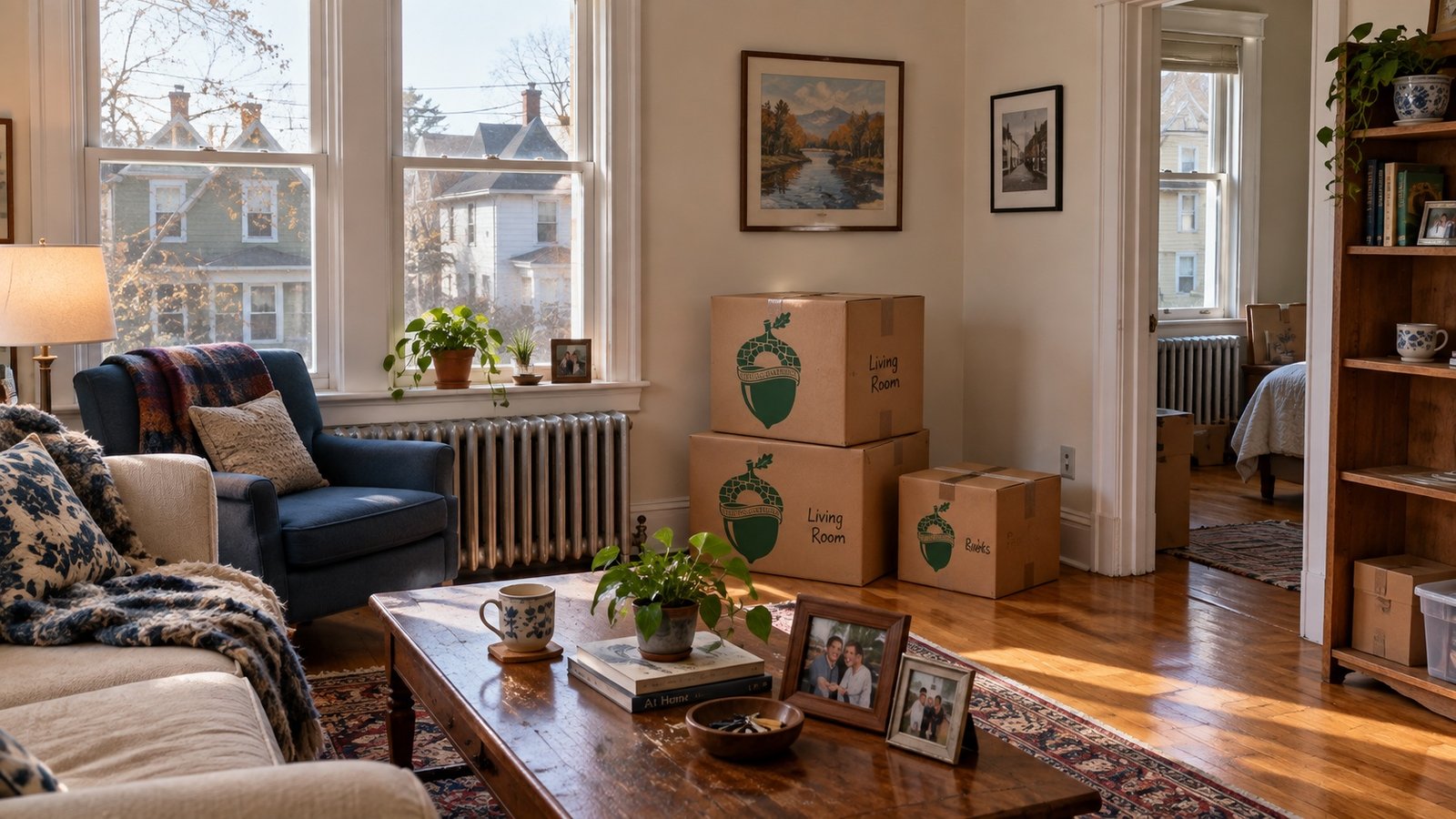
Compact branded Medium and Book cartons beside the wall of a furnished older apartment with a radiator.
Compare usable rooms, heat arrangements and what the rent actually includes.

05 /

Test the complete daily journey

Plattsburgh is a car-first city with county transit: Clinton County Public Transit runs city and county routes at $1.50 ($0.50 for seniors and students), with deviation service for a fee. Intercity rail is in the city: Plattsburgh station takes Amtrak's Adirondack toward Albany, New York and Montreal. The airport marketed as Plattsburgh International is Clinton County's, at the former base outside the city; the Lake Champlain ferry crossings dock outside the city as well.

Driving, the daily pattern runs through downtown and the main corridors. Test the real door-to-door routine from a candidate address — the commute, the grocery run, the school run — at the hours you would actually travel.

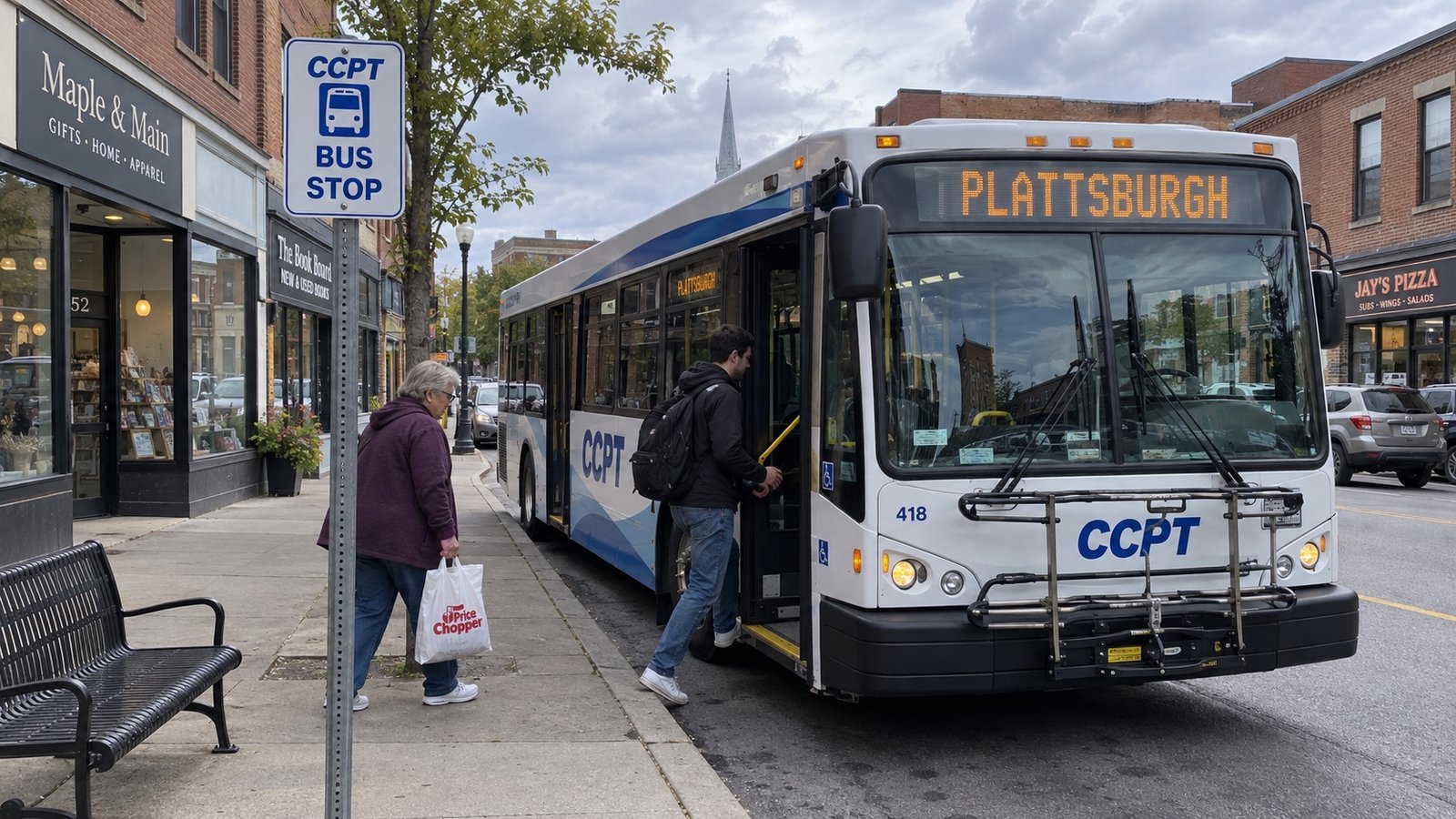
A small-city street with a local bus among older commercial buildings.
Test the complete daily journey, including the walk at both ends.

06 /

Register with the district directly

Plattsburgh City School District serves the city. Registration for the 2026-27 school year is open through the district's student registration page, which lists the required documentation — two proofs of residency (a lease or mortgage document among them), the child's records, and the rest of the packet.

Ask the district which school serves your address rather than assuming a neighborhood assignment from a listing. If you are arriving mid-year, contact the district before the move date so registration does not gate the first day of classes.

07 /

Assign an owner and a start date to each household service

Plattsburgh is unusual: electricity is the city's own Municipal Lighting Department, and new service starts at the City Finance Department, 41 City Hall Place. Water and sewer bill through the Department of Public Works' billing procedures. Whether a renter opens accounts or they ride with the property is a landlord question — confirm before the move.

For internet, check address-level availability before promising yourself a provider or a speed; in the older buildings, ask which provider already wires the building. An installation booked before the move is easier than one booked from an empty apartment.

08 /

Plan for the tote and the things you are leaving behind

Plattsburgh's trash runs on city totes: weekly pickup is $31.85 a month, with $4.00 per bag for anything outside the tote; a bi-weekly option exists, and grass, leaves and brush go out in paper bags free. Garbage goes out in clear bags inside the tote, recyclables cleaned and sorted in the recycling bin, at the curb before 7 a.m.

The rule that matters at a move: large-item disposal follows the DPW's current procedure — call before move-out week rather than assuming a curb pile is allowed. It is not an option.

09 /

Arrange a legal place for the moving truck

Plattsburgh publishes no moving-truck or street-occupancy permit. The decision path: first the property — a driveway or private lot needs no arrangement; then a legal street position for the day. Downtown, check the posted rules on the actual block.

The override is the snow parking ban: declared by 2 p.m., effective at midnight, with the city's ban lights and the 518-536-7461 hotline carrying the status. A ban cancels every street arrangement — a winter date needs a storm backup plan, covered in the seasonal section.

If the position is unusual — a long carry across a sidewalk, a container, a trailer — call the Department of Public Works early, describe it, and keep whatever they confirm with the moving papers. Share it with us so the crew's plan matches.

10 /

Inspect the full route through the building

Plattsburgh's older housing runs to porch stairs, shared front halls and narrow staircases with turns at the landings. Measure the largest pieces against the actual route — width, turns, ceiling at the landing — and check porch boards and railings before anyone carries a sofa across them. Agree driveway use with the landlord and neighbors; many drives are shared or single-width.

In the larger buildings and managed properties, access means paperwork: elevator reservations, fixed moving windows and sometimes a certificate of insurance requested from the mover. Ask for the written moving rules at both ends as soon as the date is set.

Whichever type, walk both routes before the day: where the truck stops, which door is used, every stair and landing between the truck and the room, and who unlocks what. A plan that works at the origin but not the destination is only half a plan — confirm the two ends together, with time windows that overlap usefully.

11 /

Build a useful routine beyond the commute

Plattsburgh's everyday geography centers on downtown along the Saranac River and the lakefront; the city's four National Register districts — Court Street, Brinkerhoff Street, the Point, and the old base's U.S. Oval — carry the older fabric. The college's presence keeps the area near SUNY Plattsburgh on an academic rhythm.

Test the routine you will actually live: the grocery run, the pharmacy, the school or daycare route, a late-evening trip home. Winter changes the calculation more here than in milder places — a January test is worth more than a July one.

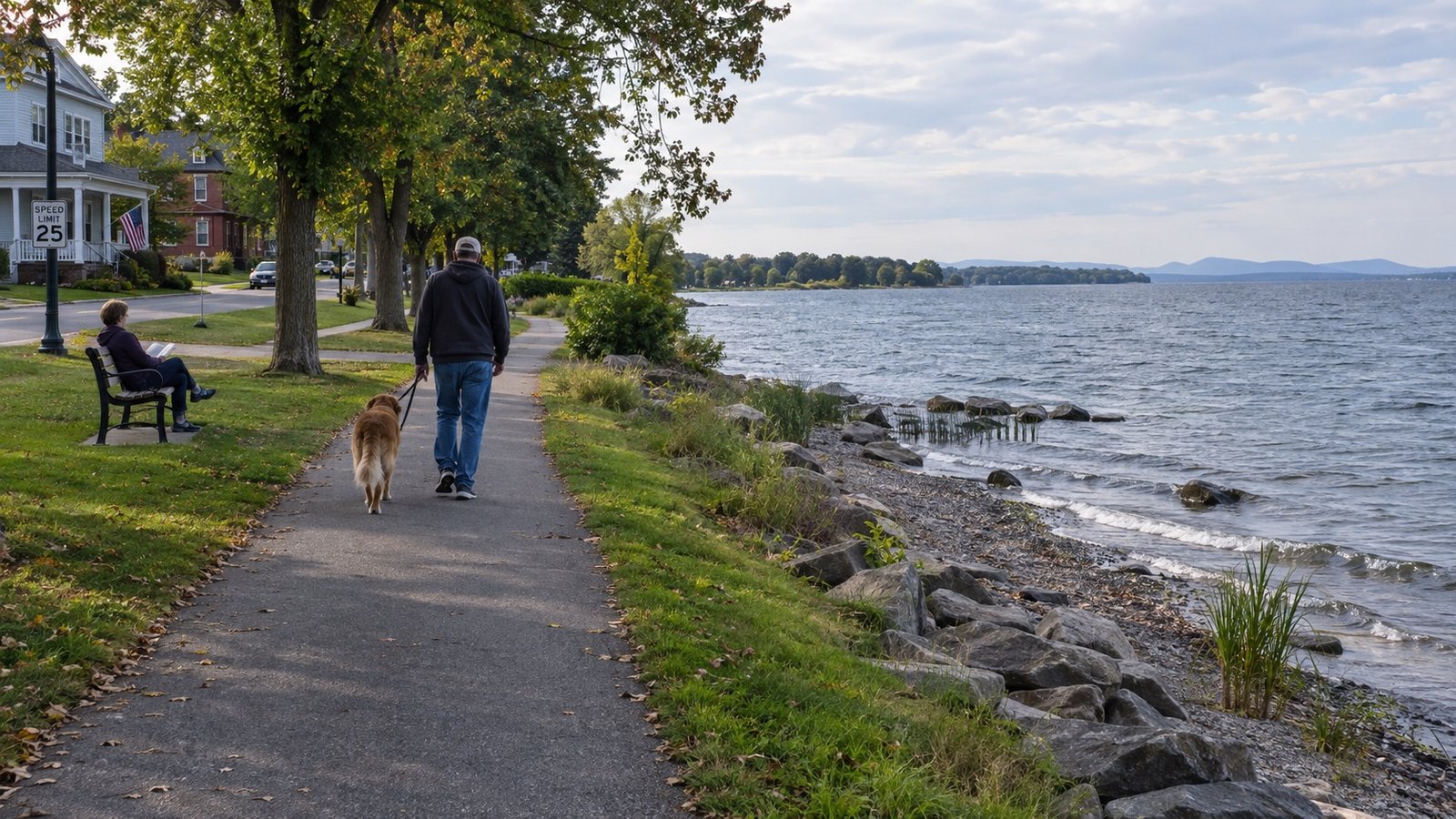
A resident walks a dog along a maintained lakeside path while another reads beside the pebbly Lake Champlain shore.
Check the everyday routine around the address you actually choose.

12 /

Plan for the season in which you will live and move

Winter is Plattsburgh's scheduling season, and the city has a real instrument: the snow parking ban, declared by 2 p.m. and effective at midnight when plowing is needed curb to curb. Ban lights switch on across the city, media are notified, and the hotline (518-536-7461) carries the status. A ban cancels every street arrangement — vehicles left out are ticketed and can be towed — so a December–March moving date needs a storm backup plan.

After the snow, agree explicitly with the landlord who clears the steps, porch and sidewalk; the city's sidewalk-clearing rule was not published in the pages we could read, so do not assume it. The other calendar is academic: SUNY Plattsburgh sits inside the city, and student-linked leases turn over around late August and May — end-of-month dates at those times book out first, our workload observation rather than a city statistic.

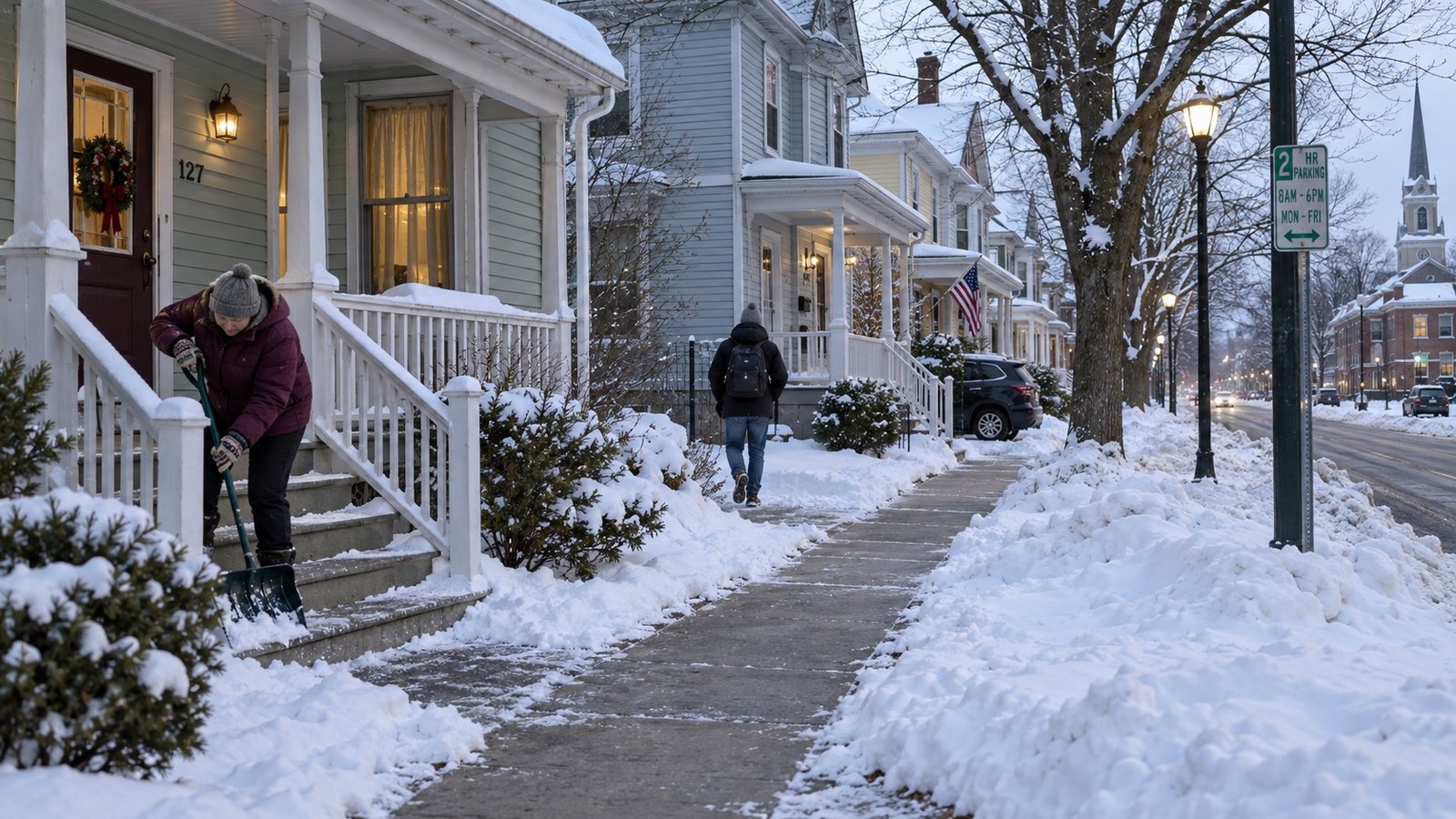
A residential street after snowfall with plowed piles and cleared sidewalks.
Winter dates need a plan: the city can declare a parking ban by 2 p.m.

13 /

Turn the chosen home into an arrival plan

With the address decided, sequence the setup so nothing blocks the truck. Four to six weeks out: confirm the lease or closing date, start the school registration if you have children (two proofs of residency are required), and book the move itself. Two to three weeks out: visit City Finance at 41 City Hall Place for electric service, confirm the water/sewer billing arrangement, line up internet installation, and plan disposal of what you are not taking with the DPW.

In the final days: confirm the access plan at both ends, finish packing, set aside what travels with you, and in winter check the parking-ban hotline the evening before. In the first week after arrival: learn your tote's collection day and the 7 a.m. setout, test heat and hot water, and note where the ban lights nearest you are for the winter.

14 /

Questions before you arrive

Is SUNY Plattsburgh actually in Plattsburgh?

Yes — the campus is inside the city, and the city's comprehensive plan calls Plattsburgh home to the university. Its calendar shapes the rental rhythm near campus.

Is the airport in the city?

No. Plattsburgh International is Clinton County's airport at the former air base, outside the city. The Lake Champlain ferry crossings marketed as Plattsburgh dock outside the city too.

Does my Plattsburgh address assign my child's school?

Registration runs through Plattsburgh City School District's student registration page — two proofs of residency are required. Ask the district which school serves your address rather than assuming from a listing.

Who provides electricity in Plattsburgh?

The city's own Municipal Lighting Department — a rarity. New service starts at the City Finance Department, 41 City Hall Place. Water and sewer bill through the Department of Public Works.

Can I leave unwanted furniture on the curb when I move out?

No. Trash runs in city totes at $31.85 a month with $4 per bag outside the tote; large items need the DPW's current procedure — call before move-out week. A curb pile is not an option.

What happens to parking during a snow ban?

When the city declares a ban (by 2 p.m., effective at midnight), parking stops on city streets so plows can work curb to curb; vehicles left out are ticketed and can be towed. The ban hotline is 518-536-7461.

Your next step

Bring the plan together

Use the Plattsburgh moving page to prepare the inventory, access details and questions for your estimate.

Sources & useful local resources

Official procedures and local resources are linked beside the answers above. Reopen the relevant page when arranging a date: fees, schedules and application requirements can change.

City rules & services

Housing & neighborhoods

Getting around

Schools & enrollment