
New York planning
How to Use This New York Moving Guide
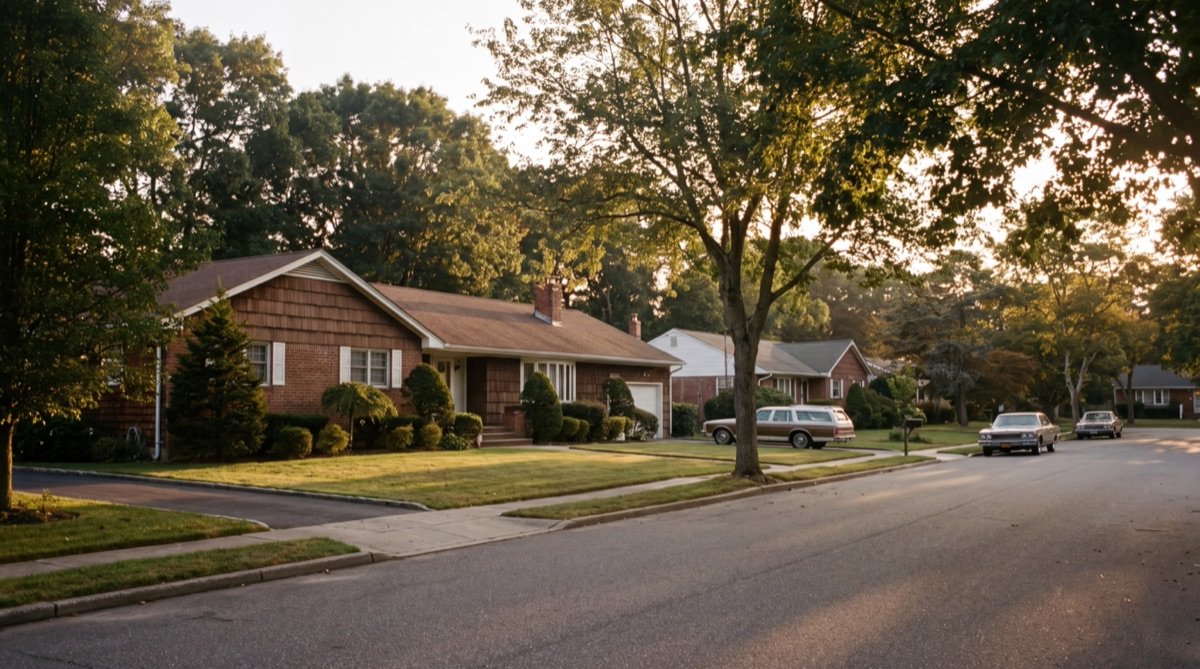
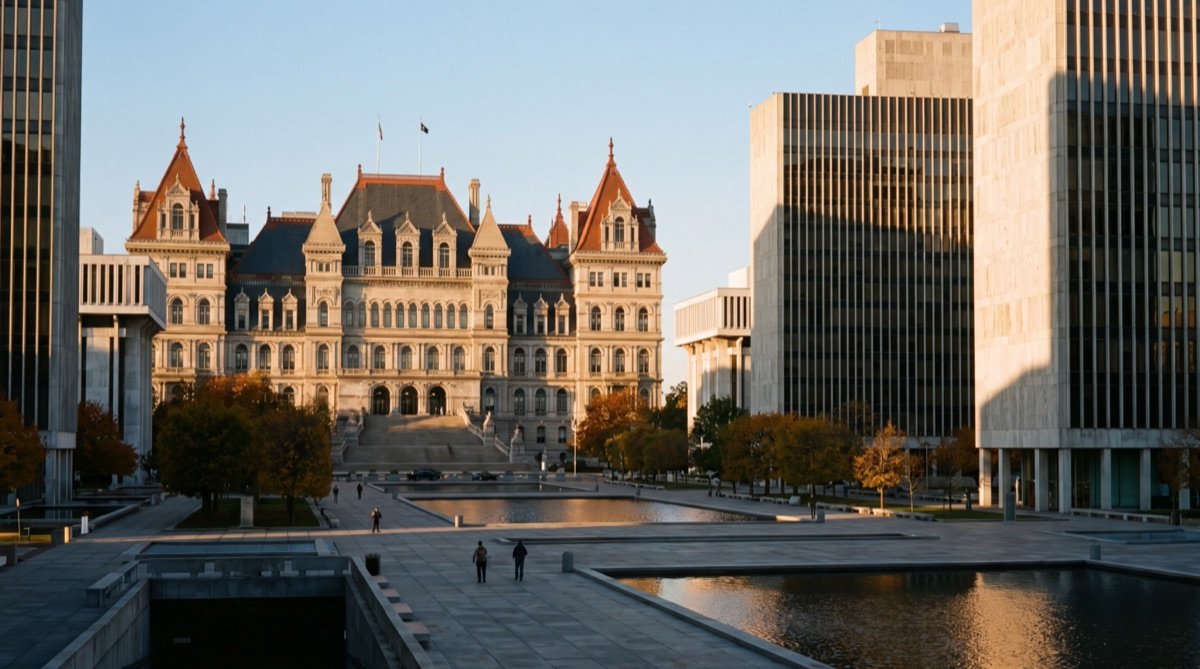
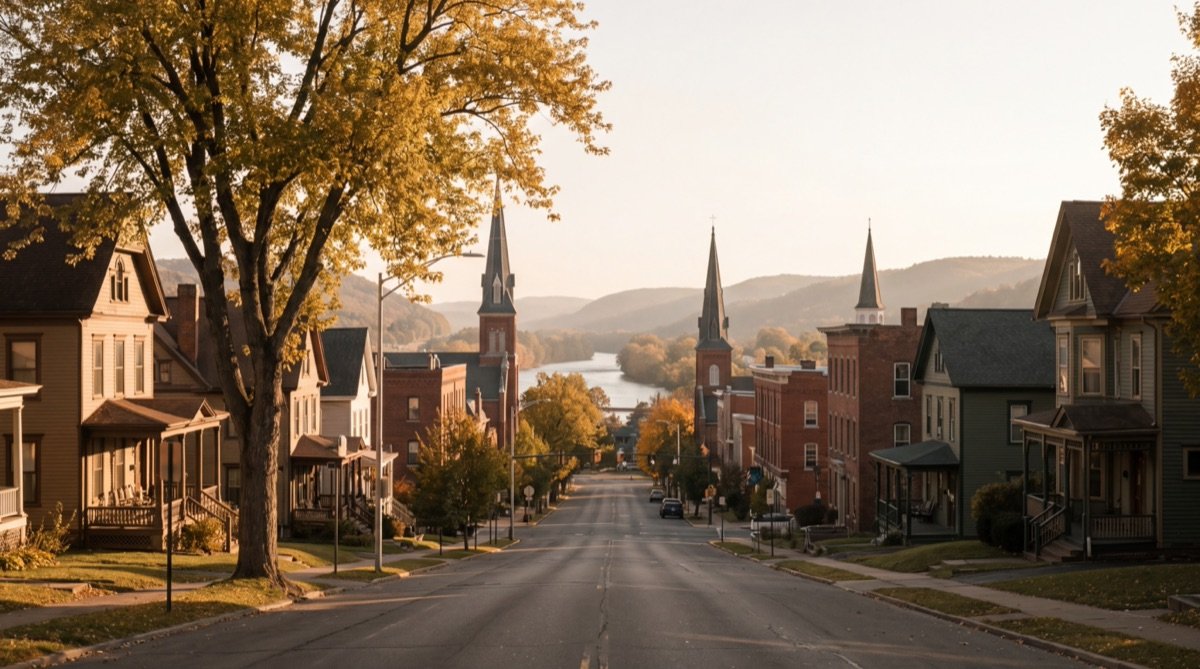
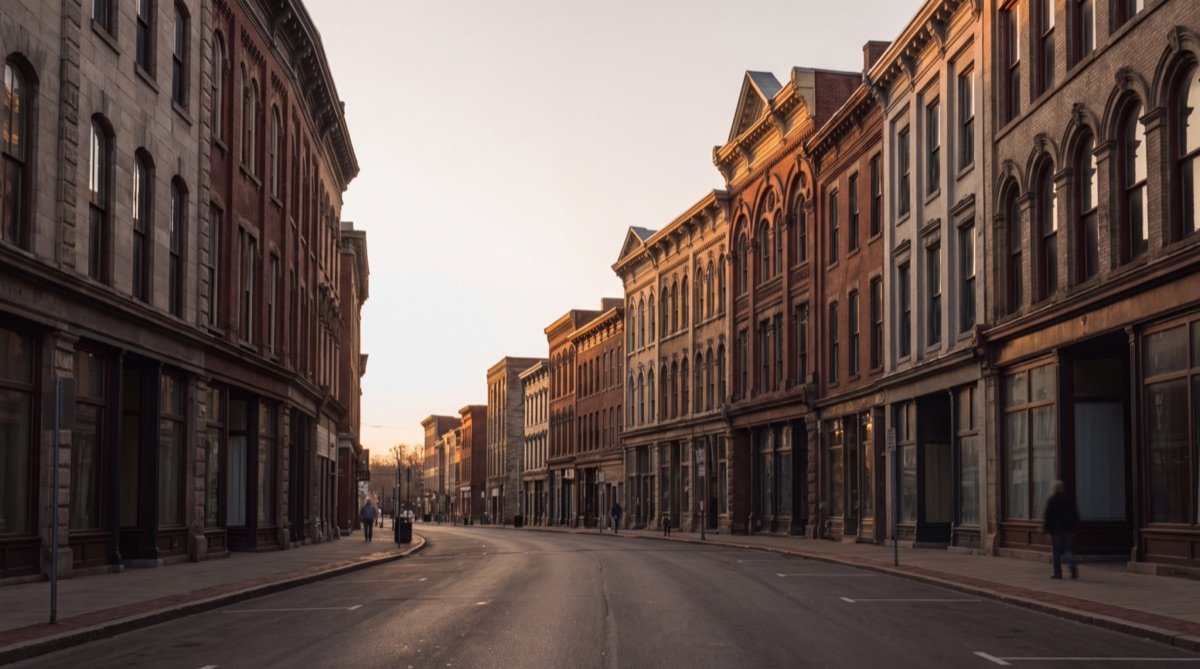
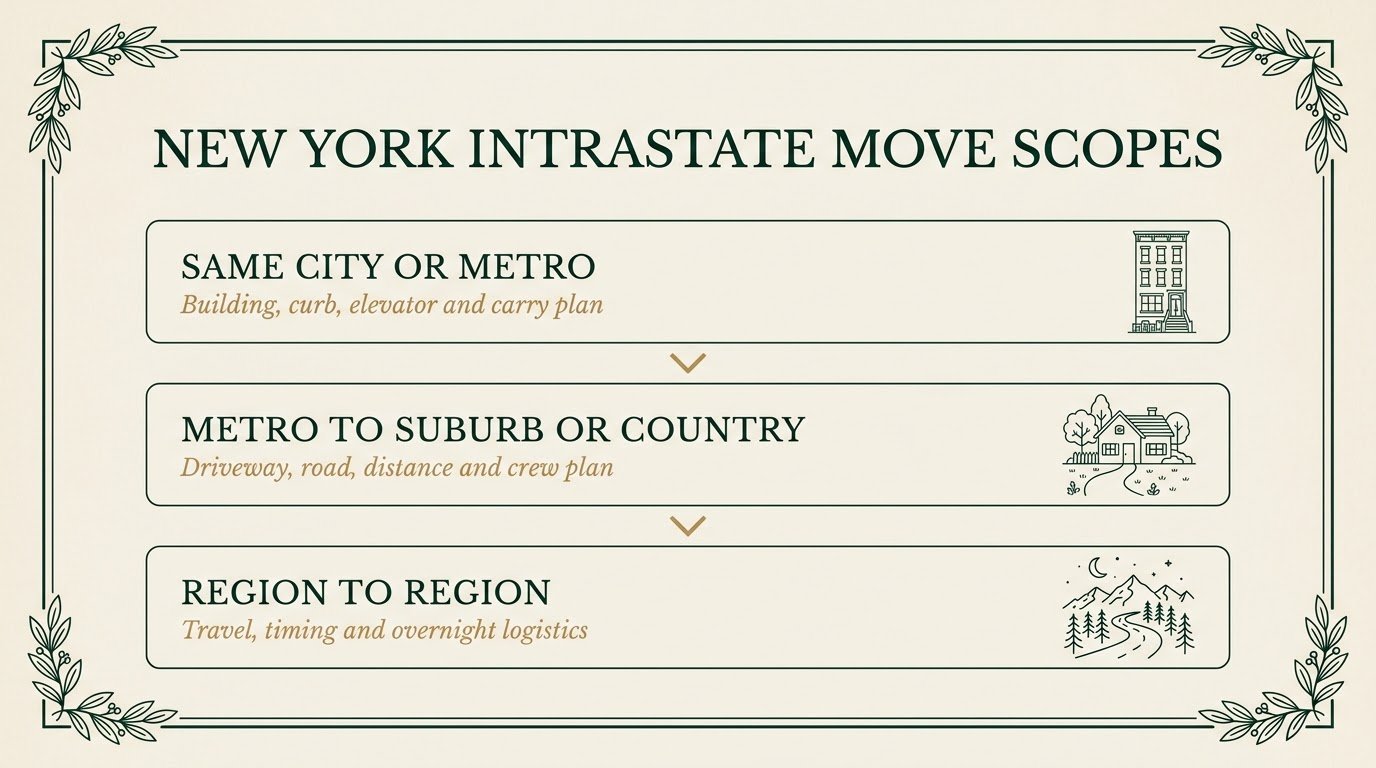
This New York moving guide is a working reference for anyone relocating within the state. Sterling Oakbridge wrote it to document what moving in New York actually involves — not to rank companies or sell a service level. The state presents an unusual planning range: doorman co-ops and walk-ups in the five boroughs, estate properties in Westchester and on Long Island’s East End, historic homes along the Hudson, and rural addresses in the North Country where the nearest mover may be an hour away. Each setting has its own access conditions and rules, and this guide treats them separately.
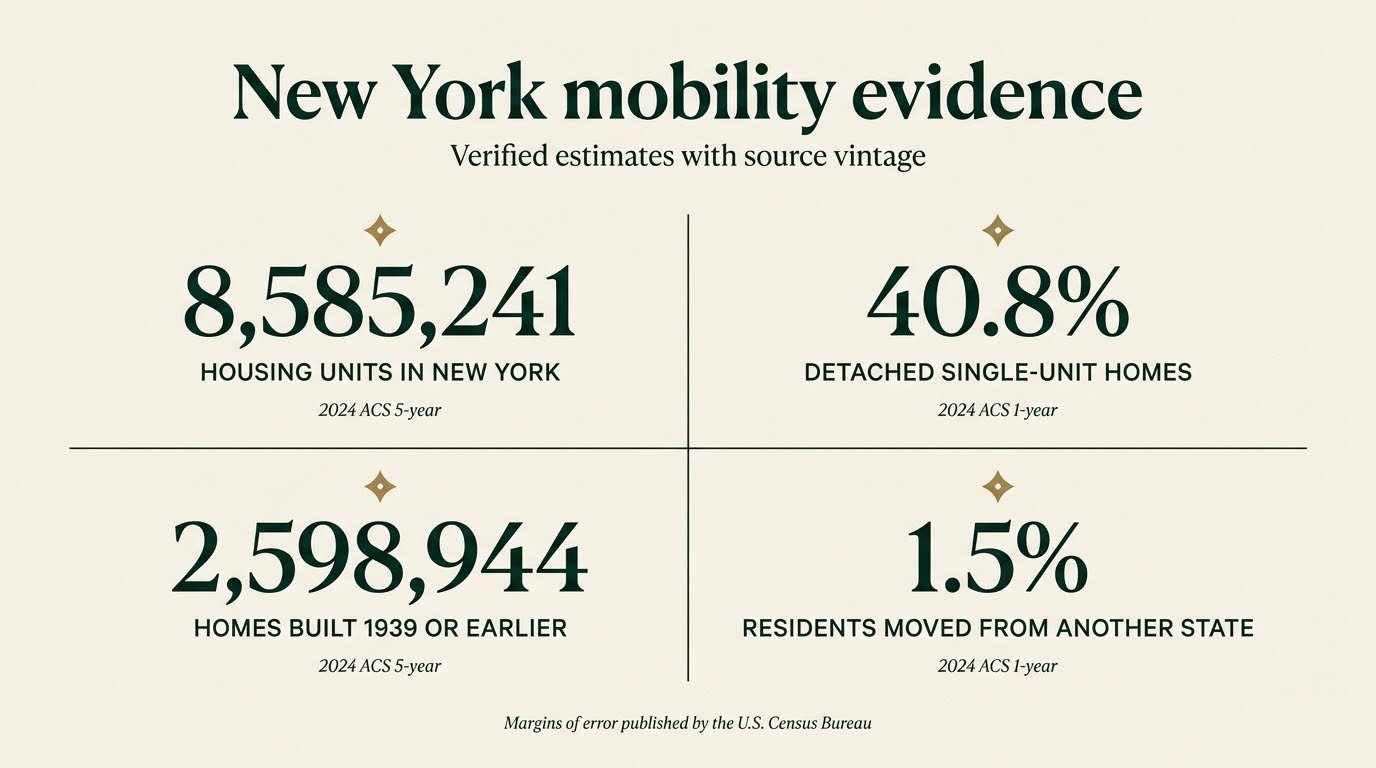
The sections that follow answer the questions that come up most often in New York move planning: how a move inside the five boroughs differs from one in the suburbs or upstate; what the New York State Department of Transportation requires of licensed intrastate movers; why the state’s parkway system is closed to moving trucks and which routes replace it; how lake-effect snow and event-driven winter restrictions affect scheduling; and where the verified housing and migration figures cited here come from. Every regulatory statement in this guide names the official source it was checked against.
What this guide covers: - The practical differences between moving within New York City, its suburbs, the Hudson Valley, and the upstate regions - How NYSDOT mover licensing, New York City curb rules, building requirements, and parkway restrictions affect your move - Where to find verified data on New York’s housing stock and interstate migration
What this guide does not cover: - Rankings or endorsements of moving companies - Specific pricing, customer reviews, or testimonials - Customs brokerage or direct ocean freight services
Start here, then follow the links to the sections that match your addresses. If you would rather talk it through, a coordinator at (475) 221-2030 can scope both properties in a single call. Whether you are crossing the hall in a Manhattan co-op or moving from Buffalo to the North Fork, the aim is the same: give you the verified information you need to plan each stage properly.