
Connecticut planning
How to Use This Connecticut Moving Guide
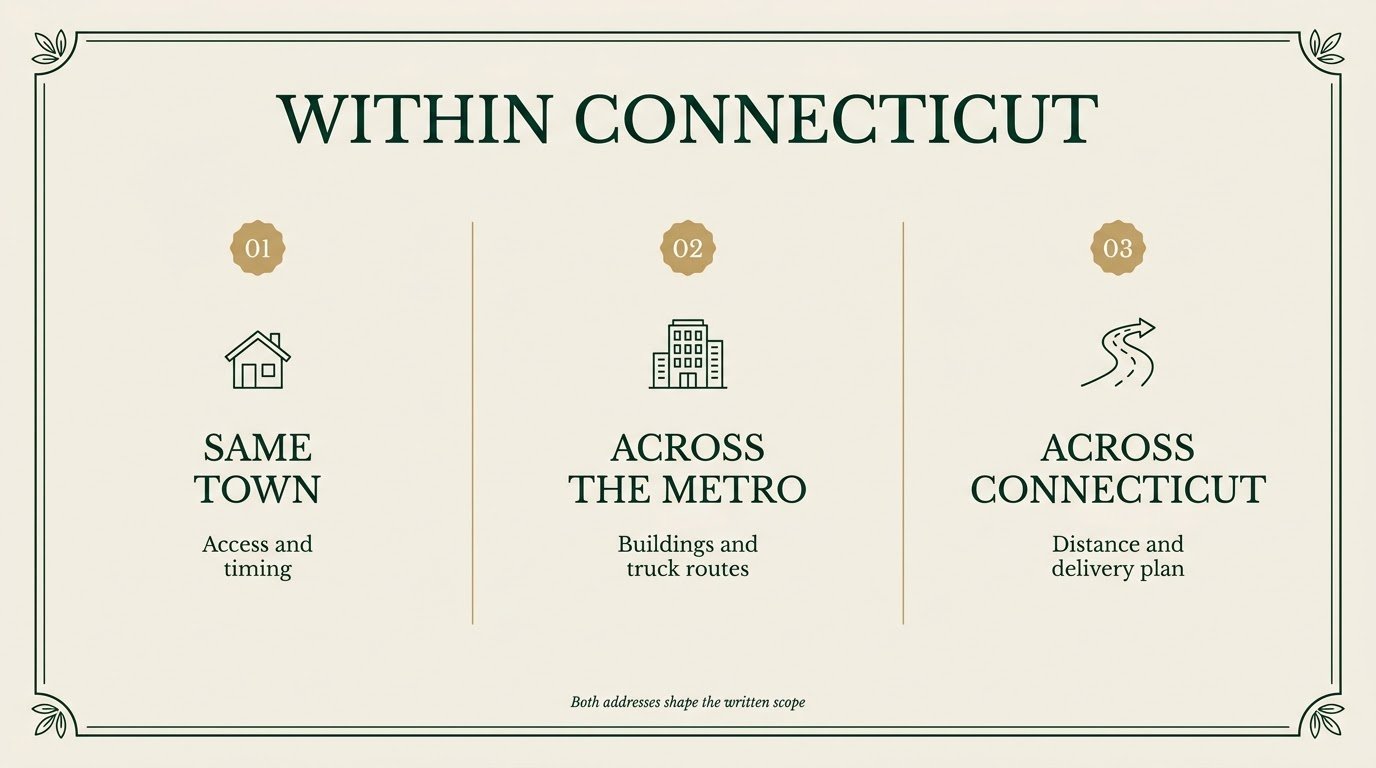
Begin with both addresses and the kind of home at each end. An apartment move in Hartford may depend on an elevator reservation; a shoreline house may need a careful approach along a narrow residential lane. A short Greenwich-to-New York trip also crosses a state line, while a longer Stamford-to-New London move can remain entirely inside Connecticut. Those differences belong in the plan before a truck is assigned, and they shape which rules, documents, and timing constraints apply to your household.
This guide follows the same sequence as a useful planning conversation: identify the area, inspect property access, establish the applicable moving paperwork, then work through packing, timing, and delivery. The city cards help you orient yourself; the published local guides provide more detail for Greenwich, Westport, Darien, and Stafford Springs. A city name in the directory is a coverage reference, not a claim that a staffed office exists on every block. The data table and FAQ near the end collect the figures and the questions readers ask most, and the sources list lets you check every official claim at its origin.
Before you read, gather what you already know: a draft inventory, photographs of entrances and approaches, building rules from each property manager, and any fixed dates such as a closing or lease start. Keep the estimate and inventory together while you read, and mark anything undecided. A question is easier to resolve at the survey than at the truck. The photographs on this page illustrate Connecticut settings and planning situations; they are not records of completed customer moves.
Throughout the guide, statistics carry their source and release vintage, because a 2024 one-year estimate and a 2024 five-year estimate answer different questions. Statewide figures describe Connecticut as a whole, never your particular house or street. Agency pages are linked where a rule matters, so you can read the current wording rather than rely on a summary.
When you finish, the goal is a short list: what is moving, who packs it, where the truck loads and unloads, when each property is available, and who receives delivery. Arriving, leaving, or staying inside the state, the same skeleton applies — only the paperwork layer changes. Read the sections in any order; the sequence exists so that nothing is skipped, not because every move needs every page. Any unusual item, difficult approach, or uncertain closing date should be discussed directly with the coordinator rather than inferred from a general guide.