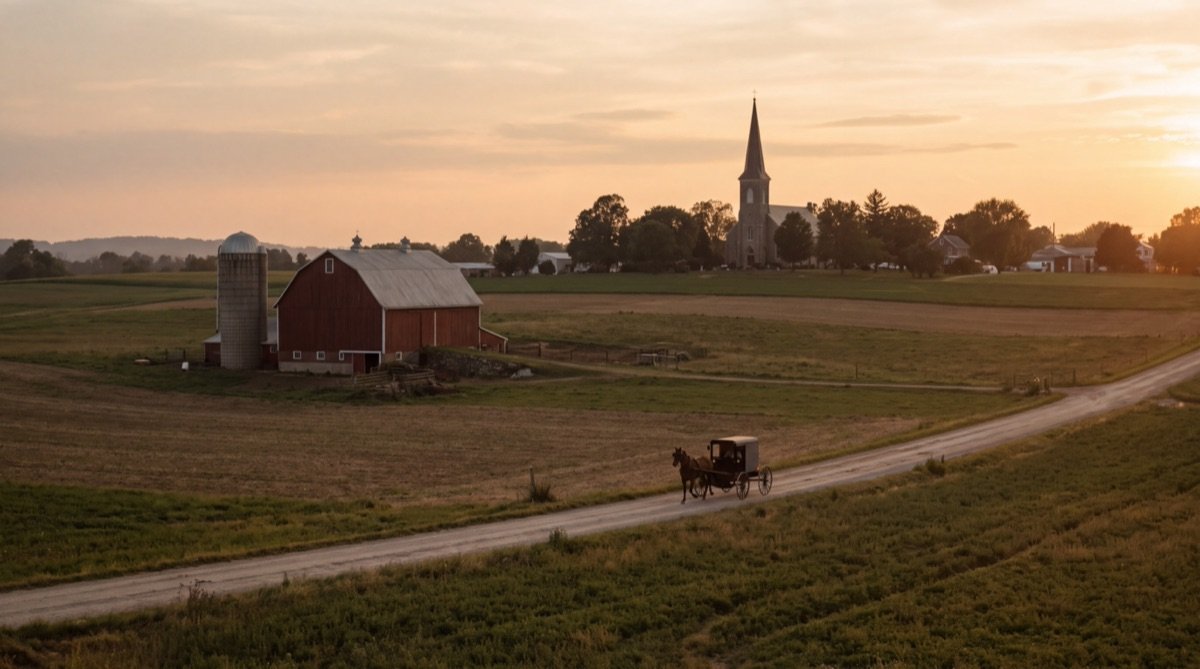

Pennsylvania town and Appalachian landscape

State moving guide

Moving in Pennsylvania: A Practical Guide by Sterling Oakbridge

Relocating within Pennsylvania means navigating a wide range of cities, suburbs, and rural communities—each with its own moving logistics and considerations. At Sterling Oakbridge, we understand that every move is shaped by local access, property types, and state or municipal regulations. This guide is designed to help you make informed decisions about your Pennsylvania move, whether you’re relocating within a city, between metro areas, or out to the countryside. We focus on practical, evidence-based insights to clarify what you can expect at each stage of your move.

Pennsylvania planning

How to Use This Pennsylvania Moving Guide

This Pennsylvania moving guide is a practical resource for anyone planning a move within the state. At Sterling Oakbridge, our goal is to provide clear, evidence-based information to help you understand the unique aspects of relocating in Pennsylvania. This guide does not list every moving company or offer endorsements or rankings. Instead, it focuses on the logistical realities, regulatory factors, and property types you may encounter when moving within Pennsylvania’s varied regions.

We organize this guide to address the most common questions and scenarios faced by movers in Pennsylvania. You’ll find sections comparing urban, suburban, and rural moves, highlighting the differences between local and metro-area relocations, and pointing you to more detailed regional resources. Each section is grounded in practical experience and available evidence.

What this guide covers: - The logistical differences between moving within cities, suburbs, and rural areas in Pennsylvania - How local regulations and property types can affect your move - Where to find more detailed information for specific regions, such as Central Pennsylvania and the Poconos

What this guide does not cover: - Endorsements or rankings of moving companies - Detailed pricing, reviews, or testimonials - International customs brokerage or direct ocean freight services

Use this guide as a starting point for planning your move. For more specific information about a particular region or type of move, follow the links to our regional hub pages. Our aim is to equip you with the knowledge you need to make informed decisions, whether you’re moving a few blocks or across the state.

Our Nine planning points across the Commonwealth — county-level coverage from Erie to Philadelphia.

Pennsylvania planning

Regional Moving Coverage and Hub Directory

Pennsylvania’s regions each bring unique moving considerations, from the rolling hills of Central Pennsylvania to the scenic communities of the Poconos. To help you find the most relevant information for your move, we’ve organized detailed regional resources and hub pages. These directories provide practical insights into local property types, access issues, and logistical challenges specific to each area.

If you’re planning a move in Central Pennsylvania, our Central Pa movers hub offers guidance tailored to the region’s mix of historic towns, college communities, and rural landscapes. For those relocating to or from the Poconos, the Poconos movers page addresses the unique aspects of moving in this popular mountain destination, including considerations for seasonal weather and vacation properties.

These regional hubs supplement the statewide information provided here, giving you a deeper understanding of what to expect in your specific area. By consulting these resources, you can better anticipate the logistical and regulatory factors that may affect your move. Sterling Oakbridge is committed to making your Pennsylvania relocation as informed and seamless as possible, wherever you’re headed.

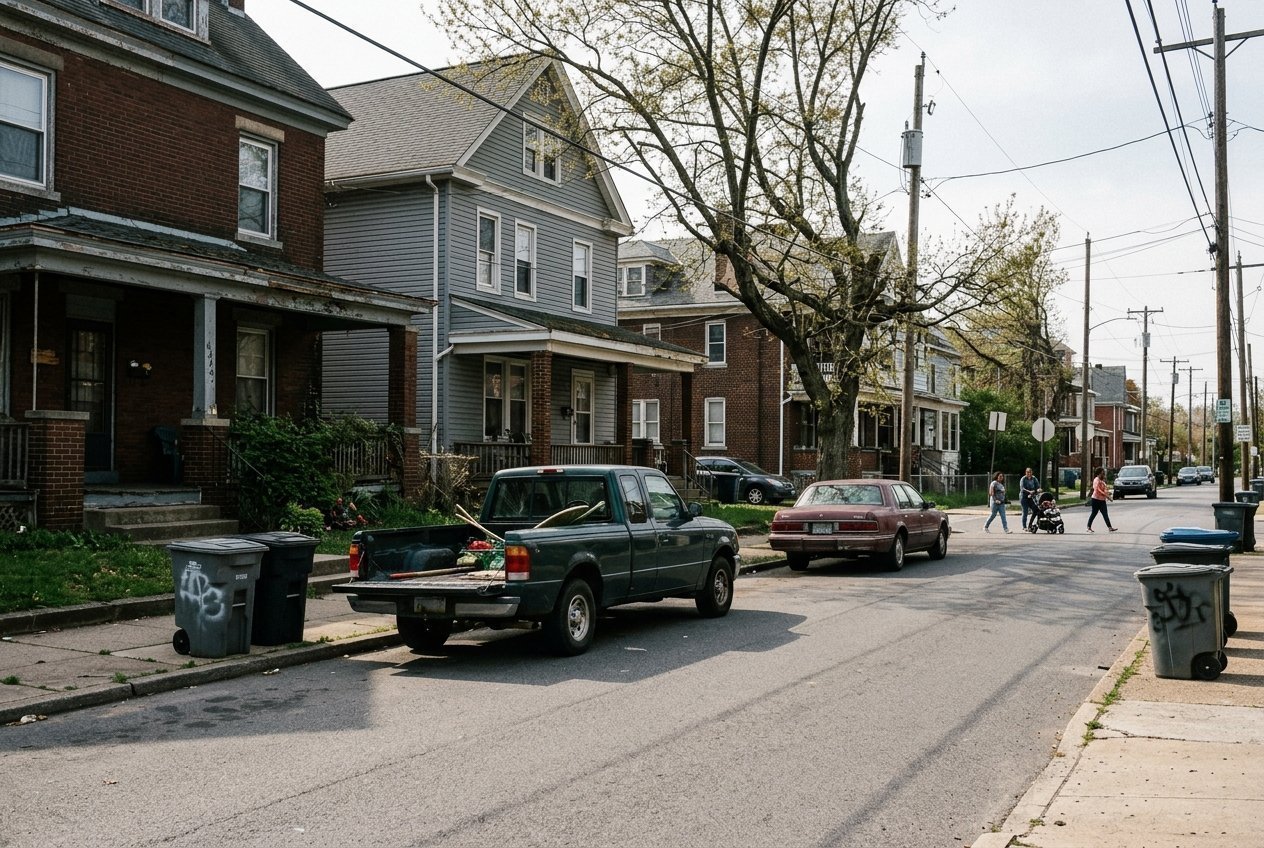
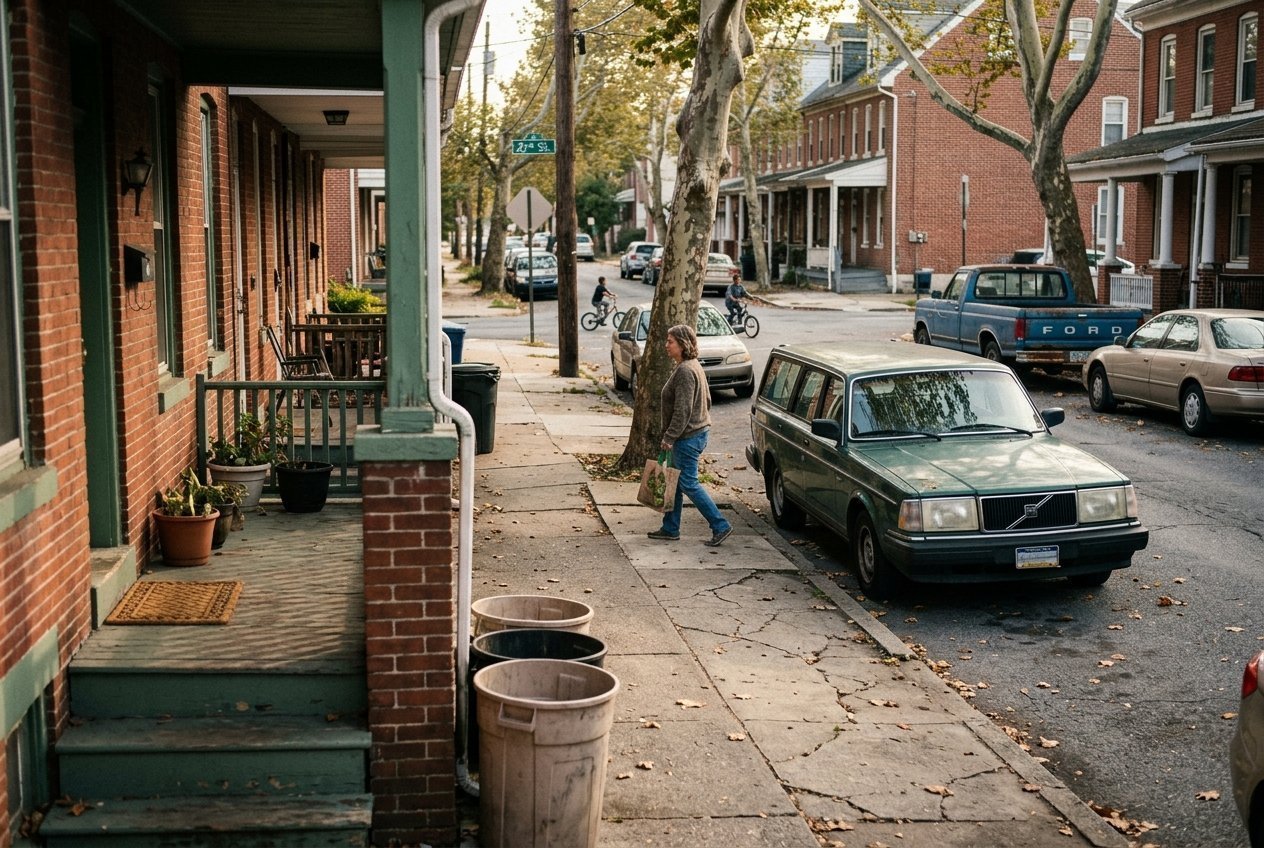
Everyday Pennsylvania neighborhood detail
A calm street-level view sets the local context without turning every illustration into a moving-truck scene.

Service network

Where we work in Pennsylvania

Nine planning points within a directory of twelve communities — every move begins with a survey and an itemized written estimate.

Philadelphia, Pennsylvania — golden-hour city viewPA

Philadelphia

Urban rowhouse logistics, dock reservations, elevator access, and Delaware Valley corridors.

Key communities

Norristown Drexel Hill King of Prussia Chester

Explore Philadelphia hub
Pittsburgh, Pennsylvania — golden-hour city viewPA

Pittsburgh

Hilly terrain routing, steep grades, older residential architectural access, and river valleys.

Key communities

Bethel Park Monroeville Plum McKeesport

Explore Pittsburgh hub
Allentown, Pennsylvania — golden-hour city viewPA

Allentown

Lehigh Valley moving corridors, commercial center access, and historic industrial conversions.

Key communities

Reading Bethlehem Easton Hazleton

Explore Allentown hub
Harrisburg, Pennsylvania — golden-hour city viewPA

Harrisburg

Susquehanna Valley transport hub, state government corridors, and rural-suburban junctions.

Key communities

Lancaster York Lebanon Carlisle

Explore Harrisburg hub
Scranton, Pennsylvania — golden-hour city viewPA

Scranton

Northeastern corridor connections, mountain gateway access, and historic anthracite region homes.

Key communities

Wilkes-Barre Kingston Mountain Top

Explore Scranton hub
Erie, Pennsylvania — golden-hour city viewPA

Erie

Great Lakes lake-effect weather preparedness, I-90 crossway routing, and northwest tier properties.

Key communities

Meadville Edinboro Corry

Explore Erie hub
State College, Pennsylvania — golden-hour city viewPA

State College

Central Pennsylvania academic relocations, rolling valley terrain, and seasonal calendar planning.

Key communities

Bellefonte Lewistown Clearfield

Explore State College hub
Williamsport, Pennsylvania — golden-hour city viewPA

Williamsport

North Central timber and river town estates, I-180 and Route 15 valley access coordination.

Key communities

Bloomsburg Sunbury Lock Haven

Explore Williamsport hub
Altoona, Pennsylvania — golden-hour city viewPA

Altoona

Allegheny mountain ridgeline transport, historic railroad communities, and rural homestead transit.

Key communities

Johnstown Indiana DuBois

Explore Altoona hub
Reading, Pennsylvania — golden-hour city viewPA

Reading

Berks County seat, outlet-corridor logistics, and dense rowhome neighborhoods.

Key communities

Wyomissing Shillington Kutztown

Explore Reading hub
Lancaster, Pennsylvania — golden-hour city viewPA

Lancaster

Historic downtown rowhomes, Amish-country estates, and Route 30 corridor access.

Key communities

Ephrata Lititz Columbia

Explore Lancaster hub
York, Pennsylvania — golden-hour city viewPA

York

White Rose industrial conversions, I-83 corridor moves, and rolling farmland properties.

Key communities

Hanover Red Lion Dallastown

Explore York hub

Pennsylvania planning

Moving Within Pennsylvania’s Cities and Metro Areas

When planning a move within Pennsylvania, it’s important to distinguish between local, city, and metro-area relocations. Each type of move comes with its own logistical and regulatory considerations. Local moves typically refer to relocations within the same city or township—such as moving from one neighborhood in Harrisburg to another. These moves are often governed by city-specific regulations, including parking restrictions, elevator reservations, and building access protocols. In cities like Philadelphia, you can apply for temporary no-parking signs through the Streets Department to hold curb space for the truck, and buildings may require reserved loading docks and elevators.

Metro-area moves, on the other hand, involve relocating between different municipalities within the same metropolitan region. For example, moving from a suburb outside Pittsburgh into the city itself, or vice versa. These moves may cross county lines and can involve different sets of local regulations, toll roads, or bridge crossings. It’s important to be aware of any jurisdictional differences that could affect your move, such as varying permit requirements or restrictions on truck sizes.

In both city and metro-area moves, traffic patterns and peak moving times can have a significant impact on scheduling. Pennsylvania’s larger cities often experience congestion during rush hours, which can delay loading and unloading. Planning your move during off-peak hours or securing early morning access can help minimize disruptions.

At Sterling Oakbridge, we approach each move with a clear understanding of these distinctions. Whether you’re relocating within a single city or across a broader metro area, being aware of the practical differences can help you avoid common pitfalls and ensure a more efficient moving process.

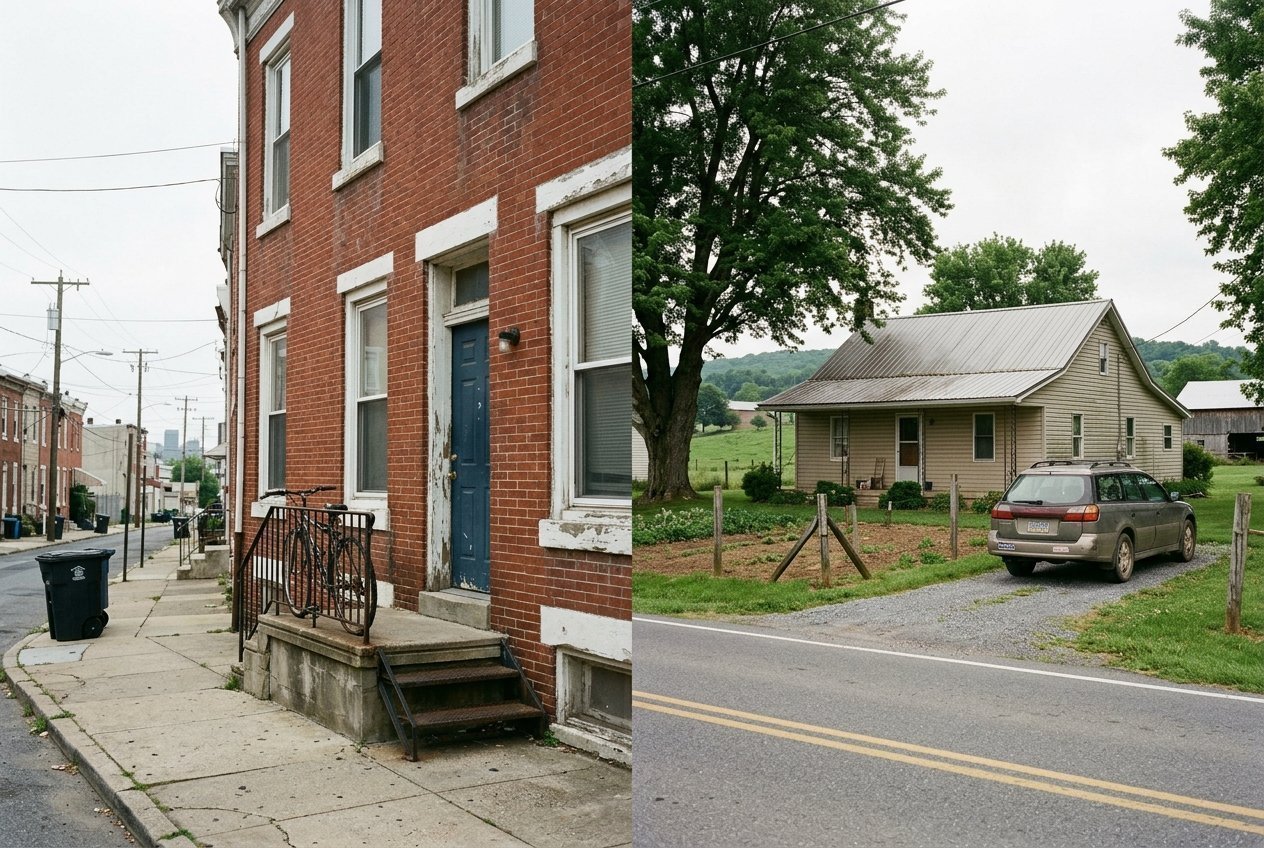
Urban and rural Pennsylvania moving conditions
Urban curb access and rural driveway conditions create different staging, parking, and carry plans.

City coverage

Major Pennsylvania cities we serve

Smaller communities are covered by the nearest service hub — ask a coordinator about yours.

Ask a coordinator

Pennsylvania planning

Urban, Suburban, and Rural Moves: What to Expect

Pennsylvania’s landscape is a mix of bustling cities, historic suburbs, and expansive rural communities. Each setting presents its own moving logistics and access considerations. In urban areas like Philadelphia or Pittsburgh, moves often involve navigating narrow streets, limited parking, and multi-story buildings. Access to elevators, loading docks, and curbside regulations can significantly affect the timing and complexity of your move. City moves often require coordination with building management and adherence to local ordinances regarding moving hours or parking permits.

Suburban moves in Pennsylvania typically offer more flexibility. Driveways, garages, and wider streets make loading and unloading more straightforward. However, some suburban neighborhoods have homeowners’ associations (HOAs) with specific rules about moving trucks, parking, or the timing of moves. It’s important to check these details in advance to avoid unexpected delays.

Rural moves present a different set of challenges. While there is usually ample space for trucks and equipment, access roads may be unpaved or narrow, and properties can be set back from main roads. Weather conditions and seasonal changes can also impact rural moves, especially in areas prone to snow or heavy rain. In some cases, specialized vehicles or equipment may be needed to reach remote homes or farms.

Across all settings, Pennsylvania’s mix of older brick homes, frame houses, and newer construction means that property access and protection are key considerations. At Sterling Oakbridge, we pay close attention to these details to ensure a smooth transition, regardless of your destination. Understanding the differences between urban, suburban, and rural moves can help you anticipate potential obstacles and plan accordingly.

Pennsylvania residential property types
Older rowhouses, detached homes, narrow lots, and curb access can change truck placement and carry distance.

How a Pennsylvania move works

Five checkpoints from first call to final room.

City rowhouse, suburban colonial, or Pocono cottage — the sequence stays the same. Each checkpoint produces the information the next one needs, so move day never becomes the first time someone discovers a narrow stair, a township parking rule, or a weather restriction.

  1. 1

    Conversation

    Tell us the dates, both addresses, the inventory, and what needs special care.

  2. 2

    Survey

    We inspect the home in person or by video and verify access and parking at both ends.

  3. 3

    Plan and quote

    You receive an itemized written scope with crew, materials, timing, and price.

  4. 4

    Prepare and move

    The crew protects the property, packs to the inventory, loads, and transports.

  5. 5

    Deliver and place

    Inventory is reconciled item by item, and furniture is placed to the agreed plan.

Ready when you are

Have the dates and both Pennsylvania addresses?Share the two properties and the inventory. We will turn the survey into a written, itemized estimate.

Pennsylvania planning

Pennsylvania’s Intrastate Regions and Moving Corridors

Pennsylvania’s geography and settlement patterns create distinct regions that shape how moving services are planned and delivered. While there is no single, universally recognized breakdown of Pennsylvania’s regions, several broad areas and corridors are commonly referenced in logistics and relocation planning. At Sterling Oakbridge, we recognize these patterns to help customers anticipate the unique challenges and opportunities of moving within the state.
Major Intrastate Regions

  • Southeastern Pennsylvania: This area includes Philadelphia and its surrounding suburbs, extending into the Delaware Valley. It is the most densely populated region, with a mix of urban, suburban, and older residential neighborhoods. Moves here often involve navigating narrow city streets, rowhomes, and high-rise buildings, as well as suburban developments with more modern layouts.
  • Central Pennsylvania: Encompassing cities like Harrisburg, Lancaster, and York, this region features a blend of small cities, rural communities, and agricultural land. The housing stock is diverse, and moves may require careful planning for access on rural roads or in historic town centers. For more detailed information about moving services in this area, see our Central Pa movers page.
  • Western Pennsylvania: Centered around Pittsburgh, this region includes both urban neighborhoods and outlying towns. The terrain is hillier, and older housing stock is common, especially in the city’s historic districts. Moves in this area may require specialized equipment for steep driveways or multi-story homes.
  • Northeastern Pennsylvania and the Poconos: Known for its scenic landscapes and vacation communities, the Poconos and surrounding counties attract both permanent residents and seasonal movers. Access can be affected by weather and terrain, especially in winter. For moves in this region, visit our Poconos movers page.
  • Northwestern and Northern Tier: These less densely populated areas include Erie and the rural counties along the New York border. Moves here often involve longer travel distances and planning for limited local infrastructure.

Key Moving Corridors

Pennsylvania’s major highways and rail lines form the backbone of intrastate moving corridors. The Pennsylvania Turnpike (I-76/I-276), I-80, I-81, and I-95 are critical for east-west and north-south moves. These routes connect the state’s largest cities and facilitate moves between regions, such as from Philadelphia to Pittsburgh or from Harrisburg to Scranton. The presence of these corridors allows for more predictable scheduling and logistics, but traffic congestion and weather can still impact timing, especially in winter months.

Regional Considerations for Moving

Each region’s housing stock, road network, and local regulations can affect the moving process. For example, urban moves in Philadelphia may require parking permits and careful coordination for elevator access, while rural moves in the Northern Tier may involve gravel roads and limited cell service. At Sterling Oakbridge, we tailor our planning and equipment to the specific needs of each region, ensuring that moves are as efficient and stress-free as possible.

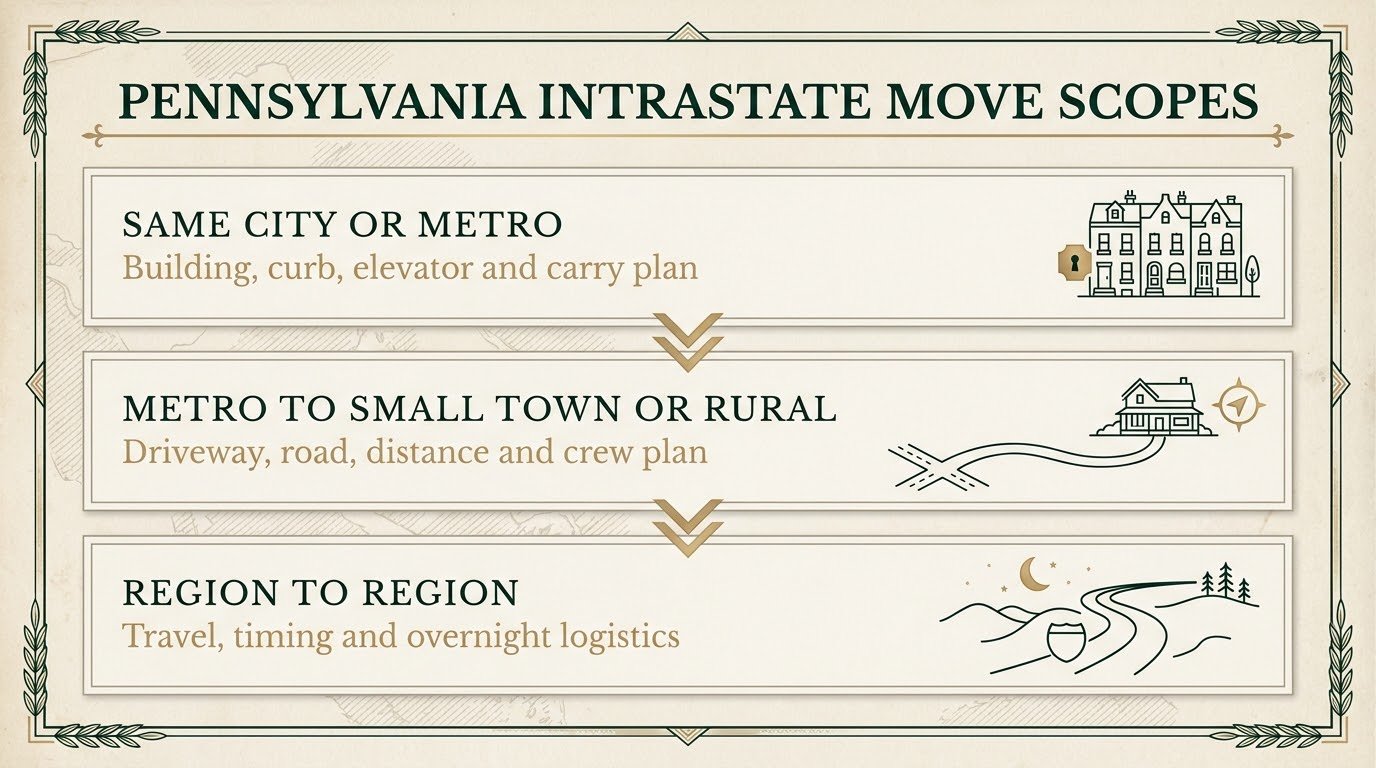
How move planning changes within the state.

County guides

Moving services by county

County geography shapes the plan as much as the town. Each county card lists key communities we cover inside it.

Montgomery County, Pennsylvania — atlas-style county outline
Delaware ValleyPop. ~865,000

Montgomery County

Main Line estates, suburban corporate centers, and historic Schuylkill valley communities.

Key communities

Norristown King of Prussia Lansdale

Explore Montgomery County
Bucks County, Pennsylvania — atlas-style county outline
Delaware ValleyPop. ~645,000

Bucks County

Historic farmhouses, Delaware River riverfront acreage, and planned master residential townships.

Key communities

Levittown Doylestown Newtown

Explore Bucks County
Chester County, Pennsylvania — atlas-style county outline
Brandywine ValleyPop. ~535,000

Chester County

Rolling equestrian properties, historic borough brick homes, and newer corporate-hub corridors.

Key communities

West Chester Coatesville Phoenixville

Explore Chester County
Delaware County, Pennsylvania — atlas-style county outline
Delaware ValleyPop. ~575,000

Delaware County

Dense inner-ring suburbs, mature tree-lined avenues, and active port-adjacent transit lines.

Key communities

Chester Drexel Hill Media

Explore Delaware County
Allegheny County, Pennsylvania — atlas-style county outline
Greater PittsburghPop. ~1,230,000

Allegheny County

River valleys, steep ridgeline topography, and diverse inner-and-outer Pittsburgh suburban townships.

Key communities

Pittsburgh suburbs Bethel Park Monroeville

Explore Allegheny County
Lancaster County, Pennsylvania — atlas-style county outline
Dutch CountryPop. ~555,000

Lancaster County

Agricultural plains, heritage downtown districts, and growing regional commerce corridors.

Key communities

Lancaster city Ephrata Lititz

Explore Lancaster County

Moving outside these primary six counties? We plan moves in all 67 Pennsylvania counties around nine regional planning points.

Check your township access

Pennsylvania planning

Pennsylvania Housing Stock: Property Types, Age, and Access

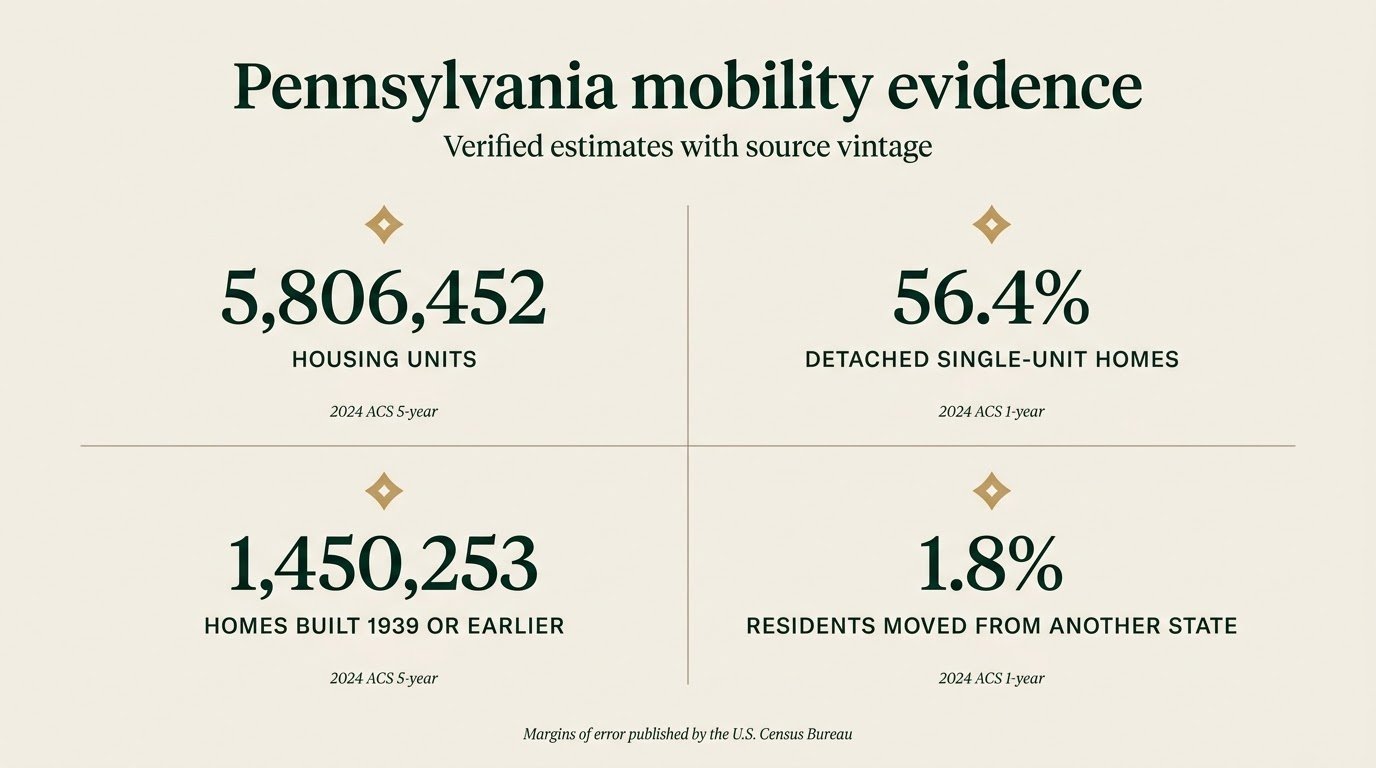
Pennsylvania’s housing landscape is defined by its diversity in property types, age of structures, and the resulting implications for moving access. According to the 2024 American Community Survey (ACS) 5-year estimate, Pennsylvania contains 5,806,452 housing units (margin of error: 672). Of these, 3,287,467 are detached single-unit homes (margin of error: 7,816), representing a significant portion of the state’s residential properties. The 2024 ACS 1-year estimate further clarifies that 56.4% of all housing units in Pennsylvania are detached single-unit structures, with a margin of error of 0.3 percentage points.[^1][^2]

This prevalence of detached homes means that many moves in Pennsylvania involve properties with driveways, yards, and direct street access. For us at Sterling Oakbridge, this often allows for straightforward truck parking and loading. However, the state’s housing stock is far from uniform. Pennsylvania is also home to a substantial number of attached homes, rowhouses, duplexes, and multi-unit buildings, especially in older urban centers such as Philadelphia, Pittsburgh, and Harrisburg. These property types can present unique challenges, such as limited curb space, narrow staircases, and the need for careful coordination with building management or neighbors.

A notable characteristic of Pennsylvania’s housing is its age. The 2024 ACS 5-year estimate reports that 1,450,253 housing units in the state were built in 1939 or earlier (margin of error: 8,177).[^3] This means that nearly one in four homes in Pennsylvania predates World War II. Older homes often feature architectural details such as steep staircases, small doorways, and limited hallways, which can complicate the moving process. In some cases, specialized equipment or additional labor may be required to safely move large furniture or appliances in and out of these properties.

Access considerations also vary by region and property type. In rural areas, long or sloped driveways, gravel roads, and limited street lighting can affect how and when a move is scheduled. In urban neighborhoods, parking restrictions, loading zones, and multi-story walk-ups are common factors. For Sterling Oakbridge, understanding these variables is essential to providing accurate estimates and ensuring a smooth moving day. We recommend that customers share as much information as possible about their property’s layout, access points, and any potential obstacles when planning a move.

For those interested in exploring the data further, the following sources provide detailed breakdowns of Pennsylvania’s housing characteristics:

[^1]: 2024 ACS 5-year B25024 [^2]: 2024 ACS 1-year Data Profile DP04 [^3]: 2024 ACS 5-year B25034

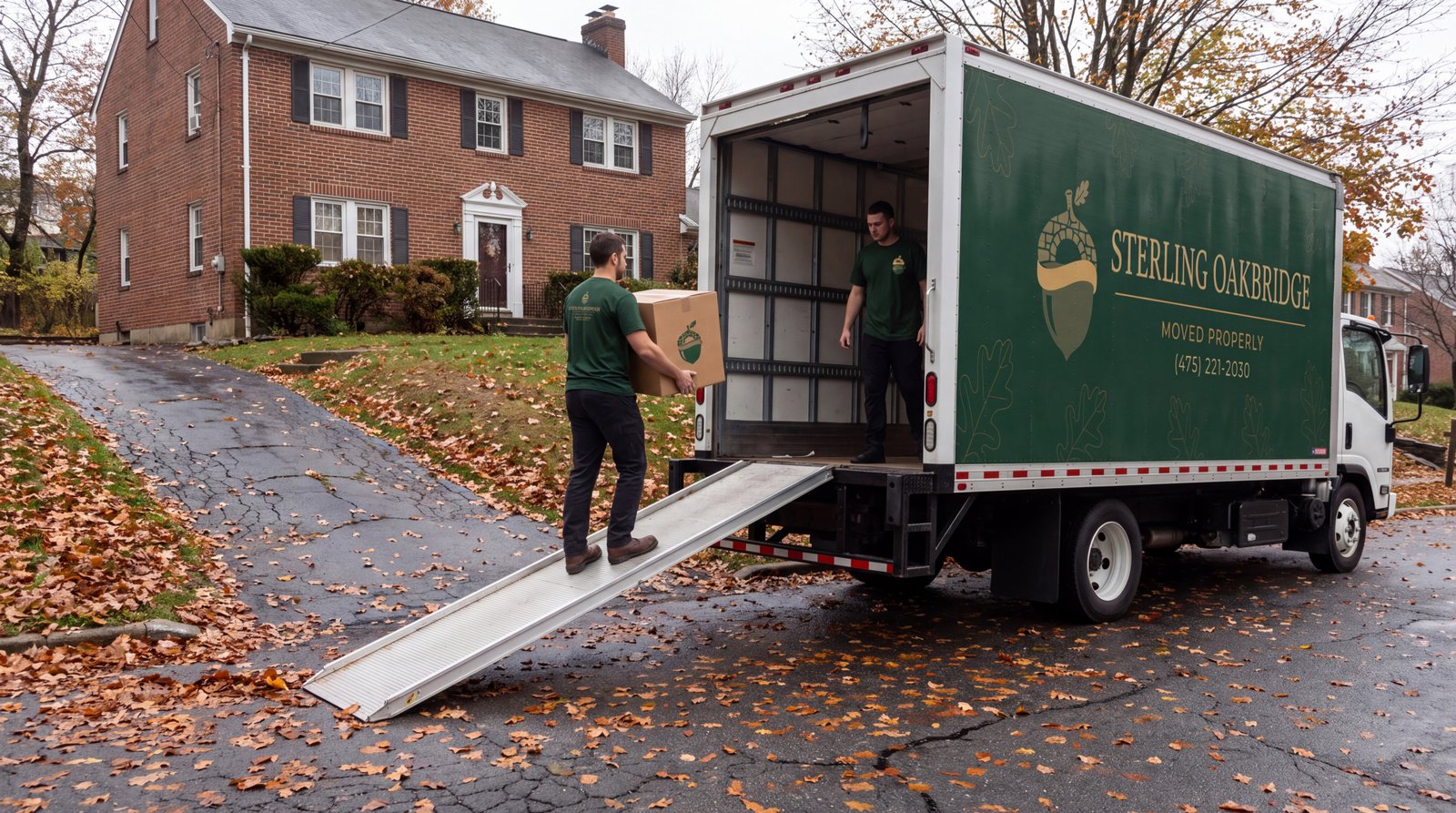
Sterling Oakbridge movers in branded green shirts carrying a branded carton up the ramp of a branded truck on a sloped Pennsylvania driveway
Sloped drives, curbs, stairs, and the distance to the truck should be checked before move day.

Pennsylvania planning

Pennsylvania Intrastate Mover Licensing and Consumer Protections

When planning a move within Pennsylvania, it is important to understand the state’s requirements for household-goods movers and the consumer protections in place. The Pennsylvania Public Utility Commission (PUC) is the regulatory authority responsible for licensing and overseeing movers who operate entirely within the state’s borders.

Mover Licensing and Insurance

All household-goods movers conducting intrastate moves in Pennsylvania must be licensed by the PUC. This licensing process requires movers to demonstrate that they meet specific standards for safety, reliability, and financial responsibility. In addition, licensed movers are required to maintain appropriate levels of insurance coverage. This protects both the moving company and the customer in the event of property damage or loss during the move. Customers can verify a mover’s license status directly through the PUC’s official website.[^1]

Written Estimates and Tariff-Based Charges

Pennsylvania law also requires that movers provide a written estimate before performing any intrastate move. This estimate must clearly outline the expected charges, which are based on the mover’s published tariff. The tariff is a standardized schedule of rates and services filed with the PUC. By requiring written estimates and tariff-based pricing, the state aims to ensure transparency and prevent unexpected costs for consumers. Customers should review their written estimate carefully and ask questions about any charges they do not understand.

Consumer Protections

The PUC’s regulations are designed to protect consumers from unlicensed or unscrupulous operators. If a dispute arises, customers have the right to file a complaint with the PUC, which will investigate and, if necessary, take enforcement action. Sterling Oakbridge encourages all customers to confirm that any moving company they consider is properly licensed and to retain copies of all written estimates and contracts for their records.

For more information about Pennsylvania’s mover licensing requirements and consumer protections, visit the Pennsylvania Public Utility Commission’s household-goods movers page.

[^1]: Pennsylvania Public Utility Commission

Accountability in the plan

A careful move leaves a paper trail.

Pennsylvania requires every licensed intrastate mover to provide a written estimate. We go further: three records are assembled during planning and travel with the move from the survey to final placement.

01 Condition record

Photographed inventory

Furniture, cartons, fragile finishes, and special-handling pieces are photographed before loading and reconciled item by item at delivery.

How the survey records condition

02 Written scope

Line-by-line planning

Crew, materials, protection, access, transport, timing, and placement appear as line items you can review and approve — the written estimate Pennsylvania law expects, explained before you sign.

What the written estimate includes

03 Property file

Access documentation

Township parking permissions, long driveways, grades, bridge clearances, and seasonal restrictions are collected and assigned to the plan before move day.

How difficult access is planned

Pennsylvania planning

Interstate Moves: What Pennsylvania Residents Need to Know

When planning a move from Pennsylvania to another state, it’s important to understand the difference between intrastate and interstate moves. An intrastate move is one that takes place entirely within Pennsylvania’s borders, while an interstate move involves crossing state lines, even if the distance is short. This distinction matters because different regulations and consumer protections apply depending on the type of move.

For interstate moves, federal regulations come into play. The Federal Motor Carrier Safety Administration (FMCSA) oversees interstate household goods moves, setting requirements for mover registration, insurance, and consumer rights. If you’re moving out of Pennsylvania, you’ll want to review the FMCSA’s guidelines on your rights and responsibilities as a moving customer. These include receiving a written estimate, understanding the terms of your bill of lading, and knowing how to file a claim if something goes wrong during your move.

In addition to federal requirements, your destination state may have its own rules regarding moving companies, vehicle entry, and household goods transport. It’s a good idea to check with the transportation or consumer protection agency in your new state to see if there are any additional steps you need to take before your move. Some states have specific requirements for registering vehicles, obtaining driver’s licenses, or importing certain items.

At Sterling Oakbridge, we help Pennsylvania residents navigate the complexities of interstate moves by staying informed about both federal and destination-state requirements. We encourage you to review official resources and reach out with any questions about the process. Being aware of these distinctions can help you avoid unexpected issues and ensure a smoother transition to your new home.

Pennsylvania planning

Seasonal and Weather-Related Moving Considerations

Pennsylvania’s climate and weather patterns can have a significant impact on moving logistics throughout the year. The state experiences all four seasons, with cold, snowy winters and warm, humid summers. As a result, planning your move around seasonal weather is an important consideration for both safety and efficiency.

One of the most important systems affecting travel and moving in Pennsylvania is PennDOT’s five-tier Weather Event Vehicle-Restriction Plan. This plan is activated during severe winter weather events and can impose a range of restrictions on vehicles traveling on state roads. The tiers range from basic advisories to full vehicle bans, depending on the severity of the weather. Restrictions may include requirements for commercial vehicles, such as right-lane-only travel, reduced speed limits, or even complete bans on certain types of vehicles, including moving trucks, during the most hazardous conditions.

For example, during a Tier 3 event, most commercial vehicles are prohibited — only loaded single trailers with chains or approved traction devices may continue. Tier 4 extends the prohibition to all commercial vehicles regardless of equipment, and a Tier 5 event closes the affected roadways to all traffic, including passenger cars, until conditions improve. These restrictions are designed to keep all travelers safe and to allow road crews to clear snow and ice more effectively.

PennDOT directs travelers to 511PA for up-to-date information on current road, speed, and vehicle restrictions. Before your move, it’s essential to check the latest updates on the PennDOT Winter Event Vehicle Restrictions page and the 511PA system. This will help you plan your route, avoid restricted areas, and adjust your moving schedule if necessary.

At Sterling Oakbridge, we monitor these weather-related restrictions closely and adjust our moving plans to prioritize safety and compliance. We recommend that customers remain flexible with their moving dates during the winter months and consider the potential for weather-related delays. By staying informed and planning ahead, you can minimize disruptions and ensure a safer move, no matter the season.

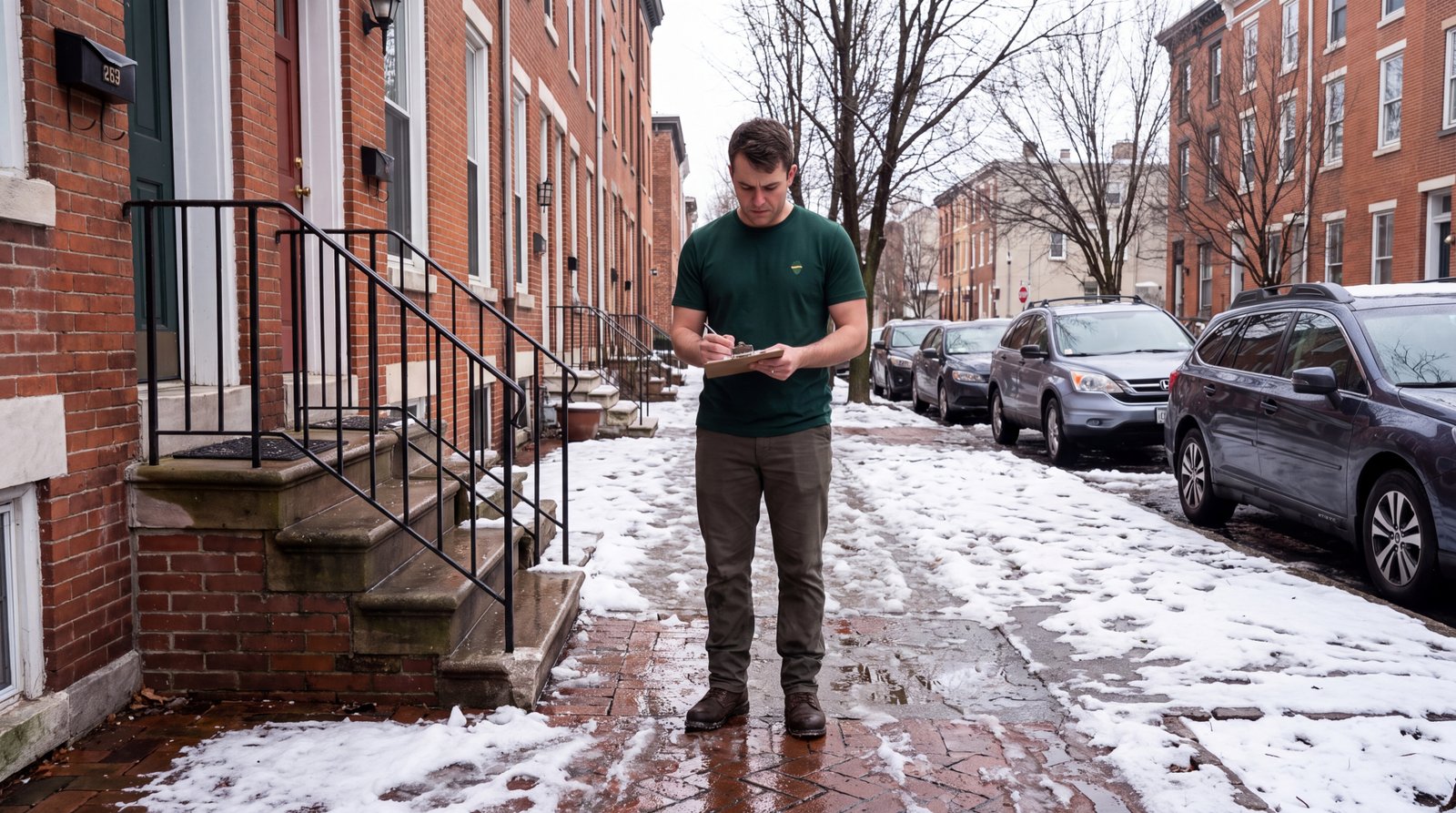
A Sterling Oakbridge coordinator in a branded green shirt checking the wet sidewalk and the path from the home to the street in winter
Patchy snow, wet pavement, and shaded sidewalks can affect timing, footing, and the path from the home to the truck.

Pennsylvania planning

Truck Routing, Parking, and Clearance in Pennsylvania

Navigating a moving truck through Pennsylvania requires careful attention to routing, parking, and clearance regulations. The state’s diverse mix of urban, suburban, and rural areas means that moving trucks may encounter a variety of road conditions and restrictions.

One of the key resources for truck routing in Pennsylvania is 511PA, which provides real-time information on vehicle restrictions, including low-clearance bridges. According to 511PA, state-route bridges with a vertical clearance below 13 feet 6 inches are identified and mapped, helping drivers of over-height vehicles avoid potential hazards. Attempting to drive a moving truck under a low-clearance bridge can result in serious damage and traffic disruptions, so it’s essential to plan your route in advance using this data.

For over-height or over-weight vehicles, Pennsylvania requires a permit routed through the PennDOT Automated Permit Routing Analysis System (APRAS), which assigns a route that accommodates the load's size and weight. A standard moving truck within legal dimensions does not need this permit. Failing to follow these routing requirements can lead to fines, delays, or even being forced to turn around and find an alternate route.

Parking considerations are also important, especially in densely populated areas or historic neighborhoods where street parking may be limited. Some municipalities require permits for temporary truck parking or restrict parking during certain hours. It’s a good idea to check with local authorities or property managers before your move to secure any necessary permissions and avoid last-minute complications.

At Sterling Oakbridge, we use the latest routing and clearance information from 511PA and PennDOT to plan safe, efficient moves for our customers. We encourage anyone moving in Pennsylvania to consult the 511PA Vehicle Restrictions map before their move and to be proactive about parking arrangements. Careful planning helps prevent unexpected obstacles and ensures a smoother moving day.

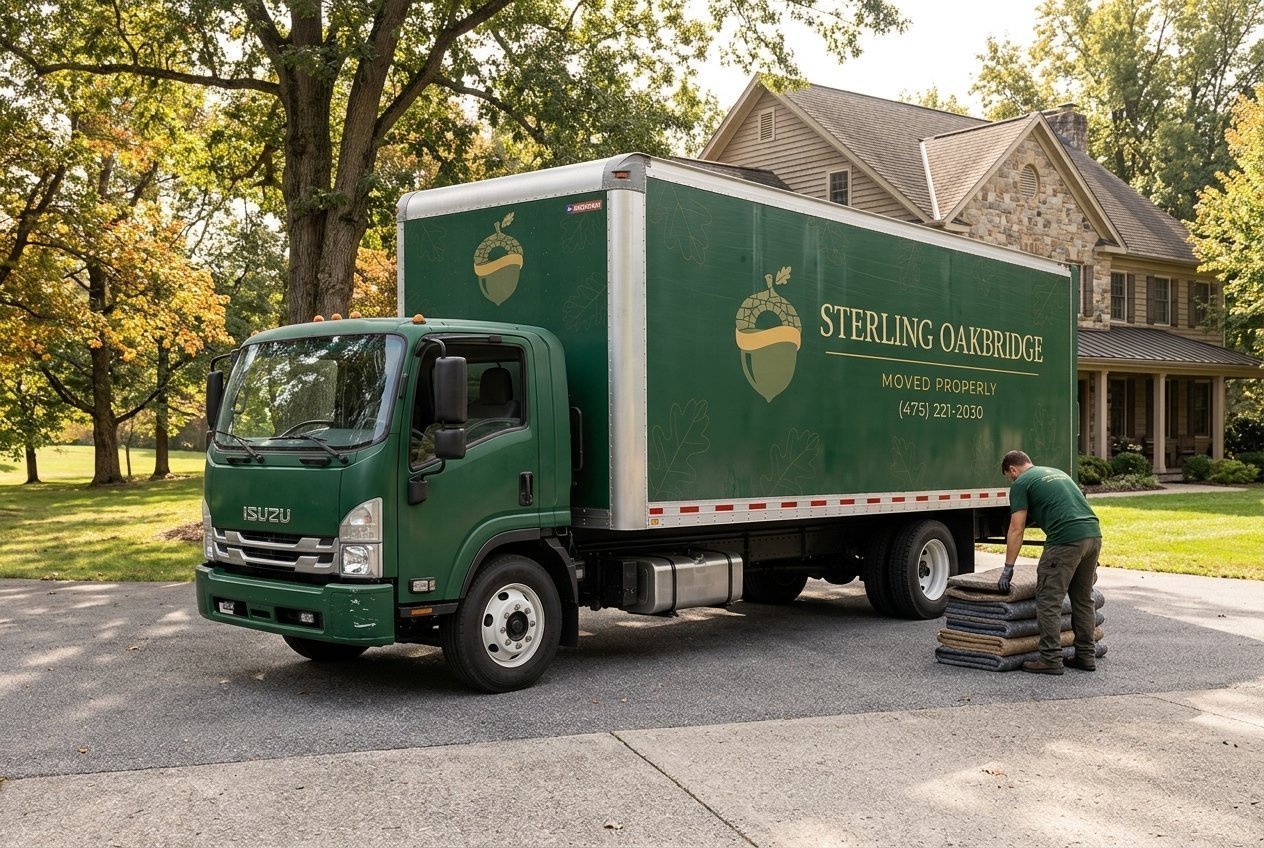
Sterling Oakbridge truck at a Pennsylvania home
A correctly scaled 26-foot truck needs a clear driveway, safe approach, and enough turning room before loading begins.

Moving routes

From around the block to across the country.

Most Pennsylvania moves are short and local. We plan all three ranges the same way — survey, written schedule, named crew.

Local · inside Pennsylvania

Intrastate Corridors

Point-to-point moves within the state — same-day or overnight, depending on distance.

Philadelphia Pittsburgh

Turnpike cross-state transit; scheduled dual-city elevator coordination.

Philadelphia Lancaster

Suburban Main Line to agrarian valley; direct single-day placement.

Pittsburgh Erie

I-79 northbound corridor; lake-effect weather timing and covered staging.

Scranton Allentown

Northeast Extension (I-476); seamless valley-to-valley transition.

View local moving service

Regional · Northeast network

Tri-State & Mid-Atlantic

Expedited corridors across our East Coast network of 14 states and Washington, DC, under 400 miles.

New York PoconosActive Guide

NYC apartment staging to lakefront estate; mountain grade navigation.

New York Philadelphia

I-95 corridor daily shuttle; freight dock and curb permit management.

Philadelphia Baltimore

Direct mid-Atlantic relocations with guaranteed delivery time slots.

Pittsburgh Columbus

I-70 west transport; seamless single-driver residential delivery.

Explore regional white-glove

Dedicated vansLong-distance · coast to coast

National Corridors

Dedicated cross-country trucks with locked delivery windows and no consolidation.

Pennsylvania FloridaMajor corridor

Primary East Coast retirement & corporate relocation lane (I-95 corridor).

Pennsylvania TexasSouthwest lane

Austin, Dallas-Fort Worth, and Houston executive relocations.

Pennsylvania CaliforniaCoast to coast

Bay Area & Southern California; climate-controlled cross-country transport.

Dedicated trucks, direct delivery windows

Long-distance service

* All routes include in-home or video survey, itemized written estimate, and dedicated carrier protection.

Request custom route scope

Pennsylvania planning

Packing, Specialty Items, and Access Challenges

Pennsylvania’s housing landscape is notably diverse, ranging from historic rowhomes in Philadelphia and brick Victorians in Pittsburgh to rural farmhouses and modern suburban developments. This variety presents unique packing and moving considerations, especially when it comes to older homes and properties with limited access. At Sterling Oakbridge, we recognize that each move in Pennsylvania can involve distinct challenges related to the age, layout, and accessibility of the residence.

Older homes, particularly those built before the mid-20th century, often feature narrow staircases, tight doorways, and multi-story layouts. These architectural details can complicate the movement of large furniture, appliances, or specialty items such as upright pianos and antique cabinets. In such cases, careful planning and specialized packing techniques are essential to protect both the home and the belongings being moved. Our approach includes the use of custom crating, padding, and disassembly when necessary to ensure safe passage through confined spaces.

Pennsylvania’s climate also plays a role in packing decisions. Seasonal humidity, winter snow, and spring rains can affect the condition of items during transit, especially for moves involving storage or longer distances. We recommend moisture-resistant packing materials and climate-appropriate wrapping for sensitive items, such as electronics, artwork, and musical instruments. For clients with fine art, antiques, or collectibles, our Fine Art & Antiques service provides tailored solutions, including museum-quality packing and secure handling protocols.

Access challenges are not limited to the interiors of homes. Many Pennsylvania neighborhoods, particularly in urban centers, have limited street parking, narrow alleys, or steep driveways. These factors can impact the logistics of loading and unloading, sometimes requiring smaller shuttle vehicles or additional labor to transport items between the residence and the moving truck. Our Packing Services are designed to adapt to these constraints, ensuring that belongings are packed securely for any required handling or transfer.

Whether you are moving from a historic townhouse in Harrisburg, a lakeside cottage in the Poconos, or a high-rise apartment in downtown Allentown, Sterling Oakbridge is equipped to address the full spectrum of packing and specialty moving needs. Our experience with Pennsylvania’s varied housing stock allows us to anticipate and manage the unique challenges that come with each property type, prioritizing the safety of your possessions and the protection of your home throughout the moving process.

Packing linens for a Pennsylvania move
One task at a time: folded linens go into clearly grouped kraft boxes before sealing with brown tape.

Pennsylvania planning

Observed Migration Flows: Pennsylvania Inbound Moves

Migration patterns in Pennsylvania reflect the state’s dynamic population and its connections to neighboring regions. According to the 2024 American Community Survey (ACS) 1-year estimate, 1.8% of Pennsylvania residents age one or older had lived in a different state one year earlier. The margin of error for this estimate is 0.1 percentage point, indicating a high level of statistical confidence in the reported figure. This data provides a snapshot of the proportion of Pennsylvania’s population that moved into the state from elsewhere in the United States during the previous year.

It is important to note that this percentage represents only those residents who relocated from another state, not the total number of people who moved within Pennsylvania or those who moved out of the state. The ACS data does not specify the exact origins or destinations of these movers, nor does it capture international migration or the reasons behind individual moves. However, the 1.8% figure offers a useful benchmark for understanding the scale of interstate migration affecting Pennsylvania’s communities.

For us at Sterling Oakbridge, these migration flows can influence demand for both inbound and outbound moving services. While the data does not provide granular details about specific counties or cities, it does highlight the ongoing movement of people into and out of Pennsylvania. This movement may be driven by factors such as employment opportunities, educational pursuits, family considerations, or lifestyle changes, though the ACS does not attribute specific causes to the observed flows.

For those interested in exploring the data further, the full ACS table is available from the U.S. Census Bureau: 2024 ACS 1-year Subject Table S0701. This resource provides additional context on migration patterns at the state level and can be a valuable tool for understanding broader demographic trends in Pennsylvania.

Verified mobility evidence used in this guide.

Pennsylvania planning

Limits of Migration Data: What We Know and Don’t Know About Why People Move

While the American Community Survey provides reliable statistics on the number of people moving into and out of Pennsylvania, it does not offer insight into the specific reasons behind these moves. The 2024 ACS 1-year estimate confirms that 1.8% of Pennsylvania residents age one or older had lived in a different state one year earlier, but the dataset does not include questions about motivations, such as employment, housing, family, or other personal factors.

As a moving company, Sterling Oakbridge relies on observed migration flows to anticipate service needs and plan for seasonal demand. However, we do not have access to Pennsylvania-specific data on why individuals or families choose to relocate. Any assumptions about the causes of migration—whether related to job changes, educational opportunities, cost of living, or lifestyle preferences—would be speculative and are not supported by the ACS data referenced here.

It is also important to recognize that the ACS migration statistics do not capture all aspects of population movement. The data is limited to residents age one or older and does not account for international arrivals, temporary relocations, or moves within the same state. For those seeking a deeper understanding of migration motivations, additional research or surveys focused on reasons for moving would be required. Until such information is available, our guidance and planning are based solely on the observed flows reported by the ACS, without inferring or attributing specific causes to Pennsylvania’s migration patterns.

Pennsylvania planning

Planning Moves to and from Adjacent States

When planning a move between Pennsylvania and its neighboring states, it is important to understand the unique logistical and regulatory considerations that can arise. Pennsylvania shares borders with New York, New Jersey, Delaware, Maryland, West Virginia, and Ohio. Each of these states has its own set of moving regulations, licensing requirements, and transportation rules that may differ from those in Pennsylvania. For example, some states may have specific requirements for commercial vehicle entry, weight restrictions, or documentation for household goods in transit.

At Sterling Oakbridge, we recognize that moving across state lines—even to a neighboring state—can involve more than just a short drive. While there is no verified corridor data available for specific migration flows between Pennsylvania and its adjacent states, it is still essential to plan ahead. This includes confirming the accessibility of both origin and destination addresses, understanding any local parking or loading restrictions, and ensuring that all necessary paperwork is in order for a smooth transition.

Regulatory distinctions between states can affect the timing and logistics of your move. For instance, some states may require additional permits for large moving trucks or have different rules regarding the transport of certain items. It is also important to be aware of any toll roads or restricted routes that may impact the moving process. By staying informed about these differences, you can help prevent unexpected delays or complications on moving day.

Sterling Oakbridge is committed to helping you navigate these complexities. Our team is familiar with the regulatory landscape of Pennsylvania and its neighboring states, and we can provide guidance on the best practices for planning your move. Whether you are relocating to a nearby city in New Jersey or moving from Pittsburgh to Cleveland, careful preparation and an understanding of state-specific requirements are key to a successful move.

Pennsylvania planning

Long-Distance and Cross-Country Moves from Pennsylvania

Long-distance and cross-country moves from Pennsylvania require careful logistical planning and a thorough understanding of regulatory requirements. These moves typically involve transporting household goods over hundreds or even thousands of miles, often crossing multiple state lines. Each state along the route may have its own transportation regulations, including rules about vehicle size, weight limits, and required documentation. It is essential to ensure that all aspects of the move comply with these regulations to avoid delays or complications.

Route planning is a critical component of any long-distance move. Factors such as road conditions, seasonal weather patterns, and potential construction zones can all impact the timing and safety of your relocation. For example, winter weather in Pennsylvania and surrounding states can create hazardous driving conditions, while summer roadwork may lead to detours or traffic congestion. By mapping out the most efficient and reliable routes in advance, you can help minimize the risk of unexpected disruptions.

Another important consideration is the coordination of pickup and delivery schedules. Long-distance moves often require precise timing to ensure that your belongings arrive when you need them. This may involve coordinating with building management at both the origin and destination, as well as accounting for any required layovers or storage needs along the way. Proper communication and planning can help ensure a seamless transition from your current home in Pennsylvania to your new location, whether it is across the country or several states away.

Sterling Oakbridge offers guidance and support for long-distance moves originating in Pennsylvania. We understand the complexities involved in these relocations and can assist with route planning, regulatory compliance, and scheduling. For more information about our capabilities, please visit our Long-Distance Moving service page.

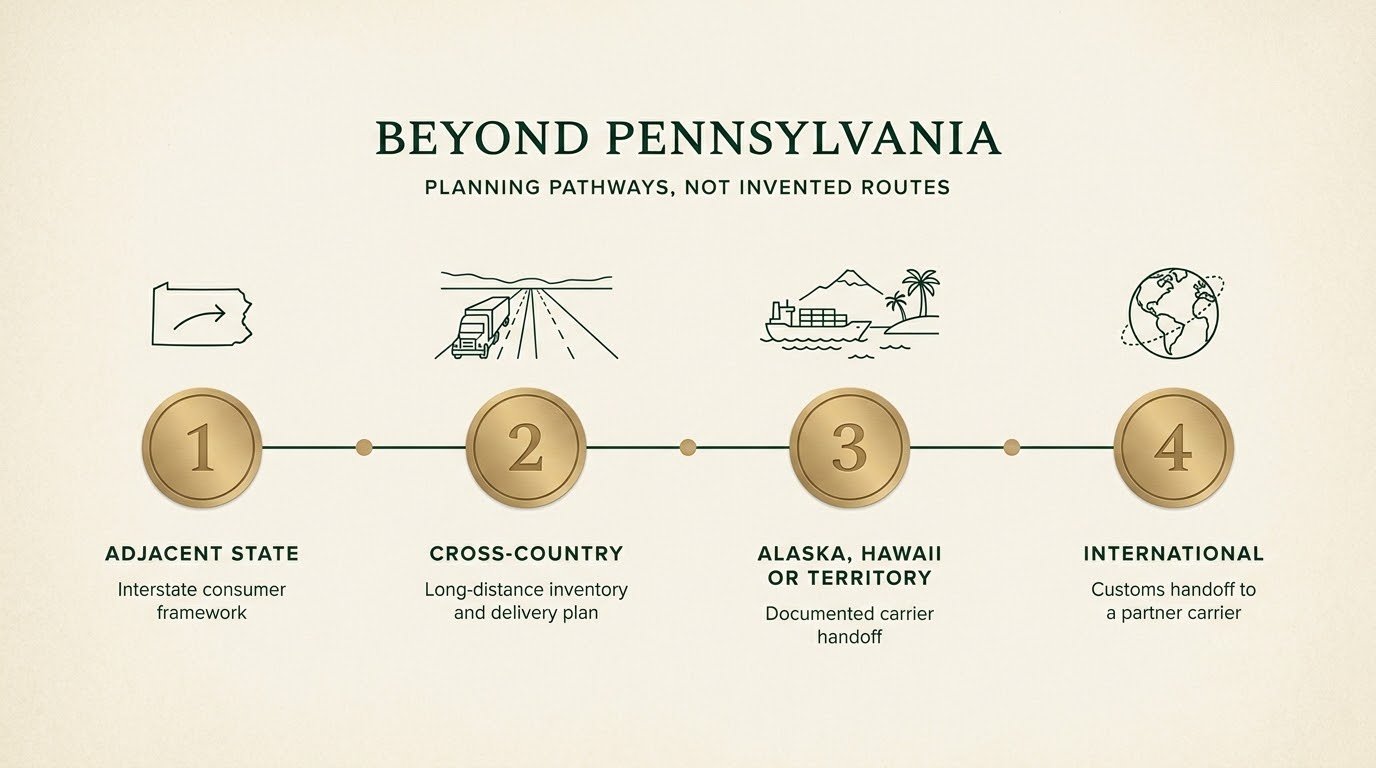
Planning pathways for moves that leave the state.

Pennsylvania planning

Noncontiguous and International Moves: Handoff and Planning

Moves from Pennsylvania to noncontiguous destinations such as Alaska, Hawaii, or international locations require a different approach compared to moves within the continental United States. These relocations typically involve a handoff process, where your household goods are transferred from ground transportation to another carrier or mode of transport, such as air or sea freight. It is important to plan for these transitions, as they can introduce additional logistical steps and timing considerations.

For moves to Alaska or Hawaii, your belongings will generally need to be transported by truck to a designated port or terminal before being loaded onto a ship or plane. This process may require coordination with multiple carriers and adherence to specific shipping schedules. It is also important to be aware of any restrictions on the types of items that can be shipped to these destinations, as well as any additional documentation that may be required.

International moves from Pennsylvania involve even more complex planning. In addition to the domestic leg of the journey, you will need to consider customs regulations, import restrictions, and destination-country requirements. While Sterling Oakbridge can assist with the initial stages of your move and coordinate the handoff to reputable international carriers, we do not provide direct ocean freight or customs brokerage services. Instead, we focus on ensuring that your belongings are properly prepared and documented for the next stage of their journey.

Careful planning and clear communication are essential for noncontiguous and international moves. By understanding the handoff process and working with experienced professionals, you can help ensure that your relocation from Pennsylvania proceeds as smoothly as possible.

Pennsylvania planning

Cost Drivers and Regional Price Variation in Pennsylvania

When planning a move within or to Pennsylvania, understanding the factors that influence moving costs is essential for effective budgeting. At Sterling Oakbridge, we recognize that customers often seek clarity on whether moving costs are consistent across the state or if regional differences exist. However, there is no single, verified source that establishes regional price parity or cost-of-living data specific to moving services within Pennsylvania. This means that while some general cost-of-living indices exist for housing, utilities, or groceries, these do not directly translate to moving service rates.

Several factors can influence the cost of a move in Pennsylvania. The most significant drivers include the total volume or weight of your belongings, the distance between your origin and destination, and the specific services you select—such as packing, storage, or specialty handling. Urban areas like Philadelphia or Pittsburgh may present unique logistical challenges, such as parking restrictions or building access limitations, which can affect labor time and, consequently, the final cost. In contrast, moves in rural or suburban regions might involve longer travel distances but fewer access constraints.

It is important to note that while some customers expect moving rates to mirror local cost-of-living differences, moving service pricing is more closely tied to operational logistics, fuel costs, and seasonal demand than to regional economic indices. For example, peak moving season in Pennsylvania typically aligns with late spring through summer, when demand is highest and rates may reflect increased scheduling pressure. Conversely, off-peak periods may offer more flexibility and potentially lower costs, regardless of the specific region within the state.

Because there is no standardized regional pricing for moving services in Pennsylvania, we recommend that customers request a detailed, written estimate tailored to their unique circumstances. This approach ensures transparency and helps avoid surprises on moving day. At Sterling Oakbridge, we are committed to providing clear, evidence-based guidance to help you make informed decisions about your move.

Pennsylvania planning

Planning Your Pennsylvania Move: Timeline and Key Steps

A well-organized move in Pennsylvania starts with a clear timeline and a checklist of essential steps. While every move is unique, certain planning milestones are common across most relocations. At Sterling Oakbridge, we encourage customers to begin preparations as early as possible to ensure a smooth transition.

8 Weeks Before Moving: - Begin researching moving companies and request written estimates. This is the time to compare service options and clarify any questions about logistics or pricing. - Take inventory of your belongings and identify items that may require special handling or storage. - If you need packing assistance, consider scheduling Packing Services early, as availability can be limited during peak moving periods.

6 Weeks Before Moving: - Start sorting and decluttering. Donate, sell, or dispose of items you do not plan to move. - Notify your landlord or property manager if you are renting, and review your lease for move-out requirements. - Begin gathering packing supplies if you plan to pack yourself.

4 Weeks Before Moving: - Confirm your moving date and finalize your booking with your chosen mover. - Arrange for Storage if you need to temporarily store items before, during, or after your move. - Notify utility providers, schools, and other relevant parties of your upcoming address change.

2 Weeks Before Moving: - Begin packing non-essential items and label boxes clearly. - Set aside important documents, valuables, and essentials you will need immediately upon arrival. - Confirm parking or elevator reservations at both your origin and destination, especially in urban areas where access may be restricted.

1 Week Before Moving: - Pack a moving-day essentials kit with medications, chargers, snacks, and basic cleaning supplies. - Double-check arrangements with your moving company and review your inventory list.

Moving Day: - Be present to oversee the loading process and answer any last-minute questions. - Conduct a final walkthrough of your old residence to ensure nothing is left behind.

By following this timeline and checklist, you can minimize stress and reduce the risk of overlooked details. For moves in Pennsylvania, it is especially important to account for local regulations, building access, and seasonal weather conditions, all of which can impact your moving experience.

Pennsylvania planning

Service Options, Routes, and Final Checklist

Sterling Oakbridge offers a comprehensive range of moving services to meet the diverse needs of Pennsylvania residents. Whether you are relocating within a city, moving across the state, or require specialized handling, our service options are designed to provide flexibility and peace of mind.

For those planning a local move, our Local Moving service covers short-distance relocations within Pennsylvania communities. This option is ideal for moves within the same city or metropolitan area, where familiarity with local routes and regulations can help streamline the process. For customers seeking an elevated level of care, our White-Glove Moving service provides enhanced attention to detail, including specialized packing, handling of delicate or high-value items, and tailored logistics planning.

Route planning is a critical component of any successful move. In Pennsylvania, factors such as urban congestion, rural road access, and seasonal weather conditions can influence the most efficient path between your origin and destination. Our team evaluates these considerations to help minimize transit time and reduce the risk of delays. For moves involving multiple stops or storage needs, we coordinate logistics to ensure your belongings are handled securely at every stage.

Before your moving day arrives, we recommend reviewing a final checklist: - Confirm your service selections and review your written estimate. - Verify access arrangements at both your current and new locations, including parking, elevator reservations, and building entry requirements. - Ensure all items are packed, labeled, and ready for transport, with fragile or high-value items clearly identified. - Prepare a list of essential contacts and keep important documents accessible.

By considering your service options, planning your route, and following a thorough checklist, you can help ensure a smooth and efficient move within Pennsylvania. Sterling Oakbridge is committed to supporting you at every step, with service offerings tailored to the unique demands of the state.

Verified data

Pennsylvania planning data

Planning factEstimateVintageSource
511PA identifies state-route bridges with vertical clearance below 13 feet 6 inches, and directs over-height or over-weight vehicle routing to PennDOT APRAS.2026Source
The 2024 ACS 5-year estimate counts 5,806,452 housing units in Pennsylvania, with a margin of error of 672.5,806,452 housing units ± 6722024Source
In the 2024 ACS 1-year estimate, 1.8% of Pennsylvania residents age one or older had lived in a different state one year earlier; the margin of error was 0.1 percentage point.1.8 percent of population age 1+ ± 0.12024Source
In the 2024 ACS 1-year estimate, 56.4% of Pennsylvania housing units were detached single-unit structures; the margin of error was 0.3 percentage points.56.4 percent of housing units ± 0.32024Source
The 2024 ACS 5-year estimate counts 3,287,467 detached single-unit homes in Pennsylvania, with a margin of error of 7,816.3,287,467 housing units ± 7,8162024Source
Household-goods movers operating within Pennsylvania must be licensed by the Pennsylvania Public Utility Commission and maintain required insurance.2026Source
The 2024 ACS 5-year estimate counts 1,450,253 Pennsylvania housing units built in 1939 or earlier, with a margin of error of 8,177.1,450,253 housing units ± 8,1772024Source
PennDOT uses a five-tier Weather Event Vehicle-Restriction Plan; restrictions can include commercial-vehicle right-lane controls and vehicle bans, and PennDOT directs travelers to 511PA for current road, speed, and vehicle restrictions.2026Source
The Pennsylvania Public Utility Commission says a household-goods mover must provide a written estimate and base charges on the applicable tariff.2026Source

Planning answers

Know how a Pennsylvania move will be run.

Licensing, written estimates, weather windows, and access — the best time to resolve them is before the calendar is committed.

Ask a coordinator
What are the main differences between moving within Pennsylvania’s cities, suburbs, and rural areas?

Moving within Pennsylvania varies by setting. Urban moves often involve narrow streets, limited parking, and multi-story buildings, requiring coordination for elevator access and parking permits. Suburban moves typically offer easier truck access but may have homeowners’ association rules. Rural moves can involve long driveways, unpaved roads, and weather-related challenges. At Sterling Oakbridge, we tailor our planning to address these unique logistical and access considerations for each environment.

How does Pennsylvania regulate moving companies for intrastate moves?

All household-goods movers operating within Pennsylvania must be licensed by the Pennsylvania Public Utility Commission (PUC) and maintain required insurance. Movers are also required to provide a written estimate based on their published tariff before performing any move. These regulations are designed to protect consumers and ensure transparency. You can verify a mover’s license status on the PUC’s official website: Pennsylvania Public Utility Commission.

How does the age and type of Pennsylvania housing affect my move?

Pennsylvania’s housing stock is diverse, with 56.4% of homes being detached single-unit structures and nearly one in four homes built before 1940. Older homes often have narrow staircases and small doorways, which can complicate moving large items. Urban areas may feature rowhouses and multi-unit buildings with limited access, while rural properties may have long or sloped driveways. Sharing property details with us helps ensure a smooth move. Source: 2024 ACS

What should I know about truck routing, parking, and bridge clearances in Pennsylvania?

Pennsylvania’s 511PA system identifies state-route bridges with vertical clearance below 13 feet 6 inches and provides real-time vehicle restriction information. Over-height or over-weight moving trucks must use approved routes via PennDOT’s APRAS system. In urban areas, parking permits may be required. We use these resources to plan safe, legal routes and recommend checking 511PA Vehicle Restrictions before your move.

How can Pennsylvania’s weather and seasons impact my move?

Pennsylvania experiences all four seasons, and severe winter weather can trigger PennDOT’s five-tier Weather Event Vehicle-Restriction Plan. This may include right-lane-only travel or vehicle bans for moving trucks. We monitor these restrictions and recommend checking PennDOT Winter Event Vehicle Restrictions and 511PA for updates. Flexibility with moving dates during winter is advised.

What are the key steps and recommended timeline for planning a move in Pennsylvania?

Start planning at least eight weeks in advance: research movers, request written estimates, and take inventory. Six weeks out, begin sorting and decluttering. Four weeks before, confirm your moving date and arrange for storage if needed. Two weeks out, pack non-essentials and confirm access arrangements. One week before, pack essentials and double-check details. On moving day, oversee loading and do a final walkthrough. Early preparation helps ensure a smooth move.

How do I prepare for packing and moving specialty or fragile items in Pennsylvania homes?

Older Pennsylvania homes often have tight spaces and unique layouts, making it important to plan for moving large or fragile items. We recommend using moisture-resistant packing materials and, for specialty items like fine art or antiques, considering custom crating or museum-quality packing. Our Packing Services and Fine Art & Antiques solutions are designed to address these challenges and protect your belongings.

What consumer protections are available if I have a dispute with a Pennsylvania mover?

If a dispute arises during an intrastate move, you have the right to file a complaint with the Pennsylvania Public Utility Commission (PUC), which will investigate and may take enforcement action. Always retain copies of your written estimate and contract. For more information, visit the PUC’s household-goods movers page.

How common are interstate moves into or out of Pennsylvania?

According to the 2024 American Community Survey, 1.8% of Pennsylvania residents age one or older had lived in a different state one year earlier. This figure reflects the proportion of inbound interstate movers, but does not include those moving within Pennsylvania or internationally. Source: 2024 ACS

A plan for your actual move

Request your free written estimate.

Meet a coordinator at your home or walk us through both Pennsylvania properties by live video. We will review the inventory, access, packing, timing, and placement before preparing an itemized written quote.

A Sterling Oakbridge move coordinator in the planning office