New York / City relocation guide

Moving to Utica

Utica is a Mohawk Valley city of pre-war doubles, its own rail station and a pay-per-bag trash system. This guide helps you compare areas, plan the everyday basics and prepare the practical steps of arriving.

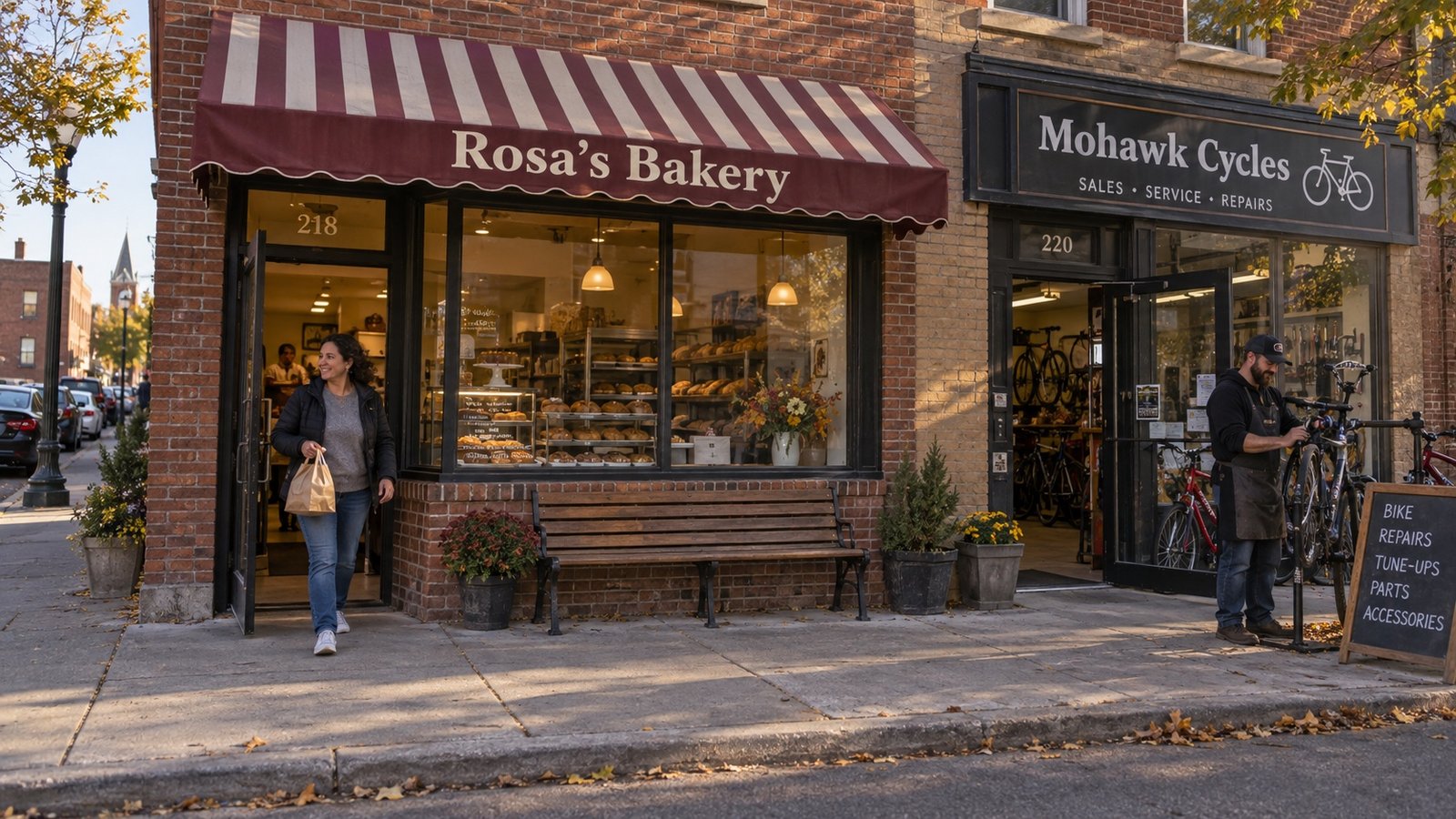
Brick bakery and bicycle shop with a bench placed along the window and clear entrances
Try the everyday errands around a new address, not only the journey to work.

01 /

Start with the decision in front of you

Utica asks three different questions of a newcomer, and this guide is organized around them. If you are still choosing where to live, start with the orientation and the neighborhood comparison, then read the housing section — Utica's market is split between owners and renters, mostly in older houses and the city's signature two-to-four-unit doubles, and the differences that matter are stairs, heat, parking and what the rent includes. If you are moving with children, go to the schools section for the registration mechanics. If the address is already decided, the second half of the guide walks through the practical setup — utilities, waste, the curb for the moving truck, building access and the arrival sequence.

One caution before any comparison: the City of Utica is one municipality among several, and "Utica" postal addresses reach into New Hartford, Whitestown and other surrounding towns. Confirm the municipality before comparing procedures.

02 /

Understand Utica before comparing addresses

Utica sits in the Mohawk Valley on the old Erie Canal corridor, co-seat of Oneida County with Rome. The city grew on textiles and rail; its downtown still holds the blocks of that era, and Union Station — a National Register building — still takes Amtrak trains. The I-90 corridor and the Mohawk River frame the daily geography.

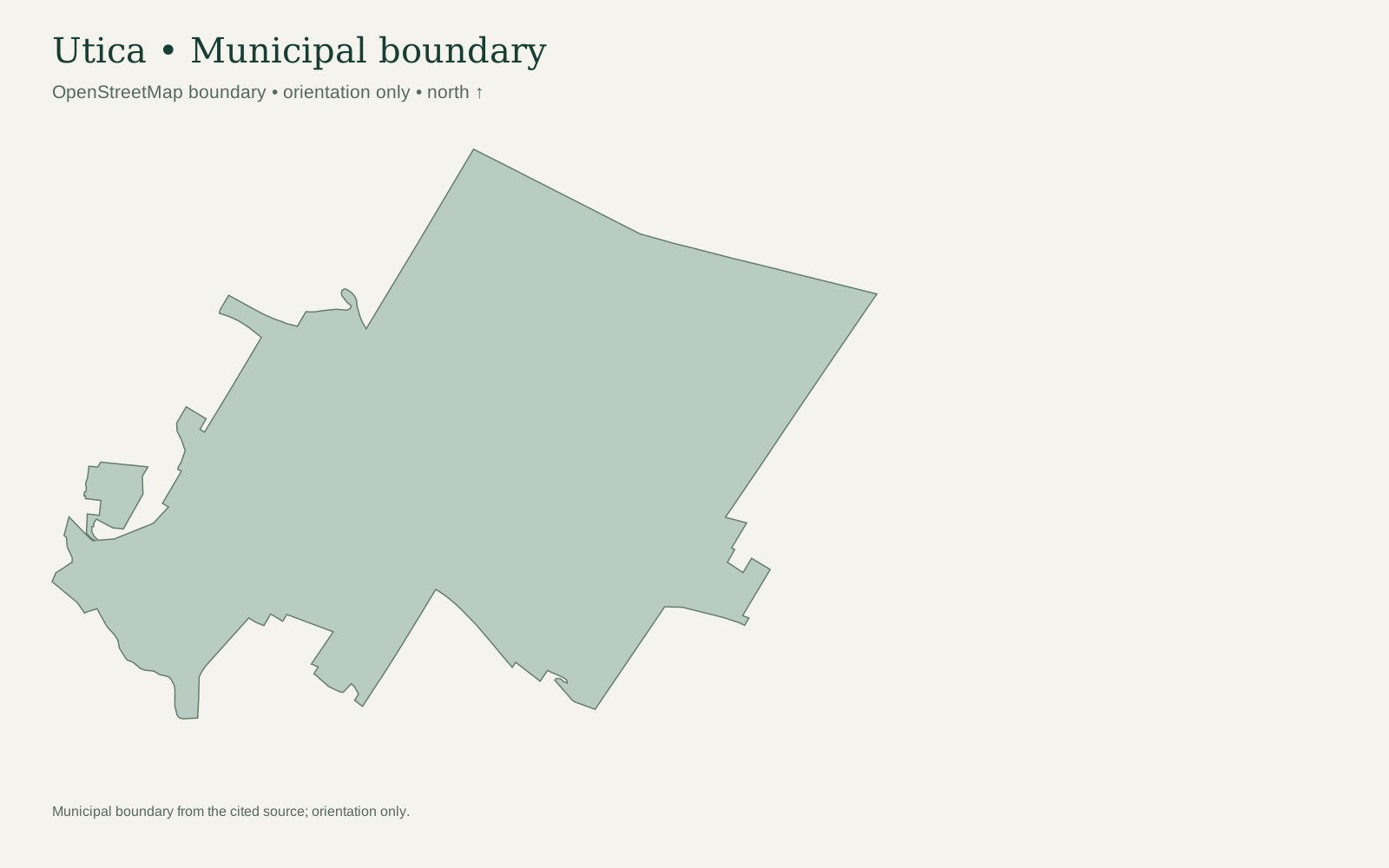
For a mover, the practical fact is the stock: about half the city's homes were built before 1940, and nearly two in five sit in two-to-four-unit buildings. The differences that matter between addresses are physical — stairs, porches, drives — more than the name of the area. The map below shows the municipal boundary; confirm whether a "Utica" address is actually in the city before comparing procedures.

Utica orientation map with numbered area key
Use the numbered key to locate the areas discussed below. Open full-size map.

03 /

Find the area that fits your routine

Utica's documented areas are few enough to be honest about: the six modules below are what the record supports, chosen to contrast housing types and access patterns. They are starting points for inspection, not rankings — building conditions vary house by house.

Downtown & Bagg's Square

The city's rail-era core: Union Station — a National Register building — still takes Amtrak trains, and the blocks around Bagg's Square hold the older commercial fabric.

Union Station record (NPS) ↗
Housing & setting
Apartments and lofts over and behind the commercial blocks; expect managed entries and stairs rather than private driveways.
Daily travel
The walkable core; Centro routes converge here, and the station puts intercity rail in the neighborhood.
Before choosing
Confirm the entry arrangement and where a truck can stand on the older blocks; agree any window rules with the property early.
Rutger Park

The mansion district the Landmarks Society of Greater Utica works to preserve — including the Roscoe Conkling house, a National Historic Landmark.

Landmarks Society of Greater Utica ↗
Housing & setting
Large period houses, some divided into apartments; the city's Scenic & Historic District rules add an exterior-work review step here.
Daily travel
Close to downtown; buses on the bordering avenues.
Before choosing
Large older floor plans mean measuring the carry route; check what the district review means for the property.

Genesee Street corridor

The corridor south from downtown holds some of the city's landmark apartment stock — the Olbiston Flats on Genesee Street is on the National Register.

Olbiston Flats record (NPS) ↗
Housing & setting
Older apartment buildings and doubles along and off the corridor; stairs and shared entries are the default.
Daily travel
The corridor carries the main buses; a straight ride to downtown.
Before choosing
Ask about elevator availability in the larger buildings and the entry arrangement in the smaller ones.

West Utica

Residential blocks west of the center, a mix of older doubles and singles from the city's growth decades.

Utica housing data (Census Reporter) ↗
Housing & setting
Two-to-four-unit buildings and detached houses; about 38% of the city's homes sit in small multi-family buildings (ACS 2024 5-year).
Daily travel
Bus routes on the main corridors; downtown is close.
Before choosing
Measure the staircase and agree driveway use; find the collection night and the blue-bag routine early.

East Utica

Residential streets east of downtown toward the city line and the adjoining towns.

Planning and zoning (City of Utica) ↗
Housing & setting
A mix of older houses and post-war stock; typically easier driveway access than the center.
Daily travel
Car-oriented; check whether a Centro route actually serves your block.
Before choosing
Confirm the address is in the city — the surrounding towns are separate municipalities with separate rules.

South Utica

The residential south end, with post-war singles among older stock — the city's most suburban-feeling blocks.

City districts and services (City of Utica) ↗
Housing & setting
Predominantly single-family houses with yards and driveways; the easiest truck access in the city.
Daily travel
Car-oriented; test the actual commute from the specific address.
Before choosing
Confirm garage and driveway dimensions; check what the sale or lease says about snow clearing.

04 /

Compare the whole home, not just the advertised payment

Utica's market is split almost evenly: 50.3% of households rent their home (ACS 2024 5-year, via Census Reporter). The median gross rent is $951 a month and the median owner-occupied value $151,300 — medians describe the whole city at once, not the apartment in front of you; use them only to sanity-check a budget.

The stock explains the market. About 50% of units were built before 1940, about 43% are detached single-family houses, and about 38% sit in two-to-four-unit buildings — the doubles with their stacked porches. For a mover this means the differences that matter are physical: which floor, stairs or a driveway, how heat is supplied, and who clears the sidewalk after snow.

When comparing two homes, compare what the payment includes — heat, hot water, parking, snow clearing — the lease's move-in and move-out rules, and the condition of the access route: porch boards, stair rails, door widths. Ask early how trash works at the property: Utica runs a pay-per-bag system, and the blue bags are a weekly household expense to know about.

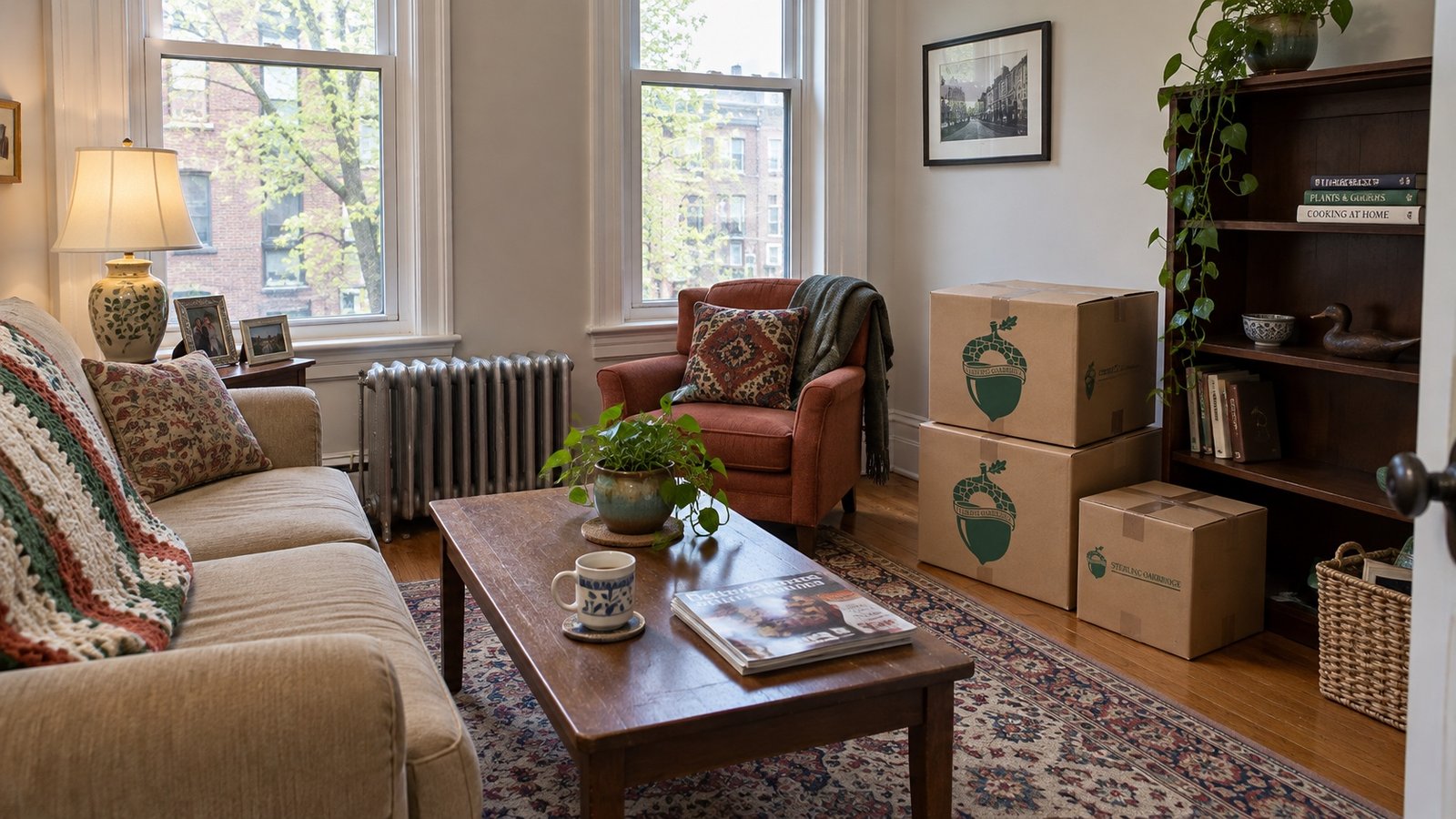
A furnished living room in an older apartment with sealed moving boxes by the wall.
Compare usable rooms, heat arrangements and what the rent actually includes.

05 /

Test the complete daily journey

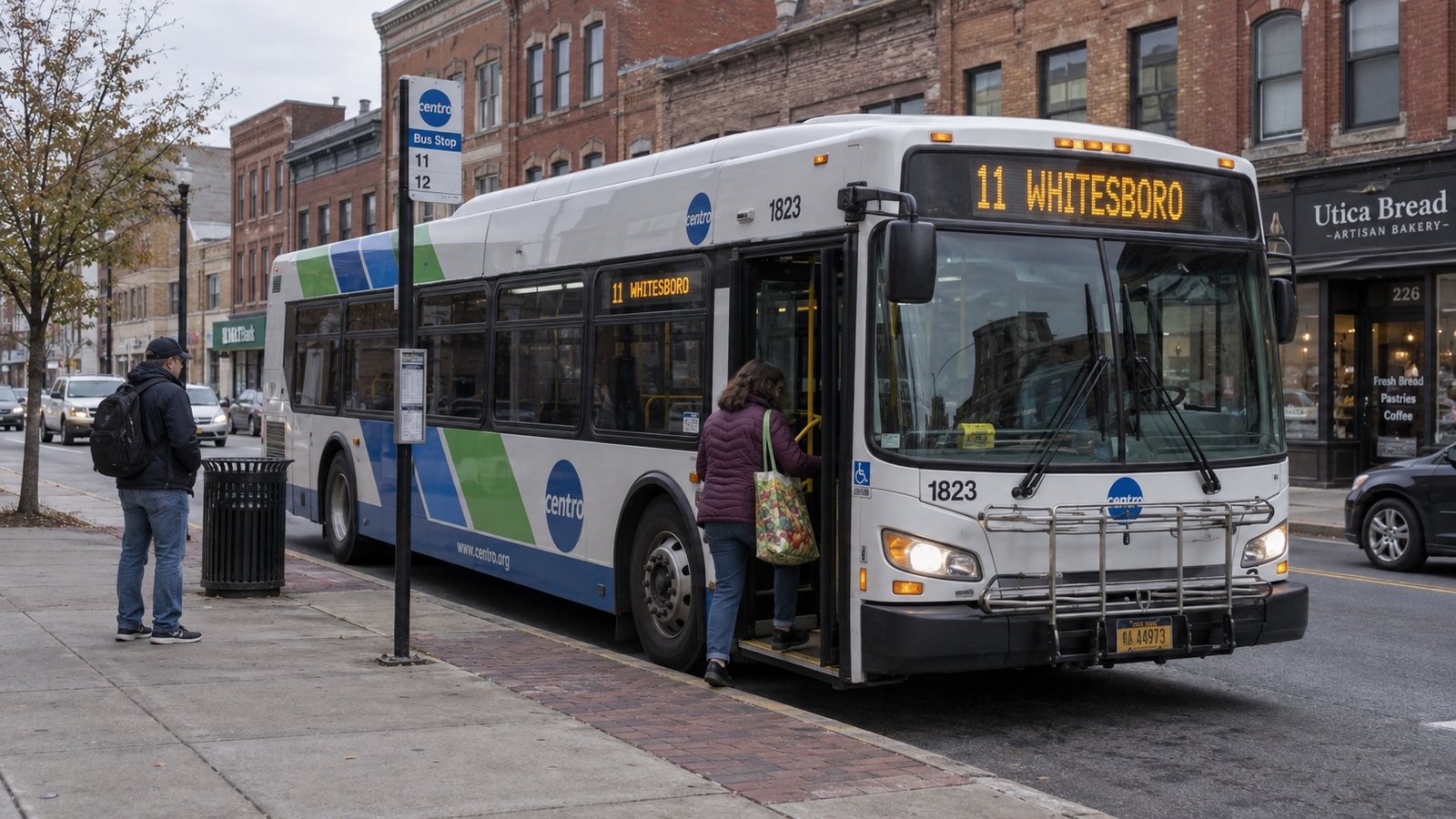
Utica is a car-first city with a real local bus network: Centro runs the Utica routes (UT 11 Whitesboro, UT 12 Bleecker and others) — check the current fare on Centro's site before budgeting. Intercity rail is in the city: Union Station takes Amtrak's Empire Service, Lake Shore Limited and Maple Leaf trains toward Albany, New York and Chicago. There is no passenger airport in the city; the region's field is at Griffiss in Rome, a separate city.

Driving, the city's daily pattern runs through downtown and the Genesee Street corridor. Test the real door-to-door routine from a candidate address — the commute, the grocery run, the school run — at the hours you would actually travel.

A Centro bus marked 11 WHITESBORO at a Utica sidewalk stop among older commercial buildings.
Test the complete daily journey, including the walk at both ends.

06 /

Register with the district directly

Utica City School District serves the city. Registration runs through the district's own process — the district's registration pages carry the current document list and contacts. Gather the child's identity and age documents, proof of the Utica address and immunization records before starting.

Ask the district which school serves your address rather than assuming a neighborhood assignment from a listing. If you are arriving mid-year, contact the district before the move date so registration does not gate the first day of classes.

07 /

Assign an owner and a start date to each household service

Electricity and natural gas are both National Grid territory (its upstate New York operation); start, stop or transfer service through its online account flow, submitted as soon as your date is fixed — no official lead time is published. Water is the Mohawk Valley Water Authority; whether a renter opens an account or the account rides with the property is a landlord question — confirm before the move.

For internet, check address-level availability before promising yourself a provider or a speed; in the older doubles, ask which provider already wires the building. An installation booked before the move is easier than one booked from an empty apartment.

08 /

Plan for blue bags and the weekly bulk item

Utica's trash system is pay-per-bag: household garbage goes in the city's blue bags, up to 20 per week per building, collected weekly. Setout is between 5 p.m. and 11 p.m. the night before your collection night — earlier risks a violation notice — and the city asks you to bring containers back from the curb after collection; call 315-731-0238 for your night. The full rules are in the Oneida-Herkimer Solid Waste Authority's Utica brochure.

The rule that matters at a move: one bulk item per week per building — a sofa this week, a dresser next week. Electronics may go out as the weekly bulk item, or free year-round at the OHSWA Residential Convenience Station at 80 Leland Avenue (weekdays 8–4, Saturdays 7–2). A clean-out takes weeks of planning or a private hauler; a curb pile on moving day is not an option.

09 /

Arrange a legal place for the moving truck

Utica publishes no moving-truck or street-occupancy permit. Parking in the city belongs to the Division of Off-Street Parking (the former Parking Authority's functions moved into the city in 2007), and the published permit instruments cover construction-scale street work, not household moves. The decision path: first the property — a driveway or private lot needs no arrangement; then a legal street position for the day.

If the position is unusual — a long carry across a sidewalk, a container, a trailer — call the Department of Public Works early, describe it, and keep whatever they confirm with the moving papers. Share it with us so the crew's plan matches.

10 /

Inspect the full route through the building

Utica's default housing type is the pre-war double or single with a porch: shared front halls, staircases with tight landings, sometimes a narrow driveway to a rear entrance. Measure the largest pieces against the actual route — width, turns, ceiling at the landing — and check porch boards and railings before anyone carries a sofa across them. Agree driveway use with the landlord and neighbors; many drives are shared or single-width.

In the larger buildings and managed properties, access means paperwork: elevator reservations, fixed moving windows and sometimes a certificate of insurance requested from the mover. Ask for the written moving rules at both ends as soon as the date is set.

Whichever type, walk both routes before the day: where the truck stops, which door is used, every stair and landing between the truck and the room, and who unlocks what. A plan that works at the origin but not the destination is only half a plan — confirm the two ends together, with time windows that overlap usefully.

11 /

Build a useful routine beyond the commute

Utica's everyday geography runs along Genesee Street from downtown south, and through the older commercial corners of the residential districts. Downtown, Union Station and the blocks around Bagg's Square carry the city's rail-era fabric; the Landmarks Society of Greater Utica keeps the Rutger Park houses and other landmarks in view. The city's Scenic & Historic Preservation District adds an exterior-work review step for the properties it covers.

Test the routine you will actually live: the grocery run, the pharmacy, the school or daycare route, a late-evening trip home. Winter changes the calculation more here than in most places — a January test is worth more than a July one.

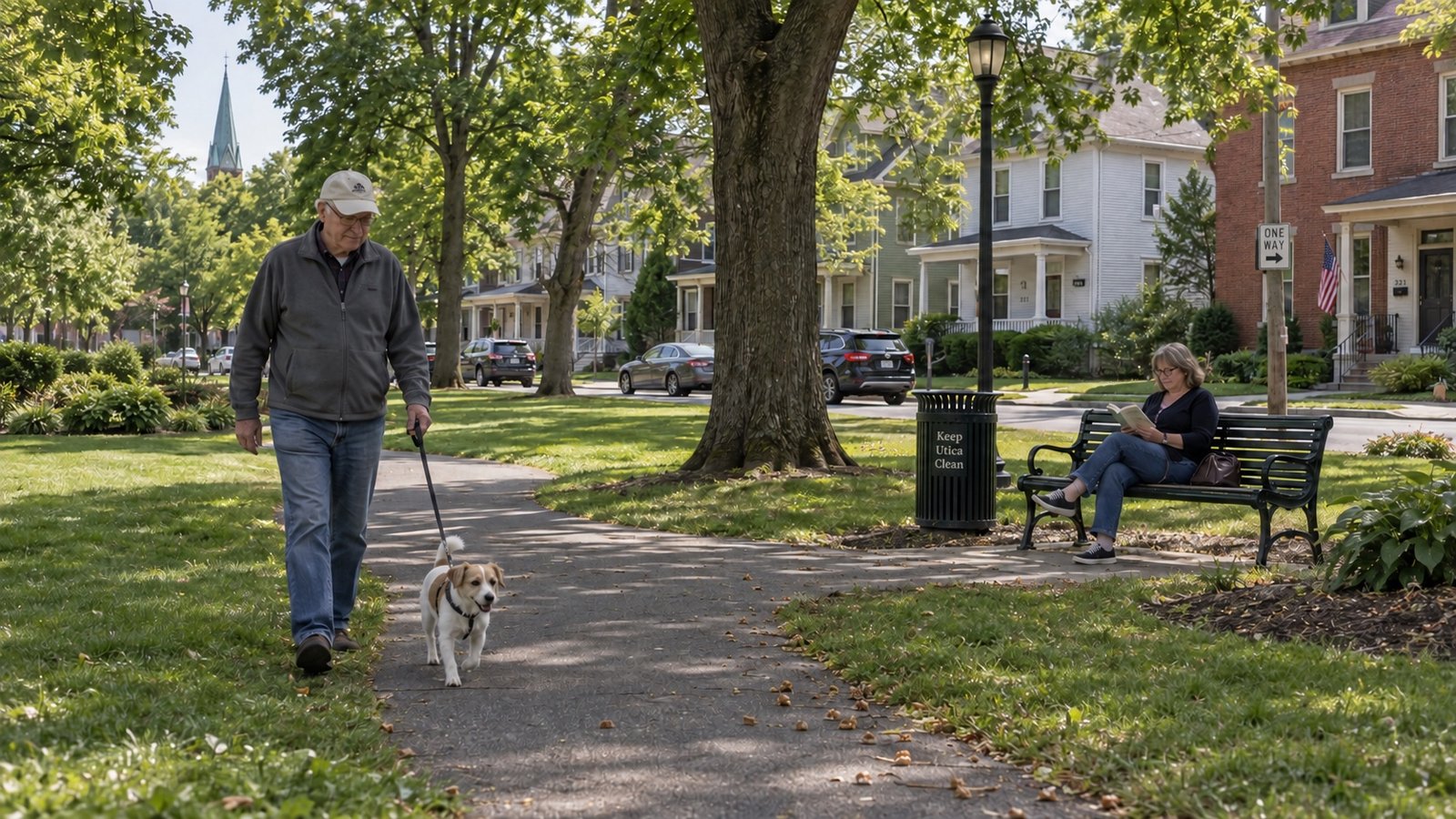
A neighborhood street with a small park and older houses beyond.
Check the everyday routine around the address you actually choose.

12 /

Plan for the season in which you will live and move

Winter is Utica's scheduling season. The Department of Public Works keeps roadways clear of ice and snow, but the city's snow-emergency parking rules were not published in the pages we could read — so a winter moving date means agreeing the plan explicitly: who clears the steps and walk at both addresses, and where the household car goes while the truck works. Watch the forecast in the final week and keep a backup date in mind for December–March dates.

The other calendar is academic: Utica University on Burrstone Road and MVCC's Utica campus on Sherman Drive sit inside the city, and student-linked leases turn over around late August and May. End-of-month dates at those times book out first — our workload observation, not a city statistic.

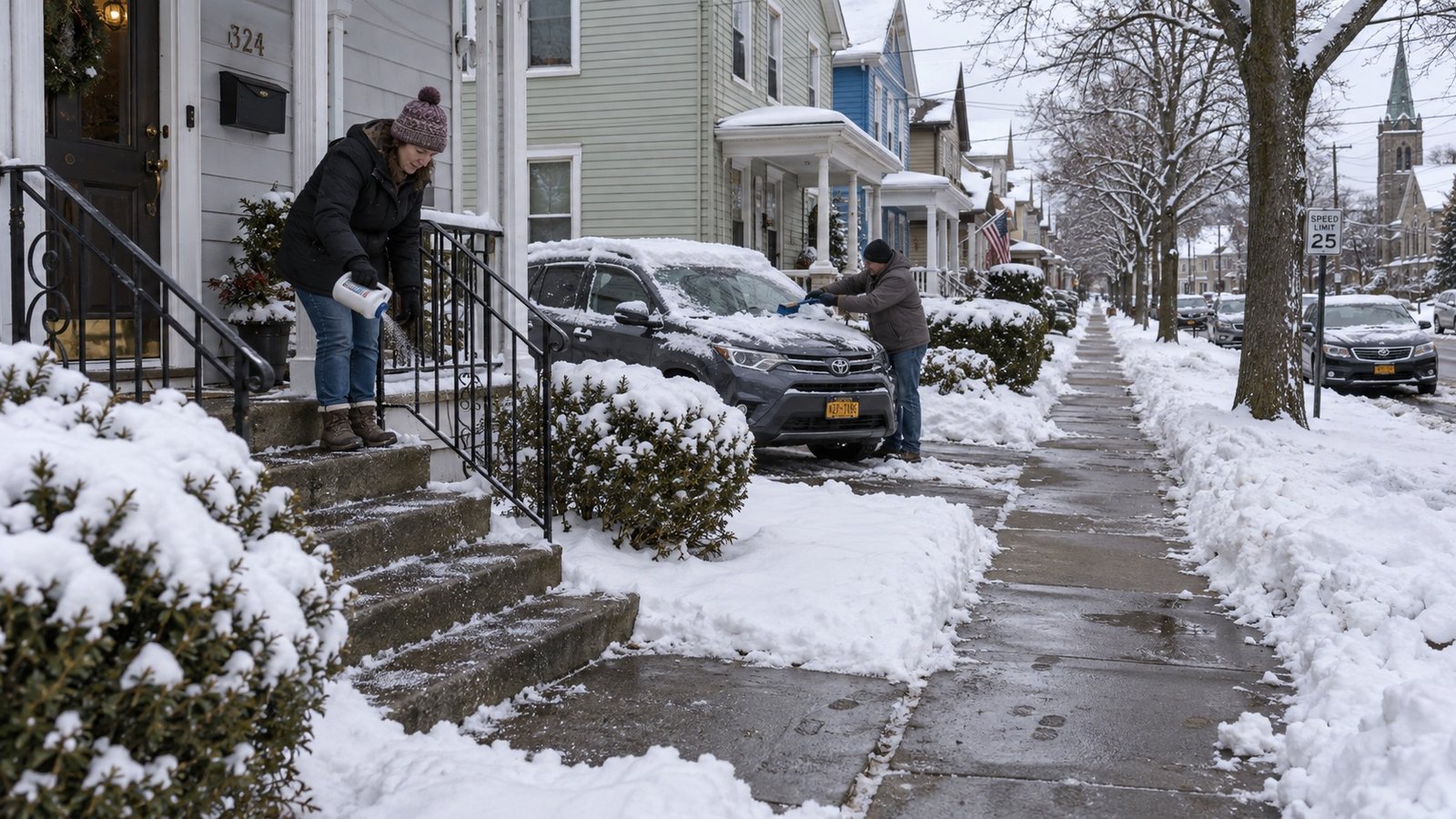
A residential street after snowfall with plowed piles and cleared sidewalks.
Winter dates need a plan: agree who clears the steps and where the car goes.

13 /

Turn the chosen home into an arrival plan

With the address decided, sequence the setup so nothing blocks the truck. Four to six weeks out: confirm the lease or closing date, start the school registration if you have children, and book the move itself. Two to three weeks out: submit the National Grid start request, confirm the water account arrangement with the landlord, line up internet installation, and plan disposal around the one-bulk-item-per-week rule — a clean-out needs weeks or a private hauler.

In the final days: confirm the access plan at both ends, finish packing, set aside what travels with you, and in winter check the forecast twice. In the first week after arrival: find your collection night (315-731-0238), buy blue bags, test heat and hot water, and note the 5–11 p.m. setout window. If the property sits in the Scenic & Historic District, learn its exterior-work review before planning changes.

14 /

Questions before you arrive

Is the airport in Utica?

No. The region's airport is at Griffiss in Rome — a separate city. There is no passenger airport in Utica.

Does my Utica address assign my child's school?

Registration runs through Utica City School District's own process. Ask the district which school serves your address rather than assuming from a listing.

Do I need a car in Utica?

Most households drive, but Centro runs local bus routes across the city, and Union Station takes Amtrak trains toward Albany, New York and Chicago. Test the exact door-to-door routine from your address before deciding.

How does Utica's trash system work?

Garbage goes in the city's blue bags — up to 20 per week per building, collected weekly, set out between 5 and 11 p.m. the night before. One bulk item per week per building; electronics can be that item or go free to the OHSWA station on Leland Avenue.

Is SUNY Poly in Utica?

No — SUNY Poly's campus is in Marcy, a separate town. Utica University (Burrstone Road) and MVCC's Utica campus (Sherman Drive) are in the city.

Can I leave unwanted furniture on the curb when I move out?

Only one bulk item per week per building — a clean-out takes planning or a private hauler. Everyday trash goes in blue bags. A curb pile is not an option.

Your next step

Bring the plan together

Use the Utica moving page to prepare the inventory, access details and questions for your estimate.

Sources & useful local resources

Official procedures and local resources are linked beside the answers above. Reopen the relevant page when arranging a date: fees, schedules and application requirements can change.

Trash & disposal

Housing & neighborhoods

Getting around

Schools & enrollment

Utilities

City services & districts