District of Columbia / City relocation guide

Moving to Washington

Choose a Washington home by its complete address, daily routes and building arrangements. Historic rowhouse blocks, apartment corridors and hilly residential streets call for different checks. This guide connects those choices with the practical steps for arriving in the District of Columbia.

Two adults walking along a brick sidewalk toward a low-rise corner with storefronts and a crosswalk
Test the everyday walk from the actual address and at the times you will use it.

01 /

Choose the home and the moving plan together

Begin with the things that determine whether an address will work on an ordinary day: the full housing cost, the trip to work, any school assignment and the usable entrance. Keep the quadrant and unit number attached to the street address. A listing's neighborhood label is useful for orientation, but it does not establish a school boundary, loading arrangement or service entitlement.

Build a short comparison for each serious option. Record the dwelling type, floor, stairs or elevator, laundry, heating and cooling, utility responsibility, recurring fees and the collection system. Add the weekday and late-evening journey to the places you actually use. If one factor is essential, confirm it before treating the property as a workable choice.

For a renter, distinguish the lease start from the time keys are released and the building permits a move. For a buyer, coordinate possession with settlement, utilities and any work required before occupancy. For a shared home or condominium, identify which decisions belong to the owner, association or manager.

Use the neighborhood comparisons below to decide what to inspect, then follow the practical sections through enrollment, service activation and the curb permit. Keep unresolved items with a named contact and a next action. A complete application, a payment and confirmed access are separate milestones.

02 /

Keep the District, quadrant, ward and neighborhood distinct

This guide covers Washington in the District of Columbia, not the full Washington metropolitan area. A nearby Maryland or Virginia home may use the same regional transport network but follow different school, parking and collection rules. Preserve NW, NE, SW or SE in the address you give a school, utility, driver or delivery service.

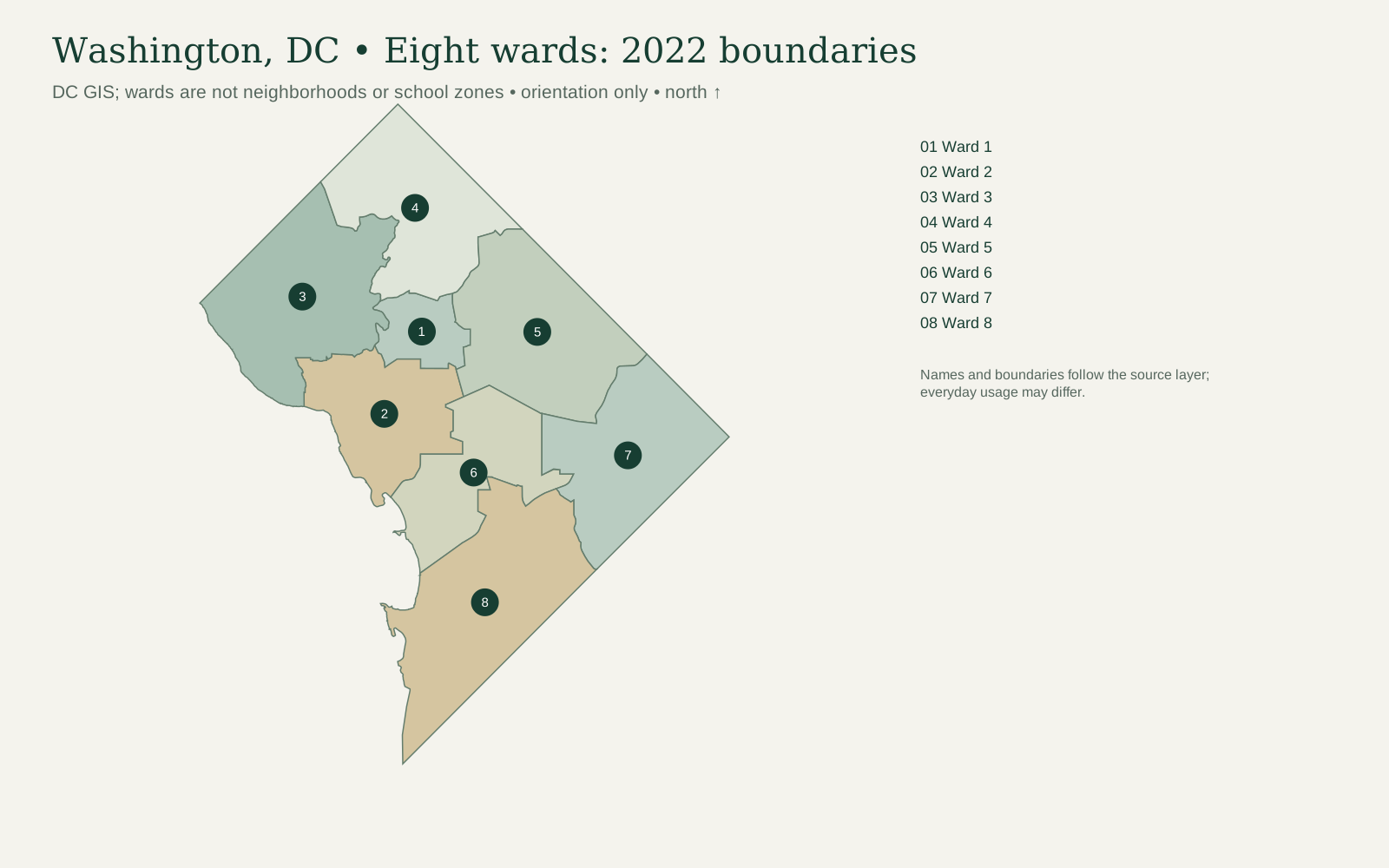
The map uses DC GIS boundaries for the eight wards established for 2022. Wards organize a broad civic geography. They are not neighborhood boundaries, school attendance areas or truck routes. Use the map to locate the part of the District, then use the exact property and the relevant agency's address tools for each practical decision.

The Office of Planning historic-district directory identifies designated areas and links individual maps and architectural accounts. A historic district can be smaller than the neighborhood name used in conversation or real-estate listings. The six comparisons here describe selected residential settings; they are not an exhaustive map or a ranking of places to live.

Check the particular block and entrance when comparing two homes under the same name. A corner property, an alley entrance, a basement unit and an upper-floor apartment can create different daily and moving arrangements within a short distance.

Map of the eight Washington DC wards using official 2022 boundaries
DC GIS / OCTO ward polygons, generalized for orientation. Wards are not neighborhood boundaries, school zones or approved truck routes. Open full-size map.

03 /

Find the area that fits your routine

These six comparisons use the Office of Planning's individual historic-district publications. They explain selected building patterns and landscape features, not current availability, school quality or safety. Historic designation boundaries can differ from informal neighborhood names. Compare the actual home, daily route and entrance before deciding.

Capitol Hill

The official brochure describes a substantial residential district east of the Capitol, with nineteenth-century rowhouses, diagonal avenues, smaller streets and alley dwellings. The designated residential district is distinct from the monumental Capitol grounds.

Capitol Hill historic district brochure ↗
Housing & setting
Inspect the actual stoop, floor arrangement, basement access and internal turns; similar street fronts can contain different units.
Daily travel
Test the walk to the specific station or bus stop and the complete trip in the direction you need.
Before choosing
Confirm the quadrant, approved loading curb and receiving entrance. Do not assume an alley is a permit-free alternative.

Dupont Circle

The historic account identifies Victorian rowhouses, larger turn-of-the-century houses, early apartments and Connecticut Avenue commercial buildings around the circle and diagonal avenues. Those building forms create several different housing arrangements within the area.

Dupont Circle historic district brochure ↗
Housing & setting
Compare a converted-house unit with a managed apartment by stairs, shared entries, meters and moving access.
Daily travel
Walk the exact route to the station entrance or current bus stop; include street crossings and the return trip.
Before choosing
Identify the actual unit and loading route rather than treating the circle as the property entrance.

Cleveland Park

The Planning brochure describes frame houses with porches, apartment buildings and commercial corridors within a landscape shaped by rising ground and the Rock Creek valley. Street layout and terrain are part of its residential character.

Cleveland Park historic district brochure ↗
Housing & setting
Inspect grade changes, stairs and the path between street and door, including any separate garage or lower level.
Daily travel
Test the full walk to the station or bus route, not just the straight-line distance on a listing.
Before choosing
Compare the particular building’s access and recurring costs; the historic description does not guarantee a level approach.

Mount Pleasant

The district account traces a former village and streetcar suburb into an urban residential area, retaining architecture from its nineteenth- and early-twentieth-century development. Hilly terrain and the edge of Rock Creek Park shape parts of the setting.

Mount Pleasant historic district brochure ↗
Housing & setting
Walk the actual frontage and all levels you will use; assess the entrance and shared spaces independently of the historic facade.
Daily travel
Try the daily connection from the address and the final uphill or downhill walk with ordinary bags.
Before choosing
Confirm which door and curb serve the unit, and inspect wet-weather footing and any narrow turns.

Anacostia

The historic brochure follows the Uniontown development east of the Anacostia River and documents freestanding frame houses, porches and later building changes. The named historic district is a particular area, not every neighborhood east of the river.

Anacostia historic district brochure ↗
Housing & setting
Compare the actual house, unit layout and grade between the street, porch and rooms. Historic examples do not establish current tenure or condition.
Daily travel
Test the intended river crossing or other connection to your destination using current operator tools.
Before choosing
Confirm the precise address, public-space arrangement and property condition rather than relying on a broad east-of-river label.

Foggy Bottom

The official brochure distinguishes the larger neighborhood from the smaller historic district associated with modest, low-scale brick rowhouses and former industrial development. Broader area names can include quite different buildings.

Foggy Bottom historic district brochure ↗
Housing & setting
Compare a small-house entrance with an apartment or mixed-use building’s service access and account arrangements.
Daily travel
Check the station entrance, street crossing and final walk that serve the actual unit.
Before choosing
Verify the building’s receiving instructions and collection provider; the neighborhood name does not establish municipal pickup eligibility.

04 /

Compare the full housing arrangement, not just the advertised rent

The ACS 2024 five-year housing estimates for Washington, covering 2020–2024, report 324,491 occupied housing units: about 41.5 percent owner occupied and 58.5 percent renter occupied. Median gross rent was $1,954 and median owner-occupied value was $737,100. These are period estimates, not September 2026 asking rents, sale prices or a quote for a particular neighborhood.

Across 361,014 housing units, about 11.0 percent were in detached single-unit structures, 21.7 percent in attached single-unit structures and 67.2 percent in structures containing two or more units. About 31.5 percent were built before 1940. The structure figures use all housing units, while tenure uses occupied units; they describe different aspects of the stock.

For a rowhouse or converted house, inspect the actual unit and shared spaces. Find out whether the entry is above or below street level, which stairs belong to the unit, where laundry and meters are located and how deliveries reach the door. A familiar facade does not tell you whether a building remains one dwelling or contains several apartments.

For an apartment or condominium, compare the recurring total: rent or mortgage, association charges, utilities, parking, storage and any services billed separately. Ask about move-in booking, deposits, insurance documents and restrictions on the loading route. Get those instructions from the responsible manager rather than assuming another building’s rules apply.

Check the home at a time that resembles your routine. Listen from the rooms where you will sleep or work, test the walk with groceries and inspect the lower-level spaces for drainage concerns. Measure large furniture against doorways and turns before committing to a layout. Keep property condition, personal preference and neighborhood history as separate parts of the decision.

Living room with a sofa, window, fireplace and two closed branded kraft cartons
Check the unit layout and keep packed cartons clear of the route through the home.

05 /

Test the actual trip, payment method and return journey

Use WMATA rider tools to test the journey from the proposed door to the real destination, including the walk to the correct station entrance or bus stop. Check the direction, transfer, day and return time. Where an elevator is essential, check its current status and the alternative route before leaving home; a station name alone does not describe an accessible trip.

Metro Rail and Metro Bus form a regional network across jurisdictional boundaries. Use current route names and timetables rather than an old listing's nearest-bus description. A short distance to a stop can still involve a difficult crossing or a connection that does not run when you need it. Test at least one ordinary commute and one evening or weekend journey.

Tap. Ride. Go. accepts contactless payment cards or enabled devices on rail and bus. Each rider needs their own card or device, and a rail trip must use the same one to enter and exit. Use the same payment method for a transfer. Smart Trip remains available and is needed for some passes, reduced-fare programs and Smart Benefits; choose the method that matches your actual travel arrangement.

The adopted FY2027 budget announcement separates June 2026 bus changes from additional rail and bus changes planned for December. Do not build a September commute around a December frequency. Use the current timetable and alerts for the day, and distinguish a future service announcement from a trip available now.

The operator airport and regional-rail guide, updated September 21, 2026, places Reagan National in Arlington, Virginia, and Dulles in Virginia. Reagan connects to the Blue and Yellow lines; Dulles connects to the Silver Line with a terminal walk. BWI is in Maryland and requires the regional-rail connection and airport shuttle described in the guide, not a direct Metro ride to the terminal.

At Union Station, distinguish Metro from Amtrak, MARC and VRE tickets and schedules. For any airport journey, allow for baggage, the terminal walk and the last connection. If one connection fails, decide whether another scheduled train, a different route or a paid ride is workable before relying on it for a fixed check-in time.

Two people on the foreground sidewalk facing an open bus door across the curb
Check the current route, boarding side and return journey from the actual stop.

06 /

Identify the admission route and finish the enrollment packet

Enter the current complete address in Find Your In-Boundary School. DCPS assigns an elementary, middle and high school by address, and eligible K–12 students have a right to enroll in their in-boundary school. Ward and neighborhood names do not establish that assignment. Feeder rights can also matter, and the lookup specifically identifies grade-dependent middle-school rights for some addresses in 2026–27.

Use the 2026–27 Enrollment and Lottery Handbook to distinguish admission by right, the My School DC lottery and formal placement. A regular new PK3 or PK4 application uses the lottery even for an in-boundary program; ask DCPS about formal placement where it applies. Kindergarten eligibility is age five by September 30; PK3 and PK4 use ages three and four by that date. A neighborhood preference does not by itself guarantee a pre-K seat.

For a charter, citywide, selective or out-of-boundary option, check the applicable admission process rather than assuming the home address grants entry. If you arrive after the main lottery, use the My School DC post-lottery and waitlist guidance and the receiving school's instructions. Confirm the relevant school year and any offer deadline. Do not use a deadline displayed for the next school year as the deadline for a current-year transfer.

The DCPS enrollment steps allow online completion and a paper route for families without email access. Choose the correct new-student or re-enrollment route; a student changing DCPS schools may already have a record. Complete the forms, gather the supporting documents and submit the packet to the student's school. Then confirm receipt, missing items, the start date and the first-day arrangements.

The current 2026–27 packet asks new families for proof of the child's legal name and age, the enrolling person's relationship or authority, and District residency. It includes health, oral-health, consent and technology forms. Bring prior school records and any IEP, 504 plan or other support information so the receiving team can coordinate the transition. Ask the school about language support or interpretation where needed.

Read the residency form's alternatives carefully. One qualifying document from its first list can be sufficient, while the second list requires two different items. A lease needs separate evidence of rent payment; a gas, electric or water bill needs evidence of payment for the specified bill. Names, addresses and permitted document dates must match the form. A lease alone is not the complete second-list route.

Other verification paths include confirmation with a school official for qualifying circumstances, a tax verification route for eligible re-enrolling families, and a home visit when the listed methods cannot be used. If housing is temporary or documents are missing, contact the school's enrollment team or homeless liaison promptly rather than abandoning enrollment. Explain the situation and ask which method applies; do not substitute an address where the family does not reside.

Finally, confirm arrival and dismissal, meals, attendance contacts, health records and any transportation arrangements. Treat a submitted online form and completed enrollment as different steps. Keep copies and the name of the school contact outside packed cartons so a move-day delay does not also interrupt the school handoff.

07 /

Separate account changes from physical service work

Ask the owner or manager which services are included, individually metered or shared. Record the service address and unit exactly as the provider uses them. Coordinate the outgoing and incoming dates with possession, cleaning and any contractor access; do not request a physical shutoff simply because a tenant changes.

DC Water keeps ultimate bill responsibility with the property owner. For an ownership change, the title company uses the Ownership Change Request process, with settlement documents due within five days of closing. Tenants are added with owner approval and can establish their own online access. Confirm the account arrangement with the owner before assuming water must be opened in a tenant's name.

The water account FAQ also distinguishes a condo or cooperative unit that is not individually metered: the unit owner does not submit the same start/stop ownership documentation for that arrangement. Tenants and management companies do not receive a final bill. Match your checklist to the actual meter and account, and ask the title agent for the ownership-change reference when applicable.

The live Pepco start, move or stop portal accepts requests up to 120 days ahead and says to allow a minimum of three days. It offers dates excluding weekends and holidays, and service may change as early as 7 a.m. on the chosen day. Confirm the date available for your address and whether access or additional information is required. Keep electric service available for the period you still need lights, cleaning or connected equipment.

Washington Gas start/stop instructions call for at least two business days, while its moving FAQ says at least three. Use three business days as the minimum planning margin and confirm the accepted appointment with the utility. The provider may need entry to start service and meter access to close the account; failure to complete the stop request or access can leave the account open.

For gas appliances with electronic ignition, electricity must be active; a gas water heater also needs water before the appliance can be lit. If the landlord participates in the Automatic Name Change Program, ask about the separate move-in order and account-transfer route. Confirm any initiation charge, deposit and access appointment for the property rather than treating the utility's general estimate as a confirmed booking.

Arrange internet separately and check installation permission, available service at the unit and where equipment belongs. Keep confirmations and final-account references together. After the move, check the first and final bills against the intended addresses and dates, and resolve an open old account promptly.

08 /

Confirm eligibility before planning bins or bulk pickup

DPW's collection lookup explicitly warns that a returned collection day does not prove eligibility. Single-family homes and qualifying buildings with three or fewer units receive municipal collection; larger apartment buildings use another arrangement. Ask the property manager about the actual hauler, collection point and building rules before putting cartons or unwanted furniture outside.

The trash and recycling instructions exclude mixed residential/commercial buildings and buildings with four or more units from ordinary DPW service. Most eligible households have weekly collection, while some narrow-street and alley neighborhoods have twice-weekly service. Use the address-specific schedule, including the holiday slide, rather than choosing days from the ward map.

The general page gives a setout window from 6:30 p.m. the previous evening to 6 a.m. on collection day, with containers removed from public space by 8 p.m. Current seasonal notices can change the collection start: as checked September 25, 2026, the DPW home-page notice says crews start at 5:30 a.m. through September. Set eligible bins out the evening before and recheck the current notice for your week.

Separate clean recyclable packaging from trash and keep material inside the correct collection system. Use the current accepted-material list linked by DPW for uncertain items. Do not treat every packing material as cardboard recycling, and do not leave moving waste in a street litter can. If bins are missing, ask about the property's existing containers and the applicable replacement or new-homeowner process.

Bulk collection is by appointment for households receiving DPW trash service, with no more than seven items per appointment. The published list accepts mattresses and box springs only when wrapped in plastic. Rugs must be rolled and tied; refrigerator doors must be removed. Confirm the appointment before placing items at the ordinary collection point within the stated evening-to-morning window.

Large apartments, condos, cooperatives and commercial properties need the appropriate private hauler for bulk items. Construction debris, electronics and hazardous or liquid waste are not ordinary bulk pickup. Identify those separate disposal tasks before packing so they do not become unplanned loads on moving day.

Fort Totten drop-off has its own proof-of-residency, material and vehicle restrictions. The DPW page excludes commercial-tagged vehicles, cargo vans, trailers and rental trucks longer than fifteen feet from the resident drop-off route. Do not plan to divert the moving truck there simply because household bulk items are accepted. Confirm a permitted vehicle and current facility conditions, or arrange an appropriate hauler.

09 /

Complete the permit, posting, verification and enforcement sequence

Identify the space and authority. DDOT's moving-truck fact sheet requires a public-space permit for the street and an alley. It prohibits driving across or blocking the sidewalk and preserves posted rush-hour and street-sweeping restrictions. Establish the street owner, exact curb and any private dock permission; approval from a building does not replace public-space authorization.

Apply with the actual arrangement. Use TOPS Parking/Occupancy permits for the moving-truck request. Supply the complete address and quadrant, proposed dates and hours, required curb length, meter identifiers and the truck arrangement. Include the ramp and any effect on pedestrian passage or traffic. Confirm whether extra plans or review are required for that particular location, and who will be responsible for each task.

Allow for review, then pay the current charge. Some requests may be processed automatically; others go to staff. A blocked date may indicate another permit or insufficient review or posting time. The TOPS FAQ says to allow at least two weeks when the moving-truck or container traffic-control arrangement requires review. Use the issued application total, including applicable meter charges and surcharge, rather than relying on the older fact sheet's base-fee example.

Print the correct documents. The permit can be printed from home, but the no-parking signs must be printed at authorized kiosks on the supplied eleven-by-seventeen-inch paper. The current sign-printing page lists the Permit Office and MPD district-station locations; substations do not have the kiosks. Check the current location and opening arrangements before travelling. Keep the issued permit available for display in the moving truck.

Post early and verify. TOPS describes seventy-two hours for non-metered spaces and twenty-four hours for metered spaces in its FAQ, while the printing page uses seventy-two hours for residential areas and twenty-four for commercial areas. For a residential move, plan at least seventy-two hours and ask DDOT how it classifies the exact curb, particularly a metered residential location. Follow the issued instructions and complete TOPS sign confirmation; use the home-page verification link after signing in. Keep evidence of the location, signs and posting time. Do not attach signs to trees with screws or thumbtacks.

Check the space again before arrival. Verify the approved dates, hours and extent, and check for conflicting work, missing signs or a changed building window. Do not assume payment guarantees an empty space or an immediate tow. A container, travel-lane occupation or separate work zone may need a different request from an ordinary moving truck.

If another vehicle is there, use the enforcement route. Contact 311 and retain the tracking number, permit and photographs showing the location, signs and blocking vehicle. The FAQ describes a refund request when DPW fails to enforce: confirmation of timely posting, the permit number, three types of photographic evidence and the documented 311 interaction must be sent within three days of the violation. Approval is required; a refund is not automatic compensation for every moving delay.

Keep a lawful alternative. If the approved curb is unavailable, contact the moving coordinator and property representative. Confirm whether another authorized space can support the route, and review any longer carry, additional handling, waiting or cost before unloading. If there is no workable alternative, agree another window or storage. Resume only when the space, route and building access are confirmed. For unresolved application questions, use the DDOT Permitting Center at 202-442-4670.

10 /

Confirm the route, booking and person who can unlock it

Inspect the entire route from the proposed truck position to the final rooms. A raised rowhouse entrance can lead to a second tight turn indoors; a lower-level unit may have its own narrow steps. At a managed apartment, the service entrance can face another street. Photograph how each segment joins, not just the widest part.

Measure the furniture and the usable doorways, landings and elevator openings. Identify fixed rails, low ceilings, gates and any shared corridor that must stay open. Confirm who may remove a door or other obstruction if that becomes necessary; do not assume the moving plan authorizes changes to the property.

Ask the manager about the allowed moving hours, loading dock, elevator reservation, protective materials, deposit and insurance documents. If the property has staffing, contractor or union requirements, get the specific instructions and identify who arranges them. Keep the building approval separate from the DDOT permit.

Before the date, confirm who releases keys, opens the dock, controls the elevator and receives delivery. Share a reachable contact with the moving coordinator. If a booked facility fails, review the alternative with the person authorized to approve it; another entrance or floor can change the work.

For a shared house, make sure other occupants know which spaces must be clear and which belongings remain. Keep the essential route available during packing. An access plan is complete when it identifies the physical path, the permission to use it and the person who can resolve a problem.

11 /

Test the ordinary errands and local resources

Walk from the proposed home to the grocery option, pharmacy, transport stop and any regular appointment. Check the entrance and opening hours that match your routine, then try the return with bags. A nearby map marker may be separated from the property by a difficult crossing or an inconvenient approach.

DC Public Library location guide lets you compare neighborhood branches and their services. Use the branch's current hours and access information when planning a visit. A branch name does not establish school assignment or the boundaries of a neighborhood.

The library-card process allows people who live, work, pay property taxes or attend school in the District to apply. An online application produces a temporary card; the page asks applicants to visit within ninety days with identification and proof of current address to obtain full access. If the ID has an old address, the listed alternatives include a lease, utility bill or bank statement. Staff can assist people without a permanent address.

For outdoor time, identify a public entrance and the route you will actually walk. A wooded path, neighborhood park and formal recreation facility serve different needs. Check closures and surface conditions, and keep assumptions about a building’s private amenities separate from public facilities nearby.

During the first week, collect the contacts for maintenance, the actual utility accounts, the school and 311. Confirm where deliveries, visitors, recycling and unwanted packaging belong so everyday tasks do not rely on using the temporary moving entrance.

Two adults walking on a paved wooded path beside a creek and a bench
Find the public entrance and inspect the route you will use in ordinary conditions.

12 /

Prepare the entrance for weather and temporary restrictions

Choose the date by combining possession, the building window, utilities and the street permit. A lease or settlement date does not automatically provide a dock reservation or permission to load at the curb. Keep another possible window until those pieces are confirmed, and check current restrictions again close to arrival.

The District January 2026 snow guidance directs residential and commercial owners to clear adjoining sidewalks within the first eight daylight hours after a snow event. The Snow Team FAQ separately describes possible enforcement after twenty-four hours; that is not a reason to plan on waiting a full day to clear the route. Confirm who handles the frontage, steps and landing, including any written delegation to an occupant.

The Snow Team says alleys are not plowed by the District. If an alley is part of the proposed route, inspect it rather than assuming the street-clearing operation includes it. Place cleared snow as directed, away from the street and bicycle lane, and keep it out of the carrying route. Recheck steps and pavement for refrozen water before moving items.

Warm-weather collection notices and severe-weather transit changes need separate checks. Keep water and essential supplies available during packing, and protect the route from rain without blocking exits. For a lower-level property, ask the owner about drainage, past water entry and where belongings can remain dry during a delay.

If weather makes the agreed entrance unusable, contact the property representative and moving coordinator before relying on the original arrival time. Establish what must change, who will do it and how readiness will be confirmed. Review another delivery window or storage if the route cannot be made usable within the authorized hours.

Resident holding a shovel beside rowhouse steps and a cleared sidewalk, with snow remaining along edges
Recheck steps and landings for remaining snow or ice before treating the route as ready.

13 /

Put the first-day essentials and alternatives in writing

Keep a single move-day sheet with complete addresses and quadrants, unit numbers, inventory changes, building contacts, key arrangements, permit details and the receiving window. Save it somewhere accessible without opening cartons. Bring essential documents, medicines, chargers and the first-night items separately.

Before dispatch or arrival, confirm the truck space, sign condition, open entrance and elevator or dock. Recheck utility activation and tell the moving contact about additional items or a changed route. Walk the receiving rooms and decide where the larger pieces should go before the path fills with cartons.

If keys are delayed, contact the person authorized to release the home and get a realistic time. Review waiting, a different window or storage with the moving coordinator, including time, handling and charges. Resume delivery only when possession and the building access window are confirmed.

If the permitted curb is blocked, use the enforcement process and contact the property representative. Another space is useful only if it is lawful and supports an approved route. Agree any changed carry or cost before using it. If access cannot be resolved, choose a different delivery arrangement rather than forcing the original plan into a blocked street.

After arrival, check essential rooms and routes, confirm the next collection or bulk appointment and follow up on school and account questions. Keep unwanted items out of shared corridors. Compare the first and final utility bills with the intended dates, and retain the moving documents and any recorded issues for follow-up.

14 /

Questions before you arrive

Is a ward the same as a neighborhood or school zone?

No. The map shows eight ward boundaries. Historic districts, informal neighborhood names and school attendance areas answer different questions. Use the exact address in the school lookup and with each service provider.

Can a new K–12 student enroll without winning the lottery?

Eligible students have a right to enroll in their DCPS in-boundary school. New pre-K students and other school choices have different admission routes. Confirm the address, grade and school year with the receiving school.

Is a lease enough to prove school residency?

The current form requires two different items when using its second documentation list, and a lease needs separate proof of rent payment. Other verification methods exist; ask the school which route fits your circumstances.

Do tenants open their own DC Water account?

Owners remain responsible for water bills. Tenants are added with owner approval and can obtain online access. Check the actual meter and ownership arrangement before requesting any account or physical-service change.

Will DC collect a mattress when I move out?

Eligible DPW households can request a bulk appointment, subject to the item limit and preparation rules; mattresses and box springs must be wrapped in plastic. Larger buildings and other excluded properties need their private collection arrangement.

How early should I plan moving-truck signs?

Allow for application review as well as posting. Plan at least seventy-two hours for a residential curb and confirm the classification of a metered location with DDOT. Print the official signs at a kiosk and complete TOPS confirmation.

What if the home or loading space is unavailable on arrival?

Contact the responsible property or permit contact and the moving coordinator. Confirm a lawful alternative, its timing and cost, or another delivery/storage arrangement. Resume only after the route and access window are confirmed.

Your next step

Bring the plan together

Use the Washington moving page to prepare the inventory, access details and questions for your estimate.

Sources & useful local resources

Official procedures and local resources are linked beside the answers above. Reopen the relevant page when arranging a date: fees, schedules and application requirements can change.

Housing

Truck space

Waste

Schools

Orientation

Neighborhood context

Utilities

Weather

Everyday life

Transport