
New York · Elmira service planning
Junk Removal & Disposal in Elmira, NY
An unwanted television can occupy the place its replacement needs. Spare guest-room furniture can become unnecessary when relatives leave and the household takes a smaller home. Seven years of garage extras can enter an expensive interstate shipment unless someone makes a decision before packing. Removal helps when those contents have an agreed inventory, a deadline and a suitable accepting route.
Sterling Oakbridge can review a stand-alone visit, agreed removal coordinated with your move, or a separate collection before or afterward. Send the items, access and clear-by date. The estimate distinguishes carrying, appropriate hauling and receiving arrangements and separate removal charges. The work depends on the actual materials rather than an assumption that everything left in the property can join one load.
Keep the moving budget focused on useful belongings
Start with the receiving rooms. Keep necessary, valuable and meaningful pieces deliberately. Confirm a real collection appointment for items accepted by someone else. Unwanted contents without a committed recipient need a fallback that meets the delivery or property-handover date.
Keeping a bulky item can involve preparation, materials, packing time, stairs, vehicle space, unloading, storage and another collection after arrival. Removal has its own carrying, trip and receiving costs. If a replacement is needed, include its purchase, delivery, assembly, availability and fit. Compare complete actual plans while the moving inventory and price can still be reviewed.
Locally, surplus can use working time and carrying effort. Long-distance shipment space can cost substantially more than taking the same piece across town. Bulky low-value extras deserve a keep-or-replace decision before they consume that space. Ask for the reviewed moving arrangement with and without the unwanted group before agreeing the price; one removed piece does not automatically reduce an existing flat rate by a set amount.
Identify the contents and material routes
Furniture is only one part of removal. Electronics, refrigerant appliances, mattresses, garden trimmings, used packaging and repair remnants can have different preparation and destinations. Use these categories to describe the request, then agree acceptance for the actual contents.
- Furniture removal. Sofas, armchairs, dressers, tables and bookcases. Identify each piece, its dimensions, the carrying route and whether a recipient or removal has been agreed.
- Mattress disposal. Used mattresses and box springs after a bed replacement or downsizing. Give the size, quantity and condition; disclose pest concerns and confirm covering instructions and an accepting destination.
- Appliance removal. Refrigerators, freezers, washing machines, dryers and microwaves. Give the model and utility preparation. Refrigerant appliances need a suitable receiving chain; appliance removal does not include utility disconnection or installation unless separately confirmed.
- E-waste and electronics. Televisions, monitors, computers and associated covered equipment. Confirm the exact device and approved electronics route. An appliance and a covered electronic device can follow different disposal programs.
- Gym equipment. Treadmills, exercise bikes, weight benches and loose weights. Identify weight, stairs, dismantling, screens and embedded batteries before choosing the carrying and receiving plan.
- Outdoor items. Worn patio furniture, loose play equipment and unwanted garden equipment. Describe fuel, batteries, anchoring and any dismantling. A fixed shed or play structure needs a separate review of permissions and work.
- Yard waste. Branches, brush, leaves and trimmings remaining after a small clearance. Review material, quantity, bundling and the local green-waste route. Soil, stumps, fuel and equipment are different loads; garden work itself is not included automatically.
- Light construction debris. Small quantities of loose drywall offcuts or other identified remnants from a minor repair. Send photographs, material types and quantity for acceptance review. Confirm the receiving route and charges; demolition, unknown or contaminated materials need a different plan.
- Used packaging and floor protection. Flattened cartons, packing paper, plastic film and clean protective sheeting. Separate materials and identify contamination or attached debris. Agree the staged quantity and separately charged collection.
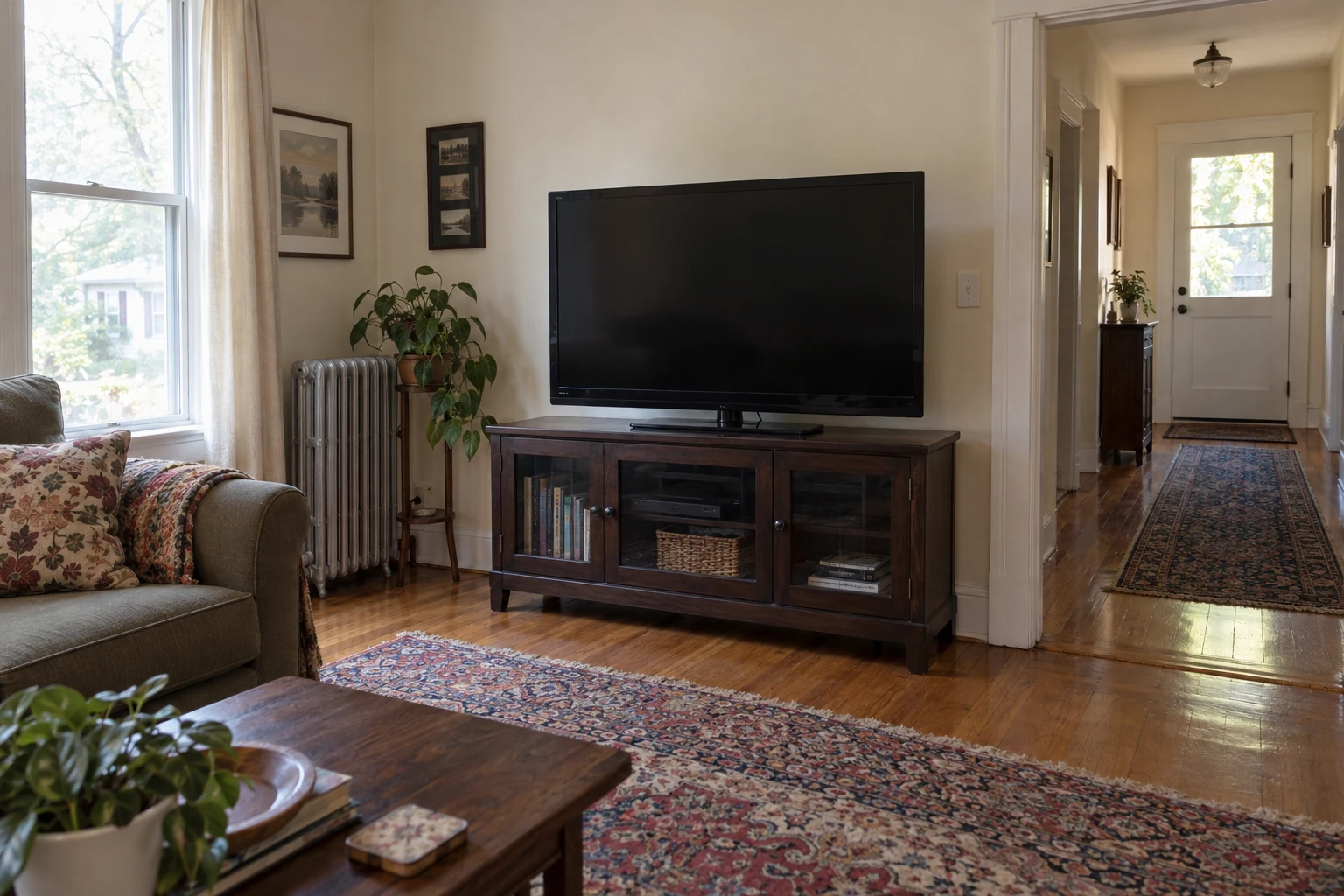
Example 1: an old television on East Church Street
Imagine a household on East Church Street changing its television arrangement. The old screen no longer meets the household's needs, nobody has committed to taking it, and the new setup needs the same space. The media cabinet is retained; only the old device is selected for removal.
The household first checks a recipient or an agreed retailer takeback. Covered New York electronics need an approved recycling route rather than ordinary household trash. Chemung County's May 2026 voucher event was a limited dated option, not a permanent promise of free daily acceptance. A current device request needs actual receiving confirmation.
Photograph the screen, pedestal, cables, doorway, turns and route to the vehicle. Identify any wall mounting or preparation separately, and have the responsible person handle connections and personal-data settings as appropriate. The illustrated upright device is an inventory stage, not proof of a fault or completed preparation for transport.
The useful sequence is to remove the old screen before the replacement needs the room. The quote names the carry and actual approved onward arrangement. Retained furniture, a new installation and technical setup remain separate tasks. Do not leave the old device in a shared hallway or recycling bin on an assumption that the building's ordinary collection includes it.
Example 2: spare guest-study furniture on West First Street
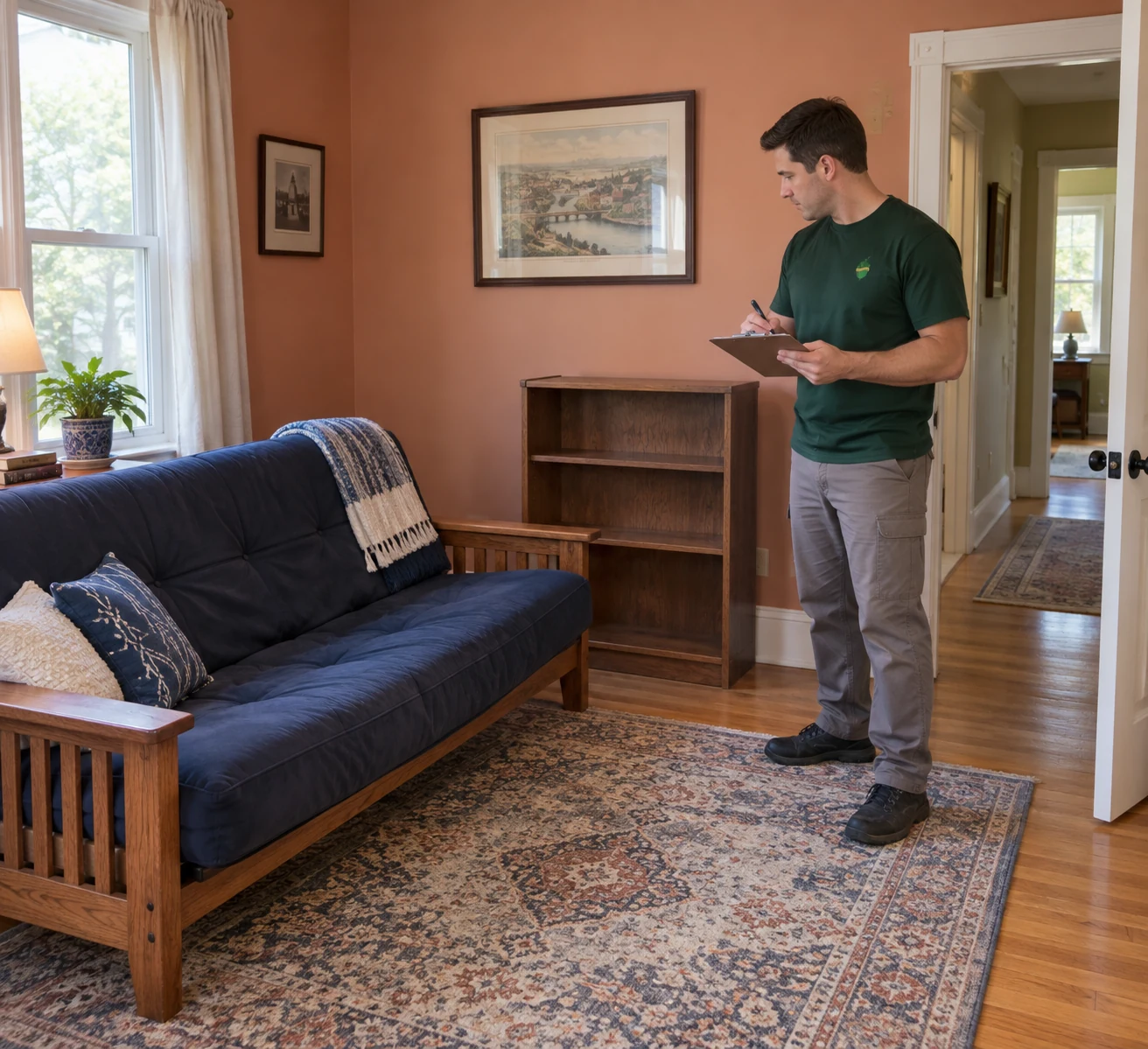
Imagine relatives who have stayed with a West First Street household returning to their own home. The remaining family also plans a local move into a smaller property. A spare futon sofa and waist-high bookcase have no assigned place in the receiving rooms. Paying to store them would add rent and handling without a clear future use.
The household confirms whether a recipient can collect the pieces before handover, then names the remaining unwanted inventory. Empty the bookcase, assigning books, papers and keepsakes separately. The person approving removal must have authority for the furniture and its contents; something being left in a room does not automatically make it disposable.
Photographs show the futon, bookcase and full route out. Identify the futon's frame, loose components and any preparation or disassembly needed for the actual door and turns. The pictured review is an inventory and estimate stage, not furniture already prepared or loaded for transport. Cushions, the throw, pictures and other loose belongings stay retained unless expressly added to the removal list.
Elmira has a real Friday furniture pickup with advance registration, payment and residency conditions. Sofas are on its listed categories, but confirm the actual futon and bookcase with the City rather than assume every piece qualifies. Public collection does not automatically perform the room carry or meet a different key-handover day.
The family compares that option with the complete private carrying and receiving plan. Removal before moving can keep the unwanted pieces out of packing and loading; a moving-day add-on may also fit. A later appointment needs continuing authorized access before sale or tenancy handover. It cannot rely on keys already passed to someone else.
Example 3: seven years of garage extras on Davis Street
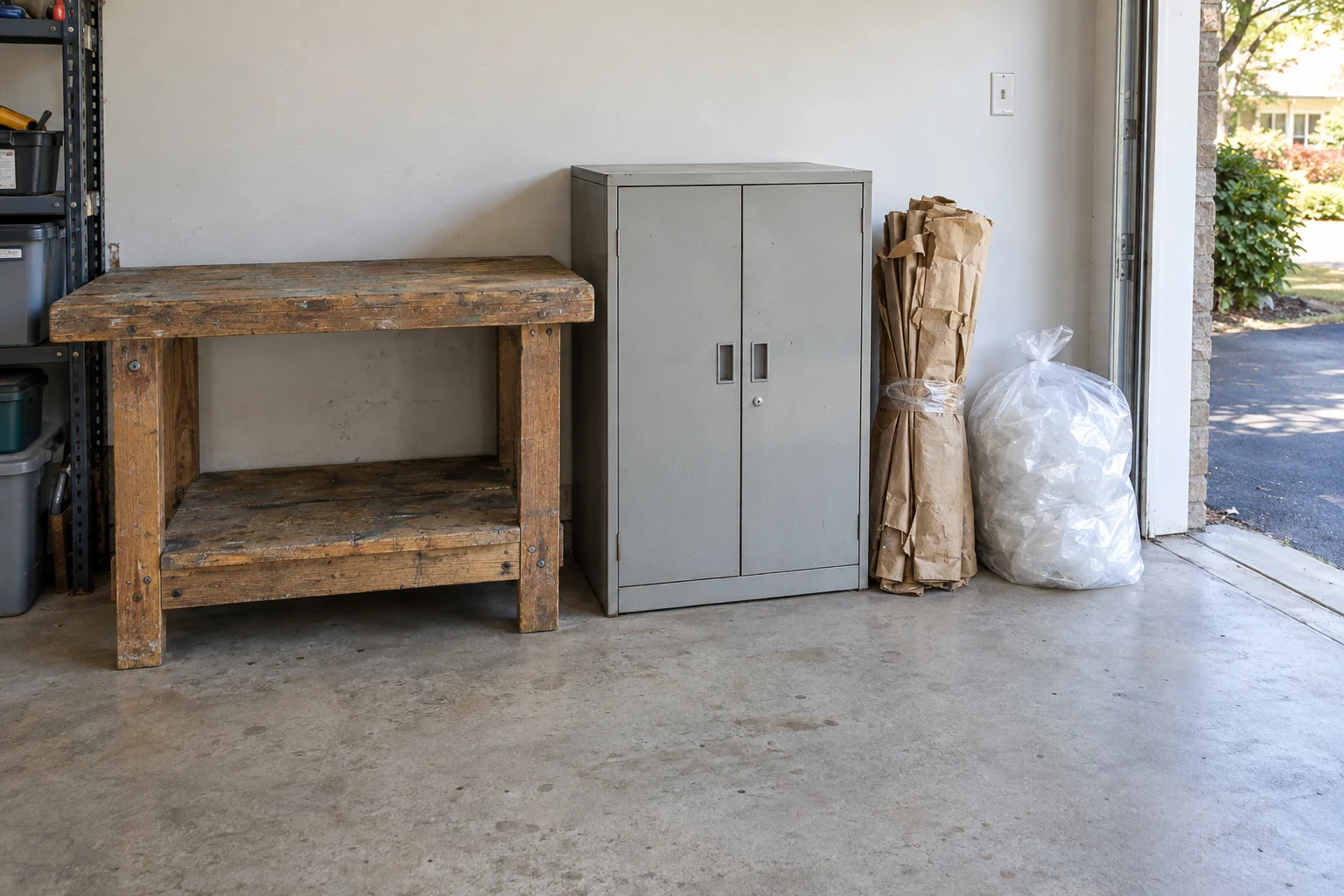
Imagine a family leaving a Davis Street home after seven years and moving to Seattle. The garage contains a redundant small workbench and utility cabinet. Clean used floor-protection paper and plastic film also remain after a finished room project. Before the long-distance inventory from Elmira is finalized, the family checks what will actually serve the receiving home.
Useful equipment and meaningful belongings stay. The workbench and cabinet have no planned use at the destination, so the family compares removal here with the reviewed interstate shipment and any suitable replacement later. Include replacement fit, delivery, availability and full costs; a low bare purchase price is not enough if the receiving room cannot be furnished when needed.
The furniture and used protection are separate groups. Empty the cabinet and identify the workbench's construction and route out. Bundle used paper and contain film at a clear outgoing staging point. Protection with attached plaster, paint or unidentified contamination needs another acceptance check rather than be treated as clean packaging.
Photographs show the whole inventory, garage exit, outside approach and usable vehicle position. The illustrated furniture is at the decision stage before carrying preparation. Items outside the approved list remain retained or undecided. A request for the bench and clean protection does not automatically clear every tool, chemical or repair remnant in the garage.
The family chooses removal before packing so this group does not consume materials, interstate vehicle space and unloading work. An agreed moving-day add-on is another possibility if carrying and the onward receiving plan fit. For a later collection, an authorized person still needs to provide access before the property's clear-by date.
Other reasons to clear unwanted contents
An inherited home, household separation, office handover, broken appliance or outgrown outdoor equipment can leave different surplus. Authority, materials and receiving arrangements change with the situation. Use this wider list to describe the request, then agree the actual item list and work.
View 21 removal situations and what to check
Swipe the table sideways to read all columns.
| Situation | What needs to change | What to agree first |
|---|---|---|
| A furniture replacement | A worn armchair, sofa, dresser or old table makes way for a new purchase. The old piece needs to leave before the new room layout can work. | Agree removal versus retailer haul-away, access, recipient acceptance and the delivery deadline. |
| A television or monitor upgrade | A broken or unwanted screen remains after the replacement arrives. The old device needs an approved recycling route and space needs to be cleared. | Identify the model and an accepting electronics program; ordinary trash is not the route. |
| A local move to a smaller home | Parents choose a smaller home after the children leave; spare furniture no longer fits. Avoid carrying and storing pieces that have no role in the receiving home. | Use the new floor plan, a keep list, a removal list and a separately reviewed quote. |
| A household separates | People move to different homes and a shared surplus remains. Unallocated items should have a destination before the rooms are cleared. | Confirm the authorized owner and each person's keep/remove instructions. |
| A temporary family stay ends | A relative returns home and the spare bed, chair or temporary setup is no longer needed. Clear a useful room instead of keeping furniture without a future use. | Verify ownership and which pieces are being returned, retained or removed. |
| Accumulation before a move | After seven to ten years, forgotten garage, attic or basement belongings reappear. Avoid packing and transporting contents that would be discarded after delivery. | Sort early, photograph the group and distinguish ordinary items from special materials. |
| A long-distance keep-or-replace decision | Bulky low-value furniture competes for space with useful, valuable or sentimental possessions. Removing unwanted bulk can avoid shipment, handling and storage costs. | Compare two actual moving quotes with removal and destination replacement costs; no automatic per-cube discount. |
| An estate's remaining contents | After retained and sold pieces leave, ordinary unwanted furniture remains. The property needs to be cleared for its next agreed use. | Identify the authorized representative and preserve items awaiting sale, collection or family decisions. |
| Rental turnover or a possession deadline | A property must be handed over after tenancy, including situations involving lawful eviction processes. Ordinary unwanted contents may prevent the agreed handover. | Confirm lawful possession and authority over the items; removal is not eviction enforcement or legal advice. |
| An office lease ends | Old desks, chairs or shelving are no longer needed in the new office. Release the old premises without moving a surplus into the new workspace. | Separate business waste, IT/data decisions, landlord instructions and the commercial receiving route. |
| A business changes its space | Unused shop fixtures, storage furniture or equipment need to leave. Make the leased space usable for its next purpose. | Confirm the actual equipment, utilities and materials; resident-only programs do not serve business loads. |
| Outdoor items at a home sale | Patio furniture or children's outdoor items are not wanted at the next home. Clear agreed contents before move-out and property handover. | Confirm the sale agreement, ownership, anchoring, item size and ordinary material acceptance. |
| An unwanted shed or play structure | A shed or fixed children's play structure is no longer useful. It may need a separate dismantling and collection plan rather than transport to the new home. | Review foundations, utilities, dismantling, permissions and receiving material limits; structural demolition is not automatically part of ordinary collection. |
| Broken outdoor equipment | An old mower, grill or other outdoor equipment has stopped being useful. Avoid taking a repair or disposal problem to the new property. | Identify fuel, oil, propane and batteries separately; arrange the applicable material route. |
| A broken household appliance | A washer, refrigerator, freezer or other appliance is being replaced. The old appliance takes up receiving or working space. | Review utilities, access and model; refrigerant-containing appliances need an appropriate processor. |
| Unused or broken gym equipment | A treadmill, exercise bike or weight system is not going to the new home. Avoid a difficult carry and shipment for equipment with no planned use. | Identify weight, dismantling, stairs, electronics and any battery before quoting. |
| Packaging after unpacking | Used flattened cartons, paper and plastic wrapping fill the available space. Restore useful rooms and clear the agreed collection area. | Group used flats in large open boxes near a clear exit; separate material types and agree the collection date. |
| Protective materials after renovation | Clean floor-protection paper or plastic film remains after work ends. The finished space needs to be made usable again. | Identify contamination, wet paint or attached debris; protective packaging is not automatically construction or hazardous waste service. |
| A mattress or box spring replacement | An old bed surface remains after replacing a mattress or changing bed size. Clear the receiving room without carrying an unwanted bulky piece to another home. | Confirm size, condition, covering instructions, local collection eligibility and accepting destination. |
| A prepared yard-waste pile | Identified branches, brush, leaves or trimmings remain after a small clearance. Clear agreed outdoor space before a handover or after work is finished. | Confirm quantity, bundle/container rules and actual green-waste acceptance; tree work, soil and stumps are separate. |
| Light debris after a minor repair | A small photographed quantity of identified drywall offcuts or repair remnants remains. Clear the completed room without mixing construction material into ordinary household pickup. | Review the material, quantity, carrying route, charges and accepting destination; unknown or contaminated material needs a different plan. |
Stand-alone visits and moving-day add-ons
A stand-alone removal visit reserves the carry and onward arrangement around the unwanted inventory. It can clear space before a purchase arrives, meet a property handover or collect agreed material after unpacking or a room project. Access, quantity, the trip and receiving charges belong in the estimate.
An add-on on moving day coordinates agreed removal with the main move. The crew and vehicle already at the property may avoid a separate dispatch. Removal still adds working time, load space, receiving charges and sometimes another trip. Compare the full combined arrangement with a separate visit rather than assume it is always cheaper.
Before moving, removal can simplify the packing list. During the move, it must fit the retained shipment, property appointments and receiving route. Afterward, an authorized person must still provide access within the clear-by deadline. For an office or estate, identify who approves the contents and separate records, personal belongings and retained equipment first.
Elmira's Friday furniture pickup
Planning check: October 9, 2026. Confirm the actual municipality and provider. City of Elmira, Town of Elmira and Elmira Heights are different jurisdictions; the mailing name alone does not establish the rules at a property or a hired carrier's eligibility.
The City furniture and appliance programme publishes Friday morning collection, with registration and payment at the Clerk by Wednesday at 3 p.m. Its posted fee is $35 per item with residency proof. Confirm the actual item and preparation before paying. The City says it does not refund the fee if another party removes the item.
The programme lists various sofas, chairs and appliances, but excludes mattresses, box springs, refrigerators, freezers, air conditioners, lawn mowers and contents with refrigerant or toxic chemicals. These exclusions need another suitable arrangement. Do not turn that list into a claim that every appliance is accepted or that the City collects no large furniture.
For a private request, agree room carrying, preparation, the actual appropriate operator and receiving acceptance. Building staging and work hours belong to the property. A public collection appointment, carry from an upper flat and onward disposal are distinct operations.
County facilities, hours and charges
Chemung County's current facility notice describes changes effective in April and May 2026, including the Big Flats closure and revised Lake Street opening. Do not plan a current trip from an older list showing Big Flats open.
The linked current scale sheet distinguishes ordinary waste, construction material, mixed loads and individual items. It also requires covered loads and an arrival before the scale's final entry time. Public drop-off notices, the scale sheet and the operator's location page publish different hours; confirm the actual receiving operator's opening and last entry for your weighed load before travelling.
Resident recycling eligibility, business or hired loads, item charges and surcharges need checking separately. A receiving fee is not the full removal estimate, and a resident's no-charge recycling condition does not automatically qualify a private mixed load. Confirm the accepting route for each material rather than treat every listed item as ordinary landfill disposal.
Electronics, batteries, paint and special dates
Covered New York electronics use an approved recycling route. Identify screens, computers and embedded batteries separately; data preparation belongs to the owner or appropriate technical contact. Physical collection is not an unspecified promise of file erasure or IT services.
The County electronics voucher announcement required advance registration and a valid voucher, with drop-off May 4–8, 2026. That limited programme is past at the October 9 check. Confirm current accepting devices, quantities, operator and costs rather than read its introductory free-collection wording as an ongoing entitlement.
The actual 2026 fall hazardous-waste event took place October 3 with pre-registration ending September 30. It was for County residents, excluded businesses and did not accept electronics. Contact the responsible programme for current options; that event is not a future appointment for an imminent handover.
Identify battery type and condition. Covered rechargeables and lead-acid batteries cannot be ordinary trash in New York. Paint may have an accepting State takeback site, while solvents, fuel, cylinders and other special contents need product-specific instructions. Do not dry and discard every coating by one generic rule or put hazardous contents inside a furniture load.
Appliances, mattresses, yard waste and light repairs
Describe the appliance model, utilities and complete carry. Refrigerant equipment needs a chain that meets federal recovery and verification requirements. The County scale sheet has its own empty-appliance and door-removal preparation conditions. Confirm the actual operator and appropriate preparation; ordinary carrying does not include recovering refrigerant or connecting the replacement.
Mattresses and box springs are excluded from the City's Friday programme. Give size, condition, access and quantity, then confirm actual receiving preparation and charges. Do not leave them beside a regular bin on an assumption that any bulky household piece has the same pickup conditions.
The City compost facility publishes a separate vegetation route and current seasonal information. Its allowed materials include grass, leaves, shrubs, twigs and branches, while construction debris, fencing, concrete and metal are excluded. Paper bags and plastic-bag contents have different preparation. Confirm opening, maintenance closures and the actual load or carrier's eligibility before travel.
For small repair remnants, identify source, material, quantity and contamination. Clean used protection differs from sheeting with attached plaster or chemicals. Structural demolition, fixed sheds, foundations and specialist materials require a separate scope decision. Collection of a portable play item or already prepared trimmings does not automatically include dismantling, tree work or complete garden clearance.
Send the inventory and clear-by date
Provide the full address, item descriptions, quantities, photographs and required clear-by date. Show doors, turns, stairs or elevator, exit and vehicle approach. Identify special materials and the authorized person approving the contents. Keep retained, recipient-bound and undecided belongings apart from the removal group.
Tell us whether you want a separate visit or coordination with a move. We will review carrying, appropriate hauling and receiving, timing and the written estimate so the moving shipment serves the next home rather than carry an unresolved clearance problem across the country.
Elmira removal and disposal questions
How can removal save money on an Elmira move?
It can avoid preparation, packing, shipment space, storage and later collection for belongings with no useful place at the receiving home. Compare full actual options, including removal and any replacement costs, before agreeing the moving price. One removed piece does not automatically reduce an existing flat rate.
Does Elmira offer furniture and appliance pickup?
The City publishes Friday morning collection, with registration and payment by Wednesday at 3 p.m., $35 per item and residency proof. Confirm the actual item and preparation before paying. Public collection does not automatically supply carrying from a room or meet a different property deadline.
Are mattresses and refrigerators included in the City programme?
The City's listed exclusions include mattresses, box springs, refrigerators, freezers, air conditioners and lawn mowers. Arrange a suitable separate receiving and carrying plan for the exact items. Confirm preparation and current costs rather than leave them beside a regular bin.
Is a moving-day add-on always cheaper?
The crew and vehicle already at the property may avoid a separate dispatch. Removal still adds working time, load space, receiving charges and sometimes another trip. Compare the full combined arrangement with a stand-alone visit quote for the actual inventory.
Can spare furniture be removed after relatives leave?
Assign the receiving rooms and useful contents first, then confirm recipient collection and who can approve the remaining pieces. Empty furniture and agree preparation for the actual exit route. Something left in the guest room is not automatically authorized for disposal.
Should unused garage furniture travel long distance?
Compare its useful place at the destination with the reviewed shipment and removal plans and any replacement purchase, delivery, setup, availability and fit. Decide before packing so an unwanted group does not consume materials and interstate load space only to need collection again after arrival.
Can televisions join ordinary trash?
Covered New York electronics need an approved recycling route. Identify the device, quantity and actual accepting operator, and arrange any data preparation with the owner or appropriate technical contact. Physical collection is not an unspecified promise of technical setup or file erasure.
Is the County electronics voucher offer still a current free appointment?
The announcement required advance registration and a valid voucher, with drop-off May 4–8, 2026. That limited programme is past at the October 9 planning check. Confirm current suitable device acceptance, operator and costs rather than assume ongoing free daily eligibility.
Can I rely on one published Lake Street closing time?
County drop-off notices, the scale sheet and the operator location page publish different hours. Confirm current opening and the final entry for the actual weighed load before travelling. Covered-load preparation, eligibility, charges and any surcharge are separate checks.
Can every hired load use free resident recycling?
The County has resident proof conditions and separate out-of-county charges. Confirm the actual carrier, business or mixed-load arrangement and material acceptance. A household's no-charge recycling eligibility does not automatically establish free private hauling or disposal.
Does the recent hazardous-waste event take electronics or business waste?
The actual October 3, 2026 event was for County residents, excluded businesses and did not accept electronics. It required pre-registration and is past at the October 9 check. Contact the responsible programme for current product-specific options; ordinary furniture work does not promise hazardous-waste transport.
Can yard waste and room-project remnants use one route?
Keep vegetation, clean paper, film and repair debris separate. The City compost facility has its own allowed materials and excludes construction debris, fencing, concrete and metal. Identify repair material, source, quantity and contamination; structural demolition and specialist material are separate scope decisions.
What information should I send for the removal estimate?
Provide the full address, item list, quantities, clear-by date and photographs of the contents, doors, turns, stairs or elevator, exit and vehicle approach. Identify batteries, fuel, paint, refrigerant or other special materials and the authorized person. Keep retained, recipient-bound and undecided belongings apart from the approved group.