Start with Baltimore City Public Schools, which is a different school system from Baltimore County. Give the receiving office the full address, child's grade, previous school and intended start date. The district's enrollment page provides current contacts and, when checked, a five-to-ten-business-day processing notice related to system maintenance. An application receipt is not a confirmed placement or start date.
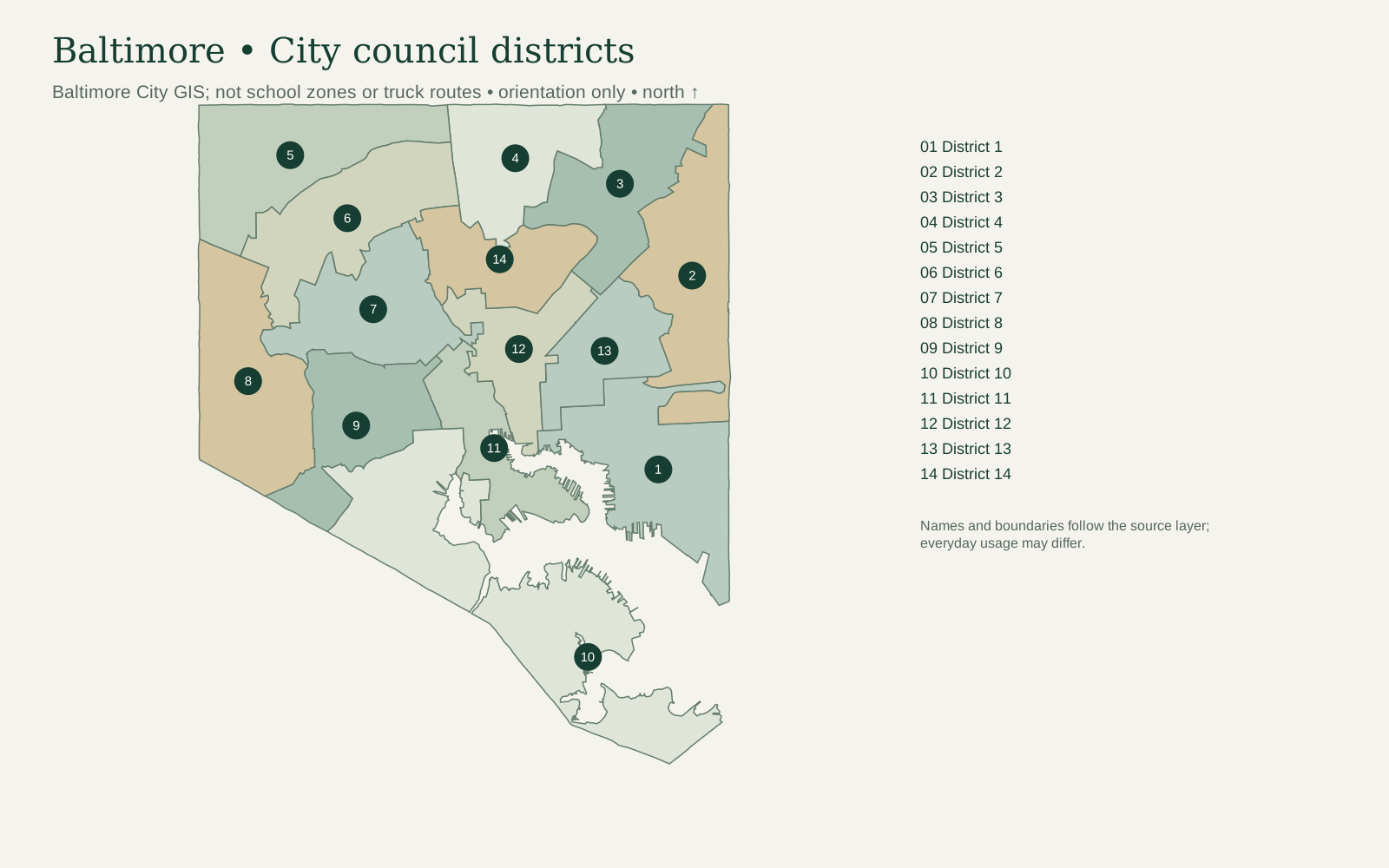
Ask which route applies: a neighborhood school, middle-grade feeder or choice process, high school choice, charter admission, transfer or a program with additional eligibility requirements. Do not infer the assigned school from a council-district map, a historic-district name or a nearby school building. Confirm the address and grade with the district or receiving school.
The district's 2026 documentation checklist identifies parent or guardian identification, proof of the child's age, two accepted city-residency documents, prior academic records and health documentation, with custody or support records where applicable. Dated proof items need to meet the current recency requirement, generally sixty days. Ask which documents fit the household's circumstances rather than assuming a single lease settles every requirement.
For pre-K and kindergarten, the 2026–27 guide sets the ordinary age dates at four by September 1 for pre-K and five by September 1 for kindergarten. Pre-K also requires income documentation and has admission priorities; eligibility does not guarantee a seat at the preferred school. After accepting an offer, families provide the receiving school with the required immunization, health-inventory and blood-lead documents, plus any applicable medical, IEP, 504 or custody information.
Check the current pre-K and kindergarten page before opening an application. Its regular online window and the published July summer period had closed by this guide's September check. A family arriving now should contact the neighborhood school and enrollment office about seats and the current late-entry process, rather than relying on an old summer date.
For elementary and middle-grade address changes, the transfer procedure includes moves into a different school zone during the academic year. Out-of-zone attendance requires approval. Tell the office if the child already attends a city school, and confirm whether the move changes the placement, records destination or transport arrangement.
The middle-grade guidance distinguishes neighborhood, feeder and choice routes. The high-school registration page describes several admission types, including programs with entrance criteria. A newly arriving family should ask about the current placement route rather than assuming the previous annual choice deadline is still open or guarantees a particular school.
City residents receive priority under the district's nonresident admission policy; an address outside the city raises separate admission and possible tuition questions. If the family lacks ordinary documents or is in temporary housing, explain that immediately and ask about enrollment support. Before the first day, confirm the accepted school, start date, attendance contact, records still needed and any support or transport assessment.