Virginia / City relocation guide

Moving to Charlottesville

Choose a Charlottesville home by testing the address against everyday travel, household needs and the practical work of moving in. This guide connects neighborhood comparisons with the school, utility, collection and street-access decisions that follow.

Woman carrying a cloth tote along a brick pedestrian street with shops and trees
Test the everyday routes from the actual address.

01 /

Choose the path that fits your household

If you are comparing homes, begin with the map, housing section and neighborhood comparisons. Work from the exact property: municipality, unit, tenure, total monthly costs, everyday destinations and usable access. A neighborhood name is helpful context, but it does not establish a school assignment or a loading arrangement.

If children are part of the move, begin with schools. Charlottesville’s published zoning plan separates current attendance areas from later transitions. Confirm the school for the address and entry year before relying on a listing, old school name or future map. Gather records while the previous school and your healthcare provider are still easy to reach.

If you already have the address, start with utilities, waste, street access and the route through the building. Give each unresolved item an owner and an answer date. A submitted application, a paid collection charge and a requested appointment are different stages; each needs its own confirmation.

Keep a small arrival file available outside the shipment. Include the lease or closing arrangements, keyholder contacts, essential documents and the confirmations that affect your first night. Identify the fallback before a delay becomes a decision that must be made beside a loaded vehicle.

02 /

Understand the city and the map

Use the City of Charlottesville as the subject of this guide. A Charlottesville postal address can point to a property outside the municipal area, where different school, utility and waste arrangements apply. Confirm the property with the City’s GIS and open-data resources before using city procedures as your checklist. Check the exact destination for work or study too; an institution’s name does not describe every building’s jurisdiction or entrance.

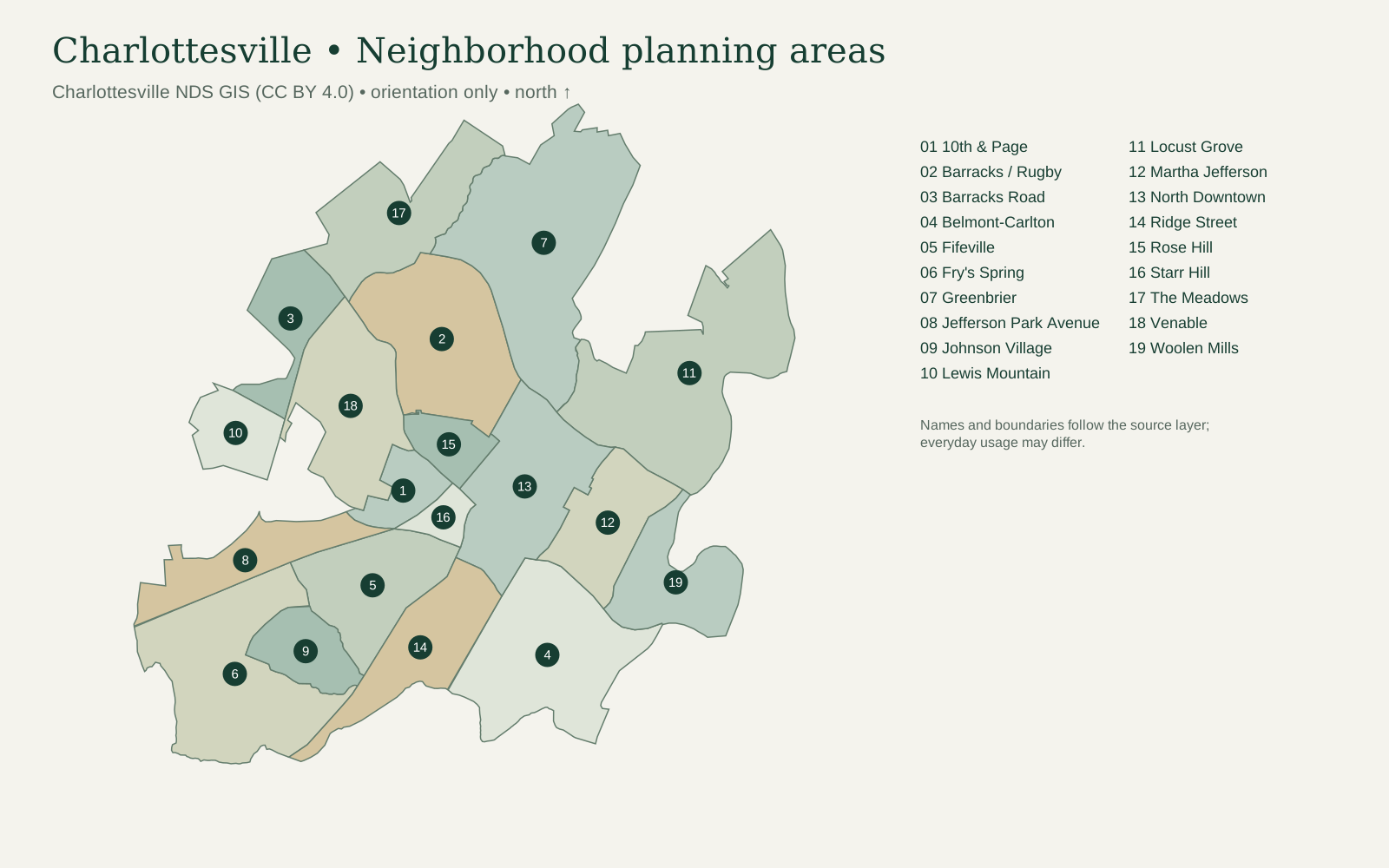
The map below draws the 19 areas in the City’s Neighborhood Development Services planning dataset. The owner says these are not precise or official neighborhood boundaries and may not include every everyday designation. The neighborhood directory contains 20 names, including Little High, which is not a separate polygon in this layer. The map keeps the published geometry rather than inventing a twentieth area.

The drawing simplifies that city geometry for orientation and retains its names. Source: Charlottesville NDS, under Creative Commons Attribution 4.0. It does not determine a parcel line, school attendance area, flood exposure or truck route. Check those questions with their respective property or agency owner.

Use the comparisons below to decide what to inspect. A central apartment, older house and later subdivision can each work for a different routine. Visit the actual entrance and test the journey at the hours you will use it; proximity on a map is only the beginning of the decision.

Charlottesville neighborhood planning map with nineteen numbered areas from the City NDS GIS dataset
Charlottesville NDS planning-area geometry, simplified for orientation, CC BY 4.0. These are not official neighborhood boundaries, school zones, parcel lines, flood areas or truck routes. Open full-size map.

03 /

Find the area that fits your routine

These six comparisons use separate City neighborhood factsheets. They describe different built settings and questions to test at a property; they are not rankings or promises about current prices, school quality or availability. The names used locally and in the planning-area map can differ.

Belmont / Belmont-Carlton

Northern Belmont includes houses largely from the 1890s through the 1940s, while southern parts have later twentieth-century housing. The City identifies the Monticello Road and Carlton Avenue restaurant area and industrial or office uses along the rail edge.

Belmont neighborhood factsheet ↗
Housing & setting
Compare the actual house or unit, porch landing, stair and permitted storage. An older exterior does not tell you whether a building is divided or which entrance serves the tenancy.
Daily travel
Test the route over or around the rail corridor to your destination, with the correct stop and return journey. Do not infer travel time from proximity to downtown.
Before choosing
Check the lawful loading position, steps and approach at the chosen address; establish the difference between resident parking and temporary moving access.

North Downtown

The City’s description combines the pedestrian Downtown Mall, residential streets around Park Street and mixed commercial or former industrial edges. These are distinct settings within one planning label.

North Downtown neighborhood factsheet ↗
Housing & setting
Compare a managed apartment’s service route with the access into an older house. Confirm the actual receiving door and whether building staff, a lift or a booked window are involved.
Daily travel
Walk from the property to everyday destinations and the relevant bus stop. A pedestrian shopping destination is not a truck-access route.
Before choosing
For a Mall-facing property, agree the delivery entrance, permitted vehicle approach and time with both the property manager and City.

Fifeville

Fifeville’s factsheet describes late-nineteenth-century residential development and later apartments and homes, including Greenstone on 5th and Orangedale. Cherry Avenue and nearby civic places provide useful orientation.

Fifeville neighborhood factsheet ↗
Housing & setting
Compare the individual home or managed unit, including shared stairs, parking and storage. Ask about any work affecting the entrance or receiving rooms.
Daily travel
Test the precise journey toward work, school or the medical area, including crossings and the route home. A nearby institutional name does not identify the right building.
Before choosing
Establish the property’s waste provider and service entrance; check whether a shared or street-side route can stay clear during the agreed move.

Fry’s Spring

The City traces residential growth to early-twentieth-century estate subdivisions and the former streetcar corridor along Jefferson Park Avenue. Its map includes Azalea Park and the nearby city–county edge.

Fry’s Spring neighborhood factsheet ↗
Housing & setting
Inspect the actual house or apartment, grade changes, private walk and stair turns. Confirm the unit and municipality instead of using the broad neighborhood label as the service address.
Daily travel
Try the journey along the relevant corridor at your usual hours and inspect the final walk. Verify current service rather than relying on an old transit line on a factsheet.
Before choosing
Check driveway dimensions and owner approval if private loading is proposed; otherwise arrange the street position through the correct authority.

Greenbrier

Greenbrier lies at the northeastern city edge and is described as a group of subdivisions chiefly developed after World War II. Meadow Creek and recreation places around McIntire Park help orient the area.

Greenbrier neighborhood factsheet ↗
Housing & setting
Compare the house’s layout, driveway, steps and usable storage. A detached house still needs its actual vehicle approach and interior turns checked.
Daily travel
Test the route to work and ordinary shopping, including the walk from a bus stop if used. Make the return journey part of the decision.
Before choosing
Confirm the current school assignment independently and check whether any later attendance-zone change applies. The neighborhood name alone is not a school guarantee.

Woolen Mills

The factsheet connects a varied stock of houses dating from the nineteenth century with the area’s mill history and Rivanna River setting. Riverview Park and the reused mill complex are orientation points.

Woolen Mills neighborhood factsheet ↗
Housing & setting
Inspect the property and its carrying route rather than assuming a riverside label describes every home. Ask about storage conditions, parking and any property-specific drainage information.
Daily travel
Walk the actual route to a park entrance, shop or stop, and identify crossings and the return option. A trail on the map is not necessarily your practical daily route.
Before choosing
Verify municipality near the edge, the permitted vehicle position and the usable route to the door. Flood and parcel questions require their own property-level checks.

04 /

Compare the home, the contract and the monthly cost

The ACS 2024 five-year housing estimates describe the 2020–2024 period. Charlottesville had about 19,815 occupied housing units: 44.2% owner occupied and 55.8% renter occupied. Median gross rent was $1,540, and median owner-occupied value was $486,700. These are survey measures for their respective housing populations, not today’s asking rents, available listings or an appraisal of a particular property.

Of roughly 21,610 total housing units, 47.0% were in detached single-unit buildings, 14.7% in buildings with two to four units, and 18.2% were built before 1940. Those shares use all housing units, including vacant units, rather than the occupied-unit denominator used for tenure. They describe the housing stock; they cannot tell you whether an individual home is maintained, accessible or suitable for your furniture.

For a rental, ask which utilities are separately metered, what the landlord provides, how waste collection is arranged and which parking space, if any, belongs to the tenancy. Put recurring charges beside rent, including parking, internet, laundry and any required service package. Confirm the keys, possession date and first date you can actually occupy the unit.

For a purchase, separate closing from practical readiness. Determine who holds keys, when utilities change responsibility and whether promised work will finish before delivery. Inspect basement or attic storage and any separate structure included in the move. A closing appointment does not itself arrange a gas service visit or ensure that a contractor has cleared the receiving rooms.

Property situationConfirm before committingEffect on arrival
Older house or divided residenceAuthorized unit entrance, stair turns, landing and shared spacesFurniture may follow a different route from everyday entry
Managed apartment buildingReceiving hours, lift or stairs, documents and staff accessThe move may depend on an appointment and another party
Home with a private driveOwner permission, width, surface, overhead clearance and turning spaceA visible driveway may not accommodate the moving vehicle
Home relying on street parkingDaily vehicle eligibility and a separate moving-day loading planA resident permit does not reserve an empty space

Where the home is in a restricted parking block, read the residential zone rules. Eligibility, the designated street and block, and vehicle documentation matter. A guest permit is for a genuine temporary visitor, and neither kind guarantees that a space will be free.

Before signing, take measurements and ask about work that changes the carrying route. Keep the answers with the property documents. That gives you a useful comparison between homes and reliable information for a moving estimate.

Closed branded kraft carton beside a blue-gray armchair and open hallway
Inspect room layout and the route for furniture.

05 /

Test your daily journeys and their return trips

Charlottesville Area Transit’s riding instructions currently state that CAT is fare-free. Use the current schedules and maps to find the actual route, stop and operating day for your journey. An older fare brochure or a line drawn on a neighborhood factsheet may describe a different service arrangement.

Test both directions. A stop convenient for the outward trip may leave a different walk at the end of the day. Look at the last useful departure, transfer margin and the route from the stop to the door. If work includes evenings or weekends, test those hours instead of a weekday midday example. A direct trip to one destination does not establish that every household member can manage their routine without a car.

The City describes real-time arrival tools and stop-number text updates. Treat an estimate as assistance for a trip, not a guaranteed departure. Learn the stop location before the first busy morning. Keep a workable alternative for an interrupted service, an appointment outside operating hours or a day when carrying shopping makes the usual walk impractical.

For a household member who cannot use the fixed-route service because of a disability, review the CAT ADA paratransit process. Eligibility is assessed through an application; moving to an address near a bus route does not automatically establish approval. The published process describes a 21-day determination framework and advance trip reservations through JAUNT. Arrange this separately from the household shipment and confirm the person’s actual travel needs.

If you will drive, test the parking arrangement at the destination as well as at home. Count permit or parking costs in the household budget and check whether visitor or work parking differs from the resident arrangement. For school, use the district’s current transport confirmation rather than assuming a city bus or a nearby school solves the journey.

Make a short route list for the first week: work, school, groceries, pharmacy and any regular appointment. Mark the entrance and return option for each. It is more useful for choosing a home than a single advertised commute time.

White and green city bus viewed across a through-street with clear road ahead
Check the route, stop and return journey you will use.

06 /

Confirm the address, school year and enrollment path

Start with the current attendance area

The district’s attendance-zone page directs families to the City GIS address lookup and its “Additional Data” information. Confirm the result with the school registrar, especially where a listing uses an older school name. Current elementary assignment and a planned later transition are separate questions. The district now lists Charlottesville Middle School for grades 6–8 and Charlottesville High School for grades 9–12.

The published transition plan starts with specified homes west of Kindlewood in August 2027; other identified areas are scheduled for August 2029 at the earliest, with timing tied to residential construction. Some previously unoccupied parcels changed earlier. Families seeking an early transition use the separate out-of-zone request, and permission is not automatic. Ask which rule applies to your address, child and entry year, including transport responsibility.

Register through the right year and form

The enrollment hub has instructions for 2026–27. For a new K–12 student, open SchoolMint, check the selected school year, add the student and complete the new-student registration form. Documents can be uploaded through the district’s secure process or brought to the school. Preschool uses a separate route; returning students use re-registration.

For kindergarten, the district gives September 30 as the date by which the child must be five. Do not confuse a spring open house with the only possible registration date. If arriving during the school year, contact the registrar for the actual start arrangement, records transfer and any assessment or course-selection step.

Keep the document categories distinct

New-student documentation includes an original or certified birth certificate, immunization record and custody or guardianship documents where relevant. Residency requires two proofs, one from each of the district’s two columns. For example, a lease is in the first group and a qualifying recent utility bill in the second; two documents from the same group do not necessarily meet that checklist. A driver’s license or post-office box is not accepted as residency proof.

The checklist also offers a shared-housing agreement and other specific circumstances. Students in PK–5 need the required health examination within the stated period before attendance. Use the actual school health form and ask the registrar what remains outstanding. Keep healthcare and school records with you, rather than putting the only copies into a box that might arrive later.

Resolve changes and support needs before assuming continuity

If your child is already enrolled, use the change-of-residence guidance. Remaining at a previous school after an in-city move, or continuing after moving outside city limits, depends on the stated approval route. Family-provided transportation can be part of that arrangement. Update the address and seek a written answer; continuing to attend does not itself show that the new arrangement has been approved.

If housing is temporary or unstable, tell the school. The district identifies school support staff and its McKinney-Vento liaison at 434-245-2652. Ask for help with enrollment and records rather than treating a missing ordinary document as the end of the process. For special education, language support or medical needs, explain what is already in place and arrange the transition with the relevant school staff.

Finally, confirm the first attendance day, dismissal plan and transport request. A completed online registration is not a bus-stop assignment, after-school place or promise that a preferred school has space. Keep those confirmations beside the move schedule so the household plan does not rely on an unanswered assumption.

07 /

Arrange accounts and physical access separately

Begin with the lease or seller’s information: who supplies water, sewer, gas and electricity, which services are separately metered, and which account responsibilities belong to the household. The City’s moving-in and moving-out guidance covers its water and gas services. It does not transfer every utility attached to an address.

The City asks customers not to apply more than 30 days before the required service date. A deposit or qualifying utility credit letter may be required, together with the service charge. A landlord’s owner-allocation arrangement can prevent service interruption between tenants, but it is a separate enrollment choice; do not assume the landlord has it or that it transfers responsibility to you automatically.

Read the actual application before choosing a date

Use the official utility application directory to reach the correct residential or business form. The live residential application says it does not provide same-day service or process applications on weekends. It gives the next business day as the earliest request for applications submitted before 5 p.m. on a business day or over a weekend; after 5 p.m. Monday–Thursday, the earliest is the second coming business day.

These are request limits, not confirmation that a particular slot is available. The general information page also lists a same-day charge when available, but the online form explicitly excludes that service. For an urgent case, call Utility Billing at 434-970-3211 and obtain a specific arrangement rather than relying on the general fee table.

Gas activation may require an adult inside and access to all gas appliances, including those with electronic ignition. Arrange the keyholder and usable rooms for the appointment. The form warns that missed access can mean another business-day visit and an additional service charge. A truck delivery and a gas appointment should not compete for the only person who can admit either party.

Close the previous account deliberately

The City asks for one business day’s notice to stop service and warns that May and August may require at least three. Provide the account and address, requested end date and forwarding information through the designated channel. If the gas meter is indoors, arrange access. When no successor has applied, removing the service from your name can result in disconnection; coordinate the change with possession and the property owner.

For an address served by Dominion Energy, its Virginia start-service guidance explains the identity, address and meter-access requirements and separate business-day service process. Confirm the provider for the exact property. Use the official secure channel for personal identifiers and follow the utility’s connection instructions. Internet installation and any landlord-managed systems need their own appointments.

Before the shipment arrives, verify what is actually operating: lighting, water, heating or cooling appropriate to the conditions, and any lift or controlled entry needed for the move. Keep confirmation numbers and the responsible contacts available. An account request alone does not prove the home is ready to receive people or belongings.

08 /

Separate ordinary collection, packing waste and bulky items

Ask the property owner whether the address uses City curbside service or a private arrangement. Charlottesville’s waste-service overview distinguishes eligible residential service from commercial and other collection. A dumpster at an apartment property needs the manager’s instructions; nearby curbside carts do not establish that your unit should use them.

Routine trash and recycling

City trash collection is fee based. Each bag or container needs the correct individual sticker or annual decal. Annual decals apply to the purchased address and run July through June; the City describes a separate transfer procedure when moving. Check the container size, weight limit and address before using a decal left on an old can or bringing one from another property.

Curbside recycling is available without an additional collection charge to customers using City trash service. It is collected every other week on the regular trash day. The page provides cart-request and exchange links. Confirm the current week and holiday changes; a linked calendar headed 2025 should not be used to plan a 2026 arrival.

The City’s solid-waste guide calls for setout by 7 a.m. on collection day and return of containers and uncollected items to the property within 12 hours after collection. Keep the walking route clear. If no one will be home, arrange who puts the containers out and brings them back.

Sort packaging as rooms are unpacked. The curbside material guide accepts cardboard and paper loose in the cart, while plastic bags, foam and ordinary refuse do not belong there. Keep usable cartons aside for reuse, reduce their volume for the available container and check an overflow route with Public Works. Drop-off recycling can have different sorting rules from the city cart; do not combine the two checklists.

Book large-item collection as a separate job

For eligible residential addresses, large-item pickup costs $35 for the first collection, $50 for the second and $100 for later collections within the preceding rolling 365 days. The process has two steps: pay through an accepted method, then call 434-970-3830 to arrange a date. Paying online does not reserve the collection day.

The application’s limits include a maximum load and exclusions for recyclable cardboard, construction debris, hazardous materials and contractor spoils. Describe the pile before paying if its eligibility or volume is uncertain. Establish the approved setout time and place, and leave room for pedestrians and the moving route. A lease-end date does not guarantee a municipal appointment.

Give a mattress a confirmed destination

The Rivanna Solid Waste Authority’s accepted-items guide identifies mattresses and furniture as domestic waste at the Ivy facility, 4576 Dick Woods Road. Normal disposal fees and occasional free resident events are different options. Event eligibility, date and unloading arrangements must be checked; a past event is not continuing free collection, and commercial loads have different restrictions.

Confirm mattress preparation and acceptance before arranging transport, especially for a damaged or contaminated item. Also check whether a retailer or property manager has an agreed removal option. Keep proof of the booking and a fallback if the intended destination cannot take it. For self-hauling, use the fee category for your actual municipality: RSWA’s city and county resident service charges differ despite shared Charlottesville postal addresses.

Keep disposal costs and labor separate from the belongings going to the new home. If you want the moving company to handle removal work, describe the items and ask for an agreed scope before the move.

09 /

Follow the actual street-closure and loading path

Draw the proposed operation before asking for permission. Mark the property entrance, truck position and length, ramp or working area, public sidewalk, nearby driveways and any lane affected. Say whether the vehicle only loads during the day or needs overnight staging. Include a portable container if one is part of the plan; permission for a vehicle does not automatically authorize another object.

Ask the City to classify the operation

Traffic Engineering describes its role in reviewing temporary right-of-way closures and traffic control. Use that authority for a proposed parking-space, sidewalk or lane occupation. Explain that it is a household or business move so the City can distinguish it from construction or an event. Ask which application subtype, supporting documents and fees fit the specific footprint.

The publicly hosted street, sidewalk and parking-space closure application provides a useful planning checklist. It calls for submission at least one week before the proposed closure, a location sketch and traffic-control plan, and specified liability documentation naming the City. It lists planning fees of $20 per parking space per day, $10 per sidewalk closure per day and $50 per street right-of-way use per day. Confirm the current assessed charges and required documents with Traffic Engineering; the posted form is not your approval.

That form also requires written notice to affected nearby occupants seven days ahead and temporary parking signs at least 48 hours before removal of the spaces. Establish who supplies and posts the authorized signs, their wording and placement, and what happens if a vehicle remains. Do not substitute homemade cones or your own towing arrangement for the City’s procedure.

Use the official channel and keep the approval

The City’s permit instructions lead to its online portal. Application work requires the appropriate access; the public guest route may require a verification step. If you cannot identify the right subtype, use the posted Traffic Engineering contact, traffic@charlottesville.gov or 434-970-3182, with the address and proposed operation. Ask how to submit and pay through the current process.

Keep the permit and its conditions available at the move. Confirm the dates, approved objects, exact position, pedestrian route and required notice. The posted closure form discusses accessible detours and limited work hours on the Downtown Mall; those provisions are not blanket permission to bring any moving truck onto the pedestrian mall. Coordinate the delivery entrance and time with the City and property manager.

Separate daily parking from the moving operation

A residential or guest zone permit allows eligible parking in its designated block when space is available. It neither guarantees a vacant space nor authorizes a lane or sidewalk closure. Confirm the household’s regular parking independently of the temporary loading plan.

The City’s large-vehicle restriction covers specified vehicles between midnight and 6 a.m. unless a City permit applies. A truck with dual rear wheels can fall within the listed axle condition. Disclose the actual vehicle and timing; do not plan an overnight stay from a daytime parking assumption.

If the preferred position is not approved, agree a lawful alternative with the property, City and moving crew before arrival. Record the revised carrying distance, timing and any added handling. If no permitted alternative exists, move the delivery appointment rather than arriving with the decision unresolved.

10 /

Turn access permission into a usable route

Street permission ends at the boundary of the property arrangement. The landlord, association or facility manager controls the receiving entrance and internal route. Ask for written moving instructions early enough to resolve missing documents, book staff and measure the parts of the route that might limit the shipment.

Trace the whole path: curb or driveway, surface changes, steps, porch landing, doorway, corridor, lift or stair and final room. Measure the tightest point and important turns. For large furniture, compare the item’s dimensions in its agreed moving configuration; a sofa that fits through the front door may still fail at the next turn.

Ask which spaces are shared and how they will remain available. Another delivery, resident access or a contractor’s work can reduce the useful window. Confirm the time protection may be installed and removed, which doors may be held open, how security is maintained and who has authority to resolve a problem on the day.

Where a building requests a certificate of insurance, obtain its exact wording, entities, limits, submission route and deadline. Ask about any union or designated-worker requirement if it applies to that property. These are building-specific questions, not a claim that every Charlottesville residence has the same policy. Clarify the basis of deposits, refundable amounts, inspection and payment responsibility.

A short lift or loading window needs a sequence that fits. Packing, labeling and permitted room preparation can happen in advance; actual carrying must follow the agreed access period. Avoid booking a vehicle arrival that depends on an unconfirmed extension. Ask whether the lift is exclusive, what happens if it fails and who can approve the fallback.

For a porch or private drive, check structural suitability and owner permission before planning equipment placement. Keep the walking path and landing clear, and agree any protection for finished surfaces. Do not assume a neighboring driveway or shared access may be borrowed simply because it looks empty.

Finally, verify the route again near the move date. Send updated photographs if construction, parked equipment or room layout has changed. A plan based on the actual receiving conditions is useful to both the property contact and the crew; an old photograph without context can conceal the constraint that matters most.

11 /

Try the routines that make a home work

Use an ordinary weekday to test the address. Walk from the entrance to the destinations you will use, rather than starting from a neighborhood center. Check the crossings, gradients, lighting and return journey with the household member whose needs are most constrained. A route that works for a short unladen walk may feel different with groceries, a stroller or limited mobility.

The City’s neighborhood factsheets identify parks, streets and civic places that can help plan a visit. They are useful orientation documents, but a mapped school, bus line or facility does not prove current eligibility, opening hours or available programs. Use the operator’s current information before relying on a specific activity.

Work through the first week’s essentials: food shopping, prescriptions, laundry, internet access and any regular care appointment. Decide which supplies travel with you and which can wait for the shipment. If you work from home, identify a temporary connection or workspace if installation is delayed. If someone cannot drive, test their independent travel options rather than making the household depend on one car by default.

Visit at another time if noise, deliveries or parking matter to your decision. Ask the owner about the specific building and inspect what you can directly observe. A neighborhood label is not a safety rating, a promise of quiet or a guarantee that a particular service will suit you.

Once the address is chosen, keep a concise household contact list. Include the property contact, utilities, school registrar where relevant and confirmed collection arrangements. This turns the research into something useful during the first days, when routines and belongings are still being put in place.

Man jogging on a shaded park path beside an older woman reading on a bench
Try the routines that will make the address work.

12 /

Plan for the route and conditions you will actually face

Charlottesville’s winter guidance says owners and occupants must clear snow, sleet and ice from adjoining paved sidewalks within 24 hours after snowfall ends. The City asks for the full sidewalk width to be cleared. Assign the responsibility with the landlord or other household member, then include the private walk, stairs and porch in the moving-day access check.

A municipal clearing deadline is not confirmation that the route is safe at an earlier booked time. If ice or unremoved snow blocks the approach, the person responsible needs to resolve it before carrying begins. Agree how the crew and property contact will communicate a changed arrival time or an alternative permitted entrance.

In wet or hot conditions, plan a usable staging area and protect the walking route from loose packaging and water. Keep medication, drinking water, weather-appropriate clothing and other immediate needs with the household. Check that essential home services work before relying on the property for the first night.

Street and utility work can matter more than the season itself. Review the City’s current project notices near the date and verify the relevant block. Listed timelines are approximate and can change. Ask the property contact whether access to the entrance, meters or parking position has been affected.

For student or institution-related housing, use the current move instructions for the exact property. A public academic date does not reserve a lift, a curb position or a receiving room. Place those confirmed appointments on the household calendar with utility visits and collection dates, leaving decisions about unresolved access early enough to use a fallback.

Cleared concrete walk and two front steps at a brick home after light snow
Arrange a usable route before the scheduled arrival.

13 /

Make arrival and Plan B explicit

Build the arrival plan around what must be true before the shipment can be received. You need lawful possession and keys, a usable loading position, an open route into the building, available receiving rooms and essential household services. List each condition with its owner, confirmation and latest useful decision time.

During the week before the move, reconfirm the property handover, any building appointment and the street arrangement. Check the actual inventory and packing scope against the estimate. Record changes rather than assuming a previously discussed plan automatically includes them. Keep necessary documents and contacts in a place you can reach without opening the shipment.

A practical fallback answers six questions: what triggers it; when the decision must be made; who decides; which alternative is actually available; who authorizes the extra cost; and how normal delivery resumes. For example, if possession is delayed, agree the latest time to decide whether the shipment goes to confirmed storage, who approves handling and storage charges, where the household stays and who books the eventual delivery.

If the street position is unavailable, the alternative needs to be lawful and physically usable, with the revised carry and time agreed. If a lift fails, a stair route is only an alternative after the building and crew assess it. If utilities are not operating, separate a decision about delivering belongings from whether the household can safely stay there.

Keep the people plan alongside the furniture plan. Arrange school attendance and transport, care needs, medication, pets and the first night’s essentials. Give each adult the contacts they need, and avoid making one person responsible for simultaneous appointments at both properties.

On arrival, walk through the rooms and placement instructions while the authorized contact and crew are available. Check the agreed work before the access window closes. Record follow-up in writing, retain the moving documents and keep disposal items separate from the delivered belongings. Municipal pickup, utility activation and school enrollment each finish through their own confirmation.

When the address and access details are ready, use the Charlottesville moving page to organize the inventory and service questions for an estimate. The useful outcome is a coordinated set of arrangements that can actually happen on the selected date.

14 /

Questions before you arrive

Does a Charlottesville mailing address mean City services apply?

Check the exact property and municipality. A postal address or neighborhood name is not enough to establish the school division, utility provider, waste service or street authority.

Which school-zone map should I use for a 2026–27 move?

Confirm the current assignment through the district’s address lookup and registrar. Its published plan has transitions beginning in 2027 and 2029, plus separate early-request options. A future zone does not automatically become the current assignment.

Can I get City utilities connected on the day I submit the online form?

The residential form explicitly says no same-day service. It gives business-day request limits and requires an adult and access for gas activation. Ask Utility Billing directly about an urgent case and obtain a specific confirmation.

Is large-item collection booked when I pay online?

No. The City says to pay and then call Public Works at 434-970-3830 to arrange the pickup date. Confirm eligibility, contents and setout instructions before placing items outside.

Can I put a mattress out with ordinary trash?

Arrange a confirmed bulky-item or disposal route. Ask Public Works about the mattress and address, or check the Rivanna Solid Waste Authority’s current paid disposal and special-event rules. Ordinary collection and a dated free event are different services.

Does the neighborhood map show official boundaries or school zones?

No. It draws the City’s neighborhood planning dataset for orientation. The source expressly distinguishes these areas from precise official neighborhood boundaries, and school assignment is a separate lookup.

What if the home is not ready when the shipment arrives?

Set a decision deadline and owner in advance. Confirm an alternative such as revised delivery or storage, authorize its costs and handling, arrange somewhere for the household to stay and identify who will restart delivery when access is ready.

Your next step

Bring the plan together

Use the Charlottesville moving page to prepare the inventory, access details and questions for your estimate.

Sources & useful local resources

Official procedures and local resources are linked beside the answers above. Reopen the relevant page when arranging a date: fees, schedules and application requirements can change.

Housing data

City and neighborhood orientation

Street access and parking

Schools

Trash and recycling

Household services

Weather and access

Daily travel