Virginia / City relocation guide

Moving to Fredericksburg

A useful Fredericksburg move plan begins with the exact address. The independent city, nearby county neighborhoods and a Fredericksburg mailing label are not interchangeable. Compare the home and daily routes, then connect school registration, utility dates, street access and the first week in the property.

Woman with a canvas tote walking past brick bookshop and coffee-shop storefronts
Try the everyday routes from the actual address.

01 /

Build the move around the address and the dates

Choose the property with ordinary life in mind: the trip to work, the school registration process, the route to groceries and the entrance you will use with bags or a stroller. Then test the less frequent but consequential arrangements, including receiving furniture and disposing of unwanted large items. An attractive neighborhood description cannot settle these property-level questions.

Make one working record with the full street address, unit, municipality, possession date and receiving contact. Add the landlord or closing contact, school registrar, utility providers, property manager and person responsible for street access. Record whether each date is requested, approved or still dependent on another decision. That distinction keeps an application acknowledgment from becoming an assumed appointment.

DecisionWhat to establishWhat it affects
Property and municipalityActual address, unit and City or county jurisdictionSchool system, municipal services and street authority
Possession and readinessKeys, usable rooms, utility activation and any unfinished workThe earliest practical receiving date
Vehicle and entranceApproved loading position, door, stairs and responsible contactMoving scope and appointment sequence
First-week routinesTravel, school, waste and essential household itemsWhat to arrange before packing finishes

Work backward from a confirmed receiving date. Some requests can proceed together, but school review, utility verification and a street permit do not substitute for each other. Keep a contingency for a delayed closing or unavailable entrance. The Fredericksburg moving estimate section helps turn the household plan into a defined shipment and service scope.

02 /

Separate the City from the postal name

Fredericksburg is an independent city beside Stafford and Spotsylvania counties. A property described as “Fredericksburg” in a listing or mailing address may sit outside the City. Begin with the actual address in the City GIS and address resources, then confirm the responsible authority for the service you need. A ZIP code is a useful clue, but it is not the municipal boundary.

The new-resident guidance expressly identifies exceptions to the usual ZIP pattern, including River Road addresses 5321–5517 within City limits. Summerfield also needs an address check. Do not infer from those exceptions that City utility service covers every nearby county home. Use the street and unit, not simply “22401” or a postal city label, in a service inquiry.

For physical orientation, downtown and its residential edges sit near the river, while other housing settings extend along Fall Hill Avenue, Plank Road and Lafayette Boulevard. College Heights and the University area provide another distinct comparison. These are starting points for inspecting a home and its routes, not interchangeable descriptions of the whole City.

The City small-area plan directory supports the six comparisons below. Planning boundaries, historic areas, everyday neighborhood names and school attendance areas serve different purposes. An adopted plan can describe existing development and future proposals on the same page; a proposed project is not a completed amenity.

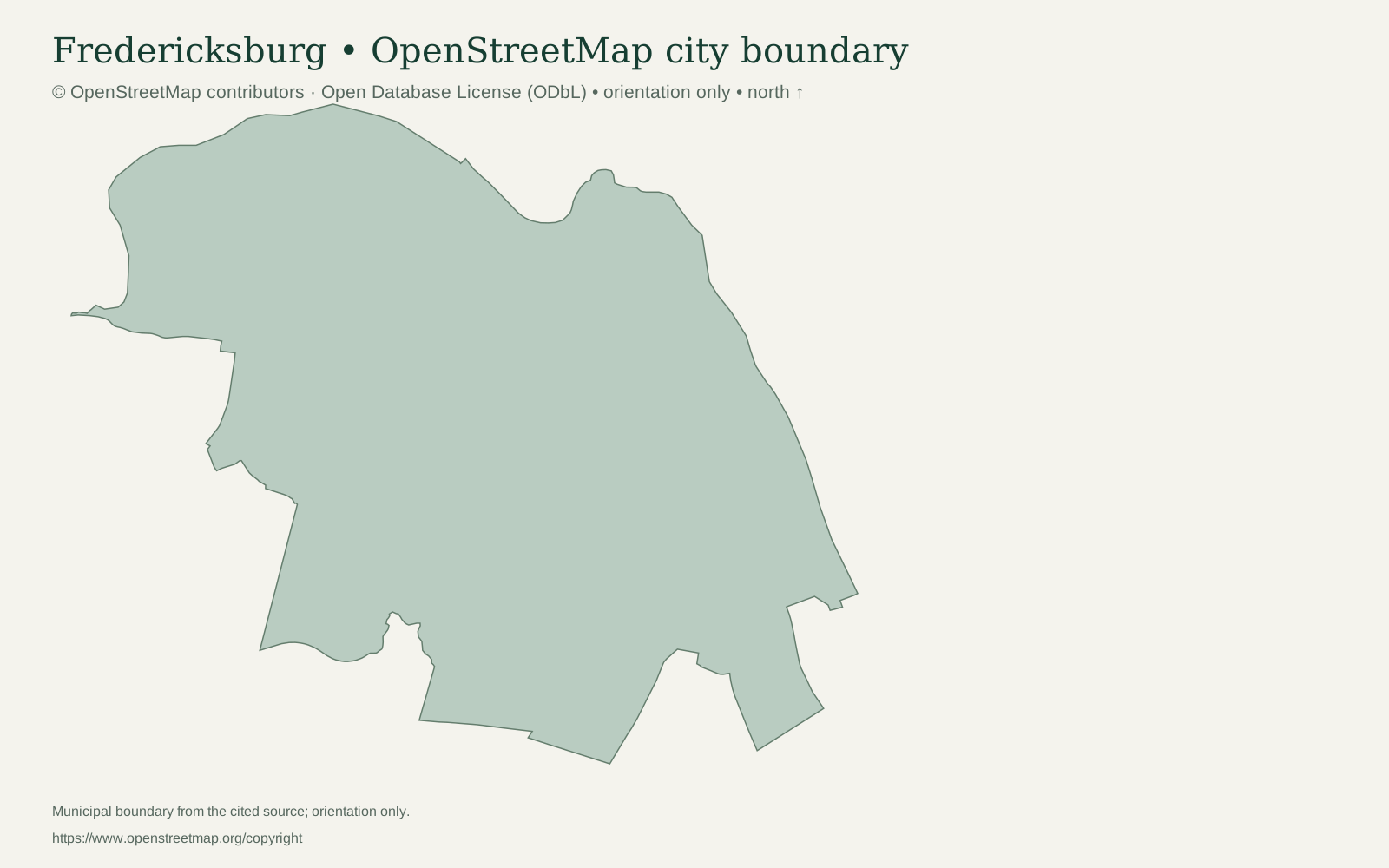
The orientation map uses a single City outline from © OpenStreetMap contributors, under the Open Database License. It does not draw neighborhood boundaries, school zones, parcel lines or flood areas. Use the City address tools and the relevant agency for eligibility, and a property-specific review for drainage or flood questions. Neither this outline nor a neighborhood plan establishes a truck route.

Fredericksburg City boundary drawn from OpenStreetMap, with north upward and attribution to OpenStreetMap contributors
© OpenStreetMap contributors, ODbL. Municipal outline for orientation only; not neighborhood boundaries, school zones, parcel lines, flood areas or truck routes. Open full-size map.

03 /

Find the area that fits your routine

These six comparisons draw on separate City small-area plans. They describe physical settings and questions to test at a home, not rankings, current price promises or school assignments. Planning-area names and boundaries can differ from everyday neighborhood usage.

Fall Hill Avenue corridor

The Area 2 plan describes the residential corridor between I-95 and the Rappahannock. It records the 2017 Fall Hill Avenue reconstruction with walking and multiuse facilities, while daily destinations vary along the corridor.

Area 2: Fall Hill Avenue corridor ↗
Housing & setting
Compare the particular house or apartment, driveway or shared entrance, and the usable route from parking to the unit. An area description does not settle the layout of a home.
Daily travel
Walk the actual connection to the relevant stop, shop or path entrance. Check crossings and the return journey instead of treating a corridor improvement as a complete trip.
Before choosing
Verify City jurisdiction toward the edge, the household service providers and the lawful loading position. Use current school assignment separately.

Idlewild / Plank Road area

The Area 3 plan covers lower-density residential neighborhoods, some multifamily housing and the Plank Road retail corridor. Idlewild is one named setting within this broader planning area.

Area 3: Plank Road and surrounding neighborhoods ↗
Housing & setting
Inspect the actual unit, steps, driveway and any shared-property rules. Distinguish a private receiving area from a street position that needs City approval.
Daily travel
Test the route across or along Plank Road to daily destinations. Check current commuter-bus decisions before relying on an Idlewild rail connection.
Before choosing
Confirm building access and waste arrangements at the address. Older plans may contain proposed facilities or school labels that require a current check.

College Heights / University area

The Area 5 plan describes College Heights as a grid of development from the 1920s through the 1960s, with varied homes, sidewalks and on-street parking beside the University setting.

Area 5: College Heights and University area ↗
Housing & setting
Compare the house or divided unit, receiving door, porch landing and stair turns. Ask which parking and storage spaces belong to the occupancy.
Daily travel
Try the walk to your actual campus, work or shopping destination. Proximity to the University does not establish the right building, timetable or parking permission.
Before choosing
Keep household parking permits separate from temporary moving-space approval. Check the full furniture route and any shared entrances.

Normandy Village / Riverside area

The Area 6 plan traces Fairgrounds and Normandy Village to mid-twentieth-century development with relatively small houses. River and trail settings provide orientation, while Route 1 separates some destinations.

Area 6: Normandy Village and Riverside ↗
Housing & setting
Inspect the individual layout, steps, storage and approach. A riverside neighborhood name is not a statement about every parcel or its drainage conditions.
Daily travel
Walk to the intended trail entrance or stop and test the crossing needed for ordinary errands. Include the journey home with bags or a mobility aid if relevant.
Before choosing
Use property-level checks for drainage, flood questions and improvements. Confirm City services and the vehicle position rather than assuming them from the neighborhood label.

Downtown and residential edges

The Area 7 plan describes the historic core, a range of building uses and surrounding residential streets beside the riverfront. A shopfront, upper-floor apartment and nearby house can present different access conditions.

Area 7: downtown and residential edges ↗
Housing & setting
Confirm the exact tenancy, service entrance, floor and stairs. Ask whether a rear passage or receiving area is shared with a business or another household.
Daily travel
Try ordinary walking and rail or bus connections from the particular door. Check the last return journey and your household parking arrangement.
Before choosing
Coordinate nearby businesses when arranging temporary parking signs. Preserve the pedestrian route and obtain separate approval for any closure or additional occupation.

Lafayette Boulevard / southern neighborhoods

The Area 10 plan combines older detached houses with garden apartments, townhouses and newer subdivisions. It distinguishes different curb and sidewalk conditions across these settings.

Area 10: Lafayette Boulevard and southern neighborhoods ↗
Housing & setting
Compare a managed unit with the actual house or townhouse approach. Check private parking, stairs, shared restrictions and the condition of the receiving route.
Daily travel
Test the relevant part of Lafayette Boulevard and the final walk to the home. A newer subdivision and an older street may connect differently to everyday destinations.
Before choosing
Confirm the current school zone and utility provider directly. Treat proposed development in the plan as a proposal unless its completion is separately verified.

04 /

Compare the unit, the charges and the route inside

The City's housing stock includes older houses, apartments in mixed-use buildings, garden apartments and newer townhouses or detached homes. A neighborhood label does not tell you which floor a tenancy occupies, whether its entrance is shared or how furniture reaches the receiving room. Inspect the particular unit and ask which spaces and fixtures are included in the agreement.

The ACS 2024 five-year housing tables estimate 11,720 occupied homes in Fredericksburg: 60.3% renter-occupied and 39.7% owner-occupied. Median gross rent was $1,619, while median owner-occupied home value was $483,700. These are 2020–2024 survey estimates for different groups of homes, not current asking rents, sale prices or a valuation of the property you are considering.

Among 12,419 total housing units, the same release estimates 39.6% in detached houses, 4.9% in buildings with two to four units, and 13.4% built in 1939 or earlier. The total-unit denominator differs from occupied tenure. Building age helps frame inspection questions; it does not establish maintenance, insulation, safety or the width of a doorway.

Housing situationAsk before committingMoving consequence
Older house or divided buildingWhich entrance and rooms belong to the unit; stair and landing dimensionsFurniture may need a specific carrying or disassembly plan
Managed apartmentReceiving window, lift, loading area, insurance and manager availabilityBookings and documents may control the sequence
Detached home or townhouseDriveway permissions, garage access, steps, turning and shared restrictionsPrivate parking still needs physical and owner checks
New or recently renovated homeActual handover, usable rooms and remaining workThe contractual date may need a readiness check

Build a household budget from the actual agreement. Separate rent or mortgage from deposits, electricity, gas, water, waste, parking, internet and any shared charges. Ask which accounts the landlord keeps and which you must open. Record condition and supplied equipment at handover, and identify where carts, bicycles and unpacked belongings may be stored.

If you will keep a vehicle in a controlled residential parking area, read the City resident-permit requirements. The tenant route includes lease evidence; month-to-month arrangements have additional proof requirements. Check the correct vehicle and address documents with the permit office. A resident permit is a household parking arrangement, not a guarantee of an empty space or a reservation for a moving truck.

Branded kraft carton beside a green sofa with a clear route through an open doorway
Inspect the layout and the furniture route.

05 /

Try the whole trip, including the return

Choose a real destination and test the journey from the proposed front door. Include the walk to a stop, street crossings, waiting, transfers and the final approach to work or an appointment. Repeat the return journey at the time you expect to travel. A route drawn near a listing does not establish that its timetable fits your day.

FXBGO service information is the starting point for local routes and service notices. The operator's fare page currently says collection is suspended, so service is fare-free under the policy checked for this guide. Older cash and pass prices remain lower on that page but are marked suspended. The policy is reviewed annually; recheck it before building a long-term travel budget.

For a household member needing accessible service, read the accessible bus and route-deviation instructions. Deviated fixed-route service may travel up to three-quarters of a mile from a route where the road and operation allow it. A first formal request needs at least a week for processing, and an individual deviation request needs at least 24 hours. Dispatch determines feasibility. This deviation option does not apply to VRE commuter buses.

Keep service proposals separate from operating changes. A September 2026 notice proposes ending the Idlewild VRE bus service, with comments through October 4 and further public consideration afterward. At the September 26 check, this was a proposal rather than an already completed closure. Verify the final decision and current trip before choosing a home around that connection.

The City's rail-service information identifies VRE commuter trains and Amtrak at Fredericksburg. Check the specific operator, departure, destination, ticket and station access for your journey. A commuter connection should not be assumed to operate at every hour or in both directions whenever needed. Include the last trip home and a backup if work runs late.

For driving, test the relevant driveway, street and destination parking arrangement instead of assuming travel time from distance. Keep daily vehicle storage separate from temporary moving access. If the household normally shares one car, work through the days when it will be unavailable, including school appointments and utility access visits during the move.

Blue and white bus at a brick storefront curb, with pedestrians and a gray car traveling in the opposite lane
Verify the actual route, timetable and return trip.

06 /

Follow the current address and registration path

Start by confirming the property belongs to Fredericksburg City Public Schools. The district's new-student registration page directs families to the current elementary attendance map in City GIS. Use the full address and correct school year, then confirm the assignment with the registrar. A school name in an old neighborhood plan, a listing or a previous resident's account is not a current assignment.

Kindergarten eligibility is age five by September 30. Preschool follows a separate application path, and a child already attending district preschool still needs kindergarten registration. K–12 enrollment is coordinated through the central registrar at Walker Grant Center, 210 Ferdinand Street, telephone 540-940-8380. The live registration page contains an unfinished start-date answer, so use the district's current calendar and registrar for the actual first attendance date.

Complete the application in stages

The parent guide to Enrollment Express explains the online sequence. Submit pre-enrollment for the child, wait for the review email, then create or use the PowerSchool parent account and link the student. Complete the enrollment forms and upload the requested records. Save work as you go; final submission is a separate step. Arrange the registrar appointment for the required original records and any unresolved questions.

If the approval email has not arrived within 72 hours, the district directs you to contact the registrar. This is a follow-up point, not a promise that enrollment will be approved within three days. Check the email address and spam folder before starting a duplicate application. Ask the registrar for the paper, fillable or assisted route if the online process is not usable for your family. A submitted form does not by itself establish that the student may start attending.

Match evidence to your household situation

The registration document checklist calls for the birth record, parent or legal guardian identification, custody material where relevant, residency evidence, health records and prior-school information as applicable. The ordinary residency route combines housing evidence with a current water, gas, electricity or landline bill, or acceptable hookup documentation. Cellphone and internet bills are not accepted in place of those utilities. The listed lease, hotel and shared-housing routes have different conditions; ask which applies before collecting substitutes.

Bring questions about a missing birth certificate, medical records, an IEP or a Section 504 plan to the registrar. Use the school's current health checklist rather than relying on vaccine details in a copied document. Submit personal and medical records through the official registration channel. Keep originals with the family during the move so they remain available for the appointment.

For a family staying in someone else's home, the 2026–27 shared-housing forms include a parent form and a notarized owner form supported by housing and utility evidence. There is a real difference between the linked form and the landing-page video script over the number of parent address documents. Confirm the current checklist with the registrar before arranging the notary or assuming an additional document is sufficient. Tell the school when the address changes.

Families lacking fixed, regular and adequate housing have a separate housing-instability enrollment and support route. Eligible children may enroll immediately even when ordinary records are missing; hardship-related shared housing or motel stays can be relevant. Contact liaison Jennifer Bunn at 540-372-1145, extension 2219, to discuss the situation. Do not assume the ordinary shared-housing checklist must be completed before asking for this support.

Before the first school day, confirm attendance approval, transport, the pickup location and any support arrangements. Keep the person handling registration reachable during the move. Registration, school assignment and a particular bus or support arrangement are related decisions, but confirmation of one should not be treated as confirmation of them all.

07 /

Set dates, responsibility and access for each account

Ask the owner or manager which services are included and which accounts belong in your name. Confirm the actual water, electricity, gas and waste arrangements at the unit. The City utility-account instructions apply to City service addresses and explain start and stop requests. They require at least 24 hours' notice, with processing on City business days, and do not allow a phone-only start or termination request.

Use the official request for utility service to give the service and mailing addresses, contact information and requested dates. Water and trash choices are separate on the form. Match the requested date to possession and the landlord's account handoff. A requested start is not evidence that supply is already active, so obtain the office's confirmation before treating the home as ready.

For a first City account, the published follow-up instructions require contacting 540-372-1182, option 2, after applying to complete identity verification. Provide sensitive identification directly through the official process; a business account has its own identification requirements. Deposits depend on the account and meter, so ask about the amount and any applicable waiver rather than assuming every household pays the same deposit.

End the previous account separately using the termination request. The listed notice and business-day rules matter at weekends and holidays. Responsibility continues until the service is terminated, and the final bill and deposit are reconciled afterward. If the City is collecting its waste cart, make it accessible as instructed. Retain confirmation for both addresses so a new start does not conceal an unfinished old account.

If the property is served by Dominion Energy, its Virginia start-service instructions call for the exact address and unit, secure identity information and meter access. Request service in advance; normal activation is on business days within the published working hours, excluding holidays. Follow the appointment's access instructions, including arranging someone to admit the technician if the meter cannot otherwise be reached.

For a Columbia Gas property, use the start, stop or move service process. The company asks for at least one business day's notice and the address, date and identity information; a transfer also uses the old account. Confirm old stop and new start dates separately, and review supplier-choice and payment arrangements rather than assuming they all transfer unchanged. Verify the provider at the property before using either company's application.

Arrange internet installation and any other property-specific services around access to the rooms or equipment involved. Keep a charged phone and essential lighting available during the handover. If activation is delayed, assess whether the home can actually receive the household and shipment, then use the agreed contingency before a truck is loaded.

08 /

Separate collection, bulk pickup and landfill trips

Ask who collects the property's waste and whether the account is active before unpacking. The City curbside guidelines distinguish cart service from non-cart collection. For City carts, black is for trash and blue for recycling; set them out by 7 a.m. and retrieve them by 7 p.m. Do not leave extra bags beside the cart. Recycling goes in loose rather than inside plastic bags.

Non-cart collection has its own limits: up to five bags or two boxes per pickup, with published weight and size restrictions. Confirm that this is the service actually assigned to the address before using that option. Check holiday or weather changes with Public Works. A neighbor's setout habit does not establish your route, eligibility or pickup day.

Book large-item removal before placing it outside

Furniture, mattresses, appliances, construction debris and hazardous material do not belong in ordinary City household trash. The special trash pickup service requires an appointment and payment before setout, with a published minimum of $75 per load or part of a load. City-limits residents may be eligible even without regular City trash service. Call 540-372-1023 with the actual inventory to confirm acceptance, cost and collection instructions.

This special service excludes whole-house cleanouts, construction debris, hazardous material, extremely heavy objects and other listed loads. Do not assume that abandoning everything after a move creates a collection appointment. For a mattress, ask explicitly whether the City will take the item under your proposed pickup; otherwise plan the approved disposal facility.

Use the correct facility for a mattress or moving van

The City's Belman Road information describes the residential convenience center at 1200 Belman Road. The operator's current accepted-material and vehicle rules make two important distinctions: mattresses and box springs go only to the Regional Landfill, and moving vans, U-Hauls, cargo vehicles, enclosed trailers and trailers longer than eight feet do not use the Belman convenience-center route. A nearby facility is not necessarily the destination for your load.

The Regional Landfill is at 489 Eskimo Hill Road in Stafford. Check the current hours, household eligibility and vehicle instructions before leaving. Tell the operator if a hired hauler will bring the material; a resident's eligibility does not automatically authorize a commercial disposal trip. Ask about mattress preparation before loading, since an unconfirmed wrapping rule should not be treated as settled.

The current R-Board fee schedule lists a $6 resident visit, ten coupons for $50 and an annual pass for $140. Mattresses and box springs have a separate $5 charge per item, including for annual-pass holders; cargo or oversized loads may add other charges. Belman requires coupons or a pass and does not take cash or cards. Check payment methods for the facility you will actually use. Online pass orders are mailed and can take 7–10 business days, so they are not an instant digital entry pass.

Sort packing materials while unpacking

The accepted-recyclables list includes flattened cardboard, paper and specified empty containers. Keep plastic bags and wrap, foam peanuts, food-contaminated or pizza boxes, cords and other excluded material out of single-stream recycling. Separate collection points for some materials do not mean those items can be mixed into the household blue cart.

Break down cartons as rooms are unpacked and keep the walking route clear. Reuse sound materials where practical, then separate each remaining stream. If packaging removal is part of your moving arrangement, confirm the scope and date; if it is your responsibility, plan storage within the property's rules until the correct collection or disposal trip.

09 /

Complete the approval, posting and Police registration

First decide where the vehicle would stand and what the operation would occupy. Give Public Works the exact address, side of the street, dates, hours and number of spaces, plus the vehicle size and any ramp or container. A private driveway requires the owner's permission and a physical access check; a public curb needs the applicable City arrangement. Confirm City jurisdiction before using this process.

The Temporary No Parking procedure expressly covers moving vans and large-vehicle deliveries. Public Works must approve the requested dates, times and spaces before signs are posted. Contact the office at 540-372-1023 and follow the current application instructions. Start early enough for review and pickup; the page does not promise that every request will be approved within a particular number of hours.

  1. Obtain approval and collect City signs. Pickup is from Public Works at City Hall, 715 Princess Anne Street. The published charge is $1 per sign, payable in exact cash or check. Confirm the check payee when arranging pickup because the page and form use different wording.
  2. Notify nearby residents and businesses. The City requires this before posting. Identify who will give notice and how affected entrances and businesses will remain accessible.
  3. Post 24–36 hours before the approved start. Include weekends and holidays in that interval. Use the approved signs with clear black block lettering for dates and times. This is a posting window, not the application deadline or an approval guarantee.
  4. Follow installation rules. Use string or masking tape on appropriate existing utility or sign poles. Do not cover existing signs, attach to trees, or use nails, staples or duct tape. Face signs toward approaching traffic as instructed; diagonal parking uses its own facing direction.
  5. Register the posted signs with Police. The linked form directs a call to 540-373-3122, option 2, when posting. Retain the dispatcher event ID for a later call if the reserved space is occupied.
  6. Remove signs and ties promptly when the period ends. Assign this task even if the person who installed them will already have left the property.

Keep the application and posting instructions with the approval and dispatcher reference. If a vehicle remains in the approved space, use the City's instructed contact process. Do not move another person's vehicle or substitute an unapproved position that blocks traffic, a hydrant, an entrance or the pedestrian route. Advise the mover promptly if the lawful position changes.

Check any additional use of the right-of-way

A sidewalk closure, ramp, container or street occupation may need a different authorization. The hosted right-of-way use application calls for Public Works notice at least seven days before a road or sidewalk closure, an appropriate traffic and pedestrian plan, and written approval. It also lists insurance and other supporting requirements for the permitted work. Ask the office to apply the current requirements to your actual operation rather than assuming every construction condition applies to an ordinary parked van.

Use the City's development-review contacts if the work falls into that permit route. Explain what stays open, how people pass the site and whether any traffic lane is affected. A parking sign is not permission to close the sidewalk, and a building manager cannot grant a City street closure. Confirm the final conditions and responsible applicant before relying on the arrangement in the moving schedule.

10 /

Confirm the entrance, the route and who can open it

Inspect the full carrying path at the property. Begin at the intended loading position, continue over the walk and steps, through the door and stair turns, and finish in the receiving room. Measure the narrowest usable points and photograph turns from both directions. Include ceiling height, railings and the landing needed to rotate substantial furniture.

For a managed building, ask about delivery hours, lift booking, door protection, insurance paperwork and who releases the service entrance. Find out whether another resident or contractor will use the same space at the same time. Keep confirmation with the manager's contact details. A booked lift is useful only if the vehicle can unload and the route to it is available.

For a house, confirm the owner's permission for the proposed driveway or private walk, check steps and gate openings, and identify any surface that should not carry equipment. An alley may provide access but still needs its physical condition and permissions checked; City snow clearance does not cover alleys. Do not assume the front door is the best route simply because it is the address visitors recognize.

Connect access to possession. Establish who hands over keys, when the rooms become available and whether building work will still obstruct the route. If a delay appears likely, tell the mover before loading. The moving access checklist helps define the photographs and dimensions needed to review the shipment against the building.

11 /

Try the routines that will make the address work

Visit the property at the times your household will normally leave and return. Walk the route to a grocery shop, bus stop, park entrance or other frequent destination. Check the crossings and the return with bags, a mobility aid or children if relevant. A riverfront path or shopping corridor nearby is useful only when its actual connection suits your routine.

Compare where you will store bicycles, a stroller, carts and packages. Ask about deliveries when nobody is home and the route from parking to the entrance after dark. These practical details can distinguish two otherwise similar units in the same neighborhood. Do not use a neighborhood's age or visual character as a substitute for inspecting the property.

Keep ordinary travel and moving logistics separate. A comfortable walking route does not establish a vehicle approach, and a convenient daily parking place may be occupied during delivery. Write down the arrangements that depend on another person: the manager opening a door, a relative taking children to an appointment or a technician needing entry.

For the first few days, carry the items needed to function before every carton is opened: bedding, basic kitchen items, chargers, documents and the household's personal essentials. Label those cartons for an accessible room. A short receiving plan helps you resume daily life while the rest of the home is unpacked.

Two residents walking and talking on a maintained riverside path
Test the routines that will make the address work.

12 /

Assign responsibility for a clear entrance

Inspect the approach in the weather you may face. Wet brick, leaves, standing water or ice can change the usable route from curb to door. Ask who maintains each part: the public sidewalk, private walk, shared steps and final landing may have different responsible people. Put the arrangement in place before the moving window.

The City's snow and ice guidance prioritizes primary roads before residential streets and says alleys are not cleared by the City. Owners or occupants must clear adjoining sidewalks and accessible ramps within 12 hours after snow stops or ice forms. When it occurs at night or on Sunday, the published deadline is noon the following day. Do not infer a guaranteed plow time for the street outside the property.

Keep snow out of the roadway and use a surface-appropriate clearing method, particularly around brick. Confirm shared-property responsibilities with the manager rather than assuming municipal crews will clear the doorway. Check the route again before the truck arrives, including the space needed to stand and turn with furniture.

If weather leaves access unusable, contact the receiving person and mover before loading where possible. Confirm whether clearance, a different authorized approach or a revised delivery time can resolve it. Keep essential belongings with the household and use the agreed contingency if the home cannot receive the shipment safely.

Cleared brick walk and front step at a brick house after light snow
Arrange a usable approach before the moving window.

13 /

Use a readiness check and a specific Plan B

Before the shipment leaves, confirm possession, keys, usable rooms, utility status, the approved truck position and the complete entrance route. Reach the person responsible for receiving. Check that school or utility appointments do not leave the home without a keyholder during the agreed moving window.

At arrival, show the receiving rooms and any placement labels before unloading begins. Keep personal documents and essentials accessible. Compare the work and shipment with the moving documents, raise concerns promptly and retain the relevant records. Coordinate unpacking and packaging removal with the arrangement you actually selected.

During the first week, finish account and registration follow-ups, confirm collection day and settle household parking. A submitted application, uploaded school record or requested utility date may still need an answer. Keep a short list of open items with the responsible person and the next action, so they do not disappear among unpacked boxes.

Plan B should identify the trigger, decision deadline and person authorized to change the move. Confirm the alternative in advance where possible: a later receiving window, an approved different loading position or available storage. Establish the cost and additional handling, accommodation for the household and pets, and the condition that allows delivery to restart. Use the moving estimate discussion to connect those decisions to the shipment before the options become urgent.

14 /

Questions before you arrive

Does every Fredericksburg postal address belong to the City?

No. Check the exact street and unit against the municipal boundary. Some Fredericksburg mailing addresses are in Stafford or Spotsylvania, while documented City addresses can be exceptions to the usual ZIP pattern.

Is the neighborhood map a school or flood map?

No. It shows an attributed OpenStreetMap municipal outline for orientation. School assignment, parcel information, flood questions and a lawful truck route require their own current checks.

How do I start school registration?

Confirm City school jurisdiction and the current address assignment, then follow pre-enrollment, the PowerSchool and Enrollment Express forms, document review and registrar appointment. Ask the registrar about shared housing or missing records; housing-instability support has a separate route.

Can I activate City utilities entirely by phone?

The City requires an application or termination request rather than a phone-only start or stop. First-time applicants must also complete the published identity-verification follow-up. Allow the stated notice and business-day processing, and obtain confirmation of the actual date.

Can I take a mattress to Belman Road in a moving van?

No. The operator directs mattresses and box springs to the Regional Landfill and excludes moving vans from the Belman convenience-center route. Confirm residential eligibility, vehicle rules, preparation and the mattress surcharge before the trip.

Is FXBGO free, and has the Idlewild commuter bus already closed?

The fare page currently states fares are suspended, subject to review. The September 2026 Idlewild closure notice was still a proposal when checked for this guide. Verify current service and the eventual decision before relying on that trip.

What should I do if the receiving home is delayed?

Use an agreed decision deadline and authorized contact. Confirm a feasible revised delivery or storage arrangement, costs and extra handling, and a place for the household to stay. Identify what must be ready before delivery resumes.

Your next step

Bring the plan together

Use the Fredericksburg moving page to prepare the inventory, access details and questions for your estimate.

Sources & useful local resources

Official procedures and local resources are linked beside the answers above. Reopen the relevant page when arranging a date: fees, schedules and application requirements can change.

Housing data

Schools

Trash and recycling

Household services

City and neighborhood orientation

Street access and parking

Daily travel

Weather and access