Pennsylvania / City relocation guide

Moving to Philadelphia

Philadelphia is a rowhouse city with a real moving-truck permit, three universities inside it and a grid that predates the country. This guide helps you compare areas, plan the everyday basics and prepare the practical steps of arriving.

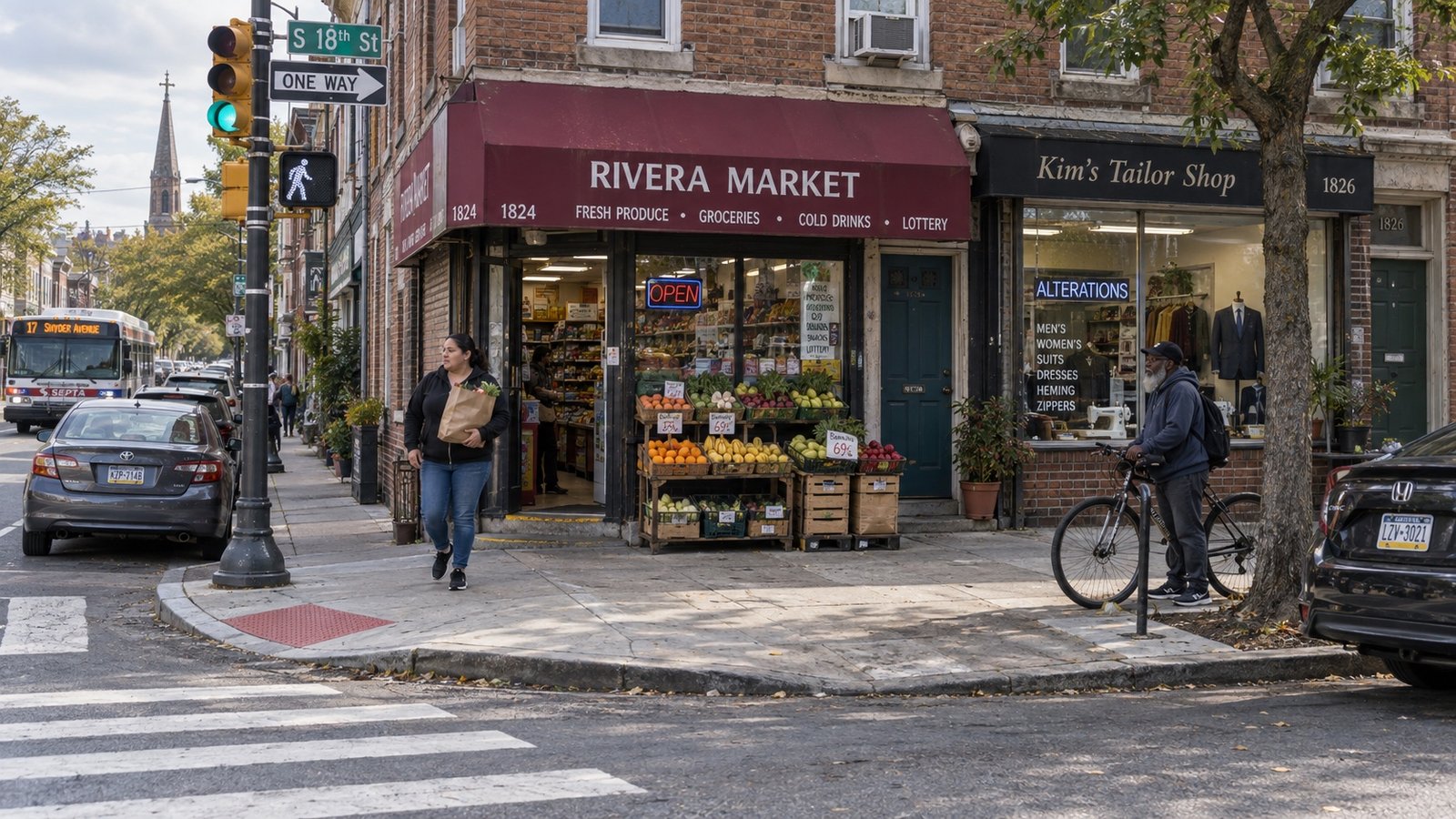
A neighborhood commercial corner with older brick buildings and distant pedestrians.
Try the everyday errands around a new address, not only the journey to work.

01 /

Start with the decision in front of you

Philadelphia asks three different questions of a newcomer, and this guide is organized around them. If you are still choosing where to live, start with the orientation and the neighborhood comparison, then read the housing section — the city's market is nearly half rental, mostly in rowhouses and twins, and the differences that matter are stairs, stoops, parking and what the rent includes. If you are moving with children, go to the schools section early: the district combines neighborhood schools with a selection process, and the calendar is fixed. If the address is already decided, the second half of the guide walks through the practical setup — utilities, trash, the curb for the moving truck, building access and the arrival sequence.

One caution before any comparison: Philadelphia is a consolidated city-county, but "Philadelphia" postal addresses reach into four surrounding counties, and Camden across the river is New Jersey. Confirm the municipality before comparing procedures.

02 /

Understand Philadelphia before comparing addresses

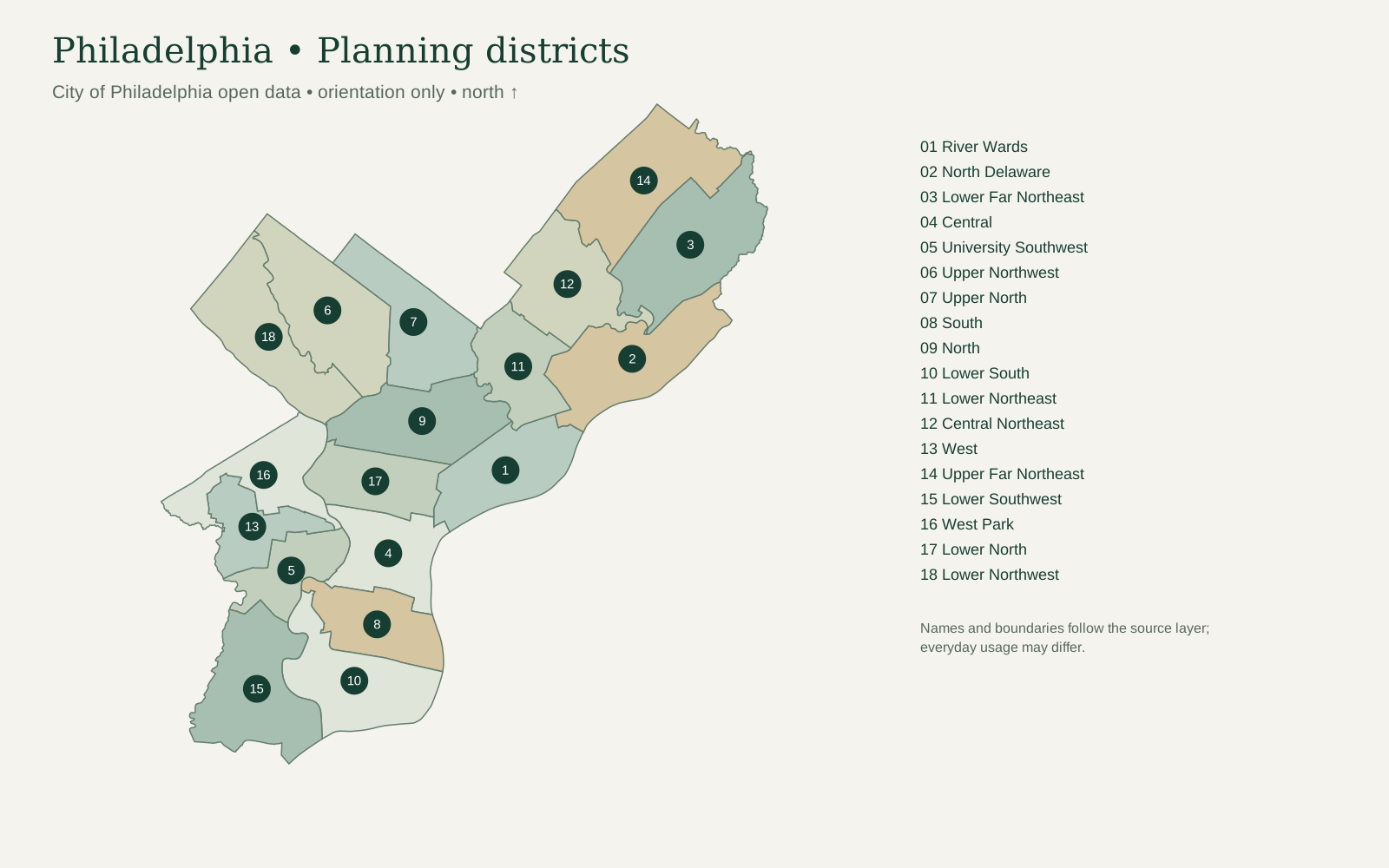
Philadelphia is the region's anchor: the consolidated city-county on the Delaware, a grid laid out before the country existed, with the older river wards, the rowhouse neighborhoods, the universities and the later Northwest and Northeast. The city's own planning geography divides it into 18 planning districts, mapped below from the city's open data.

For a mover, the structural fact is the stock: more than half the city's homes are attached rowhouses, and 40% were built before 1940. Which block you are on — a narrow South Philadelphia street or a Northwest twin with a driveway — changes the move more than the neighborhood name does. Two naming traps: many "Philadelphia" mailing addresses are suburbs, and the city's airport sits at its own southwest edge.

Philadelphia orientation map with numbered area key
Use the numbered key to locate the areas discussed below. Open full-size map.

03 /

Find the area that fits your routine

Philadelphia's official planning geography counts 18 districts; the seven modules below contrast the city's real housing types — the tower core, the rowhouse belts, the university districts, the post-war Northeast and the greener Northwest. They are starting points for inspection, not rankings — school placement has its own process, and building conditions vary house by house.

Center City

The downtown core on the grid: towers, pre-war apartment houses and the oldest blocks near the river. The city's TNP permit prices Center City separately — $50 per 40 feet per day — which tells you how tight the curb is.

TNP permit, Center City fee tier (City of Philadelphia) ↗
Housing & setting
Managed buildings dominate; expect COI requirements, elevator reservations and fixed moving windows.
Daily travel
The strongest transit position in the region: SEPTA's lines converge here, and 30th Street Station is at the edge.
Before choosing
Collect the building's written moving rules and apply for the TNP permit early — both have lead times.
South Philadelphia

The classic rowhouse blocks south of the core — narrow streets, stoops, party walls — part of the city's Lower South and South planning districts.

Collection-day lookup (City of Philadelphia) ↗
Housing & setting
Rowhouses with stoops and narrow stairs; the archetypal Philadelphia move.
Daily travel
The subway's south end and bus corridors serve the area; parking is the tightest kind.
Before choosing
Measure the stair and the stoop; the TNP permit is how the truck gets a legal position on a narrow block.

West Philadelphia & University City

The university district — Penn and Drexel — plus the Victorian and twin-house neighborhoods around them. University City has the TNP permit's other premium tier ($50/40 feet/day).

University of Pennsylvania ↗
Housing & setting
A mix of large older houses, twins and managed buildings; student rentals follow the academic calendar.
Daily travel
Trolleys, the subway-surface lines and regional rail at 30th Street; a car-light area.
Before choosing
Ask whether a lease follows the academic year; book August dates early; the permit tier is higher here.

The Northwest

The city's greener corner — the Upper Northwest planning district — with twins and detached houses on hillier, leafier blocks.

Planning districts (City of Philadelphia) ↗
Housing & setting
Twins and singles with driveways more often than the core; the easiest truck access in the city.
Daily travel
Regional rail serves the area; bus coverage thins toward the edge.
Before choosing
Confirm driveway length and grade; check what the lease says about exterior changes.

The Northeast

The post-war part of the city: the Far Northeast planning districts, with twins, ranchers and garden apartments built after the rowhouse era.

Philadelphia housing data (Census Reporter) ↗
Housing & setting
Post-war stock with driveways and garages; measure garage openings and driveway length.
Daily travel
Car-oriented; regional rail stations dot the corridors.
Before choosing
Confirm the address is in the city — the county line is close — and check HOA rules where they exist.

North Philadelphia

The blocks north of the core, including the area around Temple — Philadelphia's public university — with dense older rowhouse stock.

Temple University ↗
Housing & setting
Rowhouses and small apartment buildings; student rentals near campus follow the academic calendar.
Daily travel
The subway's Broad Street Line runs through it; a car-light area near the line.
Before choosing
Verify the specific block's curb and entry; book August dates early near the campus.

The River Wards

The northeastern riverfront planning district — older industrial blocks in transition, with new apartments beside the older stock.

OpenDataPhilly: Philadelphia open data ↗
Housing & setting
Lofts, newer apartment buildings and older rowhouses side by side; confirm which type your address is.
Daily travel
The Market-Frankford line and buses serve the area; check the walk to the station.
Before choosing
Newer buildings have their own move rules and sometimes loading docks — collect them early.

04 /

Compare the whole home, not just the advertised payment

Philadelphia's market is nearly split: 48.2% of households rent their home (ACS 2024 5-year, via Census Reporter). The median gross rent is $1,397 a month and the median owner-occupied value $243,100 — medians that hide the range between a Society Hill townhouse and an Upper Darby-adjacent twin; use them only to sanity-check a budget.

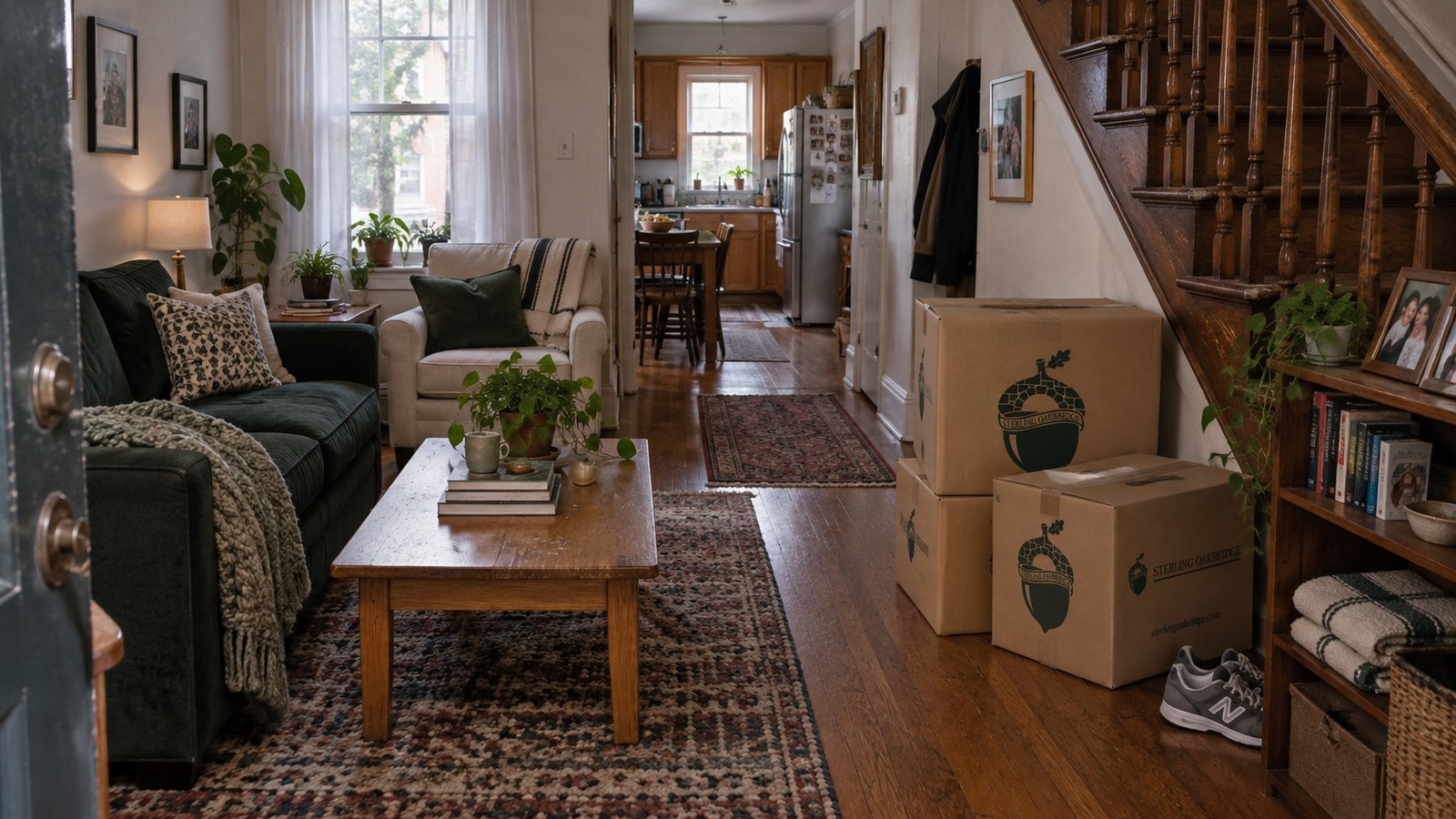
The stock explains the market. About 56% of units are attached rowhouses, 14% sit in two-to-four-unit buildings, 11% in 50+-unit towers, and 40% were built before 1940. For a mover this means the operative questions are physical: the width of the stair, the depth of the stoop, whether a rear alley exists, and — in the towers — the building's moving rules.

When comparing two homes, compare what the payment includes — heat, hot water, parking, snow clearing — the lease's move-in and move-out rules, and the condition of the access route. In rowhouse neighborhoods, the curb is shared and tight: the TNP permit in the truck-parking section is part of the housing comparison, not an afterthought.

A furnished living room in a rowhouse with sealed moving boxes by the wall.
Compare usable rooms, what the rent includes and the stair's width.

05 /

Test the complete daily journey

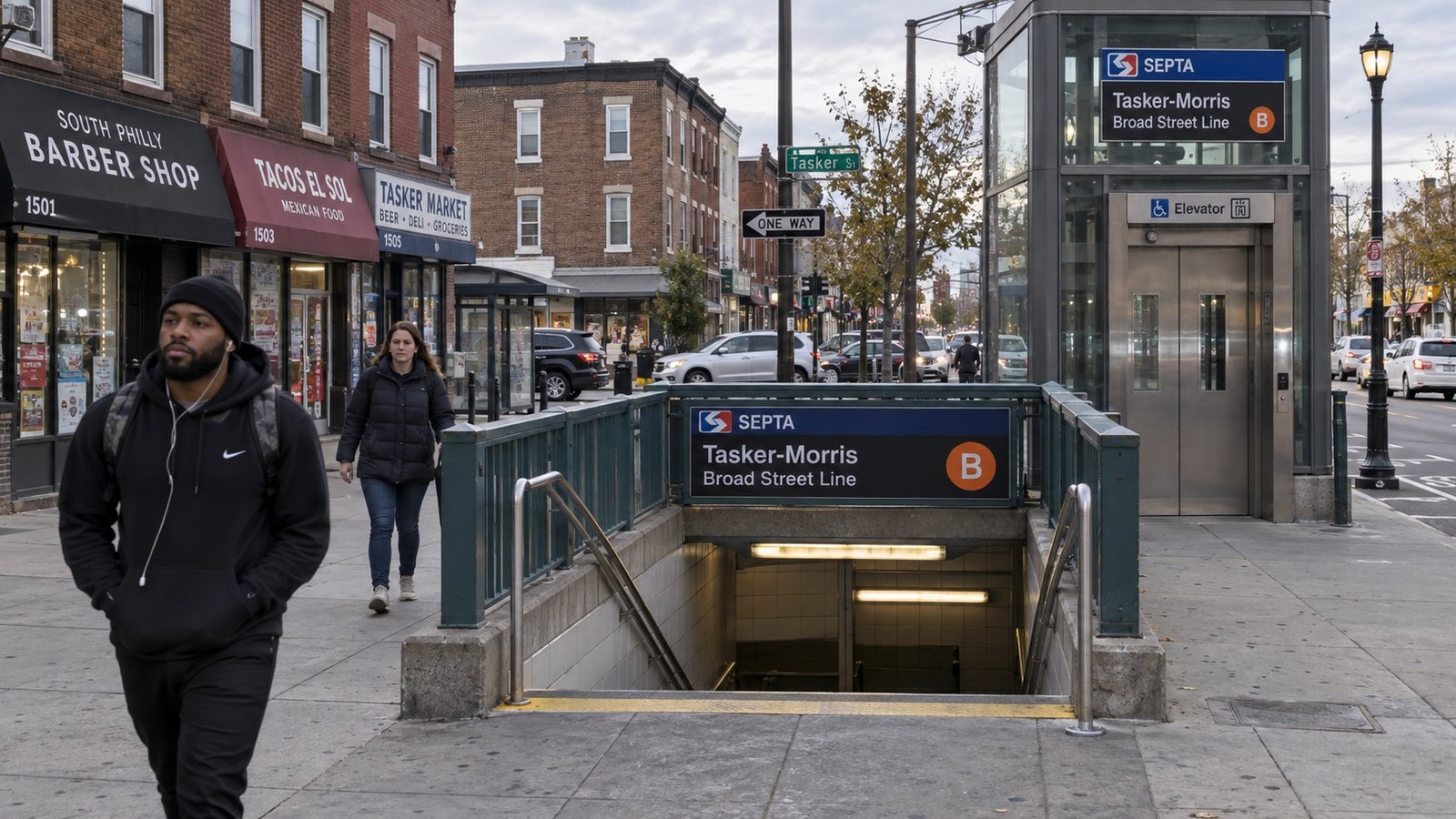
Philadelphia has real transit: SEPTA runs the subway and elevated lines, buses, trolleys and regional rail across the city and the suburbs — check the current fares on the operator's site before budgeting. 30th Street Station is the Amtrak hub on the Northeast Corridor, and PATCO crosses the river to New Jersey. The airport sits at the city's southwest edge.

Whether a car-free household works depends on the block: the core and the subway corridors are realistic; the farther Northeast and Northwest are not the same answer. Test the real door-to-door routine from a candidate address — the walk to the stop, the wait, the transfer — at the hour you would actually travel.

Pedestrians beside a SEPTA Broad Street Line subway entrance and elevator in a Philadelphia neighborhood.
Test the complete daily journey, including the walk at both ends.

06 /

Treat school placement as a process, not a default

The School District of Philadelphia combines neighborhood schools with a selection process. Start with the district's enroll page: find the neighborhood school for your address, register for kindergarten, or enter the school selection process — each with its own dates. An address gives you a neighborhood school, not a guarantee beyond it.

Gather the child's identity and age documents, proof of the Philadelphia address and immunization records before starting. If you are arriving mid-year, contact the district before the move date so registration does not gate the first day of classes.

07 /

Assign an owner and a start date to each household service

Electricity is PECO; natural gas is Philadelphia Gas Works, the city's own gas utility. Water and sewer belong to the Philadelphia Water Department, which keeps separate paths for property owners and tenants — one of the few cities that publishes a tenant account path; check which applies to you. Submit start requests as soon as your date is fixed; no official lead times are published.

For internet, check address-level availability before promising yourself a provider or a speed; in rowhouses, ask which provider already wires the block. An installation booked before the move is easier than one booked from an empty apartment.

08 /

Plan for collection days and the things you are leaving behind

Philadelphia's Sanitation Department collects trash and recycling weekly by route — find your collection day by address after arrival. The rule that matters at a move: bulky household items — furniture, appliances with doors removed — go out by scheduled special collection, and sanitation convenience centers take drop-offs. Book the pickup before move-out week; a curb pile on moving day is not an option.

09 /

Reserve the curb with a city permit

Philadelphia is one of the cities with a real, named instrument: the Streets Department's Temporary No Parking (TNP) permit, issued explicitly for moving trucks, containers and dumpsters. The cost: $50 per 40 feet per day in Center City and University City, $25 elsewhere; a moving container is $50 for up to five days; a dumpster $40. Apply with the address and the length you need; the permit reserves the space and the city posts it.

Two adjacent rules round out the picture. A residential parking permit covers personal cars in permit zones — it does nothing for a truck. And a permitted space still loses to a snow emergency or emergency work: winter dates need a storm backup plan.

Where a property offers a driveway, rear alley or private loading, use it — private loading beats even a permitted curb. Either way, match the truck's window to the building's window, and keep the permit confirmation with the moving papers.

10 /

Inspect the full route through the building

Philadelphia's default housing type is the rowhouse: a stoop, a narrow stair with a turn, party walls, sometimes a rear alley. Measure the largest pieces against the actual route — width, turns, ceiling at the landing — and check the stoop before anyone carries a sofa across it. In twins and singles with driveways, the carry is easier; in the towers, it runs through the property.

In managed buildings: elevator reservations, fixed moving windows, a certificate of insurance requested from the mover — and sometimes move-in fees that belong to you and the building, not the mover. Ask for the written moving rules at both ends as soon as the date is set.

Whichever type, walk both routes before the day: where the truck stops (the permit position or the alley), which door is used, every stair and landing between the truck and the room, and who unlocks what. A plan that works at the origin but not the destination is only half a plan — confirm the two ends together, with time windows that overlap usefully.

11 /

Build a useful routine beyond the commute

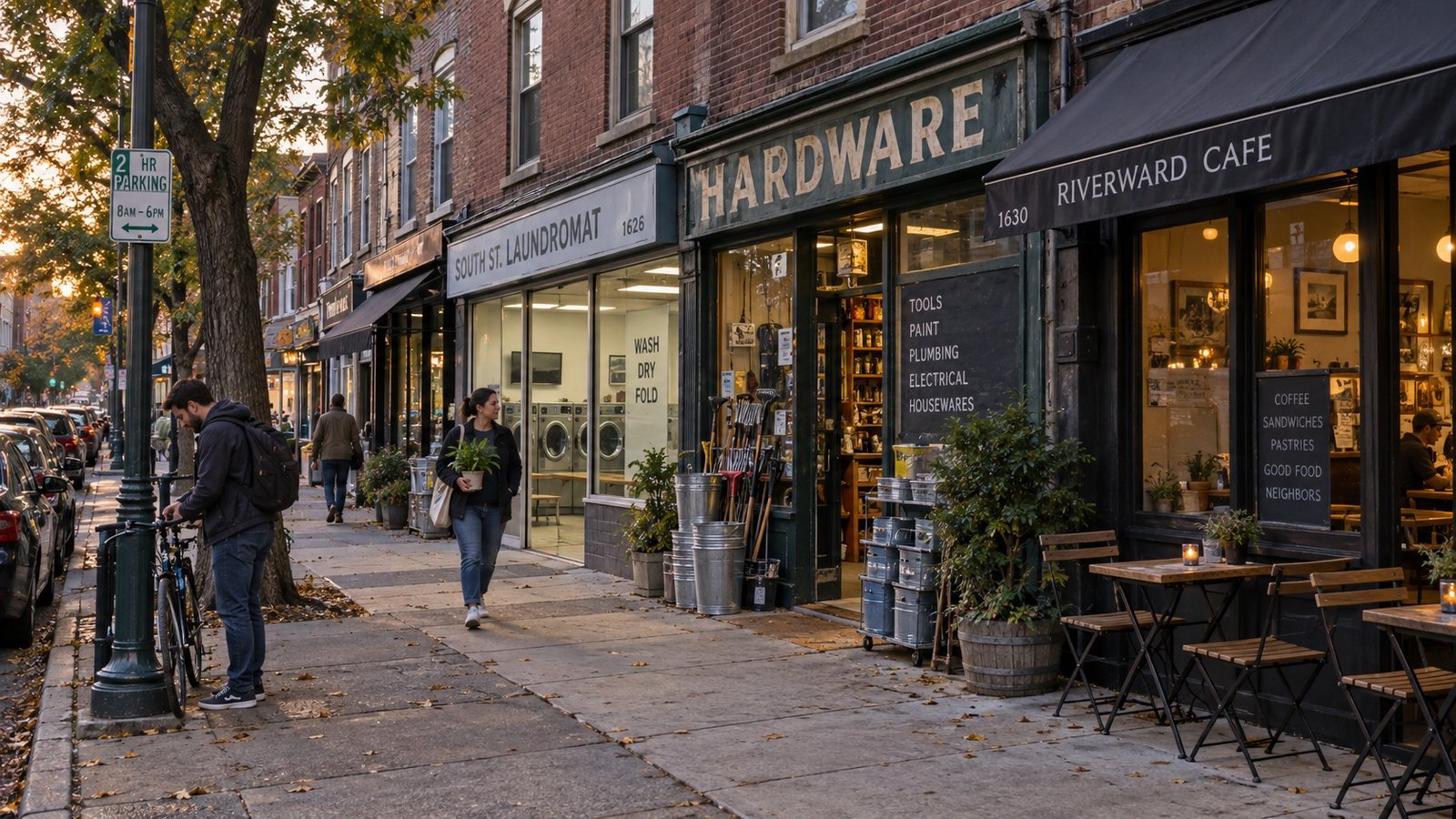
Philadelphia's everyday geography is the neighborhood commercial corridor: every district leans on its own avenue for groceries and errands. The city's grid makes the core walkable; the river wards, the park system and the older main streets shape the outer districts. Test the routine you will actually live — the grocery run, the pharmacy, the school drop-off — at the hours you would use it, including a winter evening.

A neighborhood commercial corridor with older buildings and mature trees.
Check the everyday routine around the address you actually choose.

12 /

Plan for the season in which you will live and move

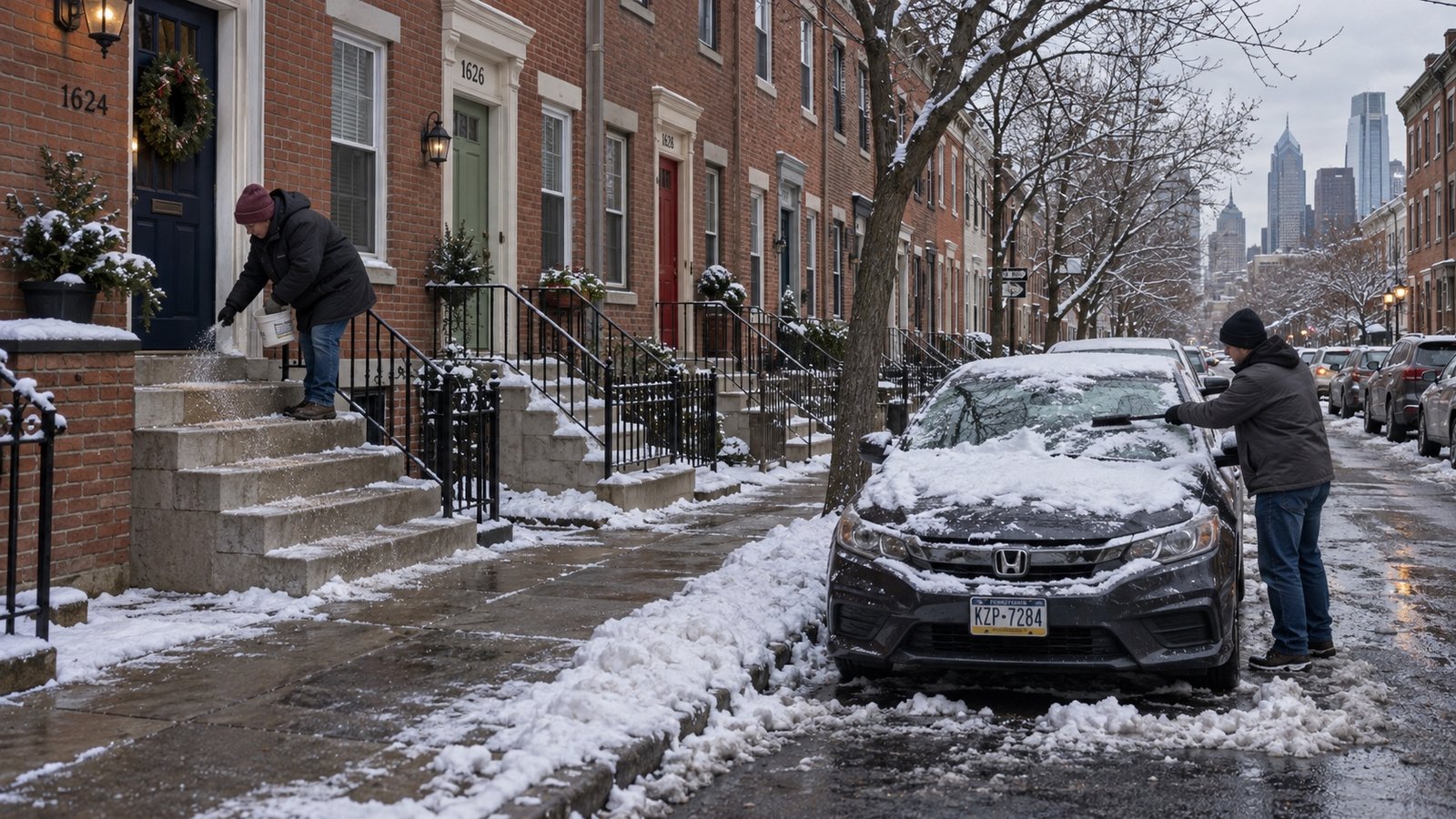
Winter in Philadelphia is moderate by regional standards but not trivial: a declared snow emergency changes street priorities, and even a permitted curb position can lose to one. Watch the forecast in the final week of a winter date and keep a backup date in mind; agree explicitly with the landlord who clears the stoop and the walk — the city's sidewalk-clearing rule text was not captured this pass, so do not assume it.

The other calendar is academic: Penn, Drexel and Temple sit inside the city, and student-linked leases turn over around late August and May — University City and the blocks near Temple feel it most. End-of-month dates at those times book out first — our workload observation, not a city statistic.

A residential street after snowfall with plowed piles and cleared sidewalks.
Winter dates need a plan: even a permitted curb can lose to a snow emergency.

13 /

Turn the chosen home into an arrival plan

With the address decided, sequence the setup so nothing blocks the truck. Four to six weeks out: confirm the lease or closing date, start the school process if you have children, and book the move itself. Two to three weeks out: start the PECO and PGW requests, confirm the water account path (owner or tenant), line up internet installation, and schedule the bulky collection for what you are leaving. At least two weeks out: apply for the TNP permit if the truck needs street space — the fee is per 40 feet per day, so measure the truck's real length.

In the final days: confirm the permit is posted, confirm elevator windows at both buildings, finish packing, set aside what travels with you, and in winter check the forecast twice. In the first week after arrival: find your collection day, test heat and hot water, and note the nearest corridor that covers your errands.

14 /

Questions before you arrive

Is the airport in Philadelphia?

The airport sits at the city's southwest edge — in the city, unlike many. It is the region's main airport; the Delaware County line is close, but PHL is Philadelphia.

Does my Philadelphia address assign my child's school?

The district combines neighborhood schools with a selection process: your address gives you a neighborhood school, and the selection process covers the rest. Start at the district's enroll page; kindergarten registration and selection have fixed dates.

How do I reserve curb space for a moving truck?

Through the city's Temporary No Parking permit: $50 per 40 feet per day in Center City and University City, $25 elsewhere; containers $50 for five days. Apply with the address and the length you need and confirm issuance before the day.

Do I need a car in Philadelphia?

In the core and along the subway corridors, a car-light household is realistic; the farther Northeast and Northwest are a different answer. SEPTA covers the city, 30th Street Station is the Amtrak hub, and PATCO crosses to New Jersey. Test the exact door-to-door routine from your address before deciding.

Who provides utilities in Philadelphia?

PECO for electricity, Philadelphia Gas Works for gas (the city's own), and the Philadelphia Water Department for water — which unusually publishes separate owner and tenant account paths.

Can I leave unwanted furniture on the curb when I move out?

No — bulky household items go out by scheduled special collection through Sanitation, and convenience centers take drop-offs. Book before move-out week; a curb pile is not an option.

Your next step

Bring the plan together

Use the Philadelphia moving page to prepare the inventory, access details and questions for your estimate.

Sources & useful local resources

Official procedures and local resources are linked beside the answers above. Reopen the relevant page when arranging a date: fees, schedules and application requirements can change.

Truck access & parking

Trash, recycling & disposal

Housing & neighborhoods

Getting around

Schools & enrollment

Utilities