Rhode Island / City relocation guide

Moving to Providence

Choose a Providence address by testing the home, daily journeys and practical arrangements your household will use. This guide connects neighborhood comparisons with schools, utilities, collection and the steps needed to receive a moving shipment.

Woman carrying a cloth tote beside downtown storefronts and a crosswalk
Test the routes your household will use.

01 /

Choose the questions that fit your move

If you are still choosing a home, begin with the housing section and neighborhood comparisons. Examine the actual unit, its stairs or lift, the lawful overnight parking arrangement and the route to ordinary destinations. A neighborhood label is an orientation aid; the lease, building and block determine the arrangements you will use every day.

If children are part of the move, begin with schools. Providence uses a school-choice process with preferences and capacity limits. Confirm the registration path, placement and transport for each child before treating a nearby school as part of the housing offer. Keep school records available while the household shipment is in transit.

If you have already chosen an address, work through utilities, waste, street loading and building access. Give each unresolved item an owner and a date for an answer. A utility request, permit application and elevator booking each have their own confirmation; progress on one does not complete the others.

Make a short list of facts that could change your move: possession, service availability, a lawful loading position, a usable carrying route and somewhere to stay if delivery is delayed. Resolve these while there is still time to change the sequence. The Providence moving page turns the resulting inventory and access information into an estimate discussion.

02 /

Keep the municipality and the neighborhood separate

This guide concerns the City of Providence, Rhode Island. East Providence, North Providence, Cranston and Warwick are separate municipalities; a nearby address or a familiar Providence mailing reference does not automatically put a property under Providence's parking, collection or school procedures. Verify the address before starting an application.

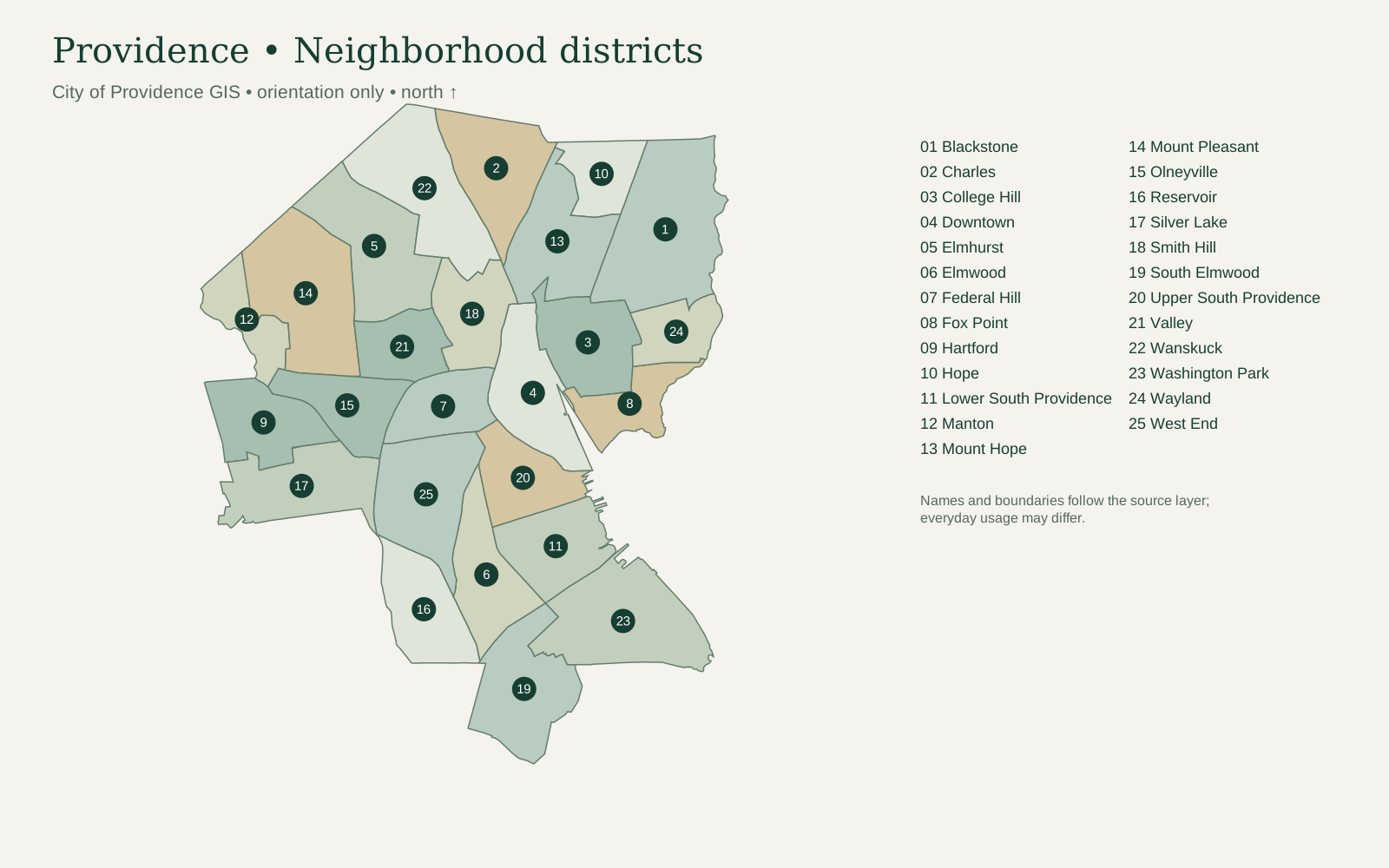
The city GIS Hub provides parcel, zoning and neighborhood tools. Use the parcel and municipal information for the property, then use the neighborhood map below for orientation. A neighborhood polygon does not certify a building's permitted occupancy, school placement or right to park.

The map follows the official Providence neighborhood layer and includes all 25 named areas. The six comparisons below are a starting selection from separate city planning documents. Other neighborhoods remain visible on the map. Everyday names and real-estate descriptions can differ from the mapped boundaries, so retain the street and unit number in every practical inquiry.

The older neighborhood plans describe physical development and streets. Their past proposals, demographic tables and assessments are not a current rental market report. Use them to recognize a hillside, commercial corridor or pattern of housing, then inspect the present property and check the current service you need.

Rhode Island T. F. Green International Airport is in Warwick, as its official directions make clear. Arrange the airport trip separately from the truck's arrival at your Providence home. Published airport travel estimates are not a moving schedule, particularly when access appointments at two properties must be coordinated.

Official City of Providence map of 25 neighborhood boundaries with a numbered key
City of Providence GIS neighborhood boundaries. Orientation only; not a parcel survey, school assignment, flood map or truck route. Everyday neighborhood names may differ. Open full-size map.

03 /

Find the area that fits your routine

Use these six comparisons with the official map of all 25 Providence neighborhoods. The city plans support the physical character described here; inspect current buildings and journeys separately. They are not current price, safety or school-quality rankings.

Downtown

The city plan distinguishes Downcity, Capital Center and the Jewelry District within its downtown study area. Mixed uses and different building forms make the individual entrance important.

Downtown neighborhood plan, study area pp. 2–3 ↗
Housing & setting
Compare a managed apartment or converted building by its actual unit layout, lift and receiving rules.
Daily travel
Walk the route to the stop or station you intend to use and test the last return.
Before choosing
Confirm the service entrance, loading position, lift sequence and overnight vehicle arrangement.

College Hill

The plan describes a steep rise from the Providence River, historic residential fabric and the Brown and RISD institutional setting.

College Hill, Fox Point and Wayland plan, pp. 7–8 ↗
Housing & setting
Inspect the stairs and turns of the specific house or conversion; historic character does not establish furniture access.
Daily travel
Test the hill on the actual route to everyday destinations, including the return with bags.
Before choosing
Measure the private approach and inside landing; distinguish an institutional property from a separately managed rental.

West End

The plan records older industrial and residential development, including one- and two-family homes near Dexter and Parade streets and multifamily housing elsewhere in the neighborhood.

West End, Federal Hill and Reservoir plan, pp. 7–8 ↗
Housing & setting
Compare the actual unit and condition rather than treating all older houses as the same layout.
Daily travel
Follow the route from the selected block to the current useful stop and everyday shopping.
Before choosing
Check a shared stair or passage, the correct entrance, basement storage and the lawful truck position.

Elmwood

The city plan places Elmwood between the Broad Street and Elmwood Avenue corridors and describes its nineteenth- and early-twentieth-century residential development.

Upper South, Lower South and Elmwood plan, pp. 10–12 ↗
Housing & setting
Inspect the particular house or unit, including how any conversion affects shared access and service accounts.
Daily travel
Test crossings and the walk from the home to the corridor your household will use.
Before choosing
Confirm which door serves the unit, who controls shared meters and how furniture reaches the final rooms.

Elmhurst

The plan describes a northwest residential area with many medium-sized twentieth-century single-family homes and tree-lined streets.

Elmhurst and Mount Pleasant plan, pp. 8–9 ↗
Housing & setting
Compare the private approach, stair layout and storage with the belongings you intend to bring.
Daily travel
Test the actual daily route from the chosen street rather than judging transport by the neighborhood label.
Before choosing
Measure any driveway and ask whether the moving vehicle can use it; confirm the owner-authorized alternative.

Hope (Summit)

The plan identifies Hope as a principally residential area in northeast Providence, with commercial corridors along Hope Street and North Main Street.

Mount Hope, Hope and Blackstone plan, pp. 8–9 ↗
Housing & setting
Review the individual home or unit, its entrance and any shared facilities.
Daily travel
Try the route to the particular corridor and stop that fits the household schedule.
Before choosing
Keep Hope distinct from the separately mapped Mount Hope neighborhood and verify the street and unit on every application.

04 /

Compare the unit, the monthly costs and the access

The ACS 2024 5-year housing tables provide a citywide baseline for 2020–2024. Of Providence's occupied housing units, about 58.6% were renter-occupied and 41.4% owner-occupied. Median gross rent was $1,408, and median owner-occupied home value was $362,200. These estimates describe that survey period, not today's asking rents, listings or a valuation of the home you are considering.

Structure matters for moving and daily use. About 26.1% of all housing units were in detached single-family structures, while 44.8% were in structures containing two to four units. About 54.5% were built in 1939 or earlier. Those figures use all housing units as their denominator; they do not describe the condition or layout of an individual building.

Property situationConfirm before committingWhy it changes the move
Unit in a converted houseAuthorized entrance, stairs, landing turns, storage and shared passageThe main entrance may not be the complete route to your unit
Managed apartment buildingReceiving hours, freight route, lift reservation and required documentsAccess may depend on staff and a specific appointment
House with a private driveUsable width, clearance, surface and owner approvalA visible driveway does not establish that the moving vehicle can use it
Home without an assigned parking spaceOvernight permit eligibility and the actual permitted street areaResident parking eligibility and moving-truck loading are separate

For a rental, ask which charges are included, which utilities you open and who controls heat, water and shared meters. Establish the possession time, key handoff, storage allocation and the rules for moving materials into the building. Photograph the unit's condition and retain the agreed terms with the lease.

For a purchase, connect the closing schedule to actual possession and household services. Ask who handles the water closing reading, when seller access ends and whether work will remain unfinished. Do not let a scheduled closing become the only evidence that the home is ready to receive people and furniture.

Walk the property with the dimensions of your largest pieces. Check the turn beyond each door, ceiling clearance over stairs and the final room doorway. A room can be large enough for furniture while the route into it is too narrow. Resolve any alternative handling before delivery rather than treating an open window as a plan.

Compare the full recurring cost, including parking, heating, internet, laundry and storage where applicable. Use the same list for every candidate home. A smaller rent difference may be less important to your household than an unreliable late return journey or a difficult daily stair route.

Branded kraft carton beside a sofa and an open wood-trimmed hallway
Measure the route into the room as well as the room itself.

05 /

Test the whole journey, including the return

Use the current RIPTA trip planner and service notices for the actual date, stop and direction. Test the route from the door to the stop, any transfer and the final walk. A line drawn close to a home does not establish that the useful stop is on the same side of the street or that the last return works with your schedule.

RIPTA Wave help explains the fare system. With stored value on a Wave card or app, the ordinary $2 fare allows one hour of unlimited rides. Fare capping reaches a $6 day pass and a $70 calendar-month pass. Use the same payment type for the rides you want counted together; the system does not combine different physical and virtual cards to earn a cap.

Tap or scan at every boarding, including a transfer. The Wave app needs a usable phone and data connection, so decide how you will travel if the phone is flat or unavailable. A physical card may suit a household that prefers not to depend on a phone, and cash remains a separate payment option. Verify current terms before budgeting a particular journey.

For commuting, compare a normal start with an early shift, late return and weekend. Include the cost and practical availability of your backup. If the trip involves a station or a regional train, confirm the current operator's timetable and service calendar separately; a bus fare does not establish the fare or schedule of another system.

For driving, verify where the household vehicle will stay overnight and how shared spaces are assigned. Do not count a loading area as permanent parking. Revisit the street at the hours you expect to use it and inspect posted restrictions instead of relying on a midday showing.

For walking or cycling, follow the exact crossing and entrance rather than only the straight-line distance. On a hill, check the return with groceries, a stroller or the mobility equipment your household uses. A useful neighborhood comparison tests the route under ordinary conditions, not only on the day of the property viewing.

White and blue city bus seen across a two-way street with a clear lane ahead
Check the exact stop, direction and return journey.

06 /

Register first, then confirm placement and transport

Use the Providence Public Schools registration instructions for the child's actual situation. New families begin through the linked Skyward enrollment route; existing families registering an additional child use the parent portal's New Student Online Enrollment option. Returning from a private or charter school can require registration again if the student is not currently enrolled in the district.

For the ordinary registration path, prepare an age-verification document, guardian photo identification, the requested health forms and proof of the Providence address. The district lists a utility bill other than a cell-phone or internet bill, a pay stub, a signed lease or a bank statement dated within 60 days. It lists alternatives for age verification, including a birth certificate or passport; do not assume only one document type is possible.

Have the last report card for grades K–8 or transcript for grades 9–12 ready, together with current special-education documents where applicable. Upload the required items through the district's process. A registration team member follows up, and some students may need an in-person assessment. Keep your contact details current and ask about anything missing rather than assuming an upload has completed placement.

The Registration Center is at 325 Ocean Street, with the registration team reachable at 401-456-9297. Confirm current hours and the time by which an application must be screened before traveling. A posted response estimate is not a guaranteed enrollment or placement date, especially when the child needs additional records or assessment.

The school-choice page describes ranking preferences and placement priorities, including sibling and neighborhood considerations. Some schools use separate entrance or application procedures. A nearby school, a listing description or a preference on a form does not guarantee that placement. Ask the district how the current year's process applies to a midyear arrival or a family registering after the initial choice period.

For kindergarten, the current kindergarten page says children who turn five on or before September 1 of the school year are eligible and explains the preference process. Its 2026 information distinguishes guaranteed placement somewhere in the district for Providence students from placement at a particular school. Confirm the current entry year and any screening steps directly; do not reuse a previous year's deadline.

Housing instability needs a separate conversation. The district's McKinney-Vento guidance says children can be enrolled while missing documents are being obtained. Contact the principal or FACE office at 401-456-0686 about the circumstances and support available. Do not postpone that conversation merely because the ordinary address-document checklist is incomplete.

After placement, confirm the actual first day, school entrance, daily schedule, meals and after-school arrangements. Ask who receives transferred records and how any support plan continues. Keep essential documents with the family so a delayed household shipment does not also delay the school conversation.

District transportation guidance lists distance thresholds of one mile for elementary and high school students and one and a half miles for middle school students, with separate consideration for specified needs. High school transport can use RIPTA regular routes. Ask the transportation office to confirm eligibility, the assigned arrangement and the current stop or pass; a school placement is not itself a bus confirmation.

Rehearse the journey with the student where appropriate. Verify the correct direction, any transfer, the return and who handles a late or missed service. Keep the school and transport contacts accessible, and have a workable first-day plan if a pass or route detail still needs attention.

07 /

Coordinate the account, the meter and the service date

Make a list of services for the exact unit before scheduling activation. Ask the owner which accounts you open, which are included and whether any equipment or meter is shared. Identify electricity, heating fuel, water, sewer and internet separately. A provider serving the neighborhood does not establish the correct account or meter for your unit.

Rhode Island Energy start, stop and transfer page provides separate paths for a new service and an existing customer's move. It allows requests up to 40 business days ahead; that is an advance booking window, not a requirement to wait 40 days. Match the requested start to possession and keep the old address active for the work and cleaning that still need it.

The provider's identification guidance lists a Social Security number or government-issued photo ID and an alternative document route. Use its secure submission instructions if identity documents are requested. Confirm any outstanding verification, appointment or access requirement with the provider; submitting identity information does not by itself confirm that power or gas is ready.

For water at a purchased property, coordinate with the closing team and Providence Water. The utility's archived closing-reading instructions require its final-reading form five days before closing. Confirm the present requirement and submission route directly before relying on that interval. A reading for the closing account is a different task from establishing that the home has usable water on the day you take possession.

For a rental, have the landlord explain who holds the water account, how charges reach you and who handles an outage or meter appointment. Do not apply a purchase-closing form to a tenant move without the utility's direction. If service is inactive, identify the person authorized to arrange restoration and the access needed.

Ask internet providers about the exact unit, existing wiring, installation appointment and equipment return from the old address. If remote work depends on connectivity, test an alternative before the moving date. A promised installation slot should not be the only plan for a workday or school requirement.

Keep confirmations in one place, including service addresses, dates, contacts and unresolved steps. If a required service is not ready, decide whether people can occupy the property and whether furniture delivery should proceed under the actual conditions. Make temporary living or storage arrangements concrete before the scheduled truck arrival.

08 /

Separate cartons, bulky items and mattresses

Ask the owner or manager whether the building receives city residential collection or uses a private arrangement. The city recycling guide applies curbside service to structures with six or fewer dwelling units. That threshold is different from the ordinary overnight parking permit rule; eligibility for one service does not establish eligibility for the other.

Providence identifies the blue cart for recycling and gray for trash. Keep recyclable material loose in the cart. Flatten cardboard and keep it mostly clean and dry; do not put plastic bags, foam, clothing, hoses or other unsuitable moving debris into the recycling cart. Separate reusable packing material from the items the city actually accepts.

Find the ordinary day using the street collection lookup and check the current holiday adjustment. The city explains that an affected collection day and the remaining days of that week shift by one day, with Friday moving to Saturday. Use the posted schedule for the move's actual week rather than assuming unpacking day is collection day.

The bulky-item instructions require a scheduled pickup through Waste Management for eligible addresses. The city allows up to three large items per unit and excludes mattresses from the ordinary free bulky-item route. For buildings with more than six units, the owner or manager must arrange the appropriate private disposal.

Do not take furniture outside until the pickup is scheduled and you know the accepted items. The city says to place scheduled material out no earlier than 4 p.m. the preceding evening and no later than 4 a.m. on collection day. Confirm the specific placement so furniture does not obstruct the entrance, sidewalk or moving route.

Mattresses and box springs have a separate choice. The city lists Saturday drop-off at 700 Allens Avenue from 7 a.m. to 12:45 p.m., with a two-item limit and valid Providence identification. Items for that drop-off are unbagged. Confirm that the site is operating on the intended date before loading a vehicle.

For a paid curbside mattress pickup, book through Waste Management and obtain the current charge and eligibility instructions. The city requires the item in a clear bag sealed at both ends and says unacceptable conditions, including wet or infested material, prevent collection. The bag-sales location at 75 Chapman Street is not the mattress drop-off address. Do not substitute one location or preparation method for the other.

Use Waste Management's linked booking route or 1-800-972-4545 to discuss the exact items. Keep the confirmation and distinguish disposal from any unpacking or packaging-removal service agreed with the mover. An unwanted sofa, used mattress and stack of flattened cartons may each follow a different path.

09 /

Arrange the loading position before the truck arrives

Begin with what the vehicle will actually do: use an authorized private drive, park lawfully under ordinary restrictions, occupy a reserved curb position or close part of the public way. These are different situations. A person standing in a space, a cone or an elevator booking does not create a city reservation.

The city parking page distinguishes Temporary Parking Privileges from Emergency No Parking Tow Zones. Temporary privileges relieve daytime time limits but do not reserve a particular space, permit overnight parking or override loading, accessible or no-parking restrictions. The city identifies an Emergency No Parking Tow Zone as the route for a moving van that needs spaces reserved.

The Public Works forms directory leads to Traffic Engineering's OpenGov application. Its Traffic Permit instructions require submission and approval for temporary official no-parking signs and for street or sidewalk occupation. Applications are not accepted less than two business days before the requested start; the instructions prefer submission ten days ahead. Treat this as time for a process, not a promise that a late application will be approved.

  1. Identify the exact street, side and proposed length, dates and hours. Describe the vehicle and any ramp or activity affecting the sidewalk, bicycle route or travel lane.
  2. Assign the applicant and the person who will receive decisions. If the activity involves multiple streets, the instructions require a permit for each street.
  3. Ask Traffic Engineering which permit activities and supporting documents apply. A street or sidewalk closure can require a traffic-control plan, insurance, abutter notification or a police detail depending on the operation.
  4. Obtain the decision, permitted hours, applicable fees and posting arrangement. Only Providence Traffic Engineering may post the Emergency No Parking Tow Zone signs.
  5. Before the move, confirm that posting and the building's receiving arrangements match the approved plan. Keep the approval and responsible contacts available.

The permit-category overview and detailed application currently display different posting, meter and closure amounts. Request the current itemized charge with the city's decision. Neither an old fee example nor a daytime parking-privilege payment proves that the requested moving space is reserved.

Moving pods also need direct confirmation. The forms directory lists a Temporary Dumpster or Pod Permit, while another Traffic Engineering panel points pod users toward temporary parking privileges. Give DPW the container dimensions, placement and duration and obtain the correct current route. Do not apply the published dumpster fee automatically to a moving container.

If the approved area is occupied or a new restriction affects it, contact Traffic Engineering and the moving contact before repositioning. Establish who can address the obstruction, whether a different lawful location is available and what a longer carry changes. Do not create a sidewalk or travel-lane closure as an improvised solution.

Resident overnight parking is a separate household task. The ordinary permit scheme covers eligible buildings with five or fewer units; buildings with six or more need the owner's exemption process first. University dormitories and college-owned housing are excluded. A permit works only within its eligible area and conditions and does not reserve a space. Check the exact building and current portal instructions before depending on street parking overnight.

10 /

Match both properties to one workable sequence

Ask each property for its written moving instructions while you still have choices about dates. Confirm possession, keys, the authorized delivery entrance and who can answer a problem on the day. The person who shows a unit may not control the dock, freight lift or shared entrance.

Measure every connected part of the route. Include the turn immediately inside the front door, stair width with rails in place, landings, low ceilings and doors into the destination rooms. If two lifts or a transfer between levels are involved, check both. Record a shared passage as shared; do not assume it can be occupied for the whole move.

For managed buildings, ask about reservations, protective coverings, COI wording, any union requirements and permitted hours. Get the basis of deposits, charges or cancellation terms from the property. These conditions belong to the specific building and should not be presented as a Providence-wide rule.

A short receiving window needs a realistic list of work. Where the owner permits it, prepare labels, packing materials and protection beforehand. Agree what can be staged, where it can remain and how other residents retain access. The carrying work itself must fit the authorized period.

Put the two addresses on one schedule with travel and possible waiting between them. The pickup and delivery windows do not need to be identical; they need to form a feasible sequence. If one appointment changes, review the other before assuming the same plan still works.

Choose a decision time for unresolved access. Confirm the person allowed to approve a later window, extra work or storage. Keep the alternative specific: available space, permitted access, shipment handling, people and pets, costs and the condition for resuming delivery. A verbal suggestion to use the back door is insufficient if its owner has not agreed.

11 /

Try the routines that will make the address work

Visit the grocery route, pharmacy, school entrance and other places you expect to use regularly. Check hours, crossings, the return trip and how purchases reach the home. A nearby destination may still require a difficult crossing or an uphill walk with bags.

The Providence Parks page links to map tools for parks and amenities. Use them to choose a specific entrance or activity, then confirm the facilities and access on the ground. A park name does not tell you whether the entrance nearest the home connects to the feature your household wants.

For a household using a stroller, wheelchair or other mobility equipment, inspect the continuous route from the unit to the sidewalk and onward. Look at thresholds, door operation, slopes and crossings. Ask the property who handles an interruption such as a lift problem or blocked shared passage.

Work through deliveries and ordinary building use too. Establish how packages arrive, where bicycles or mobility equipment may be stored, when laundry is available and how a maintenance request is made. Keep an emergency contact that is responsible for the property, rather than relying only on the person who handled the lease.

Give the neighborhood a second visit at the hours that matter to your household. Notice the use of the street and the availability of your planned route without turning a single visit into a general safety or quality ranking. The aim is to test fit and expose practical questions before committing.

Two adults walking on a shaded park path beside a bench
Visit the entrance and facilities your household needs.

12 /

Check restrictions again close to the move

The city's Snow Ready guidance says homeowners and business owners are responsible for clearing sidewalks within eight hours after snowfall stops; for overnight snow it directs clearing the following morning. It asks for a path at least three feet wide. Agree who performs the work at your property and checks the actual carrying route before delivery.

Parking-ban announcements can change where a vehicle may stand. Check the current notice and its extent through the city, rather than relying on the usual overnight permit or a previously planned curb position. A household parking arrangement and a moving access plan both need review when conditions change.

For rain or thaw, inspect steps, the porch and interior transition for water and slippery surfaces. Identify where protection will be placed and who keeps the entrance usable. A clear sidewalk does not establish that the private walk, stairs or receiving rooms are ready.

For moves connected to an academic term, lease turnover or an event, obtain the actual property's possession and receiving instructions. Do not assume every building uses the same calendar or that nearby institutional traffic establishes a particular moving company's availability. Confirm the date and scope directly with the people responsible.

If weather, a restriction or unfinished work prevents the agreed delivery, use the prepared decision point. Confirm the later window or real storage availability, extra handling and costs, and temporary arrangements for the household. Resume when the responsible parties have confirmed a usable route and receiving conditions.

Cleared walk and porch steps at a clapboard home after light snowfall
Confirm who clears the private approach and when it is checked.

13 /

Use confirmations to decide when the home is ready

Before the moving date, keep a single checklist for the address, unit, possession, utilities, school arrangements and access. Record each item as confirmed or still awaiting an answer, with the responsible person and the next decision time. Avoid a checklist that marks an application as completed service.

In the days before loading, recheck the street approval, official posting, building window and keys. Confirm the inventory and any packing or special handling. Identify what travels with your household and what must be available even if delivery moves to a later time.

For a family, keep school documents, essential clothing, medication and contact information separate from the shipment. For a business, identify the records, equipment and communication needed to continue essential work. Have a receiving person who knows the room labels and can approve the agreed placement.

On arrival, check the authorized door and complete route before furniture is carried inside. Confirm essential services under the actual conditions and keep required exits clear. Photograph any pre-existing issue that could affect access and notify the responsible owner or manager.

If a dependency fails, use a defined Plan B. State the trigger, decision time and authorized decision-maker. Confirm the alternate access or storage resource, the work and costs it creates, where people and pets will stay, who must be notified and what allows the original plan to resume. Do this before the crew loses the usable alternative.

During the first week, verify the ordinary collection day and schedule any accepted bulky items. Resolve remaining school and transport questions, test the daily journeys and retain utility confirmations. Review the moving documents and agreed follow-up while the details are clear.

14 /

Questions before you arrive

Does an East Providence address use these city procedures?

No. This guide concerns Providence. East Providence and other neighboring municipalities have their own procedures. Verify the actual municipality for the property before using a parking, waste or school process.

Does an overnight parking permit reserve space for a moving van?

No. Resident overnight parking and an Emergency No Parking Tow Zone are different arrangements. Match the street-access application to the actual moving operation.

Which Traffic Permit fee should I budget?

The portal overview and detailed instructions show different amounts. Ask Traffic Engineering for the applicable current itemized fees and approval. Do not treat either displayed example as a guaranteed final total.

Will my child attend the closest school?

Not automatically. Providence uses school-choice preferences, placement priorities and capacity limits, with separate procedures for some schools. Confirm the actual placement and transport with the district.

Can mattresses go out with ordinary moving cartons?

No. Mattresses have a separate drop-off or paid pickup procedure. The city specifies different preparation for each route; book or confirm the chosen option before taking an item outside.

Are the ACS housing figures current asking prices?

No. The ACS 2024 five-year estimates cover 2020–2024 and describe the city as a whole. Compare current listings, property condition and the full monthly cost separately.

What should be ready before requesting a moving estimate?

Bring both addresses, the inventory, photographs and measurements of access, building instructions, the lawful loading plan and any unresolved condition. The moving estimate section explains the next step.

Your next step

Bring the plan together

Use the Providence moving page to prepare the inventory, access details and questions for your estimate.

Sources & useful local resources

Official procedures and local resources are linked beside the answers above. Reopen the relevant page when arranging a date: fees, schedules and application requirements can change.

Geography and housing

Transport

Street access

Household services

Everyday life

Seasonal preparation

Neighborhood comparisons

Schools