Pennsylvania / City relocation guide

Moving to State College

State College works best as an address-by-address decision: the borough, a campus location and a State College postal address can follow different maps. Use this guide to compare homes and daily routines, then organize the practical steps for arrival.

People walking and sitting outside brick storefronts on a tree-lined sidewalk
Try the everyday trips you expect to make from the exact address.

01 /

Choose the route that matches your decision

If you are deciding where to live, start with the municipal boundary, the housing comparison and the neighborhood modules. Compare complete addresses rather than choosing by a familiar neighborhood name alone. The walk from the front door to a useful bus stop, the lease terms and the home’s actual access route can matter more than the distance to the middle of downtown.

If you are arriving with children, read the school-enrollment section before committing your dates. Establish district eligibility, gather the records and ask how the exact address affects placement and transportation. A nearby school building does not itself assign a place, and proximity to a university does not answer a public-school question.

If the address is already chosen, work through utilities, waste, truck parking and building access. Keep a short action list with a responsible person, required date and confirmation for each item. A submitted request and an approved arrangement are different stages. In particular, do not build a same-day handover around a permit or elevator that is merely expected.

The guide distinguishes municipal rules from questions to ask a landlord or building manager. Use the official links to complete the relevant process; use the practical checks to examine the property. Neither a neighborhood description nor an illustrative photograph establishes the condition or permission at a particular home.

02 /

Confirm the borough before comparing locations

State College Borough is the municipal subject of this guide. The wider State College area includes separate townships, and postal wording does not settle jurisdiction. The borough’s official maps and address lookup provide a starting point for checking a property. When an address sits near the line, confirm it with the municipality before applying for street permissions or arranging collection.

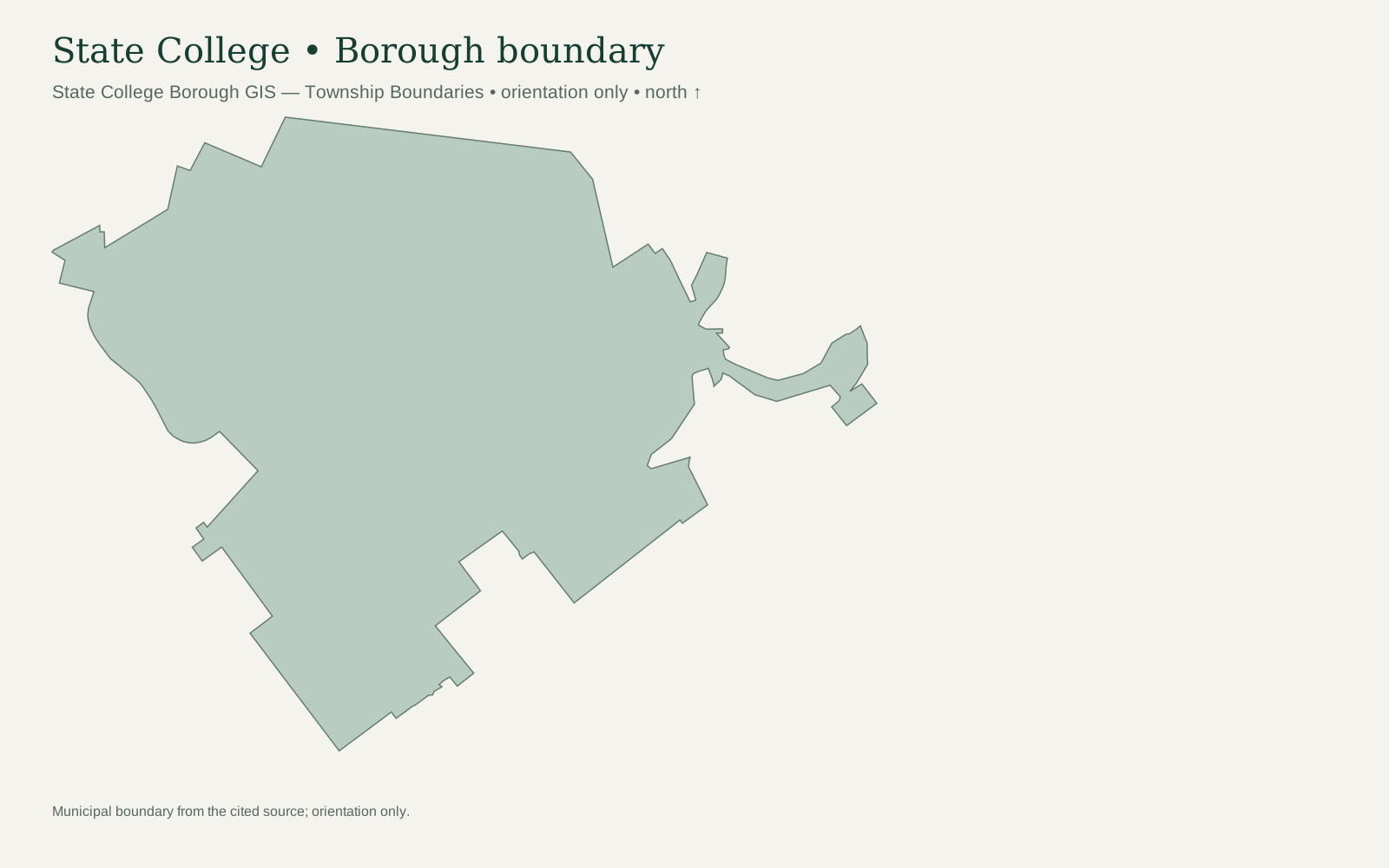
The map below uses the State College Borough polygon from the municipal GIS site’s Township Boundaries layer. It shows the borough boundary, not neighborhood, school-attendance or moving-truck routes. Those boundaries serve different purposes. A property described as near campus or in the State College area can require procedures outside the borough.

Penn State’s University Park campus and downtown form important points of orientation, but “University Park” is not a substitute for a municipal address check. Identify the actual building and the authority controlling its driveway, loading space and internal access. A university appointment or campus unloading instruction does not authorize occupation of a borough street.

The borough’s neighborhood planning material identifies places with different development histories. College Heights lies north of the campus; the Highlands and Holmes-Foster connect older residential streets with the central area. Farther south, State College South, Greentree, Orchard Park, Tusseyview and the Nittany Hills/Penfield area offer other forms of housing and street connections. The modules below explain what to inspect rather than ranking these places.

Be particularly careful around the southern and western edges, where a development name or a single road can cross a municipal boundary. Write the verified municipality beside each shortlist address. Then test the routes you will actually use: work, school, groceries, medical appointments and visits outside the region. An attractive location for one trip may create a difficult daily sequence for another household member.

State College Borough boundary from the official municipal GIS layer
The outlined area is State College Borough. Neighborhoods, school attendance areas and truck routes have separate boundaries. Open full-size map.

03 /

Find the area that fits your routine

These eight comparisons use the borough’s published neighborhood-planning chapters for geography and development history. The linked chapters are marked as 2013 drafts; their old population, ownership and transit figures are not current measurements. Use the descriptions to choose questions for a viewing, then verify the address, building and present services. This is a comparison of conditions, not a ranking of safety or school quality.

College Heights

The borough’s 2013 planning chapter describes an established neighborhood north of campus, with tree-lined streets and early twentieth-century and mid-century houses. East and West College Heights sit on different sides of Atherton Street.

College Heights: Neighborhood Plan existing-conditions chapter (2013 draft) ↗
Housing & setting
Compare the individual house or rental: front steps, internal stairs, parking rights and maintenance responsibility can differ even on one block.
Daily travel
Try your actual walk and crossing toward campus or the bus stop, including the return trip. Do not infer today’s route from the older plan.
Before choosing
Check the municipal line, driveway access and the full furniture route. Ask about event-day parking for the exact street.

Highlands

The planning chapter places the Highlands south and east of downtown and campus, with varied housing from large apartment and fraternity buildings to smaller houses. The Fairmount Avenue ridge makes the street-level approach worth inspecting.

Highlands: Neighborhood Plan existing-conditions chapter (2013 draft) ↗
Housing & setting
Compare the actual apartment, conversion or house and its occupancy terms. A single neighborhood name does not establish building rules or condition.
Daily travel
Test the walk from the particular block to downtown and the services you need; include the grade and crossings.
Before choosing
Ask about lease handover times, stairs or elevator access, curb arrangements and nearby activities on the intended moving date.

Holmes-Foster

The borough planning material documents older houses, mature street trees and a substantial historic building stock west of Atherton Street, between Railroad Avenue and Westerly Parkway.

Holmes Foster: Neighborhood Plan existing-conditions chapter (2013 draft) ↗
Housing & setting
Inspect porches, landings and interior turns, especially for larger furniture. Confirm which spaces belong to a rental and which are shared.
Daily travel
Walk your own route toward downtown or a current bus stop; a nearby destination can still require a busy-road crossing.
Before choosing
Confirm any property-specific work restrictions with the owner and check the legal receiving location. Historic character is not evidence that a doorway will fit.

Greentree

The planning chapter records largely postwar detached-house development south of Westerly Parkway, with substantial construction in the 1970s and 1980s.

Greentree: Neighborhood Plan existing-conditions chapter (2013 draft) ↗
Housing & setting
Compare driveway slope, garage and basement access, outdoor upkeep and the condition of the individual home.
Daily travel
Test the school, work and shopping sequence from the actual address. Nearby facilities do not establish enrollment or their current opening arrangements.
Before choosing
Check the borough boundary toward the west and ask who clears the walk and driveway before a winter delivery.

Orchard Park

The planning chapter describes a concentration of apartments, condominiums and townhomes around the borough’s southwestern edge, organized into several managed developments.

Orchard Park: Neighborhood Plan existing-conditions chapter (2013 draft) ↗
Housing & setting
Obtain the specific lease or association rules, parking allocation and delivery instructions. Two neighboring developments can impose different access conditions.
Daily travel
Test the walk through the development to the current bus stop and your usual errands, including the return direction.
Before choosing
Check jurisdiction building by building near the boundary; an entrance and buildings sharing a development name may not settle municipal responsibility.

State College South

The chapter describes predominantly postwar residential development within the roughly triangular area between University Drive, Easterly Parkway and South Atherton Street.

State College South: Neighborhood Plan existing-conditions chapter (2013 draft) ↗
Housing & setting
Inspect the actual house, duplex or rental and its internal levels. Ask what storage and parking are included.
Daily travel
Try the connections to the surrounding corridors and the current stop you would use rather than assuming a direct trip from the map.
Before choosing
Check the full carrying route, driveway suitability and key handover. Nearby public-school buildings do not independently confirm assignment.

Tusseyview

The borough planning chapter places Tusseyview along its southern edge, with houses, duplexes and some apartments. It notes streets that continue across the line into College Township.

Tusseyview: Neighborhood Plan existing-conditions chapter (2013 draft) ↗
Housing & setting
Compare the particular dwelling and its service arrangements, including heating, parking and collection responsibility.
Daily travel
Test the trip to South Atherton services and the route home; confirm current transit rather than relying on historic service descriptions.
Before choosing
Verify the municipality first, then ask the correct authority about truck space and rubbish collection. Inspect winter access along the final approach.

Nittany Hills & Penfield

The chapter identifies a residential area at the borough’s southeastern edge, with a mixture of smaller houses, duplexes and later subdivisions on higher ground.

Nittany Hills Penfield: Neighborhood Plan existing-conditions chapter (2013 draft) ↗
Housing & setting
Inspect changes of level, driveway gradients and room access instead of assuming the appearance of the house describes the route inside.
Daily travel
Test entry and exit from the particular street and the walk to current transit. Limited local street connections can change the practical route.
Before choosing
Check the municipal boundary and ask the mover to assess the truck approach, turning space and safe working position.

04 /

Compare the home, the lease and the full monthly cost

The borough has a substantial rental market, but the useful comparison is the particular home and its terms. ACS 2024 five-year estimates for State College borough record 11,257 occupied housing units: 8,314 renter-occupied and 2,943 owner-occupied, or about 73.9% and 26.1%. Median gross rent is $1,273 and median owner-occupied value is $437,800. These are survey estimates for 2020–2024, not present asking rents, sale prices or quotations for a chosen neighborhood.

The same release estimates 13,261 total housing units. About 25.9% are in detached single-unit structures, 8.4% in attached single-unit structures, and 64.9% in buildings containing two or more units. About 12.2% were built before 1940. These borough-wide figures describe the housing stock; they do not say that a particular apartment has an elevator or that an older home is in poor condition.

Compare rentals on a common basis. Is the advertised amount for the whole dwelling or for an individual bedroom? Which utilities, parking, internet and furniture are included? What are the start and end times of the lease, not just the dates? Ask how renewal, subletting, pets and the condition inspection work before signing. A gap between leases needs its own plan for people and belongings.

For an older house or converted apartment, inspect the stairs, room shape, heating controls, windows, storage and the route for large furniture. Confirm which entrance belongs to your unit and whether shared areas must stay clear. For a managed building, ask for the moving rules and complete schedule of deposits or fees. Do not infer a building-wide rule from another tenant’s past move.

For a purchase, compare carrying costs and the condition of the individual property with the headline price. Ask the appropriate professional about inspection findings and the scope of any needed work. Coordinate the final utility readings and the actual transfer of keys with the closing team. An anticipated closing time is not confirmed access for a delivery.

Finally, visit the exact block at the times you expect to use it. Test the walk with groceries and the trip home after work, including crossings and gradients. Look for a legal receiving location and measure the carrying route. Save photographs and dimensions while viewing: they help you compare properties and later explain the move without relying on memory.

Branded moving cartons beside a bookcase in a furnished living room
Include room contents and storage in the inventory, not only large furniture.

05 /

Test a complete trip, including the return journey

CATA is an important part of comparing State College addresses, but “near a bus” does not describe a complete journey. Check the stop in each direction, the current route and service calendar, the last useful return trip and the walk between the stop and your door. Test the schedule for the days you actually travel, including weekends or a period when the university is on a different calendar.

The current CATA fare information separates fare-free LOOP and LINK services from fare-paying community routes and CATAGO. It lists a $2.50 full cash fare per one-way trip and a $7 day pass through mobile ticketing. Cash users need exact fare because drivers do not provide change. Do not assume that every journey near campus is free; confirm the specific service and any pass eligibility with CATA.

On a trial journey, time the front-door-to-destination sequence rather than only the time aboard the bus. Include crossings, waiting, a transfer if necessary and the final walk. If you will travel with a stroller, mobility aid or several bags, inspect the stop and ask the operator about the arrangement you need. Leave space in your first-week plan for learning the route without a tight appointment immediately afterward.

For a car, distinguish the home’s parking arrangement from public parking nearby. Ask whether a space is assigned, included in the lease, available to visitors and usable during events. A residential permit is a particular permission with conditions, not a promise of a space outside your door. Keep delivery and service vehicles in a separate plan from everyday household parking.

Walking and cycling should also be checked on the ground. A route can look short while involving a difficult crossing or a steep final approach. Try the trip in both directions, identify a weather alternative and confirm where a bicycle can be stored. For trips outside the region, plan the departure point and the connection home separately from the moving truck. Passenger directions do not establish the clearance or permission for a large vehicle.

Passengers waiting beside a white and blue bus at a sidewalk stop
Check the exact service, return trip and walk from your address; the scene is illustrative.

06 /

Start with district eligibility, then enrollment

The State College Area School District registration page says that a parent or legal guardian must reside in the district and the student must live in that home permanently. Check the exact address with the district before treating a listing or a neighborhood name as proof. Municipal boundaries, school-district boundaries and assignment to an individual school are separate questions.

For the published 2026–27 enrollment process, the district asks for a state-issued birth certificate or passport, immunization records and proof of residency. Examples of residency evidence include a signed lease, a deed or mortgage statement, or a utility bill less than three months old. Its District Residency Form is also listed, with an exception when completing the online enrollment process. Confirm the appropriate documents if your living arrangement does not fit those examples.

The page links to online enrollment for the school year. It also provides a fillable application route for families who do not want to use the online platform, submitted with the required records to the Registration Office. Use the year matching your child’s arrival; an account created or form started is not the same as completed registration. The district says students already enrolled do not need to register again.

Kindergarten eligibility on the page is age five on or before August 31 of the school year of enrollment. If a birthday, a move from another system or an uncertain handover date affects your situation, ask Registration for the applicable path before committing to a start date. The office can also explain what remains outstanding when documents are still in transit.

Once enrollment is underway, ask which school will receive the student, how and when attendance begins, and what information the school needs for course placement or support. Send existing educational plans or relevant records through the district’s designated process. Confirm transportation, arrival and dismissal separately; do not assume a bus stop from the route used by another family.

For the first week, coordinate the school day with childcare, work and the household move. Keep school records, medicines, contact details and a change of clothes accessible rather than on the truck. The registration page identifies language and document-upload assistance for families who need it. Contact the office early for help instead of submitting guessed information simply to finish the form.

07 /

Assign each service to the right account holder

Before opening accounts, ask the owner or manager for a written list of the services serving your exact unit and which are included in the rent. Record electricity, heating fuel, water, sewer, refuse and internet separately. The company that bills one service may not handle another, and a neighboring township or a different building can have a different arrangement.

For water, use the State College Borough Water Authority customer-information route to confirm service for the property and the account arrangement. If you rent, establish whether the owner keeps the account or expects action from you. Ask who reports a leak or a loss of service and where the relevant shutoff is; do not change a shared building system without authorization.

For a purchase, the authority’s instructions to realtors and closing companies call for notification of a change in ownership and a final reading where required. The closing team should submit the current request with the buyer’s contact details and names matching the deed. Notify the authority if the closing is postponed so the reading and account process can be corrected. Give this task a named owner rather than assuming the seller or buyer has already completed it.

For electricity, confirm the delivering utility from the property’s existing account information or the utility’s address check, then use that provider’s official start or transfer process. Keep the delivery utility distinct from any supplier selection. Ask what must be completed before the requested start date and whether access to the premises is necessary. A submitted online request should be followed by a confirmation that identifies the address and effective date.

If the home has service from Columbia Gas of Pennsylvania, its start, stop or move page lists the information needed for each request and says to schedule at least one business day before the requested date. That minimum is not a promise that every connection or appointment can be completed on your preferred day. Confirm the appointment and any person required at the home, and identify other heating arrangements separately when gas is not the fuel.

Arrange internet using an address-level service check and confirm any installation access with the manager. Keep an overlap or a workable alternative if work or school depends on a connection immediately. Before leaving the old property, record meter information where appropriate and retain final-account confirmations. At arrival, check essential services while the responsible contacts are available; a key handover alone does not prove that power, heat, water and connectivity are working.

08 /

Arrange ordinary collection and unwanted items separately

The borough’s refuse service page directs new account questions to Finance at 814-278-4766 or accounting@statecollegepa.us. Residential collection takes place on Tuesday, Wednesday or Thursday according to the address. Use the address lookup or ask Finance for the correct day, then check the holiday schedule. At a rental or condominium, first confirm who manages the account and whether the property uses individual carts or a shared dumpster.

The borough instructs residents to place carts within reach of collection at the street or alley, within ten feet, and remove containers and recycling bins from the street on collection day. Loose or fine refuse must be enclosed in a bag. Keep the collection area accessible and separate it from the moving truck’s ramp and carrying route. A pile of cartons can obstruct both operations even when each has been arranged independently.

Recycling is collected by the Centre County Recycling and Refuse Authority on the same day as borough refuse. Check accepted materials and the property’s sorting arrangement before discarding moving packaging. Flatten usable cardboard for the appropriate route, keep it dry, and ask about quantities if unpacking produces more than the normal collection can take. Do not put reusable or recyclable material into a shared container simply because it is closest.

For unwanted furniture and other large household items, use the borough’s bulk-collection appointment process. Requests are due by 5 p.m. Sunday for the following collection round, which begins Monday unless canceled by a Monday holiday and continues until requested stops are served. The published limit is three items at one time. Items must be ready by 6 a.m. and must not be set out more than 48 hours in advance.

Use the curb or the usual dumpster collection point as instructed. The borough says bulk items are not collected from alleys unless the property lacks street frontage or its usual collection point is an alley dumpster. State the address, contact information and a description of the items when requesting service. A late request goes onto the next regular list; it does not create permission to leave an item behind after a tenancy ends.

The page names furniture and household appliances but does not publish a mattress-specific preparation rule. Describe the mattress or box spring when booking and ask whether wrapping, condition restrictions or a different disposal route applies. Do not claim that it can simply be left at the curb. Confirm the handling of electronics and items outside normal household bulk collection directly with the responsible authority. Moving transport and disposal remain separate parts of your plan.

09 /

Secure the curb through the correct procedure

Start by establishing whether the proposed working space is private property or part of the public street, sidewalk or verge. Obtain the private owner’s consent for a driveway or loading area and check that the vehicle and ramp fit. For public space in State College Borough, contact Parking about the spaces and Public Works about right-of-way occupation. Describe the operation; do not assume that one permission answers both questions.

1. Measure and identify the proposed space

Record the address, side of the street, nearby junction, meter identifiers if present, requested date and the full operating period. Add the vehicle’s length, the rear ramp or liftgate clearance and any walking route that must remain open. Photograph signs and fixed obstructions. Ask the mover to assess vehicle access and the manager to confirm the receiving route before you request a location that will not work.

2. Ask Parking about metered reservations

The downtown parking page links the meter-bag application and says it reserves specific spaces for approved reasons. The currently linked form, revised December 2022, explicitly includes moving-company vans and trucks. It gives a fee of $20 per bag per day, a maximum of five bags and payment by the end of business on the day before the bag is needed. Use is stated as 6 a.m.–10 p.m., and the request section is marked Monday–Friday only.

Confirm the current charge, eligibility for your date, meter IDs, who installs the bags and when. The form’s 48-hour notice for manager approval is attached to “Other” reasons; it is not a universal moving deadline. Approval can be refused because of departmental needs or special activities. If your move is on a weekend, obtain the applicable arrangement directly instead of extending the weekday form yourself.

3. Resolve street-occupancy permission

The borough’s permitting page states that street occupancy applies when a street or grass plot is occupied to unload equipment or materials or to store them temporarily. It lists a $60 street-occupancy fee, requires online applications at least ten business days before the proposed work and says incomplete applications are not processed until the missing information arrives. Ask Public Works at 814-234-7140 how this applies to the proposed truck, ramp, container and pedestrian route, and whether further documents are required.

This is a separate application from a meter bag. Do not treat its fee as a total price for the move or assume that approval of one replaces the other. If you have less than the published lead time, ask what lawful alternatives are available; a later start to planning does not shorten the stated review period. A confirmed private loading location or a later moving date may be necessary.

4. Confirm conditions and a fallback before dispatch

Send the actual approvals, operating times and location instructions to the person coordinating the move. Recheck the borough’s current parking and event notices for that date. Loading zones and five-minute pickup spaces have their own restrictions; they are not general-purpose spaces to occupy for an entire household move.

The meter form says an unauthorized vehicle may be subject to towing once the meter has been bagged for at least four hours and directs reports to Parking or Police. Report an obstruction through those authorities; do not arrange your own interpretation of enforcement. During snowfall of three inches or more, the form prohibits bagging or parking until the street has been plowed to the curb. Decide in advance who can postpone dispatch, what alternative is actually available and when a decision must be made to preserve it.

10 /

Turn a viewing into a usable access plan

Follow the entire furniture route at both properties. Begin at the legal truck position, include the pavement and entrance, and continue through every corridor, lift, stair, landing and internal turn. Record the narrowest dimensions and the largest items rather than taking a photograph of the front door alone. An alternate entrance must be both physically suitable and authorized by its owner.

At an older home, check porch steps and rails, the landing outside the door, floor changes and basement access. Identify the furniture that may need disassembly and ask whether the intended work is included. Keep the path clear of stored belongings and loose coverings. If work is being done on the property, agree who confirms that the route is usable before the truck sets off.

At a managed apartment, ask for the moving instructions in writing. Record each elevator involved, reservation and access times, cab dimensions, protection requirements and whether the elevator remains shared. Ask about security check-in, a certificate of insurance, any required labor arrangements, loading restrictions and the basis of fees or deposits. These are questions for the particular building, not borough-wide rules.

With a short access window, clarify which preparation can happen beforehand. Boxes may be packed and labeled in advance, but occupying a corridor, putting protection down or storing items in a lobby may require permission. Keep the carrying work inside the authorized period. If the scope does not fit, agree another window or a staged arrangement before moving day.

Finally, test the schedule across both ends. Loading, travel and unloading form a sequence, so allow realistic time between the buildings’ access windows. Keep one contact able to authorize changes and another able to admit the crew if necessary. A manager’s verbal expectation, a provisional closing and a submitted elevator request should remain marked as unconfirmed until the responsible party confirms them.

11 /

Try the routines that make a location workable

Use a visit to test an ordinary day rather than only the route to the university or downtown. Start at the home and find a workable grocery trip, pharmacy, laundry arrangement if needed, and a place for exercise or time outside. Walk the complete route with the people who will use it. A park across a busy road and a park reached by a comfortable path can feel very different in daily use.

The neighborhood modules identify development patterns and nearby features documented in borough planning work. Use those as prompts for a visit, then check current entrances, operating hours and the condition of paths with the relevant owner. Older planning material cannot establish that a shop remains open, a playground is currently available or a particular facility has capacity.

If you will work from home, inspect the room at the hours you expect to use it. Ask about the available internet service and the building’s rules for equipment or installation. Check where deliveries are received and how guests enter. If you commute, repeat the trip during your actual work period and retain a second route for disruptions.

For households with different schedules, compare each person’s journey rather than optimizing only one. Include school or childcare pickup, evening activities and the last practical trip home. Think about carrying purchases, moving a stroller and walking after dark without turning those observations into an unsupported neighborhood safety ranking.

Keep the first week deliberately simple. Make space to learn the collection day, complete school arrangements and handle any utility issue while offices are available. Have food, bedding, medicines, chargers and the documents needed for outstanding tasks with you. Unpacking every box on the first evening is less useful than making the home usable and confirming that tomorrow’s essential routines work.

Neighbors walking and reading beside a path and benches in a leafy park
Test ordinary errands and time outdoors as part of choosing a home.

12 /

Plan for academic dates, events and winter conditions

University dates and local events can affect the arrangements you need, but they do not establish a guaranteed busy period for a moving company. The Penn State 2026–27 academic calendar lists the university’s academic dates and notes that the calendar can change. Check your own housing handover and building move-in appointment separately. An academic first day is not automatically the date your keys are released.

The borough publishes special-event parking arrangements for the football season and other occasions. Use the current notice for the actual block and date when selecting the move. If an event overlaps your preferred day, ask the building and Parking whether your proposed access remains possible. Keep a second acceptable date available until the curb and receiving window are confirmed.

In winter, the borough’s snow-removal page says sidewalks must be cleared of snow and ice within 24 hours after a storm. Assign responsibility at each address, including stairs and the final path to the door. A statutory outside deadline does not ensure that the path will be ready for a morning move; the practical clearing time should precede the planned arrival.

Recheck the reserved curb after plowing. The meter-bag form’s three-inch snowfall condition means a reservation cannot be treated as usable while the street has not been cleared to the curb. Keep the person authorized to make a delay decision reachable. If a safer permitted entrance is available, confirm its suitability and access before switching the plan.

For any season, write down the trigger for a change: a denied street arrangement, an unusable carrying route, a delayed key handover or an unavailable elevator. Set the decision time before the alternative disappears. Confirm where the household will stay, where belongings can be received and who approves extra handling or storage costs. Resume only when the person controlling the destination confirms that delivery can proceed.

Resident spreading grit beside a cleared walkway on a snowy residential street
Assign snow clearing and recheck the route before the planned arrival.

13 /

Put the first days in a workable order

Before committing the date: verify the municipality, the lease or closing handover and the two access routes. Compare the building windows with the expected loading and travel sequence. If public-space permission may be required, contact the borough early enough for the published process. Record a backup date and the person authorized to choose it.

Once the property and date are settled: submit the relevant school and utility requests, obtain the moving rules, and complete the truck-space applications. Save confirmation messages in one accessible place. Arrange unwanted furniture and mattresses separately so an item awaiting collection does not have to be left behind after your tenancy ends.

Before the final week: resolve the packing assignment and inventory, check which applications are approved, and identify anything still outstanding. Confirm the receiving contact and room-placement plan. If access depends on a closing, do not describe it as secured until the appropriate person confirms the keys and permission to enter.

On the day before pickup: finish the agreed preparation, check event and weather notices, and confirm that the legal truck location and carrying route remain available. Keep documents, essentials and first-night items outside the shipment. Check the contact numbers for the manager, municipal offices and any confirmed fallback provider.

At arrival: confirm essential utilities and safe access, direct belongings to their intended rooms, and complete the agreed walk-through. Establish the next collection day and ensure carts or a bulk appointment will not conflict with vehicle access. Keep records of unresolved items and the person responsible for each, rather than relying on several people remembering different conversations.

For the transport and handling review, use the State College moving-services page. Send the actual addresses, inventory and permissions with your questions. The best estimate request exposes the remaining uncertainties while there is still time to resolve them.

14 /

Questions before you arrive

Is a State College mailing address necessarily in the borough?

No. Confirm the municipality for the actual property using official maps or the responsible office. Postal names, development names and campus proximity do not establish which parking, permit or collection rules apply.

Which neighborhood should I choose?

Compare the home, its lease or purchase conditions, and the daily trips your household needs. The modules identify different development patterns and viewing questions; they do not rank neighborhoods or guarantee conditions at an address.

Does CATA charge a fare on every route?

The published fare page distinguishes fare-free LOOP and LINK service from fare-paying community routes and CATAGO. Check the service, date and pass eligibility for the specific journey before budgeting or traveling.

Can I register my child before the move is fully settled?

Contact the district’s Registration Office with the exact address, expected arrival and available residency evidence. Ask what can be started and what is still required; do not substitute an anticipated address for the district’s eligibility process.

Can I leave a mattress outside with the ordinary rubbish?

Use the bulk-collection contact to describe the mattress or box spring and confirm acceptance, preparation and the appointment. The published page does not give a mattress-specific wrapping rule. Do not leave it out assuming ordinary cart collection will take it.

How early should I organize space for the moving truck?

Begin when you have a workable address and date. Where street occupancy applies, the published application lead time is at least ten business days. Meter bags have a separate application, weekday-use conditions and payment cutoff. Confirm both paths for the proposed operation.

What is a useful backup plan if the new home is not available?

Name the trigger and decision time, an authorized contact, a confirmed receiving or storage arrangement, a place for people to stay, and the agreed costs and access. Resume delivery only after the destination’s responsible person confirms readiness.

Your next step

Bring the plan together

Use the State College moving page to prepare the inventory, access details and questions for your estimate.

Sources & useful local resources

Official procedures and local resources are linked beside the answers above. Reopen the relevant page when arranging a date: fees, schedules and application requirements can change.

Schools & everyday life

Place & housing

Truck parking & weather

Utilities & waste