Massachusetts / City relocation guide

Moving to Worcester

Worcester offers several different housing settings within one city. Compare a particular home with your daily journeys, then settle the practical questions: school assignment, utility accounts, household collection and a lawful place to load.

People walking beside brick storefront buildings and a marked crosswalk
Test daily journeys from the address you are considering.

01 /

Choose an address by testing the decisions that matter

Start with a short list of the journeys and property features that your household needs. The useful comparison is between real addresses: the room you would rent or buy, the entrance you would use and the trip you would make on an ordinary weekday. A neighborhood description can narrow the search, but it cannot establish a school assignment, parking entitlement or a workable furniture route.

For each candidate, record the floor, stair and elevator situation, storage, laundry, heating system and responsibility for utilities. Ask which outdoor areas and parking spaces belong to the unit. If a driveway is shared, identify how vehicles can enter and leave independently. Walk the route from the proposed loading position to the final room and note any fixed restriction.

Keep three dates separate until they are confirmed: when you may legally occupy the property, when keys and access are available, and when belongings will arrive. A lease start does not necessarily include an unrestricted elevator reservation or permission to use a private driveway. Resolve those details with the owner or manager before fixing the delivery sequence.

Use the neighborhood comparisons for physical and planning context, then work through schools, utilities and disposal for the exact property. Save the current instructions and reference numbers in one place. Where a public office must decide an application, leave that step visibly open until you have its answer; a form submission is not the same as permission.

02 /

Distinguish Worcester city from the wider region

This guide concerns Worcester, Massachusetts, rather than the whole county or surrounding metropolitan area. Shrewsbury, Auburn, Leicester and other neighboring municipalities have separate local procedures. Check the full street address and unit, especially when a property is advertised principally by its distance from Worcester or a nearby institution.

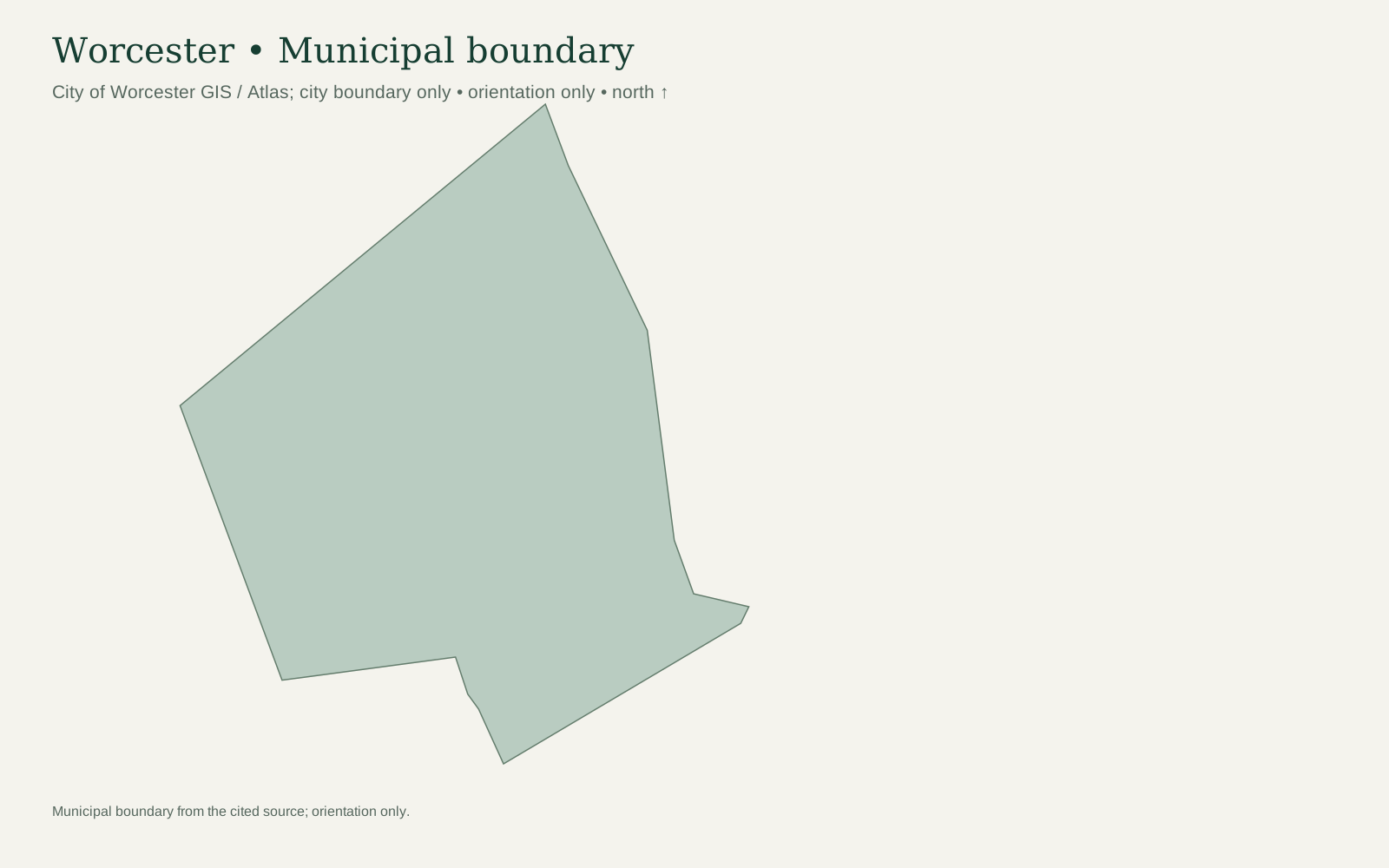
The City of Worcester GIS page links to the public Atlas, which includes a municipal boundary, parcels and other reference layers. The map here shows only the Worcester boundary selected from that official service. It does not divide the city into the six areas described below, establish a school attendance zone or authorize a truck route.

Neighborhood names and historic districts also serve different purposes. A local historic district has a specific regulatory boundary; a broader neighborhood or development-plan area may be described differently. Use the named studies for context and confirm the parcel's current status where a proposed alteration depends on it. Do not assume that every property near a district shares the same designation.

The city's draft 2026–2027 action plan describes neighborhood-focused work, including Green Island. Its proposed activities and funding targets are not proof that a particular building, street or service has already been improved. Check the actual property and any work affecting its approach. Likewise, an older plan is useful for describing development patterns without establishing current vacancies, prices or construction status.

For campus-related moves, verify the campus building and its receiving arrangements directly. Clark University's Main South setting is covered below, but nearby housing remains subject to its own owner and street rules. For other institutions, check the named campus rather than treating a Worcester-area description as a municipal boundary or arrival instruction.

Municipal outline of Worcester from the official city Atlas GIS service
City of Worcester GIS municipal boundary, generalized for orientation. This is not a neighborhood, parcel, school-assignment or truck-access map. Open full-size map.

03 /

Find the area that fits your routine

These six comparisons use city studies, planning material and Clark University's description of its Main South setting. They cover selected neighborhoods and defined districts, not a ranking or a complete division of Worcester. Historical studies explain physical development; inspect current property conditions, routes and rules separately.

Elm Park Neighborhood

The 2023 city study describes a mix of one- to three-family homes, apartments, former campus buildings and smaller offices. Several triple-deckers stand along Elm and Highland streets, within an area shaped largely during the nineteenth and early twentieth centuries.

Elm Park Neighborhood final study, April 2023 ↗
Housing & setting
Inspect the particular unit and entrance; the study records a mix of building uses and forms, not a uniform housing type.
Daily travel
Try the actual walk and crossing toward the park and your chosen transit stop. A district label does not establish a travel time.
Before choosing
Confirm the current historic-district boundary and any review needed for exterior changes. Measure porch steps, vestibules and stair turns.

Massachusetts Avenue district

The historic study describes Massachusetts Avenue and Regent Street as a planned residential setting, with early twentieth-century houses, setbacks, trees and the American Antiquarian Society as a substantial institutional neighbor. Its historical observations are not a current occupancy survey.

Massachusetts Avenue historic district study ↗
Housing & setting
Compare the actual property layout, driveway and ownership arrangements rather than treating an architectural description as a listing.
Daily travel
Test the route to Salisbury Street or Park Avenue and the destination you use; verify current crossings and services.
Before choosing
Check whether the parcel lies in the local historic district before proposing changes to a visible exterior. Establish usable delivery access separately.

Montvale district

The 2007 city study identifies an early planned residential development with curved streets, landscaping and a rise in elevation westward from Park Avenue toward Monadnock Road. Its discussion of development between 1896 and 1930 explains the physical setting.

Montvale historic district expansion study, 2007 ↗
Housing & setting
Inspect the driveway gradient, steps and room access at the individual house. Landscaping and historic form do not establish vehicle clearance.
Daily travel
Try the return walk as well as the outward trip, especially where the approach changes elevation. Check current services for the exact address.
Before choosing
Use the current parcel and district boundary for regulatory questions; an expansion study is historical evidence, not a current permission to alter the property.

Main South

Clark University identifies its campus as part of Main South and describes the University Park Partnership with residents, organizations and the Main South Community Development Corporation. Housing rehabilitation, education, economic development and recreation are among its stated areas of work.

University Park Partnership in Main South ↗
Housing & setting
Check the particular rental or home, shared entrances and account responsibilities. Proximity to a campus does not make private housing a university residence.
Daily travel
Test the trip to the actual campus building or other destination, including the return time and the street crossing.
Before choosing
Ask the landlord for access and parking terms. University arrival instructions apply to the relevant university property and do not reserve a nearby public curb.

Downtown revitalization area

The city describes a mixed commercial and residential revitalization area, with arts and visitor destinations and links between downtown places. Its published plan area is specific and does not represent every property commonly advertised as downtown.

Downtown Urban Revitalization Plan area ↗
Housing & setting
For an apartment or converted building, establish the receiving entrance, elevator arrangements, storage and any shared loading space.
Daily travel
Compare access to the actual bus stop or Union Station entrance with the journey you need. Check evening and weekend service.
Before choosing
Separate older project descriptions from current building conditions. Confirm any event-day parking or receiving restriction for your move date.

Green Island

The city's 2023–2024 draft action plan describes its Green Island target area south of downtown, between I-290 and railroad corridors. It records a mix of one- to three-family wood-frame housing, industrial and warehouse uses and smaller commercial premises.

Green Island description in the 2023–2024 draft action plan ↗
Housing & setting
Evaluate the individual building and its immediate surroundings; the older plan describes a mixed area and proposed work, not completed improvements at every address.
Daily travel
Walk the relevant crossings and check the actual street route rather than relying on a straight-line distance through rail or highway corridors.
Before choosing
Check the current construction, parking and collection arrangements. Keep the plan's target boundary distinct from broader Canal District or neighborhood marketing labels.

04 /

Use housing data as context, then inspect the specific home

The ACS 2024 five-year housing estimates for Worcester city cover the 2020–2024 survey period. They report 79,501 occupied homes, with approximately 57.2% renter occupied and 42.8% owner occupied. Median gross rent was $1,487 and median owner-occupied value was $374,400. These are survey estimates across many properties and years, not today's listings or a quote for the home you are viewing.

Among 85,876 total housing units, about 31.6% were in detached single-unit structures, 5.8% in attached single-unit structures and 62.1% in buildings with two or more units. Approximately 40.8% were built before 1940. These citywide shares explain why stair access, shared systems and older layouts deserve attention, but they do not tell you the condition or legal occupancy of any one building.

During a viewing, trace the complete route through the dwelling. Measure the narrowest doorway, stair landing and hallway turn against the largest item you intend to move. Include porch steps and the height available when an item must be tilted. Ask whether a rear entrance is usable, who may unlock it and whether the route crosses another unit or common space.

Compare total obligations rather than rent or purchase price alone. Establish what is included, the heating fuel, who holds each account, storage rights, laundry arrangements and any separate parking charge. Request the current terms in writing. For a purchase, use your own property inspection and transaction advisers to resolve condition and closing matters; a neighborhood's architectural history does not certify the building.

Worcester's Historical Commission publishes material on local historic districts and exterior review. Before relying on removal or alteration of a porch feature, railing, door opening or other visible exterior element, have the owner confirm the applicable approval process. Ordinary delivery planning should start with the existing usable route, with any proposed alteration treated as a separate decision.

In a shared building, ask how repairs, access and emergencies are handled. Identify the person authorized to approve a move, the notice required by the building and how an arrival delay will be communicated. Keep photographs and measurements associated with the correct unit so that the estimate does not accidentally describe another entrance in the same building.

Two closed kraft cartons beside a sofa and radiator in a bay-window room
Compare the usable layout, storage and access for large belongings.

05 /

Test the whole journey, including the return trip

The WRTA fare-information page states that fares on fixed-route and paratransit services are suspended through June 30, 2027. Recheck that time-limited policy when planning a later move. Fare-free travel does not establish that a particular route runs at your required time or that paratransit eligibility and booking rules are waived.

Use the current route and timetable for the stops nearest the actual home and destination. Walk to the correct side of the street, identify the crossing and check the return service after work, classes or appointments. Allow for the walk, waiting, transfers and the final entrance rather than comparing addresses only by time spent on the bus. Repeat the check for weekends if those trips matter.

MBTA Worcester station page places the station at 2 Washington Square and lists current facilities, parking and access alerts. The Framingham/Worcester service offers a separate rail option from local buses. Check the train that reaches your destination, the last practical return and current service changes. A station near a home does not mean every departure pattern fits your schedule.

For a step-free trip, review the live elevator status and the route between the street, station building, bridge and platform. The station page showed an elevator closure when checked; the applicable route can change. Confirm accessible travel for the date of use rather than treating a general station symbol as proof that every entrance is operating.

If you drive, visit at the times you expect to leave and return. Identify the actual parking space and any posted time or permit limit. Worcester's public road network and nearby highways are useful regional connections, but map distance is not a reliable promise of commuting time. Follow current construction and detour instructions, especially where a bridge or one-way approach changes the last part of the journey.

The city airport page identifies Worcester Regional Airport and links to its operator, Massport. Check the exact terminal and current flight and ground-transport options separately. An airport name in a regional description is not evidence that your preferred flight operates or that a public-transit connection matches its departure time.

White and blue bus beside a sidewalk shelter with two waiting adults
Check current WRTA and rail information; the transit scene is illustrative.

06 /

Register through WPS and confirm the address assignment

Use the current Worcester Public Schools enrollment page and select the form for the intended school year. The page provides the 2026–2027 enrollment form and directs families to apply or enroll online first. The James Garvey Parent Information Center at 768 Main Street can help; call 508-799-3194 for an in-person appointment when needed.

For kindergarten in 2026–2027, the child must be five years old by December 31, 2026. The district states that kindergarten registration began January 26, 2026. Use that Worcester-specific age rule rather than a cutoff from another Massachusetts district. If you are arranging a later school year, obtain the new year's instructions before assuming the same dates.

The published checklist requires the child's original birth certificate, I-94 form or passport; current immunization record; a physical-exam record from within the last year; caregiver photo identification; and previous-school records, if available. Prepare readable records and retain the originals needed for verification. Ask the district how to provide additional educational or health information relevant to the student.

For residence, the checklist calls for a deed or mortgage payment within the last 30 days, a valid current lease, a Section 8 agreement, or a notarized landlord affidavit dated within six months. It also requires one additional accepted proof. Examples include a utility bill other than water or cell phone within 60 days, a W-2 within the year, a recent payroll stub, a recent bank or credit-card statement, or a recent letter from one of the listed government agencies. Follow the exact current list rather than substituting a document because it shows an address.

If housing instability makes the usual proof unavailable, use the district's Student Address Verification Form or contact the Parent Information Center. The same enrollment page directs families experiencing homelessness to the Office of Family and Community Engagement at 508-799-3415 for assistance. Missing a conventional lease should prompt that conversation, not an assumption that enrollment cannot proceed.

Students are generally assigned by residence, with separate processes for citywide-admission programs and voluntary transfers. Use the district's current street-list and map links as a starting point, then have the Parent Information Center confirm the exact address, grade and intended year. A listing's school name, the nearest building or an unconfirmed boundary proposal is not an assignment. Confirm the start date and transportation arrangements after the records are reviewed.

Pre-K and specialized programs require additional attention. The page says Pre-K seats are not guaranteed and that the 2026–2027 lottery application closed May 1, 2026. Ask about the current next step rather than assuming a late application will produce a seat. A preschool place at a school does not guarantee kindergarten there. Head Start students must register for kindergarten, while already enrolled WPS Pre-K through grade-12 students generally do not re-register for the next year. Special education or English-language needs may require a Parent Information Center appointment after the online form.

07 /

Set up the correct accounts and coordinate the water reading

The city's Smart Energy Advice page identifies National Grid as Worcester's electric utility and Eversource as its gas utility. Confirm service for the exact unit and identify which accounts are the occupant's responsibility. A utility service area does not mean every dwelling uses gas, has a separate meter or includes the same services in the rent.

National Grid moving-service instructions ask for five to seven days' notice so a crew visit can be scheduled where a physical turn-on or shutoff is needed. Start the request early enough to establish the actual appointment and access requirements. Supply the complete service address and effective date, and keep your existing service through the time it is still needed at the old home.

Eversource start-service page requires an online user ID for a new service request. Select the correct town and service type, then confirm any visit and access arrangements. Do not assume that the previous occupant's active service transfers automatically to you. Ask the property manager about the meter and account information needed for a multi-unit building.

For a property sale, Worcester's water and sewer instructions state that the city does not perform final meter reads. The seller or representative must obtain the reading and contact the attorney before closing. The closing attorney requests submission directions from WaterBilling@WorcesterMA.gov or 508-799-1440. The billing office provides the calculated outstanding usage by email to an attorney or realtor, and describes those figures as informational and non-binding.

Coordinate that reading with the transaction participants rather than requesting a new physical connection for an already connected home. For a rental, establish with the owner which water obligations belong to the property and what, if anything, the lease assigns to you. Clarify account and mailing-address changes with the appropriate office; access to running water on viewing day is not evidence that the billing arrangements are settled.

Internet and any other service need an address-specific availability check. Ask where equipment may be installed, whether an appointment needs the owner's permission and when access can be provided. Keep activation confirmations and account contacts accessible during the move. If an essential service is delayed, settle a practical interim arrangement before expecting the home to be ready for the first night.

08 /

Plan for cartons, unwanted furniture and mattresses separately

First establish whether the building uses Worcester's household collection or a private arrangement. Ask where material is stored and who takes it to the collection point. The city's yellow-bag trash instructions require official Worcester bags for the municipal pay-as-you-throw program. Small bags are listed at $1 each with a 15-pound limit; large bags are $1.75 each with a 30-pound limit. Purchase the correct bags and keep heavy clearing-out waste within the limits.

Set trash and recyclables at the curb between 6 a.m. and 7:30 a.m. on the scheduled collection day. The city describes a one-day delay for that day and the remaining week when a scheduled collection falls on a holiday. Confirm the address's actual day and current holiday or weather announcements before placing material outside. Leaving furniture out early is not an alternative collection request.

The recycling instructions allow accepted paper, cardboard, containers and other listed materials together, with no plastic bags in the recycling. Corrugated cartons should be broken into pieces no larger than two feet by two feet. Separate film, foam and other packing waste from the cardboard instead of putting a mixed carton of unpacking debris into the recycling.

A newer September 17, 2026 city notice says municipal recycling bins will not be available at any city site starting September 21 because of low supply. It permits a durable, open-top, weather-proof container, including suitable bins or totes. This updates the older general instruction to collect a city bin. Recheck availability when you need one rather than making a trip on the strength of the older page.

For bulky belongings, the Residential Drop-Off Center instructions describe resident appointments at 1065 Millbury Street, generally April through November or December as weather permits. Proof of residency is required, current-year property-tax or water documents must be current if used, and commercial vehicles are not allowed. Pay by check or exact cash. Confirm the appointment, accepted items and seasonal opening before transporting a load; a moving-company truck is not automatically an eligible drop-off vehicle.

The posted drop-off list prices many individual items at $5, while each mattress and each box spring is $15. Some materials have other charging or acceptance conditions, so match the actual items to the list. Do not apply those resident drop-off prices to curbside collection. Keep a mattress clean and protected while arranging the accepted route, and confirm preparation requirements directly.

If you cannot transport bulky items, the city lists paid Casella curbside service for single-family and multi-family residential buildings with up to six units, or another licensed hauler at its own rates. Contact Casella at 508-832-2349 to arrange and pay for an appointment. The published table lists $134.96 per mattress or per box spring for this curbside service, substantially different from drop-off. Confirm the current total, item count and cancellation terms before booking; the page requires curbside placement by 7 a.m. on the scheduled day.

Decide which belongings will be moved, donated or removed before the moving inventory is finalized. An unwanted sofa should have its own confirmed collection plan. Keep removal work separate from the mover's agreed scope and preserve a clear route for both operations. After unpacking, reduce cartons progressively so storage areas and shared exits remain usable.

09 /

Work through parking and right-of-way approval in order

Make a small plan of the proposed loading operation before contacting an office: full address, side of street, dates, hours, truck dimensions, ramp or liftgate space and pedestrian route. Note meters, resident-only signs, bus stops, driveways and existing restrictions. Identify the applicant and the person available on the day. This information allows the relevant authority to decide which process applies.

For paid street spaces, start with Worcester on-street parking rules. The city generally describes enforcement from 8 a.m. to 8 p.m., Monday through Saturday, but identifies Canal District and Green Island Boulevard event exceptions. The Canal District page information includes enforcement to 9 p.m. and a Sunday two-hour limit. Read the signs at the actual space and obtain current direction from the Department of Transportation and Mobility; a citywide summary cannot override a posted condition.

The same city page describes long-term meter rental for construction workers operating in an area for an extended period. Its Park Worcester rental form asks for the project and billing address, dates, day count and meter count, and says a request is reviewed before payment instructions are issued. Contact is expected within one to two business days, but that is neither an approval promise nor a published household-move lead time. Ask whether an ordinary move qualifies and what arrangements are required for your duration.

For a street or sidewalk obstruction, lane closure, stored container or other use of the public right of way, ask Worcester 311 to route the question to DPW Engineering. Its current online Public Works permit catalog includes Engineering permits for street closing and other work, plus separate categories for vendors, outdoor dining and overweight loads. Those descriptions do not establish that a household moving truck should use any one category without the department's direction.

The linked permit manual covers infrastructure work and has specific requirements for dumpsters obstructing a street. It requires the dumpster owner to hold that permit and describes a 72-hour application review. Do not apply that interval to every truck, portable storage unit or household move. Describe exactly what will remain in the street and have the relevant office identify the correct applicant, insurance, placement and removal conditions.

The published Engineering fee schedule dated December 8, 2025 includes street-obstruction and barricade charges. Confirm current applicability and the total for the actual approved operation, including any separate parking or traffic-control arrangements. This guide does not establish a general moving-permit price or a universal posting deadline. Ask who supplies approved signs, when they must be placed, whether a police detail is needed and what evidence of permission should be available on site.

A residential parking permit belongs to a different program. It does not, by itself, reserve a length of curb for the moving truck. Likewise, the owner's consent to enter a building or use a private driveway does not authorize occupying the public sidewalk. Resolve both the property permission and the public-space permission where both are involved.

Once the position is approved, send the conditions to the mover and receiving contact. Recheck construction, event restrictions and winter rules before arrival. If the space is occupied or conditions have changed, contact the issuing office and mover before changing the plan. Double parking, blocking a driveway or moving a container onto the sidewalk is not an equivalent fallback. Agree a lawful alternative and any changed carrying distance or schedule before the work proceeds.

10 /

Check the route inside and outside the property

Start where the vehicle can lawfully stand and follow every part of the delivery route. A level sidewalk can lead to a steep private walk; a wide porch can lead to a narrow vestibule; an upper-floor room can be reached only through a tight turn. Record each change rather than describing the property simply as a house or an apartment.

Measure the clear opening with the door in its usable position, the stair width between fixed features and the landing space needed to turn. Photograph low ceilings, projecting radiators and handrails. Ask the mover to assess the route for unusually long, heavy or delicate pieces. Do not treat a straight-line measurement of the item as proof that it can negotiate a turn.

Obtain the manager's current move instructions for a shared building. Confirm the entrance, hours, elevator reservation if applicable, required insurance documentation and floor protection. Identify who can unlock doors and authorize use of common space. A resident's ability to enter through a door does not establish that it may be held open for a delivery.

Ask where belongings may be staged while leaving exits and other occupants' routes clear. Confirm lighting and the responsibility for clearing private steps, snow and ice. Keep pets, children and visitors away from the carrying path. If another household is moving or a contractor is working that day, agree how the space will be shared before either operation arrives.

Any proposed removal of a door, railing or exterior element needs the owner's approval and any applicable review. If the existing route does not work, discuss permitted alternatives, disassembly or specialist handling before scheduling. The Worcester moving page explains how those access details should be included in the estimate discussion.

11 /

Try the routines that will shape your first week

Identify the everyday destinations that matter to you: groceries, pharmacy, laundry, work, study, appointments and a place for outdoor time. Check current hours and the route from the actual entrance. A nearby business in a historic study or development plan may no longer operate, so verify the service itself before making it part of the housing decision.

Walk the nearest practical route to a park or open space, including crossings and the entrance you would use. The Elm Park neighborhood and historic-district descriptions provide useful context, but they do not guarantee a particular walking distance or accessible route from every property carrying that label. Judge the journey from your own address.

If a home is near a commercial or event area, visit at more than one relevant time. Observe the current parking rules, pedestrian route and the building's delivery arrangements. Ask the manager how access is handled when neighboring venues are active. An event-related parking rule and a general everyday parking rule may be different, so check both for the dates that concern you.

Set up the building routines early: how parcels are received, how maintenance is requested, where waste is stored and whom to contact if access fails. Confirm that your full unit address is used for services and deliveries. Keep the first week's appointments on one list so an installer or collection visit does not conflict with the moving operation.

Where mobility, language or other access needs affect a service, ask its operator about the actual arrangement. A general description of an area cannot answer whether a particular doorway, appointment or transport connection works for you. Resolve those specific questions while comparing homes, when another property or route is still an available choice.

Walkers and a seated visitor beside a paved park path under autumn trees
Try the park entrance and route you expect to use.

12 /

Prepare for Worcester snow rules and changing street access

Worcester's winter parking instructions distinguish permanent and declared bans. The permanent category applies from December 1 through April 30 on emergency arteries, WRTA bus routes and other designated streets. One or both sides are restricted from 2 a.m. to 6 a.m. and whenever a snow emergency is declared. The restriction for your street must be checked individually.

On remaining streets, a declared ban can take effect when accumulating snow is forecast and typically permits parking on only one side. Worcester 311 is the official source for the current ban and street rules. Vehicles hindering snow removal can be ticketed and towed. Do not assume that an ordinary permit, paid meter or previously agreed loading position remains usable during a ban.

The city's winter-weather guidance requires sidewalks to be cleared within ten hours after snow stops, with a four-foot-wide path in front of the property and on all sides of a corner property. Establish who will perform that work and who clears the private approach, steps and landing. A clear public sidewalk alone does not make an icy stair or blocked entrance usable for delivery.

Before a winter move, check where plowed snow has accumulated and whether the vehicle and pedestrian routes still match the plan. Arrange a lawful alternative if the original position is unavailable. Keep snow away from the operating route, maintain lighting and discuss protection for wet floors. Check the building's readiness and heating before belongings arrive.

In other seasons, rain, loose leaves, temporary works or a changed building schedule can also affect access. Recheck the actual approach and the relevant current notices. If the move is connected to a campus or event, use its published arrival instructions for that date. There is no need to infer a citywide moving season from an institution's calendar; the practical issue is the access arrangement for your property.

Resident with a shovel beside a cleared sidewalk and porch approach after snow
Confirm clearing responsibilities for both public and private paths.

13 /

Keep the last checks and the first night manageable

Before moving day, assemble the confirmed addresses, unit numbers, keys, contacts, inventory and any building or public-space permissions. Send material changes to the mover, including a different floor, extra stop or unavailable entrance. Confirm that the person receiving the shipment can be present and can make decisions about room placement.

Keep medicines, essential documents, chargers, basic toiletries and a change of clothes in a personal bag that stays accessible. Separate the belongings needed for children, pets and the first night. Do not load the keys, permission paperwork or information needed to open the home among cartons that will be difficult to retrieve.

At arrival, walk the route before unloading. Check that the approved space and entrance remain usable, point out the destination rooms and identify anything excluded from the shipment. Keep shared exits clear. If access or possession has changed, pause the affected operation and agree the next step with the property contact and mover rather than improvising an unauthorized route.

During the first week, verify that utilities and communication services are active under the agreed arrangements, school registration has progressed to a confirmed start and waste is going out on the correct schedule. Arrange bulky-item collection separately if still required, and break down cartons to the accepted size as rooms are unpacked.

Keep a short list of unfinished tasks with the responsible office, reference number and next action. A submitted enrollment form, meter-rental request or service order may still need review or an appointment. The Worcester moving estimate section helps collect the inventory and access details for the moving work; retain the separate property and municipal confirmations alongside it.

14 /

Questions before you arrive

Do Worcester rules apply to nearby towns?

No. Confirm the municipality for the actual property and street. A Worcester-area description does not transfer city parking, collection or school procedures to Shrewsbury, Auburn or another community.

Are the rent and value figures current asking prices?

No. The figures are ACS 2024 five-year estimates covering 2020–2024. Compare current property terms and your total obligations separately.

How long is WRTA fare-free?

The current WRTA page states that fares on fixed-route and paratransit services are suspended through June 30, 2027. Check the current policy, timetable and any eligibility or booking requirements for your trip.

What is the kindergarten age cutoff for 2026–2027?

Worcester Public Schools requires the child to be five by December 31, 2026. Follow the current enrollment process and confirm the school assignment for the actual address.

Can I pick up a recycling bin immediately after moving?

The city announced that municipal bins would be unavailable starting September 21, 2026 because of low supply. It allows a durable, open-top, weather-proof container. Check for a later supply update before visiting a municipal site.

Are mattress drop-off and curbside prices the same?

No. The city lists $15 for each mattress or box spring at resident drop-off and $134.96 per unit for the listed Casella curbside service. Confirm eligibility, preparation, appointment and the current price for the route you choose.

Will the city read the water meter for a property closing?

The published instructions say it will not perform the final read. The seller or representative obtains it, and the closing attorney requests submission directions from the Water Billing Office.

Your next step

Bring the plan together

Use the Worcester moving page to prepare the inventory, access details and questions for your estimate.

Sources & useful local resources

Official procedures and local resources are linked beside the answers above. Reopen the relevant page when arranging a date: fees, schedules and application requirements can change.

Housing

Truck space

Transport

Neighborhood context

Utilities

Waste

Orientation

Weather

Schools