Ohio / City relocation guide

Moving to Youngstown

Start with the exact Youngstown address and the journeys your household needs. Use this guide to compare homes, check the current school and service arrangements, then prepare the property and loading position for arrival.

Man carrying a green grocery bag beside brick shopfronts
Test the connections to your ordinary destinations.

01 /

Choose the checks that match your stage

If you are still choosing a home, begin with the city boundary, housing figures and neighborhood comparisons. Then test the actual journey to work, groceries and the other places you use regularly. A low advertised housing cost does not settle maintenance, service responsibility or the cost of a difficult commute.

If children are moving with you, begin with school assignment and enrollment. Youngstown’s district reconfiguration changes the meaning of older school names, and bus eligibility needs its own confirmation. Check the school building, calendar, documents and daily transport before using a listing’s school description to make a decision.

If you already have an address, begin with utilities, the building route and truck parking. The city’s final water reading can interrupt service unless the next customer has signed up. Treat keys, active services and a lawful receiving position as separate confirmations.

Keep a simple address checklist with the question, responsible person, target date and evidence received. For example, a property manager can confirm which door to use; Traffic Engineering must classify a request affecting the public way. A submitted form is a step in that process, not the final permission.

Once those conditions are clear, the Youngstown moving page helps turn the inventory and access details into an estimate. Keep any unresolved dependency visible so it can be planned around before move day.

02 /

Separate the city, the mailing address and the destination

This guide covers the City of Youngstown in northeast Ohio. Most of the city is in Mahoning County, with a portion extending north into Trumbull County, as the county’s municipal geography explains. A Youngstown mailing address alone does not establish city jurisdiction; nearby townships and municipalities have their own services and requirements.

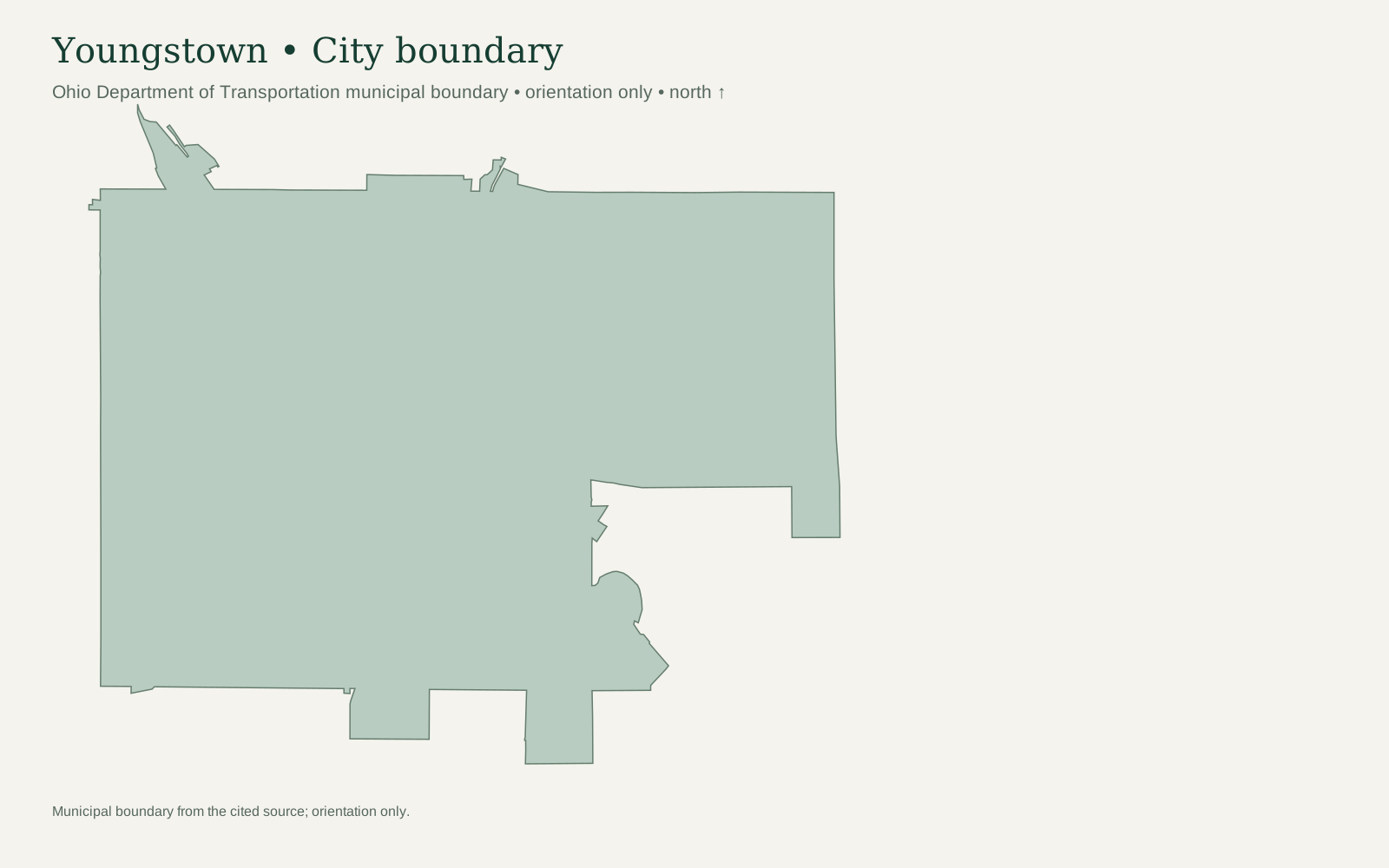
The orientation map uses the Ohio Department of Transportation municipal polygon. It shows the city outline, not the six neighborhood comparison areas as legal districts. It is not a parcel survey, school attendance map, flood determination or an approved truck route. The GIS table’s Mahoning label is not a statement that the city has no territory in another county.

For a particular property, use the city planning directory and linked property map to start the jurisdiction and parcel check. Confirm the unit and entrance with the owner or manager. Property ownership, zoning, school assignment and utility service territory answer different questions and should not be inferred from one another.

Youngstown State University is in the city; its current campus directions use 1 Tressel Way and provide building maps. For a residence or workplace move, obtain that building’s receiving instructions instead of routing a truck to the university’s general address.

The county hazard plan locates Youngstown–Warren Regional Airport in Vienna Township, outside Youngstown. Confirm the actual airport and current itinerary before planning a trip; the regional name does not describe a downtown terminal or a direct local-bus connection.

The neighborhood plans below help explain physical character and street relationships. Their historical surveys and proposed projects are not current listings or proof that an improvement has been completed. Visit the present-day entrance, immediate surroundings and everyday destinations that matter to you.

City of Youngstown municipal outline from Ohio Department of Transportation GIS
Ohio Department of Transportation municipal boundary. Orientation only: not neighborhood districts, a property survey, school assignment, flood map or truck route. Open full-size map.

03 /

Find the area that fits your routine

These six comparisons use distinct city-hosted neighborhood plans. They provide historical physical context, not current rankings, listings or promises about services. The orientation map shows the municipal boundary, not these study areas. Inspect the actual address and confirm its school, providers, journeys and receiving conditions separately.

Wick Park

The 2016 plan describes older substantial houses near the park and Fifth Avenue, with smaller homes farther east and a mixture of single-family, multifamily and institutional uses. YSU lies south of the planning area.

Wick Park neighborhood plan ↗
Housing & setting
Confirm the current unit arrangement and the complete porch, hall and stair route.
Daily travel
Test the actual campus or downtown journey and the crossing at major streets.
Before choosing
Check shared entrances and current uses; the historical survey is not a vacancy or availability list.

Crandall Park

The 2014 plan records varied housing, from large Victorian homes to Arts and Crafts, Tudor and Dutch Colonial houses, brick bungalows and postwar Cape Cods. Fifth and Belmont avenues are different north–south connections.

Crandall Park neighborhood plan ↗
Housing & setting
Compare the actual house, floor layout and maintenance responsibilities.
Daily travel
Try the particular Fifth Avenue or Belmont journey and its current bus connection.
Before choosing
Verify present-day amenities rather than relying on the plan’s old business inventory.

Garden District

The 2014 plan places this west-side area around Mahoning Avenue, with Fellows Riverside Gardens and Mill Creek Park helping frame its east and south sides. It describes an older housing stock and varied architecture.

Garden District neighborhood plan ↗
Housing & setting
Inspect the individual entrance, stairs and any divided-house arrangement.
Daily travel
Test the Mahoning Avenue crossing and the exact stop or walking route you will use.
Before choosing
Confirm the current property and services; garden access does not settle the home’s receiving route.

Idora

The city-hosted background chapter places the south-side study area between Mill Creek Park and Glenwood Avenue, with Old Furnace and Canfield roads helping explain its north–south extent. It records the former amusement park’s closure as history.

Idora background chapter neighborhood plan ↗
Housing & setting
Examine the present home and entrance independently of redevelopment proposals.
Daily travel
Try the route to Glenwood Avenue and the park entrance you would actually use.
Before choosing
Do not treat the former Idora Park site as an operating amusement attraction or assume proposed work is complete.

Brownlee Woods

The 2014 plan describes a south-side neighborhood annexed from Boardman Township in 1929, with prominent postwar Cape Cod housing and connections toward East Midlothian and Youngstown–Poland Road.

Brownlee Woods neighborhood plan ↗
Housing & setting
Check the specific floor arrangement, upper-level stairs and driveway access.
Daily travel
Test your destination and current transport along the relevant corridor.
Before choosing
Confirm the municipality at edge addresses and verify current shops and services.

Lincoln Knolls

The 2014 plan describes a compact east-side development of curved streets, small lots and predominantly single-story postwar houses. McCartney Road marks the study area’s southern edge beside Campbell.

Lincoln Knolls neighborhood plan ↗
Housing & setting
Measure the actual entrance and any basement or side access; a ranch label does not guarantee step-free receiving.
Daily travel
Check the exact stop, crossing and return journey on your side of McCartney Road.
Before choosing
Confirm the city and current property conditions at the boundary rather than borrowing Campbell’s procedures.

04 /

Read the housing figures, then inspect the particular home

The ACS 2024 five-year housing tables describe Youngstown city across 2020–2024. They estimate 56.2% of occupied homes as owner-occupied and 43.8% as rented. The median gross rent is $728 a month, and the median owner-occupied home value is $63,300. These are survey estimates for that period, not today’s asking rents, sale prices or a budget for a particular property.

Citywide measureACS 2024 five-year estimateHow to use it
Owner / renter tenure56.2% / 43.8% of occupied homesConfirm the actual owner, lease and service responsibilities.
Median gross rent$728 per monthCompare current offers and what each payment includes.
Median owner value$63,300Budget from the property’s current price and inspection.
Detached single-unit homes78.8% of all housing unitsCheck the particular layout and entrance; a citywide majority is not a guarantee.
Built before 194039.3% of all housing unitsInvestigate condition and the complete furniture route.

The structure and age percentages use all housing units, including vacant units; tenure uses occupied units. Those denominators are different. The figures help set questions, but they cannot establish the condition, vacancy, availability or suitability of the home you are considering.

For a rental, obtain the complete lease, legal unit designation, utility arrangements, parking access and the process for reporting repairs. Ask whether an advertised basement, attic or yard is exclusive to your unit. Confirm who maintains a shared walk and who can approve delivery access or a temporary door change.

For a purchase, ask the appropriate professionals to check the property’s condition, ownership documents and outstanding obligations. The city says old water balances follow the property; resolve that with the water office and the transaction’s responsible parties before relying on a clean account. Do not substitute the citywide median for a repair allowance or total cost of ownership.

Inspect the actual path for the largest pieces of furniture. A tall older house may have a tight stair turn; a compact postwar home may have a narrow side entrance or low basement access. Measure openings and turns, show the mover the connected route and discuss alternatives before furniture reaches the property.

For a long-vacant home, confirm service readiness separately from account setup. Ask what must be inspected, repaired or accessed and who will be present. Keep a fallback for the household if the building can receive belongings but cannot yet support daily living.

Charcoal sofa, walnut cabinet and branded kraft carton beside an open hallway
Measure the connected route into the room.

05 /

Test the outbound trip and the way home

Youngstown’s public bus operator is the Western Reserve Transit Authority, at wrtaonline.com. The similarly abbreviated Worcester authority serves Massachusetts. Use the local operator’s maps and schedules for the exact route, direction and day you need; a bus seen near a property is not enough to establish a usable commute.

WRTA’s current fare page says bus rides are free and pass sales are suspended. Its extension notice carries that policy through at least December 31, 2027. Avoid old fare tables when planning the current trip, and recheck the operator’s policy if your travel date is later.

The general operating-hours page lists fixed-route service within weekday and Saturday spans. Those are network hours, not a promise that every route runs throughout the span or on Sunday. Federal Station’s opening hours also differ from an individual bus timetable. Check the last useful departure and any transfer before committing to a late work shift.

Walk from the home’s real entrance to the correct side of the stop. Check crossings, waiting space and the destination entrance, including the return in poor weather or after dark. Add the walk and transfer to the scheduled ride rather than comparing only the time spent on the bus.

Late Night is a separate shared-ride service in areas served by Mahoning County fixed routes, running 9:15 p.m. to midnight Monday through Friday. Its published booking window is seven days to at least 24 hours ahead. Book outward and return trips separately; the vehicle does not wait at your destination. The app’s generic “book now” wording should not be read as a guarantee of an immediate late-night pickup.

Countywide serves Mahoning County locations outside the fixed-route area and does not provide travel between counties. It also uses advance reservations and separate return bookings. A countywide service name does not make it a universal replacement for a missed city bus or cover a destination in Trumbull County.

Call WRTA at 330-744-8431 when eligibility, the service area or a connection is unclear. Distinguish a trip request from a confirmed pickup. If transit is essential to your household, try the entire routine before choosing the property and retain an alternative for days when that journey is unavailable.

White and blue bus beside a woman waiting on the foreground sidewalk
Check the direction, timetable and return journey.

06 /

Use the current school structure and enrollment path

Confirm the school district and assigned building from the full residential address, unit, grade and school year. Neighborhood names and property advertisements do not establish placement. Contact YCSD registration at 330-744-6994 or 330-744-6990 when the address or documents need review.

The 2026–2027 reconfiguration page consolidates the traditional high schools at the former East High site and the traditional middle schools at the former East Middle site. The new names are Youngstown High School and Youngstown Middle School. Early College programs remain separate. Older pages and web addresses may still contain Chaney or East; obtain the actual building address and program confirmation.

Follow the district’s registration instructions into FinalForms. A parent or court-appointed guardian completes enrollment; returning families log in and sign the new year’s forms again. New students need a birth certificate and immunization records, with custody or guardianship documents where applicable. A transfer between YCSD schools also requires the sending school’s transfer slip.

Residence evidence depends on your arrangement. Owners provide a deed or signed purchase agreement; renters provide a signed formal lease, not a rent receipt. For a non-renting household, the page asks for a notarized owner statement covering the parent and child plus address verification. Ask registration which documents fit your situation rather than selecting a category simply to complete the form.

Open enrollment from another district is a separate approval path. A completed form does not by itself confirm acceptance, placement or the first day of attendance. Save the submission receipt, establish who reviews missing items and obtain the start instructions from the school.

The district’s 2026–2027 kindergarten notice sets age eligibility at five by September 1, 2026. Its spring registration events have passed. The calendar directory distinguishes the traditional calendar from Early College High School’s calendar; the current traditional calendar starts kindergarten, sixth and ninth grades on September 1 and other grades on September 2. A child joining later needs the school’s own start confirmation.

Transportation requires a separate check. The current 2026–2027 transport page links an opt-in application, uses a two-mile K–8 walk zone in its English instructions and says ordinary high-school busing is unavailable, except transportation in an IEP. The reconfiguration page’s aspiration to restore high-school busing is not a confirmed service. Older Spanish text on the transport page gives a different walk distance; ask the department to settle your child’s eligibility.

Confirm the stop, first service date and responsible adult arrangements. YCSD uses My Ride K–12; WRTA’s MyStop is a different system. If missing records or unstable housing prevent ordinary enrollment, contact the McKinney-Vento liaison at 330-742-2215 for the district’s immediate-enrollment assistance. Do not wait to resolve housing paperwork before asking for help.

07 /

Coordinate the account, physical service and handover

Start with the lease or purchase documents and an actual bill or meter reference for the property. Determine who pays for water, sewer, electricity, heating and internet, whether a meter is shared and which services the landlord retains. A provider serving the region is not proof that it serves every address or that the home already has an active connection.

Youngstown Water’s customer FAQ directs tenants and new owners to apply for service with identification and the documents supporting their occupancy or ownership. It says previous water balances follow the property. Ask Customer Service at 330-742-8749 about the particular account before a handover; do not assume a new name removes an old property balance.

The new-service form distinguishes owners, tenants and property managers and requests the relevant documents. It uses a review stage followed by a second submission; entering information or reaching the review screen does not send the application. Keep the final confirmation and clarify any missing item with the office.

The form also warns that an inactive connection may need physical work, and excavation can delay reconnection by at least three business days. A turn-on fee may apply. Those conditions do not set a guaranteed completion date for your home. Confirm access to the meter, any required attendance and whether the property will have running water when the household arrives.

The outgoing customer’s final-read request allows up to four business days for processing. It states that service is shut off at the final reading unless a new user has signed to begin service. Coordinate the two accounts and dates with the water office before the handover, especially when a seller, tenant and owner each assume someone else has arranged continuity.

Where FirstEnergy is the electric utility, use its start, stop or move process for the appropriate customer type. It may need a minimum of two business days to process a request and confirms whether the requested turn-on date can be met by email. Allow for its weekday scheduling and obtain the confirmation; an online request is not the same as an energized property.

Where Enbridge Gas Ohio serves the address, its transfer guidance recommends at least seven business days’ notice, with appointments on weekdays excluding holidays. Confirm the appointment and any required access. The online transfer options described there apply to 13-digit accounts; customers with five-digit accounts are directed to call. Use Ohio’s service channel, since the company also operates in other territories.

Arrange internet installation around confirmed property access and the household’s work or school needs. Keep an essential-service fallback if an appointment changes. Record account responsibility, requested date, confirmed date and any access condition separately so an incomplete utility task does not disappear behind the moving reservation.

08 /

Separate ordinary carts, heavy items and packing waste

The city garbage page describes residential collection with city-issued 96-gallon carts. It limits curb set-out to the 12 hours before collection and requires receptacles removed within 24 hours afterward. Confirm the address’s regular collection day and place the cart so the loading route and public passage remain usable.

The cart guide calls for bagged garbage inside the cart and enough clearance for the mechanical arm; it specifies five feet from vehicles and other obstructions. It tells residents to place furniture and heavy appliances beside the cart. Before a large cleanout, confirm the exact items, pickup arrangements and any special preparation with Public Works rather than assuming everything left outside will be collected.

Mattresses and box springs must be completely wrapped in plastic and taped shut before curb placement. Keep them separate from unprotected household belongings and confirm the collection date before clearing a bedroom. The moving shipment and the disposal pile should be clearly identified so unwanted items are not loaded accidentally.

The city’s excess-waste ordinance addresses quantities over 20 cubic yards and a minimum $500 removal charge. That is not a free allowance to set out any smaller pile. Construction debris is excluded from that waste definition, and the ordinary cart guide also excludes renovation debris, auto parts, tires and batteries. Ask about an approved route and costs for the actual material.

Check the 2026 holiday schedule for the move’s week. Some holidays delay only the later part of the week, while several holidays do not change collection. A generic “one day late after every holiday” rule could leave the cart out on the wrong day.

The city’s residential recycling list makes an important distinction for a move: corrugated cardboard is listed for drop-off, not the curbside bin. It also excludes plastic bags and foam from curbside recycling. Keep flattened moving cartons dry and identify the current drop-off location and accepted materials before loading a disposal trip. Do not confuse corrugated moving boxes with the food cartons listed as curbside items.

Green Youngstown handles special recycling and provides information on electronics and regulated disposal. Its current electronics guidance requires registration for household drop-off and lists a charge for televisions and monitors. Confirm the booking, item and fee with the program owner; a special event or appointment is not ordinary trash pickup.

Agree who removes packing waste and on what schedule. Company unpacking or debris removal must be part of the written service scope. Keep essential cartons and items awaiting a disposal appointment inside the appropriate property until the authorized set-out time.

09 /

Work through the street-use decision before move day

First distinguish a private driveway or loading court from a public curb. The property owner or manager can describe private access, surface restrictions and receiving hours. Public street permission needs the responsible city authority. Take photographs showing the frontage, signs, meters, crossings, driveways and the route into the building.

The online code’s Section 351.16 limits truck street parking to loading or unloading, with a stated small-truck exemption, and prohibits an unattached trailer on the street. That is a restriction on use, not a reservation procedure. Do not plan to leave a moving truck or container in place between days solely because loading occurred there earlier.

The general parking restrictions cover sidewalks, driveway entrances, crossings, hydrants and other obstructed or prohibited positions. Use the posted controls and have the authority assess the specific space. Loading is not a blanket exemption from keeping the roadway and pedestrian route usable.

Call Traffic Engineering at 330-742-8890, during its published weekday office hours, with the address, frontage, dates, start and finish times, truck length and any ramp or equipment extending beyond it. Explain whether the request involves meters, a temporary reservation, a traffic lane, a sidewalk or a container. Ask which office approves that exact use and whether Police or another department must coordinate it.

Proposed useWhat to establishConfirmation to keep
Private driveway or loading courtOwner permission, dimensions, surface and receiving hoursWritten property instructions and a contact who releases access
Metered or unmetered public curbLawful position and any reservation or temporary-control processApproved location, hours and posting arrangements
Lane, sidewalk or container useResponsible office, protection and required approvalsConditions, permits and the person implementing them
Oversize or overweight movementVehicle dimensions, route and special-hauling requirementsValidated route-specific permission where required

Ask about the application, lead time, current fee, signs or meter controls, inspection and enforcement of the reserved position. No general household-moving fee or deadline was established from the published city materials. Keep the questions attached to the actual request instead of borrowing the deadline from a different permit.

The local truck-route provision distinguishes through travel from necessary local loading and unloading deviations. Give the mover the address and access conditions so the vehicle route can be checked. Its oversize or overweight permit provisions and the special-hauling application are separate from ordinary parking; a permit application becomes permission only after city validation.

The block-party petition concerns events, while the right-of-way excavation form concerns street openings. Neither should be submitted as if it were the city’s published universal moving form. If the proposed operation crosses those scopes, let the authority identify the applicable approvals.

Before the moving date, send the confirmed position and conditions to the mover and property contact. Name an approved alternative and the time by which it must be chosen. If the curb is unavailable, resolve the new position and any additional carrying work before proceeding; improvised cones do not establish authority over a public space.

10 /

Make the building arrangements fit the shipment

Establish who controls access: an individual owner, landlord, property manager, association or workplace facilities team. Ask that person for the receiving door, working hours, keys, shared passages and any building-specific documents. The person signing the lease may not be the person who releases a loading bay or service lift.

Walk the route in the order the furniture will travel. Measure the doorway, corridor and stair turns, and show the mover landings, rails, low overhead sections and any change in level. In a converted house, confirm which entrance belongs to your unit and which rooms can be reached without passing through another household’s space.

For a lift, check dimensions and capacity, door protection, padding, access between floors and booking arrangements. If two lifts or an intermediate landing are involved, confirm both. A reservation for one part of the route cannot establish that the entire delivery is possible.

Ask whether insurance certificates, an approved contractor list, security attendance or union arrangements apply to the building. Record the issuer, recipient and deadline for any document and the basis of any charge. These are property-specific requirements; do not assume they apply to every Youngstown move.

A short receiving window needs a sequence the property allows. Materials and protective preparation may be arranged in advance where authorized; carrying and lift use must fit the agreed period. Confirm whether the lift is shared and who resolves an overrun from a previous delivery. Pickup and delivery windows need to be sequentially workable rather than simply identical.

Keep possession and service readiness in the same planning conversation. If the home is not released, the utilities cannot be activated or the entrance remains blocked, identify the deadline for switching to the fallback. Confirm where people will stay, who can receive the shipment, available storage if needed and how additional handling or waiting will be approved.

Once the route and instructions are settled, send them with the inventory through the moving page’s access checklist. Update the mover if a door, lift, room assignment or property contact changes.

11 /

Try the ordinary routines before deciding

Choose a few journeys that represent your week: groceries, pharmacy, work, school, care appointments and a place to walk or spend time outside. Test them from the actual entrance at the times you expect to travel. A nearby destination on a map may require a difficult crossing, an indirect bus trip or a different accessible entrance.

Fellows Riverside Gardens is a public garden at the north end of Mill Creek Park, with its entrance at 123 McKinley Avenue. The gardens and visitor center have different hours. The current page says the Garden Café closed for redevelopment from January 1, 2026, so do not plan a routine around an old café listing.

Use a park visit to check your route and the facilities you actually need, not to assume every part of the wider park system has the same access or opening arrangements. Confirm the specific entrance, current notices and any reservation before a gathering or activity.

Compare the home’s surroundings on foot where practical. Look at the connected sidewalk, street crossings, shared driveway and places where deliveries or collection happen. Describe those observations concretely instead of treating a neighborhood label as a rating for safety, schools or household suitability.

Keep the historical planning documents in their proper role. A shop, clinic, library branch or proposed improvement named in an older plan may have changed. Verify present-day services with their operators, and separate the existence of a building from the service you expect to use there.

For the first week, prioritize the tasks that make daily life work: confirmed school attendance, active utilities, waste containers, a functioning work connection and an accessible food and pharmacy trip. Decorative unpacking can wait until those dependencies are settled.

Woman holding a closed book on a garden bench beside a clear path
Visit the entrance and facilities your household will use.

12 /

Plan around current conditions and a usable entrance

The city’s street page describes a snow-response order that starts with major routes, hills, bridges and hospital access before side and rural streets. Its operational narrative is still labeled 2024–25. Use current notices or the department for the coming move, rather than treating an old equipment count or staffing statement as this season’s guarantee.

The same page explains an on-street parking ban during a declared snow emergency and points to the code’s accumulation threshold and a narrow exception for certain small streets without driveways. Have the city confirm how an active restriction applies to your frontage; do not generalize that exception to any home lacking convenient parking.

Assign responsibility for the private walk, driveway, steps and landing. Check again close to the receiving time, since thaw, refreezing or fresh accumulation can change a previously clear route. Keep entrances and drainage usable and tell the mover if the approach differs from the agreed photographs.

In rain, inspect the path and the place where cartons will be received before opening the property for delivery. Keep the staging area separate from standing water and protect the route using the agreed method. A roof over the porch does not cover every part of the carry.

If a school closure or transit change alters the household’s plans, confirm the new arrangement directly with that operator. The moving reservation does not provide school transport, temporary childcare or somewhere for the household to stay during a service interruption.

Set a decision time before a lost receiving window removes the available alternatives. Name the person who can approve a new date, the confirmed storage or receiving option, any extra costs and the condition that allows work to resume. Keep essential belongings accessible while the household waits.

Cleared concrete walk and steps leading to a recessed door after snow
Check the private approach close to the receiving time.

13 /

Bring the confirmations together before delivery

Review the arrival record before the final packing day. Confirm possession and keys, the permitted entrance and truck position, the inventory, receiving hours, essential utilities and the people who can make decisions. Keep school enrollment, transport and waste arrangements visible as separate tasks rather than assuming they follow automatically from the address change.

Mark what is confirmed, what is requested and what remains unresolved. Set a decision deadline for any dependency that could stop delivery: a closing, a property handover, street approval or an unavailable lift. Tell the mover about changes early enough to discuss a realistic alternative.

If this happensDecision ownerConfirm before relying on Plan B
Keys or possession are delayedHousehold and property contactNew access time, suitable accommodation and any real storage arrangement.
The loading position is unavailableStreet authority, property contact and moverLawful alternative, carrying route, time and revised work or cost.
A required service is not activeAccount holder and providerConfirmed activation, technician access and household needs during the gap.
The receiving window cannot be usedBuilding contact and authorized customerAnother approved window and the conditions for resuming delivery.

Give each fallback a trigger, a person who may approve it and a time by which the decision must be made. Check the people, pets, extra handling and costs as well as the belongings. An unbooked storage unit, an assumed later lift slot or a space someone might leave at the curb is not yet a confirmed alternative.

On arrival, inspect the agreed route, explain room labels and keep one reachable receiving contact. Record any changed instruction with the moving documents. Use the Youngstown moving page to bring the inventory, services and access questions into the estimate discussion.

14 /

Questions before you arrive

Does a Youngstown postal address put the home inside the city?

Not necessarily. Confirm the municipality and unit from the actual property record, then check school assignment and service providers separately. Nearby townships and municipalities have their own procedures.

Can I use an old Chaney or East school listing for 2026–2027?

Check the current reconfiguration page and confirm the assigned building with YCSD. Traditional schools are being consolidated, while Early College programs remain distinct.

Will the water automatically stay on between occupants?

The final-read instructions say service is shut off unless the next user has signed to begin service. Coordinate the accounts and dates with Youngstown Water before handover.

Can corrugated moving boxes go in the curbside recycling bin?

The city’s published recycling list directs corrugated cardboard to drop-off. Confirm the current location and material rules, and keep cartons separate from plastic bags and foam.

Does free WRTA service mean every trip is available without booking?

No. Fixed routes follow their own timetables; Late Night and Countywide have service-area conditions and advance reservations. Check the exact journey and book the return separately where required.

Does an online application establish a confirmed arrangement?

Keep the final submission receipt, then obtain the approval, appointment or assignment from the responsible office. A draft, review screen or requested date is not the same confirmation.

How do I prepare the moving estimate once I have an address?

Use the Youngstown moving page with both addresses, inventory, entrance photographs, property instructions, loading arrangements and any unresolved dependency.

Your next step

Bring the plan together

Use the Youngstown moving page to prepare the inventory, access details and questions for your estimate.

Sources & useful local resources

Official procedures and local resources are linked beside the answers above. Reopen the relevant page when arranging a date: fees, schedules and application requirements can change.

Housing, geography and neighborhood comparisons

Loading and street use

Transport and everyday destinations

Household service providers

Schools and family preparation

City services and moving preparation