
Maryland · Hagerstown service planning
Junk Removal & Disposal in Hagerstown, MD
An unwanted mattress, leftover estate furniture or eight years of unused garage contents still need an arranged exit. Sterling Oakbridge can review agreed removal preparation and handling alongside your Hagerstown move, or as a stand-alone visit, with the actual authorized collection and receiving route established before booking. Start with what should leave so you can avoid paying to pack, transport or store belongings you no longer need.
Make room without paying to move the surplus
Replacing one item can create a space problem before there is a moving problem. Donation works only when someone has accepted the particular item and confirmed collection in time. A household cart, a shared building dumpster and an empty patch of sidewalk do not establish permission for bulky disposal. The property's manager may have a separate waste contract, and the City's residential service excludes mattresses and other bulk or restricted material from ordinary collection.
List what stays, what has an accepted recipient and what needs an appropriate removal route. Keep undecided items apart until the owner or authorized representative approves the final list. Compare carrying, preparation, collection, receiving charges and any replacement purchase with packing, shipment space, storage and repeated handling. If the next City bulk appointment is later than the lease or delivery deadline, arrange an achievable alternative before the last day.
An existing moving flat rate does not automatically fall when one piece disappears. Agree the revised inventory and price before work begins. Useful, valuable pieces may deserve the journey; a worn object that will not fit the receiving home may cost less to replace there. A smaller load can save money only when the complete comparison supports that decision.
Example 1: a mattress replacement on South Prospect Street
Imagine a household on South Prospect Street replacing an old twin mattress before a new bed arrives. No recipient has accepted the old one, and the household needs a usable bedroom. Taking it out of the room and leaving it beside a trash cart would not create a collection booking.
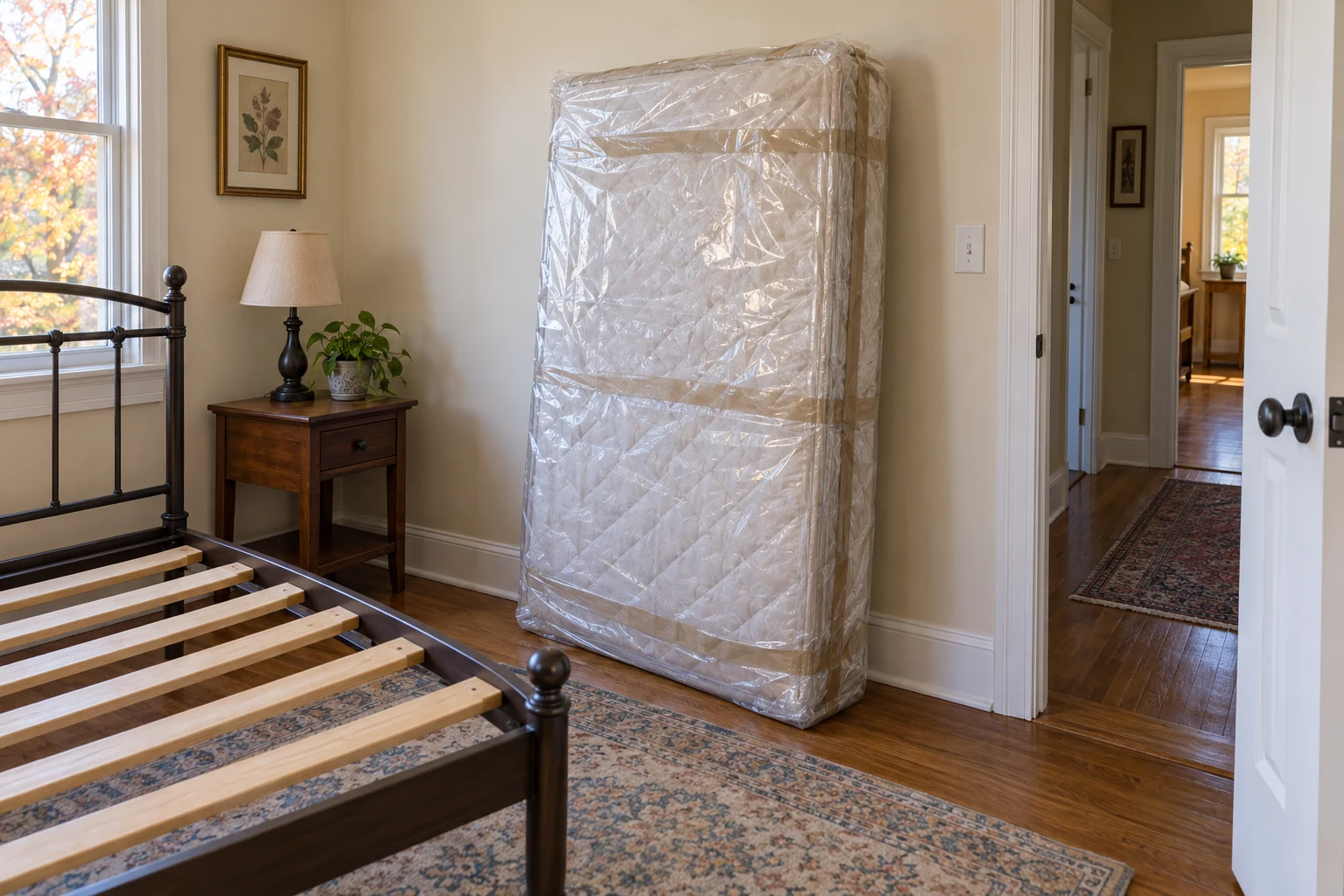
First identify the mattress and any box spring, size, condition and authorized disposal route. For an eligible City bulk booking, Hagerstown requires mattresses wrapped in plastic. Photograph the bedroom doorway, corridor, stair turns and exit; inspect the actual mattress rather than assume that a flexible object can pass every landing. Agree the wrapping and carrying sequence so the piece reaches the confirmed point during the permitted period and the route remains clear.
The City's overview lists bulk collection on the first and third Wednesdays, with paid advance booking. Its payment form currently lists a mattress including box spring at $25, while a sectional and tires have other prices. That is a municipal category price, not a Sterling carrying quote or a guarantee for every mattress condition. Washington County also describes a resident mattress and box-spring recycling option at Forty West for clean items, with its own accepting conditions. Confirm the actual route, eligibility and total before relying on either programme.
Here disposal solves a simple replacement deadline: the old item leaves through an agreed route so the room can receive the new one. Photographing the item does not certify cleanliness, freedom from infestation or an accepted recycling outcome.
Example 2: remaining estate furniture on North Potomac Street
Consider an inherited home on North Potomac Street after relatives have claimed the meaningful pieces and usable furniture has been sold. A small wood sewing cabinet, plain dining chair and narrow sideboard remain unwanted. The family wants the rooms clear; there is no reason to pay for storage just to postpone the same decision.
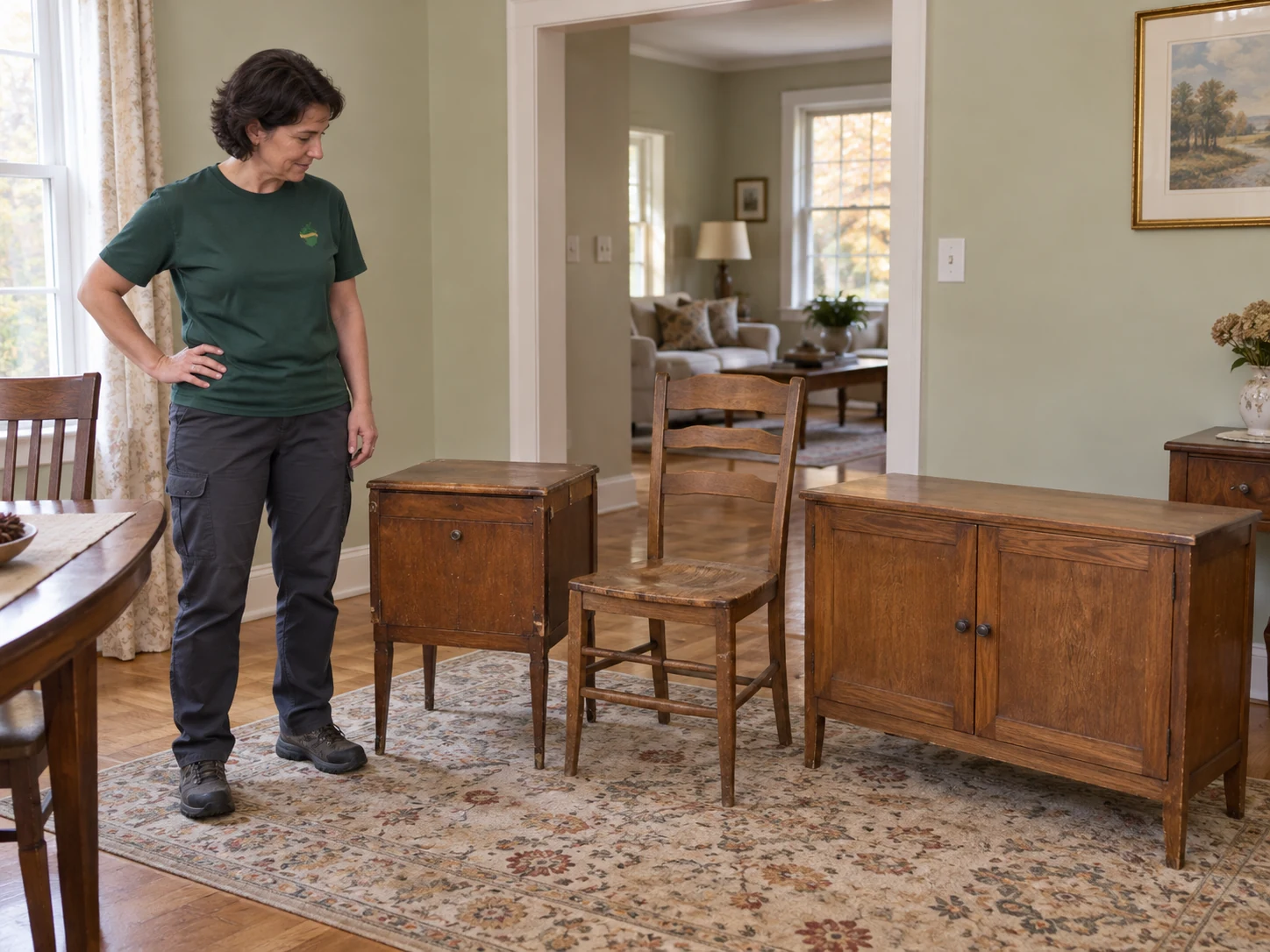
The person with authority over the belongings should approve the remainder, not merely the room it occupies. Check the closed cabinets for documents, valuables, devices and other contents before classifying the furniture. Keep sold pieces, recipient-bound furniture and the approved surplus in separate groups. Obtain access instructions from the person controlling the building, including stairs, shared passages and any permitted working period.
Photograph the complete carrying route and measure the narrowest opening or turn. The illustration shows inventory review, before any dismantling or transport preparation. Actual attachments and removable parts must be checked on site. A cabinet that looks empty is not proof that its contents were inspected, and a residential address does not determine every collection entitlement.
Hagerstown's code distinguishes the municipal residential service from exempt properties and private contracts. It requires the exempt property and its private hauler to be registered with the Department. Establish the actual authorized collecting role and receiving arrangement before agreeing the job; this example does not claim a City designation or registered-hauler status for Sterling. Where the City's bulk option fits, confirm the item categories, booking and permitted presentation with Public Works.
The saving comes from one deliberate clearance plan after ownership and destinations are settled. The same principle can apply when relatives move out or two households separate: approve the particular items, retain what belongs to others and avoid storing furniture that nobody intends to use.
Example 3: eight years of garden belongings on East Franklin Street
Imagine a household on East Franklin Street preparing for Salt Lake City after eight years at the same home. An old manual wheelbarrow, low garden utility cart and faded resin cabinet have remained unused. The receiving property has little garden space, and the household would rather choose suitable equipment after arrival than pay to transport these pieces across the country.
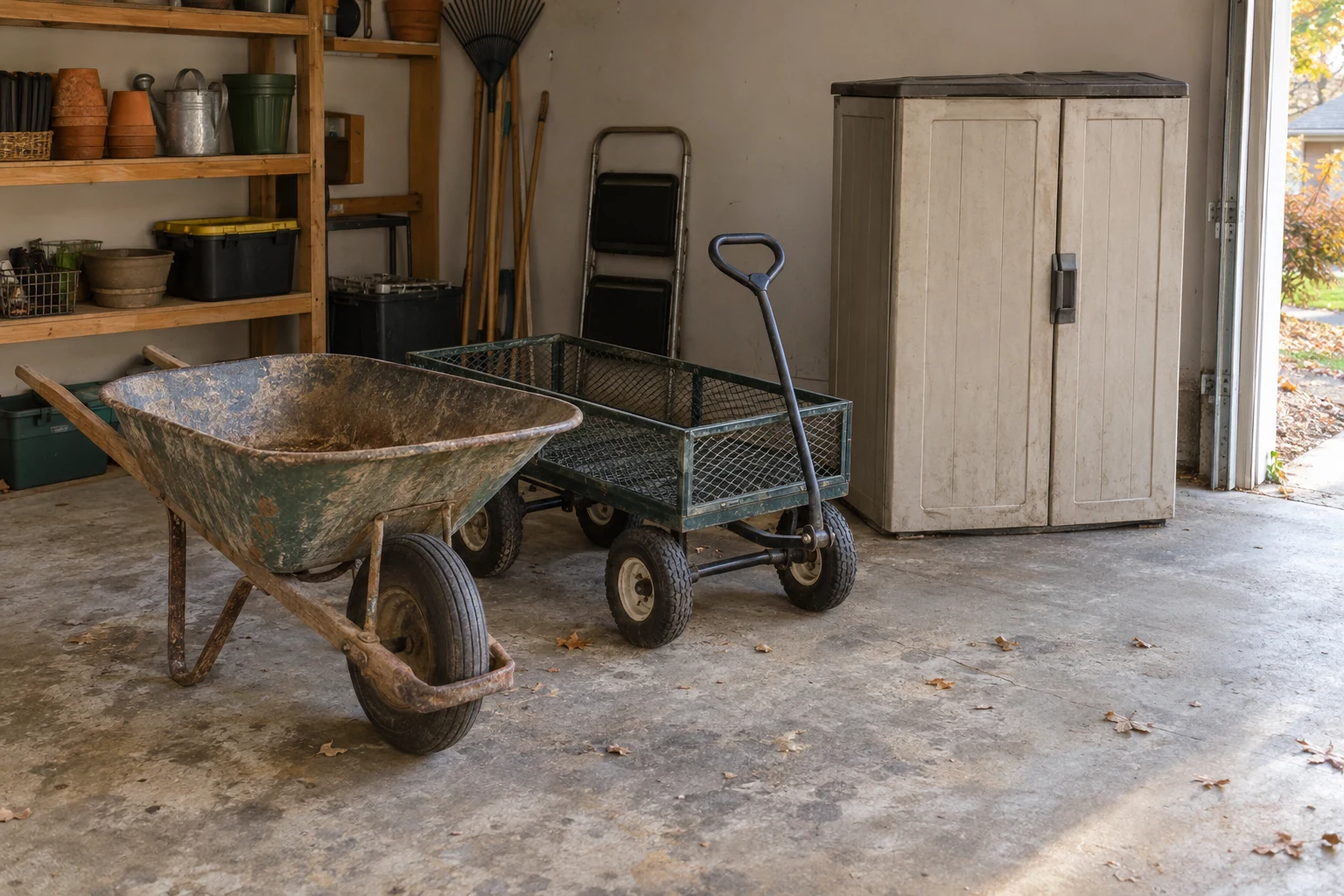
Start this decision before the shipment is priced and packed. Inspect the cabinet's contents, the cart's attachments and the actual carrying route. Separate soil, vegetation, chemicals, fuels, batteries and other restricted contents rather than treat all garden belongings as one waste stream. Portable inventory is different from demolishing a shed, removing a fixed structure or transporting fuel-powered equipment.
For a long-distance move from Hagerstown, shipment space and handling deserve particular attention. Compare the full cost of carrying these objects, any required preparation and destination handling with an approved local removal route and the cost of replacements that fit the new property. No universal price per cubic foot or guaranteed saving follows from the destination alone.
The same move may reveal unused exercise equipment, obsolete televisions, broken appliances or packaging left from an earlier project. Identify each category and its accepting route separately. Neither the garden cart nor the other bulky pieces belong in an ordinary residential recycling bin simply because part of the object is metal or plastic.
Agree whether preparation belongs before moving day, alongside the move or on a separate visit afterward. An earlier clearance can release floor space and simplify the approved inventory. A later visit works only if someone still controls access and the property deadline allows it. Avoid paying to move the surplus and then arranging a second disposal operation at the destination.
Moving-day add-on or a stand-alone visit
An add-on to the move can avoid a separate crew dispatch because the team is already reviewing and handling the property. Extra wrapping, carrying, sorting, materials, time and receiving charges still belong in the estimate. The actual authorized collecting operator, vehicle or receiving trip may be separate; a moving booking does not automatically provide waste-hauling permission.
A stand-alone visit can be useful before a new delivery, after an estate has been sorted, or when the next collection opportunity cannot fit the moving day. It has its own access, dispatch and appointment plan. Compare complete written scopes rather than assume a fixed add-on discount or immediate collection of every item.
Tell us the clear-by date, item quantities, municipality, building rules and full route from the room to the proposed vehicle position. Include the confirmed recipient, municipal booking or appropriate collecting arrangement where applicable. We will review the actual permitted role before agreeing preparation, handling or transport.
Items to identify before an estimate
- Furniture removal. Sofas, armchairs, dressers, tables and bookcases. Identify each piece, its dimensions, the carrying route and whether a recipient or removal has been agreed.
- Mattress disposal. Used mattresses and box springs after a bed replacement or downsizing. Give the size, quantity and condition; disclose pest concerns and confirm covering instructions and an accepting destination.
- Appliance removal. Refrigerators, freezers, washing machines, dryers and microwaves. Give the model and utility preparation. Refrigerant appliances need a suitable receiving chain; appliance removal does not include utility disconnection or installation unless separately confirmed.
- E-waste and electronics. Televisions, monitors, computers and associated covered equipment. Confirm the exact device and approved electronics route. An appliance and a covered electronic device can follow different disposal programs.
- Gym equipment. Treadmills, exercise bikes, weight benches and loose weights. Identify weight, stairs, dismantling, screens and embedded batteries before choosing the carrying and receiving plan.
- Outdoor items. Worn patio furniture, loose play equipment and unwanted garden equipment. Describe fuel, batteries, anchoring and any dismantling. A fixed shed or play structure needs a separate review of permissions and work.
- Yard waste. Branches, brush, leaves and trimmings remaining after a small clearance. Review material, quantity, bundling and the local green-waste route. Soil, stumps, fuel and equipment are different loads; garden work itself is not included automatically.
- Light construction debris. Small quantities of loose drywall offcuts or other identified remnants from a minor repair. Send photographs, material types and quantity for acceptance review. Confirm the receiving route and charges; demolition, unknown or contaminated materials need a different plan.
- Used packaging and floor protection. Flattened cartons, packing paper, plastic film and clean protective sheeting. Separate materials and identify contamination or attached debris. Agree the staged quantity and separately charged collection.
Appliances require an actual preparation plan. Sterling's moving scope does not include utility disconnection or connection. Identify refrigerant-containing units separately and use the appropriate receiving procedure; do not cut refrigerant lines. Identify televisions, computers and batteries individually. A recycling destination is not a data-erasure service or permission to carry every device in an ordinary mixed load.
Other situations where removal can make sense
View 21 removal situations and what to check
Swipe the table sideways to read all columns.
| Situation | What needs to change | What to agree first |
|---|---|---|
| A furniture replacement | A worn armchair, sofa, dresser or old table makes way for a new purchase. The old piece needs to leave before the new room layout can work. | Agree removal versus retailer haul-away, access, recipient acceptance and the delivery deadline. |
| A television or monitor upgrade | A broken or unwanted screen remains after the replacement arrives. The old device needs an approved recycling route and space needs to be cleared. | Identify the model and an accepting electronics program; ordinary trash is not the route. |
| A local move to a smaller home | Parents choose a smaller home after the children leave; spare furniture no longer fits. Avoid carrying and storing pieces that have no role in the receiving home. | Use the new floor plan, a keep list, a removal list and a separately reviewed quote. |
| A household separates | People move to different homes and a shared surplus remains. Unallocated items should have a destination before the rooms are cleared. | Confirm the authorized owner and each person's keep/remove instructions. |
| A temporary family stay ends | A relative returns home and the spare bed, chair or temporary setup is no longer needed. Clear a useful room instead of keeping furniture without a future use. | Verify ownership and which pieces are being returned, retained or removed. |
| Accumulation before a move | After seven to ten years, forgotten garage, attic or basement belongings reappear. Avoid packing and transporting contents that would be discarded after delivery. | Sort early, photograph the group and distinguish ordinary items from special materials. |
| A long-distance keep-or-replace decision | Bulky low-value furniture competes for space with useful, valuable or sentimental possessions. Removing unwanted bulk can avoid shipment, handling and storage costs. | Compare two actual moving quotes with removal and destination replacement costs; no automatic per-cube discount. |
| An estate's remaining contents | After retained and sold pieces leave, ordinary unwanted furniture remains. The property needs to be cleared for its next agreed use. | Identify the authorized representative and preserve items awaiting sale, collection or family decisions. |
| Rental turnover or a possession deadline | A property must be handed over after tenancy, including situations involving lawful eviction processes. Ordinary unwanted contents may prevent the agreed handover. | Confirm lawful possession and authority over the items; removal is not eviction enforcement or legal advice. |
| An office lease ends | Old desks, chairs or shelving are no longer needed in the new office. Release the old premises without moving a surplus into the new workspace. | Separate business waste, IT/data decisions, landlord instructions and the commercial receiving route. |
| A business changes its space | Unused shop fixtures, storage furniture or equipment need to leave. Make the leased space usable for its next purpose. | Confirm the actual equipment, utilities and materials; resident-only programs do not serve business loads. |
| Outdoor items at a home sale | Patio furniture or children's outdoor items are not wanted at the next home. Clear agreed contents before move-out and property handover. | Confirm the sale agreement, ownership, anchoring, item size and ordinary material acceptance. |
| An unwanted shed or play structure | A shed or fixed children's play structure is no longer useful. It may need a separate dismantling and collection plan rather than transport to the new home. | Review foundations, utilities, dismantling, permissions and receiving material limits; structural demolition is not automatically part of ordinary collection. |
| Broken outdoor equipment | An old mower, grill or other outdoor equipment has stopped being useful. Avoid taking a repair or disposal problem to the new property. | Identify fuel, oil, propane and batteries separately; arrange the applicable material route. |
| A broken household appliance | A washer, refrigerator, freezer or other appliance is being replaced. The old appliance takes up receiving or working space. | Review utilities, access and model; refrigerant-containing appliances need an appropriate processor. |
| Unused or broken gym equipment | A treadmill, exercise bike or weight system is not going to the new home. Avoid a difficult carry and shipment for equipment with no planned use. | Identify weight, dismantling, stairs, electronics and any battery before quoting. |
| Packaging after unpacking | Used flattened cartons, paper and plastic wrapping fill the available space. Restore useful rooms and clear the agreed collection area. | Group used flats in large open boxes near a clear exit; separate material types and agree the collection date. |
| Protective materials after renovation | Clean floor-protection paper or plastic film remains after work ends. The finished space needs to be made usable again. | Identify contamination, wet paint or attached debris; protective packaging is not automatically construction or hazardous waste service. |
| A mattress or box spring replacement | An old bed surface remains after replacing a mattress or changing bed size. Clear the receiving room without carrying an unwanted bulky piece to another home. | Confirm size, condition, covering instructions, local collection eligibility and accepting destination. |
| A prepared yard-waste pile | Identified branches, brush, leaves or trimmings remain after a small clearance. Clear agreed outdoor space before a handover or after work is finished. | Confirm quantity, bundle/container rules and actual green-waste acceptance; tree work, soil and stumps are separate. |
| Light debris after a minor repair | A small photographed quantity of identified drywall offcuts or repair remnants remains. Clear the completed room without mixing construction material into ordinary household pickup. | Review the material, quantity, carrying route, charges and accepting destination; unknown or contaminated material needs a different plan. |
Hagerstown collection and Washington County receiving rules
Check the actual municipality, account and building arrangement first. A Hagerstown postal address is not City collection eligibility. City Chapter 117 limits the residential programme and distinguishes private contracts for exempt properties, including registration of the property and private hauler. Do not use a neighboring residence's entitlement or move out-of-City material into City collection. Establish the authorized preparation, collecting role and accepting route before agreeing transport.
The City bulk page describes first- and third-Wednesday collections booked and paid in advance. Confirmed items go by the sidewalk after 4 p.m. the previous evening and by 7 a.m. on the booked day. Keep pedestrian passage usable. The overview and its linked payment form describe different scoop dimensions, and the form gives separate prices for sectionals and tires; ask Public Works at 301-739-8577 extension 178 to confirm the actual pile and charge. The form asks customers to call before paying for pickups over $150. Placing a pile outside is not a booking.
For ordinary carts, use the actual zone calendar, set-out period and placement rules. Chapter 117 requires carts and totes removed by 7 p.m. on collection day and preserves at least 36 inches of sidewalk passage. On October 9, 2026, the City's Columbus Day advisory specifically confirmed no interruption for Monday, October 12. Check later notices for your actual date rather than assume another city's holiday shift.
The Washington County receiving information identifies Forty West Landfill at 12630 Earth Care Road. Its current rate sheet is effective July 1, 2026, even though the PDF filename contains 2025. Scale vehicles must arrive before 3 p.m. and finish unloading by 3:15 p.m.; gates close at 3:30 p.m. Confirm current opening, exact material, source and carrier eligibility before a trip. A facility's posted receiving charge is separate from preparation, dispatch, carrying and transport.
The residential permit rules cover the permit holder's ordinary bagged household waste, not every furniture, renovation or hired business load. Other trash requires the appropriate Forty West scale route and payment; it does not become eligible at a convenience center because a vehicle has a residential sticker. County residents can use the described cash-sales route without a residential permit. Commercial collection licensing is separately listed in the current rate sheet; confirm the actual operator and arrangement rather than borrow a household entitlement.
The County recycling page describes clean resident mattresses and box springs at $5 each with no permit required. That receiving option does not guarantee the condition of a pictured mattress, hired-load eligibility, home pickup or a free moving visit. Refrigerant appliances, electronics, tires and yard debris have their own routes and fees. The County says six or more tires require the specified Maryland temporary hauler licence and that tires from commercial businesses are no longer accepted; do not quote a mixed commercial tire haul as ordinary removal.
For electronics, the City's November 7, 2026 announcement links a one-day resident event at Fairgrounds Park, 10 a.m.–1 p.m. or until trucks fill. Its poster requires City residency proof, excludes commercial bulk amounts and specifically excludes microwaves, dehumidifiers and large appliances, among other materials. This opportunity does not fit every device or deadline. Confirm the exact programme and current accepting conditions before relying on it; the County's regular receiving options are a different arrangement.
Keep yard waste apart from furniture and packaging. The City describes seasonal collection using paper yard bags or identified reusable containers, with size and weight limits; plastic bags and overweight containers are rejected. A wheelbarrow or resin cabinet is not vegetation. For curb recycling, follow the actual accepted materials and cardboard preparation. Film, foam, batteries, electronics and household appliances do not join that stream. Confirm a County route separately: its facilities and permit arrangements differ from the City's bins.
Special materials need a separate plan
Tell us about battery types, fuels, oils, solvents, pesticides, liquid paint, mercury items, cylinders, contaminated debris and unknown containers before any handling is agreed. The City's prohibited-item instructions distinguish single-use household batteries from rechargeable and vehicle batteries, and direct special-material questions to Washington County. They are not a universal promise that every battery is forbidden in ordinary household trash or accepted in a mover's load.
Use the exact product and programme. Maryland's household hazardous-waste guidance distinguishes household exemptions from regulated commercial waste and encourages the appropriate local route. An exemption does not establish acceptance by a collector or authorize mixing special materials with furniture. Confirm a current receiving opportunity with the responsible agency; no unverified future household hazardous-waste event is assumed here.
For a refrigerator or freezer, arrange appropriate utility preparation and the actual receiving procedure before carrying. EPA safe-disposal requirements address refrigerant recovery and verification; ordinary moving work does not promise that operation. Identify post-repair material by what it contains, not only its appearance: clean used floor paper differs from paint-contaminated protection, and a small drywall remainder differs from a demolition project.
Information for the removal estimate
Send an approved item list, quantities, photographs and clear-by date. Include full address and municipality, unit, stairs or elevator, door and turn measurements where needed, vehicle approach, lawful working period and the person who can authorize the decision. Describe recipients, City booking or actual collecting and receiving arrangement, utility preparation and restricted materials. Keep possessions staying, moving or still undecided visibly separate.
We will review what preparation and handling fit the permitted scope, whether they belong alongside the move or in a stand-alone visit, and how the actual collection route affects timing and the estimate. Arrange a fallback while there is still time to use it.
Hagerstown removal and disposal questions
How can disposal planning save money before a Hagerstown move?
It can keep unwanted belongings out of packing, shipment space, storage and later handling. Compare the complete preparation, collection, receiving and replacement costs before agreeing the inventory and moving price. An existing flat rate does not automatically change because one item is removed.
Can an unwanted mattress go beside my ordinary trash cart?
The City excludes mattresses and other bulky or restricted items from ordinary residential collection. Use a confirmed eligible bulk booking or another appropriate receiving route. For City bulk collection, mattresses must be wrapped in plastic; agree the condition, counting, preparation and placement with the actual collector.
When does City bulk collection take place?
The City describes paid advance bookings on the first and third Wednesdays. Put approved items by the sidewalk after 4 p.m. the previous evening and by 7 a.m. on the booked day. Keep passage clear, retain the confirmation and check current instructions and the property's eligibility before setting out material.
Is every bulk item priced at the overview's general $25 amount?
No. The linked payment form lists separate categories, including $25 for a mattress including box spring and $50 for a sectional, with different tire prices. The overview and form also differ on scoop dimensions. Ask Public Works to confirm the pile and charge; the form asks for a call before payments over $150. Municipal charges are separate from Sterling's service estimate.
Does a Hagerstown mailing address prove City collection eligibility?
No. Verify the actual municipality, residential account, building and private-street arrangement. Chapter 117 distinguishes exempt properties and private contracts and requires registration of the exempt property and private hauler. Establish the actual authorized collecting role and accepting route before transport; another property's entitlement is not a substitute.
What must be decided before an inherited-home clearance?
The person authorized over the belongings must approve the particular remainder. Inspect closed cabinets and separate valuables, documents, sold furniture and recipient-bound items from surplus. Confirm building access and the collecting and receiving route. A picture of a closed cabinet does not prove that it is empty.
Why review old garden objects before a long-distance move?
The receiving property may have no use for them. Compare preparation, shipment space and repeated handling with approved local removal and suitable replacement costs at the destination. Inspect contents and attachments separately; portable inventory is different from a fixed shed, demolition or fuel-powered equipment.
Is a moving-day add-on always cheaper than a stand-alone visit?
The crew already at the property may avoid a separate crew dispatch for agreed preparation or handling. Extra labor, materials and time still belong in the estimate, and the actual authorized waste vehicle, collecting operator or receiving trip may be separate. Compare complete plans rather than assume a fixed discount or automatic hauling permission.
Can a residential County permit cover every clearance load?
The County limits the residential trash permit to the holder's ordinary bagged household waste. Other trash and construction debris require the appropriate Forty West scale route and payment. A residential sticker does not make all bulky material eligible at a convenience center or confer commercial collection authority. Confirm the exact source, material, vehicle and operator.
What does the County mattress recycling option require?
The County describes clean Washington County resident mattresses and box springs at Forty West for $5 each, with no permit required. Confirm actual condition, person or carrier eligibility, opening and accepting instructions. A posted receiving price does not guarantee acceptance, home pickup, preparation or transport at that price.
Does the November 7, 2026 event accept every powered appliance?
No. The City's poster describes a City-resident electronics and document-shredding event from 10 a.m. to 1 p.m. or until trucks fill, requiring residency proof. It excludes commercial bulk amounts and items including microwaves, dehumidifiers and large appliances. Confirm the exact device and programme before relying on that date; regular County receiving is a separate route.
Can batteries, paint and refrigerant appliances join ordinary furniture removal?
Identify exact battery and product types, condition and source before any handling is agreed. Local instructions distinguish household single-use batteries from rechargeable and vehicle batteries; collectors exclude specific special materials. Household exemptions do not establish programme acceptance. Refrigerant appliances need an appropriate preparation and receiving procedure, and Sterling does not include utility connection or disconnection in ordinary moving work.
What information should I send for an estimate?
Provide the full address and municipality, approved item list and quantities, clear-by date, photographs of belongings and the complete carrying route, property rules and the authorized contact. Identify utility preparation, special materials, recipients and any confirmed municipal booking or actual collecting and receiving arrangement. Keep retained, moving and undecided contents apart.