
New Jersey · Newark service planning
Long-distance moving from Newark NJ
A Newark departure needs a workable route from the room to the truck before the highway journey begins. Shared stoops, stair turns, a metered curb or a managed elevator can determine the preparation and pickup window. Sterling Oakbridge offers direct and consolidated long-distance household moving throughout the United States and Canada, including longer moves within New Jersey. Send the actual belongings, properties and dates so the work and applicable flat rate can be reviewed together.
Identify the household entrance and the deadline
Provide both actual addresses, unit and floor, and photograph the entrance the crew will use. A rear stair or shared porch can be more important than the front photograph in a listing. State where the vehicle can approach, who permits use of a drive or lot, and whether any part of the carrying route is shared.
Confirm the municipality rather than relying on “Newark area.” East Newark Borough and Jersey City are separate Hudson County municipalities. Nearby Essex County addresses can also have different parking, building and collection arrangements. Newark rules should be applied to a City of Newark address, not to a regional description.
Identify a firm lease, closing or work deadline and offer alternatives where possible. Separate the date you must leave from the date the receiving home can accept furniture. Name the person meeting pickup, the authorized receiver at delivery and the person allowed to approve changes. Someone who unlocks the property may not have that last responsibility.
Confirm the space the truck will use
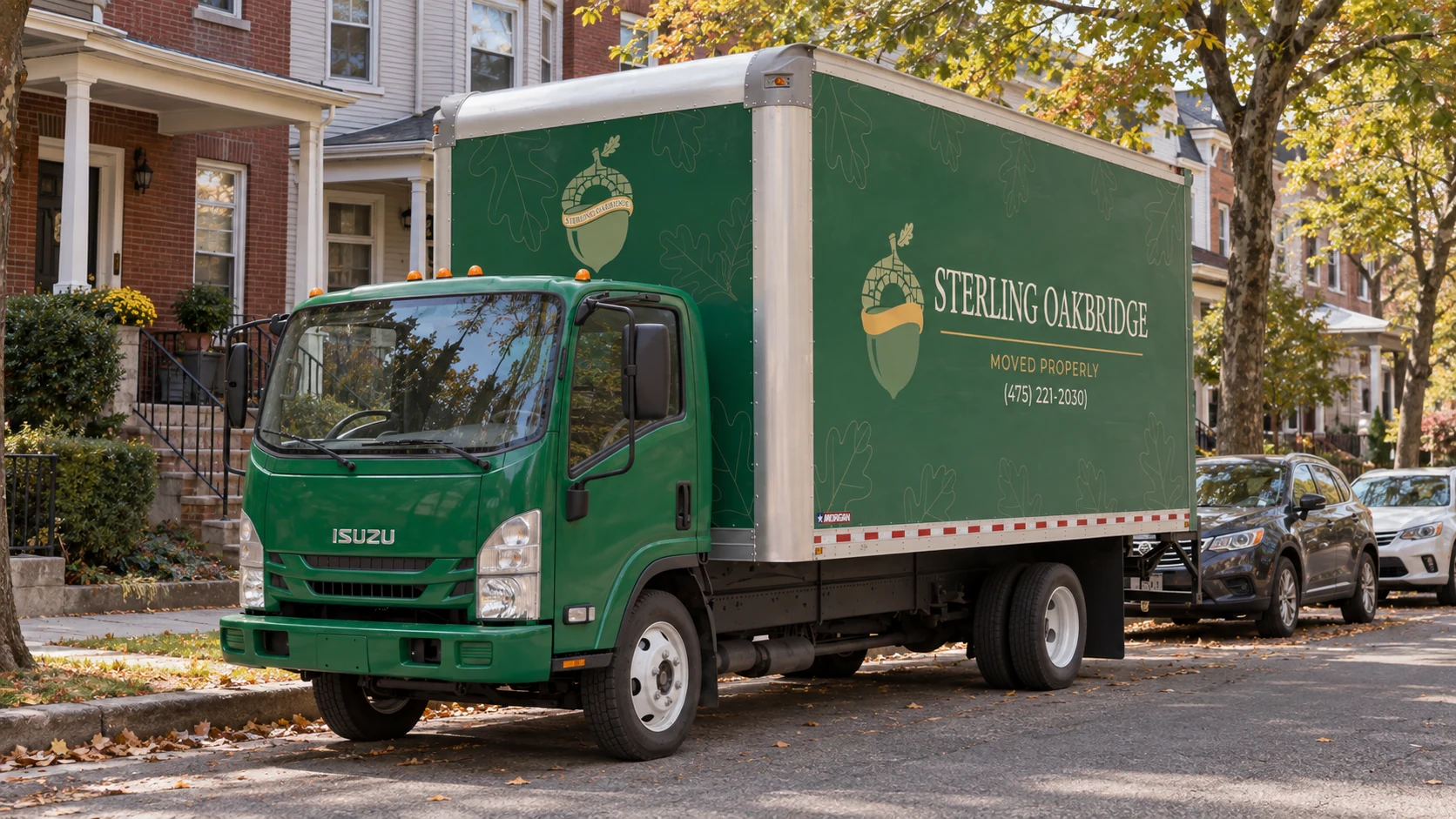
The Newark Parking Authority meter-rental page describes reserving specific meters through its office, including availability and bagging. Ask whether the proposed move, number of spaces and duration fit the arrangement. The dedicated page lists $45 per day per meter, while the Authority FAQ gives another figure; have the office confirm the current charge and conditions for your request.
The City's Street and Sidewalk permit portal lists occupancy applications under Engineering, Traffic and Signals. Ask the responsible office which approval applies to the actual truck position, reserved space or obstruction. Confirm the processing requirements and approved conditions early. An application or a meter-rental request alone does not establish permission for the whole loading operation.
The published Title XXIII traffic code includes a conditional resident-permit-zone exception for specified service and delivery vehicles bearing a commercial business name and address while service is being performed. Confirm its applicability to the actual vehicle and work. It concerns that parking-permit requirement; other restrictions and any occupancy approval still need review.
Send us the confirmed position and complete carry, including room for the required loading equipment and an available pedestrian route. A private driveway, lot or dock needs property permission and a usable vehicle approach. Sterling can coordinate truck-permit arrangements, COIs and elevator scheduling within the agreed scope, while the authority or property provides approval.
Review stairs and managed-building rules before the date
For a walk-up or smaller multifamily house, show the porch steps, shared hall, stair turns and lowest clearances. Measure the largest pieces against that whole route. Identify anything the landlord or neighbors must keep clear. A sofa that fits the room can still need preparation to pass a landing or doorway.
For a tower or managed conversion, obtain the written moving rules: carrying hours, COI wording, elevator reservation, protection and staff contact. Ask whether packing or furniture preparation can occur before the carrying window. Review any property charges and who pays them. Submitted documents and requested appointments still need confirmation.
Collect the receiving building's instructions at the same time. Confirm vehicle approach, entrance, stairs or elevator, intended rooms and authorized receiver. If the building can reserve a delivery appointment only after the transport window is clearer, explain that process. Settle a practical alternative before pickup rather than hoping the two schedules align on the day.
Compare direct and consolidated receiving plans
Direct moving uses a dedicated truck and the same moving crew at pickup and delivery. It can suit a substantial household shipment or a receiving plan needing closer coordination. Confirm the actual pickup, delivery and any storage stages in writing. The survey and planning team has a separate role from the crew performing the move.
Consolidated moving shares transport with compatible shipments. It can suit a smaller selected inventory and flexible receiving dates. Around 300–400 cubic feet is a useful approximate volume to discuss, not a minimum or an automatic booking rule. The actual belongings, packing and available arrangement need review.
Compare the household's needs during the delivery window as well as the quote. A home with flexible receiving access creates a different decision from a building with one short appointment. If the household arrives after furniture could be delivered, arrange an authorized receiver. If keys or permitted access will be unavailable, discuss storage and staged delivery explicitly.
Count time after pickup and loading are complete
The windows below begin after pickup and loading are complete. Packing and preparation before loading sit outside that delivery clock. These are illustrative planning windows; the actual truck route, weather, receiving access and any border arrangements still require review.
| Illustrative destination | Direct planning window | Consolidated window |
|---|---|---|
| Lancaster, Pennsylvania | 1–2 days | Up to 30 days |
| Charleston, South Carolina | 2–3 days | Window agreed individually |
| Kingston, Ontario | 1–2 days | Up to 60 days |
| San Francisco, California | 5–6 days | Up to 90 days |
Suitable nearby domestic consolidated routes can have up to 30 days. Florida can have up to 60 days, Canada up to 60 days and California up to 90 days. Other distant destinations require an individually agreed window. Charleston is in South Carolina and does not inherit Florida's limit. Kingston retains Canada's cross-border conditions even though its road journey is relatively short.
A small nearby domestic direct move may sometimes fit same-day delivery when loading, distance and both properties allow it. It requires review; same-day and next-day service are not automatic promises. Separate the household's travel plans from the agreed furniture window and any carrying appointment at the receiving property.
Example 1: Newark to Lancaster from a shared-entry apartment
Consider a renter leaving a Newark walk-up for a Lancaster, Pennsylvania, apartment. The shipment includes a bed, a small table, seating and personal cartons. This is a hypothetical planning example, not a completed customer job. Start with the selected inventory and the actual stairs at both addresses rather than choosing transport from the city names alone.
At Newark, confirm the permitted truck position and the route through the shared entrance. Ask whether preparation can happen before the main carrying window. Mark belongings staying behind so they are not confused with the shipment or left in the hall. At Lancaster, identify the actual floor, entrance, vehicle approach and authorized receiver.
The illustrative direct window is 1–2 days after loading is complete; suitable nearby consolidated transport can have up to 30 days. A small direct shipment may be reviewed for same-day feasibility when the work and access permit it. A short road reference does not establish that two property windows fit a same-day plan.
Keep what the traveler needs before furniture arrives outside the shipment. At delivery, check inventory and condition and confirm the agreed placement and basic reassembly while the crew is present. If the inventory or access changes, raise it before the affected work so the quote and receiving arrangements can be reviewed.
Prepare the mixed household load before carrying
Identify furniture needing disassembly during the survey. Safely removable long table or desk legs should come off before transport, with their protected common bundle and associated hardware kept with the protected body. Fixed components require their own assessment. Do not assume an assembled piece will fit a narrow stair or be adequately protected in transit.
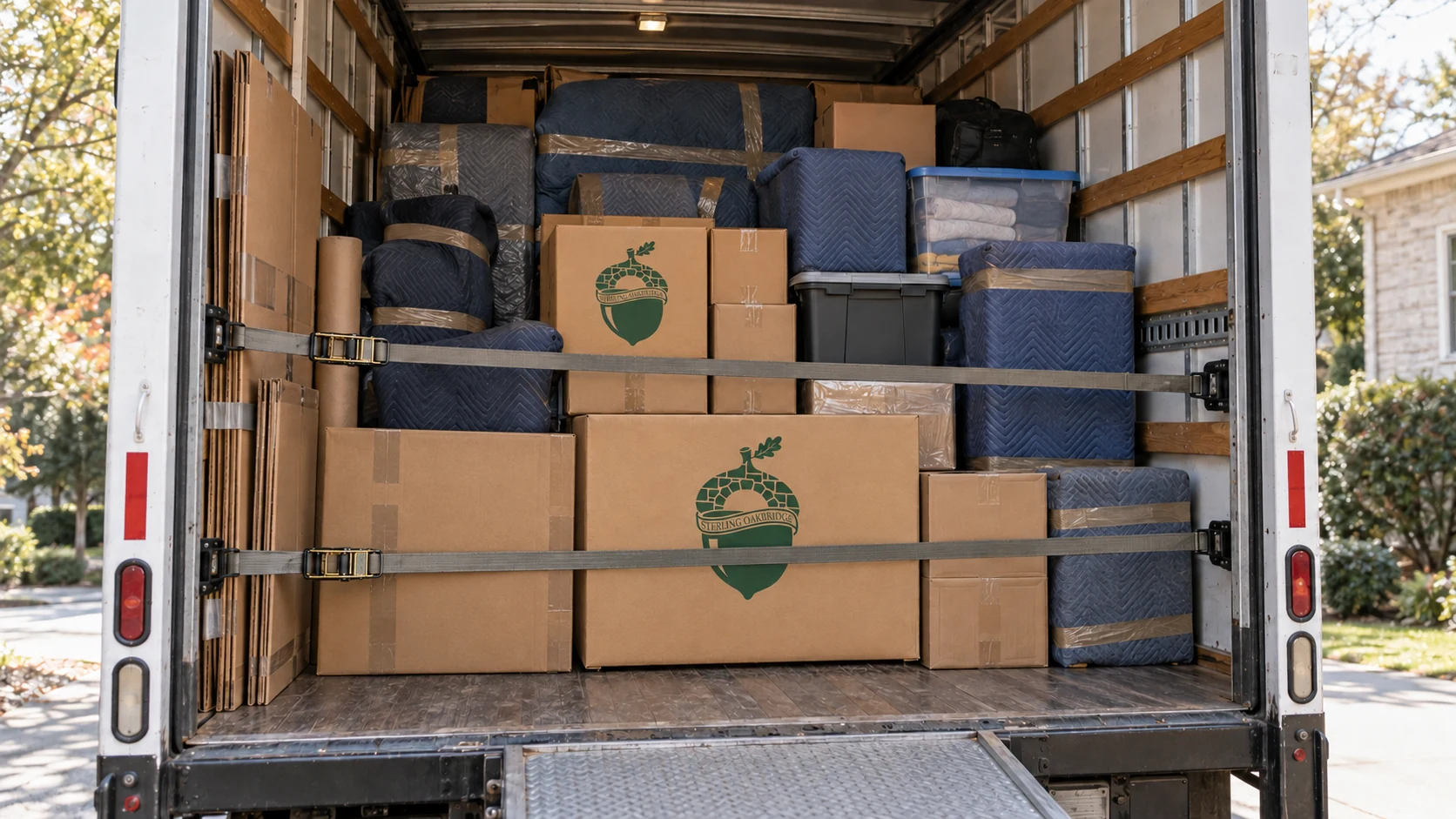
Agree who packs which contents, seal cartons and identify rooms or categories for receiving. Keep heavy contents manageable and have fragile or high-value items reviewed separately. A piano, safe, gym equipment or complex furniture needs assessment of the item and both carrying routes before an individual quote.
Example 2: Newark to Charleston with selected belongings
Imagine a household choosing a smaller shipment for a Charleston, South Carolina, home while some possessions stay with relatives. Establish the selected inventory before comparing transport. Explain what Sterling should pack and what the household will prepare. A partial shipment can still contain fragile contents or furniture needing disassembly.
The illustrative direct window is 2–3 days after loading is complete. A consolidated South Carolina window is agreed individually; Florida's up-to-60-day limit does not automatically apply. Review the receiving flexibility and what the household needs while the shipment is unavailable before making travel commitments dependent on exact furniture arrival.
Provide the actual Charleston address and instructions. Check the entrance, truck approach, stairs or managed access if they apply. This example does not assume a particular neighborhood's conditions. Identify who can receive delivery and when keys become available. A date gap needs an explicit storage and staged-delivery plan.
At Newark, separate selected cartons from belongings staying behind and arrange unwanted items before pickup. Confirm the applicable property collection or paid disposal route for the actual contents. If the inventory grows, update the list and have the affected work reviewed before loading rather than adding tasks while a carrying window is running.

Keep travel and work essentials outside the shipment
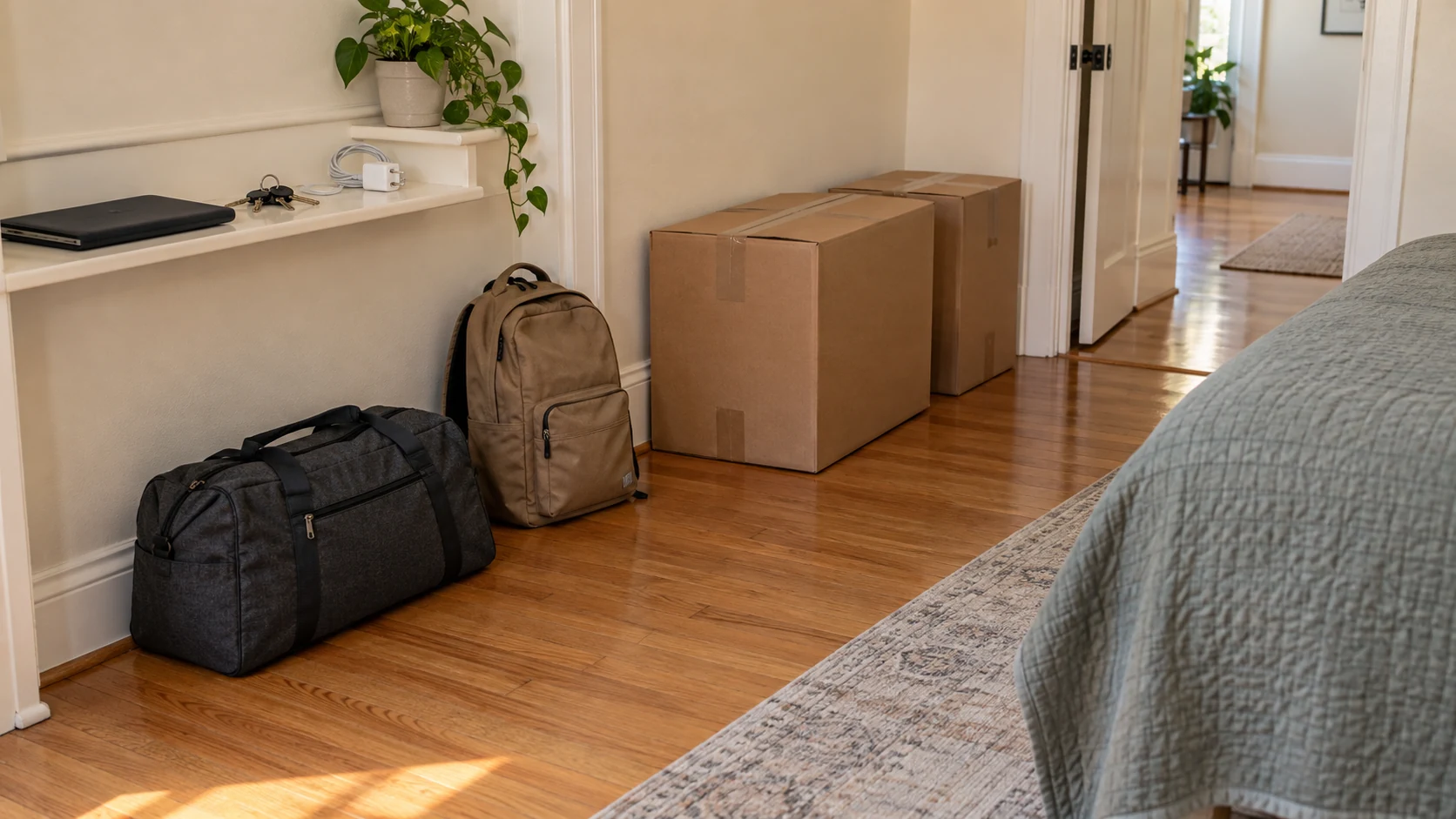
Keep documents, keys, medications, clothing, chargers and immediate essentials with the household. Include children's, pets' or work needs when relevant. If a laptop is needed during the receiving window, keep it available with the traveler rather than inside a shipment carton. A carton marked “open first” remains unavailable while in transit.
Group travel bags separately before loading and keep personal records in a closed folder. Take access photographs without exposing private papers. Maintain reachable contacts at both properties if the household and furniture travel on different schedules. The receiver should have the instructions needed to identify rooms and follow the agreed paperwork.
Example 3: Newark to Kingston with belongings arriving later
Suppose a household member travels to Kingston, Ontario, ahead of the furniture, with another authorized person staying in Newark for pickup. Review the person's circumstances, inventory and Canadian receiving address together. Separate goods accompanying the traveler from belongings arriving later and agree who holds the applicable records.
Use CBSA's moving or returning guidance to review documents and restrictions for the actual person and goods. A household shipment does not establish automatic duty-free eligibility. A familiar border journey does not replace the records, and someone must remain reachable for questions during the process.
The illustrative direct window is 1–2 days after loading is complete. Canada can have a consolidated window of up to 60 days, rather than the nearby domestic 30-day limit. Border arrangements require separate review; no fixed clearance time is promised. Keep essentials available during the actual receiving window.
Confirm the Kingston approach, entrance, carrying route, room placement and authorized receiver before dispatch. If the property requires a carrying appointment, explain how it is confirmed. Raise inventory, address or date changes before the affected work so the transport, records and receiving arrangements can be reviewed together.
Example 4: Newark to San Francisco with a usable work room
Consider a household leaving Newark for a San Francisco, California, home while one person arrives early to make it usable. The shipment includes a writing desk, seating and packed household contents. Identify when keys, utilities and permitted receiving access become available. This is an illustrative planning case, not an actual customer property.
The direct example uses a 5–6-day planning window after loading is complete. Direct uses a dedicated truck and the same moving crew. A consolidated California plan can have up to 90 days. Compare those arrangements against temporary sleeping, daily and work needs; the household should not rely on shipment contents being available at the start of a job.
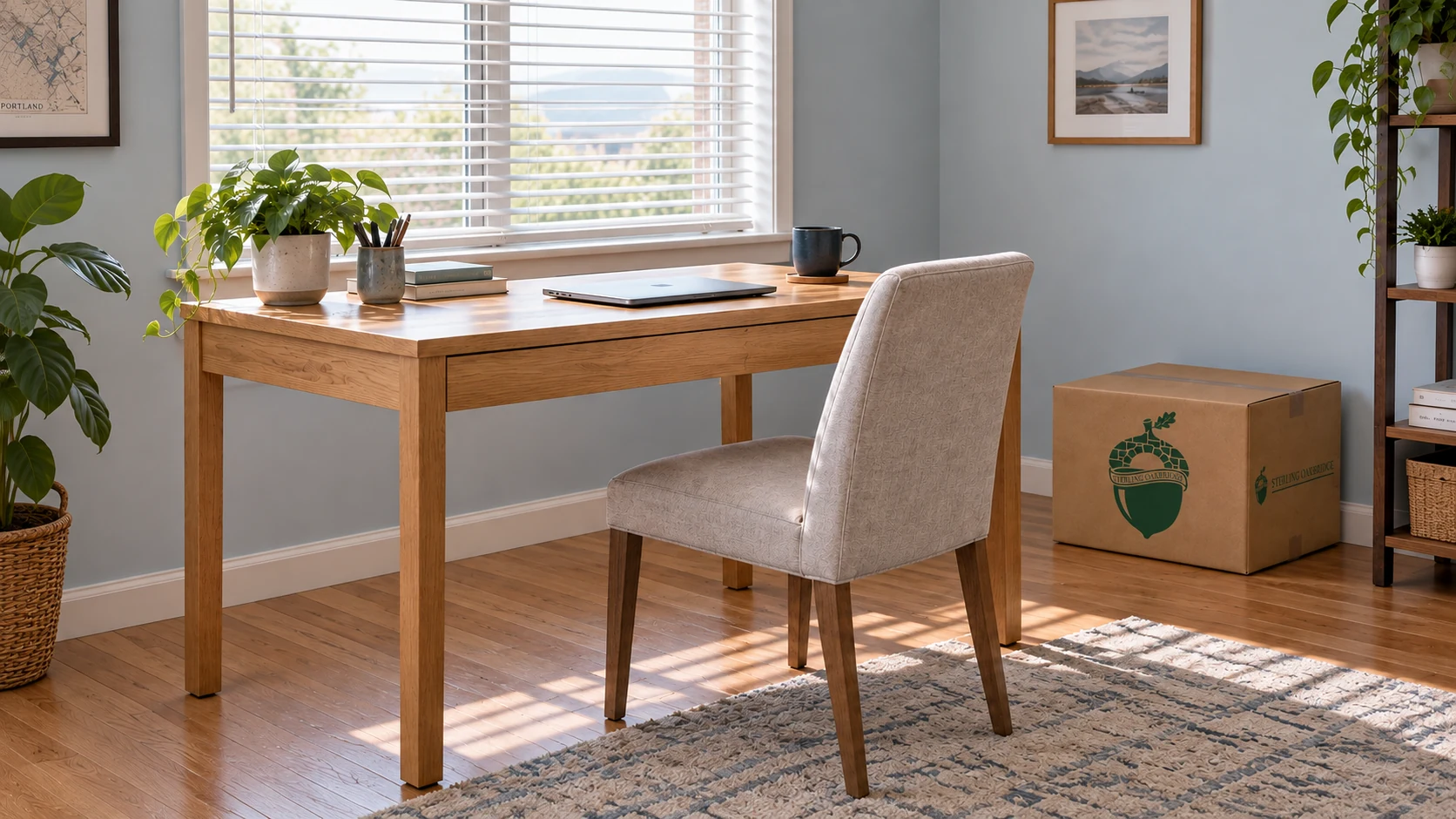
Send photographs of the actual vehicle approach, doorway, stairs or elevator, and route to the intended rooms. A driveway is useful only when the truck can reach and use it. Review removal of safely detachable desk legs before transport and the basic reassembly needed at delivery. Complex pieces receive individual assessment.
At receiving, the authorized person checks inventory and condition and follows the agreed paperwork. Once furniture is unwrapped and reassembled, confirm placement while the crew is present. Include optional box unpacking or packaging removal in the scope if wanted, and keep the immediate work essentials with the traveler.
Settle unwanted items and a winter alternative early
Use Newark's pickup information and the property's own instructions to arrange unwanted items before moving day. Ask about the actual materials, eligibility, appointments and current facility conditions. In a larger managed building, the landlord's arrangement may be the relevant route. Do not treat a curb pile as a confirmed collection or assume every item is accepted.
For winter dates, review the published traffic code and current City announcements for the actual truck position. Snow-covered roadway restrictions and posted alternate-side rules can affect access; a requested reservation does not remove them. Assign clearing of steps and the carrying route before arrival, and discuss an alternative position or date when conditions prevent safe permitted access.
If possession dates leave a gap, identify the contents and anything needed during storage. Agree storage and staged delivery explicitly rather than assuming free storage or a truck waiting for keys. The Newark guide's parking section connects local arrangements with the broader arrival plan.
Keep the flat rate attached to the same work
An agreed long-distance flat rate stays the same when the shipment and service scope stay the same, even if travel or delivery takes longer. Added belongings, changed access, extra packing, storage or another requested task can change scope. Have changes reviewed and recorded before the affected work begins.
Basic moving blankets, shrink wrap and tape have no separate materials charge. Supplied boxes are charged separately. Basic furniture disassembly and reassembly belong in moving labor; complex work receives individual assessment. Furniture unwrapping is part of delivery. Box-content unpacking is optional work charged for time, and packaging or waste removal is charged separately.
Discuss applicable valuation choices and written terms before moving day. FMCSA's Protect Your Move resources help with interstate carrier and document checks. Valuation concerns mover liability and differs from separate insurance. Longer moves staying within New Jersey and Canadian moves need their own applicable terms reviewed.
Pickup around Newark and destinations to explore
We can review long-distance pickup in the City of Newark and nearby Essex County addresses. Downtown, the Ironbound, Forest Hill, Lincoln Park, Weequahic, University Heights, James Street Commons and Vailsburg are useful City examples. Confirm the actual municipality, entrance and carrying route. East Newark Borough and Jersey City are separate Hudson County municipalities; Newark rules do not apply there. Neighboring municipalities also have their own parking and property arrangements.
Explore long-distance destinations from Newark
These destinations illustrate shipments from Newark, New Jersey. Sterling serves routes throughout the United States and Canada. Confirm the origin municipality, inventory, vehicle approach and receiving dates; these examples do not rank bookings or establish appointments.
Northeast
- Buffalo, New York
- Syracuse, New York
- Boston, Massachusetts
- Philadelphia, Pennsylvania
- Washington, DC
- Baltimore, Maryland
- New York City, New York
- Lancaster, Pennsylvania
Southeast and Florida
- Charlotte, North Carolina
- Raleigh, North Carolina
- Atlanta, Georgia
- Jacksonville, Florida
- Tampa, Florida
- Miami, Florida
- Charleston, South Carolina
Midwest and Texas
- Chicago, Illinois
- Dallas, Texas
- Houston, Texas
- Austin, Texas
Mountain West and Southwest
- Denver, Colorado
- Phoenix, Arizona
- Las Vegas, Nevada
- Salt Lake City, Utah
West Coast
- San Diego, California
- San Francisco, California
- Portland, Oregon
- Seattle, Washington
Canada
- Toronto, Ontario
- London, Ontario
- Montreal, Quebec
- Vancouver, British Columbia
- Kingston, Ontario
Send the details needed for the review
Send both actual addresses, the inventory or room-by-room outline, dates and alternatives, access photographs, building instructions, packing responsibilities and special items. Identify firm deadlines, the authorized receiver and any gap requiring storage. Our planning team recommends the review needed to define the work; you do not have to choose a survey method yourself.
A clear list can suit a straightforward small shipment. A full household, restricted access or specialist pieces may need a video survey or visit. Use the Newark relocation guide for housing and arrival decisions and the city moving page for other services.
Long-distance moving questions
Where can you review pickup around Newark?
We can review long-distance pickup in the City of Newark and nearby Essex County addresses. Downtown, the Ironbound, Forest Hill, Lincoln Park, Weequahic, University Heights, James Street Commons and Vailsburg are useful City examples. Confirm the actual municipality, entrance and carrying route. East Newark Borough and Jersey City are separate Hudson County municipalities; Newark rules do not apply there. Neighboring municipalities also have their own parking and property arrangements.
Do Newark rules also apply in East Newark or Jersey City?
No. Newark is a City in Essex County; East Newark Borough and Jersey City are separate Hudson County municipalities. A regional or postal description does not establish the correct jurisdiction. Confirm the actual address, entrance and local arrangements before relying on Newark instructions.
Does meter rental confirm the whole loading operation?
No. Ask the Parking Authority about the actual spaces, move, duration and current charge; its rental page and FAQ give different figures. Confirm any separate City occupancy requirements and building access. A request or submitted application alone is not approval.
Does the contractor exception automatically cover every moving truck?
No. The published traffic code sets marking and active-service conditions for specified service/delivery vehicles in permit zones. Confirm applicability to the actual vehicle and work with the City. It does not replace other parking restrictions, occupancy approvals or building rules.
Can winter conditions change a reserved pickup position?
Yes. Review snow-covered roadway and posted alternate-side rules together with current City instructions for the actual position. Assign clearing of steps and the carry. Contact us early if conditions threaten safe permitted access so another position or date can be reviewed.
Does direct moving use the same crew at both ends?
Yes. Direct uses a dedicated truck and the same moving crew at pickup and delivery. The survey and planning team has a separate role. Confirm receiving access, the delivery window and any storage stage in the agreed plan.
Can consolidated transport suit a smaller inventory?
Shared consolidated transport can suit smaller selected belongings and flexible receiving dates. Around 300–400 cubic feet is a useful approximate example, not a minimum. Send the actual furniture and cartons so volume, preparation and the available arrangement can be reviewed.
When do delivery windows begin?
After pickup and loading are complete. Packing and preparation before loading are outside that clock. The table gives illustrative planning windows; actual truck routing, property access and any border or storage arrangements still require review.
Can a Lancaster direct move fit the same day?
A suitable small nearby domestic direct shipment may sometimes fit same-day delivery when loading and both properties permit it, but it requires review. The Lancaster example uses 1–2 days after loading is complete; suitable consolidated transport can have up to 30 days.
Does Charleston use the Florida consolidated limit?
No. Charleston is in South Carolina and its consolidated window is agreed individually. Florida’s up-to-60-day limit does not automatically apply. The Charleston example uses a separate illustrative direct window of 2–3 days after loading is complete.
Does Kingston use the nearby domestic 30-day window?
No. Canada can have consolidated delivery up to 60 days even for a relatively short road journey. The Kingston direct example uses 1–2 days after loading is complete. Review applicable records and receiving access; no fixed border-processing time or automatic duty-free eligibility is promised.
What windows are illustrated for San Francisco?
The direct example uses 5–6 days after loading is complete. Consolidated California delivery can have up to 90 days. Review the actual receiving address and authorized person, and arrange essentials needed while the shipment is unavailable. These windows are not guaranteed exact appointments.
Should removable long table legs stay attached for transit?
Safely removable long table or desk legs should come off before transport. Keep the protected common bundle and hardware with the protected body. Fixed components need assessment. Ordinary installed legs on fully unwrapped furniture after reassembly represent a different stage.
Does slower travel change the agreed flat rate?
No, while the shipment and service scope remain the same. Added belongings, changed access, packing, storage or another requested task can change scope. Have changes reviewed and recorded before the affected work begins.
How are boxes and basic protection charged?
Supplied boxes are charged separately. Basic moving blankets, shrink wrap and tape have no separate materials charge. Basic furniture disassembly and reassembly belong in moving labor; complex furniture and specialist work receive individual assessment and quotes.
Does delivery include unpacking cartons and removing packaging?
Furniture unwrapping is part of delivery. Box-content unpacking is optional work charged for time, and packaging or waste removal is charged separately. Include the tasks wanted in the reviewed scope before receiving day.
Can storage bridge a gap between possession dates?
Yes. Explain the pickup deadline, expected key availability, contents and anything needed during storage. Agree storage and staged delivery explicitly with the actual receiving plan. Do not assume free storage or a truck waiting for the closing.
Can unwanted items be left as a curb pile?
Arrange the actual City or property collection, authorized drop-off or paid disposal route before moving day. Confirm accepted materials, eligibility, appointment and current conditions for your items. A curb pile is not a confirmed booking, and disposal is separate from the moving scope.
What should I send without selecting a survey method myself?
Send both addresses, inventory, dates and alternatives, access photographs, building rules, packing responsibilities and special pieces. Identify firm deadlines and the receiver. Our planning team recommends the appropriate list review, video survey or visit. Discuss applicable valuation and written terms before moving day.