
West Virginia · Wheeling service planning
Art and antiques moving in Wheeling, WV
A short journey can still involve several risky handling moments: taking a piece down, carrying it through the home, loading, unloading and placing it again. Sterling Oakbridge provides assessed art and antiques moving in Wheeling, with protection and any required custom crating agreed for the object and route.
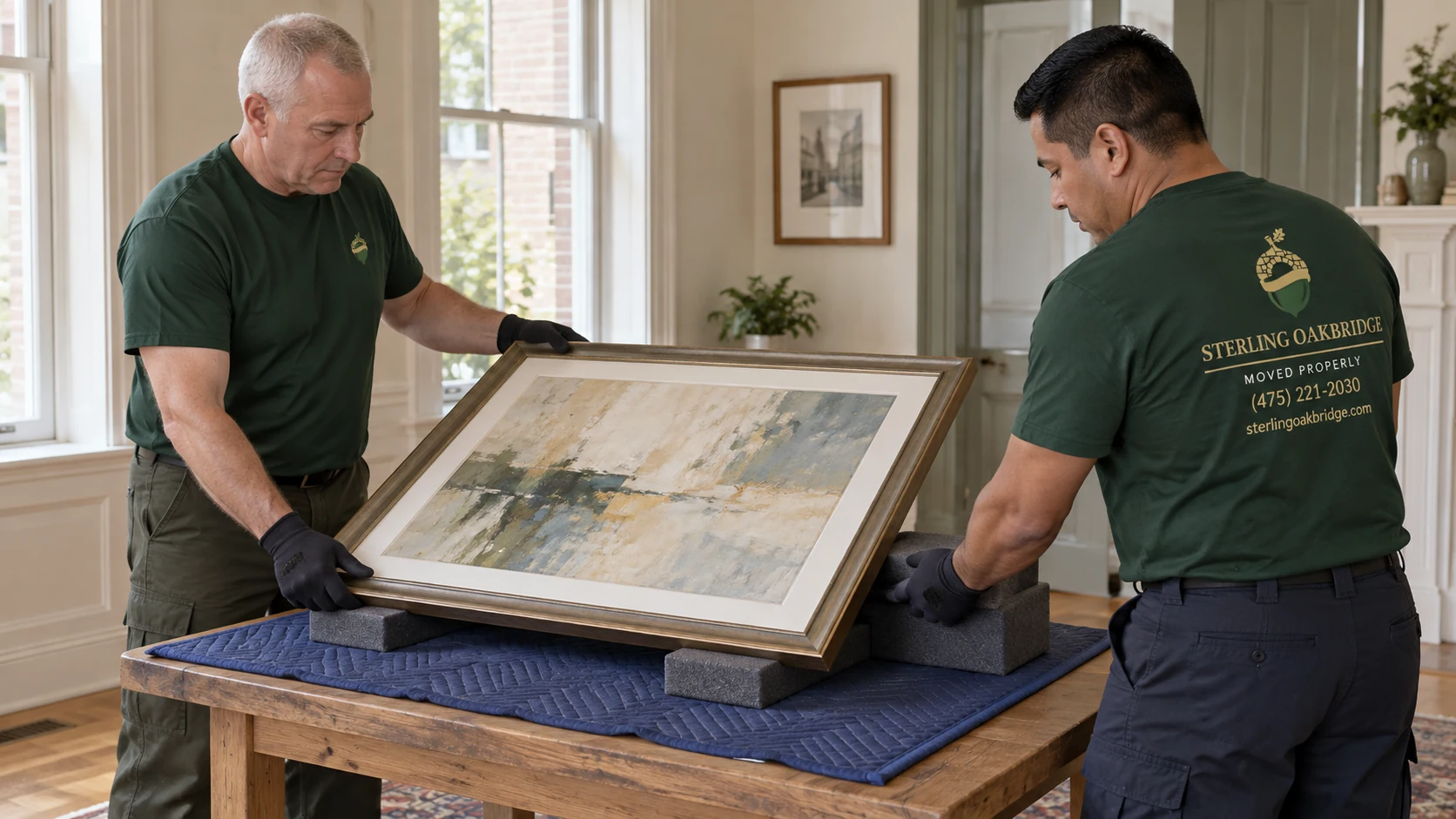
Tell us what the piece is made of, its condition and where it needs to go.
The object decides its protection
A framed work behind glass, an unframed textured canvas, a carved mirror and an antique desk do not need the same contact points or packing method. Send dimensions, photographs of the front and back, details of projections and information about existing damage or repairs. Identify loose glass, unstable frame joints, flaking finishes or parts that should not carry weight.
CCI's handling guidance emphasizes preparation of the route and receiving support, appropriate help for the work's size, and avoiding pressure on painted surfaces. A fragile or unstable object may need a conservator's assessment before handling. That is a useful technical distinction; it is not a claim that every household item requires museum treatment. CCI Basic Handling of Paintings.
We review ordinary protective packing, more specific support and custom crating according to the actual piece and agreed journey. Tell us about relevant collection or lender requirements. A generic cardboard corner cannot establish that every surface and movement risk has been addressed.
A local art purchase still needs a receiving plan
Wheeling Heritage operates an Artisan Center shop supporting local and regional artists. If you buy artwork locally, ask the actual seller about the piece, its finish or medium, existing packaging and release arrangements. Mentioning the shop establishes a local purchase context; we do not imply a relationship or a completed Sterling delivery for it. Wheeling Heritage arts and shop information.
For a hypothetical purchase going into a restored co-op, check common doors, turns and permitted moving arrangements. Have a clear padded receiving surface ready while final placement is decided. Passing an object through several hands because no one has prepared a place to set it down adds handling without adding value.
Soft packing or a purpose-made crate?
The choice depends on construction, condition, contact surfaces, journey, handling and any environmental requirements. A protective structure can hold wrapping away from a sensitive face; a rigid crate can provide defined support and restraint. Neither label by itself describes a complete plan.
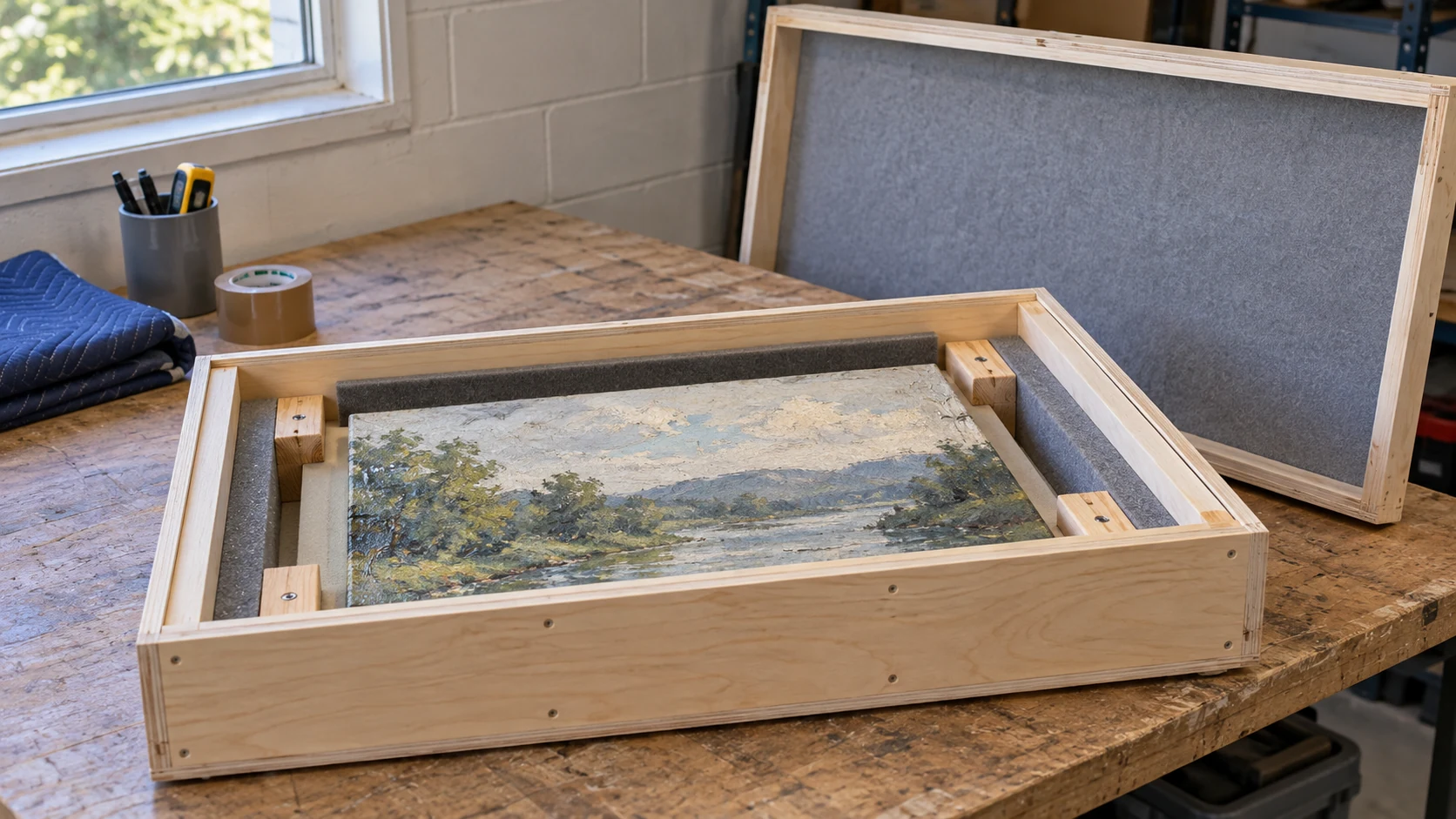
Discuss crate dimensions, access at both ends, unpacking and what happens to the packaging afterward. A crate can be larger than the original object and change the carrying route. Avoid arranging packaging first and discovering later that the protected piece cannot make the final turn.
For a long-distance shipment or storage period, state any temperature or humidity requirements and confirm the actual transport and holding arrangements. Do not assume a standard vehicle or storage space meets them. Specialist environmental provision needs to be part of the agreed scope.
Antique furniture has its own weak points
A valuable writing desk may have delicate feet, a loose interior, a heavy top or repairs that are not visible from the front. Empty it as agreed and identify the safe supporting structure before protection covers it. Blankets are protective layers; adhesive should not be applied casually to a finished surface or fragile frame.
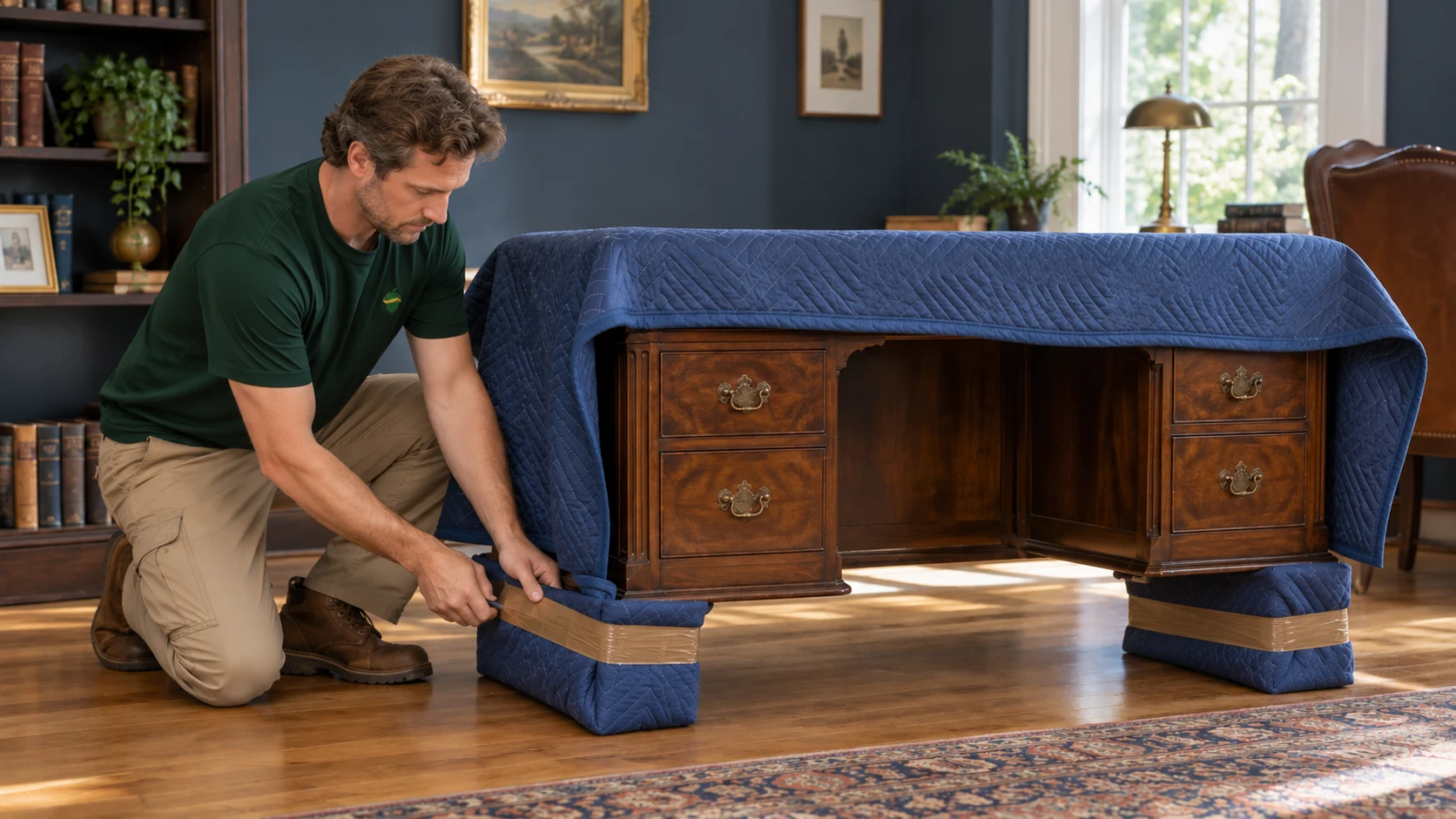
For an estate or auction purchase, the seller's collection deadline and release process also matter. Use auction and estate pickup to plan that part of the job. Removal of suitable components and their later assembly should be arranged for the actual construction, not assumed for every antique.
Reduce handling where the dates allow it
Direct delivery to a suitable prepared destination can avoid extra unloading and reloading. If renovation prevents that, plan one appropriate holding arrangement and a clear return instruction. Every additional trip or handling stage has costs; sensitive objects also require continuity of protection through those stages.
The quotation is individual. It reflects the object, condition, route, preparation, crew, packaging or crating, storage if needed and agreed finishing work. Keep photographs and the scope available when discussing any collection, insurance or lender requirements with the party responsible for them.
Will every painting need a wooden crate?
No universal packaging rule applies. Send the actual medium, dimensions, condition and journey so protection can be assessed.
Can you move a piece that already has damage?
Disclose the condition before booking. Some unstable or fragile objects require specialist advice or stabilization before physical handling can be planned.
Can you hang the piece afterward?
Discuss any installation explicitly. Placement, wall construction, appropriate fixings and specialist installation are separate considerations from transport.
Prepared by Sterling Oakbridge. Local and product sources are linked beside the relevant guidance; recheck current requirements when arranging the work. Scenarios and generated photographs illustrate planning situations and are not records of completed customer jobs.