West Virginia / City relocation guide

Moving to Wheeling

Moving to Wheeling means comparing riverfront grids, older houses and the neighborhoods along the creek and National Road. Match the actual home to daily trips and access, then arrange schools, utility handoff, collection and the lawful vehicle position before the move.

View from a raised wooden porch across a sidewalk toward older houses and a resident walking a dog
Test the route between the home and everyday destinations.

01 /

Begin with the address, the household and the handoff

Make the first decision at the scale of the actual home. Record its municipality, entrance, parking arrangement and the destinations the household must reach regularly. A neighborhood description can help narrow the search, but it cannot establish the school assignment, accessible route or vehicle space at a particular building.

Build a short comparison using the same questions for each property: usable space, recurring housing costs, stairs and slopes, parking, daily travel, school arrangements and the timing of possession. Visit at the hour you would normally leave or return. If a service depends on a booking, test how you would arrange both directions and what happens when the schedule changes.

02 /

Distinguish the city, the county and the neighborhood

This guide concerns Wheeling, West Virginia, on the Ohio River. A postal address, municipal boundary, neighborhood label and school attendance area are different things. Confirm the property and street jurisdiction before applying City procedures or selecting a school district.

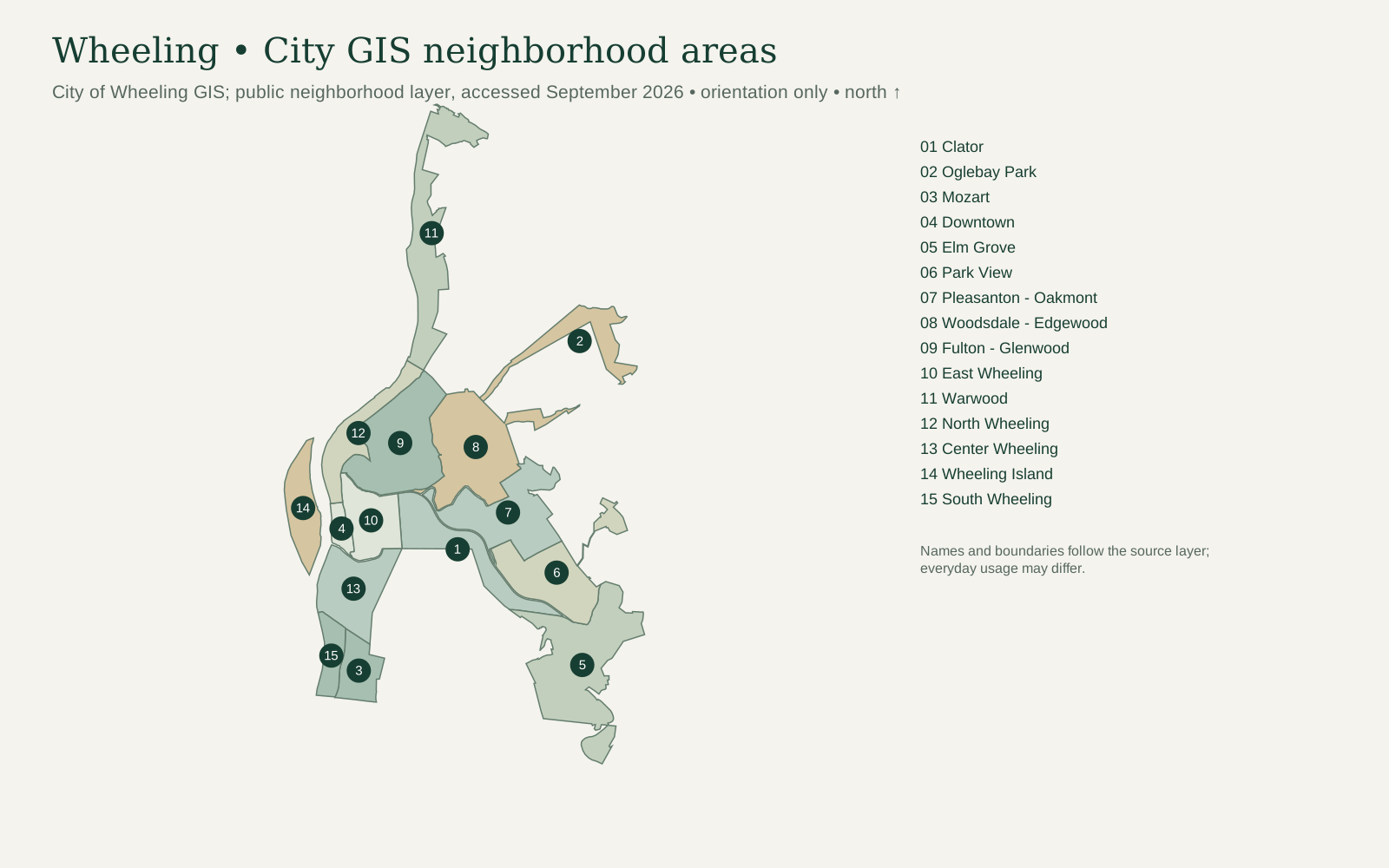
The City GIS viewer includes neighborhood, city-boundary, transit, sanitation and flood-related layers. Our orientation map redraws the public neighborhood geometry: fifteen named areas with a numbered key. It is an orientation aid, not a parcel survey, current flood determination, school-placement decision or approved truck route.

The 2014 City plan’s neighborhood map also shows the Ohio–Marshall county boundary along the southern part of the city setting. That older map is useful geographic evidence; its development proposals and land-use inventory are not presented here as current conditions. For a property near that boundary, resolve the county and responsible school district explicitly.

Wheeling Island is part of the Wheeling setting in West Virginia even though the river separates it from Downtown. Bridgeport across the back channel is in Ohio. Bethlehem, Benwood and Triadelphia are separate municipalities; a useful regional bus connection does not extend Wheeling's permits, waste service or school assignment into them.

Use the six comparisons below to identify questions for a visit. Their historic-district records describe development and building form at the time of nomination, not present vacancies, building condition or the boundaries of every informal neighborhood. Compare the actual doorstep-to-destination route, including slopes, crossings and the final return trip.

Wheeling City GIS map showing fifteen numbered neighborhood areas with a matching key, north upward
City of Wheeling public GIS neighborhood geometry. Historic districts, school areas, parcels and truck routes are separate. Display spelling corrected to Edgewood; source geometry preserved. Open full-size map.

03 /

Find the area that fits your routine

These six comparisons use distinct historic-district records hosted by the City. They explain building form and location at the time of nomination; check present condition, availability and the actual receiving route separately. Historic-district boundaries and City GIS neighborhood polygons are different layers.

Downtown

The historic-district description identifies a dense commercial core between Wheeling Creek and the Ohio River, with brick and stone buildings and upper floors over shops.

Downtown Wheeling Historic District nomination, description ↗
Housing & setting
Inspect the actual upper-floor or reused space, shared halls and authorized delivery entrance.
Daily travel
Test the complete trip to the Intermodal Center or the relevant Downtown stop.
Before choosing
Resolve meter rental, any storefront notice and the building’s receiving window.

North Wheeling

The nomination describes a residential district north of the I-70 overpass on the bluff east of the Ohio River, with varied nineteenth-century brick houses.

North Wheeling Historic District nomination, description ↗
Housing & setting
Measure the actual porch, entry and interior turn; a historic house type does not establish current access.
Daily travel
Walk the connection to the desired stop and daily destinations, including the grade.
Before choosing
Distinguish the historic district from the larger GIS neighborhood and inspect every shared passage.

East Wheeling

The 1998–1999 record describes a residential grid east of Downtown, with Victorian buildings and a steep incline along 12th Street.

East Wheeling Historic District nomination, 1998–1999 ↗
Housing & setting
Compare the specific entrance, stairs and receiving room rather than assigning one layout to the whole area.
Daily travel
Test the actual east–west walk and return instead of assuming a flat Downtown connection.
Before choosing
Document the vehicle position, slope and permissible route to the chosen door.

South Wheeling

The 2019 nomination describes a flatter river terrace with a rectangular street grid, alleys, close-set houses and a mix of row, detached and multi-unit forms.

South Wheeling Historic District nomination, 2019 ↗
Housing & setting
Check whether the usable entrance is on the street or another permitted side, and who controls an alley or rear approach.
Daily travel
Compare the actual stop and river-trail connection with the household’s regular travel.
Before choosing
An alley on a map is not loading permission; confirm clearance, ownership and waste placement.

Wheeling Island

The nomination describes irregular grids north and south of Zane Street and varied older houses, many of two stories on raised foundations.

Wheeling Island Historic District nomination, description ↗
Housing & setting
Measure outside steps and the route above the foundation, as well as any basement or side entrance.
Daily travel
Use the Island route’s correct time table and test the full connection to Downtown.
Before choosing
Review the address-specific flood and access questions; the neighborhood name does not determine a building’s risk.

Woodsdale / Edgewood

The 1995 record describes residential areas bordering National Road, houses set back from tree-lined streets, and a grid softened by curved streets and hillside edges.

Woodsdale–Edgewood neighborhood nomination, 1995 ↗
Housing & setting
Compare the driveway, setback and approach to the actual house; additional yard space can mean a longer carry.
Daily travel
Check the precise National Road or nearby stop and the timing of any route extension.
Before choosing
Separate the broad neighborhood label from the two-part historic district and verify current property conditions.

04 /

Compare the home and its full recurring costs

The ACS 2024 five-year housing estimates cover the 2020–2024 survey period for Wheeling city. They describe the housing stock and occupied households, with sampling uncertainty. They are not today's asking rents, available listings, inspection results or individual sale values.

MeasureWheeling estimateHow to use it
Occupied housing units12,614Basis for tenure shares
Owner / renter share59.8% / 40.2%Compare both arrangements
Median gross rent$794Historical survey measure
Median owner-occupied value$146,500Survey estimate, not a price quotation
Single-unit detached share62.0%Share of all housing units
Units in two-to-four-unit buildings12.4%Ask about shared access and services
Built before 194041.2%Inspect alterations and the receiving route

Structure and age percentages use all 14,569 housing units, while the tenure percentages use occupied units. A citywide median cannot establish the total cost of a particular home. Compare rent or mortgage costs with utility responsibility, deposits, parking, maintenance and any building access charges.

In an older house, measure the entry, stair turn and landing before assuming that an upstairs room can receive its intended furniture. A raised foundation adds an outside route as well as an inside one. Check basement access, dry storage, working doors, handrails and the ownership of a side passage. Describe any unresolved repair or clearance issue before scheduling delivery.

For a shared building, ask which unit has the service account, where refuse is stored, whether parking is assigned and who authorizes a delivery. Confirm the exact receiving door and any elevator or shared-stair conditions. An attractive frontage does not establish a usable loading arrangement behind the building.

For a river or creek-side property, use the City's planning and flood-map resources for the appropriate address-specific inquiry. Ask about the actual building and access route, prior water issues and required professional review. Do not convert a neighborhood name or an illustrative map into a statement that a particular home is flood-free.

Open Sterling Oakbridge dish carton with packing paper beside a built-in china cabinet and a round dining table
Keep a dish carton close to the cabinet while leaving the route into the kitchen clear.

05 /

Check the route, operating day and last useful return

OVRTA and EORTA provide the regional bus network. Start with the operator's route and schedule directory, then identify the correct boarding side, direction, operating day and return trip. The network crosses municipal and state boundaries; the route you need depends on the destination rather than the name of the home neighborhood.

The linked Wheeling Island timetable connects Island timepoints with the Intermodal Center and Downtown. Its sheet contains two tables, including an alternating service pattern. Read the whole relevant table and confirm the current day pattern with the operator; do not combine times from different tables into an invented frequency.

The Elm Grove / Highlands sheet shows a longer corridor with limited extensions. For example, its Elm Terrace shopping-center routing is identified as a midday arrangement, with the bus using the road past the center at other times. A line on the map therefore does not establish that every trip enters the same destination. Confirm present routing and notices before relying on an older linked PDF.

Travel needStarting pointCheck before relying on it
Ordinary bus tripRoute-specific map and timetableDirection, day, timepoint and last return
Regular commutingFare and pass optionsUseful service for the complete workday
Disability-related alternativeAdVANtage eligibility processApproval, trip coverage and booking
Walking or cyclingActual street or trail connectionCrossings, grade, hours and weather

The published fixed-route fare page lists a $1.30 base fare and a $42 regular monthly pass. Discounted products have their own qualifications and identification requirements. Verify the fare and payment method for the exact service, especially when a route or product crosses into the other authority's system.

AdVANtage requires certification based on the circumstances that prevent a person from using fixed routes. The operator describes a service area within one and a half miles of an OVRTA/EORTA route; dispatch determines whether the proposed pickup and destination qualify. Proximity alone is not an eligibility decision.

The linked March 2021 rider guide says to submit the application and required professional verification, then allow the eligibility process to finish before relying on service. It describes booking from the day before a trip through fourteen days ahead and arranging the return when the outward trip is booked. Call 304-232-1744 for the current process and actual pickup arrangement.

The current AdVANtage webpage describes service ending at approximately 6:30 p.m., while the older guide says trips must finish by 6 p.m. Confirm the usable return time with dispatch instead of choosing the later number. The guide also limits driver assistance on steps and steep ramps; describe the real path from the door before treating a vehicle booking as a complete accessible journey.

Test a prospective commute at its actual hour. Include the walk to the stop, any transfer, shopping or care stop, and the final stretch home. Keep an alternative for a missed connection, changed appointment or day when the normal service is unavailable.

Passengers seated on a city bus with a clear central aisle and a view toward the driver and front door
Check the boarding point, service day and complete return journey.

06 /

Confirm the district and complete the receiving-school handoff

Start with the exact residential address, county, child's grade and intended first day. For an Ohio County address, Ohio County Schools Student Services is the registration and placement starting point. This is the West Virginia district, not a school system in the State of Ohio. The neighborhood label and nearest school do not settle assignment.

The district's linked attendance-area descriptions use streets, boundaries and grade groups. Use them to prepare the inquiry, then have Student Services confirm the actual placement before making a housing decision. The published list is not labeled as a new 2026–2027 assignment decision, and an individual address or special arrangement may require review.

  1. Confirm the district, receiving school and grade with the address and move date.
  2. Ask the receiving school for its current registration packet and the way to submit it.
  3. Prepare the requested identity, residence, guardianship, prior-school and health records, and explain any missing documents.
  4. Have the school confirm what it has received, what remains and when the child can start.
  5. Arrange records transfer, support services, transport and before- or after-school care separately.

The Student Services page asks families to verify that all necessary paperwork is present. Its ordinary kindergarten instructions request the original registered birth certificate and immunization records. The linked 2026–2027 early-childhood handbook also identifies residence and medical documentation for the Pre-K process. Obtain the current health requirements from the receiving school or nurse rather than relying on an old general health webpage.

A document still exposed by the enrollment folder is labeled 2021–2022. The prominent online Pre-K form was closed to responses when checked. Neither is a reliable promise of an open current application. Use the district's main number, 304-243-0300, to reach Student Services and obtain the appropriate active route; the handbook and general webpage list different direct Student Services extensions.

For Pre-K, the 2026–2027 handbook describes registration beginning in early to mid-January, a family's three site preferences and placement based on completed registration, residence, siblings, capacity requirements and student needs. A preference is not a reserved place. The site table shows different session hours; confirm the actual placement, transportation and any care beyond the school session before arranging work hours.

The published age wording needs confirmation for a birthday at the cutoff. The general webpage describes kindergarten eligibility as age five before July 1 and Pre-K as age four on or before June 30; the newer handbook uses “prior to June 30.” Give Student Services the date of birth and ask for a determination for the intended year. Three-year-old eligibility is a separate special-education process, not general admission for all younger children.

If seeking a school outside the home attendance area, use the district's in-county special-permission form. The linked July 2024 form makes placement conditional and says to reapply when moving from elementary to middle school and from middle to high school. It also says transportation outside the home attendance area is not provided. Plan the full daily journey before treating a requested school as workable.

The out-of-county form adds home-county release and requested supporting records. Its own pages conflict on the application window: one gives April 1–May 31, another allows filing from January 1. Ask Student Services for the active deadline and procedure rather than assuming either date is an entitlement. Approval to attend the district does not guarantee the specific school requested.

If the property is on the Marshall County side, contact Marshall County Schools in West Virginia at 304-843-4400 to establish the correct receiving school and current enrollment steps. Its August 2026 kindergarten notice uses age five before July 1 and a school appointment for children not already enrolled in a West Virginia Pre-K; it says existing Marshall County Pre-K pupils need not register again for Marshall County kindergarten. The early-year screening dates are past, so ask for the late-arrival process for a move now.

After placement, use the Ohio County bus schedules by school or the responsible district's transport office to confirm the current route and stop. Do not place a child on an assumed stop from a property advertisement. Confirm the first riding day, collection arrangements and any support needed on the actual journey.

If housing is temporary or unstable, Ohio County's McKinney-Vento liaison provides the appropriate support route; the district lists 304-243-0300. Explain the situation instead of assuming that a conventional lease or every ordinary document must be available before asking for help. The district, not this guide, makes the individual enrollment and support decisions.

07 /

Arrange each account and the physical access it needs

List who is responsible for water, sewer, refuse, electricity, gas and internet at the new home. In a rental or multi-unit building, confirm whether a service is in your name or remains in the owner's account. A lease start date does not itself activate a meter or close the old account.

Wheeling's Water Department directs start and stop requests to Utility Accounts Receivable at 304-234-3762. The currently linked 2025 residential application covers the applicable water, sewage, trash and hydrant services. The department lists a $100 water deposit, $100 sewage deposit and two forms of identification. Confirm what applies to the specific account and ownership arrangement before making the handoff.

Prepare the service address, requested start date, mailing address, owner or renter details, prior account information if applicable, and the other items requested by the current form. It also asks for an emergency contact who does not live with the applicant. Supply private information directly to the utility through its approved process, not in a moving estimate or on a public page.

The form addresses meters inside a dwelling: furnish the required key or arrange availability during the utility's stated weekday access hours, 8 a.m.–4 p.m., for the relevant work. Agree the actual appointment and authorized entry with the utility and property owner. An inaccessible meter can disrupt an otherwise planned handoff.

Use the service-disconnection form for the old address, including account details, the requested effective date and forwarding information. The application makes payment responsibility continue until written disconnection is requested. Keep the acknowledged request and confirm the final reading and effective closure; returning keys to a landlord is a different step.

The City's resident utility directory points to Appalachian Power/AEP and Mountaineer Gas. Confirm service at the actual address. Appalachian Power's start, stop or transfer page distinguishes a new account from a transfer and permits service overlap at two addresses during a transition. Its online start function is for residential customers; businesses should use the company's contact route.

Mountaineer Gas's new-service procedure begins by phone at 800-834-2070. Have the physical address or meter number, prior account if relevant, contact and mailing details, and a date when someone can provide access if the gas is off. New construction or a new service line is a different process from taking over an existing meter.

The gas company's activation FAQ says service orders are worked on weekdays excluding holidays, with at least one business day's notice to schedule. That is a minimum notice requirement, not a guarantee of next-day availability. Confirm the appointment before arranging an arrival that depends on heating, hot water or cooking.

For internet, verify the exact unit, service availability, equipment, installation access and date. Keep a practical connection alternative if work depends on it. Record each provider's confirmed start and stop separately, leaving enough overlap for cleaning, inspection and access where you still control the property.

08 /

Separate ordinary collection, bulk items and packing cardboard

Confirm that the address uses City collection, the regular day and the approved placement. Wheeling's Sanitation Division lists 304-234-3707 for collection questions. A shared building or commercial account may have a different container and responsibility from an individual household.

The department describes standard 30-gallon containers and asks for ordinary household waste in bags. Its weight wording is inconsistent: it gives a 50-pound maximum in one place and rejects containers, boxes or bundles exceeding 40 pounds elsewhere. The container code sets a loaded-can limit below 50 pounds and separate box or bundle dimensions. Ask Sanitation which operational limit applies, and keep individual loads below the lower published threshold while resolving the discrepancy.

Boxes or bundles are described as no more than four feet long and two feet wide. That is not permission to put renovation debris or hazardous material into ordinary collection. The department excludes building materials such as wood, drywall, shingles and carpet, as well as items including paint, oils, batteries and tires. Ask for an accepted disposal destination before the material is left at the old home.

For household bulk, the City says it takes one bulky item per week on the regular collection day, in the regular location and with the same collection truck. Mattresses, box springs, couches and televisions appear in its examples. Count a mattress and a box spring as separate items unless Sanitation confirms otherwise; the page does not establish unlimited move-out cleanup.

Before placing an item outside, confirm acceptance, preparation, placement and whether a separate arrangement is needed for additional pieces. The page does not give a universal mattress-wrapping or advance-booking rule. Ask about the exact condition and item, and arrange another lawful option if the date or quantity does not fit the weekly allowance. Do not leave rejected or extra material beside the route.

The right-of-way setout provision allows the collection day and the immediately preceding day. The sanitation page similarly says not to place material out until the day before. Confirm your actual collection day and current holiday adjustment, keep pedestrian routes clear and return the empty container promptly. An old holiday calendar in the general Residents FAQ should not be used as this year's schedule.

Broken glass, needles and other sharp objects need the City's stated protective handling: a cardboard box, not loose material hidden in a plastic bag. Ask Sanitation about the particular waste if there is uncertainty. Keep it apart from the clean cardboard intended for recycling.

The residential recycling program alternates red-bin and blue-bin weeks, with the applicable bin placed on the regular trash day. Confirm the current calendar and your assigned week. The accepted list includes clean metal cans and specified paper products; do not assume an unlisted material is accepted because it carries a recycling symbol.

Moving cartons must be clean and dry, flattened to fit the bin, and no larger than 12 by 18 inches under the published cardboard guidance. Wet cardboard and food-soiled packaging are excluded. Sort packing paper and cartons after unpacking, keeping tape and other unsuitable material out as instructed. A large pile of whole moving boxes does not meet that preparation rule.

The recycling page lists replacement or extra bins through Finance at 304-234-3653 and a published bin purchase price of $13.60. Confirm the current supply and charge before visiting. For recycling outside the City or excluded materials, it directs readers to the Ohio County Solid Waste Authority at 304-234-3884. Verify the destination, accepted material and open hours before loading a separate disposal trip.

09 /

Coordinate rental, notice and any right-of-way approval

Start with the proposed operation: the exact street segment, meters or marked spaces, vehicle length, loading equipment, pedestrian route, dates and working hours. Separate ordinary legal parking from reserving space and from interfering with normal street or sidewalk use. A private lot also requires the owner's permission; none of these approvals substitutes for the building's delivery consent.

The City's Parking office provides ordinary parking information at 304-233-4624. For the proposed use and right-of-way decision, the City directs applicants to the City Manager’s Office at 304-234-3617. Ask that office to identify the applicable process for the actual move and street authority.

1. Have the City approve the proposed space and purpose

Section 363.16 distinguishes construction rentals from other purposes. The nonconstruction provision says rental may be charged at $5 per day per parking meter, at the discretion of the City Manager or designee. Do not apply the construction project's declining daily schedule to a household move, and do not treat the published nonconstruction figure as an automatic reservation.

The code describes Finance payment and Police-issued hoods or space indicators for construction rentals. For a nonconstruction move, have the approving office specify the actual payment, official posting or indicator, collection and return arrangements. Obtain confirmation of the spaces and authorized period. Do not put out unofficial objects or signs and assume they establish exclusive use.

2. Resolve the storefront-notice requirement

Under section 361.03(a)(20), no-parking hoods in nonresidential zoning within a 100-foot radius of a retail storefront generally require notice to the establishment's owner at least one full business day before installation. The code contains particular exceptions and says this provision is separate from the rental section; both can apply.

Ask who identifies affected premises, delivers the notice and records that the condition has been met. The one-business-day notice is not a substitute for an earlier application deadline. A short moving window does not by itself create one of the code's emergency or public-works exceptions.

3. Address interference with street or sidewalk use

Section 311.05(b) covers an otherwise lawful purpose that interferes with ordinary public use of streets or sidewalks. Discuss a ramp, lift, restricted walking route, obstruction or closure with the City Manager's Office. Its application is separate from ordinary parking, and the City must determine the applicability and conditions for the proposed layout.

The current right-of-way packet asks for applicant and emergency contacts, the dates and times, affected streets or areas, proposed traffic and pedestrian arrangements, and the authorized signature. Its cover letter asks for at least ten business days before use, while the attached ordinance and checklist use ten days. Plan around the longer stated submission interval and have the office confirm the current deadline; neither wording guarantees processing or approval.

The packet also calls for the applicable insurance certificate, policy information and signed agreement, including City additional-insured requirements. The attached code sets a liability-insurance floor of $1 million, with the City Manager determining the required amount. Have the applicant and insurer respond to the actual request. A sample certificate in the packet is an example, not evidence that a mover or household already meets the requirement.

4. Confirm lawful operation and the fallback

Loading zones have designated purposes and hours, with posted or Traffic Commission variations. They are not general all-day reservations. Section 361.15 generally confines street parking of the covered trucks and vans to actual loading or unloading, with specified smaller-vehicle and designated-place exceptions. Plan waiting and overnight placement independently.

Do not block a driveway, sidewalk, crossing, hydrant clearance, accessible ramp or moving traffic. Recheck temporary restrictions on the actual date. Keep the approval, contact, authorized hours and layout available to the person directing the move, and confirm how to report an occupied reserved space.

If permission or the receiving route fails, pause before committing to an improvised position. A useful alternative is an independently approved location, revised window or confirmed storage, with the decision-maker, availability, access and costs settled. If the move is urgent, explain the remaining time to the City and mover; urgency does not establish a waiver of notice or application requirements.

10 /

Connect the curb approval to the building’s permission

Public-street permission ends at a different boundary from the landlord’s or association’s authority. You may have an approved curb position and still lack permission to use a driveway, service entrance or elevator. Obtain both sets of conditions and make them compatible with the planned sequence.

Trace the route from the proposed truck position to the final room. Include a vestibule, half-flight, courtyard, basement turn or second elevator if the route uses one. Measure the narrowest openings and the turning space for the largest pieces. Share photographs of the actual path, with doors and gates in the position they will have during the move.

Ask who can reserve and release the elevator, whether other occupants share it, how long the slot lasts and what happens if it is late or unavailable. Establish whether the building requires a certificate of insurance, specific protection, a union arrangement or another contractor condition. These are questions for that property, not claims about every Wheeling building.

Identify the recipient and basis of each access payment or deposit, its due date and any return conditions. Keep receipts with the reservation. A fee paid to a building does not itself reserve a City street space, and a City approval does not authorize work beyond the building’s allowed hours.

When an access window is short, ask what may be prepared earlier: protected staging, elevator lining or packed cartons in an approved area. Keep corridors and exits usable. Plan the pickup and destination windows in travel order, allowing for the actual work between them. If one point slips, name who decides whether to continue, pause or use the agreed alternative.

11 /

Test the connections you will use in an ordinary week

The Wheeling Heritage Trail is a useful part of the city's orientation. The City describes an eighteen-mile paved network with an Ohio River branch extending north from South Wheeling and a creek-side connection toward Elm Grove. Use the actual access point and route for a visit rather than assuming a property beside the corridor has a direct entrance.

The same page contains different general start-time wording—dawn in one place and 7 a.m. in another—and describes a separate after-hours permit through Parks and Recreation. Confirm the applicable access hours before treating it as an early-shift or late-evening commute. A daytime recreation route is not automatically available for every work schedule.

The published trail rules give pedestrians priority, require control of pets and restrict unauthorized motorized use. Leave room for other users and inspect the real crossings and approaches. The orientation description is not a guarantee that every connection is step-free or usable during bad weather.

Choose a grocery trip, recurring appointment, school or care journey and one regular leisure destination. Test them from the candidate home's real exit at the time you would use them. Include the return and the groceries or equipment you would carry. A short distance can still be awkward if the crossing, grade or last bus does not fit.

Woman carrying a grocery bag out of a small brick shop with produce shelves and a cashier inside
Test the practical connections used during an ordinary week.

12 /

Allow for clearance, changing conditions and the receiving calendar

Choose dates only after checking possession and the building's actual access window. Household preference, company availability, school timing and public-street approval are separate constraints. Plan the pickup and delivery in sequence, including the travel and work between them, rather than trying to make both building windows identical.

The City's January 2022 commercial-sidewalk notice describes clearance within 24 hours of snowfall for specified corridors: Downtown streets from 10th to 23rd, a defined Zane Street stretch on the Island, and the 2100 and 2200 blocks of National Road in Elm Grove. It is not a citywide residential rule. Ask the responsible office about the current rule for your frontage, and the landlord about the private route.

Whatever the legal deadline, the carrying route needs to be ready before work begins. Assign clearing of steps, landings and the passage between the approved truck position and receiving door. Check shade, drainage and any refreezing, and decide who can authorize a pause if the actual route is unusable.

For river and creek-side addresses, review the City's flood-map resources and current instructions for the actual property and approach. Do not rely on an old plan's hazard map as a current property determination. Keep documents and essential items accessible if weather changes the receiving plan.

The company's scheduling experience points to heavier summer work and activity around month-end, with a further mid-month rise. It does not measure Wheeling demand or guarantee a price advantage on another date. Offer several workable options, consider an earlier packing stage where access permits it, and preserve time to change the plan before an approval or alternative expires.

Resident with a closed umbrella under a porch beside wet steps and a downspout draining into gravel
Recheck wet steps, drainage and the receiving route as conditions change.

13 /

Make a first-week plan and a usable fallback

Work backward from when you can actually receive the belongings. Write down the person releasing keys, the confirmed possession time, the building reservation and the legal vehicle position. The household’s preferred date is not a substitute for those confirmations. Update the mover when one of them changes.

Before pickupOn arrivalDuring the first week
Confirm possession, street and building permissions, services and inventory.Check the route, keys, utilities and room destinations.Finish school and account follow-ups, collection arrangements and condition records.
Keep documents, medication and essentials with the household.Keep shared corridors and exits open while unloading.Flatten clean cartons to the City’s required recycling size and arrange the correct bin week.
Name the fallback decision-maker and deadline.Pause the affected step when an approval or safe route fails.Close the remaining tasks with their responsible contacts.

A useful Plan B states the trigger, decision time, responsible person and confirmed alternative. For example, if the seller cannot release the home by the agreed checkpoint, the authorized person must decide before the receiving window disappears. A revised date, approved alternative location or storage needs actual availability, access and agreed costs.

Plan for people as well as furniture. Keep essential belongings reachable, decide where the household can wait and preserve medication, childcare and pet arrangements. Identify who notifies the building, utility contact and moving company. State what confirmation is required to resume the original plan.

If the move is urgent, separate what can still be arranged from deadlines that cannot be compressed. Describe the remaining uncertainty openly. A submitted permit, a voicemail to a landlord or a tentative storage inquiry does not equal permission, keys or capacity.

When you are ready to discuss the work, use the Wheeling estimate section with the inventory, access details and open questions. Keep the administrative checklist alongside the move plan so the shipment, household and receiving property are ready for the same handoff.

14 /

Questions before you arrive

Does a Wheeling address determine the school automatically?

No. Confirm the exact residence, county, grade and receiving school. Ohio County and Marshall County district inquiries are separate; a neighborhood name or the nearest building is not a placement decision.

Is the prominent Pre-K registration link currently usable?

The linked form was closed to responses when checked. Contact Ohio County Schools through 304-243-0300 for the active process and current-year placement; do not rely on the older enrollment form still exposed in the documents folder.

Can a mattress and box spring go out together as one bulk item?

The City publishes one bulky item per week, with mattresses and box springs listed as examples. Confirm how your pieces are counted, prepared and placed, and arrange any extra pickup or another accepted disposal option before setout.

What weight limit should I use for ordinary trash?

The sanitation webpage contains both 40-pound and 50-pound wording, while the code sets a loaded-can limit below 50 pounds. Keep loads below the lower published threshold and ask Sanitation to confirm the operational rule for your container.

Is the five-dollar parking rental a guaranteed moving reservation?

No. The nonconstruction code provision is discretionary. The City must approve the actual use, spaces and period, and determine official posting, notice and any separate right-of-way requirements.

Can I rely on the later AdVANtage return time shown online?

Confirm it with dispatch. The webpage and linked 2021 guide give different end-of-service wording; a usable return booking must be established for the actual trip and service day.

What needs to be ready before the shipment leaves?

Confirm possession, keys, the building window and legal vehicle position. Name the person who decides if one fails, set a decision deadline and secure an alternative with real capacity, access, costs and household essentials covered.

Your next step

Bring the plan together

Use the Wheeling moving page to prepare the inventory, access details and questions for your estimate.

Sources & useful local resources

Official procedures and local resources are linked beside the answers above. Reopen the relevant page when arranging a date: fees, schedules and application requirements can change.

City services and access

Housing and geography

Daily travel

Schools

Household utilities

Neighborhood evidence