

When families, professionals, or lifelong city residents relocate from New York City to Greenwich, their aims are usually practical: the hope for more living space, better privacy, and a foothold in one of Connecticut’s most sought-after towns. It’s not a generic address change—every move reveals the contrast between city apartments managed by supers and doormen, and Greenwich’s estate settings, with their wide lawns or historic blocks.
From Towers to Trees: Realities of the NYC–Greenwich Move
Relocating from New York City to Greenwich means leaving behind doorman buildings, timed elevator windows, and crowded sidewalks for something altogether different. Most departures begin in Manhattan or Brooklyn, where every step—certificates, elevator reservations, paperwork—runs on a building’s timetable. Brownstone walkups and pre-war co-ops add stairs or narrow halls to the mix. When the truck rolls into Greenwich, curbside chaos is replaced with the quiet of tree-lined streets, gravel driveways, or gates standing at the head of long approaches. Some will swap elevators for private driveways, others move their families from city blocks to neighborhoods where weekend games spill out onto spacious lawns.
Why move? For some, it’s access to highly rated schools and a different pace of life; for others, it’s a return to New England roots or the privacy offered by wooded lanes a train ride outside Midtown. Whatever the reason, each step demands fluency not only in NYC’s building protocols but also in the access patterns and etiquette of Connecticut’s residential neighborhoods.
What's Included on the NYC–Greenwich Route
Each move plan for this corridor is designed around the specific hurdles of an NYC origin and a Greenwich destination, nothing lifted from a standard checklist: - In-person or video walkthrough to assess apartment building restrictions, stair counts, and the quirks of your address. - Full packing and boxing, tackling everything from closets to glass cabinets—wardrobes, china, artwork, and unusual pieces are included and spelled out in your written estimate. - A photographic inventory is created for all furniture and flagged valuables. - The crew you meet on day one handles your move end-to-end: loading in New York City, direct transit, and unloading in Greenwich, with no subcontracted transfers along the way. - Delivery of Certificates of Insurance to city supers and Greenwich property managers as required by each building—the paperwork handled start to finish. - Calendar adaptations for school schedules, weekends, or off-hour building rules. - Short- or long-term storage if there’s a timing gap—so you’re covered if renovations run long or a closing gets delayed. - Furniture is placed not just in the right room but to the exact spot you specify—down to area rugs and bed frames.
At Your Origin — New York City
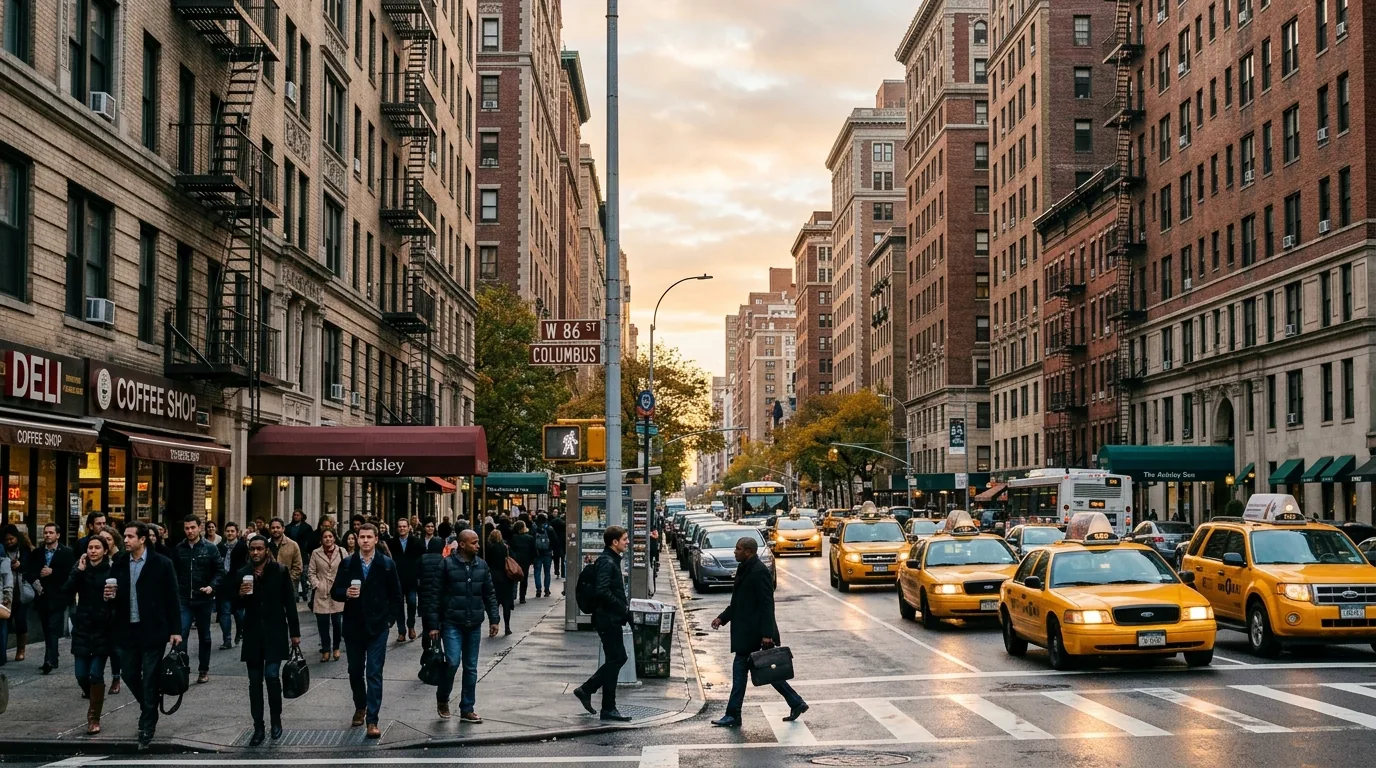
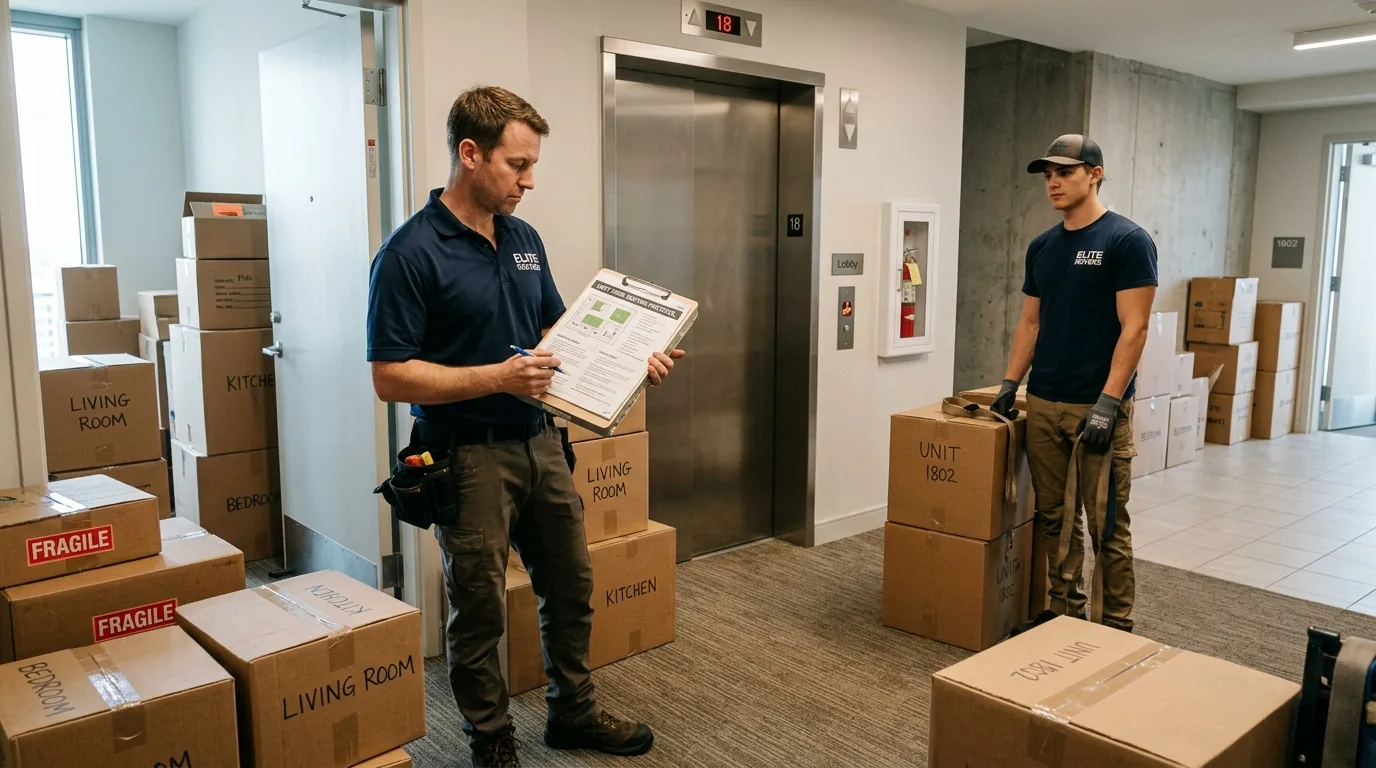
Most New York City moves start in a building that won’t let you touch the elevator until a certificate of insurance (COI) is filed. Building management expects the COI at least 48 hours before move day, sometimes even a week in advance—your coordinator confirms requirements and submits the form directly to the super. Elevator slots, when available, are often early morning or midday; high-rise towers on the Upper East Side, Tribeca, or Brooklyn Heights may limit moves to weekdays only and require building staff present to unlock service corridors.
Parking the truck is its own negotiation. Curbside space is rarely reserved formally, so the crew may have to double-park or stage dollies in shifts if your address is on Lexington Avenue, Water Street, or any block where construction or loading docks crowd the curb. Walkup brownstones add another layer: a straight run down internal stairs, sofas angled through narrow halls, and careful protection for both building and contents.
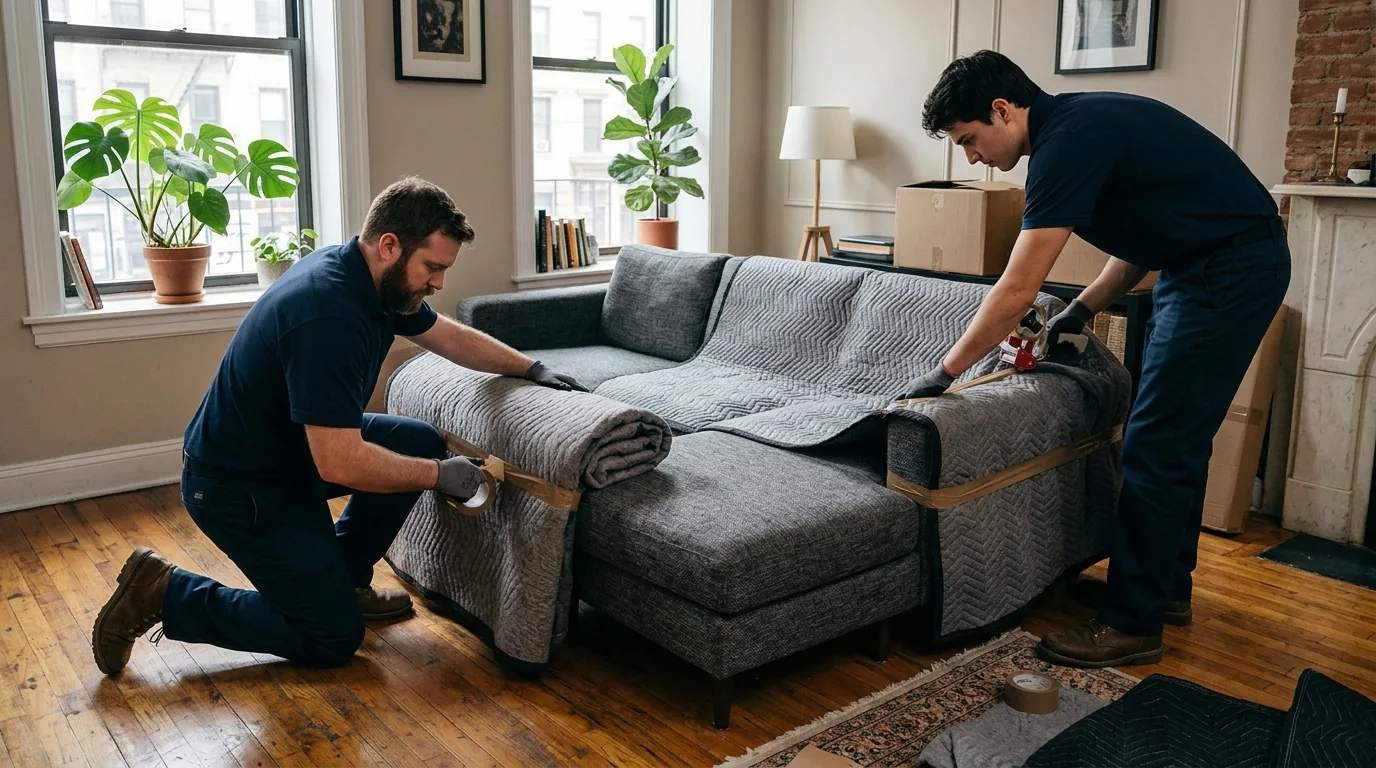
Packing in New York is a professional operation. Breakables are wrapped on site, mattresses and sofas bagged, and every lamp, shade, or rug tagged for match-back on delivery. Clients frequently request full packing, but partial packing can be arranged if you want to hand-carry clothing or valuables. Crating for art, mirrors, or sensitive electronics is quoted in writing and executed before moving day.
If you are comparing nearby moves within the city, we also support direct relocations to other Connecticut destinations—see our long-distance moving guide for more detail.
At Your Destination — Greenwich
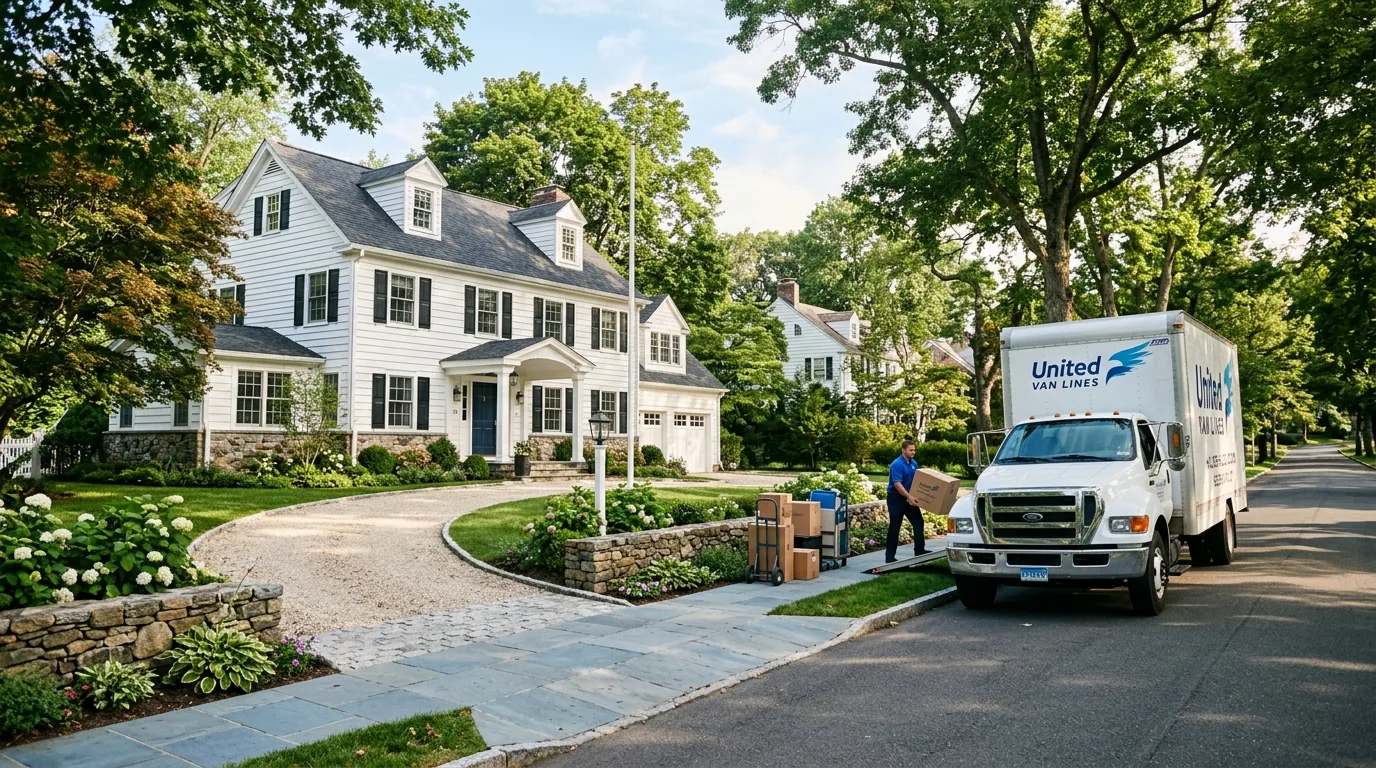
Greenwich opens up new logistical possibilities. Large estate homes set back from the road in Mid Country or Back Country need a driveway that can handle a full-size moving truck—before move day we confirm turning radii and parking with homeowners, estate managers, or realtors. On arrival, gates (manual or remote-controlled) must be opened, and access codes communicated in advance. Some historic villages in Old Greenwich or Cos Cob may have public parking restrictions or narrower entries, where a smaller truck or shuttle van is needed for final delivery.
Luxury condos and newer apartment developments in downtown Greenwich may require a COI, much like New York buildings. Instructions from the property manager often specify which entrance and elevator to use, and whether moves are allowed on weekends. We request these guidelines at booking, so timing and paperwork never slip through the cracks.
For all homes, we deliver to plan. Furnishings, art, and appliances are set room-by-room, with rugs and beds reassembled as requested—placement diagrams are coordinated in advance when the property is large or complex. With wide driveways and no city stairs, unloading is typically more direct, but care is taken at every step on gravel paths or landscaped entries.
If your move continues beyond Greenwich into Connecticut, our Connecticut service areas page lists full coverage and support for post-arrival adjustments or onward moves.
Timing and Logistics
Scheduling an NYC–Greenwich move is not about open slots—it centers on building rules, calendar demands, and your family’s needs. We coordinate a single named crew from door to door, so you see the same faces at both ends. Elevator reservations, COI submissions, and building schedules drive the permitted start times in Manhattan, Brooklyn, or other boroughs. For Greenwich arrivals, access is staged for midday or afternoon, with pre-arrival confirmation via phone or email.
Every quote is written and itemized, including requested packing and storage. The projected arrival window in Greenwich is confirmed after building approval and origin timing is locked. If schools are on your timeline, we recommend booking as soon as contracts or closing dates are certain—demand spikes from late August to early September and popular weekends fill early, especially if moves must be timed before the new school year.
Short-term storage is available at any point in the process, whether bridging a gap between closing dates or holding items until renovations finish. Specialty items such as pianos or large statuary are managed as separate line items, with crating and handling performed by the named crew—never subcontracted to third parties.

How to Choose Movers for This Route
Every move from New York City to Greenwich tests both city savvy and suburban know-how—no off-the-shelf solution applies. If you want a moving team fully prepared for both elevator-bound high-rises and gated Connecticut homes, look for these specifics: - Does the company guarantee a named crew, not a rotating group or a third-party labor team? - Is a photographed inventory standard protocol, so you always know where every piece stands from start to finish? - Will you receive a written quote with every service—packing, storage, specialty handling, insurance—spelled out line by line? - Are certificates of insurance handled directly for all required addresses, so access isn’t at risk on move morning? - Can storage flex in real time if schedule changes force a pause between homes? - What’s the mover’s track record for working through August’s back-to-school rush or a summer holiday weekend, where timing bottlenecks and traffic can make or break a plan? - Is there experience with everything from brownstone staircases to estate sculpture, with handling for pianos, mirrored panels, and built-in gym equipment?
What Travels on This Route: Typical Households and Contents
Moves from New York City to Greenwich are as varied as the clientele. A typical client may be a family departing a three-bedroom apartment in a Manhattan co-op for an estate home in Back Country Greenwich: entire rooms of antique furniture, boxed books from built-ins, gym equipment, framed art, heirloom china, and outdoor furniture—not just basics. Empty nesters might be moving from a penthouse, bringing select furniture, rugs, art, and archives. Sometimes, the move is from a modern Brooklyn loft—modular pieces, designer fixtures, or custom crating for fragile installations. Many clients request partial packing for soft goods and hand-carry jewelry, art, or personal documents.
Specialty items—grand pianos, wine collections, large mirrors, bespoke wardrobes—frequently appear on written estimates. All are packed, inventoried, and crated where necessary, with client preference guiding whether certain valuables are moved separately.

Along the Route: Darien and Neighbors
Along this route
On the way to Greenwich, moves often pass through or connect with nearby communities along Connecticut’s Gold Coast. If your destination changes or you’re also weighing options in neighboring towns, we regularly provide service as movers in Darien, handling local requirements and private access protocols.
Greenwich itself is noted for its multiple neighborhoods, from Riverside to Old Greenwich to the grand estates of Back Country. For a full overview of all destinations and transfer support across southwest Connecticut, review our Connecticut service areas. Guidance on every local requirement is provided before move day.
Moving services for NYC to Greenwich
FAQ: New York City to Greenwich Moves
What factors influence the cost of a move from NYC to Greenwich? Costs depend on the number of rooms, degree of packing required, volume of specialty items (like pianos or valuable art), and whether storage is needed between homes. The written quote specifies every cost line by line for total clarity.
Do both my NYC building and Greenwich property manager require Certificates of Insurance (COI)? Nearly all NYC apartment moves require a COI filed in advance—your senior coordinator obtains requirements and files them directly. Some Greenwich condos or HOAs request a COI as well; we check with each destination so paperwork never causes delay.
Can you pack everything, or do I need to prepare? Full packing by trained movers is standard, and noted in your written quote. You may request partial packing if you prefer to handle items personally. Unpacking services are available at delivery, with all debris removed.
How soon should I book, and are weekend moves possible? Book as soon as your closing or move-in date is set, especially for summer months and around the school start in late August. Weekend moves can be arranged if both buildings permit; most NYC elevator reservations are still weekday-only.
Is storage available if my NYC closing and Greenwich possession dates don’t align? Yes. We provide secure storage at any stage: after packing in NYC, before final delivery in Greenwich, or short-term while renovations finish.
How do you protect my art, antiques, or large mirrors during the move? Photographed inventory is taken before packing; art and mirrors are crated with custom-fit cases on-site. All specialty handling appears as individual line items in the quote.
What happens if access at my Greenwich home is tight or driveway restrictions apply? We coordinate with your realtor or property manager in advance to verify access, turnarounds, and space for trucks. When required, a smaller shuttle is used for final delivery—no surprise surcharges.
Next Steps
Simply start with a call or a short form—virtual or in-person surveys are both offered. Then, receive a written quote, line by line, with every arrangement detailed before a single box is packed. To schedule or speak directly with a senior move coordinator, contact Sterling Oakbridge.
For more about Greenwich, facts about the community can be found on Wikipedia or the Town of Greenwich official site.
Moved properly. Arrival, as planned.