
Connecticut · Bridgeport service planning
Long Distance Movers in Bridgeport, CT
Sterling Oakbridge arranges long-distance household moves from Bridgeport, Connecticut, throughout the United States and to Canada. Choose direct delivery for a dedicated truck and the same moving crew at pickup and drop-off, or consolidated delivery for a suitable smaller shipment with a wider agreed window. For agreed flat-rate long-distance work, a longer journey does not raise the price for the same inventory, access and services.

Start with the shipment and the receiving date
A useful moving plan connects two ready properties. Send the Bridgeport address and unit, destination, inventory, access photographs and the dates you must leave and can receive. Include anything that changes the work: packing, a piano, a large cabinet, stairs, an elevator reservation or a gap between homes. An item list starts the planning conversation. For an interstate household move, the written estimate must follow the required in-person or video survey, or a proper separate written survey waiver you elect and sign before loading, kept with the bill of lading; the list alone does not replace that step or waive the written estimate. The current interstate estimate rule sets out that requirement.
Separate a preference from a firm restriction. “Any weekday after we receive the keys” leaves different options from “the freight elevator is available only Tuesday, 9 a.m. to noon.” Identify the person who can accept the delivery, open the property and decide where furniture goes. A relative receiving on your behalf needs those instructions before the truck arrives.
Use the Bridgeport moving page for the broader service choice and the local relocation guide for neighborhoods, transport, schools and household setup. This page explains how to choose and prepare the long-distance shipment.
Choose direct or consolidated delivery
Direct delivery uses a dedicated truck and the same moving crew at pickup and drop-off. It is the clearer starting point when you need most of a household at the new home together or must coordinate a narrow receiving opportunity. The actual appointment still depends on the reviewed shipment, truck route and both properties. A shorter road distance does not by itself establish same-day delivery.
Consolidated delivery combines suitable shipments within an agreed wider delivery window. It can suit a small apartment shipment or selected furniture when you can live without those belongings until delivery. Roughly 300–400 cubic feet is a useful small-shipment reference, not a minimum volume or an automatic eligibility cutoff. We review the actual contents and dates rather than asking you to calculate a precise cubic-foot total first.
For suitable shorter domestic routes, the consolidated window can be up to 30 days. Florida and Canada have windows of up to 60 days; California can be up to 90 days. Other distant destinations need their own agreed window. Canada keeps its Canada window even when the road journey is relatively short. Arizona does not inherit the California maximum.
The dedicated truck and same-crew arrangement belong to direct delivery. Consolidated delivery does not include an automatic same-crew promise, free storage or a stated discount. Compare the complete written price and what you will need while waiting, not just the transport charge.

Read the delivery window from the end of loading
The delivery clock begins after pickup and loading are complete, not when you first request an estimate or when packing starts. If packing occurs on one day and loading finishes on another, use the completion of loading when reading the delivery window.
Swipe the table to compare both delivery options.
| Illustrative destination | Direct planning window | Consolidated window |
|---|---|---|
| Boston, Massachusetts | 1–2 days | Up to 30 days |
| Jacksonville, Florida | 2–3 days | Up to 60 days |
| London, Ontario, Canada | 1–2 days | Up to 60 days |
| Tucson, Arizona | 4–5 days | Window agreed individually |
These are illustrative planning ranges for four city-reference road routes. They are not booked appointments or certified commercial-truck routes. Customer addresses, vehicle restrictions, the legal operating schedule, weather, border readiness and receiving access still need review. Agree the actual pickup arrangement, delivery window, contact method and receiving responsibilities in the moving documents.
For a narrow elevator appointment, ask whether direct delivery can be coordinated with that slot before reserving it. A consolidated window spanning several weeks does not reserve a particular two-hour building appointment. If the building cannot receive during the agreed window, resolve the receiving or storage arrangement before dispatch rather than assuming the truck can wait indefinitely.
Prepare the Bridgeport pickup from curb to room
Black Rock, the East Side and the North End are useful starting points for discussing the address; none describes every building within it. An upstairs apartment, a multi-unit building and a detached home can require different staffing, carrying routes and furniture preparation. Send photographs of the entrance, turns, stair landings, door openings and the route between the proposed truck position and the unit.
The City of Bridgeport's Licensing & Permits office is the starting point for a question about occupying the public right of way. Give the exact position, vehicle, date and working hours. Its published building-materials occupancy form does not establish a moving-truck reservation, universal truck fee or moving-permit deadline. Agree who will obtain any required permission and who will confirm it before move day. Paying a meter alone does not reserve exclusive loading space.
Keep the road approach separate from the curb arrangement. CTDOT's parkway restrictions prohibit box and rental trucks on the Merritt, Wilbur Cross and Milford parkways. Passing a height check does not make that vehicle class permissible. A passenger-car navigation suggestion is therefore insufficient for the moving truck; the actual approach and final streets need review.
Inside the building, confirm the service entrance, any required certificate of insurance, elevator reservation and person with the keys. A COI documents existing insurance; it does not itself enlarge the policy, insure every belonging or approve the loading arrangement. Keep the exit and carrying route clear while loading is underway.
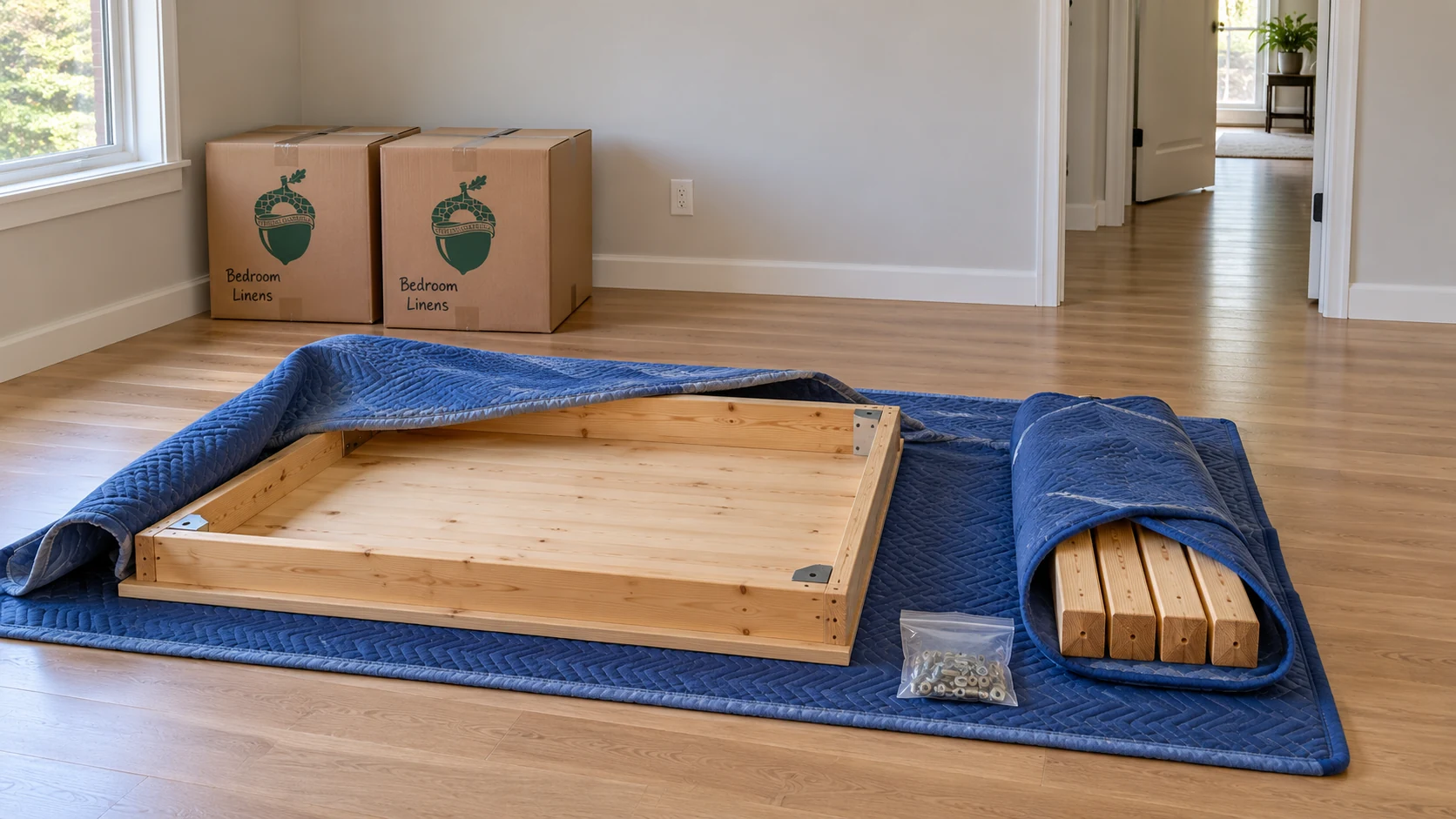
Before pickup, agree the furniture preparation method. Empty ordinary drawers and normally keep them installed and secured in the protected whole piece. For safely removable long table or desk legs, protect the body first while keeping joints accessible, turn it upside down onto stable padding and remove the complete matched set. Wrap the removed legs together last and retain matching hardware with the piece. Integral supports and construction or access exceptions need an appropriate reviewed method.
Four examples: choose the plan around the real constraint
The following are hypothetical planning situations. They show how the contents, dates and receiving arrangements change the choice; they are not accounts of completed customer moves.
Example: Boston, Massachusetts — a short route with a reserved receiving day
Suppose you are leaving an upstairs Black Rock apartment for a Boston walk-up. Most of the household must arrive together because the bed and work desk are needed immediately. Direct delivery is the useful starting point, with the same crew handling the pickup and drop-off. The short distance does not eliminate the need to review the stair turns and the Boston truck position.
Boston has a published moving-truck parking permit procedure. Its standard reservation covers two spaces for one day, 7 a.m.–5 p.m. Online applications require a move at least 15 days and no more than eight weeks away; in-person applications are available when the move is at least three days and no more than eight weeks away. Signs must be posted at least 48 hours before the permit's 7 a.m. start. Choose the applicable process early and arrange a local person to handle the signs. Recheck the city's current instructions when setting the date.
For this household, the next decision is whether the reviewed loading and travel plan can meet the receiving day. Send the Boston building instructions with the Bridgeport stair photographs, and agree the delivery arrangement before treating the permit date as an appointment. If only a few pieces are moving and the household can receive over a broader period, compare a consolidated quote instead; a one-day parking reservation must still be coordinated with the eventual delivery.
Example: Jacksonville, Florida — a few pieces and flexible possession dates
Suppose a household leaving a North End home wants to send a dresser, dining furniture and boxed belongings to a Jacksonville apartment, while taking first-week necessities separately. The apartment is available before the family needs the shipment, and the recipient can accommodate a wider delivery period. This is a sensible situation in which to compare consolidated delivery with direct service.
For Florida, consolidated delivery can take up to 60 days after pickup and loading finish. Before choosing it, establish whether the apartment permits delivery across that period and who can arrange the required elevator or loading access. If one person can receive only on a single fixed day, the apparent flexibility is missing; direct delivery or a different receiving arrangement needs review.
Include the whole shipment in the estimate, even if it is small. Photograph the dresser, identify whether the dining table comes apart and list the cartons you will pack. If we are packing selected pieces, separate that work from the owner's boxed belongings. The customer can then compare two complete offers against the real cost of waiting: replacement essentials, temporary arrangements and any separately agreed storage or handling.
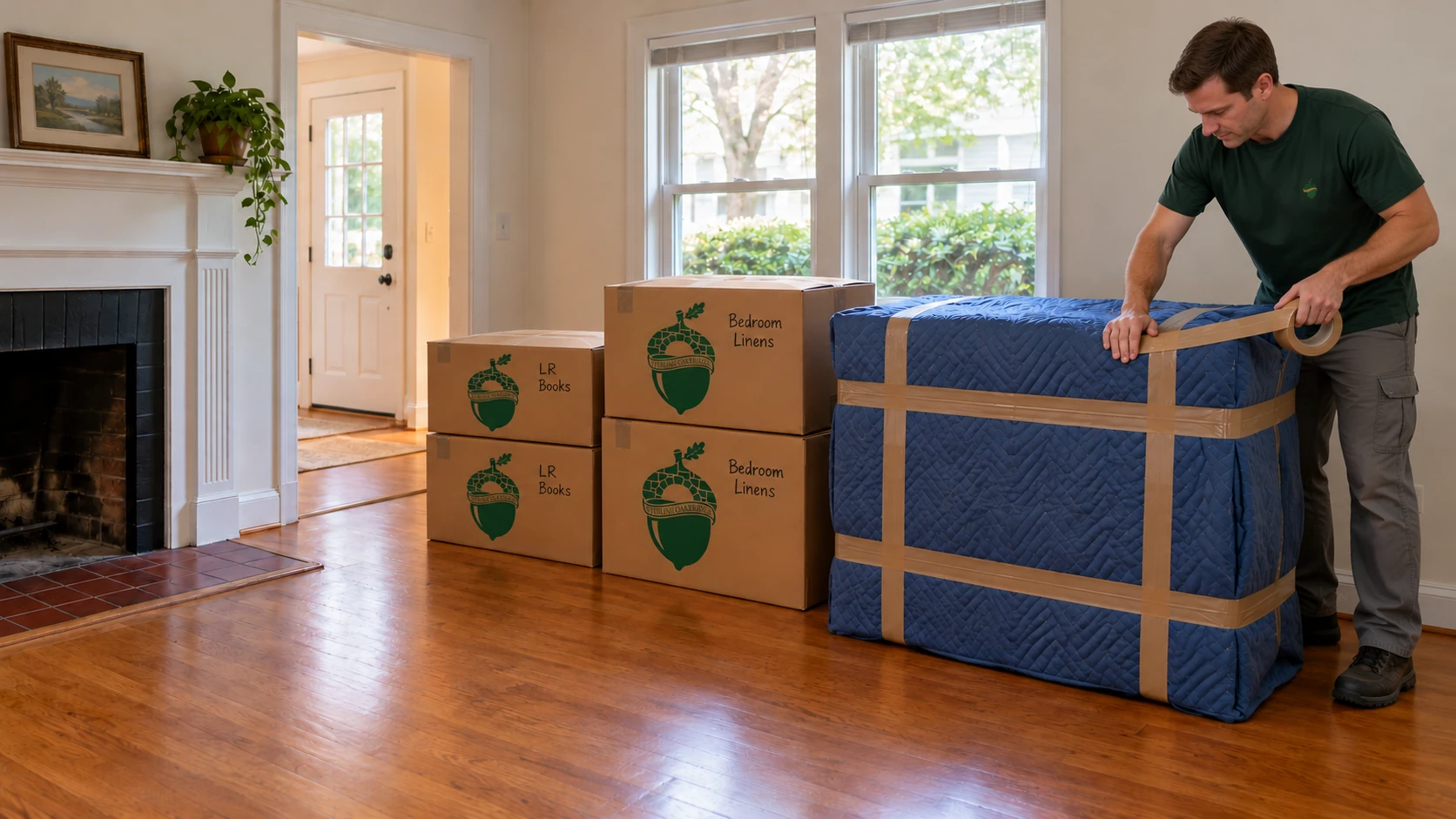
Example: London, Ontario — travel separately from the household goods
Suppose you are moving from the East Side to London, Ontario, and will enter Canada before the furniture follows. Choose the delivery model alongside the customs preparation. Direct delivery can keep a household shipment together; consolidated delivery can suit a smaller load and a wider receiving period, with the Canada window of up to 60 days after loading.
For someone moving or returning to Canada under the applicable personal-effects rules, CBSA's guidance calls for two copies of an inventory separating accompanying goods from goods to follow, with values and identifying details where applicable. Account for the goods at the household’s first Canadian entry, even when none accompany you. Include later goods on the original goods-to-follow list and retain the resulting personal-effects record for their later arrival. Eligibility, ownership and use conditions, and restrictions on particular goods still matter; the moving quote does not establish duty-free treatment.
Keep passports, immigration documents and the customs record with the traveler. Make sure the moving inventory and the goods-to-follow list can be reconciled, and agree who will handle the required clearance steps. A road-reference range does not include a guarantee that an unprepared shipment can clear the border. Confirm the paperwork and the London receiving contact before finalizing the transport plan.
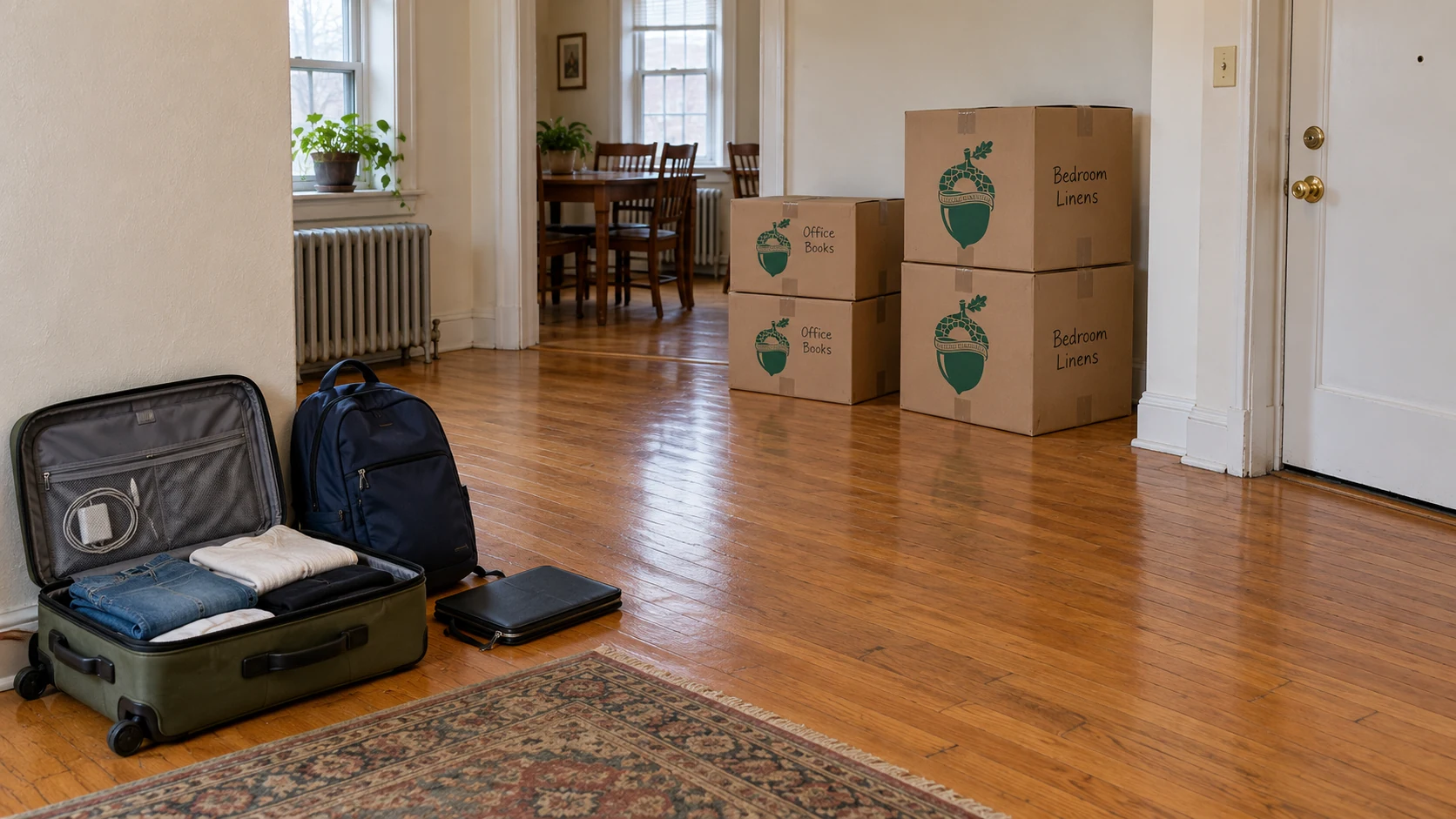
Example: Tucson, Arizona — send the household, then finish settling in
Suppose a family moving from a Bridgeport house to Tucson needs its beds, dining furniture and everyday household contents delivered together. Direct delivery gives this case a dedicated truck and the same moving crew at both ends. A consolidated alternative would need an individually agreed Arizona window; the California maximum is not an Arizona promise.
Plan the receiving work before leaving Connecticut. Provide the Tucson entrance and stair or elevator information, identify where the large furniture will go, and arrange an authorized recipient. Keep the hardware from dismantled furniture together with its item. Basic furniture disassembly and reassembly use moving labor time without a separate basic assembly fee; complex or specialist work needs its own review.
Distinguish getting the furniture ready to use from opening every carton. Furniture is unwrapped as part of delivery. Optional box unpacking is charged for working time and places contents on suitable flat surfaces. Putting everything away in cupboards, drawers and shelves is separately agreed organizing, based on the customer's decisions. Packaging removal is also separate. Choosing those stages in advance makes it possible to compare a transport-and-furniture plan with a fuller settling-in plan without inventing a free finishing service.
Know what the written price covers
For agreed flat-rate long-distance work, traffic or a longer road journey does not increase the agreed price for an unchanged shipment and service scope. Inventory additions, a different property or carrying route, extra packing, storage or other added services are changes to the work; report them before loading so the required revised estimate can be prepared and agreed before the shipment is loaded. Later changes need the applicable written scope and price before the affected work begins. Do not rely on an informal conversation to update the moving documents.
Packing is charged for working time, and company-supplied cartons are separate. Basic moving blankets, shrink wrap and tape carry no separate material charge for the agreed work; that does not make every packing supply free. Include high-value, fragile and unusually heavy items in the review rather than adding them to the truck at the last minute.
For an interstate household move, FMCSA explains the distinction between binding and non-binding estimates. A non-binding estimate is not a guaranteed final total. Review the actual estimate, inventory and agreed services before loading. A move wholly within Connecticut is not interstate merely because it is long: the applicable Connecticut tariff and estimate terms must be used. CTDOT's household-mover guidance is the relevant starting point for that distinction.
Before an interstate move, choose the applicable valuation protection and review its written cost, limits and claims procedure. Full Value Protection applies unless Released Value is selected through the required written choice. Released Value limits liability to 60 cents per pound per article rather than replacement cost. Review cost, deductible, limits and claims terms before loading. FMCSA explains these choices. Valuation is the mover's liability arrangement, distinct from a separate insurance policy. A building's request for a COI is a different question.
If the homes are not ready on the same date
Separate the pickup deadline, earliest receiving date and period without the belongings. If the new home cannot receive, compare an agreed storage-and-delivery plan before the old lease ends. Storage, an overnight truck hold and subsequent delivery are different arrangements, with their own agreed handling, holding, access and delivery terms. A consolidated window is not a promise of free storage or on-demand retrieval.
Keep medicines, identity and travel documents, keys, chargers, a change of clothes and other daily necessities outside the shipment. Decide what the family needs for the whole expected gap, including children's or accessibility essentials. The belongings that must remain with you should be identified before packing and loading begin.
If keys, an elevator or the proposed truck position become unavailable, contact the move-planning team and the person authorized to resolve access before dispatch or continued work. Explain what has changed. Confirm an available later window or another authorized method. Before relying on storage, confirm a facility that can actually accept the shipment: capacity, receiving hours, protection, handling, price, payer and onward-delivery date. Arrange accommodation and essentials for people and pets separately. If no destination can accept the shipment, revise departure. Agree changed work, costs and dates in writing; identify who will confirm possession, the authorized receiver and the full route before work resumes. Do not assume an unapproved curb position, an indefinitely waiting truck or an immediate storage delivery is available. Resume against the confirmed plan.
Arrange receiving and check the shipment
Give the recipient the inventory, room labels and instructions for the furniture. Have the property open and the agreed carrying route usable. Check the items against the inventory and note visible concerns through the delivery paperwork and agreed claims process. Keep copies of the signed moving documents and the contact details for questions after delivery.
Tell us before booking if delivery includes delicate artwork, an unusually heavy item or work beyond basic furniture assembly. Those operations need the exact item and access reviewed. Transporting household electronics is different from reconnecting, configuring or testing a home office; arrange the appropriate technical help separately.
Pickup area and destination examples
We arrange long-distance pickups from Bridgeport, Connecticut. Send the actual address, unit, inventory and dates so we can review the carrying route, truck position and selected services. Nearby collection addresses require their own access and schedule review.
Explore long-distance destinations from Bridgeport
These are destination examples within our United States and Canada coverage, not claims about route popularity or completed jobs. Review the actual addresses, shipment, truck access and receiving dates before booking.
Northeast
- Boston, Massachusetts
- Albany, New York
- Philadelphia, Pennsylvania
- Baltimore, Maryland
Southeast and Florida
- Raleigh, North Carolina
- Charlotte, North Carolina
- Jacksonville, Florida
- Orlando, Florida
Midwest and Texas
- Chicago, Illinois
- Austin, Texas
- Dallas, Texas
Mountain West and Southwest
- Denver, Colorado
- Tucson, Arizona
- Salt Lake City, Utah
West Coast
- Portland, Oregon
- Seattle, Washington
- Sacramento, California
- San Diego, California
Canada
- London, Ontario
- Toronto, Ontario
- Montreal, Quebec
- Vancouver, British Columbia
Long-distance moving questions
Do you provide long-distance moving from Bridgeport, CT?
Yes. Sterling Oakbridge arranges household moves from Bridgeport to destinations in the United States and Canada. Send both addresses, the inventory and dates so we can review the truck access, delivery model and selected work. A nearby collection address needs its own access and schedule review.
What is the difference between direct and consolidated delivery?
Direct delivery uses a dedicated truck and the same moving crew at pickup and drop-off. Consolidated delivery combines suitable shipments with a wider agreed delivery window. Choose direct as the starting point when a household needs to arrive together or receiving dates are restrictive; compare consolidation when a smaller shipment and flexible receiving make the wait workable.
Is there a minimum size for a consolidated shipment?
The roughly 300–400 cubic-foot small-shipment reference is not a minimum or an automatic cutoff. We review the actual items, route and available receiving window. An inventory and photographs are enough to begin that discussion; you do not need to calculate an exact volume first.
When does the delivery window start?
It starts after pickup and loading are complete. It does not start when you request an estimate or begin packing. If packing and loading happen on different days, use the completion of loading, then read the actual delivery window in your moving documents.
How long can consolidated delivery take?
For suitable shorter domestic routes it can be up to 30 days after loading. Florida and Canada can be up to 60 days, and California up to 90 days. Other distant destinations need an individually agreed window. Canada retains its Canada window even on a shorter road route; the California maximum does not apply automatically to Arizona or every western state.
Can a move to Boston be delivered the same day?
A short route alone does not establish same-day delivery. The illustrative Boston direct window is one to two days after loading; the actual appointment needs the shipment, loading schedule, truck route and Boston receiving access reviewed. Send any permit or elevator restriction before agreeing the delivery plan.
Will the same crew deliver my belongings?
The same crew at pickup and drop-off is part of direct delivery. It is not an automatic promise for consolidated delivery or every specialist operation. The person surveying your home is also not necessarily a member of the moving crew.
Does a longer journey increase an agreed flat rate?
No. Travel or delivery taking longer does not itself increase the agreed interstate or cross-border flat rate for the reviewed inventory, access and services. Report additional items, changed access, extra packing, storage or another stage before loading so the required revised estimate can be agreed before the shipment is loaded. Later changes need the applicable written scope and price before the affected work begins.
Is a long move within Connecticut automatically flat-rate interstate moving?
No. A move entirely within Connecticut remains intrastate even when the distance is substantial. Its applicable Connecticut tariff and actual estimate terms govern. The long-distance interstate flat-rate explanation does not replace those terms or turn every estimate into a binding price.
Are cartons and packing included?
Packing is charged for working time and company-supplied cartons are charged separately. Basic moving blankets, shrink wrap and tape have no separate material charge for the agreed work. Identify full packing, selected-item packing and owner-packed cartons in the estimate so the work and supplies are clear.
Does delivery include furniture assembly and unpacking?
Furniture is unwrapped as part of delivery. Basic furniture disassembly and reassembly use moving labor time without a separate basic assembly fee. Optional box unpacking is charged for working time and places contents on suitable flat surfaces; organizing into cupboards, drawers and shelves and removing packaging are separately agreed work. Complex or specialist assembly needs its own review.
Can the moving truck use the Merritt Parkway?
No. CTDOT prohibits box and rental trucks on the Merritt, Wilbur Cross and Milford parkways. Being below a height limit does not remove the vehicle-class restriction. The moving truck needs a reviewed road approach and final-street access rather than a passenger-car route suggestion.
Does a parking meter reserve a loading position in Bridgeport?
No. Paying a meter alone does not establish exclusive moving-truck working space. Start a public-right-of-way occupancy question with Bridgeport Licensing & Permits and provide the exact position, truck, date and hours. The published building-materials occupancy form does not establish a universal moving-truck permit, fee or deadline.
What if my building has a short elevator reservation?
Tell us the exact receiving slot before choosing the delivery model. Direct delivery is the useful starting point for a narrow appointment, subject to the actual schedule and access review. A consolidated window does not reserve that two-hour slot. Confirm the service entrance, authorized recipient and any required building documents separately.
What should I prepare for household goods going to London, Ontario?
Establish the applicable importer process and clearance responsibility before pickup. Prepare two copies of the required inventory, separating accompanying belongings from goods to follow. Account for the goods at the household’s first Canadian entry, even when none accompany you, and retain the resulting personal-effects record for later goods. Include later goods on the original goods-to-follow list. Review restrictions for the actual contents. A Canadian address or inventory does not establish duty-free eligibility; do not assume the carrier acts as customs agent. Canadian consolidation uses up to 60 days after loading.
Can I travel to Canada before my furniture arrives?
Yes, the traveler and household goods can arrive separately. Prepare two copies of the required inventory, separating accompanying belongings from goods to follow. Account for the goods at the household’s first Canadian entry, even when none accompany you, and retain the resulting personal-effects record for later goods. Include later goods on the original goods-to-follow list. Agree clearance and receiving arrangements before the furniture leaves; a driving estimate is not a clearance guarantee.
Does Tucson use the California consolidated window?
No. Arizona needs its own agreed consolidated delivery window. California's up-to-90-day maximum is destination-specific. For Tucson, compare an individually reviewed consolidated offer with direct delivery and choose against the actual receiving dates and time you can be without the belongings.
Can you store the shipment if the new home is not ready?
Storage and staged delivery can be arranged to an agreed plan. Before relying on it, confirm a facility that can actually accept the load: capacity, receiving hours, protection, handling, price, payer and onward-delivery date. Separate household accommodation and essentials from shipment storage. If no destination can accept the load, revise departure. Storage, an overnight truck hold and subsequent delivery are different arrangements and are not automatically included free in a consolidated window.
What happens if keys or loading access become unavailable?
Use the decision checkpoint before dispatch and before alternatives expire. The household decision-maker contacts the access controller and coordinator to confirm a later window or authorized method. Before using storage, confirm a facility that can actually accept the load: capacity, receiving hours, protection, handling, price, payer and onward-delivery date. Arrange accommodation and essentials for people and pets separately. If no destination can accept the shipment, revise departure; resume when possession, the authorized receiver and the route are ready, with changed work and charges agreed in writing.
Does a building COI insure the full shipment?
No. A COI evidences an existing insurance policy and does not itself enlarge its coverage. Building access conditions differ from shipment valuation and separate insurance. For an interstate household move, Full Value Protection applies unless Released Value is selected through the required written choice; Released Value limits liability to 60 cents per pound per article rather than replacement cost. Review cost, deductible, limits and claims terms before loading. A Connecticut intrastate move uses its applicable protection terms.
What should stay with me rather than on the truck?
Keep travel and identity documents, medicines, keys, chargers, a change of clothes and other daily necessities outside the shipment. Add the essentials your household needs for the whole expected delivery gap. Identify those bags and boxes before packing starts so they do not enter the moving load.
What information do you need for a written estimate?
Send both addresses and units, the inventory, access photographs and firm pickup or receiving restrictions. Identify packing, storage, fragile or heavy pieces and who will receive. For an interstate household move, complete the required in-person or virtual survey unless you elect a proper separate written waiver before loading. Keep that waiver with the bill of lading; it does not waive the written estimate. An inventory or square footage alone does not describe the work. A move entirely within Connecticut uses its applicable tariff and actual estimate terms.