
Moving guide · timing, storage and practical choices
Between Homes: When Moving Dates Don’t Match

The apartment has to be empty on Friday. The new keys arrive on Monday. You have somewhere to sleep, but the sofa, dining table and forty boxes still need somewhere to go. At that point, “just a couple of days” can become an expensive part of the move.
Sometimes you are staying in the same house. The flooring crew needs the first floor empty, the painter needs your living room, or a leak has put two rooms out of use. You need the furniture moved out of the way and brought back when the work is done.
Before booking storage, it is worth making a few phone calls. A different elevator slot, permission to use a garage or a little extra time at the old address may save a warehouse trip. Those arrangements will not suit every home. When they do, they can remove quite a lot of handling.
The least complicated move is usually one load, one journey and one unload. A truck hold, storage stop or return visit adds to that cost. Our aim here is to help you work out which extra steps you actually need, and what you might be able to avoid.
These twelve examples use cities we serve. The people and their moves are made up to explain the choices; distances and dates are illustrative. The images illustrate the situations rather than document customer jobs.
First, find out when furniture can actually arrive
“Closing on Monday” tells us part of the story. Can the crew enter on Monday morning, or do the keys change hands late in the afternoon? Your agent or attorney can confirm possession and any separate access agreement. The CFPB closing guide explains the transaction itself.
At an apartment building, keys and a moving-elevator reservation may come at different times. After renovation, a floor may be ready to walk on before the contractor wants a sofa placed on it. Ask when the actual shipment can arrive, not just when you can visit.
Write down the last time you can use the old space, the first confirmed receiving window and the person who can change either one. If the second date is still a hope, call it a hope. Ten booked days of storage and a repair that might take ten days need different backups.
What the extra step costs
For an agreed one-night gap, the belongings may be able to stay in the moving truck. Sterling’s additional overnight charge is $250 per small truck or $300 per large truck, for one night. That is on top of the moving cost. We still need to agree the truck, where it will stay and the next delivery window. Several nights, an uncertain end date and crew waiting time need their own terms.
Storage involves more work than renting a space. The crew drives to the facility and unloads. You pay for the storage. Later, a truck and crew return, load the belongings again, drive to the new address and start the final unload. Even a three-day stay needs handling at both ends.
Suppose the storage unload takes two billable crew hours and the later reload takes another two. That is four hours of handling before the extra travel and final delivery. These times are an illustration, not an estimate for your furniture; visit minimums and the written billing terms also affect the total.
| Option | Extra costs to compare | Where a saving may be possible |
|---|---|---|
| One agreed night in the truck | Per-truck overnight charge; any separately agreed waiting or changes | Confirm tomorrow’s access and how many trucks the shipment needs |
| Storage and redelivery | Travel, storage unload and reload, storage rent, handling and visit minimums | Compare the complete route and aim for one return delivery |
| Portable container | Placement/pickup, rental or storage, transport and loading/unloading help | Check the site first and price the whole cycle |
| Moving within the property and returning furniture | Clearing, later placement, preparation and visit minimums | Move only what the work requires and coordinate with the contractor |
| Agreed garage staging | Any access or occupancy fee, suitable protection, garage unload/load or later room placement | Avoid the external warehouse detour where the garage genuinely works |
Some estimates bundle stages together. Ask what is already included so you do not count the same work twice.
Twelve situations, twelve practical approaches
1. Watertown: painting one room while life carries on
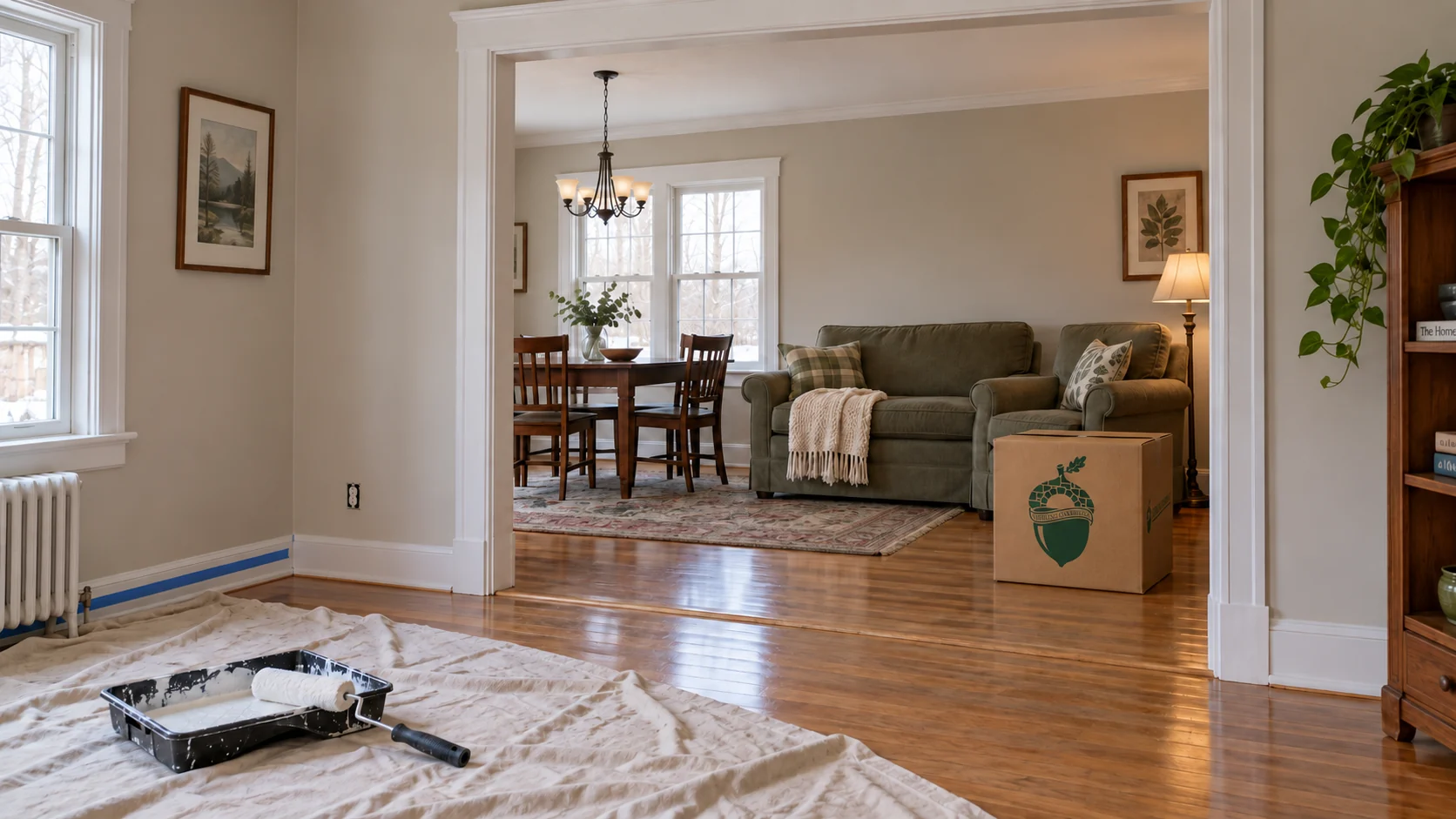
Dana wants to repaint her living room in Watertown. The dining room can hold the sofa for a while, but the family still needs to eat there. Piling everything in the doorway would leave the painter happy and everybody else squeezing sideways.
Start with a walk through the two rooms. Following the painter’s instructions, which pieces must move, and which can stay protected? An internal furniture move can clear the working area without taking furniture out of the house. Leave a route to the kitchen and exits, and keep the chair someone uses every evening within reach. A quick photo helps when it is time to put the room back.
This would be our first option if the space works. Dana still pays for clearing and replacing the furniture, but avoids a truck journey and storage rent. Ask about the minimum for each visit. If the painter can finish within a workable same-day schedule, compare that with two separate appointments.
2. Glens Falls: the whole first floor needs new flooring
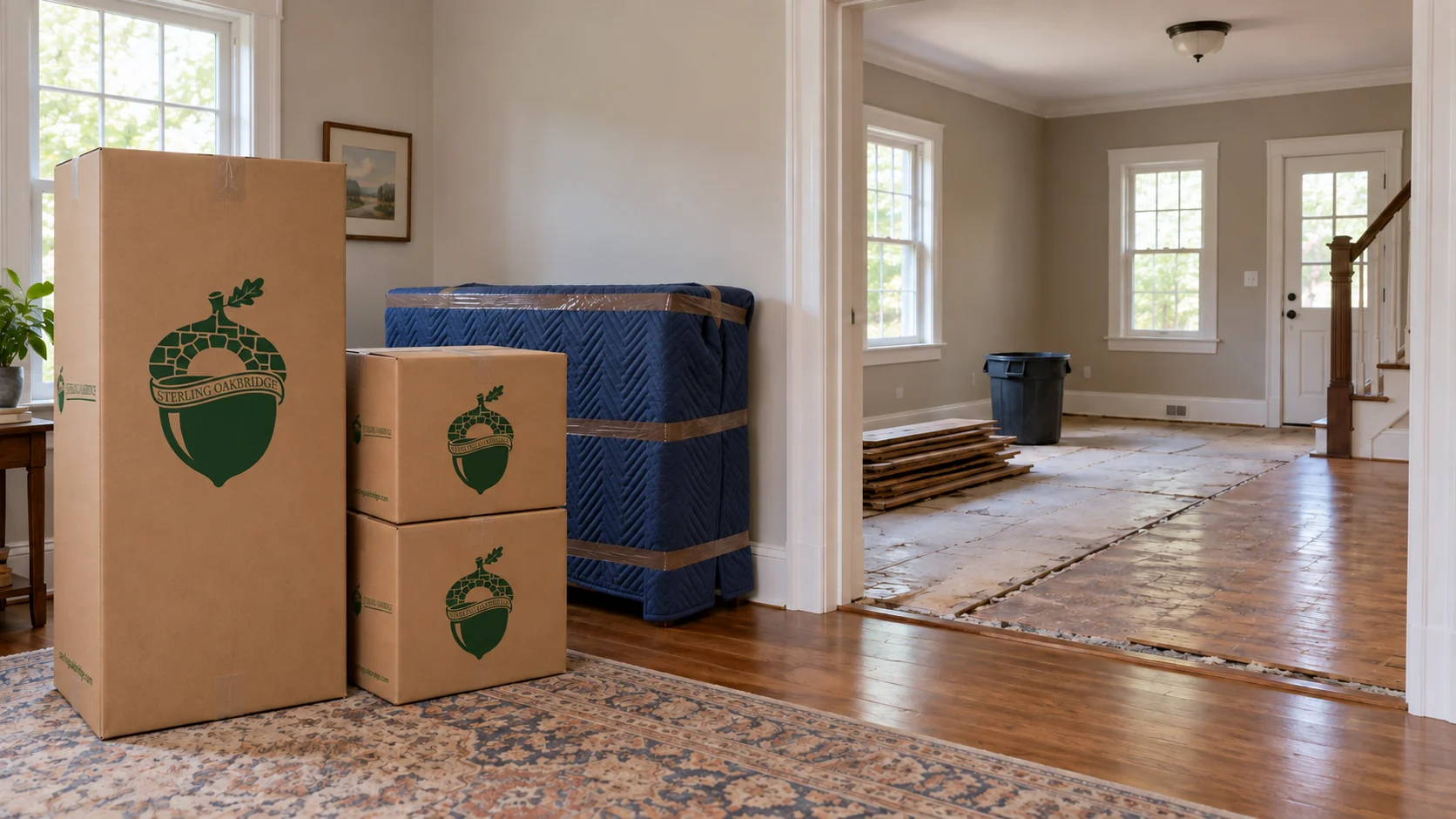
In a Glens Falls house, the work reaches the living room, dining room and hall. “It can all go in the basement” sounds promising until the dresser meets the stair turn. The treadmill downstairs has already claimed much of the spare space.
Make two piles on the inventory: what can stay in a suitable part of the house and what needs to leave. A table may fit after basic disassembly. For gym equipment, send the model and route photos before planning the carry. Measure the garage too; an empty-looking floor does not tell us whether the furniture fits or whether the space is dry and secure.
Ask the flooring contractor about working in phases. It may keep more furniture at home, although extra moving visits or a longer renovation can eat the saving. When a full clear-out is necessary, price packing, storage and return together. Bring furniture back when the contractor says the floor can take it. Nobody wants to pay for a new floor and then mark it on the first day.
3. Philadelphia: two apartments a few blocks apart, different hours
Maya’s new apartment in Philadelphia is a few blocks away. The old one must be empty in the morning; the new building permits unloading later. The drive takes very little time. Waiting for the second door to open could take much longer.
Before accepting the gap, call both building managers. Could one give a later move-out slot, an earlier move-in slot or a cancelled reservation? A specific request with the crew size and expected duration is easier to assess than “can you be flexible?” Any exception needs approval from the person who controls access, along with staff charges or other conditions.
If the hours still do not line up, compare paid waiting with a storage stop. Waiting is an expense, but unloading and loading the household again may cost more. Have cartons ready and the carrying arrangements settled so a usable window does not disappear into preparation. Name the person who can approve the backup if the receiving slot falls through.

4. Boston: a known overnight gap across the city
A Boston household must leave in the evening and can unload the following morning. The example journey is around 10–20 miles. Renting storage for one night would mean handling everything twice more, so an overnight truck hold is worth discussing.
One small truck adds $250 for that night; one large truck adds $300. Two small trucks add $500 for the hold alone. That does not mean “book the biggest truck”: the load must fit, and the moving price may differ. Ask for the total for the arrangement that suits the shipment.
Keep your overnight bag with you, and confirm tomorrow’s access before relying on this option. Friday to Monday is a different request; the one-night rate does not settle its terms. Nor does a street reservation automatically permit overnight parking. For interstate household moves, FMCSA explains delivery difficulties; those rules do not set Sterling’s local truck-hold terms.

5. Near Toms River: two houses, nearby, with garage space
Two homes near Toms River are perhaps 5–15 miles apart. The new house is not ready inside, but its garage is empty. The first question is whether furniture can go straight there. If access is authorized and the space suits the belongings, that could remove the outside-storage detour.
A garage delivery still includes unloading. Bringing the furniture into the rooms later is paid internal moving work. Compare that with driving to a warehouse, unloading, storage rent, reloading and another drive. Measure the largest pieces and leave a workable route for the later carry. Check moisture, temperature, security and whether contractors need the same space.
If the garage will not work, a portable container may be another option. Check who authorizes placement, the delivery approach and pickup access before ordering. The PODS storage FAQ explains its own conditions; other providers differ. Include container transport, rental and loading help in the comparison. A container blocking the contractor’s entrance would simply move the problem outside.
6. Watertown to Syracuse: ten days between two country homes
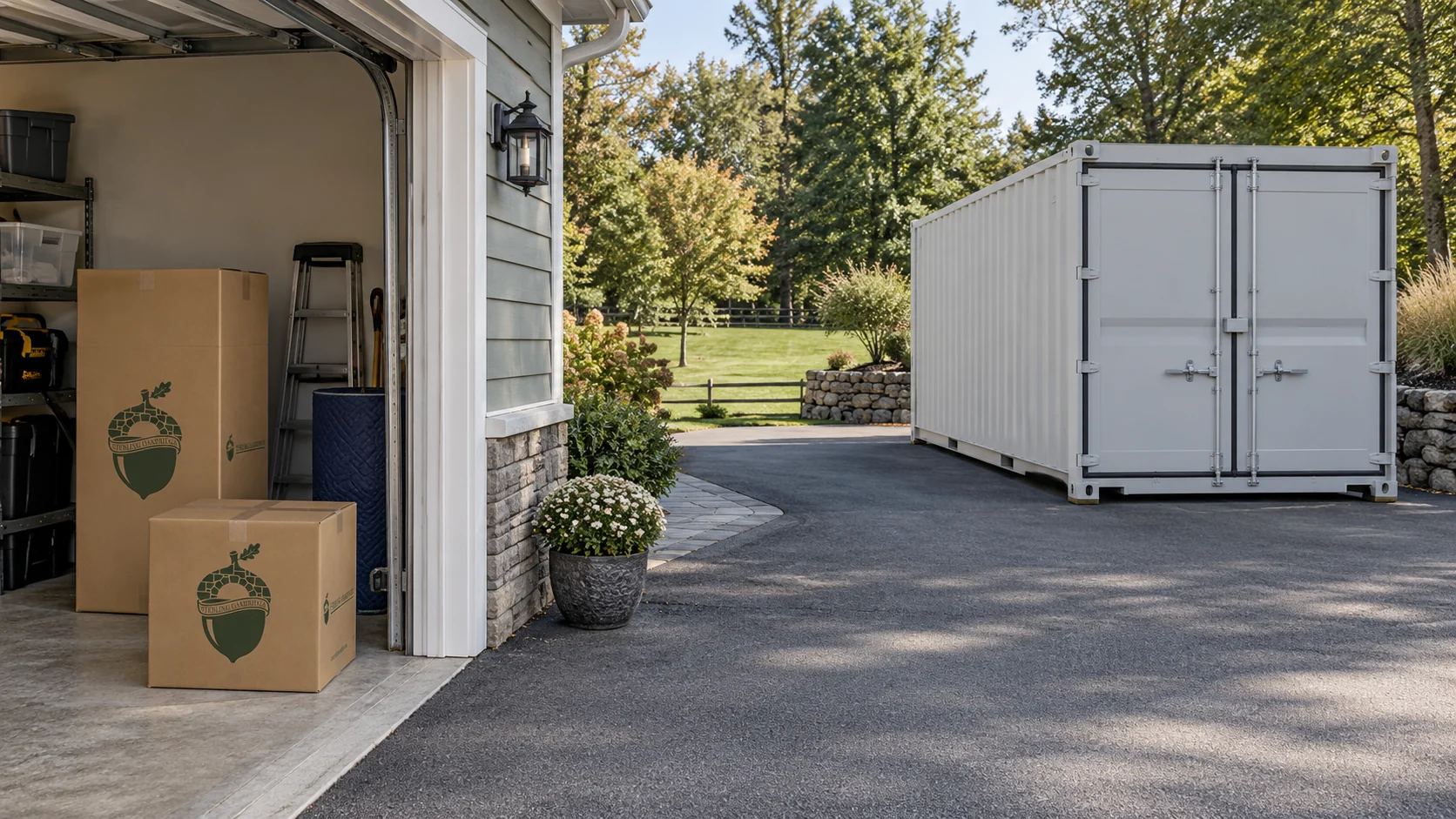
For homes near Watertown and Syracuse, imagine an 80-mile route and a ten-day gap. Before sending the beds and dining table to storage, ask whether they can stay in the old garage until the new home opens. A dry, secure space and agreed collection date might let the main load make one direct journey later.
If the property changes hands in the meantime, this is a separate access arrangement to work through with the transaction professionals. Set the area, last pickup date, keys, costs and responsibility in writing. Friendly permission is a start; the crew needs dependable access on the day.
If that option is unavailable, compare storage near each end using the full route: old home, facility, new home. Receiving hours and redelivery availability matter as much as unit rent. Storage with planned redelivery can bridge the gap, but both transfers use paid labor. Keep essentials out of the stored load so one buried carton does not prompt an extra trip.
7. New York to Edison: the apartment deadline is firm, closing slips
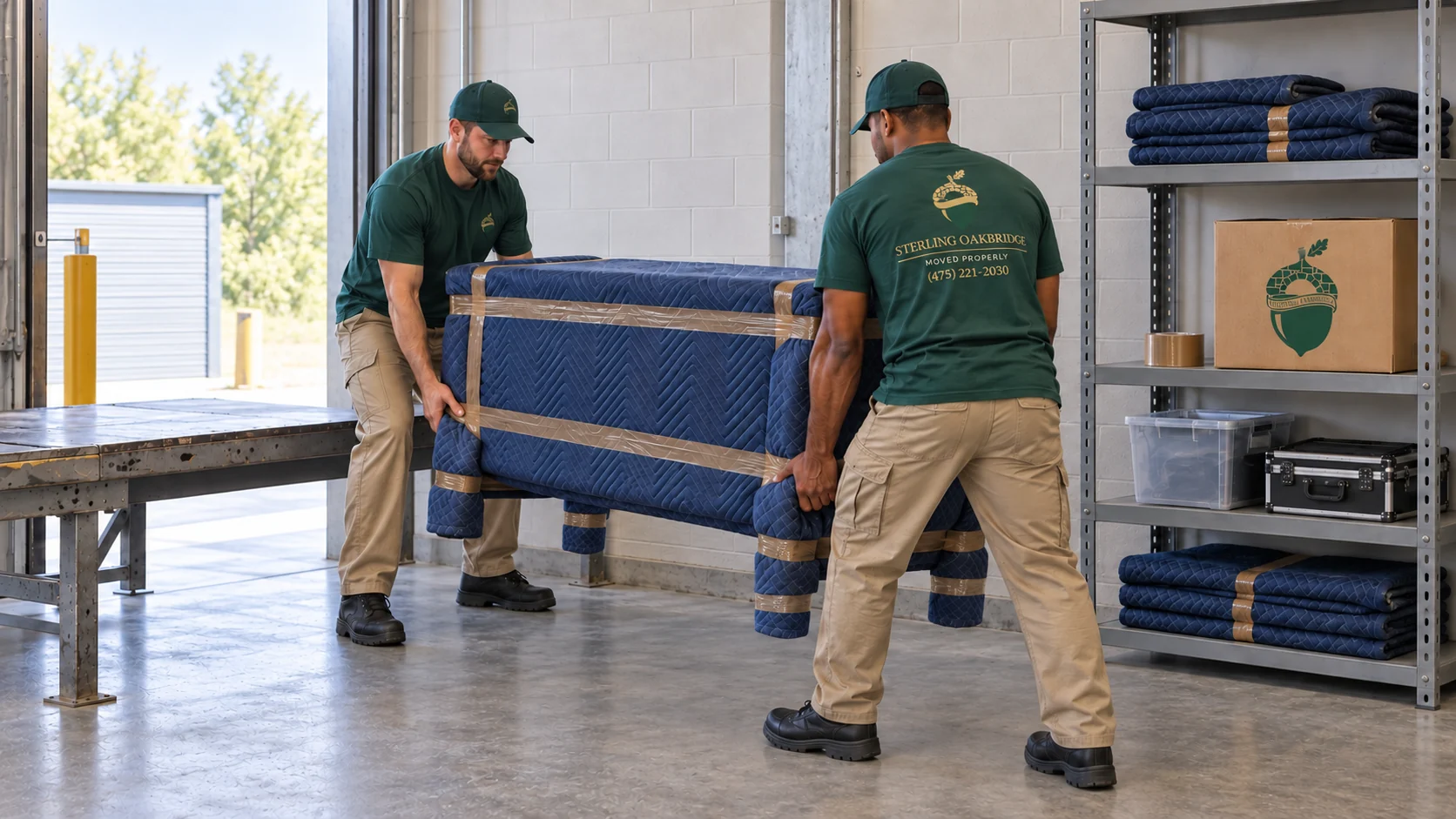
Priya’s New York apartment must be empty on Tuesday. She expects keys in Edison that day, but possession is unconfirmed. The illustrative journey is about 40 miles. Arriving quickly will not help if nobody can let the crew in.
Ask the agent or attorney about two possible bridges: a short extension at the old address, or separately authorized use of the new garage. Neither follows automatically from a scheduled closing. Compare any fee and later furniture placement with the storage alternative. NAR describes access and occupancy agreements as separate transaction documents; your professionals need to settle the actual arrangement.
Give the decision a deadline. If access remains unconfirmed then, use the already priced backup. A known single night may suit a truck hold; a closing that keeps slipping calls for storage that can be extended. Keep clothes, medication, chargers and work essentials with Priya. Her temporary accommodation needs a plan too.

8. Southampton to New York: keys now, an elevator later
A household leaves Southampton for New York. They have keys, but the moving elevator is booked until next Wednesday. It is frustrating to pay for storage when the apartment itself is available.
Try the building first. Ask about a cancelled slot or an approved alternative time, and get any staffing charges and requirements confirmed. A few more paid hours of access may compare well with a warehouse unload and reload. A concierge’s assurance is helpful only if it comes with the approval needed to admit the crew.
If Wednesday is firm, plan travel and storage release backward from that window. Building documents and elevator coordination need to be ready before arrival. Packing ahead can leave more of the slot for carrying. Include bed reassembly and any box unpacking in the time allowed; a short window may not fit every finishing task.

9. Pittsburgh to Harrisburg: a furnished rental first
Evan moves from Pittsburgh toward Harrisburg, an illustrative 150–250-mile regional journey. He will spend a month in a furnished rental. His dining table is lovely, but the rental already has one. Taking both would mean finding room and paying to move his again later.
Pack by destination: temporary home, main-home storage and things Evan may need during storage. A desk chair, work equipment and a few kitchen boxes might earn their place in the rental. Most of the household can stay together until the permanent home opens.
A separate small delivery still costs money, so compare the complete plan. The saving comes from avoiding unnecessary handling of the unused furniture, not from splitting loads for its own sake. Partial packing and clear labels can keep the two destinations from becoming a sorting job at the truck.

10. New York to Portland: long-distance delivery with a gap
A family leaving New York cannot receive its shipment in Portland, Maine yet. They want full packing and a predictable arrival. Start with where the household can wait and when the receiving home will actually be available; packing should follow that plan.
Sterling’s dedicated long-distance service uses a dedicated truck and delivery, with the same moving crew at pickup and drop-off. Any storage stage must be agreed explicitly. A shared-load carrier or container system can have different windows, access and handling. Compare those terms with the family’s needs rather than assuming every service works the same way.
There may be a worthwhile trade: leave the main furniture at origin a little longer while the family travels ahead, then make one direct delivery. It needs reliable access and a suitable moving date. If storage is necessary, choose the sequence before packing. For applicable interstate household moves, delivery dates or periods belong in the documents under the federal delivery rules.

11. Southampton: the renovation date keeps changing
In Southampton, the old furniture is out, new pieces are on order and “one more week” keeps moving. The family wants the bedroom back first. It is easy to book several small deliveries while trying to make the house livable.
Ask the retailer whether an undelivered order can be held or rescheduled, and what that costs. Doing so may avoid paying to receive and store furniture the house cannot use yet. If receiving is needed, Sterling can discuss furniture receiving, storage and planned delivery. Define the receiving check and who handles the retailer’s paperwork; detailed inspections and claims need their own scope.
Compare a bedroom-first visit with one complete return. An extra visit may be worth it for a proper bed and a quieter week, but it remains a paid visit. Keep storage extendable and ask how much notice redelivery needs. Access rules vary: U-Pack, for example, publishes terminal-storage restrictions. Set aside anything you will need before storing the main shipment.
12. Toms River: a leak makes rooms temporarily unusable
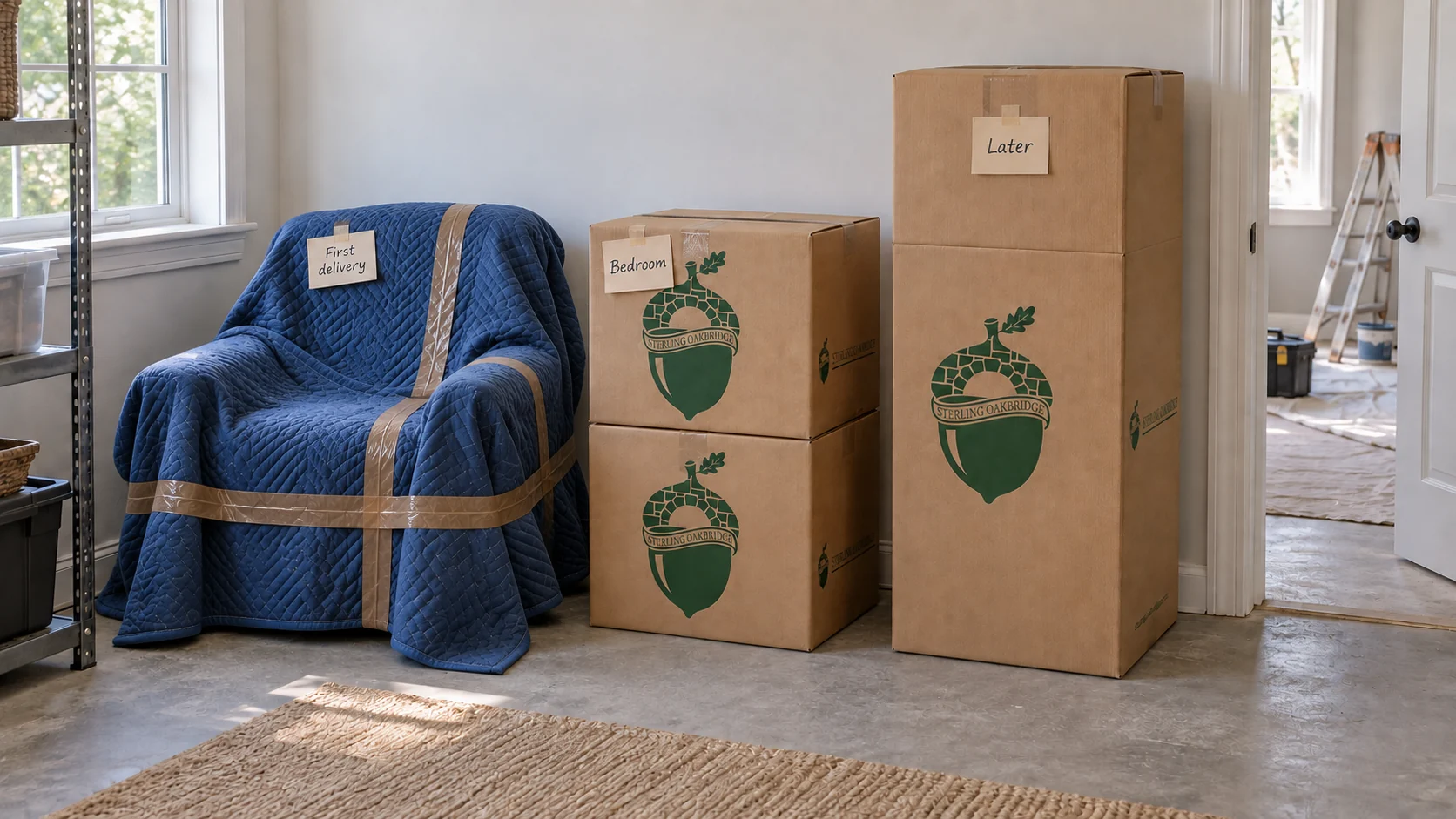
After a leak in Toms River, the family needs retained furniture out while repairs take place. They are already dealing with damage; an unexpected storage bill is another thing to manage. A fire can create an out-and-back moving need too, although affected contents may require different handling.
Let the restoration specialist clear access and the items for ordinary transport. Photograph the condition, agree what leaves and decide where it goes. Transport of cleared belongings and treatment of mold, soot or contaminated contents are different jobs. SERVPRO explains pack-out, contents restoration and pack-back.
Discuss the added cost early with the insurer and any neighbor, contractor or other party from whom reimbursement is being sought. Send the whole sequence: packing, removal, storage unloading, storage rent, reloading and return. Ask which items they approve, any limit and who pays the moving company first. A promise to “sort it out later” leaves too much unclear. NAIC recommends checking coverage and limits with the insurer and keeping receipts; that does not establish coverage for every moving charge.
Move only what the repairs require, use suitable space once and return after contractor approval. Putting furniture back too early can mean paying to take it out for a third time.
Moving services that can make the plan work
You may need help with one part of this, or with most of it. Start with the obstacle you want removed:
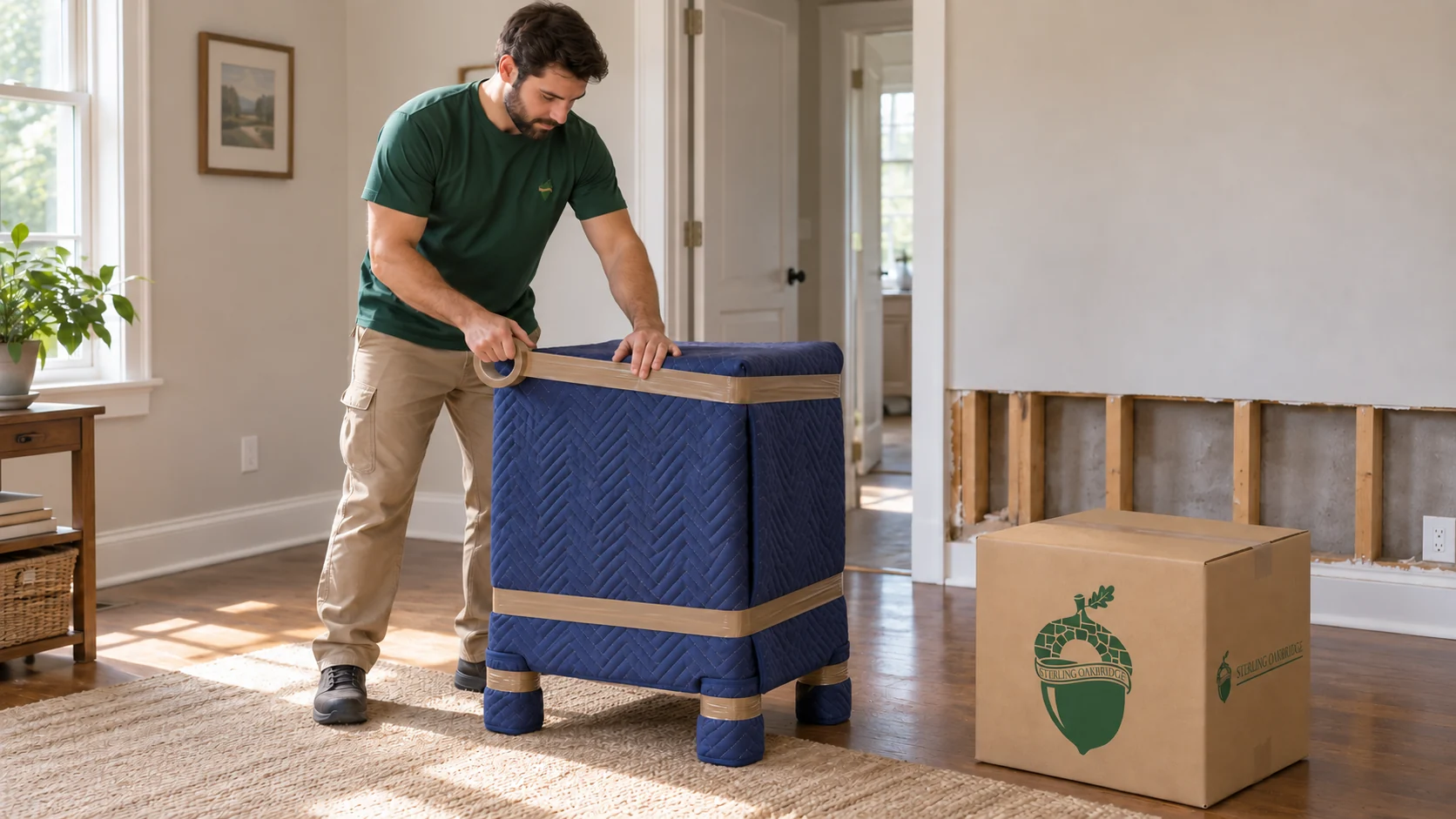
- Full or partial packing, including a preparation visit. Useful when a tight move-out window leaves little time to finish boxes.
- Internal furniture moving. Clear selected rooms, move between floors after a route review, or bring a garage-staged load into the house.
- Storage and redelivery. Include receiving, handling, the storage period and return. Tell us what must remain accessible.
- Basic disassembly and reassembly. Prepare suitable furniture and restore it on delivery. This uses paid moving time, without a separate basic-assembly surcharge.
- Box unpacking and packaging removal. Unwrapping furniture is part of delivery; unpacking boxes is optional labor, and packaging removal is separately priced. We can place contents as directed; that differs from a professional home-organizing service.
- Furniture receiving and planned delivery. Review incoming pieces and receiving instructions when a project is not ready for them.
- Gym-equipment moving and art preparation or crating. Send the actual item and access details so the work can be reviewed.
- Picture hanging or TV mounting. Discuss the installation separately before delivery. These options do not amount to a general electrical, plumbing or renovation service.
Company-supplied boxes cost extra. Moving blankets, shrink wrap and tape have no separate basic-material charge. Specialist work is individually quoted. Local estimates usually use working time and may have a minimum; estimated hours are not a completion cap. On a long-distance flat-rate move, the price stays the same for the same shipment and scope. Added stages need an updated written scope and price.
Where to look for savings before booking storage
Ask the buildings to help the two dates meet
Give both managers a concrete request: “Could we leave two hours later?” or “Is there an earlier approved elevator slot?” Ask about cancellations, staff availability and any fee. Then compare that fee and crew time with the storage detour. Get the change confirmed before relying on it; building rules and access still apply.
Compare a little extra time at the old address
A few agreed days of lease overlap or a short stay after closing may cost less than two warehouse transfers and another trip. Ask the landlord or transaction professionals whether it is available. Use the full occupancy cost, deposit conditions and moving-date change in the comparison. Any sale-related access or occupancy arrangement belongs in the transaction documents, with the people authorized to approve it.
Use the old garage for a later direct pickup
This can work when the main furniture may stay after the living space is cleared. Check that the agreement actually permits leaving those belongings, even if you no longer live there. Specify the area, collection deadline, keys, charges and responsibility; have the appropriate professionals review the arrangement and coverage. Do not assume that handing over the house leaves you with garage access.
If moving furniture into that garage needs a separate visit, include it in the price. The possible saving is avoiding an external warehouse and its extra route, not making all handling free.
Deliver to the new garage, then move into the rooms
Where authorized access exists and the garage is suitable, the shipment can arrive before the rooms are ready. Later placement is still paid labor, but the household may avoid warehouse rent, reloading into a truck and the warehouse journeys.
Measure the space and door, check that it stays dry and secure, and agree which items can tolerate its conditions. Leave a carrying aisle; do not pack the garage so tightly that reaching the first box requires moving everything. Confirm any access before possession with the transaction professionals. Appliances, contractor work and daily routes may need that space too.
Keep less furniture in the detour
A dry spare room may hold suitable pieces during a limited repair. A furnished rental may need only a small essentials shipment. Ask the contractor which rooms can remain in use and whether phases are practical. Compare the extra visits with the amount of furniture they keep out of storage.
Keep boxes packed if they will move again soon. There is little pleasure in unpacking a kitchen on Sunday only to pack it again on Friday.
Slow down furniture that has not arrived yet
Ask the seller to hold or reschedule undelivered furniture rather than adding another storage load. Check its fees, deadlines and availability; a retailer's delay policy is not a promise of free holding. If new purchases do need receiving and storage, include them in the inventory and release plan instead of discovering them at redelivery.
Discuss reimbursement before the extra work starts
If a delay or damage was caused by someone else, raise the moving costs while the plan is being agreed. Show an itemized estimate and ask for written approval of the expenses, extensions and return delivery. Separate who is responsible, who approves the work and who pays the invoice now. A disputed claim can take longer than the move.
Reimbursement reduces your personal outlay; it does not remove the work. Responsibility and insurance coverage depend on the facts and the applicable agreement or policy. NAIC’s coverage overview distinguishes liability from property and loss-of-use coverage. A neighbor, seller or contractor does not automatically pay every charge just because they were involved.
Protect the appointments you are already paying for
Keep the carrying routes clear, finish the agreed packing and have someone available to approve a change. Choose storage for the whole route and the access you need. Aim for one planned return unless an earlier partial delivery is worth its extra cost.
Ask for two complete estimates when there are two plausible plans. Include travel, handling at both ends, storage or occupancy charges, visit minimums and any later room placement. We cannot tell which option is cheaper from a calendar alone. Seeing the full figures gives you a much better chance of choosing well.
Keep one backup you can actually use
For example: “If access is not confirmed by Thursday at noon, local time, the named contact will approve the checked storage option.” Choose your real deadline around facility hours, booking changes and the time needed to redirect the move.
Check capacity, charges, access, extension terms and redelivery before that deadline. Keep medication, documents, keys, chargers and everyday essentials with you. Ask about protection at each stage: FMCSA explains liability protection for interstate household moves, while storage may have separate terms.
Send us the addresses, or the rooms for an internal move, along with the inventory, move-out deadline and the earliest confirmed receiving time. Photos of the access help. Tell us what remains uncertain. We can compare the direct move with the workable backups and show the added costs before the first load leaves.
Sources and further reading
- Preparing for a mortgage closingCFPB
- Interstate delivery and inability to receive a shipmentFMCSA
- Container placement and storage questionsPODS
- 49 CFR Part 375, Subpart F: interstate household-goods deliveryeCFR
- Storage access and provider termsU-Pack
- Pack-out, contents restoration and pack-back scopesSERVPRO
- Interstate household-goods liability protectionFMCSA
- Access and occupancy transaction documentsNAR
- Additional living expenses, coverage limits and receiptsNAIC
- Homeowners coverage and personal liabilityNAIC