
Maryland · Bowie service planning
Long Distance Movers in Bowie, MD
Plan a long-distance household move from Bowie, Maryland, around the belongings you are keeping and the home that must receive them. Sterling Oakbridge offers direct delivery with a dedicated truck and the same moving crew, and consolidated delivery for a suitable small shipment with a broader receiving period. We review the contents, preparation, both properties and dates before agreeing the written long-distance flat rate.

Define the shipment before choosing the delivery model
Start with the rooms and storage that belong to the move. A Rockledge house with an addition, an older Old Town home and a Belair Town II townhouse can have different internal transfers even when the advertised bedroom counts match. Include the basement, shed or other storage only when its contents are part of the job. Identify pieces you will sell, donate or keep elsewhere so that the plan does not count them as shipping inventory.
Then describe the receiving result. A household arriving before its goods may need a bedroom set up first; a condominium may require a specific service entrance and work period. Another customer may be sending a small group of furniture and cartons to an already furnished home. These are different shipments and receiving tasks, rather than three prices for the same number of bedrooms.
Show large pieces and their actual construction, the preparation already completed and the work you want the crew to do. An item list starts the review. For an interstate household shipment, obtain the required written estimate and complete the required survey unless you sign the proper separate written survey waiver before loading. Retain the waiver with the bill of lading; it does not waive the written estimate. The estimator is not automatically a member of the moving crew. Keep unresolved access and possession dates visible during planning rather than leave them until loading day.
We arrange long-distance household pickups in Bowie, an incorporated city in Prince George’s County, Maryland. Show the entire carrying route for the actual home: an older Old Town entrance, the layout and additions of a Rockledge house, a Belair Town II townhouse stair chain, a Town Center apartment or condominium, or a Pointer Ridge house. These are local setting examples, not one set of building permissions. A Bowie mailing address can extend beyond the City boundary; send the full address so the actual property and road rules can be checked.
Choose direct or consolidated delivery
Direct delivery gives the agreed shipment a dedicated truck and the same moving crew at pickup and delivery. It can suit a household that needs its inventory kept together and has a defined receiving plan. The actual truck and handling arrangements still depend on the reviewed contents and access. A dedicated vehicle does not make a building slot or a legal stopping position available by itself.
Consolidated delivery can suit a smaller shipment and a household able to receive within a broader agreed period. Approximately 300–400 cubic feet is small-shipment guidance, not a minimum volume or an automatic eligibility line. Describe the real furniture and containers, including their preparation, instead of trying to make an inventory fit a quoted number. Confirm the actual handling and receiving terms; the direct model’s same-crew and dedicated-truck terms do not automatically apply.
The delivery clock starts after pickup and loading are complete. The four examples below use general reference points and ordinary driving routes for provisional planning. They do not certify a commercial-vehicle route or promise a particular arrival time. The exact addresses, road restrictions, loading completion, lawful travel, any customs requirements and accepted receiving access need their own job review.
Swipe the table to compare both delivery options.
| Illustrative destination | Direct planning window | Consolidated window |
|---|---|---|
| Albany, New York | 1–2 days | Up to 30 days |
| Charleston, South Carolina | 1–2 days | Up to 30 days |
| London, Ontario | 1–2 days | Up to 60 days |
| Tucson, Arizona | 4–5 days | Window agreed individually |
For eligible shorter domestic routes, consolidated delivery can use an up-to-30-day period. Florida and Canada use up to 60 days; Canada keeps its separate rule even when the reference journey is relatively short. California uses up to 90 days. Tucson is in Arizona, so its consolidated window is agreed individually. A western destination does not inherit California’s maximum merely because it is far away.
A suitable small nearby job may allow same-day delivery after early loading and a confirmed lawful travel and receiving plan. Next-day availability also needs review. Use the written receiving arrangement for your job, not a city name or a table row, when booking a building appointment. Consolidation does not automatically include free storage or an unspecified discount.
Establish the working position and the entire Bowie route
Bowie’s street code distinguishes a commercial vehicle engaged in its commercial purpose from ordinary commercial parking. That exception does not reserve curb space or remove separate safety, standing and signed restrictions. Keep sidewalks, driveways, crossings and fire access clear, and review the actual vehicle position rather than infer permission from an empty space. City Code, Chapter 14, Article III is the relevant street source.
Private residential premises have a separate commercial-vehicle rule. The street exception does not automatically authorize a driveway or association bay. Review the actual vehicle, position, period and route with both the property controller and the responsible City authority. The residential rule includes commercial vehicles exceeding 7,500 pounds manufacturer GVW, more than 300 cubic feet of load space or advertising over four inches, among other categories. Private consent does not override the City rule; confirm whether an applicable exception or different lawful arrangement covers the work. A Bowie postal address can also lie outside the incorporated city, where the applicable road and property owners need their own check.
Trace the transfer from the vehicle to each included room: outside path, door and landing, stairs or lift, corridor turns and the final opening. Give the planner the large item’s protected outside dimensions and the narrow point that matters. An available driveway does not establish that a long table or tall cabinet can reach the room.
For an apartment or condominium, obtain the actual work window, service entrance, shared-use and lift conditions, protection requirements and the person who opens the route. If a certificate of insurance is required, identify its wording, recipient, submitter and deadline. Ask about any building labor rules, deposits or charges and record the approving party and payer. These are property-specific arrangements, not one rule for every Town Center building. A requested slot remains pending until accepted.
Example: Bowie to Albany, New York — prepare the furniture for both homes
Suppose an Old Town household is keeping a dining table, a drawer chest and selected cartons for an Albany home. The planning question is how those pieces leave the older entrance and reach the receiving room. Show the actual table construction, the porch landing and every internal turn, then the corresponding route at the Albany address. The example does not establish that either home has a particular staircase or parking right.
For a table with safely removable long legs, agree the preparation and receiving reassembly before pickup. Protect the body before turning it onto a stable padded working surface, remove the matching legs at their real joints, keep the hardware together and wrap the complete leg set for travel. An antique label alone does not establish that the legs are fixed. If safe disassembly is unsuitable for the actual construction, the item needs a different reviewed protection and carrying plan.
The 1–2-day direct illustration starts after loading, not when packing begins. A recipient with keys and the accepted room route should be ready for the agreed period. If the Albany home offers only a narrow appointment, obtain that accepted arrangement before relying on it; the reference distance does not reserve the slot. Selected packing and basic reassembly belong in the written scope so the receiving stage is useful rather than an unexpected extra request.
Keep the household’s travel belongings separate
Prepare a travel group that stays with the household: documents, keys, medicines, essential clothing, chargers and the items needed before the shipment can be received. Use bags or containers that are clearly kept out of the shipping inventory and away from the pickup group. A suitcase intended for the car should not become a shipment item because it stands beside moving cartons.
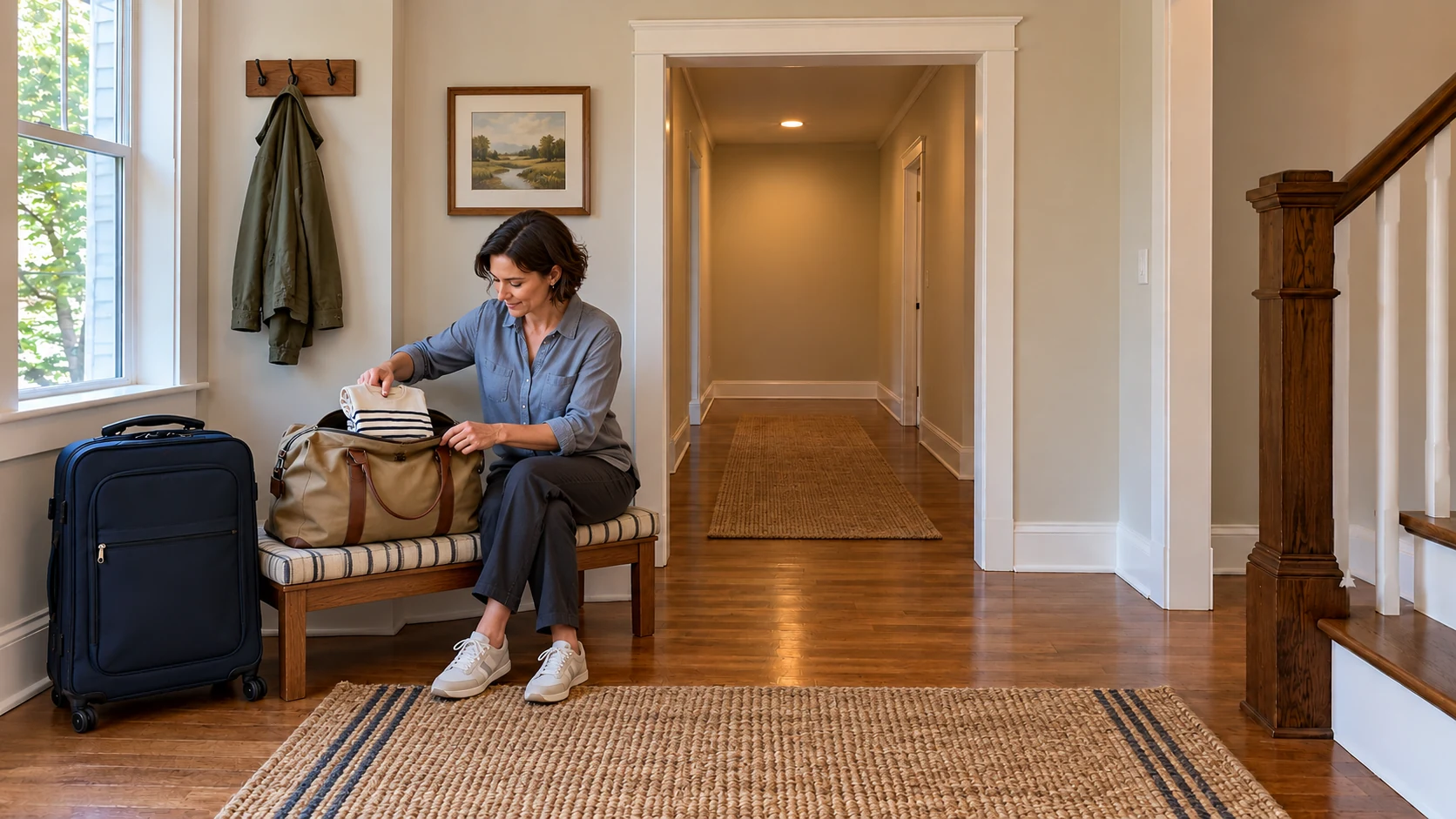
Plan for the actual receiving period and a workable overnight alternative. Do not pack the only copy of a customs receipt, a required building document or the receiving contact details into a container you cannot access. The goods schedule and the household’s own travel are related decisions, but one does not automatically arrange the other.
Example: Bowie to Charleston, South Carolina — obtain an accepted receiving slot
Consider a Town Center apartment household moving selected furniture and cartons to a Charleston condominium. Before choosing a model, obtain the receiving property’s entrance, lift or stair chain, permitted working period and authorized contact. Ask what must be submitted before arrival and what would make the booking incomplete. No particular condominium’s policy is assumed in this illustration.
A short accepted slot needs preparation that can support it. Finish packing and any permitted advance work before the carry period, make approved protection and materials ready, and keep the route usable. Do not assume that a shared corridor can hold the shipment while a lift is unavailable. Tell the planning contact if the inventory or access would exceed the slot so another arrangement can be agreed before dispatch.
The reference direct illustration is 1–2 days after loading. An eligible consolidated shipment on this route can use up to 30 days, with the actual receiving plan agreed. A household that can only receive during one unconfirmed hour has not yet solved either option. Establish the receiver, the property’s last-change deadline and the alternative if the slot falls through.
Keep furniture preparation connected to the receiving plan
The agreed inventory determines what is packed, protected, dismantled and reassembled. For ordinary drawer furniture, empty the drawers and normally keep them installed and secured in the complete protected piece. Review any construction that needs a different method. Use continuous protection over vulnerable surfaces before carrying; a narrow strip of cloth does not protect the whole item. Identify safely detachable parts and their hardware; keep each set associated with the correct body. Do not add an unexplained parcel that could be mistaken for another item.
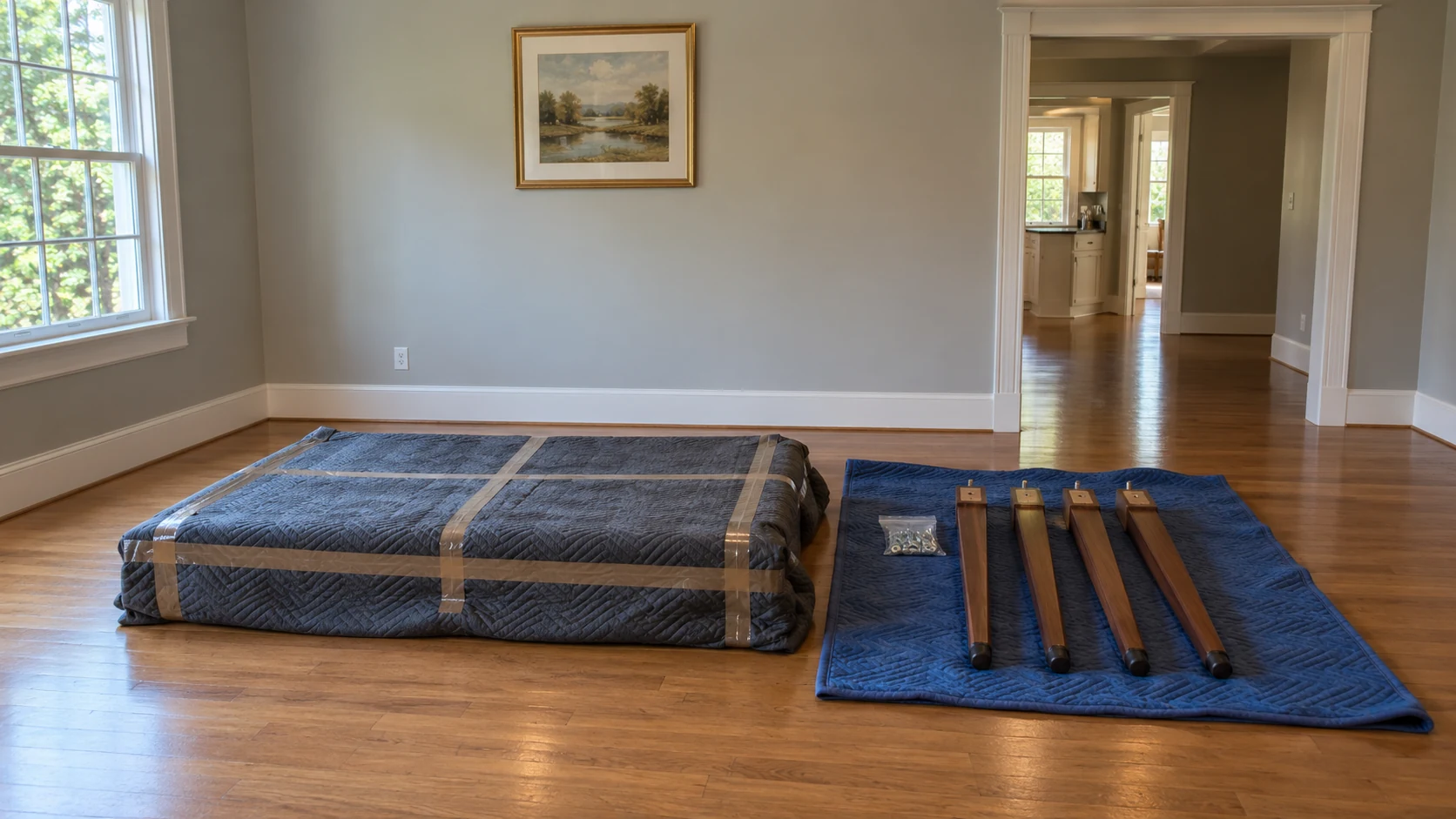
The receiving home needs a usable footprint and enough working space for the chosen stage. Furniture waiting for reassembly is different from a finished room. Agree which pieces the crew will reassemble, where they belong and which decisions require the customer or an authorized representative. A photograph of a completed room does not substitute for confirming its entrance and carrying route.
Prepare a small consolidated group as an identified shipment
A small shipment still needs an exact list and adequate preparation. Distinguish its furniture and cartons from belongings staying in the home. Use useful content and destination-room identification that matches the inventory, and keep the group outside the household’s travel bags and the clear exit route. Show fragile, heavy or unusual pieces so the plan can include the right handling.
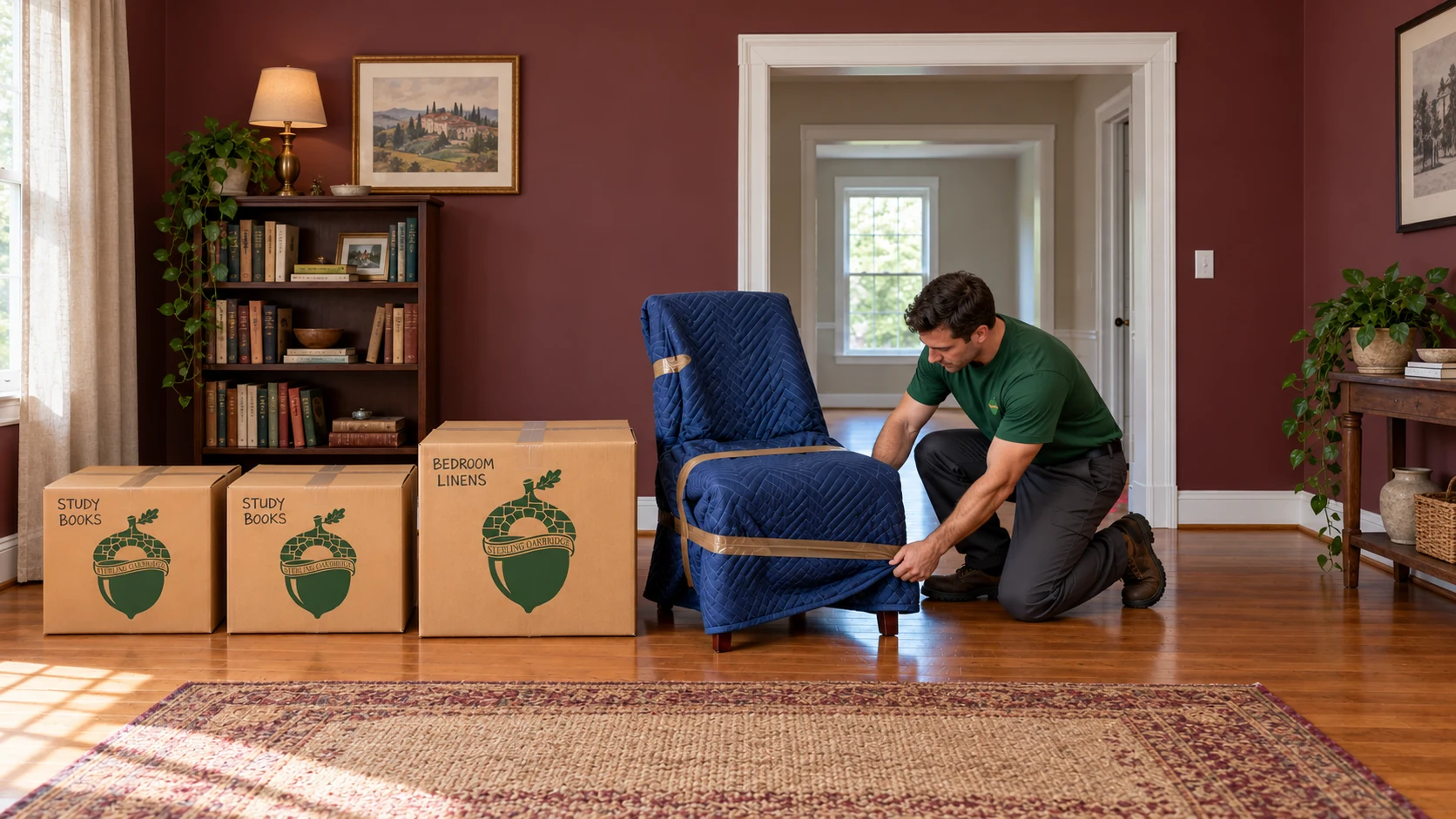
Fragile-only packing selects the agreed breakables; partial packing selects rooms or groups, while full packing covers the retained contents agreed for the job. Record what the customer will finish and when. Cartons are charged separately. Moving blankets, shrink wrap and tape have no separate material charge. Basic disassembly and reassembly use moving labor time without a separate basic assembly fee; complex furniture and specialist work need individual quotes. The long-distance written scope should reflect the chosen preparation.
Example: Bowie to London, Ontario — prepare the later-shipment documents
Suppose a Belair Town II household travels to London before a small furniture-and-carton shipment. The useful sequence begins with the importer’s applicable Canadian requirements, not with a promised border crossing time. Confirm the person’s classification, the goods being imported and the clearance arrangements before loading the shipment for departure.
CBSA’s moving guidance directs eligible movers to prepare two copies of their goods list, separating accompanying belongings from goods to follow. Include descriptions, values and applicable serial numbers. Present the list at the first point of entry even if no household goods accompany you, and keep the completed BSF186 record with the original goods-to-follow list and accounting document accessible for the later shipment. Duty and tax treatment depends on the importer and goods; an inventory or transportation booking alone does not establish entitlement. Restricted goods require their own review.
The direct illustration is 1–2 days after pickup and loading, subject to the actual cross-border and receiving plan. A suitable consolidated Canadian shipment uses up to 60 days, rather than the shorter domestic maximum. Coordinate the importer, the documents and the London receiver so that arrival of the truck does not precede the necessary clearance and access arrangements. The mover’s planned transport does not replace the importer’s responsibility for their own declarations.
Tie the written price to the work you have agreed
The agreed long-distance flat rate does not rise simply because the road journey or delivery takes longer. It applies to the reviewed inventory, access and services. Additional pieces, a different entrance, an added stair transfer or newly requested packing, storage, unpacking or removal change the work. Resolve known changes and any revised interstate written estimate before loading. The original estimate cannot be rewritten after loading begins; later additional services need their applicable agreement and charges before they are performed.
Furniture unwrapping belongs to delivery. Unpacking carton contents is optional work charged for time, and packaging or waste removal is a separate charge. Name the priority rooms or containers and the removal help wanted. A plan to receive furniture is not an automatic order to unpack every carton, place every household object or remove unwanted furniture.
For an interstate shipment, review the written liability terms before moving day. FMCSA explains Full Value Protection and Released Value; Full Value Protection applies unless Released Value is chosen through the required signed waiver. Released Value limits liability to 60 cents per pound per article, rather than replacement cost. Valuation is different from a separate insurance policy. Identify high-value articles and obtain the applicable cost, limitations and claims procedure in writing. At delivery, compare the shipment with the inventory, note visible concerns and keep photographs and documents. Report concerns promptly. FMCSA describes nine months after delivery to file a written interstate household-goods loss or damage claim; follow the written procedure and read any receipt language releasing the mover from liability before signing.
If both addresses are in Maryland, have the actual job reviewed under the applicable intrastate requirements. Maryland Commercial Law §14-3103 governs the written estimate and its waiver provisions; a binding estimate caps charges for its described services at the stated total, while a nonbinding estimate has a 125% limit plus only qualifying excess charges for necessary services caused by circumstances beyond the mover’s control that could not reasonably have been anticipated. The waiver must be voluntary and uncoerced. An hourly description does not remove those protections, and an interstate illustration does not settle the contract for a different job.
Example: Bowie to Tucson, Arizona — choose the first usable receiving room
For a Pointer Ridge household moving retained bedroom furniture to Tucson, identify which pieces must be reassembled and placed before the first night. Show the actual receiving door, turns and bedroom footprint. Decide who will be present to approve placement, which cartons need optional unpacking and what the household will bring separately for the first evening.
The direct illustration is 4–5 days after pickup and loading. Keep the keys, legal working position and receiving route confirmed for the agreed period. Tucson’s consolidated window is agreed individually; it does not inherit California’s up-to-90-day rule. A person arriving earlier than the shipment needs their own usable overnight arrangement, rather than assume the bed or essential cartons will be available ahead of the agreed delivery.

For this example, an agreed bed-reassembly and placement stage can produce a usable furniture layout while carton unpacking remains a separately selected task. Keep the entry, exit and working space clear. Treat storage, an additional delivery trip or a new receiving stage as an arrangement to confirm and price, not a free fallback implied by the distance.
Resolve readiness problems before dispatch
Bowie’s snow-emergency and clearance rules address City-street parking when two or more inches of snow or ice accumulate and the relevant abutting paved public-right-of-way clearance duty. The code requires the relevant paved public-right-of-way sidewalk or driveway to be cleared within 48 hours after snow, sleet or freezing rain ends. That legal period does not establish that the private path, steps and actual carry are ready for an earlier appointment. Inspect the route after wet or icy weather and report the specific unusable part before dispatch.
Use the earlier of the property’s last-change deadline and the mover’s dispatch cutoff as the decision point. If keys, the vehicle position, the approved slot, the carry route or necessary receiving arrangements remain unresolved, the authorized customer and property contacts and the moving planner need a confirmed alternative. That may be a later accepted period, another permitted route, a separately agreed stage or available storage appropriate to the job.
Contact the receiving property’s access controller and moving coordinator by that deadline, before departure and before alternatives expire. Confirm an available later receiving period or another accepted receiving location. For storage and redelivery, confirm a facility that can accept the actual load, including capacity, receiving hours, protection, handling, access, price, payer and retrieval or onward-delivery date. Arrange accommodation and accessible essentials for the household separately. If no destination can receive the goods, revise departure. Resume when possession, the authorized receiver, carrying route and any required import arrangements are ready; a pending request is not a confirmed alternative.
Explore destinations from Bowie
These examples organize household moving options across the United States and Canada. They describe destinations, not measured customer popularity. Confirm the actual addresses, contents, preparation, truck access and receiving period before arranging a particular shipment.
Northeast and Mid-Atlantic
- Albany, New York
- Philadelphia, Pennsylvania
- Boston, Massachusetts
- Newark, New Jersey
Southeast and Florida
- Charleston, South Carolina
- Charlotte, North Carolina
- Miami, Florida
- Orlando, Florida
Great Lakes and Midwest
- Chicago, Illinois
- Columbus, Ohio
- Detroit, Michigan
- Indianapolis, Indiana
Pacific states
- Sacramento, California
- San Francisco, California
- Portland, Oregon
- Seattle, Washington
Mountain West and Southwest
- Tucson, Arizona
- Denver, Colorado
- Salt Lake City, Utah
- Las Vegas, Nevada
Canada
- London, Ontario
- Ottawa, Ontario
- Montreal, Quebec
- Quebec City, Quebec
Long-distance moving questions
Where can you arrange long-distance pickup in Bowie?
We arrange long-distance household pickups in Bowie, an incorporated city in Prince George’s County, Maryland. Show the entire carrying route for the actual home: an older Old Town entrance, the layout and additions of a Rockledge house, a Belair Town II townhouse stair chain, a Town Center apartment or condominium, or a Pointer Ridge house. These are local setting examples, not one set of building permissions. A Bowie mailing address can extend beyond the City boundary; send the full address so the actual property and road rules can be checked.
Can you move from Bowie to another state or Canada?
Yes. Sterling Oakbridge arranges household moves throughout the United States and Canada. The written plan identifies the actual contents, preparation, access and receiving arrangement. For Canada, settle the importer’s applicable documentation and clearance requirements as well; booking transportation does not establish customs eligibility.
What is direct delivery?
Direct delivery uses a dedicated truck and the same moving crew at pickup and delivery. It suits a defined shipment with an agreed receiving plan. Include the chosen packing, furniture work and any other stages in the written scope. The planning or estimating contact is a different role from the moving crew.
Is consolidation only for shipments of at least 300–400 cubic feet?
No. About 300–400 cubic feet describes the approximate upper size of a suitable small shipment, rather than a minimum. A smaller group can be considered. Suitability depends on the actual pieces, destination and ability to receive within the agreed broader period; volume alone does not book the service.
When do the delivery windows begin?
After pickup and loading are complete. Packing, dismantling and carrying belongings out of the Bowie home happen before that point. Put the receiving period and any fixed property appointment into the written plan so that an illustrative travel window is not mistaken for an accepted delivery slot.
Are the four delivery examples confirmed appointments?
No. They are provisional illustrations based on reference driving routes and the confirmed delivery policy. Exact addresses, the actual truck route, loading completion, any border requirements and receiving access must be reviewed for the job. A table row does not reserve a lift, a curb position or a particular arrival hour.
Will the flat rate rise if the road journey takes longer?
No. Longer travel or delivery time does not increase the agreed long-distance flat rate for the same inventory, access and services. Added contents, a changed carrying route or an extra requested stage change the work. Resolve known changes and any revised interstate written estimate before loading. The original estimate cannot be rewritten after loading begins; later additional services need their applicable agreement and charges before they are performed.
What changes need a new scope agreement?
Tell the planning contact about extra pieces, storage contents, a different entrance, added stairs, changed parking or newly requested packing, unpacking or removal. Describe what changed. Resolve known changes and any revised interstate written estimate before loading. The original estimate cannot be rewritten after loading begins; later additional services need their applicable agreement and charges before they are performed. A longer road journey for the unchanged shipment is a different situation.
Does Tucson use California’s consolidated delivery maximum?
No. Tucson is in Arizona. Its consolidated receiving window is agreed individually; California’s up-to-90-day maximum does not apply automatically. Eligible shorter domestic routes can use up to 30 days, while Florida and Canada use up to 60. Canada keeps its separate rule even on a relatively short route.
Does a reference distance guarantee same-day or next-day delivery?
No. A suitable small nearby job may allow same-day delivery after early loading and confirmation of lawful travel, access and receiving time. Next-day availability also needs a reviewed plan. Albany’s illustrative 1–2-day direct window is a planning example, not a confirmed appointment.
How should I handle a narrow receiving slot in Charleston?
Obtain the building’s accepted entrance and lift or stair arrangement, work period, approving contact and last-change deadline. Give those facts to the planning contact before choosing the delivery model. A fixed slot needs a confirmed receiving plan; a broader consolidated period needs a receiver and access arrangement that can genuinely support it.
What if I reach London, Ontario before the shipment?
Prepare the applicable customs records before travel. CBSA directs eligible movers to separate accompanying goods from goods to follow and present their list at first entry, even without goods accompanying them. Prepare two copies of the applicable lists and retain the original goods-to-follow list, accounting document and completed BSF186 receipt for the later shipment. Confirm your own classification and clearance requirements; a mover’s inventory does not guarantee duty-free entry.
How do I prepare furniture with long removable legs?
Identify the actual construction first. When safe disassembly is appropriate, protect the body, remove the matching legs at their real joints, keep the hardware together and wrap the complete removed set for travel. Agree reassembly at the receiving home. Do not rely on wrapping exposed slender legs as a substitute for the right preparation.
Does consolidated delivery promise the same moving crew?
The dedicated-truck and same-crew terms describe direct delivery. Do not assume them for a consolidated shipment. Confirm its actual handling and receiving arrangement in writing. Consolidation also does not automatically include free storage or an unspecified discount.
Can I select fragile-only or partial packing?
Yes. Fragile-only packing covers the agreed breakables; partial packing chooses rooms or item groups, while full packing covers the retained contents agreed for the job. List what the crew will prepare and what you will finish. Cartons are charged separately, and preparation needs to fit the accepted pickup period.
Which materials and basic furniture work are included?
Moving blankets, shrink wrap and tape have no separate material charge. Basic furniture disassembly and reassembly use moving labor time without a separate basic assembly fee. Cartons are separate, and complex furniture or specialist work needs an individual quote. For long-distance work, record the selected preparation in the agreed flat-rate scope.
Does delivery include unpacking every carton and taking away the waste?
Furniture unwrapping belongs to delivery. Unpacking carton contents is optional work charged for time; packaging and waste removal are separate charges. Specify the priority rooms or containers and the removal help you want before booking those stages. Receiving furniture does not automatically order every unpacking task.
Does Bowie’s commercial-purpose parking exception reserve space?
No. The City’s street code contains an exception for a vehicle actually engaged in its commercial purpose, but other stopping, safety and signed restrictions remain. It does not reserve a space or authorize blocking a driveway, sidewalk, crossing or fire lane. Agree the real working position for the actual vehicle.
May the truck automatically use a private driveway or association bay?
No. Private residential premises and shared property have their own conditions, separate from the City street exception. Review the actual vehicle, position, period and carrying route with the property controller and responsible City authority. Owner consent does not override the separate City residential commercial-vehicle restrictions. A space that fits a resident’s car does not by itself establish truck permission.
What changes if snow arrives before pickup?
Bowie’s City-street snow-emergency restriction begins with two or more inches of snow or ice, and the relevant abutting paved public-right-of-way clearance duty is separate. The code requires relevant paved public-right-of-way sidewalks and driveways to be cleared within 48 hours after snow, sleet or freezing rain ends. The carry route must actually be usable at an earlier appointment as well. Notify the mover and property contact before dispatch if the position, steps or entrance are not ready.
What protection applies to an interstate household shipment?
Full Value Protection provides replacement-value liability under its written terms. Released Value limits liability to 60 cents per pound per article and requires the specified written selection. FMCSA says Full Value Protection applies unless Released Value is selected. Valuation differs from a separate insurance policy. Obtain the applicable cost, limitations and claims procedure in writing and identify high-value items before the move.
What if both addresses are in Maryland?
Have the actual job reviewed under Maryland’s applicable intrastate estimate rules. Section 14-3103 requires the written estimate unless its voluntary, uncoerced waiver provision applies. A binding estimate caps charges for the described services at the stated total; a nonbinding estimate has a 125% limit plus only the statute’s narrow qualifying excess charges. An hourly description does not remove those protections.
What if keys, access or the receiving home are not ready?
Use the earlier of the property’s last-change deadline and the mover’s dispatch cutoff as the decision point. Contact the receiving property’s access controller and moving coordinator by that deadline, before departure and before alternatives expire. Confirm an available later receiving period or another accepted receiving location. For storage and redelivery, confirm a facility that can accept the actual load, including capacity, receiving hours, protection, handling, access, price, payer and retrieval or onward-delivery date. Arrange accommodation and accessible essentials for the household separately. If no destination can receive the goods, revise departure. Resume when possession, the authorized receiver, carrying route and any required import arrangements are ready; a pending request is not a confirmed alternative. Storage and later delivery need their own agreement; they are not automatically included or free.
What should I send to request an estimate?
Send both addresses, date options, the retained inventory and the packing or receiving help wanted. Show furniture construction and the complete routes, including stairs, turns, lifts and the actual vehicle position. Include building instructions and unresolved approvals. An item list starts the review. For an interstate household shipment, obtain the required written estimate and complete the required survey or sign the proper separate written survey waiver before loading. Retain the waiver with the bill of lading; waiving the survey does not waive the written estimate.