
Maryland · Columbia service planning
Long Distance Movers in Columbia, MD
Move from Columbia, Maryland, to a new home across the United States or in Canada. Direct delivery uses a dedicated truck and the same moving crew at pickup and delivery. Consolidated delivery can suit a smaller shipment when you can receive within a wider agreed window. We review the belongings, both properties and the work you want, then agree a written flat rate for that scope.
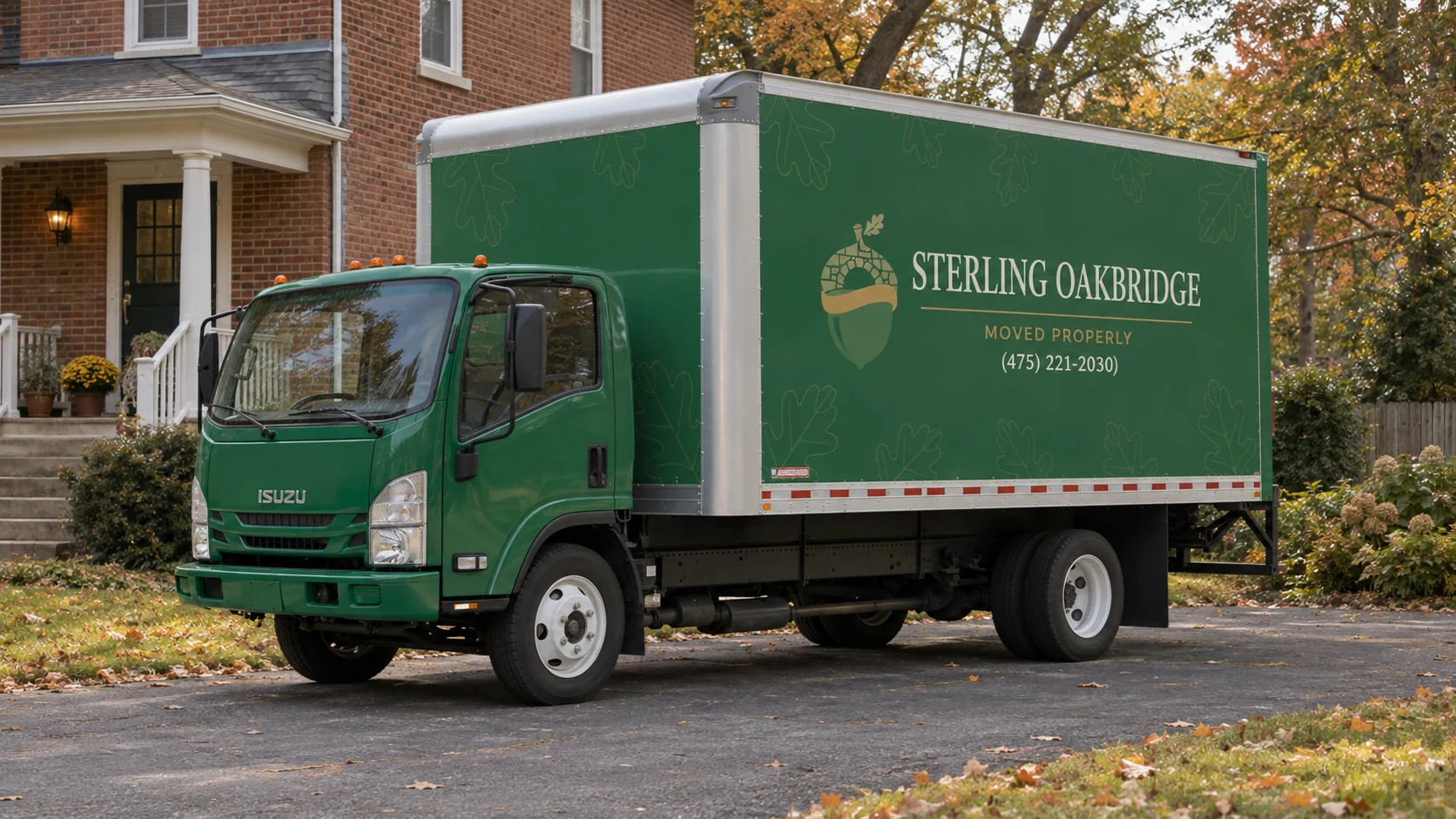
Begin with both full addresses, your retained item list and the dates that are firm. Include packing, separate storage and the person who will receive the shipment. The planning contact will recommend the review needed to connect those details into a workable move.
Choose direct or consolidated delivery
Direct service keeps the truck dedicated to your shipment and uses the same moving crew at both ends. It can be a useful choice for a larger household, a firm receiving arrangement or a simpler handover. The planning contact preparing the estimate has a separate role from the moving crew.
Consolidation can suit selected furniture and packed contents when a wider receiving window works for the household. Approximately 300–400 cubic feet describes a small shipment; it is not a minimum volume or automatic eligibility cutoff. Show the complete group, including cupboard contents, dismantled furniture and any storage locker, so its actual size and handling can be reviewed.
For suitable nearby domestic consolidated routes, the delivery window can be up to 30 days. Florida and Canada have up to 60 days; California has up to 90. Canada follows its country rule even when the distance looks nearby. Other long routes need an individually agreed window. The dedicated truck and same-crew arrangement of direct service should not be assumed for consolidation. Any storage needs available space, an agreed sequence and its own price in the written scope.
Put the receiving window after completed loading
The delivery clock begins after pickup and loading are complete. An early arrival at a Columbia property is not an early departure with the shipment aboard. Packing, a shared elevator, a long walk from a townhouse court or contents on several levels can take different parts of the departure day.
Swipe the table to compare both delivery options.
| Illustrative destination | Direct planning window | Consolidated window |
|---|---|---|
| Richmond, Virginia | 1–2 days | Up to 30 days |
| Jacksonville, Florida | 2–3 days | Up to 60 days |
| Peterborough, Ontario | 1–2 days | Up to 60 days |
| Tucson, Arizona | 4–5 days | Window agreed individually |
The table uses city-reference road routes and the company's planning policy. It does not book an appointment, certify a commercial-vehicle route or provide a driving-hours allowance. The actual addresses, vehicle, lawful travel, receiving access and border requirements still need review. A suitable small nearby direct move may work on the same day after early loading and confirmed receiving; next-day delivery may also be possible. Neither follows from mileage alone.
Begin with the actual Columbia property
We arrange long-distance pickups in Columbia CDP, Howard County, Maryland, with the shipment and property access agreed. Show a managed apartment's service entrance and elevator, an attached home's shared court, private path and inside stair, or a house's lower-level rooms, garage and turns between floors. Include off-site storage and any extra stop. The complete address establishes which public or private owner must review the working vehicle position. Columbia's Census boundary, postal name and village or property responsibilities are separate; a service-area name establishes neither a local office nor truck permission.
Confirm the pickup address and unit, including off-site storage and any separately arranged stop, before building the estimate. A shared loading court and a private front path may have different approving owners.
The county's Downtown Columbia plan provides context for managed buildings and ongoing development; a plan does not establish a particular loading bay or finished project. The Columbia relocation guide compares four areas and ordinary household journeys. This page connects the property you have chosen to a shipment and receiving plan.
A move from Columbia to Virginia or Washington, DC, crosses a jurisdiction even when the drive is short. A household move remaining wholly within Maryland follows the applicable intrastate arrangement. The Columbia moving page explains the separate Maryland estimate protections.
Keep the household's travel group outside the load
Carry medicines, identity and moving documents, keys, chargers, clothing and first-night supplies with the household. Add work or study equipment that must remain available before delivery. Identify what children or another household member need during the interval between homes, then keep it outside every carton or container intended for the truck.
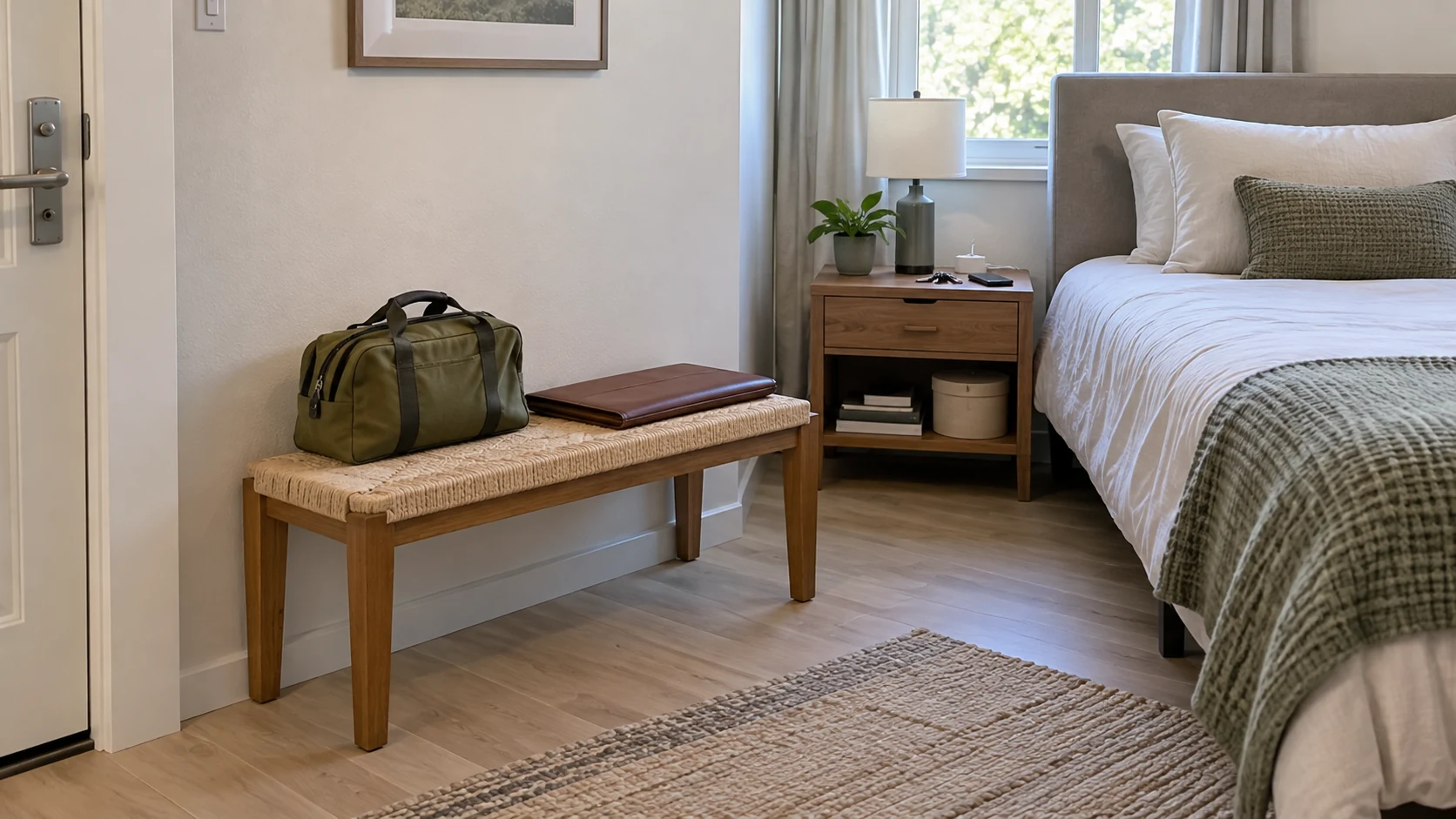
Finish deciding what stays before estimating the retained shipment. Open cupboards and storage during the review so the contents and packing work can be counted. Separate a sale, donation or removal from the group being moved, and confirm that other arrangement before it obstructs the carrying route. Ask about the acceptance and preparation of food, plants, liquids and other contents needing special instructions.
Connect the working vehicle position to the final room
At both properties, show the working vehicle position, curb, sidewalk, private path, steps, entrance, vestibule, corridor, every elevator or stair, and the final room. Include the lowest ceiling, narrowest door and the place where a long protected item must turn. A large lobby or bedroom does not prove that the route between them will work.
For a managed building, obtain the entrance instructions, vehicle limits, working hours, elevator dimensions, booking or sharing, protection, COI wording and recipient, security and any approved-labor or union requirement. Name the person submitting each request, the person accepting it, its deadline and any charges or deposits. We can coordinate the arrangements; a submitted request is not accepted access.
In Columbia, establish whether the road or loading area belongs to Howard County, the state or a private owner. The county's Bureau of Highways distinguishes county and state-road responsibilities. Traffic Engineering is a separate contact for traffic controls. Neither a resident permit nor informal signs establish an exclusive working position.
If the proposal would close a road or require authorized county staff to stop or reroute traffic, the Police Department's special-event process has its own scope and lead time. Its minimum 60-calendar-day application period is not a universal notice requirement for every household truck. Identify the actual approval needed rather than applying that period to an ordinary private loading arrangement.
Give a private property the selected vehicle's height, length and turning needs. Agree who obtains any approval, follows its conditions and pays applicable charges. If the preferred position is unavailable, review a different lawful position and its carry, another vehicle arrangement or an accepted later slot before dispatch.
Prepare furniture for its construction and both routes
Show dimensions, weak or repaired joints, glass, detachable parts and the protected outside size of each difficult piece. Compare that size with the entire route at both properties. A removable shelf is different from a structural panel; a bed designed to come apart is different from a bonded cabinet. Agree what separates, how the fittings stay identified and what will be reassembled at receiving.
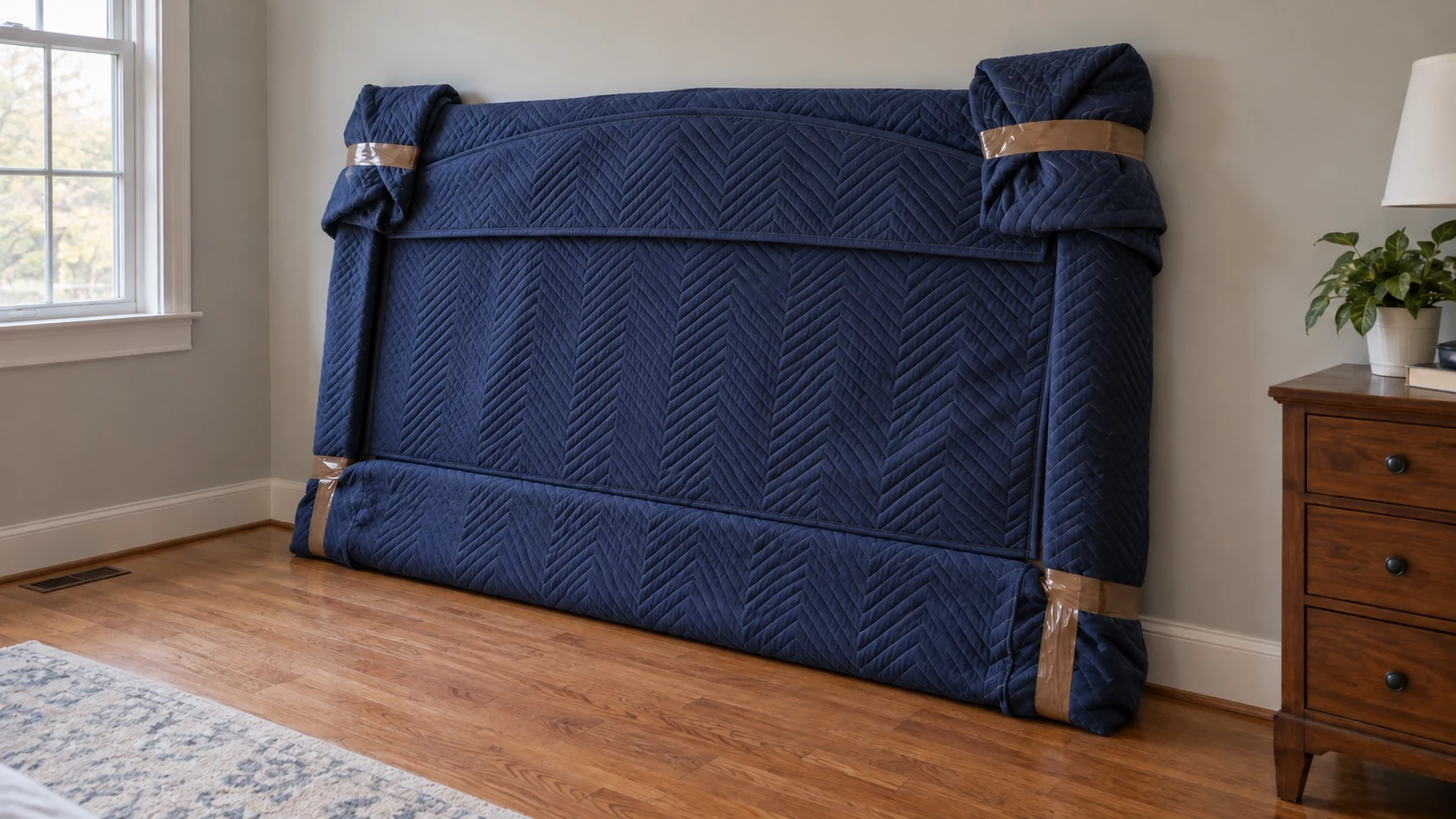
Basic furniture disassembly and reassembly use moving labor without a separate basic assembly fee. Complex furniture, a piano, safe, artwork or another specialist item needs review and an individual scope. Crane work is outside the service scope; an assumed lift through a window does not solve an unusable inside route.
Choose full packing, selected rooms or fragile groups, and state which contents you will pack. Packing is charged for working time and supplied boxes are separate. Moving blankets, shrink wrap and tape have no separate basic-material charge. Connect permitted preparation with the accepted carrying window: materials and packing may be arranged beforehand, while carrying stays within the agreed hours.
Read the flat rate as an agreed scope
The long-distance price stays the same for the same shipment and work even when the journey or delivery takes longer. Report added belongings, omitted storage, extra packing, another stop or changed access before loading so the required revised estimate can be prepared and agreed before the shipment is loaded. Later changes need the applicable written scope and price before the affected work begins. Road distance and bedroom count do not replace a retained inventory and property review.
Complete the survey required for the actual shipment. For interstate household goods, a survey waiver must be a proper separate written agreement before loading, retained with the bill of lading; it does not waive the written estimate. Compare estimates using the same two addresses, contents and desired work. Identify materials, preparation, stops, storage and receiving help. Name the customer representative who may approve a change and keep accepted revisions with the moving documents.
Furniture unwrapping is part of delivery. Optional unpacking or putting contents away is charged for working time; taking used packaging or unwanted items away is separately charged. Include those results if you want them. For interstate household goods, review Full Value Protection and the required written waiver if selecting Released Value. Valuation describes the mover's liability arrangement and differs from separate insurance. Released Value limits liability to 60 cents per pound per article rather than replacement cost. Identify high-value items and record the selected terms, deductible, limits, claim process and any additional cost before loading.
Four examples of planning the two ends
These are conditional examples, not accounts of completed customer moves. Each links a possible Columbia pickup to a different receiving task. A destination name does not establish truck permission, an available date or an accepted building arrangement.
Example: Richmond, Virginia — one receiving period for the whole shipment
Suppose a Columbia apartment is sending its retained contents to Richmond, including furniture in the dwelling and cartons in a separate storage locker. The origin has a shared service elevator; the receiving apartment has a firm working cutoff. Count and review the locker as part of the shipment, and name the person who can open it when the crew needs access.
For direct delivery, work backward from the accepted receiving cutoff through unloading, the reviewed road journey and completed loading. Arrange permitted packing beforehand and confirm the keys and receiving contact. If an early completed load, lawful travel and both properties leave enough working time, a suitable small same-day move can be considered. Otherwise select an accepted later delivery.
Consolidation offers a different plan when the recipient can genuinely work with the up-to-30-day window. Keep essentials and any time-critical work equipment with the household. A single unchangeable afternoon appointment does not become flexible because the shipment is small. Confirm the model and receiving arrangement before booking personal travel around the load.
Example: Jacksonville, Florida — essentials that last through the receiving window
Suppose a family is leaving an attached Columbia home for a Jacksonville house. There are bedrooms upstairs, packed contents on a lower level and a shared path before the origin's front steps. Show that entire path, every stair and the destination entrance during the review. A container count taken only from the living room leaves part of the job unplanned.
Separate the family's travel group before packing the remaining contents. Medicines, documents, clothing, school or work essentials and a familiar first-night group need to remain usable while the shipment travels. Confirm the Jacksonville keys and the person who can receive, including the arrangement if the household arrives on a different day.
The illustrative direct range is 2–3 days after completed pickup and loading, subject to the actual move review. A suitable consolidated shipment to Florida can have up to 60 days. That window is useful only if the family can manage the interval and a recipient can accept delivery within it. Any temporary accommodation or storage needs an actual available arrangement and a price; neither is included merely by choosing consolidation.
Example: Peterborough, Ontario — a selected goods-to-follow group
Suppose a household is joining family in Peterborough with a smaller retained shipment: kitchen contents, books and a few furniture pieces. Distinguish that group from belongings carried personally, identify the receiving rooms and review the complete furniture path. A small group can be considered for consolidation, but its volume, construction and handling still matter.
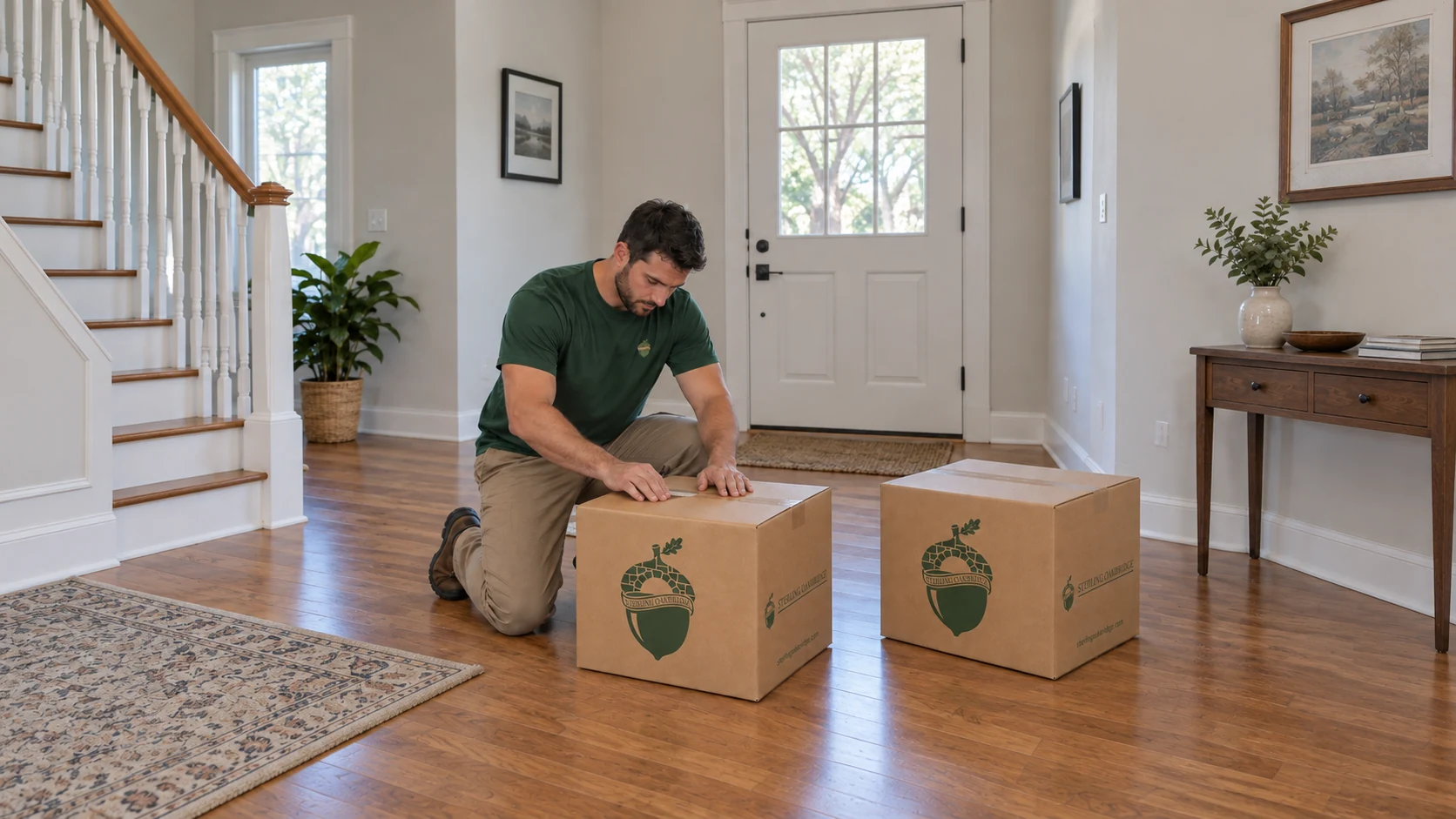
Prepare two copies of the goods list, separating belongings accompanying the household from goods to follow. Include identifying descriptions, Canadian-dollar values and relevant serial numbers, with later goods on the original goods-to-follow list. Prepare the importer record and shipment inventory together. The CBSA Personal Effects Accounting Document, BSF186 records descriptions, values in Canadian dollars, applicable serial numbers and goods to follow. It distinguishes classification types, including settlers and former residents; the mover's quote does not determine the household's entitlement.
For an eligible settler or former-resident goods-to-follow arrangement, later goods must be reported at the person's arrival to fall within that entitlement. Coordinate personal arrival, documentation, shipment release and the Peterborough recipient before treating the load as ready. Canada's consolidated policy is up to 60 days even when its reference distance resembles a nearby domestic route. The illustrative direct range does not guarantee customs clearance or a border appointment.
Example: Tucson, Arizona — furniture that can reach its intended rooms
Suppose a Columbia house is sending retained bedroom furniture and packed household contents to Tucson. Decide which large pieces justify preparation and transport, then show their construction and the full destination route. A bed that separates still needs protected components, identified fittings and an agreed reassembly task. Emptying a cabinet does not make its structure safe to handle without protection.
At receiving, confirm the keys, recipient and room assigned to each group. Compare a protected piece with every doorway, landing and final turn rather than relying on room dimensions in a listing. Arrange the large furniture first so optional carton unpacking has a clear route and usable surfaces. Discuss a difficult piece before loading, when another preparation or placement decision can still be made.

The example's direct planning range is 4–5 days after completed pickup and loading, subject to review of the actual move. A small shipment considered for consolidation needs its own window: Arizona does not inherit California's up-to-90-day rule. Keep household travel and accommodation workable through the accepted window. Any storage stage needs confirmed space, access, a release contact, notice and a quoted price.
Decide on a fallback before the vehicle leaves
Set a decision deadline for unresolved keys, a rejected elevator booking, an unusable private path or unavailable truck position. The authorized customer representative and planning contact should choose a confirmed later slot, another accepted route, a separate delivery stage or actually available storage. Before relying on storage, confirm a facility that can accept the load: capacity, receiving hours, protection, handling, price, payer and onward-delivery date. Arrange accommodation and essentials for people and pets separately. If no destination can accept the shipment, revise departure. Agree the additional work and cost, where people stay and what remains with them.
Before dispatch and again at receiving, have the responsible person check private paths, steps and landings for rain, leaves, snow or ice. Public-road clearing does not make a private approach ready. Keep the person who can open the property and resolve access reachable. Resume the plan when keys, the recipient and the accepted working route are confirmed.
Explore long-distance destinations from Columbia
These destination examples organize household moves from Columbia. We serve destinations throughout the United States and Canada. Review both addresses, retained contents, preparation, truck access and receiving dates before choosing the delivery model.
Northeast and Mid-Atlantic
- Richmond, Virginia
- Boston, Massachusetts
- New York City, New York
- Albany, New York
- Washington, DC
- Pittsburgh, Pennsylvania
Southeast and Florida
- Jacksonville, Florida
- Tampa, Florida
- Orlando, Florida
- Charleston, South Carolina
- Raleigh, North Carolina
Great Lakes and Midwest
- Chicago, Illinois
- Columbus, Ohio
Pacific states
- Spokane, Washington
- Seattle, Washington
- Portland, Oregon
- Sacramento, California
- San Diego, California
Mountain West and Southwest
- Tucson, Arizona
- Reno, Nevada
- Las Vegas, Nevada
- Phoenix, Arizona
- Boise, Idaho
Canada
- Peterborough, Ontario
- Hamilton, Ontario
- London, Ontario
- Montreal, Quebec
Send enough to start the estimate
Send both complete addresses and units, date options, retained contents and the preparation and receiving help you want. Add photographs or video of open storage, large pieces and the whole carrying route. Include building instructions, separate stops, firm receiving constraints and unresolved arrangements with the person handling each.
A straightforward selected group may begin with a clear item list. More contents, packing, unusual furniture or restricted access can need video review or an in-person survey. The planning team will recommend the appropriate review. You can begin before every arrangement is settled; the written scope should resolve the material conditions before the affected work starts.
Long-distance moving questions
What long-distance moving can I arrange from Columbia?
Direct delivery uses a dedicated truck and the same moving crew at pickup and delivery. Consolidation can suit a smaller shipment when you can receive within a wider agreed window. We serve destinations throughout the United States and Canada; the actual addresses, contents, access and dates determine the written arrangement.
Where in Columbia can pickup be planned?
We arrange long-distance pickups in Columbia CDP, Howard County, Maryland, with the shipment and property access agreed. Show a managed apartment's service entrance and elevator, an attached home's shared court, private path and inside stair, or a house's lower-level rooms, garage and turns between floors. Include off-site storage and any extra stop. The complete address establishes which public or private owner must review the working vehicle position. Columbia's Census boundary, postal name and village or property responsibilities are separate; a service-area name establishes neither a local office nor truck permission.
Does direct delivery mean the estimate planner travels with the truck?
No. Direct delivery uses the same moving crew at pickup and delivery, while the planning team prepares the estimate and coordinates the arrangements. Give both the current inventory, access instructions and authorized customer contact.
Do I have to fill a truck or reach 300 cubic feet?
There is no minimum established by the approximate 300–400-cubic-foot small-shipment guidance. A selected group can be reviewed for consolidation. Send its item list, furniture dimensions and packed contents so the team can assess the actual shipment and window.
When does the delivery window start?
After pickup and loading are complete. Packing, the carrying route and loading can take part of the departure day. The illustrative table is not a booked appointment; confirm the actual receiving arrangement for the reviewed move.
Can a nearby direct move be delivered on the same day?
A suitable small nearby move can be considered for same-day delivery after early loading when lawful travel, access and the recipient make the day workable. Next-day delivery may also be available. A short distance alone does not confirm either arrangement.
How long can consolidated delivery take?
Suitable nearby domestic routes can have up to 30 days; Florida and Canada up to 60; California up to 90. Other long routes need an individual window. Canada follows its country rule even at a nearby-looking distance. Choose this model only when the recipient can work with the agreed window.
Does the 90-day California window apply to Tucson?
No. Tucson is in Arizona. Its consolidated window must be agreed individually rather than copied from California. The illustrative direct range for this example is 4–5 days after completed pickup and loading, subject to review of the actual move.
Will a longer journey increase the agreed flat rate?
Travel or delivery taking longer does not itself increase the agreed interstate or cross-border flat rate for the reviewed inventory, access and services. Report additional items, changed access, extra packing, storage or another stage before loading so the required revised estimate can be agreed before the shipment is loaded. Later changes need the applicable written scope and price before the affected work begins.
Is a Columbia move to Richmond or Washington, DC, interstate?
Yes. Moving from Maryland into Virginia or the District of Columbia crosses jurisdictions even when the journey is short. Use the estimate and protection arrangement for the actual shipment. A household move wholly within Maryland follows the applicable intrastate rules instead.
Who can approve a working truck position in Columbia?
The actual road or property owner governs the proposed position. Identify whether the space is county-managed, on a state road or private, then give the relevant authority or manager the exact location, vehicle and working period. A village name or resident permit does not establish exclusive space. Agree any required approval and conditions, or a different lawful position, before dispatch.
Does every Columbia move require 60 days of truck notice?
No universal 60-day household-truck notice is established by the county source used here. The Police Department's special-event process applies to its stated road-closure or authorized-staff traffic-control proposals and accepts applications at least 60 calendar days ahead, up to one year. An ordinary private loading arrangement needs its own property acceptance and any applicable public controls; identify that process rather than assuming the special-event rule governs every move.
What should we provide for a managed apartment or attached home?
For a managed building, send the accepted entrance and vehicle position, working hours, elevator and door dimensions, booking or sharing, protection, COI wording and recipient, security and any approved-labor or union requirement. For an attached home, include the whole shared-court or street approach, private path, stoop, stairs and inside turns. Name the approving contact, deadlines, charges and deposits; a submitted request is not accepted access.
Can you pack only the fragile contents or selected rooms?
Yes. Full packing, selected rooms and fragile groups can be scoped for the move. Packing is charged for working time and supplied boxes are separate; blankets, shrink wrap and tape have no separate basic-material charge. State what you will pack and when the remaining group is ready.
Does the move include taking furniture apart and putting it back?
Basic furniture disassembly and reassembly use moving labor without a separate basic assembly fee. Complex pieces need an individual scope. Show construction, weak or repaired joints, detachable parts and the full route at both properties, and agree how fittings stay identified with each item.
Is opening boxes the same as unwrapping furniture?
No. Furniture unwrapping is part of delivery. Optional unpacking or putting contents away is charged for working time, and taking used packaging or unwanted items away is separately charged. Full packing, selected rooms and fragile groups can be agreed; packing uses working time and supplied cartons are separate. State the receiving result you want in the written scope.
Can storage bridge a gap between homes?
Storage can be arranged as an agreed, priced stage when space and access are actually available. Confirm intake, the inventory, access needs, the release contact and notice, and later delivery. Keep medicines, documents and the first-night group with the household; a preferred storage date is not a reservation.
What should remain with us during travel?
Keep medicines, identity and move documents, keys, chargers, clothing and the first-night group outside the shipment. Include work or study equipment you need before delivery. Make that group distinct from labeled containers going on the truck, especially when receiving within a consolidated window.
What paperwork matters for a move to Peterborough?
Prepare two copies of the goods list, separating accompanying belongings from goods to follow, with identifying descriptions, Canadian-dollar values and relevant serial numbers. Include later goods on the original goods-to-follow list. Prepare the appropriate CBSA personal-effects record, BSF186. Classification and entitlement belong to CBSA; eligible later goods must be reported at the person’s arrival. Coordinate personal arrival, documents, shipment release and receiving instead of assuming a moving quote establishes clearance.
Does valuation mean a separate insurance policy?
No. Interstate household-goods valuation is the mover’s liability arrangement. Full Value Protection applies unless Released Value is selected through the required written choice; Released Value limits liability to 60 cents per pound per article rather than replacement cost. Separate insurance and a building COI are different. Disclose high-value items and review cost, deductible, limits and claims terms before loading.
What if keys, an elevator slot or the working route fail?
Use the decision checkpoint before dispatch and before alternatives expire. The household decision-maker contacts the access controller and coordinator to confirm a later window or authorized method. Before using storage, confirm a facility that can actually accept the load: capacity, receiving hours, protection, handling, price, payer and onward-delivery date. Arrange accommodation and essentials for people and pets separately. If no destination can accept the shipment, revise departure; resume when possession, the authorized receiver and the route are ready, with changed work and charges agreed in writing.
What should I send first for an estimate?
Send both complete addresses and units, date options, the retained contents and the preparation and receiving help you want. Include open-storage views, large-item details, the complete carrying routes, proposed truck positions, building instructions and unresolved keys or receiving constraints. The planning team will recommend the review required for the actual route. An interstate survey waiver must be a proper separate written agreement before loading, retained with the bill of lading; it does not waive the written estimate. A move wholly within Maryland follows its applicable intrastate terms.
Sources and local planning
The Columbia moving page covers the wider company services and Maryland estimate terms. The Columbia relocation guide covers choosing a home, schools, accounts and everyday journeys.
- Downtown Columbia plan — Howard County; existing and planned projects are distinct.
- Bureau of Highways — Howard County and state-road responsibility.
- Traffic Engineering — Howard County traffic controls.
- Police administrative services — the specific special-event closure process, rather than a universal household notice period.
- BSF186: Personal Effects Accounting Document — Canada Border Services Agency.
- Interstate liability and protection — Federal Motor Carrier Safety Administration.