
New Jersey · Browns Mills service planning
Junk Removal & Disposal in Browns Mills, NJ
An old freezer can need to leave before replacement. Estate furniture can remain after recipients have chosen useful belongings. Outgrown play equipment can consume space in the next move. Sterling Oakbridge plans agreed junk removal and disposal in Browns Mills as a stand-alone visit or moving-day add-on. Review the actual property, selected materials, transportation and accepting receiver in the estimate.
Put useful belongings first in the moving budget
Disposal can save the cost of handling things the next household no longer needs. Compare removal and any necessary replacement with avoidable preparation, carrying, packing, shipment capacity, unloading, storage and later disposal. Keep valued and useful pieces. Confirm the revised inventory and written scope before relying on a saving: excluding an item does not automatically reduce an existing flat quote.
A moving date does not arrange waste collection. The responsible town and collector have their own bulky dates and exclusions, while drop-off access depends on the actual vehicle and permit. A building's bins or an ordinary garbage subscription may not cover a refrigerator, mattress or furniture clearance. Confirm the property and collector's actual instructions before leaving anything out. An unwanted object still needs a receiving decision and someone to get it there.
Look first for repair, a committed recipient or an eligible household arrangement that can meet the deadline. Suitable reuse can avoid unnecessary disposal. A tentative offer to collect next month does not clear the room before tomorrow's delivery, and a recycling address does not supply indoor labor. Compare complete options rather than assuming the cheapest receiving charge solves access, transportation and timing.
Browns Mills houses, shared residences and managed properties can have different carrying routes and waste arrangements. Confirm the actual property and its collector rather than assuming every building has the same service. Show a basement stair, narrow turn, shared doorway, long driveway or actual legal vehicle position. Do not assume a large lot makes every approach suitable for a loaded truck. The moving guides cover broader relocation planning; the removal estimate should describe this property's selected items and carrying route.
Send an item list with the access photographs
Include quantities, dimensions, approximate weight, condition, room and floor. Show stairs, thresholds, doors and the distance to vehicle access. State who authorizes removal, which belongings remain and the date the space must be clear. A new appliance order, property handover or interstate departure makes the deadline important without creating an automatic collection appointment.
Identify connections, batteries, liquids, contamination and unknown contents before the visit. A freestanding piece differs from fixed equipment requiring a qualified disconnect. A garage can contain household objects, fuels and tools that need separate decisions. Keep uncertain ownership, papers, valuables and sold items outside the removal group until their owners have decided.
- Furniture removal. Sofas, armchairs, dressers, tables and bookcases. Identify each piece, its dimensions, the carrying route and whether a recipient or removal has been agreed.
- Mattress disposal. Used mattresses and box springs after a bed replacement or downsizing. Give the size, quantity and condition; disclose pest concerns and confirm covering instructions and an accepting destination.
- Appliance removal. Refrigerators, freezers, washing machines, dryers and microwaves. Give the model and utility preparation. Refrigerant appliances need a suitable receiving chain; appliance removal does not include utility disconnection or installation unless separately confirmed.
- E-waste and electronics. Televisions, monitors, computers and associated covered equipment. Confirm the exact device and approved electronics route. An appliance and a covered electronic device can follow different disposal programs.
- Gym equipment. Treadmills, exercise bikes, weight benches and loose weights. Identify weight, stairs, dismantling, screens and embedded batteries before choosing the carrying and receiving plan.
- Outdoor items. Worn patio furniture, loose play equipment and unwanted garden equipment. Describe fuel, batteries, anchoring and any dismantling. A fixed shed or play structure needs a separate review of permissions and work.
- Yard waste. Branches, brush, leaves and trimmings remaining after a small clearance. Review material, quantity, bundling and the local green-waste route. Soil, stumps, fuel and equipment are different loads; garden work itself is not included automatically.
- Light construction debris. Small quantities of loose drywall offcuts or other identified remnants from a minor repair. Send photographs, material types and quantity for acceptance review. Confirm the receiving route and charges; demolition, unknown or contaminated materials need a different plan.
- Used packaging and floor protection. Flattened cartons, packing paper, plastic film and clean protective sheeting. Separate materials and identify contamination or attached debris. Agree the staged quantity and separately charged collection.
These categories describe requests, rather than promise acceptance of every material. Furniture, electronics, refrigerant appliances, vegetation and light repair remnants may require separate receiving arrangements. Do not add an unreviewed item at loading merely because the room is being cleared. Changing the list can change labor, capacity, preparation and the receiver.
Example 1: an old chest freezer before replacement on Lakehurst Road
Imagine a Lakehurst Road household replacing a freestanding chest freezer that no longer works reliably. No recipient has committed to taking it, and useful storage space is needed. The selected outgoing appliance has been unplugged and its food removed. The replacement, useful kitchen equipment and ordinary household contents remain separate.
Compare a real seller take-back, an eligible local arrangement and private removal against the delivery deadline. Pemberton has a scheduled bulky route with preparation and advance arrangements, so a freezer delivery does not create a collection slot automatically. Resident drop-off and indoor carrying also answer different parts of the problem.
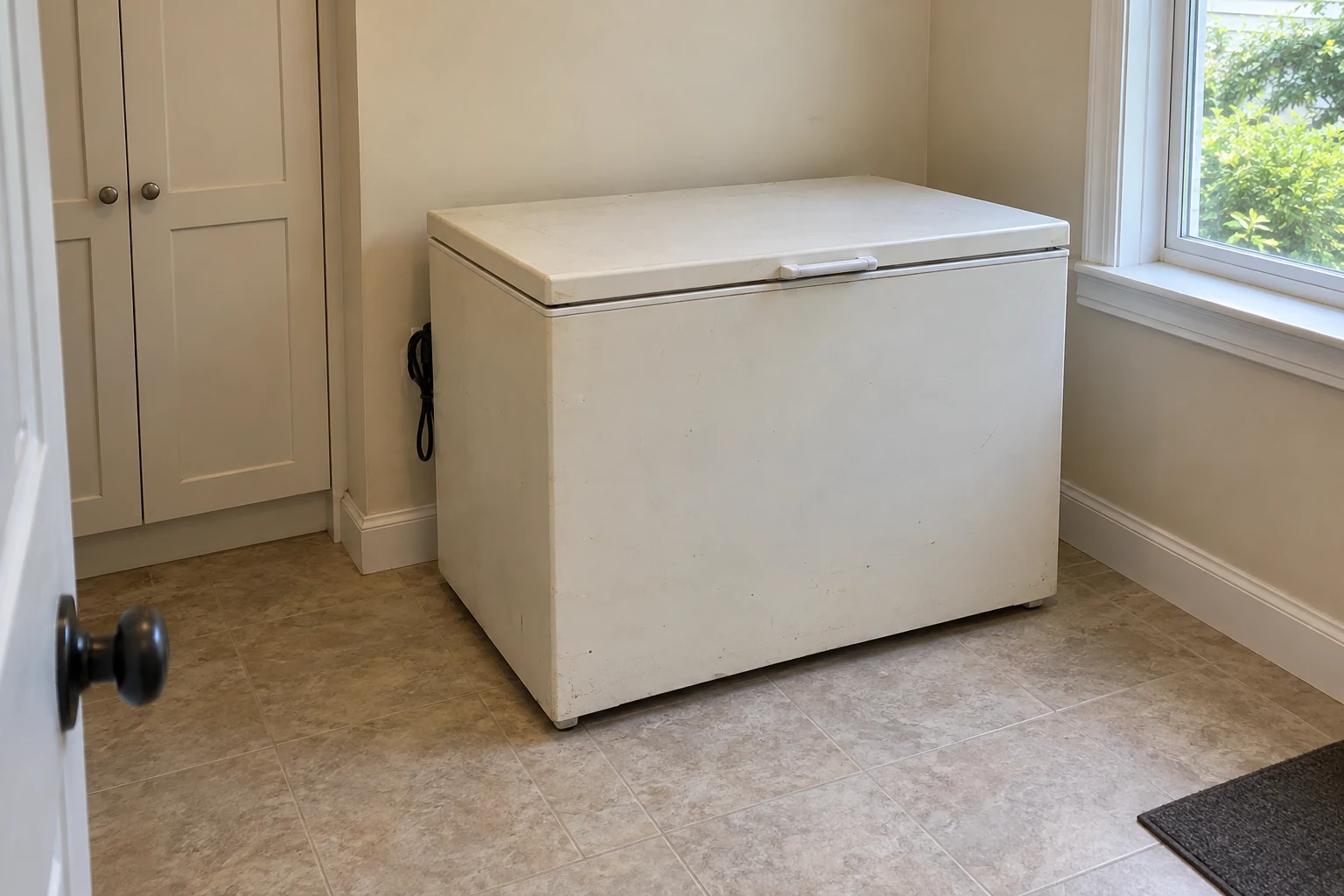
The illustration shows private condition review before carrying. Send the actual dimensions, weight, lid, cord, room and complete doorway or stair route. A closed lid does not prove the real interior has been emptied or dried. Confirm contents and preparation before handling. Refrigerant equipment needs an appropriate receiving chain; ordinary removal is not a claim that the crew performs regulated refrigerant work.
A separate visit can clear space before the new unit arrives. An add-on can coordinate with another move when labor, suitable transportation and receiving fit. County charges distinguish refrigerant appliances from ordinary bulky material. Compare the full estimate, including carrying and any separate trip, rather than using a gate charge as the cost of indoor service.
Example 2: furniture remaining after estate decisions on Trenton Road
Consider an authorized family representative clearing an inherited Trenton Road home. Valued belongings have been retained and useful furniture has confirmed recipients. An ordinary upholstered armchair and a small wooden coffee table remain without a destination. The room must be clear before handover; family papers and sold property have been separated.
An estate can contain both valued collections and ordinary surplus pieces. Review condition and committed reuse before deciding removal. A donation programme may decline a chair because of condition, size or capacity. A tentative collection that cannot happen before the handover date should not be treated as a cleared room.
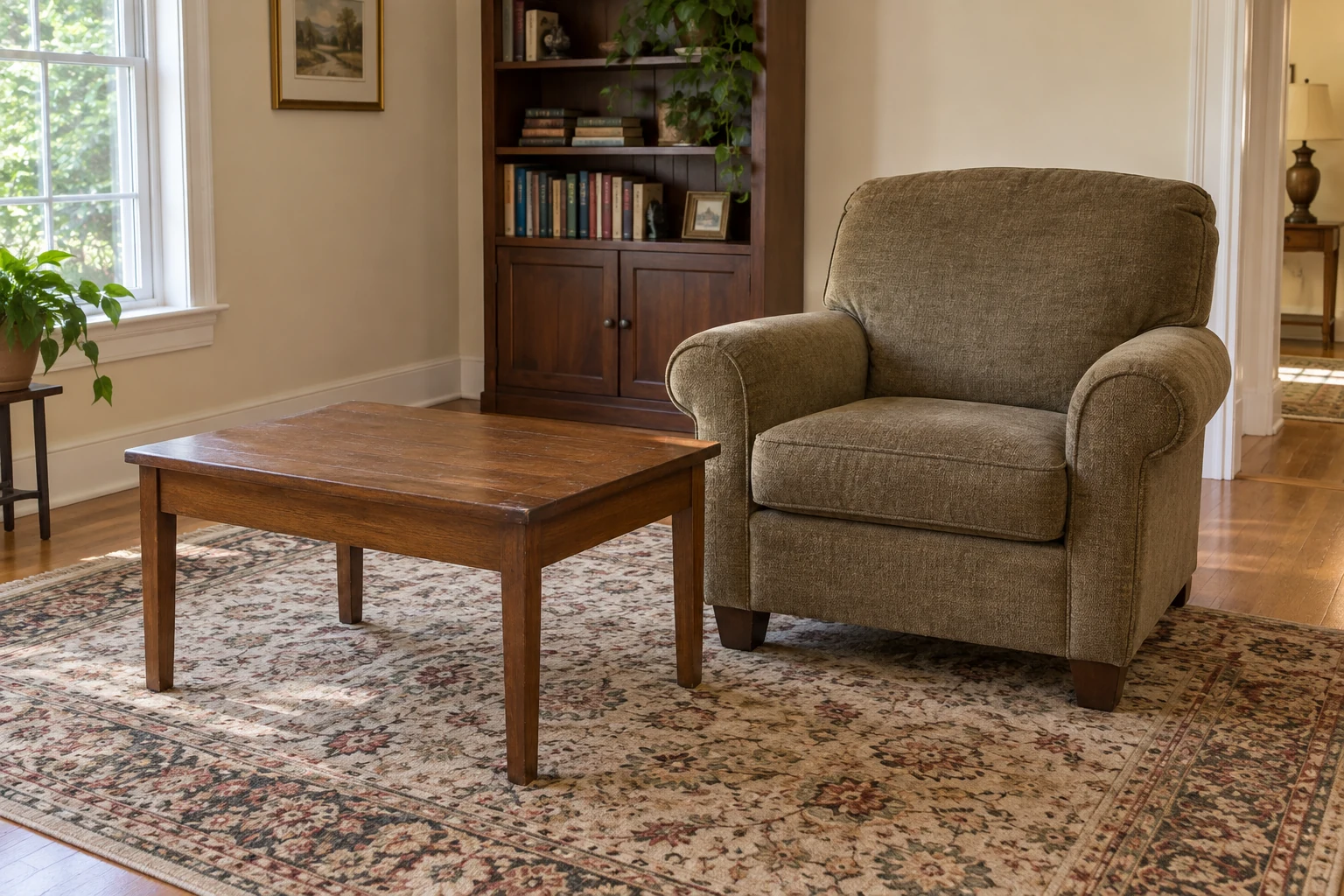
The photograph shows stationary condition review with complete supporting furniture parts. It is not a packed load or public set-out. Upholstered sleeping or lounging furniture has special preparation under the Township's bulky instructions. Confirm the actual covering, date and receiving arrangement before staging it for a selected route; an inventory photograph is not proof those steps have been completed.
Resolve the representative's authority and exact outgoing group in writing. Keep keepsakes, recipient-bound furniture and unresolved ownership outside the removal list. Inspect contents and construction before agreeing emptying or dismantling. Integral supports and removable parts have different preparation; unnecessary disassembly can add work without helping the selected route.
Storage remains useful for a valued piece with a defined future destination. For these surplus items, compare repeated carrying, storage and later clearance with removal after recipient decisions. A stand-alone visit can suit an earlier handover. An add-on may coordinate with an associated move, while labor, fees, capacity or another trip can remain necessary.
Example 3: an outgrown playhouse before an interstate move on Hanover Boulevard
Imagine a Hanover Boulevard family preparing for Tulsa, Oklahoma after eight years in the same home. A small freestanding molded-plastic playhouse has stayed unused after the children outgrew it. It has no planned use at the receiving home and nobody has committed to collecting it. Other useful outdoor belongings remain on the moving inventory.
Review condition, dimensions and a committed recipient before selecting removal. This is a loose household toy, with no foundation, utility connections or anchors. A fixed play structure or shed would need different permissions and work. An item stored outdoors is not vegetative yard waste, and a rigid-plastic programme does not accept every product or vehicle automatically.
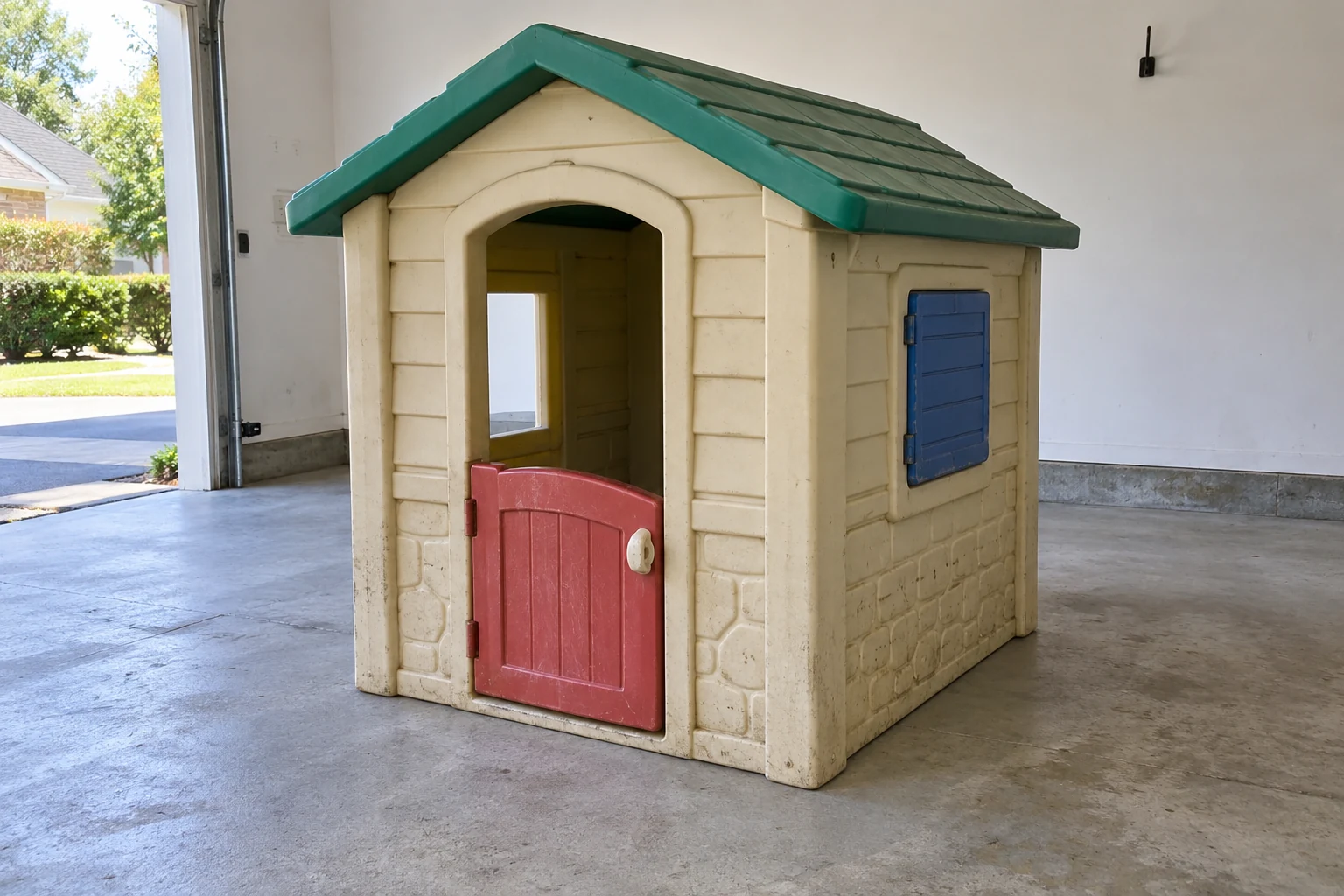
The illustration shows the complete stationary toy before preparation. Send panels, roof, fittings, weight and the actual garage exit. Dismantling should follow the real construction and agreed scope, with small parts kept accounted for. Do not hide batteries, soil or unknown contents inside a household group because the garage must be cleared.
For long-distance moving, shipping an unused bulky toy can add preparation, carrying, shipment capacity and unloading only to need disposal at arrival. Compare local removal with those avoidable costs and replace equipment only if it is needed. Keep useful or valued things. There is no universal cubic-foot tariff or automatic deduction from an existing flat quote.
A visit before packing can settle the inventory. An add-on can coordinate agreed carrying when suitable separation, transportation and receiving align. Another day or trip can remain necessary. The Township's October promotional event has already passed at this October 10 check; its one-day terms should not be applied to every later clearance.
Other reasons to clear a room or property
The same decision can apply to local downsizing, a household separation, a temporary relative's stay, a sold home's outdoor equipment or packaging left after unpacking. Commercial office furniture, damaged gym equipment and small repair remnants need their own material and access review. State the exact contents and deadline; a room name does not identify every item to remove.
View 21 removal situations and what to check
Swipe the table sideways to read all columns.
| Situation | What needs to change | What to agree first |
|---|---|---|
| A furniture replacement | A worn armchair, sofa, dresser or old table makes way for a new purchase. The old piece needs to leave before the new room layout can work. | Agree removal versus retailer haul-away, access, recipient acceptance and the delivery deadline. |
| A television or monitor upgrade | A broken or unwanted screen remains after the replacement arrives. The old device needs an approved recycling route and space needs to be cleared. | Identify the model and an accepting electronics program; ordinary trash is not the route. |
| A local move to a smaller home | Parents choose a smaller home after the children leave; spare furniture no longer fits. Avoid carrying and storing pieces that have no role in the receiving home. | Use the new floor plan, a keep list, a removal list and a separately reviewed quote. |
| A household separates | People move to different homes and a shared surplus remains. Unallocated items should have a destination before the rooms are cleared. | Confirm the authorized owner and each person's keep/remove instructions. |
| A temporary family stay ends | A relative returns home and the spare bed, chair or temporary setup is no longer needed. Clear a useful room instead of keeping furniture without a future use. | Verify ownership and which pieces are being returned, retained or removed. |
| Accumulation before a move | After seven to ten years, forgotten garage, attic or basement belongings reappear. Avoid packing and transporting contents that would be discarded after delivery. | Sort early, photograph the group and distinguish ordinary items from special materials. |
| A long-distance keep-or-replace decision | Bulky low-value furniture competes for space with useful, valuable or sentimental possessions. Removing unwanted bulk can avoid shipment, handling and storage costs. | Compare two actual moving quotes with removal and destination replacement costs; no automatic per-cube discount. |
| An estate's remaining contents | After retained and sold pieces leave, ordinary unwanted furniture remains. The property needs to be cleared for its next agreed use. | Identify the authorized representative and preserve items awaiting sale, collection or family decisions. |
| Rental turnover or a possession deadline | A property must be handed over after tenancy, including situations involving lawful eviction processes. Ordinary unwanted contents may prevent the agreed handover. | Confirm lawful possession and authority over the items; removal is not eviction enforcement or legal advice. |
| An office lease ends | Old desks, chairs or shelving are no longer needed in the new office. Release the old premises without moving a surplus into the new workspace. | Separate business waste, IT/data decisions, landlord instructions and the commercial receiving route. |
| A business changes its space | Unused shop fixtures, storage furniture or equipment need to leave. Make the leased space usable for its next purpose. | Confirm the actual equipment, utilities and materials; resident-only programs do not serve business loads. |
| Outdoor items at a home sale | Patio furniture or children's outdoor items are not wanted at the next home. Clear agreed contents before move-out and property handover. | Confirm the sale agreement, ownership, anchoring, item size and ordinary material acceptance. |
| An unwanted shed or play structure | A shed or fixed children's play structure is no longer useful. It may need a separate dismantling and collection plan rather than transport to the new home. | Review foundations, utilities, dismantling, permissions and receiving material limits; structural demolition is not automatically part of ordinary collection. |
| Broken outdoor equipment | An old mower, grill or other outdoor equipment has stopped being useful. Avoid taking a repair or disposal problem to the new property. | Identify fuel, oil, propane and batteries separately; arrange the applicable material route. |
| A broken household appliance | A washer, refrigerator, freezer or other appliance is being replaced. The old appliance takes up receiving or working space. | Review utilities, access and model; refrigerant-containing appliances need an appropriate processor. |
| Unused or broken gym equipment | A treadmill, exercise bike or weight system is not going to the new home. Avoid a difficult carry and shipment for equipment with no planned use. | Identify weight, dismantling, stairs, electronics and any battery before quoting. |
| Packaging after unpacking | Used flattened cartons, paper and plastic wrapping fill the available space. Restore useful rooms and clear the agreed collection area. | Group used flats in large open boxes near a clear exit; separate material types and agree the collection date. |
| Protective materials after renovation | Clean floor-protection paper or plastic film remains after work ends. The finished space needs to be made usable again. | Identify contamination, wet paint or attached debris; protective packaging is not automatically construction or hazardous waste service. |
| A mattress or box spring replacement | An old bed surface remains after replacing a mattress or changing bed size. Clear the receiving room without carrying an unwanted bulky piece to another home. | Confirm size, condition, covering instructions, local collection eligibility and accepting destination. |
| A prepared yard-waste pile | Identified branches, brush, leaves or trimmings remain after a small clearance. Clear agreed outdoor space before a handover or after work is finished. | Confirm quantity, bundle/container rules and actual green-waste acceptance; tree work, soil and stumps are separate. |
| Light debris after a minor repair | A small photographed quantity of identified drywall offcuts or repair remnants remains. Clear the completed room without mixing construction material into ordinary household pickup. | Review the material, quantity, carrying route, charges and accepting destination; unknown or contaminated material needs a different plan. |
For rental turnover or an estate, confirm ownership and authorization before work. For an office, identify retained records, customer property, leased equipment and data-bearing devices separately. A scheduled clearance is not authority to remove somebody else's belongings. Fixed structures, utility disconnects, demolition and contaminated material are separate scopes, not automatic additions to household carrying.
Compare a stand-alone visit with a moving-day add-on
A stand-alone visit has its own dispatch and removal window. It can create space before replacement delivery, clear a property before handover or settle an inventory before interstate packing. Its price depends on the selected group, labor, access, transportation, receiving and any necessary separate trip. A household drop-off fee alone is not the price of indoor service.
An add-on combines agreed carrying with the main move. It may avoid another dispatch because the crew and vehicle are already onsite. Additional labor, suitable capacity, material separation, receiving charges or another trip can remain necessary. Retained belongings and waste loads have different requirements; spare space does not establish permission to enter a facility or use a resident programme.
Compare written estimates for the same items and clear-by date. Identify dispatch, preparation or dismantling, carrying, transport, receiver fees and extra trips. Include connections or specialist work only within an agreed appropriate scope. Coordinating the schedule can save money when it avoids real work, without a fixed discount or a promise that disposal becomes free on moving day.
Establish the actual property and bulky appointment
Browns Mills is within Pemberton Township, which is distinct from Pemberton Borough and the wider County. Confirm the actual property and collector. Managed developments and mobile-home parks can have different arrangements from an eligible individual house. A postal place, a moving date and a waste collection entitlement are different facts.
The Township's solid-waste code describes advance per-item payment and scheduling for bulky collection. It requires appropriate preparation for upholstered lounging or sleeping furniture and distinguishes household repair remnants from contractor-generated material. Confirm the current collector's appointment, item and payment instructions before leaving anything out. An eligible curb route still does not supply carrying from a room.
Show the actual approach, stairs, thresholds, narrow turns and legal vehicle position. Do not assume a driveway can receive every loaded truck. Weather, shared access or property rules can change the carrying plan. Keep the agreed clear-by date separate from an unconfirmed municipal slot.
Resident receiving and the October hours change
The Public Works page requires proof of residence for yard drop-off and separates charged materials from selected no-charge items. Its office hours and yard hours differ. General recycling receptacles outside the gate are another arrangement; their round-the-clock access does not establish round-the-clock bulky or hazardous receiving.
The fall-hours notice starts the new yard schedule on October 22, 2026: Tuesday, Wednesday, Friday and Saturday, 9 a.m.–2 p.m., with Thursday noon–5 p.m. The current 2026–2027 recycling brochure gives the preceding Thursday seasonal window through October 15. Confirm the actual visit date rather than applying a future schedule to an earlier trip.
The October promotional flyer describes an October 3, 2026 resident event and excludes businesses. That date has passed at this October 10 check. Its one-day no-charge terms are different from routine paid receiving, regular bulky collection and a private truck's admission.
Packaging and electronics need current item instructions
The brochure gives recycling preparation and a 6 a.m. set-out time. It distinguishes loose clean recyclables from bagged material, film and foam. Reusable bags and plastic bags cannot be used as recycling containers. Flattened cardboard and used paper still need contamination review; moving use does not make every floor covering suitable for recycling.
Its October 2026 calendar marks October 1, 15 and 29, with a Thanksgiving-week adjustment later in the year. Confirm the actual property's current schedule. The brochure says municipal recycling carts stay with the property and should not be moved to a new home. Those instructions concern recycling, rather than the date of a separate bulky appointment.
For electronics, the current brochure identifies computers, laptops, intact monitors and televisions for designated receiving. The Township's recycling page has a broader introductory list elsewhere and a narrower small-device statement. Confirm the exact item with the current designated receiver; do not use a general electronics label as proof that every plug-in product is accepted there.
A freezer, washing machine, television and battery-powered machine can have different preparation and receiving. State the model, connections, refrigerant, batteries and stored data before the estimate. Qualified utility disconnection, installation and regulated material work require appropriate separate arrangements.
County receiving, forms and commercial transportation
Burlington County's Resource Recovery Complex accepts County material through its designated programmes but does not provide household trash collection. Its receiving hours differ from administrative offices and the hazardous-waste facility. Confirm the actual material, date, vehicle and accepting area before coordinating a moving-day trip.
The 2026 rates and procedures separate household waste, bulky material, repair debris, vegetation and source-separated special items. They require an origin-and-disposal form and list minimums and mixed-load surcharges. A correctly separated appliance or device can have different receiving from one concealed in household debris. The posted rate is not the complete cost of indoor removal and transportation.
The County's transport guidelines exclude rental vehicles for solid-waste delivery and distinguish appropriately documented commercial transportation from a resident's own household passenger-vehicle trip. Sterling's New Jersey waste-transport documents are confirmed. The actual vehicle, operator and selected receiving conditions still need review; resident access is not universal company admission.
For mattresses and box springs, give size, quantity, condition and any contamination. Check an actual seller take-back and the chosen receiver's covering and fee instructions. No-cost receiving elsewhere does not establish a Browns Mills entitlement to free carrying or disposal. Frames, toppers, loose bedding and infested or heavily soiled products need their own decision.
Garden material and repair remnants are different loads
Leaves, brush, equipment and building material should be identified separately. The Township lists designated yard receiving and a residential brush programme; a vegetation route is not a furniture, toy or building-debris arrangement. Describe quantity and composition before adding such material to the request. Garden work itself is a separate scope.
For loose light repair remnants, show origin, composition, weight and contamination. The municipal bulky provisions distinguish resident-generated work from contractor work. A limited household allowance does not create permission for demolition, hazardous building material or an unreviewed commercial load. Agree actual receiving and any specialist preparation before work.
A detached playhouse differs from an anchored structure. Give the actual fixings, utilities and ownership before agreeing dismantling. A toy's rigid-plastic construction does not extend a past promotional event's terms to an ordinary company visit. Useful recipient-bound belongings remain distinct from the removal group.
Household hazardous waste has its own eligibility and hours
The County's hazardous-waste page describes a year-round household route with resident proof and separate arrangements for qualifying small businesses or out-of-County households. Residential delivery differs from commercial or rental delivery. Business generator eligibility, appointments and fees do not follow automatically from an ordinary household removal request.
The facility is closed Mondays, and its published guidance says a Monday holiday also affects Tuesday. Tuesday–Friday and Saturday receiving windows differ from general landfill hours. Confirm the actual date before travel. A moving crew being available does not keep the special receiver open.
Identify paint, fuel, oils, chemicals, cylinders, batteries, lamps, medical products, asbestos and unknown contents before the estimate. The Township page's broad wording about hazardous material does not mean every product is acceptable. The appropriate County programme and qualified work determine the actual route; no universal hazardous-material capability is promised.
Rechargeable batteries need separate handling and must not be hidden in ordinary waste or recycling. Small batteries, high-energy units and equipment with embedded batteries can need different receivers. The selected estimate should describe the actual item rather than silently combine uncertain contents with furniture or clean paper.
Agree the list, authority and clear-by date
Separate retained, recipient-bound and removal items in writing. Empty furniture where appropriate, identify remaining preparation and preserve unresolved ownership, family papers and sold belongings. Disclose weight, connections, contamination, batteries and liquids before the estimate. An item added at loading can change receiving and cost, so keep it outside the agreed group until reviewed.
Confirm who authorizes access, the complete carrying route, legal vehicle position and accepting arrangement. Use packing services for useful belongings chosen to travel and storage for a defined future purpose or receiving gap. Compare the complete stand-alone and add-on estimates for the same list and deadline; deliberate removal avoids repeated carrying of things the next household does not need.
Browns Mills junk removal and disposal questions
Can removal save money before a Browns Mills move?
Compare removal and necessary replacement with avoidable carrying, packing, shipment capacity, storage and later disposal. Keep useful and valued pieces. Agree inventory and scope revisions before relying on savings; excluding an item does not automatically reduce a flat quote.
Does a moving date arrange Township bulky collection?
No. The published bulky provisions describe advance payment, scheduling and preparation for eligible items. Confirm the actual property, collector and current appointment before set-out. An eligible curb route does not supply indoor carrying.
Is a moving-day add-on cheaper?
It may avoid another dispatch when crew and vehicle are already onsite. Added labor, capacity, separation, receiving fees or another trip can remain necessary. Compare complete estimates for the same list and clear-by date.
Can an old chest freezer leave before replacement?
Send dimensions, weight, condition, cord, contents and the whole route. Confirm actual emptying and receiving for refrigerant equipment; a closed lid is not proof of preparation. Technical disconnection or refrigerant work requires appropriate separate arrangements.
What if ordinary furniture remains after an estate clearance?
Resolve representative authority and committed recipient decisions first. Separate papers, valued belongings and sold property. Compare removal with repeated carrying and storage without a defined future use, then agree the outgoing group.
Should an outgrown freestanding playhouse travel across states?
Review condition and future need, then compare local removal with preparation, carrying and shipment capacity. A loose toy differs from an anchored structure. Confirm materials and dismantling; a rigid-plastic event does not accept every product or company vehicle.
When do the new Public Works yard hours start?
The current notice starts them on October 22, 2026. Thursday becomes noon–5 p.m.; Tuesday, Wednesday, Friday and Saturday are 9 a.m.–2 p.m. Confirm the actual date and material before travel, using the applicable preceding schedule for earlier visits.
Does 24-hour recycling mean all waste can be dropped off anytime?
No. The outside-gate recycling receptacles are separate from yard, bulky and hazardous receiving. Identify the exact material and preparation and use the appropriate accepting programme and operating window.
Can the October 3 promotional terms be used later?
That resident-only 2026 event has passed at this October 10 check. Its one-day no-charge receiving and business exclusion differ from routine receiving and private removal. Confirm the current arrangement instead of relying on an expired event.
Can the municipal recycling cart move to the new home?
The current Township brochure says municipal recycling carts stay with the property. Prepare approved material loose and clean; bags, film and foam are separate questions. Recycling instructions do not establish a bulky appointment.
Are all small electrical devices accepted at the Township yard?
The current brochure specifies covered equipment, while the linked Township page has different levels of detail for small devices. Confirm the exact unit with the current receiver instead of assuming every product with a plug follows one electronics route.
Can a rental truck deliver household waste to the County Complex?
The County’s current transport guidance excludes rental vehicles for solid-waste delivery. Resident passenger-vehicle access and appropriately documented commercial transport differ. Sterling’s New Jersey documents are confirmed, while the actual vehicle and receiving conditions still need review.
Can all special products go with furniture?
No. Identify fuels, oils, chemicals, cylinders, batteries, lamps, medical material, asbestos and unknown contents before the estimate. Household hazardous receiving has separate eligibility, vehicle and opening conditions. Confirm the appropriate programme and qualified work rather than mixing everything.