
New Jersey · Lakewood service planning
Long Distance Movers in Lakewood, NJ
Sterling Oakbridge arranges household moves from Lakewood, New Jersey, to destinations throughout the United States and Canada. Choose direct delivery for a dedicated truck and the same moving crew at pickup and drop-off. For a suitable smaller shipment, consolidated delivery offers a wider agreed receiving window.
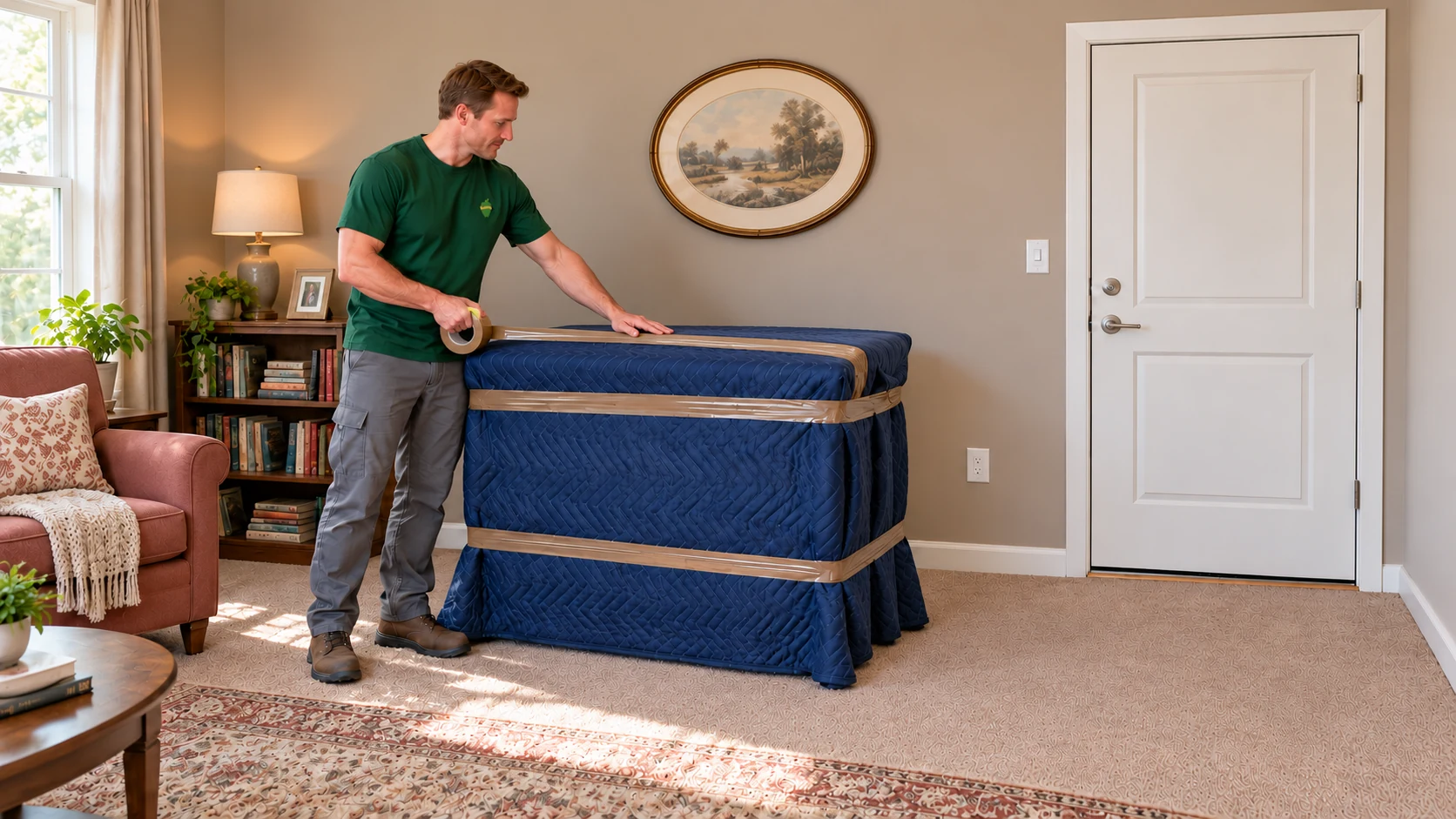
Begin with the belongings you want moved, the home you are leaving and the person who can receive them. An agreed long-distance flat rate covers the reviewed shipment and work: a longer journey alone does not increase it. Have known changes to inventory, access or requested work reviewed before loading and include any revised charges in the written estimate.
Choose direct or consolidated delivery
Direct delivery makes sense when the household needs its main furniture on a shorter planned journey or has a receiving period that the agreed schedule can meet. The truck is dedicated to that shipment, and the same moving crew handles pickup and delivery. Packing, taking suitable furniture apart and carrying it through the Lakewood property happen before the delivery clock begins.
Consolidation can suit a selected group that the household can live without while it travels. Approximately 300–400 cubic feet is guidance for a smaller shipment, not a minimum or an automatic qualification. Describe the actual furniture and cartons, then compare the offered window with a usable home and someone able to receive the group. A small volume does not make a narrow appointment compatible with a wide window.
Swipe the table to compare both delivery options.
| Illustrative destination | Direct planning window | Consolidated window |
|---|---|---|
| Philadelphia, Pennsylvania | 1–2 days | Up to 30 days |
| Orlando, Florida | 2–3 days | Up to 60 days |
| Montreal, Quebec | 1–2 days | Up to 60 days |
| Los Angeles, California | 4–5 days | Up to 90 days |
These are illustrative windows after pickup and loading are complete, rather than booked arrival dates. The four references use general driving connections between city points, reviewed October 24, 2026. They do not approve a particular moving truck's route, account for live traffic or establish Canadian clearance. We confirm the vehicle, working periods, receiving arrangements and accepted dates for the actual order.
Same-day or next-day delivery may be possible for a suitable nearby move with an agreed preparation, loading, travel and receiving plan. The ordinary Philadelphia illustration remains 1–2 days. Consolidated illustrations are up to 30 days for this shorter domestic reference, 60 for Florida and Canada, and 90 for California. Other distant destinations need their own agreed window; neither Florida nor California supplies a rule for every southern or western state.
Connect the Lakewood rooms, entrance and truck position
Lakewood proper is the Census-designated place within the larger Lakewood Township in Ocean County. Give us the full street address and unit, rather than relying on a postal label to identify the property or street authority. The Lakewood relocation guide compares central settings, individual homes and everyday arrangements; the Lakewood moving page covers the broader local service.
The housing references include modest managed apartments on Ninth Street, older detached homes and newer attached construction. These forms suggest different questions, not a standard inventory. Show the apartment's hall turn and shared exit, the house's porch steps and landing, or the separate entrance serving your unit. Include a basement or storage group only when it is part of the move. An exterior photograph cannot establish an interior stair or the use of a converted room.
Follow each large piece from its current room to the proposed vehicle position. Record the clear door opening, turns, stairs, landings and any lift opening and cab. Keep the ordinary household exit usable while the group is prepared. Ask management about its moving period, door access, protection rules and COI instructions; our coordination can help bring those requirements into the agreed plan, but the property's approval still needs confirmation.
For the street arrangement, Lakewood Police Traffic Safety can be reached at 732-363-0200, extension 5380. Provide the actual street, date, working period and vehicle details when a reservation, traffic interruption or uncertain restriction needs review. A delivery exception on a restricted street does not reserve curb space or authorize a closure. The Township's over-four-ton registered-gross-weight parking provisions also have specified segments and hours; a general road reference does not resolve them.
Name the person who can authorize a different working position if the first one fails. A longer carry can affect labor and the building period, while another frontage may provide no usable route at all. Agree the feasible alternative and any changed work before carrying begins. For a winter departure, have the public approach, private walk, steps and landing clear and lit when the crew arrives, rather than relying on a later sidewalk-clearing deadline.
Example: Lakewood to Philadelphia — a small home with a firm receiving period
Imagine a one-bedroom household leaving a managed Lakewood apartment for a Philadelphia building that has offered a particular moving period. The shipment is modest, but the household needs its bed and everyday furniture to make the new home usable. A small consolidated group would leave those items unavailable during the wider window, and one preferred appointment cannot narrow that window by itself.
Begin by comparing the actual apartment exit and the receiving route. A sofa may pass the Lakewood living-room opening yet meet a tighter turn at the destination. Have the receiving contact establish the door access, stairs or reserved lift, permitted working period and place where the truck may work. Keep the building instructions beside the inventory so the review includes both ends.
Direct delivery is the useful starting choice when an accepted schedule can support that receiving period. The ordinary illustration is 1–2 days after loading, despite the relatively short road reference. Ask about a suitable same-day or next-day arrangement before planning travel around it. The Lakewood packing and carrying time still comes first, and the destination needs a real receiver when the vehicle arrives.
If the receiving period cannot be confirmed, decide before leaving the origin which alternative is available: a revised appointment, a changed delivery plan or a quoted holding and later-delivery stage. Establish the resource, authorized contact, access and charges. The household also needs somewhere to sleep and the essentials to use it; an unanswered management enquiry does not settle either plan.
Prepare the shipment and keep the travel group with you
Make one inventory for what travels in the shipment and another clear group for what stays outside it. Include retained property and any furniture that another household member will continue using. Photographs help distinguish similar pieces, while an item list should identify the packing, ordinary furniture preparation and specialist work requested.
Keep identification, medication, essential clothing, chargers and the documents needed at handover with the travellers. Include whatever makes the first nights and the first work or school days possible. Choose luggage that can accompany your own journey, rather than packing these necessities into a carton scheduled for later delivery.
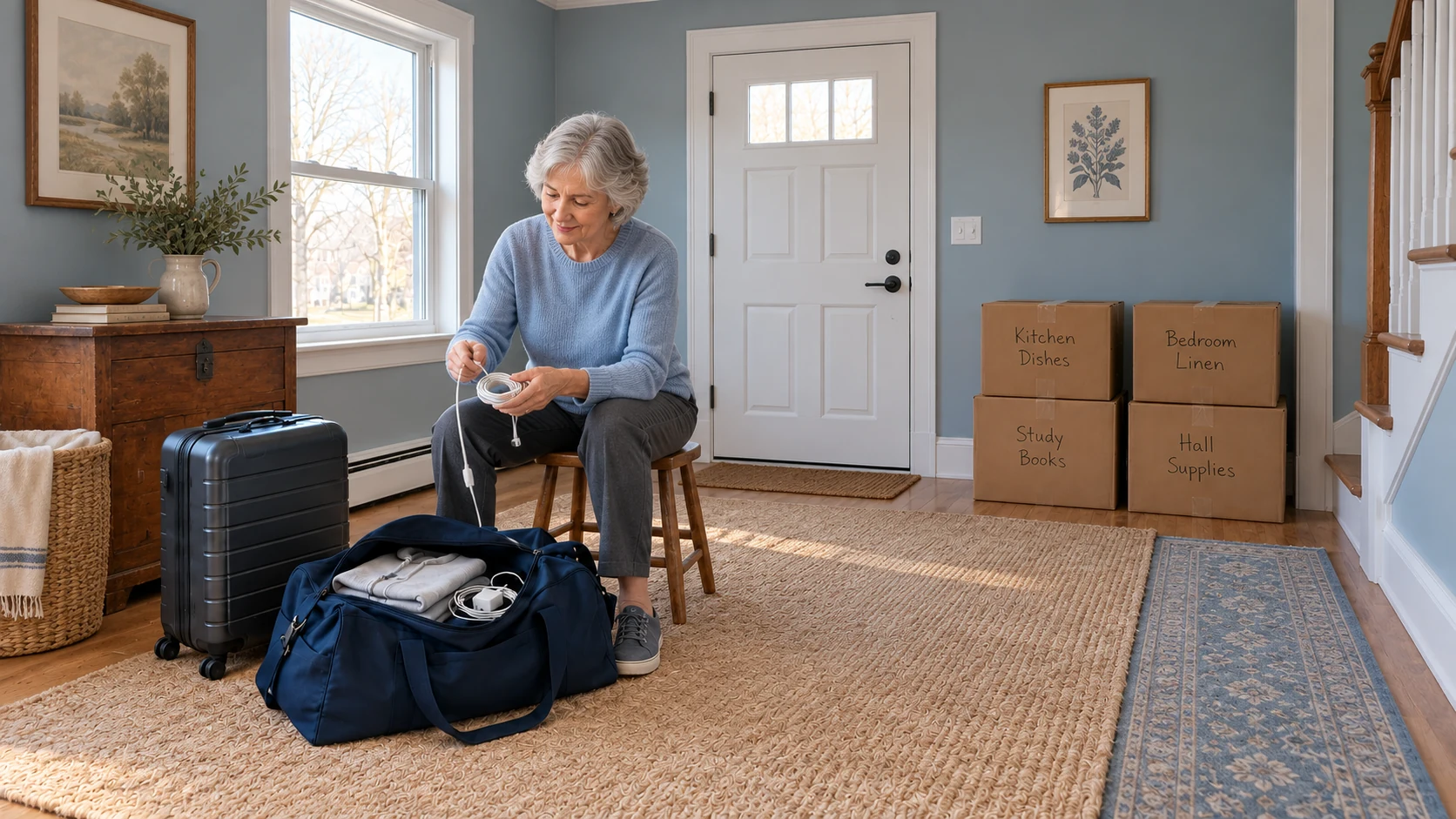
If one person leaves Lakewood first, name the person responsible for the final inventory, keys and last room check. Separately name the destination contact who will confirm access and accept delivery. Tell the coordinator who can approve a changed item, extra visit or revised receiving arrangement. These two handovers let people travel separately without leaving the shipment's decisions ownerless.
Packing can cover selected rooms or the whole agreed inventory. It is charged for working time; company-supplied cartons are separate. Blankets, shrink wrap and tape have no separate basic material charge. An earlier preparation visit may help when the carrying period is short, but its date, property access and work must be included in the plan.
Example: Lakewood to Orlando — send a selected group to a furnished home
Consider a household keeping its Lakewood home in use while sending a selected furniture-and-linen group to a furnished Orlando home. The receiving home already supports daily life, so the household can consider consolidation without waiting for this group to obtain a place to sleep. Identify the actual pieces and cartons instead of using the Lakewood home's floor area as a shipment measurement.
Mark what remains in Lakewood and keep it apart from the prepared group. A shared room may still contain an unwrapped chair or the household's own table because those items are staying. The selected pieces need their own completed protection and labels, with the route to the exit clear. Review any separate storage or upstairs group before agreeing the inventory; discovering it on pickup day changes the work.
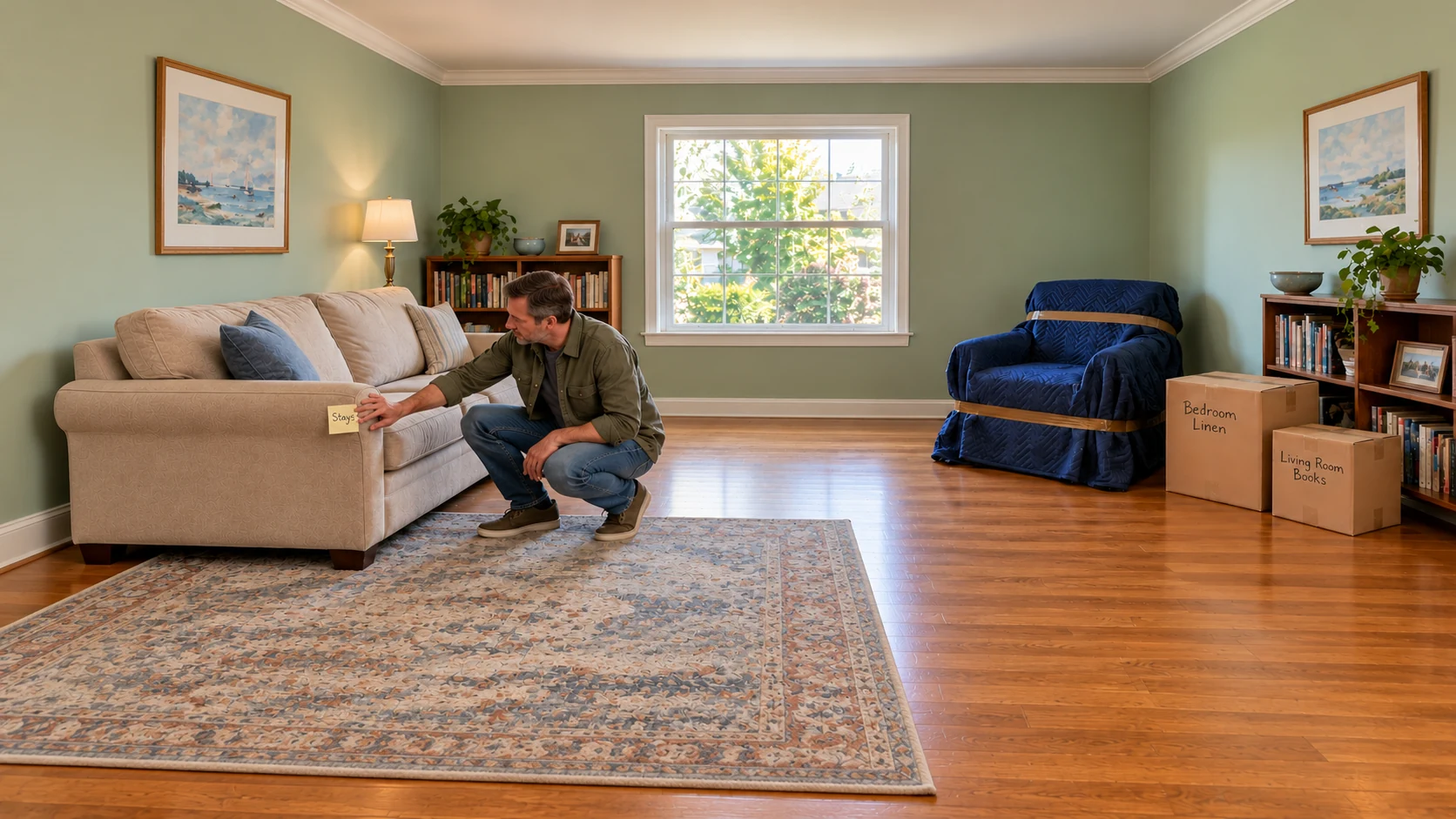
For Orlando, the consolidated illustration is up to 60 days after completed pickup and loading. Confirm who can receive throughout the accepted arrangement, including any management or access conditions. A friend who is available on one afternoon does not cover that entire plan. If the household needs these particular belongings sooner, compare direct delivery's ordinary 2–3-day illustration and the actual offered dates.
Choose a delivery model the household can use, and compare its total cost with the temporary arrangements, storage and later handling you actually need. Keep the travellers' ordinary essentials separate. Before releasing the group, settle a workable receiver or another confirmed arrangement, and understand the charges for any additional handling, holding or later visit.
Example: Lakewood to Montreal — the household enters before the goods
Imagine travellers going to Montreal before their household shipment follows from Lakewood. Their journey, the importer's accounting and the shipment's receiving plan have separate requirements. Do the goods paperwork before travelling so the later load is described consistently with the inventory agreed for pickup.
The CBSA moving guidance calls for two copies of a goods list, divided between accompanying goods and goods to follow. Account for the goods at the first Canadian entry even when none accompany you, and retain the original goods-to-follow list, accounting document and completed BSF186 receipt for the later shipment. Eligibility, ownership and use conditions and restrictions still apply; transport arrangements alone do not establish duty relief or clearance.
The BSF186 page shows description, serial-number and Canadian-dollar value fields, additional-list options and a goods-to-follow entry. Reconcile the furniture and cartons with those records before pickup. Resolve the applicable classification and any restricted item with CBSA; do not treat an ordinary packing list as a completed border document.
Montreal is in Quebec, Canada. Its consolidated illustration is up to 60 days after completed loading even though the road reference is shorter than the Orlando example. Ordinary direct delivery is illustrated at 1–2 days, with the actual border and receiving arrangements reviewed separately. Choose between them using the household's ability to manage without the goods and the accepted receiving plan, rather than road distance alone.
Name the person who will take delivery, confirm the home's access and keep the relevant shipment records available. If required documents or the receiving arrangement remain unresolved, contact the coordinator before the agreed departure decision time. Confirm any revised transport or holding stage and its charges instead of allowing an unresolved enquiry to become an assumed booking.
Prepare furniture for its whole journey and the room at the other end
Review the construction of large pieces before choosing a method. Safely detachable long legs can travel separately, protected together as an identified matching set. Keep the hardware with the item and secure its bag before carrying. Empty ordinary drawers generally remain secured within the protected piece. Integral supports should not be removed merely because the furniture is moving.
For a table, compare the retained top and support dimensions with both routes before deciding what comes apart. Loose shelves, glass and fittings need their own agreed preparation. Show any complex wardrobe, sofa or other specialist item early so its method and individual quote are settled before the affected work begins.
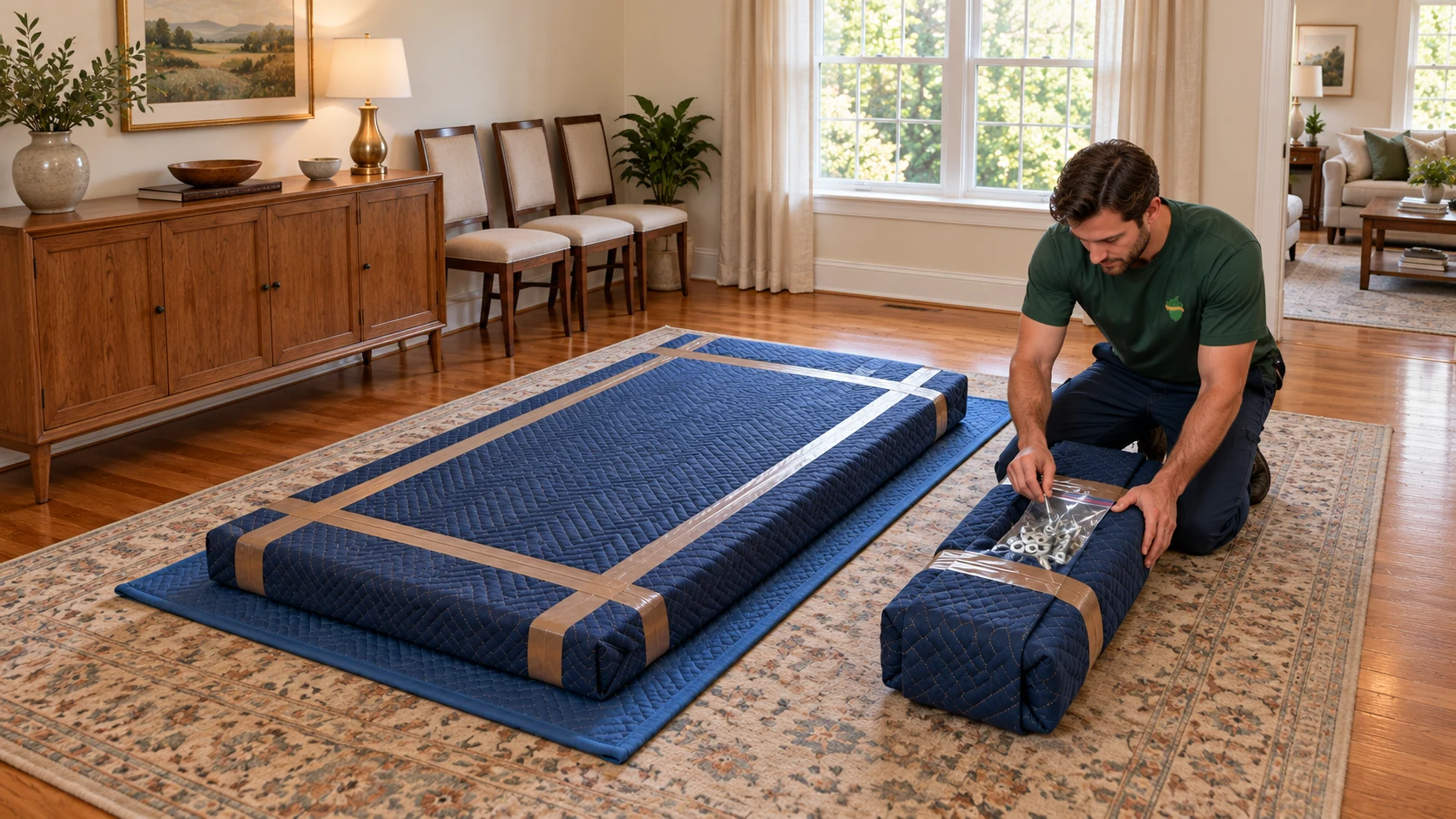
Basic furniture disassembly and reassembly use the moving labor without a separate basic assembly fee. This does not turn complex or specialist work into a standard inclusion. Decide where the large pieces will stand at delivery before final assembly, and have the actual receiving route reviewed rather than relying only on a room plan.
Example: Lakewood to Los Angeles — arrange the receiving home before the full load leaves
Consider a whole-home departure from a Lakewood house when the household's Los Angeles keys depend on a final handover. The survey needs the actual contents, packing responsibilities and route through every included room or storage area. The older detached and newer attached housing references in Lakewood do not establish what this family owns or how much space its shipment takes.
A direct plan uses the dedicated truck and same moving crew, with an ordinary illustration of 4–5 days after pickup and loading are complete. The household's flight and accommodation follow their own schedule. Keep the items needed for that period with the travellers, and identify who will finish the Lakewood handover if the family leaves before the work is complete.
Have the receiving contact verify the keys, usable rooms, management period, truck position and complete route for the large pieces. A promised key date is less useful than a clear release condition and a named person who confirms it. Review the destination stair or lift measurements while the furniture is still available for inspection in Lakewood.
California's consolidated illustration is up to 90 days after completed loading. That can support a suitable selected shipment when the household can wait and arrange receipt; it is a different living plan from relying on a direct whole-home arrival. Compare the actual offered option with the furniture needed to make the home usable and the cost of managing without it.
Use the earlier of the property’s last-change deadline and the mover’s dispatch cutoff as the decision point, before departure and before alternatives expire. Contact the property’s access controller, authorized household contact and moving coordinator to confirm an available later receiving period or another accepted receiving location. For storage and redelivery, confirm a facility that can accept the actual load, including capacity, receiving hours, protection, handling, access, price, payer and retrieval or onward-delivery date. Arrange accommodation and accessible essentials for the household separately. If no destination can receive the goods, revise departure. Resume when possession, the authorized receiver, carrying route and any required import arrangements are ready; an enquiry is not a confirmed alternative.
Compare the agreed work, documents and protection
A useful estimate identifies the retained inventory, both carrying routes, packing and cartons, ordinary and specialist furniture work, dates and receiving conditions. Include storage, unpacking or removal when wanted. For the same shipment and agreed service scope, longer travel alone does not raise the long-distance flat rate. Resolve known changes and any revised interstate written estimate before loading. The original estimate cannot be rewritten after loading begins; later additional services need their applicable agreement and charges before they are performed.
For interstate household goods, FMCSA's protection guidance distinguishes Full Value Protection from Released Value. Full Value Protection applies unless Released Value is selected through the required written choice. Released Value limits liability to 60 cents per pound per article. Review the written plan, cost, deductible and valuable-item terms. Valuation concerns the mover's liability; separate insurance and a building COI have different purposes. At delivery, compare the shipment with the inventory, note visible concerns and retain photographs and records. Report concerns promptly. FMCSA describes nine months after delivery to file a written interstate household-goods loss or damage claim. Follow the written procedure and read any receipt language releasing the mover from liability before signing.
For an interstate household shipment, obtain the required written estimate and complete the required survey unless you sign the proper separate written survey waiver before loading. Retain that waiver with the bill of lading; waiving the survey does not waive the written estimate. Keep the written estimate, bill of lading and inventory available. FMCSA explains their different roles: the estimate describes charges, the bill of lading is the contract and receipt, and the inventory records the shipment and its condition. Read the details before signing and have the authorized receiving person available for delivery. A move wholly within New Jersey follows the applicable in-state process, including an on-site or virtual survey before a written estimate.
Make the receiving stage usable
Before departure, confirm who will open the property and which rooms can receive the furniture. Have the accepted building period, truck position and complete carrying route ready. Review any changed inventory or access before the related work starts; the receiving contact should know what they can authorize and when to call the coordinator.
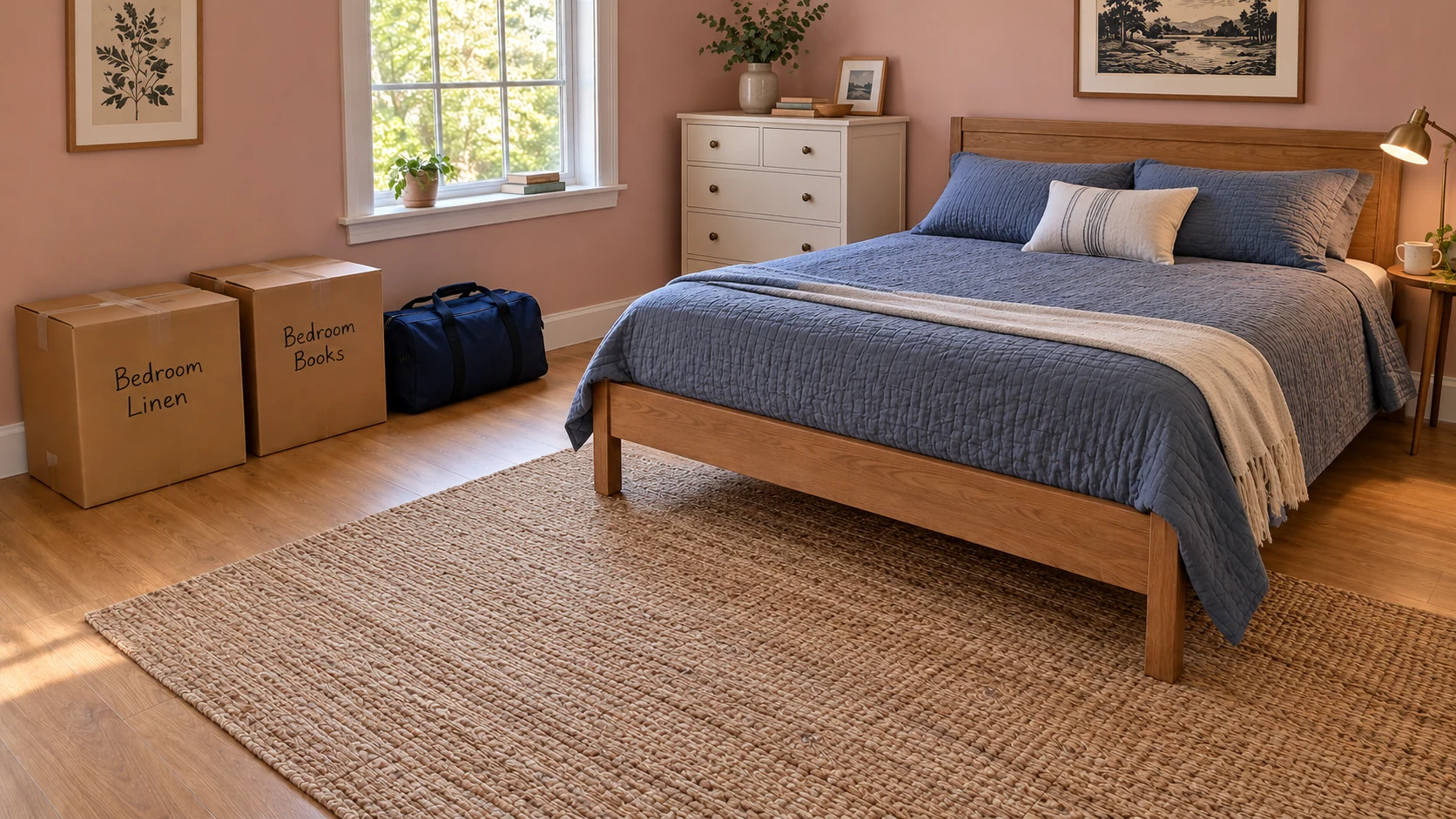
Furniture is unwrapped as part of delivery. Unpacking the contents of boxes is optional work charged for time, and packaging and waste removal are separately priced. Include those tasks in the scope when you need the room ready beyond furniture placement. An assembled bed and accessible luggage can serve the first night while optional carton unpacking follows the agreed plan.
We arrange long-distance pickups in Lakewood proper, the Census-designated place within Lakewood Township, New Jersey, for the reviewed address and shipment. Give the exact unit and identify the rooms, retained property and any separate storage included. Compare the whole carrying route and the lawful truck position. For a Lakewood mailing address outside the CDP or another nearby community, provide its actual municipality and full address for review; a postal label does not establish street or building permission.
Explore long-distance destinations from Lakewood
These destination examples help organize a household move from Lakewood. We serve destinations throughout the United States and Canada. Compare the actual shipment, direct or suitable consolidated delivery and a usable receiving arrangement.
Northeast
- Boston, Massachusetts
- Buffalo, New York
- Philadelphia, Pennsylvania
- Washington, DC
- Baltimore, Maryland
- New York City, New York
Southeast and Florida
- Charlotte, North Carolina
- Raleigh, North Carolina
- Miami, Florida
- Orlando, Florida
- Tampa, Florida
- Greenville, South Carolina
- Jacksonville, Florida
Great Lakes and Midwest
- Chicago, Illinois
- Cleveland, Ohio
- Columbus, Ohio
Pacific states
- Seattle, Washington
- Spokane, Washington
- Portland, Oregon
- San Francisco, California
- Los Angeles, California
- San Diego, California
Mountain West and Southwest
- Denver, Colorado
- Phoenix, Arizona
- Las Vegas, Nevada
- Salt Lake City, Utah
Canada
- Québec City, Quebec
- Vancouver, British Columbia
- Toronto, Ontario
- Ottawa, Ontario
- Montreal, Quebec
- Kingston, Ontario
- London, Ontario
- Hamilton, Ontario
Long-distance moving questions
How should I choose direct or consolidated delivery from Lakewood?
Choose direct when the main shipment needs a shorter planned journey and the agreed receiving schedule supports it. A dedicated truck and the same moving crew connect pickup and delivery. Consider consolidation for a suitable selected group the household can wait for during the wider accepted window. Compare the actual inventory, living arrangements and receiver before choosing.
When does the delivery window begin?
After pickup and loading are complete. Packing, furniture preparation and the Lakewood carrying route come first. The ordinary direct illustrations are Philadelphia 1–2 days, Orlando 2–3, Montreal 1–2 and Los Angeles 4–5. They are planning ranges, not appointments, truck-route approvals or confirmation of Canadian clearance.
Is a Lakewood to Philadelphia move automatically same-day?
No. The ordinary direct illustration is 1–2 days after completed loading. A suitable same-day or next-day arrangement needs an accepted preparation, loading, travel and receiving plan. Confirm the actual offered schedule before booking travel or relying on one building appointment; the short road reference alone does not settle those stages.
What delivery window should I consider for Orlando?
The ordinary direct illustration is 2–3 days after completed pickup and loading. A suitable consolidated shipment uses the Florida category, illustrated at up to 60 days from the same starting point. Match the accepted option to the furniture the household can manage without and a receiver able to support the actual arrangement.
Why is Montreal not treated as a short domestic shipment?
Montreal is in Quebec, Canada. The consolidated category is up to 60 days after completed loading even though the road reference is relatively short. Ordinary direct delivery is illustrated at 1–2 days, with actual border and receiving requirements reviewed separately. Choose the model using the documented shipment and usable receiving arrangements.
Does California’s 90-day category cover every western destination?
No. It applies to a suitable consolidated California shipment, including the Los Angeles example, after completed pickup and loading. Another distant western state needs its own agreed window. Los Angeles direct delivery is ordinarily illustrated at 4–5 days; neither illustration is a booked receiving appointment.
Is 300–400 cubic feet a minimum for consolidation?
No. It is approximate guidance for smaller shipments, not a minimum or an automatic cutoff. List the pieces and cartons actually selected, including any separate storage group. The route, shipment and accepted window must also work with the household’s ability to wait and someone able to receive the goods.
Will a longer journey increase my agreed long-distance flat rate?
Not simply because the same reviewed shipment and service scope take longer in travel or delivery. More belongings, another stop, extra packing, storage or different access can change the work. Resolve known changes and any revised interstate written estimate before loading. The original estimate cannot be rewritten after loading begins; later additional services need their applicable agreement and charges before they are performed.
What should I show for a Lakewood apartment or house?
Show the actual items and the complete room-to-truck route: door openings, hall turns, stairs, landings, porch steps and any shared lift. Identify the unit, retained property and included basement or storage group. Include the receiving route too. A building exterior or front-door photograph cannot establish all the interior clearances.
Does a Lakewood delivery exception reserve space at the curb?
No. A pickup-and-delivery exception on a listed restricted street addresses that route provision, rather than creating an exclusive parking space or authorizing a street closure. Send the actual frontage, date, working period and vehicle details. Lakewood Police Traffic Safety at 732-363-0200, extension 5380, can direct the street-arrangement question.
Can the road reference be used as the moving truck’s approved route?
No. It is a general driving connection between city reference points. The actual truck’s dimensions, registered weight, signs and lawful stopping position still need review. Lakewood’s over-four-ton registered-gross-weight parking provisions have specified segments and hours; do not treat them as either a universal overnight ban or blanket permission.
What if the destination keys are not confirmed before pickup?
Use the earlier of the property’s last-change deadline and the mover’s dispatch cutoff as the decision point, before departure and before alternatives expire. Contact the property’s access controller, authorized household contact and moving coordinator to confirm an available later receiving period or another accepted receiving location. For storage and redelivery, confirm a facility that can accept the actual load, including capacity, receiving hours, protection, handling, access, price, payer and retrieval or onward-delivery date. Arrange accommodation and accessible essentials for the household separately. If no destination can receive the goods, revise departure. Resume when possession, the authorized receiver, carrying route and any required import arrangements are ready; an enquiry is not a confirmed alternative. Storage and later delivery need their own written agreement and are not automatically included or free.
Can I travel before the Lakewood loading is finished?
Yes, with a clear origin handover. Name the person responsible for the final inventory, keys and last room check, and separately name the receiver who will confirm destination access. Tell the coordinator who can approve changes. Keep the documents, medication, clothing and other essentials needed for the travellers’ own journey outside the shipment.
What should I prepare when the goods follow me to Montreal?
Prepare two copies of the applicable accompanying and goods-to-follow lists before travelling. CBSA requires first-entry accounting even when no goods accompany you; retain the original goods-to-follow list, accounting document and completed BSF186 receipt for the later shipment. Reconcile the shipment with its description and value fields. Confirm eligibility and restricted items with CBSA; an ordinary moving inventory is not completed clearance.
Can you pack only the furniture and cartons selected for this trip?
Yes. Identify the items and contents we should prepare, what you will pack and what will remain at Lakewood. Keep the selected group apart from the property still in use. Include fragile contents and separate storage in the review, and put any earlier preparation visit, materials and agreed carrying period in the scope.
Are packing labor and company cartons charged together?
Packing is charged for working time, while company-supplied cartons are charged separately. Moving blankets, shrink wrap and tape have no separate basic material charge. Describe the preparation and cartons you need before agreeing the scope; these terms do not make packing labor, specialist methods or every supply free.
Must drawers and all furniture legs come off?
No. Empty ordinary drawers generally stay secured in the protected piece. Safely detachable long legs can be protected together as an identified matching set. Loose shelves and fittings need appropriate preparation, with hardware identified, secured and kept with the item. Integral supports should not be removed simply because it is moving. Complex furniture needs its own reviewed method and individual quote.
What happens if a large piece will not fit at delivery?
Resolve a feasible approved method or an inventory change before loading that piece in Lakewood. Compare its retained dimensions with the actual doors, turns, stairs, lift opening and cab. Show the construction and narrow points to the coordinator. A reserved lift or a promising room plan does not establish a physical fit.
Does delivery include unpacking every carton and removing the packaging?
Furniture is unwrapped as part of delivery. Unpacking the contents of boxes is optional work charged for time, and packaging and waste removal are separately priced. Include the finishing tasks you want in the agreed scope so the receiving person knows what will be ready when that stage ends.
Is a building COI the same as protection for my belongings?
No. A building COI addresses that property’s document requirements. Interstate valuation concerns the mover’s liability: Full Value Protection applies unless Released Value is selected through the required written choice. Released Value limits liability to 60 cents per pound per article. Separate insurance is different again; review the actual terms, cost and valuable-item requirements.
What changes if the household move stays entirely within New Jersey?
Use the applicable in-state process, including an on-site or virtual survey before the written estimate, even for a small shipment. An initial item list and photographs help prepare the review but do not replace that survey. Confirm the actual documents and terms instead of automatically applying interstate protection or the four delivery illustrations.
Where can a long-distance pickup be arranged in Lakewood?
We arrange long-distance pickups in Lakewood proper, the Census-designated place within Lakewood Township, New Jersey, for the reviewed address and shipment. Give the exact unit and identify the rooms, retained property and any separate storage included. Compare the whole carrying route and the lawful truck position. For a Lakewood mailing address outside the CDP or another nearby community, provide its actual municipality and full address for review; a postal label does not establish street or building permission.
What should I send to begin the estimate?
Send both complete addresses and units, the selected item list, access photographs and the dates that are firm. Include storage groups, stairs, lifts, proposed truck positions and building instructions. Describe packing, cartons, furniture work, storage, unpacking or removal. Name the receiver and any confirmed alternative; the planning team will recommend the appropriate review. For an interstate household shipment, obtain the required written estimate and complete the required survey unless you sign the proper separate written survey waiver before loading. Retain that waiver with the bill of lading; waiving the survey does not waive the written estimate.
Does the person reviewing my estimate also have to be on the moving crew?
No. Move planning and estimating are separate roles from the moving crew. Our direct service uses the same moving crew at pickup and delivery, but that does not promise the surveyor will perform the move. Describe specialist tasks in advance; their scope and method require their own review.