
Virginia · Alexandria service planning
Long Distance Movers in Alexandria, VA
Sterling Oakbridge arranges long-distance household moves from Alexandria, Virginia, across the United States and to Canada. Direct delivery uses a dedicated truck and the same moving crew at pickup and delivery. Suitable smaller shipments can use consolidated delivery with a wider agreed receiving window. The agreed long-distance flat rate covers the reviewed inventory, access and services; a longer journey does not increase that price when the scope stays the same. Send both addresses, the belongings, preparation choices and firm dates so we can review a service that the household can actually receive.

Choose direct or consolidated delivery
Direct delivery is useful when most of the household is moving together, the furniture is needed within a relatively narrow reviewed period, or the shipment's handling requirements favor a dedicated truck. The same moving crew collects and delivers the belongings. Give that crew a consistent inventory and room labels so the information prepared at pickup remains useful when the furniture reaches its new home.
Consolidated delivery can suit a selected smaller shipment when the receiving home can work without those belongings throughout the agreed window. Approximately 300–400 cubic feet or less is useful small-shipment guidance, not a minimum volume or an automatic acceptance threshold. Item dimensions, preparation, route and access still matter. A bulky fragile piece can need particular preparation even when the rest of the shipment is modest.
Compare the household's needs before comparing the two models. Identify which bed, working equipment and daily items must be available, who can receive, and how flexible the property really is. Ask for the actual included work and receiving window. Consolidated delivery does not carry the direct service's same-crew promise, and storage needs its own arrangement. The written estimate establishes the price for the reviewed choice.
Read delivery windows from the end of loading
Delivery windows begin after pickup and loading are complete. Packing beforehand, an unavailable Alexandria elevator and the time needed to bring furniture out of the house belong in the pickup schedule. A reserved morning arrival at the origin is not a promise that the loaded truck can begin its journey at that moment.
Swipe the table to compare both delivery options.
| Illustrative destination | Direct planning window | Consolidated window |
|---|---|---|
| Baltimore, Maryland | 1–2 days | Up to 30 days |
| Miami, Florida | 2–3 days | Up to 60 days |
| Ottawa, Ontario | 1–2 days | Up to 60 days |
| Sacramento, California | 4–5 days | Up to 90 days |
The examples use road references checked on October 24, 2026: approximately 46 miles from an Alexandria reference point to Baltimore, 1,049 to Miami, 573 to Ottawa and 2,743 to Sacramento. These are general driving references from the OpenStreetMap-based OSRM service. They do not certify a truck route, current traffic, border release or a delivery appointment. The actual addresses, vehicle, lawful route, working schedule and receiving access must be reviewed for the job.
A suitable nearby consolidated U.S. move can have a window of up to 30 days. Florida and Canada can have up to 60 days; California can have up to 90 days. Canada keeps its own window even for a relatively close destination. Other long destinations require an individually agreed consolidated window. The upper limit describes the possible receiving period, not a prediction that every shipment will take that long.
Same-day or next-day service may be possible for a suitable reviewed move. Explain a firm deadline before booking and obtain confirmation of the actual plan. A short road reference cannot establish whether two buildings, loading work and lawful vehicle positions will fit the same day. Personal travel should follow confirmed arrangements rather than an illustrative table alone.
Keep the travel plan separate from the shipment
Keep identification, keys, move documents, chargers, travel clothing and essential personal items with the people traveling. Plan for the whole agreed receiving window. Tell the crew which bags stay with you, and keep those bags clearly apart from the belongings being collected. A key or document needed before delivery should remain accessible without opening the freight.
Decide how the household will sleep, work and prepare ordinary meals before the furniture arrives. If a bed is traveling, arrange the first nights separately. A furnished temporary home may make a wider receiving window practical; an empty room without a usable bed may change the service choice. Check any restricted contents against the requirements for the actual shipment and personal journey before packing them.
Make the receiving contact reachable during that period. Give the mover a person who can confirm property access and direct placement, with a replacement if that person is away. The replacement must have the actual authority and information needed for delivery. A name on a contact list does not by itself open a building or authorize use of its elevator.

Resolve the Alexandria pickup route before the road journey
Start with the exact address and jurisdiction. Alexandria is an independent city, while the Alexandria postal name also appears outside it, including in Fairfax County. Use the correct public-space owner and the property's own instructions. A familiar neighborhood name or ZIP code cannot establish which street procedure applies.
An Old Town attached home may require several steps, an entry turn and a narrow interior carry. A Carlyle or Potomac Yard apartment can have a separate service entrance, elevator booking, loading height limit and deadline for clearing shared space. In the West End, compare the actual house or building, its path, stairs and lawful vehicle position. These are starting points for an address review, not one rule for every home in an area.
Show the route in order: the room, furniture turn, doorway, stair or elevator, transfer lobby, outside path and vehicle. Include the item's protected dimensions and the space people need to handle it. A passenger-car garage or an attractive main entrance may be different from the route the property authorizes for a moving vehicle and household furniture.
Confirm who reserves each resource and who can release it on the day. Private loading and elevator approval are separate from permission to use public street space. For the City's temporary reserved parking process, apply through APEX or in person by noon at least three full business days before use, excluding weekends and holidays. Provide the exact address, side of the street and meter numbers where applicable. The City describes each space as approximately 20 feet and allows up to five for moving; review the whole vehicle footprint. For sign installation issues call 703-746-4035; for a vehicle occupying a reserved space call the police non-emergency line at 703-746-4444. Application, approval, posted signs and an empty space are separate conditions. The Alexandria moving-services page and local relocation guide explain the local process and its limits.
Report vehicle-height restrictions, the complete standing footprint, insurance-document wording and receiving hours before the estimate. A cargo-box length is not the truck's overall length. If keys or an elevator are delayed, arrange a permitted waiting or separately accepted holding plan; waiting for access is not active loading. Inspect exposed steps, the curb and private path after bad weather rather than treating a cleared road as proof that the whole carry is usable.
Make preparation visible in the inventory
List the main furniture and approximate container counts, then include the places that are easy to miss: a storage cage, attic, balcony, garage or detached work area if its contents travel. Identify oversized, unusually heavy, fragile or valuable pieces and show their routes. An item list starts the review. For an interstate household shipment, obtain the required written estimate and complete the required survey unless you sign the proper separate written survey waiver before loading. Retain the waiver with the bill of lading; it does not waive the written estimate. A room count cannot replace those details.
Say what you will pack and what you want the crew to pack. Ordinary furniture protection uses moving blankets, shrink wrap and tape without a separate material charge. Basic furniture disassembly and reassembly are moving labor without a separate basic-disassembly fee. Purchased cartons are separate, packing uses working time, and custom crating or technical work needs the appropriate agreed scope.
Empty ordinary dresser drawers and keep them installed and secured in the protected piece, unless a particular construction or route calls for another reviewed method. Remove safely detachable long legs where the actual furniture requires it, protect the complete set and keep its hardware identifiable. The method must fit the furniture's construction and the carry; the team should not first discover the difficult piece while working against the loading deadline.
Mark containers with the destination room and useful contents. Identify a protected furniture parcel or custom crate against the inventory, and tell the receiver where it belongs. A large fragile mirror may need reviewed specialist preparation; ordinary small framed pictures do not automatically need wooden crates. Share the item before the estimate so the preparation, handling and price are explicit.
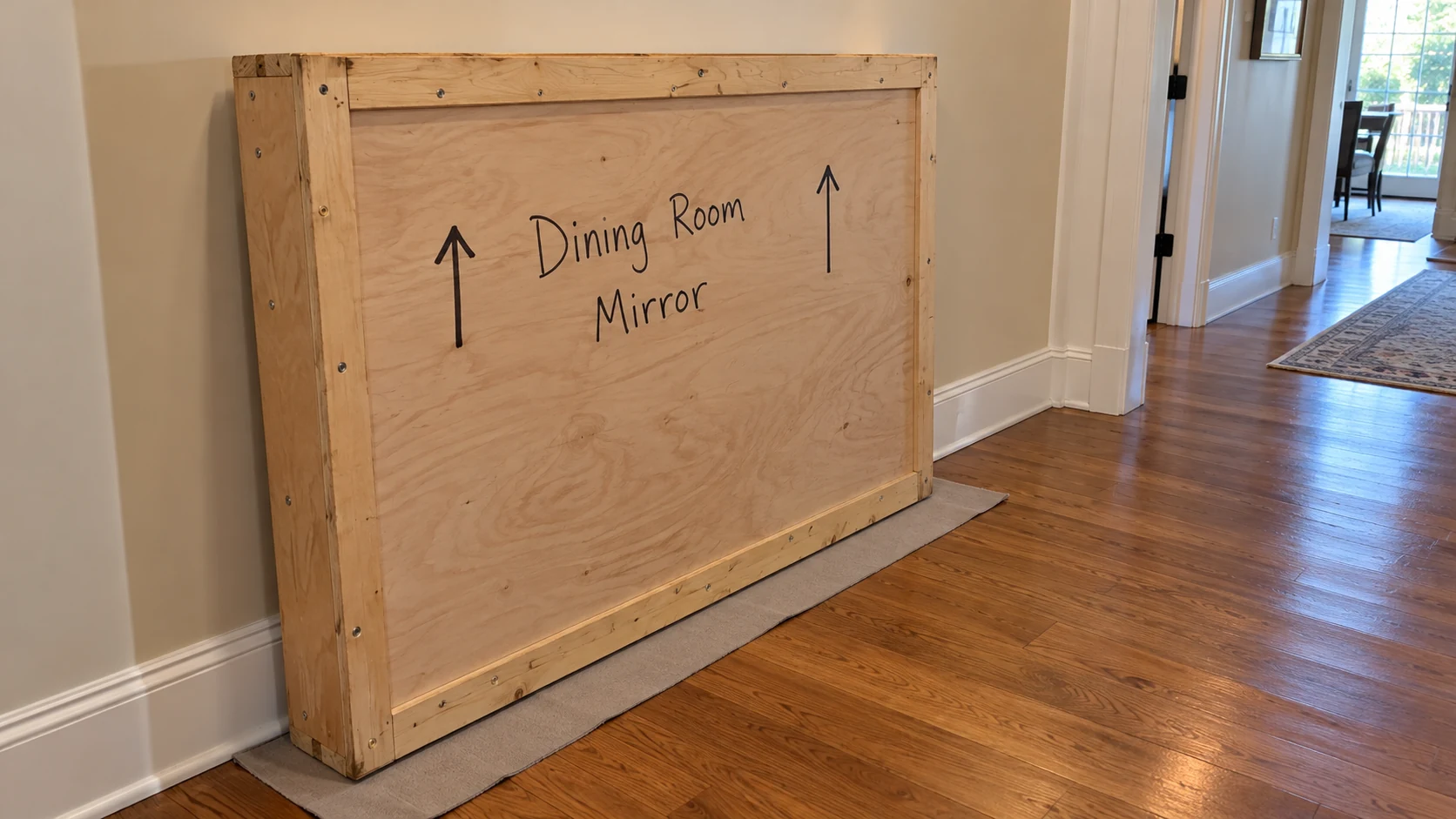
Four planning examples before pickup
The following situations are hypothetical. They explain different decisions for an Alexandria household; they are not reports of completed customer moves. Each combines the illustrative delivery windows with a particular inventory, access condition and receiving plan.
Example: Baltimore when the sofa cannot turn at the receiving entrance
Imagine a household leaving an Alexandria attached home for a Baltimore townhouse. Most belongings are traveling together, so the household is considering direct delivery. During the receiving review, a photograph reveals a tight turn between the front door and the living room. The sofa's protected dimensions have not yet been compared with that turn.
Resolve the item and route before pickup. Send the sofa's dimensions, construction details and photographs of the whole approach, including the landing and the space available to rotate it. The planning team can review whether ordinary safe disassembly is appropriate or another handling method needs its own agreement. An alternative entrance is useful only if the property actually authorizes it and the complete route works.
The illustrative direct range for Baltimore is 1–2 days after pickup and loading. A reviewed same-day or next-day plan may be possible, but the short reference drive does not solve the furniture turn or reserve an entrance. Confirm the origin's loading arrangements, the receiving window and who will admit the crew. Do not leave the receiving problem for a truck that has already arrived.
Keep a decision deadline before loading. If no accepted method is ready, agree what happens to that sofa and how the inventory and written scope change. The rest of the household still needs a usable arrival plan, including essential bags and a receiver with room labels. The practical result is a delivery that can reach the intended room, with the difficult piece's method resolved in advance.
Example: Miami when the receiver is away during part of the window
Consider a resident leaving an Alexandria apartment for an already furnished home in Miami. Only a small cabinet, selected books and several household containers need to travel. The resident can live without them for a period and wants to discuss consolidated delivery. The friend initially named to receive will be away for part of the proposed window.
Review the actual shipment rather than deriving its volume from the apartment's size. Send the cabinet dimensions, container count and any fragile belongings. The approximate 300–400-cubic-foot small-shipment guidance helps start the discussion; it does not automatically settle eligibility, handling or price. Confirm the proposed service and all preparation in the written estimate.
Florida consolidated delivery can have a window of up to 60 days after pickup and loading. Before booking, arrange a receiver who can cover the actual agreed period and has permission to enter the home and direct placement. If the friend cannot cover certain dates, provide an authorized replacement or review another accepted receiving arrangement. An unbooked storage address does not fill the gap.
The resident keeps work materials, travel documents and necessary clothing outside the freight. If a particular piece later becomes essential by one firm date, revisit the service choice before pickup; the illustrative direct alternative is 2–3 days after loading, subject to the reviewed job. A flexible furnished home can support a wider window, but receiving availability must be real rather than assumed.

Example: Ottawa when the people arrive before goods to follow
A household is moving from Alexandria to Ottawa. The people expect to enter Canada before the shipment, while possession of the new home begins later. They need to coordinate two separate tasks: the importer's formalities and an actual place that can receive the belongings after release.
Check CBSA's moving or returning guidance for the household's status and ownership/use conditions. Prepare two copies of the effects list, distinguishing accompanying goods from goods to follow. Declare the list at first entry even if no goods accompany you, and retain the original goods-to-follow list, accounting document and BSF186 receipt for later unaccompanied goods. A moving inventory alone does not establish duty-free eligibility or release.
The illustrative direct range to Ottawa is 1–2 days after loading, subject to the reviewed route, customs readiness and receiving access. That range is not a promise of border release or an appointment before the household has keys. Confirm when the property can admit the crew, who can provide access and how release updates will reach the receiver. Keep the relevant documents with the people who need them.
Canada consolidated delivery can have a window of up to 60 days even for this Ontario destination. If the household chooses that model, the receiving plan must work across the actual window. Contact the receiving property’s access controller and moving coordinator by the agreed decision deadline, before departure and before alternatives expire. Confirm an available later delivery period or another accepted receiving location. For storage and redelivery, confirm a facility that can accept the actual load, including capacity, receiving hours, protection, handling, access, price, payer and retrieval or onward-delivery date. Arrange accommodation and accessible essentials for the household separately. If no destination can receive the goods, revise departure. Resume when possession, the authorized receiver, carrying route and any required import arrangements are ready; a pending request is not a confirmed alternative.
Example: Sacramento when the journey is longer and the receiver changes
Imagine a family leaving an Alexandria house for Sacramento on a direct move. The inventory, preparation and both access routes have been reviewed. The person originally meeting the crew becomes unavailable, and the family asks another adult to receive within the same approved delivery window. The road journey also takes longer than initially expected.
Give the mover the replacement receiver's name, contact information and authority to admit the crew and direct placement. Make sure that person has the inventory, room labels and the property's instructions. Confirm that the original vehicle position, entrance and receiving slot still apply. A replacement who can use the same agreed arrangements is different from a newly restricted entrance or an unavailable building.
The illustrative direct range to Sacramento is 4–5 days after pickup and loading. With the reviewed inventory, access and services unchanged, a longer journey or delivery does not increase the agreed long-distance flat rate. Keep personal travel and first-night essentials workable while the delivery is confirmed. A general range should not be the sole basis for an appointment that cannot change.
Suppose the family also wants the receiver's kitchen cartons unpacked. Carton unpacking is additional optional work using working time when agreed; identify the priority work and approve its written scope and price before it begins. That addition differs from the road simply taking longer. If the family instead considers consolidated service, California can have an up-to-90-day window; do not apply that provision automatically to Oregon, Washington or every western state.
Keep the written estimate aligned with the work
The long-distance flat rate is agreed for the reviewed inventory, access and services. Additional belongings, a newly requested packing service or materially changed access alter the work. Resolve known changes and any revised interstate written estimate before loading. The original estimate cannot be rewritten after loading begins; later additional services need their applicable agreement and charges before they are performed. Report changes early so the vehicle, preparation, receiving arrangements and price can be addressed together.
For an interstate household move, read the applicable written estimate and transport documents, including the inventory and bill of lading, before signing. Binding and nonbinding estimates have different terms. FMCSA's estimate guidance explains the distinction. Ask for the applicable payment terms and amount due at delivery, and keep copies accessible throughout the move. A journey entirely within Virginia follows its applicable tariff and intrastate estimate rules. The Virginia DMV household-moving guide distinguishes moves of 30 miles or less that may use hourly charges from longer moves requiring the applicable itemized estimate and bill of lading. Review the binding or nonbinding terms rather than applying these interstate examples to every in-state job.
State the later services you want as well as the pickup work. Furniture unwrapping belongs to delivery. Emptying carton contents is optional unpacking work using working time when agreed. Organizing, packaging and waste removal, storage and specialist work have their own scope. Clear requests let the estimate describe what the crew will actually do after unloading.
Receive the shipment and record the handoff
Arrange a present receiver with the inventory, room plan, access authority and a way to reach the team. Keep the carrying route and the main furniture footprints clear before smaller containers fill the space. Confirm placement and basic reassembly within the agreed scope, and identify any separately ordered unpacking priorities. Keep loose protection and packaging outside the usable path while deciding what will be retained or removed.
Check the shipment against the inventory and note apparent loss or damage on the delivery records. Keep photographs and the documents needed for the written claim process. A delivery notation and a formal claim are separate steps. For an interstate household-goods shipment, FMCSA describes nine months after delivery to file a written loss or damage claim. Report concerns promptly, follow the written procedure and read any receipt language releasing the mover from liability before signing. FMCSA's moving checklist provides document and handoff reminders for interstate household moves.
Choose and document the applicable valuation terms before the move. For U.S. interstate household shipments, Full Value Protection applies unless Released Value is specifically chosen in writing. Released Value generally limits liability to 60 cents per pound per article. Valuation differs from separately purchased insurance; ask for the actual terms, charges and any deductible, and identify unusually valuable belongings early. See FMCSA's liability explanation.
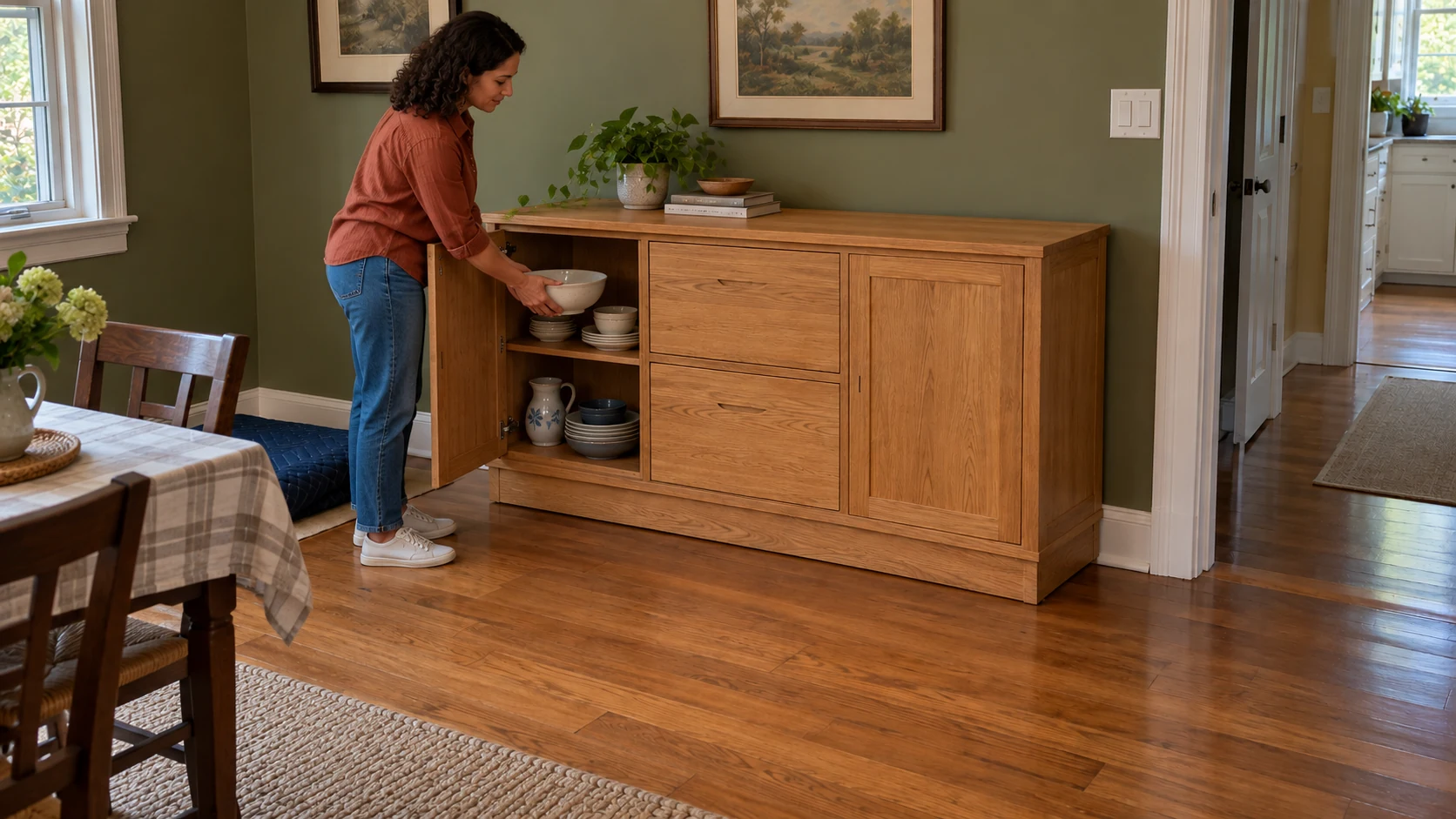
Arrange the actual Alexandria pickup
We arrange reviewed long-distance household pickup from Alexandria, Virginia, including apartments, condos, attached homes and detached houses. Send the full address, belongings, preparation, dates and complete carry to the lawful vehicle position. The independent City's public-space process and the property's private arrangements have separate owners. An Alexandria mailing address outside the City needs its own jurisdictional review; the service name does not imply a local company office.
The directory below offers destination examples across the United States and Canada. They are planning destinations, not customer-demand rankings or confirmed trips. Bring both actual addresses and the receiving constraints to the estimate so the proposed service connects the home you are leaving with a usable arrival.
Explore long-distance destinations from Alexandria
These examples organize possible household moves across the United States and Canada. They are a planning directory, not customer-demand rankings or confirmed appointments. Send both actual addresses, the belongings and your receiving constraints.
Northeast and Mid-Atlantic
- Harrisburg, Pennsylvania
- New York City, New York
- Boston, Massachusetts
- Baltimore, Maryland
- Buffalo, New York
Southeast and Florida
- Tampa, Florida
- Orlando, Florida
- Charlotte, North Carolina
- Raleigh, North Carolina
- Jacksonville, Florida
Great Lakes and Midwest
- Chicago, Illinois
- Cleveland, Ohio
- Columbus, Ohio
Pacific states
- Seattle, Washington
- Portland, Oregon
- San Diego, California
- Sacramento, California
Mountain West and Southwest
- Phoenix, Arizona
- Las Vegas, Nevada
- Salt Lake City, Utah
- Denver, Colorado
Canada
- Kingston, Ontario
- Ottawa, Ontario
- Montreal, Quebec
- Quebec City, Quebec
Long-distance moving questions
What long-distance delivery can you arrange from Alexandria?
We arrange reviewed household moves across the United States and to Canada. Direct delivery uses a dedicated truck and the same moving crew at pickup and delivery. Suitable smaller shipments can use consolidated delivery with a wider agreed window. Send both addresses, the belongings, preparation, access and firm dates so the proposed service and written estimate fit the actual move.
When is direct delivery the more practical choice?
Consider direct delivery when most of the household is traveling together, you need the furniture within a relatively narrow reviewed period, or handling needs favor a dedicated truck. Confirm the actual receiving plan before booking. The same crew collects and delivers, but it still needs a clear inventory, room labels and an authorized receiver who can use the property's approved access.
Is 300–400 cubic feet a minimum for consolidated service?
No. Approximately 300–400 cubic feet or less is guidance for a suitable small shipment, not a minimum or an automatic eligibility cutoff. Send item dimensions, container counts and preparation needs. The route, access, fragile pieces and receiving flexibility also matter. Ask for the actual service, included work and window instead of deriving a price or acceptance from volume alone.
When does the delivery window begin?
It begins after pickup and loading are complete. Packing beforehand, waiting for an elevator and the time needed to load the belongings belong in the pickup plan. Review the actual route, working schedule and destination access when confirming delivery. A reserved arrival at the Alexandria building is not the same as the loaded truck being ready to leave.
Can an Alexandria-to-Baltimore move be delivered the same day?
Same-day or next-day service may be possible for a suitable reviewed move. Send both addresses, the inventory, preparation, loading hours and receiving restrictions before booking. The illustrative direct range is 1–2 days after loading; it is not a same-day appointment. A short drive cannot establish that the furniture route, two buildings and lawful vehicle positions will all be ready.
What windows apply to consolidated delivery?
A suitable nearby U.S. route can have a window of up to 30 days after pickup and loading. Florida and Canada can have up to 60 days; California can have up to 90 days. Other long destinations require an individually agreed window. Canada keeps its own period even for a relatively close city. Confirm the actual window and receiver coverage before choosing the service.
Does a longer journey increase the agreed flat rate?
No. The agreed long-distance flat rate stays the same when the reviewed inventory, access and services are unchanged, even if the journey or delivery takes longer. Added belongings, new services or materially changed access alter the work. Resolve known changes and any revised interstate written estimate before loading. The original estimate cannot be rewritten after loading begins; later additional services need their applicable agreement and charges before they are performed.
What information is needed for an Alexandria pickup?
Provide the exact address and jurisdiction, inventory, preparation, dates and the full carry to the vehicle. Include doors, turns, stairs or elevator dimensions, loading height limits, reservation hours and the person controlling each resource. Alexandria postal addresses can be outside the independent City. Confirm the correct public-space owner and the property's private requirements instead of relying on the mailing name.
Does a building reservation also reserve the public curb?
No. Building management controls its private loading and elevator arrangements; public street space has its separate owner and procedure. For the City's temporary reserved parking process, allow the noon cutoff at least three full business days before use, excluding weekends and holidays. Application, approval, posted signs and an empty space are separate conditions. Confirm the actual location and private access as well. Submit the exact address, street side and applicable meter numbers through APEX or in person. Each space is approximately 20 feet, with up to five for moving; check the whole vehicle footprint. Contact the City for sign installation and police for an occupied reserved space.
What if the sofa will not turn through the receiving entrance?
Show the sofa's protected dimensions, construction and the complete restricted route before pickup. The planning team can review appropriate ordinary disassembly or a separately agreed handling method. Another entrance helps only if it is authorized and the whole route works. Set a decision deadline before loading and agree the inventory, handling and receiving alternative rather than leaving the problem for an arriving truck.
How is the inventory reviewed for the estimate?
An item list starts the review. For an interstate household shipment, obtain the required written estimate and complete the required survey or sign the proper separate written survey waiver before loading. Retain the waiver with the bill of lading; waiving the survey does not waive the written estimate. Include storage cages, attics, outdoor areas and anything else that travels, with photographs of difficult or unusually valuable pieces. Show their routes as well as their appearance. A room count or advertised floor area does not replace review of the actual shipment and work.
Which protection, packing and disassembly work is included?
Moving blankets, shrink wrap and tape for ordinary furniture protection have no separate material charge. Basic furniture disassembly and reassembly are moving labor without a separate basic fee. Purchased cartons are separate and packing uses working time. Custom crating, technical work and other specialist preparation need their own agreed scope. List what you want packed so the written estimate describes the actual work.
Should dresser drawers be removed for transport?
For an ordinary dresser, empty the drawers and keep them installed and secured within the protected piece. A particular construction or carrying restriction may require another reviewed method. Do not routinely turn the dresser into a separate stack of drawers. Identify the piece on the inventory and show unusual mechanisms, fragile construction or the difficult turn before the estimate.
What should travel with the household instead of the freight?
Keep identification, keys, move documents, chargers, travel clothing and essential personal items accessible to the people traveling. Plan for the full agreed receiving period and tell the crew which bags stay with you. Arrange the first nights and necessary work equipment separately if the beds or desk are traveling. Check restricted contents against the actual shipment and personal-travel requirements before packing.
Can a Miami consolidated shipment arrive while my receiver is away?
Arrange real receiving coverage for the actual agreed window before booking. Florida consolidated delivery can have a window of up to 60 days after loading. Provide an authorized replacement for unavailable dates or review a different accepted arrangement with the mover. The receiver needs entry permission, the inventory and placement instructions. An unbooked storage address does not cover the absence.
What paperwork is needed for goods to follow into Canada?
Follow CBSA's instructions for your status and ownership/use conditions. Prepare two copies of an effects list separating accompanying goods from goods to follow, declare it at the first Canadian entry even if no goods accompany you, and retain the original goods-to-follow list, accounting document and BSF186 receipt for later unaccompanied goods. A mover's inventory alone does not establish eligibility, release or duty-free treatment. Resolve the actual import requirements before relying on a receiving appointment.
What if the Ottawa home is not available when the goods are ready?
Contact the receiving property’s access controller and moving coordinator by the agreed decision deadline, before departure and before alternatives expire. Confirm an available later delivery period or another accepted receiving location. For storage and redelivery, confirm a facility that can accept the actual load, including capacity, receiving hours, protection, handling, access, price, payer and retrieval or onward-delivery date. Arrange accommodation and accessible essentials for the household separately. If no destination can receive the goods, revise departure. Resume when possession, the authorized receiver, carrying route and any required import arrangements are ready; a pending request is not a confirmed alternative. Storage and later delivery need their own written agreement. Canada’s up-to-60-day consolidated window and the direct illustration still depend on actual import and receiving readiness.
Can another person receive the Sacramento delivery?
Provide the replacement receiver's name, contact details and authority to admit the crew and direct placement. Give that person the inventory, room labels and building instructions. Confirm the same approved vehicle position, route and receiving window still apply. If access or services change, review those changes with the mover before delivery; a contact name alone does not authorize the property's resources.
Does delivery include unpacking every carton and taking away waste?
Furniture unwrapping belongs to delivery. Emptying carton contents is optional unpacking work using working time when agreed. Organizing, packaging and waste removal, storage and specialist work have their own scope. Identify the priority rooms, requested work and material-removal needs for the estimate. If you add unpacking later, agree its written scope and price before the additional work begins.
What valuation applies to an interstate household shipment?
For U.S. interstate household moves, Full Value Protection applies unless Released Value is specifically chosen in writing. Released Value generally limits liability to 60 cents per pound per article. Valuation differs from separately purchased insurance. Obtain the applicable written terms, charges and any deductible, disclose unusually valuable belongings early, and keep the inventory and delivery records available for the claim process.
What should the receiver check at delivery?
Use the inventory to identify what arrived, direct the agreed room placement and check basic reassembly. Keep the route and main furniture footprints clear. Note apparent loss or damage on the delivery records and retain photographs and documents; a delivery notation and a formal claim are separate steps. Confirm any separately ordered unpacking and record the follow-up that remains before closing the handoff. For an interstate household-goods shipment, file a written loss or damage claim within the applicable nine-month period after delivery. Report concerns promptly and follow the written claims procedure. Read receipt language releasing the mover from liability before signing.