
Virginia · Leesburg service planning
Long Distance Movers in Leesburg, VA
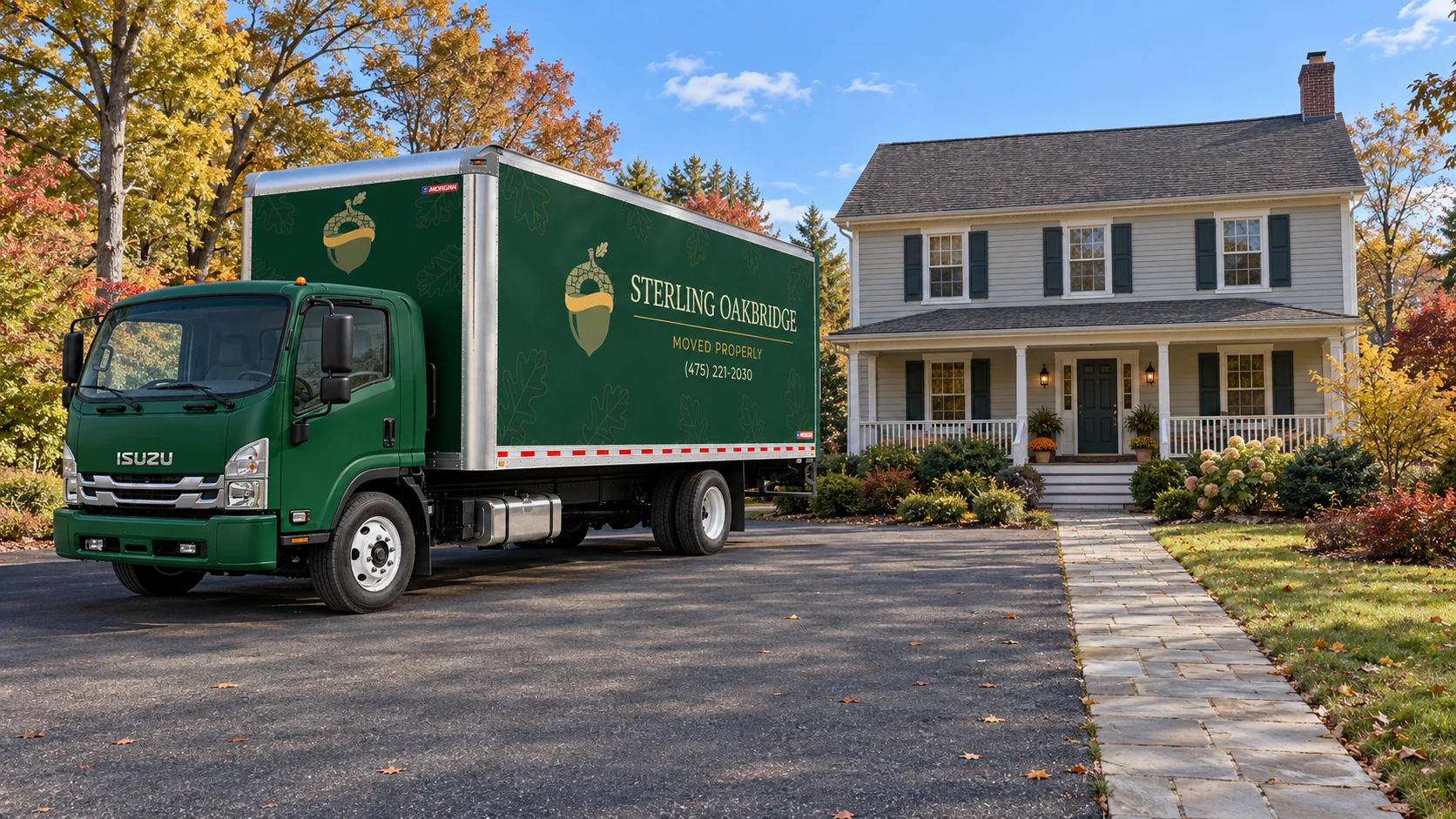
Move from Leesburg to a new home in the United States or Canada with a plan for the shipment and the people receiving it. Direct delivery uses a dedicated truck and the same moving crew at pickup and delivery. Consolidated delivery can work for a suitable smaller shipment when you can use a wider receiving window. Sterling Oakbridge reviews the belongings, packing, access and dates before agreeing the long-distance flat rate.
Plan the departure and the first usable day
Begin with two dates: when the Leesburg home must be empty and when someone can actually receive the furniture at the next address. A closing, lease start or flight does not reserve a building elevator or make an unfinished room ready. Include any interval between the two homes when choosing direct delivery, consolidation or a separately quoted storage stage.
Make one inventory covering the whole shipment. Include an attic or basement, garage, outdoor furniture and any separate storage unit. Show the largest pieces, their construction and any previous repairs. A video or in-person review can reveal a stair turn or furniture joint that a room list misses. For an interstate household move, complete the required survey or elect a separate written survey waiver signed before loading, and keep the waiver with the bill of lading. An item list or photographs alone do not waive the survey. A survey waiver does not waive the written estimate; see 49 CFR 375.401. The home’s floor area provides context; the belongings and the agreed work determine the plan.
Leesburg is an incorporated Town in Loudoun County, Virginia. A Leesburg mailing address can also describe a property outside the Town. Keep the full address, street quadrant and property instructions together so the loading plan follows the actual location. Older homes around the historic core can have additions and changes of level; a multilevel townhome may put the living room above the entrance. These are layouts to examine, not assumptions about every home in an area.
The Leesburg moving page explains local carrying and loading arrangements. Use the relocation guide for choosing an area, schools, utilities and the first ordinary week. This page focuses on the long-distance shipment, delivery model and receiving plan.
We arrange long-distance pickups at reviewed properties in the Town of Leesburg, Virginia, with the shipment, dates and access agreed. Include an older home’s porch and rear addition, a townhome’s different floor levels and garage entrance, or a managed building’s service entrance and elevator arrangements where they actually apply. King and Market, Old Waterford Road and the Village area provide different local planning contexts; they do not establish the access at a particular property. For an address nearby or outside the incorporated Town, send the full address for review. A Leesburg mailing name alone is not a truck-position reservation or a confirmed pickup date.
Choose direct or consolidated delivery
Direct delivery gives the reviewed move its own truck and journey. The same moving crew handles pickup and delivery. It can be a useful choice for a substantial household shipment or a receiving plan that needs close coordination. Confirm the actual vehicle, dates, access and receiving hours in the written plan; the model does not make every proposed appointment possible.
Consolidated delivery can suit a smaller shipment with flexible receiving dates. Roughly up to 300–400 cubic feet is a useful size range for review, rather than a minimum order or a firm eligibility cutoff. The shipment must fit an available arrangement and the wider window must work for the recipient. Same crew and free storage are not promises of this model.
The delivery clock starts after pickup and loading are complete. The table uses municipal-point driving references checked on October 24, 2026, to illustrate delivery-policy ranges. It does not certify access for a particular truck, account for live traffic or reserve an appointment. The actual commercial-vehicle route, lawful travel schedule, receiving access and any Canadian clearance arrangements require review for the job.
Swipe the table to compare both delivery options.
| Illustrative destination | Direct planning window | Consolidated window |
|---|---|---|
| Harrisburg, Pennsylvania | 1–2 days | Up to 30 days |
| Jacksonville, Florida | 2–3 days | Up to 60 days |
| St. Catharines, Ontario | 1–2 days | Up to 60 days |
| Portland, Oregon | 4–5 days | Window agreed individually |
For suitable nearby domestic consolidation, the window can be up to 30 days. Florida and Canada have windows of up to 60 days; California has up to 90. Other distant destinations need an individually agreed window. Portland in the table means Portland, Oregon: it does not inherit California’s window. The Canadian example keeps the Canada rule even though its reference route is shorter than some domestic journeys.
A small nearby direct move may be possible on the same day when early completed loading, lawful travel and receiving access all fit. Confirm that arrangement before committing to it. An illustrative 1–2-day range by itself does not reserve same-day delivery. Keep essential overnight items with you until the agreed delivery is complete.
Resolve the Leesburg loading route
Photograph the route from a lawful vehicle position to the largest item, including the driveway or curb, public sidewalk, private path, porch, entrance, stairs and room doorway. Show turns and landings from both directions where a door swing or change of level becomes clearer. A wide front door does not establish that a tall wardrobe can pass the next turn.
For an older house, explain whether the furniture will leave through the original rooms or a rear addition. Measure the usable opening and stair turns, including any low ceiling. At a townhome, identify which floor holds the large furniture and whether the garage entrance leads to the same route as the front door. For a managed apartment or condominium, provide the service entrance, elevator size, reservation hours, loading rules and any certificate-of-insurance requirements.
Name the person who can approve the building arrangements and the person who will open the doors. A document sent to management is not the same as an accepted reservation. Confirm whether the elevator is exclusive or shared and whether a second slot is available if the first becomes unusable. Share the instructions with the move-planning team before the work schedule is set. If management requires an elevator operator or other authorized building personnel, establish who arranges that role; the moving crew does not automatically supply it.
Parking arrangements follow the actual road owner, posted controls and property rules. Do not assume a resident parking permit reserves a space for the truck or that a shopping-center visit allows overnight truck parking. Keep sidewalks, curb ramps, driveways and travel lanes clear. If the proposed position is unavailable, agree a lawful alternative and review any extra carrying distance or changed work before the crew proceeds.
Winter preparation covers both the public sidewalk and the private route. The Town’s winter-weather guidance requires adjacent property owners to clear public sidewalks within 24 hours after a snow or ice event ends; that deadline does not make an uncleared approach safe for a scheduled pickup. Arrange treatment of the driveway, private path and steps, and follow any declared emergency restrictions that apply to the street. Let the coordinator know early if the route cannot be made usable.
The four examples below are hypothetical planning situations. They show different decisions a household might face; they are not completed Sterling Oakbridge jobs or offers of available dates.
Example: Leesburg to Harrisburg, Pennsylvania — coordinate two short access windows
Suppose you are leaving a multilevel Leesburg townhome for a managed building in Harrisburg. The old property needs to be clear by Friday afternoon, while the new building offers a receiving elevator on Saturday morning. Direct delivery can give the shipment a dedicated journey, but the short distance does not connect those appointments automatically.
Show the Leesburg stair turns and the furniture on the upper floors before choosing the pickup slot. At the destination, confirm the service entrance, elevator dimensions, reservation length and the person meeting the crew. The illustrative direct range is 1–2 days after completed loading. A particular Saturday appointment still needs its own workable loading, travel and receiving plan.
If you want to consider consolidation instead, compare its wider window with the building’s ability to receive the shipment. A single two-hour reservation will not cover an unconfirmed arrival date. Decide who can arrange an alternative slot and how you will manage the household’s essentials if delivery moves. Choose the model whose receiving terms you can actually use.
Prepare the furniture for transport and return to use
Agree the preparation before moving day. Identify long safely removable legs, detachable shelves, glass or stone tops, mirrors and pieces that have been repaired. Show how each large item is built, rather than assuming that every joint can be dismantled. Basic furniture disassembly and assembly use moving labor time without a separate basic assembly surcharge; unusual construction and specialist work require their own review.
Keep each hardware set labeled to its piece and protect detached parts together. Empty ordinary drawers and normally leave them supported and secured in the complete protected piece. Removed table legs and shelves need their matching protection and hardware. Explain any missing fasteners or damage that already exists. Measure the destination route as well as the departure route: removing a door at the old home does not establish that the same piece will fit through the new one. Decide the final room before the item is unwrapped and reassembled.
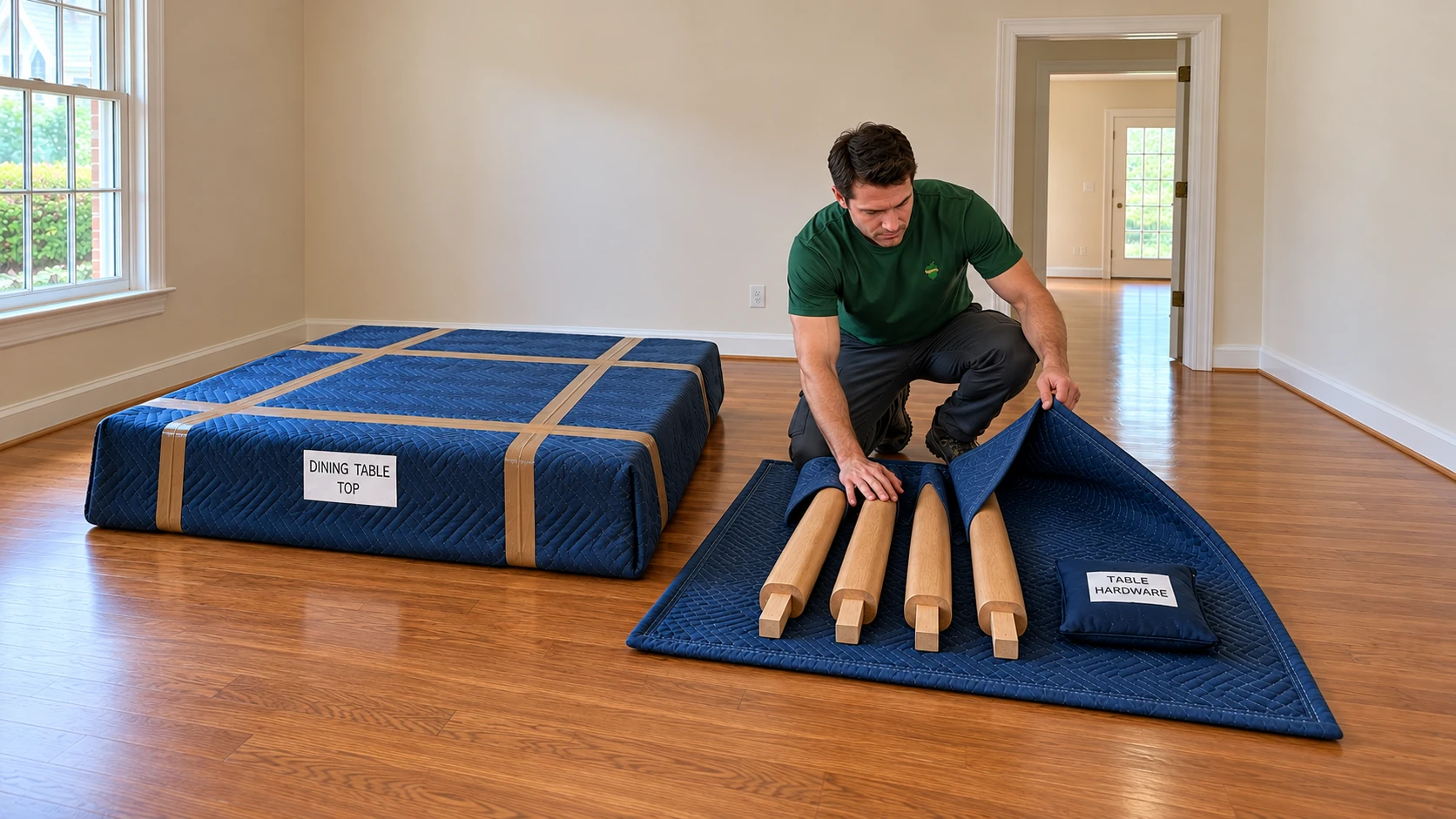
Choose full packing, selected-room packing or customer packing according to the actual work. Packing uses working time; company-supplied cartons are charged separately. Moving blankets, shrink wrap and tape have no separate material charge. Have the chosen packing work and cartons reflected clearly in the written long-distance quote so the agreed flat rate matches the shipment that will leave.
Have loose books and small belongings packed by the agreed loading stage. Separate items that stay, items traveling with the household and items the crew will transport. Keep passports, other essential documents, medication, keys, chargers, irreplaceable valuables and immediate overnight needs with you. Declare potentially hazardous contents, including fuel, propane, paint and chemicals, before packing them into the shipment; review what can be accepted and how it must be prepared.
Example: Leesburg to Jacksonville, Florida — allow for a gap between homes
Suppose the Leesburg lease ends on the 28th but the Jacksonville closing is expected the following week. The family can travel before the new house is ready. The move needs a plan for the belongings during that interval as well as somewhere for the people to stay.
Direct delivery has an illustrative 2–3-day range after completed loading on the reference route. That can be too early for an uncertain closing. Consolidation has a Florida window of up to 60 days, which is a different receiving commitment rather than a precise replacement for the closing date. Confirm the actual window and when the property can accept delivery before choosing either model.
If storage is needed, have its handling, duration, access and onward delivery quoted as part of the plan. A wider delivery window is not an offer of free storage. Keep the first week’s clothing and household essentials with you, and identify the person who can accept delivery after possession is confirmed. If the closing changes, tell the coordinator before the shipment is dispatched into an unusable receiving arrangement.
Keep a small shipment distinct
A few pieces and selected cartons may be suitable for consolidation even when you are leaving a larger home. Make the list specific: each furniture piece, carton count, dimensions that affect handling and any packing the crew must finish. Keep those items visibly separate from belongings that remain or travel another way.

Confirm who will receive the shipment throughout the agreed window, how that person can be contacted and whether the building needs advance notice. If you will be away, identify someone with authority to open the property and handle the receiving paperwork. The number of rooms in the old home does not establish the size of this selected shipment, and a small inventory does not make a fixed delivery appointment automatic.
Example: Leesburg to St. Catharines, Ontario — prepare the goods-to-follow record
Suppose you will enter Canada first and send a compact group of furniture and household cartons to St. Catharines afterward. Consolidation may suit the shipment if the agreed receiving window is workable. Its Canada window can be up to 60 days after loading; the shorter reference driving route does not turn it into the nearby domestic window. Direct delivery has an illustrative 1–2-day range, subject to the actual route, clearance readiness and receiving plan.
The importer also needs a personal-effects declaration. CBSA’s guidance for eligible people moving or returning to Canada calls for two copies of a list showing values and identifying details where applicable, divided into accompanying goods and goods to follow. Present the list at the first point of entry even if no goods accompany you, include later arrivals on that original goods-to-follow list, and retain the completed BSF186 record for their release. Eligibility, prior ownership and use requirements, and restrictions still apply.
Prepare that record before personal travel and reconcile it with what the mover will actually carry. A mover’s inventory alone does not establish duty-free eligibility or completed clearance. Keep the customs documents and contact arrangements available, and resolve any restricted or specially regulated items before dispatch. No fixed border waiting time is promised.
Read the written price and protection together
For an agreed long-distance flat rate, the same shipment and the same agreed work mean the same price. A longer drive or delivery taking longer does not increase that price by itself. Added furniture, omitted items, extra packing or changed access and delivery services can change the scope; resolve known changes and any revised interstate written estimate before loading. The original estimate cannot be rewritten after loading begins; later additional services need their applicable agreement and charges before they are performed.
Read the estimate with the inventory, packing responsibilities, pickup and delivery conditions, selected protection and any storage stages. The bill of lading is the transportation contract and receipt for the goods; keep a copy. A binding estimate fixes the charges for the described shipment and services. A non-binding estimate is a forecast; final charges depend on actual weight, services and the applicable tariff. These document types differ from a building reservation or an item list. Confirm that the written documents describe the same move.
For an interstate household-goods move, Full Value Protection applies unless you select Released Value through the required written statement. Full Value Protection provides repair, replacement or a cash settlement under its terms. Released Value provides limited protection based on weight, at no more than 60 cents per pound per article. Valuation is the mover’s liability and differs from a separate insurance policy. Review the selected terms, cost, deductibles and treatment of high-value articles before moving day. Canadian and intrastate moves require their applicable terms; an interstate explanation is not a universal policy for every move.
Declare unusually valuable articles and existing damage in advance. At delivery, compare the inventory and condition with the receiving paperwork and report concerns promptly in writing. FMCSA states that an interstate loss or damage claim must be filed in writing within nine months after delivery. Do not treat that outside limit as a reason to postpone documenting a problem.
Load for the agreed delivery model
A substantial direct shipment needs a stable mixed load, with furniture protected and restrained for the journey. A small consolidated pickup is a different stage: its identity and receiving instructions must remain clear within the agreed arrangement. Neither the photograph below nor the size of a truck replaces the reviewed inventory or establishes the capacity required for a particular order.

Before loading finishes, reconcile what is leaving with the inventory and identify anything still undecided. Keep household travel essentials out of the load. Confirm the receiving contact, property access and the agreed delivery window before the truck leaves. Tell the coordinator immediately about a change in keys, closing, elevator availability or the person who can receive the shipment.
Example: Leesburg to Portland, Oregon — make the arrival usable
Suppose a household is leaving a Leesburg house with a rear addition for a home in Portland, Oregon. The living-room furniture and beds must reach usable rooms through a different entrance layout. Review the complete departure route through the addition, the construction of the large pieces and the route from the destination’s lawful vehicle position to each room.
Direct delivery has an illustrative 4–5-day range after completed loading on the reference route. If a suitable selected shipment could use consolidation, agree its receiving window individually. Oregon does not inherit California’s up-to-90-day window. Keep the destination name and state together throughout the estimate and receiving instructions.
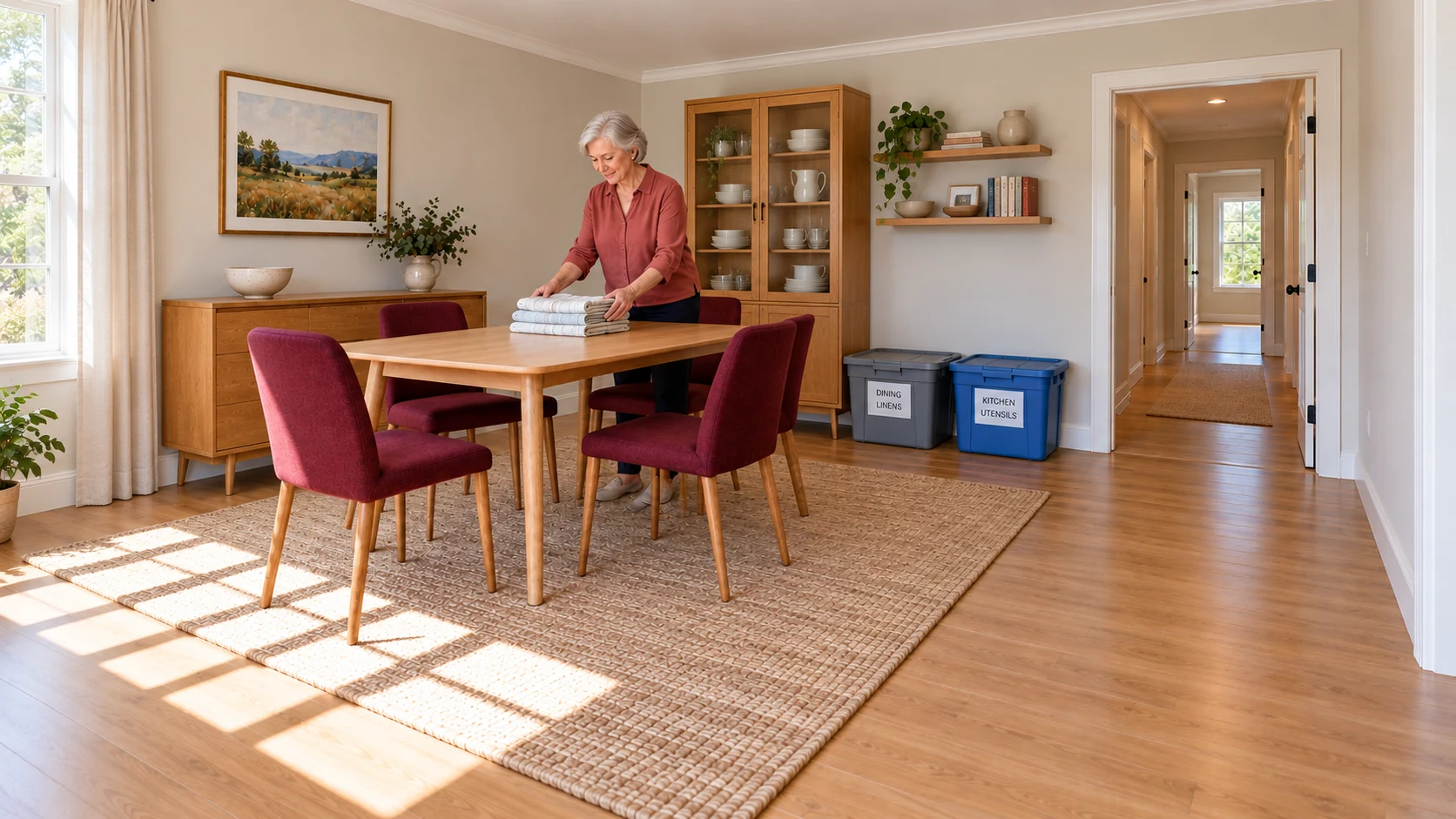
Prepare the rooms before delivery: choose furniture positions, protect the agreed floor route and keep assembly space clear. Prioritize a usable sleeping area and the furniture needed immediately. Furniture unwrapping is part of delivery; optional removal of contents from cartons uses working time, and packaging-waste removal is separately priced. Confirm those choices in the scope so an arrival plan does not quietly depend on unbooked work.
Keep a fallback that someone can authorize
Choose proposed dates around the lease or closing, household travel, school commitments and the building’s actual receiving hours. Summer or a month-end date is a planning consideration, not evidence of a lower price or current company availability. Put firm deadlines and flexible dates in the request so the coordinator can compare workable arrangements.
If possession, an elevator or the planned loading position becomes unavailable, contact the property decision-maker and moving coordinator before the crew arrives or dispatch proceeds. Set a time by which the original plan must be confirmed. Confirm a practical alternative: another authorized receiving slot, a lawful vehicle position or a revised work sequence. For storage and later delivery, confirm a facility that can accept the load, including capacity, receiving hours, access, protection, handling, price, payer and retrieval or onward-delivery date. Record who can approve the change before relying on it. If no destination can receive the goods, revise departure.
Plan for the household separately: a place to stay, documents, medication and overnight supplies should remain available if the furniture cannot be delivered. Resume the original plan only after the property can receive the shipment and the coordinator has confirmed the revised arrangement. A hopeful closing date or an unused loading bay is not confirmation.
Explore long-distance destinations from Leesburg
These destination examples organize household moves from Leesburg to the United States and Canada. They are a planning directory, not a popularity ranking or reserved routes. Review the belongings, both properties, commercial vehicle access and receiving dates before choosing a delivery model.
Northeast and Mid-Atlantic
- Harrisburg, Pennsylvania
- Baltimore, Maryland
- Philadelphia, Pennsylvania
- Albany, New York
- Boston, Massachusetts
Southeast and Florida
- Jacksonville, Florida
- Tampa, Florida
- Charleston, South Carolina
- Raleigh, North Carolina
- Richmond, Virginia
Great Lakes and Midwest
- Chicago, Illinois
- Detroit, Michigan
- Columbus, Ohio
West Coast
- Portland, Oregon
- Seattle, Washington
- Sacramento, California
Mountain West and Southwest
- Denver, Colorado
- Phoenix, Arizona
- Salt Lake City, Utah
Canada
- St. Catharines, Ontario
- Ottawa, Ontario
- Montréal, Quebec
- Toronto, Ontario
Long-distance moving questions
Should I choose direct or consolidated delivery from Leesburg?
Choose direct delivery when your reviewed shipment and receiving plan need a dedicated truck and the same moving crew at pickup and delivery. Consolidation can suit a smaller shipment when you can use a wider receiving window. Start with the belongings, the date the old home must be empty and the dates the destination can actually receive them. A single short elevator reservation may be incompatible with an unconfirmed arrival date.
Is 300–400 cubic feet a minimum for consolidated moving?
No. Roughly up to 300–400 cubic feet describes a useful small-shipment range for review; it is neither a minimum order nor an automatic eligibility cutoff. Send an item list, carton count, photographs, both addresses and workable receiving dates. A selected group of furniture from a larger house can be a small shipment, while the number of rooms alone does not establish its size.
When does the delivery window begin?
It begins after pickup and loading are complete. It does not begin when you request an estimate, sign a lease or start personal travel. The table shows illustrative ranges from reference driving routes, rather than reserved appointments. Confirm the actual truck route, travel schedule, destination access and receiving arrangements before relying on a particular date. Canadian shipments also need their clearance arrangements ready.
Can a small Leesburg-to-Harrisburg move be delivered the same day?
It may be possible for a suitable small direct move when early completed loading, lawful travel and both properties’ access fit the day. It requires confirmation for the job. The table’s 1–2-day illustration does not reserve same-day service or a particular elevator appointment. Send the departure deadline, receiving hours and the complete carrying routes so the coordinator can review a usable arrangement.
Why can a small shipment to St. Catharines have a 60-day window?
Canada has a consolidated delivery window of up to 60 days after completed loading, even when its reference driving route is shorter than some domestic routes. It does not inherit the nearby domestic up-to-30-day window. The actual consolidation must be available and the recipient must be able to receive it within the agreed period. Direct delivery is a separate model, with the specific route, clearance and receiving plan reviewed for the job.
Does the California 90-day consolidated window apply to Portland, Oregon?
No. The up-to-90-day rule applies to California. A suitable consolidated shipment to Portland, Oregon, needs its own individually agreed receiving window. Keep the city and state together in the request so it is not confused with Portland, Maine. The table’s direct 4–5-day illustration starts after completed loading and still requires the actual route, travel and receiving arrangements to be confirmed.
Will the agreed flat rate rise if the road journey takes longer?
No, not merely because the journey or delivery takes longer. For a long-distance move quoted at a flat rate, the same agreed shipment and work mean the same price. Added belongings, extra packing or changed access, storage or delivery services can change the scope. Resolve known additions and any revised interstate written estimate before loading. The original estimate cannot be rewritten after loading begins; later additional services need their applicable agreement and charges before they are performed. Keep one current inventory and written plan.
What should I send for a long-distance estimate?
Send both complete addresses, the inventory or a video, carton counts where known, the large or unusual pieces, floor levels and photographs of both carrying routes. Identify the packing you want, any storage stage, firm departure deadlines and workable receiving dates. Include the building instructions and the person who can authorize access. The planning team can use an item list, video review or in-person survey; the estimator has a separate role from the moving crew. For interstate household goods, complete the required survey or elect a separate written survey waiver signed before loading and retain the waiver with the bill of lading. An item list or photographs alone do not waive the survey. A survey waiver does not waive the written estimate.
Is this Leesburg, Virginia, and do you pick up outside the Town?
This page concerns Leesburg in Loudoun County, Virginia, rather than Leesburg, Florida. We arrange long-distance pickups at reviewed Leesburg properties with the shipment, access and dates agreed. For an address nearby or outside the incorporated Town, provide the complete address for review. A Leesburg mailing name alone does not establish municipal rules, a suitable truck position or an available pickup date.
What access details matter at an older Leesburg house or townhome?
Show the whole route from a possible lawful vehicle position to the largest piece. Include porch steps, low ceilings, stair turns, landings, door openings and any rear addition or separate basement exit. At a townhome, identify which floor holds the furniture and whether the garage and front doors lead to different routes. Dimensions and photographs of the actual path are more useful than assuming access from the age or style of the house.
Does a resident parking permit reserve space for the moving truck?
Do not treat it as a reservation for the truck. Establish the actual road owner, posted controls, property rules and any required permission for the proposed loading position. Keep driveways, public sidewalks, curb ramps and travel lanes clear. If that position is unavailable, review a lawful alternative and any changed carrying work before proceeding. This page does not establish a universal Leesburg truck-permit fee, notice period or entitlement.
What should a managed building confirm before pickup or delivery?
Confirm the service entrance, loading position, elevator dimensions and reservation hours, move rules and any insurance-document requirements. Name the person who accepts the documents, books the elevator and opens the property. Sending a COI is not the same as having an accepted reservation. Explain whether the elevator is shared and identify an alternative slot if the planned one becomes unusable. Share the instructions before the work schedule is set. If management requires an elevator operator or other authorized building personnel, establish who arranges that role; it is not automatically supplied by the moving crew.
Can you pack the home, and how are cartons and materials treated?
Yes. Agree full packing or the selected items and rooms you want packed. Packing uses working time, while company-supplied cartons are charged separately; moving blankets, shrink wrap and tape have no separate material charge. Have the packing scope and cartons reflected in the written long-distance quote. Identify what you will finish before loading and what the crew must do so the agreed flat rate describes the actual work.
Can furniture be disassembled at pickup and assembled after delivery?
Yes, basic furniture disassembly and assembly use moving labor time without a separate basic assembly surcharge. Show the item’s construction, removable parts, damage and the routes at both properties before the plan is agreed. Long safely removable legs and loose components need appropriate protection and an identified hardware set. Complex or specialist operations require their own review; not every joint can be dismantled or every piece made to fit by removing one part. Empty ordinary drawers and normally keep them supported and secured in the complete protected piece.
What should travel with me instead of inside the moving load?
Keep passports and essential documents, medication, keys, chargers, irreplaceable valuables and the clothing and overnight supplies you need before delivery with you. Separate those items before loading starts. Declare potentially hazardous contents such as fuel, propane, paint and chemicals before packing them into the shipment, and review what can be accepted and how it must be prepared. Do not assume an ordinary household carton makes a restricted item suitable for transport.
What personal-effects paperwork should I prepare for Canada?
CBSA’s moving guidance calls for two copies of a list with values and identifying details, separating accompanying goods from goods to follow. Present it at first entry even if no goods accompany you, include later arrivals on that original goods-to-follow list, and retain the completed BSF186 record for their release. Eligibility, ownership and use conditions, and restrictions apply. A mover’s inventory alone does not establish duty-free eligibility or completed clearance.
Can you help if the new home will not be ready after pickup?
Yes, a separately quoted storage and onward-delivery stage can be considered for an agreed gap between homes. Confirm a facility that can accept the load: capacity, receiving hours, protection, handling, duration, access, price, payer and retrieval or onward-delivery date. If no destination can receive the goods, revise departure before dispatch. A consolidated receiving window is not free storage, and an illustrative direct range may bring the furniture before a delayed closing. Arrange the household’s accommodation and essentials separately from the belongings.
What happens if the elevator or closing date changes?
Contact the property access controller and moving coordinator before dispatch and before alternatives expire. Set a deadline for confirming the original arrangement, then confirm an available receiving slot, lawful vehicle position or revised work sequence. For storage, confirm a facility that can accept the load, with capacity, receiving hours, access, protection, handling, price, payer and retrieval or onward-delivery date agreed. Record who can approve the change. Arrange accommodation and accessible essentials separately. If no destination can receive the goods, revise departure. Resume only after the property and coordinator confirm the revised plan.
Is valuation protection the same as insurance?
No. Valuation is the mover’s liability; separate insurance is a different product. For interstate household-goods moves, Full Value Protection provides repair, replacement or a cash settlement under its terms and applies unless you select Released Value through the required written statement. Released Value limits protection to no more than 60 cents per pound per article. Review the selected terms, cost, limits, deductibles and high-value-item treatment before moving day. Intrastate and Canadian moves need their applicable terms rather than an assumed universal interstate policy.
What should I do if an item is missing or damaged at delivery?
Compare the inventory and condition with the receiving paperwork, document the concern and notify the mover promptly in writing. Keep copies of the inventory, estimate, bill of lading and relevant photographs. FMCSA gives an interstate written loss or damage claim a nine-month deadline after delivery. That is an outside limit, rather than a reason to delay reporting a problem. The applicable documents and protection terms govern the actual claim.
Can a vehicle move with the household shipment?
Vehicle shipping is available for a separately reviewed scope and quotation. Provide the vehicle details, both locations and the timing you need so the actual transport arrangement can be established. Do not assume the car will be loaded inside the household box truck, carried by the same crew or included automatically in the household flat rate. Keep the vehicle and household arrangements clear in the written plan.
Is a Leesburg-to-Richmond move an interstate move?
A move that stays within Virginia is intrastate and follows the applicable Virginia requirements and written terms. A route through another state can affect that classification, so confirm the actual movement rather than relying on the city names or distance alone. The interstate valuation explanation on this page does not establish the price or protection terms for every move within Virginia. Use the Leesburg moving page for local planning as well.
How should I choose a date around a lease, closing or school calendar?
Identify the date the old home must be empty, the first confirmed receiving date and any building hours, then separate firm deadlines from flexible dates. Include the household’s travel and school commitments. Summer and month-end dates are useful planning considerations, not proof of a discount or current availability. Request a workable arrangement with enough time to resolve access and packing, and keep a fallback for a delayed closing or lost receiving slot.
Does delivery include unpacking every carton and removing packaging?
Furniture unwrapping is part of delivery. Optional removal of contents from cartons uses working time, and packaging-waste removal is separately priced. Agree which rooms or cartons you want unpacked and what should happen to the used materials in the written scope. Preparing room positions and a clear assembly area helps make the home usable, but it does not add unpacking or waste-removal work that has not been arranged.
Is consolidated delivery always cheaper than direct service?
No fixed saving is promised. Consolidation is an available model for a suitable smaller shipment with flexible receiving dates; direct delivery provides a dedicated truck and the same crew at both ends. Compare written quotes for the same inventory, packing, access and any storage stages, together with receiving terms you can use. A lower headline amount is not useful if it leaves an essential service or workable delivery arrangement unresolved.
Sources for the move decisions
- Leesburg relocation guide and its local source catalog: Town and mailing geography, housing, home services and weather preparation.
- Virginia Department of Historic Resources: Leesburg Historic District: historic architectural context, rather than a current housing-market count.
- FMCSA: liability and protection for interstate household-goods moves.
- FMCSA moving glossary: estimate and transportation-document terminology.
- CBSA: moving or returning to Canada: personal-effects lists, first-entry declaration and eligibility conditions.