
Bridgeport, Connecticut · Household preparation
Full Packing & Unpacking in Bridgeport, CT
Sterling Oakbridge packs the household contents you choose and can unpack agreed cartons at the receiving home.
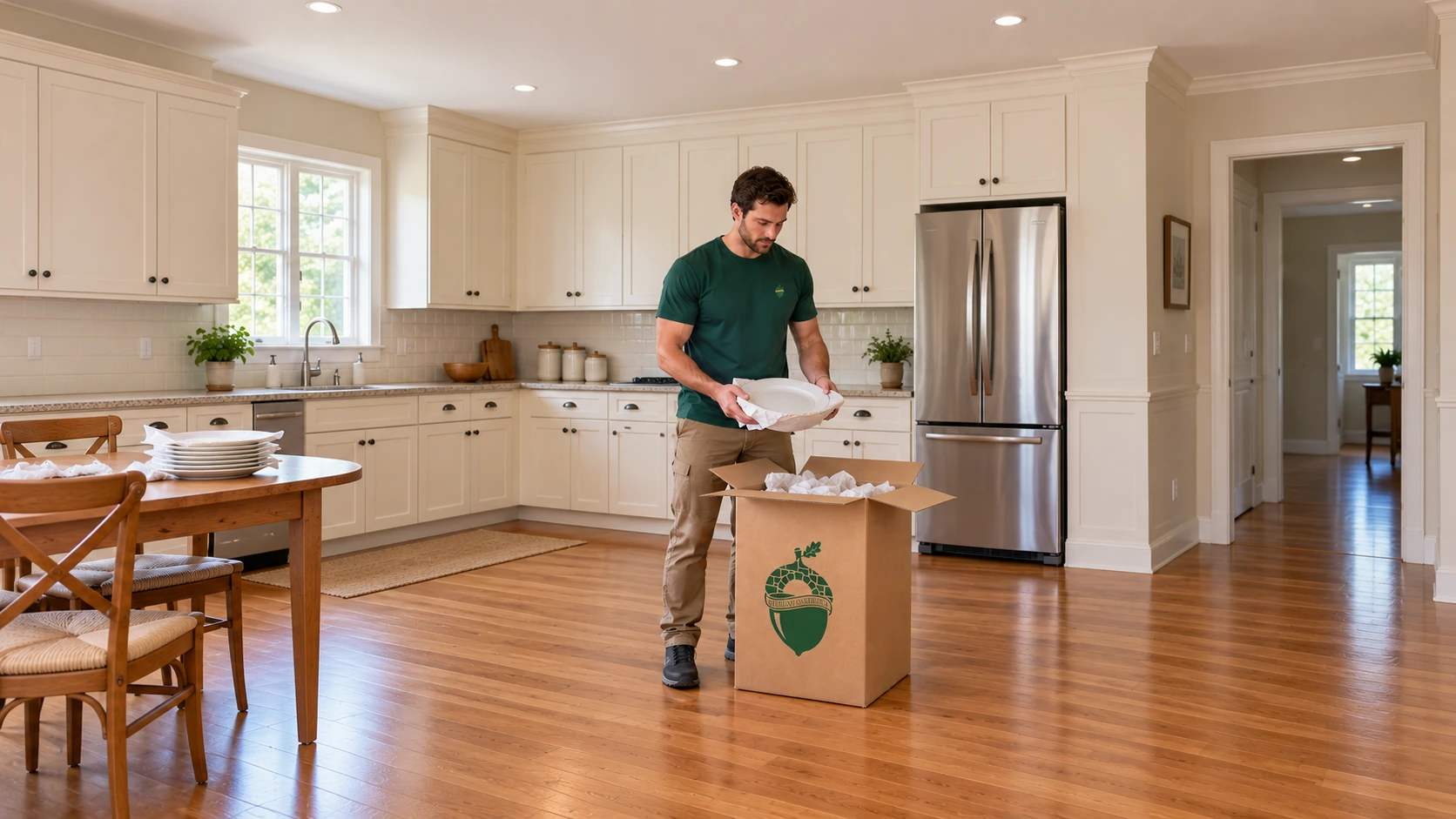
Choose the preparation you want before departure and the help you want after delivery.
You may want the kitchen wrapped while you finish your own clothing, the whole retained household prepared before move day, or the first useful rooms opened after arrival. Those are different scopes. We review the contents, access and visits, then separate packing labor, cartons and optional receiving work in your estimate.
Explore packing, costs and local examples
Choose what you want packed
Full packing prepares the retained contents included in your agreed inventory. Partial packing selects rooms or groups: a kitchen, books, clothing or a collection, for example. Fragile-only packing selects the breakable items needing the reviewed protection. With either limited service, list what you will prepare yourself so the remaining work has an owner.
Start with the part of preparation that competes with your work and household routine. Wrapping a full kitchen in the evenings is different from closing cartons already filled with linen. Sorting can occupy several evenings before packing begins. Decide what travels, what stays and what leaves by another route; professional wrapping does not make those decisions for you.
You can hand over the wrapping while retaining personal decisions about documents, possessions and final placement. Tell us if the scope changes after the review. An additional cabinet of dishes, another room or a newly selected collection changes the preparation rather than fitting automatically into an earlier estimate.
Review cupboards, closets and stored contents
Show the contents behind the furniture list. Include kitchen cupboards, bookshelves, closets, drawers and retained belongings in a basement, attic or other storage space. Point out dense items, delicate surfaces, loose glass and anything already packed. The useful inventory identifies contents and requested work, not just the number of rooms.
The 2020–2024 ACS housing profile for Bridgeport city includes detached homes, smaller multi-unit buildings and larger apartment buildings. It does not establish the contents or carrying route at your address. A room count cannot tell us how many cartons you need, whether a cabinet contains glass shelves or where preparation can take place.
A household might expect 20 cartons, then discover enough retained contents for 60 once cupboards and stored belongings are counted. That is an illustration of overlooked contents, not a Bridgeport allowance or a bedroom-based formula. Show us the groups before buying a material quantity or choosing a preparation date.
If you already own cartons, show their condition and intended contents. Strength, size, closure, weight and internal protection matter. Identify owner-packed fragile items so any necessary repacking can be agreed before loading. A closed carton is not proof that the contents are protected.

Make room for preparation before carrying
A modest, reviewed shipment may allow packing and moving on the same day. Extensive cupboard contents, collections or a short carrying appointment can make a separate preparation visit more practical. The review should establish the work to finish before loading, the working surfaces needed and how the household will use the remaining space.
In a managed property, confirm entry for material delivery and packing as well as the moving appointment. An earlier preparation visit may need a different booking. Send the permitted hours, elevator arrangements, complete carrying route and any COI instructions. Building permission does not itself reserve public truck space. Our Bridgeport moving page explains the wider access arrangements.
Have one person available to identify exceptions and approve the agreed scope. Clear a suitable work area without putting belongings in a hallway or blocking an exit. If the plan needs a second visit, confirm its access, staffing and price rather than treating it as an automatic extension of the first.
Keep the final night workable
Keep two separate groups. Personal medication, keys, identification, valuables and travel essentials stay under your control throughout. A final-night shipment group remains usable temporarily and is packed at an agreed time before departure. Bedding, work clothes, a small meal set and familiar child belongings may belong in that second group.
Name who closes the final-night cartons and when. If a child needs the same bedding at the destination, give that group a written first-opening instruction. Do not mix it with possessions that stay behind. Keep the route from the sleeping and eating areas to the exit clear while preparation continues elsewhere.
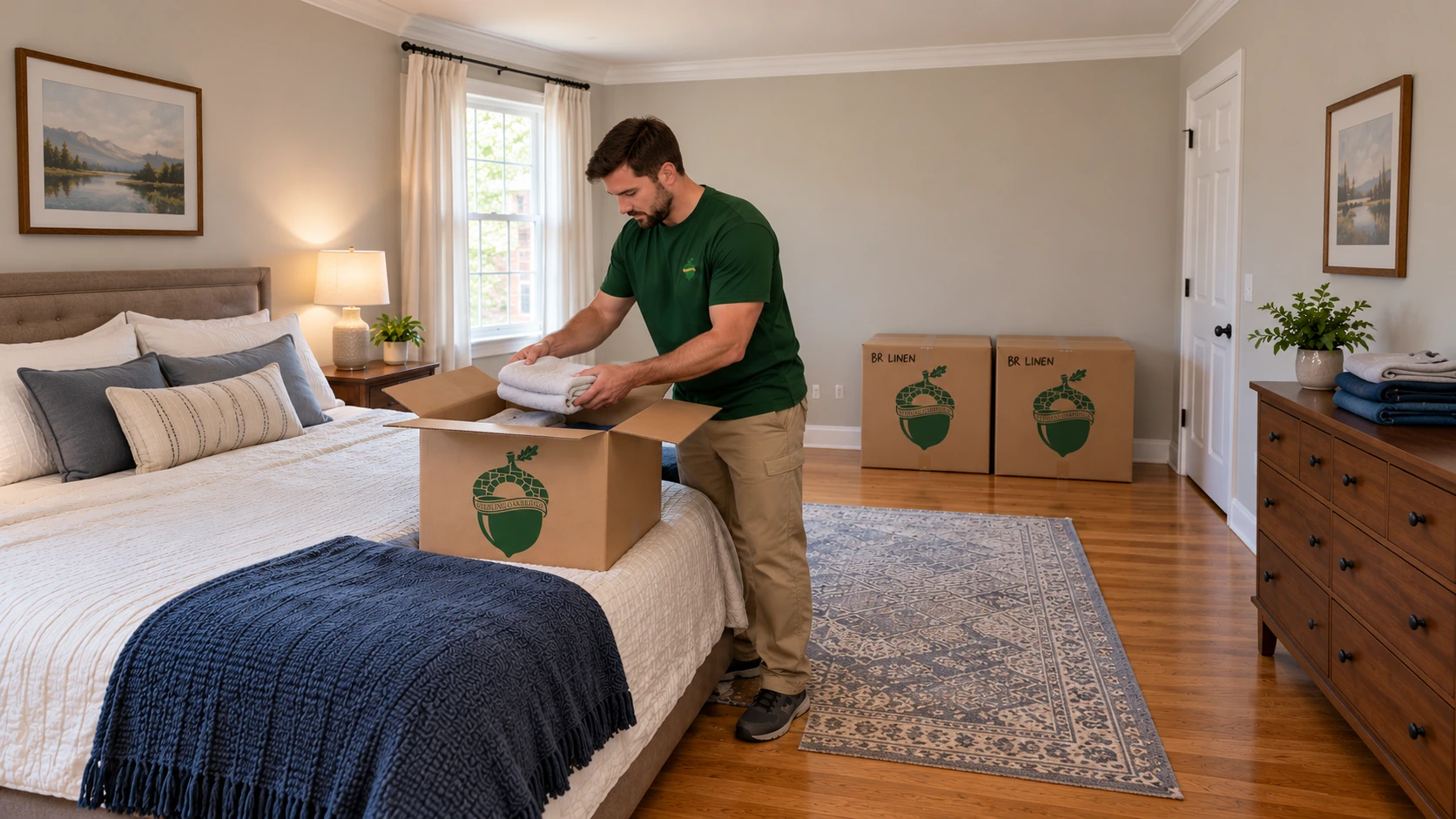
Match protection to the contents
Protection has to work through lifting, carrying, loading, support, restraint and movement in the vehicle. Dishes need suitable wrapping, cushioning and carton arrangement. Books need manageable loads in suitable small cartons. Hanging clothing needs an appropriate wardrobe carton and supported rail. One carton type and one wrapping method do not suit every group.
Show removable shelves, glass doors, loose fittings, frames, photographs and collections before furniture is wrapped. Agree which components are removed, how they are protected and how the parts remain identifiable. Wrapping the outside of a cabinet does not protect unsecured objects inside it. Keep fittings associated with their furniture so the receiving team can reconcile the pieces.
Artwork, unusual finishes and specialist objects require their own method. A clean work surface and handling suited to the material and grip matter; identical white cotton gloves are not a universal solution. For object-specific protection, use our fine-art service as the next discussion, with photographs, dimensions and materials.
Give every group a receiving instruction
Write the next destination, receiving room, useful contents and carton number. Add an opening priority where it helps. Colors can reinforce the words, but the receiver should not need your memory of a color code. Match the carton instructions to the inventory and the agreed unloading plan.
| Group | Useful instruction | Decision before packing |
|---|---|---|
| First evening at home | New home — bedroom — bedding — first opening | Which sleeping space will be ready and who receives it |
| Later room setup | New home — office — books — keep sealed | A clear holding area and the later unpacking scope |
| Storage shipment | Storage — retained collection — carton number | Accepted storage, access needs and later release |
| Another recipient | Second address — named recipient — agreed contents | Authorization, receiving contact and the reviewed extra stop |
A destination is not an appointment. A storage label does not book space or release, and a second address does not add an unpriced stop. Confirm those arrangements before sealing the groups together. Our storage service covers the separate holding and later-delivery plan.
Choose your unpacking finish
Basic box unpacking opens the agreed cartons, removes protection, places contents on suitable designated surfaces and gathers used packaging in the agreed work area. Clear those surfaces before the visit. Choose the groups that restore the routine you need first: kitchen items, bedding, clothing or materials for a home office.
This leaves the selected contents accessible; it does not place every item permanently in cupboards and drawers. Tell us which counters or tables must remain usable. Agree a holding place for cartons that will stay sealed so they do not obstruct access to the rooms being opened.
If some rooms are unfinished, unpack only the released rooms and agreed contents. Leave the other groups identified for a later stage. If you start yourself and then need help, send the remaining unopened cartons and partly unpacked groups for review. A later paid appointment needs its own confirmed availability.
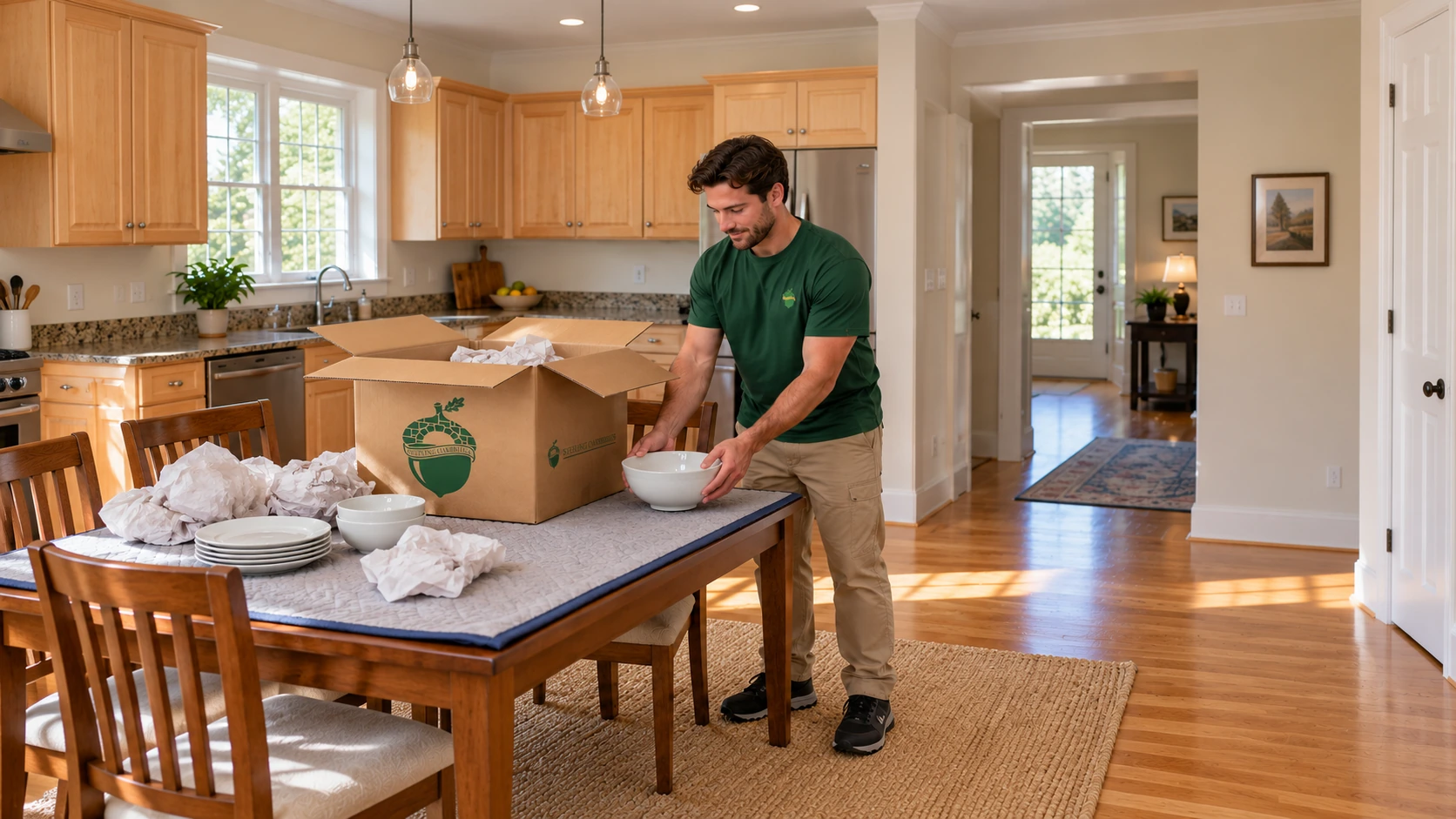
Add organizing and finishing deliberately
Home organizing places belongings in shelves, drawers and closets according to your instructions. It is additional work with an agreed scope and price. Have someone available to make placement decisions. A smaller team can be easier to direct when each cupboard or drawer needs your approval.
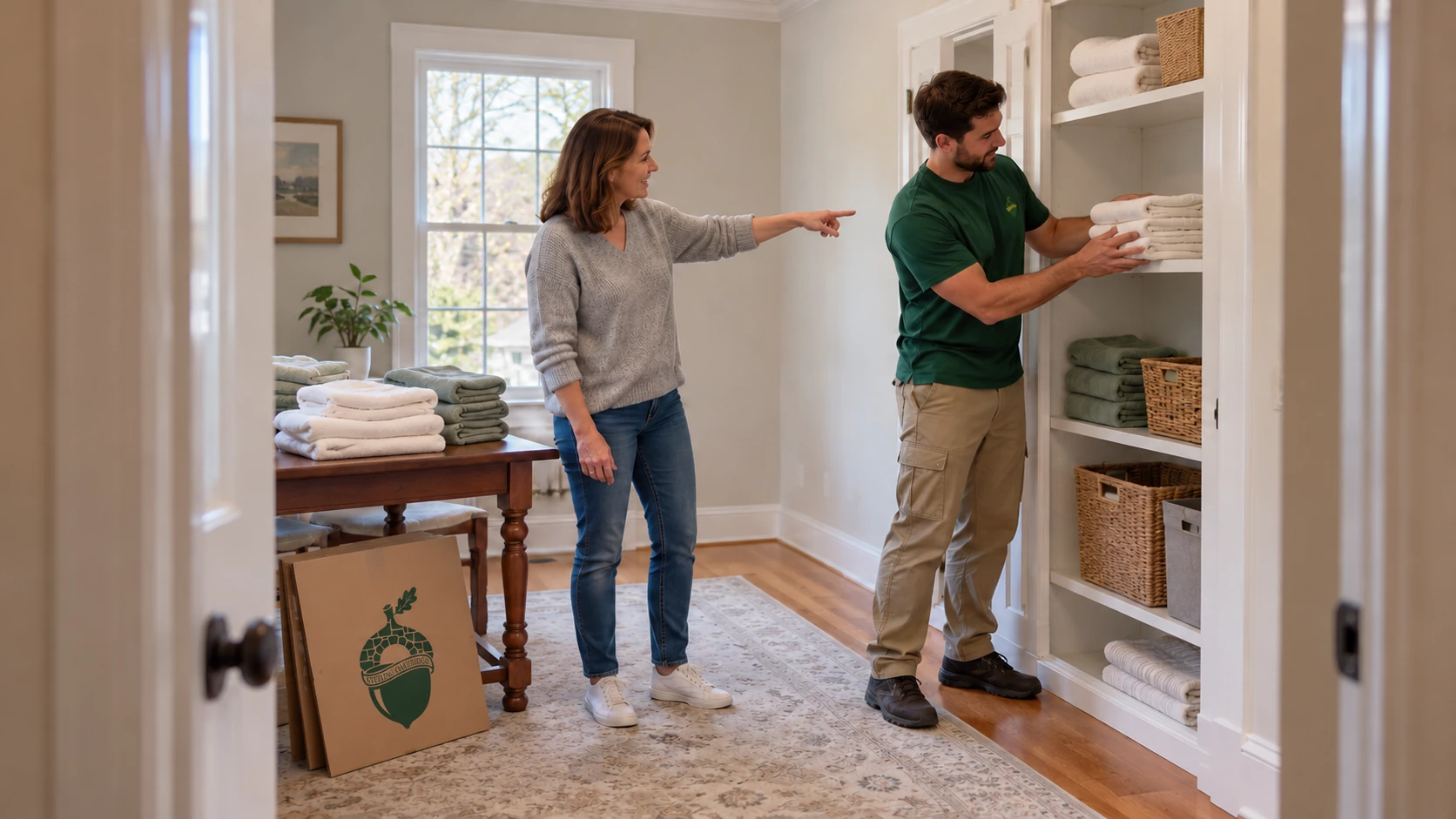
Furniture unwrapping is part of delivery. Basic disassembly and reassembly use moving labor without a separate basic assembly surcharge. Complex furniture needs individual review. These are different tasks from opening carton contents; identify instructions, fittings and any missing parts before the work is scheduled.
Picture hanging, curtain hardware or television mounting can be reviewed as additional handyman work. Supply the object, intended position, wall or fixing information and necessary permissions. Agree the executor, exact task and price. Mounting does not automatically include electrical work, appliance connection, wall repair or the technical setup of a home office.
Separate used packaging and its removal
Gathering wrapping at the work area and carrying it away are separate stages. Packaging and waste removal are separately charged. Agree the materials, quantity, carrying route and accepting destination. Keep unwanted furniture and other discarded possessions on a separate list; they are not included because the crew is collecting empty cartons.
Bridgeport’s residential recycling instructions accept flattened cardboard and list plastic bags, Styrofoam and food-soiled cardboard among the exclusions from blue toters. Keep cardboard, paper, film and foam separate while their routes are arranged. The City lists overfilled toters and material left outside them as reasons for missed collection; a pile of unpacking waste beside a full bin is not a confirmed collection plan.
Residential recycling is collected on the trash day every other week. Use the City’s linked schedule and your property’s collection instructions. If the available space cannot hold used materials until then, include separately priced removal in the unpacking plan.
The City’s Transfer Station page describes a resident household route, covered and secured loads, and proof-of-ownership conditions for nonresident Bridgeport property owners. It does not establish that a moving crew may use a household entitlement. Any professional removal needs a suitable receiving route confirmed for the actual materials and vehicle. The Bridgeport guide’s waste section provides the broader local context.
Three Bridgeport planning examples
These are imagined situations for comparing scopes, not customer histories or claims about local demand. Downtown, North End and Black Rock are names on the City’s 2018 neighborhood map. A neighborhood name does not establish the layout, rules or access at a particular building.
Downtown: keep the kitchen working between two appointments
Imagine two working adults leaving a Downtown apartment. They have packed their linens and everyday clothing, but the kitchen cupboards and hanging clothes are untouched. They compare a defined partial-packing visit with full packing instead of paying to prepare the same owner-packed groups twice.
They show the retained dishes and clothes, identify any delicate pieces and provide management’s instructions. If a preparation visit is approved, most of the selected contents can be packed before the carrying appointment. A small meal set, the next day’s clothes and bedding remain in the final-night group, with a named closing time. Personal documents and medication travel with the adults.
The result is a clear division of work: the crew handles the agreed cupboard and hanging groups, the household finishes its own exceptions, and the apartment remains usable for the last night. If management only permits one visit, the team must review whether the combined scope fits that appointment; the neighborhood does not supply an extra working window.
North End: prepare a family household without packing the bedtime routine
Consider a North End family preparing a house with a full kitchen, books, a glazed cabinet and children’s belongings. They initially count the furniture and visible cartons, then include the cupboard contents and stored groups. They make keep, give-away and discard decisions before requesting full packing for what will actually travel.
A separate preparation day may let the crew work through the reviewed collection and fragile groups without competing with loading. The parents choose what remains available for meals, sleep and school or childcare travel. Loose cabinet components receive their own preparation, and the family keeps registration papers and personal records with its travel belongings.
The receiving plan gives bedding and everyday kitchen contents first-opening instructions. A different authorized recipient or discarded item remains a separately reviewed group. The useful outcome is a prepared retained household and a functioning final evening, with the labor, cartons and remaining decisions visible in the plan. A house-sized scope still needs an inventory; it does not establish a fixed crew or completion time.
Black Rock: open the useful rooms before arranging final placement
Imagine a household arriving in Black Rock after an interstate move. It wants a usable kitchen and home-office materials before returning to work, but final cupboard and bookshelf placement is undecided. It first coordinates receiving help with the actual delivery arrangement and access to the home rather than treating a preferred workday as a guaranteed delivery appointment.
The household clears suitable surfaces and identifies the cartons to open. Basic unpacking makes those contents accessible; the unopened groups remain in an agreed clear area. The customer arranges electricity, internet and computer setup separately. Once placement decisions are ready, a directed organizing visit can address selected shelves and drawers, with its own scope and availability.
Used cartons and wrapping also need room and a route. The household checks its property’s collection arrangement or books separate removal; it does not assume all packing materials belong in the blue toter. The result is a defined first stage and remaining list, with transport, opening cartons, organizing and removal priced as the work actually selected.
Compare the whole paid scope
Packing uses working time, and company-supplied cartons are charged separately. Moving blankets, shrink wrap and tape carry no separate basic protection-material charge. Your estimate should identify the retained inventory and selected preparation rather than imply an unlimited supply allowance.
Compare moving the same shipment already packed with having the crew prepare it. Then add any selected box unpacking, directed organizing, specialist protection, finishing, storage, return visits and removal. Extensive preparation can make the combined budget substantially higher; the useful comparison uses the same contents and access, not two different household lists.
Estimated local working hours are not a completion cap or guaranteed maximum bill. For a household move wholly within Connecticut, the applicable tariff and actual estimate terms govern. An interstate flat-rate description does not automatically turn a Connecticut intrastate job into a binding price. The Bridgeport moving page’s price explanation keeps those arrangements separate.
Coordinate unpacking with delivery
For an interstate move, plan preparation before pickup and receiving work as distinct stages of the order. The delivery window begins after pickup and loading, not at the packing appointment. Direct and consolidated transport have different receiving arrangements. Confirm the receiver, property access and priority rooms against the delivery model you select.
An unchanged agreed interstate flat-rate scope does not rise because the road journey takes longer. Additional contents, changed access or extra receiving work need written agreement. Add unpacking to the reviewed scope or arrange it separately. Our Bridgeport long-distance page explains those transport choices and the current interstate estimate-survey requirements.
Prepare your request
Send the addresses, preferred dates, floors, access photographs and retained contents. Choose full, partial or fragile-only packing and list the work you will do yourself. Include special objects, final-night needs, separate destinations, ready receiving rooms, opening priorities and any organizing, finishing or removal you want priced.
If a date or room is not ready, name the missing condition. We can review the preparation and receiving stages without pretending that unresolved keys or building permission are already confirmed. Use the Bridgeport relocation guide for the wider arrival setup; the packing decision is what you want prepared and what you want accessible after delivery.
Bridgeport packing and unpacking questions
Can you pack a whole home in Bridgeport, CT?
Yes. Full packing prepares the retained household contents in the agreed inventory. Include cupboards, closets, books, collections and stored belongings in the review. Identify anything staying behind, already packed or traveling with you. We use that scope and the access to plan materials, preparation visits and the estimate.
Can I choose only kitchen or fragile-item packing?
Yes. Partial packing can select a room or named contents; fragile-only packing selects particular breakable pieces. List what you will prepare yourself and when it will be ready. A limited scope should leave a clear boundary between the crew’s work and your remaining packing.
How many boxes will my apartment need?
There is no reliable carton count from an apartment’s bedroom count alone. Show cupboards, clothing, books, delicate pieces and stored belongings, including anything already packed. We estimate the suitable carton types and quantities from those contents and the protection they need. City housing statistics do not supply a material allowance.
Can you use boxes I already have?
Suitable cartons can be reused; weak, damaged or unsuitable boxes need replacement or repacking. Show their condition, intended contents, closure and weight during the review. Identify owner-packed fragile contents before the move rather than treating every closed carton as ready to load.
Can packing and moving happen on the same day?
A modest reviewed shipment may fit one day. Extensive contents, fragile preparation or restricted carrying hours can make an earlier packing visit more practical. Send the inventory and property instructions so the sequence can be reviewed. Room count alone does not establish a completion time or crew size.
Does the moving appointment also authorize an earlier packing visit?
Not automatically. Where management controls entry, confirm material delivery, preparation and carrying appointments separately. Send the allowed hours, elevator arrangements and COI instructions for each visit. Building permission and public curb arrangements are different approvals; a COI does not itself reserve either.
What should remain available for the last night?
Keep a final-night shipment group such as bedding, work clothes, a small meal set and familiar child belongings usable until its agreed packing time. Separately keep personal medication, keys, documents, valuables and travel essentials under your control throughout. Name who closes the final shipment group before departure.
How should I label home, storage and first-opening cartons?
Write the next destination, receiving room, useful contents and carton number, then an opening priority where useful. Colors can supplement those words. Match the labels to the inventory. Storage intake, later release and any extra delivery stop require separate agreed arrangements; a label does not book them.
Can loose glass stay inside a cabinet while it is wrapped?
Exterior wrapping does not secure loose glass inside a cabinet. Show contents, removable shelves, doors and fittings during the review so an appropriate preparation method can be agreed before carrying. Identify what will be removed, separately protected and labeled with its furniture.
Do books and hanging clothes use the same packing method?
No. Books need suitable small cartons with manageable loads; hanging clothes need an appropriate wardrobe carton and supported rail. The contents, condition and carrying route determine the preparation. Show dense and fragile groups early so the material plan covers their different needs.
What does basic box unpacking leave me with?
The agreed cartons are opened, protection removed, contents placed on suitable designated surfaces and used wrapping gathered in the agreed work area. Clear those surfaces and choose opening priorities first. Final shelf or drawer placement is additional organizing work, and transporting used materials away is separately priced.
Can you unpack only the rooms that are ready?
Yes. Name the ready rooms and contents you want opened, then agree a clear holding place for the remaining sealed cartons. Keep exits and the next delivery route accessible. If a later room needs another visit, its scope, price and availability must be confirmed separately.
Will you put everything in its final cupboard or drawer?
That is directed home organizing, separate from basic unpacking onto surfaces. Choose the rooms and contents, agree the work and price, and have someone available to make placement decisions. A smaller team may be easier to guide when each next item needs your instructions.
Can I book unpacking after trying to finish it myself?
Yes. Send the unopened cartons, partly unpacked groups, usable surfaces and priorities for a later paid visit. We review the remaining work and availability. The original move does not guarantee an immediate return appointment or an open-ended continuation of the same crew.
Can finishing include picture hanging or television mounting?
Yes. Agreed picture hanging and television mounting are available as separately scoped handyman work. Supply the object, intended position, wall or fixing information and permissions. Agree the executor and price. Physical mounting does not automatically include electrical work, appliance connections, wall repair or computer and network setup.
Are cartons and packing labor included in transport?
Packing uses working time, and company-supplied cartons are charged separately. Moving blankets, shrink wrap and tape carry no separate basic protection-material charge. Have the estimate identify the selected preparation, materials and any specialist work rather than assume transport includes full packing or an unlimited carton allowance.
Does unpacking include taking all used materials away?
No. Basic unpacking gathers used materials in the agreed work area. Removal is separately charged and needs the materials, quantity, carrying route and accepting destination agreed. List unwanted furniture separately; collecting empty cartons does not authorize removal of other possessions.
Can all unpacking waste go in Bridgeport’s blue toter?
No. The City accepts flattened cardboard but excludes plastic bags, Styrofoam and food-soiled cardboard. Separate materials before using the property’s collection route; request removal separately if needed.
Does moving in automatically create an extra recycling pickup?
No. The City schedules residential recycling on the trash day every other week. Use the linked schedule and your property’s instructions.
Can the moving crew use the resident Transfer Station route?
The resident route is not a confirmed disposal option for a moving crew. The City describes household access, not an automatic commercial entitlement. Professional removal needs a receiving route confirmed for the actual materials and vehicle. For your own household visit, follow the City’s current conditions.
Is furniture assembly the same as carton unpacking?
No. Furniture unwrapping is part of delivery. Basic disassembly and reassembly use moving labor without a separate basic assembly surcharge; complex furniture needs individual review. Optional carton unpacking opens selected contents. Identify furniture instructions, fittings and missing parts before assembly is scheduled.
How do I compare professional packing with doing it myself?
Compare the same retained inventory, access and transport with and without crew preparation. Add packing labor and cartons, then the receiving help, specialist work, organizing, later visits, storage or removal you choose. There is no standard citywide percentage or multiplier. Estimated working hours are not a guaranteed maximum bill.
Is every long move inside Connecticut a fixed-price interstate job?
No. A household move wholly within Connecticut remains intrastate. The applicable tariff and actual estimate terms govern. An interstate flat-rate description does not replace those terms or make every Connecticut estimate a binding total. The inventory and selected work still need to match the quoted scope.
When should I arrange unpacking after an interstate delivery?
Coordinate receiving help with the selected delivery arrangement, confirmed property access and ready rooms. The transport window begins after pickup and loading, not the earlier packing visit. Include unpacking in the reviewed order or agree it separately. Changed inventory, access or extra work needs written agreement.