
Danbury, Connecticut · Household preparation and receiving
Full Packing and Unpacking in Danbury, CT
Hand over the cupboards, collections or whole household you want packed, and keep the belongings you still need within reach.
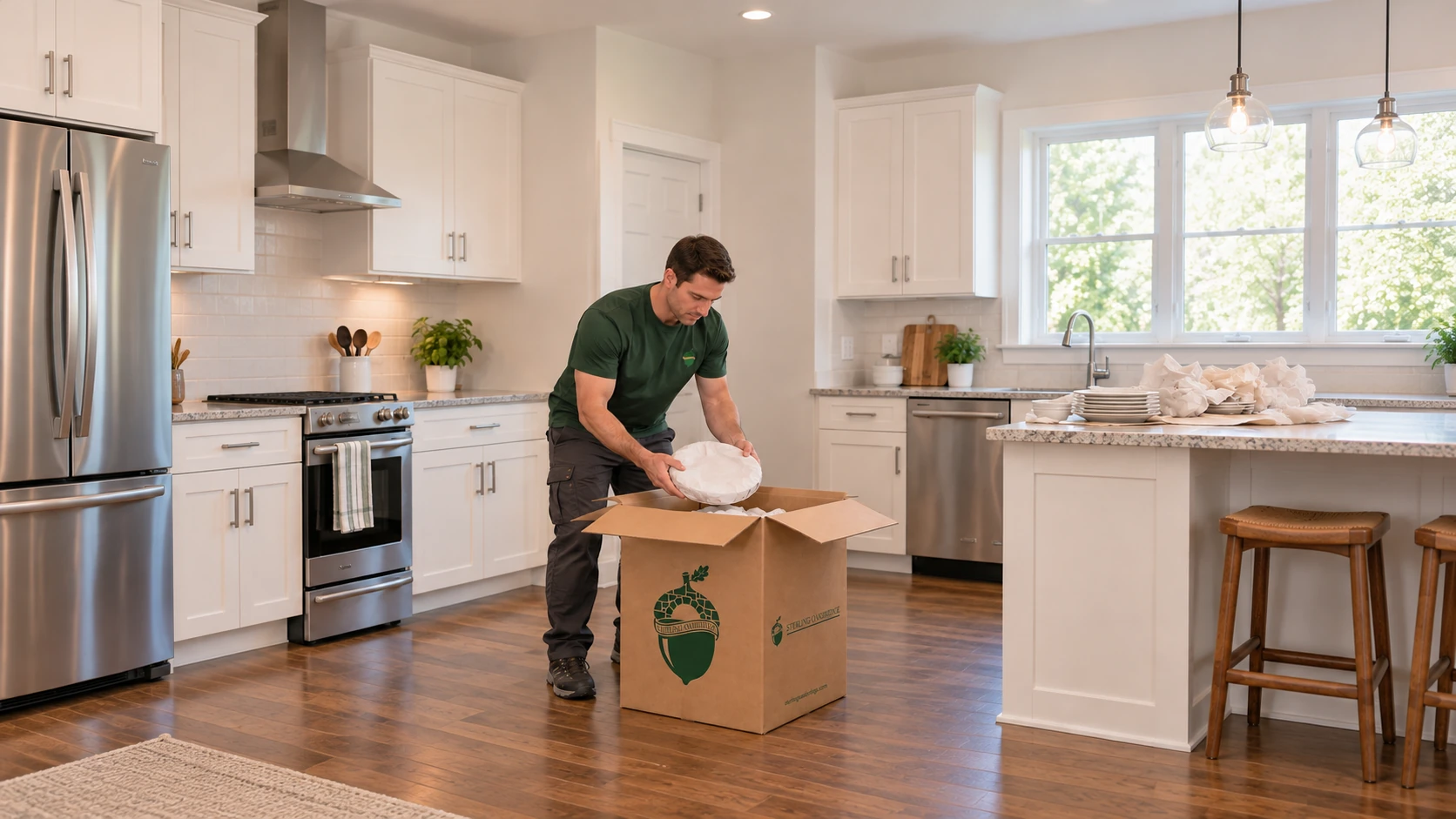
Sterling Oakbridge provides full, partial and fragile-only packing in Danbury, plus optional box unpacking and separately agreed organizing. Packing labor is charged for working time; supplied cartons and packaging removal are separate charges.
A useful packing plan has two clear results: the selected belongings are prepared for their journey, and you know what will still be left to do. Tell us about the contents, the final night at the old home and the rooms you need first at the receiving address. We can then review the preparation and receiving visits alongside the move.
Explore packing, costs and local examples
Choose the preparation you want us to take over
You can spend several evenings making decisions, finding cartons and wrapping one shelf at a time, or delegate the physical preparation of the agreed contents. Either way, decisions about what stays, travels or leaves the household remain yours. Sorting those groups first lets paid packing time go toward the belongings you actually want to move.
| Choice | What the crew prepares | What you need to decide |
|---|---|---|
| Full packing | The retained household contents listed in the agreed scope | What stays out for daily use, what is not moving and which specialist items need separate attention |
| Partial packing | Named rooms or groups, such as kitchen cupboards, a library or hanging clothes | Which drawers, shelves and loose items you will finish yourself |
| Fragile-only packing | The selected breakables with their reviewed wrapping, cushioning and containers | The exact objects, their condition and any declared value or special handling requirement |
For partial work, make two lists: our packing and your packing. Include the small things around each group, such as loose shelf supports, lampshades or the contents of a sideboard. “The living room” can mean very different work when one household wants only the glassware prepared and another wants every book, picture and ornament packed.
Preparation at the old home does not automatically include opening the shipment at the new one. You can request either stage or both, with a specific receiving goal for each room.
Show what is inside the home, including the storage spaces
Open the kitchen cupboards, bookcases and closets during the review. Show pantry contents, collections, framed pieces and belongings in a basement, attic, garage or separate storage area. Mark what is already packed and what will go elsewhere. Bedroom count helps describe a home, but it cannot establish the amount of paper, cartons or labor its contents require.
For illustration, someone expecting twenty cartons might discover that the retained contents need sixty or a hundred once all the closed storage areas are counted. Those are examples of underestimating inventory, not a Danbury box allowance or a calculation based on floor area. Show the contents early enough for the planning team to choose an item-list, video or in-person review appropriate to the job.
Danbury's 2023 city plan describes central apartments and multifamily homes, western townhouse and apartment developments, and detached-home areas toward the city's edges. Use the actual home to plan the work: identify a separate storage level, interior stairs, a shared hallway or a place where finished cartons can stand without blocking a door. The plan describes housing patterns; it does not establish the rules of your building.
Agree which cartons and specialist materials the company will supply and which usable materials you already have. Cartons must suit the contents and carrying route. Dense books need manageable loads; delicate glass needs room for the selected protection. A collection of miscellaneous empty boxes is useful to show during the review, but it is not proof that every container is suitable.
Leave a small, unmistakable group for the final night
Before packing starts, set aside the things that must remain usable until departure: medication, identification, valuables, keys, chargers, work essentials, a change of clothing, bedding and the few kitchen items you still need. Keep that group apart from the shipment and tell everyone involved that it travels with you. The last carton loaded is not necessarily accessible during the journey.
Decide when the remaining breakfast dishes, toiletries and bedding can be packed, and who will do it. If the household will sleep in the home after an early preparation visit, preserve a usable bed, bathroom and route between rooms. Do not have a bed dismantled or the only kettle packed early unless that fits the agreed plan.
Use one cleared chair, a marked shelf or a separate bag for the things staying out, rather than spreading them through otherwise completed rooms. Written instructions help when more than one adult is making decisions. Before a group is sealed, check that it contains no borrowed item, medication or document that needs to stay with you.
Keep exits, stairs and working paths clear as cartons accumulate. A finished packing group should make the next stage easier; it should not prevent the family from reaching a bedroom or the crew from carrying the remaining furniture.
Give preparation, loading and receiving their own time
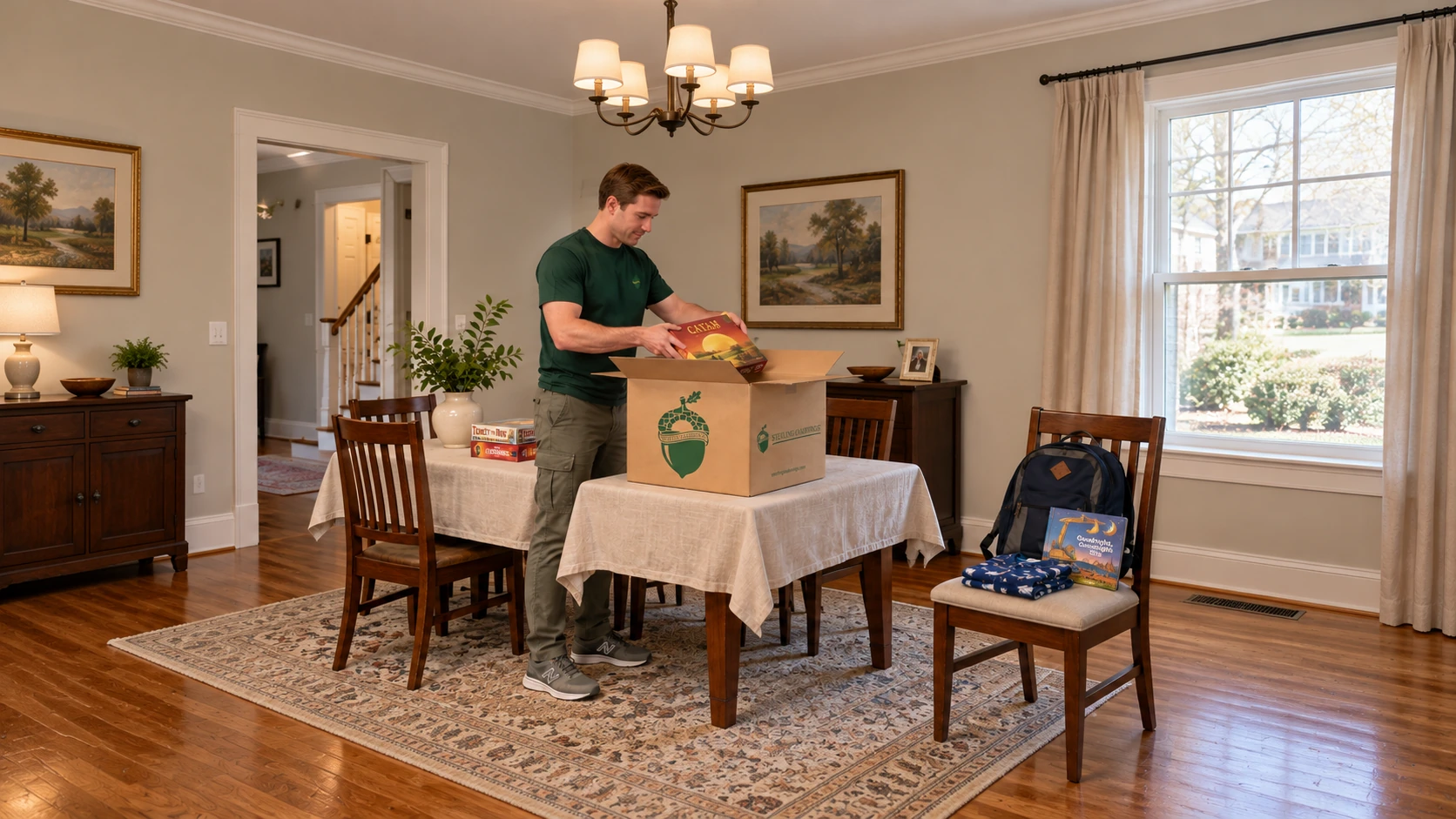
A small, reviewed shipment may fit packing and a local move into one day. A full kitchen, extensive books, several storage areas or a restricted carrying appointment can justify preparation on an earlier day. More time on the calendar is useful only when the team can enter, work and leave the prepared shipment where it will remain safe and accessible.
For a substantial hypothetical order, the reviewed plan might use four packers on a preparation day and six movers on moving day. That illustrates different work at different stages; it is not the staffing assigned to a particular room count. An extra person does not remove a narrow stairway, create an elevator booking or make unfinished customer packing disappear.
| Stage | Useful completion point | Access needed |
|---|---|---|
| Preparation | Agreed contents protected and labeled; final-night items and remaining tasks identified | Permission to work inside, usable surfaces and room for the prepared cartons |
| Moving | Shipment loaded, transported and received under the moving plan | Accepted vehicle positions and carrying routes at both properties |
| Optional receiving visit | Selected cartons opened, or belongings placed as separately agreed | Keys, ready rooms, clear surfaces and a person who can make placement decisions |
At a metered Danbury address, the Parking Authority's reservation process requires an enquiry about the actual use. Do not treat payment for ordinary parking as an exclusive work position. Give the planner the access arrangements for each visit, including a later materials delivery or unpacking appointment. Building permission and any street arrangement are separate.
If a visit cannot proceed, agree the next step with the planning team before adding work to another appointment. A delayed preparation visit may affect loading readiness; a receiving room that remains closed may call for a later unpacking visit. Extra visits and changed work need their own scheduling and charging terms.
Prepare each item for carrying, stacking and travel
Protection has to work beyond the room where it is applied. Contents must remain supported when the carton is lifted, carried, placed with other freight, restrained and transported. Use a container and internal packing that suit the object, rather than choosing a large box simply because it holds more.
Books, everyday dishes and small framed pieces
Keep books in manageable cartons. Fragile household contents need individual protection, cushioning and enough space to avoid hard contact. A small framed photograph that safely fits an appropriate carton can use ordinary protective packing; it does not automatically need an expensive custom crate. Show the actual dimensions, glazing, finish and condition when an object needs a different method.
Hanging clothes and closet contents
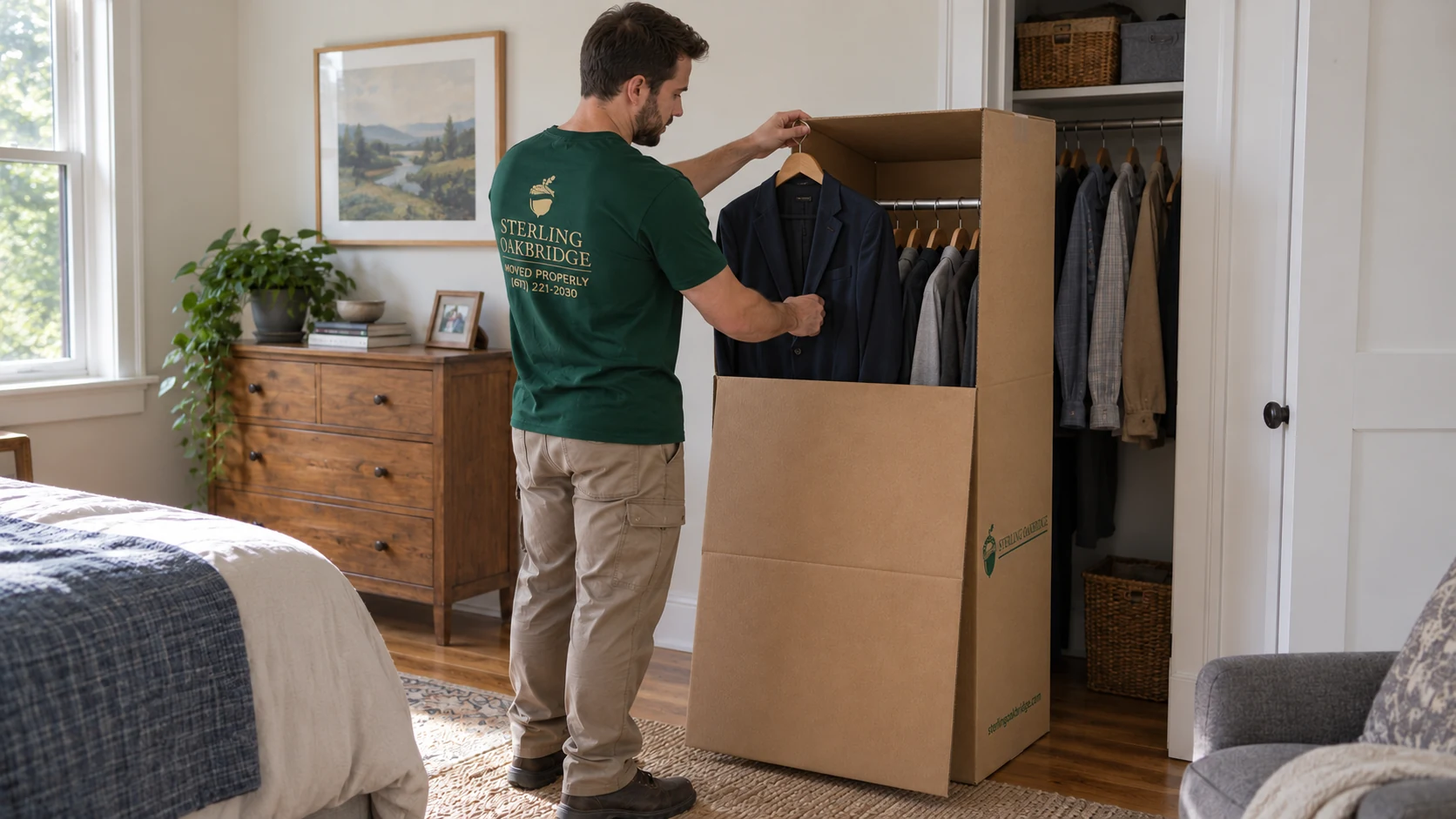
Identify which garments should stay hanging and which folded contents can travel in suitable cartons. A wardrobe carton needs its actual supported rail and a usable opening. Keep room to load it beside the closet without blocking the door or the walking route. Shoes, shelves and items at the back of the closet still need an assigned packing group.
Furniture, glass and collections
Point out removable glass shelves, cabinet doors, lamps, mirrors, artwork and collections before preparation. Agree what comes apart, how loose parts are identified and which hardware stays with each item. Clean support surfaces and handling materials matter; the appropriate gloves and grip depend on the object. One universal wrapping method does not protect every finish or shape.
Specialist art preparation and custom crating are individually reviewed. Use the fine-art service for a valuable or unusually delicate object so its materials, declared value and route can be considered. Household packing is not an appraisal or a promise of conservation treatment. Record the selected protection and liability terms before the move; wrapping materials and the mover's level of liability answer different questions.
Label the next destination before the groups get mixed
Write the destination, receiving room, useful contents and carton number on each carton. Add an opening priority where it changes the receiving order. Color can help a recipient recognize a group, but keep the words: a blue sticker alone does not explain whether the carton belongs in the new kitchen or in storage.
For a split shipment, separate the groups before loading and reconcile them with the inventory. Distinguish the cartons to open from the cartons that must stay sealed. Keep travel essentials outside both groups. A friend receiving several pieces needs the same clear destination instructions as a warehouse receiving a larger group.
Review storage access, handling and later delivery through the storage service. Those are separate arrangements. Labeling a carton “storage” does not arrange a place, make its contents retrievable on demand or include a future delivery.

Three Danbury situations with different stopping points
The following are imagined planning examples, not descriptions of completed Sterling Oakbridge jobs. They show how household decisions change the preparation and receiving work.
Keep a family routine working through a school-week move
Imagine a family leaving a Danbury home while the adults are working and children still need the usual evening and school-day routine. The kitchen cupboards and playroom can be prepared earlier, but breakfast items, bedding, school bags and required documents remain outside the shipment. Assign the final small packing group to a named adult or include it in the agreed visit.
The district's Extended Learning Program closes on early-dismissal days and delayed openings. If the chosen packing day overlaps one of those gaps, arrange an actual adult or backup care before relying on time to work with the crew. Packers prepare belongings; they do not replace childcare. Keep an adult available for packing decisions even when another person is handling school pickup.
The result to aim for is specific: the agreed cupboards are packed, the remaining breakfast-and-bedtime group is known, and the next morning does not depend on finding a school bag in a sealed carton. A missed care arrangement is a reason to revise the visit plan early, rather than assume every task can move into the loading window.
Separate a smaller home's belongings from the storage group
Consider someone moving from a detached home into a smaller managed home in Danbury, with books, family glassware and furniture collected over many years. The city's housing plan gives context for comparing detached and managed homes; the contents and receiving rules in this example still come from the two actual properties.
Decide what goes to the new home, what is stored and what will leave the household before packing each group. Show the basement shelves as well as the main rooms. Prepare fragile glass separately from dense books, and use written destinations on both groups. Keep the new home's first-use kitchen and clothing cartons out of the group intended to stay sealed.
Review room measurements and the route before sending large furniture. Arrange unwanted possessions separately through removal and disposal; changing your mind after everything is packed creates another decision about unpacking, handling and destination. The useful result is a shipment divided by its next use, with an agreed storage and removal plan alongside it.
Unpack the usable floor while another room remains unfinished
Imagine a household arriving at a western Danbury townhouse with the kitchen and one bedroom ready, while another room still needs finishing work. The 2023 plan describes western townhouses and larger apartment buildings; it does not establish permission to work in any particular development. Obtain the actual entrance and appointment rules from the property.
Have the responsible property contact identify which rooms can receive contents. Open the selected kitchen and bedding cartons onto the ready surfaces; keep the unfinished-room group closed in an agreed safe location. Preserve a usable route through the home instead of opening cartons everywhere. A contractor's expected completion date is not confirmation that a room is released for unpacking.
Request a later visit for the remaining group once its room is available. That visit needs confirmed crew availability, access and price. The result is a useful first part of the home, with a clear remaining task list. It is different from promising that every carton will be emptied or every room completed on delivery day.
Choose between accessible contents and final placement
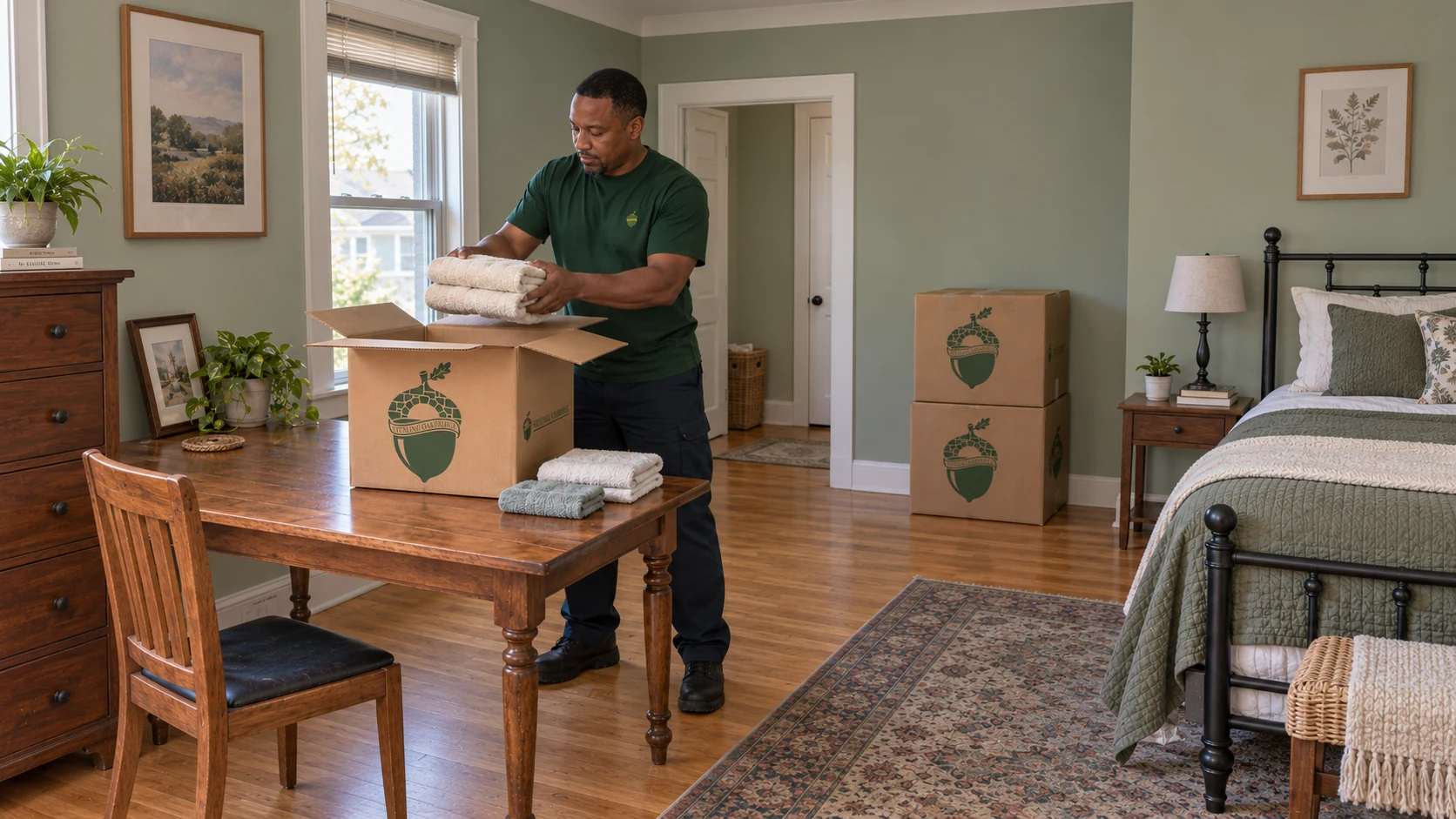
Basic box unpacking means opening the selected cartons and placing their contents on suitable designated surfaces. Clear counters and tables first, identify the cartons to open and leave room to inspect their contents. Everyday kitchen items, bedding and clothing may be more useful first than opening an entire collection at once.
Home organizing goes further: belongings are placed in cupboards, drawers, closets or shelves according to your instructions. It is separately agreed work with its own scope and price. Have someone available to make placement decisions. A smaller team can be easier to direct when each shelf needs an answer; more people are not automatically useful in a room with limited surfaces.
For a larger hypothetical project, selected unpacking might add three or four delivery-day hours, or it might be arranged as a later visit by two people. Those are planning examples, not a time allowance or staffing promise. The contents, ready rooms, building window and actual crew availability decide which arrangement can be accepted.
You can also ask for help after trying to unpack yourself. Send current photographs and a list of the sealed cartons and remaining priorities. The shipment inventory may no longer describe the job once some rooms are open and others have been rearranged. A later request does not establish immediate availability.
List the finishing tasks you want completed
Furniture unwrapping is part of delivery. Basic disassembly and reassembly use moving labor time without a separate basic assembly surcharge. Complex first-time flat-pack assembly, a difficult wardrobe or other substantial construction needs its own review of the model, instructions, condition and work required. Keep labeled hardware and instructions with the item.
Picture hanging, television mounting and other handyman finishing work can be reviewed individually. Identify the item, intended position, wall, fixing information and permissions, then agree the executor, work and price. This is not automatic electrical work, appliance connection, wall restoration or technical setup.
If the task is rearranging furniture already inside the property, use in-home moving. For a separate purchase waiting to be collected, use furniture delivery. Packing can support either request, but collection, release, carrying and final placement need the right scope.
Arrange where the used packaging will go
Check paper for small fittings and possessions before gathering the discard pile. Collecting packaging in the work area is different from taking it away; removal is separately charged. Identify the quantity, materials and carrying route, and keep unwanted furniture on a separate list.
HRRA's Danbury instructions accept flattened cardboard at Mom & Pop, 307 White Street, with a resident permit and proof of residency. Commercial vehicles cannot use that center. A company removal order therefore needs a separately accepted receiving route; your resident permit does not cover the moving truck.
HRRA excludes plastic bags and film from mixed recycling. Separate them from accepted paper and cardboard, and check a participating retailer's film requirements. Ask management or the hauler what the property's collection will accept before putting out a whole move's packaging. Keep the amount beyond that arrangement for an agreed removal order.
Book receiving help around the delivery arrangement
Packing at the Danbury home and unpacking at the destination are separate stages. Danbury long-distance moving explains direct and consolidated shipments, receiving windows and changes. Direct service uses a dedicated truck and the same moving crew at pickup and delivery; a suitable consolidated shipment has its own wider agreed delivery window. The planning team and the moving crew perform different roles.
The delivery period begins after pickup and loading are complete, not when an earlier packing visit starts. Align unpacking with the actual delivery arrangement, keys, building hours and the person receiving the shipment. Do not reserve a separate helper or discard your fallback on the assumption that an estimated window is a fixed arrival hour.
A direct transport arrangement does not by itself book every optional receiving task. Put box unpacking, organizing, specialist finishing and packaging removal into the agreed order. If the home cannot receive the shipment, review an available storage or revised delivery plan before treating it as the fallback.
Compare the cost of the complete order
Packing and optional box unpacking are charged for working time. Company-supplied boxes are separate. Moving blankets, shrink wrap and tape have no separate basic material charge; that does not make all cartons, specialist protection or labor free. Identify any custom packing and individually quoted work in the estimate.
Compare the same inventory with and without the help you want. Include preparation visits, moving, receiving work, organizing, packaging removal, storage and any later return. For a substantial hypothetical order, packing and moving together might approach twice the cost of moving the same shipment already packed. Another order may fall below or above that comparison. It is an illustration of the extra work, not a standard multiplier or a Danbury rate.
The benefit is the preparation and receiving work you no longer have to fit around your own commitments. Compare that with the actual quoted scope; do not assume a fixed number of evenings saved. You still need time for sorting, decisions, personal belongings and the work assigned to you.
Estimated hours help plan the job and do not cap its duration or price. Ask how any minimum, travel and separately priced stages apply. For a long-distance move quoted at a flat rate, the same agreed shipment and service scope keep the agreed price; added contents, packing or receiving requirements can change the scope and price. Record changes before the affected work begins. For a move wholly within Connecticut, use the applicable intrastate terms rather than assuming an interstate document answers every pricing question.
Send the contents, stages and remaining decisions
Start with the Danbury address and unit, every destination, preferred dates and any fixed lease, key or building deadline. Add photographs of open storage areas, fragile or specialist items and the route from the vehicle position to the contents. Include materials you already have and the groups you intend to pack yourself.
Tell us what must stay usable on the final night, which receiving rooms are ready and the result you want from unpacking. Distinguish contents on surfaces, directed organizing, finishing work and packaging taken away. Give the property contact's instructions and identify who can approve a change. You do not need every measurement before making the first request; the planning team can recommend the review needed.
Keep a written remaining-task list when a stage ends. If dates, access or room readiness change, contact the planner before the next visit and agree the available alternative and charges. Weather, a closed room or an unapproved entrance needs an actual decision; it does not silently extend the original appointment.
Use Danbury moving services for the broader carrying and moving plan, and the Danbury relocation guide for neighborhoods, school arrangements, utilities and local collection. Those decisions support the packing plan without making one visit responsible for every part of settling in.
Danbury packing and unpacking questions
Can I book packing for only the kitchen or a collection?
Yes. Partial packing can cover named rooms or groups, and fragile-only packing can cover the selected breakables. Identify the cupboards, drawers, loose pieces and related items included, then list what you will finish yourself. Full packing covers the retained household contents in the agreed scope. Box unpacking is an optional separate stage.
Can packing and a local Danbury move fit into one day?
A small, reviewed shipment may fit one day. Extensive contents, fragile collections or a short carrying appointment can make an earlier preparation visit more practical. Both arrangements need enough time for the actual work and accepted access. An earlier visit also needs somewhere safe to leave the prepared cartons without blocking household routes.
What should remain accessible on the final night?
Keep medication, identification, valuables, keys, chargers, essential work items, clothing, bedding and the few kitchen things you still need in a clearly separated group traveling with you. Tell the crew what stays out. Assign the final dishes and bedding after their last use, and preserve a usable bed and bathroom if you are sleeping there.
Can I rely on school care while the packers are at the house?
Use your child's confirmed care arrangement for the actual day, with a backup where needed. Danbury Public Schools says ELP closes on early-dismissal days and delayed openings. Packing does not include childcare. Have an adult available for packing decisions and another accepted arrangement for pickup or supervision when those responsibilities overlap.
Does a two-bedroom home have a standard carton allowance?
No. The cupboards, closets, collections and storage areas determine the contents to prepare; bedroom count does not establish a carton quantity or labor allowance. Show retained belongings, what is already packed and items going elsewhere. A smaller home with full cabinets can need a more detailed review than a larger, lightly furnished one.
How are boxes, packing labor and protection materials charged?
Packing is charged for working time and company-supplied boxes are charged separately. Moving blankets, shrink wrap and tape have no separate basic material charge for the agreed work. Specialty protection or custom construction needs its own scope. Ask the estimate to distinguish these items rather than assume all supplies and preparation are included without limit.
Can I leave some cartons packed and ask you to finish the rest?
Yes. Show which cartons are finished and identify every group still needing preparation. Tell us about fragile contents, questionable containers and anything you want reviewed or repacked. Do not assume a sealed customer carton has been inspected. Report unfinished packing before loading so the remaining work and time can be reviewed.
How should dishes, glass shelves and framed pieces be prepared?
They need protection matched to the actual object. Ordinary small breakables can use suitable cartons with individual wrapping and cushioning; removable glass shelves and frames need attention to their edges, surfaces and loose parts. Show dimensions, condition and valuable items before preparation. Specialist art packing or a custom crate is individually reviewed rather than assumed for every object.
Can hanging clothes stay on their hangers?
Hanging clothes can be prepared in a suitable wardrobe carton with a supported rail. Identify the garments to travel that way and the folded contents that belong in other cartons. Keep working space beside the closet and leave departure clothing out. The carton, its loading access and the route still need to suit the actual home.
How do we keep new-home cartons separate from storage?
Use written destinations, rooms, useful contents and carton numbers, with colors as an addition to the words. Separate the groups before loading and match them to the inventory. Mark which cartons should stay sealed. Storage, retrieval and later delivery require their own accepted arrangements and charges; the label alone does not book those services.
Does box unpacking include putting everything in cupboards?
Basic box unpacking opens the selected cartons and places their contents on suitable designated surfaces. Final placement in cupboards, drawers, closets and shelves is additional home organizing, directed by you and agreed separately. Clear working surfaces and identify the priority cartons first. Have someone available to make placement decisions when organizing is included.
Can I request unpacking after trying to do it myself?
Yes. Send current photographs, the cartons still sealed and the rooms or routines you want restored first. The old shipment inventory may no longer describe the remaining work. A later visit is a new scheduling request with its own accepted scope, access and price; immediate availability is not guaranteed.
What if one receiving room is still being finished?
Unpack the agreed ready rooms and keep the other group's cartons closed in an accepted safe location. Have the responsible property contact confirm which rooms are released, and keep the carrying route clear. Request a later visit for the remaining group once access and room readiness are confirmed. An expected completion date does not itself release the room.
Is furniture reassembly the same service as unpacking?
They are different tasks. Furniture unwrapping is part of delivery; basic disassembly and reassembly use moving labor time without a separate basic assembly surcharge. Opening carton contents is optional paid work. Complex first-time flat-pack construction needs individual review of the model, instructions, condition and required work, with parts and hardware available.
Can you hang pictures or mount a television after unpacking?
Those handyman tasks can be reviewed individually. Send the item, intended position, wall and fixing information, plus any required permission. Agree the executor, exact work and price. A packing order does not automatically include mounting, electrical connection, wall repair or technical setup, and opening a carton does not establish that its contents can be installed immediately.
Does unpacking include taking all the packaging away?
No. Gathering used packaging at the work area and transporting it away are different tasks. Packaging removal is separately charged and needs the materials, quantity, carrying route and accepting destination agreed. Before discarding paper, check for small fittings and possessions. List unwanted furniture separately from empty cartons and wrapping.
Where can a Danbury resident take empty moving cartons?
HRRA lists flattened cardboard at Mom & Pop, 307 White Street, with a resident permit and proof of residency. Keep the cartons separate and use the center's current opening information. For collection at home, obtain the building or hauler's quantity and sorting instructions rather than assume unlimited capacity.
Does plastic packing film go in mixed recycling?
No. HRRA excludes plastic bags and film from mixed recycling. Keep them separate from accepted paper and cardboard, and check the materials accepted by a participating retail film-collection point. Do not put a mixed bag of unpacking waste in the recycling bin or assume every retailer accepts every protective plastic.
Can your moving truck use my resident recycling permit?
Do not plan that route. HRRA says commercial vehicles cannot use Mom & Pop. A company packaging-removal order needs a separately accepted receiving arrangement for its vehicle and load. A resident permit does not authorize commercial access, and a resident drop-off rule does not determine the company's removal price.
Does a direct long-distance shipment automatically include unpacking?
No. Direct service uses a dedicated truck and the same moving crew at pickup and delivery, but optional box unpacking and organizing still belong in the agreed order. Coordinate receiving help with the actual delivery window, keys, building hours and ready rooms. A consolidated shipment has its own wider agreed window and should not be treated as a fixed arrival appointment.
Are the estimated packing hours a maximum charge?
No. Estimated hours help plan staffing and the visits; they are not a completion cap. Charging follows the written terms, including any minimum and separately priced work. More contents, unfinished customer packing, restricted access or changed receiving requirements can change the work. For a flat-rate long-distance order, the same agreed shipment and service scope keep the agreed price; changes need review.
Will professional packing double the cost of my move?
There is no standard multiplier. Compare moving the same shipment already packed with the full order you want, including packing labor, cartons, receiving help and return visits. A substantial example may approach twice the moving-only budget, but another job can fall below or above that comparison. The estimate must follow the actual inventory, access and selected work.
What access is needed for an earlier preparation visit?
The team needs accepted entry, permission to work, usable surfaces and safe space for the prepared cartons. Confirm the property's hours, permitted entrance and any required paperwork for that visit. Its parking or materials-delivery arrangement may differ from moving day. Earlier preparation does not override a building's rules or create an exclusive street position.
Can I ask for an estimate before every detail is settled?
Yes. Start with both addresses, destinations, dates, an inventory or room photographs and the help you want. Explain what must stay usable, which rooms are ready and what is still unknown. The planning team can recommend an item-list, video or in-person review and identify the decisions needed before the visits are confirmed.