
Connecticut · Greenwich service planning
Junk Removal & Disposal in Greenwich, CT
A failed appliance, guest-room furniture left after an extended family stay or outdoor equipment the children have outgrown can need a deliberate removal plan. Sterling Oakbridge helps plan carrying and disposal in Greenwich, with a stand-alone visit or an agreed moving-day add-on. The estimate should identify the actual work, appropriately licensed collector and accepting route before the visit is booked.
Clear space without paying to move things twice
Disposal is a planned operation. A replacement order does not remove the old appliance, and a moving appointment does not automatically arrange collection of unwanted belongings. List the rooms, cupboards, garage and outdoor storage that need review. Separate what will travel, stay, go to a committed recipient or leave through the agreed removal route before the main moving inventory is finalized.
Keep useful items and pieces with personal or financial value. A sound unwanted piece may suit a recipient who can collect it by a real deadline. A permitted resident drop-off or an existing collector's actual arrangement can also work. Compare these options with the carrying assistance and date needed. An address for receiving does not provide indoor carrying or confirm that the exact item and vehicle will be admitted.
For unwanted belongings, compare local removal and any necessary replacement with avoidable preparation, carrying, shipment capacity, unloading, storage and later disposal. Bulky low-value items deserve particular review before a distant move, while smaller groups can still create repeated handling. A removed item does not automatically reduce an agreed flat quote. Have the revised inventory, service scope and price recorded before relying on a saving.
Greenwich homes range from apartments to houses with several floors, outbuildings, managed entrances or long approaches. The route determines the work. A small disconnected appliance near a ground-floor door differs from heavy equipment below a narrow stair or beyond a steep driveway. Describe the actual property, any house-manager or building instructions and legal vehicle access. The street examples below are fictional planning situations, without customer house numbers or identifiable estate exteriors.
Send the item list and complete access route
Photograph the items and give approximate dimensions, quantities, condition, room and floor. Show stairs, thresholds, turns, shared entrances, service elevators and the distance to legal vehicle access. Include who can authorize entry and removal, any carrying window and the date when the space must be empty. A sale closing, replacement delivery or family change can create a deadline without arranging disposal.
Identify utilities, batteries, refrigerant equipment, liquids, sharp edges and unusual weight. A dehumidifier and a wooden chest do not have the same receiving route. Disclose pests, mold, contamination and unknown contents before the estimate. Items discovered during loading may change the work and acceptance; keep them outside the selected group until reviewed.
- Furniture removal. Sofas, armchairs, dressers, tables and bookcases. Identify each piece, its dimensions, the carrying route and whether a recipient or removal has been agreed.
- Mattress disposal. Used mattresses and box springs after a bed replacement or downsizing. Give the size, quantity and condition; disclose pest concerns and confirm covering instructions and an accepting destination.
- Appliance removal. Refrigerators, freezers, washing machines, dryers and microwaves. Give the model and utility preparation. Refrigerant appliances need a suitable receiving chain; appliance removal does not include utility disconnection or installation unless separately confirmed.
- E-waste and electronics. Televisions, monitors, computers and associated covered equipment. Confirm the exact device and approved electronics route. An appliance and a covered electronic device can follow different disposal programs.
- Gym equipment. Treadmills, exercise bikes, weight benches and loose weights. Identify weight, stairs, dismantling, screens and embedded batteries before choosing the carrying and receiving plan.
- Outdoor items. Worn patio furniture, loose play equipment and unwanted garden equipment. Describe fuel, batteries, anchoring and any dismantling. A fixed shed or play structure needs a separate review of permissions and work.
- Yard waste. Branches, brush, leaves and trimmings remaining after a small clearance. Review material, quantity, bundling and the local green-waste route. Soil, stumps, fuel and equipment are different loads; garden work itself is not included automatically.
- Light construction debris. Small quantities of loose drywall offcuts or other identified remnants from a minor repair. Send photographs, material types and quantity for acceptance review. Confirm the receiving route and charges; demolition, unknown or contaminated materials need a different plan.
- Used packaging and floor protection. Flattened cartons, packing paper, plastic film and clean protective sheeting. Separate materials and identify contamination or attached debris. Agree the staged quantity and separately charged collection.
These categories help describe a request rather than guarantee one mixed load. Furniture, appliances, electronics, vegetation, repair debris and hazardous products have different conditions. Retained contents and belongings reserved for another person stay separate. Use quantities and actual condition instead of an instruction to take everything from a room containing both unwanted and useful items.
Example 1: a failed dehumidifier before replacement on Field Point Road
Imagine a Field Point Road household replacing an old small dehumidifier that no longer performs reliably. Nobody has committed to taking it for repair, and leaving both units in the utility area would obstruct access. The household selects only the old unit for removal. It needs an appliance receiving arrangement, rather than being silently added to an ordinary garbage group.
Compare an actual seller take-back, an eligible resident trip and agreed private carrying/removal. Holly Hill has a specific route for refrigerant-containing equipment, including dehumidifiers. That option has preparation, payment and origin conditions; it does not provide help carrying the unit inside the house. Do not vent refrigerant or dismantle the cooling system to make an appliance appear ordinary scrap.
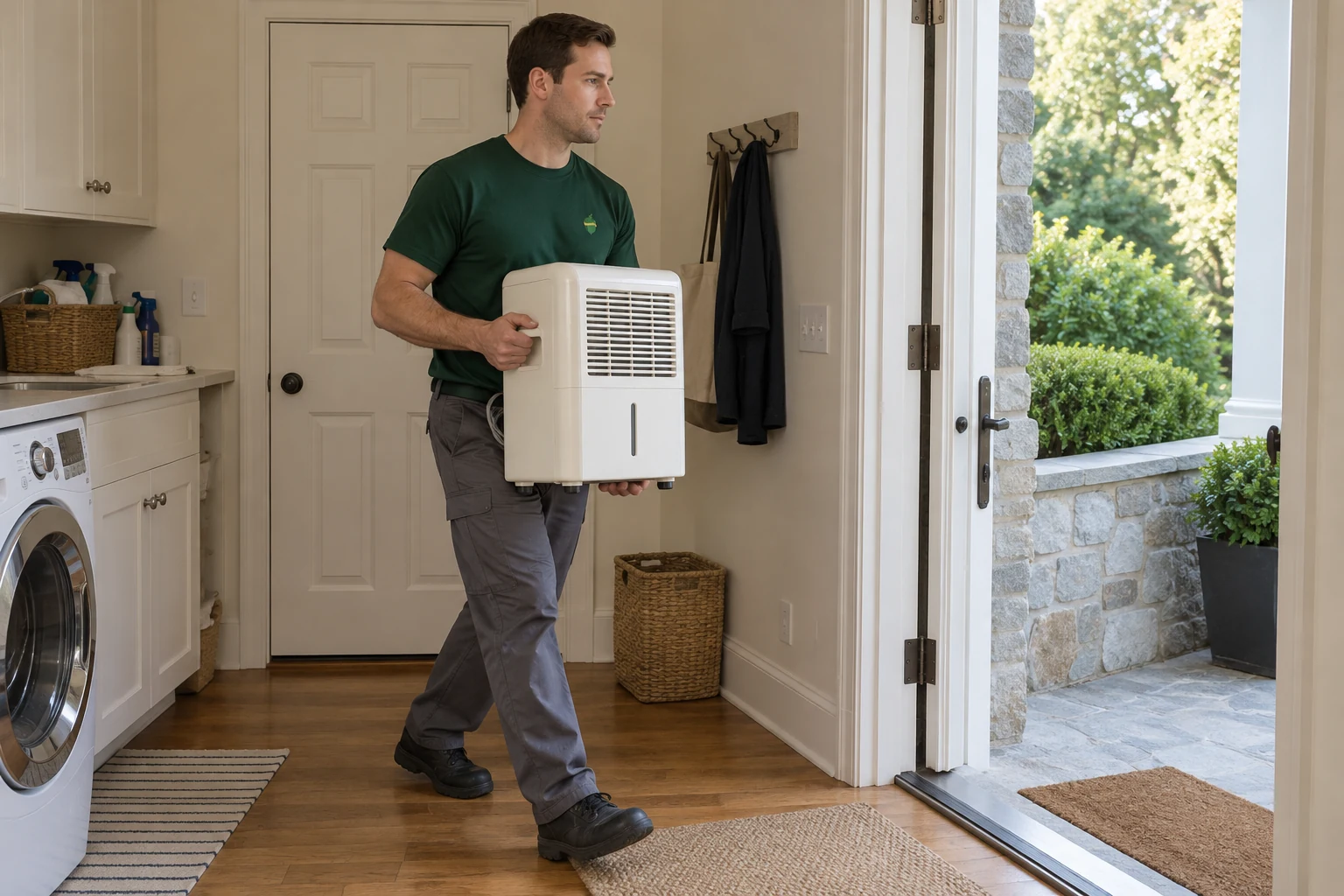
The illustration shows a compact unplugged unit supported underneath and stabilized while moving toward a clear private exit. Confirm the actual model, weight, water containment, cord and carrying route. A small appliance shown with one worker does not establish staffing for every unit. A larger connected appliance or a heavy exercise machine would change the estimate and preparation.
The desired result is space cleared before the replacement, with the old equipment accepted through the agreed route. A stand-alone visit may suit that deadline, while an add-on could coordinate with a separately planned move. Identify dispatch, carrying and receiving costs in writing. A recycling option does not make the indoor work or transportation automatically free.
Example 2: surplus guest-room furniture after a family stay on Arch Street
Consider an Arch Street household after grandparents finish an extended stay and return to their own home. The family had added a drawer chest and two small nightstands for the temporary room arrangement. Those ordinary pieces are now worn and surplus. The retained bed and personal belongings remain, while no recipient has committed to taking the extra furniture by the date the room needs to change use.
This is a household change without necessarily moving the whole family. Review reuse first, based on condition and a real collection date. Keeping the group indefinitely can occupy the room and lead to repeated rearrangement or storage without a future use. Select the actual three pieces and identify who can authorize them to leave; the grandparents' belongings are not automatically part of a clearance.
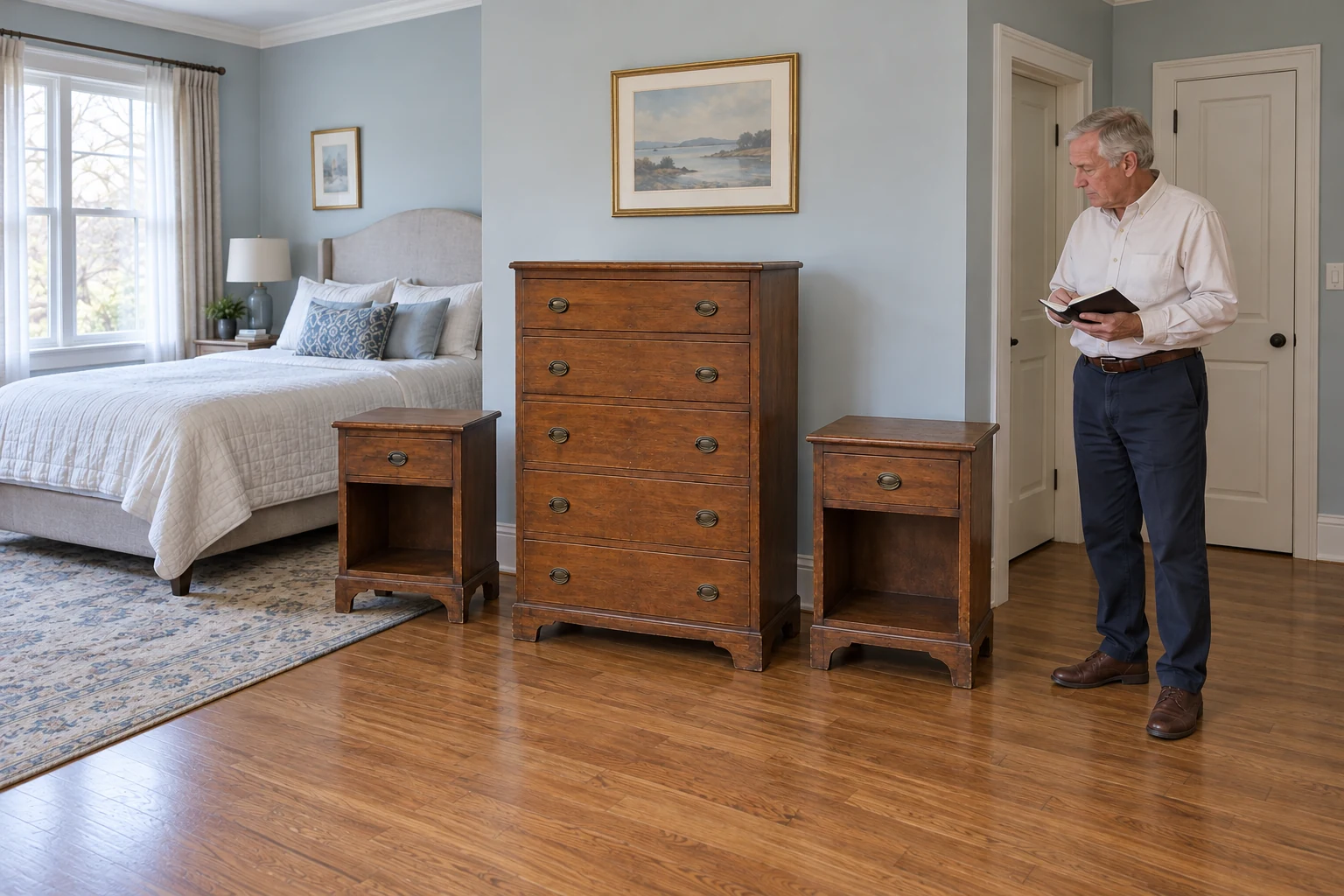
The photograph shows private inventory review before transport preparation. The furniture is emptied, with intact drawers, tops and supports; retained room contents are separate. Send dimensions, weight and any loose shelves or hardware. If a piece has safely removable vulnerable supports, agree the correct preparation. Do not destroy integral furniture parts merely to make an unwanted item smaller.
An existing collector may offer a special arrangement, or a permitted trip may work when the household can meet the access and receiving conditions. A private visit can suit carrying from the room or a different deadline. If another move is planned, an add-on needs the outgoing group and retained shipment identified separately. A general garbage agreement does not confirm every bulky furniture service or its price.
Here, the value comes from useful space and avoided repeated handling, rather than an assumed long-distance rate. Storage is appropriate when a future need is defined. These pieces have no receiving use after the stay, so the estimate should reflect that decision instead of preserving them by default through another room change or move.
Example 3: an outgrown basketball hoop before a Holly Hill Lane move
Imagine a Holly Hill Lane household preparing for Phoenix, Arizona after nine years in the same home. A freestanding portable basketball hoop remains on a private paved area, but the children have outgrown it and no longer use it. The next property has no planned place for the unit. It is not fixed into the ground and is different work from demolition of a built-in play structure.
Review it with the long-distance moving inventory before committing shipment space and preparation. The pole, backboard and large base can require dismantling, carrying, packing and another disposal after arrival without serving a purpose. Compare local removal and any replacement genuinely needed. A sound unit with a committed recipient may still be worth passing on rather than discarding.
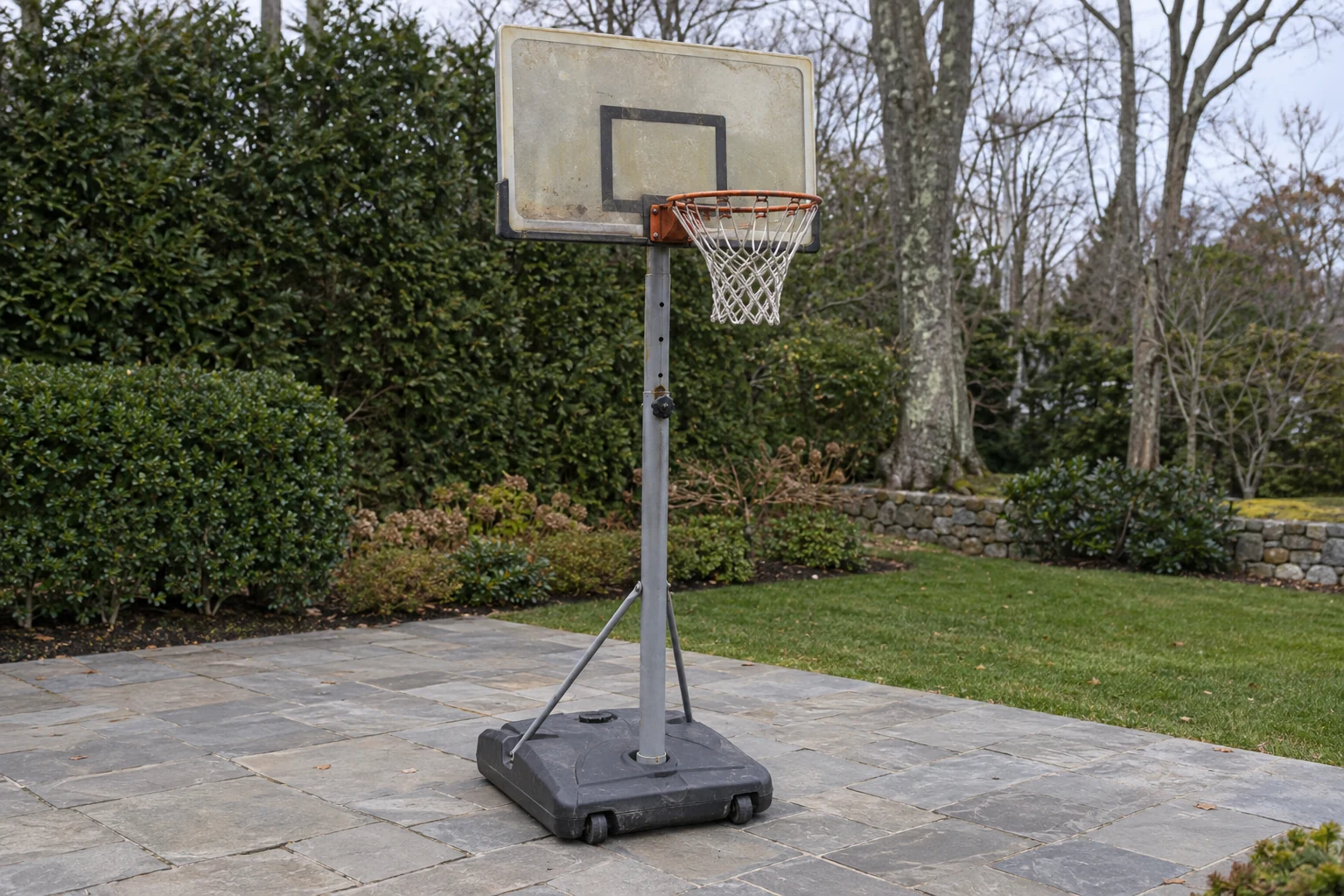
The illustration shows the whole stationary unit during private condition review. It is not a completed dismantled load. Identify dimensions, weight, base contents, attachments and any damaged edge. Agree whether emptying the base or dismantling is necessary and how those stages will be done. A unit with concrete anchoring, a glass backboard or unsafe damage needs different assessment from the portable example.
The metal pole and rim, plastic base, backboard and net are mixed materials. Confirm the whole unit and receiver before assuming it belongs entirely to scrap metal or ordinary recycling. Outdoor use does not make it yard waste. The selected list should identify the equipment rather than mixing it with branches, soil or hazardous garage products.
An earlier visit can clear outdoor access before the household prepares to leave. A moving-day add-on can coordinate the work when timing, capacity and receiving fit, while additional dismantling, labor, fees or a separate trip may still be needed. Avoid paying to take unwanted equipment to Phoenix merely because it has remained at the old home for years.
Other situations worth including in the request
A move into a smaller local home, household separation, an inheritance, an office closure or property handover can leave surplus contents. Some jobs concern one ordinary item; others include several material groups. The purpose defines what must change, while ownership, access and acceptance still need review. Use the broader situations to describe the actual group and remaining work.
View 21 removal situations and what to check
Swipe the table sideways to read all columns.
| Situation | What needs to change | What to agree first |
|---|---|---|
| A furniture replacement | A worn armchair, sofa, dresser or old table makes way for a new purchase. The old piece needs to leave before the new room layout can work. | Agree removal versus retailer haul-away, access, recipient acceptance and the delivery deadline. |
| A television or monitor upgrade | A broken or unwanted screen remains after the replacement arrives. The old device needs an approved recycling route and space needs to be cleared. | Identify the model and an accepting electronics program; ordinary trash is not the route. |
| A local move to a smaller home | Parents choose a smaller home after the children leave; spare furniture no longer fits. Avoid carrying and storing pieces that have no role in the receiving home. | Use the new floor plan, a keep list, a removal list and a separately reviewed quote. |
| A household separates | People move to different homes and a shared surplus remains. Unallocated items should have a destination before the rooms are cleared. | Confirm the authorized owner and each person's keep/remove instructions. |
| A temporary family stay ends | A relative returns home and the spare bed, chair or temporary setup is no longer needed. Clear a useful room instead of keeping furniture without a future use. | Verify ownership and which pieces are being returned, retained or removed. |
| Accumulation before a move | After seven to ten years, forgotten garage, attic or basement belongings reappear. Avoid packing and transporting contents that would be discarded after delivery. | Sort early, photograph the group and distinguish ordinary items from special materials. |
| A long-distance keep-or-replace decision | Bulky low-value furniture competes for space with useful, valuable or sentimental possessions. Removing unwanted bulk can avoid shipment, handling and storage costs. | Compare two actual moving quotes with removal and destination replacement costs; no automatic per-cube discount. |
| An estate's remaining contents | After retained and sold pieces leave, ordinary unwanted furniture remains. The property needs to be cleared for its next agreed use. | Identify the authorized representative and preserve items awaiting sale, collection or family decisions. |
| Rental turnover or a possession deadline | A property must be handed over after tenancy, including situations involving lawful eviction processes. Ordinary unwanted contents may prevent the agreed handover. | Confirm lawful possession and authority over the items; removal is not eviction enforcement or legal advice. |
| An office lease ends | Old desks, chairs or shelving are no longer needed in the new office. Release the old premises without moving a surplus into the new workspace. | Separate business waste, IT/data decisions, landlord instructions and the commercial receiving route. |
| A business changes its space | Unused shop fixtures, storage furniture or equipment need to leave. Make the leased space usable for its next purpose. | Confirm the actual equipment, utilities and materials; resident-only programs do not serve business loads. |
| Outdoor items at a home sale | Patio furniture or children's outdoor items are not wanted at the next home. Clear agreed contents before move-out and property handover. | Confirm the sale agreement, ownership, anchoring, item size and ordinary material acceptance. |
| An unwanted shed or play structure | A shed or fixed children's play structure is no longer useful. It may need a separate dismantling and collection plan rather than transport to the new home. | Review foundations, utilities, dismantling, permissions and receiving material limits; structural demolition is not automatically part of ordinary collection. |
| Broken outdoor equipment | An old mower, grill or other outdoor equipment has stopped being useful. Avoid taking a repair or disposal problem to the new property. | Identify fuel, oil, propane and batteries separately; arrange the applicable material route. |
| A broken household appliance | A washer, refrigerator, freezer or other appliance is being replaced. The old appliance takes up receiving or working space. | Review utilities, access and model; refrigerant-containing appliances need an appropriate processor. |
| Unused or broken gym equipment | A treadmill, exercise bike or weight system is not going to the new home. Avoid a difficult carry and shipment for equipment with no planned use. | Identify weight, dismantling, stairs, electronics and any battery before quoting. |
| Packaging after unpacking | Used flattened cartons, paper and plastic wrapping fill the available space. Restore useful rooms and clear the agreed collection area. | Group used flats in large open boxes near a clear exit; separate material types and agree the collection date. |
| Protective materials after renovation | Clean floor-protection paper or plastic film remains after work ends. The finished space needs to be made usable again. | Identify contamination, wet paint or attached debris; protective packaging is not automatically construction or hazardous waste service. |
| A mattress or box spring replacement | An old bed surface remains after replacing a mattress or changing bed size. Clear the receiving room without carrying an unwanted bulky piece to another home. | Confirm size, condition, covering instructions, local collection eligibility and accepting destination. |
| A prepared yard-waste pile | Identified branches, brush, leaves or trimmings remain after a small clearance. Clear agreed outdoor space before a handover or after work is finished. | Confirm quantity, bundle/container rules and actual green-waste acceptance; tree work, soil and stumps are separate. |
| Light debris after a minor repair | A small photographed quantity of identified drywall offcuts or repair remnants remains. Clear the completed room without mixing construction material into ordinary household pickup. | Review the material, quantity, carrying route, charges and accepting destination; unknown or contaminated material needs a different plan. |
For an estate, keep reserved or sold belongings separate from the authorized remainder. For an office, identify records and data-bearing devices alongside furniture. For a sold property, distinguish freestanding outdoor contents from fixed sheds or play structures. Minor repair remnants and a large demolition load require different handling and receiving, even when the same clear-by date applies.
Stand-alone visits and moving-day add-ons
A stand-alone visit has its own dispatch, carrying date and accepting arrangement. It can make room before replacement delivery, free a guest room after temporary use or remove outdoor equipment ahead of departure. Give the complete known list and route so the estimate reflects the real work. The selected day at the home must also fit the receiver and appropriate transportation.
An add-on coordinates agreed removal with the main moving visit. It may avoid repeated travel because crew and vehicle are already at the property. Additional labor, suitable capacity, receiving charges or another trip can remain necessary. Waste and retained household shipment have distinct requirements; spare vehicle space does not establish material acceptance or a public facility permit.
Compare complete written estimates for the same inventory and deadline. Identify dispatch, carrying, preparation or dismantling, transport, receiver fees and extra trips. Utility disconnection, specialist handling and replacement installation need their own agreed scope where applicable. Savings follow from actual combined logistics and moving stages avoided, without a fixed discount or automatically included disposal.
Greenwich collection and Holly Hill access
The Town's waste-disposal guidance directs residents to Holly Hill or a private licensed collector. Confirm the existing collector's bulky-item arrangement rather than assuming a move creates an extra collection. Holly Hill's ordinary hours are Monday–Friday 7 a.m.–2:30 p.m. and Saturday 7 a.m.–noon, with current closures to check. Receiving and indoor carrying are separate stages.
The current entrance-permit instructions concern the July 2026–June 2027 permit year and Greenwich-generated material. Cargo vehicles have weighing and vehicle-registration requirements. An outside-Town company delivering on an owner's behalf needs the signed origin verification for each load. A resident hangtag is not blanket approval for an unreviewed commercial vehicle or waste from another municipality.
The owner-verification form identifies the source, material, volume, separation and possible charges. It is an accepting-facility document, not a substitute for the collector's applicable licence. Before booking private work, identify Sterling's actual tasks, the appropriately licensed hauling party and receiving arrangement. Do not infer every waste operation from ordinary moving documents.
The Town's linked holiday schedule distinguishes facility opening from Town-office closures and lists Columbus Day as open. Confirm a current operating notice for the needed date. A facility day or office holiday does not establish availability for a private visit or a special material programme.
Furniture, mattresses, electronics and appliances
Check the accepted-material categories and the exact item conditions. Mixed-material furniture may not belong entirely to one recycling stream. Receiving fees depend on material and vehicle arrangements; an older material sheet's zero-fee statement should not be treated as proof that a licensed hauler's delivery is free. Compare the full private estimate with any suitable resident option.
Holly Hill lists mattresses, while Connecticut's mattress-programme guidance distinguishes suitable mattresses and box springs from bed frames, loose bedding, toppers and other excluded products. Wet, heavily soiled, moldy, infested or severely damaged units require instructions from the chosen location; conditions and fees can differ. A no-cost suitable drop-off does not provide carrying or transportation, and another state's bag rule is not automatically Connecticut's requirement.
The electronics sheet concerns Town-generated equipment and reasonable residential or small-business quantities. It does not offer unlimited large-business clearance. The appliance model also matters: refrigerant equipment has separate receiving and payment preparation. Utility work, coolant handling and installation remain distinct operations to agree.
For an office or estate, separate data-bearing devices and confidential records from ordinary furniture. Determine what is retained, sold or reserved and who can authorize removal. Do not promise that every unwanted object will be donated or recycled. Confirm actual material and accepting treatment before it is carried out.
Packaging, vegetation and light repair remnants
Used cartons, paper, plastic film, foam and dirty floor protection need individual sorting. Keep suitable recyclable material separate from ordinary trash and hazardous products. A mixed binder, padded item or coated covering is not automatically a single-stream recyclable because one component is paper or plastic. Describe contamination and attached material before agreeing the route.
The yard-material instructions apply to Greenwich-generated vegetation, with separation, truck-volume and large-log conditions. Invasive plants require the attendant's specific directions. Leaves have a separate seasonal receiving arrangement in November–December. A portable basketball unit, patio furniture or plastic planter should not be included merely because it was used outdoors.
For small repair remnants, the construction-material sheet defines a distinct receiving load with origin verification and quantity limits. Identify source, composition, amount and contamination. This option does not establish demolition or asbestos capability, nor permission to mix repair debris with furniture, electronics or yard waste.
The fee schedule distinguishes licensed-hauler trash and other material or vehicle charges. Confirm the actual rate and conditions before estimating receiving. A passenger-car option and a company truck are different arrangements; the removal estimate should include labor, dispatch and any fees instead of presenting a public receiving charge as the entire service price.
Hazardous products need a separate plan
Holly Hill's ordinary receiving does not accept general household hazardous waste, even though selected batteries, lamps, oil or refrigerant appliances have designated material routes. Name the exact product and follow that route's conditions. Fuel, chemical, battery, cylinder and unknown-container groups should not be hidden in furniture or packaging. Report damaged or leaking products before the visit.
The Town's 2026 household hazardous-waste programme lists participating regional events through September 12. Those listed dates have passed at this October 10 check. The resident programme excludes commercial loads; it is not a permanent receiving location for private removal trucks. Check current alternatives or the next published event rather than inventing a fall appointment.
Connecticut's waste-transporter guidance has specific requirements for hazardous and regulated waste. Those operations differ from ordinary household carrying, and an owner's own-waste exception does not automatically apply to paid customer collection. Agree appropriate transportation and receiving for the actual material before including it in the work.
Finalize the authorized group and date
Keep retained, recipient-bound and removal items separate in writing. Empty furniture where appropriate, contain agreed loose hardware and disclose equipment connections, base contents, batteries, liquids and contamination. Preserve family or sold belongings until their decisions are settled. A late addition may change labor, material handling or the receiver.
Confirm entry authorization, the full carrying route, legal vehicle position and clear-by date. Use packing services for useful belongings selected to travel and storage for a defined future need or receiving delay. A deliberate removal plan frees the space and avoids spending moving work on things that no longer serve the household.
Greenwich junk removal and disposal questions
Can disposal save money before a Greenwich move?
Compare local removal and necessary replacement with avoidable preparation, carrying, shipment capacity, storage and later disposal. Keep useful or valued belongings. Confirm the revised inventory and price; excluding an item does not automatically lower an agreed flat quote.
Does the Town collect every unwanted item on moving day?
A moving date does not arrange collection. Town guidance directs residents to Holly Hill or a licensed collector. Confirm the exact item, current agreement, preparation and date. Public receiving and carrying from inside the property are separate stages.
What should a clear-by deadline include?
Identify the replacement delivery, room-use change, move or handover date and compare actual arrangements that can meet it. Include property access, the authorized list, accepting receiver and transportation. An unconfirmed recipient or general programme address does not clear the space.
Are mattress drop-offs always free for every unit?
Connecticut’s programme distinguishes suitable mattresses and box springs from excluded products and condition problems. Ask the selected location about wet, moldy, infested, heavily soiled or severely damaged units and any charges. A suitable no-cost drop-off does not include indoor carrying or transport.
Is an add-on cheaper than a stand-alone visit?
It may avoid another dispatch when crew and vehicle are already onsite. Additional labor, capacity, receiving charges or another trip can remain necessary. Compare complete estimates for the same inventory and date; disposal is not automatically free.
Can a failed dehumidifier leave before replacement?
Send its model, size, condition, cord, water containment and access route. Refrigerant equipment has a designated accepting arrangement rather than ordinary trash. Do not vent the cooling system. Utility work and replacement installation need their own agreed scope.
Can surplus furniture after a family stay be cleared?
Identify the pieces no longer needed, check a committed reuse recipient and establish authorization. Empty retained contents and keep the guest bed and family belongings separate. Compare removal with storage or repeated handling without a defined future use.
Should an outgrown portable basketball hoop travel long distance?
Compare future use with dismantling, carrying, packing, shipment capacity and later disposal. Identify dimensions, weight, base contents, attachments and damage. A freestanding unit differs from fixed structures; mixed material needs receiver review.
Can an outside company use the resident’s Holly Hill permit?
The Town has commercial vehicle and origin-verification arrangements, including a signed owner form for each load from a Greenwich property. Facility access is distinct from the collector’s applicable licence. Identify actual Sterling work, appropriately licensed transportation and the receiver before booking.
Can all packing paper, cardboard, foam and film leave together?
Identify materials and condition individually. Separate suitable recycling from ordinary trash and hazardous products. Contamination and attached components can change the route; moving use alone does not make every covering recyclable.
Can yard material or repair debris be included?
List origin, composition, amount and contamination. Holly Hill separates vegetation, construction material and other loads, with quantity and vehicle conditions. Outdoor furniture is not vegetation; demolition or hazardous remnants need a different agreed scope.
Can large business electronics loads use the ordinary programme?
The linked electronics guidance concerns Town-generated material and reasonable residential or small-business quantities. It does not provide unlimited large-business clearance. Separate data-bearing devices and records, then confirm actual receiver and transportation conditions.
What needs a separate hazardous-waste plan?
Name fuels, chemicals, oils, batteries, lamps, cylinders, unknown containers and damaged products before the visit. The resident HHW events exclude commercial loads and their listed 2026 dates have passed. Designated material routes and regulated transportation requirements still apply separately.