
Connecticut · Hartford service planning
Long-distance moving from Hartford CT
A long-distance move from Hartford needs a workable departure and a receiving plan. Sterling Oakbridge reviews household shipments throughout the United States and Canada, using direct dedicated service or consolidated transport where the inventory and delivery window suit it. Send both addresses, the belongings you are taking and the dates you must protect. We will review the truck position, carrying routes, packing and receiving arrangements before agreeing the work and applicable written flat rate.
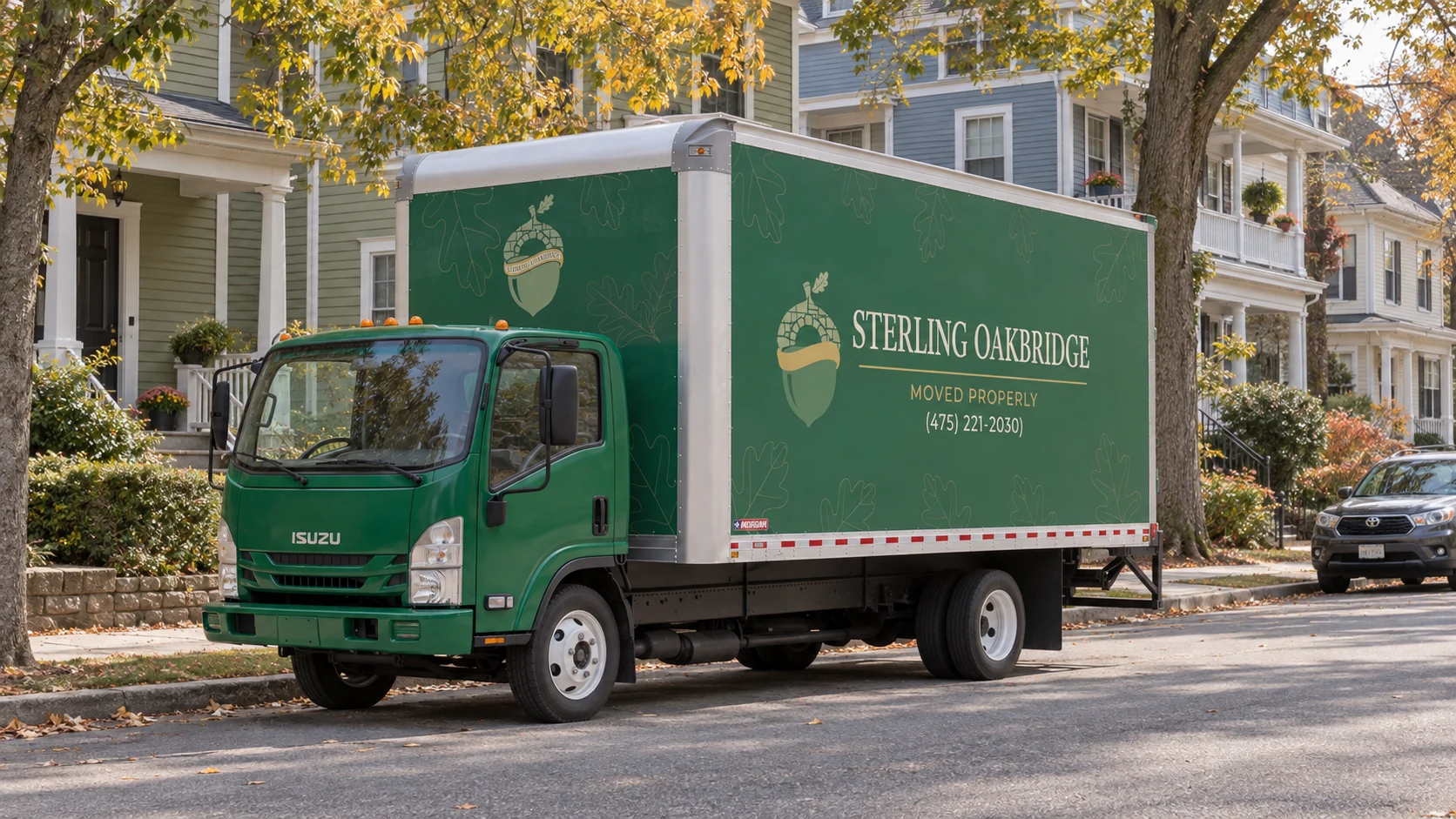
Begin with the property and the handover dates
An apartment above a shared porch, a house with basement storage and a condo with a managed elevator present different departure tasks. Show the actual route from the room to the truck: entrance, stair turns, landings, corridors, elevator if available, and the space for the truck and ramp. Include the destination route too. An item that fits the Hartford room may need a different preparation or carrying plan to reach its next room.
Give us the inventory before deciding which vehicle or transport model is appropriate. Include cartons still to be packed, wardrobes, books, kitchen contents, garage or basement items and any furniture requiring disassembly. Photos of a furnished living room alone can miss much of the shipment. Identify what stays, what travels with the household and what needs a separately arranged disposal or storage stage. A piano, safe, exercise machine or unusually heavy piece needs its own dimensions, make and model when available, and access review.
Then distinguish the departure deadline from the date you can receive. A lease ending on Friday does not necessarily mean your next home is available that Friday. Note when keys change hands, who can open the property, any fixed building window, and where the household will stay between stages. If you need storage, ask for that stage to be included explicitly, with the later destination and access arrangements. Do not leave a gap in the plan for the truck or receiver to resolve on arrival.
The Hartford moving page covers choosing the broader moving scope. The relocation guide explains local housing, schools, utilities and address-based procedures. This page focuses on how departure preparation, transport and receiving fit together for a longer household shipment.
Direct and consolidated: match the shipment to the window
Direct service uses a dedicated truck and the same moving crew at pickup and delivery. It can suit a substantial household shipment or a receiving arrangement that needs a shorter reviewed transport plan. The selected truck must fit the inventory and both approaches; a wide destination driveway does not solve a tight Hartford loading position. Review packing, loading, travel and the receiving work together, including any property hours that affect the available delivery date.
Consolidated transport shares the transport arrangement with other shipments and uses an agreed delivery window. It is useful to discuss for smaller inventories when the receiver has suitable flexibility. A shipment around 300–400 cubic feet is a helpful smaller-inventory example, not a minimum or an automatic qualification. The whole inventory, protection, handling and access still need review. Consolidated service does not acquire the direct model's dedicated truck or same-crew arrangement merely because the shipment travels a short distance.
For both models, the delivery clock begins after pickup and loading are complete. Packing beforehand has its own schedule. The ranges below are illustrations based on road references, with room for the plan to be reviewed. They are not booked appointments or certification that a passenger-car route is suitable for the moving truck. Confirm the actual commercial vehicle route, property availability, conditions and written delivery terms before making dependent travel arrangements.
| Illustrative destination | Direct planning window | Consolidated window |
|---|---|---|
| Lancaster, Pennsylvania | 1–2 days | Up to 30 days |
| Naples, Florida | 3–4 days | Up to 60 days |
| Ottawa, Ontario, Canada | 1–2 days | Up to 60 days |
| San Jose, California | 5–6 days | Up to 90 days |
The nearby domestic consolidated example uses up to 30 days. Florida and Canada use up to 60 days, and California uses up to 90 days. Other distant destinations require their own agreed window. Canada keeps its cross-border window even when the road distance is relatively short. A same-day or next-day arrangement can sometimes suit a small inventory and an appropriate route and schedule; it needs a specific agreement rather than an assumption from the table.
Confirm Hartford curb space and a permissible truck approach
If pickup needs public curb space, start with the Hartford Parking Authority reservation request. It asks for the address, date, number of spaces and an image of the proposed location. HPA decides approval and the quoted charge for the location, duration and spaces. An approved reservation must be paid at least three days in advance. Assign the task early enough to obtain a decision, pay on time and share the confirmed position with the moving plan.
A submitted form is not approval, and HPA can revise or cancel a reservation. The authority states that reservations are available only where safe, legal parking exists and remain subject to other City parking regulations. Include the truck, ramp and carrying space in the position review. Check what to do if the reserved area is occupied or inaccessible; do not turn a blocked position into double parking or an improvised obstruction. We can coordinate truck-permit arrangements, COIs and elevator scheduling within the agreed scope, while the authority and property provide their approvals.
HPA's residential parking permits are a separate program with permanent and visitor permits for designated streets. Have HPA confirm the arrangement for the actual moving vehicle. A household permit does not by itself reserve the spaces and access needed for pickup. For a private driveway, lot or loading dock, obtain property permission and check the vehicle dimensions, ramp placement, turning room and carrying route. Confirm applicable municipal or road-owner requirements where the operation needs public space.
For the road approach, use the actual truck requirements. CTDOT prohibits box trucks on the Merritt, Wilbur Cross and Milford parkways. A car navigation suggestion therefore cannot settle the moving route. Share any height, gate or street constraints at both ends, and allow the commercial route to be reviewed before confirming a receiving window. The final block, entrance and place to stop matter as much as the long highway portion.
Example 1: Hartford apartment to Lancaster, Pennsylvania
Suppose a household is leaving a second-floor Hartford apartment for a Lancaster home. Its inventory includes a sofa, small dresser, dining table, bed, kitchen cartons and books. The first question is whether the apartment's shared entrance and stair turn work for each large piece. Show the porch landing, front door, stairwell ceiling, handrails and the route to the proposed truck position. Ask the landlord which entrance to use and who can clear or unlock shared areas on the agreed day.
For the dining table, review its construction before carrying. The top or body is protected first, safely detachable legs are removed with care at the joints, and the parts and hardware stay associated in a protected group. A long-legged table does not need to travel fully assembled merely because it stands that way in the room. Integral supports are assessed on the actual piece. Include the bed's basic disassembly, mattress protection and reassembly requirements in the work rather than leaving them as last-minute decisions.
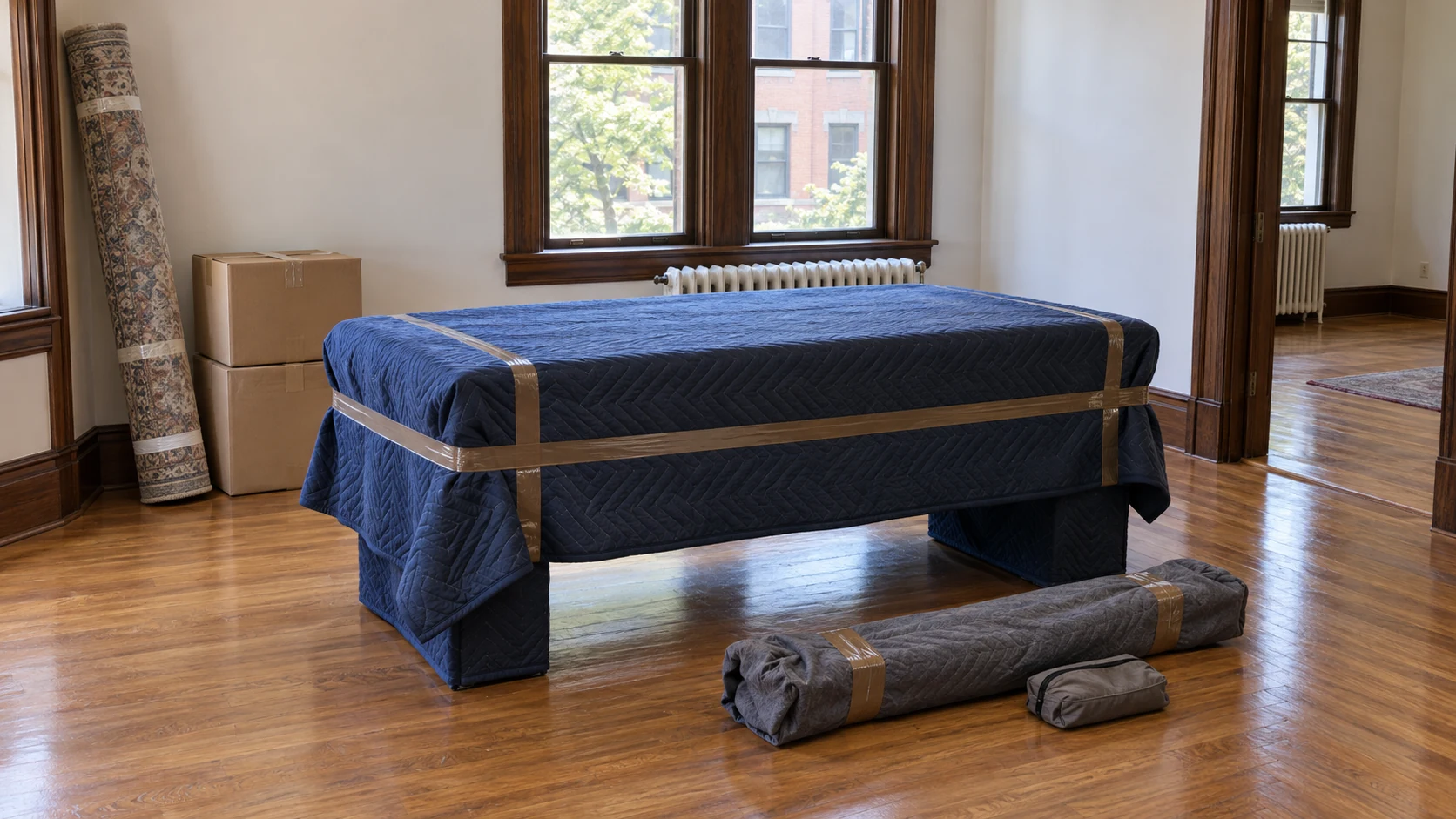
This illustration shows a static preparation state in a room. It does not show a completed truckload or establish the order of work by itself. The work plan identifies what is protected, which parts are safely removable, where the hardware stays and which pieces need assembly at delivery. Mark the destination rooms so associated parts arrive at the same working position as their furniture.
The reference to Lancaster is about 276 road miles. The illustrative direct range is 1–2 days after pickup and loading are complete; the nearby domestic consolidated example is up to 30 days. A household needing the whole inventory promptly after arrival may prefer to discuss direct service. A smaller selected group with flexible receiving may warrant consolidated review. Neither choice follows solely from the city name or the fact that the route is shorter than the other examples.
At Lancaster, confirm the specific property's entry, stairs, truck space and key handover. If a family member receives while the household is travelling, give that person the inventory, room-placement instructions and authority to provide access. Verify they can be present within the agreed arrangement and can contact the household if a room is unavailable. The receiving work can then include placing the protected pieces, basic reassembly and removal of their furniture protection.
Finally, separate the last-day apartment tasks from loading. Keep travel bags, cleaning items needed after the shipment leaves, keys and documents outside the shipment. Arrange lawful removal of furniture you are leaving behind. Confirm the landlord's handover procedure and inspect the empty storage spaces before returning the key. A clear inventory and two usable routes make the short interstate plan more useful than a date selected without those details.
Example 2: Hartford house to Naples, Florida
Consider a household departing an older Hartford house for a Naples-area residence. Here the main preparation is a complete room-by-room inventory: upstairs bedrooms, basement shelving, garage contents, dining furniture, fragile kitchenware and outdoor items that are actually going. Identify any pieces staying with the house sale. Measure the large items against stair landings and low basement turns, and show the driveway or curb position rather than assuming that a residential address has room for the chosen truck.
A packing plan can separate books into suitable smaller cartons, fragile items into appropriate protected cartons, and lighter bulky contents into larger cartons. Wardrobes, customer totes and furniture each need their own review. Do not infer the shipment's volume from a few visible cartons or decide that loose contents will somehow fit around the furniture on loading day. Tell us what the household will pack and which rooms or fragile pieces need packing help.
If the shipment is substantial and direct service is selected, the load is a dense, supported mixture prepared for transport. Furniture protection, varied cartons and customer totes are arranged from the front of the vehicle, with stable finishing rows and restraints suited to the pieces. Safely detachable long furniture legs travel as protected associated parts. The real loading plan follows the reviewed inventory; a representative furniture-preparation photograph is not a promise that every household fills a particular truck.
The Naples road reference is about 1,403 miles. Its illustrative direct range is 3–4 days after completed pickup and loading, and the Florida consolidated example is up to 60 days. These choices have different receiving implications. For direct service, align the shorter reviewed journey with possession and the property window. For consolidated service, confirm who can receive within the written window and how the household will manage essentials while the shipment is travelling. Discuss separate storage if the property is unavailable.
Use the actual receiving municipality and property instructions. A postal or marketing description of “Naples” does not tell us the entrance, building rules or truck position. Ask the receiving contact about any gate, elevator, scheduled loading area or insurance requirements that apply there. Share that information before the vehicle plan is fixed. A certificate sent to a manager does not itself confirm a reserved elevator or access period; obtain the relevant confirmation and the contact for the day.
Keep the household's travel plan independent enough to handle a revised receiving arrangement. Carry first-night clothing, chargers, required documents and keys. If an access closure or weather change affects the plan, contact us and the property promptly, with a workable receiver or date alternative. For the same agreed shipment and service scope, travel or delivery taking longer does not increase the flat rate. Added inventory, a changed carrying route or newly requested packing, storage or handling requires a separate written scope agreement.
Example 3: Hartford condo to Ottawa, Ontario
Imagine a household leaving a Hartford condo for Ottawa with a selected furniture group, wardrobe contents, books and kitchen cartons. It is taking its travel essentials separately and has a receiving property available within an agreed window. This is an opportunity to discuss consolidated transport if the complete inventory and receiving flexibility suit it. The smaller-inventory example is not a minimum size; include everything going, along with any furniture parts, rather than treating a carton grouping as the whole shipment.
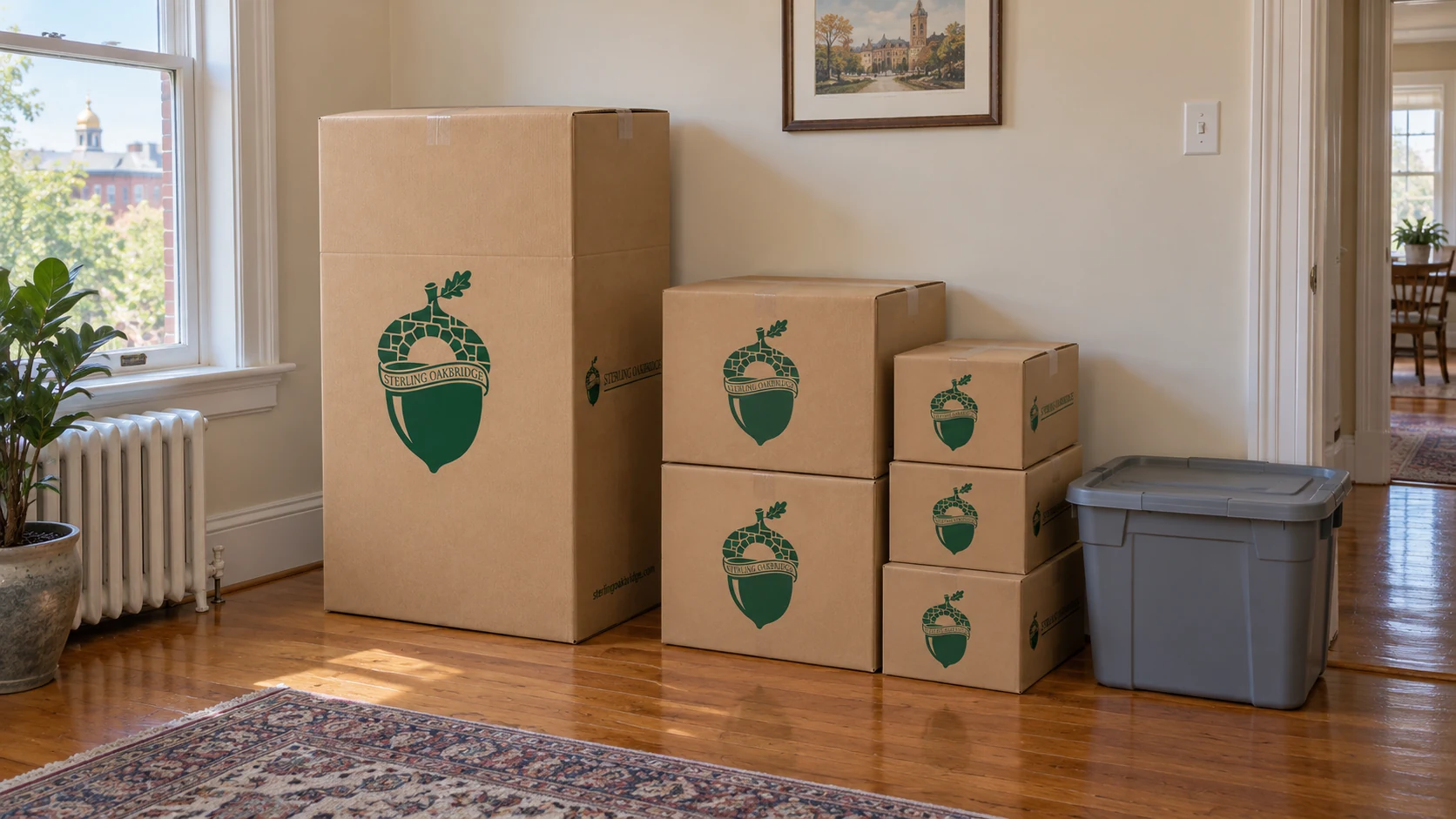
At the Hartford condo, obtain the actual moving instructions. Check whether a freight or service elevator needs booking, where cartons may be staged, how corridors must remain clear and whether the manager requires a COI. Confirm the period covers the intended packing and loading work. A building with an elevator still needs the entrance and truck approach assessed, including whether the selected vehicle can use its loading position and how far the crew carries between them.
If the departure relates to a campus, establish its real location. The University of Hartford describes a campus across Hartford, Bloomfield and West Hartford. Its West Hartford mailing address does not place every pickup in that town. Use the actual street address and municipality, then the relevant property or campus instructions. A lease date or university calendar does not establish Sterling's booking frequency or guarantee access to a residence on the desired day.
The Ottawa reference is about 389 road miles. The illustrative direct range is 1–2 days after completed pickup and loading. Consolidated Canada uses up to 60 days, despite Ottawa being closer than some domestic destinations. The cross-border household and shipment arrangements need review alongside transport. Choose the model after confirming what can travel, the household's entry circumstances and the receiver's availability; do not treat the short road reference as a border-clearance timetable.
Use the applicable CBSA moving or returning guidance for your circumstances. Review the required personal-effects inventory, goods travelling with the household and any goods to follow, and agree the customer's and carrier's roles before pickup. Keep required originals accessible rather than packed into the shipment. Entry status, eligibility, declarations and release belong to the actual circumstances and authorities; a moving estimate does not establish an exemption or a completed customs clearance.
Name a receiver who can open the Ottawa property, provide the agreed access and direct placement. Share the unit, entrance, truck position and any building requirements before the shipment leaves. If the household travels ahead, keep its travel documents, keys and essentials separate and confirm who responds if the receiving window changes. Include optional carton unpacking or removal in the request if it is wanted; those tasks are distinct from placing furniture, basic reassembly and removing its protection.
Keep household travel essentials out of the shipment
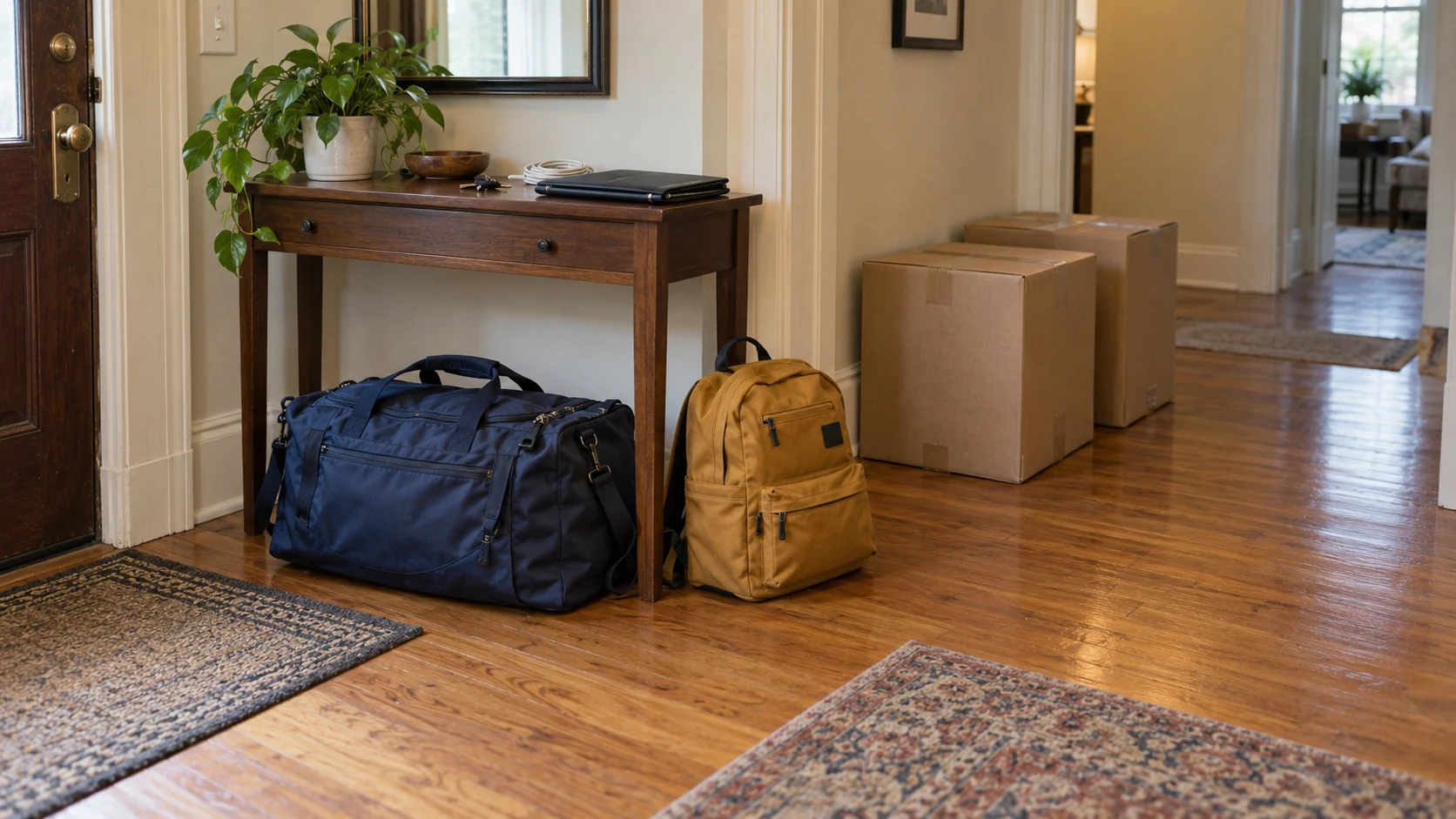
Set aside what the household needs between pickup and receiving: keys, travel and entry documents, chargers, clothing, necessary personal items and contact details. Keep the group in a place that will not be confused with cartons to load, and tell the crew what stays with you. If different household members are travelling separately, agree who holds the destination keys and papers. A helpful bag becomes unhelpful if the person who needs it has already left.
Keep copies of the inventory and receiving instructions available to the receiver. Give cartons useful room labels and identify associated furniture parts without exposing private information in public photographs. Record any inventory or access change while there is time to review its effect on the work. The household can then travel with an agreed receiving arrangement and the essentials needed while the furniture is in transit.
Example 4: Hartford to San Jose, California
Suppose a household is moving from Hartford to a San Jose condo and needs its home office, bedroom furniture, dining pieces and packed room contents delivered. Its departure and possession dates differ, and the receiver has a managed-property window to arrange. The longer journey makes those dependencies especially useful to settle before pickup: the selected inventory, packing readiness, keys, the actual access rules at both ends and any separate storage stage.
Start with the home-office pieces. Send the desk's construction and dimensions, any detachable legs, shelving and boxed contents. Disconnect personal electronics and keep account information and daily-use devices with the household as appropriate. If a desk requires complex assembly or specialist handling, ask for that review explicitly. Do not assume every item uses basic furniture assembly or that an installed appliance will be connected as part of placing it in the receiving home.
For the Hartford departure, the truck position and carrying route may govern which vehicle can be used or whether additional handling needs discussion. At San Jose, confirm the actual condo entrance, parking or loading position, elevator dimensions where relevant and building hours. Ask the manager for current requirements rather than applying a rule from a different property. Share any long corridor or stair section that remains after the elevator trip; an available elevator does not make the whole route level or short.
The road reference to San Jose is about 3,045 miles. Its illustrative direct range is 5–6 days after pickup and loading are complete; the California consolidated example is up to 90 days. Direct service provides the dedicated-truck and same-crew model. Consolidated transport has its own shared arrangement and written window. The household should compare those models against its actual receiver, possession date and interim living arrangements, rather than choosing from road distance alone.
If possession comes after the intended arrival, ask about moving and storage as a separate agreed stage. Confirm which goods enter storage, who can authorize later delivery, the later address and any work needed at that point. A travel delay and a new storage request are different scope questions. Keep any agreed change in writing so the furniture is handled and received under a clear plan, including optional unpacking or packaging removal.
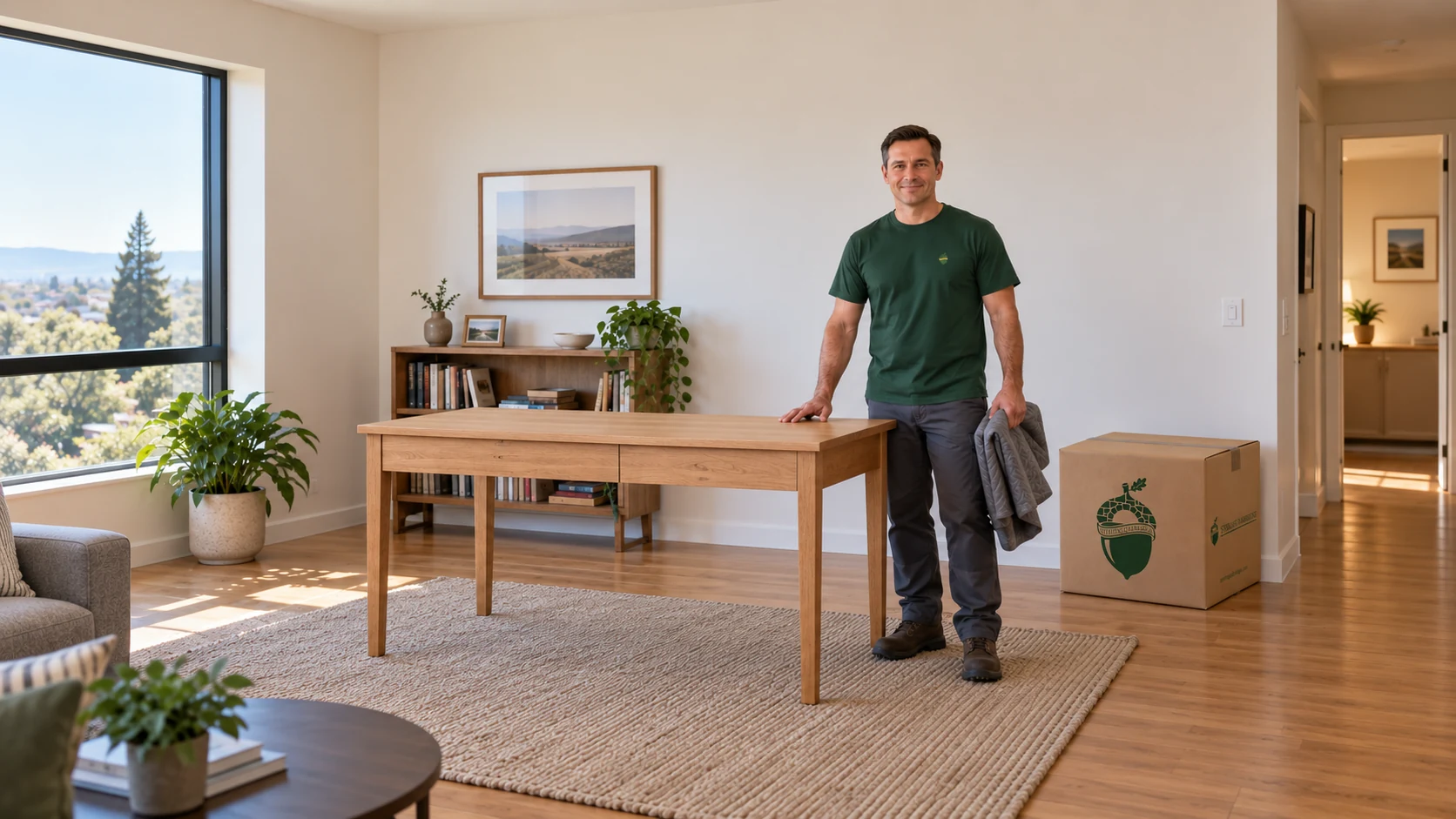
The receiving illustration is after basic reassembly and unwrapping. Installed bare legs are appropriate at that stage; it does not depict a long-legged desk being shipped intact. At the real delivery, identify the desk's working position before placement, keep its associated hardware available and confirm other room instructions. Furniture protection is removed with the delivery work. Carton unpacking is optional work charged for working time, while packaging or waste removal is charged separately. Agree the help required so the receiver knows which tasks are included.
Snow, unwanted items and a realistic backup
During a declared Hartford snow emergency parking ban, all on-street parking is prohibited citywide, including reserved spaces. Review a permissible alternative or a changed date promptly; a reservation does not override the ban. The City's snow and ice instructions call for abutting sidewalks, crosswalk entries and curb cuts to be cleared within six hours after completion of a snow or ice event, or before 9 a.m. for overnight snow. Assign clearing and treatment, then inspect the route before pickup. A lot offered for residents' cars during a ban does not establish a moving-truck loading position.
Arrange unwanted items before handing over the property. Hartford DPW requires confirmed bulky appointments; leaving a voicemail does not book a date. It limits each property to five items per collection, offers two free collections per calendar year and charges for additional collections. Set out only agreed items in the appointed period. Resident transfer-station permits have separate terms; confirm accepted items and vehicle eligibility before a self-haul trip. These municipal arrangements do not automatically include disposal in your moving scope.
Make the alternative specific: a person to unlock the receiving property, a date the building can offer, a permissible truck position, or a separately reviewed storage stage. Keep the contact details accessible. If conditions or access change, share the change while it can be planned. A general hope that another entrance or another receiver will be available is not enough to organize the crew, vehicle and belongings.
Agree the inventory, services and flat rate
The long-distance flat rate applies to the reviewed inventory, access and services. Travel or delivery taking longer does not change that price for the same scope. Added belongings, additional packing, a changed carrying route, extra handling or a new storage stage can change the work; agree the affected change separately in writing before it is performed. Road-reference ranges do not replace the written shipment arrangement.
Basic furniture disassembly and reassembly use the agreed moving work without a separate basic assembly fee. Blankets, shrink wrap and tape have no separate material charge. Boxes are charged separately, and complex furniture or specialist work is individually reviewed. Specify whether you want packing, optional carton unpacking or separate packaging removal. These choices allow the estimate and the receiver's expectations to match the actual work.
For an estimate, send both street addresses and units, the inventory, useful access photographs, firm dates and the receiving contact. Add written property instructions and confirmed arrangements as they become available. Explain what the household will do before pickup and which tasks it wants Sterling to handle. We can then review a direct or consolidated plan with useful timing, a suitable approach and a clear written scope.
Pickup addresses and local jurisdiction
We can review long-distance pickup in the City of Hartford and nearby Capitol Planning Region addresses. Confirm the actual municipality and property: West Hartford, Bloomfield, Windsor, East Hartford, Wethersfield and Newington are separate towns. The University of Hartford campus spans Hartford, Bloomfield and West Hartford; its mailing address does not determine every campus location. Send the exact street address, unit, entrance, inventory, truck position and dates.
Connecticut's current Census county equivalents use planning regions; Hartford is in the Capitol Planning Region. This is a geographic grouping, not a county permit office. The City of Hartford, neighboring towns and the actual property's management remain the places to confirm their respective access requirements. Use the municipality of the street address rather than a neighborhood label, postal description or campus name.
Explore long-distance destinations from Hartford
These destinations illustrate household shipments from Hartford, Connecticut. Sterling serves routes throughout the United States and Canada. The list does not measure booking frequency or establish an appointment. Review the actual inventory, municipal and property access rules, commercial truck approach and receiving availability.
Northeast
- Buffalo, New York
- Syracuse, New York
- Boston, Massachusetts
- Philadelphia, Pennsylvania
- Washington, DC
- Baltimore, Maryland
- New York City, New York
- Lancaster, Pennsylvania
Southeast and Florida
- Charlotte, North Carolina
- Raleigh, North Carolina
- Atlanta, Georgia
- Jacksonville, Florida
- Tampa, Florida
- Miami, Florida
- Charleston, South Carolina
- Naples, Florida
Midwest and Texas
- Chicago, Illinois
- Dallas, Texas
- Houston, Texas
- Austin, Texas
Mountain West and Southwest
- Denver, Colorado
- Phoenix, Arizona
- Las Vegas, Nevada
- Salt Lake City, Utah
- Santa Fe, New Mexico
West Coast
- San Jose, California
- San Francisco, California
- Portland, Oregon
- Seattle, Washington
Canada
- Toronto, Ontario
- Ottawa, Ontario
- Montreal, Quebec
- Vancouver, British Columbia
- Kingston, Ontario
Questions about a long-distance move from Hartford
Long-distance moving questions
Can a long-distance household move start in Hartford?
Yes. We can review pickup in Hartford and nearby Capitol Planning Region addresses for routes throughout the United States and Canada. Send the actual municipality, unit, inventory, dates, entrance and proposed truck position; neighboring towns have their own requirements.
Can a longer move remain within Connecticut?
Yes. A longer household move may stay within Connecticut, cross a state line or continue to Canada. The appropriate transport, access arrangements and written terms depend on the actual route and work.
What does direct service include?
Direct service uses a dedicated truck and the same moving crew at pickup and delivery. Review the loading date, transport plan, receiver and access window together. Any separate storage stage must also be agreed.
When is consolidated transport worth discussing?
Discuss it when a smaller shipment can use a shared transport arrangement and an agreed delivery window. About 300–400 cubic feet is a useful smaller-inventory illustration, not a minimum. Review the complete inventory and receiving flexibility before choosing.
When does the delivery window begin?
It begins after pickup and loading are complete. Packing or other preparation has its own schedule. The written delivery arrangement identifies the window and the receiving responsibilities.
What direct windows do the four examples illustrate?
After completed pickup and loading, the road references illustrate Lancaster 1–2 days, Naples 3–4 days, Ottawa 1–2 days and San Jose 5–6 days. They are planning ranges, not appointments. The actual commercial truck route, conditions and receiving access need review.
What consolidated windows apply to these examples?
The nearby domestic example uses up to 30 days; Florida and Canada use up to 60 days; California uses up to 90 days. Confirm the applicable written window for your shipment. Other distant destinations require their own agreed window.
Can a nearby shipment arrive the same or next day?
That can sometimes suit a small inventory, route and schedule. Confirm the actual arrangement before booking household travel or receiving access. A planning illustration alone does not create a same-day appointment.
How do I arrange Hartford curb space for a moving truck?
Use the Hartford Parking Authority reservation request and agree who handles it. Approval is discretionary; price depends on location, duration and spaces. Payment for an approved reservation is required at least three days in advance. A request alone does not reserve a usable position.
Does my residential parking permit reserve moving-truck space?
Residential and visitor permits are a separate HPA program for designated streets. Ask HPA what applies to the actual moving vehicle and position. Do not treat a household permit as a reservation for the truck, ramp and carrying route.
What happens if Hartford declares a snow parking ban?
During a declared ban, all on-street parking is prohibited citywide, including reserved spaces. Contact us promptly to review a permissible alternative or a changed date. Assign snow and ice clearing, and check the entrance and carrying route before pickup.
Can Sterling coordinate the reservation, COI and elevator?
We can coordinate truck-permit arrangements, certificates of insurance and elevator scheduling within the agreed scope. The authority or property provides approval. Confirm the actual position, access period and receiving contact; submitting a form or certificate alone does not confirm them.
Is University of Hartford entirely in West Hartford?
No. The official university description places its campus in Hartford, Bloomfield and West Hartford. Confirm the actual municipality and property instructions for the specific address; the mailing address does not determine the rules for every campus location.
Can the moving truck follow a car route along a Connecticut parkway?
Do not use a passenger-car route as truck clearance. CTDOT prohibits box trucks on the Merritt, Wilbur Cross and Milford parkways. Review a permissible commercial vehicle route and the final approach for the actual truck.
How should detachable table or desk legs be prepared?
Protect the top or body first, then remove safely detachable legs while protecting the piece and its joints. Keep the removed parts and hardware associated in a protected group. Integral supports require review of the actual furniture; normal installed bare legs are appropriate after completed reassembly and unwrapping.
Are basic assembly and protection materials included?
Basic furniture disassembly and reassembly use the agreed moving work without a separate basic assembly fee. Blankets, shrink wrap and tape have no separate material charge; boxes are separate. Complex furniture and specialist work are reviewed individually.
Can I leave unwanted furniture on the Hartford curb before pickup?
Arrange lawful disposal separately. DPW requires a confirmed bulky appointment; leaving a voicemail does not book a date. The limit is five items per property/collection. Resident transfer-station permits have separate terms, and do not establish commercial moving-truck eligibility.
Can the household travel to Canada ahead of the shipment?
Review the entry circumstances, inventory and customs roles before pickup. Keep required originals and travel essentials accessible to the household. Confirm who can receive the shipment, provide access and meet the agreed window.
Does a longer journey change the flat rate, and what about unpacking?
Travel or delivery taking longer does not change the agreed long-distance flat rate for the same scope. Added inventory, changed access or additional services need a separately agreed written change. Furniture protection is removed at delivery; carton unpacking is optional work charged for working time, and packaging or waste removal is charged separately.