
Connecticut · Norwalk service planning
Long Distance Movers in Norwalk, CT
Move from Norwalk to a new home in the United States or Canada with a plan for the shipment and the people receiving it. Sterling Oakbridge offers direct delivery with a dedicated truck and the same moving crew at pickup and drop-off, plus consolidated delivery for suitable smaller shipments with more flexible arrival dates. For a move quoted at a flat rate, the agreed shipment and service scope keep the same price.
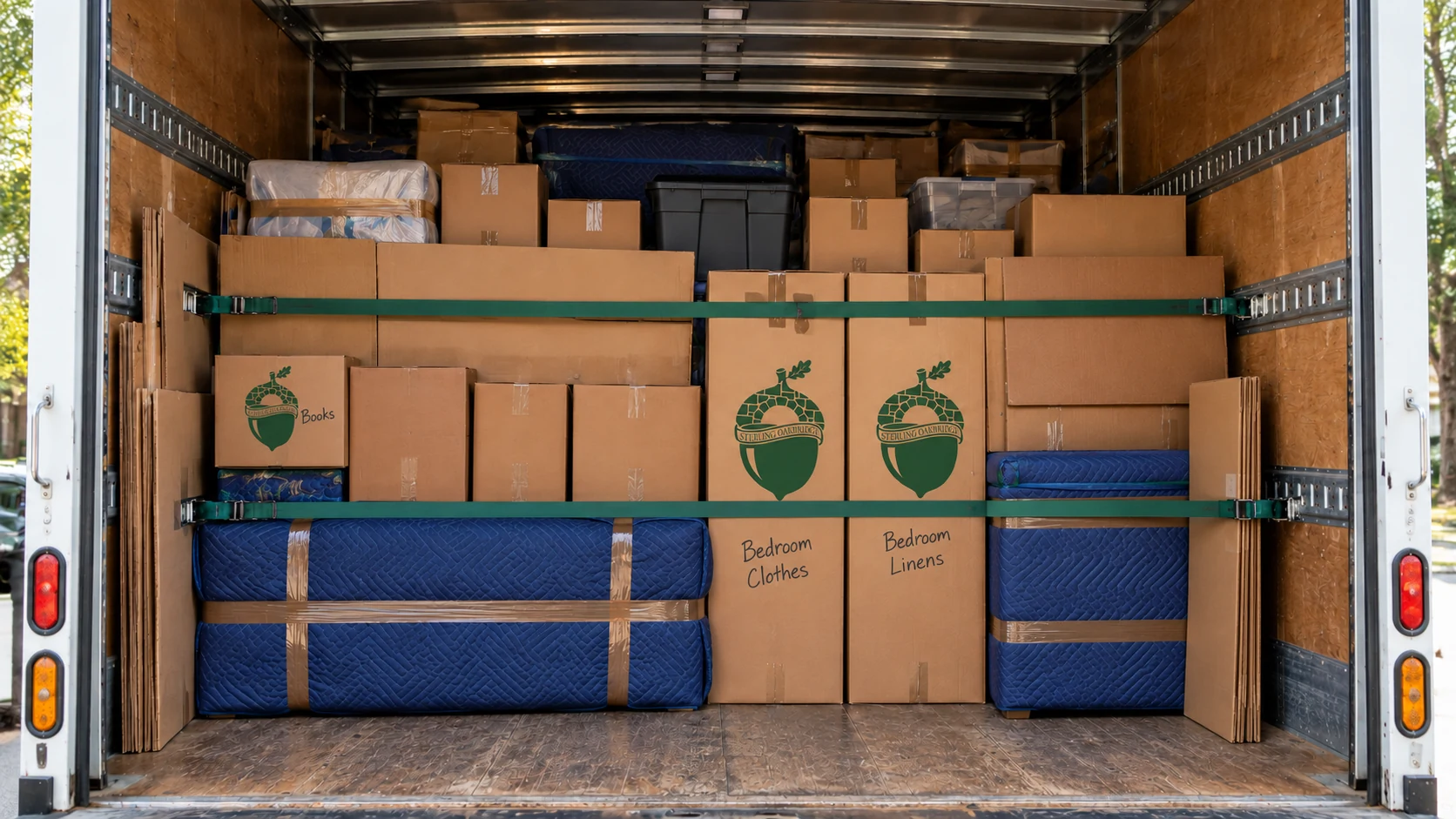
Match the delivery plan to the home you can actually receive
Start with both addresses, the belongings and the dates you can use each property. Include the work you want before loading and after unloading: selected-item or full packing, furniture preparation, storage between addresses and optional unpacking. Tell us which dates are fixed by a lease, closing or building appointment, and which you can change.
A long-distance move starts inside the Norwalk property, not at the highway. A shared elevator, a driveway the truck cannot use or a destination that is not ready can change the work even when the furniture list stays the same. Photographs of the complete carrying route help us review those constraints before choosing the delivery model.
Choose direct or consolidated delivery
Direct delivery gives the shipment a dedicated truck and the same moving crew at pickup and delivery. It is the starting point to compare when you want the household to arrive together or need to coordinate a restrictive receiving window. Have the actual unloading date and access arrangements recorded in the move plan; a dedicated truck does not make an unavailable elevator or unfinished closing usable.
Consolidated delivery combines suitable shipments within a wider agreed delivery window. It can be a useful comparison for a smaller collection of furniture and cartons when the recipient can wait and accommodate the delivery arrangements. The roughly 300–400 cubic-foot reference describes the kind of smaller shipment often considered; it is neither a minimum nor an automatic acceptance threshold. We review the actual items, route and schedule.
Choose by the whole household plan. A lower transport quote would not by itself settle the choice if waiting also requires accommodation, replacement essentials, storage or another receiving visit. Ask for the selected work and any separate charges in writing. Do not assume that consolidation includes free storage or the same crew at both ends.
Count delivery time after pickup and loading are complete
The delivery clock starts once pickup and loading have finished. It does not start when the crew arrives, when packing begins or when you leave Norwalk in your own car. Allow separately for the time needed to prepare and load the shipment.
Swipe the table to compare both delivery options.
| Illustrative destination | Direct planning window | Consolidated window |
|---|---|---|
| Buffalo, New York | 1–2 days | Up to 30 days |
| Raleigh, North Carolina | 1–2 days | Up to 30 days |
| Montreal, Quebec, Canada | 1–2 days | Up to 60 days |
| Los Angeles, California | 5–6 days | Up to 90 days |
These examples use city-reference driving routes to illustrate the policy windows. They are not appointments or checks that a particular moving truck can use that route. The actual addresses, vehicle restrictions, operating schedule, border arrangements and receiving access still need review. A one-to-two-day planning range does not establish same-day service or a particular hour of arrival.
For a suitable shorter domestic route, consolidation can have a window of up to 30 days. Florida and Canada use up to 60 days; California uses up to 90 days. Other distant destinations need an individually agreed window. Canada retains its Canada window even when its road journey is shorter than a domestic example. California's window does not automatically apply to every western state.

Prepare the Norwalk pickup from the truck position to the room
SoNo, East Norwalk, Rowayton and the city's other areas locate the address; they do not determine its entrance or truck access. For an apartment, show the loading entrance, hall turns, each elevator and the route into the unit. For a house, include the driveway entrance and surface, slope, overhead obstructions, stairs and distance to the door. Identify shared or private access and the person who can authorize its use.
Norwalk's DPW permit process covers proposed use or blockage of public space. Send the address, dates, hours and loading footprint to DPW Permits at 203-854-4161 or DPWPermits@norwalkct.gov. The September 2026 application distinguishes lane, sidewalk and parking-space closures. Have DPW identify the approvals, documents and charges for the actual operation. A paid parking space, a building booking or your own cones does not grant exclusive use of the street.
Norwalk Code Chapter 96 also keeps parking approval separate from an encroachment permit. Its limited exception concerns goods placed outside the traveled way for no more than one hour, with safe activity, the least public inconvenience and at least half the sidewalk’s usable width left open. It is not permission to park the moving truck or block the sidewalk. Keep the pedestrian route usable and settle the proposed truck position before dispatch.
Under § 98-26, commercial vehicles with more than 1¼-ton rated capacity have a four-hour parking maximum on public streets, highways and other public places. Shorter posted limits still apply. The section also prohibits parking two or more commercial vehicles or commercial trucks at once in a residential district or on an adjacent street. A larger shipment needs a lawful vehicle and loading plan; simply sending another truck does not resolve those restrictions. Ask the authorities to review an operation that cannot fit the proposed position or period.
The highway approach needs its own check. CTDOT prohibits box trucks and rental trucks on the Merritt and other Connecticut parkways. A passenger-car route is unsuitable for dispatching the moving vehicle. Review the lawful truck route, clearances and final approach to both properties.
Inside a managed building, obtain the moving instructions, COI requirements, elevator availability, carrying hours and management contact. Confirm who opens each door and whether the elevator is reserved or shared. A certificate documents insurance; it does not by itself approve access or expand the policy. Materials and permitted preparation can be arranged before a short carrying window when the property allows it.
Four examples: let the constraint choose the plan
The following situations are hypothetical planning examples, not completed customer jobs. Each changes the decision: fitting two building windows, receiving a small shipment, traveling separately across the border or making a distant home ready for a whole household.
Example: Buffalo, New York — loading and receiving have different windows
Suppose a household is leaving a SoNo apartment with a shared elevator, while the Buffalo building offers a receiving appointment on a later day. Direct delivery is the first model to compare if the household needs to arrive together. The useful decision is whether pickup, travel and the receiving appointment can form one workable plan—not whether the road distance looks short enough for a same-day move.
Send both buildings' instructions and the complete inventory before selecting the pickup period. If permitted, packing and appropriate furniture preparation can happen before the carrying window. Loading then uses the agreed entrance and elevator arrangements. The delivery period begins after that loading is complete, so a late finish must not be treated as hours already spent in transit.
Have the recipient confirm the Buffalo appointment, keys and truck position before the plan is fixed. If the building cannot receive on the proposed day, compare a changed pickup schedule with accepted storage and later delivery, including the additional handling and charges. A contact number for a storage facility is not a confirmed alternative. The illustrative direct window is one to two days; it is not a reservation for this example.
Example: Raleigh, North Carolina — send selected pieces to a furnished home
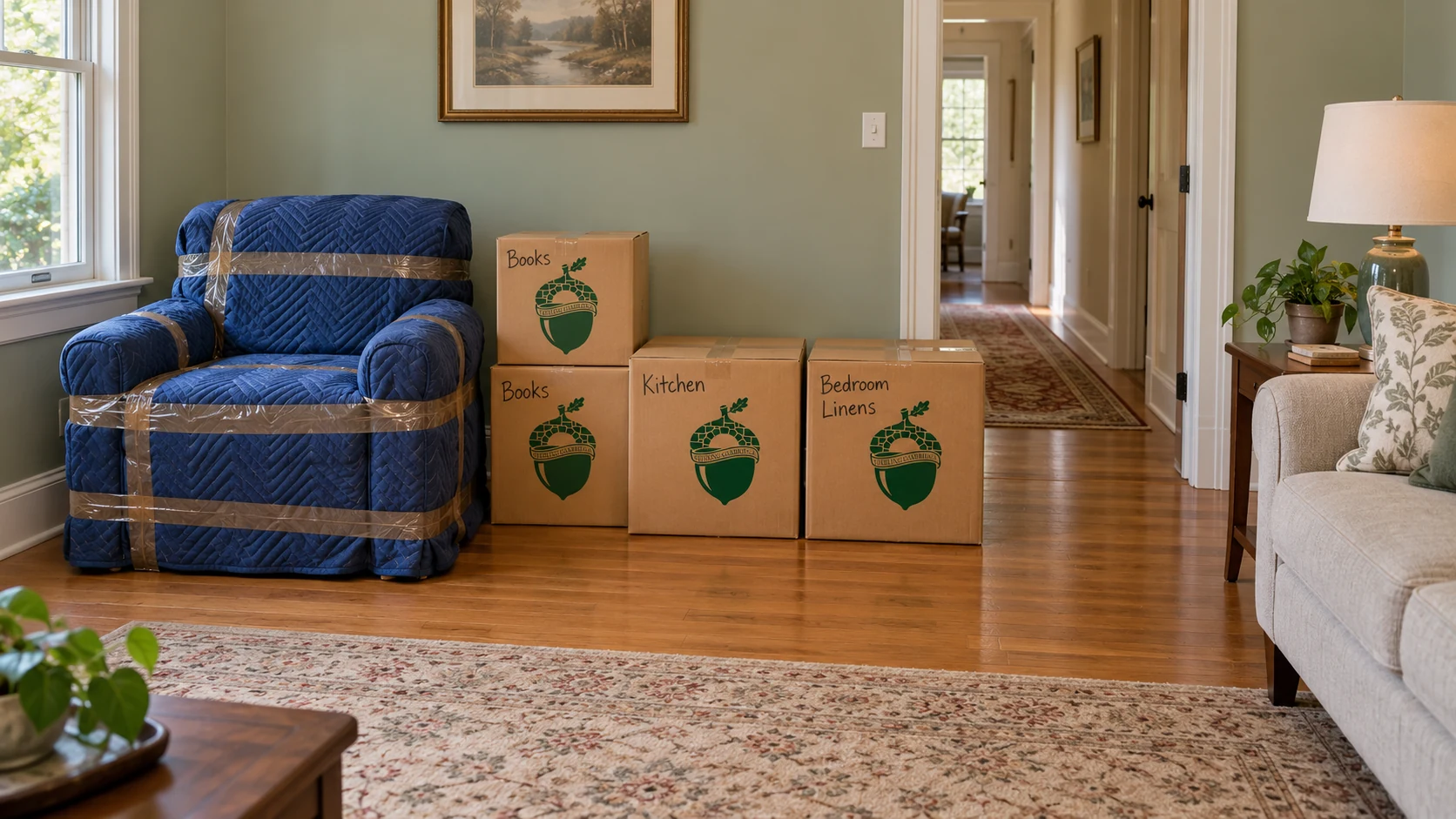
A person moving into an already furnished Raleigh home might send a desk, an armchair, books and selected kitchen cartons while carrying first-week essentials separately. This is a useful situation for comparing consolidated delivery, provided the actual shipment is suitable and the recipient can accommodate the agreed window. It does not mean every small shipment will be accepted or cost less overall.
Write down what will travel, including detachable furniture parts and anything in a garage or storage area. Establish whether the Raleigh recipient can accept delivery while the owner is at work, who has authority to sign and where each item should go. If a building appointment is needed, arrange a workable notification and receiving process instead of assuming an open-ended elevator reservation.
For this city-reference route, the illustrative consolidated window is up to 30 days. Raleigh is in North Carolina; it does not inherit the Florida maximum just because both destinations are south of Norwalk. Compare direct delivery when the receiving date cannot remain flexible, and include accommodation, storage and receiving visits in the comparison.
Example: Montreal, Quebec — the owner arrives before the furniture
Suppose a household travels to Montreal before its moving shipment. Arrange the personal entry and the goods shipment as separate parts of the same plan. Direct delivery can be compared for a coordinated household arrival; consolidation requires a wider receiving window, up to 60 days for Canada. A relatively short road journey does not remove the border or receiving steps.
For the settling or returning statuses covered by CBSA's personal-effects guidance, prepare two inventory copies separating accompanying goods from goods to follow, with values and identifying details where applicable. Give the list to the officer at the first entry even if the furniture is arriving later, and keep the completed BSF186 receipt for the later shipment. Eligibility and restricted goods remain separate questions; a moving quote does not establish duty-free treatment.
Before the truck is committed, identify the shipment documents, the person responsible for completing the import arrangements and the recipient at the Montreal property. Check the receiving entrance, elevator period and lawful truck position. If entry, clearance or possession is not ready, the planning team and authorized customer contact must agree a workable next step and any accepted holding or storage costs. Do not send the household on the assumption that paperwork or keys will catch up.
Example: Los Angeles, California — prepare the receiving home before the household arrives
A household leaving a Norwalk house for Los Angeles may want its beds, dining furniture and everyday contents delivered together. Direct delivery with a dedicated truck is the first model to compare for that plan. The city-reference direct range is five to six days after loading; the actual schedule still depends on the agreed order and receiving arrangements.
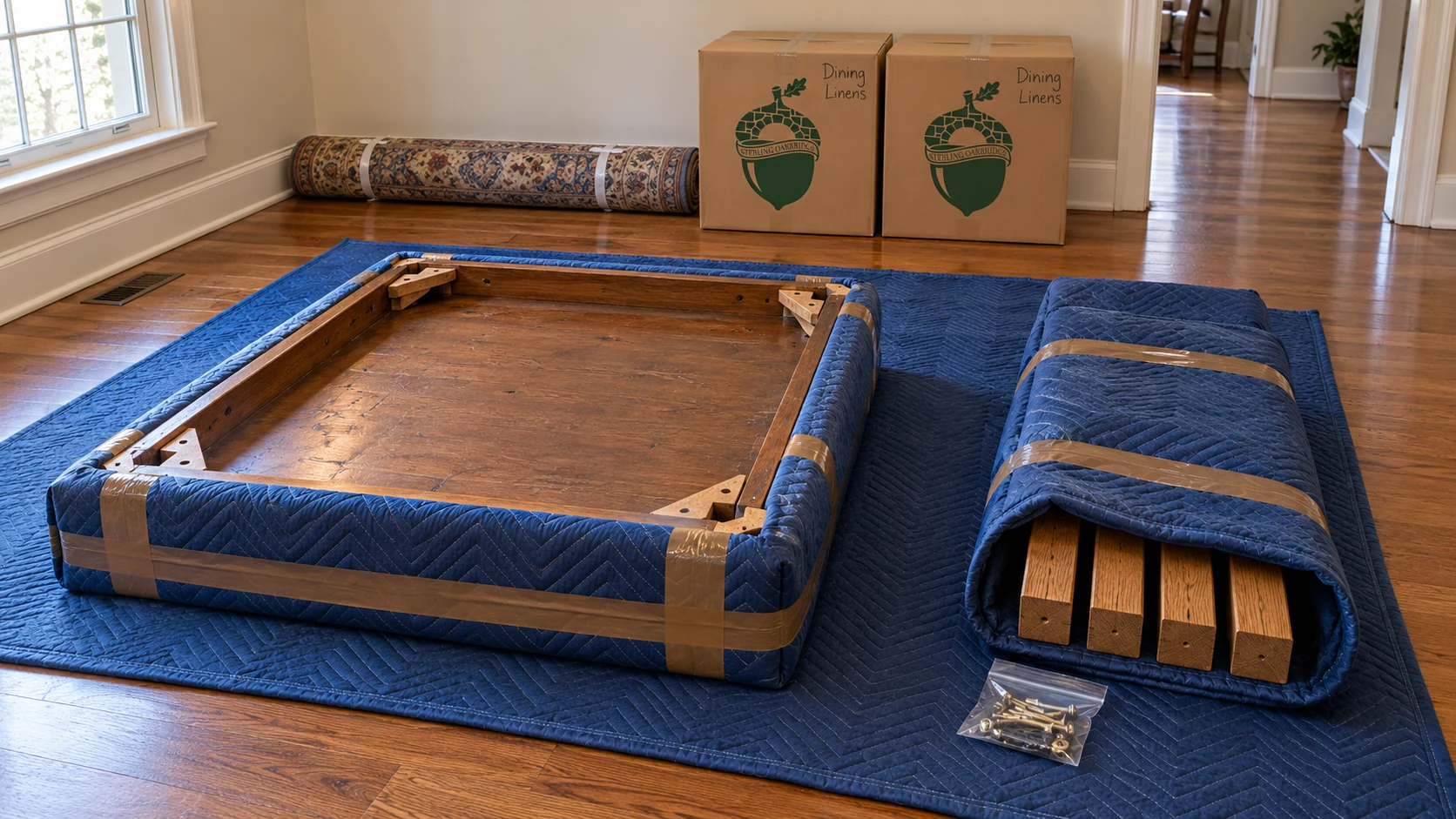
Before packing, decide which belongings must stay with the family during the journey. Medication, identification, essential work equipment, chargers and a first-night change of clothes should not be inaccessible in the household shipment. Tell the planning team about furniture that must be dismantled and the room where it will be reassembled. Basic furniture work and specialist disassembly have different scopes; a complex wardrobe or sofa should be identified before loading.
At the Los Angeles end, confirm possession and an authorized recipient before committing to unloading. A room plan and labels let the crew place the shipment without using the hall as a temporary store. If the household chooses a suitable consolidated shipment instead, California's window can be up to 90 days. Plan the wait and receiving arrangements explicitly; that option is not interchangeable with a fixed first-night arrival.
Keep the written price tied to the work
For agreed flat-rate long-distance work, a longer journey or traffic does not increase the price for the same agreed shipment and service scope. Added furniture, omitted cartons, extra packing, changed entrances or a different delivery arrangement can change the work. Resolve known changes before loading and record the agreed scope and price. For interstate household moves, 49 CFR § 375.401 permits mutually agreed estimate amendments before loading, not afterward. If additional work arises later, review its applicable terms and documentation; do not treat that as permission to rewrite the original estimate.
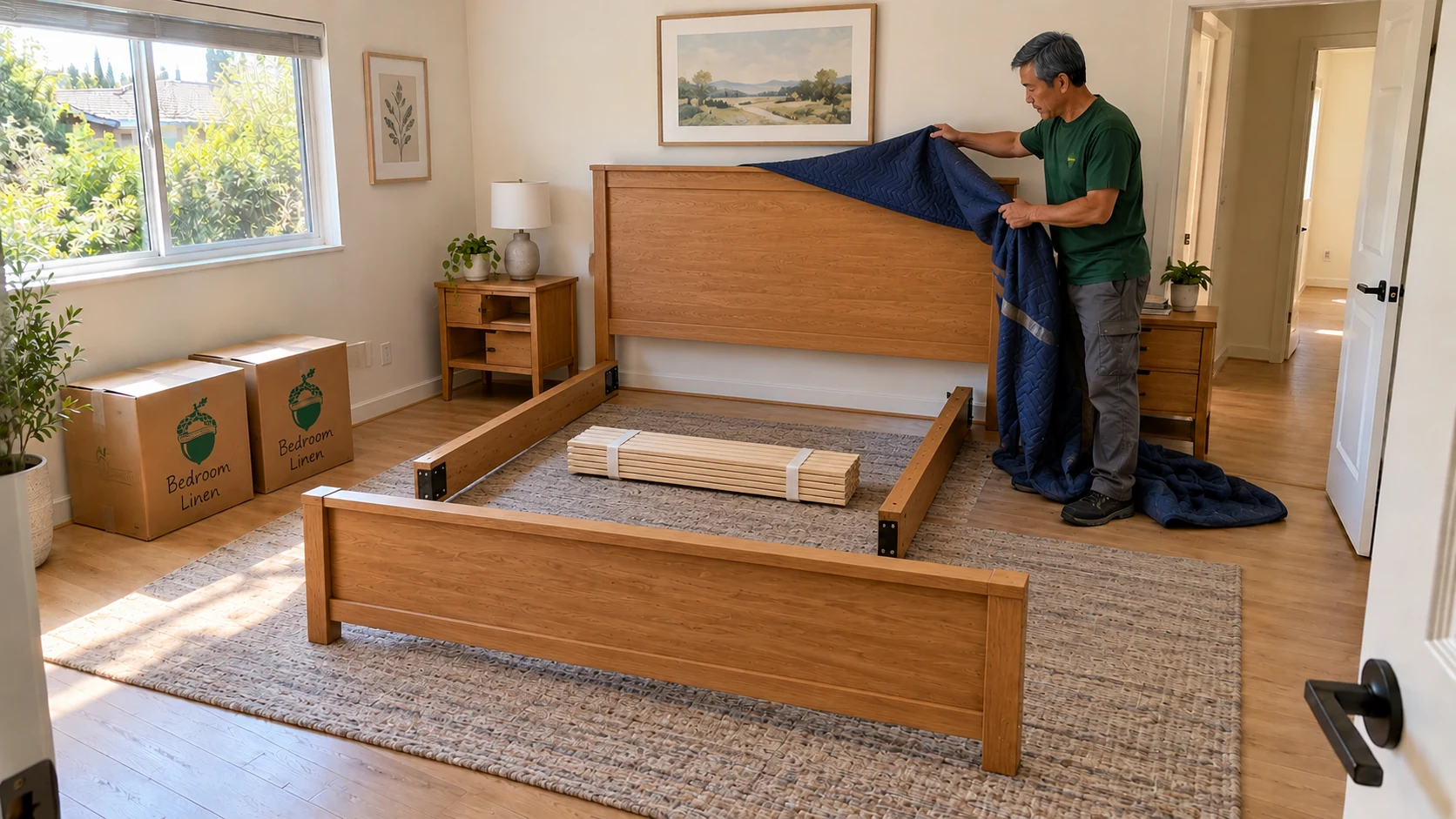
Separate labor, materials and optional services. Basic furniture disassembly and reassembly use moving labor time without a separate basic assembly fee. Moving blankets, shrink wrap and tape have no separate material charge; supplied boxes are charged separately. Packing and optional box unpacking are charged for working time. Furniture unwrapping is part of delivery, while packaging and waste removal are separate work. Ask for storage, redelivery and specialist items to be included when needed.
FMCSA's estimate guidance distinguishes binding and non-binding estimates for interstate household moves. An item list starts the review; it is not the written estimate. The current federal rule requires a survey unless the shipper makes a proper separate written survey waiver before loading. Retain the waiver with the bill of lading; it does not waive the written estimate. A survey may be on site or by live or prerecorded video that clearly identifies the goods, as § 375.103 explains. Check the survey or waiver and the written estimate before loading. A long move wholly within Connecticut is still intrastate and needs its applicable Connecticut terms; CTDOT's household-mover guidance is the starting point for checking the actual carrier and certificate.
Select protection before moving day. For an interstate household move, Full Value Protection applies unless you select Released Value through the required written waiver. Released Value limits liability to 60 cents per pound per article rather than replacement cost. Valuation is the mover's liability arrangement, distinct from a separate insurance policy. Identify high-value items in advance and review the written limits, cost and claims procedure in the FMCSA explanation and your moving documents.
Decide what happens if possession or access is delayed
If keys, customs readiness, an elevator or a legal truck position is uncertain, set a decision deadline before departure and before alternatives expire. The authorized customer contact, property access controller and planning team should confirm an available later window, another authorized receiving method or storage and later delivery. Before relying on storage, confirm a facility that can accept the load: capacity, receiving hours, protection, handling, price, payer and the retrieval or onward-delivery date. If no destination can receive the goods, revise departure instead of sending the truck to an unavailable address.
Keep the household's own accommodation and travel plans separate from the furniture's location. A truck hold, warehouse storage and a subsequent delivery involve different arrangements; none should be treated as free waiting or a standing daily storage rate. Name the person who can approve a change and notify the recipient. Resume the agreed delivery only when the receiving address, access and carrying period are usable.
Receive the shipment against the inventory and room plan
The customer or authorized recipient should have the property open, the agreed truck position available and the route clear. Provide room labels, furniture placement instructions and the inventory. Include the parts and hardware needed for assembly, and distinguish items that remain packed from those the crew is to unwrap, reassemble or unpack.
Check the delivered items and record visible concerns through the delivery paperwork and agreed claims process. Keep copies of the moving documents and the contact details for follow-up. Do not sign a blanket release without understanding its wording. Optional box unpacking and packaging removal need their own agreed scope; the end of unloading does not automatically include organizing a whole home.
Pickup area and destination examples
We arrange long-distance household pickups from Norwalk, Connecticut. Send the actual property address, unit, inventory and dates so the carrying route, truck position and selected work can be reviewed. Other collection addresses require their own access and schedule review.
Explore long-distance destinations from Norwalk
These are destination examples within our United States and Canada coverage, not claims about route popularity or completed jobs. Agree the actual addresses, shipment, lawful truck access and receiving dates before booking.
Northeast
- Buffalo, New York
- Albany, New York
- Boston, Massachusetts
- Philadelphia, Pennsylvania
- Baltimore, Maryland
Southeast and Florida
- Raleigh, North Carolina
- Richmond, Virginia
- Charlotte, North Carolina
- Tampa, Florida
- Orlando, Florida
Midwest and Texas
- Chicago, Illinois
- Cleveland, Ohio
- Dallas, Texas
Mountain West and Southwest
- Denver, Colorado
- Phoenix, Arizona
- Salt Lake City, Utah
West Coast
- Los Angeles, California
- Seattle, Washington
- Portland, Oregon
- Sacramento, California
Canada
- Montreal, Quebec
- Quebec City, Quebec
- London, Ontario
- Ottawa, Ontario
- Toronto, Ontario
- Vancouver, British Columbia
Long-distance moving questions
Do you provide long-distance moving from Norwalk, CT?
Yes. Sterling Oakbridge arranges household moves from Norwalk to destinations in the United States and Canada. The plan can include packing, transport, delivery and selected receiving help. Send the actual addresses, inventory and dates so access, the delivery model and the work can be reviewed; a nearby pickup address needs its own review.
How should I choose between direct and consolidated delivery?
Start with direct delivery when the household needs to arrive together or receiving dates are restrictive. It uses a dedicated truck and the same moving crew at pickup and delivery. Compare consolidation for a suitable smaller shipment when the recipient can accommodate a wider window. Include any waiting, storage, accommodation and receiving costs in the comparison; no particular saving is guaranteed.
Does the same crew deliver a consolidated shipment?
The same-crew arrangement applies to direct delivery. Consolidated delivery has its own agreed delivery arrangements and wider window; do not assume it includes the pickup crew. Have the receiving contact, notification method and selected services recorded for the model you book.
Is 300–400 cubic feet a minimum shipment size?
No. Roughly 300–400 cubic feet is a reference for smaller shipments considered for consolidation, not a minimum or an automatic cutoff. Suitability depends on the actual pieces, route and schedule. Send an item list and photographs rather than exclude a small shipment or assume a larger one qualifies.
When does the delivery window start?
After pickup and loading are complete. Packing time, access delays and the loading itself come before that clock starts. A one-to-two-day planning range is not a promise of same-day service or a particular arrival hour; agree the actual delivery window and receiving arrangements in writing.
Can a Norwalk-to-Buffalo shipment arrive the same day?
A same-day arrival is not established by the road distance or this page. The city-reference direct planning range is one to two days after loading. Use the actual pickup finish, truck route and receiving appointment to agree the schedule. If a building cannot receive then, compare a different pickup period with accepted storage and later delivery.
Does a move to Raleigh use the Florida delivery window?
No. Raleigh is in North Carolina. For the reference route shown here, suitable consolidated delivery has a window of up to 30 days; Florida has a different maximum. The illustrative direct range is one to two days after loading. Your actual addresses and receiving conditions still need a reviewed appointment.
Why can consolidation to nearby Canada take up to 60 days?
Canada uses the Canada consolidated window of up to 60 days even when the road journey is relatively short. It is a shipment-delivery window, not an estimate of hours at the border. Customs readiness and access remain separate requirements. Compare direct delivery if the wider window does not fit your household, and agree the actual schedule.
Is every western consolidated move allowed 90 days?
No. The up-to-90-day window applies to California. Other distant destinations need their own agreed window unless another published policy category applies. Los Angeles is the California example here; do not transfer its window to Seattle, Phoenix or another western destination merely because it is far away.
Does the flat rate increase when traffic makes the journey longer?
For agreed flat-rate long-distance work, the same agreed shipment and service scope keep the same price even if the journey takes longer. Added items, packing or changed access can change the work. Resolve known changes before loading; the interstate estimate cannot be amended after the shipment is loaded. Later additional work needs review under the applicable terms, rather than an informal rewrite of that estimate.
What changes should I report before loading?
Report additions to the inventory, unfinished packing, a different entrance or floor, an unavailable elevator, a changed truck position and revised dates before loading. These can alter the work even if the main furniture is unchanged. Agree any estimate amendment before loading. If a new problem arises later, have the planning team identify the applicable additional work, terms and documentation; do not assume the original estimate can be rewritten.
Do I need a Norwalk permit or a parking reservation?
Public-space use and truck parking are separate approvals. Start with Norwalk DPW Permits at 203-854-4161 or DPWPermits@norwalkct.gov, giving the address, dates, hours and loading footprint. DPW identifies what the proposed operation requires; parking-space arrangements may involve the Parking Authority. A building reservation, parking payment or your own cones does not authorize a street or sidewalk blockage.
Can a large commercial moving truck park all day in Norwalk?
Not under the general street rule. Norwalk Code § 98-26 gives commercial vehicles with more than 1¼-ton rated capacity a four-hour maximum on public streets, highways and other public places; posted shorter limits still apply. It also prohibits parking two or more commercial vehicles or trucks together in a residential district or on an adjacent street. Resolve a lawful loading plan with the authorities before dispatch.
Can the moving truck use the Merritt Parkway?
Box trucks and rental trucks are prohibited on the Merritt and other Connecticut parkways under CTDOT guidance. A car-navigation route therefore cannot be used as the truck plan. Review a lawful route, vehicle dimensions, clearances and the final property approach. The reference routes behind this page are not truck-route certifications.
What if the elevator reservation is short or shared?
Arrange permitted packing and preparation before the carrying window where useful, and plan loading around the actual elevator access. Show every elevator and connection between the truck and unit, and identify who opens the doors. If the period cannot support the agreed shipment, revise the carrying schedule or another accepted arrangement before dispatch; a reservation does not guarantee the whole move fits.
What should travel with me rather than in the moving truck?
Keep identification, medication, travel documents, essential chargers, first-night clothes and the equipment you need during the wait with you. Choose these before cartons are sealed or loaded. For consolidated delivery, plan for the agreed wider window rather than assume the household goods will be available when you arrive.
Are packing materials and unpacking included?
Basic moving blankets, shrink wrap and tape have no separate material charge; supplied boxes are charged separately. Packing and optional box unpacking are charged for working time. Furniture is unwrapped as part of delivery. Packaging and waste removal are separate work. Include the tasks you want in the written scope rather than assume unloading includes every settling-in service.
Can you dismantle furniture and assemble it at delivery?
Basic furniture disassembly and reassembly use moving labor time without a separate basic assembly fee. Complex wardrobes, specialist sofa work, pianos and other special items need individual review and quotation. Send photographs, dimensions and access details early, and identify where each item should be placed and which parts must remain together.
What paperwork should I prepare when moving or returning to Canada?
For the statuses covered by CBSA personal-effects guidance, prepare two inventory copies with accompanying goods separated from goods to follow, including values and identifying details where applicable. Present the list at your first entry even if the shipment comes later, and retain the completed BSF186 receipt. Eligibility and restricted imports still matter; the moving price does not establish duty-free entry.
What happens if keys or receiving access are delayed?
By the agreed decision deadline, contact the authorized property contact and planning team. Confirm an available later window, another permitted receiving method or storage with a facility that can accept the load. Confirm capacity, hours, protection, handling, price, payer and onward-delivery date. Arrange household accommodation and essentials separately. If no destination can receive the goods, revise departure; resume when possession, the authorized receiver and the complete carrying route are ready, with changed work and charges agreed in writing.
Can you include storage between the two homes?
Yes, storage can be part of the plan when the dates do not line up. It needs accepted space, dates, handling, receiving arrangements and charges. A truck hold, warehouse storage and later delivery are different arrangements; none is automatically free or a universal daily rate. Keep travel essentials outside the stored shipment.
Who needs to be at the destination?
The customer or an authorized recipient should have keys, access instructions, the inventory and authority to direct placement and sign the required documents. Confirm how the recipient will be notified and arrange any building appointment. Room labels and a furniture plan help distinguish unloading from agreed assembly, unwrapping and optional unpacking.
Does the move include full insurance for every item?
Do not assume unlimited insurance. For interstate household moves, Full Value Protection applies unless you select Released Value through the required written choice. Released Value limits liability to 60 cents per pound per article rather than replacement cost. Valuation is the mover’s liability arrangement, distinct from separate insurance or a building certificate. Disclose high-value items and review the selected cost, deductible, limits and claims process before loading.
How do I start an estimate if I do not know every detail yet?
Send both addresses, an item list, photographs, dates and the access instructions you have; identify unresolved possession, permits or border documents. An item list starts the review and is not the written estimate. For interstate household moves, complete an onsite or clear live or prerecorded video survey unless you make a proper separate written survey waiver before loading. Retain the waiver with the bill of lading; it does not waive the estimate. Confirm the delivery model, written estimate and selected work before loading.