

Kentucky / City relocation guide

Moving to Dayton

Dayton is a small river city of about 5,700 in Campbell County, across the Ohio from Cincinnati: a walkable grid of older houses, a weekly Rumpke cart system, the TANK bus to Cincinnati, its own small school district, and a city that licenses rentals. This guide helps you compare its areas, set up the practical basics and prepare the move itself.

Two complete brick storefronts marked Cafe and Books, with a bus-stop pole and a clear sidewalk
Check the actual shops, stops and journeys you will use after arrival. Representative illustration.

01 /

Start with the decision in front of you

Three reading routes through this guide, depending on where you stand. If you are still choosing an address, read orientation, the area comparison and housing first — the city's real differences are doubles versus singles, the avenue blocks versus the quieter grid, and the bus stop versus the drive. If you have children, go next to schools — two schools on one small district. If you already hold keys or a lease date, go to arrival and work backwards: utilities, the cart setup, and the truck plan.

When the address is settled and the move itself needs planning — dates, inventory, access and the estimate — the Dayton moving page is the working document.

02 /

Understand Dayton before comparing addresses

Dayton is an incorporated city in Campbell County, on the Ohio River between Bellevue and Fort Thomas, across from Cincinnati. The City of Dayton owns the procedures: the collection contract, the parking lots, the rental programs. The statistics describe a balanced, mobile river city: about 5,700 people, 57% owner-occupied, a median owner value of $163,500, and about 19% of residents moved within the last year (ACS 2024 5-year).

Daily life organizes around Sixth Avenue — the shops, the bus stop, the city lots — with the riverfront at the edge and Cincinnati across the bridges. The cart rhythm and the rental paperwork are the two things a newcomer meets first.

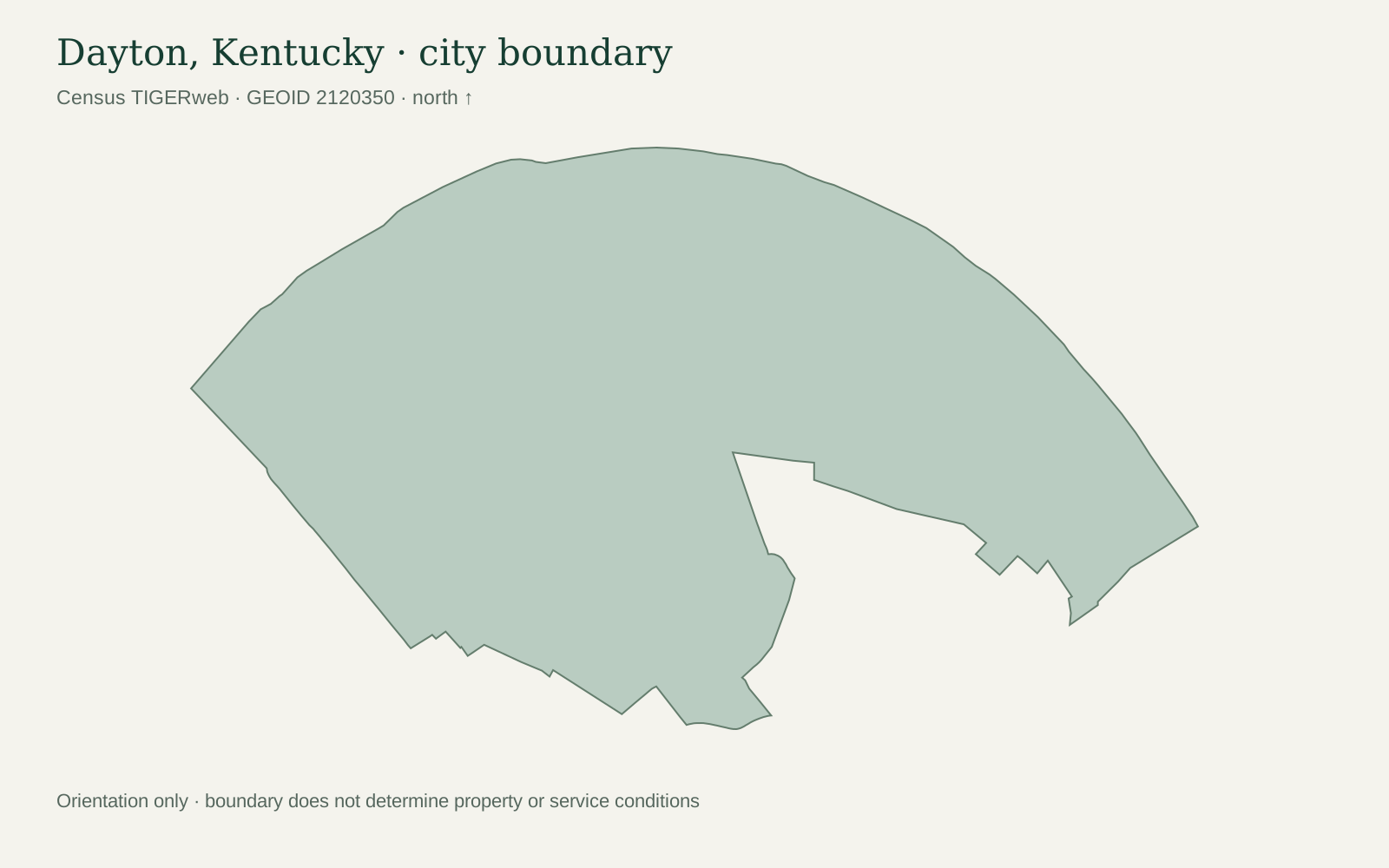
Map of the Dayton, Kentucky city boundary
Census TIGERweb incorporated-place geometry for orientation; municipal procedures belong to the City of Dayton. Not school assignments or approved truck routes. Open full-size map.

03 /

Find the area that fits your routine

The modules below are practical orientations, not residential neighborhood profiles: the avenue side, the school-side streets, the established grid, the cart layer and the rental layer. They are starting points for inspecting an address, not school zones or service boundaries.

Sixth Avenue & the riverfront side

The civic and errand core: Sixth Avenue's shops, the city's public parking lots, the TANK stop, and the riverfront at the edge.

Public Transportation and Parking (City of Dayton) ↗
Housing & setting
Compare the actual dwelling, entry and walking route rather than inferring housing type from proximity to the avenue.
Daily travel
TANK Route 12 connects the river cities and Cincinnati; drivers should test their actual bridge route.
Before choosing
Check the specific stop, direction, day schedule and last return trip on the current TANK route page.

The school-side streets

Lincoln Elementary (PK–6) and Dayton High (7–12) are the two city schools listed in the dated directory.

Dayton Independent Schools — directory (NCES CCD 2023-24) ↗
Housing & setting
A school location does not identify family concentration or guarantee assignment for a house.
Daily travel
Ask the district about the actual school and transport arrangements for the address and grade.
Before choosing
Contact Dayton Independent before arrival for current assignment, enrollment requirements and records transfer.

The established grid streets

Citywide housing context: about 57% of occupied households own; these statistics do not define a particular owner neighborhood.

Dayton city profile, ACS 2024 5-year (Census Reporter) ↗
Housing & setting
Older stock with basements; the stairs and doors decide the move's shape.
Daily travel
The bus or the bridge; the mean commute is about 22 minutes.
Before choosing
Count the basement into the inventory — and plan large items one per week, with 48 business hours' notice to Rumpke.

The cart-system layer

The disposal rhythm: the brown 95-gallon and green 65-gallon carts, out the night before your collection day; one large item per week by advance notice.

Garbage Pick-Up and Recycling (City of Dayton) ↗
Housing & setting
Not a residential area but a checklist: the carts and the weekly day that follow every address.
Daily travel
The curb in front of the address, the evening before collection.
Before choosing
Mattresses and upholstered pieces go out wrapped and sealed in plastic; bulky construction materials need confirmed disposal options. Check the city's separate tied-lumber allowance.

The rental-program layer

The city has landlord licensing and a rental safety inspection program; neither establishes an individual building's move rules.

Rental Inspection Program (City of Dayton) ↗
Housing & setting
About 43% of occupied households rent citywide; confirm the individual landlord's requirements.
Daily travel
Not a place but the paperwork to request before the date.
Before choosing
Ask about current license and inspection status, then separately agree the carrying route, move window and truck position.

04 /

Compare the whole property, not just the price

Dayton's housing statistics describe the city as a whole: older doubles and singles on the river-city grid, 69% single-unit, with a median owner-occupied value of $163,500 against a median household income of $66,000 (ACS 2024 5-year, via Census Reporter). The building's age and condition decide the move logistics as much as the price.

The due-diligence list follows the type. In purchases: the roof and systems' ages on older stock, the basement, and the utility accounts — providers are per-address here, so confirm water, sewer, electric and gas before closing (we could not verify the service-territory pages from primary sources for this guide, so we name none). In rentals: the city licenses landlords and runs a rental inspection program — ask about the property's current license and safety inspection, and separately request the landlord's move rules before the day.

Compact living room with a complete sofa and coffee table, stairs and two closed branded Book cartons by a wall
Compare the actual room, entry and stairs before arranging delivery and placement.

05 /

The bus or the bridge — test both

Dayton's commute is the river metro's: the mean travel time is about 22 minutes, and the city is one of the area's transit-served spots — TANK Route 12 connects Dayton, Bellevue, Newport and Cincinnati. Check the actual stop and direction, the weekday or weekend schedule, the last return trip and current service alerts. The city page's older general operating-hours description should not be used as a timetable. The bridges carry the drivers.

The practical test: ride or drive your real route at your real hours, in the season you will actually keep. If anyone works from home, verify internet service at the address before signing.

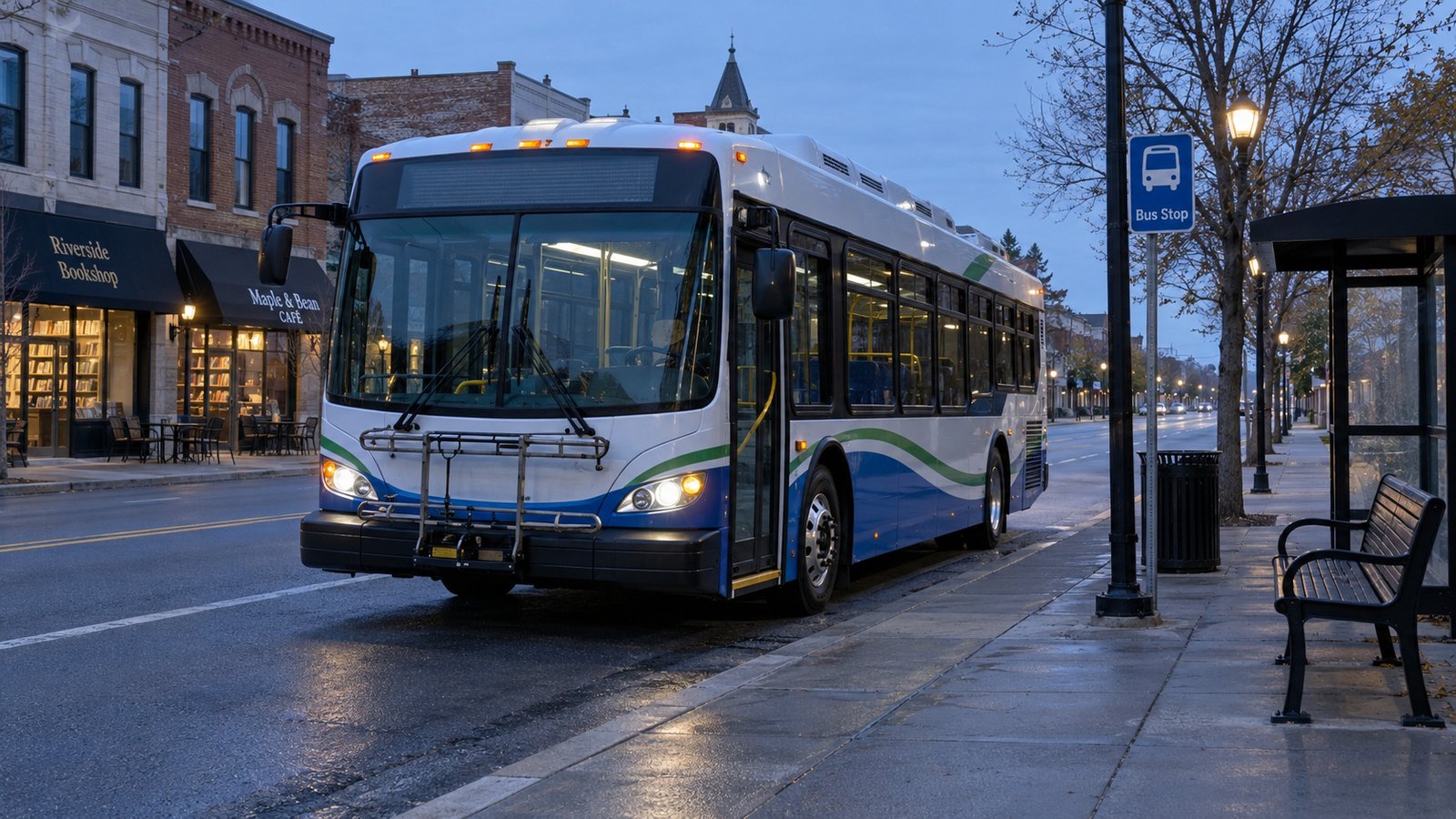
Complete transit bus stopped parallel to a curb beside a sidewalk and bus-stop sign in early morning
Use the current Route 12 schedule for your actual stop, direction and travel day. Representative bus scene.

06 /

Two schools on one small district

Dayton Independent Schools runs the city's schools, per the federal Common Core of Data (2023-24, via the CCD directory): Lincoln Elementary School (PK–6, 701 Fifth Avenue, about 500 students) and Dayton High School (7–12, 200 Greendevil Lane, about 370).

Before committing to an address, contact Dayton Independent Schools at (859) 491-6565 to confirm assignment, current enrollment requirements, records transfer and transportation for your child's grade. Start before a fall arrival or mid-year move; the dated directory is not a current enrollment packet.

07 /

Per-address providers, confirmed at setup

Utility providers in Dayton are a per-address check: we could not verify the water, sewer, electric or gas service-territory pages from primary sources for this guide, so we name none — confirm each provider for the actual address before closing, and ask the seller or landlord which accounts exist. The city's resident services page carries the city-side programs (stormwater assistance, sidewalk and parking-pad cost sharing).

Trash is the city's Rumpke contract — see waste.

08 /

The brown cart, the green cart, and the one large item

Since July 1, 2025, Dayton's collection runs through Rumpke: weekly trash and recycling on the same day (your day comes from the city's map), carts at the curb the night before. Every household has a 95-gallon brown trash cart (bagged trash) and a 65-gallon green recycling cart (loose recycling — never bagged); smaller carts on request.

The move-relevant rules: one large item per week (furniture, appliances) — alert Rumpke 48 business hours ahead; mattresses, box springs and upholstered pieces wrapped and sealed in plastic; carpet rolled and tied under four feet and 50 pounds; freon removed professionally first. Batteries, tires, liquids and hazardous items never go curbside (use NKY household hazardous waste resources to find an option and confirm the material, appointment and any fee), and bulky construction materials such as drywall, concrete, bricks and dirt need confirmed disposal options. The city separately allows tied shrubbery or lumber bundles no longer than five feet and no heavier than 50 pounds; ask Rumpke about the actual material. Hard-to-recycle plastics run through the Hefty ReNew program's free starter kit. A move-out cleanout spreads the big pieces across two or three weeks — or books a dumpster through the hauler.

09 /

The grid's curb, and the carts' night

Everyday truck logistics in Dayton work from the curb or the driveway — the position is a survey decision from photos. Confirm any curb occupation or loading arrangement with the city and property owner for the exact truck and address. The city forms page lists dumpster, portable-storage and encroachment applications; ask whether your setup needs one. The city's two public lots sit on Sixth Avenue, but their existence does not authorize truck loading.

One local note: the carts go out the night before collection — on a moving week that shares the curb, the set-out and the truck are planned together. The moving page's parking section turns this into the day-of plan.

10 /

Walk the full route before moving day

Double-house access here means the usual pinch points: the porch, the older front door, the narrow stair with a landing turn, the basement stair. Apartments add the shared entry and the steep stair. Measure the largest pieces against the real route, and photograph the stairs and the parking situation for the estimate.

Outside, watch older sidewalk slabs and porch boards for the edges that eat dolly wheels. In rentals, confirm the landlord's move rules and separately ask about the property's license and safety inspection; neither substitutes for an agreed carrying route.

11 /

An avenue, a riverfront, and the parade

The everyday anchors are close: Sixth Avenue's shops and the bus stop, the riverfront, the Dayton Heritage Museum, and the Bellevue-Dayton Memorial Day Parade as the year's marker. Cincinnati across the river carries the city errands; Newport and Bellevue carry the nearer ones.

The routine to test before you buy is the weekly loop at two hours: the morning version (school run, the bus or the bridge) and the evening one (the avenue, the riverfront). A river city this size runs on recognizable faces — the avenue and the museum are how you meet them.

Before arrival, test the trip to your chosen grocery and pharmacy, including evening or weekend hours. Arrange prescription transfers and ask your healthcare provider about records, a new-patient appointment and where to seek urgent care. Check current museum and event dates before planning a visit; nearby attractions do not replace those daily necessities.

Woman walking along a riverside path beside a metal railing, with a bridge in the distance
Explore local walking routes and confirm access at the actual location. Representative riverfront scene.

12 /

The valley calendar and the night-before rule

Dayton's calendar has three beats. The turnover rhythm: in a city where a fifth of residents moved within the last year, confirm your own lease and key-handover dates — book early, hold a backup. The storm dates: river-valley weather moves any date on the calendar. And the weekly beat: carts out the night before, one large item a week, all year.

The steady discipline wins here: book the date early, hold a backup, and plan the cleanout across the weekly rhythm. The moving page converts the calendar into a date-and-backup plan.

Snow along a residential street at dusk, with parked cars, houses and a river bridge in the distance
Agree who will keep the actual standing place, walk and steps usable before a winter move.

13 /

Turn the lease or closing into an arrival plan

Work backwards from the day you get keys. Two weeks out: confirm the utility providers for the address and open the accounts, set up internet, learn your collection day from the city's map, and book the move through the Dayton moving page. One week out: confirm the truck plan and the backup date, alert Rumpke about any large items (48 business hours), and set aside what travels with you. In the first days after arrival: register the car and update voter registration, find your bus stop if you will ride, and — with children — enroll with the district using your residency documents. Renters: ask about the property's license and safety inspection, and request building-specific move rules separately. School enrollment and records transfer should begin before arrival, with requirements confirmed by the district.

Keep a Plan B for the failures that matter here: a storm date (the backup moving day, agreed in advance) and a slipped lease or closing (which items go to storage, which travel with you). The guide's sections hold the details; the moving page holds the estimate.

14 /

Questions before you arrive

What kind of city is Dayton, Kentucky?

An incorporated city in Campbell County on the Ohio River — about 5,700 people between Bellevue and Fort Thomas, across from Cincinnati. This is Dayton, Kentucky — not Dayton, Ohio. The City of Dayton owns the procedures, including the Rumpke collection contract and the rental licensing program.

How long is the commute from Dayton?

The citywide ACS 2024 five-year mean commute is about 22 minutes, not a prediction for your address. TANK Route 12 connects Dayton, Bellevue, Newport and Cincinnati; check the particular stop, direction, weekday or weekend schedule, last return trip and service alerts. Test the drive at your actual working hours.

Where do Dayton children go to school?

The 2023-24 CCD directory lists Lincoln Elementary (PK–6) and Dayton High School (7–12) in Dayton Independent. Confirm current assignment, enrollment documents, records transfer and transportation for your child with the district at (859) 491-6565 before arrival.

How does trash work in Dayton?

Rumpke runs the city's weekly route (since July 2025): bagged trash in the brown 95-gallon cart, loose recycling in the green 65-gallon cart, out the night before your collection day. One large item per week with 48 business hours' notice; mattresses wrapped and sealed in plastic. Use NKY household hazardous waste resources to find a disposal option and confirm acceptance. Bulky construction materials are excluded from curbside collection; check the separate tied-lumber guideline for your actual material.

Who provides water and sewer in Dayton?

Providers are a per-address check — we could not verify the service-territory pages from primary sources for this guide, so we name none. Confirm water, sewer, electric and gas for the actual address before closing; the seller or landlord can name the existing accounts.

What should renters know about moving in Dayton?

The city has rental licensing and a safety inspection program. Ask the landlord about the property's current registration and inspection; ask separately for move rules covering truck position, floor protection and shared-hall timing, and confirm who handles the carts. Licensing does not establish those move arrangements.

How do I arrange the moving estimate?

Use the Dayton moving page to request an estimate: both addresses, dates plus an alternative, a room-by-room inventory (basement included), and photos of the entry and the curb. The more concrete the request, the more accurate the plan and price.

Your next step

Bring the plan together

Use the Dayton moving page to prepare the inventory, access details and questions for your estimate.

Sources & useful local resources

Official procedures and local resources are linked beside the answers above. Reopen the relevant page when arranging a date: fees, schedules and application requirements can change.