Compare the property and the routine you would have in Greenland: the journey to work, the school arrangements, household services and the practical details of arriving.
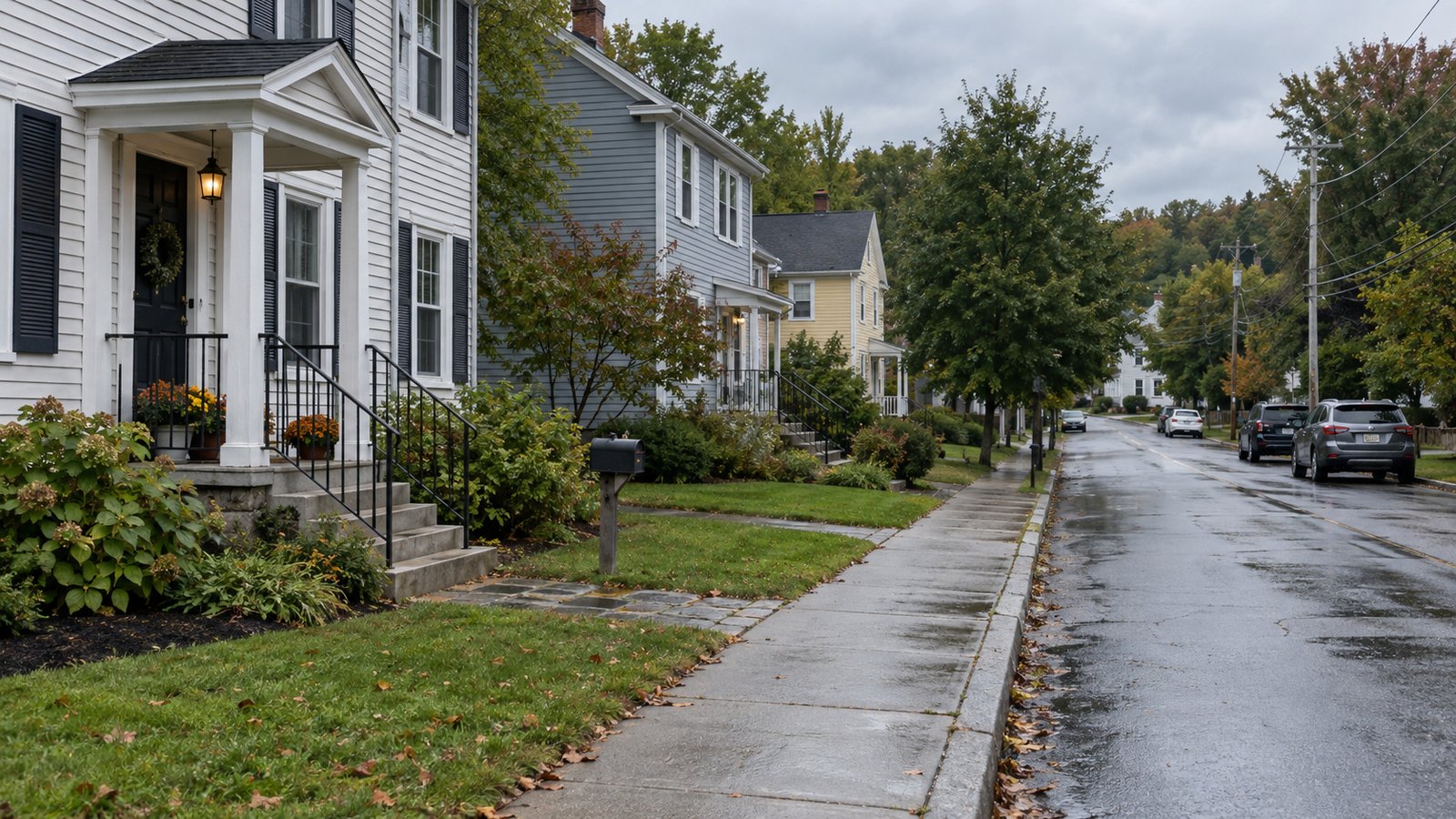
Compare the entrance steps, the mailbox position and the walk you will make every day.
01 /
Start with the decisions in front of you
If you are still choosing an address, begin with the areas of town, property checks and your actual journey. A home that works for someone who drives to Portsmouth every morning may suit a different routine less well. Space for a home office, fewer stairs or a manageable school pickup can change what matters most.
Understand which Greenland address you are considering
Greenland is a separate town in Rockingham County, New Hampshire, with an estimated population of 4,106 in the 2024 American Community Survey five-year profile. It is not a neighborhood of Portsmouth. Confirm the municipality for a particular property rather than using the 03840 postal label as proof of eligibility for a town service.
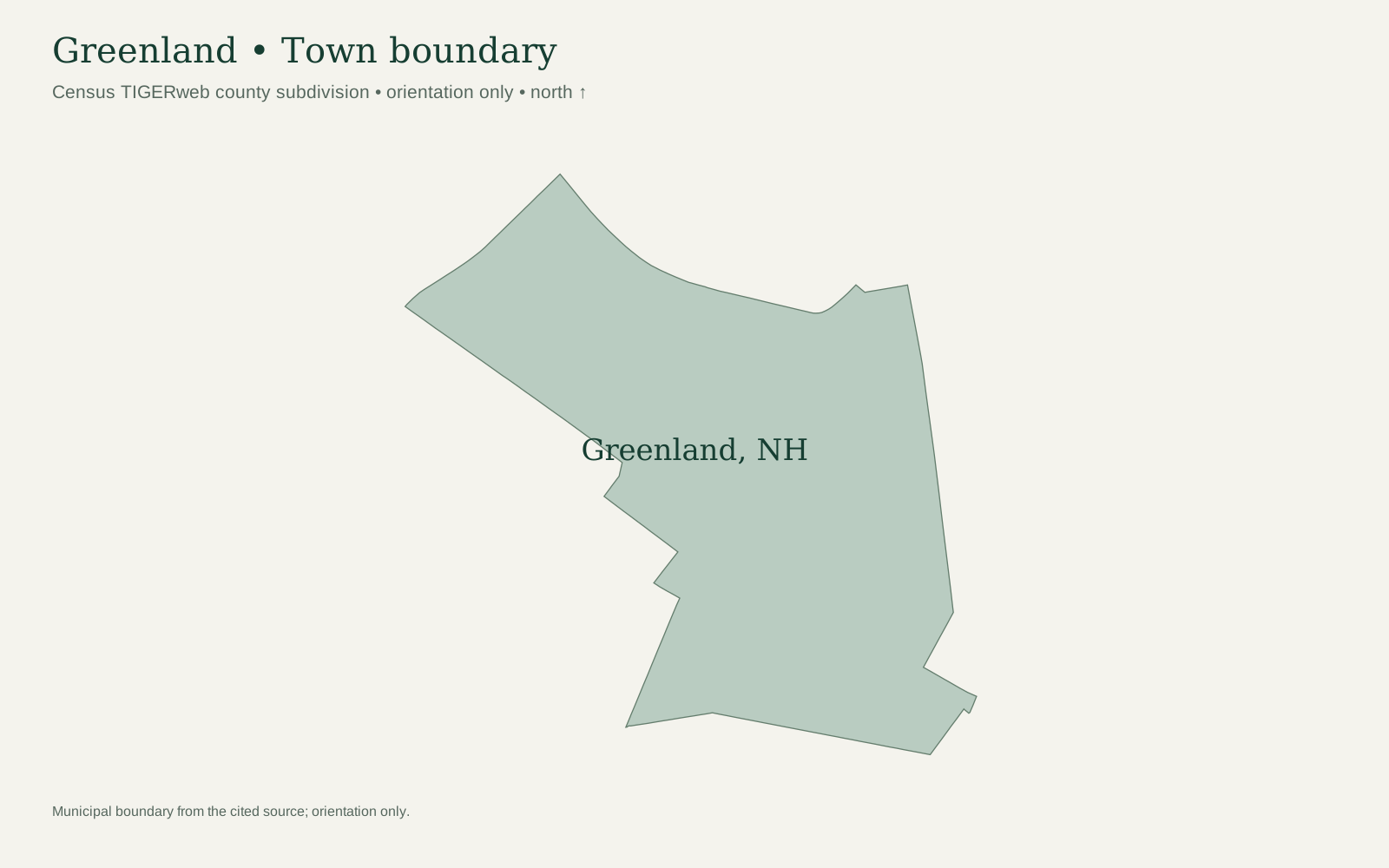
The town’s 2021 draft Master Plan provides useful orientation around Portsmouth Avenue and Post Road. Its community survey distinguishes east of I-95, west of I-95 north of Route 33 (the Great Bay side), and west of I-95 south of Route 33. These are ways to describe location, not adopted neighborhood boundaries. The map below shows the town boundary only.
Greenland and Portsmouth connect in practical ways, including the high-school path and water service for some addresses. Each of those arrangements has its own responsible organization; proximity does not make every town service interchangeable.
Census TIGERweb county-subdivision geometry for orientation; not ZIP codes, school assignments, utility service areas or approved truck routes. Open full-size map.
03 /
Find the area that fits your routine
Use these settings to organize address comparisons. They overlap and do not divide the town into official districts. The boundary map does not assign a house to one of them.
Portsmouth Avenue and Post Road
The 2021 draft Master Plan describes this junction area as the town’s village center, with smaller lots and a mix of uses.
Establish the actual water source and wastewater system from property records; the road name does not guarantee either service.
Daily travel
Test the Ocean Road connection with Route 33 at the time you would use it.
Before choosing
Ask the identified utility about transfer of an existing account, and confirm household maintenance responsibilities separately.
04 /
Look beyond the rooms in the listing
The ACS 2024 five-year profile estimates that about 93% of occupied homes are owner-occupied and 94% of housing units are single-unit structures. Its median value for owner-occupied homes is $662,800. These are survey estimates about the housing stock, not a current asking price, rent quote or forecast for an individual purchase.
At a viewing, check the parts of a house that affect how you will live there: stairs between frequently used rooms, the location of laundry, storage space, a workable office and access from the driveway. Measure the route for furniture you want to keep, including ceiling clearance at a stair turn. A smaller home may still need a carefully planned move if its useful rooms are spread over several levels.
Ask the seller or landlord which water, wastewater and heating systems serve the property and who maintains them. Where a private well or septic system is present, request the available records and arrange appropriate professional checks during the transaction. Keep those questions separate from the postal address or the appearance of neighboring houses.
For a rental, review the lease and the owner’s rules on access, alterations and responsibility for clearing snow. For a purchase with planned work, ask the building office about the actual proposal before assuming it can be completed before delivery. The town’s driveway application is relevant if changing the entrance forms part of the plan; it is not a general moving permit.
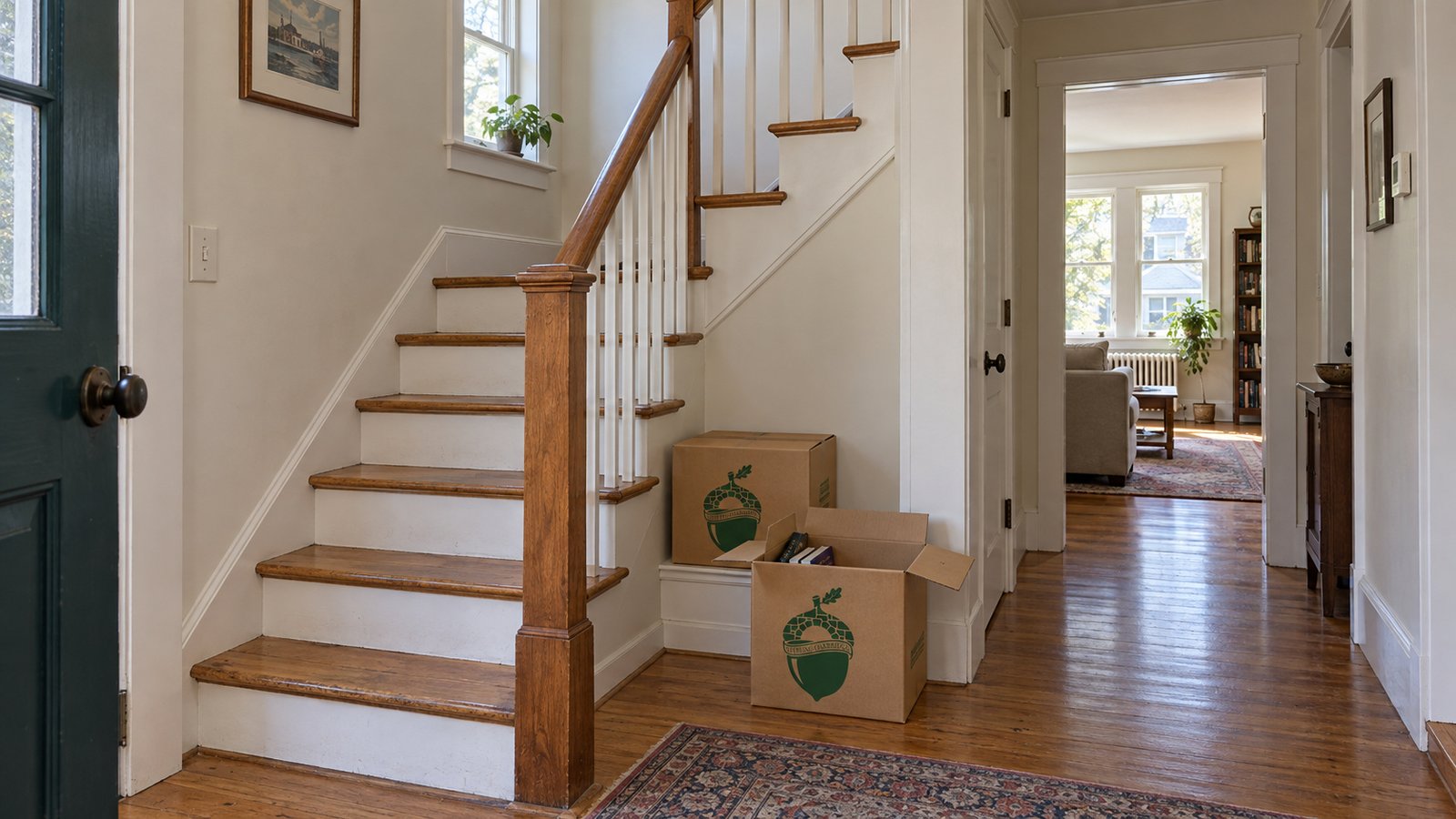
Judge the stair turn and door widths as well as the rooms — large pieces have to make this turn.
05 /
Test the whole journey you would make
Plan a realistic way to reach work, school, shopping and appointments from the address. The COAST system map dated October 2025 does not show a fixed route through Greenland. Check the operator’s current routes and schedules before relying on a particular connection, including how you would get to the stop and return home. A regional bus network does not by itself give an address a usable daily service.
For a driving commute, try the route at the hour you need it. Include the final parking and walking step, school pickup if relevant, and the return journey. The town’s older planning study identifies several Route 33 junctions as traffic concerns; use that as a reason to check the current trip, not as a prediction of today’s delay.
Working from home changes the calculation. Ask about the service available at the actual address, a room where calls can happen and how often you still need to travel. Compare those recurring demands with the home itself, rather than treating a town-wide average journey as your likely commute.
Try the journey at the hour you will need it, including the return trip.
06 /
Confirm the school path and enrollment steps
SAU 50 identifies Greenland Central School as the town’s kindergarten-through-grade-8 school; Greenland students in grades 9–12 attend Portsmouth High School. SAU 50 also serves New Castle, Newington and Rye, which have their own school arrangements. Check the actual resident address and the child’s situation with the school office.
Ask for the current registration procedure, required records and the date attendance can begin. If you are moving during the school year, coordinate records transfer with both schools, and raise learning support or other continuing arrangements early. A closing date and a completed enrollment are separate steps.
Work through transport, before- or after-school care and the pickup arrangements the household will actually use. Keep school documents with your personal essentials so they remain available if delivery is delayed. The school office or SAU 50 at 48 Post Road is the starting point for questions that the public information does not resolve.
07 /
Confirm each service by address
Unitil’s service-area list includes Greenland for natural gas and for electricity in part of the community. Ask which provider serves the actual electric meter and whether gas is available at that property. Then arrange account transfer around possession and the date you need essential services.
The 2021 draft Master Plan describes private wells and septic systems as important parts of Greenland’s household infrastructure, with Portsmouth water service in parts of town. A 2024 town notice for Portsmouth water customers confirms that some Greenland residents use that system. Neither source is an address-level service guarantee. Ask for the bill or system records and the contact responsible for a transfer.
Check wastewater separately from drinking water. Older planning material discusses limited commercial sewer arrangements; it does not establish the current connection status of a house you are considering. If a property uses a private system, identify its maintenance responsibilities and avoid putting a truck or other heavy load over components during the move.
For internet, heating and other recurring services, confirm the current supplier and arrangements at the property. Ask when accounts should change hands and whether any visit is needed. Put each confirmation in one short handover list so an assumed transfer does not become an arrival-day surprise.
08 /
Arrange the first disposal and recycling trips
Check how waste is handled at the property: a landlord or association arrangement, a private collection service or resident self-haul. The town’s Transfer Station/Public Works page lists Wednesday and Saturday opening from 8 a.m. to 5 p.m. and a required resident sticker, sold through the Town Clerk. It lists the sticker at $10. Confirm the current hours, eligibility and fees before buying a sticker or loading a vehicle.
Flatten moving boxes and follow the station’s current separation instructions. Ask specifically about furniture, mattresses, lamps, batteries and anything outside ordinary household waste; acceptance and charges can differ. Leave time for these arrangements before the move rather than filling the truck with items that have no agreed destination.
Resident self-haul and a commercial removal service are separate arrangements. If you want unwanted contents or packing waste removed as part of the move, have that work assessed and priced. Confirm where it can go instead of assuming a resident sticker covers a mover’s load.
09 /
Check driveway access and the seasonal restrictions
Choose a loading position with the property owner and the moving planner. It needs suitable ground, enough clearance for the vehicle and a usable route to the entrance. Review a shared lane with the people responsible for it, and avoid treating lawns, well areas or septic components as spare parking space.
The town’s posted winter parking ordinance, enacted in 2008 describes a midnight-to-6-a.m. restriction from November 1 through April 30 on roadways and town-plowed property. Check current town notices and confirm any unusual situation with Greenland Police before planning overnight staging. An old enactment date alone does not confirm all conditions for a future moving date.
If a public-road position seems unavoidable, ask which authority controls that road and what is required for the proposed use. Do this while there is time to change the plan. The moving page explains what to share with the planner about the actual loading position.
10 /
Make the route usable before the truck arrives
Walk from the proposed vehicle position to each room receiving furniture. Check garage-to-house doors, stair turns, cellar access and any change in level. Keep the route clear of storage, rugs that can move under a load and parked cars. Photograph the difficult points while they are visible.
If repairs or alterations are needed, assign them to the responsible person before the date. A wider driveway, a changed entrance or work near a road can require a separate town review. Do not plan on solving property work while the crew waits with a loaded vehicle.
Confirm possession and permission to enter as well as physical fit. For rented or managed property, ask about the permitted hours, protective materials and any inspection or handover step. Keep the moving planner informed if those conditions change.
11 /
Try the routine beyond the front door
Start with a few ordinary journeys: groceries, a pharmacy, library visits, exercise and the places you expect to use every week. The Weeks Public Library and Greenland Recreation are useful starting points for local services, programs and activities. Check the current calendars and registration arrangements rather than relying on a listing from a previous season.
For time outdoors, consult the Conservation Commission’s information about town-held conservation land and easements. Confirm the particular trail’s access and allowed uses before building it into a routine. Living near Great Bay or a conserved parcel does not necessarily create a public route across the land next to a house.
Different households will value different things. A quiet place to work, a shorter drive to relatives, a manageable garden or an easy library trip may matter more than a long list of attractions. Try the activities that would make the address work for you, at the times you would use them.
Test the everyday errands — library, fields, school — on the routes you will actually use.
12 /
Prepare the property for changing weather
Before a winter arrival, decide who clears the drive, steps and walking route. The town’s posted snow-obstruction ordinance addresses snow and ice placed on the traveled portion of town roads. Arrange clearing so the loading space, entrance and road remain usable, and check current requirements with the responsible office.
Review the overnight parking restriction when a vehicle may need to remain after the move. Keep a plan for delivery if a storm or loss of access changes the date; essential belongings should stay available to the household while timing is resolved.
In spring or prolonged rain, inspect drainage and soft ground before directing vehicles off pavement. For a property near wetlands or the bay, request its own storm, drainage and maintenance history during the transaction. The town’s 2021 planning draft discusses environmental considerations near Great Bay, but the condition of one property needs its own records and assessment.
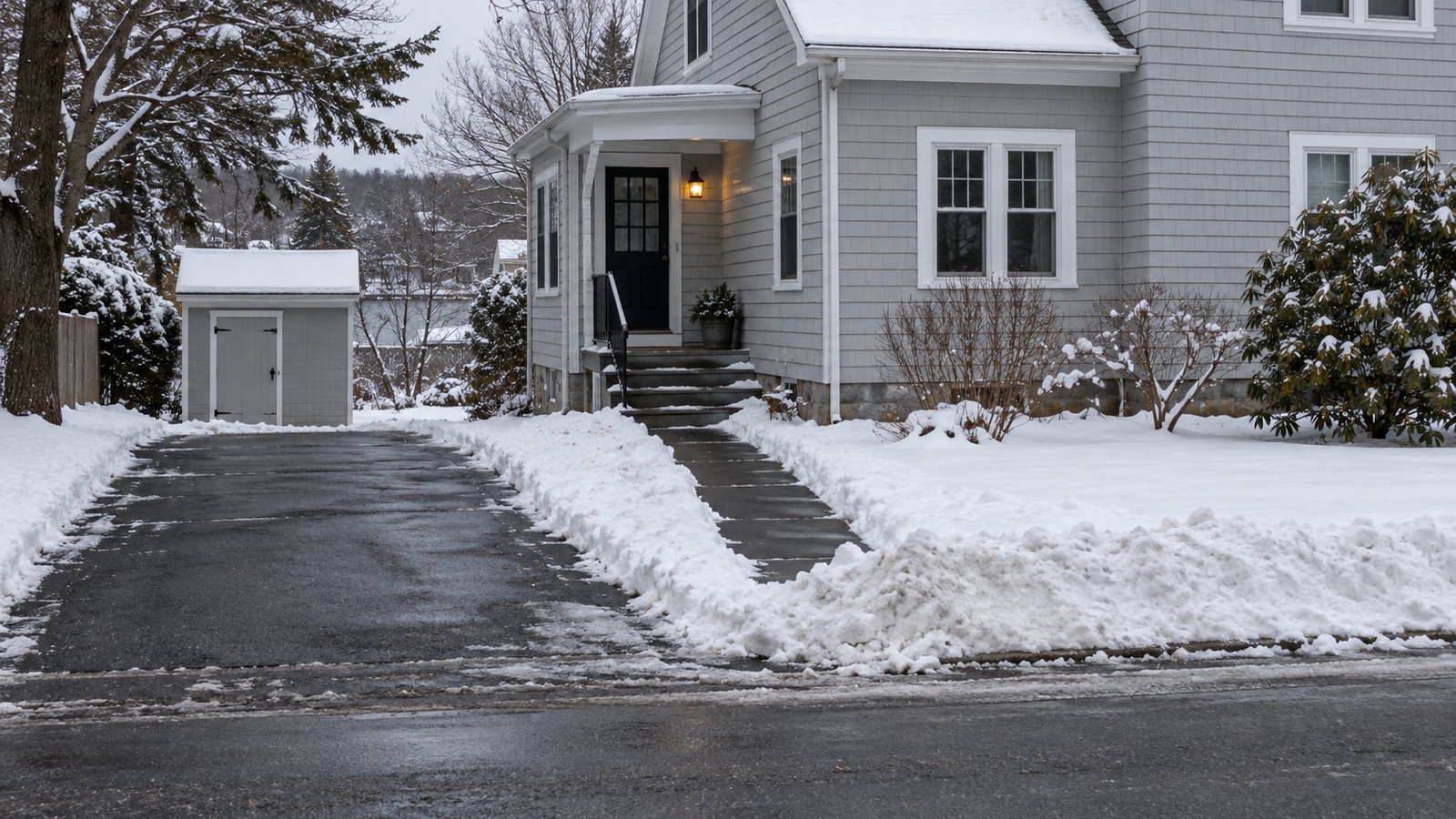
Clear a continuous strip to the entrance — and keep the snowbank out of the town road.
13 /
Turn the handover into a short sequence
Before possession: confirm access, essential service transfers and any work required to make the home usable.
Before delivery: agree the truck position, room labels and which belongings you need first. Arrange a clear, treated route if weather requires it.
At arrival: walk the property with the crew lead, identify changes and keep the items traveling with you separate.
Before the crew leaves: review completed and remaining work and retain the move paperwork.
During the first days: finish address-specific school and household arrangements, then plan the first recycling or disposal trip.
Keep keys, identification, essential records, medication, chargers, basic toiletries and an overnight change with you. If the handover is delayed, contact the move planner before assuming the truck can wait or unload elsewhere. Review the available options and any scope change together.
No. Greenland is a separate New Hampshire town. Some services connect the two communities, including the high-school path and water for certain addresses, but each arrangement must be checked on its own terms.
Can I assume that ZIP 03840 establishes the town and school assignment?
Use the actual property address to confirm the municipality, school arrangements and service eligibility. A postal label is not a substitute for the responsible office’s address check.
Can I build my routine around public transit?
Check your actual outward and return journeys with the operator. The COAST October 2025 system map does not show a fixed route through Greenland; current routes, access to stops and any other travel arrangements need a separate check.
Where do Greenland children attend public school?
SAU 50 identifies Greenland Central School for kindergarten through grade 8 and Portsmouth High School for grades 9–12. Ask the school office for the current enrollment procedure and arrangements for your child.
Does a Portsmouth water account mean the house also has sewer service?
No such assumption should be made. Confirm drinking water and wastewater separately through the property records and the responsible service providers.
How do I prepare for the first transfer-station trip?
Check the town’s current resident eligibility, sticker, opening hours, sorting rules and charges for the actual items. Keep a commercial removal arrangement separate from resident self-haul.
What changes when I arrive in winter?
Arrange a cleared and treated route, review the town’s seasonal parking guidance and current notices, and discuss what happens if weather prevents access on the booked date.
Where do I request the moving estimate?
The Greenland moving page covers the service scope and information needed for the review. This guide helps with the property and household arrangements around that move.
Continue planning
The other side of your move
Explore the local guide or plan the moving services for this location.
Official procedures and local resources are linked beside the answers above. Reopen the relevant page when arranging a date: fees, schedules and application requirements can change.