A useful home search follows an ordinary week as well as moving day. Where will you start a school registration, make an everyday journey or take a break outdoors? This guide brings together practical local contacts and questions to test at the address you are considering.
Try a local outing as well as the practical journeys from a prospective home.
01 /
Start with the borough boundary and the actual address
Montoursville is an incorporated borough in Lycoming County, east of Williamsport. A Montoursville mailing address and ZIP 17754 can describe a wider area. Before applying local rules or choosing an office to call, establish where the particular property sits.
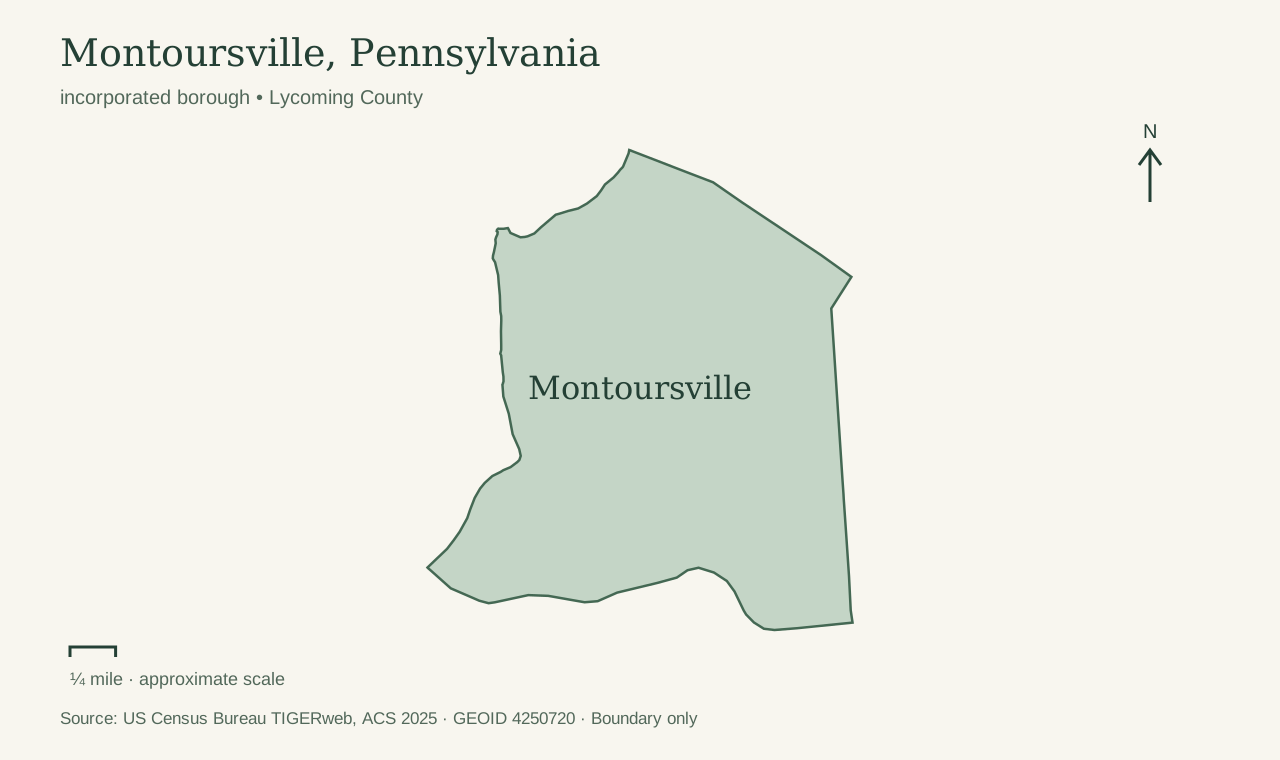
The map here outlines the borough using US Census geometry, GEOID 4250720. It gives geographic orientation rather than directions to a property. It does not show a school attendance zone, utility network, flood determination or a moving-vehicle route. Each of those questions has a separate responsible source.
Keep the full street address in a simple household record with the municipality, landlord or seller contact and any details that still need confirmation. Use it consistently when contacting the school district, utilities or a mover. A nearby landmark can help explain a location, but it does not replace an address for account or eligibility questions.
When you visit, look beyond the house listing. Try the entrance you would use each day, the route to a routine errand and the place you would wait for a ride. A familiar-looking street can feel different when you have shopping, a pushchair or an appointment to reach. These observations are personal checks, not claims that one part of town suits every household.
The borough website is a starting point for municipal information. For an address outside the boundary, ask the actual municipality about its arrangements rather than applying borough guidance automatically.
The incorporated borough boundary from the US Census Bureau. ZIP 17754 extends beyond this outline; school assignment and utility service areas require separate checks. Open full-size map.
02 /
Places to explore in Montoursville
These are three real places for getting to know the area, rather than invented neighborhood divisions. A park visit, a riverside stop and a library errand can reveal different parts of an ordinary week. Check the current information before making plans.
The borough map identifies a fishing pond, walking features, play areas, fields and pavilions. Decide what you want from a visit before choosing where to enter; the map does not establish that every facility is available today.
Getting there
Use the borough’s park map to find the approach and the part of the park you want. River Valley Transit lists Indian Park among the Montoursville route’s destinations; check the actual stop and return journey.
Before visiting
Published park hours change seasonally: October through March, 8 a.m. to dusk; April through September, 6 a.m. to dusk. Consult entrance rules and the borough for current conditions or a pavilion booking.
John Ellmaker Boat Launch and Dock
A separate riverside destination on the borough’s map.
The official map places the launch and dock at Mill Street Riverfront Park. A visit can help you see the river setting, even if using a boat is not part of your plans.
Getting there
The borough map directs visitors south along Mill Street from Broad Street. Follow the current signs and check the entrance and parking arrangements rather than assuming the park and launch share one entrance.
Before visiting
Check facility conditions and the requirements for your intended activity. The mapped launch does not establish safe water conditions, unrestricted access or permission to launch a particular craft.
Konkle Memorial Library
A practical place to discover reading and local activities.
The library’s own site describes changing student-art displays as well as its reading and community role. Look at the current calendar for something your household would actually enjoy.
Getting there
Use the library’s official contact and visiting information to plan a Broad Street errand. Test the journey from the home you are considering and allow time for the return.
Before visiting
Ask the library about a card, borrowing arrangements, accessibility and current events. A nearby mailing address alone does not establish every eligibility rule, and an older event notice is not a future booking.
03 /
Test the home against the life you want to have
A move may be about reducing upkeep, making room for another person, living nearer work or simply changing the way a household uses its space. Write down the routines you want the next home to support. That is more useful than assuming everyone should favor the same property type or set of amenities.
On a viewing, consider the rooms while imagining ordinary furniture in them. Is there room to pull out dining chairs and still walk through? Can someone use the kitchen while another person comes in? A spare room has a different value if it must also hold work equipment, visiting family or most of your storage.
Check storage in the places where you need it, not just the total number of cupboards. Ask which outbuildings, shelves or appliances are included and which belongings remain with the property. Photograph the approach for your larger furniture, with permission, before deciding that an item will fit.
For a rental, ask the owner about the current inspection and tenancy arrangements. The borough has a rental-ordinance page, but a listing alone does not establish the condition or status of a particular dwelling. Discuss responsibilities for heat, maintenance, lawn care and snow removal explicitly in the tenancy arrangements.
Give household members room to disagree about priorities. One may value quiet working space while another wants easy access to daily outings. Test the options through visits and actual journeys. Keep unresolved questions visible rather than letting an attractive photograph answer them by implication.
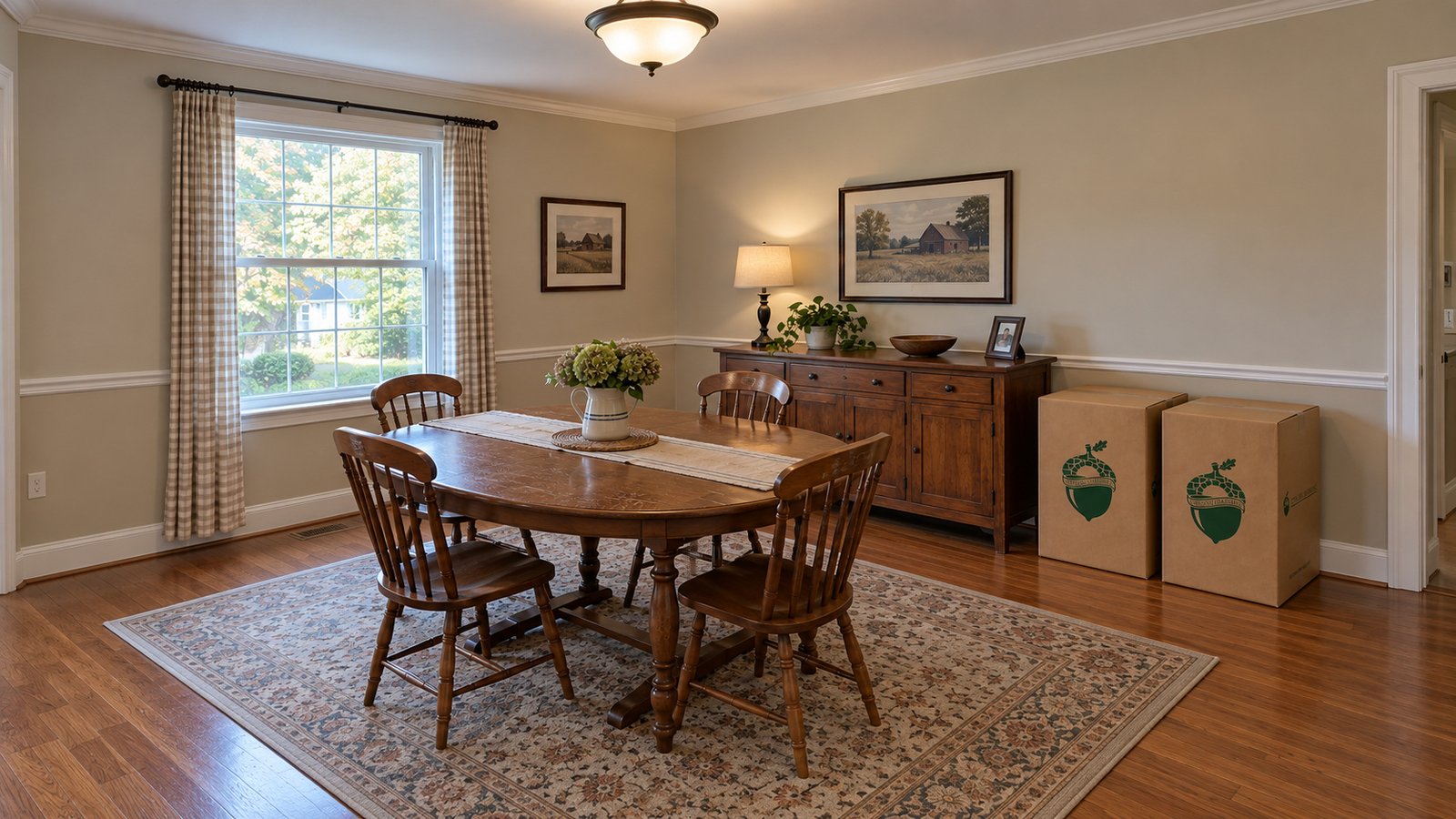
Leave space to use the furniture and walk through the receiving room.
04 /
Try the outward journey and the way home
Begin with the trips you expect to make repeatedly: work, school, food shopping, appointments and visits to people you know. Test the route at a relevant time and include the return. A destination that looks close on a map can involve a different walking route, waiting period or parking arrangement.
River Valley Transit’s Montoursville route lists service between the Williamsport area and destinations including Broad and Montour, shopping locations, Indian Park and the borough building. Its published timetable distinguishes weekday trips from Saturday service. Check the current stop, direction and last useful return rather than treating every listed time as an everyday departure.
The provider’s Where’s My Bus and service-information page offers arrival information and alerts. Predictions are estimates, and weather can change operating arrangements. Save the provider contact, 570-326-2500, if you need help interpreting the journey.
STEP Transportation is a separate shared-ride option. Its ordinary booking instructions require a reservation before noon of the preceding business day. Ask about the proposed pickup, return, fare and any applicable sponsorship; do not assume the whole service is free or operates like a fixed-route bus.
If the household uses a car, consider who has access to it during the day and how the driveway works when another person needs to leave. Think about the journeys that still need a plan if the car is unavailable. Transport choices should fit actual routines and abilities, not an assumed requirement that every resident travels in one way.
Test the return journey as well as the trip to a regular destination.
05 /
Prepare the registration before opening the form
Use the full address when asking about assignment and transport. The Montoursville Area School District registration page is the relevant starting point; similarly named districts elsewhere are different organizations. Confirm the arrangements for the individual child rather than inferring a building assignment from the town name.
The district asks families to use Chrome and warns about Apple-device compatibility. Its form instructions also specify completion within a 60-minute window. Gather the information first so an interrupted session does not become the main obstacle.
The published appointment checklist includes proof of age, two proofs of residency and immunization records, with school records and additional documents where applicable. The page names the required registration forms. Read the current checklist for your situation and ask about anything you cannot provide; this guide does not determine a child’s eligibility.
Registration contact Diana McElwee is listed at 570-368-2491, extension 6100. Ask how the online submission, appointment and documents fit together. For a household arriving during the school year, discuss records and the expected start with both the former school and the receiving district.
Then consider the child’s ordinary day: reaching the stop or building, a pickup if plans change, after-school needs and the person the school should contact. Share useful information about support or accessibility through the appropriate school process. A completed form is one part of settling in; it does not by itself settle every transport or daily-care arrangement.
06 /
Treat water, sewer and other accounts as separate checks
Ask the seller or landlord for the providers serving the actual property. Do not assume every account follows a Montoursville postal address. Record who opens each account, who pays it and the service date you need.
The borough Waterworks page identifies water billing contact at 617 North Loyalsock Avenue, 570-368-2486. Confirm that the address uses borough water and ask about the current transfer or account-opening process. The page contains older rate and report material, so obtain the current charges and instructions directly.
Lycoming County’s authority page lists Montoursville among the municipalities receiving sewer service from the Lycoming County Water and Sewer Authority. Its water-service areas are separately named. A water payment contact and a sewer contact should not be treated as one account merely because the authority’s name includes both services.
Arrange electricity, heating fuel and internet by address as well. Ask about the installation or activation lead time and what the household must have available. For internet, confirm the specific connection and appointment rather than relying on a regional coverage claim. If someone works from home, plan for the time between arrival and activation.
At handover, retain the agreed account details and any readings or confirmations relevant to the property. Keep access to essential services in the first-day plan, particularly if a tenancy or closing date changes. An account checklist should make responsibilities clear instead of leaving the buyer, tenant and previous occupant to assume someone else made the call.
07 /
Choose the correct route for packaging and unwanted belongings
Moving creates several different groups: ordinary household waste, recyclable packaging, unwanted furniture, electronics and sometimes yard material. Sort them before choosing a disposal trip. A site that takes one group does not automatically take the others.
The borough recycling page directs residents toward single-stream arrangements with a hauler or county drop-off centers. It also contains a dated 2025 notice, so confirm the current arrangements for your address. Ask about collection days, carton preparation and the materials your actual service accepts.
The county drop-off list identifies an Indian Park location, but the list carries an older date and the borough park has seasonal opening hours. Check access and accepted materials before loading the car. The borough gives the recycling hotline as 1-800-736-7559; use it when the published pages leave an address or material question unresolved.
Keep brush separate from moving cartons and household contents. The borough brush-area page requires resident registration with photo identification and publishes a limited operating schedule. It is not a general destination for a sofa, kitchen packaging or an old television.
If you want removal assistance, identify the items and include the work in the agreed scope. For an independent drop-off, ask about acceptance, handling and charges before the journey. Keep useful belongings intended for delivery apart from the removal pile. That distinction is especially important when several people are helping prepare an older household.
08 /
Check the standing space before move day
A home viewing is a good time to photograph the approach, private drive and route to the entrance. Include the width of a gate, overhead branches, a turning constraint and any shared access. Do not use the fact that your car fits as proof that every moving vehicle will fit.
Ask who can authorize use of private or shared space and keep other residents’ exits usable. A confirmed position helps the mover understand the carrying distance. A hoped-for curb space is a different arrangement; resolve the restrictions with the responsible authority before depending on it.
In winter, the borough streets page says parking is prohibited on all borough streets during snowstorms and until streets are completely plowed. This affects an on-street plan even if the move itself is still intended to proceed. Ask about an appropriate alternative rather than assuming a delivery appointment overrides the restriction.
At an address beyond the borough boundary, contact the actual municipality. Keep property access and public-street requirements separate in your notes. Then share the confirmed standing arrangement and a recent photograph with the mover if anything has changed.
A neighbor may be able to help coordinate ordinary access, but do not let an informal conversation stand in for a required permission. The useful result is a practical, authorized place for the selected vehicle and a continuous route into the property.
09 /
Make the home usable before the load arrives
Walk the path from vehicle position to the rooms where belongings will go. Include any garden gate, side door, steps, hall turn and landing. A side entrance may reduce one difficulty while introducing another, so assess the complete route rather than choosing it by the size of the doorway alone.
Ask about keys, door operation, shared areas and any building instructions before the appointment. Make sure the person receiving the load can actually enter the property at the agreed time. For an office or rental, identify who can answer an access question if the arrangement changes.
Plan the first furniture positions with ordinary use in mind. Keep a route to the bathroom, a place for sleeping and space to open necessary doors. Label rooms in a way the household and crew both understand. If two bedrooms need different groups of cartons, settle the distinction before unloading.
Look for the small obstacles that often disappear from listing photographs: a loose mat, a narrow passage beside stored belongings or a door that needs to stay open during carrying. Address the actual obstacle with the responsible owner. Do not make unapproved changes to a building just to make a route appear workable.
Think about the household members who will not be handling the load. Arrange a comfortable place for children, pets or someone who needs a quieter environment while the active route remains clear. A thoughtful access plan should support both the work and the people using the home.
10 /
Prepare for the weather and the routines it changes
A seasonal plan involves more than checking a temperature. Ask who clears the outside route, where wet footwear can go and how the household reaches everyday destinations if conditions change. The answers may be different in a rental, a shared property and an owner-occupied home.
The borough streets page states that owners or tenants must remove snow and ice within 24 hours after a storm and must not deposit it in the street. Confirm responsibilities for your property and arrange for the carrying path and steps to be ready at the time needed. A deadline after a storm does not mean a route is safe before it has been prepared.
For outdoor plans, Indian Park uses different opening hours in the colder and warmer parts of the year. Check those hours before building a walk into an early-morning routine. Follow current posted rules and conditions rather than treating a park map as a guarantee that every feature can be used.
Transit providers can change service arrangements during snow. Check River Valley Transit’s current information and confirm a reserved STEP journey separately. Leave enough flexibility for the person who needs to reach an appointment; a normal timetable is not a promise under all conditions.
For a property-specific water or flood concern, ask the appropriate authority about the actual address and available information. A municipal boundary map cannot settle a parcel’s risk. Keep drainage, maintenance and insurance questions with the professionals or agencies responsible for them rather than drawing a conclusion from the scenery.
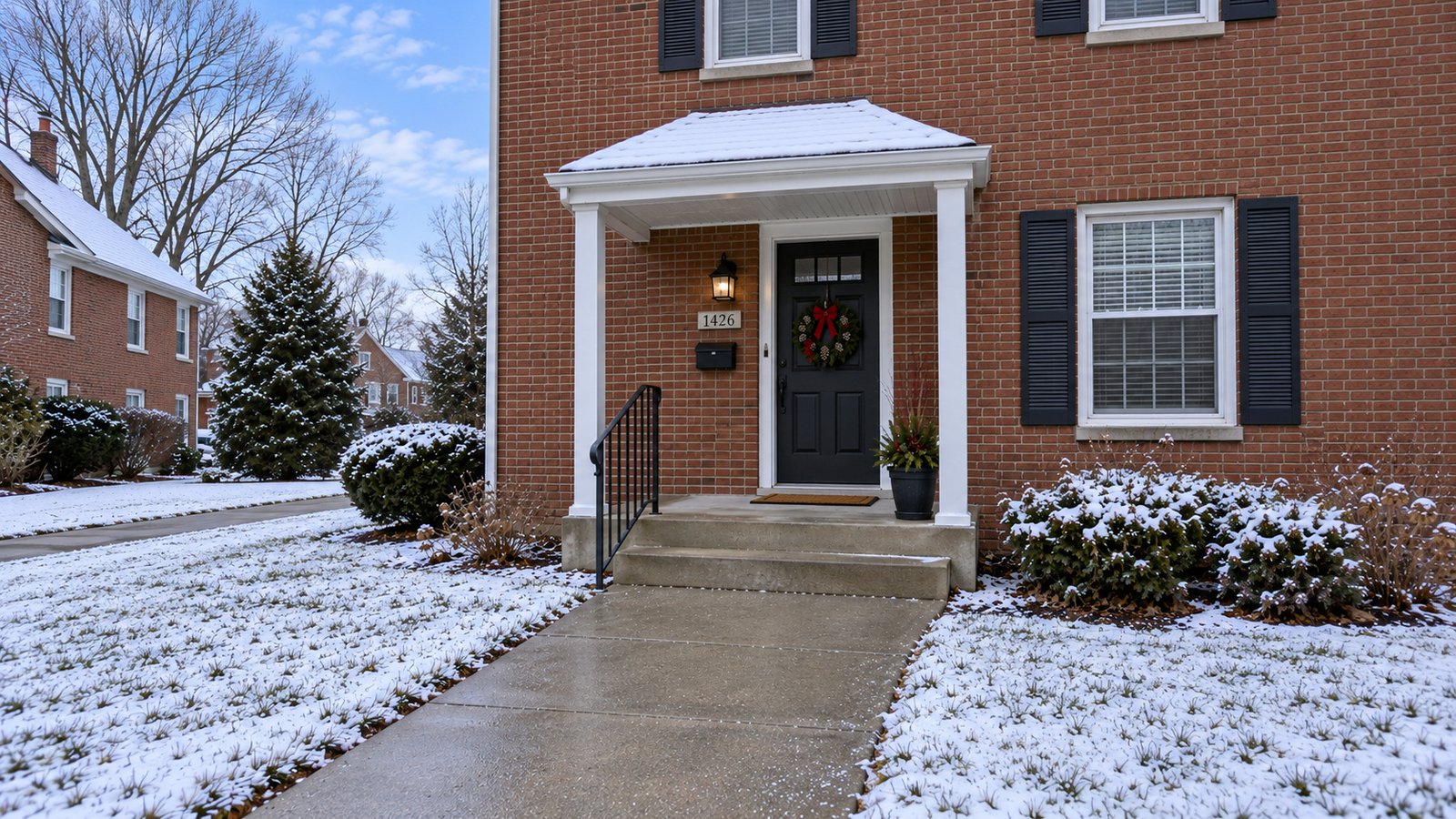
Arrange for the path and steps to be ready before the crew arrives.
11 /
Give the first week a manageable shape
Choose a few priorities for the first evening: a usable bed, washing essentials, food, necessary medication and access to the next day’s clothing. Keep those items where the person who needs them can find them. Not every room needs to look finished for a household to begin functioning.
For the following week, collect the local errands that actually remain: a utility question, school appointment, recycling arrangement or return of a key. Group tasks when it helps, but keep appointments and eligibility questions with their responsible organizations. An attractive to-do list is less useful than knowing who can answer the unresolved item.
Build in an ordinary outing rather than making every trip an administration task. Try Indian Park during its current opening hours, explore the mapped riverfront destination or consult Konkle Memorial Library’s calendar. Choose something that suits your interests and energy; there is no requirement to enjoy every activity a guide mentions.
Keep notes about what the home needs after a few days of actual use. The place for a dining table, work supplies or incoming post may become clearer once the daily routine starts. Unpack according to those needs instead of opening every carton simply to reduce the visible count.
If the physical move still needs arranging, the Montoursville moving page explains the services and information for an estimate. If it is complete, use the guide’s contacts and your own observations to settle the remaining local questions at a pace that works for the household.
Choose an everyday activity that suits your household after arrival.
12 /
Questions before you arrive
Is ZIP 17754 the borough boundary?
No. The postal area is wider than incorporated Montoursville Borough. Use the full address when confirming the municipality, providers and local requirements.
Does the map show a school zone or utility service area?
No. It shows the Census borough boundary, GEOID 4250720, for orientation. Assignment and service eligibility require separate checks.
Where should a family start school registration?
Use Montoursville Area School District’s current new-student registration page. It provides the online process, appointment checklist and contact Diana McElwee at 570-368-2491, extension 6100.
Are water and sewer handled through the same contact?
Confirm both for the property. Borough Waterworks supplies its billing contact; the county authority page separately lists Montoursville sewer service.
Is local transit limited to a household car?
River Valley Transit publishes a Montoursville fixed route, and STEP has a separate reserved shared-ride process. Confirm the actual outward and return journeys, current service and fares.
Can I visit Indian Park early in the morning year round?
The borough lists 8 a.m. to dusk for October through March and 6 a.m. to dusk for April through September. Check current notices and posted rules.
Can household cartons or furniture go to the brush area?
Do not treat it as a general disposal site. The borough brush program has its own resident registration, accepted-purpose and operating arrangements. Ask the hauler or recycling service about packaging and other items.
What changes an on-street winter moving plan?
The borough prohibits street parking during a snowstorm and until streets have been completely plowed. Resolve the standing arrangement with the responsible authority and mover before relying on it.
Are the photographs actual Montoursville homes and company jobs?
The boundary map uses Census geography. The photographs are representative illustrations of homes, daily activities and moving tasks, rather than evidence of an identified local property or completed job.
Where can I look for a quieter activity after arrival?
Indian Park, the separately mapped riverfront destination and Konkle Memorial Library offer different starting points. Check present conditions or the library calendar and choose what suits your household.
Continue planning
The other side of your move
Explore the local guide or plan the moving services for this location.
Official procedures and local resources are linked beside the answers above. Reopen the relevant page when arranging a date: fees, schedules and application requirements can change.