Plymouth's downtown core is a largely rented harbor district in a large South Shore town: no municipal curbside pickup (licensed haulers or Pay-As-You-Throw at the Manomet Transfer Station), town water and sewer divisions, a thirteen-school district, and rail access via nearby Kingston and local GATRA buses. This guide helps you compare its areas, set up the practical basics and prepare the move itself.
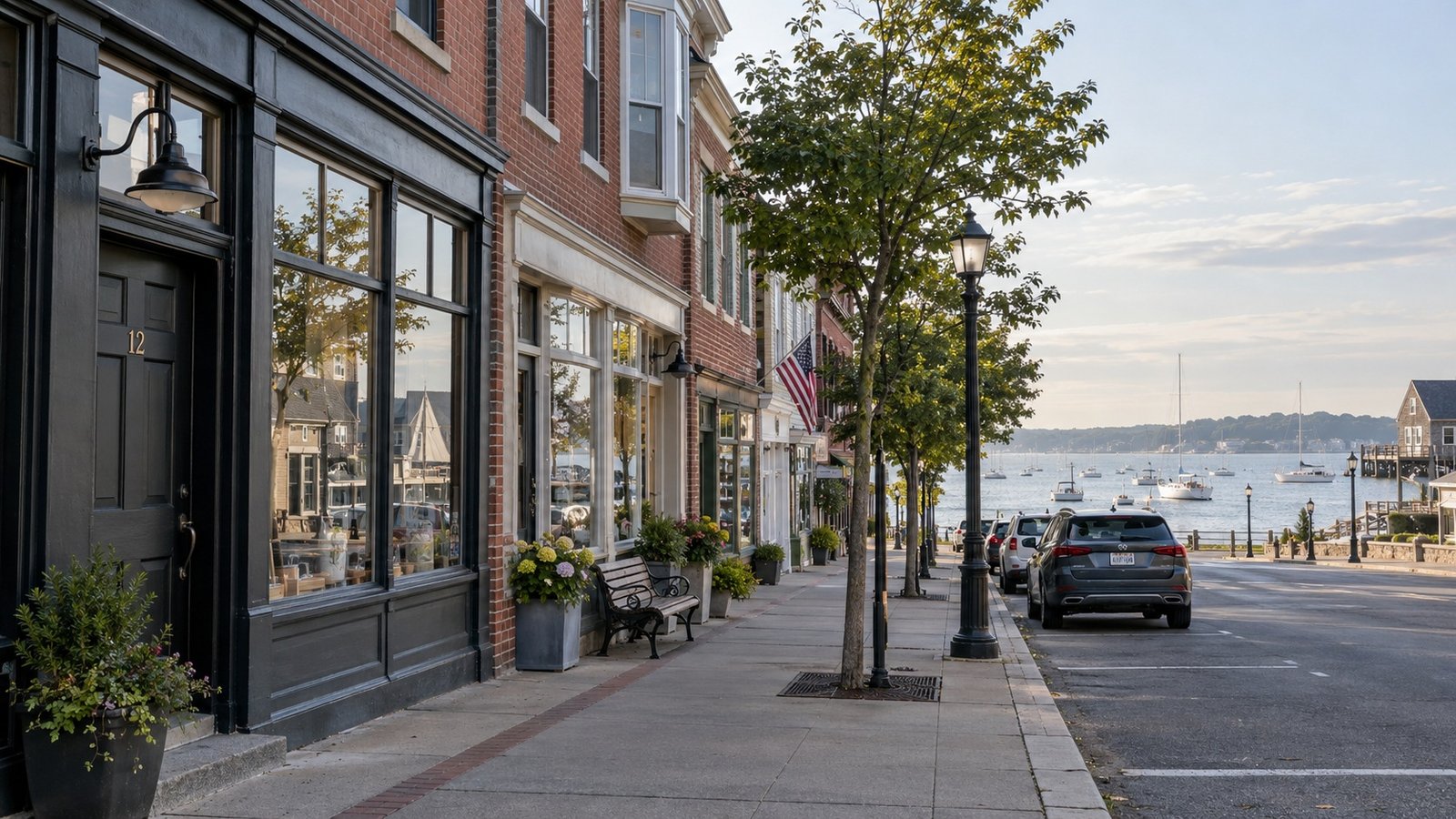
Compare the walk to the harbor, the shops and the town offices at the actual address.
01 /
Start with the decision in front of you
Three reading routes through this guide, depending on where you stand. If you are still choosing an address, read orientation, the area comparison and housing first — the core's real differences are apartments versus houses, the walk to the waterfront, and who handles the trash at your building. If you have children, go next to schools — thirteen schools on one district ladder. If you already hold keys or a closing date, go to arrival and work backwards: utilities, the disposal setup, and the truck plan.
When the address is settled and the move itself needs planning — dates, inventory, access and the estimate — the Plymouth moving page is the working document.
02 /
Understand Plymouth before comparing addresses
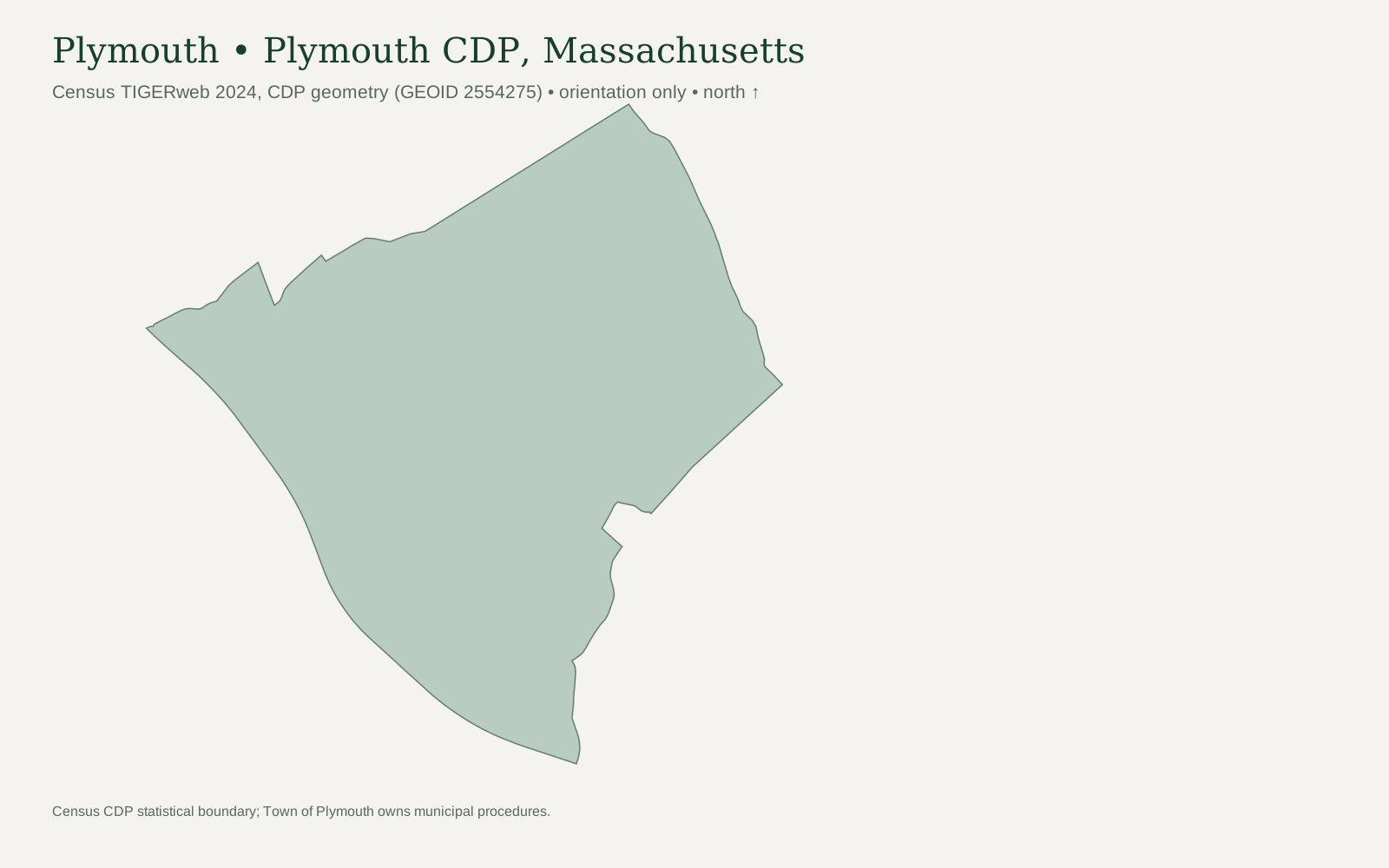
The page you are reading covers the Plymouth CDP — the downtown and harbor core, about 7,900 people (ACS 2024 5-year) — a census boundary inside the much larger Town of Plymouth, which owns the procedures: Town Hall at 26 Court Street, the DPW at 159 Camelot Drive (508-830-4162), the water and sewer divisions, and the waste system. The town is a Pay-As-You-Throw community with no municipal curbside pickup — the first practical fact a newcomer meets.
The ACS 2024 five-year CDP estimates put renting at about 54% of occupied homes, the median owner-occupied value at $446,800 and median household income at about $81,700. These are sample estimates for the CDP, not current listings or a budget for one household; the renter-share margin of error is about 6.5 percentage points. The waterfront season and the disposal setup are the two rhythms a newcomer learns first.
Census TIGERweb CDP geometry for orientation; a CDP is a statistical boundary — municipal procedures belong to the Town of Plymouth. Not school assignments or approved truck routes. Open full-size map.
03 /
Find the area that fits your routine
For this CDP guide, the modules below are practical orientations, not residential neighborhood profiles: the waterfront blocks, the school-side streets, the established house streets, the waste-system layer and the utilities layer. They are starting points for inspecting an address, not school zones or service boundaries.
The waterfront & downtown blocks
The harbor core: the waterfront walk, the shops and restaurants, the town offices on Court Street — and the visitor season's tempo from late spring through fall.
Apartments and multi-unit buildings deserve a full entry and parking check; ACS estimates about 54% of occupied CDP homes are rented, with sampling uncertainty.
Daily travel
Test the actual errands on foot; rail travel uses nearby Kingston, outside this CDP, and Route 3 is a road option toward Boston.
Before choosing
In complexes the dumpsters are the complex's responsibility; in a rented house the lease decides trash — ask before the move-out cleanout.
The school-side streets
The family streets feeding the district's ladder — eight elementaries, two middles, and Plymouth North or Plymouth South high school.
Use the proposed address in the district’s street-assignment tool; a school directory does not define a residential area.
Daily travel
The school run by car or bus; the district office answers which school serves your street.
Before choosing
Begin current online registration, confirm in-person documents, and arrange transport and care before the required start day.
The established house streets
Compare houses within the CDP with apartments using the actual listing and access route; ACS estimates about 46% of occupied CDP homes are owner-occupied.
Single-family stock with basements and attics; the older stairs and doors decide the move's shape.
Daily travel
Check the walk from the actual address; Boston rail access is via nearby Kingston, with Route 3 as a road alternative.
Before choosing
Homeowners choose the disposal route: a licensed private hauler or the PAYT permit-and-bags route — set it up before the cleanout.
The PAYT & transfer-station layer
The disposal backbone: no municipal curbside — licensed private haulers, or the Manomet Transfer Station (permit required, $100 fine without) with official PAYT bags. Manomet's published regular town schedule is Sunday, Monday, Tuesday, Friday and Saturday, 8:00 a.m.–3:45 p.m.; check current holidays and changes. Republic and private haulers have separate schedules and payment or contract conditions.
Not a residential area: confirm the building’s hauler arrangement or the household vehicle permit and PAYT route.
Daily travel
350 Beaver Dam Road; the adjacent difficult-waste facility takes the awkward items by weight (mattresses +$75 each).
Before choosing
Check current permit processing, vehicle eligibility and holiday closures before the disposal trip; Republic’s separate facility has a different weekly schedule.
The town utilities layer
Town water and sewer divisions where the mains reach, with service applications through the town's OpenGov platform and a published annual water-quality report.
The same housing stock with the town account attached — coverage is per-address in a town this size.
Daily travel
Not a place but the accounts to start before closing week.
Before choosing
Confirm the actual water/sewer or septic arrangement; for a purchase, coordinate final reading and account handover with the agent or attorney.
04 /
Compare the whole property, not just the price
Downtown Plymouth's market is multi-unit: triple-deckers, apartment blocks and divided older houses, with single-family streets at the edges (an estimated 42% of housing units are single-unit; ACS 2024 five-year, via Census Reporter). The building type decides the move logistics as much as the price — a third-floor walk-up and an edge-of-downtown colonial are different jobs.
The due-diligence list follows the type. In rentals: the landlord's written move rules, and who handles trash — in multi-family complexes the dumpsters are the complex's responsibility, while in a rented house the lease decides (the town's own guidance says exactly this). In houses: the roof and systems' ages, the parking, and the water and sewer connections — town divisions run both where the mains reach, a per-address question in a town this size.
Compare the whole monthly cost: rent or financing, property charges, insurance, heating fuel, electricity, internet, parking and the hauler contract or PAYT trips. Ask for recent bills and check what a lease or association fee includes. For a seasonal home, establish winter heat, water shutoff and someone who can check the property. The CDP median does not establish a purchase price or the condition of a particular house; inspect heating, moisture, doors and stairs, and verify water/sewer or septic records before committing.
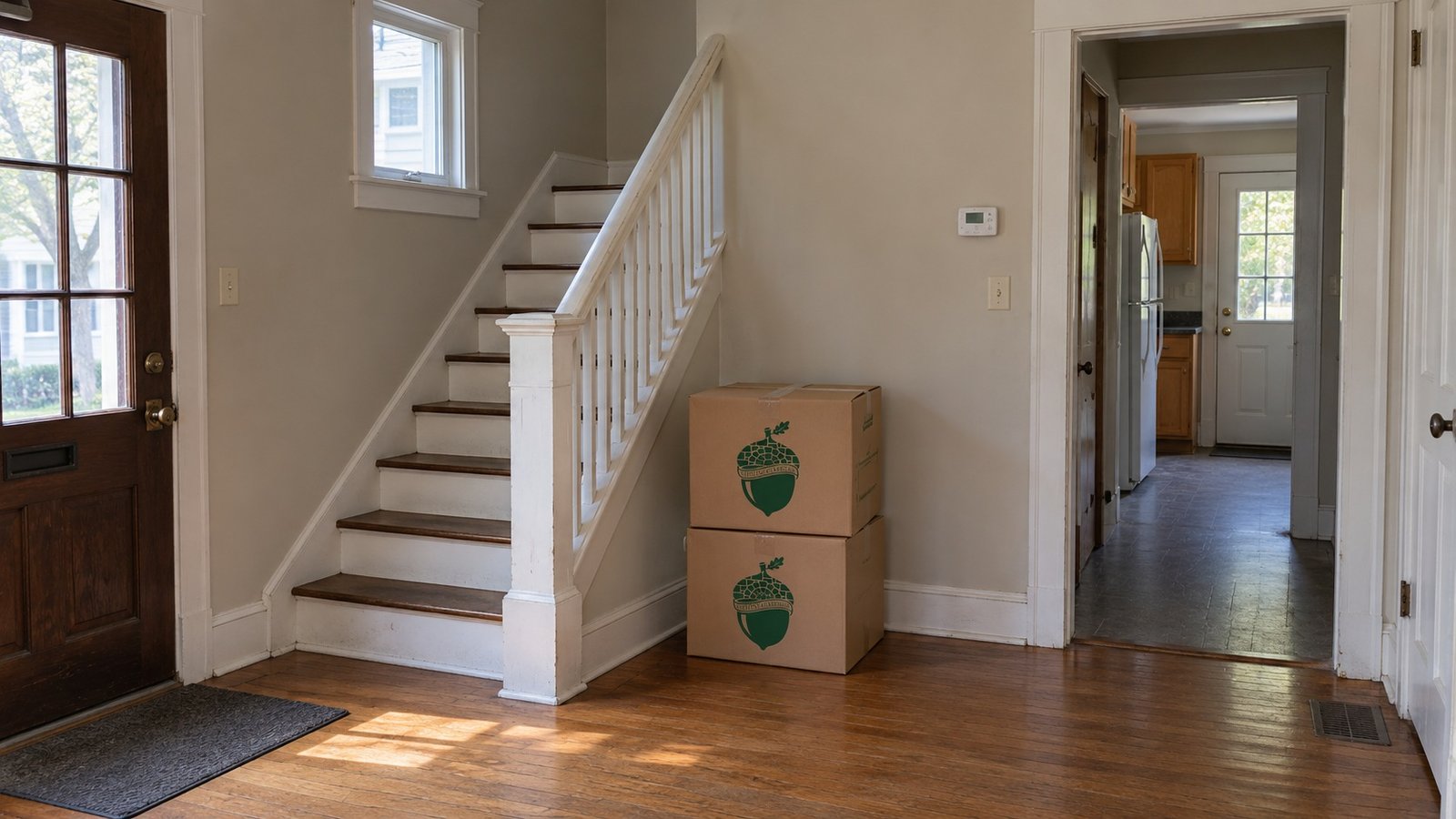
Judge the stair width and the door swings as well as the rooms — downtown houses have tight paths.
05 /
Rail and Route 3 toward Boston
The CDP’s ACS 2024 five-year mean travel time to work is about 25 minutes across destinations; it is not a Plymouth-to-Boston journey time. For Boston rail travel, plan access to the Kingston Line in nearby Kingston. MBTA’s current route data lists Kingston through South Station and has no route serving Plymouth station. Do not build a commute around the old Plymouth station page, which still lists facilities.
The GATRA Liberty Link connects Plymouth Center with shopping and Kingston Train, but not every trip serves the train stop. Check both bus and rail tables, the last return, weekends and holidays; a listed connection does not guarantee a timed transfer. Route 3 is the road option toward Boston. Test the whole route from your address at workday hours, including station access and parking.
The practical test: ride or drive your real route at your real hours, in the season you will actually keep — a summer Saturday downtown is a different town from a January one. If anyone works from home, verify internet service at the address before signing.
Test the drive or the train toward Boston at your real hours before fixing a daily schedule.
06 /
Thirteen schools on one district ladder
Plymouth Public Schools runs the town's schools, per the federal Common Core of Data (2023-24, via the CCD directory): an early childhood center, eight K–5 elementaries (Cold Spring, Federal Furnace, Hedge, Indian Brook, Manomet, Nathaniel Morton, South and West), two middle schools (6–8) — Plymouth Community Intermediate and Plymouth South Middle — and two high schools (9–12), Plymouth North and Plymouth South.
Which elementary and which high-school side serves your street is a per-address question — the district office answers it with the actual address. Start at the current Student Registration page and its School Assignment by Street tool. The district says a legal guardian begins online in Aspen using a desktop or laptop; creating the account is not mobile-friendly. Review the current requirements before booking the school visit: the original municipal birth certificate and residency evidence are checked in person, and health records and other forms may be uploaded or brought to school. Ask the assigned school about the start date and records transfer before arrival.
School assignment, admission and a bus seat are separate checks. Use the district’s Transportation page for the current route and eligibility: it describes free transport for K–6 students at least two miles from their assigned school, with a fee-based route for other eligible riders. Confirm your grade, address, application and stop with the school. Arrange childcare or after-school care independently, checking hours, availability and pickup authority before the first workday. The historical 2023–24 directory describes the district, not attendance zones or a promised seat today.
07 /
Confirm service and settle the account handover
Water and sewer are the town's where the mains reach: the Water Division publishes its annual water-quality report and takes service applications through the town's OpenGov platform, and the Sewer Division handles sewer permits the same way. Confirm the actual water provider and sewer connection or septic records. A service or sewer permit application is not the same as changing the billed owner. The Water Division asks real-estate agents to request a final meter reading 7–10 business days before closing and directs buyers without an agent to the closing attorney; outstanding utility charges stay with the property. Ask the agent or attorney to confirm that step and the account handover. Renters should establish who pays and reports problems under the lease.
Electricity, gas or other heating fuel: identify the provider from the property records or outgoing bills, then confirm address eligibility and activation with that provider. Check internet availability and installation at the exact unit, including any landlord permission. Keep appointment dates and a temporary connection or heating plan where needed. Trash is the town's unusual system — see waste.
08 /
Private curbside collection or the PAYT drop-off route
Plymouth is a Pay-As-You-Throw community, and the structure matters for every household: there is no municipal curbside collection. Homeowners choose between a private waste hauler licensed by the Public Health Department (the town publishes the list) and the PAYT route: a transfer-station permit (online, or at the Tax Collector at Town Hall, 26 Court Street) plus official PAYT bags sold at listed retailers, self-hauled to the Manomet Transfer Station, 350 Beaver Dam Road — published regular town schedule: Sunday, Monday, Tuesday, Friday and Saturday, 8:00 a.m.–3:45 p.m.; check current holidays and changes; $100 fine for entering without a permit.
Renters: in apartment and multi-family complexes the dumpsters and carts are the complex's responsibility; in a rented house the lease decides. For the awkward items: the Difficult-to-Manage Waste facility next to the transfer station (run by Republic Services, Tuesday/Thursday/Saturday/Sunday) takes material by weight — mattresses and box springs carry a $75 surcharge each. Household hazardous waste runs on collection days coordinated by the town.
For PAYT, allow the published 24–48 hours for vehicle-permit processing and check for the acceptance email before driving in. Temporary vehicles need DPW guidance; a household permit is not blanket permission for a moving truck or commercial cleanout. Check the holiday calendar and ask the facility about each bulky or hazardous item before loading. The Republic facility is a separate operation with its own days and charges; Thursday availability there does not open the town transfer station.
09 /
The curb plan in a visitor downtown
Everyday truck logistics in downtown Plymouth work from the curb, the driveway or the building's lot — the position is a survey decision from photos, and in the visitor season the waterfront blocks are planned around, not assumed. Contact Park Plymouth at 508-747-5929 before occupying public spaces for the move. Its Use of Parking Space policy covers activities that remove spaces from public use, including metered and unmetered spaces. Ask how it applies to your truck and duration, who applies and which approvals are needed. The policy calls for at least 48 hours for uses up to 21 days and 14 days for longer uses; confirm the current deadline and allow time for review. Permission is not established by paying a meter or sending photos.
One local note: the disposal trip is a separate errand with its own window — Manomet's published regular town schedule is Sunday, Monday, Tuesday, Friday and Saturday, 8:00 a.m.–3:45 p.m.; check current holidays and changes. Republic's separate facility lists Saturday, Sunday, Tuesday and Thursday, 8:00 a.m.–3:45 p.m.; confirm accepted items and payment. Private haulers have their own collection dates and contract terms. The town station's vehicle-permit requirements do not apply as a blanket rule to every disposal option. The moving page's parking section turns the curb plan into the day-of plan.
10 /
Walk the full route before moving day
Downtown access here means the shared entry, the steep stair, the landing turn — and in the older houses, the narrow door and the basement stair. Measure the largest pieces against the real route, and photograph the stairs and the parking situation for the estimate.
Outside, protect older porch floors and watch uneven sidewalk slabs for the edges that eat dolly wheels. In rentals and complexes, the landlord's or association's written rules come before the day.
11 /
A harbor, a main street, and the visitor season
The everyday anchors are close: the waterfront and its harbor walk, the downtown shops and restaurants, the town offices on Court Street, and the library. The visitor season changes the downtown's tempo from May through fall — a fact of life, and a reason the weekly loop matters more than the address's postcard view.
The routine to test before you buy is the weekly loop at two hours: the morning version (school run, the commute — train or Route 3) and the evening one (the harbor, the shops). The waterfront is the town's living room — the walk is how you join it.
Build an errand loop beyond the waterfront. The Liberty Link lists Market Basket, Walmart and Kingston Collection; the Mayflower Link lists the public library, medical stops and Beth Israel Hospital. Check the actual trip and return rather than assuming every need is within a downtown walk. The main public library is at 132 South Street; check its current hours and card requirements before the first visit.
Transfer regular care before moving week: use your insurer and the BID Plymouth provider directory to check a new practice’s availability and coverage, arrange record transfers and keep essential medication accessible. The hospital lists 275 Sandwich Street, but its existence does not establish a new-patient appointment. Match any childcare, pet care and shopping arrangements to the address and household schedule.
The waterfront sets the downtown's rhythm — test the loop from the address you choose.
12 /
The visitor season, the storm dates, the closed days
Plymouth's calendar has three beats. The visitor season: late spring through fall brings the harbor crowds — parking pressure downtown, the closing cluster, the month-end pressure; hold your date early with a backup. The storm dates: coastal storms move any date on the calendar — the backup day is part of the booking. For a PAYT trip, Manomet's published regular town schedule is Sunday, Monday, Tuesday, Friday and Saturday, 8:00 a.m.–3:45 p.m.; check current holidays and changes before travelling. Republic's separate Difficult-to-Manage Waste facility lists Saturday, Sunday, Tuesday and Thursday, 8:00 a.m.–3:45 p.m. A private hauler has its own collection arrangements.
The steady discipline wins here: book the date early, hold a backup, and plan the cleanout against the station's calendar and the hauler's route. The moving page converts the calendar into a date-and-backup plan.
The visitor season fills the waterfront blocks — moving dates near it are planned, not assumed.
13 /
Turn the closing date into an arrival plan
Work backwards from the day you get keys. Before closing: confirm the water/sewer or septic arrangement and ask the agent or attorney to settle the final-reading and billed-owner handover; set up electric and internet, settle the trash setup — a hauler contract or the transfer-station permit plus PAYT bags — and book the move through the Plymouth moving page. One week out: confirm the truck plan and the backup date, plan the cleanout against the actual disposal route: Manomet's published regular Sunday/Monday/Tuesday/Friday/Saturday schedule, 8:00 a.m.–3:45 p.m., after checking current holidays and changes, or the separate Republic/private-hauler arrangements, permits or payment that apply, and set aside what travels with you. In the first days after arrival: register the car and update voter registration, walk the waterfront, and — with children — confirm school registration, the first attendance day, bus and care arrangements that you began before moving.
Keep a Plan B for the failures that matter here: a storm date (the backup moving day, agreed in advance) and a slipped closing (which items go to storage, which travel with you). The guide's sections hold the details; the moving page holds the estimate.
If a connection, registration, bus or care arrangement fails, retain the provider or school contact, the next appointment and a workable temporary option. Keep one sleeping space and a bathroom usable on arrival, record the property condition, and check the first bills for correct start dates. Use the RMV address-change process for driving records and the town’s voter-registration route separately; verify the current requirements for your circumstances.
14 /
Questions before you arrive
Is Plymouth a city or a town?
A large town on the South Shore — the "Plymouth CDP" in statistics is the downtown and harbor core (about 7,900 people); the Town of Plymouth owns the procedures. Town Hall is at 26 Court Street; the DPW at 159 Camelot Drive (508-830-4162).
How long is the commute from Plymouth?
The CDP’s ACS 2024 five-year mean travel time to work is about 25 minutes across destinations, not a Boston travel estimate. For rail, use the Kingston Line in nearby Kingston and check access, parking and the full timetable; Plymouth station is not in the current serving-route data. Compare the entire journey at your workday hours.
Where do Plymouth children go to school?
Plymouth Public Schools: eight K–5 elementaries, two middle schools (6–8) and two high schools — Plymouth North and Plymouth South. Which school serves your street is per address — the district office answers it; enrollment runs with residency documents.
How does trash work in Plymouth?
There is no municipal curbside pickup. Homeowners either hire a private hauler licensed by the Public Health Department or use Pay-As-You-Throw: a transfer-station permit plus official bags, self-hauled to the Manomet Transfer Station (published regular town schedule Sunday, Monday, Tuesday, Friday and Saturday, 8:00 a.m.–3:45 p.m.; check current holidays and changes). Republic's separate Difficult-to-Manage Waste facility lists Saturday, Sunday, Tuesday and Thursday, 8:00 a.m.–3:45 p.m., with its own item and payment rules; town PAYT participation is not required. Confirm a private hauler's collection date and contract separately. In apartment complexes the dumpsters are the complex's responsibility; in a rented house, the lease decides.
Does Plymouth have public water and sewer?
The town has Water and Sewer Divisions; confirm the provider, actual connection or septic arrangement for the address. OpenGov handles service/connection permits. For a property sale, coordinate the final meter reading and account handover with the agent or closing attorney; the town requests 7–10 business days for that reading.
What should I know about a summer move downtown?
The waterfront visitor season changes the downtown: parking pressure and traffic rise from late spring through fall. Book the date early with a backup, plan the truck position at the survey (photos, not assumptions), and choose the disposal route before setting the cleanout deadline. Manomet's published regular town schedule is Sunday, Monday, Tuesday, Friday and Saturday, 8:00 a.m.–3:45 p.m.; check current holidays and changes. Republic's separate facility lists Saturday, Sunday, Tuesday and Thursday, 8:00 a.m.–3:45 p.m., with its own item and payment rules. A private hauler follows its own collection arrangements; confirm the contract and any lease responsibilities.
How do I arrange the moving estimate?
Use the Plymouth moving page to request an estimate: both addresses, dates plus an alternative, a room-by-room inventory (basement and attic included), and photos of the entry and the curb. The more concrete the request, the more accurate the plan and price.
Continue planning
The other side of your move
Explore the local guide or plan the moving services for this location.
Official procedures and local resources are linked beside the answers above. Reopen the relevant page when arranging a date: fees, schedules and application requirements can change.