Boston offers a workable life without a household car, particularly near rail and everyday shops. Compare eight distinct neighborhoods, the home itself and school assignment, then use the concrete parking, collection and building-access steps to prepare your arrival.
Test the everyday errands around a home as carefully as the commute.
01 /
Start with the decision in front of you
You can use this guide before choosing an address or after the move is booked. Start with the task you need to settle, then use the chapter links for the details.
Begin with the municipality, then the neighborhood and the front door. Boston, Cambridge and other nearby communities share a regional transport network, but their school systems, resident parking and moving procedures have separate owners. Cambridge is a separate city. For a property described as “Boston area,” find the actual municipality in the lease or property record. The Boston Property Lookup searches Boston parcels by address or parcel ID; an unresolved boundary question goes to Assessing at 617-635-4287. A failed search alone is not proof that a home lies outside Boston.
Within Boston, a neighborhood name is a useful orientation point, not a complete description of a housing choice. Dorchester contains several distinct centers. A home near an Orange Line station in Jamaica Plain and one chosen for a walk to Jamaica Pond can create different daily routines. South Boston and the South End are separate neighborhoods. The City’s neighborhood directory is a starting point for the local geography.
Use the map and neighborhood comparisons to create a shortlist, then compare homes against the same everyday tasks. The exercise below is a planning method, not a ranking of neighborhoods.
Decision
Record for each candidate home
Why it changes the choice
Work or regular appointments
Front-door walk, route, transfers and a fallback
A convenient station name can hide an awkward first or last segment
School or childcare
Applicable enrollment process, daily handover and aftercare
The nearest building may not determine enrollment or fit the household schedule
Ordinary errands
A realistic grocery, pharmacy and laundry circuit
Tasks repeated each week often matter more than an occasional destination
Home and belongings
Usable rooms, storage, access and the pieces that must fit
A floor-area figure cannot show how the household will use the layout
Make one visit with the weekday routine in mind and another that tests the condition most important to you, such as the return journey after work. Record what you observe separately from what a listing promises. Current noise, light, building condition and the feel of a walking route need that direct assessment; this guide does not assign safety or affordability scores.
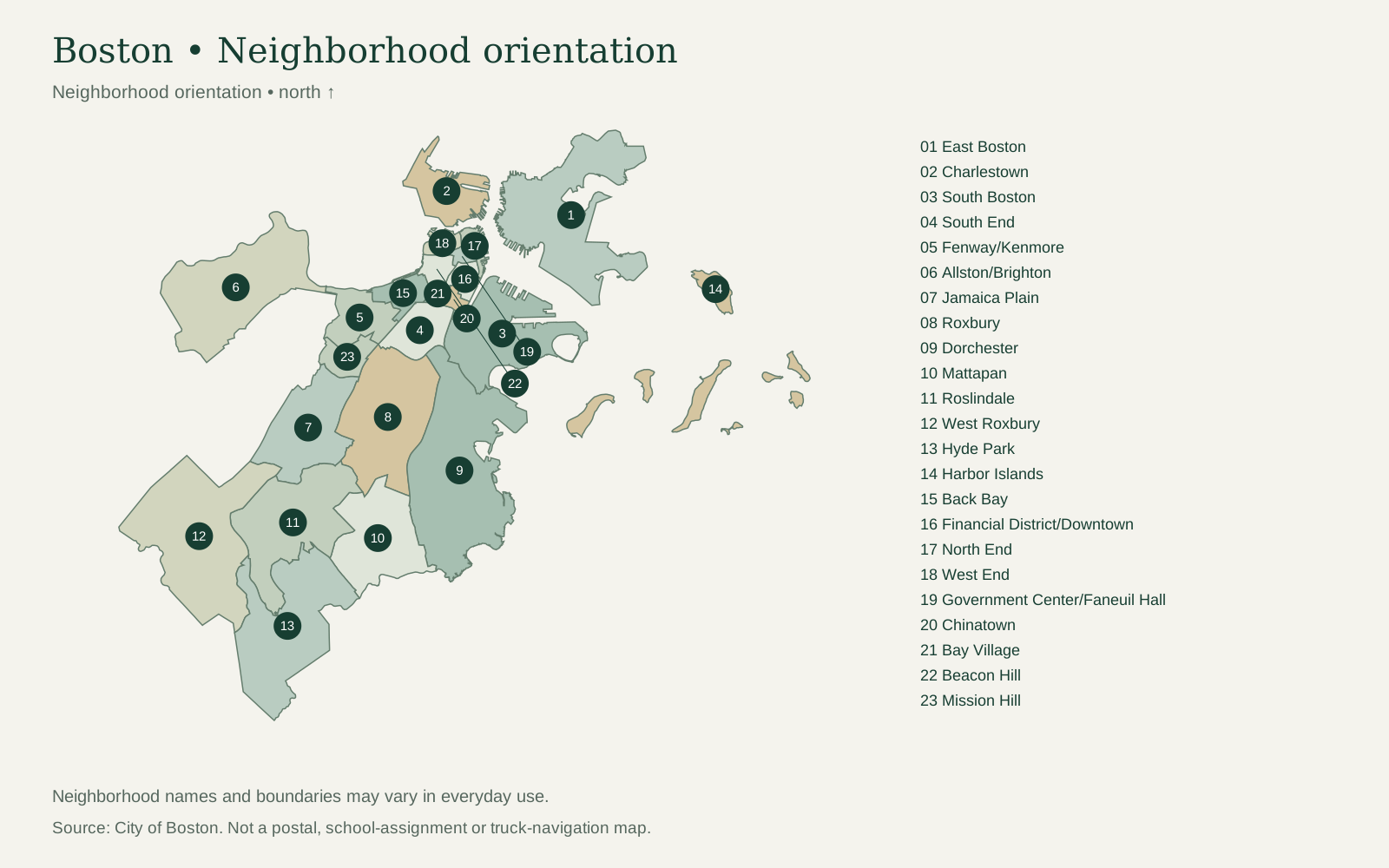
The map locates the eight comparison areas, selected roads, water and rail stations using City neighborhood geography and MBTA data. Allston is marked within the GIS layer’s combined Allston/Brighton area. The original 23-area municipal overview remains available for the wider city and harbor islands. These maps do not establish school assignment, parcel membership or a truck route.
Eight numbered comparison areas, real road and water geography, and selected MBTA connections. Allston lies within the GIS layer’s combined Allston/Brighton area. The inset shows the wider municipality; school and truck routes are separate. Explore the map.
03 /
Find the area that fits your routine
Compare these eight areas by the routines you want to make easier. They are selected starting points within Boston, not a ranking or a complete inventory of its neighborhoods.
At every candidate home, walk the grocery and transit circuit, record usable rooms and storage, and trace the largest furniture item from the legal unloading position to its room. Note stair turns, shared entrances and who controls deliveries. Use the housing comparison and building worksheet for this common survey; the differences below help you decide what deserves closer attention in each area.
Back Bay
A protected historic district organized around streets including Newbury, Boylston and Commonwealth Avenue. The Boston Public Library, Prudential area and established shopping streets provide recognizable anchors for comparing a daily walking route.
Historic homes and managed apartments can differ in storage, stairs, elevator access and delivery bookings. Compare those alongside the usable rooms.
Daily travel
Back Bay serves the Orange Line; Copley serves the Green Line. Choose the station whose line and front-door walk suit the regular destination.
Before choosing
Historic-building stairs and storage can outweigh an attractive frontage; a managed building may instead constrain the delivery window.
Beacon Hill
Brick rowhouses, narrow streets and brick sidewalks shape this historic neighborhood near the State House. Charles Street supplies a recognizable business corridor, but individual homes can face different slopes and approaches.
Stair turns, storage, bedroom and bathroom layout, and the furniture entrance deserve attention. A rowhouse frontage does not establish elevator access.
Daily travel
Charles/MGH serves the Red Line. The home’s position on the hill changes the station walk and possible interchange.
Before choosing
Slopes, brick sidewalks and entrance steps affect ordinary errands and the furniture carry. Match the legal truck position to the actual entrance.
Dorchester
Boston’s largest neighborhood contains distinct centers rather than one uniform residential setting. The City highlights Dorchester Avenue, Fields Corner and access to Franklin Park among its local reference points. Start with a smaller area when shortlisting homes.
The property’s usable rooms, shared entrance, outside space, storage and common-area maintenance matter more than a neighborhood-wide housing description.
Daily travel
JFK/UMass, Fields Corner and Ashmont are distinct Red Line reference points. Branch, transfer and any connecting bus can change the journey.
Before choosing
Shortlist around a specific center, such as Fields Corner or Ashmont, before comparing across Dorchester. Keep that smaller-area comparison for the home and daily route.
Jamaica Plain
Jamaica Pond, the Arnold Arboretum and the Emerald Necklace are prominent anchors in the City’s description of this former streetcar suburb. A home chosen for park access can produce a different everyday route from one chosen around a rail station.
Bicycle or stroller storage, common access and entrance stairs can shape the routine as much as nearby green space.
Daily travel
Forest Hills, Green Street and Stony Brook serve the Orange Line. The pond, shopping streets and stations are not equally close to every home.
Before choosing
Choose between a stronger park circuit and a shorter station walk where necessary. Include driveway or street access and the route for large furniture.
East Boston
A waterfront neighborhood with a shipbuilding history, a mix of older and newer housing, the Greenway and Logan Airport. The harbor makes the relationship between this part of Boston and downtown an important part of a household’s travel planning.
Layout, shared entrance, outside space and management vary by building. Sound and waterfront views need assessment from the actual room.
Daily travel
Maverick, Airport, Wood Island and Orient Heights serve the Blue Line. A downtown or regional destination may add a transfer.
Before choosing
Include the return across the harbor with shopping, luggage or children. Plan the shipment’s legal vehicle approach and unloading separately from passenger travel.
South Boston
Dorchester Heights, waterfront recreation and the Fort Point area give South Boston several distinct settings. It is a different neighborhood from the South End; using the correct name matters when comparing listings and describing a destination.
An older residential home and a managed waterfront building may have very different daily access and move-in policies.
Daily travel
Broadway and Andrew serve the Red Line. Waterfront and eastern homes may need a longer walk or bus connection.
Before choosing
Include any hill, the actual receiving entrance and the building’s loading slot. South Boston and the South End are separate destinations.
Allston
The City describes a neighborhood closely connected to nearby universities, with business activity around Harvard Avenue, Commonwealth Avenue and Brighton Avenue. The Honan-Allston library is another useful local anchor when comparing everyday routes.
Lease dates, room layout, shared-area management and space for working from home deserve a property-level comparison. University proximity does not describe a building’s occupants.
Daily travel
Harvard Avenue, Packard’s Corner and Allston Street are Green B stops. Other parts of Allston may depend on a different walk or bus connection.
Before choosing
For September turnover, coordinate keys, building access and disposal before the last day. Visit at the hours that matter to the household.
South End
A landmark district associated with Victorian brownstones and business corridors including Tremont Street, Columbus Avenue and Washington Street. Blackstone and Franklin parks are local reference points. This is separate from South Boston.
Upper-floor, garden-level and split-layout homes differ in light, storage, stairs and entry routes; a brownstone label cannot settle those features.
Daily travel
Back Bay or Massachusetts Avenue on the Orange Line may suit the address; SL5 serves Washington Street. Compare the actual connection.
Before choosing
Identify the furniture entrance and protection for shared halls. This neighborhood is distinct from South Boston.
04 /
Compare the whole housing arrangement
A good Boston housing comparison begins with the usable home, its running costs and the terms of access. An attractive room can be difficult to furnish if the staircase will not accept the furniture. A lower advertised rent can come with a different heating responsibility or a parking arrangement that changes the household budget. Put those details beside the listing while you still have alternatives.
Read the space as a place to live
During a viewing, sketch where the main furniture would go and how people would move between rooms. Measure the important pieces before relying on the floor plan. Check closet and other storage, laundry arrangements, space for a bicycle or stroller, and the practical location for a desk if someone works at home. Look at the light and ventilation in the rooms you will occupy most, rather than judging only the entrance or front room.
Then trace the route into the unit. A historic rowhouse, a multifamily house and a managed apartment can all work well, but each may put the constraint in a different place: a stair return, a shared hallway, an elevator door or a controlled loading entrance. Ask the owner or manager which entrance may be used for moving. Keep a copy of the answer with the lease and move plan.
Compare recurring costs and one-time commitments
Cost or term
Question to resolve
Rent or ownership costs
What is due each month, what can change and which written agreement sets it?
Heat, hot water, electricity and cooling
Which systems serve the unit, which costs are included and who opens the accounts?
Transport and parking
Will the routine use transit, a car or both, and is any private parking separately contracted?
Internet, laundry and storage
Which arrangements are available in this building, and which are additional costs?
Move-in payments and overlap
What payments are being requested, what do they cover and will two homes overlap?
Move access
Are there deposits, booked hours or other building requirements to budget and schedule?
For example, when comparing two rentals, add the costs your household would actually carry under each lease. Do not simply add a generic city average for utilities or assume that a resident permit supplies a parking space. This worksheet produces a comparison of the two arrangements; it is not a market rent estimate.
Massachusetts changed residential rental broker-fee rules on August 1, 2025: the party hiring the broker is responsible for that broker’s fee. A tenant may still choose to hire a broker. Read the State’s broker-fee FAQ and ask who engaged the broker before treating a requested charge as part of the move. For other payments and lease questions, use the Attorney General’s landlord and tenant guide.
Document the property and the handover
Boston’s housing-code guidance explains the residential standards and Inspectional Services’ role. Establish who receives a maintenance report, how access for repairs works and who manages common areas. Record the condition at handover with dated photographs and a written list of concerns, and retain the correspondence. This creates a useful record without relying on a neighborhood’s reputation to tell you about an individual property.
Before committing the move date, settle when keys will be available, when you may enter and when furniture may arrive. Those can be different times. Housing assistance and current tenant resources are available through the Office of Housing Stability.
Keep a usable path through furnished rooms as cartons are packed.
05 /
Living without a car, and when one helps
Yes: Boston is a practical choice for living without a household car, especially close to rail and everyday shops. Back Bay and the central neighborhoods are strong starting points; homes near the Orange Line in Jamaica Plain, the Blue Line in East Boston or the Red Line in Dorchester also offer useful connections. A farther-out address can mean more walking, buses or transfers. This is a judgment based on the city’s destinations and transport network, rather than a promise about every home.
About 33% of Boston city households had no vehicle available in the 2024 ACS five-year estimates (2020–2024; margin of error about one percentage point). That describes vehicle access within the City of Boston, rather than the metro area. It does not show whether the arrangement was voluntary or easy.
The following are route reference points, not promised journey times or a complete list of neighborhood service. They are drawn from the MBTA’s public route and stop data. The MBTA trip planner supplies an address-to-address itinerary for the chosen day and time. Use MBTA schedules and service alerts for the date you will travel.
Area being compared
Useful rail reference points
Decision to test
Back Bay
Back Bay — Orange; Copley — Green
Which line reaches the regular destination with the more useful walking connection?
Beacon Hill
Charles/MGH — Red
How does the station walk fit the particular side of the hill and the household’s mobility?
Dorchester
JFK/UMass, Fields Corner, Ashmont — Red
Which station and branch form the actual journey?
Jamaica Plain
Forest Hills, Green Street, Stony Brook — Orange
What is the tradeoff between the home’s park access and its station walk?
East Boston
Maverick, Airport, Wood Island, Orient Heights — Blue
Where is the transfer, if needed, after crossing toward downtown?
South Boston
Broadway, Andrew — Red
Does the home require a longer walk or a useful bus connection?
Allston
Harvard Avenue, Packard’s Corner, Allston Street — Green B
Does the B branch and the walk from the home suit the destination?
South End
Back Bay or Massachusetts Avenue — Orange, depending on location
Compare the station walk with Washington Street bus options, including SL5
For a household with a stroller, mobility constraint or heavy daily equipment, review station accessibility and the walk itself as part of the journey. A line on a map does not show a broken elevator, difficult crossing or steep section outside the station. Use current transit notices and a trial trip to resolve those questions. Keep a practical fallback for the most time-sensitive appointment.
Options beyond the daily train trip
Walking works best where groceries, a pharmacy, laundry and places you enjoy are nearby. Cycling adds reach: Boston By Bike links the actual facility map, and Bluebikes lets you unlock at one station and return to another with an open dock. A dock or painted lane does not mean the entire journey is protected; winter also brings some station removals and relocations.
A car makes regional visits, bulky purchases and destinations beyond convenient transit easier. For occasional driving, Zipcar in Boston offers hourly or daily round trips, returned to the pickup location. Membership approval and a valid driver’s license are required. If you cannot drive, that option does not solve the gap: budget a taxi or ride with a driver for journeys transit cannot reasonably serve. Late travel, disruptions and heavy shopping can make those extra costs material. Include leisure, medical visits and friends outside the city when choosing the home, as well as work and school.
If you bring a household car
Boston’s resident parking process uses Massachusetts registration and evidence of Boston residency. The permit is tied to the vehicle and applicable neighborhood; it does not guarantee an available space. Bring valid Massachusetts registration showing the car in your name and principally garaged at the Boston address, plus qualifying residency proof. The ordinary resident permit is free; paying for a private space is a separate cost.
Compare the car arrangement with your regular routine: the work trip, grocery shopping, childcare and occasional travel outside the city. If a private space is offered, read its separate terms and verify that your vehicle can use it. Keep this decision separate from moving-truck parking. The household’s resident permit does not reserve a curb position for the moving vehicle, and the truck reservation is not an ongoing parking solution for your car.
Build the daily journey and moving-truck approach from the actual front door.
06 /
Plan enrollment and the school-day routine together
The nearest Boston public school is not automatically your child’s school. BPS’s Home-Based plan gives K–8 applicants an address-based choice list, including schools within one mile plus other qualifying options. High-school options are citywide, with separate steps for selective programs. Assignment is not a guarantee of your first choice, and K0/K1 preschool seats are not guaranteed.
Get the address-based options. Enter the residence and grade in BPS Explore. Define the intended year and start date before ranking schools. A school preference is not a confirmed assignment.
Prepare the registration packet. The current BPS checklist requires the child’s age document, guardian photo ID, immunization records, a physical exam from the past year and two Boston residency proofs from different checklist categories. Examples include a qualifying utility bill and a current signed lease. Water and cell-phone bills do not qualify as the utility proof. Several categories require documents dated within 60 days; the checklist gives the period for each.
Submit and finish the review. Apply through BPS’s registration portal. A specialist reviews the documents and follows up about missing material, language assessment or specialized services. Keep the completion email, then the assignment and start information. Submitting the form alone does not finish the process. A Welcome Center visit is optional help, rather than a requirement for every applicant.
Arrange the whole school day. After assignment, establish transport, start and dismissal times, aftercare, meals and who can collect the child. Provide any IEP and school records for the appropriate review.
Welcome Services answers enrollment and midyear questions at 617-635-9010. Use that contact for unusual residence documentation or an interrupted school year; the general checklist does not cover every family’s circumstances. Keep the school folder, district correspondence and health records with your accessible essentials so enrollment can continue while the shipment is in transit.
07 /
Build a routine beyond the commute
Start with a grocery, pharmacy and laundry circuit near the home, then add the public places you will use regularly. A central Boston address offers more short trips on foot; a farther-out home may need a bus connection. Carrying groceries back to the entrance gives useful information about a route that a distance on a map cannot supply.
700 Boylston Street has a sidewalk-level accessible entrance; public floors have elevator or lift access. Library help: 617-536-5400. Nearby Copley and Back Bay provide transit connections.
Jamaica Pond, Arnold Arboretum, Franklin Park and the Emerald Necklace offer different walks; park proximity and an Orange Line station walk are separate housing choices.
The Parks and Recreation directory supplies facility information. Establish the building’s maintenance contact and collection arrangement in the first week. For nonemergency City issues such as a damaged sidewalk, use 311; account or building faults go to their own provider or manager. These contacts turn a general arrival checklist into a usable first-week routine.
Include the outdoor routines you will use regularly when comparing locations.
08 /
Set up the services this home actually needs
Start with the lease, seller or building manager. Establish which systems serve the unit, whose name belongs on each account and the date responsibility changes. An apartment with heat and water included has a different setup from a home with separate accounts. Do not open a service simply because another Boston household uses it.
Service
Resolve before taking possession
Electricity
Account holder, service address and unit, transfer date and how supply appears on the bill
Heat and hot water
Fuel or system, included costs, responsible provider and operating arrangements
Water and sewer
Whether responsibility belongs to an owner, association or tenant under the property arrangement
Internet
Service available in the building, installation access, equipment and the activation appointment
Shared systems
Who handles building-controlled heat, common-area services and service interruptions
Boston Community Choice Electricity is a supply program. The City’s utility resources distinguish that supply choice from Eversource’s delivery, metering and billing role. Keep the distinction in mind when reading the first electricity bill; changing a supply arrangement and starting service at a new home are different tasks. This guide does not reproduce a rate that may change before you move.
For an Eversource account, use its start, stop or transfer service process and select the correct location and service. Keep the confirmation of the start date. The City lists Eversource’s residential help at 800-592-2000. If a service is included in the rent or managed centrally, obtain the responsible contact instead of duplicating an account.
The Boston Water and Sewer Commission’s customer guidance addresses property and billing changes. Renters should settle the arrangement with the landlord or management; purchasing a property introduces a different transfer and settlement process. For a purchase, finalize the seller’s water and sewer charges as part of the transfer. Authorized owners, associations or agents use BWSC’s change-of-billing-name/address process; customer service is 617-989-7800. A renter does not automatically open a separate water account.
For the first evening, the useful outcome is a home with the agreed essential services available and a way to report a problem. Test lighting, hot water and the systems you are responsible for at handover. Keep account confirmations and the building contact accessible. If internet installation is later, arrange a workable interim connection for the household’s actual needs rather than scheduling a critical remote appointment on an unconfirmed activation.
09 /
Plan disposal before the last day of the lease
Ordinary furniture can go out with Boston’s regular curbside trash; mattresses and listed appliances use separate appointments. This distinction avoids leaving an item outside for a crew that will not take it. For a building with its own private hauler, use management’s collection arrangement.
The City’s Trash Day lookup gives the actual address’s day and holiday changes. Put ordinary trash and furniture out after 5 p.m. the night before and by 6 a.m. on collection day. Use appropriate trash bags or lidded barrels; flatten clean cardboard for recycling rather than using a cardboard box as a trash container. Keep the sidewalk passable.
Mattress and box-spring pickup is by appointment, serving most buildings with six units or fewer. Buildings with seven or more use management or a private hauler. Book through the City page or call 311 / 617-635-4500. Put the item at the curb after 5 p.m. the night before and by 6 a.m. on the appointment day, without cutting or crushing it. Keep it unblocked with nothing on top. A soiled or bedbug-infested mattress must be fully sealed in a plastic mattress bag. The City currently limits the service to ten items per calendar year.
Air conditioners, refrigerators, freezers, dehumidifiers, water coolers, televisions and computer monitors need the separate special-item request through 311. Name the item when booking. Do not apply the ordinary-furniture rule to those items or to a mattress.
Keep the disposal list separate from the moving inventory. After delivery, stage empty packing material clear of doors and common areas; flatten recycling in batches. Unpack the bed, bathroom essentials and basic kitchen first, then work through labeled cartons without blocking the route you still need.
10 /
Prepare for the date and weather of the move
Choose workable dates before filling the calendar
Compare several dates if you have flexibility. Mayflower's scheduling guidance describes seasonal and month-end demand. A general pattern does not establish a free crew, an elevator booking or a lower price for your particular move.
In Sterling's scheduling experience, pressure often builds from roughly the 25th through the 3rd, with another busy period around mid-month. Use that as a prompt to compare actual availability. Check the lease or closing, school or work calendar, building hours and the people who must approve access together.
Boston’s early-September moving period can bring concentrated lease turnover and temporary local traffic rules. The City moving hub collects current guidance. Plan around the advisory for your actual date and neighborhood, and keep permanent rules separate from a one-time event notice. Last year’s restriction is a prompt to look for current information, not a substitute for it.
For a September move, settle the old-home deadline, new-home possession, building booking and truck arrangement together. Arrange disposal before the last collection you can use. If the schedule leaves a gap, decide where people and essential belongings will be while access changes. A family’s school start or workday may need a separate plan from the furniture shipment.
Winter changes the loading route
The City’s winter and snow guidance covers current emergency information and local responsibilities. A snow emergency can affect parking even when a moving reservation has been issued. Recheck the applicable notice and discuss the legal loading arrangement with the mover and property contact.
Name the person responsible for clearing and treating the outdoor route. Inspect the entire path, including the curb, ramp position, steps and entrance; a cleared front step is only one part. Decide where melting snow and wet protective materials can be managed inside without making shared floors slippery. Keep the building’s heat and essential services in the handover checklist.
Use a short seasonal review
Before the date is fixed: identify lease turnover, building closures and any event likely to affect the proposed frontage.
As the move approaches: check current road and weather notices, reconfirm access and identify who can change the arrangement.
Before loading: verify that the path and legal truck position remain usable under the day’s conditions.
In hot or wet weather, plan accessible personal supplies and discuss sensitive belongings before loading. Avoid packing everything needed for the day into the shipment. The aim is a workable response to the conditions that actually develop, rather than assuming a season guarantees a particular temperature or an uninterrupted schedule.
During a declared snow emergency, cars on posted snow-emergency arteries can be ticketed and towed. Under the City’s winter rules, space savers are allowed only in connection with a declared emergency and for up to 48 hours after it ends; they are banned in the South End and Bay Village. Some Bluebikes stations are also removed or relocated for winter. Include an alternative travel and loading arrangement when a storm changes the plan.
Assign snow clearing and check street restrictions before the truck arrives.
11 /
Arrange the curb, the permit and the truck route
Start by identifying who controls the proposed loading position: the City, DCR or a private property. Then establish whether the actual moving vehicle can legally stand there for the required work. A private loading dock, a Boston street reservation and permission on a state-controlled road are different arrangements. Giving the mover the building’s name alone does not settle any of them.
Boston’s moving-truck reservation
A permit is not required for every Boston move. Where a reservation is appropriate, the standard City permit reserves two parking spaces for one day, from 7 a.m. to 5 p.m. The published charge is $69 for two nonmetered spaces, with $40 added for two metered spaces. These are City reservation charges, separate from a moving estimate. Read the current permit instructions before applying.
The Parking Clerk’s moving-truck FAQ sets the application window: online applications are at least 15 days and no more than eight weeks before the move; in-person applications are at least three days ahead, within the same eight-week maximum. Post the signs at least 48 hours before the 7 a.m. permit start; the City recommends three days ahead. Arrange a recipient and someone who can post them if you are outside Boston.
Define the proposed space. Provide the street frontage, moving date and vehicle information. Confirm that it is a place the relevant authority can authorize for this purpose.
Coordinate the working window. Match the curb reservation with keys, building access and the planned truck arrival. A permit ending at 5 p.m. does not establish a later loading right.
Assign application and posting. Name the person responsible for each task. Keep the permit and posting information with the move documents.
Deliver the City’s neighbor notices. Copy the supplied flier and place it on cars within half a block of the reserved spaces each day for at least two days before the move. For metered spaces, the City requires this one day ahead.
Review conditions near the move. Read the signs and current notices affecting the space. Plan who will inspect it before the truck arrives.
Resolve an obstruction through the authority. If a vehicle occupies the reserved space, use the City’s instructions and Boston Police nonemergency contact, 617-343-4911. Do not arrange to move another person’s car yourself.
Clear the temporary materials. After the move, remove the signs and fliers and clean up any debris.
Recheck the current City application, posting and neighbor-notice instructions for the actual frontage and move date before applying.
Reservation limits matter. The City FAQ says the permit does not override a snow emergency, construction restrictions, accessible spaces or no-stopping and no-standing tow zones. During street cleaning, it requires someone to remain with the truck. Most storage containers require an in-person application; the City lists a separate PODS procedure. Read those branches before substituting a container for a truck or treating the permit as permission for every curb condition.
State roads and vehicle routing
City moving permits apply to City streets. For a DCR-controlled location, use the contact and authorization route identified in the City FAQ. Separately, DCR’s river-road warning identifies Storrow Drive, Soldiers Field Road and Memorial Drive as closed to trucks, moving vans and other prohibited large vehicles. Memorial Drive is in Cambridge; a route across municipal boundaries still needs to respect that restriction.
Do not use bridge clearance alone to conclude that a moving vehicle is permitted. Have the carrier plan the approach for the vehicle’s class, dimensions and any current road restrictions. A normal passenger-car navigation route is not that review.
A practical coordination example
Suppose the new building releases keys at midday and grants a service-elevator slot later that afternoon. Before choosing the City reservation, compare all three windows with the mover: curb use, keys and elevator. If they do not overlap enough for the work, change the arrangement before applying. This is a hypothetical planning example, not a promise of how long a Boston move takes.
Containers and overnight arrangements
If your plan uses a moving container or temporary storage, check the arrangement separately with the property owner and the relevant authority. Boston's permit instructions distinguish moving containers from the ordinary truck application. A daytime truck reservation does not establish permission for a container or overnight storage.
Connect the curb reservation to the entrance
The illustration below joins four decisions: the legal truck position, working room behind it, a usable pedestrian path and the agreed building entrance. Apply them together to the actual address.
Sketch these four points for your address before coordinating parking and building access. Diagram not to scale. Open full-size diagram
The legal truck position. Confirm the exact frontage, permitted window and space needed by the actual vehicle. A nearby available spot may create a different carry.
Room behind the truck. Review unloading equipment and working room with the mover. Keep that space inside the authorized arrangement; the diagram does not specify a required distance.
The shared pedestrian route. Keep the sidewalk usable and coordinate where the carrying path crosses it. The arrow represents movement, not a ramp or permission to block the sidewalk.
The agreed entrance. Confirm the door, key holder, opening time and route inside. A curb reservation does not grant building access.
12 /
Survey the path through the building
The access survey should end at the room where each large item belongs. It starts with the usable truck position, then follows the outside path, entrance, halls, stairs or elevator and final doorway. Write down which part is shared or controlled by management. The purpose is to discover the limiting point while there is time to alter the plan.
For a walk-up or older multifamily home
Record stair flights, clear door openings, landings, turns and low overhead points. Photograph the route from both directions so the person planning the move can understand its shape. Measure the largest pieces and show any protruding legs, frames or handles. A large landing at one floor does not make a tight turn at another disappear.
For example, a sofa may fit the entrance but fail to turn onto the next flight. Identify that possibility through dimensions and a review of the route before the piece is carried upstairs. Ask whether disassembly is possible for that particular construction and who will perform any agreed work. Do not assume a window, balcony or removed fixture is an approved alternative.
For a managed or elevator building
Ask management for the written moving policy and the person who can approve the plan. There is no single Boston-wide rule that supplies every building’s elevator hours, insurance wording, deposits or protection requirements. Obtain the property’s actual instructions and share them before booking a restricted slot.
Record for each property
Question to resolve
Authority and contact
Who approves access: landlord, owner, association, management or another authorized contact?
Entrance and loading point
Which door, dock and truck position are allowed, and who opens them?
Each elevator and connecting route
Does the path use a second elevator, basement transfer, corridor or stairs? Record every limiting opening and usable dimension.
Exclusive or shared use
Is the elevator reserved for this move, shared with other deliveries, or operated by building staff?
Permitted hours
When may materials arrive, packing take place, furniture move and protection be removed? Is after-hours staff confirmed?
Documents and contractor conditions
Which COI wording, union or approved-vendor conditions apply; who submits them and has the building accepted them?
Fees and deposits
What is the payment for, who is responsible, when is it due, and how is any refundable deposit returned?
Protection and common areas
What must be protected, where is temporary staging allowed and how will passageways remain usable?
Change procedure
Who can resolve a late arrival, unavailable dock or elevator failure, and when must an alternative be selected?
Keep the pickup and delivery surveys separate, even if both properties are apartments. Label photographs with the property and part of the route. A clear record prevents a measurement for one elevator from being applied to the other.
At handover, review the agreed path again. Work elsewhere in the building, a locked service entrance or a changed elevator slot can alter an otherwise sound plan. Keep emergency exits and shared passageways usable. If a route requires a property alteration or a special handling method, obtain the relevant approval and a specific plan; the guide’s worksheet itself does not authorize that operation.
Match the dock, staff and elevator arrangements
These office-property handbooks illustrate how a dock and elevator can have different conditions; they do not set residential rules across Boston. At 350 Boylston, the moving policy provides evening elevator access; the dock instructions require separate arrangements outside normal operating hours. Ask management to confirm a schedule that covers the whole operation.
For a rental condo, distinguish the tenant, unit owner and association or manager. A request for a move fee or deposit should identify its basis and responsible payer. Massachusetts regulates certain tenant payments to a lessor or agent; a particular condo charge needs its own applicability check. See Massachusetts tenancy payment rules.
Prepare before a short carrying window
Agree the route and volume. Have the mover assess how the items will pass through all limited sections, including shared or sequential elevators.
Arrange materials. Confirm when cartons and protection can be delivered and taken to the work area. Materials may need their own elevator access.
Complete the agreed preparation. Schedule packing and furniture preparation before the carrying period where permitted. If full packing is booked, readiness means the agreed access and scope, not an unexpected requirement to pack everything yourself.
Use the slot for its intended work. Allow for protection, carrying and clearing the route within the approved times. Agree another slot or separate stages if the assessed work will not fit.
More workers do not automatically increase the capacity of one elevator. A lobby, passenger elevator or unreviewed staircase is not an assumed overflow route. Arrange an approved, workable alternative before dispatch.
Check when the business can resume work
For an office, shop or workshop, name the receiving person and the functions needed for reopening. Confirm who prepares equipment, disconnects it, installs it and checks operation. For IT, agree responsibility for reconnection and testing before the old system is switched off. For a restaurant, plan equipment and food stocks separately, with the appropriate technical and storage arrangements.
A moving slot does not prove that power, network connections or equipment are ready. Where continued operation matters, discuss stages and a confirmed temporary working arrangement with the people responsible for those functions. The commercial moving section explains the service request; specialist operating procedures belong with the relevant technical team.
Ask management which entrance, loading area and elevator the move may use.
13 /
Sequence the handover and the first few days
Start when the move becomes likely: identify the deadline for leaving, the first confirmed access at the destination and any gap between them. Exact handover hours matter. A closing appointment, lease start, key collection and an approved moving slot can be separate events.
Separate the household’s arrival from the shipment’s arrival. Someone may need to collect keys, meet a building contact, enroll a child or start work before the furniture is delivered. Use the suggested responsibilities below to name a person for each task. One person can take several roles, but key collection and truck arrival must not depend on them being in two places at once.
Stage
Action
Assign a lead
Confirmation to keep
Before leaving the old home
Complete the agreed inventory and packing, arrange disposal and record departure condition
Household contact; packing provider for work included in the agreement
Inventory, packing scope, condition photographs and disposal arrangement
Household contact with the landlord, seller or property manager
Keys, lease or closing information, photographs and service confirmations
At delivery
Check belongings and direct large furniture to its intended room; record any concern
The person authorized to receive the shipment, with the delivery crew
Inventory, room plan and the record made through the agreed reporting process
During the first few days
Establish sleeping, cooking, school or work, collection and address-update routines
Assign household members to the accounts and routines they manage
Enrollment or service confirmations, collection schedule and an address-change list showing what is complete
Prepare one household essentials group that travels with you: the items needed to sleep, wash, eat simply and complete the next day’s commitments. Adjust it to the people moving rather than treating a generic packing list as complete. Keep pets and children away from the active carry route, with a responsible person and a suitable place for them during loading and delivery.
At delivery, use a simple plan showing where the main pieces belong. Confirm the inventory and record a concern while the relevant item and paperwork are at hand. Do not assume that a sealed carton proves its contents are ready for use; unpack the rooms needed for the first night in a deliberate order.
Then complete the address-dependent tasks: postal forwarding, appropriate vehicle and resident-parking updates, school follow-up and household accounts. Use the City moving hub for the municipal starting points. It is useful to record which changes are submitted and which are actually confirmed.
For the moving-service side of this plan, the Boston moving page explains the information needed for a service discussion and written estimate. This guide’s worksheets can supply the housing, street and building details for that conversation.
Use the questions that fit the property
Situation
Settle this first
Rental or walk-up
Vacating and key times, stair route and any gap between leases
Managed rental or condo
The approving parties, each access window, documents and payment conditions
Purchase or new construction
Confirmed possession and usable access; review the remaining reserve whenever closing changes
Student or fixed turnover
The exact housing-program dates and any temporary accommodation actually available to you
Business premises
Access plus the people, infrastructure and specialist work needed to resume operation
For example, Harvard University Housing has its own key and moving arrangements. Use the policy for your landlord or program. For a purchase, confirm possession with the parties handling the transaction; the CFPB closing overview explains the general sequence.
Agree a Plan B while it is still available
Choose the fallback before the last point at which it can be arranged. That might be before a storage reservation expires, a building deadline passes or a specialist releases the date. An application or a supplier's phone number is not a confirmed resource.
Trigger and decision time
What missing confirmation or change activates the alternative, and when will you decide?
Owner and contact
Who can change the plan and authorize the agreed costs? Name a backup contact.
Alternative and approval
Specify the new slot, separate stage or storage arrangement, who will carry it out and the permissions required.
People, belongings and access
Confirm where people and pets will be, who receives the goods and what must remain accessible before final delivery.
Costs and notifications
Agree waiting, storage, cancellation or repeat-delivery conditions and who must be told about the change.
Restart
Identify the confirmation that permits the next stage and who checks it.
If keys are delayed, suitable confirmed storage and later delivery may provide the alternative. If a dock or elevator is unavailable, use an approved new window or reviewed route; moving the queue to an unauthorized common area does not resolve the access problem. For an interstate household shipment, review the carrier's delivery and storage terms; FMCSA's delivery guidance describes that context.
If only a day or two remains, first establish what access and work are possible. Tell the mover what is packed, what is not and which deadline is unavoidable. Agree the achievable scope and an authorized alternative where needed. A short notice period does not shorten an external approval deadline.
14 /
Questions before you arrive
Can I live in Boston without a car?
Yes. Boston is a practical choice for living without a household car, especially near rail, groceries and everyday services. Central neighborhoods and station-side homes in Jamaica Plain, East Boston and Dorchester give useful starting points. Walking, the T and buses can cover more than work and school; Bluebikes adds another option for riders.
A car expands regional and bulky-shopping options. Zipcar offers occasional hourly or daily driving, but requires a valid license and membership approval. If you cannot drive, budget transport with a driver for journeys that transit does not reasonably serve. Late trips, disruptions, winter conditions and destinations farther from rail are the main tradeoffs. About 33% of City households had no vehicle available in the 2020–2024 ACS estimate; that shows the arrangement is common, without proving it is easy for everyone. See the transport choices and statistical limits.
Is a Boston-area address always covered by Boston moving and school procedures?
No. Boston, Cambridge and the other nearby municipalities have separate school, parking and collection procedures. Use the municipality in the lease or property record. Boston Property Lookup searches City parcels by address or parcel ID; for an unresolved Boston boundary question, call Assessing at 617-635-4287. A “Boston area” listing or ZIP label alone does not establish City jurisdiction, and a failed lookup alone does not settle it.
Does living near a Boston public school guarantee a place there?
No. For K–8, BPS creates an address-based choice list that includes schools within one mile and additional options; it does not automatically assign the nearest school or guarantee the first choice. High-school options are citywide, with selective-program requirements where applicable, and K0/K1 seats are not guaranteed.
Use BPS Explore with the residence and grade, then submit the registration packet: age proof, guardian ID, health records and two residency proofs from different checklist categories. Finish the specialist’s review and keep the assignment confirmation before planning the first school day. Welcome Services: 617-635-9010. See the enrollment sequence.
How far ahead should I arrange a Boston moving-truck reservation?
Apply online 15 days to eight weeks before the move, or in person three days to eight weeks before it. The standard reservation covers two spaces, 7 a.m.–5 p.m., for one day. Post the signs at least 48 hours before the 7 a.m. start; the City recommends three days. Distribute the required notices to nearby parked cars as described in the parking procedure.
If you have fewer than three days, the published process does not provide a last-minute reservation. Contact the Parking Clerk at 617-635-2560 / movingtrucks@boston.gov and arrange another legal loading position or a revised date. A permit is not mandatory for every move, but the vehicle still needs a legal location. Moving containers use a different in-person process.
Can a moving vehicle use Storrow Drive if it fits under the bridges?
No. Storrow Drive and Soldiers Field Road in Boston, and Memorial Drive in Cambridge, prohibit trucks, moving vans and oversized vehicles. Passing a bridge-height check does not create permission to use them. Give the driver the vehicle dimensions and an appropriate route that avoids those parkways; ordinary passenger-car navigation can send a moving truck onto a prohibited road.
Can I put a mattress out with ordinary trash when moving?
No. A mattress or box spring needs a scheduled mattress-recycling pickup. Most buildings with six units or fewer qualify for the City program; buildings with seven or more use management or a private hauler. Book through the City mattress page or call 311 / 617-635-4500 before putting it out.
For the booked day, place it unblocked at the curb after 5 p.m. the previous evening and by 6 a.m., with nothing on top. Do not cut or crush it. Seal a soiled or bedbug-infested mattress fully in a plastic mattress bag. Ordinary furniture and appliances follow different collection rules; see collection and preparation.
What matters most when comparing a walk-up and an elevator building?
A walk-up trades elevator booking for a physical stair carry on both moving day and ordinary days. It can work well if the household can manage the stairs and the furniture fits the doors, turns and landings. For limited mobility, a stroller or frequent heavy carrying, an accessible elevator building is usually the more practical starting point.
An elevator still has limits: cabin and door dimensions, booking times, shared or exclusive use, protection and any property-specific charges. Measure the whole route and obtain the building’s moving instructions before choosing a delivery window. The access chapter explains the walk-up and managed-building arrangements.
Choosing where to move from Boston
Compare the useful parts of your current week, nearby alternatives and a wider change of region before choosing a home.
Official procedures and local resources are linked beside the answers above. Reopen the relevant page when arranging a date: fees, schedules and application requirements can change.
Direct and consolidated long-distance household moving from Boston and reviewed nearby Greater Boston addresses throughout the United States and Canada.