
Maryland · Salisbury service planning
Full Packing & Unpacking in Salisbury, MD
Closing your laptop should not have to mean opening another cupboard to pack. Full packing gives the retained household contents a preparation plan while you keep time for work, rest and family. Optional unpacking can then make the receiving rooms usable sooner, instead of leaving the next working week surrounded by unopened cartons.
In Salisbury, Maryland, the useful plan depends on the actual home, contents and destinations. An older Newtown house, a compact home near downtown and a larger receiving property can need different preparation visits and opening priorities. Sterling Oakbridge reviews full or partial packing, supplies, delivery, selected unpacking, organizing and finishing work as named parts of the estimate.
Send photographs inside cupboards, closets and stored areas, both addresses, dates and access. Explain what stays available until the last night, what goes to storage and which receiving rooms you need first. Start with the Salisbury moving page and local relocation guide for the wider move.
Buy back the evenings a move can consume
Packing adds a second job to an ordinary working day. Even two people can have kitchen cupboards, books, clothes, photographs and years of small possessions to prepare. Several cartons each evening can stretch into a couple of weeks of household effort. That is an illustration of the burden, not a timetable promised for every home.
The task includes decisions. A shelf of books becomes a keep-or-pass-on question; a closet brings out clothing to try on; photographs interrupt a quick sort with memories. Supplies run short halfway through. The visible furniture list gives little warning of those hours. With children, more belongings and the wish to spend the evening together can make this extra work especially costly in time.
You can pack your own belongings, choose help with particular groups or hand over the retained contents. The reason to buy full packing is the time and effort it releases. Make retention decisions early where possible. A crew can prepare an approved group efficiently; it cannot know which letters, toys or dishes your family wants to keep without instructions.
Choose full, partial or fragile-only preparation
Full packing covers the retained contents named in the reviewed scope. Show shelves, drawers, closets, pantry contents, under-bed storage and any attic, basement or garage group included. Identify owner-packed cartons and excluded belongings. Keep personal documents, medication, valuables you carry yourself and travel essentials clearly outside the shipment.
Partial packing assigns selected rooms or item groups to the team. You might prepare clothing and books while movers protect the kitchen contents, framed photographs and fragile decor. Fragile-only help can suit someone with time for ordinary cartons but a collection needing a reviewed method. Agree who finishes each group and when; an unfinished customer-packed room changes the loading plan.
Inventory determines the supplies, not bedroom count alone. An expectation of twenty cartons can become sixty or a hundred once retained cupboard contents are included. These numbers explain why a quick guess can fail; they are not a Salisbury carton allowance. Ask for appropriate sizes, cushioning and any specialist containers from the actual inventory.
Books need manageable loads. Bedding, small decor and kitchen glass call for different carton and protection choices. Hanging clothes can use a reviewed wardrobe arrangement; furniture, wardrobes and flatpack items may need their own preparation. Do not bury loose fittings or the parts needed for the first usable bed in an unidentified general box.
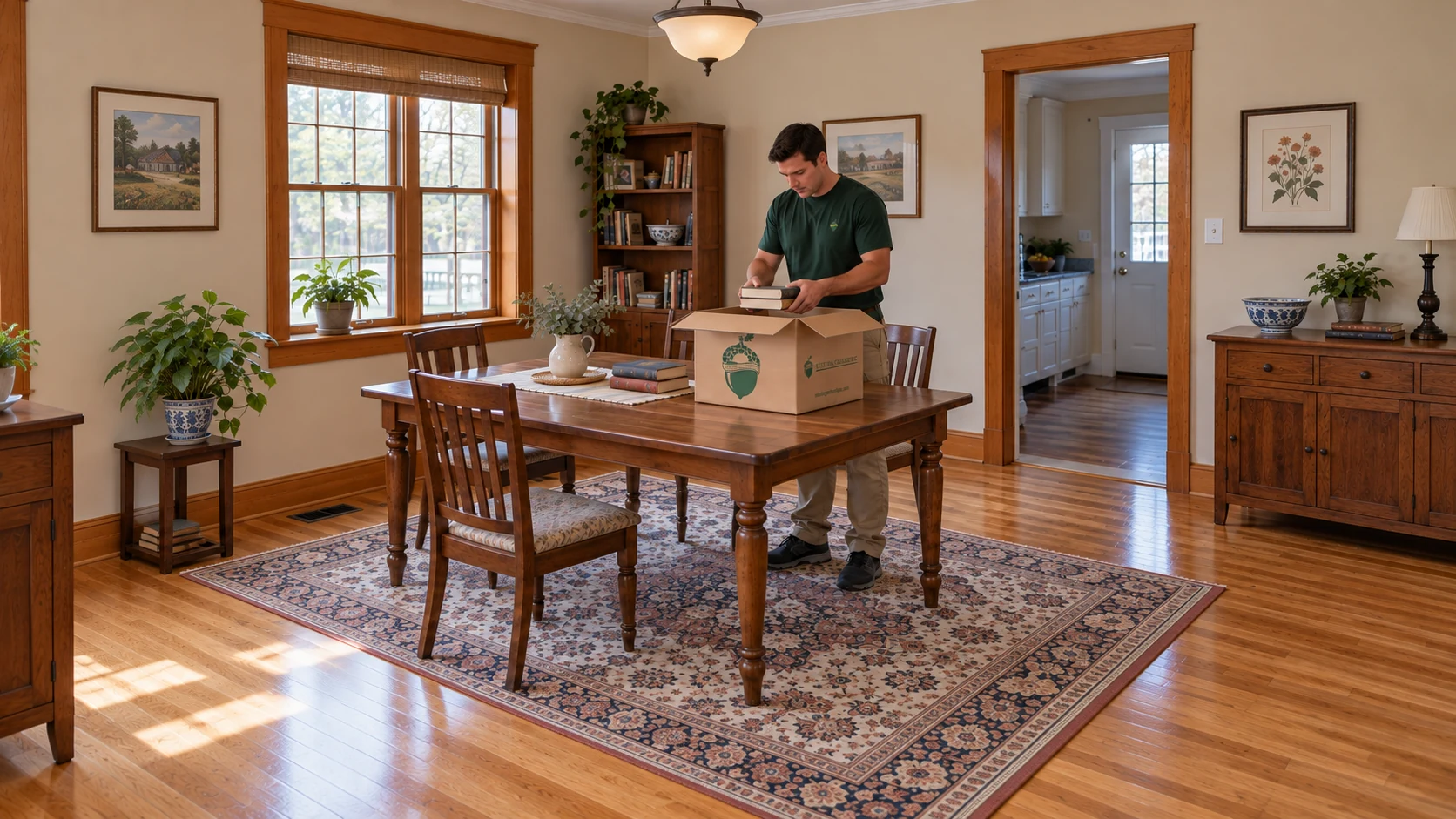
Prepare earlier while preserving the final night
A small studio or one-bedroom local inventory may allow packing and moving in one day when the contents, carry and receiving hours fit. A two-bedroom household can make that combined day demanding; substantial three-bedroom contents deserve an earlier preparation discussion. A room count gives neither a fixed completion time nor a rule about what a household can pack itself.
The preparation crew may be smaller than the moving crew. Earlier visits can finish books, spare linens, decor and most cupboards, leaving the agreed daily-use group. Keep beds, a simple meal set, toiletries, several outfits and familiar child belongings accessible. Identify the final cartons and the point at which those items can be released on loading day.
You should still be able to live in the home that evening. Decide where completed cartons wait without blocking stairs, doors or the working route. Keep private essentials with the household rather than beside an open carton awaiting packing. Confirm access for each visit, especially if an apartment manager controls entry or a public loading arrangement needs advance coordination.
A historic exterior is a reason to inspect the current route, not a carton estimate. Photograph today's doors, turns, stair landings and vehicle approach. The City's Historic District Commission reviews proposed exterior changes in historic districts. Packing does not by itself authorize altering an entrance; raise any actual building work separately before the visit.
Protect the contents through the complete journey
Protection supports carrying, stacking, load restraint and road movement. A bag or loosely filled container that survived a private car trip is not automatically suitable for a moving shipment. Review the actual object, support, cushioning, carton strength, closures and handling method rather than assume an outer wrap solves everything inside.
Glass doors and removable shelves need attention alongside cups, bowls, ornaments and glazed frames. Distinguish a piece of furniture's protection from the fragile contents it contains. Small family photographs and wall pictures also need a method matched to their size, surface and value. Tell us about damage, loose parts and unusual material before packing begins.
A clean work surface and appropriate gloves can help with selected valuable or easily marked contents. Separate that task from dusty carton preparation or exterior handling. The suitable glove and method depend on the object; white gloves are not a conservation guarantee. A significant collection belongs in an individual fine-art handling discussion.
Describe equipment as well as decor. Gym items, a large mirror, unusual cabinet or valuable artwork can affect people, protection and specialist preparation. An ordinary household packing scope does not automatically include every technical or heavy-item task. Decide the approved method before asking the crew to load it.

Give every carton a written next destination
Each carton needs its next destination, receiving room and useful contents in writing. A consistent color system can support those labels, with a legend shared by the household and both handling teams. Color alone is easy to misread. Use the same room identifiers as the receiving layout, and make first-opening priorities recognizable without exposing private contents unnecessarily.
Separate storage cartons before loading. Specify the actual storage facility, approved intake, required stop order and person releasing each group. Keep home-bound cartons apart from the stored collection. If the groups mix, a search at delivery can add unloading, repositioning and another paid handling stage. Labels are a practical investment in that receiving sequence.
The storage plan should include access, holding, release and any later delivery, with its own charges. A box marked storage does not reserve space or arrange redelivery. Likewise, several household destinations need several receivers and usable routes. Put those decisions into the written scope while it is still possible to choose the loading order.
Define what unpacking will leave ready
After rugs and furniture are placed, stacks of cartons can occupy the available rooms. Finding one kitchen piece may mean moving several heavy boxes. The household still has work, meals and daily routines to manage. Optional unpacking replaces that open-ended evening project with an agreed list of cartons and useful receiving priorities.
Basic unpacking opens the agreed cartons and lays contents on suitable designated flat surfaces. Choose stable tables, counters or protected surfaces, with enough clear space for the actual group. Opening every carton at once in a small apartment can create a new obstruction. Prioritize everyday kitchen contents, linen or the first workday group before less urgent collections.
For a substantial three-bedroom project, unpacking might add roughly three to four hours after the move, or a two-person visit the next day may fit better. These are planning illustrations. Carton count, contents, surfaces and direction determine the work. A later visit after several days is also possible subject to availability; report the remaining stacks and requested priorities.
Check packing paper for small parts before it joins the used-material group. Packaging preparation and collection have separate scopes and charges. Agree flattening, sorting, the staging area, quantity and actual handoff rather than assume opening cartons includes every removal task. Keep doors and the carrying route clear as the available room grows.
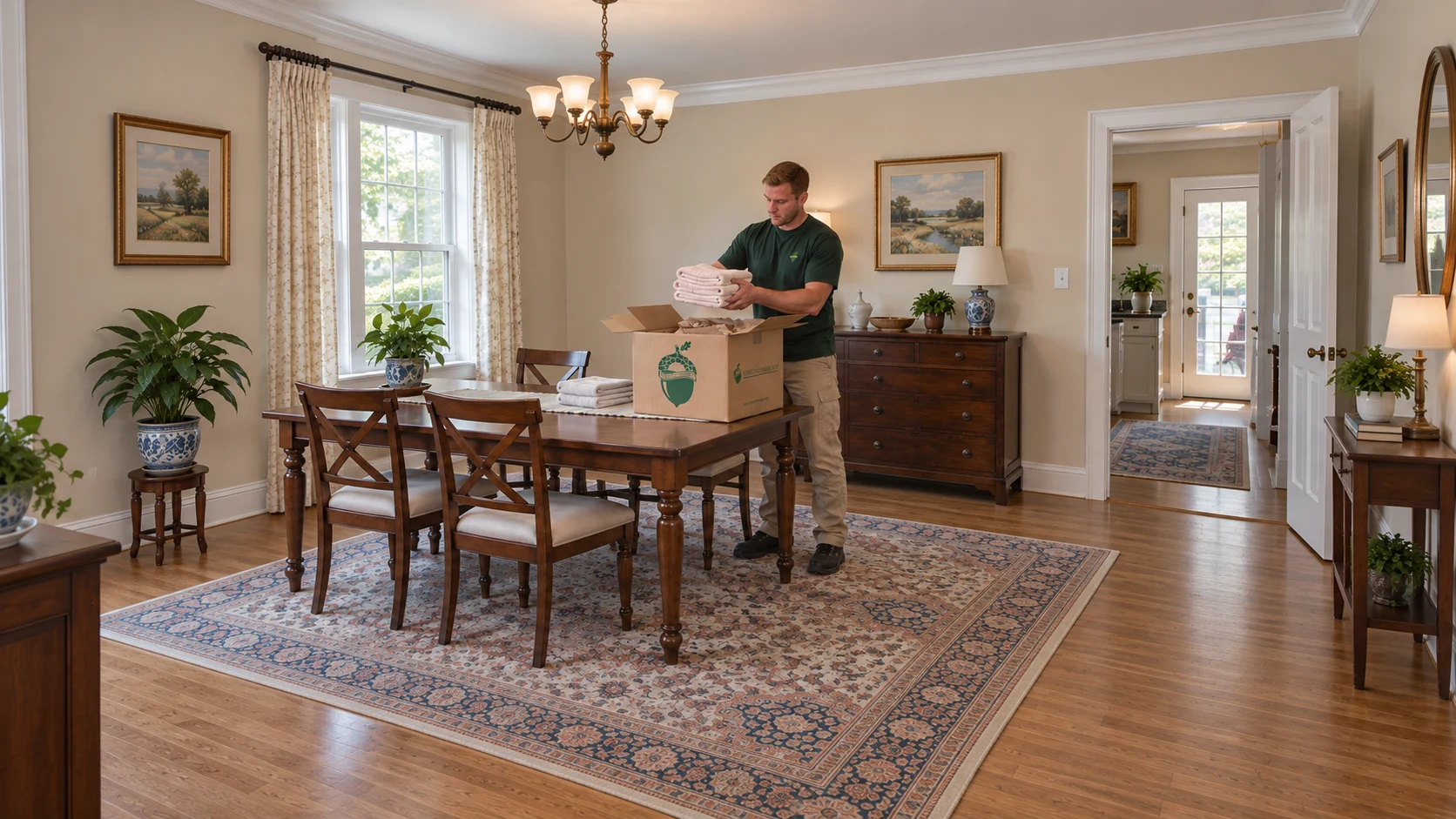
Add the shelf placement and finishing you want
Home organizing adds the shelf and drawer placement you direct. Review home organizing alongside the move, with instructions for your preferred arrangement. Nobody else knows where you want glasses, shirts or children's belongings. A smaller team can be easier to guide when several placement decisions would otherwise arrive at once.
Set the furniture layout before spreading contents across it. Use in-home moving for agreed changes after arrival and furniture delivery when a purchased piece completes the room. Tell each receiver which work comes first; a delayed cabinet should not leave unpacked belongings obstructing its installation route.
The available handyman service can help finish TV mounting, curtains or suitable light fixtures. Review the actual item, wall or fixing conditions, hardware, sequence and price. Technical or electrical work needs a separately specified scope and an appropriate executor. Organizing and mounting are additional named tasks, so the household knows what will be ready at the end of each visit.
Four Salisbury plans with different priorities
These are hypothetical planning examples informed by the cited local sources. They are not completed customer jobs or claims about a particular home's contents, access or municipal eligibility.
A Newtown household preserves its last working evening
Imagine two working parents preparing a home in Newtown, with cupboard ceramics, books and family photographs. The Maryland Historical Trust survey describes an older residential area with closely spaced frame houses and substantial porches. Its 2004 description supplies historical context, not the present route or condition of this imagined home.
The household approves retained contents before the earlier packing visit. The team prepares spare books, most kitchen pieces and decor while leaving a small meal set, bedding and familiar child items accessible. A clean counter serves the ceramic group; completed cartons wait in a reviewed space away from the exit. The porch, steps and complete carry need today's photographs and dimensions.
The last working evening remains usable, with a final-morning group explicitly assigned. At the new home, everyday kitchen pieces open first onto clear counters. The estimate includes earlier people, supplies and any selected unpacking. This plan exchanges repeated evening work for defined preparation and receiving stages rather than promise a fixed number of cartons from the district's age.
A collection near Newtown has separate home and storage releases
Imagine a household keeping its books and small framed collection while moving to a smaller home and preparing for a later work relocation. The same historical survey places Newtown north of Broad Street and US50, with rail lines to the north and west. Those boundaries orient the example; they do not establish a current truck position or storage appointment.
Review the collection item by item. The household chooses a first-use home group and a separate stored group; movers apply suitable protection and written destination labels. The storage contact confirms intake and release, and the dispatch plan identifies the actual stop order. Keep stored cartons closed at the smaller home instead of paying to search through them there.
If the later move is to another state or Canada, the longer receiving period changes which documents, clothing and work essentials travel with the household. Confirm storage and onward transport terms separately. The useful result is a collection with known next destinations and a usable smaller home, with no assumption that a street name supplies access or that storage is free.
A compact home near downtown chooses partial packing
Imagine a household in a compact home near downtown that has already prepared most everyday clothing. It asks for kitchen protection and help opening priority contents after delivery. Review the actual unit, available surfaces, stairs and permitted entry times; nearby shops or a Salisbury postal name do not settle any of those details.
The customer finishes the agreed clothing group before loading. Movers prepare fragile kitchen contents on the earlier visit if the combined day would be too crowded. At receipt, one counter and a padded table become designated opening areas. Less urgent cartons stay closed until there is space for their contents. The room plan goes to the crew before stacks occupy the floor.
The City's sanitation guidance distinguishes single-family collection from multi-unit complexes using common disposal areas. Confirm which arrangement actually serves this home, including manager instructions where applicable. Agree packaging staging and collection separately. A small floor plan can benefit from limited, well-directed help without requiring every drawer to be organized in the same appointment.
A Salisbury arrival returns to unpacking after several days
Imagine a family already back at work, with linen and kitchen cartons still stacked after moving. A later two-person visit opens the requested first-use groups onto designated surfaces. The family can then direct additional shelf placement, with TV or curtain work arranged as separate finishing tasks. Availability and the actual remaining inventory determine the visit.
The City's sanitation page asks for cardboard broken down with packing material and plastics removed. Its current plastic exclusion conflicts with the generic recycling page, which still lists plastics. Keep cardboard, paper, film and foam distinct and confirm the current accepted list with Field Operations. Do not turn that inconsistency into a promise that one mixed pile is recyclable.
The family also discovers a rug that has no useful place. It stays separate from empty cartons while the owner approves retention, a confirmed recipient or the appropriate removal route. An apartment's common collection point and a County receiving site have different acceptance conditions. The result should be usable room, selected contents accessible and an agreed material handoff, with any additional carrying and collection priced.
Match the packaging handoff to the actual property
Confirm the municipality and service arrangement for both addresses. A Salisbury mailing name does not prove City collection eligibility. Ordinary cart service, a managed apartment collection, an arranged bulky-item pickup and a County drop-off are distinct operations. Keep material type, quantity, source and actual carrier in the discussion before transport.
Wicomico County's household permit rules tie permits to the registered address and vehicle and exclude commercial trash. They cannot simply be transferred to a different hired vehicle. The brochure distinguishes recyclable groups from household refuse; that does not establish acceptance of every packing leftover or carrier. Its fees and special-material provisions need their own current confirmation.
The County's convenience-center information gives separate site schedules and material categories. The Solid Waste page distinguishes office and scale hours. Check the actual receiving point and date rather than treating office opening as permission to unload any material anywhere.
For unwanted furniture or a newly rejected sofa, use the Salisbury disposal plan. Identify the item, condition, approved person and accepting route, including carrying from the room. A collection appointment outside does not automatically clear the interior. Decide the group before paying to handle it again.
Review the complete cost and receiving schedule
Full packing is a substantial paid addition. For a substantial three-bedroom inventory, packing and moving together can approach twice the cost of moving the same belongings already packed. An illustrative six-person moving day might also need four packers on an earlier day, plus supplies. These examples explain the scale of added work; they are not fixed crew requirements or a multiplier for every estimate.
Compare the retained inventory, materials, people, visits, access, storage handling and selected receiving tasks. Packing labor and cartons are separately identified. Basic moving blankets, shrink wrap and tape have no additional basic-material charge. Basic furniture assembly and disassembly use paid labor without a separate basic assembly surcharge; complex or specialist work needs its own review. Furniture unwrapping is part of delivery, while box unpacking and packaging collection are separately charged selections.
| Stage | Work to review | Decision needed |
|---|---|---|
| Full packing | Retained household contents, cartons, cushioning and paid labor | Inventory, exclusions and preparation date |
| Partial preparation | Agreed rooms or fragile groups | Customer/team split and readiness |
| Earlier packing visit | Nonessential contents and safe carton staging | Final-night group and access for each visit |
| Storage split | Separated cartons, intake and later handling | Facility, stop order and release contact |
| Basic unpacking | Selected cartons opened onto designated flat surfaces | Priorities, space and completion point |
| Home organizing | Directed shelf and drawer placement | Customer layout, guidance and team size |
| Handyman finishing | Reviewed mounting, curtains or suitable fixtures | Fixings, hardware, executor and price |
| Material collection | Preparation, carrying and appropriate accepting route | Material groups, actual eligibility and appointment |
For long-distance moving from Salisbury, agree preparation before the shipment leaves and receiving help at the other end. We review moves throughout the United States and Canada. Direct dedicated service has the same crew at both ends; consolidated delivery has its own receiving arrangements. The delivery window begins after pickup and loading are complete. Keep essentials for the actual agreed period, not only the packing visit.
The reviewed long-distance flat rate does not increase for elapsed travel time alone. Added inventory, changed access or extra services change scope and need written agreement. Optional unpacking, storage, organizing, handyman work and collection should therefore be identified before comparing complete plans. Send the contents, access, dates, final-night needs and receiving priorities so each stage can end with a useful result.
Salisbury packing and unpacking questions
What does full packing cover?
The retained contents included in the reviewed scope, with appropriate cartons, cushioning and paid preparation labor. Show cupboards, closets and stored areas as well as furniture. You decide what stays and keep personal travel essentials outside the shipment.
Can I book partial or fragile-only packing?
Yes. Agree selected rooms or groups, the customer/team split and readiness before loading. Kitchen ceramics, glass, framed photographs or a collection can need help while you prepare ordinary clothing or books. Unfinished customer preparation changes the planned work and should be reported early.
How many cartons will a Salisbury home need?
Use the retained inventory rather than bedroom count alone. An initial expectation of twenty cartons can become sixty or a hundred once cupboards and stored groups are included; these are illustrations, not a local quota. Appropriate sizes, cushioning and manageable loads affect the supplies.
Can full packing and a local move fit into one day?
A small studio or one-bedroom inventory may fit when contents, carrying routes and receiving hours allow. Two-bedroom or substantial three-bedroom contents can make a combined day demanding. Discuss earlier preparation for larger or fragile groups; room count gives no guaranteed completion time.
What should stay accessible on the final night?
Agree beds, toiletries, a simple meal set, several outfits and familiar child belongings, with a final-morning packing point. Keep medication, keys, identity papers and private travel essentials with the household. Stage earlier cartons without blocking doors or stairs.
Does Newtown's historic setting establish the packing route?
No. The historical survey describes older frame houses and porches, not today's private layout, condition or permission. Photograph the actual door, turns, stair landings and vehicle approach. Proposed exterior changes need their own review; packing does not authorize altering an entrance.
Do City collection rules apply to every Salisbury mailing address?
No. Confirm the actual municipality, account and property arrangement. Single-family City collection, a multi-unit common disposal area and County drop-off conditions differ. A postal name or historic-district label does not establish eligibility.
How do you protect glass doors, shelves and small frames?
Review the individual item, removable parts, support, cushioning, carton and handling method. Furniture exterior protection and fragile contents preparation are different tasks. Describe damage, loose parts and value early; significant collections need an individual fine-art handling discussion.
Are white gloves appropriate for every valuable item?
A clean work area and appropriate gloves can help with selected easily marked contents. The material and handling task determine the suitable method. White gloves alone are not a conservation guarantee, and clean contents preparation should be separated from dusty work.
What should be written on the cartons?
Give the next destination, receiving room and useful contents, plus first-opening priority where relevant. A consistent color system can support written labels if the household and teams share the legend. Color alone is not enough, particularly when storage or several destinations are involved.
How should home and storage cartons be separated?
Separate them before loading and confirm the actual facility, intake, stop order and release contact. Keep home-bound cartons apart from the stored collection. Mixed groups can add searching, repositioning and another paid handling stage; a storage label does not reserve space or arrange redelivery.
What does basic unpacking leave ready?
It opens the agreed cartons and lays contents on suitable designated flat surfaces. Choose clear stable tables, counters or protected surfaces and useful priorities. Final shelf or drawer placement is additional customer-directed organizing, and packaging collection is separately agreed and charged.
How much extra unpacking time should I plan?
For substantial three-bedroom contents, roughly three to four extra hours after the move or a two-person visit the next day can illustrate the choice. Actual cartons, surfaces, priorities and direction determine the work. These examples do not establish fixed hours or staffing for your estimate.
Can unpacking be booked several days after moving?
Yes, subject to availability. Send the remaining inventory, photographs of stacks and usable surfaces, preferred date and first-opening priorities. A later visit can help after returning to work, but a particular busy day is not guaranteed.
Can you organize shelves and drawers too?
Yes. Home organizing adds placement according to your instructions. You decide where glasses, clothing and personal belongings belong. A smaller team may be easier to guide when several simultaneous placement decisions would otherwise slow the visit.
Can handyman work finish the receiving home?
Yes. TV mounting, curtains and suitable light fixtures can be reviewed as specific additional tasks. Confirm wall or fixing conditions, hardware, sequence, executor and price. Technical or electrical work needs its own specified responsibility and is not implied by basic unpacking.
How should City-bound empty cartons be prepared?
The sanitation page asks for cardboard broken down with packing material and plastics removed. Keep cardboard separate from paper, film, foam and contaminated protection, then confirm current acceptance, quantity and the actual collection arrangement. Opening cartons does not automatically include preparation and removal.
Can all plastic packing material join Salisbury recycling?
Do not assume so. The sanitation page currently excludes plastics while the generic recycling page still lists them. Confirm the current accepted list with Field Operations for the actual material and property. A mixed pile of film, foam and cartons is not automatically recyclable.
Can a County household permit be used on a hired vehicle?
County rules register the permit to an address and vehicle, restrict transfer and exclude commercial trash. It cannot simply be moved to another hired vehicle. Confirm the actual source, material, carrier and receiving conditions rather than treating a household permit as authorization for every load.
Are County office and drop-off hours interchangeable?
No. Solid Waste distinguishes office and scale hours, and the convenience-center list gives separate sites and schedules. Check the exact accepting point, date, material and eligibility before arranging transport. An open office is not permission to unload any material anywhere.
What if a rug or sofa has no place after unpacking?
Keep it separate from empty packaging while the owner approves retention, a confirmed recipient or the appropriate removal route. Identify item, condition, carrying work and actual acceptance. An outside collection appointment does not automatically include clearing the interior, and removal is not automatically part of unpacking.
How do packing costs and long-distance receiving affect the estimate?
For substantial three-bedroom contents, packing and moving can approach twice the cost of moving the same belongings already packed; this is an illustration, not a fixed multiplier. Packing labor, cartons, visits and receiving tasks affect the comparison. Basic wrapping materials have no extra basic-material charge, cartons are separate, and basic assembly uses paid labor without a separate basic assembly surcharge. Long-distance windows start after pickup and loading; elapsed travel time alone does not change the agreed flat rate. Scope changes need written agreement.