
Maryland · Waldorf service planning
Long Distance Movers in Waldorf, MD
Start your long-distance move from Waldorf with the full item list, both addresses and the dates you need to work around. Sterling Oakbridge arranges household moves across the United States and Canada. Direct delivery uses a dedicated truck and the same crew at pickup and delivery; consolidation can suit a smaller shipment with a wider receiving window. We review packing, access and the receiving plan before agreeing the written flat rate.

Define the Waldorf shipment and the home receiving it
Begin with the rooms and storage that will travel. In a split-foyer house, the entrance landing can divide the job into an upper bedroom route and a lower family-room route. A townhouse can place retained storage several flights from the kitchen or bedrooms. An apartment adds its actual shared entrance and lift or stair chain. Describe those transfers with the contents; a driveway photograph does not account for the whole pickup.
Open cupboards and storage spaces for the inventory review. Mark what stays, what travels and what needs a separate decision. Include the garage, shed, attic or lower level only when its contents belong in the shipment. Separate groups for different receiving addresses and storage so they can be identified without reopening every container later. Let the planner see the complete piece before protection hides its construction or condition.
The Waldorf moving page explains the broader service choices and local carrying plan. The relocation guide compares housing, ordinary travel, school registration, household services and arrival. This page connects the selected contents with a delivery model and an accepted receiving result.
We arrange long-distance pickups in Waldorf, a census-designated place in Charles County, Maryland, with the actual shipment and property access agreed. Include both branches of a split-foyer entrance, a townhouse stair chain in the actual association property, or an apartment’s shared entrance and lift or stair route when it belongs to the job. Hampshire, Dorchester, Fox Chase, Waldorf Station and Fieldside are useful home comparisons, not one set of parking or building rights. For another Charles County address or a Waldorf postal address outside the CDP, send the full location for review. The postal name does not establish road authority, private permission or a company office.
Choose direct or consolidated delivery
Choose direct delivery when a dedicated journey and the same moving crew at the two ends fit the reviewed shipment and receiving arrangements. Agree what happens before departure and at the new home. Packing, specialist preparation, storage and optional unpacking still need to be included when wanted; direct delivery does not silently include every additional service.
A suitable consolidated shipment shares a broader delivery plan. Approximately 300–400 cubic feet is small-shipment guidance, not a minimum volume or an automatic eligibility test. Send the actual pieces and containers, including their preparation needs. A household retaining only selected belongings can have different receiving flexibility from one depending on its entire bedroom and kitchen shipment.
The delivery clock starts after pickup and loading are complete. Packing, carrying through a stair chain and obtaining usable loading access happen first. These reference windows help compare models; they are not building reservations, live traffic forecasts or certification of a route for the selected truck.
Swipe the table to compare both delivery options.
| Illustrative destination | Direct planning window | Consolidated window |
|---|---|---|
| New York City, New York | 1–2 days | Up to 30 days |
| Miami, Florida | 2–3 days | Up to 60 days |
| Hamilton, Ontario | 1–2 days | Up to 60 days |
| Sacramento, California | 4–5 days | Up to 90 days |
An eligible shorter domestic consolidated route can have up to 30 days. Florida and Canada have up to 60 days; the Canadian rule keeps its priority on a comparatively short Canadian journey. California has up to 90 days. Other distant destinations require an individually agreed window. Sacramento's California period should not be transferred to a destination in Washington or Oregon.
Put the selected model, receiving period and contact in writing. Dedicated-truck and same-crew terms belong to direct delivery. Consolidation does not establish free storage, an unspecified discount or the same crew at the two ends. Arrange a receiver who can support the agreed period rather than one unconfirmed afternoon on a lease calendar.
Check where the truck can stand and how furniture reaches it
Waldorf is a census-designated place in Charles County. Establish the actual road or property owner; a Waldorf postal address does not create municipal permission. Show the proposed vehicle footprint, signs, driveway or parking-aisle connection, sidewalk and entrance path. A resident car assignment is not a truck-length working position.
Charles County Code §§287-7 and 287-8 defines heavy commercial vehicles through weight, capacity and size tests. The signed-road restriction has conditional loading and active-work exceptions. Separate stopping and standing controls still cover such places as sidewalks, crosswalks, curb ramps, fire lanes and the travel portion of the road. An active-work exception does not reserve space or approve an otherwise unsuitable position.
Obtain private acceptance separately. Fieldside's published policy requires advance written permission and a set time limit for containers or materials on HOA property. Its approval review can take longer than the stated 24–48 hours, and the approval email must be received. Those conditions belong to Fieldside; they are not a Waldorf-wide permit process or permission for public-road placement.
Follow the whole route between the accepted position and each room: path or gate, steps, landing, threshold, door swing, stair turns, corridor and final doorway. Include the protected outside dimensions of a difficult piece and space for controlled handling. If the route fails, review suitable normal dismantling, another accepted entrance or another method before dispatch. Do not leave the receiving crew to discover that the only proposed door will not work.
The four examples below are conditional planning situations, not completed customer jobs. They compare a closer apartment handoff, the first useful rooms in Florida, Canadian belongings arriving later and a longer California receiving plan.
Example: Waldorf to New York City, New York — agree every transfer into the apartment
Suppose a household is moving selected split-foyer contents to a New York City apartment. At the Waldorf home, identify the lower-level furniture and upstairs bedroom group separately. At the destination, follow the service entrance, shared corridor, lift or stairs and apartment door. A building with an elevator can still require a stair transfer or an awkward turn before that elevator is reached.
The direct illustration is 1–2 days after loading, subject to the actual journey and receiving arrangements. It is not a reserved morning at the destination. Give the planner the building's work period, lift instructions, COI wording, protection and approving contact. Name who can admit the crew and direct the rooms. If access requires an earlier material delivery or preparation visit, have that separate access accepted as well.
An eligible consolidated shipment on this shorter domestic reference route can have up to 30 days. It needs a receiver able to support the accepted scheduling arrangement. Compare that period with the household's actual sleeping and working needs. If the only offered slot cannot be reconciled with the model, confirm another period or a separately arranged stage before the shipment leaves; an enquiry about storage is not available capacity.
Keep the household's travel group out of the shipment
Set aside identification, keys, medicine, essential clothes, chargers and the supplies needed for the first working or school day. For Canada, keep the required import papers and contacts accessible. Identify this personal group while the inventory is being reviewed, before similar bags or containers are spread among the shipment.
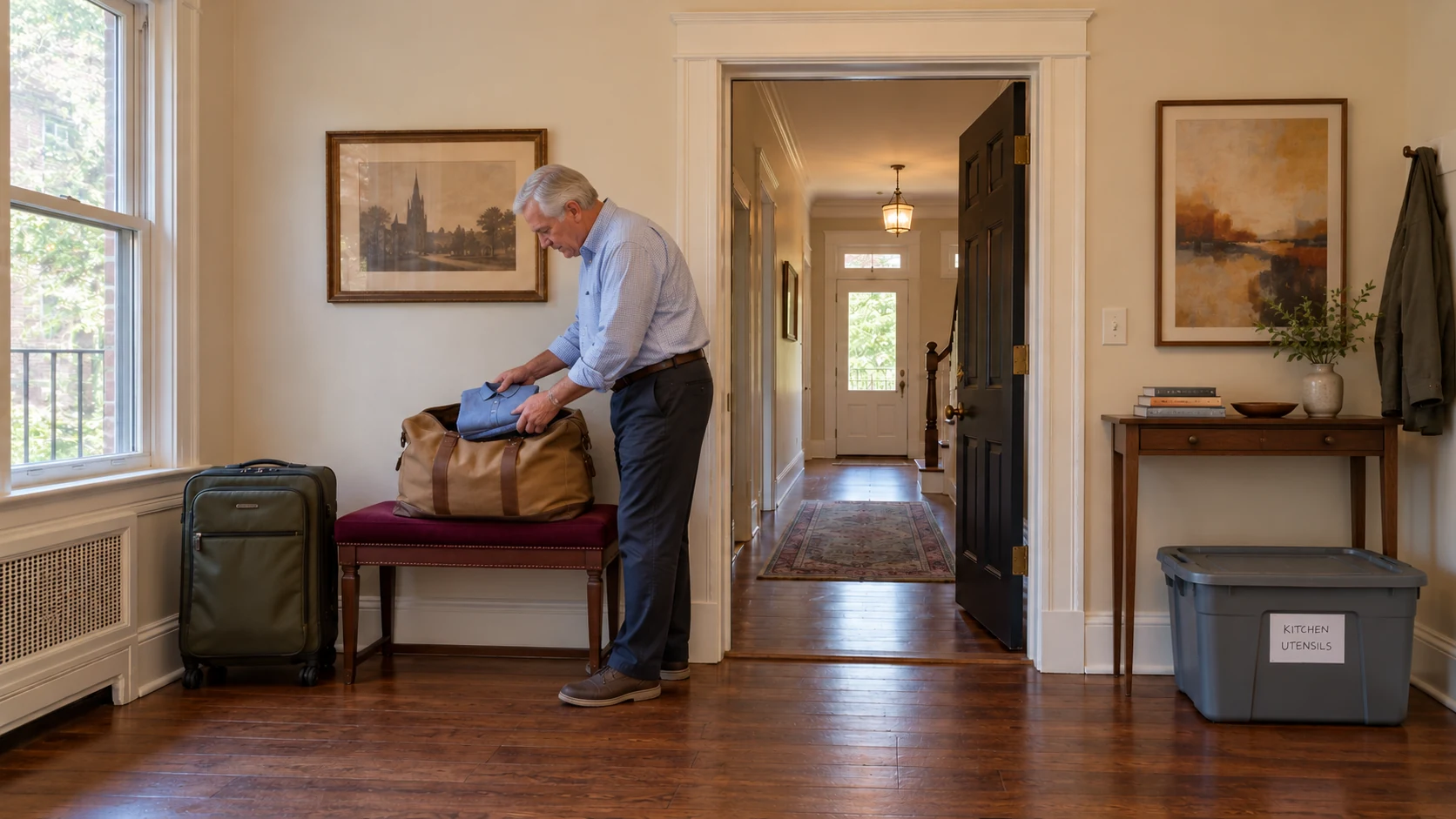
Plan where people will sleep and how they will travel during the selected receiving period. Essentials inside a loaded truck or inaccessible storage cannot serve the first night. Keep the planning contact, property access controller and customer representative authorized to approve a change reachable during travel. Tell everyone helping which bags travel with the household and keep those bags outside the shipment group. Keep any required customs records accessible with your other moving documents.
Review every shared-building transfer
For an apartment pickup or delivery, obtain the actual work hours, service entrance and complete lift or stair chain. Include lift interiors, door clearance, tight landings, floor protection, COI wording and recipient, labor-access conditions, deposits and deadlines. Assign the submitter, approving person and payer. A requested slot or emailed certificate remains pending until the required arrangement is accepted.
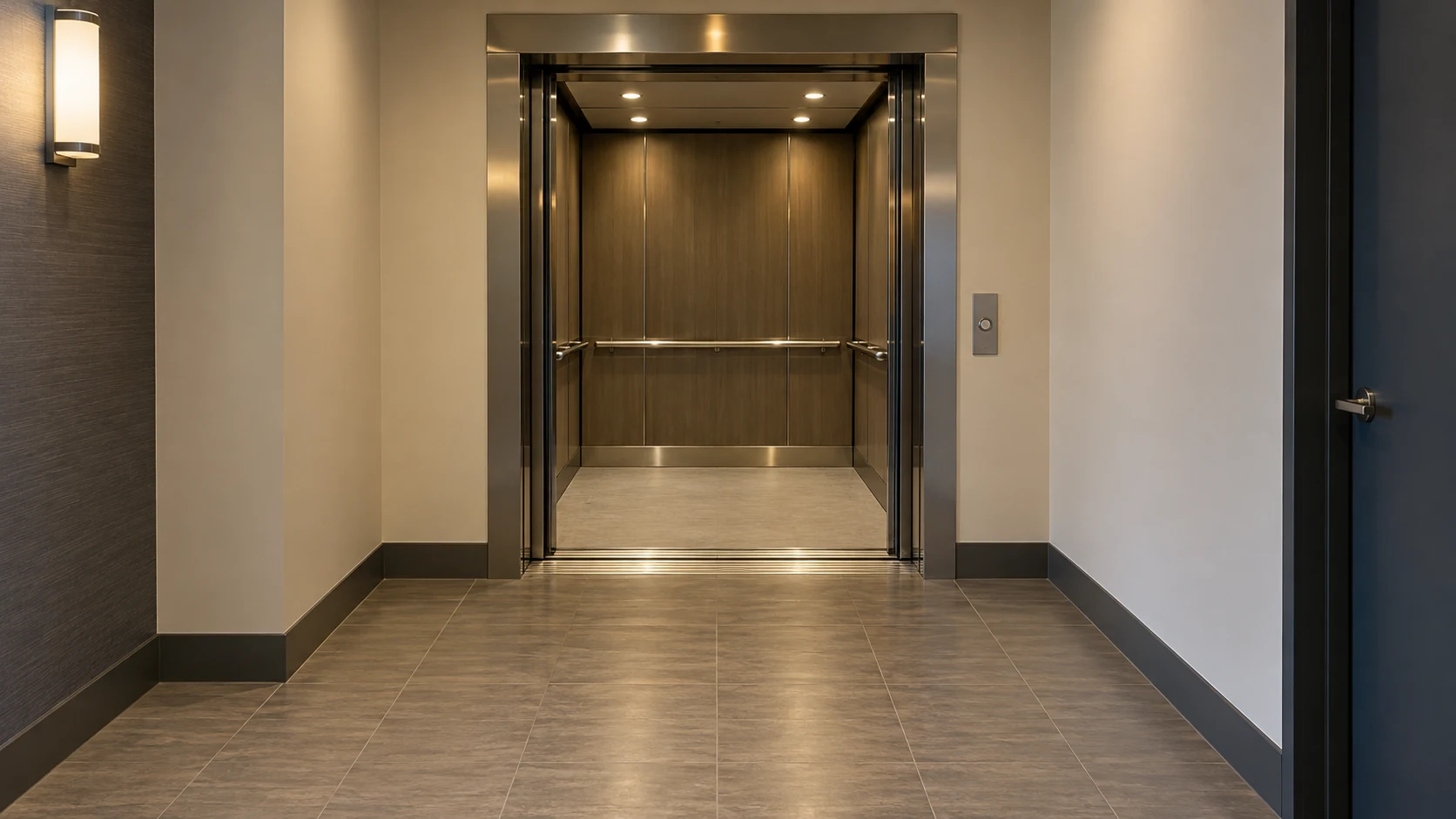
Check how the largest protected piece reaches the lift and leaves it on the destination floor. An apparently wide corridor does not settle the door or turn before it. Preserve a clear staging and receiving footprint so smaller containers do not occupy the route for the main furniture. A representative access photograph illustrates a transfer; the actual building and its authorization still determine the job.
Example: Waldorf to Miami, Florida — make the first receiving stage useful
Consider a household leaving a Waldorf apartment for a Miami condominium. List what must be usable first: an agreed bedroom group, essential kitchen containers and the equipment needed for work or care. Then compare the two buildings' accepted periods, entrances and lifts. Key possession, permission to live in the unit and permission for furniture delivery can have different dates.
The direct illustration is 2–3 days after loading. An eligible consolidated Florida shipment can have up to 60 days. Put the selected receiving period beside the household's interim needs and the person who can attend. A plan that depends on a particular unconfirmed day does not become workable merely because the unit is available to occupy.
Agree optional unpacking around the actual priority cartons and rooms. Furniture is unwrapped as part of delivery; unpacking carton contents is additional work charged for time. Packaging and waste removal are separate paid work, and their timing should allow the household to check its belongings. If the building period or possession changes, act before dispatch or before a reserved alternative expires. Confirm the revised stage, receiver and additional charges rather than assuming an extension is free.
Prepare the retained contents as one identified shipment
Choose full, partial or fragile-only packing for the contents actually retained. Show quantities, construction, condition and specialist pieces. Identify what the household will finish and what must stay available through the last evening. Packing time and carrying through the home belong in the origin plan before the delivery clock starts.
For furniture, show joints, removable supports, shelves, repairs and the difficult route before wrapping. Empty ordinary drawers and normally secure them within the protected whole body. Account for removable shelves and fittings. Safely detachable long table or desk legs need appropriate removal and a complete common protected set with hardware kept together; integral construction should not be forced apart. Agree complex or specialist work separately.
Moving blankets, shrink wrap and tape have no separate material charge. Cartons are charged separately. Basic furniture disassembly and reassembly use moving labor time without a separate basic assembly fee. The written long-distance scope should show the selected preparation; those material terms do not make additional packing labor free.
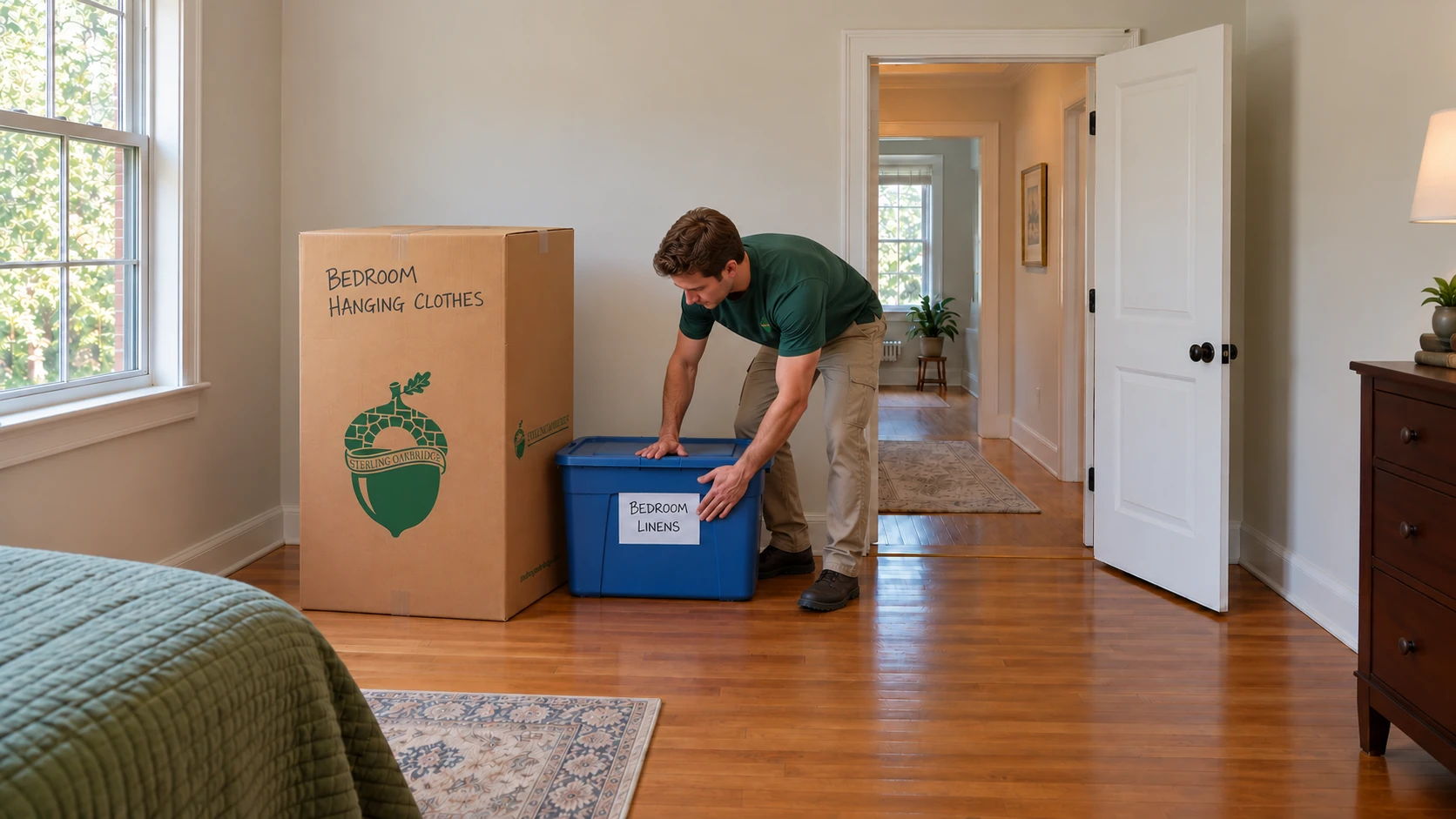
Use useful room, contents and destination labels that agree with the inventory. Keep storage and separate-address groups distinct. The illustrated small group does not represent a measured 300–400 cubic feet or a whole household. An added stack of unreported containers changes the shipment even when it is neatly packed, so report it before loading and resolve any revised interstate written estimate at that stage.
Example: Waldorf to Hamilton, Ontario — prepare the goods-to-follow handoff
A household moving to Hamilton may enter Canada before its furniture. CBSA's moving and returning guidance distinguishes people establishing residence from former residents and other situations. Identify the importer and applicable classification. A destination in Canada or a mover's inventory does not establish duty-free eligibility.
Prepare two copies of the required list, separating accompanying belongings from goods to follow, with values, identifying descriptions and applicable serial numbers. The official BSF186 accounting document provides classification and goods-accounting fields. Establish the applicable clearance steps and keep the needed records and receipt accessible for the later shipment. Resolve restricted or uncertain contents before they become a border problem.
The direct illustration is 1–2 days after loading; it does not guarantee clearance or an appointment at the Hamilton home. Eligible consolidated Canadian delivery has up to 60 days, including a relatively short Canadian route. Connect the selected model with the importer, receiver and actual property period before dispatch. A reference journey should not conceal missing goods-to-follow records or an unaccepted unloading arrangement.
Keep the written price tied to the agreed work
Travel or delivery taking longer does not itself increase the agreed long-distance flat rate for the same inventory, access and services. Added contents, changed carrying access, further preparation, storage or another requested receiving stage can change the work. Resolve known changes and any revised interstate written estimate before loading. The original estimate cannot be rewritten after loading begins; later additional services need their applicable agreement and charges before they are performed. An extra service and a longer journey are different matters.
Compare estimates for the same retained contents and receiving result. Identify packing responsibilities, cartons, specialist work, storage, optional unpacking and removal. The planning team can recommend an item-list, video or in-person review for the actual scope; square footage alone does not establish every cupboard, large piece or transfer. For an interstate household move, complete the required survey or a separate written waiver before loading and keep the waiver with the bill of lading. A list or still photographs alone do not waive it. See 49 CFR 375.401.
FMCSA explains interstate household valuation: Full Value Protection applies unless Released Value is selected through the required written waiver. Released Value limits liability to 60 cents per pound per article rather than replacement cost. Valuation is the mover's liability arrangement, distinct from separate insurance. Review the chosen level, cost, limits and claim process before moving day and identify high-value pieces during planning.
A move wholly inside Maryland has separate estimate requirements. Commercial Law §14-3103 requires the applicable written estimate, with a voluntary, uncoerced waiver provision. A binding estimate limits charges for its described services to the stated total. A nonbinding estimate has a 125% limit, plus only applicable excess charges for necessary services arising from circumstances beyond the mover's control that could not reasonably have been anticipated. An hourly description does not remove those protections.
Example: Waldorf to Sacramento, California — confirm the room before the longer journey
Suppose the retained shipment includes a sofa and selected household containers for a Sacramento home. Review the entrance, every turn and the intended room with the sofa's construction and protected size visible. Decide the main furniture position before small containers fill its footprint. A house description or a spacious driveway does not establish the whole receiving route.
The direct illustration is 4–5 days after loading, with the same moving crew at pickup and delivery. Eligible consolidated California delivery can have up to 90 days. California's maximum is specific to that destination state; other distant western routes need their own window. Compare the actual choice with the receiver's availability, interim accommodation and work or care needs. Keep the household's essential travel group accessible throughout.
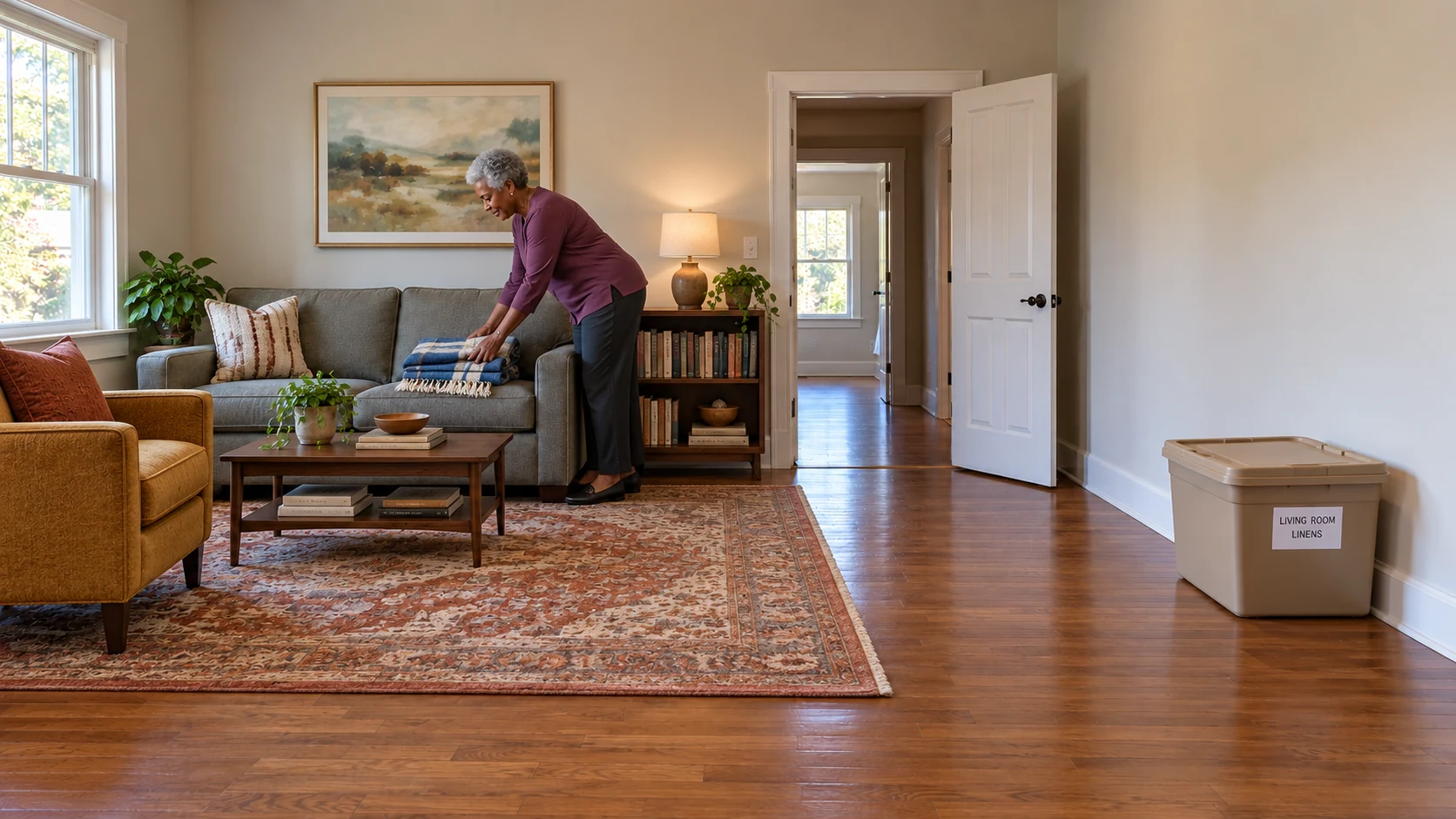
At delivery, direct the main pieces, complete included basic reassembly and retain the carrying route before optional unpacking spreads contents across the room. Identify received items and record any issue through the applicable moving documents and claim process. If a room, entrance or work period is unavailable, use the agreed decision deadline and authorized contact to choose a confirmed later period, another accepted route, a separate stage or available storage. Agree costs, where people stay and the conditions for resuming; a hoped-for alternative is not a receiving plan.
Explore long-distance destinations from Waldorf
These destination examples organize household moving options throughout the United States and Canada. Review the actual addresses, contents, preparation, vehicle access and receiving period; a list entry is not a route appointment.
Northeast and Mid-Atlantic
- New York City, New York
- Philadelphia, Pennsylvania
- Baltimore, Maryland
- Boston, Massachusetts
- Albany, New York
- Hartford, Connecticut
Southeast and Florida
- Miami, Florida
- Jacksonville, Florida
- Orlando, Florida
- Charlotte, North Carolina
- Raleigh, North Carolina
- Richmond, Virginia
Great Lakes and Midwest
- Chicago, Illinois
- Columbus, Ohio
- Pittsburgh, Pennsylvania
Pacific states
- Sacramento, California
- San Francisco, California
- Portland, Oregon
- Seattle, Washington
Mountain West and Southwest
- Denver, Colorado
- Phoenix, Arizona
- Salt Lake City, Utah
- Las Vegas, Nevada
Canada
- Hamilton, Ontario
- Ottawa, Ontario
- Montreal, Quebec
- London, Ontario
Long-distance moving questions
Where do you arrange long-distance pickup around Waldorf?
We arrange long-distance pickups in Waldorf, a census-designated place in Charles County, Maryland, with the actual shipment and property access agreed. Include both branches of a split-foyer entrance, a townhouse stair chain in the actual association property, or an apartment’s shared entrance and lift or stair route when it belongs to the job. Hampshire, Dorchester, Fox Chase, Waldorf Station and Fieldside are useful home comparisons, not one set of parking or building rights. For another Charles County address or a Waldorf postal address outside the CDP, send the full location for review. The postal name does not establish road authority, private permission or a company office.
Can you move a Waldorf household to another state or Canada?
Yes. We arrange household moving throughout the United States and Canada, after reviewing the shipment, preparation, both properties and receiving period. A Canadian destination also needs the applicable import arrangements. The postal address alone does not settle truck access or customs eligibility.
What does direct delivery include?
A dedicated truck and the same moving crew at pickup and delivery. Agree the inventory, preparation, access and receiving dates in writing. Packing, specialist work, storage and optional unpacking belong in that scope when selected; the planning team is separate from the moving crew.
Is 300–400 cubic feet a minimum shipment?
No. Approximately 300–400 cubic feet is guidance for a suitable small consolidated shipment, not a minimum or automatic cutoff. Show the actual pieces and containers. Their preparation, destination and a workable broader receiving period determine whether consolidation fits.
When does the delivery period start?
After pickup and loading are complete. Finishing packing and carrying contents through the Waldorf home or shared building happen beforehand. Keep the applicable receiving period in the written plan; an illustrative number of days does not reserve a building appointment.
Does longer travel increase the agreed flat rate?
No. The agreed long-distance flat rate stays the same when travel or delivery takes longer for the same inventory, access and services. Added contents, changed access or another requested stage change the work. Resolve known changes and any revised interstate written estimate before loading. The original estimate cannot be rewritten after loading begins; later additional services need their applicable agreement and charges before they are performed.
Which consolidated windows apply?
An eligible shorter domestic route can have up to 30 days. Florida and Canada have up to 60 days; the Canadian rule also applies to a relatively short Canadian trip. California has up to 90 days. Other distant destinations need an individually agreed window. Dedicated-truck, same-crew, free-storage and discount terms do not follow from consolidation.
Does the California maximum apply to every western destination?
No. Sacramento is in California and follows its up-to-90-day consolidated maximum. A destination in Washington, Oregon or another western state needs its own reviewed window unless another confirmed rule applies. Do not apply a California period to a different state merely because the journey is long.
Can a New York City apartment accept a narrow delivery slot?
A narrow slot needs an accepted delivery plan at that building. Direct delivery can be considered for the defined shipment and receiving arrangement, but the reference journey does not reserve the slot. Give the planner the entrance, lift or stair chain, work period, approving contact and earliest date the household can receive. A wider consolidated period needs a receiver who can support it.
Is same-day or next-day service automatic on a closer route?
No. A suitable small nearby job may allow same-day delivery after early loading and confirmation of lawful travel, access and receiving time. Next-day delivery also needs a reviewed plan. A destination name or mileage alone does not establish either service.
What should I show for a split-foyer pickup?
Show the entrance landing and both stair directions, then the rooms and storage included on each level. Add the complete route back to the accepted vehicle position and large pieces at their protected outside size. A photograph of the front door or driveway misses the internal transfers.
What does a shared building need to approve?
Resolve its actual work period, service entrance, every lift or stair transfer, protection, COI wording and recipient, labor-access conditions, deposits and deadlines. Name the submitter, approving party and payer. Sent paperwork or a requested lift slot remains pending until the required access is accepted.
Does active loading reserve a truck space?
No. Charles County’s signed-road heavy-vehicle rules contain conditional loading and active-work exceptions; they do not reserve a position or remove separate stopping and standing controls. Establish the actual road owner, signs, complete vehicle footprint and private permission before depending on the working area.
Can a container stay on Fieldside association property?
Its published policy requires advance written permission and a set period for containers or materials on HOA property. Retain the approval before using that position. This is a Fieldside condition and does not authorize a public-road placement or a container at another property.
Can I choose only fragile or partial packing?
Yes. Fragile-only packing covers the agreed breakables; partial packing selects rooms or groups, while full packing covers the retained contents agreed for the job. Identify quantities, condition and what the household will finish. Cartons are charged separately, and the preparation must fit the accepted pickup period.
Which protection materials and furniture work are separate charges?
Moving blankets, shrink wrap and tape have no separate material charge. Basic furniture disassembly and reassembly use moving labor time without a separate basic assembly fee. Cartons are separate; complex furniture and specialist work receive individual quotes. The written long-distance scope should show the selected preparation.
Can delivery include unpacking and packaging removal?
Furniture is unwrapped as part of delivery. Unpacking carton contents is optional work charged for time; packaging and waste removal are charged separately. Specify the priority rooms or containers and the removal help wanted before relying on either stage.
What if the household reaches Canada before its belongings?
Prepare two copies of the required goods list, separating accompanying belongings from goods to follow, with descriptions, values and applicable serial numbers. Establish the importer’s classification and the needed CBSA clearance and BSF186 records. Keep the applicable receipt accessible for the later shipment. An inventory alone does not establish duty-free entitlement.
What protection should I choose for an interstate household move?
Review Full Value Protection and Released Value before moving day. FMCSA explains that Full Value Protection applies unless Released Value is selected through the required written waiver. Valuation describes the mover’s liability and is distinct from separate insurance. Record the selected level, cost, limits and claim process; identify high-value items. Released Value limits liability to 60 cents per pound per article rather than replacement cost.
What if both addresses are in Maryland?
Apply the Maryland intrastate estimate requirements separately. Section 14-3103 requires the applicable written estimate, with a voluntary, uncoerced waiver provision. A binding estimate limits charges for its described services to the stated total; the nonbinding limit is 125%, plus only the narrowly defined applicable excess charges. An hourly description does not remove those protections.
What if the receiving home or slot is not ready?
Act at the agreed predispatch or alternative-reservation deadline. The authorized customer representative and planning contact choose a confirmed later period, another accepted route, a separate stage or available storage. Agree additional costs, the receiver, where people stay and accessible essentials. Resume after keys, the working position and unloading access are confirmed.
What should I send for an estimate?
Send both addresses, date options, retained contents and the preparation, storage or receiving help wanted. Show large-item construction and the entire carrying routes, with property instructions and outstanding approvals. The planning team can recommend an item-list, video or in-person review suited to the work. For an interstate household move, complete the required survey or a separate written waiver before loading and keep the waiver with the bill of lading. A list or still photographs alone do not waive it.