Maryland / City relocation guide

Moving to Waldorf, MD: find a home that fits the whole week

Look beyond the Washington commute. Compare the home, ordinary errands, school-year decisions and household responsibilities, then connect the chosen address to a workable arrival.

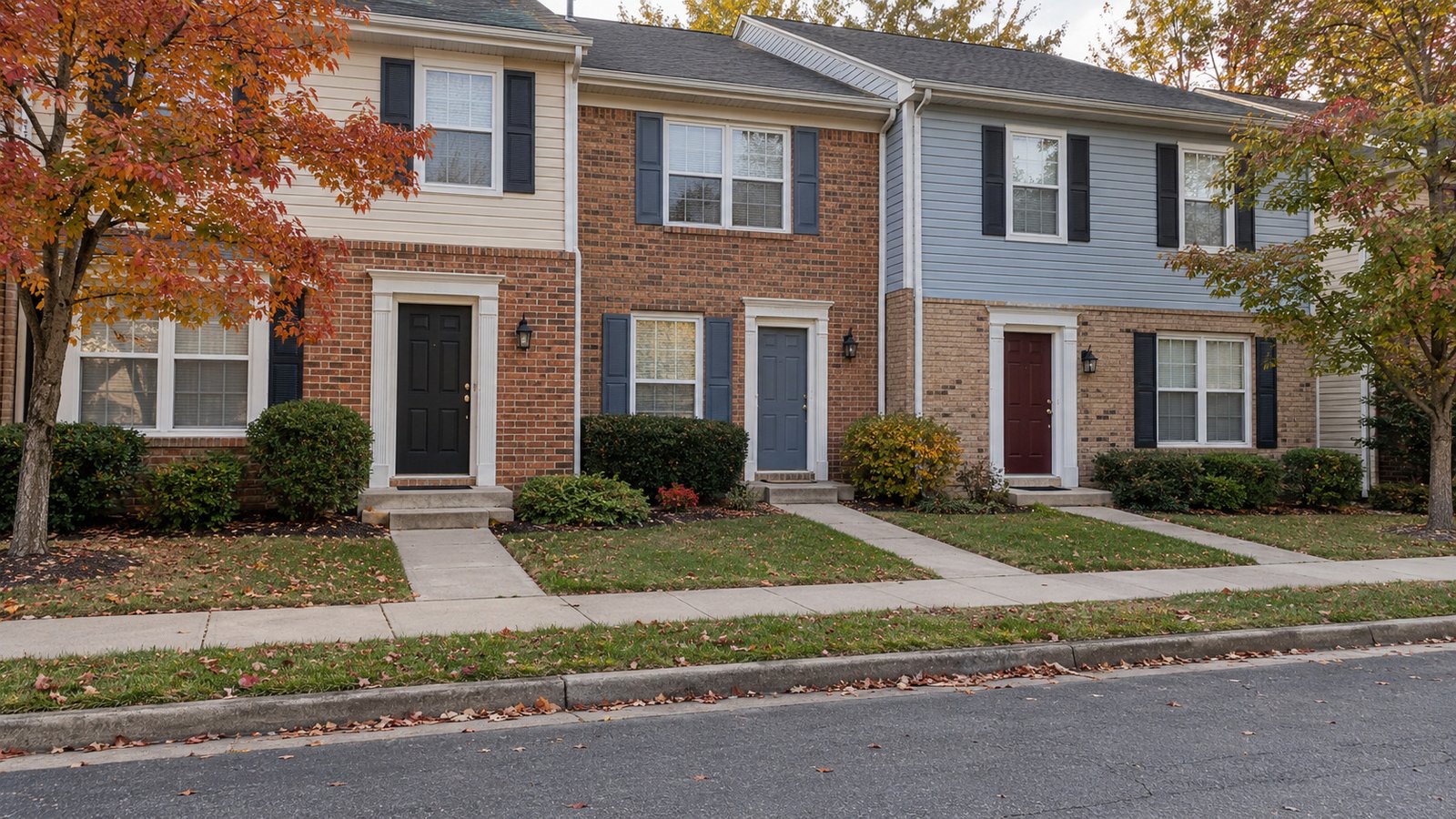
Three brick-and-siding townhouses have complete front doors, low entrance steps and separate paths to a continuous public sidewalk.
Compare the entrance and the route beyond the front door.

01 /

Start with the household week

A useful Waldorf address works on an ordinary Tuesday and on a Sunday when the Washington commuter coach is unavailable. Begin with the home, the journeys and the responsibilities you will actually take on. A good floor plan can lose its appeal if the school run, late return or household bills do not fit.

  • Choosing a home: compare the five settings below, the complete cost and the outward and return journeys.
  • Moving with children: resolve the exact school address, grade and year, then prepare the registration documents and daily transport.
  • Already have an address: move to household accounts, collection, the receiving route and the arrival sequence.

Use the map to organize viewings. At each home, walk from the actual entrance to the places you would repeat each week. Add the work that happens inside: storing groceries, doing laundry, getting ready for school and reaching a bedroom without an inconvenient stair transfer.

02 /

Waldorf, St. Charles and the actual address

The Census Bureau identifies Waldorf as a census-designated place in Charles County. That statistical boundary is useful for orientation; it does not establish a Waldorf city government, a school assignment or permission to use a particular road. A postal address and an association name answer different questions.

St. Charles is a larger master-planned community name used for several home collections and settings. Start with the full street address and the actual ownership or rental documents. Establish which association, if any, covers that home and whether a component townhouse association has additional obligations.

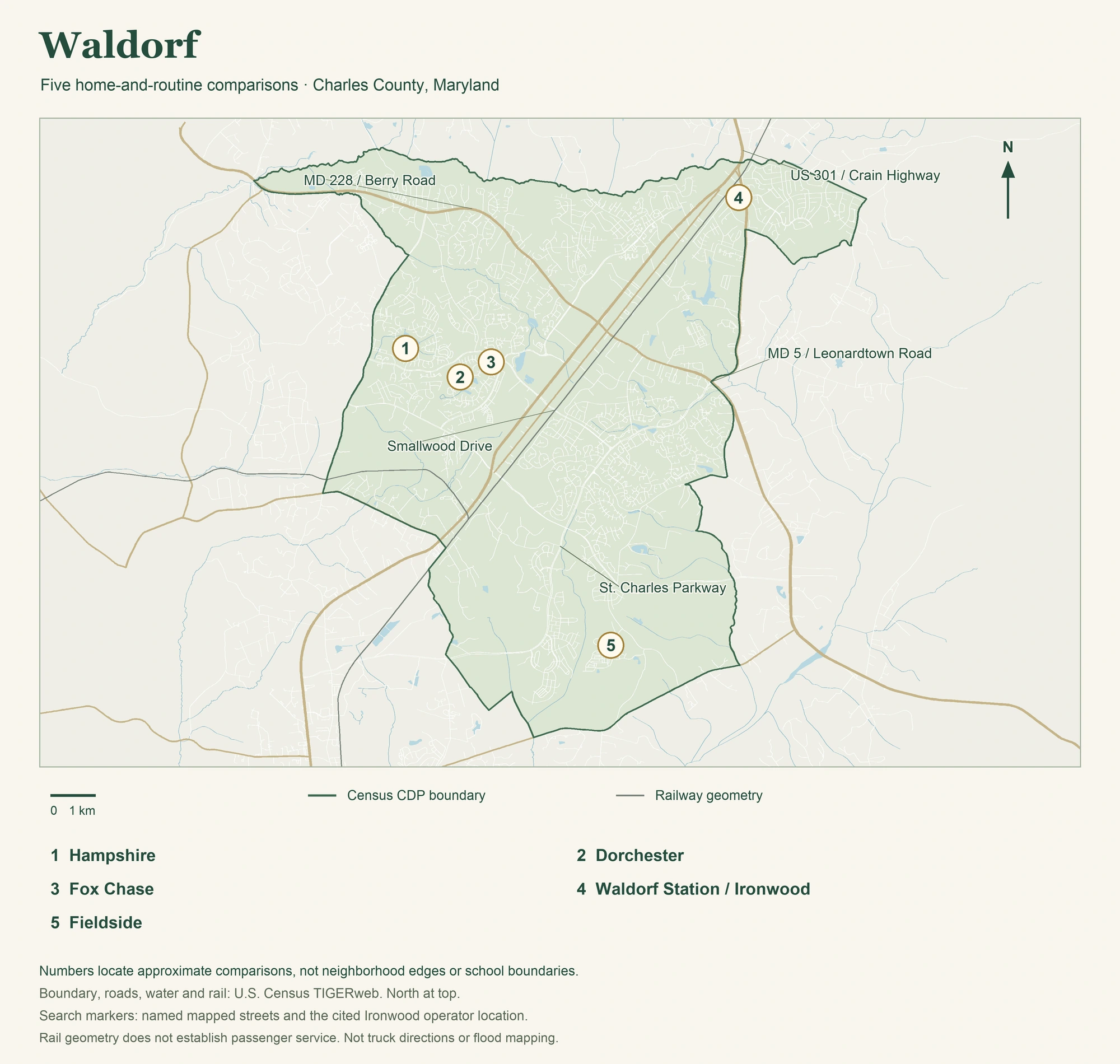
The map retains the Census boundary and mapped road, water and railway context. Its numbered comparison markers indicate places to begin a search, rather than neighborhood borders or exact delivery entrances. A mapped railway and a development called Waldorf Station do not establish a passenger rail stop. Use the transport operators’ current information for actual travel.

Before committing to a home, put its address beside the proposed school, workplace, ordinary shopping and the person who can receive a delivery. An address that belongs in the same broad search area can still require a different journey or access arrangement.

Waldorf Census CDP boundary, five approximate home-comparison markers, regional roads, water and railway geometry.
Use the numbered key to compare five home-and-routine settings. Markers are approximate; the CDP outline is not an HOA or school boundary. Railway geometry does not establish passenger service. The map is not legal truck directions. Explore the map.

03 /

Five settings for an actual home comparison

Start with the routines and property features that matter to your household. These selected areas help you compare; school assignment and building access have their own checks below.

Hampshire: several home types and internal paths

Hampshire’s association describes a mixture of detached homes, townhomes and apartments, with paths and community facilities. Begin here when you want to compare several home forms within a shared association setting.

Hampshire Neighborhood Association: home types, paths and facility conditions ↗
Housing & setting
Inspect the actual dwelling and ownership or rental documents. Compare its living levels, outside upkeep, storage and the charges attached to the offered home. A community description cannot establish what the landlord includes.
Daily travel
Walk the path you would use for an ordinary outing, then identify the separate route to groceries, appointments and a commuter boarding point. Internal walking paths and a usable bus connection are different parts of the week.
Before choosing
The tradeoff is a chosen home and shared facilities versus association obligations and the wider travel plan. Pool use depends on good standing and annual forms or reactivated passes; tenants should settle their eligibility with the owner and association.
Dorchester: compare the component property

Dorchester is part of Westlake Village and includes several separately named component properties. The association describes single-family homes, townhomes, paths, lakes and community facilities.

Dorchester Neighborhood Association: Westlake setting and component properties ↗
Housing & setting
Compare the actual home rather than treating the broad Dorchester name as one layout or contract. For a townhouse, follow the stairs between storage, kitchen and bedrooms. For a detached home, include outside responsibilities and retained storage.
Daily travel
Try the entrance-to-path connection and the journey to the activity or shop you would repeat. Add work and the return from evening activities. A recreational path beside a lake does not establish a direct route to every ordinary errand.
Before choosing
The tradeoff is the offered property’s space and local setting versus its particular association charges, duties and travel needs. Establish the component association, resident or tenant facility rights and the party who accepts a delivery position.

Fox Chase: a specific compact-rental comparison

Fox Chase’s operator gives 4001 Night Heron Court as the property address. Use it as a specific apartment comparison rather than a description of all rental homes in Waldorf.

Fox Chase Apartments: actual address and A apartment layout ↗
Housing & setting
The published A layout provides a concrete one-bedroom, one-bathroom example. Compare the actual offered unit’s room sizes, storage, floor and route from the accepted delivery position. Ask which household services and parking arrangements belong in the lease.
Daily travel
Walk from the offered building entrance to the grocery or service you expect to use. Include crossings and the loaded return. Add the connection to a current VanGO service or the Washington coach only when the actual stop, hours and return work.
Before choosing
The tradeoff is the selected apartment’s compact layout and management arrangement versus storage, recurring charges and the full travel plan. Obtain current written terms for that unit; published floor plans and availability filters do not reserve a home.

Waldorf Station: newer apartments and a separate travel test

Ironwood at Waldorf Station supplies a comparison of one-, two- and three-bedroom apartment layouts in a named development. The word Station is part of that development’s name; plan public transport from the operator’s actual stop information.

Ironwood at Waldorf Station: apartment choices and total-cost explanation ↗
Housing & setting
Compare the offered apartment’s usable rooms, storage, floor and shared receiving route. Obtain the total monthly lease figure and the separate usage-based, upfront and move-out responsibilities. Resolve any building access conditions before moving work is booked.
Daily travel
Treat the operator’s regional shopping and recreation list as destinations to investigate. Some are beyond the immediate development. Inspect the actual pedestrian route and crossings, and plan the separate journey to the required bus boarding point.
Before choosing
The tradeoff is the selected building’s layout and facilities versus its total cost, shared access and actual weekly travel. Do not treat a development name or a general regional-access description as a promised passenger rail connection or commute time.

Fieldside: settle the association handoff

Fieldside maintains its own association and management arrangements. New residents are directed to Blackstone Management to update their information and obtain the applicable resident access.

Fieldside Neighborhood Association: new-resident and management handoff ↗
Housing & setting
For a townhouse offered under its published policy, compare the entire stair chain, retained storage and approach from front or rear parking. Establish the documents and actual responsibilities for that particular home rather than assuming all spaces beside it belong to the household.
Daily travel
Test the journeys from the offered entrance and the actual connection to the community’s wider roads. Assigned car spaces, guest parking and a place accepted for a moving vehicle serve different purposes.
Before choosing
The tradeoff is the offered home’s rooms and community setting versus association obligations and the accepted vehicle position. Containers or materials on association property need advance written permission and a set period; keep that arrangement separate from public-road requirements.

04 /

Compare usable rooms and the complete cost

Compare the offered dwelling as a working home. A split foyer can put bedrooms, laundry or a family room on opposite sides of the entrance landing. A townhouse can add several stair flights between storage, kitchen and sleeping rooms. In an apartment, the floor, shared corridor, entrance and actual storage can matter as much as the advertised bedroom count. Walk the whole internal route and look inside retained cupboards, closets and garage storage.

For a rental, ask for a written total for the actual apartment and lease term. Ironwood’s leasing explanation illustrates the distinction: its monthly figure includes fixed mandatory charges, while usage-based services and certain move-in or move-out charges remain separate. Obtain the itemized terms rather than comparing that figure directly with another property’s base rent.

A household cost comparison for the actual offered home
Cost groupPut in the comparisonResolve before committing
Recurring housingRent or ownership costs, association charges, parking and required servicesWho pays each item, its calculation and which written terms apply
Household useElectricity, water or sewer arrangements, heating fuel, internet and insuranceIncluded services versus accounts you must establish
ArrivalApplication charges, deposits, access charges and the selected moving workRefundability, due dates, accepted access and the responsible payer
Ordinary travelFares, station access, parking and reliable alternatives for service gapsThe whole week, including late and weekend returns

For an association property, read the actual resale or rental information and current rules. Assign responsibility for outside upkeep, alterations and shared facilities. At Hampshire, the published exterior-alteration example distinguishes repainting a door in its existing color from changing that color. Apply that rule to Hampshire; ask the relevant owner about another association.

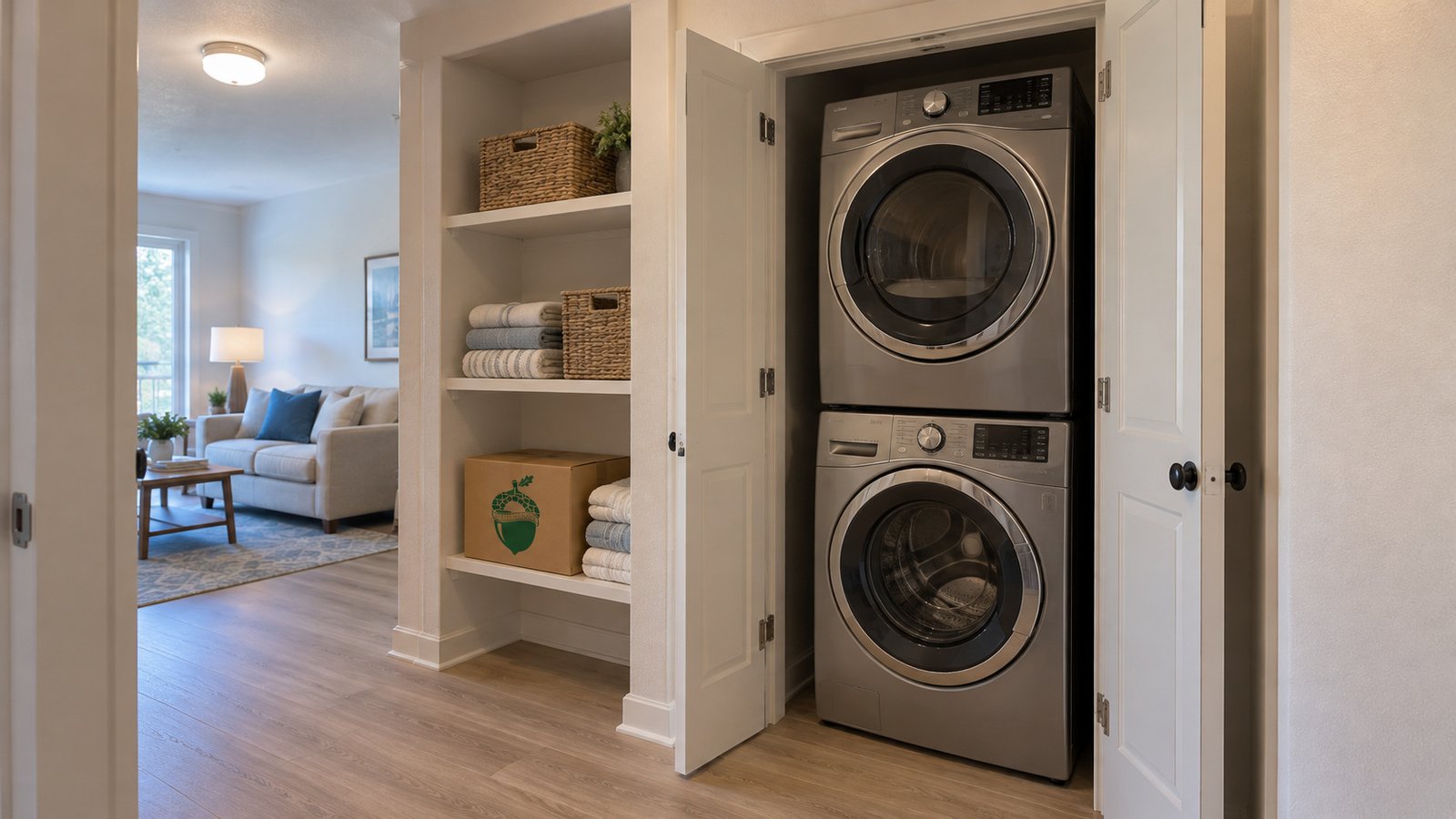
An open laundry closet holds a stacked washer and dryer beside linen shelves, two baskets and one compact branded carton, with a clear passage to the living room.
Compare useful storage with the passage left for everyday use.

05 /

Build the Washington journey from both ends

MTA route 610 provides a concrete starting point for a Washington commuter comparison. Its Waldorf boarding points include Waldorf Park & Ride at Old Washington Road and Smallwood Drive, and the U.S. 301 Park & Ride at Smallwood Drive. Select the correct date, direction and stops, then add the journey from the offered home and the walk or connection at the Washington end.

The timetable currently linked by MTA describes a Monday–Friday service, with separate observed-holiday and special-service arrangements. It is effective July 24, 2024, rather than a newly issued school-year timetable. Read the current route page and service alerts for the journey you intend to make. A morning departure from Waldorf does not establish a suitable return after overtime or an evening activity.

MTA’s commuter FAQ also matters to the practical plan. Seating is first come, first served. One-way cash payment requires exact change, and a SmarTrip card is not accepted directly on the coach. Vehicle wheelchair accessibility does not establish that every approach, crossing or onward connection is accessible; inspect the entire chain.

Local journeys are a separate task. MTA identifies Charles County VanGO as the local fixed-route system, with qualifying demand-response and ADA services and regional connections. Obtain the applicable current route, stop and service hours for the actual local trip. Eligibility for a specialized service should be resolved with the operator rather than assumed from the presence of a bus route.

For a driving commute, compare the actual route and arrival window in the same way. Include school or care stops, the return and the cost of parking. A road connection on the map cannot predict a dependable door-to-door travel time.

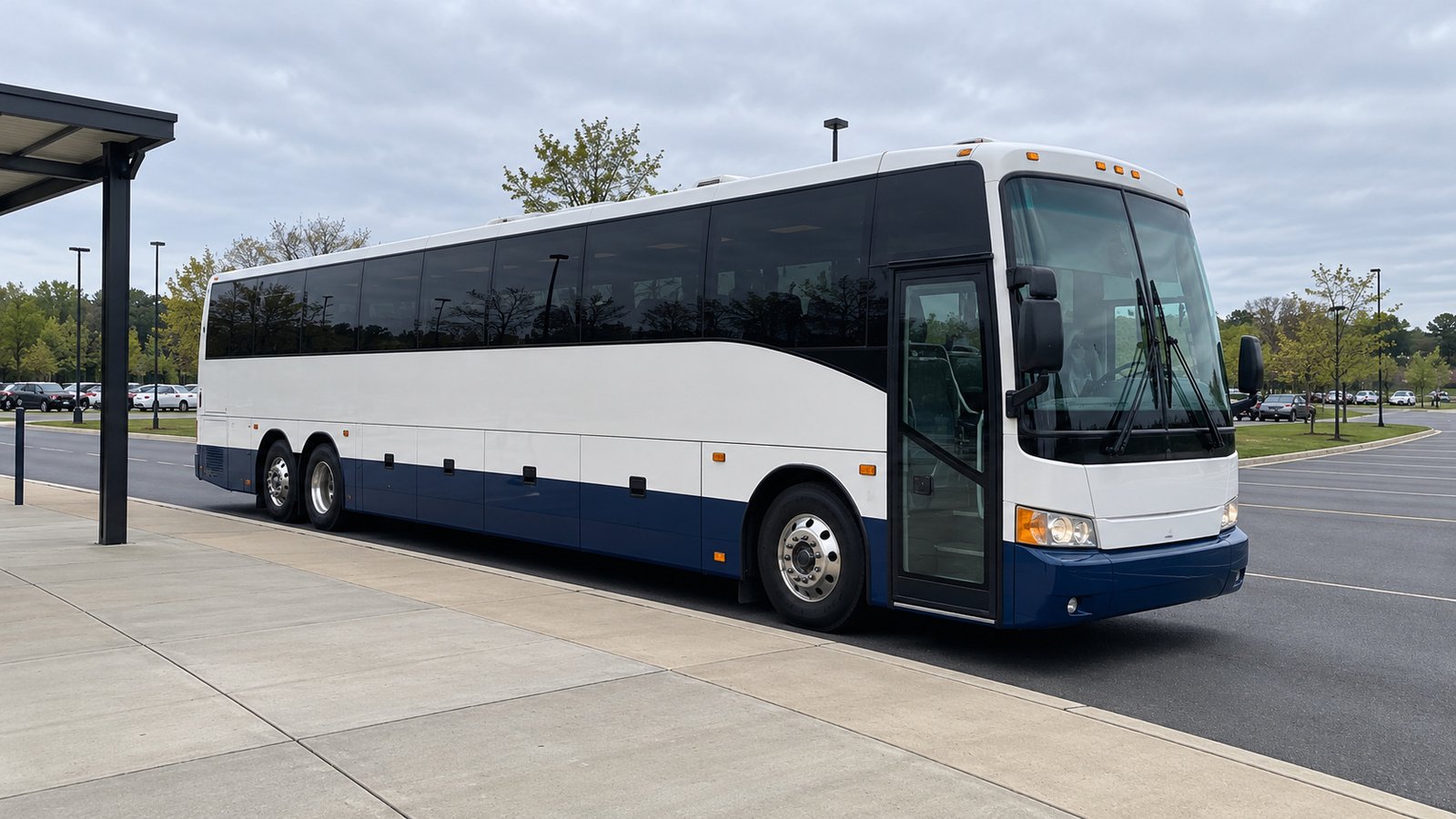
A complete white-and-navy three-axle coach waits beside a raised platform, with its passenger door ahead of the front wheel and a clear lane beyond the nose.
Check the boarding approach as well as the journey to the stop.

06 /

Can the whole week work without a car?

For a general Waldorf home search, plan on regular access to a car or a dependable ride. A household can reduce driving through its choice of address and commuter service, but the Washington coach does not provide the whole week’s transport. The most workable starting point is an offered home with a genuinely usable connection to ordinary shopping and the local services you need, plus reliable transport for the trips that fall outside that small area.

Begin an apartment comparison around the actual Fox Chase or Waldorf Station entrances, and compare the internal paths in Hampshire or Dorchester if those settings appeal. Walk the complete route to a grocery shop, including crossings, lighting and the loaded return. A pleasant recreational path can be useful without connecting to the errands you need. An operator’s list of nearby destinations can extend far beyond walking distance.

Put five kinds of journeys on one page: groceries; work or study; health appointments; social or family visits; and an evening or weekend trip. For each, name the outward service, the last usable return and the remaining walk. Route 610 does not solve Saturday and Sunday travel. Local services need their own current timetable and connection check.

Where a necessary journey has no workable service, arrange a dependable lift, an available booked ride or an address-confirmed delivery and include the cost. A possible ride that nobody has accepted is still a gap. A rental car only helps someone entitled and able to drive it. If essential journeys remain unresolved, choose another address or budget for regular assisted travel before taking the home.

07 /

Resolve the school, then complete registration

Use the CCPS School Locator for 2026–2027 with the full offered address and the child’s grade. Resolve a missing address or bus stop through the transportation help desk; school-assignment questions go to Student Services at 301-934-7326. A nearby school or a name in a property advertisement does not assign the child.

The current registration page begins with a questionnaire for situations needing a particular registration route. New online users create a ParentVUE account through its registration link; an existing family uses its active account. Prepare identity and relationship records, proof of birth, the applicable previous-school record, required health documentation and residence evidence. Processing waits for the required uploads. The school can help with the applicable branch and completion.

CCPS residence instructions require one accepted document from each of two categories. A signed, dated lease, deed or specified ownership record belongs in the first category; a qualifying utility or other listed record belongs in the second. Some documents must be within 45 days. A driver’s license can establish photo identity while failing as a residence proof. Cellular bills and bank statements are also on the unacceptable-proof list.

When staying with another household, use the Application of Domicile route and its supporting records, including the homeowner or lessee’s two categories of proof. Home-visit and prospective-homeowner situations have different applications. Send the complete special-case packet to the named school secretary or contact. The stated minimum review period begins after completion; it is not a promise of approval in 48 hours.

For ordinary kindergarten in 2026–2027, the child must be five on or before September 1, 2026. Prekindergarten and early entrance follow their separate processes. Keep school-year, grade and program decisions beside the household’s actual moving date, and retain the school’s confirmation before treating the arrangements as complete.

08 /

Choose ordinary places as well as a commute

Put one repeatable local outing into each home comparison. The library system has P.D. Brown Memorial at 50 Village Street and Waldorf West at 10405 O’Donnell Place. Its published ordinary hours extend to 8 p.m. Monday–Thursday, begin at 1 p.m. Friday, and include Saturday; Sunday is closed. Add the actual journey and current holiday or program information before relying on a particular visit.

Hampshire and Dorchester describe neighborhood paths and shared facilities. Those can add a useful nearby routine, but the offered home’s documents establish which facilities the household can use. A tenant should resolve passes and eligibility with the owner and association. A nearby pool is not automatically part of the rental.

For a trip further afield, Cedarville State Forest is reached through its Brandywine setting, with headquarters at 10201 Bee Oak Road. Treat it as a separate outing rather than an amenity reached on foot from every Waldorf home. DNR’s current notice identifies an unsafe-bridge closure on part of Blue Trail and a closed playground. Follow the marked reroute and current notices when choosing a family visit.

The trail descriptions provide useful choices: Brown Trail is a 2.5-mile loop, while the two-mile Green Trail can be wet after rain. Choose the distance and conditions the group can use, plan to finish before sunset and take trash and recycling away. A loop described as easy can still be unsuitable for a particular person or a wet day.

One resident in a teal jacket walks away along a continuous gravel woodland trail, with both shoes and the route ahead visible.
Include the journey to a weekend walk in the weekly plan.

09 /

Set up the household services the home actually uses

Make a service list from the lease, seller’s records and the equipment in the offered home. For each entry, record the supplier or responsible owner, the person opening or closing an account, the requested date and the confirmation still needed. Separate an application being sent from supply actually operating. Keep copies of accepted records that may also be useful for school residence documentation.

For an eligible existing property, SMECO’s Connect Service process uses its form or Account Manager. The published first-bill application charge is $16, with deposit and qualifying waiver requirements explained separately. New construction has its own route. Use the process for the actual property and request confirmation of the intended start arrangement before depending on it for arrival.

Water, wastewater and the owner’s responsibilities

Obtain the property’s actual water and wastewater arrangement from the owner or rental manager. Identify an individual account, an owner-billed or shared service, or any private system and its maintenance responsibilities. Have the responsible party explain the applicable start, stop, billing or inspection steps. The household should know who will have usable water at handover and who must act if it is unavailable; opening an electric account does not answer that question.

Heating, internet and the first working day

Identify the heating equipment and the fuel or service it uses. For internet, ask for availability at the exact unit and an accepted installation or activation date. Decide who can admit a technician and whether permission is needed for work in the building. If either service is essential immediately, arrange a confirmed alternative before moving work depends on it. A provider advertising the wider area does not establish readiness inside the chosen home.

10 /

Arrange three different streams before the cleanout

Separate ordinary household trash, accepted recycling and bulky items at the start of the move. Identify the actual household or building arrangements with the landlord, association and current hauler. Record the collection owner, material acceptance, placement, day and any charge. Cartons beside a community bin are not a confirmed collection booking.

Empty cartons completely and remove fittings or household papers that still need checking. Flatten the cardboard for the agreed receiving stream, keep wrapping paper distinguishable from plastic film or foam, and follow the actual container instructions. Ask where excess cartons can go when the ordinary capacity is insufficient. Do not use another property’s container without permission or block a shared path while waiting.

A sofa or mattress needs its own acceptance

Give the existing hauler or separately hired removal service the actual item, size, condition and location. Obtain the accepted date, any preparation such as required covering, the price and the permitted placement. Keep the item inside until that arrangement allows it outside. For donation, obtain the recipient’s acceptance and collection plan first; a hoped-for donation is still part of the household’s unresolved contents.

Hazardous materials and contractor loads

The County’s published household hazardous-waste program distinguishes resident materials from commercially generated hazardous waste, which it excludes. Identify the materials and obtain the current event or receiving-site conditions before travel. Keep original labels where available, and ask the receiving program how an uncertain material must be handled. A resident program does not authorize a contractor to bring its own load or settle every disposal question.

If packing materials or unwanted furniture are part of paid moving-related work, put that selected task, the agreed receiving route and its charge in writing. Keep its date separate from the main delivery when the household needs time to finish checking the contents.

11 /

Obtain a usable working position

Start with the actual vehicle position and the party responsible for that land or road. Show the planner the signs, car bays, sidewalk, driveway connection and space needed to work. Establish the road owner before seeking requirements for a temporary public-space operation; permission from an association cannot reserve a public lane.

Charles County Code §§287-7 and 287-8 defines heavy commercial vehicles through weight, capacity and size tests. The signed-road parking restriction includes exceptions for actual loading or unloading and for an owner or operator working on the abutting property. Separate controls still cover sidewalks, crosswalks, curb ramps, fire lanes and the travel portion of the road. An attended truck is not exempt from those controls, and an active-work exception does not reserve a space.

On association land, obtain the actual private approval. Fieldside’s published policy distinguishes assigned townhouse spaces and guest parking, and requires advance written permission with a time limit for containers or stored materials on HOA property. It asks for 24–48 hours for an approval review, potentially longer; the approval email must be received. General questions have a separate allowance of up to five business days. Those are Fieldside conditions, not a Waldorf-wide booking process.

Put the accepted position, operating period, approving person and any conditions in the move plan. If a position cannot be accepted, have the planning contact review another permitted approach or a different stage before dispatch. Agree the effect on carrying distance, handling, timing and cost rather than leaving the crew to invent a position on arrival.

12 /

Connect the vehicle to the final room

Walk every transition: vehicle position, walking surface, private path, exterior steps, threshold, entrance landing, corridor, stair turns or elevator transfers, and the final room doorway. A split-foyer entrance needs both stair directions in that review. A rear townhouse entrance needs the gate, surface and connection back to the vehicle, not just a photograph of an open door.

Compare the protected item with the route. A blanket or container adds to the bare furniture dimensions, and the crew needs room for controlled handling. Show low ceilings, railings, tight landings, lift interiors and door clearances. When the proposed path fails, agree suitable normal dismantling, another accepted entrance or another reviewed handling method before dispatch.

For shared buildings, identify the approving person, work window, service entrance, every elevator or stair transfer, protection, COI wording and recipient, labor-access conditions, deposits and the responsible payer. Keep acceptance separate from the request being submitted. A short building slot may need authorized preparation or material delivery beforehand; confirm that this earlier access is allowed.

Name the person holding the keys and the person able to direct receiving rooms. Keep floors and the placement area clear. If a route or slot becomes unavailable, the household needs an agreed decision deadline and a confirmed alternative, rather than a general promise to sort it out on the day.

13 /

Choose a date with a workable fallback

Offer the planner several dates when the lease, closing and household schedule allow. Compare the actual windows at the two properties, any separate packing visit, school commitments and the time needed for permissions. A mid-month option can be worth discussing when an end-of-lease date is flexible; it does not promise a lower price, an available crew or an accepted building slot.

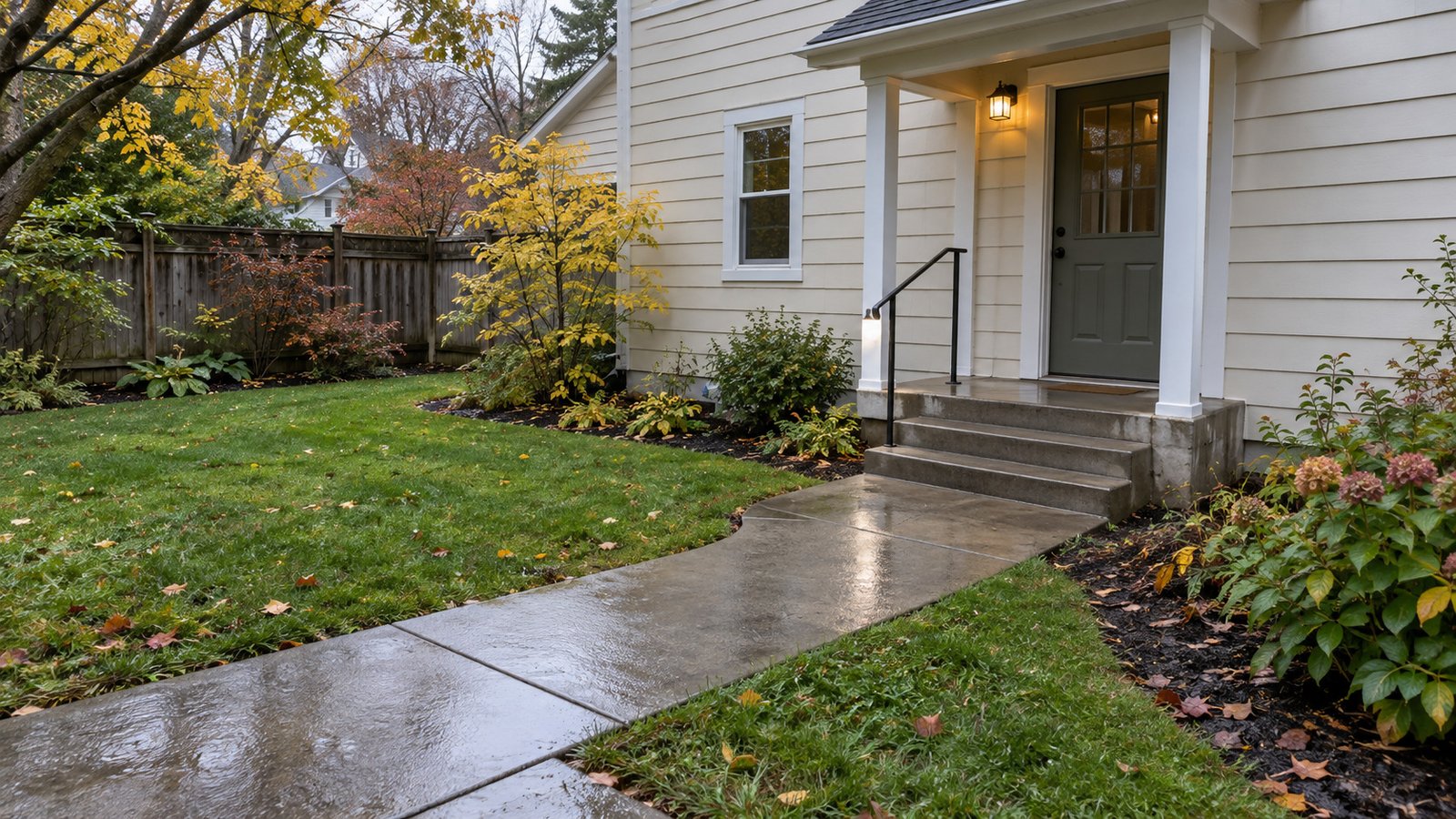
Review the outside route again close to the move. Wet leaves, rain, snow or ice can change a path, a stair or a driveway even when the indoor layout is unchanged. Assign the property preparation to the person responsible for it, and have the planning contact review any change affecting safe handling or the accepted vehicle position. A forecast does not confirm that a route has been prepared.

Decide before the alternative disappears

Set an observable trigger: missing keys, an unaccepted slot, an unusable path or a receiving home without an essential service. Agree the decision time before dispatch or before a reserved alternative expires. Name the customer representative authorized to decide and the planning contact who can arrange the next stage.

The alternative must actually exist: a confirmed later slot, another approved route, a separately accepted stage or available storage with the necessary access. Agree additional handling, waiting, storage and later-delivery costs. Decide where people will stay and which medicine, documents, work supplies and overnight items remain with them. Resume delivery after keys, a receiving person and the required route and services are confirmed.

A damp private concrete path leads through a modest garden to three complete steps, a sheltered landing and one closed rear door.
Review the private approach again when rain changes the surface.

14 /

Bring the chosen home into an accepted arrival plan

  1. Before committing to the home: compare its usable layout, total obligations, school-year assignment and the whole week of journeys. Resolve association or rental conditions that would change the choice.
  2. Once the address is agreed: complete the applicable school and household-service requests. Obtain the property’s collection arrangements, current access instructions and the person responsible for each handoff.
  3. Before confirming the move plan: show retained contents and both properties, every carrying transition, preparation tasks and date constraints. Obtain accepted working positions and building arrangements, including any earlier authorized visit.
  4. Before dispatch: confirm keys, the receiving person, usable services and current route conditions. Check the fallback decision time and any reserved alternative. Keep personal essentials with the household.
  5. On arrival: open the agreed route, direct the first useful rooms and keep shared passages clear. Separate unpacked materials from belongings and follow the accepted collection or later-removal plan.

The Waldorf moving-services page explains the company’s preparation, transport, delivery and estimate process. Bring it the actual contents, addresses, responsibilities and receiving result you want to arrange.

15 /

Questions before you arrive

Is Waldorf a municipality with one set of city services?

Waldorf is a Census-designated place in Charles County. Start with the full property address, then establish the road owner, household-service arrangement and any association. The postal name, school assignment and private parking rules answer separate questions.

Where should I begin comparing homes?

Begin with Hampshire or Dorchester for their described mixture of homes and internal paths; Fox Chase for a specific compact-rental comparison; Waldorf Station for newer apartment choices; and Fieldside for an association-managed townhouse comparison. Choose between actual layouts, written costs, responsibilities and the whole week of travel rather than a neighborhood ranking.

Can I live in Waldorf without a car?

For a general home search, budget for regular access to a car or dependable rides. A no-car household needs a deliberately chosen address and reliable alternatives for the journeys that fall outside its local routine. Ordinary shopping must be reachable on a usable path, and work, health, evening and weekend trips need real outward and return options. Arrange reliable rides or delivery for essential gaps and include their cost. Route 610 does not supply weekend service.

Does the Washington commuter coach run on weekends?

Route 610’s currently linked timetable specifies Monday–Friday, with no Saturday or Sunday service and separate observed-holiday and special-service arrangements. Use the current route page and alerts for your date. Local VanGO trips and an evening return require their own service check.

Does Waldorf Station mean I can board a passenger train there?

No. Waldorf Station is the development name in this comparison; that name does not establish a passenger-train boarding point. Use the actual passenger-service and boarding information from the transport operator. For the Washington journey described here, the verified option is MTA’s commuter coach and its named park-and-ride stops.

How do I find the right school?

Use CCPS’s 2026–2027 School Locator with the complete address and the child’s grade, then resolve the assignment with the school. A missing address or bus stop goes through the transportation help desk. Student Services handles assignment questions. A property listing or nearby campus does not establish placement.

When can a child enter kindergarten?

For ordinary CCPS kindergarten in 2026–2027, the child must be five on or before September 1, 2026. Complete the applicable registration and records. Prekindergarten and early entrance have separate processes and should not be treated as an automatic place under the kindergarten rule.

Which residence documents should I prepare?

CCPS asks for one accepted proof from each of two categories: an ownership or lease category and a qualifying utility or other listed record category. Check the document-specific date conditions. A driver’s license is useful for photo identity but is not an accepted domicile proof; cellular bills and bank statements are also excluded.

What if we will live with another household?

Use CCPS’s Application of Domicile process with the homeowner or lessee’s two categories of residence proof, the parent’s required Maryland identification, the child’s birth record and the application for that student. Submit the complete special-case packet to the named school contact. The minimum review period starts after all documents arrive and does not guarantee approval in 48 hours.

How do I start electricity?

For an eligible existing home, use SMECO’s Connect Service form or Account Manager and obtain the accepted start arrangement. The published application charge appears on the first bill; deposits and qualifying waivers have their own conditions. A new building follows a separate process, and the lease may assign responsibilities differently.

Does opening electricity connect the rest of the home?

No. Water or wastewater, heating fuel and internet have separate equipment, accounts or owner responsibilities unless the lease bundles them. Use the property’s actual service list, identify who must act and obtain accepted dates. Confirm the essential services work at handover and arrange a usable alternative before arrival depends on them.

Can a sofa or mattress go out with the cartons?

Arrange it separately. Give the current hauler or a separately hired removal service the actual item, condition and location, then obtain acceptance, preparation requirements, price, placement and date. Keep it indoors until the arrangement allows it outside. Prepare empty cardboard for its accepted recycling stream and keep shared paths clear.

Can a moving contractor use a resident hazardous-waste event?

Do not infer contractor access from a resident program. The County’s published HHW program excludes commercially generated hazardous waste. Identify the material, the person bringing it and the current receiving conditions before arranging transport; ordinary packaging, furniture and hazardous materials need different decisions.

Can we use an empty guest bay for the moving vehicle?

Only after the party authorized for the property accepts the actual vehicle, position and work. A resident car space or an empty guest bay does not reserve a truck position. Resolve the private approval, public-road restrictions and the full carrying route before dispatch.

Can I place a storage container on Fieldside property?

Fieldside’s published policy requires an advance written request, permission and a set time limit for containers or materials on HOA property. Retain the approval before relying on the position. That association decision does not authorize a container or truck on a public road or another property.

Can I plan a Sunday library visit?

The library system’s published ordinary hours list Sunday as closed. P.D. Brown Memorial and Waldorf West offer other weekday and Saturday options, with a later start on Friday. Use the current hours and holiday information for the actual visit and include the journey from the home.

Is Cedarville’s playground available for a family outing?

DNR currently lists the playground as closed for repairs and a Blue Trail section as closed around an unsafe bridge. Choose an available activity and follow current reroutes and notices. Cedarville is a separate Brandywine outing; its presence in a regional destination list does not establish a walk from a Waldorf home.

What if keys or the receiving route are not ready?

Use the decision time agreed before dispatch or before a reserved alternative expires. The authorized household representative and planning contact select a confirmed later slot, another approved route, a separate stage or actually available storage. Agree costs, where people stay and which essentials remain with them. Resume when keys, a receiver and the required route and services are confirmed.

Your next step

Bring the plan together

Bring the chosen home, retained contents and accepted receiving arrangements into one plan. Explore the work and estimate process for your Waldorf move.

Sources & useful local resources

Official procedures and local resources are linked beside the answers above. Reopen the relevant page when arranging a date: fees, schedules and application requirements can change.

Place and home comparisons

Transport

Schools

Household services and receiving access

Everyday places

Plan your Waldorf move

Review direct and consolidated delivery, pickup access and receiving dates before choosing your moving plan.

  • Long-distance moving

    Direct and consolidated household moving from Waldorf, Maryland, throughout the United States and Canada.

  • Full packing and unpacking

    Full or selected Waldorf packing, with a working last evening, identified retained groups, priority unpacking and separately directed final placement.