
Massachusetts · Hyannis service planning
Long Distance Movers in Hyannis, MA
Sterling Oakbridge arranges long-distance household moving from Hyannis, Massachusetts, throughout the United States and Canada. Choose direct delivery with a dedicated truck and the same moving crew at pickup and delivery, or ask about consolidation for a suitable small shipment. We review the belongings, packing, property access and receiving dates before agreeing the work and preparing a written estimate.
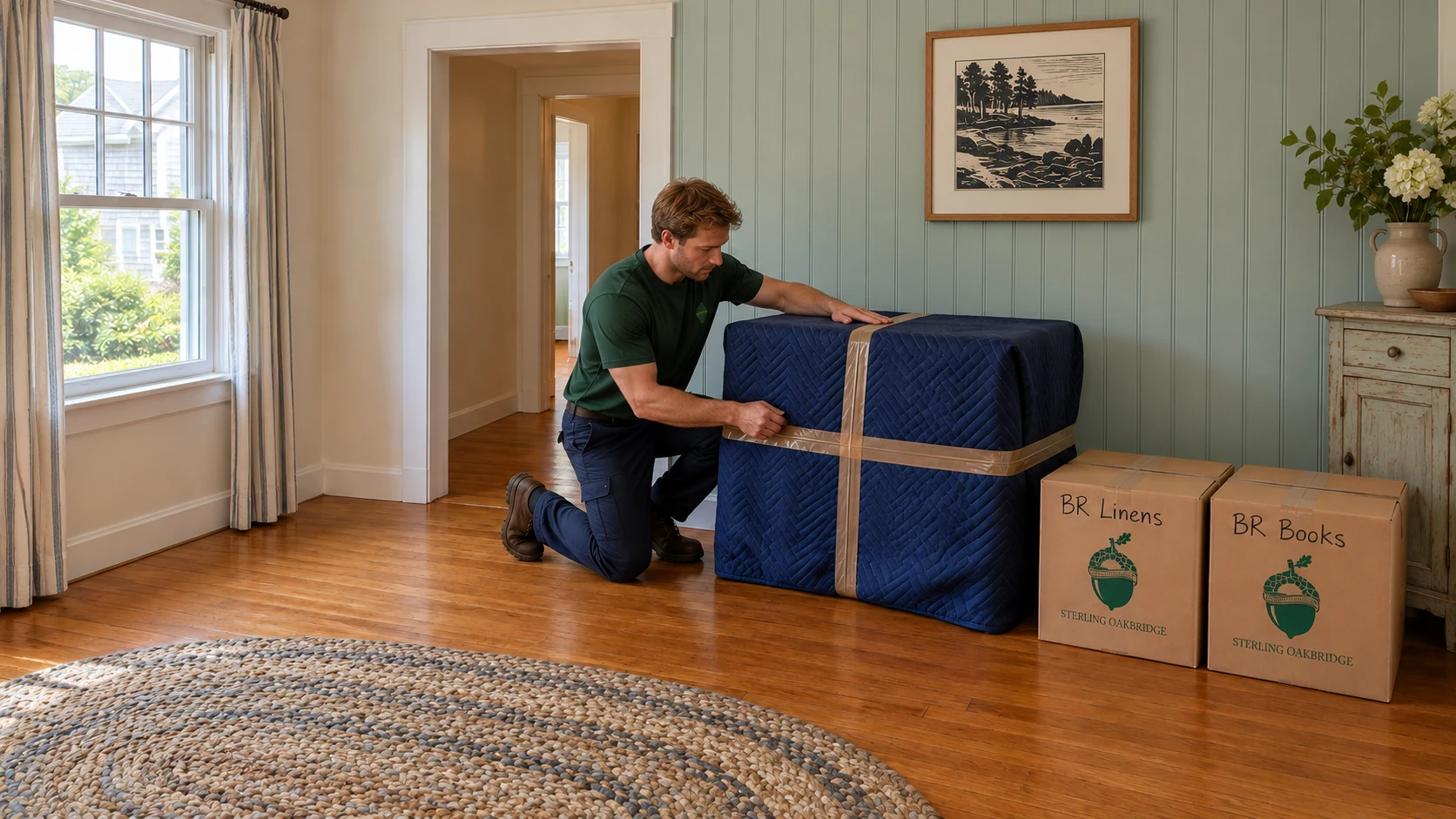
Start with everything that is leaving the property
Include the rooms you use every day and the belongings you rarely see. A cottage can have a basement, shed or patio group that adds work beyond its bedroom count. In a larger home, include the upper floor and any separate storage pickup. Mark what stays with the property, what another person is collecting and what belongs in this shipment.
A small cottage can need a careful plan for a tight doorway and basement belongings. A home with a finished lower level and garden shed adds separate rooms, steps and stored contents to the survey. A larger older house with an outbuilding may require more than one carrying route. Include those spaces even when the main living rooms look straightforward; the full inventory and connected routes through your own property determine the preparation.
Hyannis is a village of the Town of Barnstable, not a separate municipality. Provide the street, unit and actual municipality at both ends. A postal name does not settle who controls the road, driveway or building entrance. The Hyannis moving-services page explains the broader service choices; the local relocation guide covers neighborhood, school, utility and household setup decisions.
Choose the delivery arrangement around the receiving household
Direct delivery uses a dedicated truck and the same moving crew at pickup and delivery. It can suit a larger household shipment or a move that needs a closely coordinated receiving period. The people reviewing your estimate have a separate planning role from the crew carrying, loading and driving.
Consolidated delivery can suit a smaller shipment when the receiver can accept a wider agreed window. Roughly 300–400 cubic feet describes small-shipment guidance; it is not a minimum order or an automatic eligibility cutoff. Give us the actual item list, destination and receiving flexibility. Consolidation does not by itself include free storage, a guaranteed discount or the same crew at both ends.
For an eligible shorter domestic consolidated route, allow up to 30 days after loading. Florida and Canada allow up to 60 days; California up to 90 days. Canada keeps its own rule even when the driving reference is relatively short. Other distant destinations require an individually agreed window. Charleston, South Carolina, does not inherit Florida's rule, and California's maximum does not apply to every western state.
All delivery periods start after pickup and loading are complete. Earlier packing, preparing furniture and carrying it out of the home happen before that point. The household's travel and accommodation need their own plan for the accepted receiving period.
Compare the journeys without treating a range as an appointment
The table uses reference journeys from a Hyannis village point to the four destination cities. It is an illustrative comparison, not a certified commercial-vehicle itinerary or a booked delivery. Review the actual truck route, two property addresses, loading completion and receiving access before confirming the move.
Swipe the table to compare both delivery options.
| Illustrative destination | Direct planning window | Consolidated window |
|---|---|---|
| Albany, New York | 1–2 days | Up to 30 days |
| Charleston, South Carolina | 2–3 days | Window agreed individually |
| Ottawa, Ontario | 1–2 days | Up to 60 days |
| San Diego, California | 5–6 days | Up to 90 days |
A suitable small nearby move may sometimes permit same-day delivery after early loading and confirmation of lawful travel and usable receiving access. Next-day delivery may fit other reviewed plans. Neither is automatic from the mileage; the ordinary direct ranges include a planning buffer. For Canada, the short road reference does not confirm customs readiness or clearance.
Example: Hyannis to Albany — make the apartment window usable
Suppose a household is leaving an apartment above or behind Main Street commercial space for an Albany apartment with a management-approved weekday receiving period. That building arrangement is part of this hypothetical example, not a rule for every Albany property. Obtain the service entrance, elevator instructions if applicable, COI requirements, working hours and person who will admit the crew before fixing the sequence.
At the Hyannis end, show the residential stair, each turn and the route from the proposed truck position. A shop's front door may not serve the apartment. Resolve the public-space arrangement with Barnstable Parking Management separately from the landlord's permission. Pack the rooms that can be prepared early while keeping exits and the authorized carrying period clear.
The ordinary direct illustration is 1–2 days after loading. A smaller job could be assessed for same-day service, but only when the whole departure, lawful journey and receiving slot fit. If the approved apartment window cannot be used, the customer and planner need another accepted slot or confirmed storage and redelivery, with charges agreed before changing the plan.
Useful preparation: send one connected access video and the building's actual instructions. This can reveal preparation to finish before a restricted window; it does not promise a lower price or waive an approval.
Keep the household's first days outside the freight inventory
Set aside identification, keys, medicines, chargers, changes of clothes and immediate work or school supplies before loading begins. Keep the moving documents and any Canadian paperwork with the person who needs them. Make the separation clear to relatives or helpers so a travel bag does not become another item in the load.

Plan these supplies for the whole accepted receiving period and any gap in possession. The family's arrival and the truck's arrival are separate events. Arrange a usable place to stay, a way to reach it and essential equipment that cannot wait for delivery. Do not rely on retrieving a particular sealed carton from a consolidated shipment in transit.
Example: Hyannis to Charleston — decide what can wait for possession
Imagine a household leaving a Hyannis home while its Charleston closing and key release remain unconfirmed. Separate the goods that can travel in the planned shipment from anything the household needs during the gap. Include basement contents, a shed and outside furniture only when they are part of the agreed inventory; mark items staying behind before the survey.
Direct delivery has an illustrated 2–3-day range after loading. That does not supply keys or a lawful place to unload. Charleston is in South Carolina, and this longer consolidated reference needs an individually agreed window, rather than Florida's 60-day maximum or an assumed 30-day nearby period. Choose the model after the receiver's availability is understood.
Set a decision deadline before dispatch or before another arrangement expires. The authorized customer and moving planner should confirm a later usable receiving period or an available storage and redelivery stage, including intake, handling, access and charges. Identify where the household will stay while the goods wait. Resume delivery when keys, the receiving person and a safe carrying route are confirmed.
Useful preparation: keep the firm departure deadline and tentative closing date visibly separate. Obtain confirmation of the alternative before treating it as part of the move; a storage inquiry is not reserved capacity.
Prepare furniture as complete protected groups
Ordinary drawers are generally emptied, kept installed and secured in their furniture. Do not create a loose drawer shipment unless the actual piece needs a different reviewed method. Show large or fragile furniture and its construction before move day so the crew can plan protection and any safe disassembly.
Protect the tabletop before removing safely removable long table or desk legs. Keep the matching leg set together in one common moving blanket, with the correct hardware identified for that piece. An integral support is different from a removable leg. The method depends on the actual joints; do not force a generic disassembly pattern onto the furniture.

Packing can cover selected rooms or the agreed full household. Moving blankets, shrink wrap and tape have no separate material charge; supplied boxes are charged separately. Packing uses working time. Basic furniture disassembly and reassembly use moving labor without a separate basic assembly fee; complex furniture and specialist items need individual review and pricing.
At delivery, furniture unwrapping is included. Opening box contents is optional work charged for time, and packaging or waste removal is charged separately. Decide which help you want before the receiving day rather than assuming every task follows unloading.
Example: Hyannis to Ottawa — connect a small shipment to its goods list
Suppose a household is sending a selected group of belongings to Ottawa while travelling separately with its immediate essentials. A smaller volume may make consolidation worth reviewing if someone can receive throughout the agreed window. The Ottawa example allows up to 60 days for suitable consolidated service, even though the ordinary direct illustration is 1–2 days after loading. These are planning comparisons; customs readiness and the actual receiving arrangement still matter.
Start the Canadian preparation with the person's actual status and circumstances. CBSA's moving and returning guidance distinguishes settlers, former residents and other situations. It asks for two copies of a goods list, divided between goods arriving with the person and goods to follow, with values and relevant make, model and serial details. Later goods need to be on the original list to qualify under the person's applicable entitlement. Do not assume that moving furniture makes every item duty-free.
Use the BSF186 personal-effects accounting form and the applicable CBSA instructions to prepare the real accounting. Keep the approved goods-to-follow documentation accessible for the later shipment. Commercial-use goods, restricted items and circumstances outside the ordinary household-effects route require their own review. A packing inventory does not decide immigration status, importer classification or duty entitlement.

Useful preparation: reconcile the shipping inventory with the goods-to-follow list while changes can still be made. Tell the planner what remains unresolved and agree what confirmation is needed before dispatch; the moving schedule does not guarantee a border decision.
Arrange a lawful Hyannis loading position before the journey
Give Barnstable Parking Management the address, date, hours and vehicle footprint at 508-862-4673. Its Main Street contractor program describes temporary parking beyond the ordinary two-hour limit for hired providers serving local premises. Ask whether your move qualifies and what approval covers. Extending time does not by itself reserve an exclusive loading space.
The page links a valet application for a different operation. Obtain the correct current moving instructions, fee, lead time and any posting requirements from the office; do not apply the valet packet's conditions to a truck. Confirm where an occupied requested space would leave the move. Informal cones, a paid meter and the landlord's consent do not establish exclusive public-space use.
The Town parking code limits ordinary service-zone use to actual loading or unloading for no more than thirty minutes. A longer operation needs a confirmed arrangement. Keep sidewalks, crossings and driveways clear and account for the marked space. Arrange any waiting or overnight vehicle position separately; the overnight provision prohibits parking for more than one hour between 1 a.m. and 6 a.m. on the specified Schedule 2 streets, rather than every street in Town. The general code also prohibits leaving a traffic lane less than 10 feet wide; assess the actual vehicle and street together.
The DPW roadway guidance distinguishes Town, private and state roads. Identify the responsible authority for the actual frontage. Show any proposed ramp, lift or impact on a public route rather than assuming private building permission covers it. Sterling Oakbridge can coordinate COIs, permit arrangements, elevators and moves requiring union labor; each request still needs the correct approver, personnel and agreed charges.
Example: Hyannis to San Diego — prepare the receiver before the load arrives
For a larger household moving from Hyannis to San Diego, suppose the customer travels later and an authorized adult receives first. Give that person the key arrangement, room plan, contact method and written authority to accept the agreed delivery and raise an access question. Decide who can approve a scope change. A neighbor holding keys is not automatically authorized to make every decision.
Direct delivery uses the dedicated truck and same moving crew, with this ordinary illustration allowing 5–6 days after loading. If the actual shipment suits consolidation instead, San Diego is in California and uses the maximum of up to 90 days. Seattle and Portland are in other states and require their own agreed consolidated windows. Plan the household's essentials and accommodation for the arrangement actually chosen.
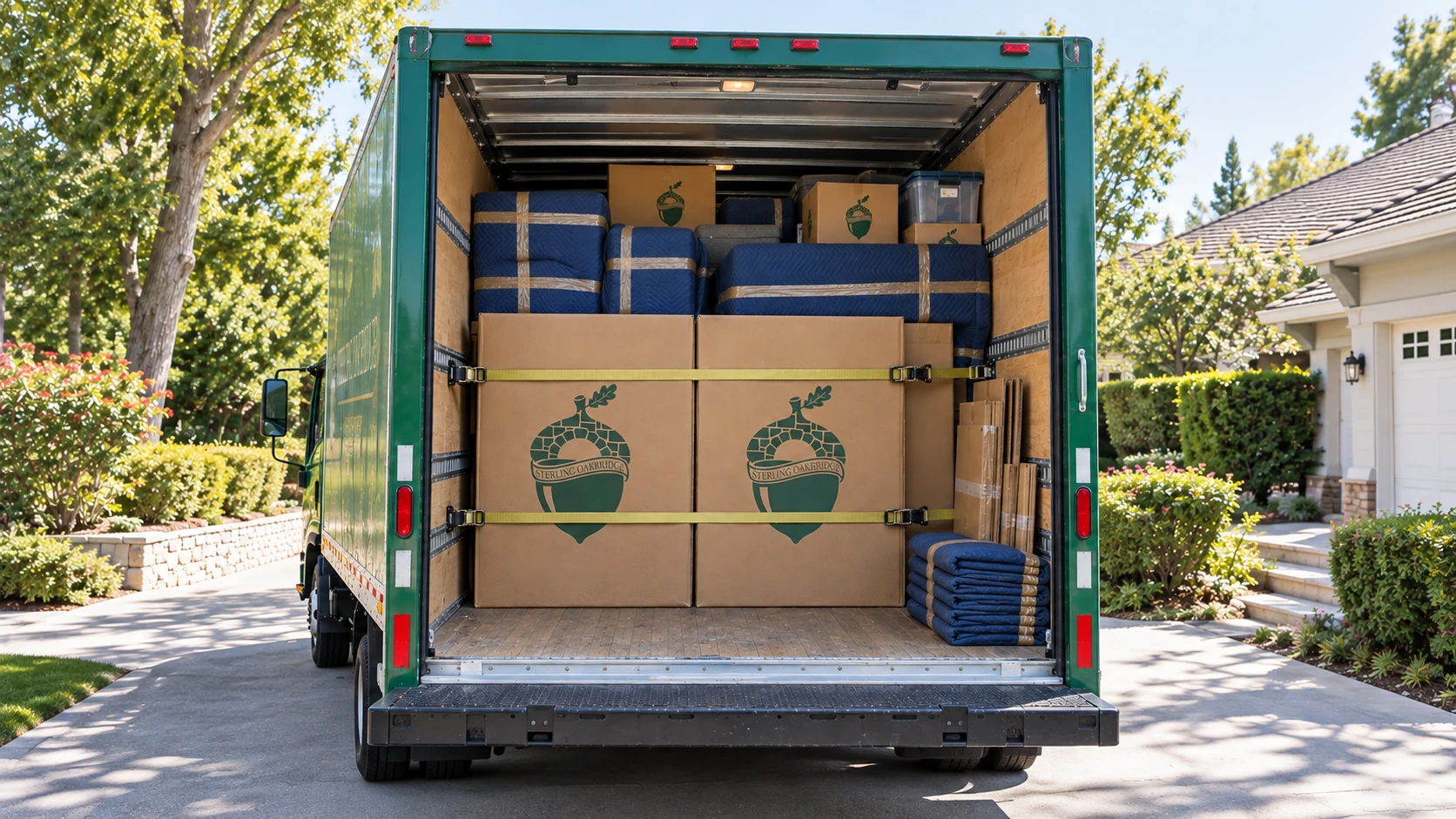
Before unloading, confirm that the largest items have a usable route and the assigned rooms are available. Prioritize agreed basic bed or desk reassembly without filling the passage with later cartons. Check delivered items and record visible condition concerns in the moving documents. Optional box unpacking and packaging removal remain separately scoped work.
Useful preparation: use a single current room plan and identify the receiver's authority before the household separates. If keys or safe access fail, pause the affected step and use the agreed decision deadline and confirmed alternative. Resume when the actual receiving arrangement is usable.
Keep the estimate tied to the shipment and agreed work
For long-distance work quoted at an agreed flat rate, travel or delivery taking longer does not itself raise the price when the shipment and work stay the same. Added belongings, extra packing, a different access route or an additional storage stage can change the scope. Resolve known changes and any revised interstate written estimate before loading. The original estimate cannot be rewritten after loading begins; later additional services need their applicable agreement and charges before they are performed.
For an interstate household-goods move, FMCSA distinguishes a written estimate from a rate quote. Obtain the required written estimate. Complete the required survey unless you make the proper separate written survey waiver before loading, and retain that waiver with the bill of lading. Waiving the survey does not waive the written estimate or settle the applicable charges. Send the known information first; the planning team will recommend the review needed for your shipment and access. Identify open decisions instead of presenting an unconfirmed date or entrance as settled.
A journey remaining within Massachusetts follows the applicable DPU tariff and moving-document rules. The state guide explains that an estimate is not a fixed total; review the pricing basis, travel time and bill of lading before loading. Do not apply interstate documents or the illustrated interstate flat-rate arrangement automatically to a Hyannis-to-Boston move simply because it feels long. Confirm the actual route, pricing basis and applicable carrier terms before accepting the plan.
Choose protection before departure. For interstate household goods, Full Value Protection applies unless Released Value is selected through the required written waiver. Released Value limits liability to 60 cents per pound per article rather than replacement cost. Valuation describes the mover's liability and differs from a separate insurance policy. Review the cost, limits and claims process, and identify unusually valuable belongings in advance; FMCSA explains the alternatives. Canadian and in-state documents need their applicable terms.
Arrange pickup from the actual Hyannis address
We arrange long-distance household pickup in Hyannis, a village of the Town of Barnstable, Massachusetts. Include the actual unit and municipality, every shipping floor and any garage, shed or separate storage pickup. Main Street apartments, smaller cottage layouts and Hyannis Port homes need their own entrance and truck-position review. Other villages or towns with a similar postal label need their full address reviewed separately; a mailing name does not establish public-road permission or building access.
Explore destinations from Hyannis
These destinations illustrate the United States and Canada coverage available for review. They are not a demand ranking or confirmed delivery appointments. The two addresses, shipment and accepted receiving arrangements determine the move.
Northeast and Mid-Atlantic
- Albany, New York
- New York City, New York
- Boston, Massachusetts
- Baltimore, Maryland
- Philadelphia, Pennsylvania
- Washington, DC
Southern destinations
- Charleston, South Carolina
- Raleigh, North Carolina
- Charlotte, North Carolina
- Atlanta, Georgia
- Orlando, Florida
Great Lakes and Midwest
- Chicago, Illinois
- Cleveland, Ohio
- Columbus, Ohio
- Pittsburgh, Pennsylvania
Pacific states
- San Diego, California
- Los Angeles, California
- Seattle, Washington
- Portland, Oregon
Mountain West and Southwest
- Phoenix, Arizona
- Las Vegas, Nevada
- Salt Lake City, Utah
- Denver, Colorado
Canada
- Ottawa, Ontario
- Toronto, Ontario
- Hamilton, Ontario
- Montreal, Quebec
- Quebec City, Quebec
Long-distance moving questions
What long-distance moving can I arrange from Hyannis?
Choose direct delivery with a dedicated truck and the same moving crew at pickup and delivery, or ask about consolidation for a suitable smaller shipment. Send both full addresses, belongings, dates and receiving flexibility. We review the packing, access and any storage before agreeing the plan and preparing the applicable written estimate.
When do the delivery periods start?
After pickup and loading are complete. Earlier packing, preparing furniture and carrying it out of the property precede that point. The table gives planning illustrations; it does not book a delivery appointment or establish the route for a particular commercial vehicle.
Could a small Hyannis-to-Albany move arrive the same day?
Possibly, after review of the load, early loading completion, lawful travel and a usable destination receiving slot. The ordinary direct illustration is 1–2 days after loading. A short city-to-city journey alone does not confirm same-day or next-day service, a clear curb or a reserved apartment elevator.
Is 300–400 cubic feet a minimum shipment?
No. It is approximate small-shipment guidance for considering consolidation, not a minimum order or a guaranteed cutoff. Provide the actual furniture, cartons and other containers, destination and date flexibility so we can review whether consolidation is appropriate.
Which consolidated delivery windows apply?
An eligible shorter domestic route can allow up to 30 days after loading; Florida and Canada up to 60 days; California up to 90 days. Other distant routes need their own agreed window. Canada retains its rule even on a shorter road reference. Confirm the window for the actual shipment; consolidation does not automatically include free storage, a discount or the same crew at both ends.
Does Charleston use the Florida 60-day rule?
No. Charleston is in South Carolina. The longer Charleston reference on this page needs an individually agreed consolidated window. Do not substitute Florida’s maximum or a nearby-route assumption. If possession is delayed, confirm available storage and later delivery with the applicable handling, access and charges.
Does the California window apply to Seattle or Portland?
No. San Diego is in California and can use the confirmed consolidated maximum of up to 90 days after loading. Seattle is in Washington and Portland is in Oregon; their distant consolidated windows must be agreed individually. None of these planning periods is a booked receiving appointment.
What should I prepare for household goods going to Ottawa?
Use CBSA’s instructions for your actual settler, former-resident or other circumstances and prepare the personal-effects accounting, including BSF186 as applicable. List goods travelling with you separately from goods to follow, with values and relevant make, model and serial numbers. CBSA asks for two copies. Later goods need to be on the original list to qualify under the applicable entitlement; a moving inventory does not itself establish duty-free eligibility or immigration status.
Will a longer journey increase an agreed flat rate?
Longer travel or delivery time alone does not increase the agreed flat rate for the same shipment and work. Added items, extra packing, changed access or another storage stage can change the scope. Resolve known changes and any revised interstate written estimate before loading. The original estimate cannot be rewritten after loading begins; later additional services need their applicable agreement and charges before they are performed.
What if both addresses are within Massachusetts?
A move entirely within Massachusetts follows the applicable DPU tariff and moving-document requirements. The state guide explains that an estimate is not a fixed total; review the pricing basis, travel time and bill of lading before loading. A Hyannis-to-Boston journey does not automatically use the interstate flat-rate arrangement or documents described by the four examples.
Does a Main Street contractor permit reserve truck space?
No exclusive space follows automatically from that permit. Barnstable describes temporary parking beyond Main Street’s two-hour limit for eligible hired providers. Call Parking Management at 508-862-4673 with the address, date, hours and vehicle footprint; confirm qualification, the approved operation, current application, fee, lead time and any official posting. The linked valet packet concerns a different activity.
Can a service zone cover the whole loading period?
Ordinary Barnstable service-zone use is limited to actual loading or unloading for no more than thirty minutes. A longer operation needs a confirmed arrangement with the responsible authority. Public-space approval and private building access are separate; keep sidewalks, crossings and driveways clear and agree a lawful alternative if the intended position is unavailable.
What access information is useful for a Hyannis home?
Show one connected route from the proposed truck position through the steps, landing, threshold, door, stair or elevator and hallway to each shipping room. Include the limiting turns, large furniture and every included floor or outbuilding. A cottage’s room dimensions, a postal name or a shop’s front entrance does not establish the usable residential route.
Can you coordinate a COI or elevator reservation?
Yes. We can coordinate building COIs, moving-truck permit arrangements, elevator scheduling and moves requiring union labor. Send the actual management instructions, contacts and deadlines early. Identify who approves each request, the permitted carrying period, required personnel and any building or municipal charges.
Should drawers and removable table legs travel separately?
Ordinary drawers are generally emptied, kept installed and secured inside the protected furniture. Safely removable long table or desk legs should be removed after the tabletop is protected; keep the complete matching set together in one common moving blanket and identify its hardware. Integral supports and complex joints need their own reviewed method. Show the actual piece before dismantling it.
Which materials and unpacking tasks are charged separately?
Moving blankets, shrink wrap and tape have no separate material charge; supplied boxes are charged separately. Packing uses working time. Basic furniture disassembly and reassembly use moving labor without a separate basic assembly fee, while complex work is individually quoted. Furniture unwrapping is included at delivery; opening box contents is optional work charged for time, and packaging or waste removal is charged separately.
What should remain with the household during travel?
Keep identification, keys, medicines, chargers, clothing, immediate work or school supplies and required moving or Canadian papers with the people who need them. Separate these bags before loading. Arrange accommodation and essentials for the accepted receiving period and any possession gap; do not depend on retrieving a particular carton from a shipment in transit.
What happens if the receiving home is not available?
Pause the affected delivery step and contact the authorized customer and planner before the agreed decision deadline. Confirm a usable later window or available storage and redelivery, including access, handling, charges and a named receiver. Keep the household’s accommodation and essentials workable. Resume when keys and a safe receiving route are confirmed; an unanswered storage inquiry is not reserved capacity.
Is valuation the same as insurance?
No. Valuation describes the mover’s liability, while separate insurance is a different product. For interstate household goods, Full Value Protection applies unless Released Value is selected through the required written waiver. Review the cost, limits and claims procedure and identify unusually valuable items before departure. In-state and Canadian shipments require their applicable documents and terms. Released Value limits liability to 60 cents per pound per article rather than replacement cost.
Where can pickup be arranged in Hyannis?
We arrange long-distance household pickup in Hyannis, a village of the Town of Barnstable, Massachusetts. Include the actual unit and municipality, every shipping floor and any garage, shed or separate storage pickup. Main Street apartments, smaller cottage layouts and Hyannis Port homes need their own entrance and truck-position review. Other villages or towns with a similar postal label need their full address reviewed separately; a mailing name does not establish public-road permission or building access.
Can I request an estimate with some details still unresolved?
Yes. Start with both addresses, belongings, date choices and the help wanted. Add large-item photographs and a connected access video, then label approvals, possession and receiving details that still await confirmation. For an interstate household shipment, obtain the required written estimate and complete the required survey or proper separate written survey waiver before loading. Retain the waiver with the bill of lading; it does not waive the written estimate. The initial request starts the review rather than booking unresolved access or dates.
Send the details that let us plan the handover
Send both full addresses and units, the complete inventory, date choices, photographs of large pieces and a connected video of both carrying routes. Include every shipping floor, outbuilding and separate pickup, the packing help wanted, building instructions and proposed truck positions. Name the receiving person and distinguish firm approvals from pending requests. We can then review direct or consolidated delivery, preparation and any storage stage for a written estimate of the actual move.