
New Hampshire · Littleton service planning
Long Distance Movers in Littleton, NH
Sterling Oakbridge arranges long-distance household moving from Littleton, New Hampshire, across the United States and Canada. Direct service gives you a dedicated truck and the same moving crew at pickup and delivery. A suitable smaller shipment can be reviewed for consolidated delivery with a wider receiving window. Tell us what is going, the two addresses and your fixed dates; we will review preparation, access and delivery before preparing the applicable written estimate.
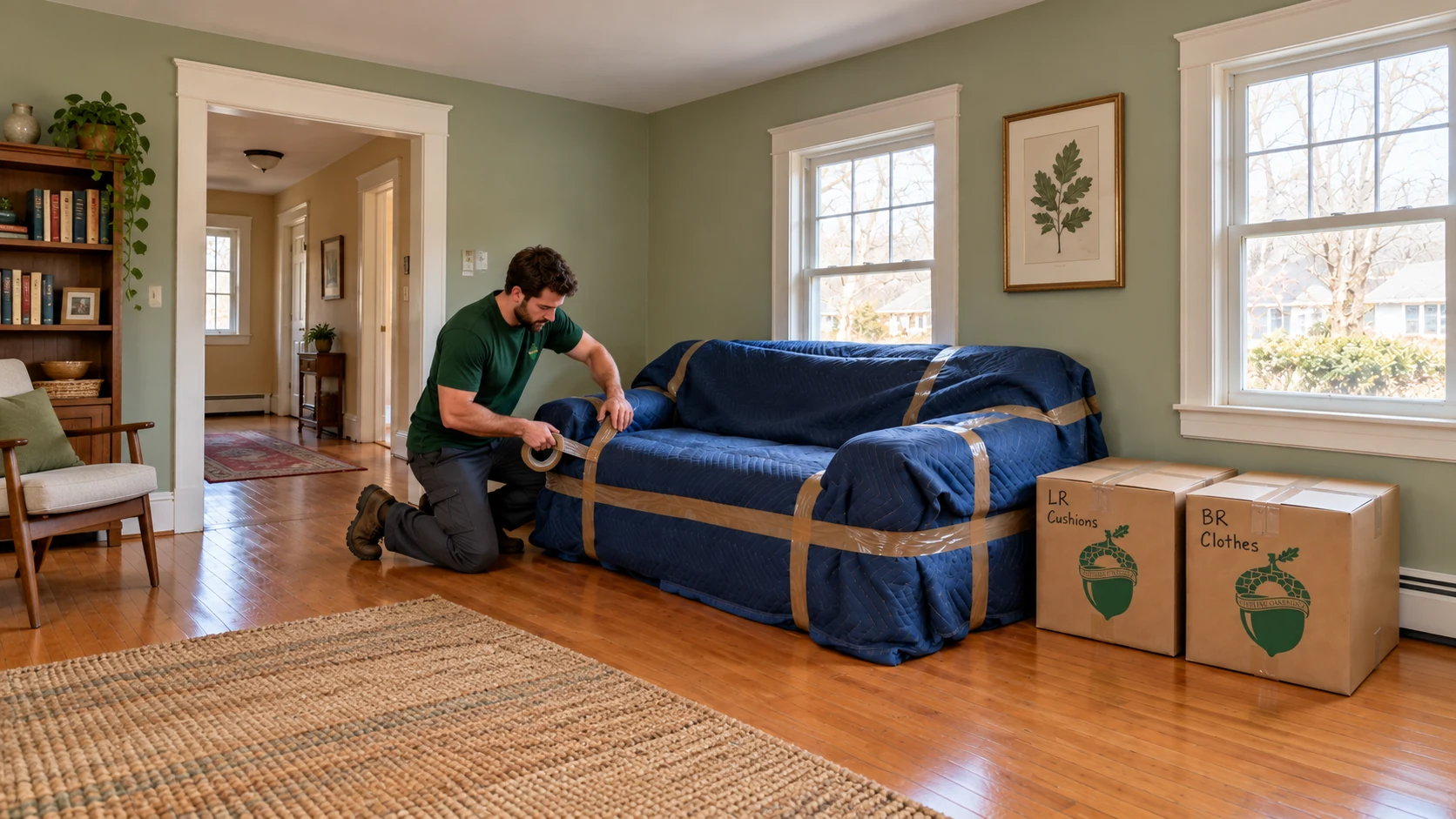
Define the shipment beyond the rooms you use every day
List furniture and cartons by room, then check the places that are easy to miss: an attic, walkout basement, shed, porch and a separate storage unit. Mark items being sold, collected by family or left with the property. An empty bedroom does not show whether its contents have moved into a garage awaiting collection. The survey needs the belongings and work that will actually travel.
Littleton has different building arrangements. Listing descriptions reviewed on October 21, 2026, illustrate the questions to ask: a Cottage Street apartment listing includes a separate storage shed. The Washington Street condominium example describes two living levels and low crawlspace storage. A closed High Street house listing describes a renovated older home with a walkout basement and walkup attic. These are examples of inventory and access questions, not available-home recommendations or customer moves. New finishes do not establish a simple carrying route.
This page serves the Town of Littleton in Grafton County, New Hampshire. The smaller Littleton census-designated place is a different geography; Littleton in Massachusetts or Colorado is a different location altogether. Send the complete municipal address and unit. The Littleton moving-services page covers the wider service choices, while the relocation guide covers neighborhoods, schools, utilities and daily life.
Choose direct or consolidated delivery
Choose direct delivery when a dedicated vehicle and a closely coordinated journey fit the household. The same moving crew collects and delivers the shipment. The move-planning team reviews the estimate and arrangements; that separate planning role is not a promise that the person conducting the survey will drive the truck.
Consider consolidated delivery when the shipment is smaller and the receiving person can accommodate a wider agreed period. Around 300–400 cubic feet is approximate small-shipment guidance, not a minimum order or a universal acceptance threshold. Provide an item list, destination, storage needs and receiving flexibility so the actual shipment can be assessed. Consolidation does not automatically include free storage, a particular discount or the same crew at both ends.
For suitable shorter domestic consolidated routes, the maximum can be 30 days after loading. Florida and Canada use up to 60 days; California up to 90 days. Other distant destinations require a window agreed for that move. A Canadian destination retains its own rule even when it is close to Littleton. Utah does not inherit California's maximum simply because both are western destinations.
Choose the model around the receiving conditions as well as the inventory. If a building accepts deliveries only during a narrow period, tell the planner before selecting a service with a broad window. If the receiver can be flexible, explain who will admit the crew and how much notice the building needs. A person being in the destination city is not the same as having a usable receiving appointment.
Read the delivery comparison from the end of loading
Every period below starts after pickup and loading are complete. Packing, wrapping furniture and carrying it from the home happen before that clock starts. Keep any earlier packing day, possession deadline and household travel separate from the freight delivery period.
Swipe the table to compare both delivery options.
| Illustrative destination | Direct planning window | Consolidated window |
|---|---|---|
| Boston, Massachusetts | 1–2 days | Up to 30 days |
| Orlando, Florida | 3–4 days | Up to 60 days |
| Montreal, Quebec | 1–2 days | Up to 60 days |
| Salt Lake City, Utah | 4–5 days | Window agreed individually |
The examples use public driving references between a Littleton place point and the four destination cities. They illustrate the policy for different journeys; they do not certify a commercial-vehicle itinerary, border crossing or property entrance. The actual addresses, vehicle, route restrictions and receiving access still require review.
Same-day delivery may be possible for a suitable small nearby shipment when early loading, lawful travel and the receiving period all fit. Next-day delivery may fit other reviewed arrangements. Neither follows automatically from the road distance. The ordinary direct ranges include a planning buffer and remain different from an agreed delivery appointment.
Example: Littleton to Boston — make a short journey fit both buildings
Imagine a household leaving a Cottage Street apartment for a Boston apartment whose manager permits weekday deliveries during a specified window. That receiving arrangement is hypothetical, not a rule for every Boston building. Direct delivery has an ordinary illustration of 1–2 days after loading; a suitable small consolidated shipment can allow up to 30 days.
Begin with the two entrances. In Littleton, show the full stair and every turn between the unit and the proposed truck position, including any separate shed. In Boston, obtain the service-door instructions, lift reservation if relevant, permitted hours, COI requirements and the person who opens the building. Street permission and building permission are separate at both addresses.
A same-day plan needs more than an early start. Packing must be finished as agreed, the crew must complete loading with enough lawful travel time, and the destination must still admit the move. If one of those conditions cannot be confirmed, discuss another accepted receiving day before committing the household to a same-day expectation.
Prepare this decision: send the two written access windows together. If the destination window changes, have the authorized customer approve a later slot or confirmed storage and redelivery with its charges. A shorter journey cannot recover time the building will not provide.
Keep the household's travel supplies out of the freight
Prepare the bags that travel with the household before packing spreads through the home. Keep identification, keys, medicines, chargers, immediate work or school equipment, essential clothing and moving documents accessible. Put Canadian accounting papers with the person who must present them, rather than in a carton that will arrive later.
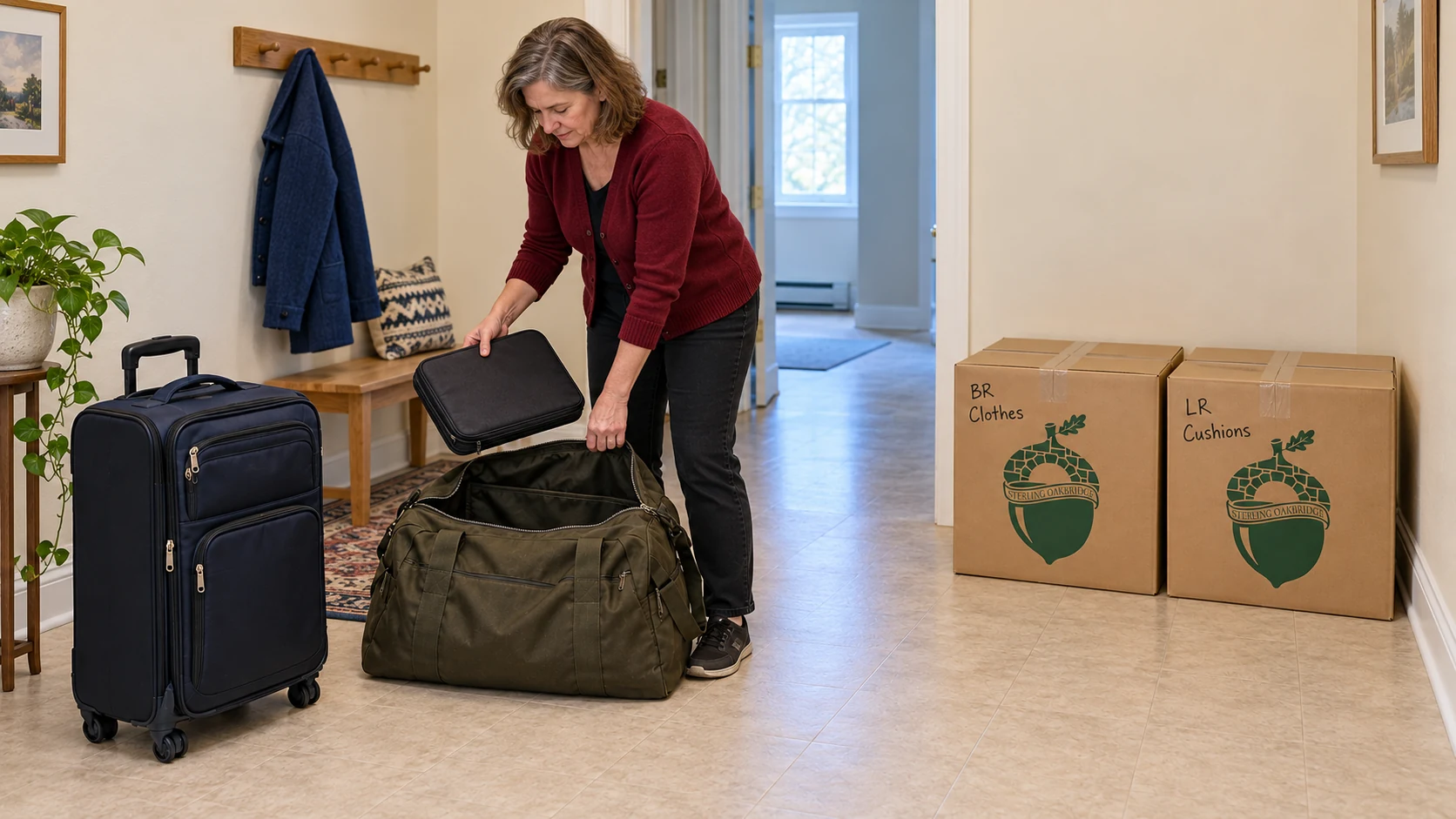
Allow for the receiving period you accept and any gap before the home becomes usable. A family travelling by car or plane may arrive well before a consolidated shipment. Arrange accommodation, transport from arrival and any essential equipment that cannot wait. Do not depend on opening a particular sealed carton from the load while it is in transit.
Identify these bags to everyone helping with the departure. Use one clearly agreed holding place outside the carrying route, and check it before loading ends. Keep possessions staying behind distinct too. A label is useful only when the people packing and loading understand what it means.
Settle the Littleton loading position before choosing the departure time
For Main Street or Porter Street metered spaces, use the Police forms page and its separate parking-permit request. The request and July 27, 2026 fee schedule list $25 per space per day. Give the dates, hours, vehicle footprint, frontage and number of spaces. Ask Police at 603-444-7711 for approval, setup instructions and the contact if an approved position is occupied. The form does not publish a universal processing deadline or sign-installation procedure.
A required officer detail uses a different agreement. That live form asks for submission 14 days before the detail and currently quotes $125 per hour per officer with a four-hour minimum. The July fee PDF still lists an older $100 rate; obtain written terms for the actual booking. The detail deadline does not become a general deadline for every metered-space application.
The Traffic Ordinance applies restrictions to commercial loading. Its possible 20-minute Police exception is discretionary, not an automatic moving-truck entitlement. Keep driveways, sidewalks and crossings usable. A paid meter, private cones or permission to enter the apartment does not establish an exclusive public loading area.
Winter needs a separate vehicle and property plan. The ordinance prohibits parking on town ways from midnight to 5 a.m. from November 1 through April 15. It separately applies that midnight-to-5-a.m. restriction from April 15 through October 31 to Main Street between the W. Main Street/Meadow Street intersection and the Town Building intersection. Confirm the exact location and the April 15 transition with Police before relying on an overnight position. Arrange clearing of the actual driveway, steps and landing. The snow-piling rule prohibits moving private snow onto or across public roads and sidewalks; it does not establish a universal deadline measured from the end of snowfall.
Sterling Oakbridge can coordinate moving-truck permit arrangements, COIs, elevator scheduling and moves requiring union labor. Send the responsible contacts and written instructions. Agree who applies, who approves, what personnel are required and which municipal or building charges belong to the plan. If the proposed position fails, a lawful alternative and its carrying distance need review before carrying starts.
Example: Littleton to Orlando — match consolidation to a real receiving period
Suppose a household is leaving a Littleton house during a winter lease or sale deadline and moving to an Orlando home. Some belongings are going with relatives, while the remaining furniture and cartons may form a smaller consolidated shipment. Inventory the selected shipment separately, including anything taken from the basement or shed. The house's former room count is not the volume being transported.
The direct illustration is 3–4 days after loading. A suitable consolidated move to Orlando, Florida, can allow up to 60 days. That wider period can work only if the household has somewhere to live and someone can receive under the accepted arrangements. Confirm the Orlando entrance, possession and delivery instructions before choosing the model; arrival in Florida does not supply those conditions.
At departure, a plowed public road does not prove that the private loading position or porch is clear. Name the person responsible for clearing, check the route after a fresh snowfall and keep the approved curb usable. Schedule any packing beforehand only where the owner permits access and exits remain clear.
Prepare this decision: mark a firm departure deadline and a separate latest acceptable receiving date. If the Florida home cannot accept delivery, contact the planner before the agreed decision time. Confirm an available storage stage or revised receiving arrangement, including handling, access and charges, before treating it as the fallback.
Pack selected groups without losing the inventory
Decide which work the crew handles and which work you finish. We can pack selected rooms, fragile groups or the agreed full household. Identify what is inside each carton and the destination room; include every prepared carton in the shipment list rather than counting only the furniture still visible in the room.
Use small book cartons for dense contents. Keep their weight manageable and protect fragile pieces with the method reviewed for those items. A larger carton is not automatically better because it reduces the box count. Tell the estimator about collections, artwork, unusually valuable items and anything that needs specialist preparation.
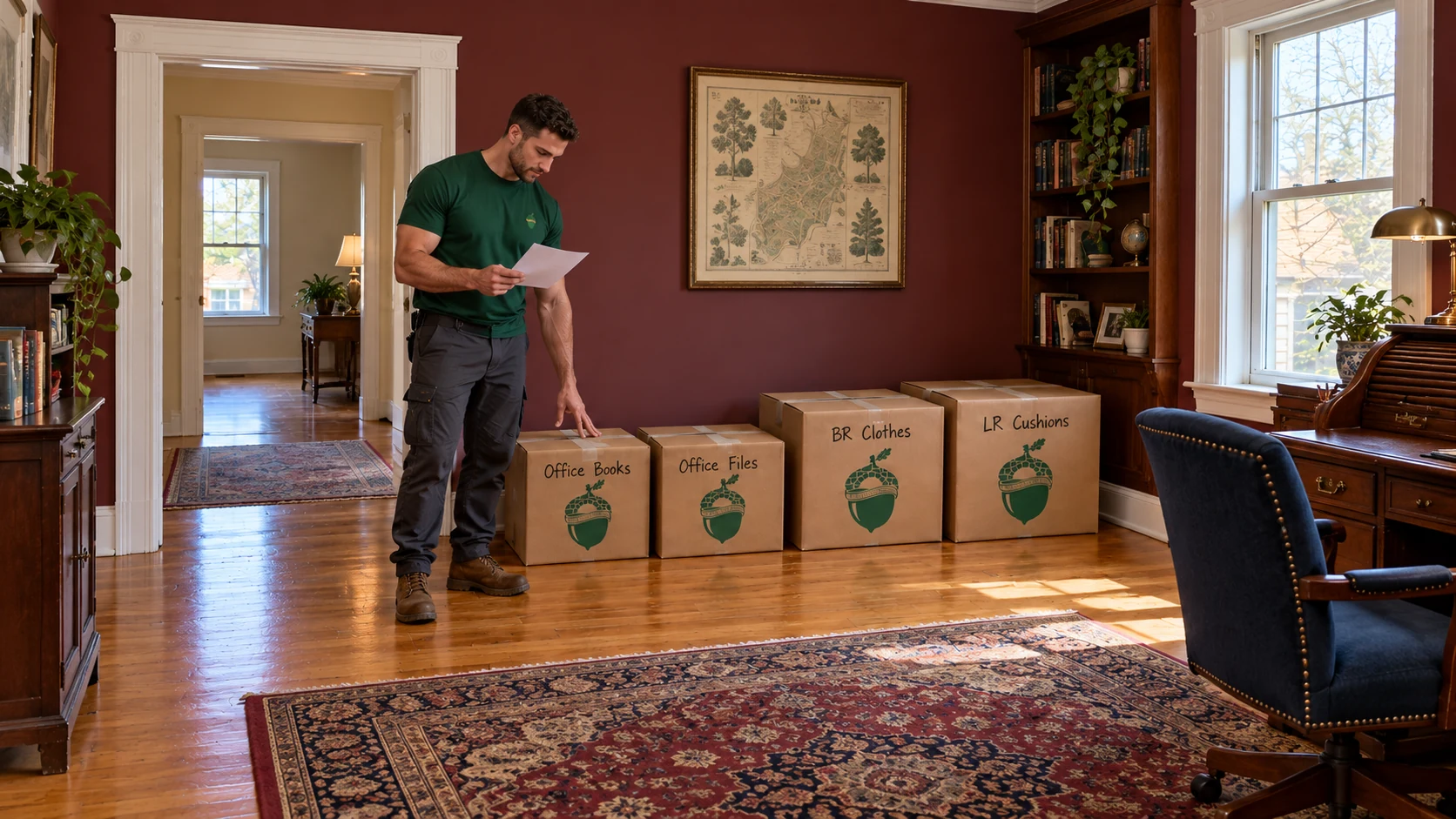
Moving blankets, shrink wrap and tape have no separate material charge. Supplied boxes are charged separately, and packing uses working time. Record the responsibility for each group and the materials wanted. Tell the planner promptly if you want the crew to finish work you originally intended to complete yourself; extra packing can change the agreed scope.
For a completed departure group, loose contents have been packed, the furniture has the agreed protection and the way out remains clear. If only part of the household is prepared, say so. A photograph of one finished group should not conceal unfinished rooms, a separate pickup or a large item that still needs review.
Example: Littleton to Montreal — keep border readiness separate from road distance
A selected shipment to Montréal may have a relatively short driving reference, but it is still a Canadian move. The ordinary direct illustration is 1–2 days after loading, while suitable consolidated delivery to Canada can allow up to 60 days. The comparison with Boston explains the difference: a nearby road reference does not replace the Canadian delivery rule or confirm clearance.
Suppose the customer travels first with immediate possessions and the mover carries the remaining household effects later. Start with the person's actual classification and circumstances. CBSA's moving and returning guidance asks for two copies of a goods list, separating belongings arriving with the person from goods to follow, with values and relevant make, model and serial details. Later goods need to appear on the original list to qualify under the applicable entitlement. Household furniture is not automatically duty-free in every situation.
Prepare the appropriate personal-effects accounting using BSF186 and CBSA's instructions. Reconcile the moving inventory with the goods-to-follow list, including anything added from storage. Present the lists at the first Canadian entry even when no goods accompany you. Keep the original goods-to-follow list, accounting document and completed BSF186 receipt available for the later shipment. Immigration status, importer classification, restricted goods and duty treatment require their own applicable review; a moving estimate does not decide them.
Prepare this decision: identify the unresolved document or receiving condition and who must resolve it before dispatch. Do not replace a missing confirmation with a guess based on the short journey. If the shipment cannot proceed, agree the available holding or revised dispatch arrangement, charges and condition for resuming.
Protect the furniture and keep each matching set together
Show the largest furniture and its construction during the survey. Photograph the full item and the route through the home; a measurement of the front door alone does not settle a stair turn, landing or lower ceiling. Ordinary drawers are generally emptied, kept installed and secured within the protected furniture, unless the actual piece needs another reviewed method.
A table or desk with safely removable long legs needs its tabletop protected before those legs are removed. Keep the matching leg set together in one common moving blanket, with the correct hardware identified for that piece. Integral supports and difficult joints need an item-specific method; do not force a disassembly pattern onto furniture that was not built for it.
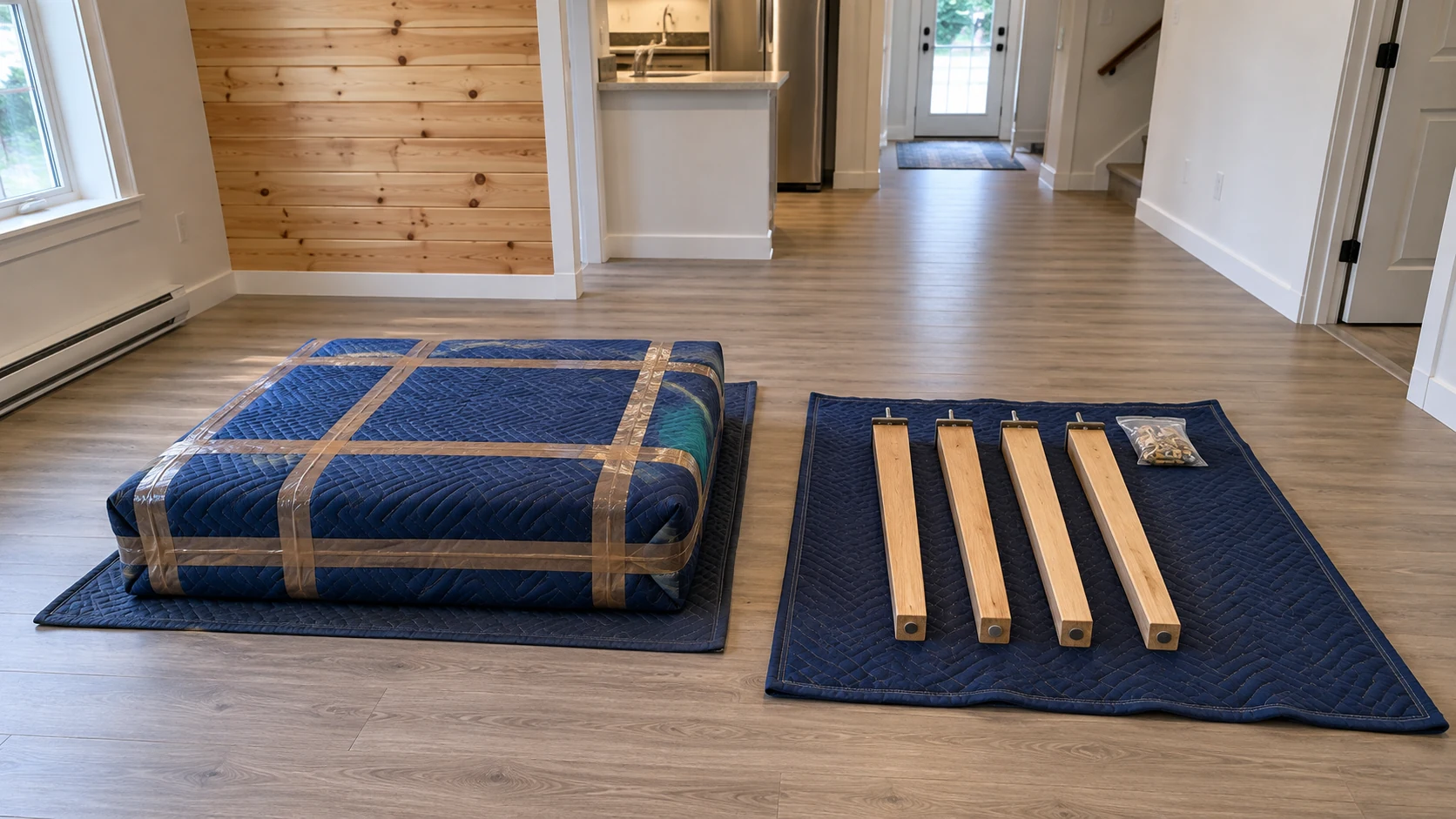
Basic furniture disassembly and reassembly use moving labor without a separate basic assembly fee. Complex furniture, specialist items and unusual installations need individual review and pricing. Agree the work at both ends, including which useful furniture should be ready first at the destination.
The customer or authorized receiver should know where the pieces belong before unloading fills the room. Leave enough working space for the agreed reassembly and keep exits clear. Placing a protected table in a room is different from completing its assembly; the agreed service should say what result is wanted.
Example: Littleton to Salt Lake City — make the room plan fit the possessions
Imagine a household leaving a Littleton home with attic and basement storage for a smaller Salt Lake City property. The useful decision is which possessions fit the new rooms, not how many cartons can be loaded into the old house's driveway. Measure large pieces against the receiving route, resolve what stays behind and have the survey include everything selected for transport.
For direct delivery, this illustration allows 4–5 days after loading with a dedicated truck and the same moving crew. Salt Lake City is in Utah: a distant consolidated window must be agreed individually. California's up-to-90-day maximum does not extend to every western state. Choose the delivery model after the room plan, receiver and date flexibility are understood.
Give the receiver a current room layout, key instructions and a way to contact the person authorized to approve changes. Identify the basic bed, desk or table assembly wanted first. If the customer arrives after the truck, a key holder also needs the appropriate authority to accept the delivery and raise access or placement concerns.
Prepare this decision: confirm the receiving route and usable rooms before dispatch. Use the earlier of the property’s last-change deadline and the mover’s dispatch cutoff as the decision point, before departure and before alternatives expire. Contact the property’s access controller, authorized customer and moving planner to confirm an available later receiving period or another accepted receiving location. For storage and redelivery, confirm a facility that can accept the actual load, including capacity, receiving hours, protection, handling, access, price, payer and retrieval or onward-delivery date. Arrange accommodation and accessible essentials for the household separately. If no destination can receive the goods, revise departure. Resume when possession, the authorized receiver, carrying route and any required import arrangements are ready; an enquiry is not a confirmed alternative. Keep exits clear and obtain approval for any common-area use.
Keep the written estimate tied to the work you choose
For a long-distance move agreed at a flat rate, longer travel or delivery time alone does not increase that price when the shipment and agreed work stay the same. Added possessions, extra packing, changed access, another stop or revised storage and receiving requirements can change the scope. Resolve known changes and any revised interstate written estimate before loading. The original estimate cannot be rewritten after loading begins; later additional services need their applicable agreement and charges before they are performed.
Send the same level of information for pickup and delivery: inventory, entrances, floors, carrying distances, large items, building conditions and dates. Identify outside fees separately and state who handles them. The initial conversation can begin before every detail is resolved; label what remains provisional so it does not silently become an estimate assumption.
For an interstate household shipment, obtain the required written estimate and complete the required survey unless you sign the proper separate written survey waiver before loading. Retain that waiver with the bill of lading; waiving the survey does not waive the written estimate. FMCSA's estimate guidance distinguishes the written estimate from a preliminary rate quote. The planning team will review the inventory and access at both addresses. If both addresses are within New Hampshire, confirm the applicable in-state terms and pricing; the four interstate and Canadian examples do not establish those terms automatically.
Review protection choices before departure. FMCSA explains that Full Value Protection applies to interstate household goods unless Released Value is selected through the required written waiver. Released Value limits liability to 60 cents per pound per article rather than replacement cost. Valuation is the mover's liability, different from a separate insurance policy. Disclose high-value items and review the selected cost, limits and claims process. At delivery, compare the shipment with the inventory, note visible concerns and retain photographs and records. Report concerns promptly. FMCSA describes nine months after delivery to file a written interstate household-goods loss or damage claim. Follow the written procedure and read any receipt language releasing the mover from liability before signing. In-state and Canadian shipments need their applicable documents and terms.
At delivery, furniture unwrapping is included. Unpacking carton contents is optional work charged for time; packaging and waste removal are charged separately. Tell us whether the wanted result is placed furniture and sealed cartons, selected boxes opened or a fuller unpacking task. Keep these choices with the rest of the written scope.
Arrange pickup for the complete Littleton address
We arrange long-distance household pickup in the Town of Littleton, Grafton County, New Hampshire. The whole town extends beyond the smaller Littleton census-designated place. Include the exact unit and municipality, every shipping floor and any separate shed, attic, basement or storage stop. A central apartment, a two-level condo and a longer private driveway need their own carrying and truck-position review. A postal label does not establish public-space permission or building access.
Explore destinations from Littleton
These destinations illustrate the United States and Canada coverage available for review. They are not a demand ranking or confirmed delivery appointments. The two addresses, shipment and accepted receiving arrangements determine the move.
Northeast and Mid-Atlantic
- Albany, New York
- New York City, New York
- Boston, Massachusetts
- Baltimore, Maryland
- Philadelphia, Pennsylvania
- Washington, DC
Southern destinations
- Charleston, South Carolina
- Raleigh, North Carolina
- Charlotte, North Carolina
- Atlanta, Georgia
- Orlando, Florida
Great Lakes and Midwest
- Chicago, Illinois
- Cleveland, Ohio
- Columbus, Ohio
- Pittsburgh, Pennsylvania
Pacific states
- San Diego, California
- Los Angeles, California
- Seattle, Washington
- Portland, Oregon
Mountain West and Southwest
- Phoenix, Arizona
- Las Vegas, Nevada
- Salt Lake City, Utah
- Denver, Colorado
Canada
- Ottawa, Ontario
- Toronto, Ontario
- Hamilton, Ontario
- Montreal, Quebec
- Quebec City, Quebec
Long-distance moving questions
What long-distance moving is available from Littleton, New Hampshire?
Choose direct service with a dedicated truck and the same moving crew at pickup and delivery, or ask about consolidation for a suitable smaller shipment. We arrange household moves throughout the United States and Canada. Send the belongings, complete addresses, dates and receiving flexibility so preparation, access and any storage can be reviewed for the applicable written estimate.
When does the delivery window start?
After pickup and loading are complete. Earlier packing, wrapping furniture and carrying it from the property happen before that point. The table illustrates ordinary planning ranges; it does not reserve a receiving appointment, certify a truck itinerary or confirm Canadian clearance.
Could a small Littleton-to-Boston shipment arrive the same day?
It may be possible after review of the shipment, early loading completion, lawful travel and a usable destination window. The ordinary direct illustration is 1–2 days after loading. Send both buildings’ instructions; a short journey does not create a late receiving slot or replace street permission. Next-day service also needs a reviewed plan.
Is there a minimum shipment of 300–400 cubic feet?
No. That is approximate small-shipment guidance for considering consolidation, not a minimum order or an automatic eligibility threshold. List the furniture, cartons and other containers, destination and receiving flexibility. We will review the actual shipment rather than decide from room count alone.
Which consolidated delivery windows apply?
A suitable shorter domestic route can allow up to 30 days after loading; Florida and Canada up to 60 days; California up to 90 days. Other distant routes require an individually agreed window. Consolidation does not automatically include free storage, a particular discount or the same crew at both ends. Confirm the arrangement for the actual shipment.
Why can Montreal have a different window from nearby Boston?
Montreal is in Canada, so suitable consolidated delivery can allow up to 60 days even though the public driving reference is relatively short. The Boston example can use the eligible shorter domestic maximum of up to 30 days. Both ordinary direct illustrations are 1–2 days after loading; the road reference does not settle customs readiness or receiving access.
Can an Orlando shipment be planned around one fixed apartment appointment?
Disclose the fixed appointment before selecting the service. Suitable consolidated delivery to Florida can allow up to 60 days, so the receiver and building must support the agreed receiving arrangements. Direct service has an ordinary 3–4-day illustration after loading for this example, but the actual appointment still needs confirmation. Choose a workable model before relying on the date.
Does Salt Lake City use California’s 90-day maximum?
No. Salt Lake City is in Utah; its distant consolidated window must be agreed individually. The direct example here allows 4–5 days after loading with a dedicated truck and the same moving crew. California’s maximum does not automatically apply to Utah, Oregon or Washington.
Will a longer journey increase my agreed flat rate?
Longer travel or delivery time alone does not increase the agreed flat rate when the shipment and work stay the same. Added belongings, extra packing, changed access, another stop or revised storage and receiving requirements can change the scope. Resolve known changes and any revised interstate written estimate before loading. The original estimate cannot be rewritten after loading begins; later additional services need their applicable agreement and charges before they are performed.
What if both addresses are within New Hampshire?
Send the two addresses, inventory and requested work so the applicable New Hampshire in-state terms, pricing basis and documents can be confirmed. A longer drive within the state does not automatically take the interstate or Canadian terms illustrated by the four examples. Keep the agreed basis and any separate charges in writing.
How do I arrange Main Street or Porter Street loading space?
Use the Police metered-space request and obtain approval for the vehicle, dates, location and number of spaces. It lists $25 per space per day. Call 603-444-7711 to confirm the actual processing time, signs or meter treatment, when controls take effect and the contact if the space remains occupied. The separate detail form’s 14-day requirement is not a universal metered-space deadline.
What are the current terms if Police requires an officer detail?
The live Outside Detail agreement asks for submission 14 days ahead and quotes $125 per hour per officer, with a four-hour minimum of $500. More than four but less than six hours is billed at six hours, or $750 per officer. Cancellation within four hours costs four hours for each scheduled officer; dispatch is 603-444-2422. The July fee PDF still shows $100 per hour, so obtain the written rate and conditions for the actual booking. A detail is separate from the moving-space permit.
Can a moving truck automatically use the 20-minute loading exception?
No. Police may authorize that exception when they consider it necessary; it is not an automatic entitlement. Describe the proposed operation and obtain its conditions. Keep driveways, sidewalks and crossings clear, and have a lawful alternative position reviewed if the intended curb cannot be used.
What needs to be ready for a winter departure?
Arrange clearing of the actual private loading position, driveway, porch, steps and landing, then check after plowing or fresh snow. Town ways have a midnight-to-5-a.m. parking prohibition November 1–April 15. The same hours separately apply April 15–October 31 on Main Street from W. Main Street/Meadow Street to the Town Building intersection. Confirm the exact position and April 15 transition with Police. Private snow cannot be pushed onto or across public roads or sidewalks; a plowed street alone does not establish usable property access.
Which access information is useful for an apartment or two-level home?
Show a connected route from the proposed truck position through the entrance and every stair, landing, turn or lift to the shipping rooms. Include dimensions that limit the largest pieces, the unit and floor, shared-building instructions and any attic, basement, shed or storage stop. A renovated interior, shared driveway or advertised floor area does not certify the carrying route.
Should I remove drawers and table legs myself?
Show the actual furniture first so the method can be reviewed. Ordinary drawers are generally emptied, retained and secured inside the protected furniture. Safely removable long table or desk legs are removed after the tabletop is protected; keep the complete matching set together in one common moving blanket with its hardware identified. Integral supports and complex joints need their own method.
What materials, assembly and unpacking are included or separate?
Moving blankets, shrink wrap and tape have no separate material charge; supplied boxes are charged separately. Packing uses working time. Basic furniture disassembly and reassembly use moving labor without a separate basic assembly fee, while complex work is individually quoted. Furniture unwrapping is included at delivery. Opening box contents is optional work charged for time, and packaging or waste removal is charged separately.
What papers should I prepare for household goods going to Montreal?
Follow CBSA’s instructions for the person’s actual settler, former-resident or other circumstances, including BSF186 as applicable. Prepare two copies of the goods list, separating belongings arriving with the person from goods to follow, with values and relevant make, model and serial details. Later goods need to be on the original list to qualify under the applicable entitlement. Present the lists at the first Canadian entry even when no goods accompany you, and retain the original goods-to-follow list, accounting document and completed BSF186 receipt for the later shipment. A shipping inventory does not itself establish duty-free eligibility or immigration status.
What happens if the receiving home or entrance is not available?
Use the earlier of the property’s last-change deadline and the mover’s dispatch cutoff as the decision point, before departure and before alternatives expire. Contact the property’s access controller, authorized customer and moving planner to confirm an available later receiving period or another accepted receiving location. For storage and redelivery, confirm a facility that can accept the actual load, including capacity, receiving hours, protection, handling, access, price, payer and retrieval or onward-delivery date. Arrange accommodation and accessible essentials for the household separately. If no destination can receive the goods, revise departure. Resume when possession, the authorized receiver, carrying route and any required import arrangements are ready; an enquiry is not a confirmed alternative. Storage and later delivery need their own written agreement and are not automatically included or free.
Can someone receive before the customer arrives?
Yes, with the appropriate authority and agreed instructions. Give the receiver the key arrangement, inventory, room plan and a way to reach the person who can approve changes. Confirm their authority to accept delivery and raise condition, access or placement concerns. A person holding keys is not automatically authorized to make every decision.
Is valuation a separate insurance policy?
No. Valuation describes the mover’s liability. For interstate household goods, Full Value Protection applies unless Released Value is selected through the required written waiver. Released Value limits liability to 60 cents per pound per article rather than replacement cost. Review the selected cost, limits and claims procedure before departure, and disclose high-value items. Separate insurance is a different product; in-state and Canadian moves require their applicable documents and terms.
Where can pickup be arranged in Littleton?
We arrange long-distance household pickup in the Town of Littleton, Grafton County, New Hampshire. The whole town extends beyond the smaller Littleton census-designated place. Include the exact unit and municipality, every shipping floor and any separate shed, attic, basement or storage stop. A central apartment, a two-level condo and a longer private driveway need their own carrying and truck-position review. A postal label does not establish public-space permission or building access.
Can I request an estimate before every date or approval is settled?
Yes. Start with both addresses, the inventory, date options and requested work, then identify pending possession, public-space approval or building decisions. Include access photographs and large-item details. For an interstate household shipment, obtain the required written estimate and complete the required survey unless you sign the proper separate written survey waiver before loading. Retain that waiver with the bill of lading; waiving the survey does not waive the written estimate. A preliminary rate quote is different from that written estimate.
Send the information that makes a workable handover possible
Start with both full addresses, unit numbers, a room-by-room inventory and your available dates. Add photographs or a connected video of the route from each proposed truck position to the rooms, the largest furniture and any separate pickup. Tell us what you will pack, what preparation or unpacking you want and who can make decisions at each end.
Separate firm deadlines from requested appointments, pending possession and applications awaiting approval. We will review the suitable delivery model, survey, services and receiving arrangements for the written estimate. Keep one current plan that the household, planner and authorized receiver can use when dates or access change.