
New Jersey · Paterson service planning
Long Distance Movers in Paterson, NJ
Move from Paterson to a home elsewhere in the United States or Canada with the shipment and both properties planned together. Sterling Oakbridge offers direct delivery with a dedicated truck and the same moving crew at pickup and delivery, or consolidated delivery for a suitable smaller shipment with a broader agreed window. We review the inventory, preparation, access and receiving arrangements before quoting. Eligible interstate shipments can use an agreed flat rate; the written estimate uses the terms applicable to the actual route.
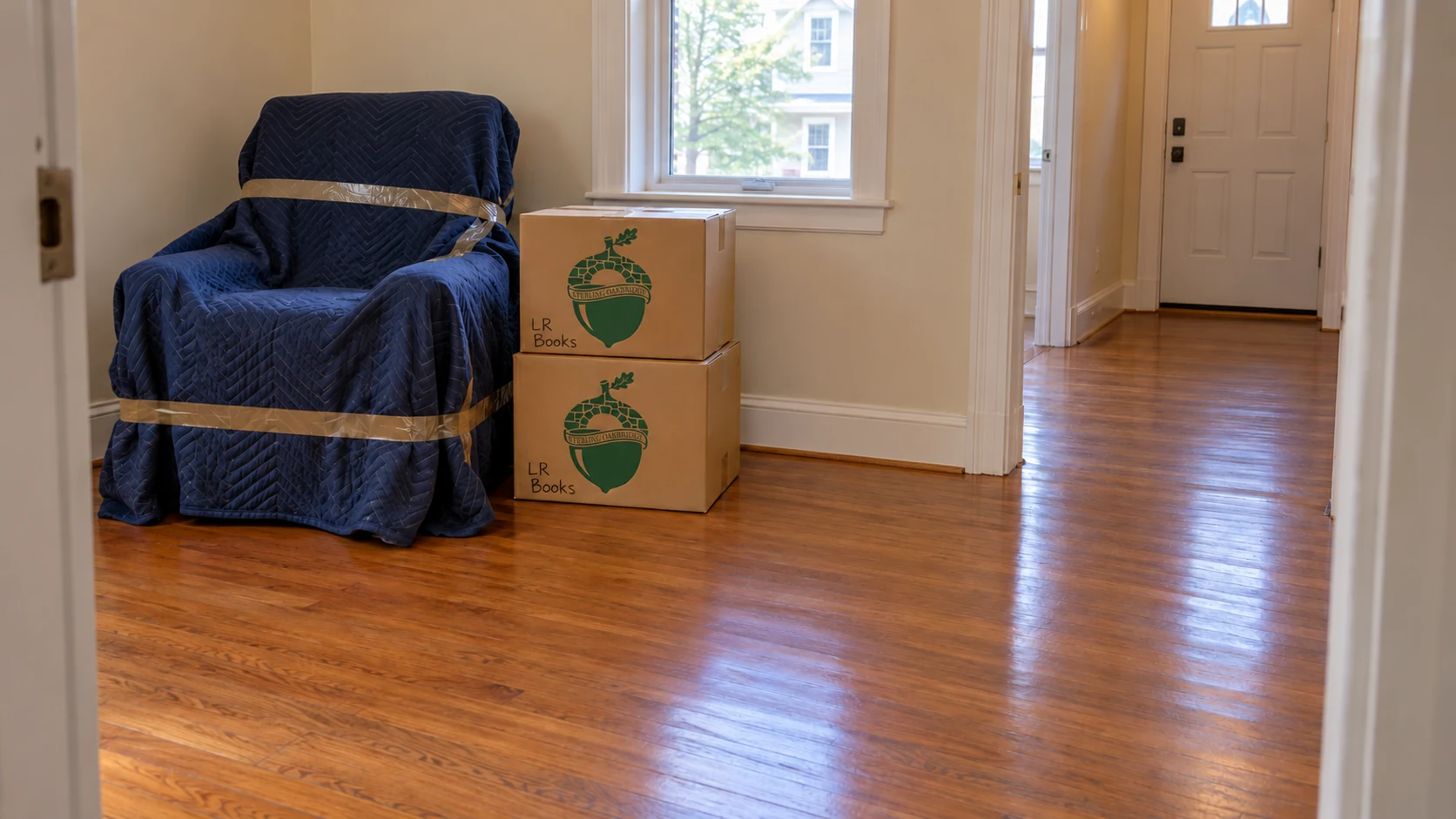
Start with the Paterson home and the person receiving the shipment
A unit in a two-family house can involve a shared entrance, several stair turns and storage outside the main rooms. A converted mill apartment may have generous ceilings but a restricted service entrance or lift. A detached house may offer a driveway without enough usable space for the selected truck. Send the entrance and the complete carrying route, as well as the furniture list; the city name does not describe the work at one property.
Include belongings in the attic, basement, garage or shared storage that are part of your shipment. Identify which spaces you can enter and who can open them on pickup day. Keep anything being collected as waste, donated, left for another resident or carried with the household separate from the moving inventory. This helps the estimate describe the shipment you intend to receive.
The Paterson relocation guide covers home and area comparisons, school registration, utilities and everyday arrangements. The Paterson moving page explains the wider service choices. This page focuses on the long-distance shipment: delivery models, four planning examples, preparation, the written price and a usable receiving plan.
We arrange long-distance pickups in Paterson, New Jersey, with the scope and access agreed for the property. Include the unit in a shared house, converted-mill service entrance or detached-home address, together with any attic, basement or garage contents in the shipment. For an address elsewhere in Passaic County or another New Jersey municipality, send the full address for review. The municipality, truck position, complete carrying route and dates determine the arrangement; a postal label does not establish street authority or building permission.
Name the person authorized to decide if access or dates change, and the person who can receive at the other end. Tell us about a fixed lease end, a building window, a closing or a key handover before choosing the sequence. A household can travel separately from its belongings, but the shipment still needs an accepted destination and a receiver.
Choose direct or consolidated delivery
Direct delivery uses a dedicated truck and the same moving crew at pickup and delivery. Discuss it when the inventory and receiving dates need their own reviewed journey. It does not automatically include a separate packing visit, storage, unpacking or every specialist method; specify the additional work you want in the estimate.
Consolidated delivery can suit a smaller shipment when a broader receiving window works for the household. Approximately 300–400 cubic feet is useful small-shipment guidance, not a minimum volume or automatic eligibility threshold. List the actual items and preparation needs, then review whether consolidation suits that shipment and destination.
The delivery clock starts after pickup and loading are complete. The table gives an illustrative comparison, rather than a delivery appointment or approval for a particular truck route. The vehicle journey, lawful travel and rest, conditions on the day and receiving access must fit the accepted plan.
Swipe the table to compare both delivery options.
| Illustrative destination | Direct planning window | Consolidated window |
|---|---|---|
| Buffalo, New York | 1–2 days | Up to 30 days |
| Miami, Florida | 2–3 days | Up to 60 days |
| Toronto, Ontario | 1–2 days | Up to 60 days |
| Spokane, Washington | 4–5 days | Window agreed individually |
For an eligible shorter domestic consolidated route, the maximum is up to 30 days. Florida and Canada have a maximum of up to 60 days; Canada keeps that rule even when the road journey is relatively short. California has up to 90 days. Other distant destinations need an individually agreed window. Washington's Spokane example does not inherit California's maximum.
The dedicated-truck and same-crew arrangement described for direct delivery should not be assumed for consolidated service. Confirm the model and delivery window in the written plan. A smaller shipment does not establish a particular discount or a free storage period. Receiving availability is part of the decision, including who can attend when the appointment is arranged within the accepted window.
The following examples are conditional planning situations, not accounts of completed customer jobs. Each raises a different issue: shared-house access, a condo receiving window, Canadian import preparation or a longer journey with a changing handover date.
See what a completed direct load represents
A substantial household shipment needs a loading and restraint plan for its contents. Furniture protection, carton condition and the way the load is held matter to the whole journey. The photograph illustrates a prepared direct load; it does not describe the size of every shipment or promise that one vehicle will fit every household.
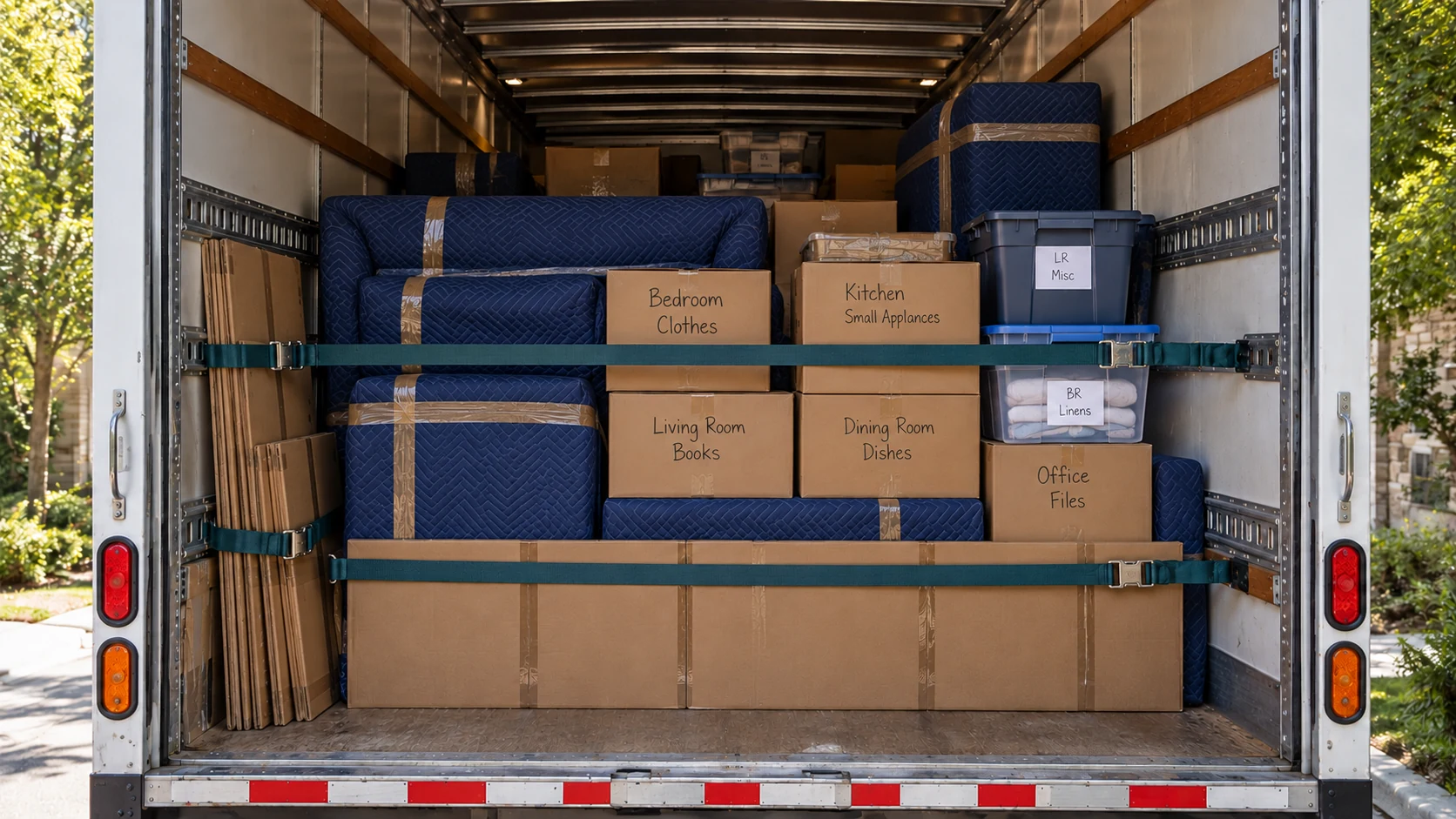
For a suitable smaller nearby move, same-day delivery may be possible after early loading and confirmation of the travel and receiving arrangements. A next-day plan can suit other reviewed moves. Neither follows automatically from a short route on a map. Time spent carrying through Paterson stairs or a booked lift comes before the delivery clock, and can change what fits into that day.
Example: an upstairs Paterson apartment to Buffalo, New York
Consider a household leaving the upstairs unit of a two-family house for a home in Buffalo. The useful starting point is the route out of the unit: the landing turn, shared front door, gate and the approved loading position. Include boxes from the basement and any large piece whose room dimensions are easier than the stair turn. Review the construction and carrying method before expecting the crew to solve a tight corner on arrival.
The Buffalo end needs its own check. A receiving house can have a narrow side entrance, exterior steps or a driveway that does not accommodate the selected vehicle. Establish which entrance is accepted, who can open it and who will identify the final rooms. A passenger-car route and an empty driveway photograph do not settle truck access.
The direct illustration for Buffalo is 1–2 days after pickup and loading are complete. If the family hopes for same-day delivery, review the full sequence of carrying, loading, travel and receiving before accepting that separate arrangement. The ordinary illustrative range is not an afternoon appointment.
Where a Paterson building permits it, cartons, packing or selected furniture preparation can be arranged earlier. Agree that scope and access first. It can reduce the work left for a short carrying window, but does not extend the property's deadline. If the sequence still cannot fit, accept a later receiving slot or another quoted stage before dispatch, with accommodation and essentials arranged for the household.
Example: arrival at a Miami condominium
A household moving from a Paterson mill apartment to a Miami condominium has two separate building arrangements. Obtain the Paterson service entrance and lift window, then the Miami receiving contact, service lift, protection requirements and accepted delivery period. Forward each property's exact certificate-of-insurance wording, submission contact and deadline. If management requires an operator or union personnel for a particular role, identify and authorize that role rather than assume it is part of the moving crew's scope.
The family's flight and the shipment's arrival are separate bookings. The direct illustration for Miami is 2–3 days after loading; the consolidated maximum for Florida is up to 60 days. Neither is a condo elevator reservation. A receiver who is available only for one afternoon may need a different arrangement from a household that can accept a broader window.
Before dispatch, decide how an appointment will be confirmed and what happens if a building slot becomes unavailable. A later slot or storage and redelivery becomes useful only when the resource, access, dates, receiver and extra charge are accepted. Put the decision deadline before departure and before those alternatives expire. Include where people will stay while the receiving arrangements are resolved.
Keep the household's essentials available
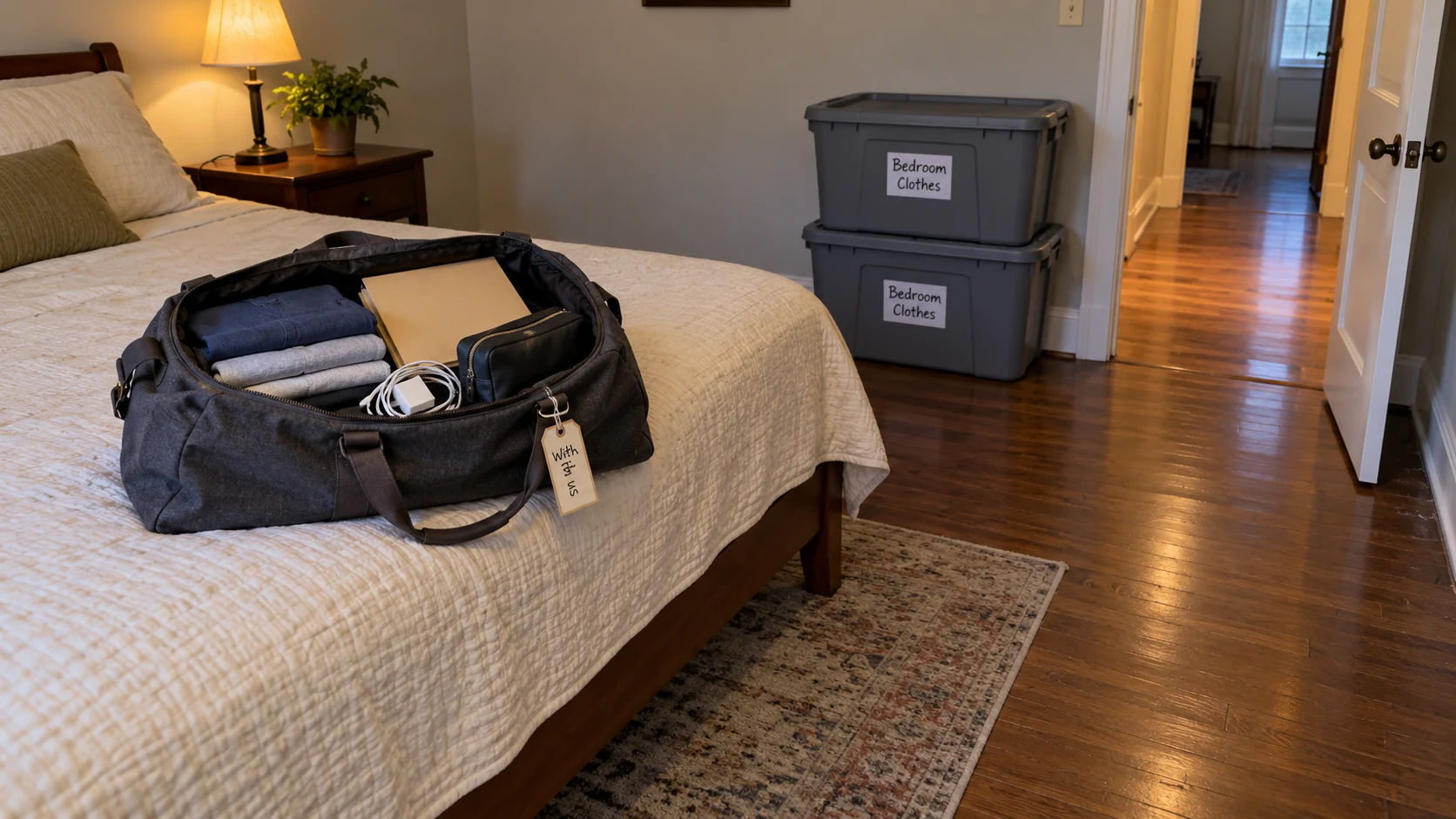
Pack for the period before the shipment can be used, not just the day of travel. Keep identification, customs papers where applicable, keys, medicine, chargers, clothes and important school or work items with the household. Include what children, pets or equipment users need for the temporary accommodation. Do not place the only copy of an access instruction inside a sealed moving carton.
Mark and separate the bag or cases that travel with you during the inventory check. Keep the receiving person's contact details and the authorized decision-maker's number available. A labelled essentials carton inside a stored or inaccessible load does not solve the first night.
Example: selected furniture and cartons to Toronto, Ontario
A smaller shipment to Toronto may suit consolidated delivery if the recipient can accept the broader receiving window. First establish the applicable Canadian import process and who is responsible for the documents and clearance. A Canadian address and a mover's inventory do not by themselves establish eligibility for duty-free entry.
The Canada Border Services Agency's moving guidance distinguishes settlers and former residents and describes personal-effects preparation. Prepare the required goods inventory in two copies, separating accompanying belongings from goods to follow, with descriptions, values and identifying details where applicable. Account for the goods at the household’s first Canadian entry, even when none accompany you, and retain the resulting personal-effects record for the later shipment. Include later goods on the original goods-to-follow list. The BSF186 personal-effects form records the importer classification and goods information; it is not a general guarantee that every item qualifies.
Identify restricted or specially handled items before packing and review the applicable rules. Agree who handles clearance and what must be ready before collection. A border delay cannot be solved by hiding paperwork in the load, and an ordinary household packing list is not a substitute for the relevant import documents.
Toronto's consolidated maximum is up to 60 days after loading, even though its direct illustration is 1–2 days. Confirm the Toronto building's receiving route, appointment process and available adult separately. The static direct range does not guarantee border clearance or a particular delivery date. Keep the needed documents and daily belongings with the household while the shipment is in transit.
Prepare furniture and packing for the whole journey
Choose what you will pack and what you want the crew to prepare. Packing can cover selected belongings or the household. Include packing and optional unpacking or putting contents away in the estimate; these tasks are charged for working time. Company-supplied boxes are charged separately. Basic moving blankets, shrink wrap and tape have no separate material charge. Furniture is unwrapped as part of delivery; opening and emptying boxes is optional work. Packaging and waste removal are charged separately. Include storage and specialist work where needed, with the complete scope and price agreed in writing before the affected work begins.
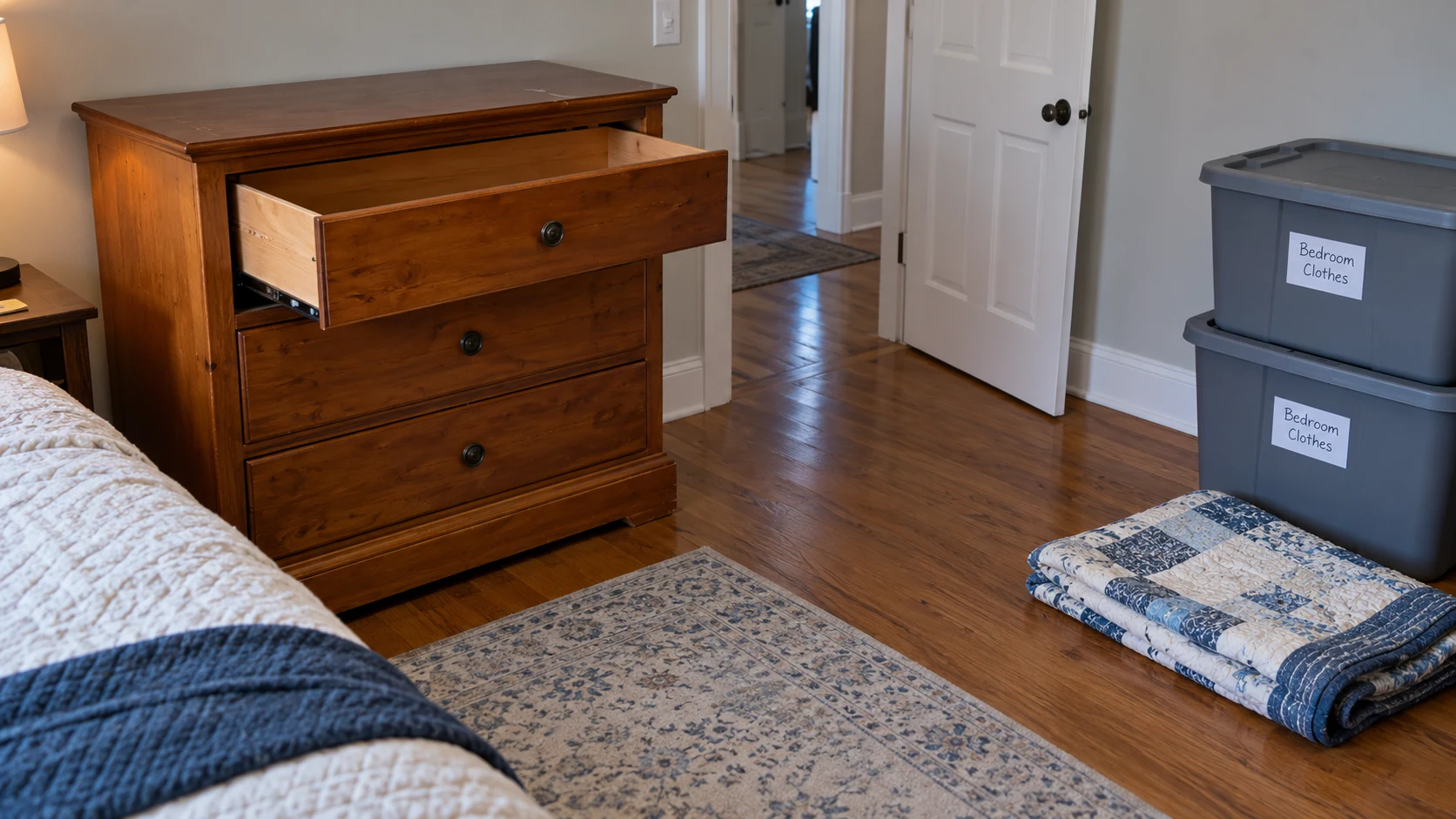
Empty ordinary drawers and normally keep them secured in the protected whole piece. If a cabinet has removable shelves, account for the complete set and identify the matching parts. For safely removable long table or desk legs, protect the body first while keeping joints accessible, turn it upside down onto stable padding and remove the complete matched set. Wrap the removed legs together last and retain matching hardware with the piece. Integral supports are a different construction and should not be treated as detachable parts.
Photograph the large piece and its difficult turn, including the landing and door opening. Resolve a required method before pickup. A high ceiling in a mill apartment does not establish a usable service lift, and a small house does not guarantee an easy furniture route. Any specialist preparation should be reviewed for the particular item instead of assumed from an ordinary transport description.
Example: a longer direct move to Spokane, Washington
For a larger household shipment from a Paterson house to Spokane, compare the receiving date with the whole journey and the household's travel. The direct illustration is 4–5 days after pickup and loading are complete. That range is planning guidance, not a fixed appointment, a departure-day countdown or a guarantee about a selected vehicle's route.
A home being handed over near the delivery date needs an agreed access decision before the truck departs. Identify the owner or manager who can confirm keys, the accepted entrance and the person who will receive. Include every stair, lift or transfer floor and the final rooms. The useful confirmation is a workable route and receiving period, rather than simply an email saying the closing is expected to happen.
If the receiving home will not be ready, compare an accepted later collection, a confirmed receiving arrangement or quoted storage and redelivery. Establish available space and access, the inventory held, the next delivery arrangement, people responsible and extra charges. A tentative storage contact is not an available resource. Give the household a place to stay and keep the belongings needed during the gap out of the shipment.
Spokane is in Washington. Its consolidated window must be agreed individually; California's up-to-90-day maximum should not be copied to it. Once delivery can proceed, establish the main furniture positions and keep the route usable before opening smaller cartons across the room. Reassembly or another receiving service belongs in the accepted scope.
Confirm the Paterson curb and the complete carrying route
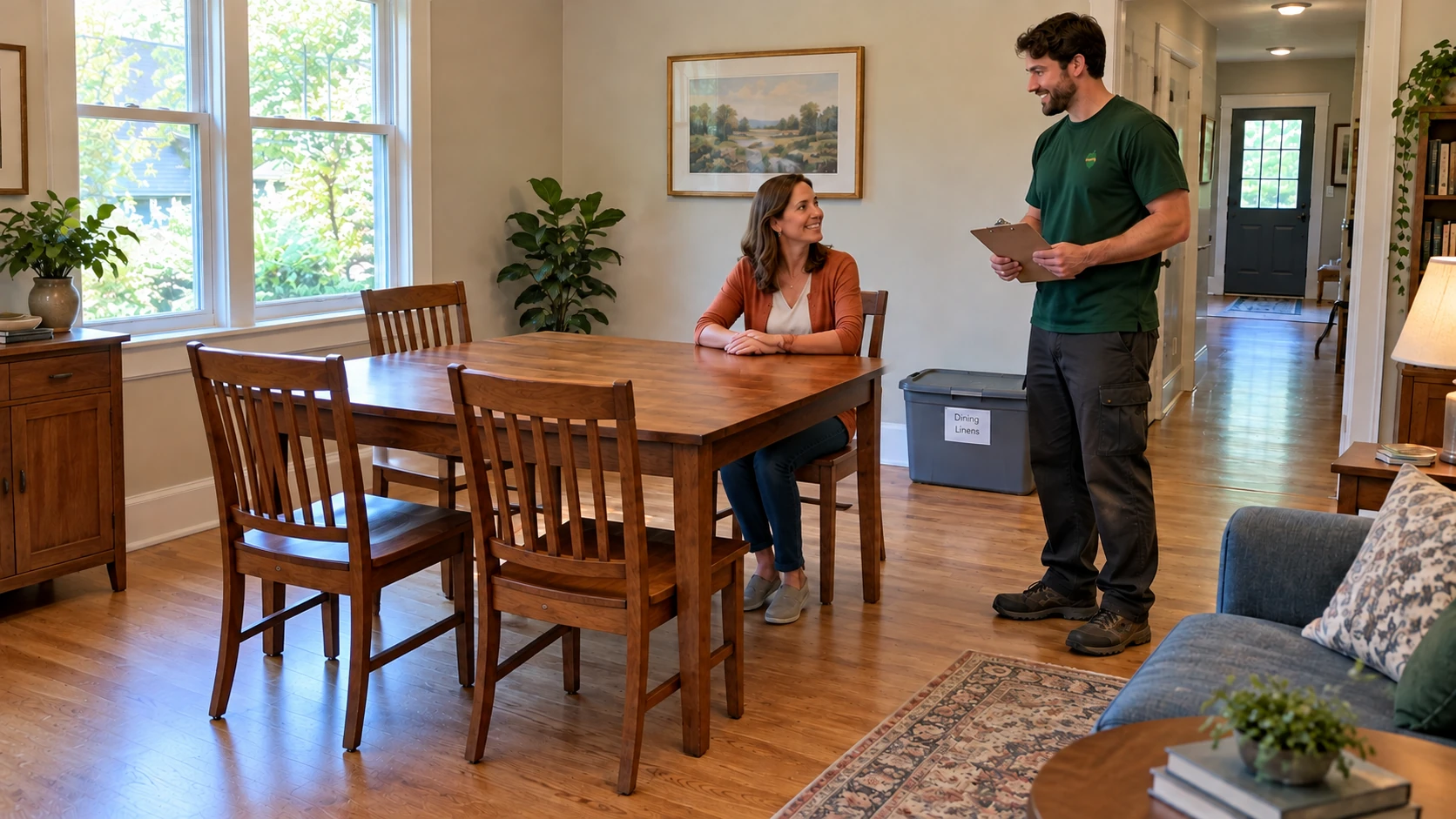
Review the route from the selected truck position through the gate, path, steps, entrance, every stair or lift and the last room at each end. Identify who controls access to a shared hall or service entrance. Obtain any required booking, protection and certificate-of-insurance submission before relying on the time window. If permitted, separate preparation from the restricted carrying period rather than leave every task for that window.
Paterson's streets-and-sidewalks rules require the receiver to be present and immediately remove goods deposited from a vehicle on a public street or sidewalk. They also require permission from the Public Works Director or designee before an obstruction of public space. Contact Public Works at 973-321-1488 about the proposed use. Ask which approval, applicant, lead time, charges and site instructions apply to the actual vehicle and operation. Do not rely on a generic deadline or a permit for a different use.
Inspect the signs and the proposed loading position. A named block's commercial-loading rule does not reserve a space on another street; a household garage arrangement does not establish truck permission. Confirm an available alternative before dispatch, including a longer carry, any changed work and its charge. The driver and coordinator must review the vehicle route and final approach; passenger-car navigation and a city orientation map cannot certify them.
Agree the written price and a usable alternative
The long-distance flat rate covers the reviewed inventory, access and services. Travel or delivery taking longer does not itself increase that agreed price. Report additional items, different access, extra packing, storage or another stage before loading so the required revised estimate can be prepared and agreed before the shipment is loaded. Later changes need the applicable written scope and price before the affected work begins.
For a move entirely within New Jersey, use the applicable state process rather than assume every interstate rule applies. The New Jersey Division of Consumer Affairs’ mover FAQ describes an on-site or virtual survey, a completed written estimate based on the mover’s tariff and the state consumer notice. It distinguishes a binding estimate from a probable-cost estimate and describes the Order for Service provided at least 24 hours before the scheduled move. Review the applicable documents and timetable before booking.
For an interstate household shipment, complete the required survey unless you make the proper separate written survey waiver before loading. Keep the waiver with the bill of lading; it does not waive the written estimate.
Set the access decision deadline with the coordinator and the authorized property contact before dispatch and before alternatives expire. If keys, a lift, customs readiness or a usable route will be missing, confirm an available later window or another authorized method. Before relying on storage, confirm a facility that can actually accept the load, its capacity, receiving hours, protection, handling, price, payer and retrieval or onward-delivery date. Arrange accommodation and essentials for people and pets separately. If no destination can accept the shipment, revise departure rather than dispatching to an unavailable address. Resume when possession, the authorized receiver and the carrying route are ready, with changed work and charges agreed in writing.
For an interstate household move, read the FMCSA's consumer-protection guidance and the estimate and valuation documents before signing. Full Value Protection applies unless Released Value is selected through the required written choice. Released Value limits liability to 60 cents per pound per article rather than replacement cost. Valuation differs from separate insurance or a building COI. Disclose high-value items and review cost, deductible, limits and claims terms before loading.
Long-distance moving questions
Which delivery model should I choose for a move from Paterson?
Choose direct delivery when the shipment and receiving dates need their own reviewed journey with a dedicated truck and the same crew at pickup and delivery. Consolidated delivery can suit a smaller shipment when you can accept a broader agreed receiving window. Send the items, both addresses, access and fixed dates so the model and included work can be reviewed together.
When does the delivery window start?
After pickup and loading are complete. Carrying through stairs, packing or waiting for the accepted loading arrangement comes before that point. The four direct illustrations are Buffalo 1–2 days, Miami 2–3 days, Toronto 1–2 days and Spokane 4–5 days. They are planning ranges, not appointments, truck-route approvals or a guarantee about customs clearance. Confirm the receiving period and available person separately.
Can a move to Buffalo arrive the same day or next day?
A same-day arrangement may be possible for a suitable smaller nearby move after early loading and confirmation of travel and receiving access. Next-day delivery can suit other reviewed moves. Neither is automatic. Include the shared Paterson stair, the loading position and the Buffalo entrance in the full sequence before accepting that specific schedule; the ordinary Buffalo direct illustration remains 1–2 days after loading.
Is 300–400 cubic feet a minimum shipment?
No. Approximately 300–400 cubic feet is useful small-shipment guidance for consolidation, not a minimum or automatic eligibility rule. Describe the actual furniture, cartons and preparation needs. A smaller inventory still needs usable access and an agreed receiving window, and it should be reviewed before choosing the model.
How broad can the consolidated delivery window be?
An eligible shorter domestic route can have a maximum of up to 30 days. Florida and Canada have up to 60 days, with Canada retaining that rule even for a relatively short journey. California has up to 90 days. Other distant destinations require an individually agreed window. Confirm which model and window apply in writing; direct same-crew terms, a discount and free storage should not be assumed for consolidation.
Does Spokane use the California 90-day window?
No. Spokane is in Washington. A consolidated shipment to Spokane needs its own agreed window; California’s up-to-90-day maximum should not be extended to Washington or every western destination. The Spokane direct illustration is 4–5 days after loading, subject to the actual route and accepted receiving plan.
Does a longer journey increase the agreed flat rate?
Travel or delivery taking longer does not itself increase the agreed long-distance flat rate for the reviewed inventory, access and services. Report additional items, changed access, extra packing, storage or another stage before loading so the required revised estimate can be agreed before the shipment is loaded. Later changes need the applicable written scope and price before the affected work begins.
What applies if both addresses are in New Jersey?
Use the applicable New Jersey intrastate process. The state FAQ describes an on-site or virtual survey, a completed tariff-based written estimate and the state consumer notice. A binding estimate differs from a probable-cost estimate. It also describes the Order for Service provided at least 24 hours before the scheduled move. Review the applicable documents and timetable before booking; these interstate examples do not establish the terms for an entirely New Jersey move.
What should I prepare for a household shipment to Toronto?
Establish the applicable Canadian import process and clearance responsibilities. Prepare the required inventory in two copies, separating accompanying belongings from goods to follow. Account for the goods at the household’s first Canadian entry, even when none accompany you, and retain the resulting personal-effects record for later goods. Confirm eligibility, restrictions, the authorized receiver and usable access separately. An inventory or Canadian address does not guarantee duty-free admission. Canadian consolidation uses up to 60 days after loading.
Can you pack and unpack the household?
Yes. Selected-item or whole-household packing and optional unpacking or putting contents away can be included in the agreed scope, charged for working time. Company-supplied cartons are charged separately. Basic moving blankets, shrink wrap and tape have no separate basic-material charge. Furniture unwrapping is part of delivery; packaging and waste removal are charged separately. Basic disassembly and reassembly have no separate basic assembly fee; specialist work needs its own review and quote.
Should every drawer and furniture leg be removed?
No. Empty ordinary drawers and normally keep them secured in the protected whole piece. For safely removable long table or desk legs, protect the body first while keeping joints accessible, turn it upside down onto stable padding and remove the complete matched set. Wrap the removed legs together last and retain matching hardware. Removable shelves, integral supports and construction or access exceptions need an appropriate reviewed method.
How do we work with a short Paterson building window?
Confirm the complete route, every lift or transfer point and the accepted work period with management. Ask which packing, materials delivery or furniture preparation can happen earlier. Review loading, travel and receiving together. If the sequence cannot fit, accept a later slot, another reviewed method or confirmed available storage and redelivery before dispatch, with access, people and charges clear.
Who arranges a building COI or required operator?
Management should provide its exact certificate-of-insurance wording, submission contact and deadline, together with protection and booking requirements. Forward them to the moving coordinator. If the property requires union personnel or a particular lift operator, management must identify the role and authorize the arrangement. Do not assume a separate operator or building service is included in the crew’s agreed scope.
Does resident parking reserve space for the moving truck?
No household parking arrangement should be treated as a moving reservation. Review the proposed vehicle position, signs and public-space use with the coordinator and relevant City or property contact. Paterson’s code requires an available receiver and immediate removal of goods deposited in public space, and permission before an obstruction. Confirm an available alternative and any longer carry or changed charge before dispatch.
What if the receiving keys, lift or safe route are delayed?
Contact the coordinator and authorized property contact by the agreed decision deadline. Confirm an available later window or authorized method. Before using storage, confirm a facility that can actually accept the load: capacity, receiving hours, protection, handling, price, payer and onward-delivery date. Arrange accommodation and essentials for people and pets separately. If no destination can accept the shipment, revise departure; resume when possession, the authorized receiver and the route are ready, with changed work and charges agreed in writing.
What belongs with the household instead of inside the shipment?
Keep identification, customs papers where relevant, keys, medicine, chargers, clothes and the school, work or household-specific items needed before delivery. Keep the receiving instructions and decision-maker’s contact details accessible. Separate and identify those bags during the inventory check. A labelled essentials carton inside an inaccessible or stored load cannot serve the first night.
Can unwanted furniture go out with the Paterson shipment?
Decide which items are moving, being donated or being collected before the final inventory. For the resident municipal bulk route, book the accepted pickup first and follow its preparation and setout rules; a move date is not a collection appointment. A separate removal request needs its agreed destination, scope and charge. Keep those items out of the shipment intended for the new home.
Is valuation the same as a separate insurance policy?
No. Interstate household-goods valuation is the mover’s liability arrangement. Full Value Protection applies unless Released Value is selected through the required written choice; Released Value limits liability to 60 cents per pound per article rather than replacement cost. Separate insurance and a building COI are different. Disclose high-value items and review cost, deductible, limits and claims terms before loading.
Where can you arrange long-distance pickup around Paterson?
We arrange long-distance pickups in Paterson, New Jersey, with the scope and access agreed for the property. Include the unit in a shared house, converted-mill service entrance or detached-home address, together with any attic, basement or garage contents in the shipment. For an address elsewhere in Passaic County or another New Jersey municipality, send the full address for review. The municipality, truck position, complete carrying route and dates determine the arrangement; a postal label does not establish street authority or building permission.
What can I send now to request an estimate?
Send both addresses, a full item list and furniture photographs, the complete carrying routes, firm dates, proposed truck positions, building hours, lift and COI instructions and the work you want. Complete the survey required for the route. An interstate survey waiver must be a proper separate written agreement before loading, kept with the bill of lading; it does not waive the written estimate. New Jersey intrastate moves use their applicable survey, tariff-based estimate, consumer notice and Order for Service.
Explore long-distance destinations from Paterson
These destination examples help organize a household move from Paterson. We serve destinations throughout the United States and Canada. Review the two addresses, inventory, truck access and receiving dates before choosing a delivery model.
Northeast
- Buffalo, New York
- Boston, Massachusetts
- Philadelphia, Pennsylvania
- Washington, DC
- Baltimore, Maryland
Southeast and Florida
- Miami, Florida
- Orlando, Florida
- Tampa, Florida
- Raleigh, North Carolina
- Charlotte, North Carolina
Great Lakes and Midwest
- Chicago, Illinois
- Cleveland, Ohio
- Columbus, Ohio
Pacific states
- Spokane, Washington
- Seattle, Washington
- Portland, Oregon
- San Francisco, California
- Los Angeles, California
Mountain West and Southwest
- Denver, Colorado
- Phoenix, Arizona
- Las Vegas, Nevada
- Salt Lake City, Utah
Canada
- Toronto, Ontario
- Ottawa, Ontario
- Montreal, Quebec
- Kingston, Ontario
These destination examples organize the discussion; they are not a ranking of customer requests or separate local offices. Send the two addresses and receiving conditions to start the estimate. Use the Paterson relocation guide for choosing and settling into a home, and storage and staged delivery where the move crosses a gap between addresses.