
New Jersey · Toms River service planning
Long-distance moving from Toms River NJ
A Toms River departure can start at a mainland bi-level house, an association-managed townhouse or a raised shore entry. The truck position, stairs and receiving date need to be considered together before transport is booked. Sterling Oakbridge offers direct and consolidated long-distance household moving throughout the United States and Canada, including longer moves within New Jersey. Send both properties, the actual belongings and your date constraints so the work and applicable written flat rate can be reviewed.
Start with the municipality and the complete inventory
Toms River is a township in Ocean County. A postal label or a school-district name does not settle which municipality controls the property. South Toms River, Berkeley, Beachwood and Pine Beach have their own arrangements. Identify the actual address and entrance before applying Toms River instructions to a driveway, street, association court or waste collection.
Include the rooms people tend to leave until last: the garage, unfinished basement, attic storage, shed and outdoor belongings you intend to take. Describe what is packed, what needs preparation and what will be removed before pickup. A room count gives an outline; the furniture, cartons and route determine the work. Add photographs of oversized pieces, stair turns and the proposed vehicle position rather than treating floor area as the inventory.
Separate the deadline for leaving from the date the destination can receive furniture. A closing date, lease end or last workday may be firm even when the receiving property is not ready. Name the person meeting pickup, the authorized receiver and the person who can approve changes to the agreed work.
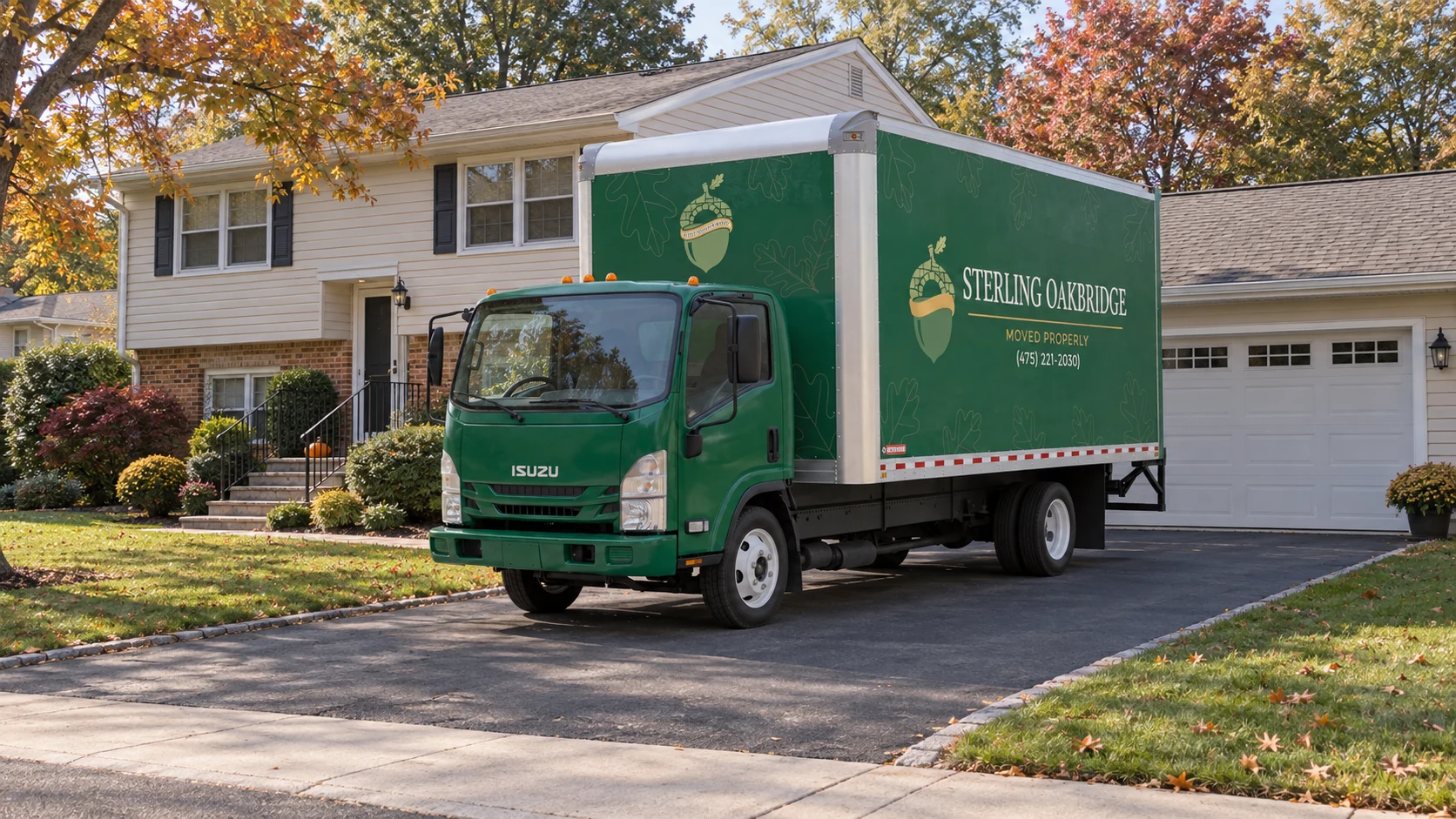
Review the driveway and the street arrangement
For a private driveway or parking court, obtain property permission and check the actual surface, slope, usable length, overhead clearance and turning space. Show where the truck and ramp would stand and how people can pass. A space that fits a car may not fit the selected truck. Explain any shared entrance, gate, low branch or restricted maneuver before a date is fixed.
When the truck, ramp or equipment needs public space, ask the Township or other road owner which approvals and conditions apply. The Road Division identifies township, county and state road responsibilities. Its examples help start an enquiry; they are not an exhaustive map or a reservation. Ask which department handles your proposed loading position and obtain the actual instructions.
The parking code and Schedule V prohibit overnight street parking for commercial vehicles at four tons gross vehicle weight or more from 9 p.m. to 6 a.m.; the schedule identifies any street. Review other restrictions for daytime loading as well. Arrange a permissible parking position between stages instead of assuming the truck can remain at the curb overnight.
Sterling can coordinate permit arrangements, COIs and elevator scheduling within the agreed scope. The property or authority supplies the approval. Sending an application does not confirm the position or access window. Include the confirmed conditions and any applicable municipal or building charges in the written move plan.
Inspect stairs, association rules and the truck approach
At a bi-level home, include the short entrance flights, turns between levels and the garage-to-house doorway. For a basement, photograph the entire route to the room, including the lower landing and ceiling clearance. At a raised shore entry, show the exterior stair, deck landing and the carrying route from the actual truck position. The first doorway alone does not establish that a sofa or dresser can reach its room.
A condominium or association may require a specific entrance, hours, a COI or advance notice. Ask management who approves the move, how to submit documents and whether the route remains available when the truck arrives. Confirm property permission alongside applicable municipal and road-owner requirements. Have someone responsible for opening gates and doors; an unlocked unit is not useful if the carrying route is unavailable.
The transport route also needs review for the vehicle. NJTA publishes a heavy-truck restriction north of Garden State Parkway Interchange 105. A passenger-car route should not be used as confirmation for the moving truck. The reviewed plan should consider the selected vehicle, road restrictions, clearances and the approach at both properties.
Choose direct or consolidated transport
Direct service uses a dedicated truck and delivery, with the same moving crew at pickup and drop-off. It can suit a substantial household shipment, a receiving deadline or a move that needs its own transport plan. Confirm loading, travel and receiving stages together, including how the destination will remain available when the crew arrives.
Consolidated transport shares the transport arrangement with other shipments and uses an agreed delivery window. A smaller shipment, for example around 300–400 cubic feet after an actual inventory review, can be useful to discuss when the household can receive within that window. That example is not a minimum size or an automatic qualification. Ask how the inventory, handling and dates would work for your particular shipment.
Tell us about the latest acceptable receiving date, any days when the property cannot take delivery and the person who will meet the shipment. Keep a plan for a flight, hotel or temporary living arrangement alongside the furniture schedule. The household's travel and the truck's receiving plan should fit the actual dates and responsibilities.
Read delivery windows after pickup and loading are complete
Delivery timing starts after pickup and loading have been completed. Packing or preparation before that point belongs in its own schedule. A quoted transport window should be considered with the receiving property's availability, not treated as the time at which every room will be ready to use.
The four examples below use approximate road references from a representative Toms River origin. The legal truck route, inventory, access, weather and receiving arrangements are reviewed for the job. Direct ranges are planning illustrations, not appointments. A small nearby move can sometimes use a same-day or next-day arrangement when the pickup, route and schedule allow it; confirm that arrangement specifically.
Consolidated examples use a window of up to 30 days for nearby domestic delivery, up to 60 days for Florida and up to 60 days for Canada. California examples use up to 90 days; other farther destinations have a window agreed individually. Confirm the applicable written window before booking, with all time measured after pickup and loading are complete.
| Illustrative destination | Direct planning window | Consolidated window |
|---|---|---|
| Brattleboro, Vermont | 1–2 days | Up to 30 days |
| Fort Myers, Florida | 2–3 days | Up to 60 days |
| Guelph, Ontario | 1–2 days | Up to 60 days |
| Santa Fe, New Mexico | 3–4 days | Window agreed individually |
Build the inventory and preparation plan before moving day
List the pieces by room and mark what will be taken apart, packed, stored or left behind. Include wall-mounted items, outdoor equipment and anything whose dimensions, weight or condition need individual review. Send make or model details for complex furniture and specialist pieces, and identify the parts and hardware that need to remain with each item.
Decide who packs each group before the carrying window. Full packing, selected-room packing and household-packed cartons lead to different preparation plans. Leave enough time to finish and identify the cartons; a pile of loose items beside the truck is not a completed inventory. Keep the household's travel essentials out of the shipment and identify any items that must remain available during the receiving window.
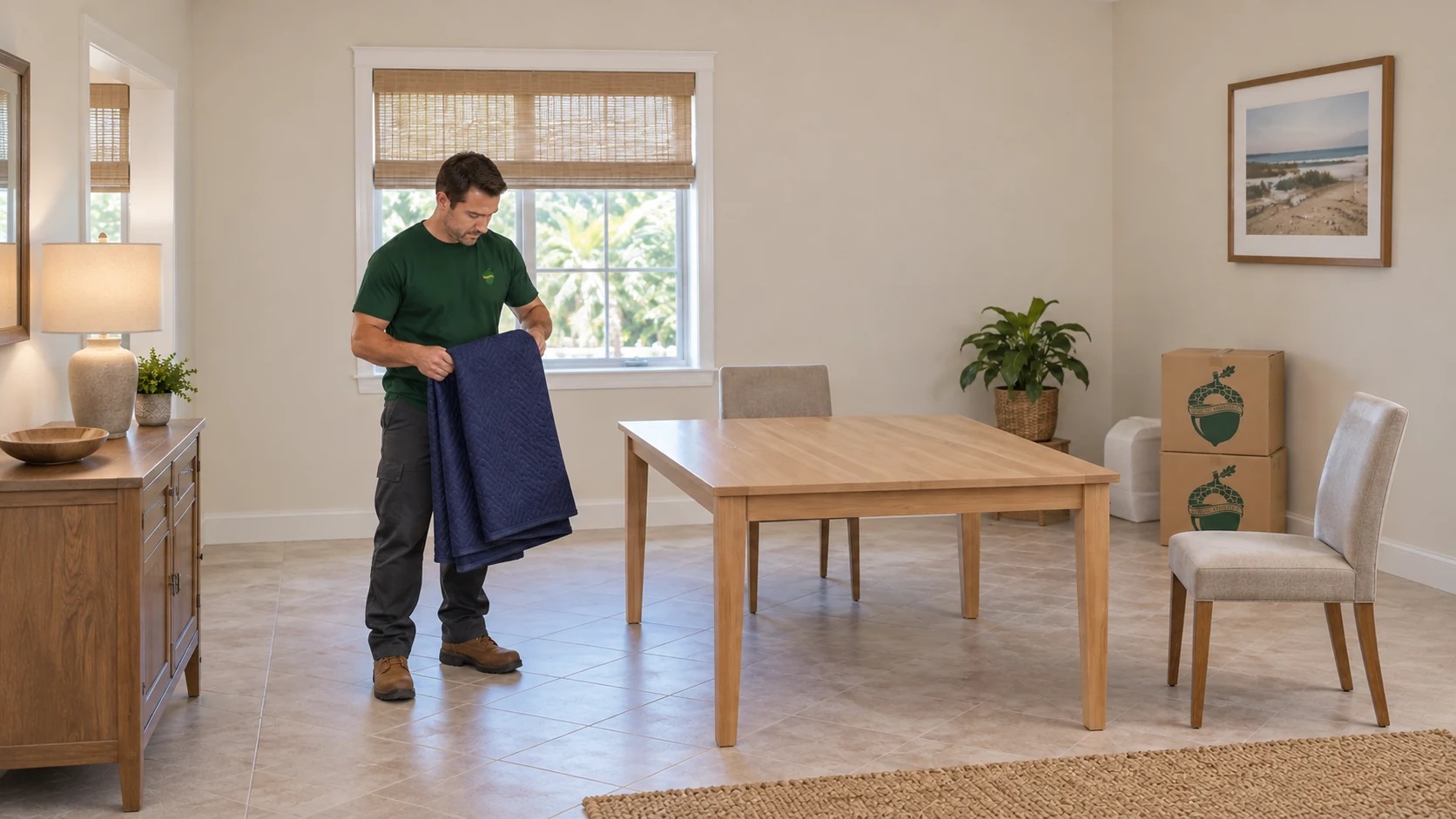
For tables and desks, we protect the top or body before removing safely detachable legs. The detached legs and hardware stay together in a protected group. Integral supports are assessed for the piece, and retained vulnerable corners and feet are protected with the main blanket layers. Basic reassembly and removal of furniture protection belong in the receiving plan; specialist work is reviewed separately.
Match the prepared load to the shipment
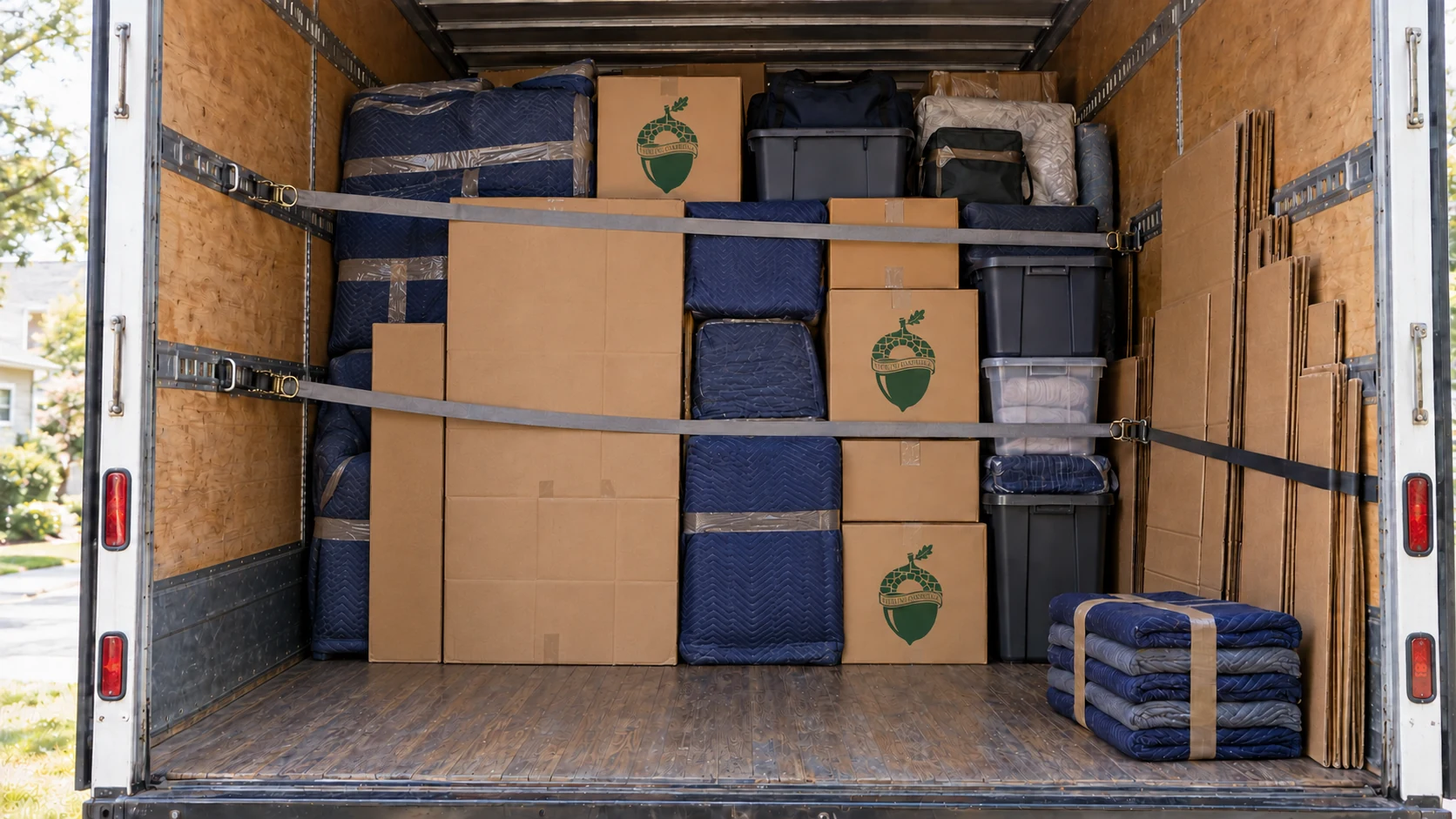
A substantial direct household load is built from the front of the truck with different protected furniture pieces, cartons and customer totes. Retaining panels and restraints secure the actual face of the load. The final pieces can step down in height while remaining supported and retained. A smaller consolidated pickup has its own grouped inventory and does not need to resemble a full direct truck.
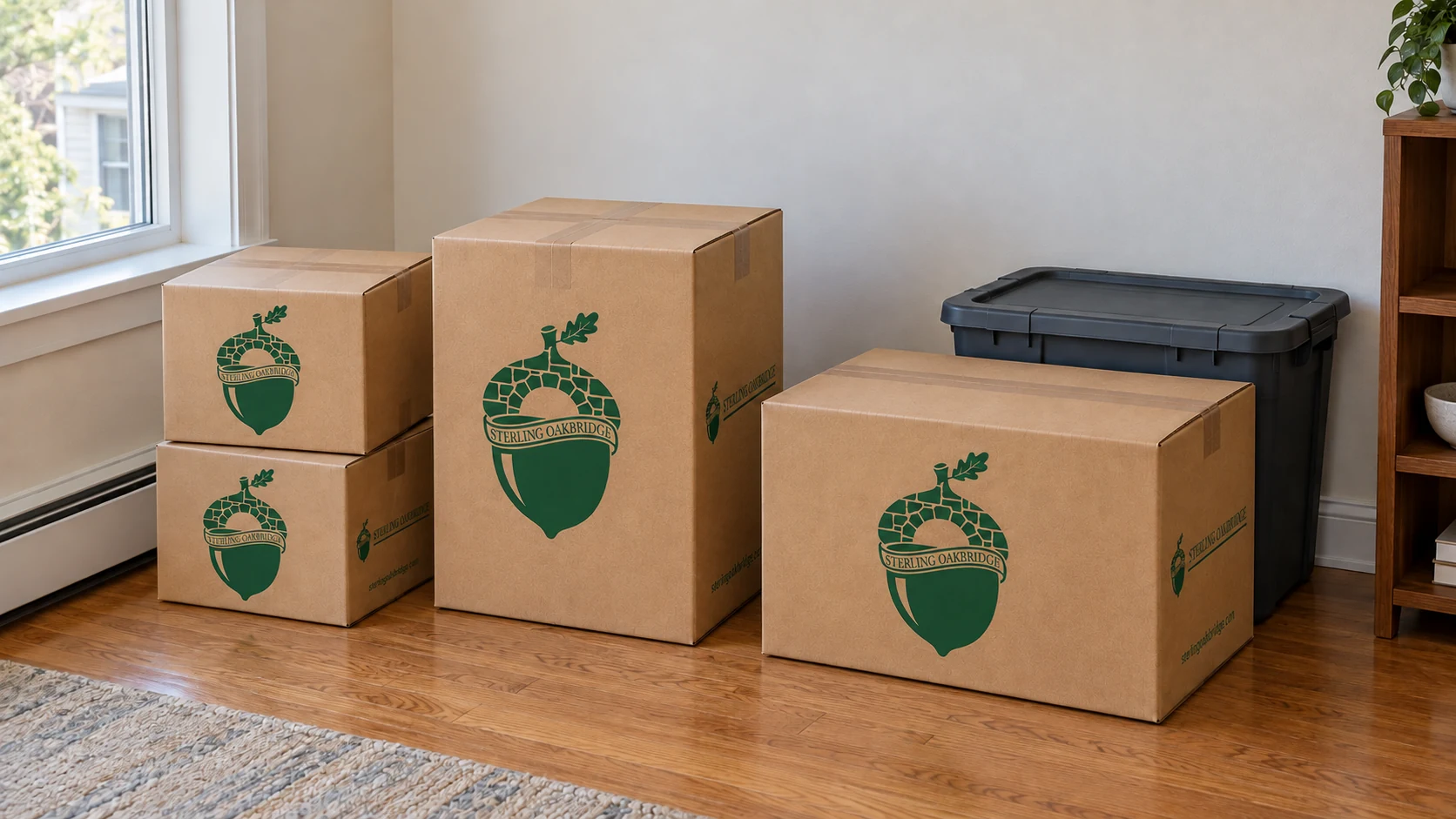
Agree the preparation for fragile belongings rather than adding elaborate packaging without a reason. Ordinary dishes and small fragile household items can use suitable cartons, paper and dividers. Art, stone, unusually valuable pieces and other specialist items need their own assessment. Explain the item and desired work so materials, labor and any separate charges can be reviewed in the estimate.
Keep travel documents and first-night belongings separate
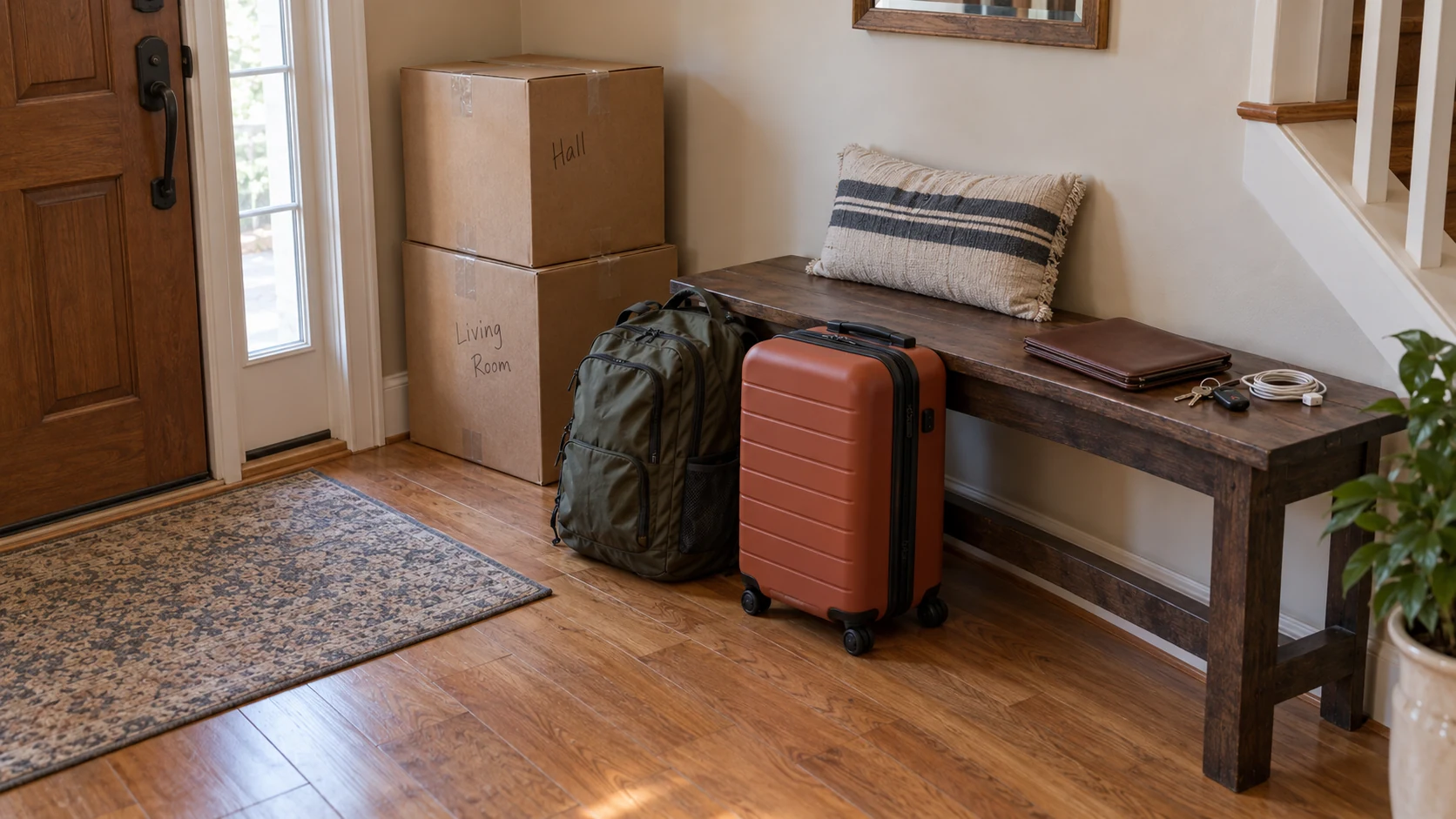
Set aside what travels with the household: identification and travel documents, chargers, keys, medications you need and a practical first-night bag. Keep originals required for a closing, lease, school or border process accessible to the person responsible for them. Label the shipment's carton groups without putting private paperwork on public view or relying on the truck to deliver essentials for your own travel.
Agree how you will receive updates and who can act if an access window changes. Give the authorized receiver the information needed to meet the shipment and unlock the route. If you travel before the furniture, check whether the property can safely accept it and who can approve placement. A friend holding a key still needs the agreed instructions and access time.
For a Canada move, review the applicable customs process and the household's own entry arrangements before pickup. CBSA explains goods accompanying you and goods to follow. The required inventory, declaration and eligibility depend on the actual circumstances; confirm who prepares the paperwork and which records must remain with the household. Transport booking does not establish automatic duty-free treatment.
Example 1: Toms River bi-level home to Brattleboro, Vermont
This hypothetical move starts with the belongings of a compact bi-level home: a sofa, dining table, beds, two dressers, book cartons and several stored items from a lower-level room. The departure deadline is a lease end; the Vermont property can receive on the agreed following days. The household asks to compare direct delivery with consolidated transport before choosing how it will travel.
The first decision is the inventory and access survey. Show both entrance flights and the lower-level stair turn, and identify whether the garage route helps the larger pieces. Review the actual driveway depth and vehicle approach. At the Brattleboro address, confirm the entrance, floors and receiver rather than assuming a detached house has a simple carrying route. Any basic table or bed disassembly is included in the work being reviewed.
The road reference is approximately 270 miles. The illustrative direct range is 1–2 days after pickup and loading are complete; a nearby domestic consolidated window is up to 30 days. A specially arranged same-day or next-day move could be discussed for an appropriate small inventory and schedule, but the household should not book travel on that assumption. It needs the agreed receiving plan before committing to the transport model.
Direct service could give this move its own truck and receiving arrangement. Consolidated transport could suit a household that has flexibility within the written window and a receiver available to meet it. In either case, the bags and keys travel with the household. If the destination cannot receive as planned, discuss revised access or staged delivery before adding handling or storage to the scope.
Example 2: Mainland Toms River household to Fort Myers, Florida
This hypothetical household is leaving a three-bedroom mainland home for a Florida property. Its inventory includes bedroom furniture, a dining set, protected sofa sections, kitchen cartons, a work desk and the garage belongings it actually intends to take. The closing deadline at the origin is firm. The receiving date and access at the Florida home need confirmation before the transport schedule is agreed.
Review the basement or garage route before estimating the work. Identify the table legs, bed parts and hardware groups, and say whether Sterling is packing the kitchen and fragile items or receiving completed household-packed cartons. Any outdoor equipment or specialist piece belongs in the review with its dimensions and preparation requirements. The unwanted furniture is a separate removal decision, not something to leave for the Township on pickup day.
The approximate road reference is 1,223 miles. The illustrative direct range is 2–3 days after pickup and loading are complete; the Florida consolidated example is up to 60 days. Those are different receiving plans. Ask whether the Florida property can accept furniture throughout the applicable window and who will be there. Confirm a closing, gate or association condition before choosing flights or a firm appointment for another service.
A dedicated direct plan could suit a substantial inventory and a receiving arrangement that can be coordinated for its own delivery. A consolidated plan requires flexibility within the written window. The agreed flat rate stays the same for the same reviewed shipment and work when transport takes longer; additional packing, changed access or extra handling needs a separately agreed scope change. Keep travel bags, keys and the first-night belongings with the household.
Example 3: Toms River townhouse to Guelph, Ontario
This hypothetical shipment comes from an association-managed townhouse. It includes a compact bed frame, a small desk with safely removable legs, two chairs, dishes, books, clothing cartons and customer totes. The household wants to compare a dedicated move with a smaller consolidated shipment to a receiving home in Guelph. Its own entry into Canada and the furniture's arrival must be planned together.
Get the townhouse's moving instructions early: the usable driveway or court, carrying hours, COI requirements and the approval contact. Photograph the stairs and desk route so the packing and basic disassembly can be reviewed. Group the carton inventory and identify any fragile contents. At the Guelph home, confirm the driveway, entrance, placement instructions and person permitted to accept delivery; an address alone does not confirm access.
The road reference is approximately 525 miles. The illustrative direct range is 1–2 days after pickup and loading are complete; the Canada consolidated example is up to 60 days. Canada's window applies to this example even though the road reference is shorter than some domestic journeys. It is not a promise of a border appointment or a specific arrival date.
The household keeps its travel documents and relevant originals accessible. Review the goods inventory and customs roles for the actual entry circumstances before pickup, including any goods following the household's own arrival. A booking or a sealed carton does not settle eligibility for duty-free importation. Choose the transport plan once the preparation, border paperwork and receiving availability have been considered together, and document any separate storage or delivery stage in the agreed work.
Example 4: Toms River house to Santa Fe, New Mexico
This hypothetical household is moving from a mainland home to a Santa Fe property. The inventory includes two bedroom sets, an upholstered sofa, dining furniture, a work desk, books and several fragile household pieces. The destination has a firm possession date, but the household still needs to review the truck approach, carrying route and receiver before selecting its transport arrangement.
Start with the pieces that could change preparation or access. Show the larger furniture, any lower-level stair turns and the proposed driveway position at Toms River. Decide which cartons the household will finish and which packing work Sterling should provide. Keep safely detachable furniture legs, parts and hardware associated with their bodies. At the destination, identify the gate, vehicle position, entrance, stairs and room placements; describe any property restriction that can affect receiving.
The approximate road reference is 1,980 miles. The illustrative direct range is 3–4 days after pickup and loading are complete. A consolidated window for this New Mexico example is agreed individually. The California example of up to 90 days should not be applied to every western state. Confirm the written window for Santa Fe and make the household's own travel and temporary living arrangements accordingly.
Direct service could fit a household seeking a dedicated transport and receiving plan for its reviewed inventory. Consolidated transport should be considered with its actual written window and handling arrangements. Name a receiver who can open the route, accept the shipment and give the agreed placement instructions. If possession or access moves, review the alternative before adding storage or another delivery stage. The price holds for unchanged shipment and service scope; a separately requested change needs written agreement.
Prepare for the season and clear the actual carrying route
For an island or waterfront property, review the actual approach, raised entry and weather conditions for the date. The Township's Floodplain Management resources and GIS help with address-level property questions. Assign someone to report a changed route or unavailable entrance before the crew sets out, and identify an alternative when a firm deadline makes rescheduling difficult.
In winter, the Road Division instructs residents to keep vehicles off streets before accumulation so plows can work. The snow-parking code describes a restriction tied to designated streets, while its current Schedule XX is reserved. Have the Township confirm any applicable restrictions or emergency directions for the actual date and street. Keep the driveway and carrying route usable instead of assuming a first plow pass restores access.
The sidewalk code gives owners or tenants, where applicable, 12 daylight hours after snow or ice falls or forms to clear abutting walks and contiguous pedestrian areas. It has an exception for Township-plow accumulation. Separately, make the carrying route usable: assign the driveway opening, stairs and walkway to a person who can arrange clearing before pickup or delivery.
Arrange unwanted belongings and packaging removal separately
The Township's bulk collection page allows a limited monthly resident request and explicitly excludes move-outs or excessive volumes. Arrange the actual unwanted furniture and debris before the moving truck arrives. An ordinary collection slot is not approval for the whole contents of a home.
The Recycling Convenience Center publishes Monday–Saturday hours of 7:30 a.m.–3 p.m. and holiday closures. Confirm accepted items and vehicle eligibility before taking a load there; do not assume that resident arrangements authorize a commercial moving truck. If you want Sterling to remove belongings or packaging, identify the items and requested work for a separate quote.
Furniture protection is removed as part of delivery. Unpacking the contents of cartons is optional work charged for working time, and packaging or waste removal is charged separately. Tell us whether you want placement and basic assembly only or additional unpacking and removal. Keep the room placements and any time constraints available to the receiver so the agreed work can be completed in a useful order.
Confirm the applicable flat rate and any changes in writing
The estimate depends on the actual inventory, packing responsibilities, access and receiving plan. Basic furniture disassembly and reassembly use the agreed moving work without a separate basic assembly fee. Moving blankets, shrink wrap and tape have no separate material charge; boxes are charged separately. Complex furniture, specialist handling, additional installation and removal are assessed for the specific item, route and work.
For a long-distance shipment quoted at a flat rate, travel or delivery taking longer does not change that price while the shipment and agreed service scope stay the same. Added belongings, unfinished packing that requires more work, a changed entrance, extra handling or newly requested storage can change the scope. Have the affected work reviewed and any change agreed in writing before it begins.
Choose the protection terms before moving day and keep them with the move documents. Describe unusually valuable pieces and their preparation needs during the review. For interstate household goods, FMCSA explains valuation and liability protection; review the applicable documents and selected level for the actual shipment. Valuation and a separate insurance policy have different purposes.
Review pickup coverage and useful destination examples
We can review long-distance pickup in Toms River Township and nearby Ocean County addresses. Confirm the municipality of the actual property: a Toms River postal label or a shared school district does not establish township jurisdiction. Mainland neighborhoods, Ortley Beach and township addresses on Pelican Island can have different approaches. South Toms River, Berkeley, Beachwood and Pine Beach are separate municipalities; send the exact address, unit, entrance and truck position.
Explore long-distance destinations from Toms River
These destinations illustrate shipments from Toms River Township, New Jersey. Sterling serves routes throughout the United States and Canada. Confirm the actual municipality, inventory, vehicle approach and receiving dates; the list does not rank bookings or establish appointments.
Northeast
- Buffalo, New York
- Syracuse, New York
- Boston, Massachusetts
- Philadelphia, Pennsylvania
- Washington, DC
- Baltimore, Maryland
- New York City, New York
- Brattleboro, Vermont
Southeast and Florida
- Charlotte, North Carolina
- Raleigh, North Carolina
- Atlanta, Georgia
- Jacksonville, Florida
- Tampa, Florida
- Miami, Florida
- Charleston, South Carolina
- Fort Myers, Florida
Midwest and Texas
- Chicago, Illinois
- Dallas, Texas
- Houston, Texas
- Austin, Texas
Mountain West and Southwest
- Denver, Colorado
- Phoenix, Arizona
- Las Vegas, Nevada
- Salt Lake City, Utah
- Santa Fe, New Mexico
West Coast
- San Diego, California
- San Francisco, California
- Portland, Oregon
- Seattle, Washington
Canada
- Toronto, Ontario
- Guelph, Ontario
- Montreal, Quebec
- Vancouver, British Columbia
- Kingston, Ontario
Questions before booking a long-distance move
Long-distance moving questions
Can a long-distance move start in Toms River Township?
Yes. We can review household pickup in Toms River Township and nearby Ocean County addresses for routes throughout the United States and Canada. Send the actual municipality, inventory, entrance, truck position and dates; a postal label or school district does not settle local requirements.
Can a longer move stay within New Jersey?
Yes. A longer household move can stay within New Jersey or cross a state or national border. The transport model, actual work, receiving arrangements and applicable written terms are reviewed for the route.
What is direct long-distance service?
Direct service uses a dedicated truck and delivery with the same moving crew at pickup and drop-off. Confirm the loading, transport and receiving stages together, including property availability and any separate storage stage.
How does consolidated transport work?
Consolidated transport shares the transport arrangement with other shipments and uses an agreed delivery window. Discuss the inventory, handling and receiving availability before choosing it. A smaller-shipment example is not a minimum size or automatic qualification.
When does the delivery clock start?
Delivery windows start after pickup and loading are complete. Packing or preparation beforehand has its own schedule. Confirm the applicable written window and who can receive the shipment.
What are the illustrative direct ranges for these examples?
The road references give Brattleboro 1–2 days, Fort Myers 2–3 days, Guelph 1–2 days and Santa Fe 3–4 days after pickup and loading are complete. These are planning illustrations, not appointments; the actual truck route, access, weather and receiving schedule require review.
Can a nearby move use same-day or next-day delivery?
That can sometimes be arranged for an appropriate small inventory, route and schedule. Confirm the actual arrangement before relying on it for travel or receiving; the normal illustration does not establish a same-day appointment.
What consolidated windows apply to these destinations?
The nearby domestic example is up to 30 days, Florida up to 60 days and Canada up to 60 days. A California example uses up to 90 days; the Santa Fe, New Mexico example has a window agreed individually. Confirm the written window for your shipment.
Can a moving truck stay on the street overnight?
The Toms River code bans overnight street parking for commercial vehicles at four tons gross vehicle weight or more from 9 p.m. to 6 a.m.; Schedule V identifies any street. Confirm other applicable restrictions and arrange a permissible position between stages.
Does a driveway settle every access requirement?
Obtain property permission, verify the selected vehicle fits and confirm the carrying route. Ask about applicable municipal or road-owner requirements if the truck, ramp or equipment needs public space. Share any association instructions and confirmed approvals before booking.
Can Sterling coordinate a permit or COI?
We can coordinate truck-permit arrangements, COIs and elevator scheduling within the agreed scope. The property or authority provides approval; an application or submitted certificate alone does not confirm the access window or position.
What should I send about a bi-level or raised entry?
Show the whole route: driveway and ramp position, entrance flights, stair turns, landings, ceilings and the room where the piece goes. Add dimensions or make and model for larger or specialist items, and describe the destination route as well.
Are basic assembly and protection materials included?
Basic furniture disassembly and reassembly use the agreed moving work without a separate basic assembly fee. Blankets, shrink wrap and tape have no separate material charge. Boxes are charged separately; complex furniture and specialist work are individually reviewed.
How are removable furniture legs prepared?
The top or body is protected before safely detachable legs are removed. The legs and hardware stay together in a protected group. Integral supports are assessed for the actual piece, and basic reassembly is included in the reviewed receiving work.
What changes in snow or storm conditions?
Confirm the actual vehicle position and route when conditions change. Assign someone to arrange safe driveway, stair and walkway access, and keep an alternative for a blocked entrance or unavailable window. The Township publishes snow-parking and sidewalk-clearing rules to check for the address.
Will the Township collect all the belongings I leave behind?
Its limited monthly resident bulk request excludes move-outs and excessive volumes. Arrange the actual removal before pickup. Confirm accepted items and vehicle eligibility before using the Recycling Convenience Center; commercial-truck access is not established by a resident collection rule.
Can I travel ahead of the furniture to Canada?
Review the household entry, inventory and customs roles for the actual circumstances before pickup. Keep required originals and travel essentials accessible to the household. Name a receiver who can meet the shipment and open the carrying route within the agreed window.
Does a longer journey change the agreed flat rate?
For the same reviewed shipment and service scope, travel or delivery taking longer does not change a long-distance flat rate. Added items, extra packing, changed access or newly requested handling or storage can change the scope; agree the affected change separately in writing before the work.
Can you unpack cartons and take away packaging?
Furniture protection is removed as part of delivery. Carton unpacking is optional work charged for working time, and packaging or waste removal is charged separately. Include the help you want in the request so the receiver has the agreed placement, unpacking and removal instructions.