
New York City · Household preparation and receiving
Full Packing & Unpacking in New York City
Hand over the cupboard work that would otherwise fill your evenings. Sterling Oakbridge provides full or partial household packing across New York City's five boroughs, plus separately arranged unpacking, organizing and finishing help. Choose the contents you want prepared and the rooms you want useful first; we will plan the people, materials and visits with you.

A short furniture list can hide a long preparation job. Books, kitchen glass, clothing and stored belongings need decisions and protection before carrying day. At the other end, selected unpacking can make everyday things accessible while you return to work and family routines. The written estimate identifies the work you keep, the work you hand over and the applicable charges.
Explore packing, costs and local examples
Keep the evenings you normally use for life
After an ordinary working day, packing can become another shift. Even two adults may have a kitchen, several closets, books and years of small possessions to prepare. A couple of weeks of evening work illustrates the possible burden; it is not a measured New York average or a timetable for your household.
Sorting is part of that effort. Clothes need keep-or-donate decisions; books and family photographs can interrupt a quick clearout. Children add belongings while meals, bedtime and work continue. You can be capable of packing yourself and still prefer to spend those hours on your family or recovery.
You retain the personal decisions. Approve the belongings that travel and separate anything awaiting another owner's decision or an accepting recipient. Keep medication, keys, private papers and personal travel essentials under your control. Professional packing prepares your approved contents; it does not decide what someone else should discard.
Choose full, partial or fragile-only packing
Full packing covers the retained contents in the agreed scope. Show inside cupboards, drawers, closets and storage areas as well as the large furniture. Include the study, basement or attic groups you want prepared, and identify owner-packed cartons and exclusions. Floor area alone does not describe the work.
Partial packing assigns named rooms or groups to the crew. You might prepare everyday clothing while Sterling protects the kitchen, glazed pictures and a collection. Agree who finishes each group and when it will be ready. Report unfinished customer packing before loading so the people, supplies and sequence can be revised.
An early expectation of twenty cartons may become sixty or a hundred once hidden contents are included. Those figures are illustrations, not a New York allowance. Dense books need manageable small loads, linen needs suitable volume, and fragile pieces need cushioning space. We estimate carton types and supplies from the actual contents.
Wardrobes, flat-pack furniture and gym equipment can need preparation beyond opening cupboards. Send the model, condition, instructions and relevant fittings. Furniture delivery and assembly explains model-specific work, while gym equipment moving has its own handling questions.
Pack earlier and keep the final night usable
A studio or one-bedroom local job may combine packing and moving in one day when its contents, access and permitted hours fit. A cupboard-heavy two-bedroom apartment can make that day demanding. Substantial three-bedroom contents are a reason to discuss an earlier preparation visit, rather than a promise based on room count.
The preparation crew may be smaller than the moving crew. Pack books, spare linen, occasional dishes and less-used clothes first. Leave the agreed beds, toiletries, simple meal set, several outfits and familiar child belongings available. Name when that final shipment group will be packed; it is different from the private essentials that never join the load.
Choose usable work surfaces and completed-carton staging that leave doors, stairs and your daily route clear. In a managed building, confirm permission for the packing visit and any material delivery separately from the carrying appointment. A later elevator reservation does not automatically approve earlier entry.
The New York relocation guide covers the wider building and curb plan. Send the actual unit, floor, doors, stairs or elevator and management instructions. Two homes on the same block can need different preparation and receiving arrangements.
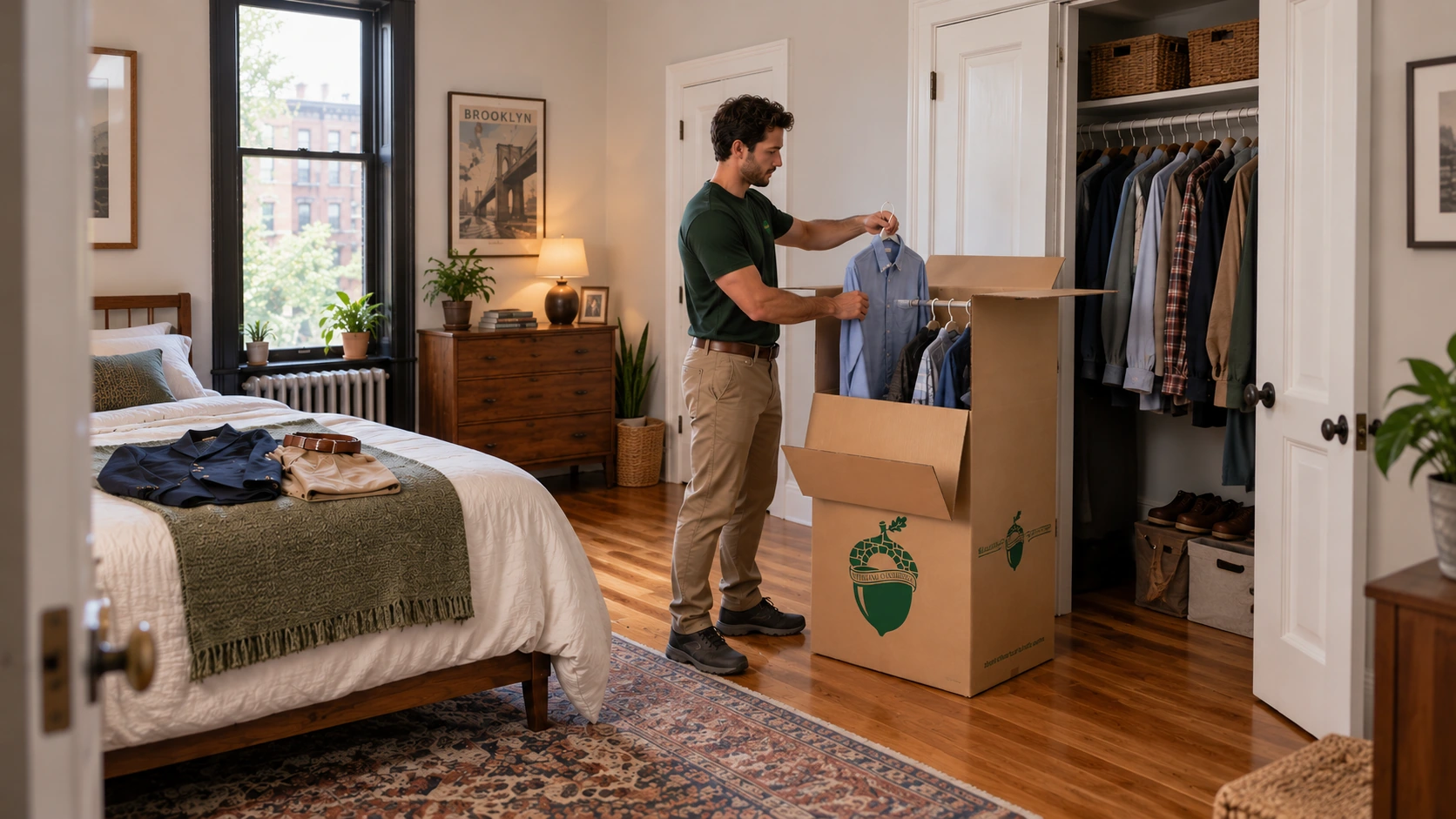
Protect fragile contents for the entire route
Suitable preparation supports carrying, stacking, load restraint and road movement. A bag of casually nested dishes that survived a private-car trip is not the same preparation for a moving shipment. Match the object, support, individual wrapping, cushioning, carton strength and closure to its handling path.
Identify drinking glasses, ceramics, ornaments, glazed family photographs and wall pictures. Glass cabinet doors and removable shelves need attention before the furniture is handled. Wrapping the outside of a cabinet does not prepare everything inside it. Keep protected components identifiable for receiving.
A clean work surface and appropriate gloves can help with easily marked contents, apart from dusty outer wrapping or heavier work. The material and secure grip determine the method; white gloves are not suitable for every object. Fine art, unusual valuables or a significant collection need an individual art-handling plan, rather than a universal method or damage guarantee.
Give each carton a useful next destination
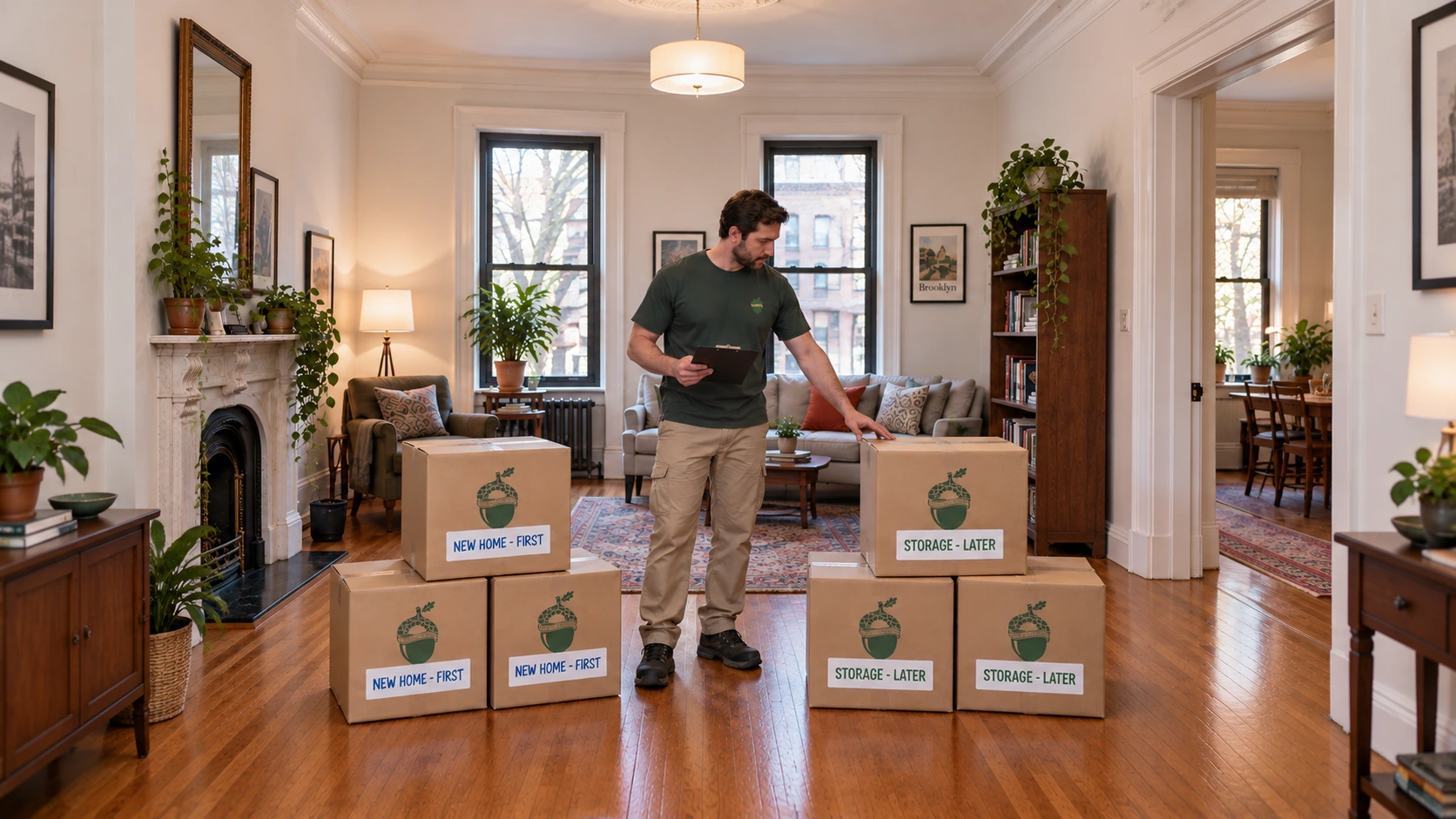
Write the next destination, receiving room and useful contents on each carton. Add an identifier when several groups share a room and mark genuine first-opening priorities. A shared color key can speed recognition, but color supports the words. Keep private information off exposed labels.
Separate home, storage and other-address groups before loading. Confirm each receiver, access period, stop order and what happens if the space is unavailable. Storage needs actual intake, holding, release and later delivery terms; a label does not reserve space.
A storage group delivered to the smaller home can create another paid carry when corrected. Use consistent room names and a simple furniture layout at receiving. Where practical, place rugs and larger furniture before cartons consume the working area. Preserve surfaces where priority contents can be opened.
Four New York households with different priorities
These are imagined planning examples, not reports of Sterling customers. The photographs illustrate the work and do not depict these actual households. Published local context helps frame a question; the customer's inventory, permissions and dates settle the job.
A Manhattan working couple prepares a dense kitchen before an interstate move
Imagine two adults with relatively little furniture but full kitchen cupboards, study books and small glazed photographs. Their final working week leaves little time for careful wrapping. They choose partial packing for those groups and prepare everyday clothing themselves.
The manager confirms the permitted preparation visit and the later carrying window. The couple keeps work devices and private travel essentials accessible. Small book loads and individually protected kitchen pieces get written receiving labels; the short furniture list is not used to estimate the cupboard work.
They choose the actual direct or consolidated delivery arrangement before booking unpacking at the destination. The result is a prepared shipment and a useful first-workday group, with supplies, visits and receiving work included in the comparison.
A Park Slope family prepares earlier while keeping dinner and bedtime usable
The LPC's 2016 Park Slope announcement describes historical rowhouses and flats, including older multiple dwellings without elevators. That context suggests reviewing today's stairs and staging; it does not establish this imagined family's entrance, permission or carton count.
Here working parents approve the kitchen, spare linen, books and most hanging clothes for earlier packing. A small meal set, beds, outfits and familiar child belongings stay usable through the final evening. Completed cartons wait in agreed rooms, clear of the household's walking route.
The final group has a release point on loading day. At the new home, everyday kitchen contents and linen open first. A larger preparation visit buys back evenings without assuming every retained object can be packed, moved and organized in one day.
A Brooklyn household separates home and storage before a work relocation
Imagine a household moving into a smaller furnished home before an onward relocation. It retains a book and picture collection, but only part is needed immediately. The same local historical housing context is a reason to inspect the actual rooms and carry, not to assume a present layout.
The owner approves home, storage and personal-travel groups before wrapping begins. The storage contact confirms intake and release. Written destinations and a shared color key keep the groups recognizable through the stop sequence. Stored collection cartons remain protected and closed instead of filling the smaller home's surfaces.
Quote holding, handling and later delivery alongside preparation. A future Canadian or interstate stage has its own transport and receiving terms. The useful result is a smaller home that works now and retained belongings with confirmed next destinations.
A Queens arrival requests later unpacking and a material handoff
Imagine a household already back at work with linen and kitchen cartons still stacked. It requests a later small-team visit, subject to availability, and clears suitable counters and a protected table. Everyday dishes and linen open first; final shelf order is separately directed organizing.
Before the used supplies leave, the household and property contact choose the actual collection arrangement. NYC311's cardboard rules distinguish flattened, tied bundles from mechanized buildings' designated dumpsters. The building's instructions and material groups matter as much as the new floor space.
A rug that no longer fits stays separate from empty cartons while its owner chooses retention, a confirmed recipient or removal. The visit can end with selected contents accessible and an agreed handoff, rather than assuming unpacking includes every cupboard and collection task.
Choose what basic unpacking will make accessible
Basic unpacking opens the agreed cartons, removes protection and lays selected contents on suitable designated flat surfaces. It gathers used materials in the agreed work area. Clear stable counters, tables or protected surfaces first, and work in phases if opening everything would obstruct the room.
For a substantial three-bedroom illustration, unpacking might add three to four hours on moving day, or a two-person team might return the next day. Actual cartons, access, surfaces and direction determine the schedule; those are options, not fixed staffing or completion promises.
You can request help several days after arrival if work leaves the remaining stacks untouched. Send what is still closed, available surfaces and the priorities. Confirm the return date, building access and paid scope before treating a preferred appointment as booked.
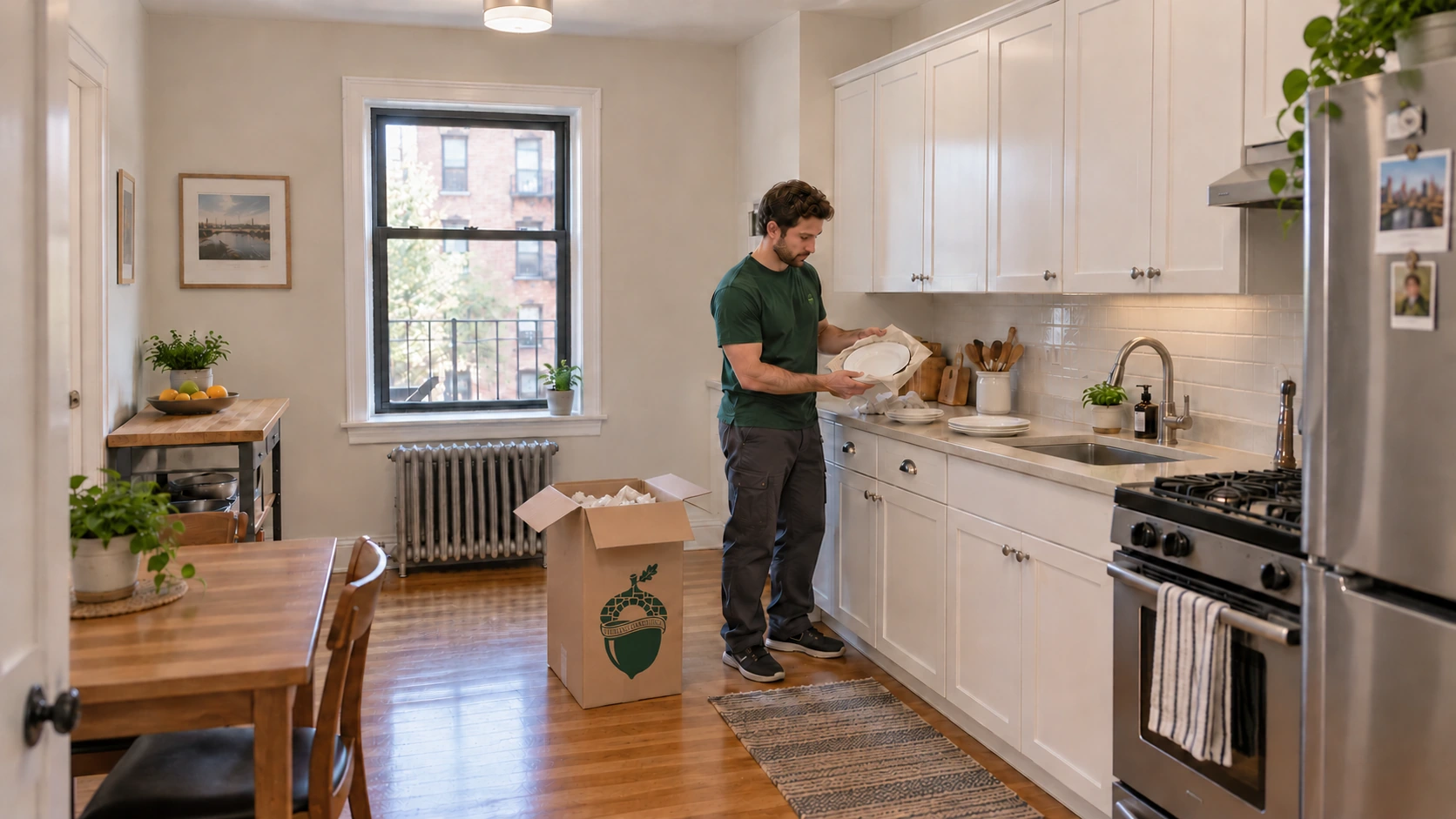
Home organizing adds the final drawer, shelf and closet positions you direct. Only you know where everyday glasses, shirts or children's belongings should go. A smaller team can be easier to guide than several people needing simultaneous decisions. It is available as additional work, rather than automatically included in basic opening.
Add the finishing tasks that make your rooms useful
Sterling provides separately scoped handyman work such as television mounting, curtains, pictures, mirrors and lighting tasks. Send the item, intended position, wall or fixing details and relevant permission. Agree the technical or electrical scope, appropriate executor, sequence and price individually.
Set the furniture layout before spreading contents across it. In-home moving can cover reviewed position changes, while a purchased cabinet needs its delivery and assembly area clear. Physical placement or mounting does not automatically include appliance hookup, every connection or regulated work.
Give empty packaging and unwanted furniture separate next steps
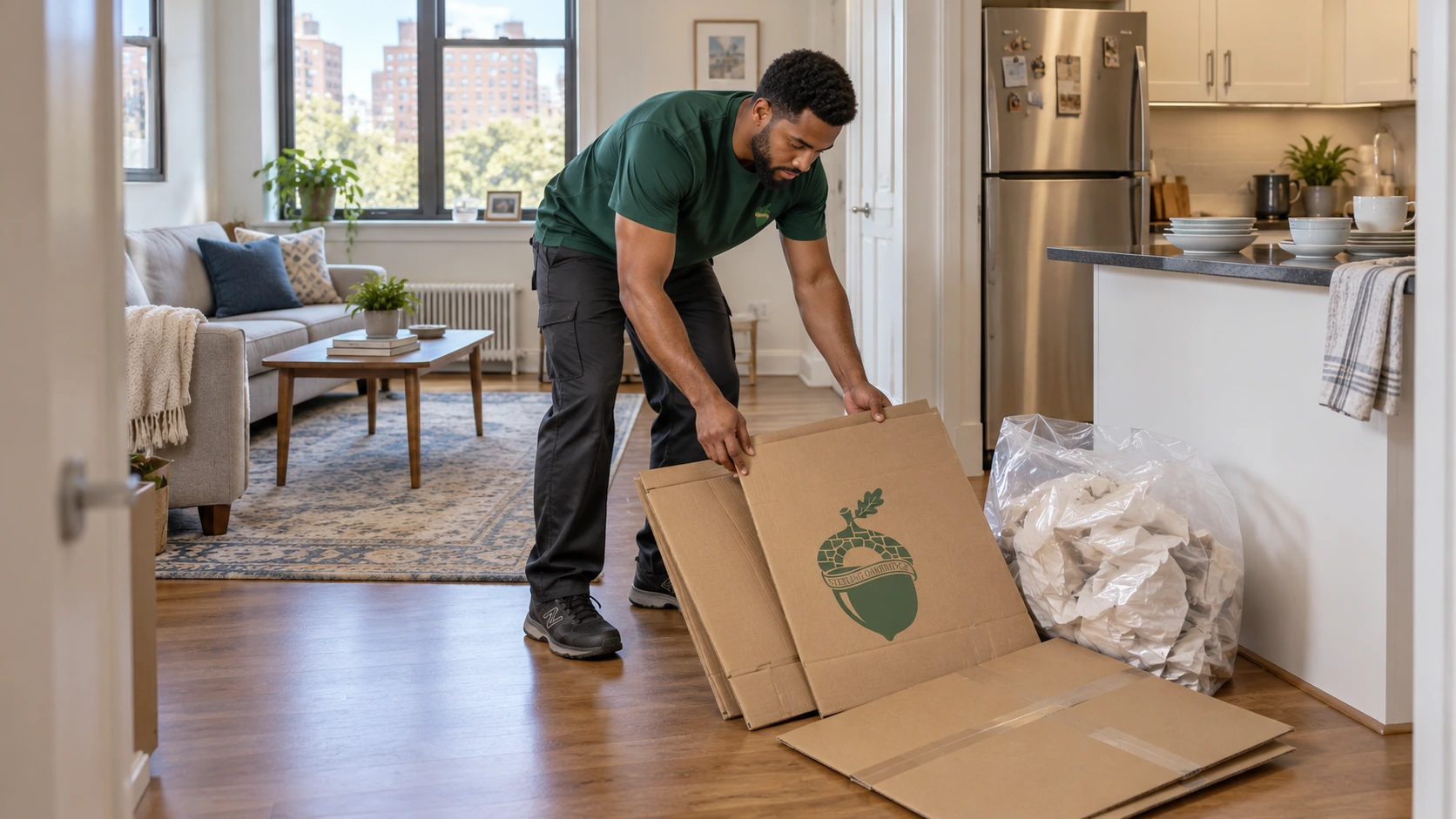
Check used paper for small fittings before it joins the outgoing materials. Separate flattened cardboard, paper, plastic film and foam, and choose a staging place clear of exits. DSNY's paper and cardboard guidance treats foam as a different material from paper recycling. One mixed pile is not an accepted recycling plan.
For ordinary residential corrugated-cardboard collection, empty and flatten boxes and tie bundles no taller than 18 inches. Mechanized buildings use collapsed cardboard in their designated dumpsters. Confirm the address schedule and the property's approved method. Indoor gathering during unpacking is different from preparing the street handoff or transporting materials away.
Sterling can collect used packaging as separately priced work with the materials, quantity, carrying route, collecting party and accepting destination agreed. Business waste has different collector requirements from residential programs. The New York removal and disposal page explains those routes and unwanted furniture; a rug, sofa or broken device needs its own approved list and preparation.
Compare the complete work and the longer receiving plan
Packing and box unpacking use paid working time. Company-supplied cartons are charged separately. Basic moving blankets, shrink wrap and tape have no separate basic material charge. Basic furniture disassembly and reassembly use moving labor without a separate basic assembly surcharge; complex models and specialist work need an individual quote.
For substantial three-bedroom contents, packing and moving together can approach twice the cost of moving the same belongings already packed. A six-person moving day might also need four packers on an earlier day. Those illustrate added labor, supplies and visits; they are not New York staffing norms or a quote multiplier. Compare the same retained inventory, access and selected receiving work.
Local estimated hours help plan the visits and any minimum; they are not a maximum charge or guaranteed finish time. Furniture unwrapping is delivery work. Box unpacking, organizing, handyman tasks, storage and material collection have their own charges or terms. The New York state guide distinguishes in-state transport rules from interstate work.
For longer US or Canadian moves, direct dedicated service uses the reviewed same-crew arrangement; consolidated delivery has its own terms and receiving flexibility. The delivery window begins after pickup and loading are complete, not when packing starts. Keep private essentials for the actual agreed receiving period.
For an interstate move, elapsed travel alone does not increase an unchanged quoted flat-rate scope. Added contents, changed access or new work need written agreement. Arrange destination unpacking around confirmed delivery and room readiness so the quote includes the result you want at both ends.
Send the contents and the receiving priorities
Send both addresses, dates, floors, access photographs and the retained inventory, including cupboard and storage contents. Identify full or partial packing, customer preparation, fragile or unusual pieces, the final-night group and private essentials. Name separate destinations and the person authorizing each handoff.
At receiving, tell us which rooms you need first, the available opening surfaces and who directs final placement. Add organizing, named handyman tasks and the material arrangement you want. Start with what you know; our planning team can recommend the right review for a useful written estimate. The New York City moving page connects the wider services.
New York City packing and unpacking questions
What does full packing include?
Sterling prepares the retained household contents in your agreed scope with suitable cartons, protection and paid working time. Show cupboards, closets, books and storage groups as well as furniture. You decide what travels and keep private papers, medication, keys and personal travel essentials outside the shipment.
Can I book kitchen or fragile-item packing only?
Yes. Partial packing assigns named rooms or groups to the crew while you prepare others. Identify the kitchen, pictures or collection you want handled, who finishes the remaining contents and when they will be ready. Report unfinished customer packing before loading so the plan can be revised.
How many boxes will my New York apartment need?
We estimate cartons from the retained contents, rather than bedroom count alone. An expectation of twenty can become sixty or a hundred once cupboards and stored belongings are included; those are illustrations, not an allowance. Carton types, cushioning and manageable loads matter as much as the count.
Does a packing appointment include a truck, storage or collection?
No. Packing prepares the agreed contents with paid working time and separately charged company cartons. Transport, storage and material collection have their own agreed scopes and terms. Include the stages you want in the request so the written estimate describes the complete project.
What should I confirm before cartons arrive?
Confirm the required carton types and quantity, receiving contact, property access and date with the planning team. Company-supplied cartons are charged separately. Any advance delivery needs a confirmed arrangement; a later building moving appointment does not automatically permit an earlier material handoff.
Can a small apartment be packed and moved in one day?
A studio or one-bedroom local inventory may fit when its contents, carrying route and permitted hours allow. Full cupboards and fragile pieces can still require substantial preparation. Discuss an earlier visit for larger groups; bedroom count does not guarantee fixed hours or completion.
What should stay usable on the final night?
Agree the beds, toiletries, simple meal set, several outfits and familiar child belongings that remain available, plus the final packing point on loading day. Keep medication, identity papers, keys and private travel essentials separately with the household. Completed cartons should leave your daily route clear.
Does my elevator booking also authorize earlier packing?
No. Confirm access for the preparation visit and any carton delivery separately with management. The actual unit, work period, common route and staging space determine what can happen earlier. A carrying appointment does not automatically grant another team advance entry.
Do you protect glass shelves and small glazed photographs?
Yes. Sterling prepares household glass components, glazed pictures and other fragile contents with protection suited to the item and handling route. Identify removable shelves and doors, loose parts, condition and value. Furniture exterior wrapping is a different task; significant collections need individually agreed art handling.
Should every valuable object be handled with white gloves?
No. The object, finish and secure grip determine the clean handling method. Appropriate gloves and a separate clean work surface can help with selected easily marked contents. Gloves do not replace cushioning or make ordinary packing a conservation service.
Can hanging clothes travel in wardrobe cartons?
Yes, where suitable for the agreed clothing group. Identify what can be packed earlier and which outfits stay available through the final night. The carton, supported hanging arrangement and usable closet access belong in the preparation plan; large wardrobe furniture may require separate model-specific work.
How should home and storage cartons be separated?
Separate them before loading and write the next destination, receiving room or storage group and useful contents. Confirm facility intake, stop order, receiver, release and later delivery. Mixed destinations can create another paid carry; a storage label does not reserve space or arrange redelivery.
Can color labels replace written destinations?
No. Use colors with a shared key to support written destinations, room names and contents. Keep first-opening priorities recognizable and private information off exposed labels. Review the same instructions with the people packing, loading and receiving each group.
What does basic box unpacking leave ready?
It opens the agreed cartons, removes protection and lays selected contents on suitable designated flat surfaces. Used supplies are gathered in the agreed work area. Choose clear counters or tables and useful priorities, working in phases where space is limited. Final cupboard placement and collection are additional scopes.
Is final shelf and drawer placement included in basic unpacking?
No. Customer-directed home organizing is available as additional paid work. You choose the final drawer, shelf and closet positions, rooms and priorities. A smaller team may be easier to guide than several movers asking placement questions at once.
Can I request unpacking several days after arrival?
Yes. Send the remaining closed groups, photographs of stacks and available surfaces, access and first priorities. The return visit needs agreed paid scope, crew availability and any renewed building permission. A requested date is not automatically booked.
How much time might unpacking a larger home add?
For substantial three-bedroom contents, three to four additional hours on moving day or a two-person visit the next day can illustrate the choice. Actual cartons, surfaces, access and direction determine the staffing and time. Those options are not fixed completion promises.
Can handyman work help finish the receiving rooms?
Yes. Sterling provides separately scoped television mounting, curtains, pictures, mirrors and lighting work. Send the item, intended position, wall or fixing details and permissions. Agree technical or electrical scope, appropriate executor, sequence and price individually; mounting does not include every connection or appliance hookup.
Does full packing always double the moving price?
No. For substantial three-bedroom contents, packing and moving together can approach twice the cost of moving the same belongings already packed, but the total can be lower or higher. That illustrates added labor, cartons and visits. Compare the same inventory, access and selected receiving work rather than apply a multiplier.
Are boxes and basic furniture protection charged the same way?
No. Company-supplied cartons and packing working time are separately charged. Basic moving blankets, shrink wrap and tape have no separate basic material charge. Basic furniture disassembly and reassembly use moving labor without a separate basic assembly surcharge; complex models and specialist work need an individual quote.
Can you collect the used packaging after unpacking?
Yes, as separately priced work with the materials, quantity, access, collecting party and accepting route agreed. Indoor gathering during unpacking does not automatically include transport away. Identify cardboard, paper, film and foam separately. Business waste needs a different collecting arrangement from residential programs.
How should residential corrugated cardboard be prepared in NYC?
Empty and flatten the boxes, then tie bundles with sturdy twine no taller than 18 inches. Buildings with mechanized collection use collapsed cardboard in their designated dumpsters. Follow the address schedule and property instructions; do not use intact cartons as recycling bins or treat every packing leftover as cardboard.
Can plastic film and foam join the paper recycling?
No. Separate plastic film and foam from paper and corrugated cardboard. NYC's ordinary recycling list excludes film and foam; the appropriate handoff depends on the actual material and property. A mixed pile of cartons, plastic wrap and foam is not a paper-recycling load.
Can packing and receiving help be arranged for an interstate or Canadian move?
Yes, with preparation and destination work agreed separately. Direct dedicated and consolidated delivery have different arrangements. The delivery window begins after pickup and loading, not when packing starts. For an interstate move, elapsed travel alone does not increase an unchanged quoted flat-rate scope; added contents or work need written agreement. Confirm destination access and unpacking availability.