
New York · Plattsburgh service planning
Full Packing & Unpacking in Plattsburgh, NY
A Plattsburgh household can be ready to move on the calendar while its cupboards, shelves and stored belongings still need many evenings of work. Kitchen glass, books, photographs, clothing and children's possessions are easy to underestimate from a furniture list. Full packing lets you hand over the physical preparation while retaining the choices only you can make about your belongings and daily life.
Sterling Oakbridge provides full and partial packing, separately arranged box unpacking, home organizing and agreed handyman finishing work. We review retained contents, addresses, access and dates before estimating the people, materials and visits. A family home, a smaller downtown apartment and a collection divided between home and storage need different preparation. Confirm the actual municipality too: City service instructions do not automatically apply to a Town of Plattsburgh or wider postal address.
Packing takes the evenings you hoped to keep
Packing is another job after the working day. Even a two-person household can spend many evenings finding cartons, opening cupboards, protecting objects and preparing manageable loads. Children add belongings and a reason to preserve family time. A familiar move can make that cost clearer: you may already know how much work remains after the large furniture has been counted.
Full packing is useful when those hours and your energy matter more than keeping the initial invoice as small as possible. You can continue work and family responsibilities while a team prepares the agreed contents. The benefit comes from completing that physical stage in a reviewed schedule, rather than spending each evening on an unfamiliar job and repeated supply orders.
Retention remains your decision. Clothing can become a keep-or-donate review, a cupboard may contain years of accumulated kitchenware, and an album can take longer to sort than to protect. Decide what travels before its packing group begins. Keep medication, identity papers, keys, chargers and private travel essentials with the person who needs them, outside the shipment.
Define the contents before choosing the service
Full packing covers the retained contents included in the reviewed scope. Show cupboard interiors, closets, study shelves, basement storage and other concealed groups as well as the furniture. Identify collections, small glazed frames, glass components and unusual valuable pieces. The task depends on what must be prepared, not simply the number of rooms or the floor area.
Partial packing assigns particular rooms or groups to the team. You could pack ordinary clothing while Sterling prepares the kitchen and fragile collection, or ask for the study to be completed before a work relocation. Agree who prepares each group and when the customer-packed portion will be ready. Report unfinished preparation early so people, time and the loading sequence can be reviewed.
An expectation of twenty cartons can become sixty or a hundred after the retained inventory is reviewed. These figures illustrate supplies being underestimated; they are not Plattsburgh quotas. Carton types and protective materials matter alongside count. Dense books need smaller manageable loads, light bedding needs suitable volume, and fragile pieces need room for cushioning rather than being forced into the last available box.
Keep undecided, recipient-bound and approved packing groups separate. A donation needs actual acceptance and a collection date, while an unwanted item needs an appropriate removal plan. Packing everything first can add transport, storage and another handling stage for belongings that ultimately have no place in the new home.
Prepare earlier while leaving the last night usable
A studio or one-bedroom inventory may allow packing and a local move in one day when contents, routes and permitted hours support it. Two-bedroom contents can make a combined day demanding. A substantial three-bedroom home or many individually protected objects often benefits from preparation on an earlier day. The actual inventory decides what is practical; bedroom count is not a completion promise.
The preparation crew may be smaller than the moving crew. It can pack the groups you will not need before departure, leaving agreed beds, toiletries, a simple meal set, several outfits and familiar child belongings accessible. Identify when the final shipment group will be finished. Personally carried essentials stay distinct from both earlier cartons and that last-night group.
Choose work surfaces and completed-carton staging that preserve the remaining household route. An available room should not lose its entrance to a stack of finished boxes. In a managed property, ask whether preparation may happen before the carrying appointment and confirm access to the actual unit. A later moving window does not automatically permit an earlier team to enter.
For an address with several stages, connect preparation, pickup and receiving dates. The family may remain at home between the packing visit and the move. Someone still needs authority to decide which group stays available and to approve a change before it affects the next stage. Keep the plan useful for the people living there as well as the team preparing it.
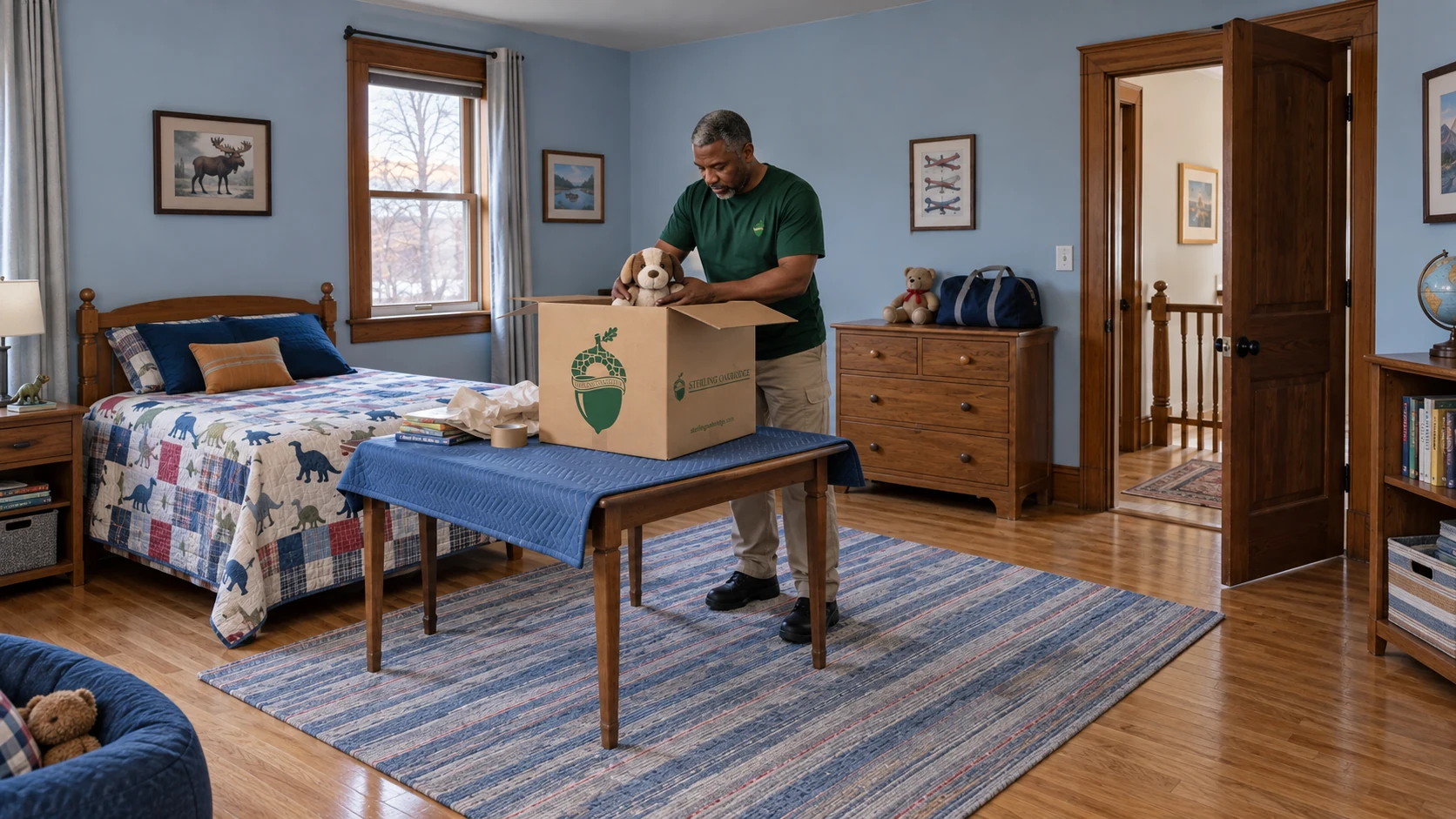
Protect glass, pictures and concealed components
Protection supports carrying, stacking, load restraint and road movement. A bag or casually nested dishes that survived a personal-car trip do not offer the same preparation for a loaded moving truck. Different vibration and handling conditions make suitable cushioning and cartons important. The aim is appropriate protection throughout the route, rather than a guarantee that fragile contents can never be damaged.
Show drinking glasses, ceramic pieces, figurines, small glazed photographs and wall pictures. Identify glass doors and removable shelves inside cabinets rather than treating the furniture exterior as the complete inventory. Review removal, individual protection and how each prepared component remains identifiable at receiving. Fine art or an unusual valuable object needs an individually agreed fine-art handling scope.
Where appropriate, clean gloves and a separate clean surface help prepare delicate or light-colored contents. A team member doing that work can stay apart from heavier carrying or dirty tasks. Tell the estimator about sensitive finishes and condition before the material allowance and labor plan are fixed. Appropriate technique still matters when gloves are used.
Standard furniture blankets, shrink wrap and tape have no extra basic-material charge in the standard moving scope. Packing cartons, paper and other protective supplies are separate packing materials. Basic furniture disassembly and reassembly use paid labor without a separate basic assembly surcharge; complex work is individually reviewed. Preparing the furniture and packing everything it contains remain distinct tasks.
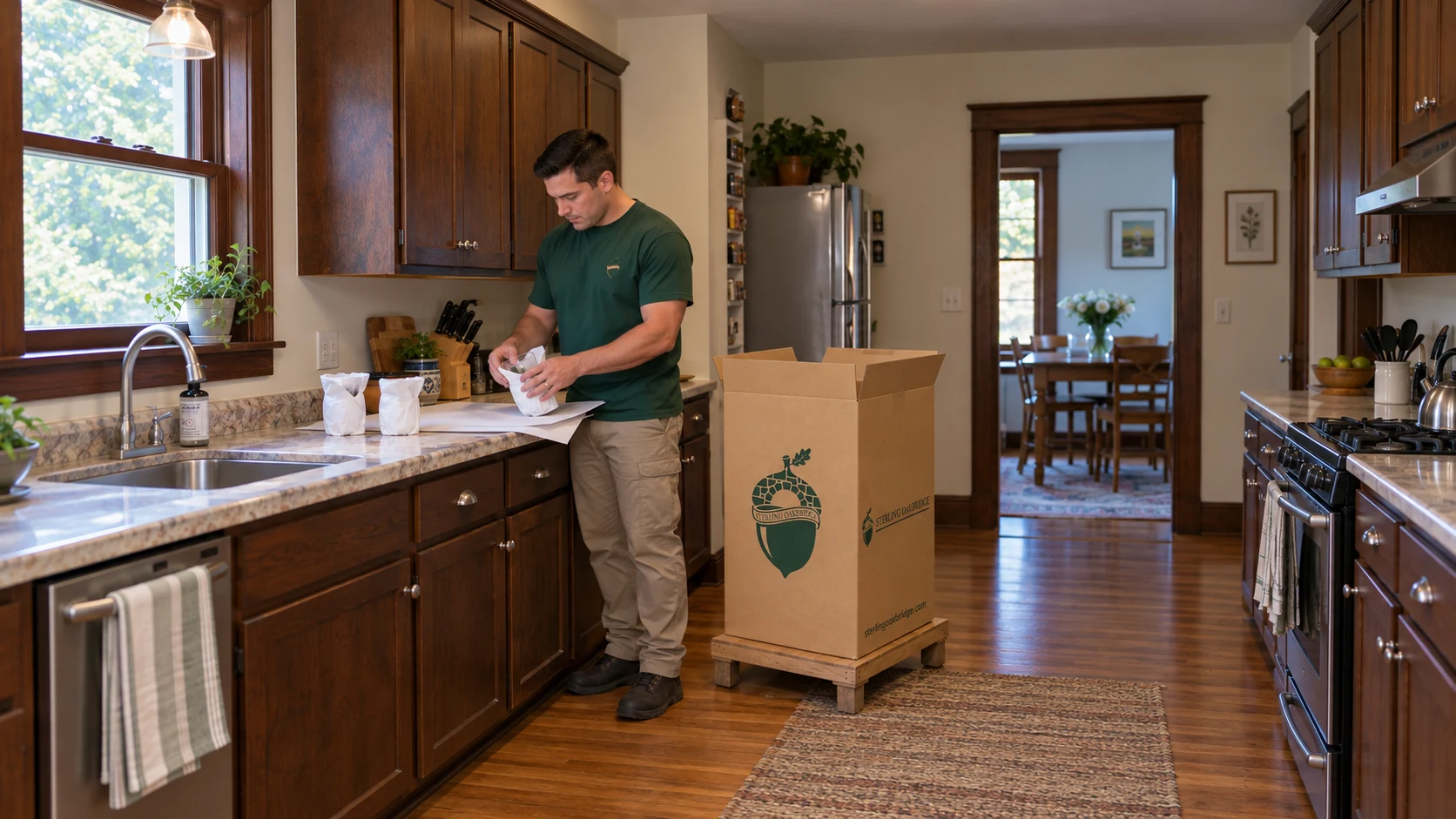
Make the destination clear before a carton is loaded
Each carton needs a written next destination, receiving room and useful contents. Consistent colors can reinforce those instructions, but retain readable words so the unloading team can interpret them. Identify first-opening groups without exposing sensitive information on external labels. Use the same room names at both ends.
Separate home-delivery cartons from the storage group before loading. Confirm the actual facility intake, stop sequence and later release. If stored contents are mixed into household delivery, finding and transporting them again can require more paid handling. A later return also needs its receiving contact, access and agreed scope.
Fragile stored pieces still need protection for the complete route. Identify which groups should remain closed and which belongings you will need sooner. Confirm the facility's access arrangement rather than assume every stored carton can be retrieved on demand. A proposed storage provider becomes a workable stage only when the intake and release are settled.
Provide a simple receiving layout and someone available to approve placement. Communicate a changed room before the affected group is carried inside. Labels help avoid repeated handling; they do not decide the final drawer arrangement or give permission to use a room that has not been released.
Unpacking can release the new rooms from stacks
Basic unpacking opens the agreed cartons and lays contents on suitable designated flat surfaces. Used protective paper and empty cartons are separated from retained belongings as arranged. This can restore useful space when stacks surround the furniture and locating one item would otherwise mean moving several heavy boxes.
Plan the order at receiving. Rugs and larger furniture may need their positions before cartons occupy the floor. Then identify the everyday kitchen, selected clothing, linen or work group to open first. Clear suitable surfaces rather than fill every counter at once. Stored or later-delivery contents should remain outside the automatic household opening sequence.
For a substantial three-bedroom example, unpacking might add roughly three or four hours on moving day, or a two-person team could return the next day. These are planning illustrations. Actual carton count, surfaces, routes and requested placement determine the work; they are not fixed durations or guarantees that every home will be finished within those hours.
You can request help several days after arrival if work and ordinary responsibilities leave the remaining stacks untouched. Show which groups are still closed, what surfaces are available and what you need first. A later appointment remains subject to crew availability and property arrangements, including any renewed entry or carrying window.
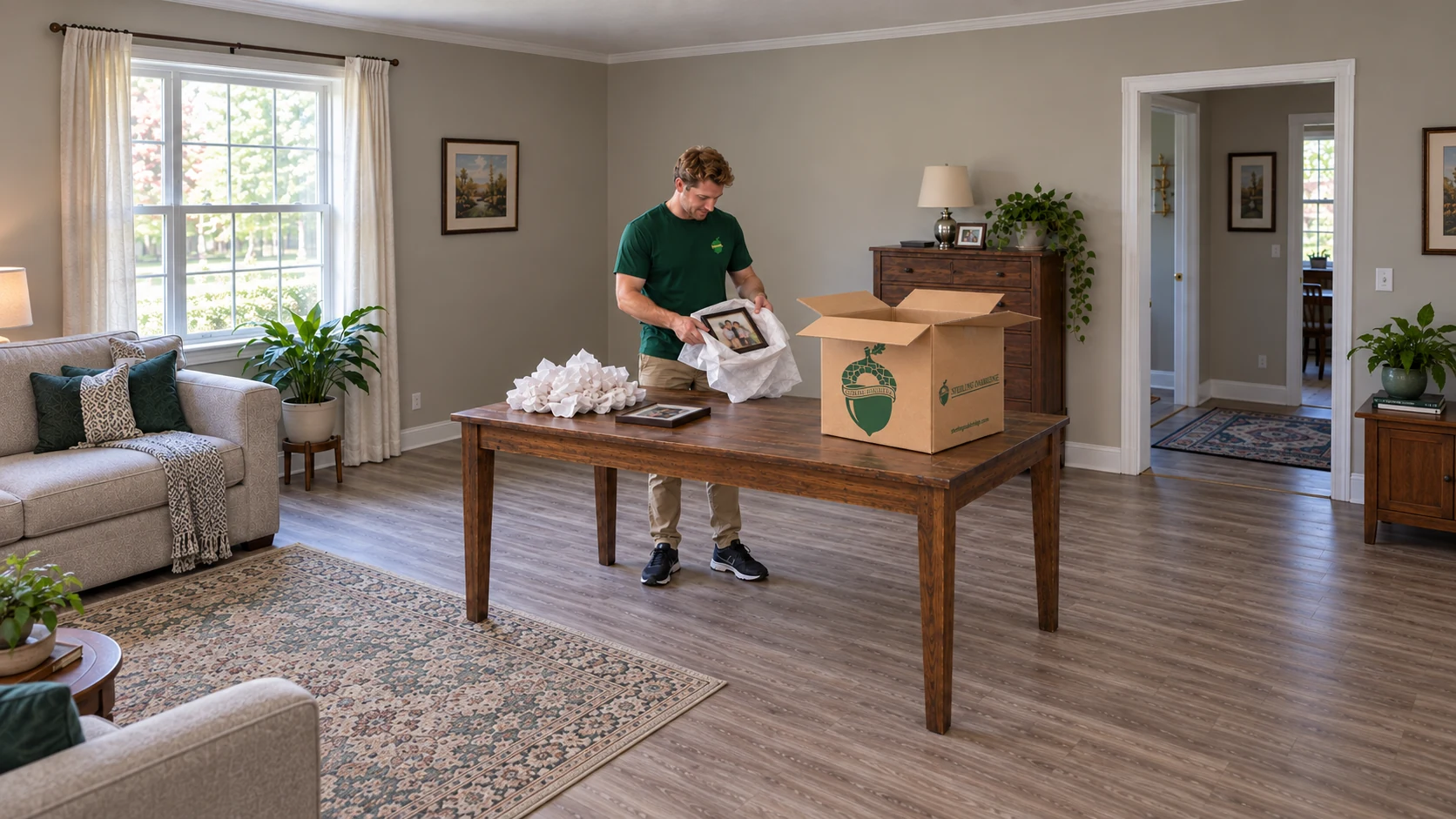
Add the final placement and finishing tasks
Home organizing adds the shelf and drawer placement you direct. You know where everyday glasses, shirts and work supplies should go in the new home. Agree rooms, priorities and paid time through home organizing. A smaller team may be easier to guide than several movers requesting simultaneous decisions.
Sterling's handyman services can help with agreed finishing work such as TV mounting, curtain hardware or suitable light fixtures. Describe the item, wall or fixing conditions, hardware, intended position and sequence. Technical or electrical work needs a separately specified scope and an appropriate executor. Supplies and additional labor belong in the estimate rather than being assumed inside basic box unpacking.
Use Plattsburgh in-home moving for reviewed placement or a room change, and Plattsburgh furniture delivery for a separately purchased piece. A large wardrobe or flat-pack build and gym equipment need their actual construction and preparation reviewed. Bringing these tasks into one plan can shorten the remaining household project when their responsibilities and price are clear.
Give used packaging an actual collecting route
Packaging preparation and collection have separate scopes and charges. The City's 2026 refuse guidelines distinguish ordinary refuse in clear bags inside a tote from sorted recyclables in the provided recycling bin. Its cardboard category requires clean, dry, flattened material without plastic inserts, staples or wax coating. Separate packing leftovers by their actual material rather than treat everything used in the move as one accepted recycling group.
The County recycling page also requires contaminants removed and boxes flattened, but describes its own separated drop-off categories and sites. City curb collection and County receiving are different arrangements. Check the specific packing paper, film, foam, source, quantity and actual person or carrier with the responsible operator; a material listed at a facility does not establish eligibility for every hired load.
The City solid-waste code permits private collection with applicable licensing and vehicle conditions. It also distinguishes the collecting point from work inside a dwelling or garage. Establish the actual City or appropriate licensed private arrangement before transport; a moving estimate does not itself prove a particular carrier's authorization. Keep an agreed holding area clear of exits and unapproved public staging.
If an unwanted rug or sofa becomes apparent after arrival, keep it apart from empty packaging. The City programme has separately arranged special pickups, with item and account conditions. Plattsburgh removal and disposal explains the wider receiving questions. Donation needs confirmed acceptance, and an outside collection appointment may still leave an interior carrying task to arrange.
Understand the added invoice as added work
Full packing adds preparation labor, suitable cartons, protective supplies and any separate visits. For a substantial three-bedroom inventory, packing and moving together can approach twice the cost of moving the same belongings already packed. This illustrates the extra work, not a fixed Plattsburgh multiplier. A different retained inventory, partial scope or fragile-item group changes the relationship.
A large partly prepared home might use six people for moving, while full preparation adds an earlier day with four people and packing supplies. Unpacking, organizing, installations or a later appointment can add more. Review all selected stages before choosing the service by bedroom count or a headline price.
Local estimated hours help plan the crew and visits; they are not a maximum charge or a completion guarantee. Furniture unwrapping is part of delivery, while opening cartons is separately arranged paid work. Storage, complex assembly and material collection have their applicable terms. Compare the complete plan with the time and energy it returns to your household.
| Task | What to agree |
|---|---|
| Full packing | Retained inventory, labor, carton types and protective supplies. |
| Partial packing | Team and customer groups, readiness and any earlier visit. |
| Furniture protection | Standard basic wrapping materials; packing concealed contents is separate. |
| Basic assembly | Paid labor without a separate basic assembly surcharge; complex work individually reviewed. |
| Box unpacking | Agreed carton opening, suitable flat surfaces and used-material preparation. |
| Home organizing | Customer-directed shelf and drawer placement with additional paid time. |
| Handyman finishing | Actual task, fixing conditions, suitable executor, supplies and price. |
| Material collection | Actual municipality, account, material, quantity, eligible operator and receiving route. |
Connect preparation to the longer relocation
Full packing and selected unpacking can be valuable when a work relocation moves a larger household across the United States or Canada. Plattsburgh long-distance moving distinguishes dedicated same-crew service from consolidated delivery. Choose the mode around the actual shipment and receiving needs, including any separately arranged destination unpacking or organizing.
The delivery window begins after pickup and loading are complete. Keep personally carried essentials available for the agreed possible receiving period. A broader consolidated window does not automatically include free storage, the direct-service same crew or an unpacking team reserved at the destination. A Canadian shipment also needs the arrangements applicable to its actual cross-border move.
A flat moving price does not change because travel takes longer alone. Added contents, changed access or newly requested work change the scope and require a reviewed written update. Identify packing, materials, receiving tasks and any storage while there is time to connect their schedules.
Four Plattsburgh planning examples
These are hypothetical planning examples, not completed Sterling customer jobs or claims of access to the pictured homes. Primary records establish historical geography, planning context or collection rules. Each household, inventory, schedule and private interior below is illustrative and needs an actual review.
A Brinkerhoff Street family prepares cupboards before its final evening
The National Register metadata identifies the Brinkerhoff Street district between Oak and North Catherine and lists several nineteenth-century architectural styles. This establishes historical setting, rather than the current layout or contents of a particular home.
Here working parents retain their kitchen glass, pictures, study books and children's belongings. They select earlier packing for most cupboards and soft contents, with a clean surface for individually protected glass. Agreed beds, a simple meal group and one small set of familiar child belongings remain usable through the final evening. Private travel essentials stay separately with the household.
Receiving priorities are everyday dishes and selected clothing or linen. Final shelf placement is additional organizing the customer can direct. The result is a reviewed preparation and receiving sequence that preserves family time without deriving a carton count or one-day promise from an older exterior.
A household in The Point separates a collection for home and storage
The National Register record for The Point locates the historic area around Jay, Hamilton, Peru and Bridge Streets. Its historical classifications do not establish current permission, house condition or an available carrying route.
This household is relocating for work and taking selected furniture into a smaller receiving home. Books, family photographs and occasional fragile cabinet contents are retained, but part of the collection will go to storage. Before wrapping begins, the customer decides which groups arrive at the home and which stay closed for later release.
Written destinations, receiving rooms and useful contents follow the groups through the reviewed stop sequence. The storage intake and later delivery are separately confirmed. A longer or Canadian stage needs its actual delivery model and applicable arrangements; the immediate work essentials travel with the household. The result is a divided retained collection with clear handoffs and fewer reasons to pay for repeated handling.
A downtown apartment uses partial packing and a limited receiving surface
The City-linked comprehensive plan describes mixed-use development downtown near the Saranac River, surrounded by residential uses. That planning context is not confirmation of this illustrative apartment's present use, entrance or work hours.
A working couple has few large pieces but substantial kitchen contents and small framed pictures. They review partial packing before a restricted carrying appointment, with customer-packed clothing completed by an agreed point. The actual manager confirms any earlier entry and the shared route. A short furniture list does not replace the preparation estimate.
At receiving, a clear counter and padded table can accept priority contents; opening every carton at once would remove the available working space. Stored groups remain closed. Later organizing or picture hanging receives its own customer directions and scope. The result is preparation proportionate to the contents and a receiving sequence the apartment can actually accommodate.
A City arrival books later unpacking and the material handoff separately
After this illustrative household returns to work, the remaining stacks still obstruct ordinary use of the rooms. The customer requests a later smaller unpacking team, subject to availability, and identifies clear flat surfaces for everyday kitchen contents and photographs. Final drawers or hanging positions are additional tasks the customer can direct in manageable groups.
The actual collection account and quantities are checked before used materials leave the property. Clean cartons are emptied of inserts and flattened for the chosen cardboard programme; paper, film and other leftovers remain distinct for acceptance review. City curb sorting and County drop-off are not treated as interchangeable, and any private collecting route has its appropriate operator and vehicle conditions confirmed.
A rug that no longer fits and proposed TV mounting are reviewed separately. The customer knows what will be opened, what can be organized and how the materials will reach their accepted destination. The useful outcome is more space and a defined completion sequence, rather than an unspecified pile or an assumed collection appointment.
Bring the actual household into the estimate
Send addresses, proposed dates, access photographs and an inventory or walkthrough of retained contents. Identify full or partial packing, fragile groups, what stays available overnight, separate destinations and first-opening priorities. Add unpacking, organizing, handyman tasks and the proposed material arrangement when you want those scopes reviewed.
The Plattsburgh city page connects the services and the Plattsburgh moving guide holds wider arrival details. Clear groups and handoffs let the estimate connect preparation, moving and receiving around your actual home and municipality.
Plattsburgh packing and unpacking questions
What does full packing include?
The retained contents included in the reviewed scope, with suitable cartons, protective supplies and paid preparation labor. Show cupboards, closets, shelves and stored groups as well as furniture. You decide retention and keep private travel essentials outside the shipment.
Can I choose packing for particular rooms?
Yes. Partial packing assigns particular rooms or groups to the team while you prepare others. Agree the split, readiness and any earlier visit. If customer preparation remains unfinished, report it before loading so the people, time and sequence can be reviewed.
How many cartons will a Plattsburgh household need?
The retained contents matter more than bedroom count alone. A first expectation of twenty cartons can become sixty or a hundred after cupboards and stored belongings are reviewed; these are illustrations, not local quotas. Appropriate carton types, cushioning and manageable loads also affect supplies.
Can packing and a local move be completed in one day?
A studio or one-bedroom inventory may fit when contents, routes and permitted hours allow. Two-bedroom or substantial three-bedroom contents can make a combined day demanding. Earlier preparation is worth reviewing for larger or fragile groups; no bedroom count gives a fixed completion promise.
What should remain accessible on the final night?
Agree beds, toiletries, a simple meal set, several outfits and familiar child belongings, plus when that final shipment group will be packed. Keep medication, identity papers, keys and personal travel essentials separately with the household. Earlier cartons should not absorb those groups.
Does a historic district establish the actual packing route?
No. Brinkerhoff Street and The Point records supply historical geography and classifications, not a present inventory, layout or permission. Review the actual unit, work surfaces, staging and carrying route. The older exterior cannot determine carton quantities or completion time.
Do City rules apply to every Plattsburgh mailing address?
No. Confirm the actual City, Town or wider municipality and property account. Postal wording does not establish its collection programme, street authority or building permission. Identify both actual addresses and the people controlling the requested work and receiving access.
Can a small downtown apartment still need substantial packing?
Yes. Few large furniture pieces can coexist with extensive kitchen contents, books and pictures. Review the groups against permitted preparation and carrying periods. Any earlier entry needs the actual manager's confirmation; a later moving window does not automatically admit a preparation team.
Why do dishes need truck-appropriate preparation?
Prepared contents must support carrying, stacking, load restraint and road movement. Bags or casually nested dishes used in a personal car do not provide the same protection in a loaded truck. Review cushioning and suitable cartons; protection is not a damage guarantee.
Should cabinet glass and small framed photographs be identified?
Yes. Show glass doors, removable shelves, glazed frames, ceramic pieces and other fragile contents before estimating. Their protection and receiving identification differ from wrapping the furniture exterior. An unusual valuable object may need a separately agreed fine-art handling scope.
Can clean gloves be used for delicate belongings?
Where appropriate, clean gloves and a separate clean preparation surface can help with delicate or light-colored contents away from heavier or dirty tasks. Explain sensitive finishes and condition beforehand. Suitable materials and handling technique remain important; ordinary packing is not a conservation service.
How should cartons for home and storage be labeled?
Use a written next destination, receiving room or storage group and useful contents. Colors can reinforce the words. Separate groups before loading and confirm the stop sequence, actual facility intake and later release. Misplaced cartons can require additional paid handling to retrieve and transport again.
Will stored cartons be opened automatically at the new home?
No. Identify which groups should remain protected and closed for storage or later release. Confirm any earlier-access request with the actual facility. Household unpacking should follow the agreed receiving priorities rather than fill a smaller home with its stored collection.
What is basic box unpacking?
The agreed cartons are opened and contents laid on suitable designated flat surfaces. Used protective paper and empty cartons are separated as arranged. Final shelf and drawer placement is additional organizing, while the material handoff needs a separately agreed appropriate collection arrangement.
Can unpacking be requested several days after arrival?
Yes, subject to crew availability, property access and the reviewed paid scope. Show the groups still closed, clear surfaces and first priorities. A later request can help when work leaves stacks untouched, but a preferred date or renewed building appointment is not automatic.
How much time might a larger home's unpacking add?
For a substantial three-bedroom example it might add roughly three or four hours on moving day, or a two-person team could return the next day. These are illustrations. Actual cartons, surfaces, routes and requested placement determine the work; they are not fixed completion guarantees.
Can organizing include final kitchen and clothing placement?
Yes. Home organizing adds the shelf and drawer positions you direct, with rooms, priorities and paid time agreed. You know where everyday belongings should go. A smaller team may be easier to guide than several movers seeking simultaneous placement decisions.
Can handyman work help finish the new home?
Yes. Discuss TV mounting, curtains or suitable light fixtures as actual tasks with fixing conditions, hardware, supplies, sequence and price. Technical or electrical work needs a separately specified scope and an appropriate executor. It is not automatically included in basic unpacking.
How should used cartons be prepared for the City programme?
The City's 2026 guidelines require clean, dry, flattened cardboard without plastic inserts, staples or wax coating, and distinguish sorted recyclables from ordinary clear-bag refuse. Review the actual packing paper, film, foam, quantities and account instead of assuming every leftover joins the cardboard category.
Can County recycling replace every City or private collection arrangement?
No. County drop-off categories and sites differ from City curb sorting. Confirm the exact material, source, quantity, person or eligible carrier and accepting route. The City code allows private collection with applicable licensing and vehicle conditions; a moving estimate is not proof of authorization for a particular load.
What if a rug or sofa no longer fits after unpacking?
Keep it separate from empty packaging and review retention, confirmed donation or the appropriate special-pickup or private route. Identify item, account, carrying work and accepting arrangements. An outside appointment may leave an interior carry unresolved, and removal is not automatically part of box unpacking.
How do packing costs and long-distance receiving affect the estimate?
For substantial three-bedroom contents, packing and moving together can approach twice the cost of moving the same belongings already packed; this is an illustration, not a fixed multiplier. Packing labor, supplies, visits and receiving tasks change the comparison. Basic wrapping materials have no extra basic-material charge, cartons are separate, and basic assembly uses paid labor without a separate basic assembly surcharge. Delivery windows begin after pickup and loading. A flat moving price does not change for travel time alone; scope changes need written agreement.