
New York · Watertown service planning
Full Packing & Unpacking Services in Watertown NY
Packing can take over the hours you expected to spend resting after work, seeing your children or getting the next home ready. The furniture list may look short while cupboards, bookshelves and closets still hold weeks of evening work. Full packing lets you hand over that preparation; optional unpacking helps bring the project to a usable finish after delivery.
Sterling Oakbridge reviews full or partial packing in Watertown, protection for the actual contents, and the receiving work you want. Send both addresses, your dates and a room-by-room view of the belongings. We can plan a preparation visit, the move and later help together, with cartons, unpacking, organizing and finishing tasks identified in the written scope.
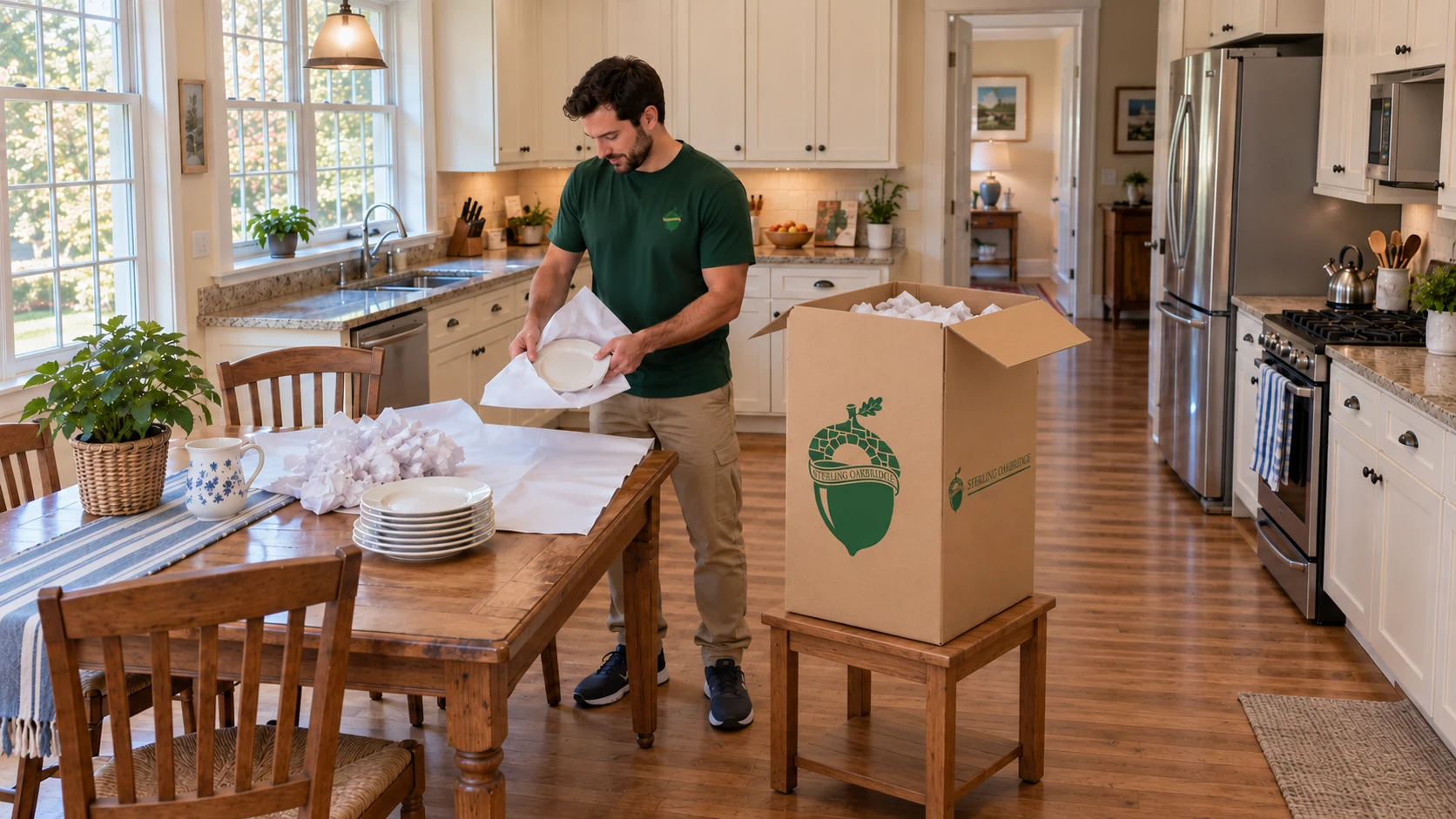
Protect the time outside your working day
Preparing a home is more than putting visible objects into boxes. You empty a cupboard, decide which pieces to keep, find enough paper for the glassware, then discover another shelf or storage area. A quick clothing sort can become an evening of trying things on. Books, photographs and family possessions bring decisions that a packing crew cannot make for you.
For two adults working regular hours, a couple of weeks of evening preparation is quite possible. That is an illustration of the task, not a measured average. Children can add clothing, toys and school equipment while also needing the same bedtime and family time as before. Outsourcing packing is useful when you want those hours back and can budget for the additional work.
Make the keep, recipient and removal decisions early. Give the crew a clear retained inventory rather than ask them to decide what has sentimental value. You can sort personal papers and belongings privately, then leave the practical preparation of the agreed contents to the team. Someone who has moved before may choose this help precisely because they know how much work is involved.
The useful comparison is between two complete plans: what you can realistically finish yourself, and what you want prepared professionally. If you have time for clothing but little time for the kitchen, selected packing may be enough. If every evening is already committed, full packing can remove another substantial project from the calendar.
Define full packing, partial packing and the receiving help
Full packing covers the household contents agreed during the review, rather than everything a crew happens to find on the day. Show the insides of cabinets, closets and storage areas. Include kitchenware, books, pictures, glass-fronted furniture, linen, seasonal belongings and garage contents. Tell us about fragile, valuable or unusually heavy items that need individual handling.
Partial packing names a smaller set: a kitchen, a collection, fragile contents or selected rooms. Be explicit about what you will prepare and what the crew must finish. “We will pack most of it” is difficult to schedule; “we will pack clothes and toys, and need the kitchen and framed items prepared” gives the work a boundary. Report unfinished packing before loading day so the plan can be reviewed.
Set aside medication, keys, personal valuables, essential documents and the things travelling with you. Mark that area clearly and give the team the instruction before packing begins. Full packing should help you stay in control of the belongings, including the group that must remain accessible.
Choose receiving work separately. Furniture is unwrapped during delivery. Opening cartons and taking out their contents is optional paid unpacking; placing those contents in the exact cupboards and drawers you choose is additional home organizing. Packaging removal and handyman tasks also need to be requested. These can form one coordinated project without becoming an unspecified promise to do every job in the home.
Give preparation its own place in the schedule
A studio or one-bedroom local move may fit packing, moving and delivery into one day after the inventory and access are reviewed. A compact apartment containing a large library or delicate collection can need more preparation than its floor plan suggests. The available building hours, carrying route and receiving conditions matter too.
Combining every stage becomes more demanding with a two-bedroom home. For a larger apartment or a substantial three-bedroom house, discuss a packing visit before the main move. This is a scheduling decision, not a claim that you cannot pack the home yourself. Separating the stages gives the team time to protect the contents before a full loading and delivery day begins.
A smaller preparation crew can start with less-used rooms and possessions. Agree what stays usable for the final evening: beds, bathroom supplies, a few outfits, a simple breakfast set and a child's familiar belongings. Keep those items in a named area. The last everyday contents are then prepared at the agreed stage instead of being lost among already sealed cartons.
Check that a preparation visit has permission to use the property. In a building with shared corridors, leave the route available to other households and keep packed cartons inside the authorized area. Packing access and the moving window may be separate permissions. An earlier visit is only useful when the actual building and household can accommodate it.
Four Watertown situations with different useful results
An upper-floor apartment with a shared entrance
Imagine two working adults leaving a one-bedroom apartment in Watertown's downtown area. Their furniture is limited, but the kitchen is full and their books occupy several shelves. The entrance and hallway are shared. They want preparation handled without spending the week before departure surrounded by unfinished boxes.
The City's district descriptions distinguish taller, denser downtown buildings from its predominantly single-unit and two-unit residential neighborhoods. That does not establish this apartment's floor, stairs or loading position. The useful packing consequence is to review both the inventory and the available working space, then keep completed cartons out of the shared route.
After that review, a combined local day may be feasible. If the contents or permitted hours make it too tight, a preparation visit packs the less-used group first. The couple keeps work equipment, personal documents and a small first-night set with them. The crew needs a clear instruction for what remains unpacked until departure.
At delivery, labels identify the new rooms and priority contents. The couple requests kitchen essentials and linen first, while seasonal belongings remain sealed. That limited unpacking result may make the first evening comfortable without requiring every carton to be opened. For the wider entrance and property questions, use the Watertown relocation guide.
A family house with books, glass and another night at home
Consider a family moving from an older detached home in the City to a home farther away. The bedrooms are only part of the inventory: a dining cabinet has glass shelves, the study has accumulated books, and framed family photographs sit throughout the house. The children still need their normal evening routine before departure.
The family chooses a preparation visit. Decorations, spare dishes, collections and out-of-season clothing can be packed first; the beds, school bags and named daily-use set stay available. The packing team can work through the retained contents after the family has decided what will leave, stay or go to another recipient. A sentimental cabinet needs an item-specific glass and furniture plan, not merely a “fragile” sticker.
For a substantial inventory, a plan using six movers on the main day might also require four packers on a separate day. That is an illustrative staffing discussion, not a crew assignment for every three-bedroom home. It shows why full packing adds another visit and substantial labor rather than a few minutes at the start of the move.
Choose the receiving priorities while the family still has time to think. Beds and everyday kitchen items may need to be usable before opening the study collection. If the destination is part of a long-distance move from Watertown, book unpacking around the actual delivery arrangement. The transport window begins after pickup and loading are complete; the packing visit does not start it.
A Town receiving home whose kitchen is not yet ready
Now imagine a household moving from the City to a home in the separate Town of Watertown while kitchen work is being finished. The bedrooms can receive furniture, but unpacking all the dishes immediately would fill the available surfaces and may lead to repacking them before the contractor returns.
Use the receiving plan to define destinations. Bedroom and bathroom essentials are marked for first use. Kitchen cartons are clearly identified for an authorized dry holding area until that room is released. A second group of rarely used belongings may be going to storage. The labels and loading instructions need to distinguish those groups before they leave the origin.
Begin with the rooms that can actually be completed. Agree basic unpacking onto suitable surfaces there, and leave the unreleased kitchen group sealed. Confirm the contractor's readiness rather than treat an expected finish date as permission to use the room. Our storage and staged-delivery overview explains the extra handling when off-site holding is needed; in-home moving in Watertown covers later placement within the property.
The Town's own refuse and recycling page describes a separate transfer-station program. City collection instructions do not become the new home's cleanup plan merely because both addresses say Watertown. Agree who will remove the packing materials from each completed stage, with the actual materials, carrier and receiving arrangement reviewed.
A smaller apartment that remains boxed after the move
Consider someone who has already moved into a smaller Watertown apartment and tried unpacking around a full working week. The furniture is placed, but stacks of cartons still limit the floor space. Some books and spare household items have no final home yet. Correct labels help locate them, but moving several boxes to reach one carton is still physical work.
A later unpacking visit can start from the remaining inventory. Send photographs of the cartons and available surfaces, identify the rooms that should become usable first, and separate anything intended for storage or a recipient. You can request help days after delivery; the appointment depends on crew availability and the property's working hours.
For a larger remaining project, one possible plan is three or four additional hours on the delivery day; another is two people returning the next day or at an agreed later appointment. Those examples explain the choice of stages. Carton contents, access, working space and any final organizing determine the actual time and crew.
Opening the cartons can reveal a second decision: an old bookcase, sofa or rug may not suit the new floor plan. Stop and decide its destination before asking the crew to move it repeatedly. A separately agreed Watertown removal and disposal visit can deal with the named unwanted group. Unpacking does not give the crew permission to choose which belongings to discard.
These are hypothetical planning examples, not reports of completed customer jobs. The useful differences are the contents, household routine, access and receiving readiness.
Review supplies and protection from the inside out
Closed doors make it easy to underestimate supplies. A household might expect twenty cartons and discover that its actual contents need sixty or a hundred. Those are illustrative possibilities, not a carton allowance for a bedroom count. The types of cartons, cushioning and specialist protection also need review before the packing day.
Dense books need small suitable Book cartons and manageable loads. Dishes and glassware need appropriate China or dish cartons, individual wrapping and cushioning. Larger boxes suit lighter contents. Hanging clothing can use a suitable wardrobe carton; folded clothing, shoes and loose drawer contents have different preparation needs. Buying more large cartons does not solve every packing problem.
Protect the glass within the furniture as well as the loose breakables. Identify cabinet doors, removable shelves and tabletops; review whether a part should be separately protected and kept with its identifying information. Include mirrors, glazed pictures, small family photo frames, ornaments and glass art. These items are easy to miss in a list that names only the furniture.
A transport package must support the contents through carrying, stacking, restraint and road movement. Loose breakables in a shopping bag or an unsupported carton are poor preparation even for a short local trip. Packing that seemed adequate on a car seat may not suit a household shipment. A more valuable or unusual piece may require an individually reviewed method or crate; see our fine-art and antiques handling scope.
Clean textiles and sensitive surfaces benefit from a clean work area and suitable handling. Where gloves are appropriate, their material should suit the object and allow a secure grip. White cotton gloves are not the correct answer for every surface or load. Separate carton preparation and heavier work from clean handling where the agreed task calls for it.
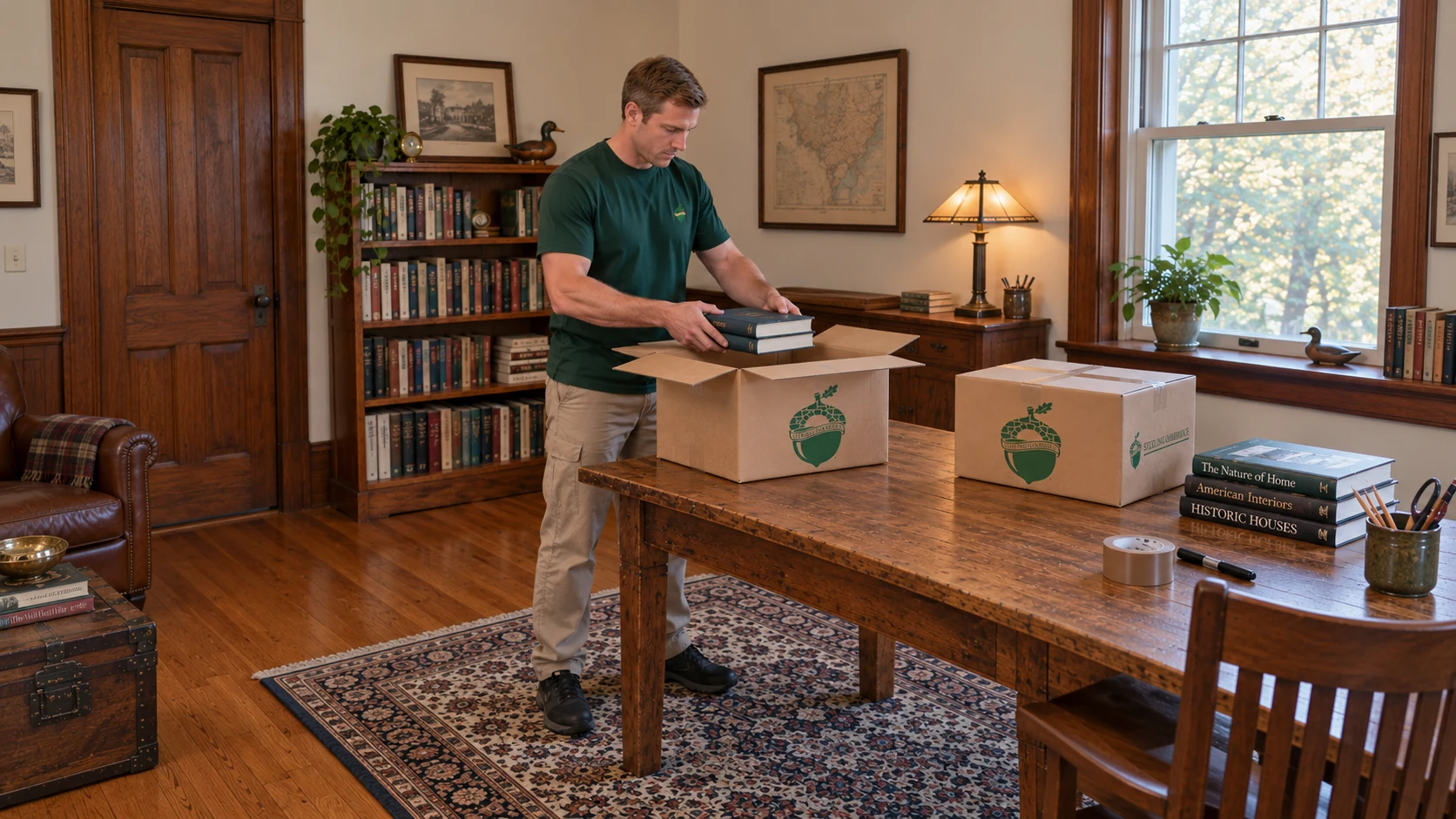
Use destination labels that survive the whole project
Decide the receiving groups before packing starts: the new home, storage, a second recipient, or belongings staying behind. A useful carton label names the destination, receiving room and contents. Add a box number for an inventory list and an “open first” instruction for essentials. Color can reinforce the grouping, but pair it with written information.
“New home — Bathroom — Towels — Box 8” and “Storage — Spare linen — Box 9” need different treatment despite containing similar objects. Labels should remain readable when cartons are stacked. Share the same destination plan with the packing team, the loading team and whoever receives the shipment; say which group must unload first.
Keep split destinations physically distinct where space permits. A storage group mixed into the home delivery can be unloaded and then carried again, creating more handling, paid time or another visit. An agreed loading sequence helps avoid that problem. The person at the receiving address needs to know which rooms and holding areas are authorized.
Mark the private essentials area and the keep-or-remove groups too. An unopened carton beside used packing paper is still a carton of belongings, not waste. A label is useful when it communicates a decision already made by the household rather than ask the crew to guess at it.
What basic unpacking leaves you with
Delivery often puts furniture in place before cartons take over the remaining space. A rug that belongs under a heavy piece should be positioned before that piece where practical. Leave enough room for unpacking as well as a clear walking route, instead of filling every corner with stacks that will have to move again.
Basic unpacking opens the agreed cartons and lays their contents on suitable designated flat surfaces. It helps you reach the belongings and reclaim useful space. Empty cartons and paper can be gathered as work proceeds; taking those materials away is a separately booked and charged removal task. Agree the surfaces, rooms and priorities before the crew opens everything at once.
This stage does not automatically put every cup in its final cupboard or arrange every drawer. If you want a particular room functional first, describe that result: daily kitchen items accessible, bathroom linen available or clothing ready to place. A partially finished receiving home may need selected unpacking now and another stage later.
Check paper and cartons for small fittings, shelf pins, remotes and personal items before they are cleared. Keep materials needed for a return, inspection or unresolved damage issue until the relevant process permits disposal. Identify the retained packaging separately so a cleanup instruction does not remove something you still need.
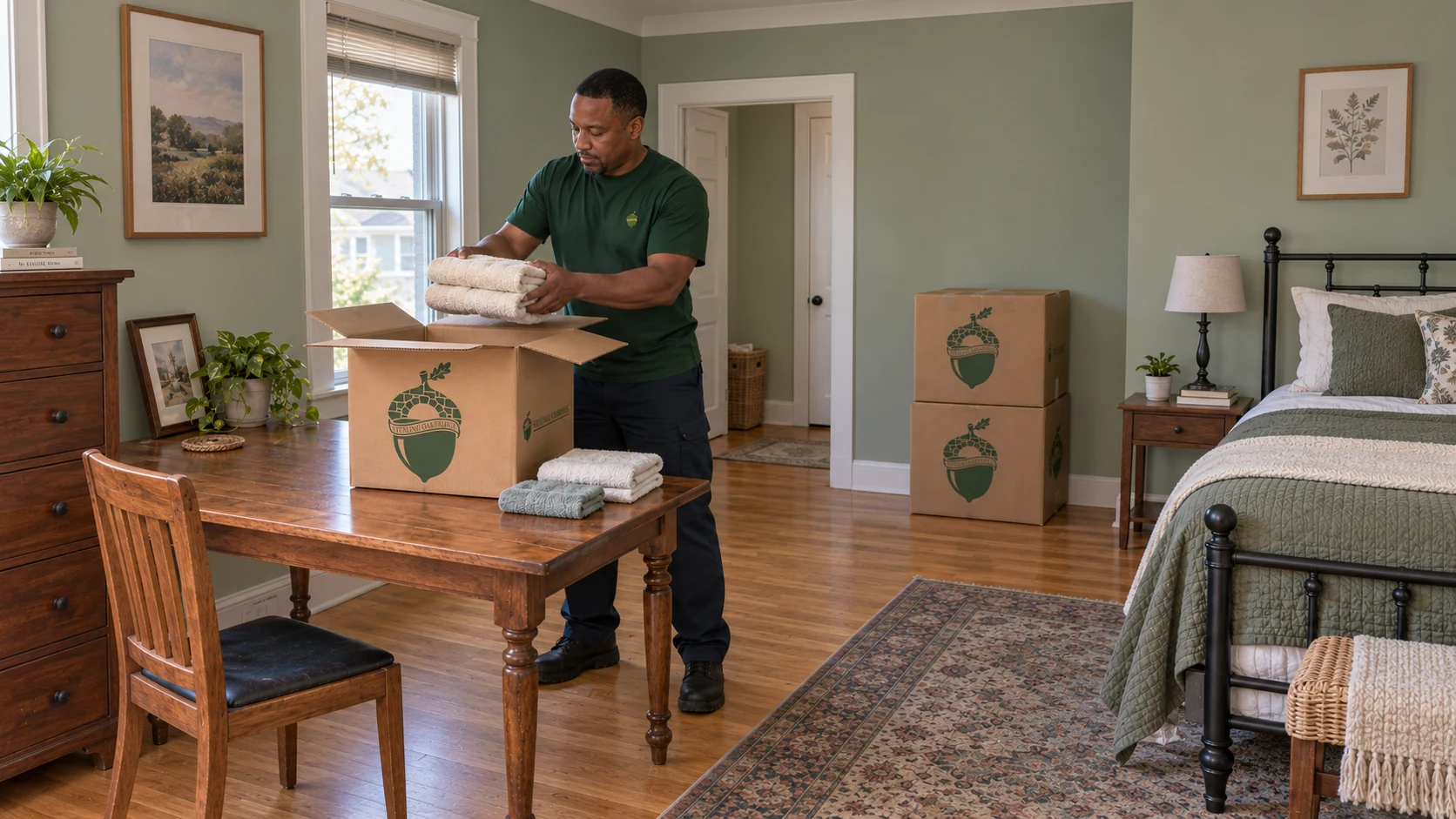
Add organizing and finishing work to the placement plan
Home organizing places the agreed belongings in the cabinets, drawers and shelves you choose. You know how your household uses the new home; the team should not invent that arrangement. A cupboard plan, labeled shelves or one person directing each room makes the work easier to guide. On a large project, a smaller team may be more useful than several people asking for decisions simultaneously.
Organizing can follow basic unpacking or be part of the same reviewed appointment. Explain how much final placement you want and which decisions are already settled. If a new cabinet or room layout is still undecided, opening and reopening the same group can add work without giving you a finished result.
Sterling also offers individually scoped handyman finishing work. TV mounting, curtain hardware, pictures, mirrors and lighting-related tasks need the particular object, model where relevant, intended position, wall or ceiling information and property permission. Agree the mounting, removal and any technical or electrical work separately, including the appropriate executor. These jobs do not become included in ordinary box unpacking.
Basic furniture disassembly and reassembly use moving labor time without a separate basic assembly surcharge. Complex first assembly of a wardrobe or another flat-pack piece is individually reviewed and quoted; use the wardrobe and assembly scope for that request. A newly purchased item needing collection and room placement belongs in the Watertown furniture-delivery plan. The complete home follows a specific agreed sequence and your placement decisions.
Plan packaging removal for the actual Watertown address
Decide whether you want separately charged packaging collection during unpacking or at a later appointment. State the approximate quantity and the authorized staging point. Separate used cartons and paper from film, foam and any special material. Keep the exit and shared hall available while the collection waits.
For City households using its refuse program, the current recycling information describes weekly recycling and participation requirements. The linked preparation guidelines call for clean, dry corrugated cardboard flattened to no more than three feet by three feet, with shipping labels, tape and staples removed. Plastic bags and wrap, foam and drinking glasses are not interchangeable with the accepted cardboard or container-glass groups. Check the property's actual collection arrangements and keep the materials separate.
Those are City instructions, checked October 10, 2026. The separate Town transfer-station program and a private or hired-carrier collection require their own arrangement. Resident instructions do not automatically authorize a company to use the same receiving route. Our Watertown disposal page owns the fuller local alternatives and item review.
Name later unwanted furniture separately from empty supplies. A sofa that no longer suits the layout, an unused cabinet or an old rug needs an agreed keep, relocate or remove decision. Confirm the carrying route and receiving plan for that group. Packaging cleanup does not authorize a general clearance of your possessions.
Understand the added labor and complete budget
Full packing adds shipment preparation to the work of loading, carrying and delivery. A separate preparation day adds crew time and another visit; cartons and any special packing requirements also matter. Unpacking, final organizing, packaging removal and installations add the work needed for your chosen receiving result.
For an inventory-heavy three-bedroom household, packing and moving together can approach twice the cost of moving the same inventory already packed. The total can be lower or higher. This illustrates the possible scale of the added work, not a standard multiplier, a local rate or a quote for every house. Compare the same belongings, access and requested result when deciding how much help to buy.
| Work or material | How it is charged |
|---|---|
| Packing and optional box unpacking | Paid working time for the agreed contents and stages |
| Company-supplied cartons | Charged separately; quantity and types follow the inventory |
| Moving blankets, shrink wrap and tape | No separate basic material charge |
| Furniture unwrapping | Part of delivery |
| Basic furniture disassembly and reassembly | Moving labor time, with no separate basic assembly surcharge |
| Specialist protection or complex assembly | Individual item and scope review and quote |
| Packaging and waste removal | Separately charged collection and receiving arrangement |
| Home organizing and handyman finishing | Individually agreed tasks, sequence and price |
Local estimated hours help plan the job; they are not a fixed total or a cap on the final time charge. Inventory, access, unfinished customer work and changed instructions can affect the actual work. For a long-distance flat-rate move, the selected packing and receiving services belong in the written scope. Elapsed driving or delivery time alone does not increase that agreed flat rate; changes to the order need separate written agreement.
You can reduce the requested scope by sorting early, packing selected rooms yourself or choosing priority unpacking. That decision should follow the time you can realistically give the project, rather than assume that cartons will be ready when there is no remaining evening to prepare them.
Coordinate a longer journey and a later receiving visit
Packing help can be especially useful when a work relocation requires you to prepare the home while still working and then return to work soon after arrival. The receiving plan may deserve as much attention as the departure. Request destination unpacking early, with the actual address, building hours and a person authorized to direct it.
Direct and consolidated moving have different receiving arrangements. Book the unpacking work around the confirmed delivery terms rather than the day packing begins or the date you travel. If the arrival is a wider window, keep essentials with you for that possible interval. Our long-distance page explains the delivery models and written flat-rate scope.
You may prefer a pause after the furniture arrives, or discover later that unpacking is taking too much time. A return request can be reviewed from the remaining cartons and priority rooms. Availability on busy days is not guaranteed, so discuss the desired date and property access. If rooms or keys are delayed, the between-homes planning guide helps compare the complete holding and delivery sequence before adding more stages.
Send a request that describes the result you want
Send both full addresses and municipalities, preferred dates and any firm property deadline. Include a room-by-room inventory or photographs/video showing the insides of storage areas, the furniture and the complete access route. For a winter appointment, identify who will make the approach, steps and carrying route usable and discuss a practical contingency.
Tell us what you will pack, what the team should prepare, what must remain accessible overnight and which belongings have another destination. Add fragile or specialist items, priority unpacking rooms, organizing instructions, removal and installation requests. Start with what you know; our planning team will recommend the appropriate inventory, video or in-person review. The survey role and moving crew are separate roles, so do not assume the person reviewing the move will carry it out.
An estimate becomes useful when it describes the entire agreed project: preparation, movement and the level of completion you need at the receiving home. You do not need to calculate the final carton count or assign the crew yourself.
Watertown packing and unpacking questions
What should I include in a full-packing request?
Show the retained contents room by room, including inside cupboards, closets, the basement and garage. Identify fragile or valuable pieces, glass within furniture, framed items and anything travelling separately. We agree the packing boundary from the actual inventory, rather than infer it from the number of bedrooms.
Can I pack clothes myself and leave the kitchen to your team?
Yes, selected packing can be reviewed for named rooms or items. State what you will prepare and what the crew should pack. Report any unfinished customer packing before loading day so the working time, supplies and schedule can be reviewed.
Can a one-bedroom Watertown move include packing in one day?
A studio or one-bedroom local move may fit packing, loading and delivery into one day when the contents, access and permitted hours allow it. A large library, fragile collection or difficult route can make even a small home more demanding. We review the actual job before proposing that schedule.
Should a two-bedroom or larger home have an earlier packing visit?
Combining all the stages becomes more demanding as the retained inventory grows. A two-bedroom home may benefit from preparation earlier, and a larger apartment or substantial three-bedroom house is a good reason to discuss a separate packing visit. This is a reviewed scheduling choice, not a fixed rule or a claim you cannot pack yourself.
Will I still be able to use the home after the packing visit?
Agree the final-night set before work begins: beds, bathroom items, a few outfits, breakfast supplies and children's familiar belongings. The crew can prepare less-used contents first and leave the named essentials accessible until the planned stage. Mark the private or untouched area clearly.
Does full packing include the boxes and every protective material?
Packing consumes paid working time, and company-supplied cartons are charged separately. Moving blankets, shrink wrap and tape have no separate basic material charge. Carton types and any specialist protection follow the actual contents and should be identified in the estimate; full packing is not an unspecified all-materials price.
How do you protect books, glass shelves and family pictures?
Dense books need small suitable cartons and manageable loads. Dishes and glassware need appropriate cartons, wrapping and cushioning. Glass doors, removable shelves, mirrors and glazed frames require an item-specific plan. Send photographs, dimensions where relevant and any valuable or delicate features so specialist protection can be reviewed.
Will delicate belongings always be handled with white gloves?
Handling should suit the actual object and allow a secure grip. A clean work area and appropriate gloves can help for selected surfaces or textiles, but white cotton gloves are not suitable for every material or load. Identify the items needing special clean handling during the review.
How should cartons be marked for storage and the new home?
Use written destination, receiving room and useful contents, with a box number and open-first instruction where needed. Color can reinforce the groups. Keep storage-bound and home-delivery cartons distinct and share the same loading and receiving order with both teams. Unloading the wrong group can add handling, paid time or another visit.
What does basic unpacking complete?
The team opens the agreed cartons and places contents on suitable designated flat surfaces. It restores access to belongings and helps reclaim useful space. Empty packaging can be gathered during the work, but taking it away is separately booked and charged. Exact placement inside cupboards and drawers is additional home organizing.
Can you put things into the cupboards and drawers I choose?
Yes, home organizing is available by agreed scope and price. Provide your placement instructions, cupboard plan or labeled shelves and identify who will direct the work. A smaller team working through one room at a time can be easier to guide on a large project; the crew should not invent your household's arrangement.
Can I request unpacking after I have already moved?
Yes, a later visit can be reviewed from photographs of the remaining cartons, priority rooms and available working surfaces. The appointment depends on crew availability and property access. A two-person return visit or more time on delivery day are possible planning examples, not a guaranteed crew, duration or immediate date.
What if the receiving kitchen or another room is unfinished?
Unpack the rooms that can actually be used and mark the unreleased group for an authorized suitable holding area. Confirm contractor readiness before opening it. Off-site storage, later delivery and room-to-room placement have their own stages; opening everything early can create unnecessary repacking and repeated handling.
Can unpacking be coordinated with TV mounting or curtains?
Handyman finishing tasks can be reviewed alongside the move. Send the model or item, intended positions, wall or ceiling information and property permissions. Agree mounting, removal and any technical or electrical work separately, including its executor, timing and price. These tasks are not automatically included in box unpacking.
Is furniture assembly a separate charge?
Suitable basic furniture disassembly and reassembly use moving labor time without a separate basic assembly surcharge. Complex first assembly, including large flat-pack wardrobes, needs individual model, instructions and scope review and quotation. Furniture unwrapping is part of delivery; it is different from unpacking carton contents.
Will you remove empty cartons and packing paper?
Packaging and waste removal are separately charged. Agree the quantity, material groups, staging point and collection timing. Separate cartons and paper from film, foam and any special material, check wrapping for small parts, and keep packaging needed for an unresolved return or damage issue out of the removal group.
Do City recycling instructions apply to every Watertown postal address?
No. Confirm the actual municipality and collection arrangement. The City's recycling program depends on participating in its refuse service; the separate Town describes its own transfer-station program. Resident instructions also do not automatically establish a hired carrier's receiving permission. The material and actual collection route must be reviewed.
What if I decide a sofa or cabinet is unwanted after unpacking?
Name the item separately and decide whether it stays, goes to another recipient or needs removal. We can review a separately agreed disposal visit or coordinated removal, including access and a receiving route. Unpacking or packaging cleanup does not authorize the crew to choose which of your possessions should be discarded.
Can full packing roughly double the moving budget?
For a substantial inventory, packing and moving together can approach twice moving the same shipment already packed, or fall below or above that illustration. Additional packing labor, cartons, visits, fragile preparation and receiving tasks explain the difference. It is not a standard multiplier or a quote by bedroom count; compare the complete reviewed scope.
How do packing and unpacking fit a long-distance delivery?
Include the selected preparation and receiving work in the written order and agree unpacking around the actual delivery arrangement. The delivery window begins after pickup and loading are complete, not when packing starts. A longer drive alone does not increase the agreed flat rate for unchanged scope; added services or changed conditions need written review.
What information makes the estimate useful, especially in winter?
Send both addresses and municipalities, dates and firm deadlines, room-by-room contents and access photographs. Explain packing responsibilities, last-night essentials, split destinations, priority unpacking, organizing, removal and installations. For a winter appointment, assign preparation of the approach, steps and carrying route and discuss a contingency. The planning team recommends the appropriate review; estimated local hours are not a fixed total or completion cap.