

What would you like your next Cincinnati week to change?
You might be looking for a new home long before you know where it should be. Perhaps the rent is manageable but the stairs are becoming difficult. Perhaps your new shift finishes after the convenient bus, or the work you want is on another side of the river. Perhaps you would like a different winter, a coast you can use often, or a fresh beginning after a household change. Start with the part you want to improve. It will help you recognize an appealing place that also solves your problem.
Here is the first useful finding from our Cincinnati comparison: every one of the eighteen US destinations has a higher historical gross-rent point estimate than Cincinnati city. Covington and Hamilton are only a few dollars higher, well within the uncertainty shown in the table. This does not price an apartment you could rent today, and it does not mean you should stay. It means that a move needs a clearer purpose than assuming another city name will make life cheaper. A better job, an easier week or an outdoor year you prefer can still be worth its complete cost.
For a different home while keeping familiar people or work nearby, begin with Covington, Blue Ash and Hamilton. They pose three different questions: would another side of the river suit you, would living nearer a particular suburban workplace help, or would a separate Butler County home base improve your day? Keep one better-fitting Cincinnati home in the comparison. Those four possibilities may reveal whether the problem is your current home, the journey from it or something that really requires leaving the region.
For a broader regional search, compare Columbus, Lexington and Knoxville through a real role, course or household connection. Greenville, Savannah and Birmingham introduce different southern settings. Minneapolis, Omaha and Oklahoma City give you three inland comparisons, with very different travel networks and outdoor years. Farther west, Salt Lake City, Boise and Anchorage change the landscape and your distance from Ohio. Sacramento, Portland and Santa Barbara offer three distinct Pacific-side possibilities. Canada, Portugal, the United Kingdom and Mexico each get one worked starting place: Winnipeg, Coimbra, Leeds and Mérida.
You do not need to investigate all twenty-two examples. Choose the reason that matters most, then keep two to four places that might answer it. For each, write what would get better, the compromise you would accept and the answer you still need. A shortlist might contain a nearby address, a supported career move and a larger change you want to test. It can also contain staying in Cincinnati while changing your housing or routine.
The guide moves outward in horizons so you can widen the question without losing your starting point. The maps show the named places directly; they help you explore the setting rather than rank cities. The budget examples show how a decision can change the money left each month. At the end, you can use the comparison sheet privately, online or on paper, without registering. You will have a useful result when you can explain why a small number of places deserve your next visit, rather than simply naming a favorite skyline.
Keep Cincinnati involved
Compare another Cincinnati home with Covington, Blue Ash and Hamilton through the journeys you want to keep.
Try the nearby routines →Improve the whole month
Put actual housing, full transport and usable income into the same comparison.
Compare the money left →Choose another setting
Explore a regional, southeastern, interior, mountain-region or western week through its less convenient season too.
Explore US horizons →Begin in another country
Match a lawful residence and work plan with an ordinary week in one of four countries.
Explore four countries →Take stock of what Cincinnati already makes possible
Before comparing a distant place, notice the arrangements that make your current life work. Your home may give you a tolerable payment, a manageable route, a familiar doctor or space for someone who needs help. A relative who can collect a child, a neighbor who notices an older parent and a friend who will meet you on an ordinary evening all have practical value. Write those connections down alongside the frustrations. You can change your life without treating the useful parts as reasons to feel stuck.
Be specific about the Cincinnati in your week. A downtown job, an Uptown campus, UC Blue Ash and a workplace farther into the suburbs are different destinations. A home across the river in Kentucky may be close on the map while involving another operator, state and school system. A northern home can bring you nearer one person and farther from another. Put actual entrances on your comparison, including the parking or final walk. The city name in a job description rarely describes the complete journey.
Metro's current network matters more than a familiar route remembered from last year. Its August 2026 changes include Route 70 between the Uptown area and Blue Ash. UC describes the route as the replacement for its former Blue Ash shuttle and gives eligible users an activated pass arrangement. That is a useful example of a campus connection that has changed. Check the current operator schedule and your eligibility rather than planning around the old shuttle. The route's existence does not establish a convenient trip from every nearby apartment or at every class hour.
The Connector can be useful within its downtown loop, but its operating span is part of the decision. Published service ends at 9:30 p.m. on Sunday, compared with 11:30 p.m. Monday through Saturday. A comfortable Saturday visit is therefore a poor test for someone whose regular Sunday work ends later. Join any streetcar segment to the first and last legs you actually need. A home that lets you remove a car can change the budget substantially; a pleasant streetcar outing that leaves both cars necessary has a different financial effect.
If you cross the Ohio River, add TANK's correct-date plan and current project alerts. The agency has announced network changes taking effect November 7, 2026, including replacement of the Southbank Shuttle and Route 16 with a different fixed-route arrangement. A visitor's older shuttle suggestion should not decide a lease that begins after the change. The bridge you can drive, the bridge you can walk and the crossing used by a bus may not be interchangeable for your household. Test the journey you will use.
Housing has a physical routine too. Walk the entrance, stairs and route to the laundry, trash collection and parking. Consider the day with shopping bags, a sleeping child, a mobility aid or winter weather. An attractive older home can be the right choice, but an upper unit may keep the exact difficulty you hoped a move would remove. Compare maintenance and accessibility at the home itself. A different city is only helpful if the new front door works better for you.
For children, distinguish a Cincinnati postal address, the municipality and the responsible school district. CPS uses its enrollment and school-selection processes, and submitting a FOCUS application is not the final confirmation of enrollment. The district also has separate transportation conditions. A listing's neighborhood label cannot settle either question. Your local guide can help you explore areas; the receiving district must answer the consequential address and program questions.
Finish this first inventory with three things to keep and one thing to change. For example, you might want a step-free entrance while keeping two weekly family visits and your Uptown role. That points toward a very different search from leaving a local career for a confirmed position in another state. The more precisely you describe the existing week, the easier it becomes to see whether the next place gives you enough to justify the move.

Local sources: Sterling Oakbridge — Cincinnati local guide · Sterling Oakbridge — Cincinnati moving services · Cincinnati Metro — August 2026 service changes · Cincinnati Connector — operating hours · University of Cincinnati — current Blue Ash connection · TANK — changes effective November 7, 2026 · TANK — current service alerts.
Would a different home solve it, or do you need a new region?
Try the smallest change that could deliver the improvement you want. If the problem is an upstairs entrance, another home in Cincinnati may do more than a distant city with the same stairs. If the problem is an exhausting trip to a specific Blue Ash workplace, a nearer home may change five days of every week. If the opportunity is a confirmed role in another region, nearby housing cannot replace it. The useful distance follows the problem you are trying to solve.
Start with a home-and-routine alternative where you already live. Give it the same seriousness as a distant shortlist: a real payment, acceptable space, workable entrance and the trips you want to keep. You might discover that the desired change is attainable without rebuilding your support network. You might instead find that every affordable option preserves the same obstacle. Either result helps. A local comparison gives you a concrete standard against which to judge the cost and disruption of going farther.
Then test a nearby move. Covington keeps a different side of the river in view; Blue Ash may suit an actual work or campus location; Hamilton is a separate home-base question with its own journeys. None is a universal solution. A shorter trip for one adult can become a longer school, care or work day for somebody else. Compare the household week, including the least flexible person. A move earns its place when the combined day is more manageable at a payment you can sustain.
Widen to a regional base when the actual opportunity or setting changes enough to matter. Columbus, Lexington and Knoxville are not suburbs of Cincinnati. Even a trip you can drive becomes an appointment requiring time, fuel, rest and sometimes a night away. Decide how often you want to return and which visits are essential. Someone who wants to see a parent twice a week needs a different return plan from someone content with planned holiday visits. Do not let the phrase 'still in the region' hide the frequency you value.
A larger change can be worthwhile even when it is more demanding. You may prefer a Minneapolis city routine, an Anchorage outdoor year or a Santa Barbara coast enough to support the trade. Give that preference a complete form: the home you could afford, the work you could keep, the difficult season and the people you would see less often. An exciting possibility deserves a practical trial, rather than either automatic approval or an immediate rejection because it is far away.
If two adults are making the decision, each should name the improvement they hope to gain and the loss they find hardest. A promotion can make one person's week more rewarding while leaving the other with an unresolved job or all the care work. Put both experiences into the shortlist. You do not need identical preferences, but you do need an arrangement everyone can carry out. Agree which questions must be answered before a lease, sale or departure becomes binding.
Leave room for a reversible first step. A visit during the ordinary working season, a time-limited arrangement permitted by the lease, or a move after a confirmed work start can give you better evidence than committing everything at once. Price the flexibility honestly: temporary housing, storage and a second move can be expensive. The right test reduces an uncertainty that could change the decision. It should have a purpose, a spending limit and a date when you review what you learned.
Three nearby moves that ask three different questions
The surrounding area offers a wider horizon than the three places we examine closely. Depending on the journeys you want to keep, you might also investigate Newport, Fort Thomas, Bellevue, Montgomery, Mason, Fairfield, West Chester or another Cincinnati neighborhood. This is an orientation list, rather than a recommendation that all of them suit the same household. Some names describe a municipality, some a township or a postal area; identify the exact home before drawing service or school conclusions.
We take a closer look at Covington, Blue Ash and Hamilton because they test different kinds of change. Covington keeps the river crossing and state line central. Blue Ash makes the location of work or study an explicit part of the home search. Hamilton asks whether a separate northern base improves your life, with travel that needs to be planned in its own right. You can learn from those contrasts without reading nearly identical descriptions of every neighboring community.
The nearby map is there to orient those three choices around Cincinnati, the Ohio River and the broader road pattern. Names are highlighted directly so you can find the places under discussion. Open it to inspect the setting, then use the responsible operator and address for a real journey. The illustrated terrain and relative locations do not replace a street route, a property survey or a school assignment. Your next useful action is to choose an attainable front door and test the day from it.
For a first comparison, give each option the same job to do. If you want a more manageable entrance and a shorter trip to an Uptown role, compare homes that might actually meet both needs. If you need more bedrooms while preserving childcare help, carry the helper's trip and the care hours into every option. It is easy to favor one place accidentally by comparing a small central apartment there with a larger outlying house somewhere else.
Keep an eye on timing. A new TANK arrangement, a changed Metro campus connection or a temporary CincyLink stop can alter the week between your first visit and the move. Save the service notice that applies to your intended date and confirm again before committing. A nearby move can be the simplest way to change a lot; it still deserves the address, program and route checks you would give a move across the country.
Three nearby ways to change a Cincinnati week

Geographic reference

Covington: keep Cincinnati close, change the side of the river
Covington is worth a first visit when you want another home and a different neighborhood routine while keeping Cincinnati people or work within reach. Start with an attainable address and its actual crossing. A home near the river and a home farther south in the same city can produce very different mornings; the Kentucky mailing label does not settle the walk, bus or driving leg.
This is a move across a state line, even when the skyline still feels familiar. TANK serves Northern Kentucky and downtown Cincinnati. It has announced network changes for November 7, 2026, including replacement of the Southbank Shuttle and Route 16 with a different fixed-route arrangement. Use the schedule for your intended move date and the current bridge-project alerts. An old visitor tip about a shuttle is an especially weak basis for a year-long lease.
The common 2020–2024 survey estimates gross rent at $1,006 ± $57 in Covington and $1,001 ± $20 in Cincinnati. That five-dollar point difference does not establish a cost advantage. Compare the actual home, utilities, parking, state and local payroll arrangements, insurance and journeys you will keep. A better entrance or easier daily trip can justify a move without pretending that another city name guarantees savings.
For children, begin again with the receiving district and address. Covington Independent Public Schools publishes its own enrollment process, residency documents and street directory. CPS open enrollment describes a route for eligible residents of Ohio outside CPS; it is not a promise that an ordinary move to Kentucky preserves the same Cincinnati place. Get the school and transportation decisions before choosing a home around them. Ask the responsible district about any individual continuation rights or unusual circumstances.
On your visit, leave from the possible front door at the time you would normally travel, make the actual crossing, do an errand and return in the evening. Include the person whose trip is harder, not only the household member with a flexible schedule. If that week works and the new home solves a specific problem, Covington can offer substantial change while keeping familiar relationships nearby.
Try first: Choose one Covington address and test the complete Cincinnati journey on the correct-date TANK plan; obtain a separate receiving-school answer if children are moving.
Local sources: Census — Covington city, Kentucky · Census — Cincinnati city, Ohio · TANK — Northern Kentucky service · TANK — changes effective November 7, 2026 · TANK — current service alerts · Covington Independent, Kentucky — enrollment and street directory · Cincinnati Public Schools — enrollment and school selection.
Blue Ash: move closer to the actual work or classroom
Blue Ash is worth comparing when a particular workplace, UC Blue Ash or another regular commitment there is shaping your Cincinnati week. The benefit is a home-and-destination arrangement you can repeat, rather than the city name by itself. Begin with the entrance you need and an attainable home. A shorter journey several days a week can be a substantial improvement, especially when it makes a childcare handoff or a second adult's schedule possible.
UC's current Blue Ash transport information describes Metro Route 70 as replacing the former university shuttle. It connects the Uptown and Blue Ash campuses on its published arrangement; eligible students and staff need the appropriate activated pass. Check the current schedule against your first and last required attendance. Do not assume that a former shuttle page, a daytime visit or a general statement that the campuses are connected covers an evening class and a late job.
MetroNow also has a Blue Ash/Montgomery zone, but it is a limited-area service with its own booking and fare conditions. Metro says a fixed-route pass does not cover that fare. It should not be treated as a bus you can summon anywhere in the region. Draw the exact trip and any fixed-route connection before deciding the home lets you remove a car. If the service improves only one occasional journey, keep the remaining vehicle costs in the budget.
The historical gross-rent estimate is $1,555 ± $138, above Cincinnati city's $1,001 ± $20. The housing mix differs, and a household-income median does not tell you what your job will pay. Compare the actual rent or ownership payment with the time and transport you would genuinely remove. For children, identify the responsible district at the address; a school directory or Blue Ash mailing label is not an attendance-boundary confirmation. This option works when the location solves a named daily constraint at a cost the household can carry.
Try first: Test the home-to-work or campus trip at your actual hours, price the complete household transport plan and confirm any school assignment by address.
Local sources: University of Cincinnati — current Blue Ash connection · Cincinnati Metro — August 2026 service changes · Cincinnati Metro — MetroNow zones and conditions · Sycamore Community Schools — school directory · Census — Blue Ash city, Ohio · Census — Cincinnati city, Ohio.
Hamilton, Ohio: make a northern home base work on its own terms
Hamilton belongs in a nearby comparison when you want a different home and daily setting while preserving selected Cincinnati connections. It is a separate Butler County base rather than another Cincinnati neighborhood. Start with what would happen locally: the home, work or study, groceries, care and regular activities. Then add the Cincinnati journeys you intend to keep. The move becomes easier to assess when the northern week makes sense before you count the occasional trip south.
The common gross-rent estimate is $1,007 ± $36, compared with Cincinnati's $1,001 ± $20. A six-dollar point difference supplies no general savings argument. Look for a real improvement in the home or routine instead. An actual lease may cost more or less, but the total should include the vehicle, utility, care and return-visit commitments the household would carry. A larger or more manageable home can have value without a claim that Hamilton is categorically cheaper.
Use the BCRTA network for the specific route you need. Its R1 links Hamilton and Middletown through the State Route 4 corridor and named hubs and destinations. CincyLink is a different commuter arrangement using its published park-and-ride pattern; a Hamilton front door is not automatically a direct CincyLink stop. Current notices also include temporary arrangements around the closed Riverfront Transit Center. Add the journey to the boarding point, the correct stop and the return after your actual finish.
Keep future network proposals separate from service you can use now. A funded or proposed later phase does not solve the first month of a lease today. For a child, Hamilton City Schools describes online enrollment followed by review and confirmation, with transportation handled separately. Verify the actual address and program rather than importing a CPS assumption. Try a normal day with a northern errand and the hardest Cincinnati trip you would keep. Hamilton is a strong candidate when that complete pattern improves your life.
Try first: Compare one attainable Hamilton home with a Cincinnati alternative, then verify the actual BCRTA route or CincyLink boarding plan and the receiving-school arrangement.
Local sources: Butler County Regional Transit Authority · BCRTA — Hamilton/Middletown Route 1 · BCRTA — CincyLink and current notices · Hamilton City Schools, Ohio — enrollment · Hamilton City Schools — transportation · Census — Hamilton city, Ohio · Census — Cincinnati city, Ohio.
Widen the horizon when it gives you a different kind of life
Distance is one way to widen a search, but it is not the only one. A confirmed role in Columbus, a coastal routine in Savannah, a more connected Minneapolis home and an Anchorage winter are different reasons to leave Cincinnati. The groups below help you explore those changes without pretending every place offers the same bargain. Start with the horizon that matches what you want next, then compare the ordinary week and the compromise.
For work or study, let the actual destination pull the search. A named campus, an offer you can rely on or a household connection gives you a useful starting point. For climate or landscape, describe the experience you want often: a cooler evening walk, a winter you enjoy, water you can reach after work, or mountain access you will genuinely use. The right question is what an attainable home makes possible repeatedly, rather than what you could do during a special holiday.
Keep your Cincinnati baseline visible as the maps widen. All eighteen destination rent point estimates in the common survey sit above the city estimate. The actual home could produce a different result, but none of these names supplies a general savings promise. For a move that costs more, name the value you are buying: a specific career step, less time in a car, a setting you prefer or a household arrangement that becomes possible. That makes a higher-cost choice easier to assess honestly.
The selected places are examples with different purposes, not a measured ranking of where Cincinnati residents move or a prediction of your preferences. You can add another place when you have a clear reason; use the same home, income, support and trial questions to see whether it belongs on your shortlist.
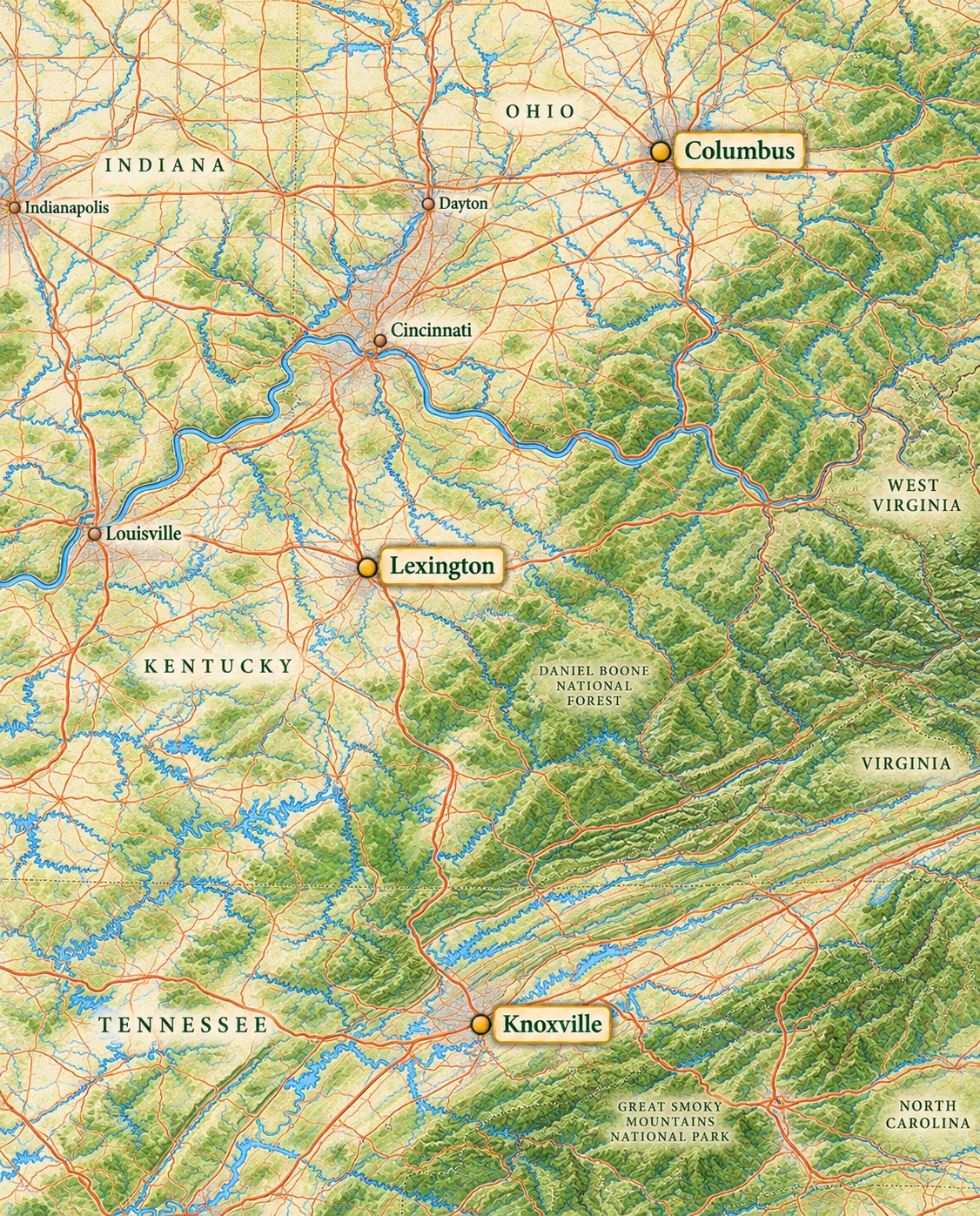
A regional change: Columbus, Lexington or Knoxville
Compare a different work-and-campus geography, a Bluegrass home base and an eastern Tennessee city. These are separate everyday lives, with Cincinnati visits becoming planned journeys.
Three different regional starting points
Geographic reference
Columbus: let a specific role or campus justify a new regional base
Columbus is a useful first wider comparison when the work, study or household connection you want is there. It keeps an Ohio move in view while changing the metropolitan geography and the way you would see people in Cincinnati. The important destination might be Downtown, an Ohio State site, an outlying medical facility or somewhere else in the region. Get the actual entrance from the employer or institution before searching for a home under a broad Columbus label.
COTA's current service changes show why an old route impression needs checking. Its Line 1 now has separate Kenny and Livingston services, with a downtown transfer for travel between them. COTA lists 15-minute service on the two main Line 1 services, with 30-minute service on the Kenny extension between Carriage Place and Ohio State Outpatient Care Dublin. New Line 30 connects Hilliard, Upper Arlington, Ohio State and Downtown. These are concrete corridors to investigate; they do not make every metropolitan home or job equally reachable.
Put one attainable address into the correct current plan with your start and finish times. Include the final campus walk and any parking or transfer. A home that truly removes a vehicle may offset some higher housing, whereas a home near one useful route may still leave the second car necessary. The historical gross-rent estimate is $1,295 ± $10 against Cincinnati's $1,001 ± $20. Use it as a signal to investigate the total month rather than assume that an Ohio-to-Ohio move preserves the same cost.
Cincinnati visits become planned travel. Decide which people you would see, how often and whether the trip fits around work or care. If the career or course benefit is real, the move may earn that distance. If you are mainly trying to fix the entrance, bedroom count or present commute, keep a Cincinnati or nearby home alongside it. Columbus should give you something specific enough to explain why building a separate regional life is worthwhile.
Try first: Confirm the actual role or course site, test one complete COTA or driving week from an attainable home and schedule the Cincinnati visits you want to preserve.
Local sources: COTA — current 2026 service changes · Census — Columbus city, Ohio · Census — Cincinnati city, Ohio.
Lexington: a different city week within the Bluegrass setting
Lexington is worth exploring when a real role, course, family connection or preference for its setting gives the move a purpose. It offers a different regional home base, with Cincinnati remaining a place you would visit deliberately. Begin with the daily city you would use, rather than assuming a pastoral image describes every possible address. A central apartment, an outlying home and a rural-edge property can have very different work, shopping and transport routines.
The data comparison uses Lexington-Fayette urban county, not a small central-city neighborhood. Its gross-rent estimate is $1,164 ± $18, above the Cincinnati city estimate. The larger geographic definition and housing mix matter. An appealing listing must still be priced with its applicable utilities, parking, vehicle requirements and journeys back to Ohio. Do not turn the area income figure into your likely pay or compare a rural-sized home there with an unrelated central apartment here.
Lextran provides the fixed-route starting point and directs riders to its current maps and schedules. Use the route index linked from its rider information for the actual home, destination and date. The existence of a bus system is a beginning, not proof that a particular early shift, evening course or weekend errand fits the service. Test the complete return as well as the outward journey.
If access to fields, riding or other landscape activities is the attraction, identify the real place you could use and the conditions for access. Living in the region is different from having permission or a convenient route to a particular property or activity. Try an ordinary weekday, then a realistic outdoor outing within your time and spending limits. Lexington earns a place when the work-and-home week and the setting both support the life you want, without relying on a holiday version of the countryside.
Try first: Pair one real home with the work or course entrance, the current Lextran route if needed and an outdoor activity you could use regularly.
Local sources: Lextran — bus service and current schedule index · Census — Lexington-Fayette urban county, Kentucky · Census — Cincinnati city, Ohio.
Knoxville: a Tennessee city first, with mountain outings built around it
Knoxville can make sense when a particular Tennessee role or course fits your next stage and you value the surrounding eastern Tennessee setting. Treat it as a city where you must work, buy food and manage a home, alongside any mountain plans. A trip to a scenic place on a free weekend does not show whether an attainable address will support the week between outings. Begin with the actual destination and the hours you need to be there.
KAT provides a concrete transit starting point. Its Downtown Connector, Route 1, has a distinct fare-free arrangement, while the regular fixed-route network and limited university football shuttles serve different purposes. Current information also points to South Knoxville changes associated with the Gay Street Bridge. Use the current notice for the intended date and crossing. An event shuttle or central loop is not a general solution for a daily commute from whichever lower-cost address you find.
The common rent estimate is $1,191 ± $22, above Cincinnati city's point estimate. Price a real home, necessary transport and the cost of keeping Cincinnati relationships. If your reason is an actual work or education opportunity, compare the benefit against both the monthly commitment and the transition period. A household with two earners should locate both jobs before treating one convenient campus journey as a complete solution.
Use a visit to join the everyday route to an outdoor day you would realistically repeat. Check the actual access information, travel, equipment and season for the activity, and notice how much of the weekend remains after normal chores. The city can be an appealing change without placing a mountain trail outside every door. Keep Knoxville when the urban week works and the regional landscape adds something you will use often enough to justify the separate life and less frequent Ohio visits.
Try first: Test the actual KAT or driving journey around current crossing notices, then add one realistic outdoor day and a sustainable Cincinnati-return pattern.
Local sources: Knoxville Area Transit — network and current notices · Census — Knoxville city, Tennessee · Census — Cincinnati city, Ohio.
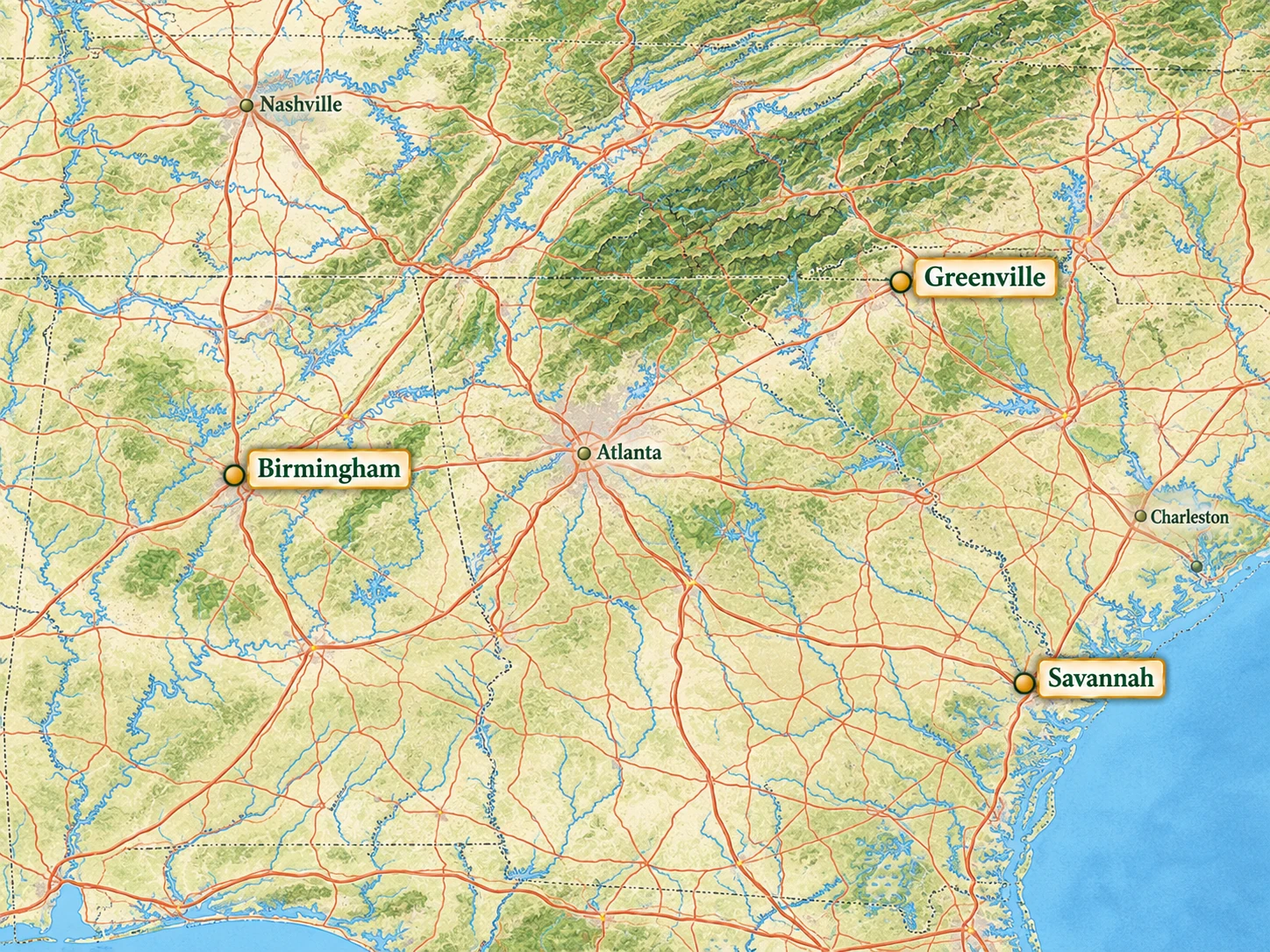
Three southern settings: Greenville, Savannah and Birmingham
A Piedmont city, a coastal river city and an inland Alabama base give warmth and landscape different practical meanings. Choose through a real opportunity and a complete summer week.
Piedmont, coast and an inland Southern city
Geographic reference
Greenville, South Carolina: investigate a Piedmont week you could repeat
Greenville gives you an inland South Carolina comparison when you want a different setting and have a plausible work, study or household reason to be there. Use Greenville, South Carolina explicitly in the search, then locate the actual destination. A job advertised for the broader area may be at an outlying site, while the home you liked on a visit may have been central. Match the work entrance to the address before judging the region by a pleasant downtown afternoon.
The historical gross-rent estimate is $1,312 ± $43, compared with Cincinnati's $1,001 ± $20. That does not price matched apartments or establish your personal cost, but it gives no general basis for expecting a rent saving. Put the actual home payment beside retained take-home pay or a real offer, then include vehicles, care, utilities and regular Ohio visits. A lower quoted base rent at a farther-out home can produce a larger complete month if the journeys require another vehicle.
Greenlink is the official starting point for a bus-based search. Use its current planner and timetable for the actual home and shift. If your plan depends on reducing driving, prove the necessary work, food and care chains before removing a vehicle cost. A central visit alone cannot establish that benefit.
For the landscape question, decide what you want often: a local walk, a park routine or longer outings beyond the city. Check the real access and travel for that activity, and visit during the season you find less comfortable. A warmer impression should be weighed with cooling, outdoor hours and your household's needs. Greenville belongs when the supported daily arrangement and Piedmont setting together offer a specific improvement, rather than a broad expectation that moving south will solve unrelated work or housing problems.
Try first: Choose a supported work or household destination, price one attainable home and test the actual routes and outdoor hours you would use.
Local sources: Greenville, South Carolina — Greenlink · Census — Greenville city, South Carolina · Census — Cincinnati city, Ohio.
Savannah: decide whether a coastal-region life works beyond the visit
Savannah is a useful contrast if you want a coastal-region setting and have a way to support an ordinary working life there. Begin with the home and daily destination you could actually obtain. A visit centered on historic streets or the waterfront can feel very different from a commute, care arrangement and grocery trip from an outlying address. The reason to keep Savannah is the week you can sustain, with the coast as a repeated benefit rather than the only appealing feature.
Chatham Area Transit separates several different services. Its fixed-route network is the starting point for ordinary bus journeys. DOT loops and the Savannah Belles ferry, which connects River Street and Hutchinson Island, have more specific geographies. A useful central loop or river crossing does not establish access to a beach, every employer or a late-shift home. Join each segment to the real address and check the operating arrangement for the date and hours you need.
The gross-rent estimate is $1,382 ± $32 in the common survey, above Cincinnati's point estimate. Build the complete home budget with applicable utilities, insurance, transport and care, using a real lease or property assessment. If you hope to retain remote earnings, obtain the employer's permission for the destination and include required returns. A move can offer a setting you prefer without also delivering a smaller monthly bill. Decide how much that benefit is worth while preserving a reserve.
If ocean access matters, choose the actual place and journey you would use from the attainable home. Try it at a realistic time and season, then add normal household errands and obligations. Check property-level official hazard information and applicable coverage rather than assigning the whole city a single reassurance. Finally, plan the Cincinnati visits you want and the help you may need to replace locally. Savannah earns a place when that whole arrangement works, including the less convenient part of the year.
Try first: Test a complete work-and-errand day, distinguish CAT, DOT and ferry journeys, and price the actual home with the coastal activity and Ohio visits you want.
Local sources: Chatham Area Transit — Savannah services · Census — Savannah city, Georgia · Census — Cincinnati city, Ohio.
Birmingham, Alabama: choose through a real inland-city opportunity
Birmingham, Alabama is a different southern possibility from a coastal move or a smaller Piedmont search. It belongs when an actual role, course, family connection or supported preference makes an inland Alabama base appealing. Identify the workplace or campus entrance before comparing home areas. A broad metropolitan job label and a central-city visit can conceal very different journeys, particularly when another adult has a separate destination or a fixed care handoff.
The common gross-rent estimate is $1,107 ± $21, above Cincinnati city's $1,001 ± $20. It is not a current quote for an equivalent home. Use the historical comparison to frame the question, then obtain an attainable payment, appropriate earnings and the transport and care costs the new household would carry. A larger apparent income opportunity deserves a reliable after-tax calculation and confirmed conditions before it becomes the reason a lease is affordable.
MAX provides fixed-route information and a separate Eastside on-demand arrangement. The latter is limited to its defined area and conditions; it should not be read as curb-to-curb service anywhere in Birmingham. Paratransit is another distinct service with its own eligibility. For a car-reduction plan, use the actual route, travel hours, connection and final entrance. Keep necessary vehicle costs until the whole required week works without them.
Give summer and outdoor hours a practical place in the visit. Try the home-to-work journey, a normal errand and the activity you would use regularly. Compare applicable cooling, maintenance and property-level risk or coverage questions at the actual address. The regional change may be worthwhile for the right opportunity, but it also changes the frequency of easy Cincinnati contact. Keep Birmingham when the work-and-home arrangement supplies a clear improvement and the household can carry both the new month and the distance from familiar support.
Try first: Confirm the Alabama opportunity and actual site, test the applicable MAX or driving plan and compare the complete month with the Cincinnati arrangement you would leave.
Local sources: Birmingham, Alabama — MAX Transit · Census — Birmingham city, Alabama · Census — Cincinnati city, Ohio.
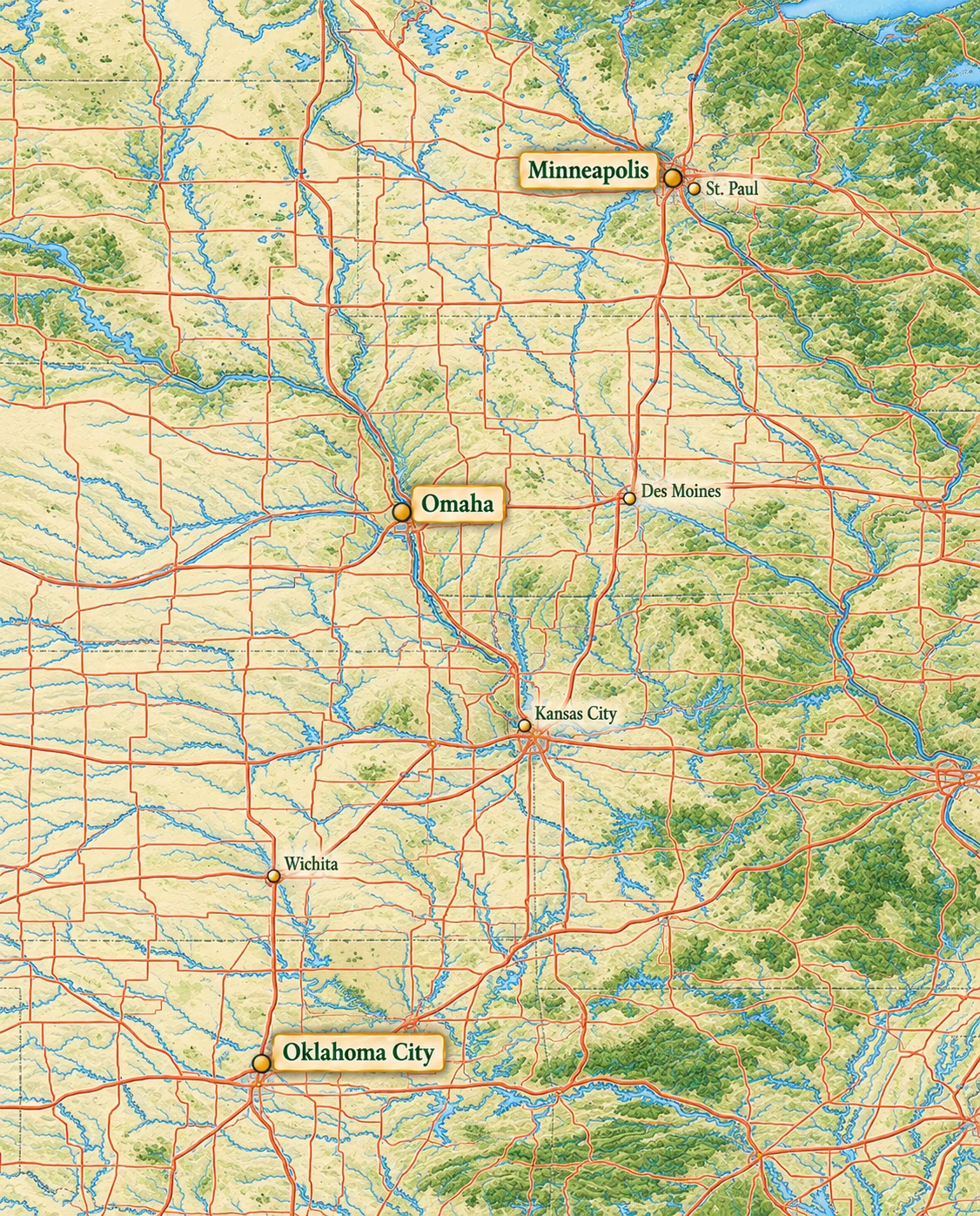
Inland possibilities: Minneapolis, Omaha and Oklahoma City
Look at what the actual home and network would let you do. A rail-and-bus city, a Missouri River base and a much larger Plains-city geography require different travel plans.
Three inland routines and different seasons
Geographic reference
Minneapolis: test whether a connected city home earns a colder winter
Minneapolis offers a useful question for someone who wants a different city routine: could a well-placed home make work, errands and regular activities less dependent on driving? The benefit would come from the particular corridor and destinations you use. Begin with a real workplace or course and a home you can support. A metropolitan rail map can be a strong starting point, but it is not evidence that every home, employer or care appointment is easy without a car.
Metro Transit identifies the Blue Line between the Mall of America area and Target Field, and the Green Line linking Downtown Minneapolis, the University of Minnesota and Saint Paul. Its rapid bus network serves additional corridors. These connections give you concrete combinations to explore. Add the first walk, any transfer, the exact entrance and the return after your normal finish. A convenient university visit and a workable late-shift household week can be very different tests.
The historical gross-rent estimate is $1,371 ± $20, compared with Cincinnati's $1,001 ± $20. A higher payment might still be manageable if a supported income and actual vehicle reduction leave enough money, but do that calculation with your own inputs. Do not subtract a car simply because a station is nearby. Include the journeys and weather conditions that would otherwise make you retain it or pay for regular alternatives.
Winter is a substantial part of the choice. The regional Minneapolis airport station's January mean is 16.2°F, against Cincinnati's regional 31.4°F, in the 1991–2020 normals. Its July mean is 74.3°F. These are station means, not a forecast for a property. Try the entrance, walk to the stop and waiting arrangement during conditions you are unsure about. Minneapolis deserves a place when the connected week is real and the winter is a trade you understand, rather than an omitted cost of a promising map.
Try first: Join one attainable home to the actual job, groceries and activity on current transit, then test the colder-season approach and the vehicle costs you could genuinely remove.
Local sources: Metro Transit — Minneapolis rail and rapid bus network · NOAA — 1991–2020 regional-station monthly mean normals · Census — Minneapolis city, Minnesota · Census — Cincinnati city, Ohio.
Omaha: investigate a specific Missouri River home-and-work arrangement
Omaha is an inland comparison for a real role, study path, family connection or preference for a different working base. It is worth looking beyond the idea that a city in the interior must automatically be a lower-cost Cincinnati alternative. Identify the actual destination and the home you could obtain. A central visit, a riverfront outing and an outlying workplace need not form a convenient daily pattern unless you deliberately choose an address around them.
The common gross-rent estimate is $1,187 ± $13, above Cincinnati city's point estimate. The household-income figure in the table describes a mix of households, not what a particular role will pay. Compare the actual take-home offer with the complete home, transport, care and return-visit costs. If you are making the move for opportunity, keep the employment conditions and first-income date alongside the monthly budget rather than assuming the regional change supplies the earnings you need.
Use Metro's current route and ORBT information for the exact corridor under consideration. Test the actual home-to-destination chain and the evening or weekend leg that matters. A bus-corridor home can be worth exploring without turning it into a promise that every Omaha address supports a car-free household.
On a visit, combine the ordinary workday with an errand and a regular activity you would use. If the river landscape or open setting is part of the appeal, choose the actual access point and include the journey there. Review current official property and weather-risk information for a possible home, rather than giving the whole region one favorable label. Finally, plan the Cincinnati visits you want to preserve. Omaha becomes a convincing choice when the local arrangement offers a clear benefit worth building a more distant support routine.
Try first: Confirm the role and site, compare a real home and complete month, and verify the current Metro or driving week together with the Ohio-return commitment.
Local sources: Omaha Metro — ORBT starting point · Census — Omaha city, Nebraska · Census — Cincinnati city, Ohio.
Oklahoma City: make the large city geography part of the decision
Oklahoma City is worth investigating when the actual opportunity or household connection is there and you want a different Plains-city setting. The city covers a much broader geography than a short central visit can explain. Start with the work or course entrance, the home and the people or services you need. An appealing downtown area does not settle a commute from a distant affordable listing or the responsibilities of another adult in the household.
EMBARK identifies bus, streetcar and RAPID services with different corridors and purposes. Its current information includes service changes taking effect October 25, 2026. Use the arrangement for your intended move date, rather than a saved plan from before the change. A streetcar visit is not a substitute for checking the full work, care and grocery chain. If the home depends on driving, keep the actual vehicle payment, insurance, maintenance, parking and fuel in the budget.
The historical gross-rent estimate is $1,130 ± $11, above the Cincinnati point estimate. An individual home could produce a different result, but the name alone does not establish savings. A supported salary or retained remote arrangement should be compared in after-tax terms with the complete month. Include regular returns to Cincinnati and the funds needed before the first paycheck. If two adults are working, confirm both destinations before choosing the home around only one.
Test the outdoor year and property questions at the address you could commit to. Use current official hazard information and applicable coverage rather than treating an entire city as having one condition. Try the hours you would normally be outdoors, not just a comfortable visit. Oklahoma City earns a shortlist place when the real job-and-home arrangement gives you a benefit that is worth the changed geography, transport demands and distance from familiar Cincinnati support.
Try first: Locate the actual home and work entrance, use the correct-date EMBARK plan if relevant and compare complete vehicle, property and Ohio-return costs.
Local sources: Oklahoma City — EMBARK service and October changes · Census — Oklahoma City city, Oklahoma · Census — Cincinnati city, Ohio.
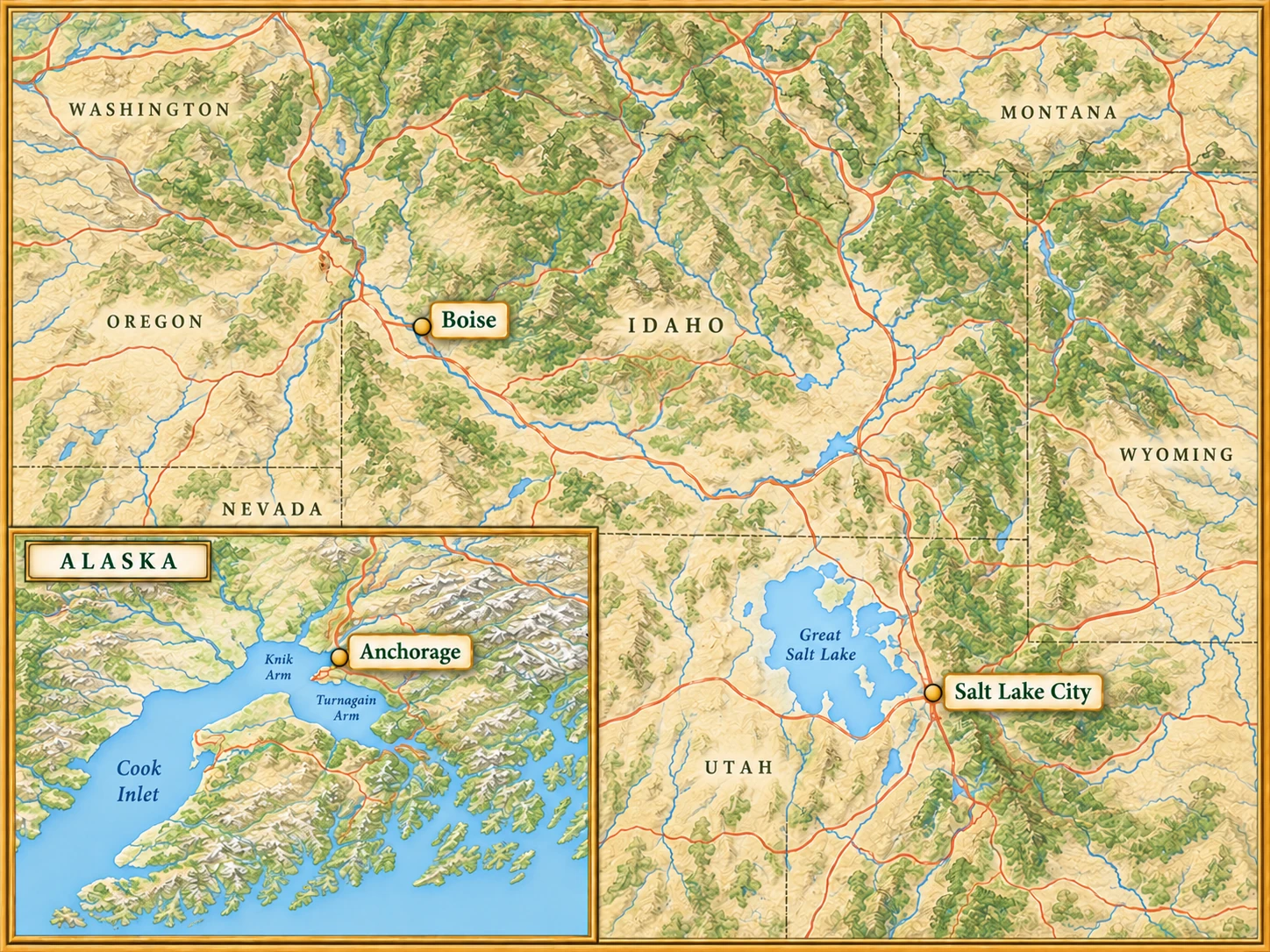
A mountain basin, a valley and a separate Alaska commitment
Salt Lake City, Boise and Anchorage offer three very different relationships with terrain, season and distance from Ohio. Anchorage is shown in its own Alaska inset.
Two western valleys and a northern commitment
Geographic reference
Salt Lake City: separate a workable basin week from mountain outings
Salt Lake City belongs when a real role, course or household arrangement fits and you want to explore a mountain-basin setting. The attraction can be more than a holiday view, but the home and ordinary week need to support it. Locate the exact workplace or campus and an attainable address first. A home with a useful city connection and a home chosen only for its apparent proximity to a mountain on the map can create different daily costs.
UTA's TRAX network gives you specific starting corridors. Its Red Line serves the University of Utah, the Green Line includes the airport connection and the Blue Line serves the Draper corridor. Those are useful city and regional connections, not a promise of access to every trailhead, canyon or ski area. Test the actual home, stop, transfer and final entrance. Keep a vehicle or paid travel cost if the regular week and the outdoor activity still require it.
The common gross-rent estimate is $1,414 ± $25, above Cincinnati city's $1,001 ± $20. Use a real home, reliable earnings and the full transport arrangement to see whether the change leaves enough room. Include the actual cost of the outdoor activity you want: access, travel, equipment and the season you can use it. A higher housing payment might be justified by the setting or opportunity, but it should be an explicit choice supported by the household budget.
Visit the home area during the part of the year that could make the routine difficult. Use current local conditions and official property-risk information; a terrain illustration cannot settle air, road or access conditions. Then try an ordinary workday and one outdoor outing within the time you normally have. Salt Lake City remains a strong possibility when the basin week works on its own and the landscape becomes a repeated benefit you can afford, with the Cincinnati return journey planned.
Try first: Confirm the role or course site, test the applicable UTA corridor from a real home and cost one repeatable mountain outing without assuming rail solves its final leg.
Local sources: Utah Transit Authority — TRAX lines · Census — Salt Lake City city, Utah · Census — Cincinnati city, Ohio.
Boise: choose the valley routine before the wider Idaho landscape
Boise offers a different valley setting when an actual Idaho opportunity, household connection or supported preference makes the move purposeful. Begin with Boise City and the specific home and work entrance, then widen to the surrounding Treasure Valley only if the real arrangement points there. A Boise city comparison cannot automatically describe a home in Meridian or Nampa. The map helps you see the relative places; the address decides the practical week.
Valley Regional Transit provides a particularly useful current caution. Its October 2026 information describes reductions affecting Nampa and the suspension of Route 30 in Meridian, with other changes in the regional network. Do not rely on an older impression that a route or connection still operates in the same way. Use the current service and the intended day for the complete trip. A central visit or a weekday airport connection does not establish every evening, weekend or suburban journey.
The historical gross-rent estimate for Boise City is $1,446 ± $29, above Cincinnati's point estimate. Compare the actual home payment with dependable earnings and the transport you would need. If your aim is remote work with outdoor access, obtain the employer's destination approval, check the home connection and price required office or Ohio returns. A different landscape can be worth paying for, but the decision should not rely on an assumed housing discount or a vehicle cost you cannot actually remove.
Choose the outdoor activity and access point you would use often. Test the drive, entry conditions, season and time left after normal work and chores. Use current local information for the home and any risk or coverage questions; a broad valley view cannot answer them. Boise deserves a place when the city routine is sustainable and the surrounding setting adds a clear, repeatable improvement. Keep a nearer option alongside it until the work, housing and distance from Cincinnati support all have practical answers.
Try first: Verify the actual city and address, use the current VRT post-change plan where relevant and test the home-and-outdoor week with dependable income and return-travel costs.
Local sources: Valley Regional Transit — current Treasure Valley changes · Census — Boise City city, Idaho · Census — Cincinnati city, Ohio.
Anchorage: treat Alaska as a separate household commitment

Anchorage is a deliberate change of setting, season and relationship with the rest of the country. It belongs when a supported role, household connection or strong preference for an Alaska life gives the move a purpose. Keep it distinct from a road-based move to a mainland mountain city. The useful comparison includes the home, ordinary workday and how you will keep seeing people in Cincinnati, rather than only an exceptional outdoor trip.
The Census row covers the whole Anchorage municipality. Its gross-rent estimate is $1,489 ± $38, not a quote for a central-city apartment or every community within that large geography. Pair an actual home with dependable take-home earnings, applicable utilities, transport, care and setup. Price the real travel for the household and possessions separately with suitable providers. Do not assume an ordinary mainland itinerary, timeline or cost simply because the destination is within the United States.
The Anchorage airport station's 1991–2020 January mean is 16.9°F and its July mean is 59.6°F, compared with 31.4°F and 75.9°F at Cincinnati's regional station. These figures describe a different seasonal year, not every property or outdoor day. Try the winter entrance, necessary journeys and hours you would actually use. Include preparation and the tasks you would need to carry out during the less convenient season, not only the clothing you would bring on a short visit.
People Mover is the official bus starting point, with current maps and alerts to match to the actual address and working hours. A network somewhere within the municipality does not establish a usable trip from a remote home. Work through groceries, care and evening returns before removing a vehicle. Finally, agree a Cincinnati visiting pattern and keep funds for an unexpected family journey. Anchorage earns a place when the Alaska week works and the distance from familiar support is a commitment the household understands and can sustain.
Try first: Visit an attainable home area in the season you need to test, verify the whole daily route and obtain a realistic Alaska move and Cincinnati-return plan.
Local sources: Anchorage — People Mover · NOAA — 1991–2020 regional-station monthly mean normals · Census — Anchorage municipality, Alaska · Census — Cincinnati city, Ohio.
Three western weeks: Sacramento, Portland and Santa Barbara
An inland California city, a Pacific Northwest city and a smaller southern California coast should not be treated as one mild western climate. Compare the season, housing and actual daily routes.
Three different Pacific choices
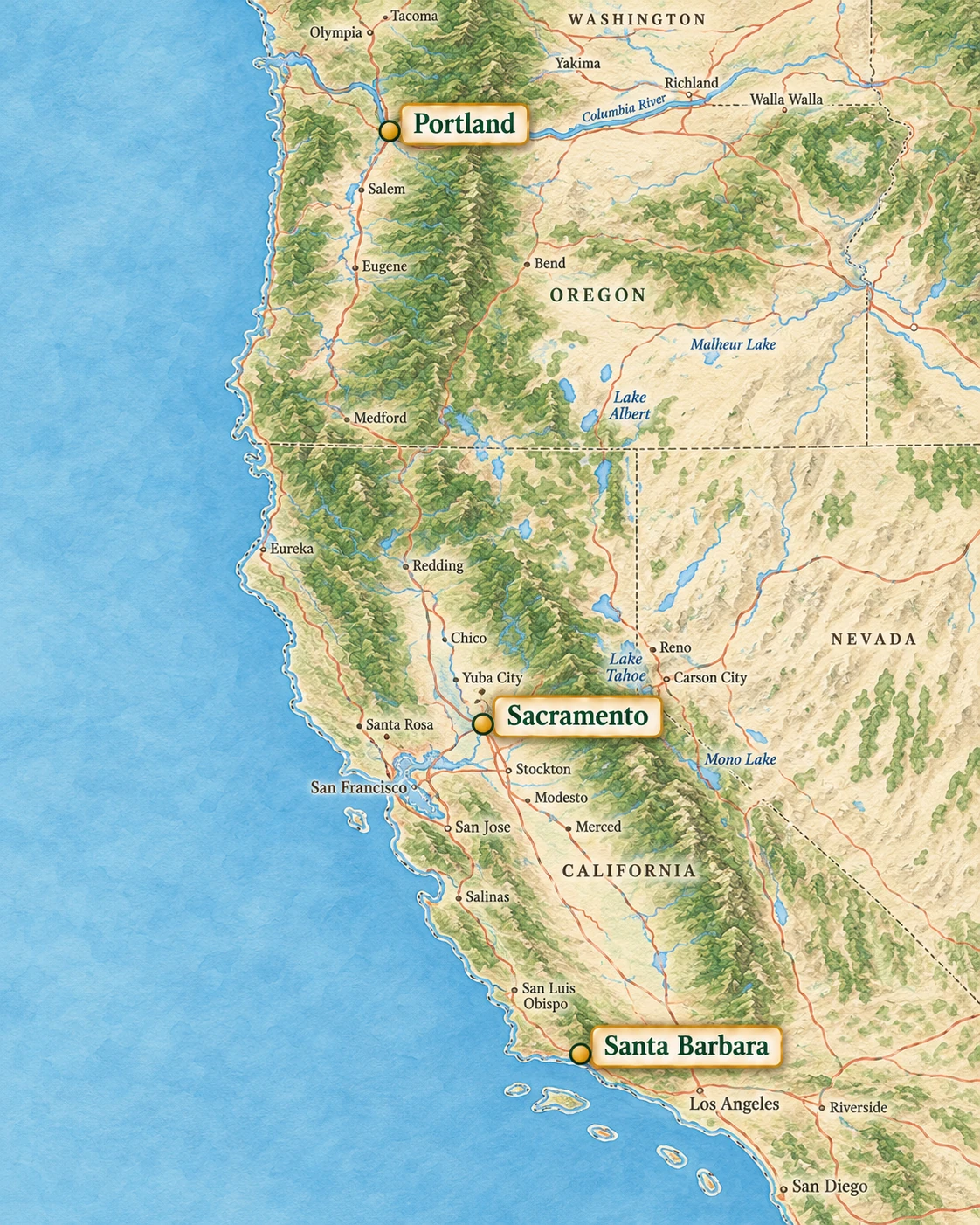
Geographic reference
Sacramento: an inland California summer needs its own comparison

Sacramento can suit a real California role, household connection or preference for an inland city base. It offers a different question from a smaller coastal move. Start with the actual workplace or course site and a home you can support. A riverfront visit can be enjoyable without describing the commute or summer hours you would have from the attainable address. Decide which parts of the city week you would use repeatedly.
The climate numbers make the inland distinction concrete. Sacramento Executive Airport and Cincinnati's regional airport station both have a July mean of 75.9°F in the 1991–2020 normals. Yet Sacramento's average July daily high is 92.6°F, compared with Cincinnati's 86.0°F. The monthly mean includes nights; it should not be read as the temperature of a typical afternoon outing. Visit the hours that matter to you and price the applicable cooling and home arrangement. These are normals, not forecasts or record extremes.
The common gross-rent estimate is $1,779 ± $19 against Cincinnati city's $1,001 ± $20. A California salary or retained remote income needs confirmation and an after-tax comparison with the complete month. Include required transport, care, appropriate property costs and Ohio visits. A more expensive move can still be purposeful, but its benefit should be clear enough that you know what the additional payment buys for your household.
Use SacRT's official current route information for the real home and destination. Test the outward and return journey, then add the errands and regular activities you need. Check current official property-risk information for a possible home separately from the broad map. Sacramento belongs when the actual work-and-home week is strong enough to support the higher commitment and you prefer the inland year you have tested.
Try first: Test one attainable home at the actual summer outdoor hours, verify the work and errand routes and build the California month with dependable after-tax income.
Local sources: Sacramento Regional Transit · NOAA — 1991–2020 regional-station monthly mean normals · NOAA — 1991–2020 regional-station average daily maximum normals · Census — Sacramento city, California · Census — Cincinnati city, Ohio.
Portland, Oregon: test the connected week at the home you could afford
Portland, Oregon is a Pacific Northwest possibility when a supported role, household connection or preference for that city setting gives the move a clear reason. Use the state explicitly in the search and locate the actual entrance you need. A central visit can suggest an appealing routine, but a home elsewhere in the metropolitan area may have a different journey. Keep the attainable address and the daily destination together throughout the comparison.
TriMet is the official starting point for the transport plan. Use the current planner and service information for the first leg, any transfer, final entrance and return after your actual finish. If the appeal includes reducing driving, test work, groceries, care and regular evening activity before deciding which vehicle costs can leave the budget.
The gross-rent estimate is $1,655 ± $18 in the common survey, above Cincinnati city's $1,001 ± $20. A well-connected home may deliver a useful time or vehicle saving, but only the complete household calculation can show it. Compare a real lease or ownership budget with confirmed take-home earnings. Include the costs of required office travel and the Cincinnati visits you want, especially if you hope to retain remote work. A city reputation cannot supply the permission or income that makes the month affordable.
Try the outdoor routine during the season you are less certain about. Choose a normal walk or activity, the route there and the equipment and time you would need to keep doing it. A longer excursion toward the coast or mountains is a separate outing, not a benefit automatically available outside every front door. Portland earns a place when the local week itself works and the wider setting adds something you genuinely expect to use, at a payment and distance from Ohio support you can carry.
Try first: Join one real home to work, groceries and a recurring activity with the current TriMet or driving plan, then compare the complete month and realistic Ohio visits.
Local sources: Portland, Oregon — TriMet trip planning · Census — Portland city, Oregon · Census — Cincinnati city, Ohio.
Santa Barbara: a different coastal year, with a demanding home budget
Santa Barbara belongs on the list if a milder coastal routine is a leading reason to change your Cincinnati life and you can support the housing cost. It offers a smaller-city comparison than a broad Los Angeles search. The useful question is whether an attainable home lets you use the coast, services and work you want on an ordinary week, rather than only during a visit.
The housing difference needs an early answer. The common survey estimates monthly gross rent at $2,413 ± $62 in Santa Barbara city, against Cincinnati’s $1,001 ± $20. These are occupied-home estimates with different housing mixes, not matched available apartments. Even with that limitation, this example gives no basis for assuming a similar home will be affordable on the same Cincinnati income. Use actual listings, the complete lease and reliable take-home pay to decide whether the search can continue.
The regional airport normals help make the climate question concrete. Santa Barbara’s station has a January mean of 52.8°F and a July mean of 65.7°F; the Cincinnati/Northern Kentucky airport station records 31.4°F and 75.9°F. The average July daily high is 73.3°F at the Santa Barbara station, against 86.0°F at Cincinnati’s. All are 1991–2020 normals, and the airport station is not a forecast for every coastal or inland home. Try the specific setting and the hours you would be outdoors.
MTD provides the South Coast bus starting point. Put the home, work entrance, grocery trip and required appointments into its current planner. A convenient downtown visit does not establish a manageable journey from a less expensive outlying address, and a bus to one destination does not solve every evening or weekend gap. Housing location and the complete household transport bill need to be decided together.
The larger commitment is the distance from Cincinnati support. Budget the actual return itinerary, airport access, time away from work and help you may need to replace locally. If the home budget leaves a reserve and the coastal week is a repeated benefit you value, this may be a purposeful next chapter. If the plan works only by ignoring rent or assuming frequent easy Ohio visits, keep a closer alternative on the shortlist.
Try first: Set a sustainable total home-payment ceiling before visiting, then test one real coastal home and its work, errands and Cincinnati-return plan.
Local sources: Census — Santa Barbara city, California · Census — Cincinnati city, Ohio · NOAA — 1991–2020 regional-station monthly mean normals · NOAA — 1991–2020 regional-station average daily maximum normals · Santa Barbara MTD — South Coast transit.
Compare the money left after the new month
Start the financial comparison with what remains after essentials. A lower home payment can still leave you worse off if you add a second vehicle or replace regular family help. A higher salary can disappear into housing, commuting and care costs. Write the reliable take-home income beside a real home arrangement, then subtract the recurring essentials the whole household needs. The amount left is the money available for saving, irregular costs and the life you hope to enjoy after moving.
The four examples below use chosen household inputs to show that relationship. They are not quotes for Cincinnati or any destination. In the starting arrangement, $4,200 of monthly take-home income leaves $500 after the selected essentials. Reducing the housing line by $200 while adding $300 to transport leaves $400. Taking home $600 more while raising housing and transport by a combined $700 also leaves $400. A better-connected home leaves $750 only if the assumed vehicle reduction actually happens.
Use the categories as a way to collect your own inputs, not as permission to leave costs out. The housing line needs the applicable rent or ownership costs and utilities; transport needs vehicles, insurance, parking, fuel, maintenance and paid journeys as relevant. Other essentials should include the household's care, healthcare, food, debt payments and other unavoidable commitments. Add regular Cincinnati visits where they belong. Explain the contents once so the same cost is not counted twice and a missing bill is visible.
For rent, compare the complete lease at an attainable address. Ask what is included, which charges are separate, what funds are due before entry and whether pets or parking change the total. For buying, use a realistic ownership budget for the actual property: financing, applicable taxes and insurance, association charges, maintenance and the work the home needs. A citywide median cannot tell you the tax treatment or insurance cost of a particular purchase. Get the relevant local and professional answers before treating them as settled.
If the move changes your work, distinguish a possible salary from a confirmed arrangement. Use reliable after-tax income for the budget you must carry. Ask an employer about the work location, remote permission, payroll handling, benefits and any conditions on relocation assistance. A household with two earners needs both paths. You may reasonably move before the second person has work, but the budget should then show the period with one income and the cash needed to support it.
Separate three amounts due around the move. First is spending you are unlikely to recover: travel, the assessed moving-service cost, overlapping home costs and other actual setup expenses. Second is refundable money tied up, such as an applicable deposit. Third is the reserve you want to retain after settling in. The examples choose $3,750 of unrecoverable transition spending. At $250 more left each month, recovery takes fifteen full months. A deposit and an emergency reserve still need cash even though they are not part of that payback calculation.
A fixed-income household should test an uncomfortable month as well as the average one. A higher utility bill, an insurance change, a necessary repair or a trip back to Ohio can put pressure on a narrow margin. A student may need to bridge time before a first paycheck. A family may face care costs before both adults resume work. You do not need to predict every expense precisely; use a stated allowance for an unknown, identify who can refine it and avoid spending the reserve twice.
The housing table gives a consistent historical comparison, not today's availability. We use 2020–2024 ACS five-year estimates for the exact named Census places and show their 90% margins of error. Gross rent is not the same as an asking rent on a current listing. Household income is an annual area estimate, before taxes, for households with different compositions; it is not your likely salary or a job offer. Lexington uses the urban county and Anchorage the whole municipality. Keep those geographic definitions with the numbers.
Cincinnati's monthly gross-rent estimate is $1,001 ± $20. Covington's $1,006 ± $57 and Hamilton's $1,007 ± $36 are too close to turn into a confident savings claim, and we do not conduct a significance test here. Blue Ash's higher rent estimate belongs beside its different household and housing mix, not a promise that you will earn its median income. The table can point you toward questions. The decision still needs the specific home, dependable earnings and the complete month you could actually live.
Hypothetical monthly US dollars · chosen household inputs, not city quotes
| Monthly result | Current arrangement | Lower home payment, longer driving | Higher pay, higher home payment | Same pay, a workable vehicle reduction |
|---|---|---|---|---|
| Money left each month | $500 | $400 | $400 | $750 |
| Take-home income | $4,200 | $4,200 | $4,800 | $4,200 |
| Recurring essentials | $3,700 | $3,800 | $4,400 | $3,450 |
Current arrangement
$500Money left each month
- Take-home income
- $4,200
- Recurring essentials
- $3,700
Lower home payment, longer driving
$400Money left each month
- Take-home income
- $4,200
- Recurring essentials
- $3,800
Higher pay, higher home payment
$400Money left each month
- Take-home income
- $4,800
- Recurring essentials
- $4,400
Same pay, a workable vehicle reduction
$750Money left each month
- Take-home income
- $4,200
- Recurring essentials
- $3,450
A $200 lower home payment leaves $100 less when transport rises by $300. The extra $600 of pay also leaves $100 less after the chosen housing and travel changes. The connected-home case leaves $250 more, but only if those vehicle costs can actually be removed.
See the hypothetical inputs
| Recurring expense | Current arrangement | Lower home payment, longer driving | Higher pay, higher home payment | Same pay, a workable vehicle reduction |
|---|---|---|---|---|
| Housing and applicable utilities | $1,200 | $1,000 | $1,800 | $1,300 |
| Transport, vehicles and paid journeys | $600 | $900 | $700 | $250 |
| Other recurring household essentials | $1,900 | $1,900 | $1,900 | $1,900 |
Current arrangement
- Housing and applicable utilities
- $1,200
- Transport, vehicles and paid journeys
- $600
- Other recurring household essentials
- $1,900
Lower home payment, longer driving
- Housing and applicable utilities
- $1,000
- Transport, vehicles and paid journeys
- $900
- Other recurring household essentials
- $1,900
Higher pay, higher home payment
- Housing and applicable utilities
- $1,800
- Transport, vehicles and paid journeys
- $700
- Other recurring household essentials
- $1,900
Same pay, a workable vehicle reduction
- Housing and applicable utilities
- $1,300
- Transport, vehicles and paid journeys
- $250
- Other recurring household essentials
- $1,900
Chosen arithmetic inputs, not offers. Replace every line with an attainable home, reliable take-home income and complete household essentials. Include care, insurance, debt and Ohio visits in the appropriate recurring costs.
At $250 more left per month, a chosen $3,750 unrecoverable transition takes fifteen full months to recover. Refundable deposits and the reserve kept after the move are separate cash needs; a scenario leaving less has no financial payback while its inputs stay the same.
Compare historical rent and household-income estimates
Exact Census places · 2020–2024 ACS five-year estimates · 2024 US dollars. Gross rent covers occupied cash-rent homes and applicable utilities, not current listings. Income is annual household income before tax, not a salary or take-home amount. The ± figure is the published 90% margin of error. Differences subtract Cincinnati point estimates; they are not a significance test or personal saving. Scroll the table sideways on a narrow screen.
Build the search around the job or course you would actually attend
Put the real work or classroom entrance on the map before you choose the home area. Around Cincinnati, Downtown, Uptown, Blue Ash and a northern suburban site can produce quite different trips. The same principle applies in every destination. A role advertised under a metropolitan city name may be at a separate campus, an industrial site or an outlying office. Ask where you must be, on which days and at which hours. A useful home search begins with those facts.
If you are changing employers, compare the role you could obtain with the job you would leave. Look beyond headline pay to hours, employment conditions, benefits, the first payday and any probation or licensing requirements that matter to the household. Find out whether an advertised opening is still active and whether the work location in the offer matches the one you researched. Keep an unconfirmed opportunity as a possibility rather than the income supporting a signed lease.
For a two-earner household, draw both journeys before optimizing either. A home chosen for one person's ideal commute can make the other's job or childcare handoff unworkable. Write the earliest start, latest finish, fixed office days and flexibility for each adult. Then test the difficult combination: a late shift with a school collection, a missed connection or a day when the usual helper is unavailable. The aim is a repeatable arrangement, rather than a perfect commute for only one person.
Remote work needs an employer answer before it becomes a moving strategy. Ask whether the specific destination is permitted, whether pay or benefits change and whether any office attendance remains. Check suitable internet service at the exact home and a work area you can use during normal household activity. Include the cost and time of required returns. A home may look less expensive while an extra office trip, unpaid travel time and a second workspace remove the advantage. An international move adds separate immigration, payroll and tax questions.
If you are studying or retraining, compare a complete route to the qualification. Confirm the campus, course, attendance pattern, entry requirements, tuition and other required costs, together with the hours you could realistically work. The nearby UC example shows why the campus detail matters: current Route 70 is the Blue Ash connection described by UC, with specific pass eligibility and operating arrangements. A page about a former shuttle is not evidence that the same service still exists. Apply that date-and-campus check to another institution too.
For a first independent move, protect the period before income settles. Price the actual room or apartment, any permitted shared arrangement, funds due at entry, essential furnishings and the first journeys to work or class. Decide how you will cover food, care and required travel before the first paycheck or funding payment. Living near a useful route can help, but a route that serves daytime classes may not cover a late job. Build one realistic week with both commitments before deciding you can manage without a car.
For licensed work, start with the destination's responsible board or regulator. Ask what transfers, what additional steps are required and when you may legally begin. A healthcare role, trade, teaching position or other regulated occupation should not rely on a general assumption that a US qualification automatically carries across state or national boundaries. Where the answer is still uncertain, show the application cost, expected gap and alternate income as unresolved. The area household-income number cannot answer any of those personal employment questions.
A career move can be worthwhile even when it leaves less money at first. You might gain a supported qualification, a more suitable schedule or work you want to keep doing. Name that benefit and decide how long the household can carry the transition. Compare a nearby or regional route to the same goal, including a genuine Cincinnati option if one exists. Then choose the move because it advances the next stage you can actually complete, rather than because the destination has a broad reputation for opportunity.

Local sources: University of Cincinnati — current Blue Ash connection · COTA — current 2026 service changes · Cincinnati Metro — August 2026 service changes.
Make the new week work for everyone moving with you
Begin with the person whose day has the least flexibility. That could be a preschool child with a care timetable, a teenager in a particular program, an adult on shifts or a relative with regular appointments. Put their fixed commitments on a simple weekly calendar. Add the journeys and the person responsible for each handoff. A home that works for that joined-up day is a stronger candidate than one that meets the bedroom requirement while leaving the care plan unresolved.
With preschool children, compare an actual care arrangement alongside the home. Availability, opening hours, the intended start date and the full amount due need answers from the provider. Include the days when care is closed and the time before both adults can resume work. If a Cincinnati relative currently covers part of the week, decide whether the new address preserves that help or whether you must replace it. A lower home payment does little for the household if an essential care arrangement becomes unaffordable or impossible to reach.
For school-age children, settle the address, receiving district, program and transport separately. In Cincinnati, CPS says its enrollment application is reviewed and finalized by staff; submission alone is not confirmation. A neighborhood school, a magnet choice and a later-grade pathway can involve different processes. The published 2027–2028 pathway information describes a future cycle, not a universal deadline for a current resident move. Use the rules for the child's actual grade, program and intended entry date.
CPS transportation eligibility has concrete conditions. Its published policy requires legal residence in the district and a minimum distance of one mile, measured by the district's public-route method. Ordinary neighborhood elementary eligibility also follows the attendance area; some school choices have different arrangements or no transportation. The district’s 2026–2027 FAQ describes yellow-bus arrangements for K–6 and Metro arrangements for grades 7–12; eligibility and the assigned plan still need confirmation. An IEP-related transportation decision is an individual matter. The district's conditions for nonpublic or charter journeys are a separate category, not a general promise for every student. Obtain the child's actual eligibility and assigned arrangement before relying on a bus in the home budget.
Crossing into Kentucky is a new school question even when you remain close to Cincinnati work. CPS's open-enrollment information concerns eligible Ohio residents outside the district; it does not make an ordinary Kentucky move a way to keep the same place automatically. Covington Independent publishes its own registration and street-directory process. A Hamilton home belongs with the responsible Ohio district's address and enrollment checks. Ask about individual continuation rights where relevant, but keep them separate from the ordinary assumption for a new address.
For a teenager, preserve the details that make a school change manageable: the course sequence, graduation requirements, specialist program, regular activity and trusted adults. Ask the receiving school to review the actual record. Plan the date with both schools rather than assuming a midyear or summer move is always easier. Include the teenager's evening return from an activity in the transport test. An adult's convenient daytime commute does not establish a workable independent afternoon for a young person.
If you are the only parent in the home, write the backup week before choosing the city. Name who could help during an illness, a late finish or a care closure, and include any paid alternative you could sustain. A nearby move might preserve dependable help while solving a housing problem. A farther move can work when the new support is real and the budget can carry it. Where another parent's arrangements or a binding order affect relocation, get the relevant personal advice before committing; a general city guide cannot settle that household's rights.
For several generations living together, count usable space rather than bedrooms alone. Test the entrance, bathroom, sleeping arrangement, privacy, stairs and route to regular care. Ask who will do the lifting, driving and household work after the move. A larger house farther out can increase the burden on the person who cannot drive independently. Compare what the home lets each resident do for themselves and what help must be present. Include time for the caregiver to work, rest and maintain their own connections.
Make healthcare continuity a practical task before departure. Identify the required services, the applicable coverage network, whether a suitable provider can take the person and how the first appointments will happen. Keep necessary records and medication arrangements with the responsible providers. A hospital on a regional map is a useful starting point, but it does not establish access to a particular specialist or plan. Choose the home and the reliable journey together, especially when someone needs regular treatment or cannot drive.

Local sources: Cincinnati Public Schools — enrollment and school selection · CPS — 2026–2027 school questions · CPS — transportation eligibility · CPS — future 2027–2028 school pathways · Covington Independent, Kentucky — enrollment and street directory · Hamilton City Schools, Ohio — enrollment · Hamilton City Schools — transportation.
Choose a place where a life on your own can take shape
Moving alone puts the whole housing payment and much of the setup work on one person. Start with a month you can support on your reliable income, including the periods when work is quieter or an unexpected bill arrives. A neighborhood with more people or more venues does not automatically solve that budget. It helps when the actual home, necessary journeys and activities you want are close enough to use regularly. Give those repeatable parts of the week more weight than a particularly lively visit.
Choose two activities you would genuinely attend after an ordinary workday. A class, library group, volunteer commitment, faith community, recreational league or recurring cultural activity can give you a reason to return and become familiar. Confirm the place, schedule and entry conditions directly. You do not need to promise yourself an entirely new social life in the first month. A small number of repeated encounters gives you a more realistic beginning than a long list of things you could theoretically do in a city.
Test the return from those activities as carefully as the outward trip. Around Cincinnati, the Connector's earlier Sunday finish is one example of why the evening matters. In another city, a convenient central service may leave a final walk, an infrequent connection or no useful return at your finishing hour. Try the route in the conditions you expect to use, and decide whether it feels workable for you. If you need a paid ride as a regular fallback, price it as part of the week rather than treating every gap as exceptional.
For a first move from a family home, make the first ninety days modest and concrete. Have a functioning place to sleep, essential household items, a way to buy food, dependable access to work or class and someone you can contact if the plan changes. Keep funds for the first bills and an emergency. You can gradually add furniture and activities. A home with lower setup demands may give you more independence than a larger place that consumes all your available cash before the first month ends.
After separation, bereavement or another major change, a move can offer relief and a new routine. It can also remove the people who already know when to check in. Decide which contacts you want to preserve, how often you would like to see them and what local support you will build. If the preferred destination is unfamiliar, a purposeful trial can help distinguish liking the place from liking time away from a difficult period. Keep the decision reversible where that is practical and affordable.
Women and men living alone do not need automatic destination lists based on gender. The useful differences are the actual income, responsibilities, travel hours, access needs and comfort with a particular route or home. A parent living alone has different constraints from a student with a shared home, regardless of gender. Language, citizenship, communities and family connections should come from your own preferences and circumstances. Use them as specific search needs rather than guesses about what a demographic group must want.
Build a simple support plan before the move: someone who knows the arrival date, a local contact or service you can use, a way to reach necessary care and funds for an unexpected trip. Then choose one home you could afford and live a trial weekday from it. Work, buy groceries, attend one real activity and return at the normal hour. A city becomes a convincing choice when you can picture that ordinary sequence happening again next week, without relying on unlimited energy, spending or luck.
Find a home that makes the next stage easier to manage
A smaller household does not always need a different state. If children have left home or maintaining a larger property has become tiring, begin with the tasks you want to remove. You might want fewer rooms to clean, less exterior work, an easier entrance or a shorter route to people you see often. Compare a suitable Cincinnati home and a nearby option with the farther destination. The change in daily effort can matter more than the size of the move.
Downsizing works best when you compare the complete arrangement. A smaller property may have association charges, parking costs, restrictions or required work that change the savings. An apartment can remove exterior maintenance while preserving an inconvenient stair or laundry trip. Walk through the home with the possessions and routines you intend to keep in mind. Decide which items fit, what needs selling or giving away and whether storage would become another recurring payment. Fewer square feet are helpful when they reduce costs or work you actually want to give up.
For retirement or a move toward fixed income, start with dependable income and the amount left after a realistic month. Include coverage, care, utilities, transport and the visits that make life rewarding. Keep a reserve after the move rather than using every available dollar to secure the new home. A place with an appealing climate can still put pressure on a narrow margin if housing or required travel is higher. The Cincinnati starting rent estimate makes that question especially important for this shortlist.
Think about independence across several possible weeks, not only the day of your visit. Can you reach groceries, appointments and a regular activity without asking the same person for every journey? If you currently drive, what would change during a temporary period when you could not? A useful bus network needs the specific entrance, stop, service hours and physical approach to work for you. A nearby clinic needs the right provider and coverage. Test the chain you would use rather than assuming the city offers independence simply because services exist somewhere within it.
An accessible home needs more than a description in a listing. Check the route from the street or parking space, the entrance, internal thresholds, bathroom, sleeping area and emergency exit as applicable. If an accommodation or modification is necessary, confirm permission, feasibility and cost with the responsible parties. A location that preserves familiar care and helpful people may support a good next stage even if it is less dramatic than a distant move. A farther choice can be worthwhile when it delivers a better arrangement the household can sustain.
Agree the visiting pattern with the people you want to keep close. A Cincinnati grandchild, sibling or friend may be easy to see from a nearby home but require booked travel from California or Alaska. Include the whole journey, time away and who can make it. Saying you will visit often is less useful than choosing a frequency you can afford and carry out. If visits are a leading reason for a move, discuss expectations before choosing a home around somebody else's availability.
Age helps identify a life stage, but it cannot choose the place for you. Someone in their sixties may be beginning a new job; someone much younger may need a more manageable home or regular care. Use the work, independence, support and financial questions that fit your situation. A successful next-stage move should leave you with a clearer, easier week and enough room in the budget to enjoy it. You can pursue that result close to Cincinnati or much farther away.
Choose the season and landscape you will live with all year
Describe the outdoor life you want in terms of frequency. If you want water in an ordinary weekday, a home with a workable waterfront routine matters more than a city described as coastal. If you want mountains most weekends, compare the actual journey, access season and cost. A river path near home, a park reached by bus and a remote trailhead requiring a vehicle offer different kinds of access. Choose the setting you can use with your work, care and household commitments.
Start by checking whether the desired improvement is possible nearby. Cincinnati Parks and Great Parks provide official starting points for exploring local outdoor places. The new home, entrance and daily route may put a useful activity within reach without requiring a new regional climate. Verify the particular facility and access information before relying on it. A park visible on a map does not establish an accessible approach or a convenient evening journey from the home you can afford.
The climate comparison uses regional airport-station normals for 1991–2020. The Cincinnati/Northern Kentucky airport station is in Kentucky; it is a regional baseline rather than a reading at every Cincinnati front door. Minneapolis, Anchorage, Sacramento and Santa Barbara give four deliberately different comparisons. Monthly means include nights, so they help describe the broader year but do not tell you what the warmest part of an afternoon feels like. We show selected January and July means together with an additional July daytime comparison.
The Sacramento example makes the distinction useful. Its July monthly mean is 75.9°F, the same as the Cincinnati regional station, but its average July daily high is 92.6°F against Cincinnati's 86.0°F. The Santa Barbara airport station has a July mean of 65.7°F and an average July daily high of 73.3°F. Those are different measures, not record highs or forecasts. They show why one summer average cannot by itself describe the outdoor hours you want to change.
Minneapolis and Anchorage both ask you to consider a substantially different winter from the Cincinnati baseline. Their January station means are 16.2°F and 16.9°F, compared with 31.4°F at Cincinnati's regional station. The similar winter means do not make them interchangeable places: the setting, daily light, distances, housing and support arrangements differ. Anchorage's July station mean is 59.6°F, while Minneapolis's is 74.3°F. Look at the whole year and the local routine that would let you use it.
The mountains and Alaska examples deserve a visit during the season you find hardest. In Salt Lake City or Boise, investigate the home and daily route as well as the mountain outing. In Anchorage, give the separate travel commitment and winter household routine time in the decision. The illustrated maps help you distinguish the basin, valley and Alaska setting; they do not certify road conditions, outdoor access or a property's exposure. Check the responsible local information for the actual place and activity.
Climate risk belongs at the property and activity level. Use current official hazard information, applicable insurance quotes and the home's condition to assess the address you might commit to. Cooling, heating, maintenance, smoke interruptions or storm preparations may affect different choices. A favorable annual impression should not erase the part of the year that could disrupt your work, care or outdoor activity. If a risk or coverage question remains unresolved, keep it visible rather than assigning the city a reassuring label.
Try the hours you actually want outdoors: a morning walk before work, a midday errand, an evening outing or a weekend with children. Notice the travel, clothing, equipment and preparation involved. Then compare the time and money you would need to keep doing it. The useful landscape change is the one that becomes part of your regular life at a sustainable cost. A beautiful view can be part of that answer, but it should not have to carry the entire decision.

| Regional station | January monthly mean | July monthly mean | July average daily high |
|---|---|---|---|
| Cincinnati/Northern Kentucky airport, Kentucky | 31.4°F | 75.9°F | 86.0°F |
| Minneapolis–Saint Paul International Airport, Minnesota | 16.2°F | 74.3°F | 83.4°F |
| Anchorage International Airport, Alaska | 16.9°F | 59.6°F | 66.2°F |
| Sacramento Executive Airport, California | 47.6°F | 75.9°F | 92.6°F |
| Santa Barbara Municipal Airport, California | 52.8°F | 65.7°F | 73.3°F |
Regional-station monthly means include nights; the average July daily high is a separate measure. These are normals, not forecasts, record extremes or property conditions. NOAA climate normals.
Local sources: NOAA — 1991–2020 regional-station monthly mean normals.
Four countries, each with one place to begin
Another country can change more than climate or distance. It may offer a supported work or study path, a household connection, a language you want to use or a different cultural setting. Begin with the lawful route the whole household can rely on. Being allowed to visit is not the same as permission to live and earn there. Resolve that first condition before treating local pay, a long lease or a retained remote job as the foundation of the plan.
Begin with Winnipeg in Canada, Coimbra in Portugal, Leeds in the United Kingdom and Mérida in Mexico. Each introduces a different setting and a different work or study question. Toronto, Montréal, Vancouver and Calgary remain other horizons to investigate if the real opportunity points there. Coimbra, Leeds and Mérida likewise stand for specific city questions rather than a claim that their countries have one cost, climate, language experience or residence route.
Build each comparison in the currency you would actually earn and spend. Date any conversion and obtain appropriate advice for the tax, payroll, benefits or licensing questions the arrangement creates. Compare housing, necessary coverage and care, transport, setup and visits to Cincinnati. Keep a return reserve and the time needed for an unexpected family journey in view. A favorable exchange-rate impression does not establish that a home or household plan is affordable.
These are information and lifestyle comparisons. Sterling Oakbridge's relevant service foundation is long-distance moving within the US and to Canada, subject to the actual move assessment. Discussion of Portugal, the UK or Mexico is not an offer to transport a household there. Once you have a viable residence and work plan, organize the actual route and providers separately. Do not let arranging possessions run ahead of knowing whether and how the household can make the move.
Canada: use Winnipeg to explore a different inland city life
Start with Winnipeg. Other cities to explore: Toronto · Montréal · Vancouver · Calgary.
Canada: a Winnipeg example
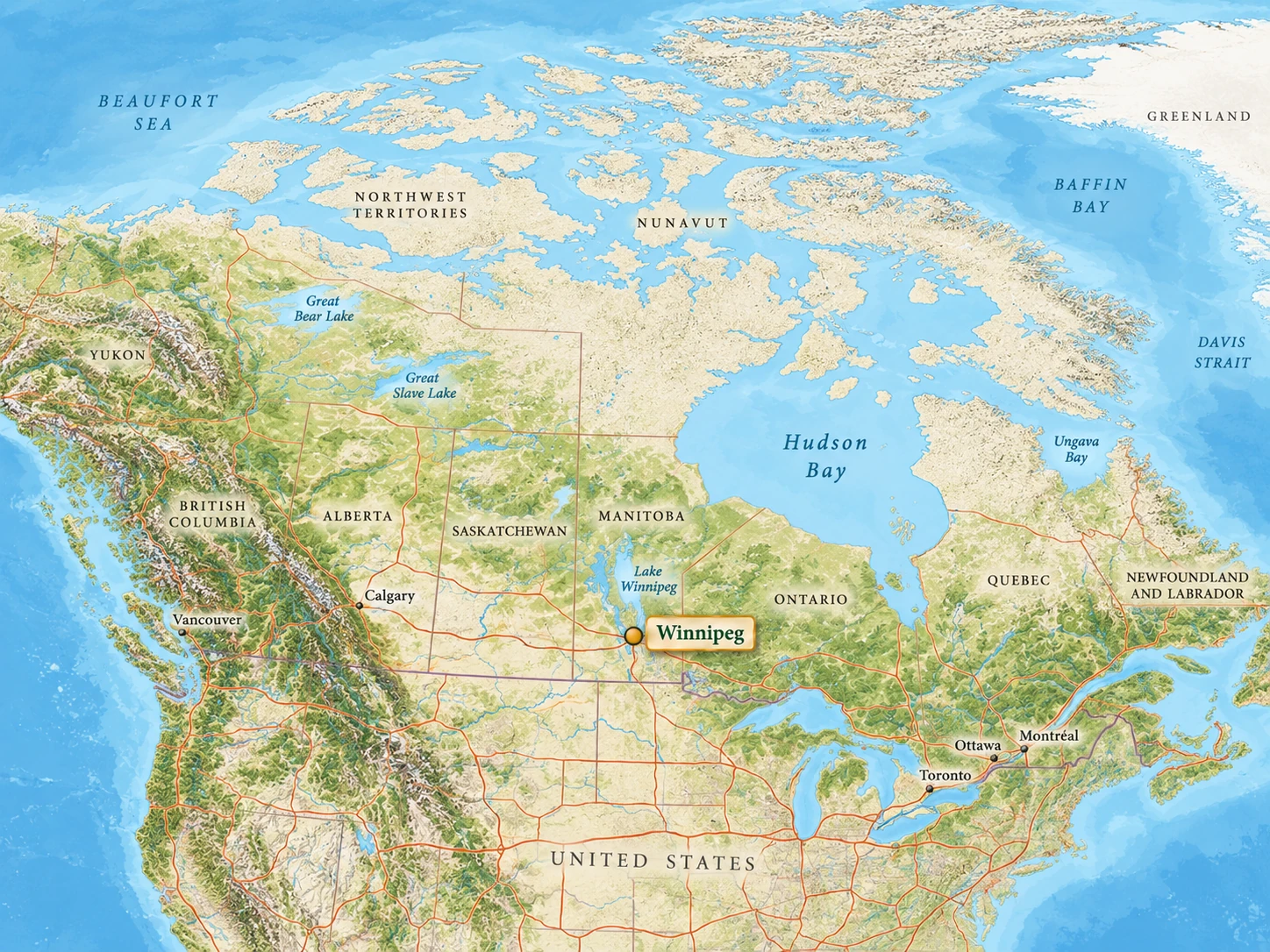
Geographic reference

Winnipeg gives Canada one distinct place in the comparison: an inland Manitoba home base, rather than another version of a coastal or southern US move. It belongs when the actual work, study, family connection or supported preference points there. Toronto, Montréal, Vancouver and Calgary remain other horizons if your opportunity is in one of them. Use the real city and language or household needs, rather than assuming Canada offers a single type of daily life.
Resolve the work and residence basis before relying on local pay. IRCC distinguishes employer-specific permits from open permits, with conditions on who can qualify. A person outside Canada generally cannot simply choose an open work permit because they want flexibility. An accompanying partner or child needs a separate answer about their permitted activities. Permission to visit, permission to reside and permission to work are different questions. Keep the applicable route as an unresolved condition until the household can actually rely on it.
Build the Winnipeg month in Canadian dollars with an attainable home and dependable earnings. Date the currency conversion used for any retained US income, and confirm employer, payroll and tax arrangements with the appropriate responsible parties. Include transport, necessary healthcare coverage, setup and visits to Cincinnati. The US ACS table does not supply a matched Canadian home price or salary comparison. An exchange-rate impression alone cannot show that the move leaves you more money.
Winnipeg Transit describes its current spine-and-feeder network and directs users to Navigo and service alerts. Use that current arrangement for the actual home, work entrance and return; an old saved route may describe the former network. Test the entrance and waiting arrangements in the season you need to understand. A useful bus corridor can help a household, but its existence does not establish access from every home or at every shift hour.
Give the Cincinnati connection a complete travel plan: the available itinerary for the date, access to each airport or station, time away and funds for an unexpected visit. If you are choosing Winnipeg for a supported opportunity and prefer the local week you have tested, it can be a purposeful change. If the work basis or home budget is still a guess, keep another viable option while you resolve those conditions. Canadian moving logistics come after that household foundation, with the actual route assessed separately.
Try first: Confirm the household’s lawful work or study basis, build a Canadian-dollar month and test one real Winnipeg home on the current transit network.
Local sources: IRCC — work-permit eligibility from outside Canada · IRCC — open work-permit eligibility · Winnipeg Transit — current network and trip planning.
Portugal: explore Coimbra through a real course, household tie or permitted remote arrangement
Start with Coimbra. Other cities to explore: Lisbon · Porto · Braga.
Portugal: a Coimbra example

Geographic reference

Coimbra is a Portuguese starting place when an actual course, family connection or supported way of working gives you a reason to investigate a different cultural and daily setting. It is an inland city comparison, distinct from choosing Lisbon or Porto by default. Locate the real campus, workplace or regular destination before selecting a home. The name of a university city does not establish admission, an available program or a convenient trip from every address.
For a plan based on remote income, AIMA describes a specific residence route connected to professional activity for an entity outside Portugal. Its published process includes the relevant residence visa, evidence of the outside work relationship and the required home and application conditions. It is not a general promise that a visitor can settle or take any local job. Confirm the route and the household's individual position with the responsible authorities before relying on retained earnings, a lease or an accompanying adult's work.
Price the actual month in euros, with confirmed take-home income and a dated conversion where necessary. Include appropriate coverage and care, required transport, application and setup costs, housing funds due in advance and visits to Ohio. Obtain the relevant tax and payroll advice for the specific arrangement; a residence route does not itself establish a personal tax benefit. If you plan to study, obtain the actual admission, campus, course costs and permitted work conditions rather than treating a general city description as an offer.
SMTUC provides Coimbra's official network and timetable starting point. Use the actual line and intended hours for the home-to-destination chain, including the final walk and return. The published index points to line information and PDF schedules; it does not by itself establish the frequency you need. Walk the home entrance and normal errand route too. A central visit and a place you could afford for a full year can give you different experiences of the city.
Try a normal day using the language, services and activities you would actually rely on. Confirm which assistance or community resources matter to you without assuming all foreign residents share the same preferences. Then plan how often you would see people in Cincinnati and the reserve for an unexpected return. Coimbra earns a place when the lawful income or study basis and the ordinary week work together. This lifestyle example is not an offer of Sterling Oakbridge transport to Portugal.
Try first: Confirm the applicable residence and income or study route, price one actual home in euros and test the course, errands and Cincinnati-return plan.
Local sources: AIMA — residence linked to work for an entity outside Portugal · Coimbra SMTUC — route and timetable index · University of Coimbra — official starting point.
United Kingdom: make Leeds fit the actual job or course
Start with Leeds. Other cities to explore: Manchester · Sheffield · Birmingham · London.
United Kingdom: a Leeds example
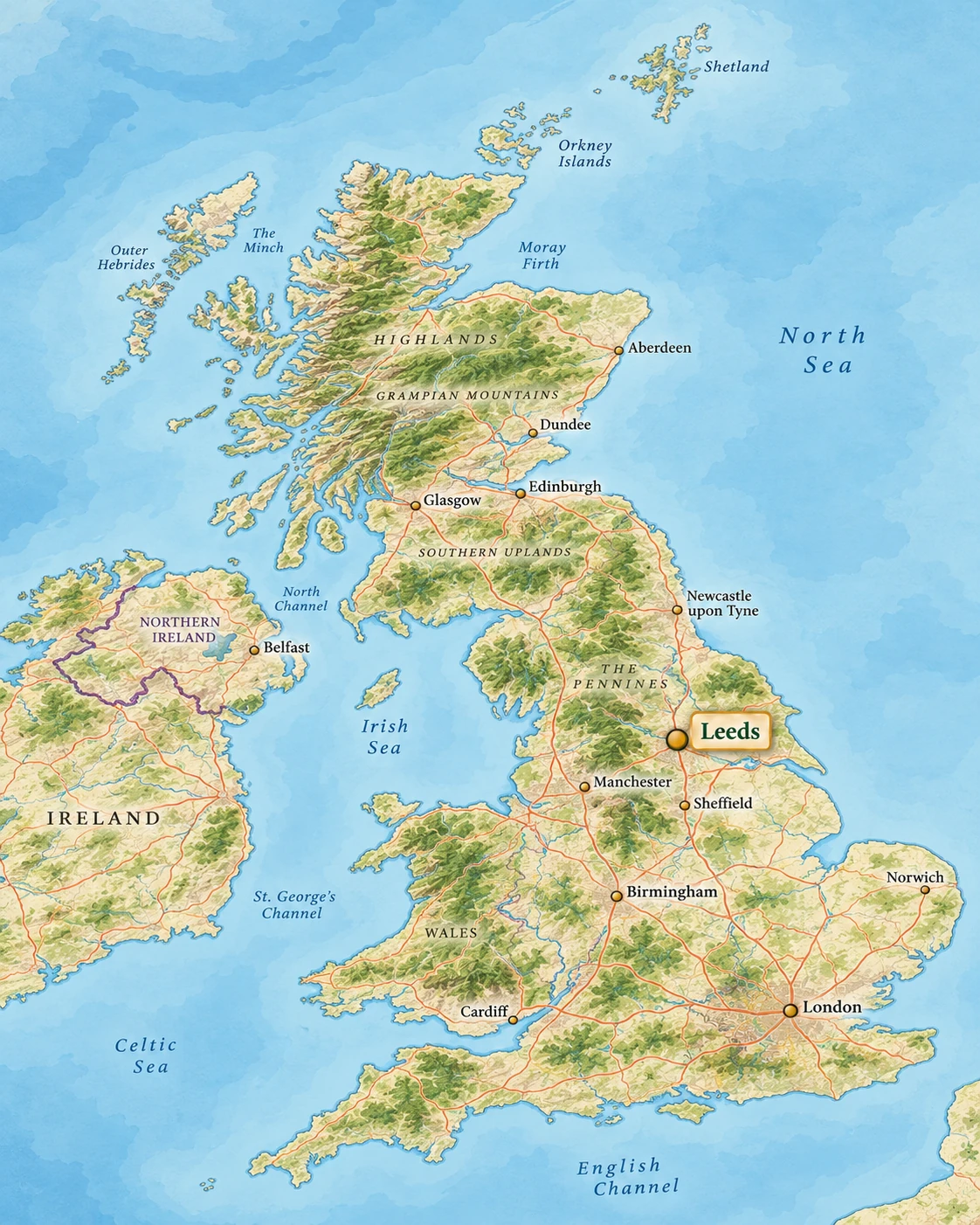
Geographic reference

Leeds offers an English-language work or study comparison in northern England. It belongs when the actual opportunity or household connection makes that city relevant, rather than because an English-language destination removes every part of the adjustment. Find the workplace or course entrance, attendance hours and attainable home first. Manchester, Sheffield, Birmingham and London are other horizons; they should follow a specific reason rather than substitute for an offer or program in Leeds.
The UK Skilled Worker route requires the relevant confirmed offer from an approved sponsor, a certificate of sponsorship, an eligible role and the applicable salary and English conditions. A job conversation or vacancy is not the same as an approved basis to work. Partners and children have their own eligibility and application questions. Check the route for the actual applicant and intended dates, including what a change of employer or role would require. Do not fund a lease from earnings you are not yet entitled to receive.
A Student route is a separate plan. The official requirements cover a licensed course, funds and English where applicable, with conditions on work and accompanying family. The route does not permit self-employment. Do not assume every student can bring dependants or automatically keep a fixed period of post-study work; the applicable rules and dates need their own answer. Compare the complete course and living cost with the income and funds you can reliably use during the study period.
Build the month in pounds using a real home and dependable earnings or course funding. Include applicable housing charges, required coverage and healthcare arrangements, transport, setup and Cincinnati visits. Use West Yorkshire's current transport and rail information for the actual journey; the regional Metro brand should not be mistaken for a promise of an urban light-rail line outside the chosen home. Check current engineering or event notices and the final return after your work or class finishes.
Try the local week with normal shopping, an activity you would attend and the walk from the stop to the possible home. Add the complete Ohio return itinerary and the time it takes from work or study. Leeds can be a supported professional or educational next stage when the permission, home and routine are all viable. Its role here is to help you compare that life change; it is not an offer of Sterling Oakbridge household transport to the UK.
Try first: Confirm the actual sponsored role or course and household permissions, then test an attainable Leeds home, current travel chain and pound-denominated budget.
Local sources: GOV.UK — Skilled Worker visa · GOV.UK — Student visa · West Yorkshire Metro — current travel information · West Yorkshire Metro — rail information.
Mexico: explore a Mérida routine with a clear right to stay and earn
Start with Mérida. Other cities to explore: Querétaro · Mexico City · Guadalajara.
Mexico: a Mérida example
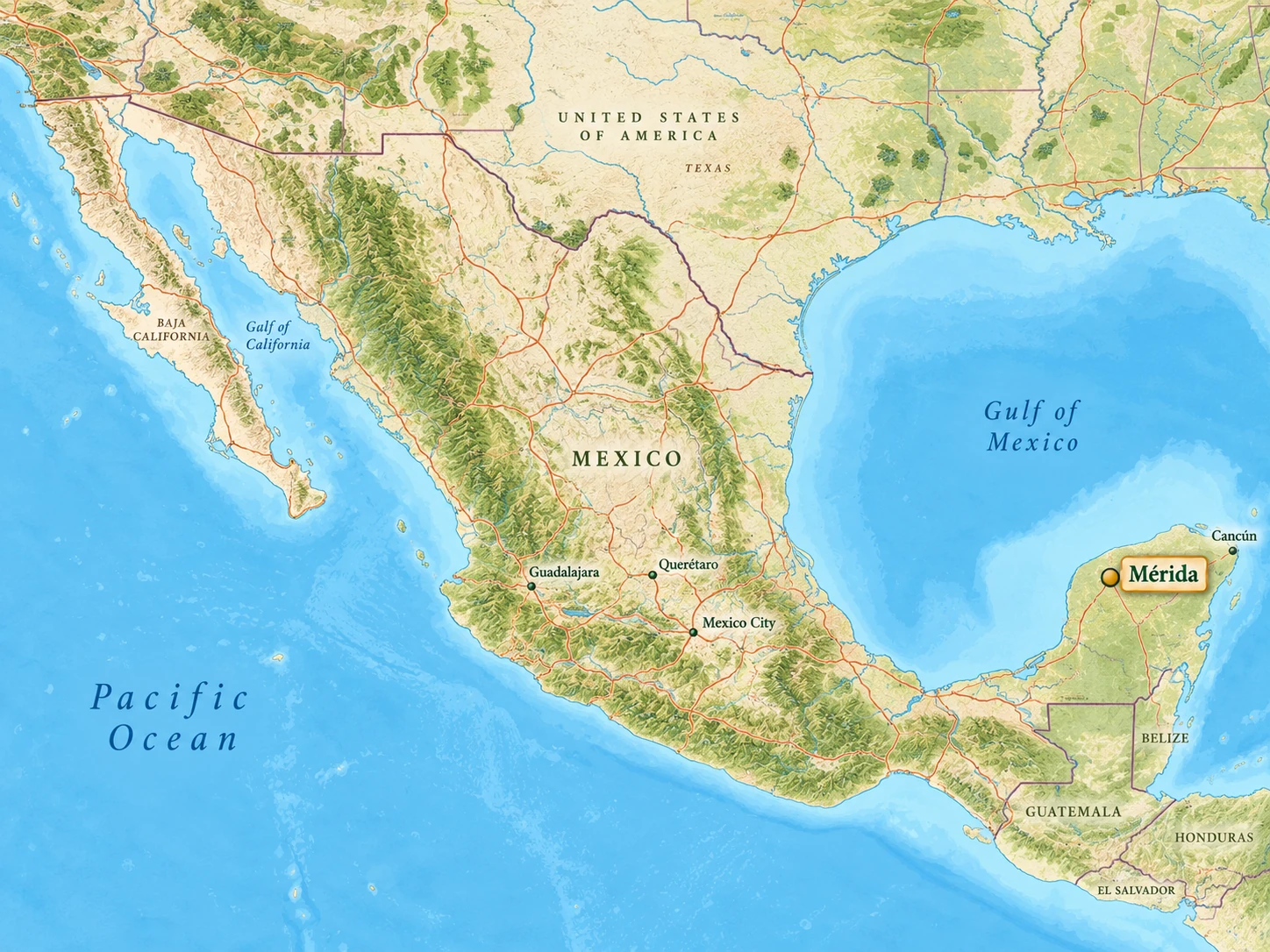
Geographic reference

Mérida is an inland Yucatán comparison for someone interested in a different language, cultural setting and outdoor year. It is not the same home-and-work question as a Cancún holiday or a home directly on the coast. Begin with the reason you would live there and the routine you could support. Querétaro, Mexico City and Guadalajara offer other starting horizons when the work, household connection or preference points elsewhere in the country.
Resolve the legal basis for residence and income first. Mexico's official employment-visa information describes prior INM authorization for a route based on an employment offer. That is a particular process, not a blanket right for a visitor to work. A retained remote arrangement, local employment and an accompanying household can raise different questions. Obtain the applicable answer from the responsible immigration and consular sources for the actual person. Confirm the current documents, funds and fees for the applicable route with the office handling your application.
Build the budget in pesos with an actual home and reliable permitted income. Date any conversion and include applicable coverage, care, utilities, transport, setup and Ohio visits. Confirm the tax and employer arrangements with the relevant responsible parties before relying on US pay. The US housing table does not supply a matched Mérida rent comparison. A currency conversion or a quoted holiday stay is not evidence that the household can comfortably support a long-term home.
Try the language and the outdoor hours you would use during an ordinary week, especially the season you are less sure about. Walk the entrance and essential errand route from a home you could obtain. If a beach outing is part of the attraction, identify the actual destination and journey separately; living in Mérida does not put every home on the coast. Check current local information, coverage and property conditions for the address rather than assigning a broad safety or risk label to the city.
Finally, plan the Cincinnati connection and the reserve for a return that is needed sooner than expected. A household move works best when everyone has a viable permission, activity and support plan, including a partner who may not share the same work or language circumstances. Mérida deserves a closer look when those foundations and the tested routine support the change you want. It remains an informational example; Sterling Oakbridge transport to Mexico is not offered through this guide.
Try first: Confirm the household’s applicable residence and earning basis, then test one real Mérida home, language-and-errand week and peso budget with an Ohio-return reserve.
Local sources: Government of Mexico — visa based on an employment offer · Municipality of Mérida — official starting point.
Visit the ordinary day that could change your mind
Choose the most important uncertainty before booking a visit. You might need to know whether a particular workday fits a bus route, whether a home entrance is manageable, whether you enjoy the difficult season or whether a child's care arrangement can start. Plan the visit around that question. An attractive central hotel and a free weekend can tell you whether you like being there; they may tell you very little about the home and schedule you would actually have.
Start from an area where an attainable home exists. Use the actual work or campus entrance at the normal start time, then return after the real finish. Include parking, transfers and the last leg. Try an essential errand and the regular activity you want to keep. For a household, let each person test their own difficult part of the day. A late-shift adult, a child going to an activity and a relative needing care should not disappear from the comparison because one person's journey looks easy.
Ask the employer or course provider questions that change the home search. Confirm the location, attendance days, working or teaching hours, start date and conditions on remote work. For a regulated role, resolve the permission to begin. For school and care, use the receiving provider's current process and the actual child or applicant. If someone can only give a provisional answer, record what it depends on. A useful visit ends with fewer consequential unknowns, rather than a collection of reassuring general comments.
At a possible home, inspect the full approach and read the actual terms. Ask about applicable charges, funds due before entry, included utilities, pets, parking, maintenance responsibilities and any accessibility needs. Check the service or utility at the address rather than only the surrounding area. For a purchase, use the appropriate property, financing and professional checks. Avoid treating a viewing as the final inspection or a historical rent table as evidence of the home's current total cost.
For a nearby Cincinnati comparison, use the correct-date service notice. A Covington visit before November 7 may not test the TANK arrangement you will use after moving. A Hamilton plan should identify the actual BCRTA route or CincyLink park-and-ride, including current temporary stops. A Blue Ash campus trip should use Metro's current Route 70 and the applicable pass conditions, not the former UC shuttle. These are examples of the same rule: test the week you will have after the move.
For the larger climate or cultural change, give yourself an ordinary day with limited holiday energy and spending. Buy food you would normally use, attend a recurring activity if possible and see how you manage the language and the return journey. Spend time in the weather you are unsure about. A short visit cannot prove a complete future life, but it can expose an assumption that would otherwise survive until after a costly commitment. Write down both the benefit you experienced and the part you would find hard to repeat.
Finish with a decision date and the next evidence needed. You may be ready to proceed, need another targeted visit or prefer to remove the place. If a temporary arrangement would help, calculate its full cost and check the terms that allow it. Keep the original home and income commitments clear until their dates are settled. An effective trial does not have to make you certain about everything. It should answer enough of the important question to make the next step proportionate.

Keep two to four options you can explain and act on
A useful shortlist is small enough that you can compare actual lives rather than impressions. Give each place one clear reason to remain: a workable home, a supported role, a better daily journey, an outdoor year you prefer or a household arrangement that becomes possible. Beside it, name the hardest compromise. If you cannot explain what gets better, the place may still be interesting but does not yet need the time and cost of a moving plan.
Use the sheet below for two to four options. Write the real home or home area, dependable take-home income, complete recurring essentials and money left. Keep unrecoverable setup spending, refundable deposits and the cash you want to retain separate. Mark an unknown as unknown and name who can answer it. A blank school assignment or unresolved work permission is more useful than an optimistic guess because it tells you what the next task should be.
Compare the options against the same must-haves. A higher-cost place may deserve the commitment for a meaningful career or household benefit; a nearby move may solve enough of the problem with less disruption. You can also choose to stay for now and change the current arrangement. The result is stronger when you understand the trade and can support the month, rather than feeling obliged to pick the farthest or most novel place on the maps.
When one option is viable, build the transition around confirmed dates. Coordinate the home, work or study start, relevant school and care arrangements, utilities and necessary records. For a US or Canadian long-distance move, use the Cincinnati service page to discuss the actual route, inventory, access and schedule. Obtain the terms that apply to that move. A city discussion cannot provide a personal price, availability promise or assessment of what the household needs.
Keep important documents and daily essentials accessible during the transition. Decide who is responsible for each deadline and how the household will manage the first few days. If the destination still depends on an unresolved permission or commitment, settle that before the irreversible parts of the plan. You can plan possessions and ask useful questions while keeping the distinction between exploring an option and being ready to move.
The sources below let you follow the transport, school, residence and data questions to their responsible providers. Current notices may change between reading and committing, so use the version for your intended date. The maps and comparisons give you a structured beginning. Your finished result should be a short list of places with a practical reason to visit or choose, a compromise you understand and a next step you know how to take.
Compare two to four places you could call home
Cincinnati, Ohio origin · date:
What must change?
Three things to keep:
| My comparison | Place 1 | Place 2 | Place 3 | Place 4 |
|---|---|---|---|---|
| Place / actual home | ||||
| What gets better? | ||||
| Hardest compromise | ||||
| Must-haves and support | ||||
| Take-home income / month | ||||
| Essentials / month | ||||
| Money left / month | ||||
| One-time costs you will spend | ||||
| Refundable deposits | ||||
| Cash kept for emergencies | ||||
| Answer still needed / who to ask | ||||
| My next step / when |
For each place, write what gets better, the hardest compromise and the monthly amount left after essentials. Keep the home and reliable income together. Note the answer still needed, who to ask and your next step and date. Leave unknowns visible. Record one-time spending, refundable deposits and cash kept for emergencies separately.
Questions when choosing where to move from Cincinnati
Where should I start if I want to move from Cincinnati?
Start with the change you need, then keep two to four candidates. Compare Covington, Blue Ash and Hamilton if you want a different home while preserving Cincinnati connections. Use a real role or course to investigate Columbus, Lexington or Knoxville. For a larger change, choose the landscape, climate or country example that fits your goal, then test an attainable home, dependable income and the compromise. Keep a better-fitting Cincinnati home as a comparison.
Which nearby places deserve a first look?
Covington tests a different side of the river and a Kentucky school-and-service arrangement. Blue Ash is useful when the actual work or UC campus location improves the week. Hamilton is a separate Butler County home base with its own journeys. These are three distinct comparisons, not universal recommendations. Choose one real address and test the complete work, care and evening return before deciding the place solves your problem.
Does moving to Covington or Hamilton automatically save on rent?
No. The 2020–2024 gross-rent estimates are $1,001 ± $20 for Cincinnati, $1,006 ± $57 for Covington and $1,007 ± $36 for Hamilton. Those small point differences do not establish savings, and the figures describe occupied homes rather than current matched listings. Compare a real lease, included utilities, parking, transport and care. A better home or journey can justify a move without a citywide savings claim.
Can I keep a Cincinnati Public Schools place after moving to Kentucky?
Do not assume an ordinary Kentucky move preserves the same CPS place. CPS open enrollment describes a route for eligible Ohio residents outside the district, while Covington Independent has its own enrollment and address process. Obtain the receiving-school decision before choosing a home around it. If an individual continuation right or unusual circumstance may apply, ask the responsible district about that child; it is separate from the ordinary new-address assumption.
Does a Cincinnati school choice also guarantee a school bus?
No. CPS transportation has separate eligibility conditions, including legal district residence and a minimum one-mile distance measured by the district’s method. Neighborhood elementary attendance areas, particular school choices and individual IEP-related services have distinct conditions; some choices do not provide transport. Get the actual child’s eligibility and assigned arrangement. A FOCUS application or a place in a desired program is not by itself a confirmed bus plan.
Can I still plan a Covington move around the Southbank Shuttle?
Use the TANK arrangement for your intended move date. TANK has announced November 7, 2026 changes replacing the Southbank Shuttle and Route 16 with a different fixed-route arrangement. Check the current plan and bridge-project alerts for the actual home and journey. An older visitor tip may describe service that will not be the same when your lease begins.
What now connects UC Uptown and UC Blue Ash?
UC describes Metro Route 70 as the current replacement for its former Blue Ash shuttle. Use the current route schedule for the required campus entrances and class hours, and confirm the activated-pass conditions if you qualify. The existence of the connection does not establish a convenient evening or weekend journey from every apartment. Test the first and last legs as well as the campus-to-campus segment.
Can MetroNow replace a car for a Blue Ash household?
It may help with a trip inside its defined Blue Ash/Montgomery zone, subject to booking and operating conditions. Metro says the separate fare is not covered by a fixed-route pass. It is not an anywhere-in-the-region on-demand promise. Before removing a car from the budget, verify the complete work, food, care and evening week, including any fixed-route connection or paid fallback.
Is CincyLink a direct Cincinnati commute from every Hamilton home?
No. CincyLink uses its published commuter and park-and-ride arrangement; the journey from a Hamilton home to the boarding point is part of your trip. R1 between Hamilton and Middletown is a separate route. Check the correct-date stop and current notices, including temporary arrangements around the Riverfront Transit Center closure. Test the return after your actual finish before relying on the plan.
How should I compare a higher salary in another city?
Use reliable take-home pay and the complete new month. In the chosen examples, $600 more income is outweighed by $700 more housing and transport, leaving $100 less. Replace the hypothetical inputs with the actual offer, home, care, vehicles and required journeys. A higher-cost move can still advance a career, but decide how much less financial room you can carry and for how long.
How much money should I set aside for the transition?
Add the actual unrecoverable spending, refundable funds tied up and the reserve you want to keep after arrival. They are different cash needs. The guide’s chosen $3,750 unrecoverable allowance takes fifteen full months to recover at $250 more left per month; it is not a moving quote or a recommended universal reserve. Obtain the costs for your route, home overlap, travel and setup, and keep the household’s necessary emergency funds separate.
Can a move still be worthwhile if housing costs more?
Yes, when the benefit is specific and the whole month is sustainable. A confirmed role, a workable vehicle reduction, an easier care arrangement or an outdoor year you value can justify a higher payment. Every destination rent point estimate in this shortlist exceeds Cincinnati city’s historical estimate, so none supplies an automatic savings promise. Choose the attainable home and reliable income together, then name what the added cost gives you.
Which examples should I investigate for a different outdoor life?
For three distinct mountain-related settings, compare Salt Lake City, Boise and Anchorage. Savannah gives a coastal-region question, while Santa Barbara is a smaller California coastal comparison. Sacramento is inland and Portland’s wider coast or mountain outing is separate from the home week. Pick the actual activity and access point, price the journey and season, and test how often you would use it alongside normal work and chores.
Does Sacramento have the same summer as Cincinnati because the July means match?
No. Both regional stations have a 1991–2020 July mean of 75.9°F, but the average July daily high is 92.6°F at Sacramento Executive and 86.0°F at Cincinnati/Northern Kentucky airport. Monthly means include nights. The figures are different measures, not forecasts or record extremes. Test the hours you want outdoors and the actual home arrangement rather than treating one mean as a complete summer description.
What makes Anchorage a different commitment from a mainland mountain move?
It changes the seasonal routine and the practical relationship with Cincinnati as well as the landscape. Build an Alaska-specific home, income, transport and move plan, and price the complete return itinerary for visits or unexpected family needs. The data row covers the whole municipality, not every central-city apartment. Test the difficult season and the actual daily journey before committing on the strength of an outdoor visit.
How can I check whether a destination works without a car?
Test a complete ordinary week from an attainable front door: work or class, groceries, care, a regular activity and the return after the real finish. Include the approach to the stop, connections, final entrance, weather and any necessary paid fallback. Remove only vehicle costs you can genuinely stop paying. A nearby station, downtown loop or zone-limited service is a useful beginning rather than proof that the whole household can manage without a car.
What should I prioritize when moving alone?
Start with a home you can carry on one reliable income, essential journeys and two activities you would attend repeatedly. Test the evening return and keep a practical support contact and emergency reserve. A first independent move also needs funds before the first paycheck. Choose through your actual responsibilities, access needs and preferences; gender alone does not determine which city or neighborhood will work for you.
Should I choose a retirement destination mainly for its climate?
Make climate one part of a workable fixed-income and independence plan. Compare an accessible home, necessary coverage and care, groceries, transport, maintenance and visits to people you want to keep close. Test a week when you cannot rely on driving or the usual helper. A nearby move may remove stairs or exterior work while preserving support; a farther move needs a benefit and complete month worth rebuilding those arrangements.
Can I move to Canada and then choose an open work permit?
Do not assume so. IRCC has employer-specific and open permits, with eligibility for the relevant route; most people outside Canada cannot simply select an open permit without qualifying. Confirm the basis for each household member’s work, study or stay before relying on earnings or a long lease. Winnipeg is one Canadian example, not a substitute for the actual immigration route or opportunity.
Can I keep a US remote job while living in Portugal or Mexico?
Treat that as a plan requiring separate answers. Confirm the applicable residence and earning permission, the employer’s approval and the payroll, tax and coverage arrangements. Portugal’s AIMA describes a particular residence route for professional activity linked to an entity outside Portugal. Mexico’s employment-offer visa process is a different route with prior INM authorization. Neither a visitor entry nor a general remote-work assumption settles your household’s actual right to stay and earn.
Does the Leeds example mean anyone can work or study in the UK?
No. The Skilled Worker route has conditions including a qualifying sponsored role; the Student route has separate course, funding and permitted-activity requirements. Work, self-employment and accompanying-family conditions differ by route. Confirm the actual applicant and intended dates before relying on income, a partner’s work or a post-study plan. Then compare the real Leeds home and course or workplace journey.
Can Sterling Oakbridge organize the move once I have chosen?
For a US or Canadian long-distance move, start with the Cincinnati long-distance page and discuss the actual origin, destination, inventory, access and dates so the applicable service and terms can be assessed. This guide does not provide a personal quote or availability promise. Portugal, the United Kingdom and Mexico are lifestyle comparisons here; their inclusion is not an offer of household transport to those countries.
Sources and method
Local operators, public agencies and institutions are linked beside the comparisons they support. Information was checked in October 2026; service notices and data releases have their own dates. The US comparison uses 2020–2024 ACS five-year estimates for the exact Census places named in the table, with published margins of error. Lexington-Fayette uses the urban county and Anchorage the whole municipality, rather than a smaller central-city neighborhood or a uniform metropolitan housing market. The climate table uses NOAA 1991–2020 regional-station monthly means and average July daily highs. The Cincinnati baseline station is at the airport in Kentucky. Neither prices a current home or predicts a particular day. Budget inputs are hypothetical household arithmetic.
The city and household scenes are original AI illustrations. The detailed AI atlas maps use checked geographic references to picture settings and relative places. Use current provider information and the actual address when choosing a home or planning a journey.
- Census — Anchorage municipality, Alaska
- Census — Birmingham city, Alabama
- Census — Blue Ash city, Ohio
- Census — Boise City city, Idaho
- Census — Covington city, Kentucky
- Census — Greenville city, South Carolina
- Census — Knoxville city, Tennessee
- Census — Minneapolis city, Minnesota
- Census — Oklahoma City city, Oklahoma
- Census — Omaha city, Nebraska
- Census — Portland city, Oregon
- Census — Sacramento city, California
- Census — Salt Lake City city, Utah
- Census — Savannah city, Georgia
- Anchorage — People Mover
- Birmingham, Alabama — MAX Transit
- Valley Regional Transit — current Treasure Valley changes
- BCRTA — CincyLink and current notices
- BCRTA — Hamilton/Middletown Route 1
- Butler County Regional Transit Authority
- IRCC — open work-permit eligibility
- IRCC — work-permit eligibility from outside Canada
- NOAA — 1991–2020 regional-station average daily maximum normals
- NOAA — 1991–2020 regional-station monthly mean normals
- Coimbra SMTUC — route and timetable index
- University of Coimbra — official starting point
- COTA — current 2026 service changes
- Cincinnati Connector — operating hours
- Covington Independent, Kentucky — enrollment and street directory
- CPS — transportation eligibility
- CPS — 2026–2027 school questions
- Cincinnati Public Schools — enrollment and school selection
- CPS — future 2027–2028 school pathways
- Greenville, South Carolina — Greenlink
- Hamilton City Schools — transportation
- Hamilton City Schools, Ohio — enrollment
- Knoxville Area Transit — network and current notices
- West Yorkshire Metro — rail information
- West Yorkshire Metro — current travel information
- Lextran — bus service and current schedule index
- Municipality of Mérida — official starting point
- Cincinnati Metro — August 2026 service changes
- Cincinnati Metro — MetroNow zones and conditions
- Government of Mexico — visa based on an employment offer
- Metro Transit — Minneapolis rail and rapid bus network
- Oklahoma City — EMBARK service and October changes
- Omaha Metro — ORBT starting point
- Sterling Oakbridge — Cincinnati moving services
- Sterling Oakbridge — Cincinnati local guide
- Portland, Oregon — TriMet trip planning
- AIMA — residence linked to work for an entity outside Portugal
- Sacramento Regional Transit
- Utah Transit Authority — TRAX lines
- Santa Barbara MTD — South Coast transit
- Chatham Area Transit — Savannah services
- Sycamore Community Schools — school directory
- TANK — current service alerts
- TANK — Northern Kentucky service
- TANK — changes effective November 7, 2026
- University of Cincinnati — current Blue Ash connection
- GOV.UK — Student visa
- GOV.UK — Skilled Worker visa
- Winnipeg Transit — current network and trip planning
Census ACS methods · 2024 Census Gazetteer
Download the comparison data (CSV) · Download the model inputs (JSON)