
Ohio · Cleveland service planning
Long Distance Movers in Cleveland, OH
A Cleveland departure can start on a covered porch, in an upper-floor home or at a managed building’s service entrance. Sterling Oakbridge plans long-distance household moves within the United States and to Canada around the belongings, access and receiving dates at both ends. Tell us what is moving and what the next home needs to be ready for.

Choose direct delivery for a reviewed dedicated shipment with the same crew, or compare consolidation when a smaller selection and flexible receiving window make shared transport useful. Packing, furniture preparation and receiving work belong in the estimate as specific tasks. The family’s travel date and the truck’s delivery appointment are separate parts of the plan.
Plan the Cleveland pickup around the whole carrying route
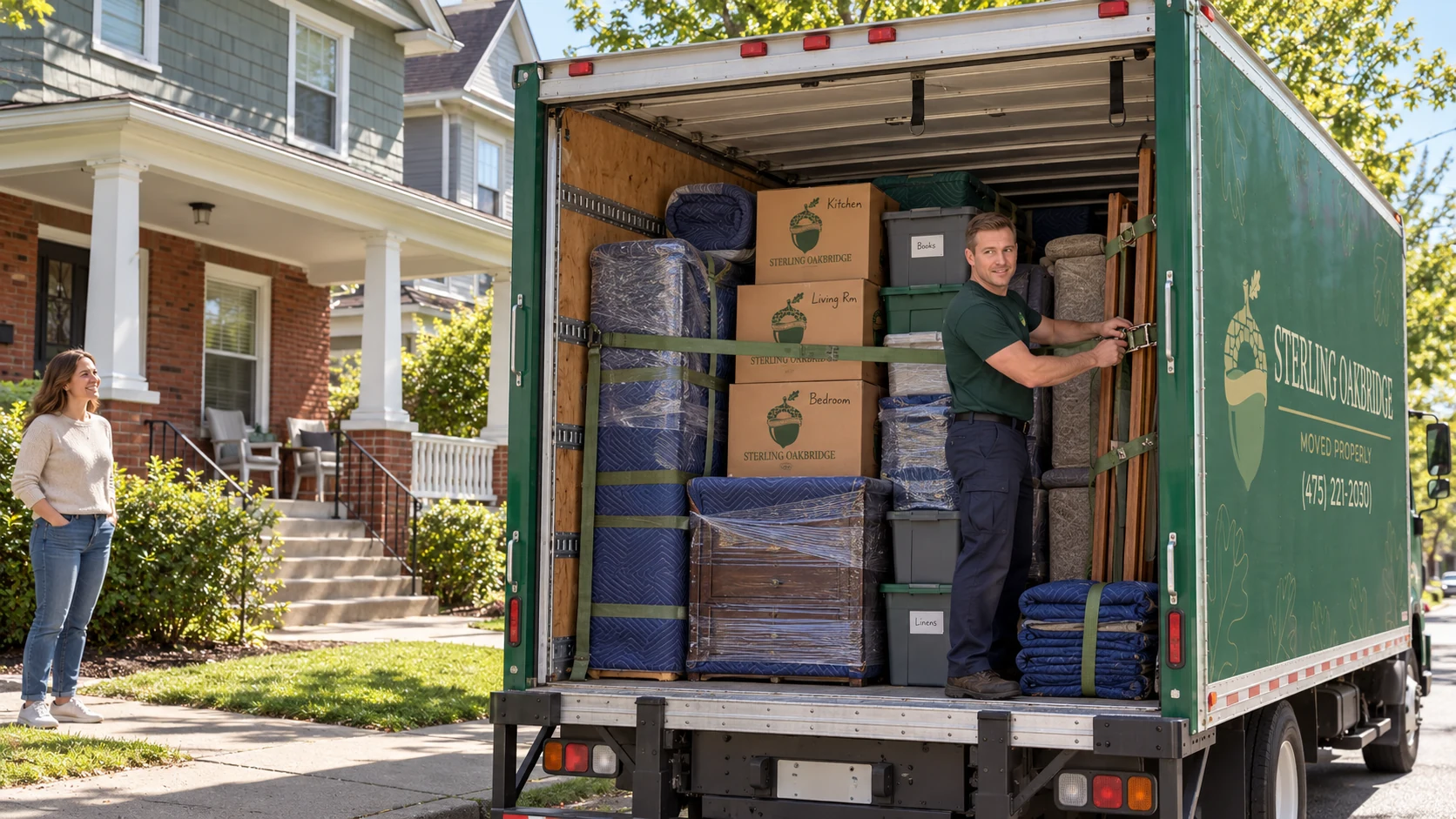
Trace the pickup route in the direction the belongings will actually travel: room, internal landing, porch, steps, footway and truck position. Cleveland’s older houses can offer an inviting covered porch while still leaving a tight turn behind the front door. An upstairs room, low stair ceiling or shared entrance can matter more than the width of the exterior doorway. Send photographs and the dimensions of the largest pieces before deciding what can travel assembled.
For a building with a service entrance or lift, ask the manager for the permitted moving window and the conditions for using it. Public space needs its own review. The City of Cleveland’s parking-permit guidance directs street, meter and sidewalk obstruction questions to Assessments and Licenses. For an applicable obstruction application, the City requests submission at least 12–14 business days before work, with proposed start and finish dates and working hours. Contact Assessments and Licenses at 216-664-2174 to confirm the requirements for the actual operation. A parking payment does not reserve its footprint.
Agree who will confirm the truck position, the building permission and any required signs or restrictions. Keep a lawful alternative and its carrying distance in the estimate if the preferred space is unavailable. The Cleveland curb and access guide covers the local process; current approval for the actual operation comes from the responsible office or property.
Direct or consolidated: choose around the shipment and receiving window
Direct delivery gives the reviewed household a dedicated truck and the same crew from pickup through delivery. It suits a substantial shipment, closer coordination or a receiving date that offers little flexibility. Loading and delivery appointments still need agreement: dedicated service does not give the truck unrestricted access to either property or turn a planning window into an appointment.
Consolidated delivery combines compatible shipments and is useful when a smaller inventory can wait within an agreed delivery window. A small shipment may be around 300–400 cubic feet or less; that is planning guidance, not a minimum or an automatic size allowance. Send the actual items, dimensions and photographs so the shipment can be assessed. A few large pieces can require more space and preparation than a larger number of cartons.
Consolidation can reduce the transport cost of moving a small selected inventory, but the comparison must use the same services at both ends. Check collection, packing, stairs, carrying distances, storage if needed and receiving work together. Consolidated transport does not carry the same-crew commitment described for direct service.
Agree what is included in the written price
For agreed flat-rate long-distance work, the price covers the reviewed inventory, access and selected services. Travel taking longer does not, by itself, change that price. An added sofa, another pickup stop, a different access route or extra packing changes the work. Resolve known changes and any revised interstate written estimate before loading. The original estimate cannot be rewritten after loading begins; later additional services need their applicable agreement and charges before they are performed.
Make the comparison concrete. Which cartons will you pack? Which pieces need disassembly and reassembly? Is unpacking requested for all cartons or only selected rooms? Will the destination need placement upstairs? Include parking or building arrangements and any storage period in the review. For an interstate household shipment, obtain the required written estimate and complete the required survey unless you make the proper separate written survey waiver before loading. Retain that waiver with the bill of lading; waiving the survey does not waive the written estimate.
Packing is charged for working time, while company-supplied cartons are charged separately. Moving blankets, shrink wrap and tape have no separate basic material charge. Basic furniture disassembly and reassembly use moving labor without a separate basic assembly fee; complex furniture and specialist tasks need their own reviewed method and quote. Empty ordinary drawers generally stay secured in the protected piece. Protect safely detachable matching legs together, identify and secure the hardware, and keep those parts with the furniture.
For covered U.S. interstate household-goods moves, FMCSA explains that Full Value Protection applies unless Released Value is selected through the required written choice. Released Value limits liability to 60 cents per pound per article rather than replacement cost. Valuation concerns the mover's liability; separate insurance and a building COI have different purposes. Review the actual cost, deductible, valuable-item instructions and claims procedure before pickup. Declare fragile, high-value, unusually heavy and specialist items during the estimate so the preparation and handling can be reviewed.
Keep your travel essentials out of the moving shipment
Pack the belongings that travel with you before the shipment is closed: identification, keys, medicines, necessary chargers, work equipment and a realistic first-night set. Choose a small, clearly separated place for them and tell the crew what stays. A carton marked “bedroom” can still contain the only bedding you need while waiting for delivery.
For an apartment departure, keep the booked lift and common route usable while preparation continues inside the unit. For a house, clear the agreed approach without removing necessary household use too early. Tell the team which furnishings are staying, which are moving and which will leave by another arrangement. This avoids protecting an item that is not in the shipment or packing the last chair you still need.

Example: Cleveland to Philadelphia after deciding what leaves the house
Consider a household leaving an older Cleveland house for a smaller Philadelphia apartment. Begin by walking every floor and separating the items that are moving from those being retained, sold or dealt with separately. A basement cabinet or the contents of a spare room can materially change a shipment even when they are missing from the first set of photographs.
A substantial reviewed inventory may suit direct delivery with one dedicated truck and the same crew. Confirm the Philadelphia loading position, unit entrance and any building appointment before deciding which furniture can remain assembled. Preparation that solves the Cleveland stair turn does not establish that an item fits the destination lift or hallway.
If the final selection becomes much smaller, compare a consolidated arrangement on the same actual packing and receiving scope. The possible saving comes from shared transport capacity and the inventory you genuinely removed, not from leaving required work outside the comparison. Have one person available to direct placement in the smaller home.
Example: Cleveland to Tampa with a flexible receiving household
Suppose a household can collect from Cleveland on a firm date while its Tampa receiver has some flexibility. Compare direct and consolidated delivery against that real availability. Direct service offers a dedicated shipment and the same crew; consolidation may be useful when the receiving household can support Florida’s window of up to 60 days after pickup and loading are complete.
Write down who can receive, how that person will obtain access and which dates cannot work. “Someone is usually there” is not an appointment. If the building requires a service booking or the home will be inaccessible for part of the window, disclose it before choosing the transport model. Request storage and later delivery explicitly if possession leaves a gap. Before departure, set a decision time for the key or access problem. The household contact and coordinator need a confirmed receiving appointment or an accepting holding or storage resource, with capacity, available period, handling, access, charges and onward delivery agreed. Arrange the people's accommodation and personal essentials separately. If no resource can accept the load, revise the departure plan; resume delivery when the authorized receiver and property are ready.
Keep travel clothing, medicines and first-night belongings out of the shipment. Mark the destination rooms and agree the furniture placement or selected unpacking you want. Flexible transport can reduce the cost of a suitable small shipment; it should not leave the receiver guessing which services were included.
Example: Cleveland to Ottawa with the inventory and owner ready together
For an Ottawa move, start with the household owner’s circumstances and an accurate goods inventory before treating a road route as a delivery plan. Confirm the applicable requirements through CBSA’s moving guidance, including any preparation for goods arriving after the owner. The moving estimate does not establish eligibility for an import exemption or replace an owner’s required action.
CBSA calls for two copies of the goods list, divided into accompanying belongings and goods to follow, with the required descriptions, values and identifying details. Account for the goods at the first Canadian entry even if none accompany you, and retain the resulting record for the later shipment. Reconcile that list with the moving inventory. Confirm eligibility, ownership and use conditions and restricted items for your actual importer situation; a transport order does not establish clearance. Identify who supplies the information, who can resolve a question and which items need individual review. Keep identification and customs records with the person who needs them. A direct arrangement keeps the reviewed household with the same crew, subject to the actual cross-border plan; consolidation is a separate comparison for a smaller inventory with flexible receiving.
Then work backwards from the Ottawa entrance and authorized receiver. Confirm keys, the carrying route and any building booking. The illustrative table is measured after loading and is not a guarantee of border processing time. Canada’s consolidated window can be up to 60 days; agree the actual order before making dependent arrangements.
Example: a smaller Cleveland selection going to San Diego
Imagine someone sending selected household cartons and a few furniture pieces to a San Diego home while keeping most of the Cleveland room in use. Show the estimator the precise selection and the dimensions of the larger pieces. Identify loose components, fragile contents and any preparation you want handled. A small collection still needs an itemized plan.
If the receiving date is flexible enough, compare consolidation against California’s window of up to 90 days after pickup and loading. Dedicated direct delivery is a different option when the dates or shipment justify it. Compare the complete services, including the carrying route and final placement, rather than only the transport line of a quote.
Keep urgent work equipment and necessary personal belongings with you. Confirm who can check the shipment and direct the agreed placement in San Diego, including any stairs or managed-building requirements. The useful result is a small shipment that reaches an available receiver with its preparation and work understood, not a promise that every carton will be unpacked immediately.

Use delivery windows as planning references
Swipe the table to compare both delivery options.
| Illustrative destination | Direct planning window | Consolidated window |
|---|---|---|
| Philadelphia, Pennsylvania | 1–2 days | Up to 30 days |
| Tampa, Florida | 2–3 days | Up to 60 days |
| Ottawa, Ontario, Canada | 1–2 days | Up to 60 days |
| San Diego, California | 4–5 days | Up to 90 days |
These illustrations start after pickup and loading are complete. They are not door-to-door promises from the time an estimate is requested. Nearby qualifying domestic consolidated moves can allow up to 30 days; Florida and Canada allow up to 60, and California up to 90. Other far destinations need an individually agreed window. The examples use reference driving routes rather than certified routes for a particular truck.
Confirm the actual addresses, lawful vehicle route, receiving access, any border requirements and the written schedule for your order. If a closing, lease or elevator reservation changes, report it while the plan can still be adjusted.
Make delivery useful for the receiving household
Receiving starts with a usable entrance and a person authorized to direct placement. Share room names, floor assignments and any agreed assembly before unloading. Protect the carrying path as needed, keep essential circulation clear and decide where packing materials can be gathered without blocking the next item.
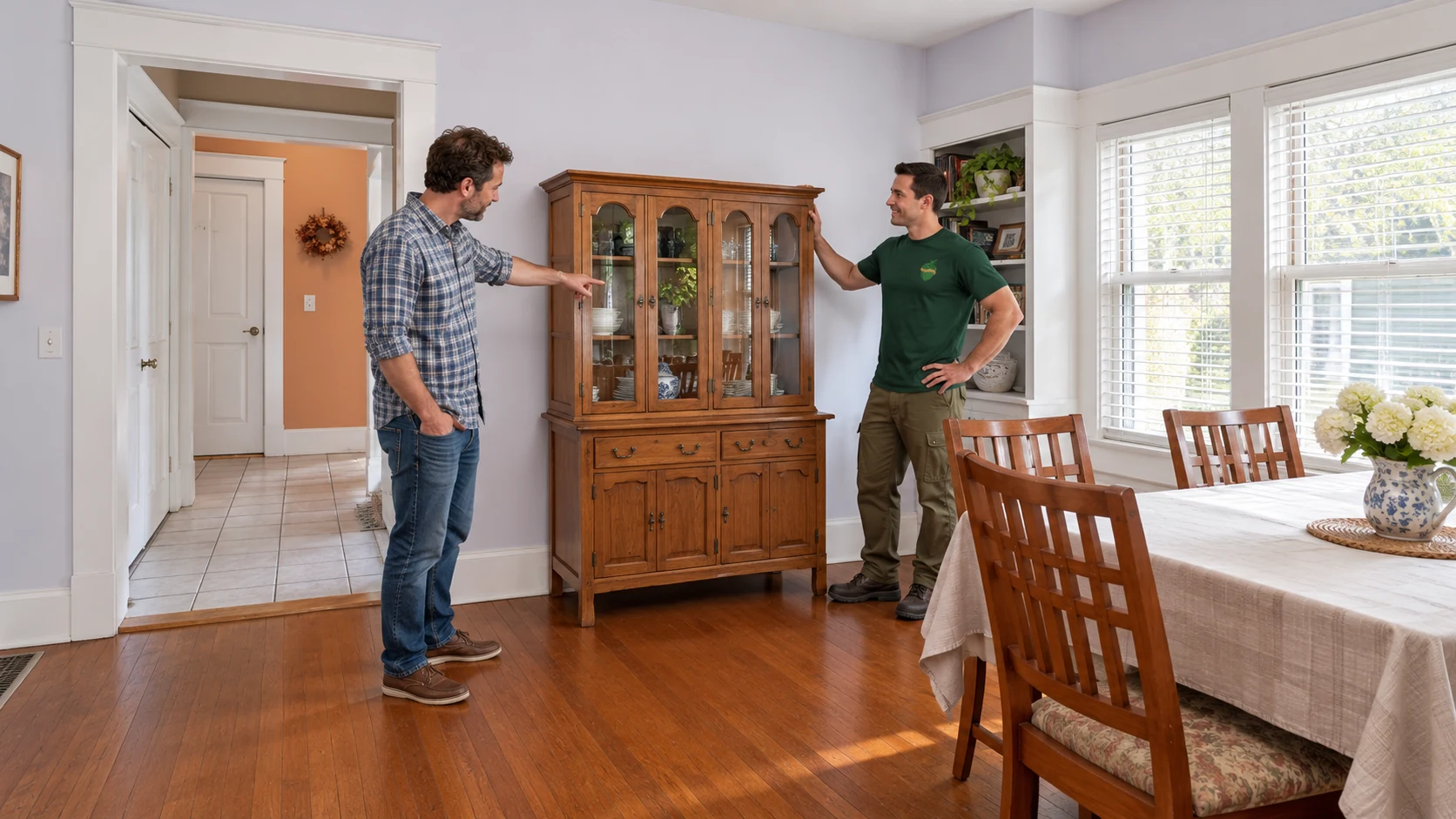
Furniture is unwrapped as part of delivery. Unpacking carton contents is optional work charged for time, and packaging removal is separately priced. Agree those tasks, priority rooms and the receiving contact before arrival. Compare the delivered items with the inventory, record visible exceptions clearly and retain useful photographs and documents for the applicable reporting procedure.
Pickup area and destination examples
We arrange long-distance household pickups from Cleveland, Ohio. Send the actual property address, unit, inventory and dates so the carrying route, truck position and selected work can be reviewed. Other collection addresses require their own access and schedule review.
Explore long-distance destinations from Cleveland
These are destination examples within our United States and Canada coverage, not claims about route popularity or completed jobs. Agree the actual addresses, shipment, lawful truck access and receiving dates before booking.
Northeast
- Buffalo, New York
- Albany, New York
- Boston, Massachusetts
- Philadelphia, Pennsylvania
- Baltimore, Maryland
Southeast and Florida
- Raleigh, North Carolina
- Richmond, Virginia
- Charlotte, North Carolina
- Tampa, Florida
- Orlando, Florida
Midwest and Texas
- Chicago, Illinois
- Dallas, Texas
Mountain West and Southwest
- Denver, Colorado
- Phoenix, Arizona
- Salt Lake City, Utah
West Coast
- Los Angeles, California
- Seattle, Washington
- Portland, Oregon
- Sacramento, California
- San Diego, California
Canada
- Montreal, Quebec
- Quebec City, Quebec
- London, Ontario
- Ottawa, Ontario
- Toronto, Ontario
- Vancouver, British Columbia
Long-distance moving questions
Do you collect long-distance shipments in Cleveland?
We arrange long-distance household pickups from Cleveland, Ohio. Send the actual property address, unit, inventory and dates so the carrying route, truck position and selected work can be reviewed. Other collection addresses require their own access and schedule review.
What is the difference between direct and consolidated delivery?
Direct service dedicates the reviewed truck to your household and keeps the same crew through delivery. Consolidated service shares transport with compatible shipments and uses an agreed delivery window. Compare both on the same inventory, access and requested services.
When does the delivery window start?
The illustrated delivery windows start after pickup and loading are complete. They do not start when you ask for an estimate or when packing begins. The actual collection and receiving appointments belong in the written order.
Can I book the same crew for delivery?
The same-crew arrangement applies to direct dedicated delivery. Consolidated delivery is a different service model and should not be booked on that assumption. Confirm the selected arrangement before agreeing dates.
Can you move a small shipment rather than a whole home?
Yes, send the actual selected items, dimensions and photographs for review. A smaller consolidated shipment may be around 300–400 cubic feet or less; this is guidance, not a minimum. A few bulky pieces can need more space and preparation than many small cartons.
Will a longer journey change an agreed flat rate?
Travel taking longer does not by itself change an agreed flat rate for unchanged inventory, access and services. Added belongings, a new stop, changed access or extra work change the scope. Resolve known changes and any revised interstate written estimate before loading. The original estimate cannot be rewritten after loading begins; later additional services need their applicable agreement and charges before they are performed.
What information is needed for a Cleveland estimate?
Send both addresses and units, an itemized inventory, photographs of the full carrying routes, floor and elevator details, proposed truck positions and firm dates. Identify the packing, furniture preparation, storage and receiving help you want, and flag specialist or high-value items. For an interstate household shipment, obtain the required written estimate and complete the required survey unless you make the proper separate written survey waiver before loading. Retain that waiver with the bill of lading; waiving the survey does not waive the written estimate.
Who arranges the truck position in Cleveland?
Agree who will confirm the lawful loading position and applicable public-space permission. Cleveland directs street, parking-meter and sidewalk obstruction applications to Assessments and Licenses at 216-664-2174. Its published submission minimum is 12–14 business days, with start and finish dates and working hours required. Confirm the actual operation and approval; building permission and ordinary parking payment do not reserve the street.
Can you pack and prepare furniture before pickup?
Yes, selected-item or full-home packing and an earlier preparation visit can be requested in the agreed plan. Packing is charged for working time and company cartons separately; blankets, shrink wrap and tape have no separate basic material charge. Basic furniture disassembly and reassembly use moving labor without a separate basic assembly fee. Keep personal and retained belongings separate, and review complex items individually.
What should travel with me instead of in the truck?
Keep identification, keys, medicines, necessary chargers and belongings needed during the delivery window with you. Add a realistic first-night set and any urgent work equipment. Tell the crew which group stays so it is not closed into the moving shipment.
Can you coordinate storage when the destination is not ready?
Before departure, set a decision time for the key or access problem. The household contact and coordinator need a confirmed receiving appointment or an accepting holding or storage resource, with capacity, available period, handling, access, charges and onward delivery agreed. Arrange the people's accommodation and personal essentials separately. If no resource can accept the load, revise the departure plan; resume delivery when the authorized receiver and property are ready.
How should I prepare an apartment pickup?
Confirm the unit, service entrance, elevator or stair route, booking conditions and proposed truck position. Send photographs of landings and tight turns with the largest items. Keep the common route usable and appoint a contact who can resolve access questions.
Can you move household goods from Cleveland to Canada?
Yes. We arrange household moves to Canada, with the shipment, receiving plan and border requirements reviewed before collection. CBSA calls for two copies of the goods list, divided into accompanying belongings and goods to follow, with the required descriptions, values and identifying details. Account for the goods at the first Canadian entry even if none accompany you, and retain the resulting record for the later shipment. Reconcile that list with the moving inventory. Confirm eligibility, ownership and use conditions and restricted items for your actual importer situation; a transport order does not establish clearance. Keep the documents with the traveller and confirm the receiving arrangements before dispatch.
How long can consolidated delivery take?
Qualifying nearer domestic routes can have a window of up to 30 days after pickup and loading; Florida and Canada up to 60 days, and California up to 90. Other far destinations need an individually agreed window. Confirm the window for your actual shipment and receiving address.
What needs to be ready at delivery?
Provide a reachable receiving contact, keys or permission to enter, a usable carrying path and any required building booking. Agree room placement and selected assembly or unpacking in advance. The family arriving in its own car does not establish that the shipment can be received.
Does delivery include unpacking and packaging removal?
Furniture is unwrapped as part of delivery. Unpacking carton contents is optional work charged for time, and packaging removal is separately priced. Agree those tasks, priority rooms and the receiving contact before arrival. Compare the delivered items with the inventory, record visible exceptions clearly and retain useful photographs and documents for the applicable reporting procedure.
How do I review protection and raise a concern?
For covered U.S. interstate household-goods moves, Full Value Protection applies unless Released Value is selected through the required written choice. Released Value limits liability to 60 cents per pound per article. Review actual costs, deductibles, valuable-item instructions and the claims procedure. At delivery, record visible exceptions, retain photographs and documents and notify the coordinator promptly. Separate insurance and a building COI serve different purposes.